 Ask ChatGPT
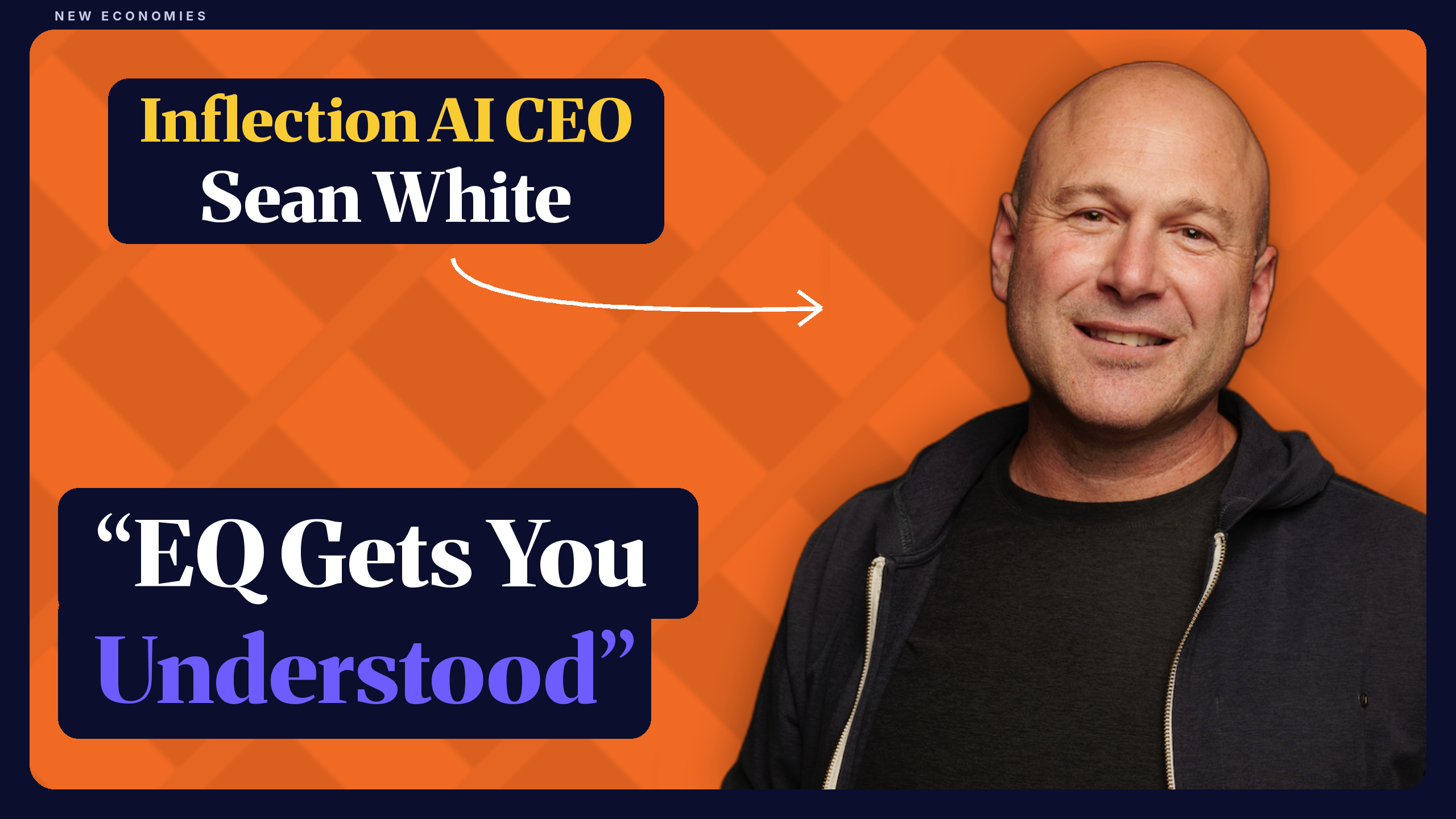

How Lambda’s founder Stephen Balaban describes GPU-driven AI demand, the company’s multiple pivots (including building its own infrastructure after a $40k/month AWS bill), and why he stepped down as CEO to become CTO to focus on technology/product.
Stephen Balaban, co-founder and CTO of Lambda; he previously scaled Lambda into a GPU compute company serving major tech firms. Host: Ali (name not given in transcript), interviewer from New Economies.
AI model performance and release cadence are accelerating in 2026, increasing compute demand; autonomous software engineering improved after Opus 4.5/Claude Code-style harnesses. Pivoting is normal for founders; Lambda’s workstation/infrastructure pivot “wiped out” AWS OPEX and enabled compute revenue growth. Founder-CEO stress and fundraising treadmill can justify moving from CEO to CTO.
AlexNet (2012) and ImageNet; DreamScope/Deep Dream; $60k CapEx to build servers/workstations; 2017 revenue reaching ~$3M; V100 GPUs still nearly fully sold out after years; NVIDIA partnership and “asset class” GPU investing; TerraFab/gigawatt factory competition.
Written by AI. May contain mistakes.
Exploration of how significant pivots shaped Lambda's success.
“And now he's breaking down how pivoting saved the business and why stepping down as CEO might be the key to scaling yours.”
Discussion on the rapid advancements and performance of foundational AI models.
“You know, everyone is freaking out about GPUs now.”
Insights into the acceleration of AI model development and its implications.
“And I kind of used to compare it to the iPhone updates.”
Stephen shares the origin story of Lambda and its initial focus on facial recognition.
“But, you know, 2012, very different times.”
Stephen explains the various pivots Lambda undertook while developing unique products.
“And that kind of got me very interested in neural networks.”
Insights on the struggles Lambda faced in the AI consulting landscape.
“And I wanted to make a platform that allowed people to kind of gather that data set for training these neural networks.”
Discussion on the $40,000 AWS bill that almost led Lambda to failure.
“They had a recognition pass and a generation pass that could actually generate and sample from the sort of learned distribution of the network.”
Learn how Lambda pivoted from Deep Dream image generation to a successful compute service.
“It's a great idea for making money, I think, and a great idea for building a company, but not necessarily for a venture scalable business.”
Explore the challenges of distinguishing between a necessary pivot and distractions in business.
“If you compare this to the AI companies today, they are growing at 30%, 40%, 50 % every single month.”
Understand the emotional and practical advantages of starting a business with family.
“And I was worried that it was a huge distraction until it started sort of making money.”
Discover the reasoning behind the shift from CEO to CTO and its implications for the company.
“And Michael and I had experience working together too previously.”
Learn about the difficulties of fundraising and the transition to a different leadership role.
“It was about building products and about identifying a need in the market and satisfying that need and just delighting customers.”
Gain insight into the process and considerations for replacing a CEO in a capital-intensive business.
“And so I think that if the company is too early stage, I think that sometimes that probably doesn't work out as well.”
Learn about the CEO replacement process and its unique challenges in capital-intensive businesses.
“same type of stage company, looking to maybe move to a different type of position, can you maybe just explain what does that CEO replacement process look like?”
Explore the challenges of securing investment in capital-intensive industries and the skepticism faced by companies like Lambda.
“And so we've got some great board members like John Donovan, who used to be the former CTO and then eventually CEO of AT &T.”
Understand Lambda's approach to growth amidst skepticism and the importance of alternative investment routes.
“The industry in general, whether it's open AI and anthropic, right?”
Discover the potential for AI model expansion and infrastructure investment in the coming years.
“If we just look at the opportunities today, it's ginormous, right?”
Learn how GPUs are emerging as a new asset class and the implications for investors.
“But the physical part of that, which is the infrastructural build out, which involves both power and compute, is, you know, continuing on and continuing to get funded.”
Examine the potential for futures markets in the compute industry and the benefits of market maturation.
“I think that we might still have a V100 in our cloud by 2017.”
Discuss the competitive landscape in the AI industry, including the potential for numerous successful companies.
“There are so many opportunities, but I imagine there are also so many challenges.”
Explore the lasting partnership between Lambda and NVIDIA, highlighting cultural alignment and shared goals.
“You know, we just had Reid Hoffman on the show, co-founder of LinkedIn, and we got talking around like, actually, how many of these AI models are there going to be?”
Explore the challenges and cultural alignment in building Lambda and NVIDIA.
“And then our first version of the cloud early, like sort of in 2016-ish was 1080 Ti's, which is like one of my favorite GPUs that's ever come out in the history of GPUs.”
Learn about the product pivots of major tech companies like NVIDIA and Apple.
“I forget when NVIDIA launched, 1980s, 1990s, but it took them a long time, right?”
Discuss the future of technology and how AI is reshaping society and industries.
“And there's a great thing about building a company, right?”
Explore how software development is becoming accessible to more people.
“You know, they don't even, they take things like chat GPT for granted.”

Get the gist, explore an idea or ask about something said.
 Claude
On BIG IDEAS BY NEW ECONOMIES, what are the key points of this episode?
Searching your listeningAutomatic transcript. May contain errors.
0:00The company's gone through at least about half a dozen pivots. We had a$40 ,000 a month Amazon Web Services bill. And that bill nearly put the company out of business. One of our early investors said, hey, you know, why don't you try building your own infrastructure? And so that was like this huge pivot that we did. And it completely wiped out this$40 ,000 a month OPEX. And it just exponentially growing to like$3 million of revenue that first year in 2017. Just to talk about pivots, if you look at any of the really big companies, all of them started with...
0:36Stephen Balaban: This is Stephen Balaban, co-founder and CTO of Lambda. He helped scale the company into a multi-billion dollar GPU powerhouse powering the biggest tech giants today. And now he's breaking down how pivoting saved the business and why stepping down as CEO might be the key to scaling yours. It's just really amazing to see if you actually look at the history of all these companies, how much pivoting is involved. and how much the company completely changes over time. At some point, that becomes just a normal way of life for you as a founder. You try something, does it work? Then keep doing it. If it doesn't, then move on to the next thing.
1:12When you're doing a pivot, how do you decide whether something is a distraction versus the next thing for your company? We did this very high risk$60 ,000 CapEx at the time. People didn't like investing in hardware companies. People didn't like investing in capital intensive businesses. and the result of that is that they missed out. I have raised a couple billion dollars across the credit equity spectrums, but it was never easy for this company.
1:37Stephen Balaban: You made the personal decision to go from CEO to CTO. Why did you actually want to do it? There's so many very, very hyper stressful things about being the CEO and things I really disliked about the role. First of all, welcome to New Economies.
2:06Stephen Balaban: Hey, Stephen, welcome to New Economies. Hey, Ali, how are you doing? Thanks for having me. Amazing to have you here. You know, everyone is freaking out about GPUs now. Lambda, one of the biggest GPU companies that everybody knows about that you co-founded. What the hell is happening in the world of GPUs right now? So I'd say that what we're seeing is kind of continued surprise on the upside in terms of the performance of foundational models. So, you know, the frontier labs continue to produce models that have, I'd say, outsized value that's being created. And the result of that is when a new model is released sort of every single time, it's able to address a new set of tasks.
2:59And the sort of the more surprise there is on the upside, the more there is like sort of an increase in the intrinsic amount of demand for compute in the world. And I think that's fundamentally what we're observing here. And really, we're just, I think, related to that, it's a lot of people are starting to come to the realization that every single one of these new models is just continuing to get better. We're expanding the capacity of the model. We're expanding the amount of compute that's being used to train those models. And that cycle does not seem to be slowing down.
3:36Stephen Balaban: These updates are happening also just so quickly. All of these AI models are releasing new updates. And I kind of used to compare it to the iPhone updates. Maybe every six to 12 months, these updates are happening. I mean, every couple of months now, right? In terms of the fundamental, I'd say, class of the model, we're not necessarily seeing it every couple of months in terms of going from, let's say, a Hopper class model to a Blackwell class model to a VR class model. But there's certainly a lot of constant updates in the market of releasing of models that have been maybe previously need a little bit more AI safety work to be released or stuff like that.
4:21And so, yeah, the pace has been dizzying in 2026. I'd say that having been in this industry and following it for a while, 2026 is definitely one of the highest velocity years that I can really remember. Even more so, in a sense, than even when ChatGPT originally came out.
4:40Stephen Balaban: I'd love to get your take here. It feels like 2026 has been a massive breakthrough, where actually now the speed of these AI models is so good, the accuracy is getting better, but also just the user experience. 2026 feels like that inflection point. Do you agree with that? I do agree with that. I think that the combination of, let's say, some of the coding harnesses, the quality of the frontier models, their ability to autonomously software engineer, that is kind of unlike any other year we've seen before. What's been most surprising to you about the updates since the beginning of the year? Well, I mean, the big one is, you know, going back to kind of February of 2026 when Opus 4.5 came out.
5:25And there was that really wonderful blog post that was published by Anthropic on creating a C compiler from scratch and how they kind of ran it 24 seven in a loop. And I was able to, for example, take that blog post and kind of paste it back into Opus. You know, we're using Claude code to generate a harness that would be similar to that and use that to do autonomous software engineering. And so I remember I was about two weeks late. I was very busy and I hadn't had time to sit down and relearn all the new things that had come out, which is definitely a trend that I think I've seen a lot more in 2026 is that people, oh, you're like two weeks behind, which means that you're kind of feels like you're a light year, you're a lifetime behind.
6:15And I think that that was this huge breakthrough in terms of the duration and the quality of autonomous engineering that can happen with these models.
6:27Stephen Balaban: You know, some people might not know this, but Lambda actually is a 13-year-old company, 14-year-old company, right? It started in 2012. But back when you guys were starting with your brother, I love to get into the story of how you build a company with your brother. But, you know, 2012, very different times. It was almost back then, if I seem to remember correctly, we were encouraged to buy GPUs. It wasn't kind of a necessity. Now it's essential. Yeah, well, so back then, Lambda started off as a facial recognition and image recognition company. And 2012 was a very sort of fortuitous year to start that kind of a company because that was the year that the AlexNet paper came out, which was out of Jeff Hinton's lab at University of Toronto as Alex Krzyzewski and Elias Zetskiver.
7:13And they really kind of cracked what was at the time a really impossible benchmark, which was called ImageNet. And ImageNet was this internet-driven image data set. And people have been throwing all kinds of traditional computer vision methods at it, whether it's SIFT features or, you know, hand-created features with support vector machines. and then come along the ConvNet, they threw the ConvNet at it. And I think the really big twist on it, you know, architecturally is quite similar to Jan LeCun's sort of papers in the 1980s. But the big breakthrough was they trained it on a couple of NVIDIA GPUs.
7:57And so they were able to really scale up the amount of compute that was applied to the same model. And that kind of got me very interested in neural networks. And so that's how Lambda got started. And that was, I guess you'd say, the environment in which it was started.
8:15Stephen Balaban: When did you realize that perhaps the facial recognition side of things, was it going to be the entire focus of the company you guys had to pivot? There are at least, I'd say, got to be about half a dozen pivots that the company's gone through since its founding. At some point, that becomes just a normal way of life for you as a founder, is that you try something, if it makes money or does it work, then keep doing it. If it doesn't, then move on to the next thing. So that became a little bit of a way of life, especially in the early days when you're just getting started. I ran the face recognition API.
9:01So we actually even started off doing sort of augmented reality software. You know, I really wanted to make software for augmented reality glasses and things. And that's kind of how I even got into face recognition. We launched this API. I think I probably ran the API for about four to five years. It kind of petered along, made a little bit of money, a couple thousand dollars a year, maybe. So not really enough to pay the bills. but, you know, was able to sort of survive by doing consulting and sort of whether it's computer vision consulting, software engineering, as a way to kind of keep money in the bank and keep the company going.
9:44Shortly after that, you know, I was working on this thing called Lambda Hat, which was one of the problems you have with image recognition data sets is that there's not enough data out there in the world to gather for raw images, faces, all kinds of situations. And I wanted to make a platform that allowed people to kind of gather that data set for training these neural networks. And this is in 2013. It was a baseball cap with a camera embedded in the tip of the brim. And the hat that I wear and sort of the Lambda hat thing is a reference back to that original, one of those original first products in the hardware side of things.
10:22My brother joined in 2015, actually. And his only rule, the only rule that he said when he was joining is we can't work on Lambda hat because he didn't really believe in that product. and so i i sort of begrudgingly agreed but it was it was a great thing to have him come on he actually joined from next door and he was one of the early engineers at next door but then joined
10:48Stephen Balaban: lambda very cool we just had the founder next door on the show actually so full circle moment and he would always compare me to near of two and he's like well why can't you raise money like near of kin raise money near is a good storyteller and i was like i was like well it's a high bar, Michael, you know? And completely different industries as well, let's be honest. But 2015 then, okay, so you're working with your brother. You go through a bunch of pivots, six, seven pivots this time. You're now on the train track on actually GPUs, Neo, Gigafattories. This is going to be the way forward. What did you see so early that other people didn't quite see?
11:27Well, I mean, the first thing I saw was really this AlexNet paper. And then after that, I think the second really inspiring research paper that I saw was the Alex Graves handwriting generation demo. He's got this amazing demo. It's a recursive neural network and RNN that essentially can generate human handwriting, as well as he also did part of that paper, a demo of generating Wikipedia articles and, you know, generating the raw sort of wiki markdown sort of formatting. And I thought, wow, okay, you know, maybe in the near future, this thing is going to be able to generate images or, you know, so this, that was like, for me, my earliest exposure to what people today would call generative AI, which, you know, generative AI, I mean, you know, I can, I can point to research papers going back to like, you know, if you look at the wake sleep algorithm papers, which is Diane 94, that was a generative neural network.
12:25They had a recognition pass and a generation pass that could actually generate and sample from the sort of learned distribution of the network. And so I think that there's a lot of people who saw this stuff very early. It just didn't really start taking off until I think 2017 was a really special year in terms of when deep learning specifically started to get sort of this runaway traction within the academic community. Because even between 2012 through, let's say, 2016, there was still a lot of skepticism within the academic community of these neural networks. They're not understandable. A lot of people, very credible academicians would say, well, maybe there's going to be a breakthrough in algorithms that's going to, you know, we're going to be doing sort of random forest-like models that can be trained on your MacBook or something.
13:18And I think seeing the improvement of the models with the amount of compute that was put in and sort of like the bitter lesson, you know, Rich Sutton's bitter lesson essay, that kind of getting bitter lesson pilled was like that turning point.
13:39Stephen Balaban: When you were speaking to all these academic communities back in 2017, what were you all speaking about? And eventually you have to get this company going right and have to start making money. We only stopped at the Lambda Hat pivot to, at that point, after the Lambda Hat thing, we were like, okay, well, let's do AI consulting. And it'll be like, we're going to build the Accenture for AI. And of course, no VC like this idea is a horrible idea in many ways for a venture scalable business. It's a great idea for making money, I think, and a great idea for building a company, but not necessarily for a venture scalable business.
14:11First, Deep Dream came out, which was Chris Ola and some others out of Google. And that was really cool. He's very trippy images. Do you remember the Deep Dream stuff? Yeah. Lambda, through DreamScope, this app we were running, was probably the largest generator of Deep Dream images in the world. And we got to like a million users on this app, processed tens of millions of images. The Gatte's style transfer algorithm came out where you can turn a photo into a painting. And then it's sort of like, you know, it crescendoed and then the fad peaked and then there was an exponential decline down the other side.
14:49And at the height of that peak, we had a$40 ,000 a month Amazon Web Services bill. And that bill nearly put the company out of business. And one of our early investors, this guy, George, who was the eighth employee at Google, said, hey, you know, we always built our own infrastructure. Why don't you try building your own infrastructure and see if you can stand it up? And so we did this very high risk,$60 ,000 CapEx at the time to stand up a bunch of servers. And we were so worried about it. We're like, okay, well, let's not just do servers. Let's do workstations. So worst case scenario, we can part this thing out and sell the workstations.
15:33And we turned that on and it completely wiped out this$40 ,000 a month OPEX. And so that was like this huge pivot that we did. And we're like, oh, wow, we're saving more money than we're making. Why don't we consider giving, you know, selling these workstations and providing a cloud service to other people who are doing AI research? And that's how our compute business was born. And that pivot really was in sort of 2016, 2017. And that business just really took off. I mean, I think, you know, like many other entrepreneurial journeys, it's like one of these things where I forget whether it was Patrick or John Collison was saying kind of you're pushing a boulder up a hill.
16:11And that's like the early part of the company. And at some point you go over the hill and then you're running away from the boulder, like Indiana Jones style. And that 2017 year was definitely when we started running away from the boulder. Cause I think in March I did$35 ,000 in sales of the workstation, 70 ,000 in April, 140 ,000 May. And it just as exponentially growing to like$3 million of revenue that first year in 2017. And that's when the business, okay, we're in the compute business now. And that was, that was the real pivot.
16:43Stephen Balaban: I find it so fascinating. If you compare this to the AI companies today, they are growing at 30%, 40%, 50 % every single month. How did you stay focused back then? But also, how did you make sure you're not running away from the wider picture? You've got to think about hiring, you've got to think about actually just keeping this thing going. I remember, first of all, there being some pretty critical points of like, well, how do you decide whether something is a distraction versus the next thing for your company? When you're doing a pivot and when you're really doing something like that, because remember, we had raised about$600 ,000 for DreamScope, which was an image generation application that was powered by neural networks.
17:27how do you decide whether or not selling workstations is a huge distraction from this thing you've signed up to do right and and certainly anybody who's in business will tell you that giving up is like the last thing you can ever do in a business right you just like just never give up and you'll eventually be successful and so how do you determine what is a pivot versus what's giving up and that's actually how i you know really thought about that kind of a pivot and And I was worried that it was a huge distraction until it started sort of making money. Now, once you start making money and once it starts like really having a level of commercial success and you're running away from the boulder, you know, you just start hiring where you need it, right?
18:10Well, what was the first one of the first things that we needed to hire was somebody to help assemble the workstations, right? So because I was assembling, I, you know, Michael, my brother and co-founder Jackson, and one of our early employees. And we were just assembling the workstations ourselves. And then we eventually hired somebody. So you just kind of like do it incrementally at the edges where there's the need. And so I'd say that's how you kind of stay focused. You just keep saying, okay, where am I differentially able to better focus my time by taking something off my plate?
18:47Stephen Balaban: You know, so many people say, do not start a company with your family because it always ends in disasters. My dad said that too. There you go, right? The best parents say that. Even my parents said that. Why did you want to do this with your brother? And how did you learn to disagree and actually just still love each other, hopefully at the same time? Yeah, well, my dad said that because his dad was in a business with his brother. And so my grandfather, my dad's side, started a office supply business with his brother. It was called Service Office Suppliers and it was in Detroit. And it was servicing a lot of the big automotive makers there.
19:29It was a pretty sizable, you know, business, you know, it eventually sort of, I think, didn't end up working out or, you know, but they ran it for a while. And the thinking there is is like this. OK, so one, when you're a solo founder, I'll speak to all the solo founders who are out there right now listening to this. it's so lonely. And I know what that feels like. You know, Lambda started in a small apartment in Chinatown and you wake up by yourself, you start working on things, you go to bed, you know, you're largely by yourself because you're really just getting something started. and the sort of some of the sort of emotional morale of a company is just your own emotional morale and so if you're having a great day you're having a great day the company's having a great day if you're having a bad day then the company's having a bad day the entire company whereas when you add another person in there and you're sort of adding together those two signals or averaging them together.
20:37If you're having a bad day, maybe they're having a fine day and you kind of balance out and makes you feel a little bit better. So I think that that's definitely one aspect is that it's important to, I think, from an emotional regulation perspective, have a co-founder. And then, you know, Michael and I really, there's that trust is so implicit and default, right? You know, that is the foundation of a great team is that trust and that trust is there. We both have each other's really best interest in mind. So I think that that's a huge advantage. And there's some great examples of family businesses, whether it's Anthropic or Stripe and Lambda as well.
21:17And so there's some great examples of successful, scalable, venture-backed businesses that are siblings. And Michael and I had experience working together too previously. So when we were growing up, we would do some web design stuff together. and we both started our own online businesses together. This is in the early 2000s. And so we had some experience doing it
21:44Stephen Balaban: and it was successful then. You've both grown this company from basically nothing into a dry-normalist company today. And at some point, the CEO of the company is no longer the best person to run it or the company outpaces them. And I think this is always okay, right? and not enough people talk about it, you actually recently announced you made the personal decision to go from CEO to CTO. Why was now the right moment to do this? And why did you actually want to do it? Yeah, well, so now I'm on the other side of it and I've never been happier. It's amazing. I love what relief, right? There's so many very, very just hyper stressful things about being the CEO and things I really disliked about the role.
22:36And Michel, who's come on, has done such a phenomenal job. He's come in, really listened to the company, listened to people who are in the trenches day to day and really coming in and becoming a part of that team. And it's been absolutely phenomenal. So now I've got that benefit of the hindsight, right? Obviously, it's a lot scarier when you don't have that benefit of the hindsight when you're kind of making these decisions. But the way that I kind of, I look at that. So, you know, I was the CEO for the first founding 14 years of the company. And then in May, handed it off and passed the torch over to Michelle.
23:18And now I'm the CTO. The main things I think about were, well, one, what got me into this in the first place? And as you can probably no doubt tell, it was the technology. It was about building products and about identifying a need in the market and satisfying that need and just delighting customers. That is the thing that I absolutely love. And once you get to a certain point, and especially in as capital intensive of the business that we're in. A lot of it becomes a real fundraising treadmill. So like the company is like just constantly, whether it's across the equity, credit, equipment leases, and operating leases, you know, these are all kind of similar types of underwriting and fundraising experiences.
24:07It's just like this constant treadmill of fundraising that to me is not as exciting. It's one of these things where I always, you know, when I talk to other people, I kind of never consider myself a really great fundraiser, but then I kind of think, okay, well, I have raised a couple billion dollars across the credit and equity spectrums, but it was never easy for this company. It was always a huge slog, and it was something that I frankly didn't really enjoy as much. I looked at a lot at where some of the people that I look up to who I wouldn't consider my, they're not my peers, but there's people who I look up to, whether it's Bill Gates or Larry Ellison or Larry Page.
24:52Not a coincidence that a lot of them eventually stepped out of the CEO role into something that was maybe either more product-oriented or more technology-oriented. it just felt like the right time when you're not enjoying something you know for long enough you look yourself in the mirror and you're not like kind of tap dancing to work or like just super excited then it's like kind of a probably a good good time
25:18Stephen Balaban: if you're enjoying today's episodes hit subscribe at the bottom of your screen the guests on the show are getting bigger and bigger and we need your help to grow this channel So if you're enjoying today's guests or any previous episodes, hit subscribe and I promise you it'll be worth it. Now back to today's episode. When you were thinking about stepping aside and mixing out things a little bit, who's the first person you had to tell? I guess you spoke to your brother first. And what does that conversation actually even look like? I'm a very transparent communicator with not just my brother, but like a lot of the people that I work with.
25:57maybe sometimes to my to my detriment in terms of right, like just kind of very transparent and open about like, hey, look, you know, really not liking this or looking around and saying, like, well, do we have any other options? Seeing some potential, but, you know, maybe decide, well, we don't really have any other options right now. So we're kind of stuck in this situation where, you know, where maybe I was doing something I didn't want to be doing. And then, you know, having some conversations with some of our key investors about it. And again, this is not advice. It's just more like how these things happen.
26:33I'm just very transparent with the people that I work with. And there's another aspect too, by the way, which a lot of people don't fully appreciate, which is you as a CEO and a founding CEO are oftentimes, more often than not, providing services for the company at far below market rates. And what I mean by that is this. Okay. Yeah. Yeah. We're all vested out. I mean, like, you know what I vested, I finished vesting my, uh, my shares in 2016 or something. Right. But like, you know, you're not making or getting paid or oftentimes asking for some crazy, you know, market, let's say options package or salary that would be equivalent to a, um, an outside executive, an outside chief executive.
27:20As part of that dynamic of providing it to the company at below market rates, quote unquote, the company needs to grow into being able to afford a high quality outside executive. Right. Do you see what I'm saying? I think that's one of the things I've thought about in this process is that that's very common, especially for founder CEOs. And so I think that if the company is too early stage, I think that sometimes that probably doesn't work out as well.
27:53Stephen Balaban: You have to be at the right stage, but you also have to find the right person. How long did the CEO search take? And for anyone listening who may be thinking about something similar, same type of stage company, looking to maybe move to a different type of position, can you maybe just explain what does that CEO replacement process look like? Yeah, well, you know, the board and everybody establishes search committee and, you know, you work through your networks and you try to think about what kind of people, what kind of profile. Every business is unique and different. You know, Lambda is an exceptionally capital intensive business, one that requires major infrastructure experience, one that requires sort of a deep set of networks within the investment communities.
28:40And Michel had all those things, plus amazing operating experience, plus amazing investing experience from South Bank International, plus, you know, just this telecommunications industry, very similar. And there's a lot of things that rhyme with the telecommunication industry with LAMD in terms of the sort of amount of capital investment, the race to achieve scale and a certain position within the market. So there's a lot of similar things. And so we've got some great board members like John Donovan, who used to be the former CTO and then eventually CEO of AT &T. We've got Michel, who used to be the CEO of Sprint.
29:23And so he used to be competitors, I guess. And it's been cool to see that sort of some of those teams come together.
29:34Stephen Balaban: We've mentioned a few times, this is a very capital intensive business rise. And what I found really interesting is you don't have the typical type of investors, VC investors who are on your cap table. You've chosen a very different approach. Maybe can you explain a bit about that? I think that there's just inherently within Silicon Valley. And I mean, it's not for lack of networking or for lack of talking. I talk with every single one of the name brand, you know, top VCs. And I pitched them every round. And I was very polite to continue to go back, hand in hand every single time, swallowing my ego.
30:11Even if they said no six times, maybe this time will be different. But I think that just goes and speaks to, for a very long time, there was extreme skepticism within Silicon Valley of this sort of industry in general, I would say. The industry in general, whether it's open AI and anthropic, right? I mean, these were previous to chat GPT, exceptionally bizarre investments for the vast majority of the investors. You know, you have to remember 2021, everybody was investing in crypto. So I think that that's one of those things where Lambda specifically has so many things that are very unique about it in terms of we were a hardware business for a long time.
30:57We had, you know, hundreds of millions of dollars of revenue. Great. Awesome. profitable in many of our rounds in a very avant-garde as some very prominent VC said punk rock profitable you guys are punk rock profitable but I think that people didn't like investing in hardware companies people didn't like investing in capital intensive businesses and you know I think that that's the result of that is that they missed out and then also that we ended up going through alternative routes for people who understood understood the business and we're willing to invest in that kind of a company.
31:34Stephen Balaban: If we just look at the opportunities today, it's ginormous, right? Gigawatt factories, GPUs are the all-time high in terms of demand. The scale of opportunity is unlimited. Where does this thing even go next? Because it's huge. So having seen the progress of these models over the last 14, going on 15 years, and seen that every single time, there's kind of three legs to this tool. It's like model capacity, the amount of compute that you're using in both the training, maybe the reinforcement learning, the post-training processes, and then the data sets. And it just, we've consistently seen, you can expand model capacity, you can expand the amount of compute, whether it's through reinforcement learning, synthetic data set generation, all these different techniques.
32:36Also, just massive expansion of the corpuses right through these projects of scanning and scanning books. We seem to be on a continued path of every generation of models going to get better and better and better. And I don't, you know, what is the likelihood that we're somehow, oh, this is the last model that's going to end up no longer scaling. And we are absolutely as an industry and as an economy making these massive infrastructural investments in order to ensure that at least the compute side of that expansion continues on, which if the compute side continues on, then the models will naturally expand to fit and the data sets will, I believe it continued to expand.
33:18But the physical part of that, which is the infrastructural build out, which involves both power and compute, is, you know, continuing on and continuing to get funded. And investors are starting to really like GPUs as an asset class. You know, if you flashback to the 2000s or whatever, it's not uncommon if you're familiar with like the insurance industry for insurance companies to take their float and invest it into really rock solid, stable assets. That's, you know, they'll buy a power plant or they'll buy a toll road or something like this. This is what NVIDIA GPUs are becoming today. They're becoming an asset class that's super investable that investors really like.
34:01They like the return on it. Lambda has had V100s, which are a GPU from 2017 in our cloud, still nearly fully sold out and occupied by our customers. Right. And so if you go back just a few years to people making, you know, short sellers making these insane statements like, oh, there's only a three year usable life to the GPUs. Well, like we have real hard cash flow evidence that the V100 is a GPU that can be launched in 2017 and still be generating money. I think that we might still have a V100 in our cloud by 2017. And so that'd be a full decade of use.
34:46Stephen Balaban: That's super fascinating. These GPUs, if they become some form of asset class where, you know, the typical, any consumer financial provider can invest in them, this becomes super interesting. Yeah, both the institutional investors with any asset, as it matures, it goes from private institutional investors, public institutional investors, and then eventually people in retail get access to these assets. you eventually have an entire ecosystem that evolves around it, whether it's a spot market, which can enable a futures market, which can enable all kinds of things that people on the outside sometimes think, oh, well, this is just financialization.
35:33And there's not really a lot of value, but there's a huge amount of value creation to having a futures market, right? I mean, farmers in the United States rely on our robust futures market in order to hedge uncertainty, in order to have a place for them to have an offtake for their crops. And that allows them to get financing and do all kinds of stuff that's super valuable in the economy. And And as the compute market matures in the same way that, let's say, the energy markets in the United States have matured, I think that we're going to see a lot of very positive benefits from that.
36:15Stephen Balaban: There are so many opportunities, but I imagine there are also so many challenges. What keeps you up at night? When you see headlines like Elon Musk a couple of days ago announcing he wants to build the largest gigawatt factory five times, I think, the size of the largest one already, right? Does that keep you up with the night? Or are you just like, no, we are building and we're very focused in our lane? Well, this is the amazing thing about the world is that, first of all, it's huge. The good news is that we've got a GDP, global GDP of 126 trillion or something like this. First of all, one, TerraFab, I mean, it seems like that's going to be an amazing American alternative to things like TSMC.
37:00And I think I absolutely applaud that. I think that, you know, we love and use NVIDIA chips and maybe sometime in the future, some chips from NVIDIA will be created on a tariff. out. I mean, who knows what the future could look like. I certainly think that people would have found it surprising that SpaceX AI was able to, you know, provide compute to Anthropic and Google and others just a few short period ago. Elon Musk is somebody who I absolutely look up to. I look at what he's doing for humanity and feel a sense of like, okay, Elon's really on it and is going to make for an amazing, super science fiction future.
37:48And actually, just on this topic of TerraFab specifically, when I was at University of Michigan, I had an AI class with Ben Kuyper, who is a professor there. And he used to say, hey, some of the best ideas come from science fiction. And that always stuck with me. And I oftentimes would read whether it was, you know, when I was doing the augmented reality stuff in the beginning, I just read a few different books, including The Diamond Age by Neil Stevenson. And I had been watching Serial Experiments Lane, which has there's this there's some sort of augmented reality aspect to it, as well as Denno Coil, which is an anime about augmented reality.
38:33and you know elon is one of the those founders same with palmer lucky it seems who all of us you know try to use science fiction to inspire us to build things in the world so going back to like the original question that you have is like well how do you feel does it keep you up at night to have somebody competing in the market or to do doing doing some of these things not at all because Because if you do the math and you say, all right, well, if the GDP is at 126 trillion right now and AI can go from 3.5 percent annual growth to 4.5 percent annual growth, you know, in 50 years, we'll be at a one quadrillion dollar equivalent global economy.
39:15There's a lot of space, you know, you know, there's a lot of space for it. You can have dozens of trillion dollar AI labs at that point, or you can have dozens of trillion dollar companies at that point, if not even more. And maybe even a company that is hundreds of trillions of dollars of market capitalization, I could imagine.
39:34Stephen Balaban: I think we're going to have that. You know, we just had Reid Hoffman on the show, co-founder of LinkedIn, and we got talking around like, actually, how many of these AI models are there going to be? Right now, you can argue there are maybe four or five, but we actually think maybe there's going to be 10 or 15 in the future. Some are going to come from the US, some will come from China. Do you have any thoughts around that? Where do we think are we going to land in the number of models we're going to have? I think it's very, very difficult to predict. I would say I would always bet on more as the amount of compute in the world expands and people find different niches.
40:07today it's the case that some small handful of companies because of the capital intensivity of training these models you know some small number of companies have gone about doing it but i think that a lot of it might be due to the fact that there's just not as broad of an understanding about how to build these kinds of businesses now i do think that that market that they're in because there's not necessarily this, I guess you'd say intrinsic network effect in the business. I do think that those types of businesses, ones that don't have some sort of intrinsic network effect, tend towards oligopolistic in their market structure.
40:48I say this about Lambda and the compute industry. It's true about if you look at the hyperscale or data center industry, it's true if you look at the oil and gas industry, it's true if you look at these industries that don't have some sort of core network effect and are mostly economies of scale and mostly capital formation moats. And most, you know, you look at the moats, the moats kind of oftentimes determine the market structure. I think that that suggests that there will be certainly more than one.
41:16Stephen Balaban: You know, so many of these opportunities also, it just comes from having great partners. You've been partners with Navidia for a long time. What do you think has made that partnership so enduring? and yeah, I'm sure you've met Jensen a few times. First of all, just I'm really grateful for the support that NVIDIA has given Lambda and helped us grow up as a company. I think that the core fundamental thing is this. I was training on a GTX 580 workstation under my desk in 2012. I built our first cloud or our first little cluster that saved the company using GTX 980 or, you know, GeForce 980s. And then our first version of the cloud early, like sort of in 2016-ish was 1080 Ti's, which is like one of my favorite GPUs that's ever come out in the history of GPUs.
42:15Amazing product, 11 gigabytes of VRAM, how far we've come. And I just was always really passionate about providing tools to other researchers and engineers. And it's very clear that that's also what Jensen and the entire NVIDIA team is passionate about, is enabling amazing things to happen in the industry with regards to breakthroughs in science, breakthroughs in technology, breakthroughs in AI and how that affects positively the world. and so I think there's a big cultural alignment between the two companies and that's kind of how I look at it the other the other aspect about it that a lot of people I think don't maybe always appreciate is that you know building NVIDIA was really hard it was really hard and building Lambda was really hard it it really wasn't it was it was not a walk in the park it is so much having to sort of eat shit for so long and no one believes in you you get constant no's from investors and i think that that's something that i really really look up to in nvidia in terms of how difficult it's been to build that company and how hard one has to work how much commitment and dedication you need to have to building a company and so i think that that's like part of the reason why I feel like that partnership and that there's some shared cultural values between the companies.
43:46Stephen Balaban: It's so true. I forget when NVIDIA launched, 1980s, 1990s, but it took them a long time, right? I mean, I would say just the last five, 10 years is probably when they've become... The 90s, yeah. Yeah. And really, maybe in the last five years, they've become headline news every single day. I remember, I mean, when I was first building my first computer, I was choosing between an AMD and an NVIDIA. And I ended up getting an AMD CPU and then an NVIDIA GPU, which was avant-garde at the time because, you know, everything was Intel at the time. Yeah, I mean, just to talk about pivots, right? And I think this is another interesting thing of, like, I think the most talented founders.
44:31If you look at any of the really big companies, NVIDIA, Apple, Intel, Microsoft, all of them started with a product, introduced a new product that completely took over. Amazon's another good one. Completely took over. And then, you know, maybe have done that a number of times. So Apple started with the Apple One, Woodbox, Apple Two, huge success, Macintosh. But then eventually they introduced the iPod. And the iPod became the vast majority of the revenue. Then they introduced the iPhone. And then that became the vast majority of the revenue. And talk about pivoting into totally new spaces and refounding the company.
45:24Microsoft started with Microsoft Basic for the Altair. Eventually, they moved into disk operating system to MS-DOS, then eventually Windows. And then eventually, an entire cloud Azure. And they've got so many different products, not even to mention the Office suite and everything. And I guess the point I'm trying to make here is that like NVIDIA has started off making chips for GPUs and eventually realized that this AI thing that they were enabling and scientific compute from CUDA was the thing that's going to take over and be the biggest part of the business. and it's just really amazing to see if you actually look at the history of all these companies, how much pivoting is involved and how much the company completely changes over time.
46:22Stephen Balaban: And there's a great thing about building a company, right? When you say Windows, it ages us a little bit. I remember going back at home when my mom and dad's computer, the white thing, you see the little Windows sign crop up and fast forward 20, 25 years, boy this like tech world is very different it's very different yeah it actually it is quite quite interesting to think you know kind of how much things have changed from you know booting up your windows hearing the windows startup sound of windows 95 at least for me that was my first one and and to where we are today and it makes you realize i mean i i i i've i've had a talk about this, about neural operating systems and kind of where I think things are going in the future.
47:11And I think that that's definitely the sort of direction is that you're kind of going to get this very squishy and kind of probably will be very creatively interactive software that we interact with in the future. I think it's going to take some time though, just because it's so compute intensive to do something like that today. But yeah, it'll be interesting to see what things are like. And I guess if Windows 95 was, gosh, 30 years ago.
47:43Stephen Balaban: Wow. Time to change. Hardcast generation in the future. What that world looks like is obviously going to be so different. GPT only launched four years ago, five years ago. And how far we've progressed in that time is just like absolutely bonkers. I think about that a lot. I always think about that from the context of what kind of life or what kind of society or what kind of technology my kids are going to be interacting with. And it's one of those things where the world is always just such an exciting, it's such an exciting and new place. And humanity always figures out, like, it just becomes the norm for them, right?
48:22You know, they don't even, they take things like chat GPT for granted.
48:26Stephen Balaban: and you know when you see now yc companies or founders who are 18 19 years old they're building you know one five ten million dollar annual annual annual current revenue companies i mean this never happened four years ago right um so let's see what happens it certainly was less common right and much less common the democratization of writing software is really interesting that's actually one thing i really think about just even in the more medium term kind of things which is what you realize, okay, is that there's this entire set of people who you work with at your job today. They're your normal colleagues that, you know, they could be in the legal department, they could be in finance, they could be, and there's this like this little sort of like cadre of people who are like, oh, hey, check this out.
49:13You know, look what I built with Claude. And you're like, oh, you know, as somebody who, you know, studied computer science in college and and had exposure to programming in a, in a structured, I guess you'd say environment, you're like, Oh, these are the people who are like all meant to be programmers, but like somehow just ended up getting majoring in something different or, you know what I mean? Like, and it's really cool to see because you can actually imagine a future very, you know, basically it's already here today where it's not really so much about, did you study computer science or, you know, did you teach yourself how to program, but can you think in a very structured way?
49:53And were you kind of that person who was sort of meant to be a software engineer, but like was, didn't end up falling down that career path. And I think it's really, it's really interesting to see that set of people.
50:06Stephen Balaban: I agree. It's going to be super exciting to see what happens in the next five or 10 years. I'm really excited also just for Lambda. You know, I think it's going to be really exciting over the next few years and I can't wait to see where you guys go next. Thanks. Me too. Yeah. I can only imagine what it's going to be like looking back. I mean, Certainly, if I flashback 10 years previous, I can tell you that I would be very, very surprised and very proud of where we've gotten to. Amazing. Stephen, thank you so much for coming on the show. I really appreciate you. And we can't wait to see where things go next.
50:38Stephen Balaban: Holly, thank you so much for having me. I really appreciate it.
Subscribe to stay ahead of technology trends. Never miss future editions.
Will GPUs become a new asset class? Our latest podcast guest may have some answers.
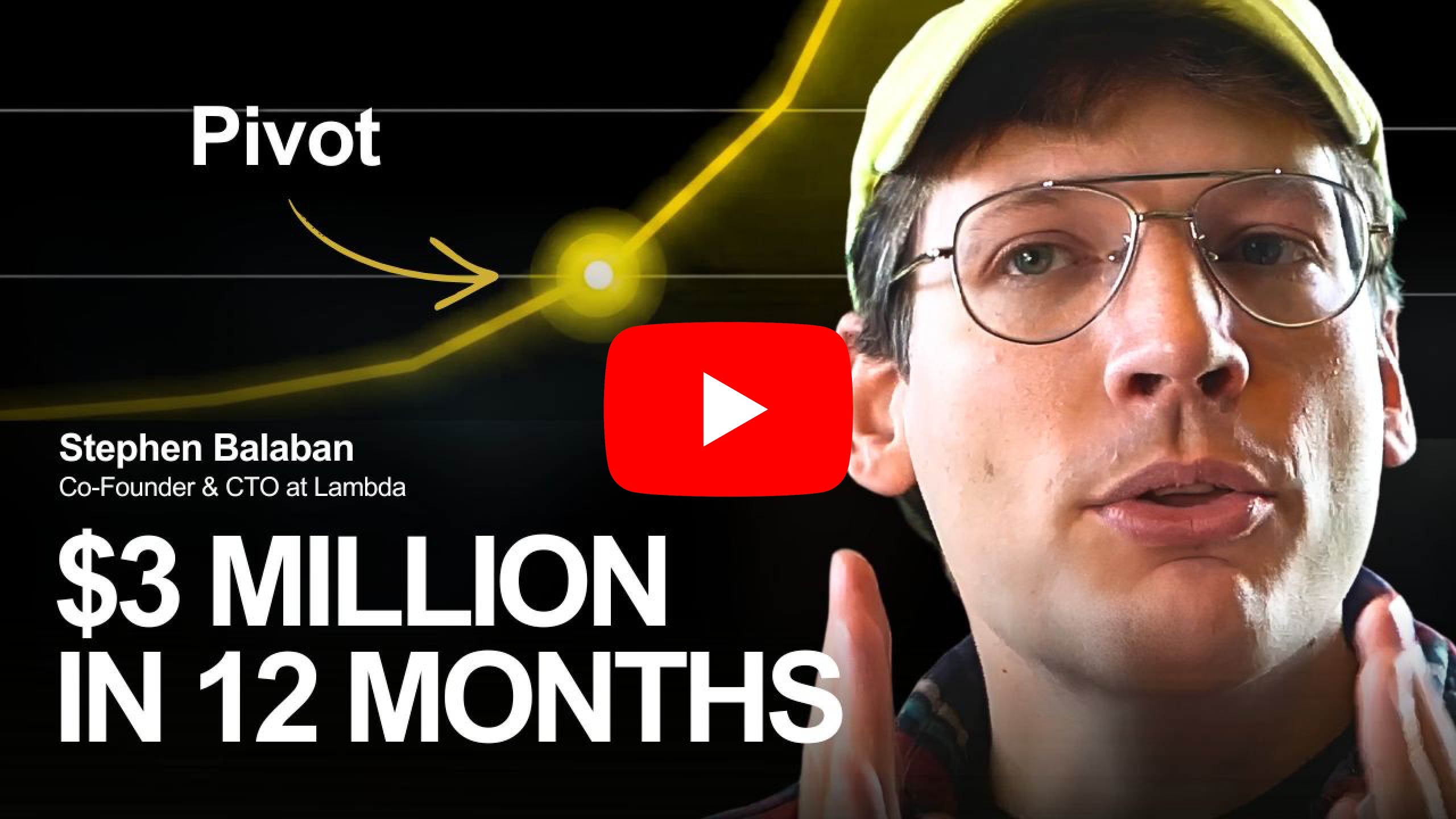
Stephen Balaban, co-founder and CTO of Lambda, joins us to explain why a $40,000 monthly AWS bill was the best thing that ever happened to the company in its early days, why he recently handed over the CEO title after fourteen years at the helm, and what is really going on in the GPU market, and whether we should be concerned or excited about the opportunity.
About LambdaLambda, branded “The Superintelligence Cloud,” is an AI infrastructure company founded in 2012 that builds and operates gigawatt-scale AI factories and GPU supercomputers for training and inference, serving AI researchers, enterprises, and hyperscalers.
Watch now - Stephen Balaban, co-founder at Lambda
During our latest episode, we also learn how Lambda pivoted from a facial-recognition startup, to a data-collection hardware product called Lambda Hat, to an AI consulting shop nobody would fund, to the largest generator of Deep Dream images on the internet, before finally landing on an opportunity that very few saw coming: GPU cloud businesses.
We also explore an interesting trend and opportunity: could GPUs become a new institutional asset class? We also discuss the lessons Lambda learned from partnering with one of the world’s most talked-about companies: Nvidia.
Watch or listen now across YouTube, Apple Podcasts, Spotify, and X
Download the transcript 👇
Timestamps
(0:00) Meet Stephen Balaban(2:13) The State of GPUs(4:40) 2026: Is This the Breakthrough Year?(6:27) Starting Lambda in 2012(11:14) Spotting the GPU Opportunity(16:42) How Stephen Stays Focused(18:47) Starting a Company with Your Brother(21:44) Stepping Down as CEO(27:52) How to Find a New CEO(29:34) Not Raising from Traditional VCs(31:30) Where Does the GPU Opportunity Go Next?(34:35) GPUs Becoming an Asset Class(36:15) What Keeps Stephen Up at Night(39:33) How Many AI Models Will There Be?(41:15) Partnering with Jensen Huang(46:21) How Technology Has Changed
Our notes from this conversation
1. Pivoting isn’t a failure mode for Lambda, it’s the operating model.Since 2012 the company has run through roughly half a dozen pivots: facial recognition software, an AR data-collection hardware product called Lambda Hat, a failed “Accenture for AI” consulting play no VC would fund, and Dreamscope, an app that became the largest generator of Deep Dream images on the internet before the fad died. Stephen’s rule: try something, if it works keep doing it, if it doesn’t move on.
2. An expensive AWS bill accidentally invented the company’s real business.At the peak of the Deep Dream craze, Lambda was paying $40,000 a month to Amazon, nearly enough to sink it. An early investor pushed the team to build their own servers instead. The $60,000 CapEx bet to build workstations wiped out that $40,000 monthly OpEx completely. Workstation sales went from $35,000 in March to $140,000 in May, on the way to $3 million in revenue that first year. The GPU cloud business was the byproduct of a cash crunch, not the plan.
3. GPUs are becoming an asset class, not a depreciating expense.Short sellers have argued GPUs carry a three-year usable life. Lambda’s counterevidence: V100s launched in 2017 are still nearly fully sold out in its cloud today, generating cash flow almost a decade later. Balaban’s comparison is insurance companies parking their float in power plants and toll roads, stable infrastructure that institutional and eventually retail capital moves toward as a category matures.
4. Starting a company with your brother for moral support.As a solo founder, your mood on any given day is the company’s mood that day. A co-founder averages two signals instead of riding one. Stephen credits this as much as anything for surviving Lambda’s early years, run out of a small Chinatown apartment with his brother and co-founder, Michael.
5. The requirement to study computer science to build software is gone.The clearest signal: anyone can now ship real tools built with Claude, people he describes as "meant to be programmers" who majored in something else. The real gate was never a CS credential, it was structured thinking, and that gate is now open to anyone.
Links
Follow Ollie on X: https://x.com/ollieforsythFollow Stephen on X: https://x.com/stephenbalabanVisit Lambda: https://lambda.ai
Previous episodes include
See all previous episodes here 👉
If you enjoyed this episode, help sustain our work by clicking ❤️ and 🔄 at the top of this post.