 Ask ChatGPT
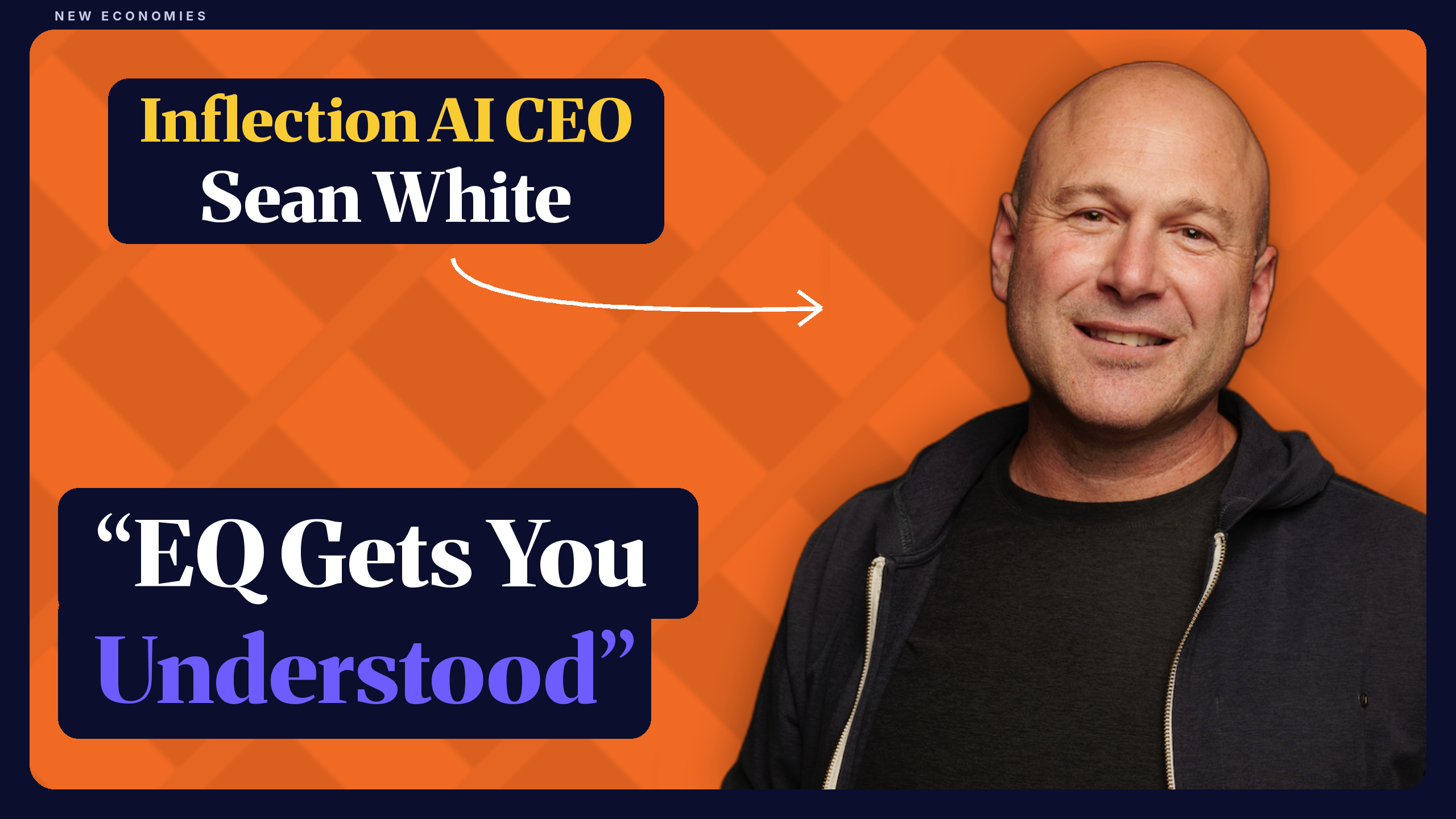

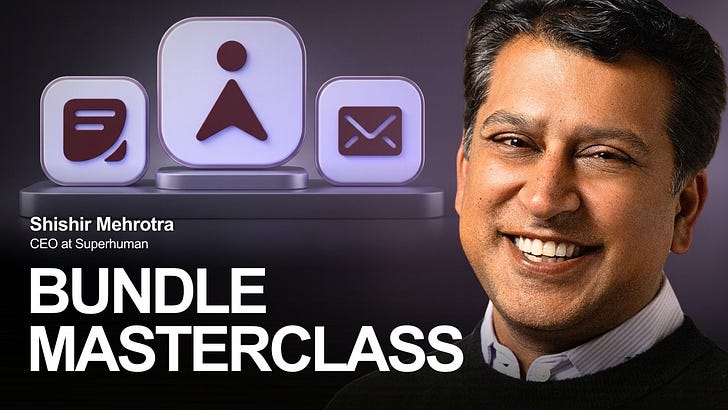
Shishir Mehrotra explains how to design “superhuman” bundles and rebrand a suite of AI productivity products (Grammarly, Superhuman Mail, Coda/Superhuman Docs, and new agent platform Go). He argues bundling isn’t financial engineering: bundles should convert casual fans into superfans by making every component valuable on its own, while also minimizing “third-rate” sticking-together bundles.
Shishir Mehrotra is CEO of Superhuman and a board member at Spotify and Walmart. He previously founded Coda (acquired by Grammarly) and built products used by hundreds of millions. He also cites investor/mentor Reid Hoffman (LinkedIn cofounder) and Daniel Atkins (Spotify) as key influences.
(1) Bundles work by creating value for casual fans and demand for superfans. (2) Best bundles use products for slightly different audiences. (3) “SaaS apocalypse” is overstated; agents increase coordination needs. (4) Superhuman positions itself as the “last mile of AI,” integrating AI into where humans work.
Comcast bundling controversy; ESPN vs History Channel economics; “marginal churn contribution.” Superhuman Mail features like collaborative inbox and high auto-drafting rates; “two-pass email” with split inboxes and inbox-to-task-to-calendar workflow.
Written by AI. May contain mistakes.
Learn the complexities and misconceptions surrounding bundling in business.
“There's a lot about bundling that is not obvious.”
Explore the challenges and strategies behind rebranding Superhuman and its products.
“I mean, it's a chance to get to work on some amazing products with some amazing people.”
Discuss the intricacies and timing of a major brand change within a tech company.
“And then Rahul Vora, the founder of Supreme Mail, said, you know what?”
Understand the evolution and competition in the productivity tools market since the 1970s.
“But I assume the more products you launch, it's super difficult.”
Discover key insights learned from investor Reid Hoffman and his approach to company building.
“And then 2013 or so, I started getting my age to do something different.”
Explore the importance of selecting suitable investors and avoiding bad capital in today's market.
“You mentioned, you know, he's a real people person.”
Understand the traits founders should look for in investors to ensure their long-term success.
“But I think the other side is probably more important to watch out for.”
Learn about the complexities and strategies behind bundling products effectively in a competitive market.
“But that's what I'd be watching for, is what have they done when a company had to make a choice that maybe wasn't short-term optimal, or had to look past a short-term challenge to get to a longer-term outcome.”
Delve into common misconceptions about bundling and discover effective pricing strategies.
“But there was one idea that we were very nervous about trying.”
Understand how to create valuable product bundles that attract both superfans and casual fans.
“And if I fast forward to the business I'm building now with Superhuman, it is obviously very relevant.”
Learn how to create valuable product bundles that cater to both superfans and casual fans.
“Those are people that want that product so much that they would pay a la carte for the product and they have the activation energy to go find it.”
Understand the importance of targeting diverse audiences in product bundling strategies.
“One is, obviously, when you create this bundle, you need maybe one or two super sticky products, which in Superhuman's case, I assume is the Mail and Grammarly.”
Explore the implications of the 'SaaS apocalypse' and the future of pricing models in software.
“So I think when people talk about SaaS apocalypse, they usually mean a couple different things.”
Discover the ambition to create a comprehensive AI-native productivity suite.
“I think we've been rolling it out slowly in each of our products.”
Delve into the evolving landscape of Superhuman products and their impact on communication.
“But we want to build a set of de facto tools that you want every single one of your employees and teammates to have.”
Learn about the significance of maintaining an empty inbox and its impact on productivity.
“It's one of the best AI inboxes on the planet.”
Discover effective email management techniques and productivity hacks to optimize your workflow.
“But for me, you know, I had an old friend tell me that, a guy named Des Trainor, he's one of the founders of Intercom.”
Understand how to categorize and prioritize emails for better efficiency.
“So I think people mistake the goal of they hear me say, get to zero inbox, and they assume it must mean I respond quickly to everybody's email.”
Explore how AI tools can assist in managing emails and boosting productivity.
“It's a little bit like if you're organizing your desk, you know, what would you, would you just put it all in one big pile and then go through, you know, all of them in whatever order they came in?”
Learn unique strategies for organizing and conducting meetings to enhance productivity.
“And, you know, I think getting all my tooling to help sort things, to help, in some cases, deal with it directly.”
Gain insights into the dynamics of board meetings and how to navigate them effectively.
“I'll end up with customers or candidates or partners or so on, but surprisingly less internal meetings.”
Learn how to create effective board dynamics through soft interactions and meaningful feedback.
“I mean, obviously, the reason you want it to be a weird team is you want this group of people that have some distance.”
Explore strategies for selecting board members who provide critical feedback and support.
“You know, there are also just so many incredible people we can all learn from by, you know, coming on boards.”
Discuss the importance of understanding people in leadership and how it affects team dynamics.
“And so we, so he knew both of us and he just knew what we were great at and what we were not so great at, what some of our quirks were, how to understand and interpret some of our, some of our feedback and situations.”

Get the gist, explore an idea or ask about something said.
 Claude
On BIG IDEAS BY NEW ECONOMIES, what are the key points of this episode?
Searching your listeningAutomatic transcript. May contain errors.
0:00There's a lot about bundling that is not obvious. And when I got to YouTube, the paid side of it didn't work. And we tried idea after idea after idea. But there was one idea that we were very nervous about trying. And that was anything that had to do with bundling. So I ended up meeting everybody I could to say, what am I getting wrong about bundling? Why is it such a successful business and such a hated business practice? And so I started looking at all of them and realized that there were a number of things that I had thought about bundling that were not only wrong, they were the opposite. And I started working with a few other companies, helping them with their bundling strategies as well.
0:32And I think over the years, I've learned many lessons. The first is that...
0:35Shishir Mehrotra: This is Shishir Mehrotra, CEO of Superhuman and board member at Spotify and Walmart. He's built and bundled products used by hundreds of millions. And today, he's revealing the key principles of bundling to convert casual customers into superfans of every product you build. The mistake people often make is they build bundles and they think that's all you have to do. They just take third-rate products and stick them together and that's good enough. But actually, you need to build a bundle out of products that on their own can stand very well. Most people think that bundles have to address a single audience.
1:05But actually, you want each product to bring a new audience to the bundle, not just deepen engagement with an existing audience. If you can bundle them together, you start to create value out of these casual fans. People who really are there for one product, but sort of slip over and say, actually, if that one works great, maybe this next one can work for me as well. In each of these cases, you create value out of casual fans, but you create demand out of super fans. How do you build a bundle where each part is valuable and the sum of the parts is also valuable? The number one thing to do is...
1:36Shishir Mehrotra: Welcome to New Economies.
1:50Shishir Mehrotra: Shashir, welcome to New Economies. Thank you so much for being here. Thank you for having me. so you know you're almost now a year into this incredible rebrand of companies how has been the last 12 months in reshaping what was superhuman known as male now you've turned into superhuman as the group which involves Grammarly, superhuman male, Koda which is a company you founded this must have been quite the task to you know basically turn this ginormous you know company around and turn into a group of amazing products? I mean, it's enormous fun. I mean, it's a chance to get to work on some amazing products with some amazing people.
2:32It was quite an ambitious project, but I think there's no better time like the present to take it on.
2:38Shishir Mehrotra: You know, we're now a year in since the rebrand. Has it been as anticipated as you have thought it'd been? You know, and maybe it's worth clarifying folks what we did. So in the course of the last year and a half, I've now been simultaneously CEO of the same company and CEO of three different companies. That's quite an adventure. Yeah, so before coming into this role, I was the founder and CEO of Code, as you mentioned, and built an all-new document. We were acquired by Grammarly, and I can talk more about that in a bit. And then after that, I ended up acquiring another company called Superhuman, which makes one of the most productive AI inboxes in the world.
3:22And as we were looking at those three products and a fourth one we're building now called Go, we went and looked at what should the corporate brand be. And there were a few different options for it. We could have stuck with Grammarly, which is the largest of the set of products, or we could go looking for a new brand. And that's where we started. We went looking around for what is the best corporate brand. A little bit, if I can analogize it, I was at Google when we rebranded the parent company to Alphabet. Sort of similar idea. You have many different brands now. What's the right broader brand?
3:56So we looked at many different ones. And then Rahul Vora, the founder of Supreme Mail, said, you know what? What if we just reuse the name? It's a very broad name, which is good for a company that builds many different products. But actually, it's the word human that we really fell in love with. We fell in love with this idea that while everybody else is out there trying to replace humans with AI, we're one of the few companies whose viewpoint starts with the human at the center, that we think of our products as amplifying the human, not replacing them. And that's long been true for Grammarly.
4:26The product is an assistant that works with you. But at the end of the day, you still submit your article. You still submit your post or your essay or whatever it might be. And Grammarly is just there to help you be an even better version of you. and it's kind of true across all our products. So we love this idea of super human and we're here to amplify the human. I think that naming process, the decision in retrospect was somewhat easy. The process was tricky. You know, renaming a company, especially one, you know, Grammarly at that point was 16 years old. Renaming a 16-year-old company is hard.
4:59I mean, naming a company is hard. Renaming a 16-year-old one is 10 times harder. But this was like swapping the name of your 16-year-old and your 11-year-old.
5:07Shishir Mehrotra: And that's like 10 times harder than that. And so there was a lot of mechanics to get right. There's not a lot of playbooks for it. Very few companies that I can think of have gone through that. But I think it went remarkably well. I think people have really glommed on to the new promise, the new brand. And there was also a do no harm to the existing brands. Grammarly is a really popular product. The mail is a very popular product. What we've done with Dakota, now Superhuman Doc, is a very popular product. and I think that's all worked really well. So I'm very happy with it. Yeah, I mean, like you said, there haven't been that many companies which have done this right.
5:43Shishir Mehrotra: I think there were maybe five or six. I mean, the biggest example I could think of was AT &T and SBC. I mean, and especially in this tech world, there's not many that have done a brand swap like that. How long does the brand swap actually take to come to full circle, do you think? I mean, it depends how you think about it. There's a mechanical swap, which I guess it was one of the most interesting things about it is usually, like if I go back to that time at Google, when we added the name Alphabet, it was a very small group of us that even knew that that was happening. You know, we put out a blog post and for the most part, nothing really changed inside the company.
6:22But this required more involvement because, you know, we weren't just adding a name, we were changing a name. So what people thought of as mail was now going to be the corporate brand. And there was sort of this switcheroo that had to happen, which meant, interestingly, that we had to tell the whole company, which is an interesting difference in how you go through a rebrand like this. There's about 1 ,500 people in the company that all had to understand that this was going to happen because all the login systems changed, the websites all changed. It wasn't like Alphabet that was a new thing. This was a moving around.
6:53So from that perspective, it took us from the decision to the rollout probably four months or so. So it was longer than I remember from the Google Alphabet change. So that's the mechanical change of actually executing it. The broader change, I mean, I think it'll take years. I think these are some very popular products and popular brands. So earning our spot in people's heads as superhuman, the AI-nated productivity suite, will take time. And that'll be ongoing forever. But I think a really exciting process.
7:26Shishir Mehrotra: It's a bit like Twitter, right? I mean, people still call X, right? People still call that Twitter, tweets. It just takes time, right? But I assume the more products you launch, it's super difficult. That's not the analogy I'm hoping for. Let's move away from that. Superhumans are way better. Yeah, I've always been fascinated about rebrands, bundling, especially that huge opportunity, right? But I'll ask you anyway, you might not be able to answer it. But for a rebrand of this size, You know, Grammarly was doing around$700 million in revenue. Superhuman is a pretty large company. Kodak, again, the company you founded.
8:04Shishir Mehrotra: To actually go through that rebrand, is it a very costly opportunity from a cost point of view? So far, it hasn't seemed to be an issue that way. I mean, I think building and broadening a brand is costly. Thankfully, Superhuman is already a fairly popular name. And so it's sort of an adjustment to a brand as opposed to building from scratch. And then for Grammarly, which is a very large brand and 40 million daily active users and a very broad individual base of users, I think the goal was do no harm first. Make sure those folks feel like they can continue to use Grammarly as is without worrying about the parent brand.
8:50That's very similar. I used to run the YouTube group at Google. we had a very similar philosophy of make sure that when possible, take advantage of Google. But otherwise, many of our users had no idea that YouTube was owned by Google and then by Alphabet, which is in the stack of brands there. So sort of a similar philosophy here. And so far, I think that's been without a hitch.
9:10Shishir Mehrotra: Yeah, fascinating. We had Rahul, we were chatting before we came on, we had Rahul, the founder of Superhuman Mail now, on the show a few weeks ago, a few months ago. and he's had a chaotic LinkedIn profile update. But I think it's fair to say you've had a probably even more chaotic one, right? Maybe both of you do it together, should we say. Yeah, yeah. His was pretty chaotic too. But the LinkedIn piece of it is one thing, but the product he's working on is roughly the same, except he has much, much broader scale that he can now expand to tens of millions of more people. Yeah, I remember when Brad Hall came on the show, he told me, you guys met at a bar by the pool.
9:54Shishir Mehrotra: Is that right? Is that how you first met? I had a conference in Hawaii. It was called the Lobby Conference. And we were both in the middle of starting our companies. We were both pre-launch. And he had been working on this idea of, you know, the world of email hadn't changed in a long time. And if you think about, actually, even further back, for me, my very first job was working on Outlook. So I started, this is really dating myself, but 1998, I started on the Outlook team. So he started telling me about, you know, this email category hasn't really evolved in quite a while. This was 2017 or so.
10:31So Gmail, I mean, Outlook was 20-some years old, and Gmail was over 10 years old. And he started telling me what he was doing with mail. And at the same time, I was busy building Coda with a similar viewpoint of documents hadn't changed in decades. And maybe we could try something a little bit different. And so we just had enormous fun hearing about each other's perspectives and journey, became fans of each other's products and stayed in touch over the years. And then when I decided to join forces with Grammarly and start building out the AI Native Productivity Suite, it was one of my first conversations with Rahul, saying, what if we really anchored the suite with the two most common surfaces that people spend time in, their document tools and their communication tools, and really build out what the future of AI Native Productivity could feel like.
11:22And he was very excited as well. So that's how we got started. That's incredible.
11:27Shishir Mehrotra: You know, back then, Koda, you launched it in 2014. What was kind of around at the time? Obviously, Microsoft Word, which is now Google Docs. Was it like actually much competition back then? Yeah, so let's see, we started Koda in 2014. We actually launched in 2019. So there's a long build in that process. It's similar, actually, to what Rahul did with Superview and Mail. These are hard products to build. Yeah, I mean, at the time, the world was Word and Google Docs. And the Office suite and the Google suite, there were some smaller players that were all doing slightly different things. Actually, I don't think anyone would have put us in the same category at the time.
12:06Quip was started a few years earlier by Brett Taylor. The Notion team was off working on building a website builder at the time and then gradually sort of migrated into this category. There were some other teams out there. The Airtable team was taking a new approach to spreadsheets. And so there were a few people trying different things, but none of them were really at any meaningful scale. Honestly, none of us spent much time looking at each other and built up our own products with the view that the world of productivity hadn't dramatically changed since the 1970s. And that's quite a statement.
12:42If you go back and think about what's happened since the 1970s, there was a running joke at the company that if you took Austin Powers and you plopped him in front of a, you know, you pull him out of his freezing chamber, he wouldn't know what clothes to wear, he wouldn't know what music to listen to, but you put him in front of a document, a spreadsheet, or a presentation, you could probably do just fine. because it hadn't really changed since that time period. And in that period, since the 70s, every other piece of technology completely changed. I mean, the concept of what's an operating system, what's a web browser, what's a database, all these things were completely different.
13:20And so it did feel like it was time for change, but those products have a lot of staying power. And so, you know, worked hard at trying to build what would be a new approach to thinking about productivity, One that blended the lines between the surfaces you're working on, didn't make you choose documents, spreadsheets, presentations, so on. One that really rethought how you think about applications in that world. One of our core talking points was that we would enable anyone to make docs as powerful as apps. That really, these tools weren't about documentation. They were about running our teams, running our rituals.
13:55And that's how we got started. And it's been an amazing product to work on.
14:01Shishir Mehrotra: Today's episode is partnered with Hostinger. Hostinger are the perfect tool for builders like you and I to turn these crazy ideas we have into reality. Hostinger provides everything we could possibly want to get going. They provide web, email, cloud hosting, and even in today's environment, we need that perfect vibe coding tool to turn these crazy ideas we have into reality. Now, Hostinger are providing our audience with 10 % off. All you need to do is head over to hostinger.com forward slash new economies or enter code new economies. hosting is trusted by millions of builders and they provide everything at affordable prices and it's time for you to get building i promise you it'll be worth it go and do it now back to today's episode you know one of your first investors was reed hoffman we just had reed on the show a couple of weeks ago as well what was the greatest lesson you've learned from reed and how did you first meet so reed and i met um socially we're both part of a dinner series where a group of CEOs get together once a month and sort of rotate who hosts.
15:02And then 2013 or so, I started getting my age to do something different. And Reid spent a while trying to convince me to become a venture investor, which is the journey he was on at the time. And I remember really well, we went for breakfast early 2014. And I sat down, I said, Reid, I've decided I don't want to be an investor right now. What I'd like to do is I'd like to start a company. And I have this idea, and I know it's going to sound crazy, but we think we can build a modern document. And he actually got up from his chair, switched to a different chair, and he said, all right, I guess this is going to be a different conversation than I thought.
15:39Pitch me the idea. And so the whole thing flipped, and he got pretty excited about it. And by the end of the breakfast, he had decided he wanted to be part of it as well and led the investment in the company. Reed is a really interesting product builder. And I think over the years, I've learned many lessons from him. I think that his approach to company building, product building, so on, it matches a lot with mine. He's not a short-term optimizer. He likes to build products that can last, that can work for the long term. He treats business relationships that way. So the ways that we would come to agreement on whether it was financings or hiring or new board members or so on, And he treats them all with a long-term view and not with a, you'll find some investors that are constantly trying to squeeze every element out of something.
16:30But I think probably the most notable thing about Reid, and he has this phrase that I think is accurate, that the companies that people create tend to be a little mirror image of their personality. And Reid is a, at heart, he is a people-driven person. And the founder of LinkedIn is probably no big surprise that he loves... spending time with people. He genuinely connects with them. He likes building products that are built around how people connect and work together. And so we spent a lot of time on how to build a different way of thinking, a way of working with a view of putting people at the center.
17:09So I think it was, you know, I learned enormous amount from Reid over the years and I'm excited to continue working with him here.
17:16Shishir Mehrotra: Yeah, amazing. You mentioned, you know, he's a real people person. Honestly, I mean, I only spent an hour of him, right? We had an hour conversation on the podcast, but we spent 20, 30 minutes like just talking afterwards. And he was asking like all these just curious questions, like how long have you been living in Asia? That's where I live. You know, how are you thinking about like growing all this? And that's like, that was so surprising and super genuine, I thought as well. I mean, he's built a career out of finding unexpected relationships, unexpected people, and he nurtures and values them.
17:48Shishir Mehrotra: Yeah, I really like that. I think it's, and this question correlates when founders, especially today, they're thinking about building all these amazing products. You have 18, 19-year-olds who are getting to$5 million in annual current revenue, but then you have second, third-time founders who are going out to raise crazy rounds of funding. How important do you think it is today in today's markets when capital is unlimited, available to pick the right investors and partners early? I give this advice a lot. I'd say first off, there is definitely bad capital. And in terms of the range of outcomes that can happen, the downside risk can be much, much more extreme than some of the upsides.
18:34So I think people, you know, I often tell people first, first and foremost, do no harm. And there are definitely investors out there that can be short sighted, that can be not understanding of what it takes to build a company and, and the ebbs and flows and how you nurture a product in a market and grow. It's a lot like growing a kid, right? It's the, there's a, there's an early phase where it doesn't look like that much can happen. There's an awkward teenager phase where there's some things that are remarkable and some things that are not. And then hopefully you get to an adulthood phase and start to scale a business.
19:08So I think there is the bad side. On the other side, I think the transformative investors don't really feel like investors. They feel like teammates. They feel like friends. They feel like colleagues. And your relationship with them tends to go beyond the company. And if you're lucky enough to be in that situation of finding someone like that, I would definitely do it. but I would think about it a lot like hiring a teammate. But I think the other side is probably more important to watch out for. I've been involved with some companies that have definitely ended up with hard times when their investors act more like bankers than like team builders.
19:49Shishir Mehrotra: By capital, what are some of those characteristics founders look out for? First of all, like most things, when you're working with people, the number one thing to do is do a great job with reference checking. You want to call people who've worked with them before. And so you should trust your instincts, but you should really trust the people that have spent years working with the person and get a view of what's it been like? What have been the positive moments? What have been the not-so-positive moments? And every company, no matter how straightforward you think the path is, has hard moments. And you want people who have been through it, who understand that those are often moments you lean into.
20:30They're often the formative moments. But I've also seen companies where that's exactly the moment when the investor chooses, maybe this is the time to get off the boat or to put pressure on a change that is too early. But the easiest characteristic is, can an investor, on the good side, they can help you calibrate, right? They see many other companies, so they can help you calibrate, is this good or bad? How does this rank against other companies and other changes? The not-so-good side is investors that get antsy. And, you know, I think this is true of private and public market investment. Some of the best public market companies out there have, you know, have very long-term capital.
21:13I sit on the board of Walmart now, and the Walmart is almost half owned by the family, and it's by the Walton family. And it's amazing how much it creates clarity of ability to take long-term rest by having investors that you know are in it for the long haul. But that's what I'd be watching for, is what have they done when a company had to make a choice that maybe wasn't short-term optimal, or had to look past a short-term challenge to get to a longer-term outcome.
21:42Shishir Mehrotra: And also, it helps if you have great board members, it's great, great board members as well. You're on the board of Walmart, Spotify, we'll talk about that. But I always think of you as the expert of bundling. We're at this incredible inflection point now in AI tools where how many freaking meeting note tools do we need? How many doc noting tools do we need? Email tools, all of this, right? And there haven't been that many companies who have been able to bring all of this together and offer it as one product. I mean, there's Google, that's the most obvious one. And then there's you guys. How do you think about this incredible opportunity of bundling when there are so many other tools on the market?
22:25I mean, it's tricky. I think first of all, I got interested in bundling back when I was at YouTube. And when I got to YouTube, the predominant wisdom was that YouTube would be an ad-supported service. And then at some point, we would do something paid. It was just sort of assumed that that's what would happen. And so I got there in 2008 and the ad side of it worked well. I don't want to paper over a lot of hard work that went into it, but I think we managed to make a pretty good business out of that. But to be honest, the paid side of it didn't work. And we tried idea after idea after idea. And I probably put 10 different teams on different ideas.
23:10And I remember one where we had a team working on an idea. They worked for six months. They built a paid product. We launched it. It made$100. Not like$100 a day,$100 a minute,$100 a week, but just$100. And it just turned out to be total flop. And we canceled it and bought some pizza for the team and moved on. And in that process, I realized that we were trying almost every idea we could think of. But there was one idea that we were very nervous about trying. And that was anything that had to do with bundling. And bundling was basically a four-letter word inside the building. And, you know, there's a lot of reasons why, but I think especially if you go back to that time and you ask somebody about bundles, bundles were synonymous with a single company.
23:55And in the United States, that company was Comcast. And there wasn't, Comcast didn't, you know, well, I think Comcast is a great company, but it didn't have a fantastic consumer reputation. In particular, it was seen as the exemplar of a bundling that didn't create good consumer value. And so I ended up taking a few months and just meeting everybody I could to say, you know, what am I getting wrong about bundling? Why is it such a successful business and such a hated business practice? And so I talked to all sorts of people, mostly in the media industry, but then off to other industries. Bundling shows up in almost every industry.
24:33It shows up in healthcare. It shows up in software, obviously. It shows up in credit cards, consumer goods, in travel. And so I started looking at all of them and realized that there were a number of things that I had thought about bundling that were not only wrong, they were the opposite of what I thought. And so we ended up writing this paper. It's called Four Myths of Bundling. And it's structured as an argument with someone who's an anti-bundler. But actually, the whole paper was written as me arguing with myself. And it was basically these were all things I used to say that turned out to be quite wrong.
25:09And so that became a bit of a philosophy for me. When I was leaving YouTube, I met with Daniel Atkins, Spotify, and it turned out that Daniel had very similar ideas and thoughts. And he invited me to join and help him at Spotify. I've been on the board there for over a decade now. And I started working with a few other companies, helping them with their bundling strategies as well. And there's a lot about bundling that is not obvious. As an example, one of the four myths is how do you divide money in a bundle? You know, most people would say, you know, bundles, maybe they're a good proposition for a consumer, but actually dividing out the money is really hard and Comcast is cheating everybody.
25:47So there's this really famous chart in this paper we wrote that plotted usage versus wholesale pricing. So when most people say you divide money in a bundle, you want to divide it fairly. And most people think the fairest way to divide money in a bundle is by usage. Usage must be the great equalizer. And so there's this awesome study that was written that said, if you looked at this is now over 10 years old, but if you look at cable, the amount of time spent on History Channel and ESPN. History Channel and ESPN is about the same. If you look at hours spent, rating points on is actually very similar amount of time spent.
26:24And yet you look at their wholesale prices, how much they got paid by the bundler, by Comcast and others. There was almost a 20x difference. ESPN was paid about 20 times more than History Channel. And so if you think about that and you plot it as two axes, you put usage on one axis and you put wholesale pricing on the other axis, there was a question, what is that economic value? What is it tied to? And we'd ask people and say, oh, that's anchor value. That's how important it is to the bundle. And anchor value is a term I think you use when you don't understand an economic phenomenon. And so we ended up coming with a different term for it, which in retrospect is somewhat obvious.
26:59We call it marginal churn contribution. So that's if you were to remove one product from the bundle, how many people would churn? And on that basis, if you remove DSP in from the bundle, there was really obvious math that about 20 times as many people would churn as if you removed History Channel. And that was actually a very rational pricing model. So the four of these ideas, that's one of them, each were kind of inverted from how you think about products. And I just got really interested in this phenomenon of when do bundles create value and when do they not? And if I fast forward to the business I'm building now with Superhuman, it is obviously very relevant.
27:35And we're building multiple products that can be purchased as a bundle. And what that allows is it allows for the core principle of bundles is it allows for the delineation between what we call superfans and casualfans. And maybe one way to think about that is imagine you had 10 different products and each of them had a choice, offer them a la carte or offer them in a bundle. If you offer them a la carte, you would get what I would refer to as a superfans. Those are people that want that product so much that they would pay a la carte for the product and they have the activation energy to go find it.
28:09So when you offer them a bundle, what happens? Now you get these casual fans. So casual fans lack one of those two criteria. They either wouldn't pay the a la carte price, or more importantly, they don't have the activation energy to go find the product. And so you end up with this bundle that addresses not only superfans, but casual fans. So that's how bundles create value. And the mistake people often make is they build bundles and they think that's all you have to do. They just take third-rate products and stick them together. And the sum is more than the parts and that's good enough. But of course, that's not true either.
28:42And so you need, in each of these cases, you create value out of casual fans, but you create the demand out of super fans. And so you need to build a bundle out of products that on their own can stand very well. And then they come together into a bundle. So that's what we've been doing here. I think the best bundles look like that. I mean, the best bundles look like those products all would stand on their own. I mean, you can't, like in our case, the products in the superhuman bundle are, you know, one of the most popular mail products on the planet. With Grammarly, one of the most popular communications assistants on the planet.
29:18And what we've done with CodeIntern and superhuman docs is, we think, one of the most productive all-in-one workspaces. And then we're building a new one we call Supreme & Go, which we hope is the preeminent agent platform. Each of those products has a stand on their own. But if you can bundle them together, you start to create value out of these casual fans. People who really are there for one product, but sort of slip over and say, actually, if that one works great, maybe this next one can work for me as well. And I think it's that nuance, that how do you build a bundle where each part is valuable and the sum of the parts is also valuable, I think is an art.
29:52and it's not just financial engineering.
29:55Shishir Mehrotra: Fascinating. Okay, I've got a bunch of questions. One is, obviously, when you create this bundle, you need maybe one or two super sticky products, which in Superhuman's case, I assume is the Mail and Grammarly. Those are your two most popular products, right? Grammarly is definitely the most popular product. I think they're each, interestingly, they're popular with slightly different audiences. And actually, that may be another, I've sort of, not in order, gone through the four myths of bundling, but the fourth one is actually the trickiest one, is most people think that bundles have to be a very related product that address a single audience.
30:34But actually, you want products in a bundle that address slightly different audiences. The fourth myth in the bundling write-up is that the best bundles minimize superfan overlap and maximize casualfan overlap. So if you think about the people that love superhuman mail, they tend to be people that do a lot of outbound communication. So executives, salespeople, recruiters, they tend to be those people that are constantly communicating with others, very high stakes. Grammarly, interestingly, addresses people that there's an overlap there for sure. But some of the biggest audiences for Grammarly are people who write a lot.
31:12So it's students, tends to be marketers, tends to be actually bloggers, journalists tend to be a big group as well. If you think about docs, docs actually tends to address teams. It's teams that want to operate better. And so you get a very different dynamic. And each one brings a slightly different audience to that group. And you want that. You want each product to bring a new audience to the bundle, not just deepen engagement with an existing audience.
31:38Shishir Mehrotra: There's this term, the SaaS apocalypse, right? And we actually had a way faster fan of Zapier, who I know you know well as well. He was one of our first guests on the show. And back then we were talking, it was this term usage-based pricing that just kind of like come out and he started talking about it. How do you guys just think about this whole SaaS apocalypse versus usage-based pricing? Well, first, I wouldn't put those, those two don't have to be next to each other. So I think when people talk about SaaS apocalypse, they usually mean a couple different things. So sometimes they start with the first order theory on SaaS.
32:17What's the end of SaaS? Why is SaaS in trouble? The first theory is that we don't need these tools anymore. Agents are going to do everything. And to that, my general reply is I think people are misunderstanding the world of AI and what agents represent. In my mind, agents represent new teammates. And if you think about one of the classic examples people think about in the SaaS world is Salesforce. You say, when do I buy a CRM tool? So if you're starting off and you built a product and it's just you and maybe you have one person working with you, you don't need a CRM system. He goes, take the names of the customers up on a whiteboard.
32:51And when you get to three or four, maybe you have a spreadsheet. But as soon as you get to 10 salespeople, you need a CRM system. You've got to track everybody's work and make sure they're not tripping on each other. You can divide and conquer different accounts. So when you add agents to that mix and you say, instead of 10 salespeople, 10 human salespeople, I'm going to add 100 virtual salespeople, I actually think the need for a CRM system dramatically increases. You need a way to coordinate these folks. And I think that's actually really interesting. If you think about where some of the AI workflows have taken off the fastest, it's actually in spaces where the SaaS systems are very capable and they know how to add a marginal worker.
33:37And if you think about support, for example, how do you add a new human support person as well? You add them on the queue and they start answering tickets and then they gradually work their way up. And so it's actually very easy to see how do you add AI agents there. Similarly, in coding, where everybody has some way of dividing up work between developers, and so they end up with a system that's some sort of issue tracker. Maybe they use JIRA or Linear, or maybe they use products like Coda or Notion or so on, and they divide up work that way. I think the existence of tools like that, that coordinate work between humans and our virtual teammates, is actually going to increase in importance.
34:11I think that first objection, I don't think that's where we're headed. The second one is, okay, maybe you're going to need a CRM tool and you need a way to divide up work between developers and so on, but maybe those particular vendors are not going to be the right ones. And I think there's definitely truth to that. It's possible that some of the tooling that was designed just for humans is not going to work as well for a world that is a mix of humans and virtual teammates. And I think we'll see what happens there. I think they, you know, can the existing players transform themselves faster than new players can emerge?
34:46But I think that that's going to be a really interesting debate. So I think that's the second level of how people think about SaaS. And the third one is the one you got to is, is the pricing model wrong? And I do think that that has a real merit for the very simplest reason that most SaaS pricing models were based off of you pay per human seat. So in a world where you have virtual seats, moving to a usage-based model, in my mind, is almost a byproduct of that. I just don't know how to price virtual seats. And so you end up with, in many of these cases, these products say, well, if I can't index to your number of employees, I got to index to something.
35:25And usage seems like the closest element to that. Now, when people say usage, they mean a very broad set of things. Sometimes usage gets very close to outcome. And obviously, there's a lot of companies working on that. For example, in the support space that are focused on, you know, charging per successful resolution of a ticket or so on. Sometimes that's not that easy to do. I don't think anyone has successfully done that yet in the developer space, for example. But I think these are each different theories. You know, one is, is SaaS ending because we don't need coordination tools? I don't think so.
35:52Are the vendors going to change because virtual teammates are different than human teammates? Yeah, probably. Are we going to have to charge differently because I now have employees that don't fill out W-2s the same way? I think that it will probably happen in a lot of industries. But they're each for slightly different reasons.
36:09Shishir Mehrotra: I think for a software company that does a bundle of different products, do you think usage-based versus just charging a flat fee to get access to all of your products, is that going to have any impact? I think we've been rolling it out slowly in each of our products. And the way I think about it is I think people draw these contracts of usage base and subscription. I think the idea of these being per seat will gradually become less and less relevant because you're going to have the ability to perform work that doesn't correlate well with the seat. That doesn't mean you need to lead to unpredictable pricing.
36:48And I think there's many ways that industries have aligned on how to package together value in different ways. And I think you have to find that balance. I don't think that introducing variable pricing has to feel unpredictable. So we've been working through that with each of the different products. But it's clearly the case, and especially with our newest product that's coming out with Go, where we allow anybody to build agents that basically can work like Grammarly, but with your own logic and your own knowledge and connector base. You can use that to produce agents that not only go beyond a single human, but also can do work that is much beyond what we can rationally include in a single subscription.
37:35But we have to ease people through it. And I think it's just like in the real world. Sometimes you do variable price contracts and fixed price contracts. And I don't think you have to paint that all in one brush.
37:50Shishir Mehrotra: You now have Go, you've got Grammity, you've got Superhuman Mail. you're on Coda. What is the dream? What is missing from this bundle of products? We have a lot more coming. Some we're building internally, some we've been acquiring. We just announced we acquired a company called GPT-Zero, which builds a set of agents focused on authenticity, which I think is really interesting. But I think my view is I want to build the AI-native productivity suite that covers the set of applications and agents that are as horizontally applicable as possible. And I think that is slightly different than what some others have focused on.
38:32But we want to build a set of de facto tools
38:35Shishir Mehrotra: that you want every single one of your employees and teammates to have. I asked Rahul this question, and I actually think Superhuman is in this incredible position to disrupt Slack, Microsoft Teams, and in Asia, Lark. is so bad. The communication world just hasn't changed internally. I mean, it's a category Rahul and I spend a lot of time talking about and thinking about. There are definitely features of Superhuman Mail that disrupt it already. One of the best features of Superhuman Mail is what we refer to as a collaborative inbox. Already, you can go take emails and make them collaborative in a way that people aren't really used to in an email world.
39:21I think the idea of the core messaging stack, I think, is an exciting one, not one that we've taken on yet. But it's definitely one we keep thinking about.
39:31Shishir Mehrotra: Sheets also hasn't really changed that much. Is there an opportunity there? Actually, in that category, we bought a company called Rose. It's based in Portugal. So we completed that acquisition, I think, in February. And that team is being integrated into the Coda team, which is now the Superhuman Docs team. and that's an obvious opportunity. Superhuman Docs already has a modern type of spreadsheet we call databases that we're actually launching now as a separate product as well. So if you want just the database product, you can pull that out of what used to be called Coda. But the idea of fully crossing that gap with spreadsheets, I have an interesting set of ideas of how we can do it.
40:13I'm really excited about what the team's working on there.
40:15Shishir Mehrotra: Is there a product which you just wouldn't launch? the market is too saturated or clawed open AI is just going to do it themselves? I think probably the most obvious line for us is we like to refer to ourselves as the last mile of AI. It's our job to take AI and make it actually useful to people. As a fun side note, we do over 100 billion LLM calls per week. It works out to per user per day between 2 ,000 to 4 ,000 for our median users on our product. So we put AI to work, is how I think about it. which means that there's a layer of the stack that we tend not to go below. So if I think about the world of the Anthropics and the open AIs and so on, the way that they're, I'm very thankful that they're out doing the cutting edge of what we now call frontier models.
41:02I think that's really exciting, but not really where we focus. It's our job to bring AI to work right where humans work. And we do it at a fairly high scale across all our products. But we tend to focus on the user and work backwards instead of start with the model and move and work up.
41:23Shishir Mehrotra: A hundred billion alarm calls. That's a lot of calls per week. Yeah. I mean, if you think about it, there's a variety of different types of calls. And Grammarly drives a lot of that. But, you know, it has to work at the speed of typing. And so as you're working, you know, we're constantly going out and finding all the different ways that we can help you. I mean, the real thesis behind building Superhuman Go is taking that layer out of Grammarly and turning it into a platform so anybody can use that. Because up till now, that layer was only used for Grammar. Now you can build your own agents that work just like Grammarly does.
41:57You go back and look at the rest of our products. Similarly with Superhuman Mail, we are not only a very productive inbox for the end user. It's one of the best AI inboxes on the planet. We are constantly auto-organizing your mail for you, auto-drafting responses for you. We just did a huge announcement of rebuilding that auto-drafting stack. And Rahul may have shared with you already, but I believe we're now at over 60 % of mails we auto-draft are sent by the user. And over half of them sent unedited, which is a very high bar for what we need to be able to do for people. So across all our products, we're bringing you to work right where you work.
42:37in many different ways.
42:41Shishir Mehrotra: So as the CEO of Superhuman, is your inbox on zero? My inbox has been on zero. I think I'm going to forget. They gave me a number when I went in to buy the company. Rahul's team pulled some stats for me. But apparently I'm running on almost five years hitting inbox zero, at least every week, almost always every day. Okay, I need to sign up as superhuman. You know, before I came in the show, I was checking my inbox. Just in the last six months, 4 ,493 unread emails. Yeah, that's, I think I can't survive that way. I mean, everybody's different, so I don't mean to judge. But for me, you know, I had an old friend tell me that, a guy named Des Trainor, he's one of the founders of Intercom.
43:32And he said, you know, your team's productivity is upper bounded by yours. And that was a really interesting frame for me of, okay, when I'm not responding to them, what are they doing? When they're waiting around for me, what is happening there? And so being able to be on top of things for my team, I think is really important. And so, yeah, I try really hard to hit inbox zero every day, often multiple times a day.
43:57Shishir Mehrotra: What are your hacks? I mean, I try and respond to emails within half an hour. We just have a lot of people who want to come on the show. What are some of those productivity hacks you have? You just block half an hour at the end of each day? Actually, Des ended up writing an article about it that I thought was really good. And if you look it up, we ended up turning it into a Coda doc. It's a template people can use. Des trainers prioritize productivity system, I think it's called. And he started with this interesting tweet and this observation that he said, your inbox, we all look at three tools.
44:35Your inbox is what other people think you should work on. Your to-do list is what you think you should work on. And your calendar is what you actually work on. And he drew these three as circles. And he said, your job is to make these three match each other. And it's sort of this Venn diagram of making them match. And so I think people tackling their inbox misunderstand the role of the inbox. If you treat your inbox like a to-do list, it won't work. The inbox's job is not about, I respond to very little email. I'm incredibly aggressive at not responding. So being on top of it doesn't mean you get immediate responses for me or anything like that.
45:16But what I'm very good at doing is getting it processed out of my inbox and onto my task list. And then I'm very good at taking that and making sure the most important things are sitting on my calendar. And if you build that sequence and you manage your time backwards that way, you can take control of your own time. So I think people mistake the goal of they hear me say, get to zero inbox, and they assume it must mean I respond quickly to everybody's email. It's quite far from the truth. One of my hacks, I mean, I've been using Superhuman Mail now for almost a decade. And so that is clearly the tool of choice.
45:53I have a particular way of doing it that I call two pass email, which is basically I have a aggressive set of auto labels. And these days you can build auto labels in English. So it's it's a it's you know, you used to have to go, you know, create these concocted rules. But now I can sit down and I can write these very simple English statements that just divide my inbox into about 10 different piles. And those 10 piles have a lot of meaning to me. each of them with a different level of urgency, each of them with a different level of commonality. Because in my role, one of the trickiest things is context switching.
46:30So when I sit down, for example, one pile is everything to do with recruiting. And it's candidates, and it's interview feedback, and I did this reference check, and I did reach out to this other person and so on. So that all ends up in one pile. In Superman Mail, we call them splits. They're called split inboxes. And so that I handle a certain way. I have another whole pile, which is, interestingly, is people that the AI is pretty convinced don't know me. It doesn't mean that they're unimportant, but I handle them very differently. Mail is coming from people who don't know me. There's lots of signs in an email that somebody doesn't know you.
47:05And then as I've gradually worked that set of rules as well, first off, they start with introducing themselves. As good a technique as that is, it's actually a great indicator of maybe I don't actually know this person. And so I've got these 10 different piles. And for me, my email is being self-sorted in those 10 piles almost entirely automatically. And then I handle them in order at different frequencies. So there's one set of piles that actually just get auto snooze till the end of the day. I don't even look at them. And so all day long, there's mails from people that mostly don't know me unless there's a signal that it needs an immediate response.
47:41They get pushed out and I go look at them in the evening. There's others that are very clearly pulled up and looked at right away. But I always look at mail in those piles, all emails from customers, all emails that are coming from my product teams. Those each get handled in groups. It's a little bit like if you're organizing your desk, you know, what would you, would you just put it all in one big pile and then go through, you know, all of them in whatever order they came in? You know, that'd be quite silly. Now you go put your bills over there and you go put, you know, you go put your greetings cards over there and, you know, each of them has a different priority.
48:15And yeah, I'll get back to the holiday cards a little bit later. but the bills I need to get to once a month. That's a natural human reaction. And interestingly, our communication tools make that really hard to do. And I think SuperMail has done a really good job of it. So get your mail into piles, and then remember, your first job of it isn't to necessarily respond, it's to get it into your task list, and then get your task list on your calendar. And so I'm constantly doing that set of steps.
48:42Shishir Mehrotra: And then you probably have an additional folder, media, podcasters, annoying people like me reaching out is probably straight to spam, right? Not straight to spam at all. It's really interesting, but there is a group, a split that is for media inquiries. And in my case, I have a team that helps me with that. And I don't even read them. I just take them and they go right to Darlene and her team and they do a really good job triaging them and they help me make sure that the most obvious ones I end up working on. In some cases, there's another, you know, I'll politely decline or I have another spokesperson in mind that can that can do it.
49:20Or I have a topic that, you know, we'll do that one. But when we're launching this this product, I have this new thing I want to talk about. And and but yeah, that's a whole pile that, again, if you were to use a desk analogy, you'd say, hey, all those inquiries, I'm going to put them on a little pile. I'm going to stick in the corner of my desk and I'm going to say, hey, Darlene, could you help keep this pile at zero? And I think that idea, it sort of gets back to how I think about AI as well. Of like, what are all, I'm not really trying to replace the human. I'm not, you know, when I respond to email, I respond.
49:49And, you know, we autodraft a lot of email, but I always read them. And I always make sure it's coming from me. But I think all that assistance is very helpful. And, you know, I think getting all my tooling to help sort things, to help, in some cases, deal with it directly. In some cases, you know, give me a draft of what I should be doing. I think that's all really magical and can lead to really feeling like an extension of me.
50:15Shishir Mehrotra: One of the questions I love to ask on the show is actually just getting inside a typical week of all these incredible founders and CEOs. If I was to join you for a week as your chief of staff, what would you be doing together? What does that typical week actually look like? One of our core philosophies, and it was interesting, I was talking to Daniel Eck about this, who's the CEO of Spotify, founder of Spotify. And he actually did it. I'm a big fan of doing the thing that you're hypothetical. I actually really recommend people actually go do that. So especially CEOs of companies, I'll often recommend if you'd like to come spend some time with me, we'll swap.
50:50I'll spend some time watching you and you can spend some time watching me. And it's quite useful. And so he gave me some reflections at the end of it of what was unique about how I, I mean, a lot of what I do is typical. So I don't think it's that different. But the philosophy I have that maybe is a little bit different than others is I don't like to have ad hoc meetings. And I'll explain what I mean by that. And the ad hoc meetings, and this is not a shared philosophy. Some people who design their lives around this. But what happens, especially inside a company, you say, I have this topic and I need to get to a decision on it.
51:27Oftentimes, that ends up in a communication tool. It's in mail, it's in Slack, it's so on. and you say, hey, can I get a group together for talking about this? That group is a little bit amorphous, a little bit hard to put your arms around. You start looking for times. Oh, well, this person's not available till next week. This other person's not available till the week after. And now you have a shitty choice. And you either say, I'm going to take the three people who are available right now, and we're just going to do it. Or I'm going to take the group of people that I actually need, I'm going to wait three weeks, and now it's no longer timely.
51:58And then there's another challenge that happens. Then you show up at that meeting, you've totally forgotten what it was about. It's not really clear what the ritual is, who's in charge of this thing and so on. And so we have a few rituals that are meant to deal with that. The most important of which is a ritual we call Catalyst. And this will feel really unique, but basically what we do is for one hour a day, every single day of the week, there is one hour block for everybody in the company. And the rule is you're not supposed to book any standing meeting in this time. And you're really not supposed to book anything in this time.
52:32And then there's a big document in Coda and Supreme Docs. And you can go and you fill in, this is the topic I need. These are the people I need for it. And it's done in a framework we call DASI. So there's a driver and approver set of people who are meant to be consulted. And then the set of people are interested. It's a public list. So you can go through and you can see these are the topics that are going to be discussed. And then one very important thing happens is a unique meeting gets scheduled with that group. into that time slot, a unique meeting gets scheduled. And a set of Slack messages go out and it says, hey, you've been invited to this.
53:06This is the driver. This is the topic. This is the pre-read. And this is how the meeting is going to run. And so you end up with this one hour block. And usually it's the 230 minute segment. So I end up with 10 such meetings a week. And usually that means for almost any topic, You can get the group you need within 24 hours, including me, maybe 48 hours. But there's not this sort of race to find times in everybody's calendars. That idea of create a decision-making forum, a way to what we call catalyze a decision or progress, not always a decision-making forum. Sometimes it's a brainstorm. Sometimes it's an alignment or so on.
53:51That is pretty unique. So what that leads to is I end up with a lot more empty time on my calendar than you might think. And so you'll end up in these, and they'll seem intense. They're a half hour. There's almost always a pre-read that everybody has read. We do a ritual we call Dorian Pulse. Everybody writes down. Dorian is everybody writes down their question. Their set of questions that get ranked. It's named after the fish who asks all the questions from Pixar. And then Pulse is everybody writes down their viewpoints. Everybody silently writes down, I am in support or not in support of this decision.
54:21Or I think we should pick option A or option B. And our trick is you can't see anybody else until you're done writing. But you get this pre-read, you show up for this meeting, it's in one of these one-hour pre-block slots, and you get an enormous amount done in that timeframe. And then you just have very few ad hoc meetings. And so my ad hoc time ends up becoming work time. Often it ends up with external meetings. I'll end up with customers or candidates or partners or so on, but surprisingly less internal meetings.
54:50Shishir Mehrotra: When you're preparing for these board meetings as well, you're on the board of Walmart, Spotify, and obviously you have your own board. What is the best way to prepare for a board meeting? Can we go inside one of those board meetings? What actually happens? I sit on a few boards. I sit on two public boards, Spotify and Walmart, and then I sit on two nonprofit boards. Schoolhouse.world is a nonprofit that I started with Sal Khan early in the pandemic, and then I sit on our college board at the MIT, Northern California board. And each are very different, but there are some commonalities. Probably the most important commonality of boards is they act as a team, but it's the weirdest team you've ever seen.
55:28Every one of these is a team that gets together usually four times a year. And the rest of the time, not only do they not spend time together, sometimes they compete with each other. And so this group of people that are brought together have to come to some way of working together that allows them to act like a team when all the normal team behaviors are not possible. And so I think the number one thing you have to do when you think about a board is you have to realize, I'm trying to get this group to act like a team, but it's a weird team. And you need to take the advantage of that. I mean, obviously, the reason you want it to be a weird team is you want this group of people that have some distance.
56:05You want this group of people that isn't in every executive meeting and isn't in every review and is spending the rest of that quarter going and looking at other problems and coming back and telling you, hey, that thing you're worried about, it's not that big a deal. This other company solved it this other way. Or that thing is actually a really big deal. And that's a train wreck coming. And you better do something about it right now. So boards are weird teams. And I think there's a few rituals that many boards end up doing that are relevant to that. And I think, by the way, those four could not be more different.
56:40I mean, the schoolhouse.world board meeting is incredibly short. Walmart is a two-day experience. And it's many, many more materials and there's committees and there's different meetings and so on. But there's a set of things that are very shared. I think that there's probably two things I would think about when designing your board that you can learn from each of these. So one is this idea of you're trying to build a team. Teams are built with soft interactions. So you have to find a way for that group to spend time together. It's a dinner. even mingling time. It's amazing how much people set up their board meeting.
57:17It's like, okay, we're starting at one and everybody shows up at 12.59 and get started. It's like dramatically different than you start up at noon and you have lunch together and you find ways to connect with each other and trust each other beyond just the agenda. So I think that's very important. And the other thing I think is very important is you need to find a way for everybody to have a voice that isn't done in what I call Jeopardy style. And this is really tricky. So what I mean by Jeopardy style is many boards I go to, the format is somebody presents, sometimes it's a pre-read and so on.
57:52People present, the board members ask questions. And if you've done your pre-reads and so on, you show up and you've got a list of observations and feedback and so on. But the structure of the board meeting means, I call it Jeopardy style, because every piece of feedback needs to be asked in the form of a question. And so you sit and you watch what they're presenting and say, don't you think it would have been better to do X? Don't you wish you had done it this other way? And by framing it as a question, you've actually, in some senses, first off, you've really muted what your piece of feedback was.
58:30It can also be incredibly confusing to the company because sometimes it's legitimately a question. Was that number 100 or 1 ,000? I don't know. I can't read it. It's like that's one type of question. Another one is, how come it's not 1 ,000? Did you guys screw up? And I think the difference between those is really hard to tell. And so I think every good board finds a way to get out of Jeopardy mode and make sure that the board actually gives real feedback. At Spotify, they do it. They mimicked the technique I use in meetings here. We actually literally do pulse. And so everybody writes, which is really interesting.
59:06So every board member comes in and they write, here's what's on my mind and here's how I think the company is doing. And it was really tricky to get people to write, honestly. But I'll tell you, as an example, Spotify has one board member who's a really surprising board member in his history, this guy named Barry McCarthy. So he was on the board and then he jumped into the company and became the CFO. and then he retired from that and he came back to the board. So he's got this incredibly unique perspective. And Barry was, he was a CEO at Netflix for a long time. He was a CEO at Peloton. So an incredibly smart guy.
59:38He's very understated. And if you don't know, he'll ask very few questions and you could interpret that as lack of engagement. And the questions he asked tend to be quite soft. Don't you think it'd be better if, why did you do that? and it's like really hard to understand what he means. So I remember the first time he wrote one of these pulses and it was just one of the most insightful views of how the company was doing that I'd ever read. And it was very different than my own, didn't necessarily agree with my own. But if he never had a chance to describe that in his own words, you would have just missed it.
1:00:14And every board does it differently. Walmart has its own rituals for doing it. Schoolhouse.world does it a slightly different way and so on. But they each have some way of create soft connection and create non-Jeopardy meaningful feedback. And I think both of those are really important to good board meetings.
1:00:31Shishir Mehrotra: Super useful. You know, there are also just so many incredible people we can all learn from by, you know, coming on boards. As you think about building superhuman and maybe having, you know, your own boards, if you could have anyone out there to join the superhuman boards, who would that person be and what would you like to learn from them? I'm going to answer a slightly different way. So the closest analogy to this was, so we started Coda and our first two investors were Reid Hoffman and Hemantaneja. And both joined the board to incredibly amazing investors, humans, advisors, incredibly well connected.
1:01:09There's almost nobody on the planet that they couldn't get to if I needed their help. Great fundraisers, great recruiters, great product thinkers, great growth thinkers. and so myself and my co-founder Alex we sat down and said okay we we have an extra slot for our independent who are we going to put in that slot and you know went and asked for advice from different people and lots of people gave advice and most advice started with find the the person you wish you could have dinner with the famous person that that has some insight and and I have my list of those for sure but somebody gave us a different piece of advice that really stuck with me.
1:01:43They said, just remember that when you're hiring your board, you're also hiring your boss. And, you know, some people take that opportunity and they try to find a patsy. They try to find someone, you know, not to call out any names, but there have been some boards that have been accused of stacking the board with people who wouldn't give critical feedback and, you know, friends and family members and so on. And this person said, you know, why don't you do another exercise and just think about who your best boss was and what that person was like and what you might want out of your board. And so in this particular case, we went and made a list of literally all our past bosses.
1:02:25And I think between the two of us, it was like 12 or 15 people who had been bosses of ours in the course of our careers. And we just back-ranked them by which one got the best work out of us. Not which one did we like the most, not which one did we find most compelling. We already had Reed and Haymuth on the board. We didn't need any other stars. And I ended up picking a guy named Quentin Clark. And Quentin was really interesting. So at the time, I mean, he was my first boss at Microsoft, or sorry, my second boss at Microsoft, actually. And at the time, he was still an executive at Microsoft. And his career actually took off after that.
1:03:02He became the CTO of SAP, and he then became the CTO of Dropbox. And now he's an investor, actually. So Heymonth met him on our board and convinced him to join General Catalyst. Now he's a famous investor at General Catalyst. But at the time, I remember going to Heymonth and read and saying, okay, I've got my choice. I want Quentin. He's my best boss I've ever had. He always understood me. He got work out of me that was different than what others got out of me. I think that's the person I want on my board. And they both looked at me like I was nuts. They said, who the hell is Quentin Clark?
1:03:30Shishir Mehrotra: And I said, well, this is what I want. And they said, all right, fine. I mean, it's a, you're kind of, maybe you're wasting a slot. And I think it was one of the best decisions I ever made. And he was definitely not a patsy. Some of the hardest, most critical feedback that came from Quentin, but he knew and understood actually Alex had worked for him too. And so we, so he knew both of us and he just knew what we were great at and what we were not so great at, what some of our quirks were, how to understand and interpret some of our, some of our feedback and situations. So anyways, I would tell everybody, and this is not, you know, obviously that person is probably not repeatable, but, you know, maybe it's a slightly different exercise.
1:04:10Rather than pick the author of the book that you love to read, pick the boss that maybe you already had or the boss you really wish you had and see if they would be interested in being on your board.
1:04:21Shishir Mehrotra: How would Quentin describe you? Oh, gosh. He would describe me as a systems thinker who believes in people maybe a bit too much. So systems thinker is probably the most common. It's often meant as a compliment, but not always. I tend to think in frameworks I tend to think in principles we talked about bundling we talked about how to form a good board I tend to have a set of patterns I extract and try to repeat which can also make me rigid if I don't have the right system in place yet so he would give me feedback on that and on the people side he would say I tend to really believe in people many of the people I've worked with here I've worked with for over a decade People tend to stick with me.
1:05:15They tend to find me. At the same time, I think you would say, it means I can end up being patient as they work through new scales, new roles, so on. I had this really interesting conversation with Jensen from NVIDIA. And someone asked us this question. And he was giving it, this was with a broad group of people. But he was giving really good advice. And Jensen, if you haven't had a chance to spend time with him, He gives really good advice and he always speaks from the heart. And somebody asked me, he says, what's the toughest firing you've ever done? What's the person you had to let go of that will really hurt you?
1:05:51And he gave this most surprising answer. He said, you're not going to believe this, but I've never fired anybody in my life.
1:05:56Shishir Mehrotra: And someone said, what do you mean? You've run this enormous, I haven't checked the stock price, but$4 or$5 trillion company. He said, I just believe in people. And he's like, I don't fire them. I move them to a new job and I coach them on a new thing to do. And sometimes they don't want to do it and they move on. That's up to them. But he's like, I've never fired anybody. And I'm not at that extreme. I've definitely let people go. But I definitely am on that extreme of some of the people I've worked with have changed jobs with me many, many times. And the guy who now runs CODA, the Superman Docs team, started off as one of my sales guys at YouTube and gradually became a product person and an excellent designer and then became a general manager.
1:06:36and just has this ability to take on just about anything, but comes from a slightly, and actually before that, he used to be a hellisking instructor. And so I think that's probably how Quentin would describe me, a systematic thinker who really believes in people.
1:06:53Shishir Mehrotra: That's amazing. I think that's a good note to end on. We could do this for hours, I feel. Let's come back in six or 12 months, do this again. Thank you. That was a wide-ranging and fun set of topics, different than many we've covered elsewhere. Hey, we said before we came on the show, Before we came on the show, we said, let's just make this into the best episode. I'm a big fan of Superhuman. Let's make Superhuman even better. Thank you so much for coming on the show. That was awesome. All right. Thank you.
Subscribe to stay ahead of technology trends. Never miss future editions.
Shishir Mehrotra, CEO of Superhuman, joins NEW ECONOMIES to explain why he renamed a 16-year-old company mid-flight instead of just adding a new label on top, why he built his own board by ranking every past boss he’s ever had instead of chasing famous names, and why the real threat to a legacy SaaS category isn’t a faster competitor but the coordination problem AI agents are about to make bigger, not smaller.
About Superhuman
Superhuman is an AI-native productivity suite built from products including, Grammarly, Superhuman Mail (formerly called Superhuman), Superhuman Docs (formerly Coda), and Superhuman Go, serving over 40 million people and 50,000 organizations worldwide.
During this episode, we also hear the four myths of bundling Shishir learned after his time running YouTube’s failed paid products, why marginal churn contribution, not usage, is the real basis for how bundlers split revenue, and how that same framework now governs how he prices and packages Superhuman’s four products. We get into why he treats a rebrand as a “do no harm” exercise for the existing brand first, the DACI-based ritual (Driver, Approver, Contributor, and Informed) his company uses to kill ad hoc meetings entirely, and why he thinks the SaaS apocalypse thesis has the coordination math backwards.
We close on his “Jeopardy style” critique of most board meetings, why he’d rather ask a departing CEO to shadow him for a week than assume he already knows what’s unique about how he runs his own, and how a decade of hitting inbox zero taught him that the goal was never to answer faster, it was to never touch the same email twice.
Watch or listen now across YouTube, Apple Podcasts, Spotify, and X
Download the transcript 👇
Timestamps
(0:00) Meet Shishir Mehrotra(1:50) The Naming Process for Superhuman(9:45) How Rahul (the original founder of Superhuman) and Shishir Met(11:28) Launching and Building Coda in 2014(14:42) Lessons from Reid Hoffman(17:51) Picking the Right Investors as Partners(19:49) What Is Bad Capital?(21:42) The Art of Bundling Products(31:38) The SaaS Apocalypse(37:50) What’s Missing from Superhuman’s Bundle(42:40) Getting to Inbox Zero(50:15) A Week with Shishir(54:50) How to Build a Board(1:00:30) Dream Board Member
Our notes from this conversation
1. Bundles aren’t priced by usage, they’re priced by churn risk.
ESPN and History Channel got nearly identical viewing hours on cable, yet ESPN was paid ~20x more. Shishir’s term for the real driver: marginal churn contribution, how many subscribers would cancel if you pulled that one product. That’s what bundlers were actually pricing, even without a name for it.
2. Renaming a 16-year-old company isn’t mechanical, it’s telling 1,500 people their login just changed.
Google’s rebrand to Alphabet was additive; almost nothing changed for employees. Superhuman was different, a name change, not an addition, so every login and website had to move. Decision to roll out: ~4 months.
3. Pick a board member the way you’d pick a boss.
Shishir and his co-founder listed every past boss they’d ever had, 12–15 people, and ranked by who got the best work out of them, not who they liked most.
4. AI agents don’t kill SaaS demand, they multiply the coordination problem.
You don’t need a CRM because you have 10 humans selling; you need it to coordinate them. Swap in 100 virtual sellers and that coordination problem gets harder. His take on usage-based pricing: it’s less philosophy, more workaround, nobody knows how to price a “virtual seat” yet.
5. Inbox zero isn’t about answering fast. It’s about never touching an email twice.
Auto-labels sort mail into ~10 “piles”: inbox, recruiting, customers, media, each handled at a different cadence. Borrowing from Intercom’s Des Traynor: your inbox is what others think you should work on, your to-do list is what you think you should work on, your calendar is what you actually work on. The job is making those three match.
6. The best bundles minimize super-fan overlap, not maximize it.
Most founders assume a bundle should serve one audience deeply. Shishir’s thoughts: you want each product pulling in a different audience, Superhuman Mail skews sales/recruiting, Grammarly skews writers and students, so the bundle expands reach instead of just deepening engagement with the same crowd.
7. Casual fans, not super fans, are where bundles create value.
A la carte pricing only captures people who both want a product enough to pay full price and have the energy to go find it, super fans. Bundling unlocks everyone else: people who wouldn’t have sought the product out alone but will use it once it’s already there.
8. Good investors act like long-term teammates. Bad ones act like bankers.
Shishir’s litmus test: how does an investor behave when a company has to make a short-term-costly, long-term-right call? Reference-check by talking to people who worked with them for years, not just a call or two, the pattern only shows up under real pressure.
Links
Follow Ollie on X: https://x.com/ollieforsythFollow Shishir on X: https://x.com/shishirmehrotraDiscover Superhuman: https://superhuman.com
Partners for today’s episode:
Harmonic: Your go-to startup database: https://harmonic.ai
Hostinger: A go-to tool for builders: https://hostinger.com/neweconomiesUse code NEWECONOMIES for 10% off.
Previous episodes include
See all previous episodes here 👉
If you enjoyed this episode, help sustain our work by clicking ❤️ and 🔄 at the top of this post.