 Ask ChatGPT

How Webflow’s CEO Linda Tong argues AI has commoditized “building” websites, so the real competitive edge is delivering value after publish: discovery, analytics, experimentation, taste, and trust. She also discusses agentic marketing platforms, choosing AI models, closed-loop agents, human judgment, and how AI changes product strategy, leadership, and software pricing.
Linda Tong is CEO of Webflow, a ~$4B platform trusted by 300,000+ businesses. She leads Webflow’s shift from “visual website builder” to post-publish growth and agentic workflows.
AI is technology, not strategy; “internet garbage” comes from fast creation without value. Models can generate code but lack taste and brand essence. Agents need human oversight and should run in closed loops toward measurable goals. Trust/security are foundational “P0” requirements.
AEO agent improving answer-engine visibility via recommendations and ongoing measurement; Nike sneaker personalization (size selection changes inventory layout); pricing should align to value (ticket-to-entry plus metered usage).
Written by AI. May contain mistakes.
Exploring how easy it has become to build websites and the implications.
“Building websites, not the hard thing anymore.”
Linda Tong discusses the evolving landscape of website building and the role of Webflow.
“There's this narrative out there that's like, oh, with AI, like you only need one employee and then like millions of agents and everything more energetically go watch Netflix.”
Linda explains Webflow's transition from website creation to post-publish strategies.
“What's changed the most about Webflow in the last 12 months when you think about transitioning this into a durable company that's going to remain relevant?”
Discussion on the importance of knowing what to build in the current landscape.
“Everything is just happening in lifetime now.”
Linda shares insights on market distractions and the importance of focusing on value.
“As people think about this creator economy, make sure what you're creating actually delivers real value to someone.”
The role of Webflow in providing support to builders through marketing insights.
“They have an idea, they get something going.”
Linda discusses the challenges and strategies of collaborating with AI models.
“like a meaningful product in the market.”
Linda reflects on the importance of taste in the era of AI and creative products.
“And so that's something that, you know, I'd love for someone else to solve it, but I do think it's something that is natively unique to our context that we probably have to help guide.”
Explore the concept of closed-loop agentic workers and their potential in automating tasks.
“Yeah, I think one of the things that we're trying to build is what we've been positioning as closed-loop agentic workers.”
Discuss the complexities and challenges of integrating AI into workflows while maintaining human oversight.
“Since GPT launched, all of these companies started doing similar products.”
Understand how AI is transforming job roles and the importance of adapting to these changes.
“And helping people go through those changes in a, you know, it's non-binary, right?”
Learn about the evolution of pricing models for software companies in the context of AI advancements.
“Everything has changed in the last 24 months, maybe, 36 months.”
The hosts encourage listener engagement through subscriptions to grow the podcast channel.
“The way new pricing is going, do you hear or maybe say a combination of pricing models for these software companies?”
Explore the complexities of leadership amidst rapid technological changes and the need for adaptability.
“You've been in the CEO role for a couple of years now.”
Learn how product management is adapting to constant change and uncertainty.
“launching new products for your customers.”
Explore how websites are transforming into personalized, context-driven platforms.
“The areas where models are making mistakes, I'm sure they're going to learn how we start to think about like agents running in loops as opposed to like sort of like one directional, just like point A to point B agents.”
Understand the critical importance of trust and security in user interactions with tech products.
“That's probably my closest thing to saying, what do I think might happen in the next 6 to 12 months?”
Discover how effective leadership adapts to daily challenges and prioritizes impact.
“But trust ultimately is going to be the biggest moat, I think, for a lot of these companies.”
Learn how to define success in tech by focusing on real problems and delivering value.
“on where to spend my time and what to do to add value.”
Examine the gaps in current technology and the future opportunities for impactful solutions.
“And then how do we create a differentiated solution and doing that.”
Discussion on the limitations of current AI applications and the importance of tackling diverse problems.
“Like you, we still run these really basic problems every day.”
Insight into how business models and company valuations are evolving in the tech landscape.
“but I don't think the actual execution with it has actually done anything.”
A detailed look at what running Webflow entails, including challenges and daily tasks.
“that is self-sustaining on its own and default alive, we will have the optionality to choose whatever outcome we want.”
Insights into the host's work-life balance, hobbies, and personal interests.
“meeting with customers and like helping them understand what we're doing, where we're going and how we support them.”
Discussion on the ideal board members and their potential impact on the business.
“members investors to do this with you right oh yeah if you if you could have anyone join your board who would that person be and what would you like to learn from them one i actually i got one of my dream board members.”
Exploration of Webflow's evolving role as a partner in modern marketing operations.
“here, you know, Webflow can go into so many different places, looking in the next 12, 24 months, you know, what are you thinking?”

Get the gist, explore an idea or ask about something said.
 Claude
On BIG IDEAS BY NEW ECONOMIES, what are the key points of this episode?
Searching your listeningAutomatic transcript. May contain errors.
0:00Building websites, not the hard thing anymore. It's actually quite easy. And so what we're seeing is what I've been calling like internet garbage. With the ability to build fast, I think people have built a lot of things, but not necessarily delivered value. Knowing what to build, that's not a capability question. It is a value question. It is, do you understand what problems you're trying to solve? What are you trying to put out there? And like for whom? And a lot of people don't ask those questions when the ability to build something takes a very simple prompt. And that is a core skill set that I'd push today is people think about like this creator economy.
0:30Make sure what you're creating, actually. This is Linda Tong, CEO of Webflow. She leads a $4 billion platform trusted by over 300 ,000 businesses. And today she's breaking down how to cut through the AI noise and how you can create real value in this current landscape. AI is just a technology. It's not actually a strategy. There's this narrative out there that's like, oh, with AI, like you only need one employee and then like millions of agents and everything more energetically go watch Netflix. Like we are not there because you still need people with judgment and with an understanding of quality to actually keep a lot of these workflows in line.
1:02So a good example is a lot of models have nailed code generation. But while any model can write that, like it doesn't necessarily have taste. This is an area where I want humans with like strong opinions and perspectives and experience. We're really guiding what that ends up looking like and how that works. And what really should be happening is you want agents to have like strategic co-workers with goals in mind where you can say I want you to go complete this task and do it well and get to this kind of an outcome and the agent should actually keep running until it reaches that goal and so everyone can be a builder now but the way to win is the same way to win that everyone has always leaned on regardless of like what era you're in which is welcome to new economies
1:58Linda, welcome to your colleagues. Thank you so much for joining us today. Of course, thank you for having me. Really stoked to be here. You know, we got connected a few weeks ago, and even in the last few weeks, everything just keeps changing in this vibe coding, website building space. What do you make of everything that's just happening? It's probably the most exciting time to be a builder. The technology is transforming. What was possible just six weeks ago is completely different now. And so for me, it's like the most exciting time to be here. For Webflow, we are transforming ourselves as a business.
2:31And, you know, as a leader of a company that's in the heart of this space, it is probably the most exciting and interesting time to be leading a business. What's changed the most about Webflow in the last 12 months when you think about transitioning this into a durable company that's going to remain relevant? So for people who have known Webflow, you know, we've been around for, you know, 14 years now. Webflow started as a website builder. People thought of us as a place to very quickly go and build a website, you know, visually and like without actually having to deal with code. over the past 12 months, what's really happened is we shifted from a world where you could come and build and create with us to the world that happens after you hit publish.
3:15It's, you know, building a website's not the hard thing anymore. It's actually quite easy and really fun. And so what happens with that website when you publish it? Like, how are you driving traffic? How are you iterating that site? How are you like understanding what users are doing and making sure that you're actually creating the right user journeys. It's the analytics, the optimization, the experimentation, how do you drive discovery? Those are frankly the hard problems that have happened in the world. And those are the ones that still need to be solved. And they're the ones that Webflow is focused on now.
3:46And so while you can still build with us, it's everything else that happens after publish. That's really where we've made our special spot. I also think it's knowing what to build. We had one of your competitors on the show, Base44, who also just reached 10 million users, in the last 24 hours. Everything is just happening in lifetime now. But I think it's also just knowing what to build. And they made a really interesting point around, yeah, anyone can build a really good website, but it's actually knowing what to build when you have so many options available. What's your take on that? How should builders actually be thinking about what to build versus knowing what to build?
4:22Yeah. And it's funny, I joined Webflow a little over four years ago. And I remember I was doing research on, on like the market. And I remember around that time, there's about like 1.2 billion websites on like sort of that were like live on the internet at the time. I don't know what that number is today, but I bet you it's like multiplied. However, of those 1.2 billion websites, the number that were active that, you know, people were like actually using and representing real businesses was somewhere around the 200 million mark. And I don't think that that has really changed that much. And so what's happened right now is with the ability to build fast, I think people have built a lot of things, but not necessarily delivered value.
5:01And so to your point of like knowing what to build, that's not a capability question. It is a value question. It is, do you understand what problems you're trying to solve? What are you trying to put out there? And like for whom? And a lot of people don't ask those questions when the ability to build something takes a very simple prompt. And so what we're seeing is, you know, what I've been calling like internet garbage. But like what I've been guiding people on is when you think about a problem that excites you, think about something that can actually deliver value to many more people out there.
5:32That is the nugget that should give you enough sort of like emphasis to say, okay, now I'm going to go build a website for it, or I'm going to go build an app for it. And from there, if you see people who are interacting with it, who are discovering it and finding value, that's when you iterate and you grow it. And not enough people are asking that question anymore. And like, you know, it's a core problem that any product manager would ask before they build anything, which is why am I building this, for whom, and what is the value? And that is a core skill set that I'd push today. As people think about this creator economy, make sure what you're creating actually delivers real value to someone.
6:07And now, right, there are so many other platforms that we can all build on. Like we go way back, right, with the creator economy back in 21. As a builder, you maybe had Wix, you had Webflow, but really like there weren't that many, right? Now, there are many, many options. And the reason why is good timing today, right? Baseball just announced 10 million users, I think, last night. Today, Lovable just raised$400 million. Claude is doing so much in this space. When all of these company updates keep happening, it's also a massive distraction for the founders and CEOs, right? How difficult is it out there in the market?
6:43It's actually not that difficult, to be honest. When you see a lot of people raising money, what it's proving is that there is this desire. There's this innate desire where people want to put their hands on something and they want to build something. What that still hasn't solved is that problem we just brought up, which is like knowing what to build, right? There's this desire to create, but the core thesis of what to create that's going to deliver value, that's not a problem that's been solved by these companies. All we've done is commoditize the creation capability. And so for me, I'm still focused on, one, I'm going to trust that people know what they want to build and will figure out something great to build.
7:18But more importantly, once you figure out what to build, what comes after, which is how do I make it valuable? How do I drive discovery? How do I make sure that it's actually meeting those needs? Because building products isn't a one-shot thing. It's a, I'm going to try something. I want to iterate it. I want to find product market fit. And where we've been focused and where, you know, where Webflow has really shown in the last 12 to 24 months is if you have a great idea, you can build it here. But more importantly, you can nurture it and grow it here. And like, that's something that's been, frankly, like a focusing point for us as a company.
7:50And so, yeah, everybody else like validating the builder capabilities. I think that's great. What we've shown is the more that people build, in theory, the more value that they want to drive from it. And so we're the perfect next step. You know, this is exactly what builders need. They have an idea, they get something going. Next, they need customers, they need distribution. And they always think they just need that sparring partner to build with. how do you think about that supporting builders to the next level because most builders are building solo right a lot of people they they start to build something and they realize like yeah they want that partner or they need help and so a lot of what we've built uh webflow has been building what we call an agentic marketing platform which is once you've launched something if you don't have a sparring partner maybe you want an agent that works with you someone who can say hey here's an experiment you might want to consider or hey here's an insight i'm seeing on the traffic that's coming to your site.
8:43And you may want to like, maybe I'm seeing half your traffic is French. You should think about localizing for the French audience, or I'm actually starting to see a lot less traffic from chat GPT, but more from, you know, perplexity. Maybe you're not ranking well on that answer engine. How do we start to actually drive content there? So you can actually show up in the spaces you want to, and we can be that sparring partner. We can provide agentic recommendations as well as actioning to help those people continue to invest in the site or the app that they've built to grow it and to actually turn it into like a meaningful product in the market.
9:17How do you think about partnering with these AI models? You know, now we have four or five. We just had Reid Hoffman on the show, co-founder of LinkedIn, and he actually thinks maybe they're going to be 10 or 15 models in the next few years. I don't think this is talked about enough. How do companies think about partnering with AI models and how do you choose which one to go with? I don't know if there's a world where we would partner with just one, right? Like each one has a specialty. You can already see like right now, like for Webflow, we're a creative technology where the way the AI shows up within our product is multifaceted.
9:50You might have a model that's powering our ability to like build a website, the model that creates code components, the model that does text translation, a model that does text generation, a model that does image generation. Like those are fundamentally different capabilities. And there isn't a, what I would call like a super model that does everything perfectly well, efficiently and cost effectively. And what I'm seeing in the world across all these frontier labs, as well as anyone else is creating models, like they're starting to specialize and create these verticalized models. And so you really actually have to partner with multiple labs and actually look at some of the open weight models as well, because especially for Webflow, there's certain things that we do that might be just more specialized to us.
10:31And we need to think about what's the best model for the task at hand and how do we match that effectively? And so for us, we're partnering with the big labs right now to work on some of the more common, what I would say, the capabilities like code generation is one that's been solved really well by quite a few of these models and image generation as well. But as we start to go deeper and deeper into our stack of agentic workflows, there are some areas where I think we're going to have to look at open-weight models. What do you think these AI models do really well at today and what still frustrates you?
11:01I mean, like right now, I think a lot of models have nailed code generation. Like they've really nailed the language. For us, there are two things that are critical to Webflow that are unique to us as a business in that it's a creative platform at its heart. So creating a beautiful, well-designed website is very different from creating a website that's code compliant, right? That just has clean and semantic HTML, CSS, JavaScript. While any model can write that, like it doesn't necessarily have taste. And one of the hardest things to understand is like, are you building like a beautiful, elegant, thoughtful site?
11:33And is it truly yours and on brand? So understanding a company's brand essence and then being able to reflect that in design, no one's quite delivered that yet. And so that's an area that I think is more specialized to us that we've been building our own harness to like understand what's great, what's not, and how to like interpret brand and reflect that through that. And so that's something that, you know, I'd love for someone else to solve it, but I do think it's something that is natively unique to our context that we probably have to help guide. You know, when I speak to creators and builders, this is actually the one thing we say, taste is going to be the biggest mode that's going to make you different from people who just use other AI models or other tools, right?
12:11Because at the end of the day, you want to remain relevant. You want to look great. You want to build a brand, but it's really hard to do. As you've been building these different models personally as a workflow product, what's been the hardest aspects in actually thinking about how do you build great products around taste? It's a multifaceted problem. One, like there's the, how do we build a product that taste can be baked in so that we can emphasize what creators on our own platform want to do? And you want to have models that understand taste, but also create space for the creator to really make it their own.
12:45And that's the natural area that we think a lot. But the other thing is, as we build our product, we ourselves need to reflect taste. And like one of the most exciting parts of building has been what is the new UI for Webflow? How should people be interacting with software? And what are the different UX paradigms that are being introduced right now with AI? And our design team is the heart and center of that. And we think a lot about what are these experiences and how do we reflect that we as a company value taste and show that through the products that we build. And that's something that, you know, where I think a lot of people have sort of thought about delegating software development out to Agentec workflows.
13:26This is an area where I want humans with like strong opinions and perspectives and experience who are really guiding what that ends up looking like and how that works. And like, how do we really unlock the next generation of user experience for the software that we're building? What do you think is still missing from this, you know, Agentec stack? It feels like these AI models have crack code. Next, maybe you guys do taste. Next, is there some form of co-founder, co-builder who actually builds these products with you? Is that maybe the next big opportunity? Yeah, I think... Co-workers. Co-workers, right?
14:03Yeah, I think one of the things that we're trying to build is what we've been positioning as closed-loop agentic workers. There are things that you want to do where... You know, I think a lot of people talk about their agents where they're like, oh, I have an agent that does this and an agent that does that. And a lot of times it's like you kick off the agent, it goes into complete the task and then it brings back something, you know, a deliverable or an outcome. And then you, again, as like the sort of owner need to apply judgment and strategy and then either guide it to a next task or hand it off to another agent or whatnot.
14:32And what really should be happening is you want agents to have like strategic coworkers with goals in mind where you can say, I want you to go complete this task and do it well and get to this kind of an outcome. And it should actually run through these tasks, evaluate the success of it, and then keep running until it gets to the kind of outcome you want. And so instead of saying, write me a campaign brief, you should be able to say, I want to run a campaign that drives this kind of outcome. I want to drive this much pipeline to my business. And the agent should actually keep running until it reaches that goal.
15:05And so it should write a campaign brief, launch the campaign, measure the success of it, iterate it, and keep going and continuously operate in the background. And so, you know, we've unlocked, you know, a couple of closed loop agents within Webflow already to demonstrate what we think of that. So we have an AEO agent that does that today. So if you say, hey, I want to show up on, you know, this answer engine for the topic of, you know, maybe you're building a, I don't know, a trucking business. And you're like, when people search for trucking or shipping or something, I want to show up. You could say, hey, these are the terms I want to show up on, on these answer engines.
15:39This AEO agent will understand that, make recommendations, measure your visibility, make recommendations on how do you improve that based on where you show up. It might push content changes or schema updates or, you know, change your site structure, measure how it does over the next few days and keep feeding that loop. And, you know, that's our AEO agent that, you know, really helps you improve your answer engine visibility. We're only four years into this. Since GPT launched, all of these companies started doing similar products. We're only four years in, but there are a lot of challenges out there.
16:14What's the biggest challenge that's keeping you up and how are you getting through that? Oh man, I have so many challenges. I think there's actually two big challenges that I'm constantly thinking about all the time. One of them is while you can use AI and like agents to really transform how you work. You know, I think there's this narrative out there that's like, oh, with AI, like you only need one employee and then like millions of agents. And there's sort of this efficiency concept that people are pushing on of just like, oh, just have AI do those things for you. And I would say I still have found that AI is not perfect.
16:50And so you'll have it go run things, but you still need human judgment and review on a regular basis while you train and coach these things. And they're constantly iterating. Like there isn't a world where I'd say like, Oh, just have everything more energetically go watch Netflix. Like we are not there. And so finding the right balance of what you truly delegate and how much oversight it requires and not falling trap to like the popular sort of news where someone's like, I've replaced like all of my employees with agents. Like that's just not real. You know, you still need people with judgment and with an understanding of quality to actually keep a lot of these workflows in line and finding the right balance and like not getting swept away by, you know, fantastic news on, you know, LinkedIn or X is really important.
17:34And I think it's like staying close to the technology and knowing what's real and what's sort of aspirational, I think is one thing to always keep in mind and to like guide that and manage expectations accordingly. I think the second is, you know, as we do see improvements in AI where, you know, you You can start to delegate more and you do feel like, oh, actually, like this runs good enough. Like I can just give it a quick check. It's not going to, you know, like the review time actually shortens. I think as you do that, a lot of questions are like, oh, how, how should we rethink our roles individually?
18:08Like, what is my job as a leader or what is the role of, you know, an individual in any function? You know, how does it change when they can now be super powered with AI? And going through that change management is really tough. And, you know, I think naturally humans are in general, like resistant to change because it's just tough, you know, regardless of whether the change is good or bad for you, change is just tough. And helping people go through those changes in a, you know, it's non-binary, right? Like it is like a, it's a constant shift on a spectrum. Managing people through that and helping them go through that transformation is probably one of the hardest challenges we always face as a society.
18:45And this is one where the change is quite disruptive. You know, there's human change, right? It's actually fundamental. We used to have all these team stand-ups. You'll have your engineers writing code all day. Now we're going maybe to agent managers. The speed of velocity on just the things we can do is four or five times as fast. But I feel sorry for the people who are coming into the workforce, right? The engineer, the grads who's been studying software engineering for four or five years, their job is kind of like obsolete, no? It's tough. The jobs as we originally imagined them might be obsolete.
19:19But I think there's still work for them. I think the challenge is defining what that new work is and being able to be like create new career pathways for it. I'll give you a good example, right? A lot of times people have like a sales is such a structured funnel, right? Like early college, like new career grads, a lot of times will start as like an SDR. And they're like sending emails all day or they're doing phone calls and they're trying to get leads. And it's a tough job. that used to take so many hours, you could do only so many phone calls a day or send so many emails and manage to follow up.
19:54And now with AI, you can fundamentally shift that, right? You can have an AI agent that's making phone calls on your behalf, or you can have an AI agent that's writing like thousands of emails and sending them out. And so that job now changes from not just being like, oh, send out 500 more emails, because like that's actually not necessarily great, but actually having the judgment to say, okay, let's maybe do some more research. Who are the right people to email? How might I want to customize these emails to drive better conversion rate on them? Or, you know, what are the learnings from the phone calls that these agents are making that we can incorporate into our workflow?
20:26And so it's a, you might still want someone who oversees a team of agents who are doing that. And that could be an early in career role of just saying, hey, we made 10 phone calls. Here's what we learned. What would you do differently? But it just changes that role. And, you know, I don't think it makes it obsolete, but I think it's a, how do I take that role and make it more performance than it would have been when the entire time was spent making phone calls and writing emails. And it's a shift because now instead of saying, hey, you're making phone calls and writing emails, there's like, you're reviewing phone calls and emails.
20:56You're strategizing new ways to do it. You're testing new hypotheses. Maybe you're creating a new ritual for how the phone call should go. And while that's still, while I think it adds value, it's just different expectations. Everything has changed in the last 24 months, maybe, 36 months. You know, we're seeing human behavior change and how human roles are done. Fundraising for companies obviously has never been as quick, never been more challenging, but also just how companies, especially software companies, how they price software companies. Are they going to die or are they dying the way they price?
21:33I think the pricing models themselves are, like we think about them as, we simplify them, right? Like the debate is, oh, should you be subscription-based pricing? Should you be seat-based pricing? Should you be consumption-based pricing? Or now people are like, oh, just like ride the token wave or outcome-based pricing. I think you have to go back to first principles of pricing. I don't think it's that like, oh, however you priced in the past isn't going to work anymore and it's gone. And you actually have to say like, what is the magic behind pricing? Like how should people just be pricing the products that they sell?
22:04And the first principle of pricing is if you want to drive predictable pricing and if you can, you ultimately want to price as close as possible to the value. So if I'm delivering something of value to you, instead of pricing on something that like has no real measurement, I want to charge you for that inherent value that you're getting. And, you know, before access to the software, so subscription-based pricing was the closest thing to the value. And then they realized, well, actually per C, because each individual is getting value. So C-based pricing made sense. Consumption pricing actually got really close because you're like, oh, the more you use it, the more value you're getting.
22:37Now with token-based pricing, it's the same concept. You're like, oh, the more you use it, the more value you're getting. And soon as people are talking about outcome-based pricing, you're saying, oh, well, like really you want to use this product to get to this outcome. So if you just pay me for every outcome you get, then great. So I don't think there's anything inherently wrong with any of those pricing models. I think what we're doing is we're just seeing that with AI, we're able to get to points where you can actually meter on something that is that much closer to the value that you deliver that you can potentially price on it.
23:07Because before you couldn't necessarily do that. It wasn't always apparent. And so there may be cases where access to the software might still actually be the closest thing to value. And it's okay to price that way. Sometimes seats might still be the best way to use it. But what you might find is like, you know, for every company, you have to ask yourself, is that the closest way to measure the value of my product? Or do I like, when I look at negotiating solutions with procurement, they're like, this doesn't make sense. I'm paying all this money for a million seats. But really, it's only like 10 people who actually get value out of it.
23:37but I need to have, like, you know, you find all these holes in pricing negotiations. And I think it's a good business will look at that and look at how hard they have to negotiate their price. And if they find that the negotiations are tough and they're constant, they probably haven't priced close to value. The way new pricing is going, do you hear or maybe say a combination of pricing models for these software companies? Definitely. Definitely. I think sometimes, you know, one that I'm seeing arise right now is there's almost like a ticket to entry. It's almost like a, you know, price for access.
24:08And it's like a low price. It's like a very similar, like, sort of access price, and then sort of a value based price where, you know, for every incremental bit of value that you get out of it, it's the outcomes you drive or the consumption you use, I'm seeing sort of like a metered price that goes on top of that. So you can see high, like, high predictability and sort of your access point, and then, you know, sort of high variability in your consumptive use. And that's sort of been the most common thing I'm now seeing. So whether it's a, you know, think about it as like a product like Datadog for observability, you know, you're paying for just the coverage that you're getting.
24:44So the size of your environment, and then you're paying for volume of data that you're observing or measuring or metering against. If you're enjoying today's episodes, hit subscribe at the bottom of your screen. The guests on the show are getting bigger and bigger and we need your help to grow this channel. So if you're enjoying today's guests or any previous episodes, hit subscribe and I promise you it'll be worth it. Now back to today's episode. You've been in the CEO role for a couple of years now. It's probably never been harder though, right? I would guess yes, but to be fair, I've only been a CEO for so many years in my career.
25:26And so I can't say that this is harder than, you know, maybe like different moments in time, like, you know, 2008, when we saw like, you know, a major recession or in the early 2000s with dot-com bubbles. Like, so I'm not sure to be honest, but what I can say is in my personal experience, what has been really different about being a leader right now than even having been a senior leader, you know, over the past couple of decades is the pace of change is so fast. that every single thing I learned in my career about how to do something, I've had to like question. And it's a, it's exciting because you get to question these things and create new norms, but it's also incredibly disruptive because, you know, a big part of building experience as a leader is that you've been there, you've done that, you can start to pattern match and you can start to do things and follow best practices that you've leveraged before.
26:17I'm very rarely leaning on a lot of my best practices. And really I'm like learning with, you know, as the world evolves and I'm creating new approaches and new methodologies for how I lead in this environment than how I would have led five or 10 years ago. Typically, when we see all of these large companies, typically maybe before they did a big update once a year, twice a year, a lot of these AI models are now doing small updates or large updates every few weeks, every few months. Every time these AI models do an update, how disruptive is that to your product roadmap? Yeah, very. This is the time where like the most important thing you build, especially if you're dependent on all these models, is like your eval system.
26:59Because every time they change, you want to make sure that all your evals are still running and you're passing all these tests. And like they didn't completely flip the kind of output that they generate within your product space. But it's a, you know, sometimes it can be wildly disruptive. Sometimes it is, you know, there are like incremental changes and you don't really see that change the output, you know, within our product. but it does force you like there's two confounding effects. One is as the technology that you're relying on in your product changes, you have to constantly stay on top of that.
27:29But two, we're also shipping really fast. So it's a, you know, models are changing, you know, regularly, almost daily. We're shipping daily. I mean, we're shipping, we went from a world where like, yeah, you're right. Some people might have like a big release, like once or twice a year, you know, we're shipping features every single day of the week. And it's a, like, it is so hard to like completely change your go-to-market model to like align with that. And when you have two confounding points of like the technology under you is shipping and changing, and you're also launching new products for your customers.
28:01And these two things are happening at the same time. You have to have a really strong infrastructure that is continuously providing observability into your environment to understand what's performing, what's not, like, how are you measuring yourself? Are the evals passing? Like, you know, and are the products that you're building, in fact, you know, performant and reliable and actually delivering the value that you want? It's a lot of like keeping your eyes on a bigger moving system that is never stopping or stabilizing. It is like constantly shifting. So it's wild, you know, it feels like the wild west, but it's also like incredibly exciting.
28:35And let's not forget, we're only five years in, right? GPT launch November 2021. So what, we're five years in. We just had a couple of founders on our show. You know, even the next six or 12 months, who the hell knows, you know, where it's going to go. What should it take next six to 12 months? Where are we going to be adding? No idea. It's a, so my background, I started as a product manager. Like that's sort of my core capability. I remember I used to do these, like I would always present like my 12 month roadmap and then my like three to five year long range roadmap. three to five years late today it's just it's like it's unheard of right now we don't even have a 12-month roadmap we do six-month roadmaps and we do monthly reviews like and even our six month roadmaps are constantly shifting it just feels silly to plan further than that because there's so much change you're like why am I wasting time doing that like all you really need to do is like have the north star of what you're going after and you're constantly like weaving your way there and so yeah like trying to predict like what will the next six months look like Like, you know, I could take some like, you know, very simple dots and try and connect them and be like, well, models will continue to get better.
29:42The areas where models are making mistakes, I'm sure they're going to learn how we start to think about like agents running in loops as opposed to like sort of like one directional, just like point A to point B agents. Like, I think we're going to see more things running in closed loop cycles and you're going to see more ownership given to agents. You're going to see people shift more into strategic roles that are running teams of agents and you're going to start to see org structures transform. You know, these are things where you can sort of see dots and connect them and see them occur. But I think like, what are the bigger shifts?
30:10Like, you know, for my space in particular, I think a lot about like, what is a website? You know, people are like, well, websites exist in the future. It's like, why should I even have a website? And my challenge to that, and this is, you know, me sort of trying to connect a couple of dots, but like, I believe the website actually becomes the most important source of truth or it's your context on the digital world. and I think they don't become what we think of them as today. Like people think of a website as I type in a URL and I see some visual experience as a website. And to me, a website is actually, it's context that's hosted on a server somewhere and then accessed.
30:44And it's accessed via, you know, you can type in a URL and see it as a webpage. Or I think the other thing is what we're seeing now is websites are context that's indexed, right? So a bot might go hit it and, you know, index your context and then represent it somewhere else. You may see components of your website actually indexed as opposed to like an all or nothing of like you get a visual experience or a bot just gets some markdown. It could be maybe I start to see pieces of my website or my experience show up inside of an answer engine or as a component within a broader website. And then I think how people interact with them, I think, will fundamentally change.
31:21And this is, you know, a parallel and think about with like maps. You know, think about a couple of decades ago, if you wanted to drive from, you know, say like New York City to, I don't know, like Washington, DC, you would go on MapQuest, which, I mean, does anyone use MapQuest anymore? But like you'd go on MapQuest and you would type in the cities and you get these like turn by turn directions on how to take I-95 down, you know, these five states to get there. And you would have to follow them to a T because that was the only way you knew how to get there. And it was just like this, this static direction path.
31:53And nowadays, you just like get in your car and start driving and your GPS auto like changes. So, you know, if there's a car accident or if road blockages or something happens, or if you just decide you want to take the scenic route, it's constantly learning and iterating and showing you the path to get there. I think websites are going to go through the same transformation. Today, websites are a static experience with a very static site structure and like structured pages, structured content, and maybe like a couple of variants, right? You can get three or four versions of that site. I think what's going to happen is they're going to go through what I would call the Google Maps evolution, which is you go to experience a site.
32:29And as you interact with it, it's constantly interacting with you and changing that experience based on your own personal journey. And I think that that is going to be one of the biggest transformations in how people think about the web and how they show up on the web. That's probably my closest thing to saying, what do I think might happen in the next 6 to 12 months? You think we're 6 to 12 months away from that? I think we're going to start to see sub-segments of that show up in the next 6 to 12 months. I mean, perhaps it's not going to be us even seeing these websites, right? It's going to be our agents.
32:57I think this is a really interesting point around this personalized web experience. This is kind of happening, but it's not really happening yet, right? This is potentially the next big shift for technology. Yeah, and I would say like a breadcrumb. Because I think it's not a, like we're going to wake up and one day the web is going to feel like that. you're going to see, I think, like little experience changes. And some of them you can already see today. So a good example is, you know, I don't know how much you love sneakers, but like I saw this cool experience the other day on Nike where I went and I looked at a sneaker, right?
33:28And like you already have this impersonalization. You look at a sneaker and it shows you like similar sneakers to the one that you looked at, right? So that's everywhere. But what was cool was like I selected a size and suddenly when I went back to their inventory page, it only showed sneakers in that size that were available. and it ordered them by the ones that were most like the sneaker I saw. So it truly created a highly personalized experience for me that suddenly took two points of input that sort of like these two interactions that I had, which is like I selected a sneaker to look at and I selected my size.
33:58And suddenly my layout was fundamentally different. Like if you think about that as like the first steps I have, how do I go into this Google Maps world of the web of like suddenly it's interacting with me. You know, these two inputs drove a completely different experience. And that's very doable today. That's not futuristic technology. You can absolutely unlock that today. And if you just take it so many steps further, that's when you start to unlock that hyper-personalized navigation experience that I was talking about. You know, I think the next big opportunity for a lot of these companies, one is trust and the second is security.
34:33Some headlines have been made recently, right? There was only data models with security problems. But trust ultimately is going to be the biggest moat, I think, for a lot of these companies. how do you think about building incredible trust with your financial users it's super important i think trust and security go hand in hand with each other when people use your products or your software they expect things like it's super easy as a product person people just expect it to work and part of something working is not like oh the trade-off is if it works you're going to leak my information or you're going like you're going to do this in an insecure way that suddenly i'm like exposed, exposed to like sort of, you know, all these other risks.
35:14And there is this inherent assumption when people interact with products and software that it doesn't just work, but it comes with all these underlying components. It should work safely. Like you should treat me as, you know, a person with like private and personal information. You should not, you know, you should not unnecessarily expose security risks. Like there should be governance in place, especially software like ours, it's collaboration oriented. I have multiple people using it. They have very different roles and permissions. Those things all have to be built in as a foundation. And if they're not, then like one, you're either about to like trick someone who has those assumptions and they're going to be brutally surprised and disappointed when something goes wrong, or they're just not going to interact with you.
35:57Like it is just like foundational of like, how do you start a relationship with someone from, you know, a business perspective? It has to be built in. And it's just how you like, this is where I think some people talk about like, oh, build fast, break things, just like build something and people will use it. I'm like, no, no, no, no, no. When you actually work with people who actually are running a business and are, you know, they're trusting you with their most important assets, those foundations just have to be there. And like, there's no question. You can't, they're your P zero. You know, with so much happening in such a fast growing company, there's, there's so many things moving paths right every single day.
36:33How do you run Webflow today? I don't have a good answer for that in that like there isn't, I don't have like a ritual or set of routines that I do to like just run the company, right? It's rather it's about going into every single day and thinking about how can I add the most impact and value as in the role that I'm in. And every day is different. whether I need to like dive in on our product strategy with my leadership team, or if I have to think about go to market challenges, or if we're thinking about hiring and like our geo strategy, uh, every single day is different. And so like, if I had to boil it down to the most common things that I do or the common practices I, I, I leverage as a leader, it would be about, you know, one, constantly focusing myself on like understanding where is the most impact I can have on the business and how can I best use my time every day?
37:24and two, trying to have enough understanding of everything that's going on. So making sure that I carry enough context of what's going on in the business with me to guide that judgment and then building up strong leaders in every area and giving them enough alignment to our strategy so that they can point themselves towards the North Star but have enough autonomy to run their areas of the business effectively. It's about staying on top of everything but every day making hard decisions on where to spend my time and what to do to add value. Does anything keep you up at night or there must be a few things?
37:57I mean, things are always keeping me up at night. One is anytime I sleep, I feel like technology is moving ahead and I just need to catch up because it's like those are hours that something's moving that I'm not. And I think that's just the, I think that's the reality of the moment that we live in. But the things that I'm constantly thinking about are, especially in the space that I'm in, is you always have to ask yourself like what new existential threat is out there that I need to think about and I need to either iterate or adjust our strategy to consider. That is something that I would say in the past, you might have these existential threats that come up, but like you'd have time and you, and then, you know, you weren't seeing new ones every couple of weeks or every month or something.
38:37And so you could, you could sort of like, I don't know, pace yourself through it. There's a lot less pace and there's not really any time to go through these cycles of like spiking and like figuring things out. And then sort of like, you know, being able to come down from that spike and actually execute and be heads down, like you're just spiking every day. And so it's, it can be mentally exhausting, but it's also one of those things where if you love it, it's, it's like a healthy form of stress. And if you love constantly thinking about like, how do you navigate a business in a day like today with the technology changes that you're seeing regularly, then this may not be for you as a leader.
39:15It's like a sports game, right? There are so many opportunities, so many different tactics you always have to be thinking about. But at the end of the day, if you want to build a company, you're here to win. How do you think about winning in this design, web building, vibe coding type of space? When I think about winning, it's about making sure that I don't get lost in the moment. Everyone's like, oh, what am I going to do with AI? And how will I win with AI? AI is just a technology. It's not actually a strategy. I think the way to win is the same way to win that everyone has always leaned on, regardless of like what era you're in, which is, am I building something that is delivering value to the people that I'm trying to sell it to?
39:57And if I'm solving a very real problem for them, like a meaningful problem, and I'm solving it the best way possible, then I have a right to win, right? And obviously the problem needs to be big and like, you have to address like a large enough TAM and you have to do it in a way that's so fundamentally different and innovative. that you are the best at solving that problem. But, you know, winning is about identifying that problem and solving it. It's as simple as that. And for us, like the problem, you know, I think right now with AI, the problem that people are trying to solve is like, not everyone can build, right?
40:30The democratization of technology was a problem that people are solving. And we started this conversation talking about the fact that like, well, everyone can be a builder now. What do you build? Like, what is worth building? I think that's a problem that's not solved. And the other thing is like, once you've built it, then what? And the then what has always been a massive problem. And for Webflow, we think about it as we're going to solve the then what, which is a unique problem that we're really good at solving. And as we learn more, we can actually help frame the like, what is the value to build?
41:02And so for us, that's how I want us to win. I want us to be like, focus on what are the core problems that people run into? And then how do we create a differentiated solution and doing that. You know, obviously there is such a big, gigantic, you know, opportunity with everything happening. I thought I was just get this FOMO. Are we just 1 % the way there? Are we 5 % the way there? I think we're scratching the surface, mostly because I think that we've barely, like, I think we've barely figured out how to leverage technology in ways that like will fundamentally change like our experiences as humans, right?
41:39Like I was just complaining to someone the other day. I'm like, we have AI that can build an app with a prompt, right? But I still run into these issues where like, I was just trying to book like a doctor's appointment and they're like, oh, our scheduling system doesn't open for another like, you know, six months out. So you have to call us in three months to schedule this appointment. And I was like, are you kidding me? You can't build a calendaring system that allows you to book an appointment six months. Like you, we still run these really basic problems every day. And like, so that's convinced me that we're like really scratching the surface.
42:12Like if you anchor yourself in, how are we using AI to solve meaningful problems? Like, I think we just like haven't, we haven't nailed it yet. You know, there's just so many, there's so many spaces for us to, to transform and like actually deliver value. And I think the other problem is a lot of times, you know, you were just saying at the beginning, we have like all these companies who are building builder tools. if you want to like you if you want to write code to create a website or an application there's now hundreds of tools whereas you know years ago there's like four i really want to see us as a you know species you know as humanity like not all just like race towards one problem but actually race towards a multitude of problems and spend time thinking about what are the challenges that we face on a regular basis and build solutions for those and i just think we haven't gotten close to truly, if 100 % of all the problems in the world were solved, and that's really saying, great, we solved it, I think, yeah, we're at 1%.
43:13And we're all focused on the same 1%, which is the problem. So yeah, maybe the technology is there, but I don't think the actual execution with it has actually done anything. Yeah, and I think it's just going to be really interesting to see how these business models evolve. If you look at the likes of Airtable, right? they got acquired last week for like two and a half times enterprise value give or take this company's going to be 500 million dollars in annual current revenue and they get sold for two and a half times enterprise value just times are gone times changing oh yeah i mean like what was their last private valuation part of this was like 11 billion something yeah 11 and a half yeah i mean like so just the economics of how you think about valuations like you know it's completely changed over the past five years.
44:00And I think it's going to continue to change. And so knowing that it's going to just be a continuous up and down, and we're going to see very different ways in which people value companies and value revenue, it's important not to get caught in like a hype cycle. And I think more important to like go back to the fundamentals of, you know, are you building a meaningful business? Is it profitable? Is it growing? Is it solving a big enough problem in which your TAM can be meaningful enough to like, you know, have you saturated your market or not, or how close are you to saturating it? And is it sustainable?
44:31Like, are you building a durable business? Like, as long as you're focused on the right things as you build, find, you know, you just have to find sort of the right cycle and how valuations are to, you know, if you're thinking about liquidity or exits, but like at the end of the day, you just, you know, as a leader for me, I'm just constantly thinking about how am I building a durable business to make web flow applicable and valuable for the rest of time. And whether we get acquired or IPO or whatever, as long as I build a business that is self-sustaining on its own and default alive, we will have the optionality to choose whatever outcome we want.
45:07And so that's really the driving force. You know, I asked you briefly earlier, how do you run Webflow? But if I was to come and join as your chief of staff for a week, what would we be doing? And what do those days look like? So again, it's a question we ask on each show and it's just so interesting to see, how do each lead run their companies? Oh man, I mean, if you talk to my current chief of staff, she would probably tell you that her job changes every day. And don't do it. We'll do to it. I would say, I mean, you know, to each their own, but I would say my recommendation would be like, do it.
45:40It is. I tell everyone, like, you know, there's so many people who are, you know, these insta millionaires coming out of SpaceX or, you know, Anthropic or whatever. And they're like, I'm going to retire. And I'm like, I'm never going to retire. I, this is the most fun I've ever had. I am facing new problems all the time and I'm, I'm getting to innovate and solve them. I'm working with teams on how do we want to change what we build, how we show up, how we build together. It is a, it's like a high learning, high evolution, very quick cycle. And so if you think about it as learning and like tighter cycles than you've ever learned before, having exposure to so many spaces and problems, getting time to like sit back and think about what could the future look like?
46:20What could the future of the web look like? You know, and for us, like, what is the living web? It is like a job where you're constantly going to have something pulling at different parts of your brain and like lighting it up and forcing you to exercise very different muscles and different skill sets on a daily basis. So whether it's a prepping for a board meeting or reviewing our roadmap and like working with a team to like iterate on our strategy, to communicating with our organization, to meeting with customers and like helping them understand what we're doing, where we're going and how we support them.
46:48Like, you know, talking to analysts or doing interviews, like it is a constant like change and shift, but it's one that like, it gives me energy because I feel like I am being pushed to like reshape myself and grow myself every day in really uncomfortable ways. And like, you know, when you come out of it, it's after a workout, you feel like tight, you have lactic acid, but then the next day you feel great. Imagine that cycle, 24 hours, like every 24 hours you go through that it's it's wild i'm getting the sense you don't really sleep that much but what do you do actually outside the work i i have like a pretty like one i love working i actually like not working per se where people think of like work is like not playing like to me work is really interesting because i am i'm reading about what's going on i'm looking at the cool things that are people that our teams are building i'm like thinking about our strategy So I love doing that.
47:44And then when I'm not doing that, I am, I love playing soccer. So on the weekends, I play pickup soccer with a cool crew of people. I love gambling. So I play a lot of like craps, blackjack, poker, you know, things that are like, also very similar to like my day to day. It's like these tight, like loops where you're going really fast, you're like betting and seeing results. And then I'm a big sports person. So we're about to enter preseason for NFL, it is like the best time of the year for me i love watching football but yeah so it's a pretty like what i would call like basic non-work life and then my work life really just drives a lot of stimulation this is so awesome and you know to build great companies it also takes great board members investors to do this with you right oh yeah if you if you could have anyone join your board who would that person be and what would you like to learn from them one i actually i got one of my dream board members.
48:38So like, I'm super lucky. Her name is Sue Bostrom. She is brilliant. She was previously like CMO of Cisco on the board of service. Now Sam Sara, um, she is like this, she's this brilliant mind. And the reason why she was someone I want to go after, like when we opened up our first independency, I wanted her so badly. She's this person who is so smart and like her, like impact per word spoken is probably the highest of any human I've ever met in my life. Like, you know, where you might have scheduled a 30 minute meeting with someone to like get something done. She can call me in a like 30 word conversation, get the same kind of value out.
49:20Like, and it's just unbelievable. Like she's brilliant. She not only comes with like deep expertise from the marketing space, which is highly relevant for webflow, but she is a human. It just thinks at another level. She, she like the way she computes through things and understands like context to problem to like then synthesis out. She understands it really well. And then she articulates it in so few, but clear words. She's like next level. There's a one, I got my dream board member ready, but if I could add another one, somebody who I like deeply admire that, that I was like, it's sort of, I, you know, I, I love how he thinks is Ed Catmull.
49:55He wrote, you know, ran Pixar, but the way that he ran Pixar and like, you know, I love his book, Creativity Inc. I think he's truly innovative. You know, like people think about Pixar as creative because of like the output of what it does. I think of Pixar as creative because of how Ed Catmull thought about creative ways to bring humans together to do bigger things, right? Like this one plus one equals 10 type of synergy of like how he brought people together for a bigger purpose and the creative ways in which he created the culture and the environment of that company and like i i turn to that book all the time when i think about like how should we be thinking differently about even like how we have meetings or how we make decisions or how we drive our strategy he'll be so great for you guys maybe you should try and get them i don't know if you spoken to him but i may have to try yeah maybe one day we're trying to get on our show so if we get them on our show we can do like a mutual intro or something you know well there's the big vision here, you know, Webflow can go into so many different places, looking in the next 12, 24 months, you know, what are you thinking?
50:58You know, right now, I think a lot of teams and there's technology out there right now where teams are like, oh, here's the software I need to run my team and like operate my marketing organization. Where I think the next gap is, is it's not just about buying, you know, software capabilities, but it's really about how you operate it and run it. And I think about Webflow, you know, why we are an agentic marketing platform and no longer like a website builder is because I think of us as a partner to marketing teams and to CMOs. And what I've told all the CMOs I talked to today is if you want to build a modern marketing organization, we are your partner.
51:33Like you're not buying software from us. You're actually going to be buying your team. You're going to be buying agentic workers that work hand in hand with the existing team that you have to drive modern marketing, whether it's running your campaigns, thinking about how you launch products, representing you digitally via your web assets, creating the content that you put out on social, helping you tell your story, helping you make sure that you have a clear brand OS that is like central to how you reflect yourselves to others through all these different channels and marketing. To us, we are both the technology that you need to operate, but the team, the agents that pair with your team to actually operate it.
52:10And that is, that's what I want Webflow to be for everybody. You know, we've summarized it in a really clean way as, you know, we are building for the teams that are shaping what's next. Because to us, it's the future marketing teams that are thinking about what does this function look like? We are building the end-to-end solution for them. I love it. Well, I'm super excited for you. I really appreciate your time. And thank you so much for coming on the show. Awesome. Thank you for having me. This is awesome.
52:43Thank you.
Subscribe to stay ahead of technology trends. Never miss future editions.
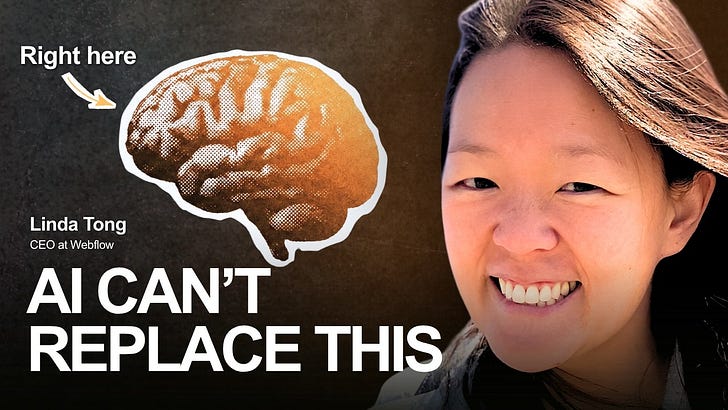
Linda Tong, CEO of Webflow, joins us to explain how she's leading Webflow's transformation from a $4 billion website builder into an agentic marketing platform, why she believes the internet is filling up with AI-generated "garbage" from people who never asked what's worth building, and how she thinks about winning in a market where AI capability itself isn't a moat.
During the episode, we also explore an interesting trend and tension: what it takes to build “taste” into AI-generated products when every model can now write clean code but none of them can reliably read a brand. Linda also shared how enterprise pricing negotiations are exposing the gap between what companies pay for and the value they actually get, and how she expects websites themselves to evolve from static pages into something closer to Google Maps: constantly reinteracting with and reshaping around each visitor.
About Webflow
Webflow gives every team the tools to build, manage, and grow a website that drives real revenue. Founded in 2013 by Vlad Magdalin, Sergie Magdalin, and Bryant Chou (via Y Combinator), it’s grown from a niche tool for freelance designers into infrastructure used by 300,000+ businesses. The company raised a $120M Series C in March 2022 at a $4B valuation and has taken in over $330M total.
Watch now: Linda Tong, CEO at Webflow
Watch or listen now across YouTube, Apple Podcasts, Spotify, and X
Download the transcript 👇
Timestamps
(0:00) Meet Linda Tong(2:04) The Current State of Building(2:40) What's Changed for Webflow in the Last 12 Months?(6:06) Base44 Reaches 10M Users and Lovable Raises $400M(8:02) How to Support Builders in This Era(9:18) How Do You Select Which AI Model to Partner With?(12:00) Is Taste the Next Biggest Moat?(13:41) Are Agentic Co-Workers Next?(16:03) Webflow's Current Challenges(18:46) How to Navigate Human Change(21:08) The Change of Software Pricing(25:12) Inside the Webflow CEO Role(26:32) How Do AI Models Affect Product Roadmaps?(28:35) Where Does AI Go Next Over the Next 6-12 Months?(32:52) Will Websites Still Be Relevant?(34:25) Building Trust With Your Fanatical Users(36:25) How Linda Runs Webflow(39:14) A Winning Mindset(41:10) Are We Just 1% of the Way There?(43:23) Airtable Acquisition(45:09) Ollie Joining as Linda's Chief of Staff(47:19) Personal Time Out(48:20) Board Members(50:50) Where Does Webflow Go From Here?
Lessons from this episode with Linda:
1. Linda can build an app with a prompt, but still can’t book a doctor’s appointment less than 6 months out.Right after saying AI has barely scratched the surface of solving real problems, Linda brings up trying to schedule an appointment and being told the system doesn’t open bookings for another 6 months, so she’d have to call back in 3 months just to schedule it. Her point: we’re maybe 5% of the way to AI actually mattering in daily life.
2. “Just have everything run agentically. Go watch Netflix.” She’s not buying it.Pushing back on the one-employee-plus-millions-of-agents narrative, Linda says AI still isn’t reliable enough to run unsupervised. You still need people reviewing and coaching the system regularly, and anyone claiming they’ve replaced their whole workforce with agents “is just not real.”
3. “I’m paying for a million seats but only 10 people actually get value out of it.”Her example of what’s broken in software pricing: when she sits in on procurement negotiations, this is the exact complaint she hears. She argues it’s a sign the pricing was never actually tied to value in the first place, and that the constant tough renegotiations are the tell.
4. Airtable sold for 2.5x revenue, after being privately valued at $11.5 billion.On how fast valuations are resetting: Airtable, a $500M-revenue company, got acquired at roughly 2.5x enterprise value, a fraction of the $11.5 billion it was last valued at privately. Her takeaway: “times are changing,” and the old rules for pricing a software company no longer hold.
5. Internet garbage: Only 200 million of the internet’s 1.2 billion websites are actually alive.When Linda joined Webflow four years ago, she looked at the market and found roughly 1.2 billion websites live on the internet, but only around 200 million were active businesses actually being used. She says that ratio hasn’t meaningfully moved since, even as AI makes it trivial to spin up more of the other billion. The ability has shifted to build fast, people have built a lot of websites but that doesn’t automatically translate to tangible value.
6. AI didn’t kill the SDR job. It turned “send more emails” into “review the AI’s calls.”Her clearest change-management example: an entry-level SDR used to be capped by how many calls and emails they could physically make in a day. Now an AI agent makes the calls and writes the emails, and the job becomes reviewing what the agent learned and deciding what to test next.
7. Her agents don’t do one task and stop. They run until the goal is hit.She contrasts most “agents” today, which complete a task and hand it back for a human to judge, with what she calls closed-loop agentic workers: give it an outcome like “drive this much pipeline,” and it writes the brief, launches the campaign, measures results, and keeps iterating on its own. Her live example is Webflow’s AO agent, which pushes content and schema changes to improve a client’s visibility on answer engines like ChatGPT, then measures and repeats.
8. Pricing debates (subscription vs. seat vs. consumption vs. outcome) Her contrarian take: none of these pricing models are wrong, they’re just successive attempts to get closer to charging for the actual value delivered. AI just makes it possible to meter something closer to real value than ever before.
Links
Follow Ollie on X - https://x.com/ollieforsyth
Follow Linda on X - https://x.com/YayLT
Vist Webflow - https://webflow.com
Episode Partner - Discover Harmonic, your go-to startup database - https://harmonic.ai
Previous episodes include
See all previous episodes here 👉
If you enjoyed this episode, help sustain our work by clicking ❤️ and 🔄 at the top of this post.