Ask ChatGPT

 Brand Master Podcast
25 Aug 2026 · 1h 3m · 29 chapters
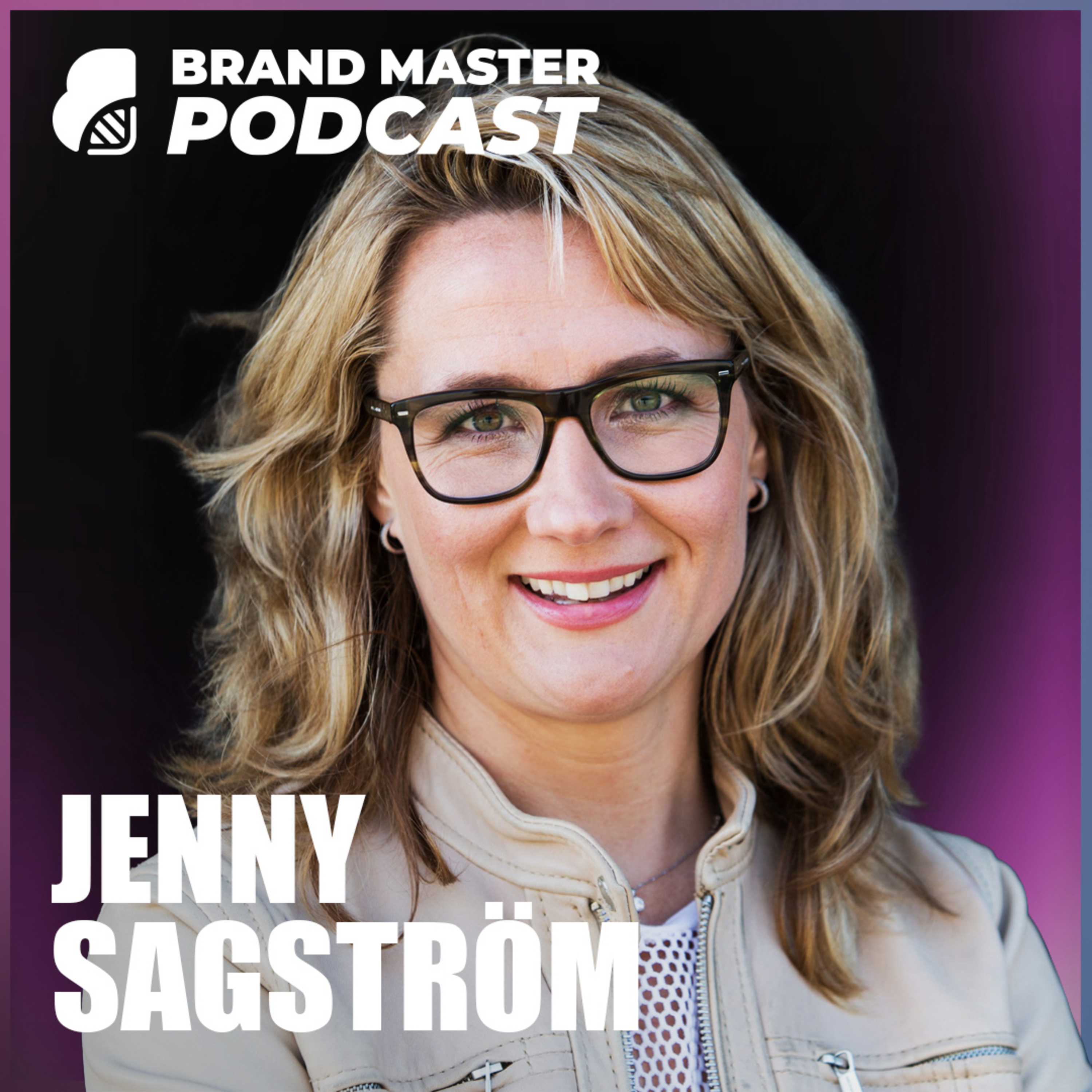
How AI is changing brand strategy and agency work—especially the shift from producing strategy documents to making defensible choices, executing positioning, and running human workshops.
Jenny Sagstorm, founder of a 23+ year B2B tech agency with offices in San Francisco and Stockholm. Background: studied international relations/politics/economics; planned Middle East peace work; worked in advertising after a teaching gig in Syria; moved to SF around 1999–2000; started her agency after getting a green card; later focused the firm on enterprise B2B tech.
AI can generate many strategies quickly but can’t reliably tell which one to bet on; the hard part is judgment, conviction, and activation. Many CMOs lack confidence in positioning (cited: 40%). AI has removed production-heavy work and sped up timelines, increasing collaboration. Workshops are returning because AI can’t replace human alignment and shared learning.
a pitch where the client required AI to do the strategy; AI “sycophancy” that rewards weak ideas; Jenny’s strategist trained a GPT to avoid flattering outputs; synthetic personas and AI-assisted messaging polishing; LinkedIn as a primary B2B execution channel.
Written by AI. May contain mistakes.
Explore how AI is transforming strategic decision-making in branding.
“AI can spit out 100 strategies in 60 seconds.”
Discover Jenny's unconventional path from politics to branding.
“You kind of just got pulled in that direction and I think you were kind of headed, was it politics you were headed into?”
Learn about the challenges Jenny faced when starting her agency in San Francisco.
“Why didn't no one tell me that you could make money and earn a living having creativity at work?”
Understand the importance of partnership in establishing a successful agency.
“And I knew instantly, like, this is the guy, I think, in terms of starting your own business, I think you are either, you just have that in you.”
Explore how Jenny's agency evolved to prioritize strategy in its offerings.
“I mean, there was, you know, plenty of times when when things are really tough.”
Learn how implementing the Entrepreneur's Operating System can transform your business strategy.
“And I thought, well, that's interesting.”
Discover how structuring strategy can enhance business operations and outcomes.
“Because I know from speaking with so many people, there is an inherent understanding of strategy in the way we do things simply by being curious first and foremost.”
Understand the critical role of positioning in effective brand strategy.
“I think both of those things were 100 % true.”
Explore the significant education gap in brand strategy as highlighted by industry studies.
“It could be different in other worlds, but in my everyday reality, that tends to be the truth.”
Learn how to transition brand strategy into a separate service offering.
“Almost, I think there has been a few instances where we haven't done the visual execution of the design system, but almost all instances, those two go hand in hand.”
Discuss how AI has changed the landscape of creative work and strategy execution.
“which I would say a lot of it is, versus, you know, continuing to hold their hand with strategy as a consultant?”
Examine the various aspects of executing brand strategy in creative and marketing contexts.
“there and definitely I want to keep part of this conversation for uh how AI has kind of impacted your business, your relationship with your clients, your processes and stuff.”
Explore the differences in agency operations between traditional and hybrid models, especially in Europe and the US.
“something like that, what does that look like?”
Understand the significance of LinkedIn in B2B marketing strategies and the importance of referrals.
“And yeah, so definitely execution across the board.”
Discuss how AI is reshaping strategy development processes and client interactions.
“But yeah, we're out there sponsoring the AdWords.”
Highlight the importance of the strategic process and client involvement over mere deliverables.
“How have you seen AI impact your business and the way clients look at what you do for them?”
Analyze how client preferences for workshops are changing and the role AI plays in this shift.
“And I think that that's why people still pay all of us because we can help them with that.”
Learn about the different structures and formats for conducting brand strategy workshops.
“Even, I mean, even on another level, it seems to me very often that the one workshop that you lead with your clients is the only time they all get in the room together for maybe a year.”
Learn how spacing out workshops can enhance creativity and idea generation.
“I personally, my preference on my own is to spread it out a little bit because it gives us time to think through in between.”
Explore the biases in AI and how they impact creative decision-making.
“And what you'll also find as well, I don't know if you found this as well, AI is so biased.”
Understand the risks of outsourcing decision-making to AI and the importance of human input.
“That's where I think it's really, really useful to throw up those creative ideas rather than outsource the whole process.”
Discover how human interactions are essential in the branding and marketing landscape.
“And I think if we're able to pull on those cords with our clients in a way that they can relate to, that can open up really interesting conversations.”
Learn how AI can be incorporated into client workshops to enhance creativity.
“there wasn't a single project you couldn't put direct mail on.”
Examine how branding impacts decision-making in the technology sector.
“when the verbal side of things becomes a lot more prominent rather than the typing side of things.”
Gain insights on effective strategies for acquiring new clients in tech.
“Because we have buying committees that consist of 14 people.”
Learn effective methods for acquiring clients in today's market.
“and I paid her a commission for cold calling people.”
Discover the significance of having a partner when starting a new agency.
“The first thing I would do, I had to cut.”
Explore unconventional marketing tactics that can yield unexpected results.
“But, you know, griff and determination, roll up the sleeves.”
Understand the role of LinkedIn in professional networking and marketing.
“And, you know, you hit the right person and they've got an appreciation for creative and cojones.”

Get the gist, explore an idea or ask about something said.
 Claude
On Brand Master Podcast, what are the key points of this episode?
Searching your listeningAutomatic transcript. May contain errors.
0:00AI can spit out 100 strategies in 60 seconds. It will tell you with confidence which one is right and then it will pick a different direction if you ask it if it's sure. The world of strategy has absolutely changed. Frameworks aren't the edge anymore. Outputs aren't either. What's left is the judgment to rule out the wrong strategies and the conviction to choose the right one and the capabilities to activate it. Now, 40 % of CMOs can't confidently describe their own positioning strategy. So they're outsourcing the gaps for AI to fill and they're taking their brands into dangerous waters. Now, in this episode of the Brandmaster Podcast, I sit down with Jenny Sagstorm.
0:40Now, she's the founder of a 23-year-old B2B tech agency spanning San Francisco and Stockholm. And she's clear the strategists that survive will be the ones who can pick the right direction when AI hands them 100 possibilities. And in our chat today, we dive into why AI produces strategies on tap but can't tell you which one to bet on, the pitch Jenny lost because the client wanted AI to do the strategy and what that signals for the next two years, why workshops have come roaring back and the one thing that AI can't replace that clients are now paying premiums for and the sycophancy trap how AI rewards bad strategy with applause and what one strategist did to fix it so if you want to understand what makes brand strategy defensible when ai can replicate the surface then don't miss this episode of the brown master podcast
1:35jenny a special thanks to you for taking the time to join us today to uh you know to share all all your wisdom probably get you to give a little bit of of kind of a background story as to how you ended up where you did because I know going down the road of advertising in the agency world kind of wasn't your initial direction. You kind of just got pulled in that direction and I think you were kind of headed, was it politics you were headed into? I was going to say is there anyone who works in advertising who actually wanted or planned to work in advertising? That's a very good point because I used to be a stockbroker.
2:17Oh, yes. And yeah, the GFC hit and the ship was sinking. And I was like, okay, what am I going to do? And I was like, okay, what do I like to do? And that brought me to design, which brought me to branding, which brought me to strategy. And no doubt we all have similar stories. So, Jenny, why don't you give us a little bit of a background? Because, I mean, where you've come to at the moment, Your agency now is 23 plus years old, I believe. You've got offices there in San Francisco. You've got offices in Sweden. How did you end up down this path? And give us a bit of your background story to how you ended up where you are.
3:02Yeah, thanks. Excited to be here with your brand nerds, as you keep calling them. So excited to meet you all. My story, I guess, if we go all the way back to the beginning, I studied international relations and politics and economics. And I wanted to go and solve the Middle East peace crisis. So it kind of dates me a little bit, I guess. My professor helped me get a teaching gig in Syria. So we're talking, you know, late 90s. And I came home from university in the UK to my parents in Sweden. And I said, I'm going to Syria. And I'm going to work in Syria.
3:45Jenny Sagstorm: And my parents, they were very smart. They never sort of went, no, you can't go. What are you thinking? But my dad went, you're going to have to have some money for your adventure. So I know these guys. And they started an ad agency. And I think they just need someone, you know, empty the trash cans or something for a little bit. And you'll be good. You can help get some money together. And I think we all kind of have heard that story before. So, you know, I walked into an agency and three days later, I'd canceled my tickets to Syria. And I was like, this is it. This is my life. This is what I want to do.
4:21Why didn't no one tell me that you could make money and earn a living having creativity at work? You know, for me, I thought business was all Excel spreadsheets. So, you know, being in that environment, I was like, that was it. That's what I wanted to do. So that's kind of my first taste of it. And then so we're talking late 90s Stockholm. And I ended up in an agency where one of the people who worked there was sort of looking at what was to become Bluetooth. You know, we had wired laying around everywhere and everybody talked about Silicon Valley and San Francisco. And I was like, man, that sounds pretty cool.
4:59A couple of years later, got an opportunity to move to SF and I jumped at it. So I moved to San Francisco, sort of 99, 2000. Hindsight, not the best of times because it was just before the implosion. But I worked in advertising in San Francisco. And, you know, I was at an agency that was at the time the biggest West Coast independent agency. and I think there was 90 of us on the Friday and on the Monday there was five of us left it was like okay and that was what San Francisco was like luckily for me my boss at the time kept me on because you know visa situations and all that I couldn't go out and do my own thing but basically I ended up getting a green card and the minute I got a green card I quit my job and I started my business.
5:52So that goes, you know, at the time, I was young and dumb and stupid, and I didn't know what I was doing. And it was probably the best thing ever. So people always say, you know, how'd you dare start an agency? And you were so young. Well, that's a beauty. When you're 26, you don't have a mortgage. You have no kids, nothing costs money. You know, it's like, you have no idea. So that's kind of the story of where it all came from for me. nice nice yeah like the the tech wreck back then i'd say uh you know in san francisco at the time i'd say it was uh pretty pretty scary and uh but you know obviously luckily you uh you were one of the five that were kept on and the green card i i had a similar situation in australia actually we uh our our company went into liquidation and and i was one of the lucky ones to be kept on and i got my uh australian um the equivalent of a green card back then and as soon as that came through i started kind of meandering uh elsewhere as well but when when it came to starting your own agency what gave you let's call them the cojones to uh to say you know what i can do this i can go out there and find uh customers and deliver on a promise end to end because no doubt in the agency where you were you weren't delivering projects from you know from meet the client to deliverables and they were some gaps that you would probably have to have you know kind of learned on your feet very very quickly what what gave you the confidence to believe that you could go out and do that and were you were you on your own did you bring somebody in with you what did that all look like so uh I met when I first started working at the agency I was at in San Francisco um like I said I was 26 at the time so say I met him when I was 23 uh it was one of the creative directors at that agency and it was that in instant you know work love uh he became my work husband, so to speak.
8:01And I knew instantly, like, this is the guy, I think, in terms of starting your own business, I think you are either, you just have that in you. And I think I just always had it in me. I wanted to be on my own. I didn't like being told what to do, let's be frank, although clients tell us what to do all the time, but that feels different. So I didn't, I didn't like being in that situation. So A, I knew I wanted to go out on my own. B, I had met this guy, and I knew I wanted to start a business with him. And luckily, he was the creative director. So it felt like at the time, you know, we could just about manage it.
8:38So him and I jumped ship. And the funniest thing about it is, you know, he, I thought it was maybe a couple years older than me. He was literally the same age as my parents. And it took me two or three years to realize that he was in fact, like 40 something. So we I think we complemented each other really well in in both of those aspects. But, you know, we ended up building a, today he's actually retired because he is older than me. So, he retired just a couple of, I think it was 2019 he retired now. But we didn't, you know, we were in San Francisco, but we were not all tech. You know, at the time it was the Yahoo's and, you know, eBay's and all that stuff, but we weren't.
9:20We did more normal stuff at our agency. And even at Skona, when we started, we were doing, you know, all sorts of aspects of the business. And somewhere along that line, you know, San Francisco is such an incredibly creative space. And there's so many, many, many small little agencies that I sort of looked at what we had. And I thought, all right, this, the playing field is this big. And if, since we're all nerding out on strategy. Strategy is sort of what is, you know, it's deciding a place where you can win, making it, you know, making some decisions that are hard to make, but make, but that allow you to potentially win.
9:59And so I looked at our book of business, and I realized that almost, you know, almost all of our clients these days, it was say, 2016, 2017, are tech, and we're really good at it. And it's enterprise tech, and we love doing it. So that's sort of when I decided to lean in and really focus the business on becoming a tech tech only B2B agency. So that was, I think, some of some of the things that went hand in hand, but but the guts to be able to do it was that I had, you know, it was two of us, we held each other up. I mean, there was, you know, plenty of times when when things are really tough. And I think it's nice to to be to to have someone to do it with on your own is tough yeah yeah and and look uh i think most of us here can kind of vouch for that and uh those and i've met plenty of founders along the way and i do find uh that those with uh a business partner you you carry you share the burden you have that soundboard uh you can bounce ideas off each other because building a business is a lonely, lonely task.
11:08And you, you know, you can't, you can't even have those conversations with your, your, you know, your significant other, you can't to a certain point, until their eyes glaze over when you start going into technicals. So having that kind of sounding board is must be kind of therapy every day. So so yeah, I would say that that that would definitely be an advantage um stepping back obviously in 2016 you kind of narrowed down and that was a strategic positioning decision but before you did that for yourself when did strategy start to become big for you because back in 2002 2003 a lot of agencies kind of uh treated strategy the way a lot of clients treated it for a very long time after, which was this kind of, you know, additional, let's get this stuff out of the way before we get on to the fun creative.
12:06When did you kind of bring strategy into your business and your service offering in a way that was significant enough for it to kind of stand on its own? You guys are all going to hate me, but I would say it was not till in the 2020s. Wow, that's super interesting. Took a real long time.
12:29Having the economics background, having the business background, there was always, I believe, in hindsight, an element to strategy and everything we did. But in terms of pure brand strategy, in terms of pure, you know, the way we think of it with regards to planning and all of that stuff. We didn't really have that. We were definitely all in the creative bucket for many, many years. And what happened actually that really two things happened that solidified it and helped push us to that direction. Maybe three things even. One was our office, we opened an office in Stockholm in 2017. And the marketing departments, as I'm sure you guys maybe know it, in Europe tend to be a lot smaller than they are in the US.
13:24And people have to do more on their own. So all of a sudden, the demands on the people in our Stockholm office were much higher. And so they had, they were providing strategy almost, you know, naturally without understanding how it happened. So that was the one thing. The second thing that happened was I had had a previous employee who'd worked for me, she moved on to another agency and she came back and she had developed into a strategy in the years that she was gone. And so she said, I want to come back and I want to do strategy. And this was in San Francisco. And I thought, well, that's interesting.
14:03You know, let's do that. And I think the third thing was actually business strategy for my business was I implemented something called EOS, the entrepreneur's operating system. You're nodding, you've heard of it. I just had a conversation about it just last night with Bill Kenney on a live summit, and he was swearing by the integration of that EOS into his business and how it kind of set the framework for everything. Yeah, definitely. And so it set the framework. And I think it also allowed me the ability to be more big picture, to think about the business, to work on the business as opposed to in the business.
14:47And working on the business allowed me to see that, wait, this is something that we actually do need to package up and need to take seriously. So unfortunately, I mean, I would say we probably haven't been offering it as strategy, not as a service but strategy as a packaged offering probably since 2019 or something like that wow wow so yeah it's so so you're so this um let's call her her this gunslinger she went away and and she she essentially learned uh the frameworks in the system for developing strategy and kind of brought that back on board what was that like for you when when she kind of Was it like her opening up Pandora's box and you and all the light bulbs going off?
15:34Because I know from speaking with so many people, there is an inherent understanding of strategy in the way we do things simply by being curious first and foremost. We ask the question, okay, why are we doing this? So in a way, we kind of all do strategy. But then when you kind of put a bit of structure around the questions we're asking, the outcomes we're trying to achieve, and then, you know, the final result of all of that, and then the value of everything that we bring our client through, it's kind of a bit of an eye opener to go, wait, hang on, we were doing all of this for free, or we weren't doing this in the right order.
16:15What was that kind of moment like for you when she kind of opened up that box for you? I think both of those things were 100 % true. We weren't doing it in the right way. And the light bulbs went off and I thought, holy, you know, oh my God, we are also doing a lot of it, just not in the right way. I think what she helped me, thinking about it from this perspective, a big thing is confidence, right?
16:46Jenny Sagstorm: Yeah. Like strategy is a lot about confidence. It's about daring make decisions. It's about daring to take a stand. I mean, if you could do everything, you wouldn't have to have a strategy because you could just do everything. So having the strategy to figure out what matters, but you kill your darlings, to be honest, right? Because I think the problem, if you don't have a strategic process when you're developing, if you don't have a process around your strategic development, you, A, don't know what really to pick and not pick. You end up with a bunch of options and no confidence to pick the right one, I think, is the one thing.
17:25And the other thing I think that's important is it's almost like, you know, when you have – you guys work with creatives too. Young creatives, they can be the most creative person in the world. But until they figure out what their creative process looks like, there's no repeatability in that. There's no scalability in that.
17:45Jenny Sagstorm: And I think that was part of our problem, too, is, yeah, sometimes we land on a fantastic insight. I'm like, wow, that's really cool. How do we end up here? Let's do it again tomorrow. And be like, no one could replicate it because we had no idea what happened. It just happened. So, you know, being able to create structures and have your, I mean, you know, if we get down to the nitty gritty, if we're talking brand strategy, I think everybody has their own, every agency, every company has their own methodology. technology but they're more or less the same and you know some people lean into something a little here and some people lean a little there but i i would say most of it is is uh more or less the same to some extent there's some outliers some that are more data driven and some that do more testing and all that cool stuff uh but in general it's all there and i think what you the more you do it, the more confident you are to talk about it, because the more you understand your own process, and the more you know what really is key, and what's really not key.
18:48Like for me, what I've come to realize, you know, in some of the work that we do, and especially around brand strategy is the work around positioning, like your value proposition and your differentiators that kind of land in your positioning. That's that that really is the most important thing. Everything else is whatever. But that's the most important thing in my mind for most of our customers. And that is probably because I live and breathe in the B2B tech world. It could be different in other worlds, but in my everyday reality, that tends to be the truth. Yeah, well, I mean, you know, you're preaching to the choir there.
19:25I mean, everything that I've been talking about with Brandmaster Academy for the last, you know, six to seven years has been about exactly that. The center point of brand is strategy. The center point of strategy is positioning because at the end of the day, what we're trying to do is we're trying to give meaning to the market and to our customers about why they should choose us over them. And if you don't have that right, then it doesn't matter. You could have the best marketing team in the world, but they're going to be giving the wrong message to the wrong people. It's going to cost you more and you're not going to land where you intend to land.
20:01So yeah, 100%. I'm going to have to add in something. There was a Dentsu report that I actually posted about it on LinkedIn yesterday. And they've done a study of CMOs. And 40 % of CMOs were not sure about their brand positioning in this study of, I think it was 1 ,200 CMOs or something like that. 40 %? Like, what? It's crazy. It's crazy. And, you know, I do a lot of research myself for the content that I create. And, you know, I've been nerding out on strategy now since 2016. So it's a good 10 years now. So like all of the stats are there that show there is a massive education gap in what we do.
20:50And it's crazy because the world has been focused on marketing for so long. And for so long, brand and brand strategy has been this little subset of marketing. and that's why there's this element of mystique about it that's why an agency as successful as yours didn't pick up these processes until five years ago when you had already been in business 15 years is because there is no playbook and all of the agencies out there as you said everybody has this this this process they're a variation of each other but there is no playbook there is no standardized, you know, university stamped process for developing brand strategy, which is why it has kind of been organically born from this curiosity of why are we doing what we're doing and how do we kind of build a process out of that?
21:45In terms of how yours then developed, because no doubt you were doing it incorrectly, as you said, for your clients for so long, when you started to do it correctly and you started to see more of the value in what you're you were doing was there a point where you branched that off into its own service to charge separately whether or not people wanted creative or not and how does it look at the moment yeah definitely I can't tell you what year but you know so our agency we're about I want to say 60 70 retainer clients which are you know ongoing and then 30 40 or something like that percent are projects and almost all of those projects today start with a brand strategy piece you know either whether it's a new name or it's just clarifying what the brand strategy is um and what it looks like we have in our agency our methodology has three components um i'm sure you all have similar but ours is a blueprint um a messaging expression and then sorry a brand
23:01Jenny Sagstorm: expression and then a messaging strategy on top of that um so you know and then from there we move into the brand design because i still have a bunch of creative people so we do people who do the actual design of the brand that goes with it. Almost, I think there has been a few instances where we haven't done the visual execution of the design system, but almost all instances, those two go hand in hand. And we start with the brand strategy, then the visual design systems happens. And then from there, we, you know, usually we'll have to do go to market stuff. What does the website look like? What's sales enablement?
23:40What are the other different pieces that bring this to life, sort of. And so, yes, so that's the package today. And we have charged for just strategy, but they do tend to come as one. So talk to me about your ongoing services then. When you talk about retainer, how much of that is actual creative, which I would say a lot of it is, versus, you know, continuing to hold their hand with strategy as a consultant? It's probably close to, and I feel like I'm just making numbers up here, but my sentiment of the numbers without having them in front of me is probably 50-50. And I would say the one thing that's changed today is in the early, even 10 years ago, even probably five years ago,
24:37Jenny Sagstorm: we were still doing a lot of production work. You know, there would be someone who gets to do a big, cool campaign every three, four months. But in between, there's a bunch of production work that has to get out the door. And we were doing that. Today, that doesn't happen so much. Let's face it, AI has taken those jobs. And there's not so much of that left anymore. so what we tend to do today is campaigns ongoing maintenance of you know things that need to keep the funnel full we probably do annual planning thinking brand platforms and how they're going to play out for the year and then executing on those so maybe there is we tend to also I would say do you know the quarterly business reviews if not monthly but at least quarterly that kind of set the what do we do in this quarter what are the most important objectives for this business and how is marketing supporting those and what can we as an agency do to enable our clients to support those in their terms because you know that's that's my goal is how do I make my client into the superhero into any and every situation yeah yeah I love that and and you touched on AI there and definitely I want to keep part of this conversation for uh how AI has kind of impacted your business, your relationship with your clients, your processes and stuff.
26:02But before I get to that, you touched on execution as well. So when I think about brand strategy, previously, all of my work was in and around brand strategy. So my philosophy is brand the method and brand the mode. So brand the method being the strategy is the approach. So it's the vehicle that we build that is the brand. So everything from your positioning to your messaging, this is how we show up in the market, this is who we are as a brand. But when you talk about brand strategy, you can't talk about brand strategy and not talk about how the strategy is executed into the market because you can't really have one without the other.
26:44So what does execution look like for you? Do you go down the road into marketing? Or when you say execution, are you talking about bringing the brand to life visually through websites, through assets and things like that? Yeah, it's an interesting question. I think in Europe, I wouldn't call it a marketing agency. I don't have any marketing ops people. I don't have any performance marketeers. I don't have anyone who knows how to turn the levers and optimize whatever is happening. So we don't have any of that. So it's probably, but we do get closer to, because the departments tend to be so much smaller in Europe.
27:32We do get in the nitty gritty more. We're thinking more content, we're recommending more content and executing it and so forth. in the US, I think we are still helping dictate how the brand shows up on websites and templates, in outdoor billboards, in, you know, if we do an ad buy on the Wall Street Journal or something like that, what does that look like? So more traditional creative agency there. And I think in Europe, a little more hybrid, potentially. Yeah, yeah, that's interesting. Obviously, San Francisco is still the creative execution. But over in Europe, if you're getting into the weeds with content, if you're staying in the lane of strategy, that's one thing.
28:23If you're getting into the weeds of content execution, that's definitely hybrid there. Are you going into an area where, you know, we're doing this? And I kind of, that kind of begs the question when a client comes to you and says, can you do this? Do you have a definitive end of the line? This is as far as we go. And when do you say no to clients?
28:46Jenny Sagstorm: I don't do PR. Right. I draw the line up PR. Or Facebook ads or analytics or anything like that. Facebook, no, but a bunch of LinkedIn. Right. You know, my. So add execution? Mm-hmm. Right, okay. Yeah, all the way to that. I think, you know, we are a traditional full-service agency, in my opinion, and it's just that the channels of execution have differed, have become different today than they were 20 years ago. You know, 20 years ago when you were a B2B agency, you probably did a campaign that included direct mail, postcards, something like that, and then some print ads and some like mail back cards that ran in some vertical publication that no one had ever heard of if it was, you know, outside of that particular area.
29:34Today, I mean, the main area for any B2B is LinkedIn, like people live and breathe on LinkedIn. So how what's the LinkedIn strategy for a particular brand? How does that come across? You know, what's what's the mesh between organic and and, and paid. And yeah, so definitely execution across the board. And so I think in the US, though, I would say it's much more templatized. So it's more like, okay, you're going to run a template, you know, you're going to run a LinkedIn campaign, you need 20 sizes. And here's the templates that sets up for all those things that I go and run with it. And in Europe, it's much more almost, you know, okay, what are we going to say in this thing?
30:15Yeah, yeah, no, I'm glad you mentioned LinkedIn actually because obviously it's you know it's been around for so long but it's becoming so much more relevant now and especially if you're in the b2b space in terms of you as as an agency and and I'm sure you're not in the weeds with your own kind of marketing of your own agency how much of what you do is a kind of organic referral versus well we're actually out there on the front lines in LinkedIn you know connecting with people and bringing them into the top of a funnel, which brings them into a nurturing sequence, which brings them into a conversion.
30:51What does that actually look like for you? Or are you a little bit far back from that at this stage? No, I'm, no. So I would say actual business, actual people who pay us to do what we do are, I had some stat on this, 80 % referrals. Referrals. Yeah. Or a month. Or people who move on, get a new job. I mean, that's my favorite thing. When a CMO leaves somewhere and moves on, and if you have a good enough relationship with the old place, you can retain that. You know, that's how you double your business. Nice. So that's definitely, you know, 80, almost maybe even 90 % of our business comes that way.
31:37But yeah, we're out there sponsoring the AdWords. We're out there commenting on LinkedIn. We're out there boosting posts that deliver well for us. We don't have a nurture sequence per se. This probably is really controversial. I feel like, you know, you're in this world. If you have to advertise your own work, you're probably not that good. That's the general saying. Yeah. And look, at the end of the day, look, if you're starting off, if you, you know, if you don't have that heritage and that history and those relationships and those networks, you know, getting into LinkedIn and kind of rolling up your sleeves or getting out there into the market is certainly more required.
32:32You know, we all kind of strive for that situation where the business just shows up, you know. And I think if you've laid the groundwork, you know, you don't really have to stress as much unless you're on, you know, you've got big goals to scale to a certain size. If you're kind of humming along as, you know, in you know with with the size that you want to be working with the clients that you want to be and and the the business is just showing up 90 just going hey you know but at the same time
33:07Jenny Sagstorm: does anybody ever go i'm just happy with this this is great i don't want anything more well i mean i never say that no no no but you've got people out there who are aggressively they're aggressive scalers and those those types of people uh you know with 90 percent of of their business showing up they would want to turn around and go well let's make that 50 and let's get another 50 from the front lines um but you know it's such a a great position to be able to be in um you know to to to work at with such great companies and and them just organically showing up and it's obviously because uh you know the work is good the relationships are good and and you know all that good branding stuff that we like to talk about um in terms of in terms of ai and what you've seen and guys uh if you've got questions um i'm gonna i'm gonna field field them out now in a few minutes so think about anything that you'd like to to ask um ask jenny but i'd like to to speak first and foremost about ai so you know ai is is uh you know it's it's kind of hit us all in the face like a wet fish and you know all of a sudden we're uh we're we're you know we're kind of trying to figure out what the next step is and especially in our world where clients now have the ability to, you know, to go and get all of their questions answered, develop strategies that will tell them what to do, and they're replacing a lot of consultants out there.
34:49How have you seen AI impact your business and the way clients look at what you do for them? That's a great question. And I think it's changing all the time. Let's see, what is changing the most? Obviously, like I said, production stuff's gone. No one's doing that anymore. On the strategy side, I think we're actually doing more with the help of AI than we used to be. We are looking more at developing synthetic personas to test our messaging in. We're doing all of those types of things. And we are probably, something would take longer before because first we'd write a brand strategy and then we'd want one of our copywriters to look it over and make sure it's got the right tone of voice and all that stuff.
35:50We're running most of that through AI today to kind of do it, give it that last polish. And I think that is the other expectation that what used to be, oh, yeah, come back to us in three months with your thoughts fully formed. That's not happening anymore either. The timelines are much shorter. And to some extent, it also feels like, and this is actually quite good, I think. It's much more collaborative. It's much less of a, okay, go away, think your thoughts, do your interviews, do your process, and come back and give us the big dog and pony show. Today is much more like, you know, an ongoing interaction and an ongoing process where you're developing and collaborating together.
36:34And I think that is happening with the help of AI. I think that's, those are the bigger things. But it's interesting. I was thinking about this whole thing the other day about strategy is, yeah, anybody can push out a strategy. I don't think that has ever been the problem. I think the problem is figuring out which one is the right strategy and then how to execute it. Those are the really hard things. And I think that that's why people still pay all of us because we can help them with that. Yeah. And I love what you just said there about, you know, it's never really been a problem to be able to develop the strategy, you know, and that kind of touches on something that I believe, you know, what clients pay us for is not the deliverable document at the end.
37:27You know, it's not the set of brand guidelines. It's the journey of getting to that and the nose that we push away along the way to the end result. and yeah it definitely aligns with a message that i've been kind of raising at more and more and that is the value of the process that we bring our clients through because yeah at the at the end of the day you can hand a client a set of brand guidelines and they can they can go away with those but if they're not involved in the process of developing those guidelines they're not going to have that connection to the brand, that belief in the brand, because it's just handed to them.
38:10You mentioned collaboration before, and were you referring to we're collaborating more with the client than we used to be? Yes. And so how is AI involved in any of that? Or are you talking about workshops in the room with the clients bashing things out together kind of uh bringing up problems overcoming those problems how does that look yes it's more the latter um and also so it's more more workshops maybe that's the thing now i'm having a theory here all of a sudden this this with so much ai uh and all of our clients doing it too maybe that's why all you know there was a time a couple years ago when people like you know we want to work with you but no workshops, please.
38:59No workshops. They were like workshop fatigued. And I think that has completely turned around. And I'm seeing a huge desire for people to do workshops again, and understanding and appreciating the value that they bring. Exactly what you said, you know, how to bring them on that journey. And maybe that is because of AI, because everything else is synthetic, and everything else is so siloed that maybe all of a sudden people are appreciating the humanity of a workshop again. 100%, 100%. And the analogy that I've been using is that very soon, we've already got robots in our homes, you know, very soon they'll be able to cook the dinner and they'll even be able to put the kids to bed.
39:43Now, just because they will have that capability, it doesn't mean that we should outsource everything to AI because there is value in the process, even if we can do it more efficiently with AI efficiency, isn't always the best path to the outcome. And the value of what we do gets chopped away when you use AI. So I think you're spot on there. It's something that I've definitely been noodling around for a while, this idea that the value of the human connection that we bring in the process that we bring our clients through the learning and understanding they get of their market their brand their audience through that process uh they can't get that through ai and i think the more we elevate the value of that process and the value of the human connection the more we're going to be able to have those conversations with our clients to say listen yeah you can get it done quicker with ai but the goal isn't quicker um so so yeah i i really like the the point that you you've raised there.
40:47Even, I mean, even on another level, it seems to me very often that the one workshop that you lead with your clients is the only time they all get in the room together for maybe a year.
40:59Jenny Sagstorm: And I think that in itself is probably just as we could just show up and let them be in a room together. And that would be like the biggest breaker they have that year. Yeah, absolutely. Just on that, actually, how long does a typical workshop for a brand strategy go for you? Do you break that up into, let's say, a positioning workshop, a messaging workshop? Do you do it across a whole day? Do you do it in sessions online, in person? What does it look like? We do all of the above. We do one for messaging, we do one for positioning, and we do one for the more brand expression side of things, tone of voice, personality, brand essence, that type of stuff.
41:45We can also put them together in a full day. We have done that on occasion. It sort of depends on the client. Like if you have a spread out client with offices all over the world and they can only get together one day, then let's do it all in one go as opposed to having them fly in from different places. I personally, my preference on my own is to spread it out a little bit because it gives us time to think through in between. I mean, we obviously have to prep so much for each workshop so that they have things to work with and things to react to. And I do find that in each of those instances, a lot of new stuff comes up that is going to affect the next phase of it.
42:30So it is nice when you have a little bit of time and you can think it through and apply the new stuff that came up in the previous workshop to the one that follows. Yeah, it does need a little time to simmer. and if you are able to kind of break it up and give time to things to settle. Because often that's what you find. After a workshop, you have so many coming back with new ideas that came up. In terms of working with AI, you mentioned synthetic personas and using AI for stuff that would take a lot longer before. Do you have clients coming to you now at all saying, well, you know, we put this into GPT and this is what GPT thought.
43:19Therefore, our, you know, our perspective has changed. Have you come across that challenge yet? I have. You have? We don't have any clients who've done that, but I was part of a pretty big profile pitch, not recently, where that was one of the requirements was that the leadership team was working in that way. And everything had to be a very quick and quick turnaround. And that's how they wanted to work. Right. Obviously, they didn't pick us. No. Yeah. Yeah, well, I've heard of stories where designs are being picked apart by a creative director, GPT, pointing out things that are wrong. And what you'll also find as well, I don't know if you found this as well, AI is so biased.
44:12Based on how you ask the question, it will determine the answer that you want. and if you go in looking for uh if you're leaning if your language is leaning in their any type of way it will lean that way with you so it's so biased and it's throwing up all of these uh these challenges so uh so yeah they just want to please us the gpts just want they just want
44:35Jenny Sagstorm: me to be happy that's it oh my goodness does he want to make me happy stop telling me i look good today yeah you're you're you're brilliant that question was so intelligent i love the way you're thinking um well one of my strategists has actually trained their gpt to not do that so you can't do that yeah i i actually um have a a sas uh product um called brandbuilder.ai and it builds strategy using uh using ai and one of the things that we're integrating at the moment is uh is uh consultants that kind of act as independent stress testers, you know, those that challenge your thoughts, you know, the devil's advocate calling out, you know, any kind of bias leaning one way or another.
45:24Jenny Sagstorm: So wait, Stephen, you're the one who's putting us all out of business. What the heck? Yeah. No, actually, my philosophy is the same with, it's exactly what I've been about here if we if we allow ai to do everything we're going to all end up in we're all going to drift to the middle that's exactly what is and i don't know if you've seen the studies on you know people using gpt and what it does to our cognitive ability uh if if we outsource our decision making to ai which so many of us are doing just organically we tend the more you use it the more organically you do it i caught myself doing it a while ago um just with small little things um my philosophy is exactly what i said to you uh before if we outsource the thinking if we outsource the process and and all of the learning that goes in between then we we sell ourselves down the river because the value of what we offer the value of what we do as strategists it is in the thinking um and and the day we kind of outsource that is is the day we're all in trouble What I do advocate is using AI as a stress tester, to throw up ideas, to challenge your thinking, to give you that mirror from different perspectives so we've got the big picture.
46:44That's where I think it's really, really useful to throw up those creative ideas rather than outsource the whole process. And I really do believe that the human aspect of everything that we're doing, that is people getting in a room, talking to each other, relating to each other in a way that only humans can. And that's a big part. And I really like what you said before about people gravitating back towards workshops because it aligns with an idea and philosophy that I have that the supply and demand of human connection is going to naturally bring us back to that place because we're all going to crave it.
47:24So, yeah. I think the one thing I think that's hard with this whole thing is, you know, I'm happy. I'm the age I am and that I started working in 1998 because I've done the reps. And right now, there are very few instances where people are allowed to do those reps. And without those reps, you have no way of knowing what to pick, what's good, what's bad. You know, so that's the hard thing. My 11-year-old son, we live in France. And my 11-year-old son is in school at the moment. the teacher asked them to write a poem um so he went away and wrote his poem my son doesn't have access to the internet or gpt or anything like that um and he went in uh to school the next day and the teachers the teacher was reading out the poems and she asked you know did who helped you with this did your mom help you with this to to a few of the other kids and so many of the kids said GPT did it they like they literally just wrote write me a poem on this so they're not getting that cognitive those cognitive reps that you're talking about that that uh you know that building of of the mind and yeah it is quite scary where that could go and when you grow up outsourcing all your decisions to this this robot then without that robot you don't know who you are you don't know you've got no uh you know um self-esteem about your own decision making because you need your robot friend on on your side telling you that it's okay so yeah i mean i know that that's kind of drifting away from the branding conversation that we're having but it is it is super important to be very very aware of what we're allowing ai into our lives to do and where we should kind of keep it at a safe distance and i think in some way shape or form we're all kind of coming to that conclusion.
49:26And I think if we're able to pull on those cords with our clients in a way that they can relate to, that can open up really interesting conversations. If I knew what was coming next, I would not be sitting in this apartment. But I think, you know, it's so hard to predict what's happening and where things are going. I think back to just a few years ago, just post COVID, when, at least in the US, the most breakthrough marketing tactic we had was direct mail. It was like, you know, there wasn't a single project you couldn't put direct mail on. That would increase the success, you know, tremendously.
50:07Who would have foreseen that? So yes, right now, I think people are craving, again, human interactions and the workshops seem to be working well. Will they be in the future? Yeah, I think so. I mean, because I don't see AI going away. So if we can lean into this, if we can really continue to build the workshops in a way that are beneficial for the clients too. you know if we're talking about branding and strategy and market orient marketing orientation market orientation right what do our clients need we can't I mean this is the for me the fear of having a methodology and a way of doing it is that you get so stuck in this is how we do it even though it might not be what your particular client needs in this particular case being having the flexibility to actually put them first and think through what they need I think that's always gonna work and and and be successful and i think it's really interesting what you you said there um we had a we had a guest um in all access uh just a couple of weeks ago talking to us about how agencies are integrating ai and and they brought one to our attention and i kind of looked into it and what they were doing is they were holding workshops with the clients but they were they had uh they had gpt on the screen and they have their own prompts their own methodology and of course you can now you can kind of build your own uh internal apps really quickly but that's that's another kind of idea to uh to keep the human um connection but also to bring ai into the into the conversation let's call it and i think that will probably happen uh more and more especially when the verbal side of things becomes a lot more prominent rather than the typing side of things.
52:00So yeah, definitely something to watch out for. But I agree, it's not going away. He looks comfy.
52:09Jenny Sagstorm: Can you hear it? No. That's a noise, sis. No, he reminds me of my Beagle Freddy. The couch is his domain. Yeah, I know. please don't bother me I'm sorry I'm sorry in your space can you keep your audience down there I'm enjoying my snooze I think that tech what I love about it is that you get to use both sides of your brain I get to spend forever even trying to understand what the heck our clients do and at the end of it I still I mean I couldn't tell you exactly how it works I know enough to be dangerous, but I don't know, you know, I don't know exactly how to do it. But what I've come to realize, and if you were to compare it to B2C or whatever, is that I think the stakes are so much higher in tech than they are in anything in your consumer world.
53:08The comparison I always make is you buy the wrong toothpaste or the wrong shampoo, no big deal. You go and buy another one next time, No one's going to break up with you because your hair smells like something it shouldn't. I don't know. I mean, it's fine. It's not a big deal. However, the decisions that are made in tech are much, or when it comes to B2B, are much more important. They can be career ending. If you are the one who implements a bad ERP in your office and everybody hates finance all of a sudden, that could literally be career ending. And so the stakes are higher, which means brand is actually even more important.
53:48Most people in tech only look at one to two brands before they make a decision. Crazy. And building a strong brand in tech is even more important because that becomes the insurance policy. Like, OK, you know, we've all heard the quote, no one gets fired for buying IBM. It's true. Like, you want to be that brand that people aren't going to feel like they're going to get fired for buying you. So, you know, I think that we have a tech category where I operate, which is the enterprise tech world, that's coming around to that thinking too. Because we have buying committees that consist of 14 people.
54:27People understand, even on the client side, that you have to communicate this way. And I think in agencies, tech or B2B used to be, we were the redheaded stepchild. No one wanted to do B2B. Sorry, I just need to say what's up with this.
54:45Jenny Sagstorm: I love it. Obviously. I love it. But, you know, today, all of a sudden, and I think that's because Facebook and Meta and more, you know, consumer sexy tech stuff has meant that B2B has kind of caught up too. So I actually have no idea if I answered your question around tech and how it works. But I think to me, That's how I think about tech and tech marketing and how we got away from having to talk about feeds and speeds and how we instead get to build brands in that world. Well, it actually kind of it was very similar to the parting question that I was that I was going to to have for you. And before we let you go, we'll definitely get your the best contact.
55:31Obviously, you're you're on LinkedIn and we'll all be able to catch up with you there. Are you active on LinkedIn? Do you post content? Are you involved? Yeah, I force myself. You force yourself? Well, I see those clients are just showing up on your door. There's no real need to, is there?
55:46Jenny Sagstorm: Okay, I think you guys have read a little too much into that. And I want to answer that question too. Right. Because you said we didn't start out like that. And that's 100 % true. We didn't start out like that. I think one of the lucky things I did is I actually met someone early on and I paid her a commission for cold calling people. Lovely. That's a great insight. And, you know, I, oh, and that's another insight for anybody looking to get clients. From what I hear in Silicon Valley, emails don't work at all. Don't even bother. LinkedIn seems to be okay. Phone calls. Pick up the phone, apparently, because that seems to be working.
56:25And there's all sorts of, you know, platforms for how to manage that. And spec work. You know, that's how I got started. We saw someone. We wanted to do something. we went after them we did all sorts of stuff like that and you know I'm actually today I'm trying to think of that opposite problem like how do you take what I built what we built which is you know it's great but I want to scale I want to figure out how to 30x my pipeline I don't know how to do that so you know there's always something that you wish you could do differently or better yeah yeah The question that I was going to ask you was if you somehow had to walk away from the agency that you built and you didn't have the business husband to call upon to get you off the ground again and you had to cut all ties with your previous network and you were just on your own in an office deciding to start a new agency, what would be the first couple of things you would do to get yourself back on the map?
57:28Jenny Sagstorm: Would you really start an agency again? I'd start a flower shop. What are you thinking? Okay. The first thing I would do, I had to cut. So you have to find, you have to have someone to bounce ideas with, whether it's a strategist or a creative execution person, designer. so I'd have to have I had to go and find someone else that I could do that with and then I would get on the phones and cold call maybe do some you know I did something a couple of years ago I don't know that you should follow this because it didn't pay off but I wrote love letters to all the high-tech CMOs that I wanted to work with and let's use the word love letter very loosely here but why I thought that company was so great and blah blah blah and it was really beautifully designed and it was big as a poster and I think I sent out 10 and each one probably took 20 hours to get to a point where I could put it in the mail and one person said that's cool the rest were done so you know I love everything you said there first and foremost I started my career at cold calling as a telemarketer and I was ace at it I was really good but no matter how good I was at it I didn't like it because it but if you're at the head of your business and you have a phone and you have a list of a thousand companies that could potentially be uh your customers and you need to to to get this business off the ground I would not let that stand in the way and I would get I would become a black belt in cold calling that's that's the first thing um the uh the the second thing that you said that that you touched on and I don't think I've ever shared this when I started out in so I retrained as I was a stockbroker before I retrained into creative and leaving school I did all of those love letters so I created all of these portfolios as magazines and on the front of the magazine I had an envelope and I had this handwritten letter directly to all of these agencies telling the the person what i loved about their origin story where they came from and i didn't do uh 10 or 20 of those i did uh about a hundred of those and exact same thing i got i got uh two people coming back to me going you know what that was cool well done and i didn't get a single job from it so so uh so yeah i don't know what the moral of the story is there.
1:00:12But, you know, griff and determination, roll up the sleeves. But definitely cold calling. I love what you said about cold calling. I think that's a really, really good
1:00:20Jenny Sagstorm: I'm gonna have to tell you, this is my last story, I promise. But I have to tell you about this new business pitch I was once in, we were maybe a year or two old. And it was a newspaper in San Francisco, and they were looking for an agency. And I don't remember how we did this or why we landed on it, but we did a ransom note, literally cutting out letters from the newspaper, sticking them onto something saying we had, I don't remember what the full point of it, but we took it one step further. We didn't just do a ransom note. We hired a courier who then had to somehow got the marketing manager to go outside meet the courier who handed over a bag of the pitch basically saying the eagle has landed what happened we did we didn't get the whole thing but we got parts of it wow that's brilliant like i've heard stories of guerrilla uh approaches like that but i've never actually spoken to someone who who had actually done it but that's uh that's so creative that's and i Or dumb.
1:01:27Jenny Sagstorm: Dumb. No, no, no, no, no. It's creative. I love that. And, you know, you hit the right person and they've got an appreciation for creative and cojones. And they're like, yeah, and all of a sudden you can win. You can win big, big projects like that. Jenny, where is the best? I know that you're you're forced on to LinkedIn. So we can we can we can kind of get you there in one of your least favorite places. Is there another place that we can go to? No, LinkedIn is best. I do. I am on LinkedIn. It's more the cringe factor of talking about how great you are and how you're changing the view on marketing.
1:02:04That is hard for me, but I force myself to do it. Force yourself. Get out there. Jenny, thank you so much for taking the time to join us today. It's been a very, very interesting conversation. Love to hear your story and your thoughts on where everything's going. I'll definitely be connecting with you on LinkedIn and I'll be harassing you there when you show up and as I'm sure everybody else on this call will be so again on behalf of everybody here thank you so much for joining us and we'll see you in the feed we really hope you enjoyed today's episode thanks so much for listening if you want to learn more brand strategy techniques to level up your skills make sure you check out brandmasteracademy.com there's plenty of free resources and premium content for you to download and get you going.
1:02:54If you enjoyed this content, please be sure to give us an honest review on iTunes, Stitcher or wherever you listened and make sure you tune in for the next episode of the Brandmaster Podcast.
Beyond AI-generated strategy, the real advantage is no longer producing more options—it’s knowing which direction deserves conviction. In this episode, Jenny Saxton explains why judgment, workshops, and human collaboration are becoming more valuable as AI makes strategic outputs instant, abundant, and dangerously persuasive.
You’ll learn: