Ask ChatGPT

 Brand Master Podcast
18 Aug 2026 · 53m · 25 chapters
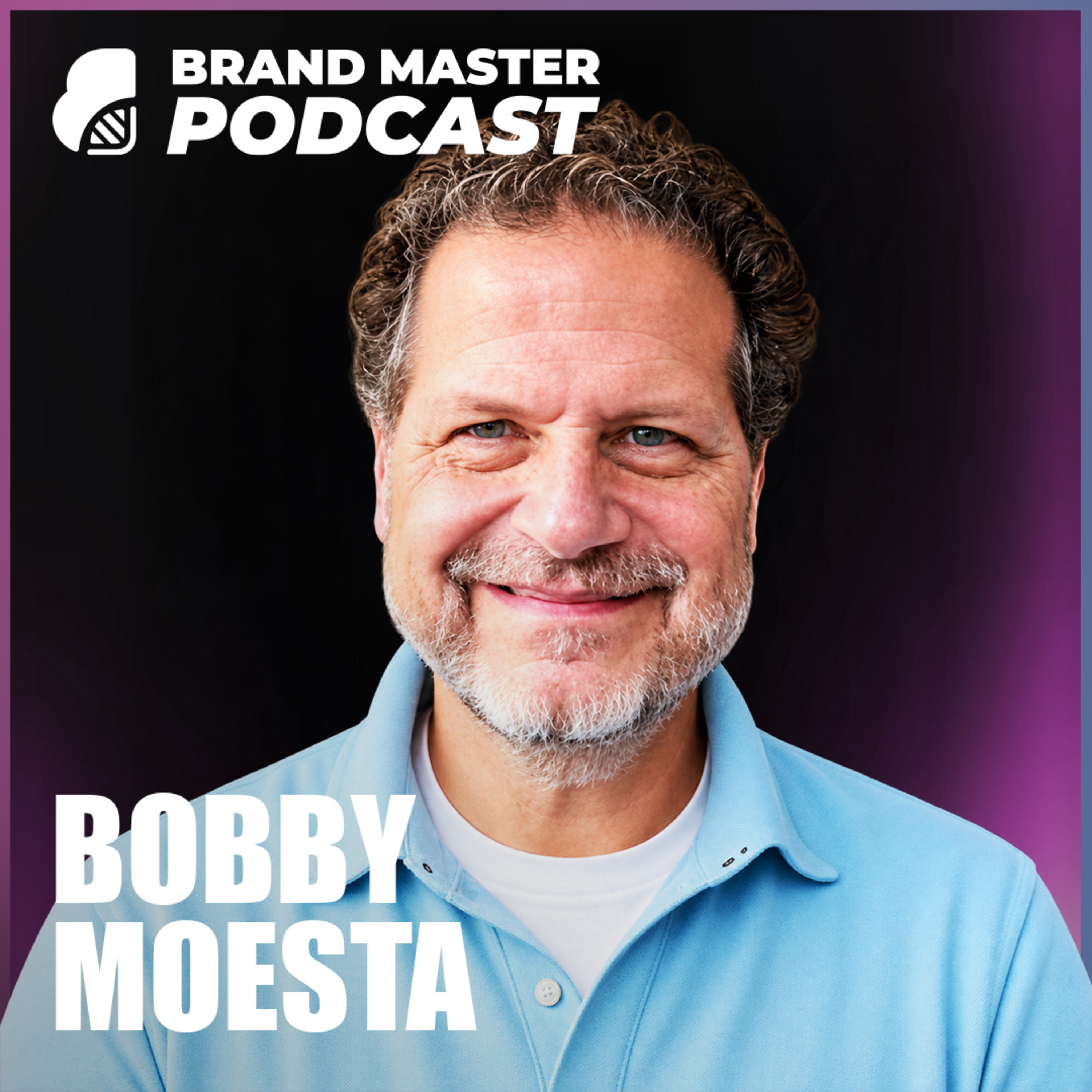
Why customers switch brands because of a “struggling moment” (a single unnoticed crisis), and how positioning should be built around the next struggling moment. Also covers brand as a memory shorthand (not the cause of purchase), the danger of wrong assumptions, and how AI changes language, strategy, and product roadmaps (roadmaps are “guesses dressed up as plans”). Includes claims that AI should be used as a question-asker, and that SaaS seat-based models are being disrupted by outcome-based pricing (example: Finn vs Intercom).
Bobby Moesta, engineer trained in Japan by W. Edwards Deming (quality), later worked with Clayton Christensen on Jobs-to-be-Done; has launched 3,500+ products/services and studies why people change for 40+ years. Key claims/examples: trust is built via mechanisms (e.g., offering options/trade-offs); innovations create new struggles (iPhone battery/reception/camera); doom scrolling and AI companions show “thesaurus”/language gaps; Finn charges per solved solution (99 cents).
BMW “I buy because it makes a good car” vs brand as shorthand; AI companion stigma; “walking doctor” vs fragmented medical specialties.
Written by AI. May contain mistakes.
Discussion on the importance of struggling moments in consumer decision-making and how to identify them.
“with us now or those who are listening later.”
Exploration of how assumptions impact branding and consumer perception.
“It sounds like this is, you know, you eat, sleep, drink, dream about this stuff.”
Bobby emphasizes the importance of understanding the essence behind complexity in branding.
Bobby discusses techniques for overcoming communication challenges in brand strategy and the importance of developing a shared language.
“What's the danger of making the wrong assumptions and how do we kind of navigate that?”
Exploration of the difficulties in naming new ideas, especially in AI.
“Everybody could tell you what they were doing, but there was no name to it.”
Discussion on how people feel about their AI companions and the stigma around them.
“I mean, doom scrolling is a great example.”
Insights into how AI is changing our understanding of problems and solutions.
“And I believe that AI has kind of emerged at this point because it's really helping us figuring out how to integrate experiences, how to integrate the things.”
How AI has impacted personal curiosity and the drive to ask questions.
“But seeing as you've gone there, and clearly you've been thinking about this quite a bit, What are you seeing at the moment in terms of, you know, in and around what you are doing at the moment?”
The potential of AI to elevate work standards but challenges of personal growth.
“Now, if there are people there, please raise your hand and let me know.”
Examining how innovations create both solutions and new struggles in markets.
“Your point about doom scrolling, that's a perfect example.”
The necessity of identifying future customer struggles for innovation.
“So the thing is, is that every innovation solves one set of struggling moments, but always creates a new set of struggling moments.”
How understanding constraints can drive innovation and problem-solving.
“And we would literally, three years ago, we would build a roadmap that would tell us where we're going to be in the next five years.”
The need to develop processes to enhance thinking in an AI-driven world.
“So I need to actually probably go do that.”
How Bobby's role has shifted towards enhancing deeper thinking in others.
“And I see most power when you turn AI to the question asker rather than kind of looking for the answer from it.”
Learn about Bobby's transition from teaching methods to fostering deeper thinking with AI's help.
“So my new mantra is think deeper, care more to create more impact.”
Discover how Bobby uses AI to write and express complex thoughts through white papers and music.
“It's like there's all these things going on and you've got so many tracks that you want to follow.”
Examine the emotional difficulties of transitioning jobs and how they are expressed through music.
“I'm like, okay, let's go write a white paper on that.”
Understand the changing landscape of SaaS models and the emergence of new value propositions.
“So did that one fall under the Whitney Houston genre or?”
Learn about the necessary mindset shifts for businesses to adapt to market changes and survive.
“So a SaaS is the basic premise is I'm going to sell you software so you can actually figure out how to help your customer.”
Explore the four phases of transformation that businesses must navigate during periods of change.
“Like, I believe that Intercom looked at it and said, look, we've only got 12 months left.”
Gain insights on how brand strategists can adapt and thrive amid the current business reset.
“And so there's four phases, denial, resistance, exploration, and commitment.”
Learn how brand strategists can adapt their approach during market resets.
“So are the companies that you're helping SaaS as well?”
Discover the value of thinking deeply and caring more in today's business environment.
“Tell us about your strategy process that you're working on.”
Explore the disconnect between human and AI interactions in various sectors.
“Having said that, you mentioned earlier thinking deeper and caring more is something that will become more valuable.”
Bobby shares how to connect with him and his ongoing projects.
“And then I'm, I'm working on all these, I'm figuring out what to do with all these thoughts that I have.”

Get the gist, explore an idea or ask about something said.
 Claude
On Brand Master Podcast, what are the key points of this episode?
Searching your listeningAutomatic transcript. May contain errors.
0:00Bobby Moesta: Customers don't switch brands easily and when they do it's typically because of a single struggling moment that flies under the radar and positioning around that very moment creates the perfect side road from your competitors to your brand. In this episode of the brand master podcast I sit down with Bobby Moesta. Now at 18 he was trained in Japan by Dr. W Edwards Deming the father of modern quality on Japanese innovation. Now 40 years and more than 3 ,500 products services and innovations later he worked with clayton christensen building the jobs to be done framework and then going on to write the book job moves and in our chat today we dive into why the real driver of every purchase decision is a struggling moment and what that means for positioning how every innovation creates its next struggling moment and why the sharpest positioning is built around where customers are about to struggle next why the product roadmap is really a guess dressed up as a plan and why thinking deeper and caring more will matter more than anything ai can do for you so if you want to understand the real cause behind why customers actually switch from the man who helped to build the jobs to be done framework itself then don't miss this episode of the brand master podcast a lot of your stories about the the early days but for for those who are listening with us now or those who are listening later.
1:28Bobby Moesta: Why don't you kind of give us the skinny on your journey to where you are today?
1:34Phil Pallen: Yeah, yeah, yeah. So one is just to realize, my mom would tell you I'm an engineer out of the womb. I was breaking things by the time I was three. I was fixing things by the time I was five. I love to build things and I love to help people. And so it's always been this thing of being able to figure out how to build things for people. And I went to engineering school. Before that, though, I had three close head brain injuries. So I can't read and I can't write. And so I was told to be a baggage handler or a construction worker, basically, on my career test as a high schooler. And in high school, I basically met a gentleman by the name of Dr.
2:19Phil Pallen: Deming, Dr. W. Edwards Deming, who was the father of quality. He was 85. I was 18. And he took me to Japan to learn basically how the Japanese, specifically Toyota, developed and launched new cars.
2:32Bobby Moesta: Right.
2:32Phil Pallen: And so I learned a lot of my methods and tools then in 1985. And part of it was started back then. And ultimately, since then, I've worked on over 3 ,500 different products and services and innovations and launched them. And so for me, it all started back at the grounding of this guy, Dr. Deming. And Dr. Deming would always talk about the consumer and how important the consumer was and listening to the voice of the consumer. But ultimately, as an engineer, that was very hard for me to do. At the same time, what happened is I would get lots of marketing research reports that would tell me a lot about the consumer, like who they were, but it wouldn't tell me why they were interested in something new.
3:14Phil Pallen: And so I actually had to go figure that part out. And so I went and learned criminal and intelligence interrogation methods to literally go interview customers of why they wanted something new and something different. And so what I've been doing is studying people for over 40 years of why people change and switch from one thing to another. And that's the fundamental kind of premise of jobs to be done is that people only switch when there's a struggling moment. When that struggling moment appears in their life, they basically have a choice to say, do I keep doing the same thing or can I do something different?
3:47Phil Pallen: And ultimately, as a product developer, how do we actually find those moments and then design products to fit into those struggling moments to help people make progress? And so I've built a methodology around it. I've learned a whole bunch of other methods and tools that are wrapped around it. But for the most part, I help companies basically understand what we call the demand side of where does demand come from? How do we actually understand what it is? And then how do we design products to fit into that demand?
4:17Bobby Moesta: Yeah, you've done this before, Bobby. It sounds like this is, you know, you eat, sleep, drink, dream about this stuff. And, you know, it's definitely something that I've got to, I don't know why it's just an inherent interest in, you know, why people do what they do. And it's often very easy to overcomplicate it on one side. And really, it is quite simplistic because it is all born from basic psychology, right? That's right.
4:52Phil Pallen: That's right. And so part of this also gets to the fact is there's usually an underlying, what I say, contradiction. The thing is we assume symmetry, meaning like, oh, it's too slow. Okay, so they want it faster. And it's like, no, it's too slow. I want to do more. And more is different than faster. And so we make these assumptions of what the words are when we actually don't actually understand what they're trying to do. And so it's about what people are trying to do and what causes things. And so Deming's big point to me was nothing is random. Everything is caused. And the reality is, is we actually then start to, if we don't know, we then use probability theory to try to understand the probability of something, but we still don't understand the causes.
5:40Phil Pallen: And you need to understand the causes. So for example, what causes somebody to trust somebody? Right? Yeah. There has to be a mechanism to do that. And what you start to realize is like in a sales context, it's listening to me, right? It's actually bringing me back options. It's actually helping me understand like what are the trade-offs I have to make? And so you start to realize that a way you can cause trust is by asking certain questions, by actually coming back with multiple answers. And so you start to realize like it's not random that trust is built, it's cost yeah and so it's understanding the causation at the very fundamental level of psychology to say like what are these things and so in most cases we're trying to say we have to do these things but we have to actually understand the outcomes people are seeking and how to how to
6:31Bobby Moesta: make them happen yeah absolutely and and your your point uh and you've made so many there of you know already got my my my notes uh going a bit crazy there's so many different uh angles that i could go down but i i really really love the the question angle and it's it's a a drum i've been beating for many years and i actually posted in in the community in the lead up to this um that something that that you remember from back in the day with with clay i think he had a frame on his door and the quote was questions create spaces for the brain uh in the brain for solutions to fall into and i just absolutely love that idea and that philosophy how powerful questions are
7:19Phil Pallen: um i would just want to i want to give you the setup to that thing he goes he goes the setup to that that that statement was most people's brains are full there's they've got too many things going on in it and so if i if if i just start telling you things you need to know it literally bounce he would say it bounces off your head it ends up on the floor so the only way to get people to actually remember anything is to ask them questions because questions create spaces in the brain for solutions to fall into and so the notion here is like nobody has any extra space in their brain for stuff to fall into you have to create the space by
7:58Bobby Moesta: asking a question yeah i i really love that and i i had michael bungay stanier on on the the the the podcast a few years ago and and he also uses that uh that philosophy the power of of questions but i could i could speak to that for for for quite some time but you mentioned assumptions earlier on and we're in the we're in the space of of branding brand strategy yeah you know finding the right customers understanding what their needs are building a brand around that You spoke about assumptions earlier. What's the danger of making the wrong assumptions and how do we kind of navigate that?
8:43Phil Pallen: Well, so this is where I'm probably going to be controversial with this one. But the reality is the brand is an effect. It's not a cause. And we design it to be a cause. We design it to be the reason why people buy. But it's the reason why they come back. It's the shorthand they have to remember to say, when I want to actually do this again, how do I remember what it is? And so it's a memory mnemonic as opposed to basically a reason to believe. So to me, the fact is that the first thing, the first assumption that most brand marketers make is that the brand is the reason why they buy. I bribe BMW because it's BMW.
9:25Phil Pallen: No, I buy BMW because it makes a really good car. And BMW stands for a good car and it stands for high performance. And it reminds me of that thing. And so part of it is the brand is the shorthand. And so when you start to make assumptions, what happens is that's where, again, it goes back to, as an engineer would say, the devil is in the details. And so we actually don't actually, when we start to make the assumptions, we actually start to lose the resolution. We lose the details. And it's the subtleties of the moment, the subtleties of the context, the subtleties of the outcomes that actually make the difference between something that's good and great.
10:06Phil Pallen: And so those assumptions are very, very dangerous. And so there's a quote that I remember all the time. And I don't memorize many things, but this is what hit me in my 20s. And it's basically from a Supreme Court justice in the United States. He said, I would not give a fig for simplicity on this side of complexity, but I would give my life for simplicity on the other side of complexity. And what to me that the real power of that quote is like, we need to find the essence of something. And too many times we're actually simplifying it on the wrong side of complexity and we actually dull it down.
10:46Phil Pallen: But if we actually wade through the complexity, we find the essence of something that actually is the beacon that actually helps people understand and remember things. And so to be honest, it's that work that we have to do to get to the essential things as opposed to the simple things.
11:02Bobby Moesta: I love that. I really like that. I mean, I talk about distillation all the time, but it's essentially what you've said there. You go through the complexity to distill and find that.
11:12Phil Pallen: And it's hard work. It's hard freaking work. And most people, they're like, ah, it's too much detail. It's too much. They're like, no, when we're in the details, when you can't make sense of stuff, that's where it all matters. And so to me, that's the hard work. And too many people are trying to simplify it as opposed to find the essence of it.
11:33Bobby Moesta: So talk to me about that hard work, right? So I totally agree with you. If you simplify before the complexity, you just dumb it down. That's right. And I think Einstein said something similar. It was like, make things as simple as possible, but no simpler. And I think that's what he's getting at there. So what is the work then, getting through that complexity, getting to the other side, and finding simple on the other side of complexity, that distillation?
12:08Phil Pallen: So again, I approach it like an engineer and I'm an electrical engineer. So we talk about this notion of signal and noise. Yeah. And we try to actually understand what do people mean by things? What is the intent behind something? And so this is where we have a, I talk about two kinds of problems. There's a dictionary problem. A dictionary problem is where you and I would use the same words, but we have completely different meanings for it. And so we agree at the word level, and then we disagree at the definition level, and we don't know what's going on. So part of that work is actually understanding, do we mean the same thing when we use these words?
12:47Phil Pallen: The second problem is a thesaurus problem, is we actually use different words to mean the same thing. And so you start to realize that this is all a communication problem. And so we have to sift the signal from the noise, and then we have to actually distill or find the essence of what is the intent behind what we're talking about. And that is very hard work because it's frustrating because there is no language. So one of the things that I'm writing about right now is this aspect of when you have a new technology like AI, right? Or even if you go back to Instagram, right? There is no language to talk about the new behavior, right?
13:30Phil Pallen: So what do you say, well, how do you use perplexity? Well, I use it like a Google search. And then I ask them what they do. And it's nothing like a Google search. Right? And so there's no language. And so ultimately, one of the problems we have right now is people are trying to figure these things out when the consumer has not actually built a language around it. So for example, think of the word doom scrolling. It's a new word. It existed after Instagram was built. There's no idea what it was called. No idea. Everybody could tell you what they were doing, but there was no name to it. And it wasn't for three years until that word came up.
14:09Phil Pallen: And so this is the problem when we're in a very, like right now in an age of AI, where things are changing so quickly. We have no idea how to actually talk about these things. And we usually use the old language to talk about the new experiences and there's not enough resolution and not enough essence to figure it out. And so this is where you have to actually only let experiences help drive the language development.
14:36Bobby Moesta: I can't tell you, Bobby, how much that resonates with me because I've been talking about the concept of brand strategy for probably eight or so years and it was very underdeveloped. And in our space with marketing language and all these different types of creatives, we had the thesaurus problem. That very problem that you were talking about, people using different words for the same things or the same words for different things. So I can totally relate to that. Brand strategy as a vertical has that exact problem at the moment. Where else are you seeing that problem? I mean, doom scrolling is a great example.
15:13Phil Pallen: and like every everything to do with ai right now is is is like like i'm spending so much time so for example i'm i did some work recently around people who have created an ai companion to help them do something right yeah everything from productivity to help me help me be less lonely right and and in talking to these people the like one of my last questions is is like well who else have you told about this? And they're like, well, you're the very first person I've ever had a conversation about my AI companion about with. I'm like, wait, what? And you start to realize that they have been struggling with the language.
15:52Phil Pallen: And there's a level of shame that's associated with saying, I have an AI companion that I talk about my day with because I don't have anybody else to talk to. And you're like, what is this? And so you start to realize it's It's moving into spaces because at some point it's easier to create an AI companion than it is to find a friend. It's crazy.
16:17Bobby Moesta: Yeah, it is. Yeah.
16:20Phil Pallen: You start to realize it's in many, many, many places here. And you start to realize that this is where AI is helping people in many places. But it's also scaring a lot of people. And I feel like we have to remove some of the stigma around it because it's different. And different is always scary for people. But the reality is it's helping a lot of people do things. And I believe that AI has kind of emerged at this point because it's really helping us figuring out how to integrate experiences, how to integrate the things. If you think about how math has evolved from counting to arithmetic of adding and subtracting to multiplication, the last 100 years have been about multiplication.
17:05Phil Pallen: How do we scale stuff? How do we make things bigger? How do we make things faster? How do we make things? But now it's about connecting dots between things. And our brains can't connect the dots between what one thing does and what another thing does and all these unintended consequences we get from it. And so I believe AI has emerged at this point to really help us understand how to see the whole, how to integrate the bigger picture, how to see how brand and product and markets It's that everything integrates into one. And so part of this is to realize like it's scary on some fronts, but it's actually going to help us prevent problems in the future that we could never, ever anticipate in our current state.
17:47Bobby Moesta: Well, I was going to kind of park the AI conversation till later in the chat, which I typically do. But seeing as you've gone there, and clearly you've been thinking about this quite a bit, What are you seeing at the moment in terms of, you know, in and around what you are doing at the moment? And where do you see that going?
18:13Phil Pallen: So the first thing I will tell you is that there's a majority of colleagues of mine who are literally holding back. They're afraid of it, and so they don't want to interact with it. And for me, it's actually turned me back into a five-year-old child. Okay. Like every question that possibly is like, so why does this work this way? And like, I can go ask and it will actually have, it's like, it's like having the best history student ever at your side, ready to answer any question. Is it right all the time? No, it's not right all the time. It shouldn't have to be right all the time. But the fact is, part of it is to realize like, it actually has accelerated my curiosity.
18:54Phil Pallen: and I'm a fairly curious person, but I feel like I'm at least three or four times more curious than I have been without AI, because now I have the ability to fuel that dopamine of getting me to help me understand questions. And it's allowing me to see the bigger picture much faster, right? And so I feel like it's a very powerful thing. Now, does it have the realm to basically destroy sure but so does the nuclear bomb let's be clear i have trust in humanity we've had the nuclear bomb for 75 years and we've never set one off since the first one like i trust in humanity to figure out a way in which to not necessarily let this ruin us yeah and and look i mean if you it
19:39Bobby Moesta: depends on on on where you're looking and i do look in different corners um i i really like Stephen Bartlett and the stuff that he does and the guests that he has on there um and there is this belief that beyond what we're about to go through which is this complete disruption there is this kind of utopia on the other side where we do work less and we do get to spend more time with our families and do the things that that that we want to do is that how you see it I I well so the
20:10Phil Pallen: first thing I will say is I don't know anybody who's engaged with AI who's working less I don't know anybody who is. Now, if there are people there, please raise your hand and let me know.
20:20Bobby Moesta: No, on the opposite.
20:21Phil Pallen: But I feel like it's the thing. I do feel like it's going to take the work that we shouldn't be doing off of our plate so we can do higher order work. Clay would talk about the notion of, so Clay Christensen was another one of my mentors, and he would talk about how do we get people to work to the top of their profession? So how do we get them not to do the bottom of the work of the profession, but to move them up the profession. So how do we get nurses to work to the top of their profession so doctors can work to the top of their profession? And so ultimately, it's that notion of how do we get everybody to work up a level?
20:55Phil Pallen: And I feel like that's what this is trying to do. And that's the intention. I don't think there's a utopia because I think the hard work is really the personal work. The personal work of understanding who we are, what we're about, why are we here like all of those decisions to me a lot of that work has been put to the side because we've been so busy with other stuff and my belief is that's the work that we have to
21:20Bobby Moesta: actually start to really work on well i i want to take it back to to the crossroads there because i completely agree with that whole idea of top of profession and that's exactly what i've been talking to everybody here everybody who listens to me about that the bottom of the market will be swallowed up it already is you know those who want ai to answer their questions or to to pay as little as possible for for you know high quality work strategic work you know they have their answers already but there is a higher level that you can deliver with the benefit of ai and it's about really kind of stepping that up and i want to go back to the to the point that you made about cause because there's a there's a we're crossing over here to really try and understand because the problems that people have today are completely different to the problems that they had three years ago.
22:10Bobby Moesta: Your point about doom scrolling, that's a perfect example. That's right. So what's the doom scrolling version of your market today and how do we find that?
22:22Phil Pallen: That's right. And so part of it is to play out. So the thing is, is that every innovation solves one set of struggling moments, but always creates a new set of struggling moments. so think of the iphone it solved the problem of combining a uh you know a pda a phone and a music player into one thing but then we had battery problems yeah and then and then we had reception problems and then we had fixed the battery problems and then all of a sudden we had the camera problem and then the camera problem became you know i mean like so there's always so what people don't understand is that the the line of innovate the lines of innovation the lines of improvement dictate then the lines of the next struggle.
23:08Phil Pallen: And so that's the thing that AI can see that we can't see. I've been able to see it because of the methodologies I've been able to develop. But over time, most people would never believe me to say like, all right, the next thing you need to work on is this. So like the notion of a product roadmap is actually a fallacy. Because the roadmap is what we can build. It's not what the market needs. And so all of a sudden, you start to realize, well, what the market needs is where are the next struggling moments going to emerge? Because that's the next set of features we should be developing. And so we should only be talking about the roadmap being, here's the struggling moments we're going to address.
23:43Phil Pallen: Because by the time we get to that, we don't actually know the technology we should be using. And we would literally, three years ago, we would build a roadmap that would tell us where we're going to be in the next five years. That's crazy. It's actually, it's this notion of false sense of security. And so part of this is being able to help people understand that the struggling moment is the seed for where we actually need to be building and understand that like if this and this and this are happening, what's the next set of struggling moments that will emerge? And we should be able to see those.
24:18Bobby Moesta: We should be able to see those. Okay. So, and let's say I walked into a business to help them with their brand as their strategist. And I said to them, okay, I've got somebody on the sidelines. His name is Bobby. I'm going to bring him in here. And what we're going to do is we're going to identify the struggling moments, not that your customers are having today, but that they're going to be having in the next 12 to 24 months. What are the things that we need to kind of step back and look at and dissect?
24:49Phil Pallen: You need to look at the problems you're going to solve today. right? And what are the new innovations you're going to put in place? And then you're going to look at the unintended consequences of each one of those innovations of what is it going to cause? So all of a sudden, I'm going to actually merge all these things, but you know what? The battery is going to be the thing that's most taxed. So that's probably the weakest link in this. So I need to actually probably go do that. And then this and this is going to happen. But part of it is being able to see the frame of possibilities and then understanding where the next level of constraint comes in.
25:27Phil Pallen: It's the constraints where we actually need to actually focus innovation and product improvements. The constraints are the things that cause the struggling moment that cause then the opportunity to do something better.
25:42Bobby Moesta: But the unintended consequences are not always based on the solutions that we provide. There are unintended consequences in the market that are happening in, you know, whether we exist. In the context.
25:56Phil Pallen: It's in the context that they use it. Has nothing to do with you.
25:59Bobby Moesta: Yes. So we need to understand the problems that are being solved today. We also need to understand the innovation that is in and around the context. At the moment, that's AI. and ask ourselves, what are the unintended consequences that AI is creating now? And what are those struggling moments that will appear from those unintended consequences in the coming months, years, et cetera?
26:32Phil Pallen: So one of the unintended consequences of AI is people are basically losing their ability to think about and integrate certain things. And so the question is, is what is the processes we're going to build to compensate for that? So AI now becomes an input as opposed to the answer. So what's the thing we build to actually build back our thinking ability? That's something I'm working on.
26:57Bobby Moesta: Yeah. Right? That's, I can totally see that. I can totally relate to that. And I see most power when you turn AI to the question asker rather than kind of looking for the answer from it.
27:17Phil Pallen: So like, for example, one of the things I've done is I've actually made them debate each other. I've literally given them personalities and basically point of view. So one of them, for example, is Deming and one of them is Clayton Christensen. and they both had very different perspectives and they will argue with each other. And then I get to get involved to actually resolve the argument. That's higher level work to me.
27:41Bobby Moesta: 100%. Yeah.
27:43Phil Pallen: And so part of it is thinking about how do we use these things? And so like, again, we can be lazy about this. We can be simple about this, but we need to actually understand the essence of it and go to the other side of this and understand what does higher level work mean?
28:00Bobby Moesta: so so what is it that that your day-to-day looks like now bobby in terms of the people you help um obviously i i a lot of it is is in front of ai getting them to debate to debate against each
28:15Phil Pallen: other but on in terms of how you help people i i i have i feel like my my role has shifted from being methods to teaching people the methods to helping people think deeper. So my new mantra is think deeper, care more to create more impact. And that's ultimately the thing is that most people, I felt like the methods were causing people to think deeper, but the fact is that AI can do some of the method part now, and not all of it, but some of it. And you start to realize at some point in time, but they still have to actually integrate it all because AI cannot integrate the emotional stuff at this point.
28:59Phil Pallen: AI doesn't have feelings. It doesn't know what trust is. And trust is contextual. It has a definition of trust, but it doesn't actually know how to cause trust in this situation. That's what humans need to actually be part of still.
29:17Bobby Moesta: I noticed that you almost seem giddy like a child. I am. I feel like this is, I wish I was five years old.
29:27Phil Pallen: I am five years old again.
29:29Bobby Moesta: You're full of enthusiasm. It's like there's all these things going on and you've got so many tracks that you want to follow. What has you most excited about? Is it your work personally that you're doing on a day-to-day basis? Is it your impact on other people? So there's two things.
29:53Phil Pallen: I think the first thing is, so as a dyslexic, illiterate person, writing has been so difficult for me, just ridiculously difficult. and and so trying to get what's inside my head out has been very very difficult and so i've been able to build several different um agents that have have been able to like when it comes out it is it is in my voice and in my words and in my language around it's it it's not perfect by any means but it's better than i could ever do it what it would take me three hours to do, it can do in three seconds. And so in the last, I'll say, since January 1st, I've written 100 white papers, 100 white papers on just the most ridiculous things from the anomaly advantage.
30:52Phil Pallen: What is the role anomaly plays in trying to actually understand innovation? and why do I study them so much to the anatomy of a great question to how do we actually understand strategy from a cause and effect perspective as opposed to a vision perspective. Like what is the world, how does the world shape our strategy as opposed to how do we try to shape the world from our strategy? And so it's like all these different, like, it's just,
31:24Bobby Moesta: it's oozing out of me so where does it come from do you just have a question that pops up or do
31:29Phil Pallen: you have a method so i'm finding that these questions come up in the middle of real world discussions and i can i can i can figure out kind of the more generic decision like the what's the bigger decision we're trying to wrestle with when we're wrestling with so we'll be in the middle of wrestling with something i'm like oh this is what we're really wrestling about and then i'll i'll save the question. I'm like, okay, let's go write a white paper on that.
31:52Bobby Moesta: The second thing that I'm
31:54Phil Pallen: doing though, is I'm actually turning those white papers into music. And it's so interesting because it then adds the emotional - Literally music? Yeah. I don't play an instrument. I don't write. I can't read music. There's a thing called Suno and I basically have it write lyrics about it. I have it right. I have it basically pick a genre around it. And it literally, so like I wrote a book called Job Moves, right? And Job Moves is about basically people, I studied people for almost 15 years of what causes you to say, today's the day I'm going to leave my job and go to a new place, right? And one of the jobs is job four, which is take the next step.
32:41Phil Pallen: And in my world, take the next step is like, yeah, I've done everything I'm supposed to do. This is great. okay, I'm going to move on. This is like, I'm excited to move to the next step. But when I turned it into a song, I realized how hard it is to take the next step emotionally, because everything is perfect. You love the people you're working with. You're actually doing really, really well. You're being paid a lot of money to do what you want to do. And yet you've got to go take the next step. It's the notion of literally saying like, yeah, this is all good, but I got to do something else. and it's that fact of like the song itself realized to me about how hard emotionally it is to take the next step.
33:24Bobby Moesta: So did that one fall under the Whitney Houston genre or?
33:29Phil Pallen: It was actually under the grunge. Oh really? Yeah, it was a grunge song that I actually kind of, so what I do is I end up having five different kind of genres that I build some lyrics for it and then I basically picked different genres. And then it's like, which resonates with me the most. And it was like, oh man, that's it. It just feels, that feels right. It's just so fun. So anyway, yeah, I'm having a blast.
33:55Bobby Moesta: So how far are you drifting from your core, you know, what you've been focused on for the last 15 years? Are you exploring? I don't feel like I'm drifting.
34:07Phil Pallen: I feel like I'm going deeper.
34:09Bobby Moesta: Right. But you're still going deeper into the same,
34:13Phil Pallen: I'm still going into why do people change and how do I build products or solutions to help people make progress? Like I'm still in that space of helping people figure out what to do next.
34:25Bobby Moesta: Right.
34:26Phil Pallen: And it's both from a consumer perspective as well as from a product or service perspective.
34:33Bobby Moesta: And what have you found in the past 12 to 24 months that's changed in terms of how you would help or recommend or guide people to building products for customers compared to back then?
34:53Phil Pallen: So the one thing I will tell you is I think the SaaS model is dead. Okay.
35:01Bobby Moesta: I'm very interested.
35:02Phil Pallen: The reason why I think that is the best example is Intercom, who doesn't exist anymore, is now Finn. And what Finn has done is Finn has basically transformed the notion of customer success and going from you can hire my software on a monthly basis per seat to help people, help your people solve these problems to like pay me 99 cents per solution. And every time I solve it, you just pay me 99 cents. and they've literally they've broken a hundred million in less than I want to say 12 months and they're on the way of basically disrupting Intercom so they basically have turned Intercom off
35:43Bobby Moesta: so because I know Intercom I've explored Intercom and I've explored it to the point of realizing that struggle moment when they were going to charge me per solution So when you say that Intercom is gone, I thought you suggested that Finn had acquired them or...
36:05Phil Pallen: No, Finn is the same company. It's the same people. They basically, it was there. So instead of making Finn a feature of Intercom, they actually built Finn as a separate product. And it is disrupting and collapsing Intercom.
36:23Bobby Moesta: So what's so different about this compared to a traditional SaaS?
36:29Phil Pallen: So a SaaS is the basic premise is I'm going to sell you software so you can actually figure out how to help your customer. This is I can help you with your customer right now. It's so direct. Okay. And you just pay me$1 for helping you solve this one problem.
36:48Bobby Moesta: Right. Yeah. Well, that's, you know.
36:52Phil Pallen: And if I don't solve it, you don't pay me. It's like the value proposition is just fundamentally changed. And so you start to realize that most people are adding AI as a feature to their SaaS business. And ultimately, nobody really wants to buy software at all anyways.
37:10Bobby Moesta: So if you were to help a SaaS company now and you were just to step in and knowing what you know about the unintended consequences, where would you move the goalposts to for a company like that?
37:29Phil Pallen: So to me, it's the archaeology we have to do to actually understand the problems you're really solving and how do they want them really solved and how do they really want to pay. People don't really want to buy seats. They have to buy seats because of it. So what's the way they really want to buy and pay for it? And so that's the work that Intercom did to figure out that there's a new value proposition that's completely different than the old value proposition. and once they did that then they actually built a product to fit okay so i mean it's it's a big it's a big shit like this is where where again most people don't understand like the the you know there's a guy named joel barker who says when the paradigm shifts everybody goes back to zero i feel like we're in that moment right now everybody's going back to zero and we don't actually know why and we don't know what to do and that's that's one of the reasons why i'm so excited right now is because I feel like it's the chance to actually help people reset and the people who are the incumbents who are overly confident are going to get crushed.
38:38Phil Pallen: It's disruption in a box.
38:41Bobby Moesta: So how do we reset then, Bobby? When everything that we know, when the businesses that we have built, when the customers that we are trying to serve, when the problems that we understand are changing when the challenges when the when the the motivations when when everything's turned upside down yes you know how do we find our center so that we can build off that and take
39:05Phil Pallen: advantage of this new opportunity the only way and this is hard for me to say but the only way i know how to do it is to make sure people actually know the old way will not work anymore you have to start by burning the boats because at some point they got to realize like Like, I believe that Intercom looked at it and said, look, we've only got 12 months left. What are we going to do? And they start a countdown clock and say, we got to have this up and running within that time period. And they were able to branch the thing through. A lot of SaaS are in free fall right now, and they're just trying to figure it out.
39:42Phil Pallen: And they're still trying to work the old system to build to the new market. And it's just not happening. Yeah.
39:51Bobby Moesta: Yeah, I mean, I'm seeing a lot of what you're talking about out there. Are you seeing this? Just the conversations, the capabilities, the things that, and I raised this point recently on a conversation that we had. I had a UX designer come to me and try and kind of pick up a relationship that we had in the past. And I tried to engage him to understand what he is doing because clearly he's coming to me because, you know, the tide is rising and things and he didn't want to engage. So there's a lot of denial, I feel.
40:30Phil Pallen: That's right. And you got to get rid of the denial first, because at some point you can't truly explore the possibilities because reframing the future is going to be hard and it's going to be a lot of work. And the fact is, is what happens is if you're not fully committed to it, you're just going to say, it's too hard. Let's go back to the old. And so you've got to get them past denial. And so there's four phases, denial, resistance, exploration, and commitment. And you've got to get them through those four phases to get to what's the next thing.
41:00Bobby Moesta: Now, commitment in this moment, how hard is that? Because everything's moving so quickly. And if you're going to commit to something, it might take you three, four, five, six, 12 months to get there. And with the rate of change at the moment um you know what are your thoughts on on i i would say the the companies that i'm helping right now the commitments are 90 days right okay just they're very because like
41:30Phil Pallen: like it used to take us 90 days to build a feature it now takes us four minutes and so all of a sudden it's like well what are we going to do over the and the hardest part is because we can build anything we we end up building way more things than we actually need and we're actually hurting the customer. So we're actually trying to figure out, we're spending more time trying to figure out what to build than actually building it. So the constraint has changed from building to literally figuring out what to build. Yeah.
42:01Bobby Moesta: So are the companies that you're helping SaaS as well?
42:05Phil Pallen: They were SaaS.
42:08Bobby Moesta: You're helping the ones that will survive, are you?
42:11Phil Pallen: I'm trying. I'm trying my hardest.
42:14Bobby Moesta: Bobby I tend to I've kept you all to myself for most of that and to be honest I could keep you all to myself and keep talking to you for another hour I'm not going to do that I usually throw it over for a handful of questions I've got one from Marco at the moment I'll just ask a forum anybody else who has a question you might want to quickly throw your hand up I might have time for one or two we can take it to the hour if that's okay What can a brand strategist do during this reset? So obviously consultants are under pressure here because answers are so easily accessible these days. In this reset, what can consultants broadly, brand strategists do to kind of understand the unintended consequences of what are going on at the moment?
43:03Phil Pallen: Yeah. So the first thing I would do is I would elevate from brand strategy to company strategy. Because I feel like a lot of people are trying to build a brand strategy without a relevant company strategy. And ultimately, they end up becoming in conflict. And so helping people to elevate down to what are the things that we are reacting to? What are the things that are changing in the market? What are the things that are actually that we need to respond to? and making sure that that's a cohesive set, that will actually help you then understand what you might need to change in the brand and how the brand needs to change.
43:39Phil Pallen: But if you don't take the higher road on this one, you're gonna say, oh, here's what we gotta do. And then all of a sudden, these other three things are gonna come in and it's gonna blow your brand strategy out of the water because it's not relevant to the other things that are changing around them. So that's one of the products I'm working on right now is a strategy process to help people understand and capture not only the things that are changing, but how they actually coalesce and come together. And then how do they actually then impact product strategy, brand strategy, marketing strategy, channel strategy?
44:12Bobby Moesta: Yeah. And in terms of what you said there, I mean, there are many different doors for those problems. I like the Trojan horse approach where you approach it from one, but then you know that there's a higher level to go. so you can be operating from that once you kind of get in the door for those who are operating as brand strategists at the moment, who maybe later on want to tackle company strategy. Tell us about your strategy process that you're working on.
44:44Phil Pallen: So part of it is it's actually a paper that was written by Clay Christensen in 1994. And he wrote it and started to actually roll out the process. And Michael Porter stopped him and basically told him he was, it was basically politics within HBS that basically said, you're not in the strategy department, you're in the technology and operations department. And so it went away. But me and a colleague, Rick Petey and I have been basically using it for the last 20 years. And so we're in the midst of kind of codifying it and making it, trying to make it widely available. And it starts with this notion of like, if nothing is changing, then our strategy shouldn't change.
45:26Phil Pallen: But what we have to do is understand what's happening in the market, what's happening in regulation, what's happening in costs, what's happening in the supply chain. What are the things that are changing that we need to respond to that are actually the things that the strategy needs to address? And then from there, the second part is once one is, and to be honest, it's about the the executive team actually doing this. So the one thing that Clay was insistent on, he goes, the executive team needs to do the strategy. It's not basically somebody on the side doing the strategy, bringing it to them.
46:00Phil Pallen: It's a way in which, because the executive team has basically all these experiences that we need to codify. So step one is identifying what are the things that are changing. Step two is about connecting the dots and understanding what is real and not real in terms of those changes. Step three is then basically being able to understand kind of like what are the causal mechanisms that are actually happening and how do they come together? And then step four is about then being able to play out different scenarios of what is possible. So building out different strategies and then picking one. And then step five is turning it into a set of projects to help move the company towards the strategy.
46:41Bobby Moesta: no one can accuse you of not being an engineer Bobby
46:47Phil Pallen: like I said my mom told you that I was one out of the womb I'm not sure you said it out of me
46:52Bobby Moesta: I want to end on probably because a lot of what you said will scare a lot of people on here will scare a lot of people listening because as much as you I'm sorry I don't mean to that's not my intention I know, but I like to have these conversations rather than, you know, put the head in the sand and, you know, take the denial approach. I'm not one to do that. Having said that, you mentioned earlier thinking deeper and caring more is something that will become more valuable. um when you say that how can we take that advice and apply it with with kind of the the future in mind what can we be doing now to use that to so that it's not just about the efficiency of ai it's not just about the the the compute power or uh you know doing things quicker um it's about the process it's about you know going through those relationships it's about caring more what can we what can we do and how how can we evolve that so that we can stay relevant as we move forward
48:06Phil Pallen: i i think thinking deeper has two has three components one component is curiosity well humbleness the humbleness that i don't know most people assume they know way too much And like one of my mentors who was Dr. Genichi Taguchi would say, there's way more unknown than there is known. Way more unknown. And never forget it. Like this is where we're kind of shocked that AI can pull all this together. But the fact is, is there's still way more unknown than there is known. Like we don't know where our life energy comes from. Right? And so there's just way more. And so this is where thinking deeper is about understanding the causation.
48:47Phil Pallen: And it's not the single cause, but the sets of causes that enable things to happen. So to me, it's thinking deeper about how things work, being curious, being humble, right? And knowing that you don't know and that you, and the thing that I would say is I've come to the conclusion, like, even though I might've learned something about this yesterday, I actually approach it like I didn't learn it. Like it's not true because I want to just immerse myself into the depth of all the knowledge that I can. And the knowledge is so domain specific that it's like what was relevant in one domain isn't necessarily relevant in another domain.
49:27Phil Pallen: We try to recycle knowledge too much. So deeper is about basically not knowing more and being able to be aware and be present about thinking deeper. Caring more is about others. Caring more is about helping others. Caring more is about empathizing and being able to realize that we're really here on earth to help other people be better, right? And so ultimately, if I take the deeper knowledge and I take it with the notion of service and helping others, that's how I'm going to have impact in the world. And that's how we're going to get a better world. That's really the root of that statement.
50:16Bobby Moesta: Yeah, I really like that. And I think the example that you gave earlier about people telling you that they don't have an AI companion, I think there is a lot of disconnect more and more in the world. And being able to you know, to kind of be that human element as we go through all of this is definitely, and if you're able to build your relationships off of that, then you still keep a hell of a lot of relevance as we move forward, I think.
50:47Phil Pallen: I want to leave you with a quote that I heard in an interview the other day, which was like somebody was talking about, they had a medical problem, and they had created an AI companion to help them figure out the medical companion. and and i asked them what's the difference between basically what the doctor and the nurses were saying and what the ai was saying and they said something to the effect of this is like the the humans were speaking more like robots and the robots were speaking more like humans wow and that to be honest is the thing we need to fix wow that's that's uh that's that's an
51:26Bobby Moesta: insight all right uh and you know a a real kind of struggling moment that we can all kind of see the unintended consequences how many people are like in the u.s how many people are frustrated with the medical system yeah like almost everybody and the reality is like at some
51:42Phil Pallen: point like what how is a i can help it's it's gonna there's there's a there's a hip doctor and there's a knee doctor and there's a ankle doctor but there's not a walking doctor and i don't really give a shit about my ankle or my knee i just want to know how to walk and the fact is they leave walking to the to a therapist which is the wrong place to leave it yeah i hear you
52:03Bobby Moesta: all right bobby it's it's it's been an absolute pleasure i have to say i thoroughly thoroughly enjoyed this conversation your energy has been infectious um your knowledge has been uh so generous with your knowledge and time um and uh i i thank you for for your time where can people find out more about what you're doing, connect with you, follow you, all of that.
52:26Phil Pallen: LinkedIn is the best place. And then I'm, I'm working on all these, I'm figuring out what to do with all these thoughts that I have. So I don't have a, but LinkedIn is where I'll be announcing all of it and where it will, it'll figure out where a home for it all. But I'm, I'm deep down the rabbit hole on many, many, I'm in the caves right now. So when I emerge out of the caves, LinkedIn will be the first place I kind of tell people where, where, what I'm, what I'm ready to share.
52:50Bobby Moesta: Well, I hope that's where you're going to release your first album, Bobby. I'll certainly be a buyer of your tunes.
52:57Phil Pallen: You got it. Thank you, sir. Cheers, Bobby.
52:59Bobby Moesta: We really hope you enjoyed today's episode. Thanks so much for listening. If you want to learn more brand strategy techniques to level up your skills, make sure you check out brandmasteracademy.com. There's plenty of free resources and premium content for you to download and get you going. If you enjoyed this content, please be sure to give us an honest review on iTunes, Stitcher or wherever you listen and make sure you tune in for the next episode brand master podcast
Customers don’t switch brands easily. When they do, it’s typically because of a struggling moment that makes staying with the status quo harder than making a change.
In this episode of The Brand Master Podcast, Bobby Moesta reveals how identifying those moments can create the perfect side road from your competitors to your brand — and how the next wave of customer demand can often be found in the struggles your market hasn’t encountered yet.
You’ll learn: