Ask ChatGPT


 Brand Master Podcast
25 Aug 2026 · 46m · 17 chapters
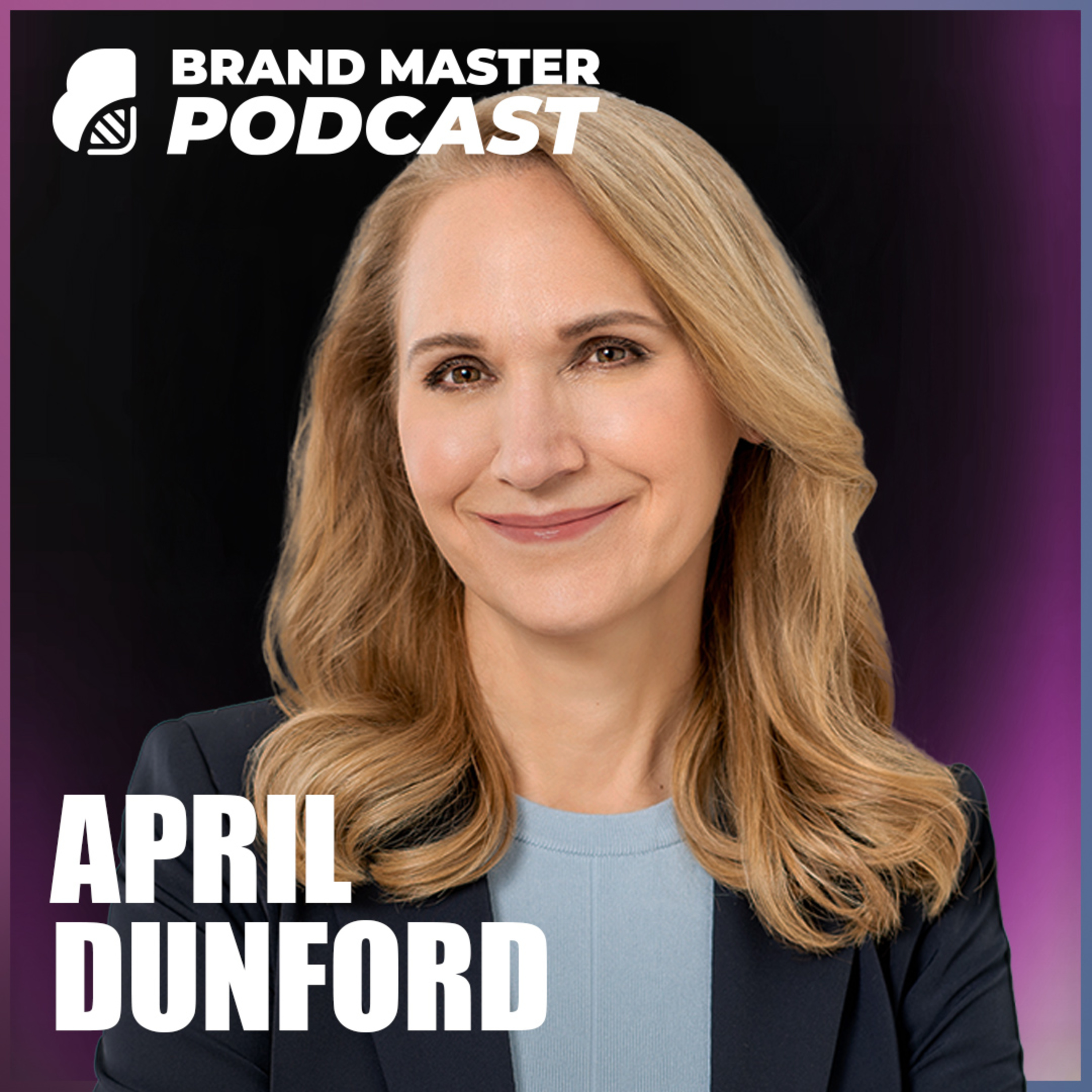
Why B2B positioning fails when sales isn’t involved, and how to build positioning that survives “first contact” by aligning CEO, sales, and product, then translating it into a tested sales pitch.
April Dunford is a positioning expert with 25 years in tech as a repeat VP of Marketing, including positioning at a CRM company sold for $1.7B (Canada’s largest software acquisition at the time). She later scaled her process in rooms at Google and IBM. She’s authored Obviously Awesome (100k+ copies) and Sales Pitch.
Positioning created by marketing alone “dies” because frontline messaging differs on real calls. Most companies don’t truly “own the sales pitch,” leading to a Frankenstein pitch that never gets rebuilt. Positioning must be turned into a first-call sales narrative and tested with qualified prospects.
IBM’s “heterogeneity” value vs Google/Microsoft lock-in; replacing legacy spreadsheets/duct-tape processes and competing against shortlists.
Written by AI. May contain mistakes.
Discussion on how marketing-driven positioning fails without sales involvement.
“There's been no, you know, bigger changes than we've seen in the last three years.”
Exploration of the unchanging principles of positioning despite market changes.
“And I'm using the exact same process with those companies as I was using with companies 12 years ago.”
Strategies for achieving agreement among marketing, sales, and product teams.
How to create positioning that resonates with sales and reflects market realities.
Discussion on identifying customer needs and replacing outdated solutions in B2B.
“Like I actually need salespeople or sales executives in the room.”
Steps to position effectively against competitors and highlight unique value.
“Because one, marketing never wins that debate.”
How to determine best fit customers based on unique advantages.
“well, wait, wait, wait, wait, wait, wait.”
April shares insights from her work with IBM on positioning strategies.
Learn how to identify best fit customers and the unique value propositions for B2B businesses.
“We should focus on the customers where we have a distinct advantage and there is something about the profile of that account that makes them really, really care a lot about a thing that only we can deliver.”
Discover how April Dunford's positioning process has evolved through experience and challenges.
“Talk to us a little bit about your process and how that's evolved over the years.”
Explore the frustrations of traditional positioning methods and the need for a structured approach.
“And so when I, the first couple of products that I positioned when I was in-house, we just kind of flailed around at it, right?”
Learn about the essential components and team dynamics needed for successful positioning.
“So in the early days, I recognized that we needed to get this cross-functional team together.”
Learn why many B2B sales pitches are poorly structured and lack ownership.
“And when I say story, I don't mean any kind of story.”
Discover how to effectively translate brand strategy into sales and marketing practices.
Understand how to create a compelling sales pitch deck that resonates with prospects.
“And so I've been using an evolving version of that structure ever since.”
Learn about the continuous process of sales enablement and training in organizations.
“But if I can get a couple of good reps in it and have them train the sales rep, now we're on to something.”
Learn about the process of positioning workshops and ongoing client engagement strategies.
“They can keep me around after that as an external advisor.”

Get the gist, explore an idea or ask about something said.
 Claude
On Brand Master Podcast, what are the key points of this episode?
Searching your listeningAutomatic transcript. May contain errors.
0:00April Dunford: If your marketing or sales people are deciding your messaging, then your positioning strategy is dead. You can fight it all you want, but it's gone. Bye-bye. It doesn't matter how sharp or beautiful a brand looks or sounds in your guidelines. If the person handling the frontline communication isn't toeing the line, then that's the last thing your customer will hear. In this episode of the Brand Master Podcast, I sit down with the one and only April Dunford. now before she ever wrote a word about positioning she spent 25 years inside tech companies as a repeat vp of marketing including positioning a crm company that sold for 1.7 billion dollars the largest software acquisition in canada's history at the time now she wrote it all down in obviously awesome now past its 100 000 copies sold and a follow-up called sales pitch now these days she runs that same process inside rooms at google and ibm at a scale that most consultants never get near and in our chat today we dive into why positioning built without sales in the room is dead before it even launches the exact process that she runs to get the ceo sales and product all agreeing on one cohesive story the lighthouse rule she uses to explain why creating a brand new market category is usually a losing bet and why almost nobody inside a b2b company believes that they actually own the sales pitch and what that gap costs so if you want to know why your positioning strategies keep dying in the guidelines from an absolute legend in the positioning game then don't miss this episode of the brown master podcast april thank you so much for taking the time to join us obviously uh your reputation precedes you um you know your your books and your work and everything that you've done over the the last few years have influenced many brand builders and uh you know positioning enthusiasts um to learn how what you've done in the field and looking forward to getting stuck into your journey and your growth to where you are now and and working with uh such big companies as you do so firstly yeah you're taking the time to join us sure it's good to be here um okay so just to uh to to get stuck in at a pretty broad level and this this is kind of the blank canvas that that will take us wherever we want to go positioning as al reese and jack trout uh you know once kind of uh told us was the battle for your mind obviously there's a lot of things that change in markets year to year, decade to decade.
2:39April Dunford: There's been no, you know, bigger changes than we've seen in the last three years. When it comes to positioning, what has still remained the same when it comes to positioning before we get on to, you know, the bigger changes in the market? Yeah. So I, so in my opinion, I don't think the basic principles of positioning changed that much to tell you the truth like I think we see lots of changes in tactics like how we actually represent that positioning out to the market and you know what's the best way to connect with customers and how to do all that stuff but in my opinion the basic principles of positioning stayed the same and I say that as a person that works almost exclusively with tech companies and so everybody I'm working with right now is like dealing with the repercussions of AI and how does that change everything and everything else.
3:34And I'm using the exact same process with those companies as I was using with companies 12 years ago. So I don't actually think the basic principles of how we get positioning done, which is what my work is really concerned with. I don't think that changes a lot. Once we have positioning done though, and we're looking at how do we actually represent that positioning? like how do we go out and do lead generation and how do we you know interact with companies blah
4:02April Dunford: blah blah that stuff changes all the time yeah and so you know the stuff we were doing 12 years ago nobody's doing it now everybody's doing completely different things yeah i mean some of it we're still doing email for example but um you know 12 years ago we weren't worried about you know am i showing up in generative ai searches for example you know and now people are very concerned with that but it doesn't change the way we actually do positioning or think about the process for developing good positioning which is what my work's really focused on yeah and it definitely kind of uh brings to to the surface a kind of philosophy that i have that you have brand strategy the method and brand strategy the mode uh you know the method being the the the foundational underlying of who we are as a brand which doesn't as you said it doesn't really change much because the the conditions are still the conditions we're trying to connect with a human being we're trying to connect a brand with a human being in terms of the the um you know the the strategies that you use inside the boardrooms because as as you've you've kind of alluded to earlier on and we'll dig into that a little bit more you know you're working with different kind of beasts now when it comes to the the brands that you're working with you know you're not working with small mom and pop shops you're working with the likes of google and things like that when it comes to sitting in those rooms in those boardrooms and talking about positioning what are your what are your kind of go-to strategies and techniques to bring you know these big powerful people with these big voices to the table on a single direction so that you know we can all move forward with the the same vision yeah so this is a thing that i've done a lot of thinking about like when i so i spent 25 years in-house yeah as a repeat vice president of marketing at a series of venture-backed tech startups and when i was in-house doing this kind of positioning work there's a handful of things that you see very quickly so the first thing you see if you're working at a tech company and you're the vice president of marketing and that tech company sells b2b meaning you have a sales team somewhere that you have to worry about positioning that gets developed in the marketing department by the marketing department never survives right ever like it doesn't survive first contact with the ceo it does it rarely makes the jump from marketing to sales if sales has not been involved in the development of positioning they're never going to use it never and so you can do beautiful things on the marketing side and have your brand look all pretty and do all your nice stuff in lead generation and have your nice messaging and have this perfect perfect story that just like sings and then you walk over and you see what sales is doing in a first call and it sounds nothing like that and all your work is nothing nothing because it blows up on first contact with the company right so this being the case uh the place where i landed and again this i'm very tilted towards b2b enterprise stuff you got a sales team in order for us to get positioning that actually sticks i need to do that as a cross-functional exercise.
7:32Like I actually need salespeople or sales executives in the room. I need the heads of product in the room. I need the CEO or the founder in the room in addition to marketing. So I need this cross-functional buy-in and we might as well just develop it together because if we don't develop it together, you're all going to hate it anyway. So let's all develop it together. And then the trick is if I got to get everybody together in a room and we're going to work on this stuff together, then I can't just make it some kind of an airy-fairy brainstorming session and say, okay, why does everybody love our stuff?
8:10Because one, marketing never wins that debate. Like that debate gets won by either the head of sales or the CEO, depending on what your company looks like. So we can't do that. We have to have some kind of a process that we can work through that to the largest extent possible takes the opinions out of it yeah so the work that i do is very focused on that and and how do we how do we run a process like that so what we get at the end is crisp clear positioning that everybody in the room is in agreement and alignment on so that we We can all go back, product, marketing, sales, customer success, the CEO.
8:54We can all leave the room singing the same story.
8:57April Dunford: It's so hard to do though, isn't it? That level of distillation to something so clean and pure, because often the best strategies and the best positioning is something that kind of seems obvious. And when you arrive there with that level of simplicity, it doesn't sit well with a lot of people because it doesn't feel complicated. It doesn't justify the amount of work it took to get there, right? This is it. And this is why it helps to have everyone exposed to the process. If you just come to this thing and it comes out of nowhere, everyone looks at it and goes, well, wait, wait, wait, wait, wait, wait.
9:30Where did this come from? How did you get this? What about this? What about that? Did you talk to so-and-so? Did this thing happen? What about this weird edge case? We sold this one deal to Walmart and it didn't look like that. How does that apply to this? This is what you're going to get if you build this thing in isolation. as opposed to if I get everybody together in the room and I say, okay, let's back it up. Step one, who do we have to position against? So what is the customer, what are we displacing inside the customer's account? Because everybody's solving the problem right now, right? So in B2B tech, it's spreadsheets, it's manual processes, it's some dumpy old legacy thing that they bought 20 years ago that's, you know, it's held together by string and duct tape.
10:16So we have to, we have to replace, we have to position against that because they have to pick us over that. We also have to position against anybody that lands on a short list against us. So we can have that conversation. It's pretty rational, right? If I got a bunch of salespeople in the room, they know who lands on a short list. We have enough experience out in the world. We know what we're replacing out there. So, okay, that's our stick in the ground. That's, you know, this is what we got a position against and then we can look at well what have we got that they don't have like fundamentally as a company as a product we've got things that the other guys don't so it's feature function of the product but it's also maybe we do pricing in a different way maybe our uh you know the way we operate in the market our mix of products is different maybe the way we go to market is different all that kind of stuff we get that on the board too like you just write
11:08April Dunford: everything on the board what do we got that the other guys don't have yeah and then then we can translate that stuff into value and say okay this is the stuff that we have that the other guys don't so what why does a customer care about any of that yeah and when we do that translation we're looking we're not looking for a one-to-one translation we might have a hundred things on the board we're looking for the themes that pop out if i look across all these things what do i get like what is the essence of why you would pick us over the other guys and then once i've got that i can look at okay well i'm the only company on the planet that can give you a combination of this and this like what kind of customers care a lot about that you know i can then sort of start narrowing down on who are we for and who are we not for what are the deals we should be chasing what are the deals we should leave aside because we don't actually have a good solution there and then I can look at market category like what's the context I position the product in such that this value is kind of obvious to these people so if I work through a process like this then I get to something that's you know fairly logical and and you can't have someone come up and say well I think the value is this and say well where did it come from where did it come from is it actually something we can do because if everybody else can offer the same value then that's maybe not the thing we're going to hang our hat on to answer the question why pick us over everybody else yeah yeah and it really is it really is an art form i i that's how i i i feel about it and um you know there are so many different levers to pull when you talk about you know the enemy is the first layer and then the feature function um you know there are so many more layers i like to think of positioning in terms of layers you've got associations as well you know the rituals that they go through you can pick and choose different tools that you use and you can press them on top of each other and if you do it well enough then you're left with something truly unique um you mentioned before that you do the uh you asked the question about who is this for after you have defined the meaning is that how you typically do it because that it's kind of counter to the traditional STP, right?
13:29Yeah, well, so the work that I do is we're coming in, you know, I'm coming into a company and they're already selling stuff in the market, right? So we're not brainstorming on a new product here. We're not trying to decide who we want the customer to be. What we're trying to decide is where we can win. So I'm selling a 100K software product. I don't want my sales reps out there chasing deals that we're never going to win because we literally don't have anything to offer these particular companies that's better than everybody else's. We should focus on the customers where we have a distinct advantage and there is something about the profile of that account that makes them really, really care a lot about a thing that only we can deliver.
14:16This is what a best fit customer is in B2B, right we're trying to narrow down that but i can't narrow that down unless i understand what what is the stuff that we can deliver that the other guys can't what is the value that we bring to the table that nobody else can can i give you an example 100 100 okay so recently i did some work with uh ibm and we are looking at the totality of ibm software group so this is hundreds, maybe possibly thousands of products and billions of revenue. So this is a big, big, big animal picture thing. And we got a room full of super senior executives. And so we look at, okay, like at a macro level, if I'm talking to a big, big company and I'm talking at the C level and that company is sort of like, why do I want to strategically bet on IBM versus, I don't know, Google, Microsoft, whoever.
15:18So we're at that level. This is not a little product. This is like the big banana picture, right? So it's Google, it's Microsoft, it's companies like this. You can list them. And then you say, what has IBM got that the other guys don't have? Well, interestingly, if you ask that question at this macro level, fundamentally, Google has this very vertical stack, right? They want you to be their cloud and their software and their data on their stuff and use their applications and blah, blah, blah, blah. Microsoft, same thing. They got their own cloud, their own data stuff, their own software, everything.
15:58And you should buy it all from us, right? IBM has a completely different philosophy, completely different. In fact, they are one of the few big, big tech companies out there that really support heterogeneity. They're a bit like, we don't care what cloud you put it on. We'll work with anything you got. We don't care where the data sits. We got some of our own stuff, but we support everybody else's stuff too. We play nice with that. In fact, we're the most supportive of open standards. We're really into this stuff. We don't care if you're using one LLM versus another LLM. We assume you're going to use multiple.
16:37Now, that's a big difference. So when you say, well, what's the value of that? Well, the value of that is choice. If I'm a big, big company, I'm not locked into one thing, right? I have choice. If I want to use this thing for this project and that thing for that project, because they're a better fit, everything's just going to play nice together. So I've got this great choice. Now, who cares a lot about choice? So then you might say, okay, great. Who cares about that? Well, if you think about it, if I'm a small business, I might actually want to have everything on the Microsoft stack because it's easier.
17:12and it all plays nice together. And I don't have a great big IT team to make everything play nice together and integrate everything. And I don't want to take on that work, right? But if I was a big company, Fortune 100 company, my big worry is lock-in. Like I don't want to make a big bet on a company that isn't going to be around in 10 years or doesn't have the mix of products that I need. I'm not taking a bet on one LLM. I'm supporting them all. I don't have my stuff. And the reality is I don't have my stuff in one cloud. Are you kidding me? Like I got Salesforce running on this thing and I got service cloud running on this thing and I got something else running.
17:49I got them all. I got all this stuff. And so if I look at, well, who's a really good fit for IBM's message? It's those kind of companies. It's companies that are already dealing with heterogeneous infrastructure. So why would I go chase a company that they're a complete Microsoft shop? stop i'm never going to win that because my value fundamentally they don't care about it so this is why we got to do it after we got to understand that heterogeneities are jam and then we can look at well who cares a lot about that oh companies like this companies with multiple clouds companies with a big investment in more than one particular app stack companies with a big investment in multiple llms multiple yeah and i i love that and it really
18:34April Dunford: highlights what you said earlier about the value of the process because you know if if you have a process where you're you're able to kind of be fluid about where the answer comes from then you're far more likely to arrive at something unique so when you when you think about your process because obviously your process will have evolved over the years with the size of the companies that you're working with um you know to to a process that you've now landed on through all of these years of experience the bloody noses that you took in in uh workshops um you know no doubt you've got some stories and maybe we can get one or two uh from you but talk to us about the how your process has evolved into what you would no doubt call your baby now that would would help you to to really kind of surface these because everybody wants an edge everybody wants how can we different be different I mean it's if you talk to any marketer it's the number one thing that they all kind of spout out when but the the art of getting there is really and truly an art and you know the process to to get to that point is is you know is something that's that's unique to everyone who kind of steps into that room.
19:55April Dunford: Talk to us a little bit about your process and how that's evolved over the years. So like I say, I started in-house. And so when I, the first couple of products that I positioned when I was in-house, we just kind of flailed around at it, right? Like, you know, we all read the Reason Trout book, which is an amazing book. I have it sitting on my desk all the time i've probably read it a hundred times but you know what pissed me off about that book tell me it defined what positioning was it convinced me it was super important it gave me a handful of examples at the back none of which had anything to do with tech right like you know i'm positioning the country of jamaica and i'm like i sell a database i think that's different but okay and it didn't give me any clue how to do it like zip yeah you And we're tech people.
20:48We're process-oriented, rational people, right? We're like, give me the steps, man. One, two, three, four, five. How do we actually do this thing? My first job at a big company, and this was like 100 years ago, we actually called them and said, get in here. They gave me five or six products to reposition. And I said, I don't know if we're doing this good or bad. Let's get the rising trout guys in here. So we got them in, and they pitched us. But it was so expensive. It was like a million bucks. and this was a long time ago too and what was really annoying was we might have paid that if we could have learned their process but their process was a black box they came in talked to a whole bunch of people looked at our stuff whatever and then they went away and did their magic positioning stuff and then they came back and did the big voila this is it yeah and i'm like dude i got six or seven products i got to reposition here this is a this is a skill set we need to develop internally we can't just come to you every single time we have is we got hundreds of products yeah and so that was annoying for me so i knew they had a you know i assume they got a process and i'm assuming it's cool but they're not sharing and so that drove me crazy and i thought well we're gonna do this over and over and over again we need to figure out how to do it
22:05April Dunford: well you know what like it's it's you know you've i really really resonate with that story because brand master academy which is where the brand master podcast has come from came about because i knew my uh my clients needed brand strategy and they needed positioning and i for for the life of me i read every book that i could find al reese jack trout and the same frustrations that you felt i felt because they all gave you pieces of the puzzle but they didn't give you the whole picture and you had to kind of build it yourself and i think that's why we have such a splintered um uh industry you know we've got creative people all with different opinions on how you do things and then you know we're left with this world of well what's what's the what's the thread here and and that's the key there is no thread there is you know how you interpret how you put together your processes and how you get to the end result end result we live in a creative um world and and this is the industry that we're in so now that you've told me the frustrations of al reese and jack trout not sharing their their secret sauce can i get april secret secret sauce of of her positioning in the room what is what is the thing that you've you've found obviously you know you you know, the key things are there, getting people in the room, getting them on the same page and, you know, running through things that make it important, defining the enemy and things like that.
23:38April Dunford: But, you know, is there something there that you kind of implement within your own processes now that when you look back, like maybe five, six, ten years ago, when you were going into a room back then, you didn't have these key ingredients or this key ingredient to kind of bring in that you do now? Yeah, there's a handful of things. So in the early days, I recognized that we needed to get this cross-functional team together. It's really important who you have in the room, really important. Like, for example, you may have a head of sales who's the vice president of sales and they're very good vice president of sales, but they don't actually sell anything.
24:24April Dunford: Right. Right? So, you know, they might be involved in the occasional big deal or something, but they're not what we call bag carrying sales rep. Yes. You know, they're just overseeing the thing. And I need actual experienced salespeople in the room. Frontlines people. Yeah. So I need experienced ones. Like I need someone in the room that can call bullcrap on us if we say, oh, customers love this. I need someone in the room that says, nope, we've never done a deal because of that. or I need someone in the room when product says, oh, this isn't really a big deal, this thing, and to have sales go, are you kidding me?
25:03We close every deal when we show them that demo. I need someone in the room that understands, that can help us understand what's going on in the head of a customer in the purchase process,
25:15April Dunford: in the purchase process. You need a challenger in the room. Well, again, I need experienced frontline salespeople, someone that's done someone that's done a lot of deals so that i can poke and prod them and then they can challenge us too when we say oh you know this is a thing that always works i can look across and say does it yeah does it yeah keep us honest so we need that right the second thing is we need product expertise in the room because often i'm working with tech companies and often they have something that's really incredible that the rest of the company does not understand at all therefore we don't market it and we don't sell it right so i need product people in the room that can say we got this thing and we can hash out well what's the value of that thing why does anybody care about that thing so that we can work that into the story right and then i need and and then i need uh the ceo founder in the room and and ideally you know i often serve as this an outside facilitator that isn't scared about losing their job when there's fights which is you know because when i was when i was in-house i would try to do this myself and it's hard to be the vp marketing step in and do this thing and the ceo is saying something everybody's in the room going i don't know if that's true or not man but nobody wants to say it because you know it might be career limiting to do so so if you have an outside facilitator but you know but again the outside facility is going to do so that's one thing right the second thing is that when i initially started doing this work because i come from the marketing side of the house um i i viewed the process as finished once we had defined the positioning but it became clear to me that even if i had sales involvement in developing the positioning and even if i had sales agreement So I have the VP sales and a couple of very senior salespeople.
27:22We get to the end and then we say, here's the positioning. And the senior salespeople go, yep, yep, love it. That's great. If we just all went home after that and marketing went and built messaging out of that stuff and, you know, campaigns and all that stuff, you'd look over and sales would change nothing.
27:39April Dunford: Yep. So just because sales understands the positioning doesn't mean that they understand how to turn it into a pitch. Okay. And so I changed the way I did this stuff to extend it out into, okay, we're all going to, as a group, get together on the positioning. And then the last thing we do is we take that positioning and we turn it into a story. And when I say story, I don't mean any kind of story. I mean first call sales pitch. So first call, meaning the prospect has been lightly qualified. They're on the first call with the sales rep. They sit down and they go, all right, tell me about you guys.
28:16What do you do? and what is the narrative that we push around that and so i started to add that because you know what i found out that i you know it's funny because i worked in-house for 20 years you think i would have realized this but nobody in a b2b tech company feels like they own the sales pitch it is the weirdest thing nobody owns it so if you ask where did this pitch come from like try it You go into senior marketing, senior, you know, sales. I'm in a big company. And I'll say, send me the sales pitch. They'll send it to me. Everybody's got one. They've got salespeople. They got one. They send it to me.
28:55And I say, who built? Where'd this come from? And they say, oh, well, you know, every time we have a new release, you know, we go back and we adjust things and whatever. And I'm like, you ever, like, where did the original one come from? Oh, nobody knows that.
29:10April Dunford: Yeah, it's the Frankenstein sales pitch. It's the year of the flood. Yeah. This thing has been here since who knows when. Nobody ever blows it up and starts from scratch. They take the existing sales pitch and they change a little bit on slide four and a little bit on whatever. Let's add this one feature. So the story never changes. Even though you might have huge repositioning, but the story is always kind of the same. And so what we actually need to do is throw out the old pitch and build something new. Okay, who owns that? Well, nobody knows because nobody's ever done that before. And so there's sales people that do sales enablement.
29:48There's people that do sales support. There's, you know, sales training, all that stuff. And then there's marketing and they have all this stuff. But, you know, generally the sales people don't like this stuff that marketing builds because marketing doesn't understand, you know, marketing doesn't understand the way sales does discovery. For example, marketing doesn't understand qualifications. Marketing doesn't understand objection handling. so what we actually and and then it got even worse like when I wrote the first book my book on positioning I ended at this point where we're done the positioning and that's it and then somebody says well what's a good way to test your positioning and I'm like the best way to test positioning if you're in a b2b company with the sales team is to take the positioning turn it into a sales pitch and test it with qualified prospects and see if it lands that's the best way to do it you're face to face you get all kinds of signal but then what I discovered is
30:38April Dunford: nobody actually knows how to do that yeah that's it that's it it's it's such it's such a gap so then i had to go down the rat hole of teaching people how to do that yeah now i think we got something that really works but you got to do the two things together if you don't then everything dies at the at the fence you know when you're throwing it over to sales everything dies right there and a completely different story happens on the other side of the fence yeah it's it's it's crazy to me um how for me how branding has evolved and uh you know i i talk about this quite often how branding has evolved as a subset of marketing as it was taught 40 years ago in universities how they teach it today is is not changed much but really brand has evolved to become the governance that the marketing lives inside and positioning is at the center point of brand strategy and there are all these gaps as you you've kind of highlighted here that you know that experts who have gone through the traditional university marketing channels have not learned you only kind of learn that through bloody noses as as you kind of it's so shocking to me like like that bit on the sales side is really shocking to me because in b2b we train the heck out of sales people marketers don't get any training but the sales people get training like you talk to your sales team what training have you had they're all sandler certified or whatever they all went and did some big training and nowhere in that training does it talk about how to build a good pitch what you should be pitching how to craft a narrative any of that stuff that's considered marketing stuff yeah yeah it's it's it's crazy it's so when marketing gives sales people a sales pitch they're like no no no we don't like that that's not that doesn't that doesn't work for us because it doesn't incorporate all of the cool sales things that we know yeah so so talk to me about that as you call it translation because that for me is what i call crossing the chasm from method to mode and taking the brand that is the entity who we are what we do what we're all about how we speak how we show up what's our meaning and then translating that into and what what interestingly you've highlighted are two different paths it's sales and marketing how do we translate it into sales how do we translate it into marketing yeah for me that's mobilizing the brand strategy into the market onto the front lines what have you found are the best obviously training is is there but in terms of you know what is the the the standalone you know put on a pedestal document or maybe it's not a document maybe it's a living breathing system what is this thing that helps sales teams and marketing teams to take what could be considered a brand guidelines that's stuck into a drawer to to gather dust yeah into something that's a living breathing working driving thing that is used every day in sales and marketing so that the strategy that's defined in the room is actually the one that's out in the market.
33:58Yeah. Like, I think marketing cares a lot about, you know, if you build the brand guidelines, you know, I think marketing is going to look at that. They're going to adhere to that. If you build a messaging document, you know, and have all the components of your stuff and the standard boilerplate stuff and the thing that's perfectly tuned and you capture that in a messaging document that everybody in marketing can share, I think that works well.
34:18April Dunford: sales doesn't give a crap about any of that sales is never going to read your brand thing never never sales is very practical they're like am i like give me something i can use yes right now otherwise i'm not going to read it like you can give me the background yeah you give me all the background information you want i ain't going to use it this is why the pitch deck is so important yes because it is the thing that they use and so if i have developed positioning and I've got the vice president of sales and a couple of senior sales people in the room while I'm developing it, right? I get to the end and I'm locking eyes with my VP sales and I'm saying, we're all good on this, right?
34:58We agree on this. Here's who we compete with. Here's how we're different. This is the value we can deliver. No one else can. This is what a perfect fit customer looks like. This is the market we intend to go in. We agree on this, right? Right. Okay. Next step is marketing and sales together need to sit down and build the deck. And the deck is typically deck demo script so we can test it. Now, if you're going to build the deck, you need a structure. And again, I cannot believe this, but there is no standard sales pitch structure that people use in sales blows my little mind. So I have one that I've been using for 20 years that I first was exposed to when I worked at IBM and they didn't come up with it.
35:50They hired this consulting group called the Corporate Executive Board, very famous for writing a book called The Challenger Sale. And they had written a big binder that was kind of like how do you how does an IBM sales rep manage a first call but in there there was a very high level structure and it was specific to IBM it was not considered a general sales deck this is how it looks thing but they had a thing there so I was taught how to build decks using that structure now when I left IBM I went to a startup and me and the vice president of sales sat down together and we startupified to pitch structure because there was a bunch of stuff in there that was very specific to IBM and IBM does these giant deals and our deals were smaller.
36:36And so I've been using an evolving version of that structure ever since. And that's the structure that I use with my clients when we're doing this positioning work. I wrote a book on it. It's this yellow one right here. It's called Sales Pitch. You could use that as a starting point and muck with it however you want. But that structure shows you how to take, okay, we need to have a setup and a good sales pitch has a setup and a follow through. The setup is not about you. The setup is starts with your point of view on the world. Like at IBM, we called it the market insight, but it was IBM's point of view on the world when I was at IBM.
37:19but every company should be able to essentially box the problem in a particular way from the very first slide that basically says we've sold to lots of companies like you and here's what we've seen and why haven't we fixed this problem oh then we get to the second part there's other ways to solve the problem lots of ways to solve the problem and depending on what kind of company you are those other ways of solving the problem have pluses and minuses let's talk about it this is a discovery conversation with the salespeople called discovery. We're like, what are you using now? Have you tried other things?
37:54Oh, let me teach you what we know about the other things. Hey, if you're a really small company and you're only doing this, this probably works fine. But if you've got more than 10 salespeople, yeah, that's not going to work so good. Oh, and if you have this, that works for this, not so much for this. And then what we're building to is where we get agreement on purchase criteria, where we say, look, if we really think the problem is this, and knowing what we know about what works and doesn't work in the market for different kinds of customers can we agree that a customer like you a perfect solution probably has to tick
38:25April Dunford: these boxes right and there's this moment it's like the right moment in the pitch and the customer says right then we say great we believe that that's why we built what we built let me show you what we got here's us here's the value we can deliver that no one else can let me show you how we do it and then i roll into here's the proof we can do we can what we say we can do i'm going to handle any unspoken objections and i'm going to end the pitch with the ask which is whatever i want the client to do next so we can take that positioning and map it to that fairly easily but this is what we do we end the positioning thing marketing and sales sits down together builds the deck the demo the script and then we take one or two sales reps ideally the two sales reps that were sitting in the work because they understand the positioning we train the heck out of them on that deck.
39:16And then we go do test pitches with qualified prospects. And after every test pitch, we come back and we say, okay, how did that work? How did that feel?
39:24April Dunford: Was the customer getting excited? Was the customer getting confused? When we were on page four and we said this word, they didn't like that. Oh, we showed this graphic and everyone got all confused. Oh, this thing happened. Okay, fine. Then we muck with the deck and then we do it again. And we keep doing that, iterating on it until we got something that the sales reps are excited about. and importantly, they like it better than the old pitch because everybody likes the old pitch. They're comfortable with the old pitch, right? So they like it better than the old pitch. Once I've got that, then I can go build sales enablement around that.
39:58So I can shoot a video of my best sales rep doing that pitch that they've already practiced a thousand times and they have four or five deals in the pipeline that they can point at, say, oh, yep, that deal with Walmart, I got it with this pitch. You're a dummy if you're not using this pitch. This is how you get the other salespeople to use it. So I've got my best rep. I got a video with them. I got a script in the sales pitch that matches exactly what my best rep does. And then I can go build all the rest of the stuff I need to build to make that win. So, you know, I probably got a list of common objections and how we handle those common objections.
40:33I've got a script that goes with this. I've got a set of questions I I need to get answered across that, that map with my discovery process, blah, blah, blah. All the things, if you have a sales enablement person, they know how to do. But if we test it that way, then our chances of success go way up. Because now what we're doing is I've got two sales reps that are believers. And if I pick them well, they're my best sales rep that everybody else respects. And now I can use those people to go train the rest of the sales team. And you know what works really good? Sales training sales. Because marketing training sales has never worked in the history of tech companies, in my experience.
41:13At least it's never worked for me. But if I can get a couple of good reps in it and have them train the sales rep, now we're on to something.
41:23April Dunford: Yeah, there are so many different angles that I could kind of drill down and so many knowledge bombs that you dropped in that answer alone. um i i want to give uh the uh the the group sitting on the sidelines an opportunity to ask questions so whoever has questions get your get your hand up but before i uh hand over your expertise to them i want to kind of steal you back from myself uh for for just a second you talked about sales enablement and i think that's that's you know it's a genius like kind of rolling it out that way the story narrative getting uh the sales enablement guys the ones who are influencing the team on side getting the videos getting that done and creating all of these assets to roll it out do you also do that on the marketing side and at which point do you kind of let go of the hand of your client to kind of say this is the end of the road for me or do you continue to work with them over time as a consultant or or how does that look so so there's an option so and it depends on the company and what they think they need so most of all of my clients we do the positioning workshop we do that and then we translate into this storyboard for the sales pitch and then the work that the work process after that is marketing and sales goes build deck demo script test it with the sales people we don't touch messaging until that's done because we might iterate on it in some way or we learn something in this testing that is potentially going to blow up our messaging so let's get a set of tests first make sure the positioning lands test it and then once we're ready like it's been tested it's been validated then we can roll that out to the sales team and we can get that cooking right now while we're figuring out what we're doing in marketing so now I've got a validated story plus the positioning that goes over to marketing and then marketing uses that as the starting point to go build a messaging document which then becomes the starting point for what are we going to put on the home page or what are we going to use in campaigns and blah blah blah and all the rest of that stuff so usually I would wait until after we validated that so for my work I come in at this the person with the process and the facilitator so working through that process.
43:45And then companies have the option. They can keep me around after that as an external advisor. If they do, then what happens is I'm checking in with them every two weeks and they're showing me, okay, here's the draft of the sales pitch. Here's where we're at. I've seen 9 ,000 sales pitches. So I'm like, I love this. Maybe you've got to worry about that. And so I'm giving them my opinion on that as a person who's seen a lot of sales decks. And then they're coming back and saying, okay, well, we had these three sales conversations and here's what happens and here's how we iterated it. And so we do that.
44:17And then when it, when it's done in sales, it goes over to marketing. Sometimes it's the same thing. Like they, sometimes they're keeping me around. We're having a call every week or every two weeks where they're showing me the messaging. They're showing me the stuff on the homepage. They're showing me what they're doing. And I'm saying, I like this. I don't like this. Have you thought about this? About a third of my clients keep me around for that bit afterwards two-thirds of them know like they know how to do this stuff the hard part is getting everybody in agreement and alignment on what we got to say it's not the actual wordsmithing of the words like good copywriters can do that stuff yeah the hard part is getting the ceo and the head of sales and the head of marketing and everybody all bobbing their
44:57April Dunford: head saying yes the value themes are this okay okay beautiful so essentially you don't go down the granular road of kind of developing out the marketing enablement documents you kind of like i could but i feel like that's low common denominator consulting business like there's lots of people that do that stuff right there's very few people who do the thing that i do so i just stick to that super high value stuff charge them a fortune for that and then if they need to get a copywriter in for whatever i mean those are you don't want this level of hourly rate write copy for you yeah i I love it. I love it.
45:33April Dunford: There's so many value bombs there, April. And I really do appreciate you sharing all of that with us. It's been super fun. We do a lot of these. This was thoroughly interesting. And I'm sure if we sat here for hours on end, you would keep us entertained, informed, and educated. Thank you so much for taking the time to join us today. Okay, great. Thanks, everybody. Thanks. Bye-bye. We really hope you enjoyed today's episode. Thanks so much for listening. if you want to learn more brand strategy techniques to level up your skills make sure you check out brandmasteracademy.com there's plenty of free resources and premium content for you to download and get you going if you enjoyed this content please be sure to give us an honest review on itunes stitcher or wherever you listened and make sure you tune in for the next episode of the brand master podcast
Why most B2B positioning fails has less to do with the strategy itself and more to do with what happens after it leaves the room. April Dunford reveals why positioning must involve sales, product, marketing, and leadership—and how to turn positioning into a sales story that actually survives contact with customers.
You’ll learn: