Ask ChatGPT
 Building The Brand with James Burtt
29 Jul 2026 · 1h 31m · 29 chapters
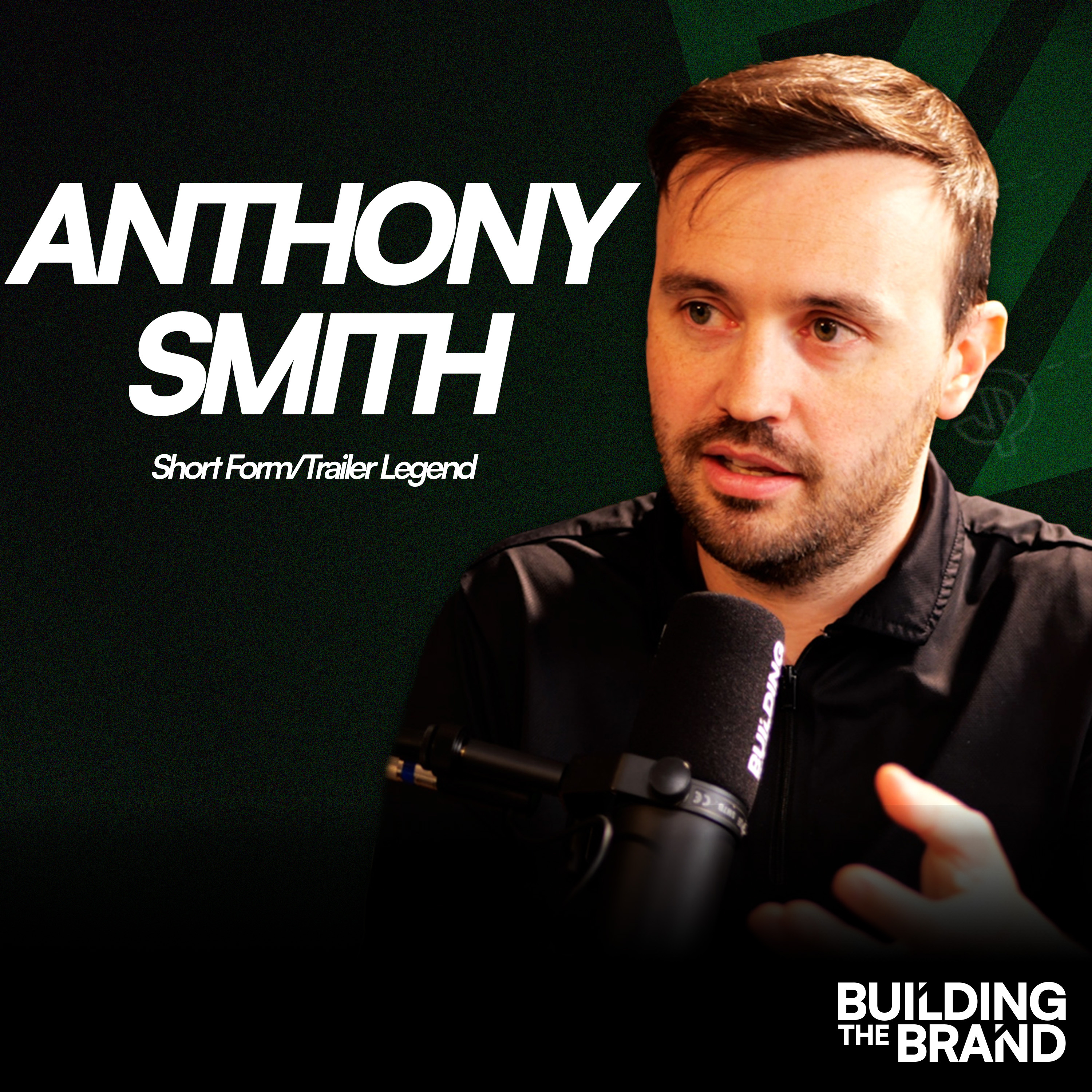
Anthony Smith, trailer editor for Diary of a CEO (DOAC), discusses how he helped define the DOAC trailer “mini-movie” format, the psychology of imposter syndrome and burnout, and why chasing virality can be a trap. He also explains how the medium evolved, what he learned from making 450+ trailers, and what he thinks comes next for podcast marketing.
Anthony Smith is a self-taught editor who couldn’t break into film/TV via traditional routes, so he built his own path. He previously worked in social content/behind-the-scenes for major studios and brands including Bond, Star Wars, Disney, and Marvel, and learned on-the-job (e.g., quickly learning camera operation for Hollywood set coverage). He later joined DOAC when it was a small team (~9 people).
“Going viral” isn’t success; it can cause neglect of what makes content special. He created trailers with narrative, emotion, and intentional sound design rather than generic “boom” effects. He says success came from “positive naivety” (Stephen told him not to watch other podcasts) and from evolving mindsets/techniques, not copying styles.
His first DOAC trailer was for UFC fighter Israel Adesanya; his last day’s trailer also involved a UFC fighter (bookending his era). Early trailers were simpler (one music track, weak “bridges” between segments). Team members reportedly watched his first trailer nine times in LA and sent voice notes praising later trailers.
Written by AI. May contain mistakes.
Explore the struggle between aspiring for greatness and the conditioning of ordinary life.
“It's that constant battle of you want something extraordinary, but everything in your life up until that point, all the lessons that you've been taught is to live the ordinary.”
Learn about the speaker's journey of self-learning and breakthrough in the film industry.
“How would it make you feel if I told you that you had defined a medium for the last few years and you've changed how the world of podcasting works?”
Understand the challenges of feeling like an imposter despite achieving success.
Discuss how societal expectations shape personal goals and the feeling of being different.
“What else can I do to try and prove to everyone that I'm in this industry for a reason?”
Hear about the pressure and responsibility of working in high-stakes film projects.
“I just need one tear for this goddamn trailer.”
Explore the challenges of feeling out of place in a high-pressure creative role.
“sure that these this director and these actors their time is so so limited on set i've got to make sure that i ask the right questions that i get them in the right moment and you're not taught any of this stuff.”
Learn how the podcast transformed from a simple format to a dynamic show.
“And just, I think it's important to give people context of where we were and when you joined.”
Discover the parallels between documentary filmmaking and podcast production.
Learn how the transition from a film background influenced podcast production.
“It's like Disney tradition ornaments everywhere because I'm also not the sort of person that's like, oh, this is great.”
Discover how a fresh perspective can lead to innovative podcasting methods.
“Right, let's pause there for a second, because I think Ant has just given us an absolute little secret sauce hack to what has happened with the success of the Diary of a CEO.”
Explore the development of trailer editing techniques over four years.
“So off the back of that, I'm really interested because the evolution of it is fascinating to me because I've obviously been in the space before you were even listening to podcasts.”
Understand the importance of starting imperfectly on the journey of creation.
“But yeah, pretty much every trader has had some sort of ant stamp on it somehow.”
Learn how initial iterations can lay the groundwork for future success.
“If you go back, and I did do this in the research of this podcast, if you go back to that original trailer, it was so basic.”
Discover how defining a medium impacts the podcasting landscape.
“Because you accidentally, again, I said at the beginning, you define the medium.”
Understand the dangers of copying successful formats in media production.
“Let's do live trailers and you have to go to a live watch along, fucking sing along Disney style.”
Explore predictions about the evolution of podcasting and content styles.
Learn how trailers can shape and define the essence of a brand.
“And that's the future is how you can take certain mindsets that I've created that I use and how can you initiate that into a completely different style of content.”
Discover the artistic elements involved in creating meaningful brands.
“that's how you're going to evolve and that's how you're going to grow this future of the medium.”
Understand how to convey serious topics through tone and aesthetics.
“something like a blank canvas it means you need to dive down and think deep about every single element of that brand you need to know what those foundational principles are and so for me with DOAC.”
Learn how to develop content that resonates emotionally with an audience.
Discover why it's crucial to know your audience's emotions and reactions.
“Right, let's pause there because Ant has shared some absolute gold.”
Explore the dangers of imitating successful brands without foundational understanding.
“And ultimately, that is, who is this for?”
Gain insights from notable personalities and the importance of humility.
“So maybe in this instance, it's not a case of just looking at Doak and go, well, how's their content been successful?”
Exploration of the pitfalls of prioritizing views over meaningful content.
“For us, the idea of going viral is success.”
A heartfelt reflection on the emotional aftermath of leaving a major project.
“That ultimately doesn't do what you hope it to be.”
Exploring the emotional landscape of leaving a stable job and contemplating the future.
Discussing the potential for AI to complement human creativity in content creation.
Reflecting on the challenges of patience in an impatient society and its implications.
Considering the impact of past work and the focus on future goals in storytelling.

Get the gist, explore an idea or ask about something said.
 Claude
On Building The Brand with James Burtt, what are the key points of this episode?
Searching your listeningAutomatic transcript. May contain errors.
0:00I've worked so hard and what? I don't know what to do. It's that constant battle of you want something extraordinary, but everything in your life up until that point, all the lessons that you've been taught is to live the ordinary.
0:14James Burtt: You've said a couple of times that it doesn't happen to people like me. It has happened to people like you. My entire career has always been a result of I need to do it otherwise. In my head, I'm ****. And then out of nowhere, this dude turns up and makes these miniature movies. So now all of your clients are like, how have they done that? I'm like, I actually don't know. My first ever trailer, they all huddled together. And they said they watched it like nine times. Blew their mind. Done some calculations. There's over one and a half billion views of the episodes that you've had the start of.
0:47For us, the idea of going viral is success. I don't agree with that at all. They have that itch that they need to go viral again. and you start seeing them neglecting what makes them special, all for empty views.
1:01James Burtt: You have left DOAC all of 48 hours ago. How do you feel two days out of stepping away from the biggest podcast in the world? I woke up really empty and I felt a bit worthless. So you really don't know what's coming next? I really don't know what's going on. Wow. Which is strange because it goes against the grain of that average upbringing that I had.
1:53James Burtt: Let's get into it. How would it make you feel if I told you that you had defined a medium for the last few years and you've changed how the world of podcasting works? I'm just going to sit with that. I'm just going to leave that with you. Okay. Therapy session has started.
2:16I always find it really difficult To the extent that I struggle to believe it And I think it's because I think there's two factors in play A. I never really feel like that stuff could happen To someone like me With my upbringing With my background And B. It's because I'm entirely self-taught in this area, in everything that I've ever done. I'm self-taught to the extent where I've not even decided to learn editing. It was never a decision I took in the sense of, I want to become an editor. Let me watch X amount of online courses and read the books to do it. i've always my entire career has always been a a result of i need to do it otherwise in my head i'm fucked so when i finished university i really struggled to get into the industry i wanted to go into film and tv and i sort of found out quite early on that people like me don't really get into the industry especially not easily or you like it takes a a lot of hard hard hard hard work in a sense of i can't just go into companies i don't have any contacts and especially at that time in the industry it was very much like who you knew whether money was involved a lot of the time is what i found out when i was trying to apply for some of these prestigious film schools and some of these companies where the reference was very much based on how much money does your parents have to basically pay for you to come and join for this company etc and so my entire upbringing has been like if if i want to do it i'm just going to have to do it myself and figure out the way to do it myself and so the only reason why i became an editor was because i couldn't afford an editor to have to make the stuff for our clients and i was the only one to do it so it's even me or no one so that's how I learned editing the only reason why I started a company was because I couldn't get in the industry and so if I wanted to get in the industry I had to do it that way I had to go through the hard slog of building something myself to get into the industry which then meant I then had to learn editing which then led me onto the path that I'm on now and so I find it really hard because when you're self-taught you're always in constant doubt that what you're doing isn't right because there's no one there to say this is what i've done it's worked and now i'm teaching you it it's very much a case of you're just figuring this stuff out all of the time and so when we went on this crazy journey of the trailers exploding and receiving the most incredible comments and even receiving sound like voice notes from the guests who have been on who are big name guests and sending like how much they loved it and how much they're they're so excited that they have a doak trailer for example it always always got tucked away behind the okay well i've got to keep going oh they're gonna figure out that I'm an imposter in this industry.
5:39I don't belong here. What else can I do to try and prove to everyone that I'm in this industry for a reason? And I think that's why I've always struggled to take these compliments.
5:54James Burtt: You said a couple of times there, people like me, doesn't happen to people like me. Who are people like you? And why does it not happen for people like you? Because it has happened to people like you. I think it's just, I guess maybe this is also in the age of social media where we just assume that great things happen to the great people and so when you're average at everything in life you just remain average you know and in the area I was brought up in it was very much you go to school and you have to do well in school because if you don't do well in school you're fucked and so So if you do well in school, that then leads you to go to college.
6:41If you do well in college, then you get your nine to five job. If you have your nine to five job, you get a house and then you start a family. So that was the root of the Smiths and everyone else in my area, which was get an education, get a job that just pays, that can support you and your family. And then that's your life. And so when you're, I guess, cut from a slightly different cloth and your whole goal in life is to try to entertain people and provoke emotion out of people, it's very difficult to understand that you can have a different life that you want. and so you're constantly battling this and this is when I say people like me and where where I'm from because for most people all they wanted was to get an education and to get a nine-to-five job so they can support their family that was the goal and so as a consequence of that that is what happened to people like me in my in my upbringing I'm really sort of the only one in my family and probably in terms of like my friends back home who hasn't got just a normal nine-to-five job who who is literally living their life on a wire where they don't quite know what's going to happen in the next week and so it's that constant battle of you want something extraordinary but everything in your life up until that point all the lessons that you've been taught is to live the ordinary because ordinary is safe and it's great and it allows you to have a family it allows you to earn enough that you feel comfortable it allows you to never really be like live a such a stress inducing anxiety style life it sounds actually quite perfect but deep down that's not what i ever wanted and that's why i always say it doesn't happen to people like me because people like me and usually from my upbringing didn't want that and when you
8:54James Burtt: say um if you've always been average you always just carry on being average but what happens when you find that actually within a subset of a subset that you're not average you're you are one of the best people in in the world i'm just going to say this and stare into your eyes to make you super uncomfortable for the clip. I'm hoping, I just want a tear. I just need one tear for this goddamn trailer. But how do you, I guess, make sense of that in your mind that you've been brought up in an average environment and you could only think as big as the surroundings that you've been exposed to, but now you've been exposed to much, much bigger.
9:34James Burtt: How do you feel inside of yourself knowing that you're not average and you are world-class at the thing that you do is that does it sit comfortable or is it something that you still have to battle with are you sort of like oh i'm the average dude with this one tiny super skill yeah it is it's a con it's a constant battle it's been a it's been a battle since i mean throughout the four and a half years i was at doat it was a battle um and it was a battle before then because when i left my company and i moved back down south to london and then i got a job with this agency where we were making social content for the likes of bond and star wars and uh disney and marvel which then led to me then suddenly being on set of these films and filming behind the scenes footage and interviewing directors and interviewing actors and finding everything about them and then that then led to creating behind the scenes featurettes and um campaign social content which is going to be seen by millions of people and studios are putting their trust in you to do that so the weight of that when your friends and your family are just living a lovely life of just a night of a nine till five and then the weight that i've put onto myself to to accomplish that it's very it's it's very hard because you're in this constant battle of having to care so much to prove your worth because so many people are going to see your content, because there's huge money at stake a lot of the time, because in the world of film campaigns, etc., you have that one moment to achieve it and then the film comes out and then something else is happening on, but it's still that project, that project that you have to own.
11:56You have to do it to the best. And, and I think that exhaustion of making sure that you, you are the most skilled in that industry is that is that constant battle of, I don't know if I am up for that. I don't like that imposter syndrome of everything, as I say, everything in my upbringing is saying that you can't do this because you're brought up to do the bare basics of what you have to do to live a nice life. and so I very much just threw myself into all of these uncomfortable situations and scenarios without the backing of a mentor being like yeah I've taught you well you've you've got all of this ready to go it's all that figuring figuring it out for myself whilst on the job like learning how to use a camera I remember there was one time where we were doing the campaign and behind the scenes of a big Hollywood film and the lead actor of said film fired his his photographer at the time because they had a bust up on set and etc etc and my boss texted me and was like oh do you know how to use a camera and I was like not really and he was like well learn to pick one up because you're going to be on set at 6am the next day and you're gonna basically spend a week or two weeks or so just filming this hollywood actor this hollywood director film all of the behind the scenes to make content from it so i literally had to go back to the office and i spent the entire entire night learning how to work a c200 because i was like fuck i've got a now have a huge huge um uh what's the word i've got a huge responsibility to film this once this one take that's happening and i've got never gonna happen again and i've got to be the one to make sure that i capture enough angles behind the scenes so they can make featurettes for this that they can do behind the scenes for this they can do social content out of this i've got to make sure that these this director and these actors their time is so so limited on set i've got to make sure that i ask the right questions that i get them in the right moment and you're not taught any of this stuff.
14:16I'm taught that if you do well in school, you can get your normal job and you get your pay and then that's your life. And that's great. I'm not taught about all of this other stuff. And so you just have this constant imposter syndrome going off all the time that they're just going to figure out that I've not been taught by the best, that I'm out of my depth here, that I'm constantly making this stuff up as I go along. And I think that's where I always struggle with this idea of, in my heart, I've always felt like I am just this normal, average guy, but the weight of what I'm doing is quite extraordinary.
14:58It's just constantly on me. And that's a real battle. all the weight of it is that something that you deal with gladly or is it something that puts
15:10James Burtt: pressure onto you because i remember hearing a podcast you'd done previously and you talked about one of the reasons why you stopped you had a you had a production company that you'd started because you said yourself you couldn't get into the industry so you kind of like made a company to get yourself into the industry you couldn't get a job so you made a job effectively and then you left that very quickly because there's some family stuff going on there's also some mental health challenges that you were having and that kind of sense maybe of like a burnout but then you move from that up in manchester running your own thing or up north running your own thing come back down to to the south go and work in a super pressurizing environment making these one-off behind the scenes only one moment to ever capture this and by the way you don't know how know how to use a camera then your next step is to oh i know i'll go and work for the biggest fastest growing podcast in the world at that point and we're going to go from one episode a week to two episodes a week we could go from you know 10 second cuts to making effectively 90 second fucking movies why do you keep doing it to yourself i guess is the question yeah or do you love the do you love that pressure or does it weigh on you i guess it's crazy when i talk to when i talk to live who who is my prodigy who i've trained up to basically take the direct trailers further now and she's doing such an amazing job and whenever i used to speak to her about the exhaustion or all of this so she she just turns me like i think you might be addicted to this and it is probably true you know the the rush you get from it um it is a it is incredible when you finish when i finish every trader the rush that i have for those like 90 seconds when i watch it the next day is amazing but then you're straight back onto the next one and that's just the pressure of the job and it's it is crazy when you say it like that it sounds a lot like someone who's a bit addicted to the rush and i can understand why because there's so many benefits that come from it you know it's it's taught me more about myself than anything else i've my career when i look back on it i can say that i'm so proud of it that the memories that i've got from it are incredible what i've been able to say that I can do is amazing dinner conversations you know but when I do it at the time that that's not that that's not in my mind of like I need to find somewhere that's high pressured ironically when when I left my when I left the agency I was teeing up what normal job can i get because i was massively burnt out and i i was going working extreme long hours most days and that's the world that industry is in movies isn't it that's movies it's um everything what everyone wants something done quick to the highest quality for the cheap and so i found myself in that time where there was that friction between marketing budgets and what we still need to achieve and all of these small agencies competing against each other to get these and the only way you sort of win these clients is ultimately down to what you can achieve for the budget that they have and so that higher pressurized environment did burn me out and I was looking for just a normal job whether it's like a train driver whether it's just a desk job i was looking at i asked helena whether i could whether she could get me a job at her place and she was like no fucking way a i don't want to work work with you um and b you just won't enjoy it and then when i then spoke to jack it was one episode a week and bless him i don't think he quite knew just the trajectory that was going to happen as fast as it did and as pressurized as it as it was going to be and so when we spoke about it he was like yeah i mean you know it's one it's one a week you know you've got time to build this fear it's like in my in my head i was like you know what this this is going to be a lot easier a whole week to make a 90 second trailer yeah exactly easy man and at the time it was 60 seconds because that was the limit for instagram so it's like even less time and um and i was just like the appeal for that is like so i get full control of what i want to create here it's 60 seconds i've got a whole week to do it um it's it's podcasting you know what is podcasting it's not films it's not hollywood you know so ironically when i joined these places it was in the hope that it was gonna get easier and every time it's gotten harder and harder and i do on reflection think that i made it harder and that's where i think maybe that um maybe it is a bit of an addictive mindset of wanting to make things complicated because of the rush that you get at the end or maybe it's the imposter syndrome that you make it harder for yourself because you spend half of your energy trying to prove to so many people that what you're doing is the right thing you're like well fuck you i'm gonna i'm gonna do this now and i'm gonna elevate it like this way i'm gonna increase it by this way you know and having a boss who who pushes you you know he he he does want you and he wants the show to be the best in the world and you don't get there by just half arsing it and so i think it's it's a real it's a real um split of going into it thinking this is going to be easier and leaving it thinking fuck me that was so much harder you say there that you made it hard but you kind of you kind of had to because of the evolution that you've created.
21:34James Burtt: And just, I think it's important to give people context of where we were and when you joined. So you joined at, you know, it was what, six, eight people? So it was small. Yeah, I think there was about nine of us. Right. So Diary of a CEO was a middling average business podcast, I guess, at that point in time. It was probably quite popular, but it definitely wasn't the show it is now. it had gone from Stephen and was sort of famous slash infamous for having exited very early his social media company and he'd become quite famous he was still in the pork pie hat era I guess this would have been and so there was a little team around this but it wasn't what it's become now and I've looked back retrospectively yesterday ahead of this conversation the trailers was like before the trailers it was just like a hey in this episode we talk about blah blah blah cut like it was on iMovie to the person having the conversation around the kitchen table so you say you made it hard but it's because you evolved the medium so whether you did it because you're addicted to just making shit difficult for yourself or just that pushed you you made many mini movies and i know every monday and thursday i used to send you a message like how the fuck have you done it again what are you doing now can you stop making it so difficult for the rest of us please because all of my clients would be like can we have it a bit more like dire over ceo i'm like no no you're talking about recruitment you don't need you don't need tears and explosion sound effects just chill the fuck out but do you think that yeah looking back at it I guess I'm sort of projecting my own opinion on it here it had to get more difficult because of what you're evolving it into yeah I mean we everyone made a conscious decision before I joined and when I joined and after I joined that this wasn't just going to be a podcast you know the the stars were there for it to become a show to become somewhere where you can have really uncomfortable conversations about topics that you may or may not have known that you were interested in and I think i don't think any any of us maybe steve did i don't know but i don't think any of us quite knew how fast it was going to go and how big it was going to grow because for me especially podcasting wasn't new but it was still like this almost like sleeping giant you also didn't like podcast did you or you didn't listen to him no i didn't listen to him the idea this is so good the idea of just sitting down and listening to someone talk for fucking three hours bored the crap out of me before i even pressed play you know it was like um my business partner the time blessing would send me film like podcasts about uh business and film and things and i'll be like yeah yeah i'll watch that i'm not watching that what i'd done instead was watch documentaries and that's what fueled me that's what i loved you know and it's um and you don't realize it at the time but the two are so closely linked in terms of what the end goal is for a documentary is the exact same end goal with a podcast and that is uncovering topics that people may or may not know that they're interested in allowing people to talk deep diving into the heart of a certain moment and that's when for me when i sat in i i remember on my first day we had johnny wilkinson in and it was crazy because at the time i think they must have run a competition and a guy won to go and watch it and so maybe he could go to the recordings in the early days yeah and so me and this me and this guy was and i thought he worked here um he thought i'd won the competition as well so it's like this really weird uh conversation up in the lift and i think i got there like an hour or so before the pod was going and then i went in and saw jack and jack was obviously running around like fits in the set doing things like because obviously it's done at steve's actual flat at the time so they had to pack everything down and set everything back up again and it's like oh yeah you're right mate yeah yeah go and sit just go and sit over there just chill out and i was like tucked in behind the kitchen counter like this where like there was like pitch black there was one screen and um and then steve walked in i i'd done research before because obviously i didn't want to be like okay which one's my boss but i didn't really know of steve before then as i said a lot i wasn't in podcast and things like that so um so then he came in and he sat down and then johnny wilkinson goes oh my god it's johnny wilkinson and um he'd had an absolute nightmare of a commute um and so it was just like this rushed experience where i literally walked through the door and i was just sat down and i was just watching everything unfold i wasn't really talk to anyone because everyone was so busy and um we had two podcasts back to back it was johnny wilkerson and then retro 32 very very different um different dynamic dynamics and um so like for the whole day i was just sat there and i was watching these conversations happen and but what i think was beautiful about it was i came in with zero um expectation of what a podcast is i came with zero thoughts of really what i was going to do i'd made like a trial trailer for jordan peterson and um it's sort of a little bit cinematic but you know we had a short i was giving like a short clip to cut into blah blah blah and it was only really when i was sat there with no information no idea what the fuck's going on and i was just listening to them talk um and I was I was watching it on the monitor and I was just like okay I get it like we're we're finding out moments about Johnny and Wretch that no one's maybe no one's ever heard before you know you're seeing these people open up they're talking about their struggles they're talking about their career like it's almost like this autobiography of their life and I'm watching it and I'm like this is this is no different to a documentary except it's one shot and it's not covered with loads of b-roll and things and obviously i'm from a film background so i know all of that comes later i know like they film all this stuff later um so i was just sat there and i was just listening to them and then that's when it was like this is where we can merge industries here and so after um after the recordings we then watched i think we watched it was the first episode of dragon's them so everyone gathered together steve all did some pizzas etc um and we just all sat there and then we at the time we had and we can't do it now because there's so many people but at the time we had initiation where like you have to do something and you might get some money from it um actually i feel i should give context for that because that sounds sounds dodgy it's um so mine was they part of the questions was dom asked me what's the last track that you list that you listen to and it's really gutting because when i left the last company i worked for our client was disney i was known as a disney guy there like like a bunch of us love disney now i was making edits for Disney and so you sort of got tarnished with that brush and then in my life up north I was also tarnished with the Disney brush because it had a huge impact on my life but to the extent that when people didn't know what to get me for Christmas or birthdays they would buy me something Disney so and what ends up happening is in my old house it turned into like a Disney shrine without me wanting it to be a Disney shine.
29:50James Burtt: It's like Disney tradition ornaments everywhere because I'm also not the sort of person that's like, oh, this is great. I'm going to pull it in storage. It's like you pull it out there so when people come and see it. And so I didn't want that. You know, I like, you know, I love Disney. I love what it's taught me. I love the feelings it provokes me every single day. But I don't want like a Disney wedding. I don't want like a live in a Disney house. I don't want that sort of thing. But it just became that because like if you're known for something you get tarnished with it so on the way on on the way to this new job site i'm not even going to mention disney because i i just don't want this to be the brush i'm tarnished with and then dom asked a question of show us your phone of the last track that you listened to and it just so happened to be the happily ever after fireworks that i was listening to today there and so i had to show them and then you have to explain why you're not only listening well you're not only listening to a disney song you're listening to a very fucking niche disney song of the fireworks that goes on for 23 minutes goes on for 23 minutes so then i then had to explain that and then i could sense the brush becoming you are disney boy again and i was like and then my initiation steve was like okay well we're gonna play five disney songs we're gonna play one second we're gonna um literally get our thing and pull it anywhere on like the duration bar let go play it for a second and pause it and if you get three out the five right i'll give you like 100 quid or whatever it was um safe to say i didn't need the five i got the first three right and then ever since that it was like the disney guy the disney king when we go into disney oh you know and so um so yeah so that's that's like a huge caveat i just need to give context for that but anyway so that day it was just a world of like there was no training there was no initiate like no like onboarding that the company has now there's none of that it was literally come in watch watch this do this and And that, for me, arguably probably sparked what we have now.
32:04Because Steve came to me at the end of that day and was like, I don't want you to watch any podcasts. He didn't know, obviously, that I didn't watch podcasts. He was like, I don't want you to watch anything. No problem, I got you covered there. I was like, okay, sure.
32:18James Burtt: I can do that. See what I can do, blank slate. And he was like, because I don't want anything else in your mind about how a podcast is promoted. I want you to do what you think is best. And that whole day, that experience inadvertently was probably such a key driver to what we have now. Right, let's pause there for a second, because I think Ant has just given us an absolute little secret sauce hack to what has happened with the success of the Diary of a CEO. In his own words, Stephen told him not to watch any other podcast. He said to him, I don't want you watching anybody else's content, which obviously was easy for Ant to do because he wasn't a podcast fan at that point in time.
32:56James Burtt: He wasn't someone who consumed the content. But that I think that naivety was the superpower here, because and don't forget, has come into this from Bond movies and Disney movies, and he's worked on these massive productions. So when he's coming into a podcast and he's thinking, well, that's surely the way that you get attention for a movie is the same way that you get attention for a podcast. But it's that level of naivety, that positive naivety that enabled them to create something that is brand new. So often people will go into a situation and they want to achieve the results that they're seeing that have been put out there by other people.
33:26James Burtt: So you consume too much of that other existing content. But in that instance there, you're most likely just going to become another version of what's already out there. It's only by coming into it with a completely fresh perspective and a level of positive naivety that you can create something that is absolutely brand new. I'm going to be back with another pause point shortly because there's so much gold in this section. But for now, let's get back to it. So off the back of that, I'm really interested because the evolution of it is fascinating to me because I've obviously been in the space before you were even listening to podcasts.
33:57James Burtt: I was there. You were making them. Making them. And then I sort of watched this, the evolution of it from the outside looking in, I was like, oh, that's quite a good show. I used to listen. I listened to episode one. I listened to all the stuff under the staircase. I used to quite like the content. I was like, oh, it's actually a diary. It used to be, what's the sign of like, I hope nobody's listening, but if you are, keep it to yourself or something like that. I was like, that's a weird tagline, but it's quite intriguing. and then out of nowhere this fucking dude turns up and makes these miniature movies so now all of your clients are like how have they done that i'm like i i actually don't know i used to already edit some audio put some sound bites over music i don't know how the fuck he's doing this thing so off the back of that first place you've got johnny wilkinson you've got wretch 32 you've had no context given it's sit in the corner no on board him you know probably got a gmail account sends out for your email address at most, go and make your own thing.
34:49James Burtt: Did you, because of your documentary love and the stuff that you'd done before, was that first, obviously the first trailer is not going to be what we see it to be now, but was it along those lines? Was it moments and clips and emotion and music underpinning it and sound effects? You like, we need to tell the two hour story in 60 seconds. Did you, was that from the get go? That was what you kind of invented? yeah i mean not in the extremes that it is now yeah it's um now it's wild now it's wild and i think what what i always wanted from the offset was some sort of narrative and to entertain and so my first ever trailer was this is it's actually really beautiful because we'll probably go into this later on but um i've never really had a chance to take a step back and reflect on what we've built as a team and um and the biggest reason for that is because you just you don't get a chance you know there's two trailers a week every week for four and a half years that I was there you know there's no seasons and so the second a trailer finished I was I had to be on the next one because I had to give myself as much time humanely possible to make these things time literally was of the essence and yeah I mean I'm also grateful for that because if you give an editor two weeks they'll take two weeks if you give take a month if you're in two days we'll take two days and so i was sort of known in my last companies as well as being like a bit of i was known as the quick pace editor you know they would get me on board when they needed something done fast yeah um and so you just don't have time to reflect but the universe i mean i don't believe in that sort of stuff but the universe us essentially was like how can we help this guy reflect on the four and a half years that he's had and i think i know what you're gonna say the most insane coincidence yeah was my first ever trailer was a ufc fighter israel israel adesanya we've only had two other ufc fighters on since that time and my last trailer was a ufc fighter and what a beautiful sort of bookend to an era which genuinely like the reason why i say there's only 12 fighters is because we've had so many experts on we've had so many fitness people on we've had so many actors on we've had so many types of people on we've only had i think three ufc fighters in the entire time and for that to be the beginning and the end i just the coincidence there is crazy have you watched the first one and the last one on my back on my last day oh they played to to the company they played my first one and my last one how did it feel to the first one mac fucking embarrassing
38:06i've spent two and a half years preaching to my team it'd be important to all this stuff and then i'm watching i'm like oh i didn't listen to a single word that i said to them um but the bare bones was there you know there was elements of a story there was the high and the low that it was still it still felt like when i watch it now there was still moments where i was like this is just a clip and another clip and another clip and it was because at the time i hadn't developed what i call bridges which is how i connect segments together in the trailer which is like half the fucking battle with with creating trailers that flow um it was one music track it started off on a montage of israel and then i wondered why it tanked you know it was it was all of these things i was watching else and it was beautiful because i then watched the second one and i just remember at the time how proud i was of that first trailer um berta who is the uk um like production queen of doak for uk division she's been she's been here longer than i have um she picked up the trailers when i went on holiday at the start um so she's always had my badge i've always loved her and she she was telling me after that she was like she remembers they were in la at the time when that trailer came out and they all huddled together her steve jack grace and it's all of them just huddled together and they said like they watched it like nine times just back to back because it blew their mind and i'm there watching and i'm like this is shit and it was only but i remember how proud i was yeah at the time of doing it and what was interesting is that i spoke to people afterwards and i was like that's still really fucking good yeah yeah that's such a good trailer that's nice to be a podcast by the way i looked at liz's face and she was like like you were doing that then four years ago four and a half years ago and um so the bare bones was always there the foundation and i think that's why they liked it then and why some people still like it now is because i focus so much on the bare on the bare basics and what i've essentially added is more mindsets and more one percents and more um justification and little techniques in there um throughout the the 450 plus trailers that i've made now um have you have you overseen every single trailer in the last four and a half years in yeah apart from ones where i was on a cruise and i didn't have signal but by then obviously i had you've got a team yeah i had the team who i trusted wholeheartedly but yeah in even the the day i left i was going through the sound design and the music and uh for the trailer that came out the next trailer going out and so um i've what i've been involved in pretty much that the reason why i say 450 plus is because i think when i do the math i think it's like 482 trailers or something like that and i disregard the ones where i've been on the cruise or i went to disney world right yeah my team are like no
41:17James Burtt: leave your laptop here. You need this break. Go. But yeah, pretty much every trader has had some sort of ant stamp on it somehow. Right, let's pause there. Sorry, I know I'm interrupting the conversation a lot today, but there's so much important stuff in this little section. I want to make sure that nobody misses it. What Ant has basically talked about there amongst a bunch of other stuff is the fact that you should be embarrassed by your first version of anything. Now, the journey to go anywhere starts with a singular step, but quite often it's that single step that is the most hard part of the journey, because it is the bit that's the most uncomfortable, it's the bit that's most unknown.
41:54James Burtt: But ultimately, you're never going to get anywhere unless you take that first step. You can't get to step 10 without going through one to nine, if that makes sense. And that's exactly what Ant's done. If you go back, and I did do this in the research of this podcast, if you go back to that original trailer, it was so basic. But even then, it was such a vast jump ahead of what a lot of people were doing. But you can still see, as he shared here, that the foundational principles of that trailer mechanic was there. The basis of storytelling, the origin story, the hero's journey mentality of stitching together a story-based framework was still there, just in a very, very basic format.
42:27James Burtt: So if you're building something and it feels like your first iteration of it feels a bit shit, it probably means that you're on the right path. Again, you are never going to get to step 100 until you do 1 to 99. you have to start somewhere. And it's often that first step that will get you on the journey towards where you need to be. If you're not embarrassed by the first thing that you put out in any form of content or marketing, or even a product or an MVP, it probably means you've waited too long to put it out there. Right, let's get back to it. What do you think then? Because you accidentally, again, I said at the beginning, you define the medium.
43:01James Burtt: And I really generally believe that i've done some calculations i say i chat gpt my free pa done some calculations there's over one and a half billion views of the episodes that you've had the start of really 482 episodes you've done you're right that i've been saying over a billion thank you i can add 1.5 there you go 0.5 so you've had one and a half billion views and that's just youtube that i couldn't be bothered to chat GPT. He's like, I can access it. I was like, no, don't worry, chat, have the day off. We'll just use YouTube. That's fine. But you created that definition of a time and a place and a space in the podcasting sector.
43:41James Burtt: What do you think comes next for this medium? Because I still just see people that are just trying to copy what you created. What else can we do? Let's do live trailers and you have to go to a live watch along, fucking sing along Disney style. like what what else yeah what is next you know you know what's crazy is i get i get asked this quite a lot because suddenly for someone who never watched or listened to podcasts before who then got frosted into this industry that's now like redefined an industry now i'm suddenly the person they go to which defines how the how the industry should move forward your extensive four years of experience in this sector what should we do next i don't know but you know what i think's interesting i think the future entirely depends on the type of people that we have in this industry and the reason why i say that is because what i've found really interested in the world of social media and ai is the risk we have with every industry but especially in mediums like with podcasting or online like new media is you get a lot of copies essentially you get a lot of people saying that worked we're gonna we're gonna do the exact same thing and so i think it really does depend like we need people in the industry who have who who have the appetite of risk to the extent of let's try something different because otherwise the future will start plateauing and you you just end up with the same the same thing is i always find it really crazy because people always quite shocked when i tell them don't don't do a doak trailer you know like when people always are like come to me and they send me a message like i've made i've made i've been really inspired by you and i've made and it's so it's beautiful to hear like it's so beautiful and i'm so humbled for it but then i'll watch it and i'm being i'm like why have you it doesn't make sense what what you're promoting is so different to the essence of what what the topic is like this is this one was about flowers and gardening and i was there i was like you you don't need a boom the boom sound effect you don't need a boom for this you don't the tulips have sprung like i i remember one time one of my favorite um in retrospect i used a bit too much one of my favorite sound effects was called the metallic riser oh my fucking god it haunted me yeah and i used it arguably a bit too much um but it got to a point where we we had to stop we stopped using it because everyone was using it but using it out of context yeah so there'll be so there'll be like hello then yeah and it's like the reason why we chose the metallic one was because it was to make you feel uncomfortable it's like it's like that screech yeah we we used it for a particular reason to to evoke a certain emotion in in you to make you feel uncomfortable in this moment yeah so we used it so intentionally um and then people were just using it because it was being used it in direct trailers to the extent was like we can't use it now because people are now like they've ruined metallic swoosh they've returned they ruined it for me and i still hear it today and i get an it um but again also it's a beautiful compliment but so then we developed new risers and we got our own risers for different themes and different moments and how it works and it sort of it sort of forced me to keep evolving and to keep pushing the boundaries so you know when people come to me now and say i've made a direct style for this sort of thing i'm just there like a a direct a direct trailer is great for a show like doak it's not gonna work for every other show and it shouldn't work for every other show i didn't make the direct trailers because i knew how to make direct trailers i made the direct trailer because i sat there listening to this i took in the scenery i took in the tone or the tone of the topics that were being done you know and as they evolved to and like the dramatization of them is part of part of it was like because we made the conscious decision of like we want to grow in the states you what you watch how um viewership in the states and they're they're more leaning towards dramatization they're more lean to that that side of it and uh same with australia you know if you watch an australian tv show they're they're like the end of their episodes and so they make like really high dramatized content yeah with cliffhanger with all this stuff because that's what their audience wants and so it's quite new for british audience we we like things a little bit more subtler but the reason why we sort of grew that is because we wanted to grow in the states for example so every decision i made was always justified for that brand if i was to go on to another show it'll be completely different and so that's why i think where the future comes into is the beautiful thing about this medium is it can be fucking anything new media is the wild west it has no rules what you can take from the diet trailers are certain mindsets and certain techniques that you can evolve into anything and it's not the style that needs to be done it's the mindsets behind it and it's how you create it that's what makes great content and And that's the future is how you can take certain mindsets that I've created that I use and how can you initiate that into a completely different style of content.
49:53So I think for me, the future of this industry is there's going to be a lot more of this. Two people sat at a desk talking. I think the blend of documentaries is just going to get better and better and better. I think the idea of series, I think the idea of podcasts becoming the leading way of marketing films and presidential campaigns. And it'll be very interesting when they do the next general election here, how many of them are going on podcasts, because they can see, I think they can see the draw and the weight and the impact that it can have. the interesting thing will be is whether people can also adapt to the the foundational principles of podcasting which is openness being honest yeah not coming in as a character that's where i think politicians are going to fail miserably in this space when they do podcasting is they'll flick it on and they'll give the exact same answers that they give on question time the exact same answer they give out um you know in their live debates but they're going to do in a podcast medium which isn't it's not going to work it's not going to work that's not why you do that um so that's why i say the future just completely depends on the people behind it if you if everyone wants to copy like so many people do on tiktok and social media like they do with ai then you're just going to end up with the flat line and it's not going to evolve as much but if you find people and if you have people like me who now wants to train people on mindset as opposed to blueprints, for example, that's how you're going to evolve and that's how you're going to grow this future of the medium.
51:39James Burtt: If you're loving this conversation with Simon today, please do us a favour by clicking the subscribe button if you haven't yet done so. Click the follow button if you're listening on Apple or Spotify at the top right hand corner of your podcast. Plus, if you're loving the learnings and lessons from this episode every single week as well as doing the video and the audio side of things. We also do a handwritten blog and we do a breakdown of the key learnings and lessons as a blueprint that you can implement into your business as well. If you'd like to get all of that, click the link that's in the show notes or the description and you can join our Building the Brand exclusive newsletter.
52:10James Burtt: You mentioned something a minute ago and I had it written down quite a few times in my notes for this conversation about brand because I think the trailers that you crafted or you're a part of the team that crafted because you don't want to ownership of your own brilliance which to be fair for the first two and a half years it was just okay fine so for the first two and a half years and you you defined a medium and i think created a brand because i think the way that the entire vibe of doak was consumed by people the brand of doak was defined by that trailer i genuinely believe that because it did evolve from like the live shows and like the big choir thing that steven did on the first tour and the conversation cards and all that stuff.
52:51James Burtt: I think the essence and the brand, which is in the mind of the consumer, I guess, which is hard to control, but you can kind of curate it. I think it was dictated by the trailers. So when you look at how people create brands utilizing short form content, because you took two hours worth, three hours worth of conversation and distilled it, but you dictated the pace and tone of the brand of DOAC from that. How do you look at it going forwards? And especially when you had things like Flight Story expanded out and you had the Paul Brunson podcast come on, you had Davina's podcast come on. It would have been so easy to do DOAC for Davina, do DOAC for Paul.
53:33How did you go about creating other brands in the same sort of content format without it being the same? Yeah, I think once upon a time, the idea of building a brand and you would go to people who would help you build brands, right? and anything from logo design to websites etc and once upon a time it used to be an art form you know and you have people like say Rory Sutherland who's a genius in marketing and building brands and it is it is like watching an artist at work yeah and so the reason why I call it an art form is because art starts on a blank canvas every time and it's not a medium of they're doing this so let's do the exact same thing or it's not we need to get things out quickly or it's not doing it for the wrong reasons or vanity metrics etc etc it used to be we wanted to build something that has purpose that's going to help people whether it's providing a service or a product or um or even an opinion like with a podcast and there was a lot of thought and care that went into building a brand to the extent where i love watching the evolution of logos that i see on socials and you logos used to be so unique and now when you compare them side by side they're like they're literally more or less the same with the same sort of fonts and obviously it's that modernization that they're calling it but I think there is something missing with brands today which is treating it like an art form and treating it like a blank canvas and when you treat something like a blank canvas it means you need to dive down and think deep about every single element of that brand you need to know what those foundational principles are and so for me with DOAC.
55:36When I first started, we didn't... And I didn't really have anything in mind in terms of like, it had to be this, that and the other. But I just was asking myself questions of how Dawak was making me feel, how I was making other people feel, the topics they were talking about. And, you know, I came to that conclusion that Dawak is a place for people to be completely open, to have uncomfortable conversations. and in essence a a space where people can be entertained but also learn something valuable and so when those were the answers that i was coming up with when i was asking those questions and so when you're thinking about those elements uncomfortable well uncomfortable mean often enough means darker you know it's it's a lot more of a serious tone okay so then that's why we i mean the set was was quite mood in itself anyway but it's like okay so we need to try and make this have a bit of a darker tone here because these are serious conversations that people are having these are serious topics if i want people to feel the weight of this seriousness everything i do in the trailer has to reflect that so i can't then be having like all happy jolly corporate style music when someone's opening up about their life you know and so for me like the brand was evolving from those those core questions that i was asking myself of what is doak to me and what do i think doak is for this audience what do i want it to achieve and then that's when it then becomes the art form and the blank canvas and i think loads of people will sort of be like they know they want to create a podcast about flowers because they're so passionate about flowers but then they neglect about all those first principles of what people want to know about flowers why people are going into it and they go well this podcast has 18 million subscribers they're obviously doing
57:42James Burtt: something right let's do that let's copy that it's working yeah and um and the reality of it is sometimes it works sometimes naturally as well you know themes align and um um the fit i think the elements that do work is based on the psychological techniques that we've used that is quite it is it the reason why we do is because human brains are very very similar in in the sense of there's certain tricks and techniques that provoke certain emotions that provoke certain ways of thinking etc etc so when things do work for those brands when they're doing it i think it's those psychological techniques but in terms of how the brand feels how how um uh that overall that overall um umbrella of that of that brand the world that you're building it feels a little off and it's just because it doesn't reflect what your first principles are or what you want to achieve it's just purely you're building a brand based on what they want to achieve and what their first principles are which are very different and so for me i've always seen everything i do when when i had my old company we did have to build a website and we did have to do logos that was a video production company but every so often clients would be like oh can you also do us a logo can you do all this have you got budget yes we could do it yeah and so i always saw it as a piece of art you know and like i cared so much about that company when we were doing it that I got into into like all of the weeds and the roots of it to find out what it was and for me that just made sense because you want something reflective of you that that just almost seems a little bit of a no-brainer for me and it is interesting now that we're in this world where that idea of wanting to create something that reflects you and what you want to do seems to be a bit lost based on let's do this because it's quicker and easier and it means we don't have to think as much.
59:49James Burtt: And AI is only going to accelerate that, isn't it? Assess what's working here. How could I format it into my content? Right, let's pause there because Ant has shared some absolute gold. A lot of people will look at the success of Diary of a CEO and especially the trailer element, which you see copied a lot. Don't get me wrong, I've run a podcast production agency and in a lot of instances, clients literally come to me and go, can you make my podcast more like Diary of a CEO? It's very difficult to do that when it's not Diary of a CEO and it doesn't need to be diary SEO, but I understand why they want it because it is best practice of capturing attention.
1:00:18James Burtt: But what a lot of brands will do and a lot of podcasts will do and a lot of content creators will do is they will copy the format, but they don't understand the foundational principles that underpins it. The reason why those trailers work is because these guys know exactly who this content is for. They know the exact emotion that they are trying to impart. They know the exact reaction that they're trying to create. They want to create shareability. They want to create an emotive moment. And they want to ultimately hook you into that content and make you feel something. You know, this has been done so well that a lot of time on LinkedIn and Instagram, you'll see meme versions of the trailers where people are basically taking the piss.
1:00:54James Burtt: But that's because the format is so well done and it works so brilliantly. But again, if you just come at this to try and recreate the content, then you're not going to understand what's underpinning it. And ultimately, that is, who is this for? What are we trying to make them feel? What do we need them to understand ultimately what form of entertainment, educational information we're trying to impart that they're going to get from the wider context of this. And they're making all the creative decisions, things like the fonts and the text and the emotion and the sound effects and the underpinning music.
1:01:23James Burtt: They're making all those decisions based on that bigger principle of understanding exactly who this content is for and what they want those people to understand from watching the trailer. And the wider lesson here is that when you're making content for your brand, then you still need to understand these principles. I will say it, you know, the basis of a brand is built on core values, USPs, mission statement, value proposition, stakeholders, ideal client profile, what problem you solve for people and how you ultimately do it. Those are all the things that underpin the brand that you're creating.
1:01:53James Burtt: And therefore, your content needs to touch on all of those things. There's no point just making something that grabs loads of attention that ultimately doesn't tell a lesson or a learning or imparts some form of information onto people. It's too easy as a brand to be me too, to watch what other people are doing and to copy and to emulate that. And if you're just copying what somebody else is doing from a content perspective, then ultimately you're just another. You're just another one in the content queue that might or might not get watched or listened to. But that's not what actually builds brand.
1:02:19James Burtt: And that's what this is ultimately about. It's really easy when someone had that massive smash hit success that Doax had to basically copy and emulate that across the board. But ultimately, is that going to help you with the brand that you're ultimately trying to build? Probably not in most instances. So maybe in this instance, it's not a case of just looking at Doak and go, well, how's their content been successful? It's looking at a deeper level and going, how have they created the brand position they have utilising the content that they've created? Right, let's get back to Ant to share some more absolute gold.
1:02:46James Burtt: And if you have loved this episode, by the way, please feel free to tag Ant on Instagram or tag him on LinkedIn. There'll be links in the show notes or the description here. And just tell him how much he flipping loved this episode. Right, let's get back to it. With then sort of shifting from a brand, you know because DOAC is a brand in and of itself so were you involved with all of the Divina and the pool stuff did you work on those shows and those trailers as well or did they bring in a separate team but does it still have to go via you so they're still like fuck I'm gonna have to show my trailer to the DOAC guy no even so I was in the very early early like creation ideation meetings i remember that was the um i've got a special place in my heart for paul i think he's one of the most amazing amazing people on this planet you know he's he genuinely wants to help as many people as he can get a sense from him he's he's incredibly empathetic he loves listening and i guess that you know that's part of his job right but you he does that with everyone that he's around with as well and so when when paul first came onto the podcast i was watching mario at first sight that he was in yeah and um and i thought he was great on the show and so me but at the end me and him was just talking about it because we was in the lift and uh there was it was the upcoming episode that was coming out and it was like a certain couple whether they were going to stay or not and um i always remember and he was like i'm not i'm not gonna tell i'm not gonna tell i'm not gonna tell and it was like um and then he just went and i i for some weird reason i always remember that because i think that was at a time where it was in the midst of someone whose career is just going to grow grow grow and grow but he's so humble because he's had to do all the years of hard graft beforehand um and you see it in certain people you see it in say when i interviewed olivia coleman on that set and obviously you're interviewing a whole bunch of actors from very different walks of lives and the one common trait that people like say olivia coleman had and what paul brunson had was they worked so hard to get to where they were at a later stage like when you think about olivia coleman when she won the oscar for the favorite she'd been in the industry for god knows how many years before that you know doing like supporting roles or like peep show you know like yeah you forget she was in and she's an oscar winning actress and but because of that she was the most down-to-earth humble person on that set to the extent where we were filming like exterior shots and it was outside and i was freezing and then she came over she's like are you cold i was like i'm a little bit of this and she just put the jacket over me and then like someone then rushes over and gives her another day then she's done you could die through these experience so sweet she she didn't like she doesn't really like interview i don't think many casts do yeah um but i've been in rooms where the cast don't like doing interviews and they make it a very horrible experience for you they they're not they're not very nice to you they they mess up the takes on purpose they show up late they do all that and on the flip side you have uh olivia who also isn't too keen on them but she's just like i have to i'm i don't really like interviews but i'm just i'm just ask me whatever you want um if i mess up an answer can i just go again she was just so sweet and then i'm just staring at her and at that time she'd won the oscar and i'm just like you're an oscar winning you're olivia colman you're a living legend and you're treating me with so much care like to the extent where she remembered our names when we was on set and things like that and paul is a perfect example of someone like that and i think i genuinely do believe you become that person when you've not rushed the process which goes back to everything that we sort of talk about in terms of brand and vanity metrics etc etc etc um but yeah so anyway when when i met him and then we signed him like a year or two years later and i was so excited because i was like this guy needs a podcast because he asked the right questions he listens etc etc so i remember being in on the early stages with him he was really complimentary about my work um he said i've got magic fingers cheers paul i'll take it that'd be my new linkedin banner thanks um and it was an amazing amazing chat because grace andrews was in there as well and one of the things she said when she was giving her presentations up we don't want to make a doak trailer we don't want to make a doak show and hard to do you've had so much success and the squad around it has been doing that one thing for so exactly and it's um it was sort of interesting because i a part of me thought when i first heard that a part of me thought was was i going to react quite bad to that of like well what's wrong with direct trailers but i didn't i reacted with that it's like yes yes 100 and everyone was on board and it was such an amazing it was like a four or five hour meeting um so i was in i was in those sort of tools and the what i've trained my editors on and then obviously they've got their own trailer editors etc and essentially it was i had a 15 point checklist that every trailer needs to tick and they can mot for trailers like an mot for trailers um and so they got given that checklist and they were also given the freedom of do what you think best and test things out and experiment with things out and what i love is like when you watch the um when you watch the we need to talk trailers you see the elements in there like i can see i can see and i can see that checklist i can see but the beauty of it is it's because it's more of a mindset checklist than a blueprint checklist you know it's not do this gets this achieves this it's think of it this way think of it this way how does this feel how does and so when you when you build a i guess a playbook like that it allows allows you to be free and to think outside of the box and to do something different but you're still going into those core fundamentals of what makes short content work ultimately what what do you see brands getting wrong with short content because like i say you've got almost like the the mot version for the trailers but what do you see you get asked for lots of advice and not just trailers for podcasts but in terms of short form content as brands in general right now what do you see lots of them getting wrong is it because i'm just seeing so much ai bullshit slop that's the biggest issue that i can see but what do you see from your perspective there's two i think vanity metrics i think has overtaken a lot of people and i and i understand why i fall into that trap and so what i mean by vanity metrics is the success of your content is based on views and you see it all the time right like it'll be like oh this post got x amount of views this is how you can do it this person and i fall into that same trap what i try to then do is expand it a little bit more so i released the post literally yesterday about how one of our trailers broke many chat and then on the next slide great bit of content by the way thank you so much all the way through it um and then the next slide had the views on it but then it also had avd it also had comments it also had shares so it was all the metrics and obviously views are important because the more eyes on it then you're widening that funnel the problem i think a lot of people have is they put so much weight on views when it doesn't really mean as much as what we hold it hostage to.
1:10:53For us, the idea of going viral is success. I don't agree with that at all. I think virality actually is probably one of the biggest curses of our industry and in the world right now. And I think the problem is, is when you have that as your North Star, it then leads to what I think the second problem is, which is quantity over quality. Doing what needs to be done as opposed to what should be done. It's sacrificing what makes great content for a click. and it's so interesting because one of the biggest questions i get asked is how do i go viral and i hate that question so much because for me that question means that they they don't care enough about what truly matters to them to their business which is to make sales which is to provide a service it's to create a community i i think they're they're muddled in their thinking and their whole success rides on a video getting a million views and i've and i've seen the fallout of it you know the reason why i say it's a disease is because it's it's an addiction ultimately you know you create a piece of content that goes when when you start out and you're creating content and it gets a thousand views, 2000 views.
1:12:27You get really excited about it. You're so hyped.
1:12:30James Burtt: And people comment and you reply to those comments and you feel like you have a bit of this community. And then what happens a lot of the time now is you do a post, might go on Trial Wheels, whatever it is, and you wake up and it's gone viral and it's got, it might get like the millions of views, et cetera, et cetera. And the hit is insane. that is full-on crack cocaine i mean i don't know i'm assuming um but i imagine that is what that is why people do drugs is for that moment the the the relief that you've created something that has drawn so many eyes the views etc it's incredible and then usually a few things happen after that you suddenly have a supply and demand issue which is either as a content creator it's well this view's gone viral it's given me x amount of followers etc i now need to do this for the next one and for the next one and for the next one and for the next one so you're you're in this supply and demand when you're not actually built for that because you've created something that's gone viral.
1:13:48And now you're suddenly like, well, how can I create the next viral hit? How can I do that? Because you want that relief from it. And so what you end up doing is you start sacrificing your own principles. And you see this all the time when you see companies that are just posting content and you're like, this has got nothing to do with your brand. It makes me trust you less. And I know why you've done it because that's got the most views out of all of your content. But it says nothing about you. says nothing about your brand and if anything when i go through the comments they're just empty comments of like oh this is cool or oh i hate this or something like that you get obviously what comes with the good you get a lot more of the bad as well you're not actually getting people who are committing themselves to to that community they're not intrigued enough they're just watching a cool piece of content so what generally tends to happen is a viral video doesn't really in the grand scheme of things do much for you and your brand you need to do that so many times for it to have a return but you're now left with that dopamine crash and that sense of failure and that sense of dread that the only way you can be successful now is if you beat that video and there's so many things that can go against that you know you know um instagram have come out and said it does depend on the time you post it does depend on what day depends what's happening in the world i i see it with the i've seen it with the trailers where the trailer might not hit and i spent ages going through okay what didn't work what what did work what didn't work what what the problem is the hooked in land etc etc and then i think back of when we showed it to the team and they loved it and it's it's going it supports the data that we've got and then you think oh hold on like donald trump's just done something obviously trump's just in red cards again sure trump's just said something or this this has happened or this has happened and you're like well naturally everyone's just drawn to that you know or everyone's really exhausted right now from stuff so they're just not opening it or you know even things like massive train strikes that's that's a whole host of people who would be sat on a train watching it gone you know there's so many factors on it and obviously what you create is so important you know i'm not saying that you just create content and you get lucky and you don't etc obviously so much care needs to go into what you create but i think the problem people face is they've they've got this dopamine hit they've now got the crash and now their entire success of their company and their life their career rides on now creating a piece of content that does as well as that not focusing on the community not focusing on the messaging not focusing on other forms of medium it's getting a viral tiktok video and then to get that suddenly you start going well you know videos of dogs and you know they tend to do really well you know a dog eating a plate of food like does really really well like that gets like 42 million views that'd be great for my recruitment business that'd be great for that why don't we just do that it's like well they're watching that video they're watching you for your brand now and so you you do see it you see people and brands they they start getting a little bit more they have that itch that they need to go viral again and you start seeing and forgetting or neglecting what makes them special, what makes their company unique, what their messaging is, all for empty views and empty comments.
1:17:32That ultimately doesn't do what you hope it to be.
1:17:37James Burtt: We've got to wrap up, surely. But we find you at a very interesting time. Obviously, it is currently Thursday as we sit here and record this. you have left DOAC all of 48 hours ago how do you feel having you know we've sort of looked back at what you've created and maybe take it you've had more of an opportunity to reflect in the last hour than you probably have given yourself the opportunity to do in the last month maybe you've been a bit more reflective in the last month because you know it's sort of coming to an end how do you feel two days out of stepping away from the biggest podcast in the world it's um it's one of those moments that you hear a lot of athletes talk about and it's that moment where you've been training for a tournament all year and then you get to the final and you win the final and the the hope is is that you feel euphoric forever because you've you've climbed this incredibly hard mountain this exhausting mountain that's taken so much of your life away and so much of your time that you're you're at the top and you're like okay this is this is a really good feeling this needs to last forever because i'm sure shit didn't do all of this for a two-hour like moment of happiness and the reality of it is the very next day you're probably you're down more than you've ever been and um it was it was interesting i woke up i woke up really empty and i felt a bit worthless um because for the first time in four and a half years no one was asking me for feedback no one was asking me for help I didn't have to jump on to to to make something I didn't have to have a meeting about about branding or how we're going to move forward or I didn't have to read through an episode I was just laying in bed and I was like oh I'm literally alone in my house now um got no one to talk to because everyone's at work what what the fuck is this like i've worked so hard and and and what i'm now just lying in bed twiddling my twiddling my toes going i don't know what to do like i genuinely don't know what to do i'm like um did you expect that feeling though or were you sort of like preemptively thinking that might happen i was told you're gonna feel a rush of emotions and very different emotions i'm the i'm really blessed that throughout this whole journey that the outcome was a group of friends that i love to my very very core the most supportive bunch of people who were just thrown together from very different walks of life very different industries that were given a task of let's try and make the biggest show in the world and when you when you're given that mission and when you go on that journey you very much bond like is is a very strong bonding experience because you go through the highest of the highs and the lowest of lows you are constantly thinking about what's next you're constantly thinking about pushing the boundaries you're constantly thinking about the one percent you're also thoroughly aware all of the time that any mistake you make is tenfold for us because we have such a huge audience if i make a mistake they'll know it if there's a spelling mistake of a name for example and i'm not very good at spelling so there's a huge chance which is why i brought in my girlfriend helena done all the spell checks for the doak trailers because i can't spell and she's a legal secretary she's like detail exactly detail um you know you you you're aware of all of this and that naturally just bonds people together and people ask me you know what what's your happiest moment at DOAC and I think they have that preconceived answer in their brain which is it's building a legacy it's redefining an industry it's creating over 450 trailers but it's not that's just led to more imposter syndrome more doubts more stress but what has been the happiest moment on reflection is i'm seeing people who i genuinely love get engaged have their first child get married have an incredible career ahead of them and i think that's they're the people who are also like when because i've been i've my notice period was three months so i've known about this since april and it was really difficult because people talk to you all the time in that present sense and in the future of doak of like what's next how are you doing this versus and you just know in the back of your mind because you can't say anything but you just know in the back of your mind like in three months time this is it you know i i'm i might not be the person people go to anymore you know you have to are people coming to me because of my skill or they coming to me because the label the label of doak you know and you've got to try and figure all of this stuff out whilst making two trailers a week whilst training a team whilst being in meetings whilst doing this that the other whilst recruitment you know what you're recruiting your replacements um you've got to do all of that with the understanding of like oh this could go up this could go horribly wrong and people could just be wanting the name and the legacy of doak as opposed to the person and so the people around me those like the ogs they've been incredible to me and they've warned me it's like you are going to go through it's like the stages of grief you're going to go through it all um i've already gone through so many emotions this week it's it's it's incredible um but yeah i don't i don't quite know how i feel yet i'm still trying to i'm still trying to figure that out it's still fresh it's still very fresh what's next then what do you think are you literally going to take i know you've given yourself three up to a maximum of four weeks off to paint your ceiling and doing the admin stuff that you've probably neglected for four years but what are you are you just sort of going into this like i don't know what happens next i'm going to open myself up to the universe which i know you said you don't believe in but yeah it does work um take it from me um or have you got like a bit of an inkling are people sniffing around are you just sort of like waiting i'm going to do three weeks and then we're going to drop the fucking linkedin bomb go hey i've left and wait for the inbox go ding ding ding ding ding ding ding what's the plan next for the for the first time in my life i have no idea what i'm gonna be doing in three four weeks time that's how's that feel terrifying exciting mainly terrifying because i'm an adult now i've got bills to pay i've got like the most incredible support back at home that i want to make sure she has the best life possible she deserves it more than anyone i know she deserves to have the best life um and so i don't know there's inklings i know what i want to do in terms of first principles I want to help create editors who create content with so much intention and that are focused on story that are focused on the core principles of what makes people watch what makes people engage and what makes people lead to an action I know I want to do that I know i want to help brands i know that we're in a scary time right now with ai and i receive so many messages from content creators about the future of ai taking jobs etc and i i know i know there's a world there where ai and humans can work perfectly together because we're sort of in that world now you know every single direct trailer uses ai in some capacity there is there is that world there i can see that world there but i think it might need people to fight for that world because we will not end up in the current way things are going i can't see us being in that world because it requires effort and it also requires patience and those two are the biggest battles that i think every human faces right now is especially patience you know we're in such an impatient world um and everything around our lives is made to be impatient takeaways just a click away you don't have to cook anymore um and so it's good that's a battle but it's a battle i'm looking forward to i want to prove that ai and humans can have that perfect relationship and i don't know how that looks yet um but intentional ai is is something i'm very passionate about and i also just want to keep telling stories that's that's the bare basis how that is whether that's writing my book whether that's making trailers whether that's making long-form content whether that's making documentaries whether that's helping youtubers whatever that might be i just want to tell stories so you really don't know what's coming next i really don't know what's going wow which is strange because it goes against the grain of that average upbringing that i had um I think people are scared for me as well because of that I think they the lesson is you always used to be don't leave a job until you've got one lined up it was always are you are you okay financially will you be able to support yourself will you be able to do this it's very much it's more about worry than it is about opportunity um without upbringing because it is scary and it is when again when you're brought up thinking having a job is essentially your safety net to be able to live your to live a life it makes perfect sense um so i've got a battle with that but i know also at the same time that i can't rush into anything i know that i need to take time to think about what i can offer the world what's best for me but also best for everyone else like we are in a service industry whether we like it or not I am I'm of service of people you know and I want to do what people feel like I can really help them with and so it's just about selecting those people and what they want from me and how I can help them and whether you know it leads to that huge positive outcome um but yeah it's very much the unknown at the moment well what an exciting time i appreciate you coming in while this is so fresh um i'll put details so people can get in contact with you in the show description the show notes but please at the time of recording don't get in touch until the 1st of august because he's definitely going to have at least three potentially four at a stretch weeks off and then he might email you back but And thank you.
1:30:19James Burtt: And genuinely, I hope that you do take the next few weeks to be reflective of the impact that you've had. Because I don't think from looking from the inside out, you'd have seen what you've done. You have changed the podcasting industry in your own small way. And you should be extremely, extremely proud of that fact. I know you're not going to take that compliment, but I'm just going to give it there. But put it on the table. If you want to take it when no one's looking, that's fine. Thank you. Thank you so much. Thank you so much for watching this episode of Boo and the Brand. I genuinely hope that you absolutely love this episode.
1:30:47James Burtt: If you want to click here, there's another great video that you can watch. Or this one here. Oh, I've picked it just for you. It's an absolute banger. Click that one right now. Go on. I'll see you on the next one.
Can one self-taught editor change how an entire industry promotes its content?
Anthony Smith is the former Diary Of A CEO trailer editor who helped transform podcast promotion from simple social media clips into cinematic, emotionally charged miniature movies.
Watch more episodes: https://www.youtube.com/@buildingthebrandofficial
Want more from Building The Brand - connect here: https://buildingthebrand.co.uk/newsletter
After struggling to break into the film and television industry without money, contacts or formal training, Ant started his own production company and taught himself to edit because he could not afford to employ an editor.
That decision eventually led him to work on major campaigns involving Bond, Star Wars, Disney and Marvel before joining The Diary Of A CEO when the team consisted of fewer than ten people.
Over the next four and a half years, Ant created or oversaw more than 450 podcast trailers, helping turn Steven Bartlett’s podcast into one of the world’s biggest media brands. His documentary-inspired storytelling, cinematic sound design and emotionally driven editing style helped redefine how podcasts, creators and brands promote long-form content.
You will hear:
▪️Working on campaigns involving Bond, Star Wars, Disney and Marvel
▪️Joining Diary Of A CEO when the team had fewer than ten people
▪️Why Steven Bartlett told Ant not to study other podcasts
▪️Turning podcast trailers into cinematic miniature documentaries
▪️The storytelling principles behind more than 450 trailers
▪️How music, sound design and editing can provoke emotion
▪️Why Diary Of A CEO’s trailers helped define the brand
▪️Why copying the Diary Of A CEO style will not work for every business
▪️The 15-point mindset checklist used to train trailer editors
▪️Why brands must create content from first principles
▪️The difference between building a brand and chasing attention
▪️Why going viral can become an addictive and destructive cycle
▪️How vanity metrics cause brands to abandon their identity
▪️Why a million views may produce no customers or meaningful community
▪️How AI and human creativity can work together
0:00 — Has Ant Smith changed the podcasting industry?
4:00 — Growing up believing success happened to other people
8:17 — Working on Bond, Star Wars, Disney and Marvel campaigns
13:10 — Pressure, burnout and becoming addicted to difficult work
17:50 — Joining Diary Of A CEO for an “easier” creative role
19:49 — How cinematic trailers transformed the podcast
21:15 — Turning a podcast into a global media show
23:31 — Ant’s first day with Jonny Wilkinson and Wretch 32
30:01 — Why Steven Bartlett told him not to watch other podcasts
32:10 — Creating the first Diary Of A CEO trailer
34:05 — The first and final trailers that bookended Ant’s journey
37:28 — Creating and overseeing more than 450 trailers
38:25 — An estimated 1.5 billion episode views and what comes next
40:24 — Why copying successful content causes industries to stagnate
47:18 — How trailers helped define the Diary Of A CEO brand
48:50 — Why brand building should be treated as an art form
55:22 — Creating different identities for new podcast brands
59:59 — The 15-point mindset checklist behind effective trailers
1:01:32 — What brands get wrong about short-form content
1:03:27 — Why going viral can become a destructive addiction
1:05:28 — The dopamine crash that follows viral success
1:09:45 — Leaving the world’s biggest podcast 48 hours earlier
1:10:23 — Why success left Ant feeling empty and worthless
1:12:49 — The friendships behind Diary Of A CEO’s growth
1:15:10 — Leaving a powerful brand and questioning your own value
1:16:54 — What comes after Diary Of A CEO?
1:17:40 — Stepping into the unknown without another job
1:18:14 — Building a better relationship between AI and creativity
1:20:29 — Challenging the belief that employment equals safety
1:22:07 — Reflecting on a career that changed podcast promotion