Ask ChatGPT
 Building The Brand with James Burtt
19 Aug 2026 · 1h 36m · 31 chapters
How brands can go viral and turn social views into revenue using a “room networking” mindset, consistent live content, less creative control, and performance-focused measurement; also how to forecast trends and apply AI without losing human authenticity.
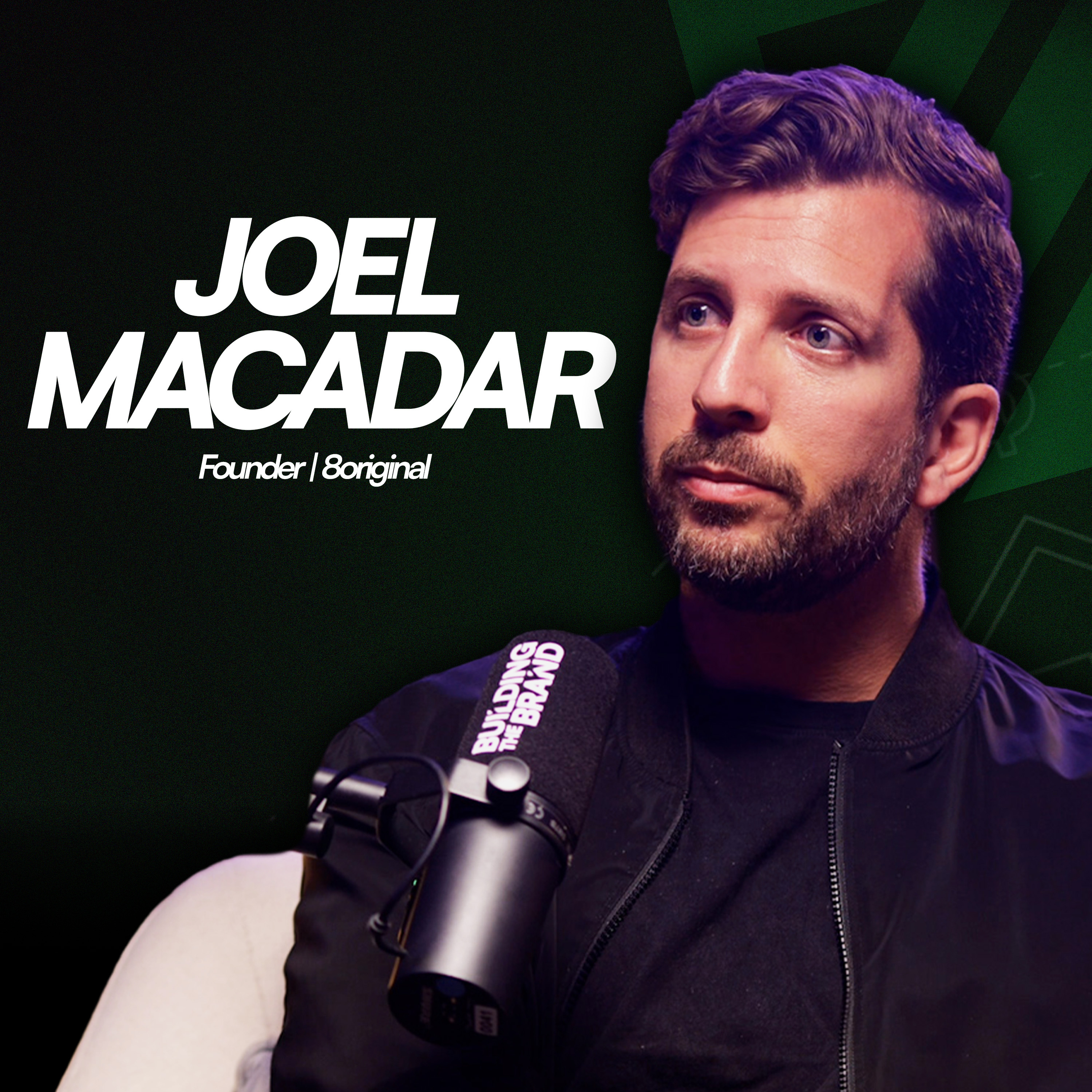
Joel Macadar. Background: grew up playing football (goalkeeper) across Mexico/US; studied sports management and psychology; became a registered football agent in London (worked with clubs/players and brand deals like Nike/Adidas; even worked with Arsenal retail/players). Later shifted into social: helped athletes with Snapchat/Instagram Stories, then built 8 Original into a social agency (claims: tripled/quadrupled revenue; works with brands across e-commerce, tourism, news, fashion).
attention must be harnessed into sales (not just likes/views); brands “stand in the corner” and then try to revert to old marketing—should keep engaging and nurture audiences; over-controlling creative leads to “beige” output; speed and consistency beat perfection; measure shares/reposts and business outcomes (e.g., intent search, conversions), not vanity metrics; copy the psychology of trends (e.g., “tube girl” angle) not the trend itself; social agencies must be always-on trend researchers.
live sporting-event changing-room filming; Messi/Ronaldo World Cup creator coverage; “tube girl” video format; “yap” underproduced microphone-style content; linking TikTok virality to higher high-intent Google search via GA4.
Written by AI. May contain mistakes.
Exploring what brands are getting wrong about social media strategies in 2026.
“In 2026, what do you think brands are getting most wrong about socials?”
Discussing how brands can effectively harness audience attention on social media.
“Before we started, you gave a brilliant analogy that social media is effectively like being in a room, and you have to work the room and network the room, and you have a two-way conversation.”
Examining the challenges brands face with control over social media content creation.
“Social media is a little bit like that, but it's not always like that.”
Understanding the deeper layers of engagement and content strategy for brands.
Learn how the size of a brand affects its operational needs and strategies.
Discover the importance of communication and relationship-building in agency-client dynamics.
“this company that you've been working with for a year.”
Explore strategies for agencies to anticipate and leverage social media trends.
“How do, how are, what are we doing about that?”
Understand the dual role of social media content in informing and entertaining audiences.
Discover essential strategies for effective content management and client collaboration.
“So you have to do both at the same time.”
Learn how to effectively collaborate with experts while prioritizing speed over perfection in content creation.
“So I've sat on both sides of the fence here.”
Understand the importance of focusing on metrics that drive business growth instead of vanity metrics.
“You might not want to empower your staff and your team to do ropey selfie-style videos around your luxury shops.”
Discover how to leverage the psychology behind viral trends without simply copying them.
“Is it more valuable to get 50 reshares, for example?”
Explore Joel's transition from aspiring footballer to a successful social media agency owner.
“But you never had dreams of being an organic social media agency, only you wanted to be a superstar goalie.”
Explore the changes in football agency and the impact of deregulation.
“Like in a lot of, you know, I'm a social media creator.”
Understand how social media has transformed athlete engagement and content creation.
Learn about the importance of audience engagement and content distribution.
“what's happening in football as well, is the fact that people are becoming the news themselves.”
Discover the impact of live content creation at sporting events.
Analyze how new media is reshaping traditional media relations in sports.
“Celebrities going head to head, like all of that makes for relatable moments and emotional in general.”
Learn how new media strategies are reshaping traditional sports broadcasting.
“It says a lot about the emotional content that's happening on the ground.”
Discover how Baller League is innovating football to attract new audiences.
“He is the person who makes the content, especially from an organic standpoint.”
Explore key marketing principles brands can learn from Baller League's success.
“Border League's been brilliant, but how can I utilise that within my business?”
Understand how to create engaging content through real-life events and activations.
“Do you want to put it on a budget day out?”
Delve into the social media strategies of football stars like Haaland and Ronaldo.
“And should they have done it, in your opinion, as well?”
Discusses the challenges and fun aspects of building an audience on social media.
“Once he builds his audience, you and I will talk again in maybe five years and he may have stopped doing it because why?”
Explores how AI is influencing businesses and social media strategies.
“Social media is very much a scatterbrain industry.”
Shares practical tools and methods for leveraging AI in content creation.
“The content bangs for all of their clients.”
Introduces an AI tool called Push Play to automate social media posting.
“It took me between the design and the kind of creating of it, probably a couple hours.”
Learn how AI can automate the repurposing and posting of content across social media.
Explore the upcoming projects and scaling strategies for Push Play.
“And that's going to be the reality in the next couple of months, sadly.”
Discover the personal traits needed for a founder to successfully scale their business.
“I think that's actually a really hard question that I've been thinking about a lot.”
Hear insights on the importance of team dynamics and effective leadership for business growth.

Get the gist, explore an idea or ask about something said.
 Claude
On Building The Brand with James Burtt, what are the key points of this episode?
Searching your listeningAutomatic transcript. May contain errors.
0:00James Burtt: In 2026, what do you think brands are getting most wrong about socials? Business is built on social and it's the pillar of all eyeballs. If you watch evening news, it may be seen by 10 million people, which is a lot. You can post a video tomorrow and get 20 million views. The first question you have to ask yourself is why am I actually doing this thing? We're trying to get into now, live content creation at sporting events. The content creator in the changing room filming the players as they're all going in. You film that, you post that, bangs every time. Do you post and get feedback off content that's live?
0:31James Burtt: Absolutely. Wow, that's innovative. The comment section nowadays, positive, negative, people are looking for the back and forth. I think we've probably just gone through the biggest ever creator World Cup that we've ever had. Creators probably had more of an impact than traditional broadcast media. I want everybody listening to this podcast to see Lionel Messi score in the World Cup. You will see four, five, six people with mobile phones, with press shirts on filming that interaction. If Cristiano Ronaldo's team reached out to you and said, we need some advice from 8 Original, what would you be telling them?
1:11James Burtt: So as you can see, we have got an amazing show lined up. But before we get into the main content, please, please, please do me a favour. I know I'm begging here, but all of the podcasters and YouTubers have to do it. Please subscribe if you're watching on YouTube. And if you're listening on Apple or Spotify, click the follow button at the top right-hand corner of your app, and it will mean that you'll never miss an episode of Booing the Brand, and you'll be massively helping us out as well. Let's get into it. Before we started, you gave a brilliant analogy that social media is effectively like being in a room, and you have to work the room and network the room, and you have a two-way conversation.
1:41James Burtt: It's social, and the clue's in the title, social media. The media in and of itself is 50 % of the social media part of it, but a lot of brands stand in the corner of that room, if we're using the room analogy, and just shout, hey, we're here, we're here. you wouldn't do it in a normal environment you wouldn't do it in a networking event you wouldn't in any other place in life you wouldn't just stand in the corner of a room and just shout to get everyone to turn around look at you and then go oh shit now what yeah so in 2026 what do you think brands are getting most wrong about socials that you guys see as an agency that generated half a billion views in the last 12 months i think the the fact the fact that brands still don't understand that that attention is good but then you need to harness the attention in a certain way that actually gets you revenue so it's a lot different than for example creators etc like when you're a creator you're harnessing your own brand you're kind of developing and developing and developing and you're taking people on a journey when it's a business completely third party to you that has their own customer base that you need to then get into their mindset um i feel like like like certain businesses don't get that that attention that you can bring to yourself when you stand in the corner of the room and you stand up and you go hi that attention can be harnessed into something positive it's not doesn't need to be harnessed into something negative when somebody when somebody say you stand you can stand in the room you go hi and then everybody looks at you and then you freeze and then you sulk and then you stay in the corner and it's awkward and then you leave right that's that that if you think about a viral video that's what it is you should do this as an agency you should just stand in the candle lock and just shout hi and get everyone to look at you do you know what i've thought about doing there's a guy there's a guy on the tube that does these videos on the tube um or on the train i don't remember who it is or what his name is sorry but uh he basically says he puts like a 10 pound note up and goes like 10 pounds to the first person to say the ABCs out loud and then literally like imagine a London train like dead silent somebody will stand up be like ABCDEFG and then you go yeah and everyone goes yay and then it gets handed 10 pounds it's brilliant like that you've you've harnessed that attention you've done it you've got everybody involved everyone's clapped for you well done it's finished move on to the next thing if you're standing in the corner you say hello you go viral well done harness that attention keep going and i think that's what brands don't get right they go we've done it we've kind of gone viral well done and then they want to come back to what they wanted to do before which was you know 50 of this or buy this or buy that and actually what they need to do is what we try and get brands to do always is to keep harnessing that attention consistently constantly on something else divert attention here divert attention there you know your logo doesn't have to be on everything like quite like standard marketing things um but when you're in the thick of it for a brand they obviously constantly think about revenue and as an awareness and discovery tool say tiktok instagram is like the biggest out there just now it's not even it's not even close so if you can stand in the corner of the room and constantly shout something where people engage with and then you can have another team member stand on the other side of the room and do it again and do it again and do it again over time you'll have the whole room the whole room's yours and you can do with it what you want over time it's not straight away can take a year or two depending on the brand that you are but that's kind of the that's that's what i think for most brands then who stand in the corner of the room and then they've got a team members in the other corner let's say they've got four people in the corners they've got the corners covered and they just keep saying hey we're here hey we're here hey we're here what's the bit in between that you see most brands get wrong or what do you see if if there's i imagine and i'm maybe putting words in your mouth here but i imagine you get a lot of clients that come to you and go fuck me you guys are shit hot i'm making amazing videos your content's great you know and it's not just a pay to play game like you're not paying for views you're actually making really good creative which actually earns the views which i think is a very different thing but in that sense that they come in and they just want the views the attention what's the bit in between that they completely disregard is it that nurturing sequence is it what do you then do is it offboarding them from the platform so you data capture so that you can have that two-way conversation what what are most brands after the attention getting wrong do you think um they try and control too much um i think and we're going to get into a conversation of ai etc but in a world of data people always think that you look back you look at the data you make future do you make present decisions based on what's happened before.
6:29Social media is a little bit like that, but it's not always like that. Us social media people think of the future. So the data will come afterwards. You will be able to analyze it and try and make decisions. But actually, if you think about it, I don't know what I'm going to like tomorrow. Data is not going to necessarily tell me that. Something new is going to come and I'm going to love it. And that is what actually social media people do. And I think the fact that to answer your question what brands tend to do in the middle is try and control that whole equation from conception of an idea to development of an idea to style of an idea whether it's carousel video whatever the case may be to filming if you like right now for a social media shoot you'll have seven people looking over your shoulder making sure you're filming the right thing that's not frustrating at all yeah i mean no we've been in projects where uh it's kind of like a destination of sorts right and they have to clear the entire place in order to do the social media shoot because just in case they get someone's face whatever obviously some of it makes some sense but some of it really really doesn't and it's like that kind of control throughout the creative process leads you it's called the road to beige for the road to be the road to be the road to page is a social media person will come up with an idea and then due to that control that i've just mentioned throughout everything the idea will start to come down and down and down the actual output so the actual finished idea yeah it'll actually start to come down and down and down lower until it hits a crash point where it's an ad for the brand yeah and then at that point is when the project's done and then you're hoping you get hired again when in reality two things need to happen the brand needs to relinquish some of that control and say we are hiring you not only because you can produce the video production but also because the from conception those ideas are social first even the editing could be social first which could be lower produced all of that we're relinquishing control to you we may ask for like a final version sign off which is fair but everything else we do need to kind of trust that you're going to do it so it performs at the end the end of the day is performance marketing it's not you're not going to put it on tv it's not forced onto people it's an algorithm which will give it to people if it's good if it's engaged with um and i think that's the bit that like the relinquishing of control is hard especially bigger companies um and hopefully starting to happen a little bit more but if we're going into a brand and speaking to them about it um we do say like for lack of better term we we have to be
9:18James Burtt: in control of what we're posting and you're telling them this when you're having the meetings initially when they're signing it off absolutely before we get any agreement signed off we say you know we work on a kind of a it's more of a feedback approach than a revision approach so instead of sending over the final bits to you to then wait a few days before we post them we post them then you go oh do you know what maybe we should have said this maybe we should have said that i don't like that there i don't like they're cool we'll take it into account for next time but that's an interesting model that's the way that we work because you post you post and get feedback off content this live absolutely wow that's innovative i i think something else that brands don't get right is that nobody cares that much like i mean for example a subtitle a subtitle i'm sure you've had a subtitle nobody cares what's on the you know if it says you know i don't know the word there instead of there yeah like okay cool like but think about it you can yeah you can caption uh comments you can comment something you know admin note apologies it's there instead of there like yeah it's not journalism it's not something that is you know super serious to the point not making movies here we're doing social posts yeah again it's social media yeah and social is a two-way conversation you make a mistake you have a conversation with your audience your audience respects that and they give it back to you as well they like that it's natural it's normal you walk into a room you have a conversation with someone you step on their foot what do you say my bed okay cool no worries all right oh yeah cool nice shoes and then what happens from there yeah that's exactly the same thing this is this whole like walk into the room thing this should be a whole life this should be like a content concept for you guys yeah because like you say you wouldn't walk into a room in that analogy of the wrong thing you walk into the room you step on somebody's foot you don't say sorry until the next time at the next networking opportunity and you come in with a branded banner saying i'm really sorry about what we did last time instead of just saying sorry this is so good that would be amazing yeah like i think people underestimate that in social media and make it more serious than it is like don't get me wrong there are like news organizations and stuff and you do need to be careful with what you post obviously but i think like for 95 percent of people that try to be on social media they are looking for a little bit of that escapism and i think especially with the comment section nowadays which is like where all the engagement is like people are looking to see what people are saying to each other positive negative we can have that conversation separately but at the end of the day like people are looking for the back and forth they're not looking for the okay it's in my mind and then i'm leaving no like they're looking for the share like shareability is a huge thing in social like i get a piece of content who who do i share it with nowadays when you create content you almost have to think you know if if we post this who would share it with who because that's what we're looking for why would you save this piece of content why would you want to come back and look at it again you know the all those kind of i guess different engagement types um like we've done guaranteed deals on shares before like we've said right don't care about likes don't care about views don't care about comments let's do shares do you think that drives business yes okay great we'll you know we'll guarantee you a whole year's worth of shares times three in the first three months of our contract and you know that's that if that's what drives your business and that's what we have to go for i'm saying it's like there are loads of layers to social media yeah that's what i'm hearing you saying yeah it's quite complicated i suppose so so with that when you when you sort of step into um a new client obviously you don't have to tell us which one it is but in your mind's eye you might want to think of one how far into the business do you look at when you're doing that pitch because obviously they're probably again maybe i'm making assumptions here but they are going eight original are amazing they make this brilliant content they've got this viral ability they're great narrative storytellers they know how to create engagement in communities blah blah blah they go hey could you take on our socials because our socials are a bit shit and we're not really sure how to do it how far do you sort of look down the line is it sort of like a case of well what is the goal of this thing well we want more attention why do we want more attention we want more leads why do you want more leads we want more sales okay what what's your conversion metric are you looking quite far down the as in marketing down the funnel to see which bits which other bits you can make suggestions to tweak or do you just go we'll make you the amazing content shifting your mentality towards social media and then you guys do the rest or do you get quite far involved in it um i think it depends on the kind of business that it is sometimes with like bigger brands the operation isn't as important so like a bigger brand a lot of the time will need more eyeballs they just go more eyeballs on our content more clicks on the website sure we're good like bottom of the funnel we're okay we've got an e-commerce team we've got whatever right that is kind of more of an awareness game yeah um with a smaller brand with a smaller company let's say uh i don't know we do a lot of like in the tourism industry so let's say there's a new destination that's popped up or a new experience um the teams generally aren't that big the operation isn't that complicated sometimes it is as simple as going you see content you book ticket you go to uh to exhibition whatever it is right um so i think it very much depends on how big the brand is in a in a kind of middle of the road company like that let's say a big london exhibition um we do kind of look at operations a lot a lot of the time you know reviews matter a lot of the time actual like again it's not two-way conversation it's not the same kind of analogy but like um what people are saying within the comments as to how they're like reviewing a particular exhibition like matters not only google reviews it's also like sentiments if you would all of those things we need to get into and all those questions that you asked you said just now we would ask so we would go right first three months let's get all the eyeballs in second three months what happens so like how like how are we elevating constantly how are you elevating from your side are you looking to let's say it's a venue what like how are you looking to you know if you're if you're so for example you're in a fashion brand um we did some work with lyle and scott back in the day and like they had a really really big e-commerce team um constant new products constant new shoots constant new models constant like you don't have to worry about the innovation on that side of the business.
16:08You have constant content coming to you. A news company that we deal with a lot of the time, like news companies have a lot of content. How do you harness it to get social media eyeballs in? It's very different depending on each brand and how into the operations that you get. But in my personal experience, when you've been working with a company for 12 months, you start to naturally become a partner. It's not so much an outsourced agency that does a thing. you almost have to push that evolution onto your brand, onto the brand that you work with. Because if you think about it, you are also going through an evolution as a business.
16:49So if you're growing, you're growing your client base, et cetera, you're putting in services here, you're putting in services there. All of a sudden you realize you need to ask more questions of this company that you've been working with for a year. So what we've been doing lately is linking GA4 data, Google Analytics data, with organic social data. So what we're seeing now is that if we get a video that does say over 200 000 views we can actually see organic search going up and this is on google so basically the direct relationship between tiktok virality and a high intent search on google which is like i'm gonna buy it now if google something typically you're looking to buy it is almost one-to-one so that's kind of a something that's been brought like the last maybe six months that we started to do um but that's because we've been working with companies for a very long time which is very unusual that's one
17:42James Burtt: of the things i was going to say actually that whole when you said um you know when you get into 12 months you become a trusted partner a lot of social agencies with a lot of clients and not get into 12 months you know they will generally churn i would say probably as a as a service provider agency ourselves we'll even work with a client for three years or generally it is nine months because I think everyone gets that excitement sort of burst of dopamine for the first six months. Then coming up to that 12 months, they're starting to assess what that ROAS has been, whatever they sort of work out their return on their ad spends to be.
18:18James Burtt: And then they're either going to go, yeah, cool, we're going to carry on for the next three years with you. Or they're going to go, well, what have we actually got here? So how do you go into relationships with brands to build it for the long term? Or is it just how you contract is like we are doing a 12-month contract because you know that piece of work takes that time to garner the results effectively? It's typically a 12-month contract. I think, I mean, this is more like how we built our brand's business, say original. It's 100 % everything is about communication. So when people talk about account management and how boring it is, et cetera, whatever.
18:55like the role of account management is making sure you know that you're delivering the services to your client sure um there are companies that whose account manager speaks to their client once a month i just don't i don't think that's enough um i think when you are outsourced and doing something out of the office you will naturally not be involved in a lot of conversations that you would when you're inside an office and i think you need to ask the right questions once every couple of weeks at the very least in order to get that sense of where your client is going um at the same time you need to be able to have the you need to be able to build a relationship with the client so you can then put together a set of ideas so the client can continue being with you um meaning let's say you talked you talked earlier about top and bottom of funnel etc right our whole thing is uniting top of funnel with bottom because we're organic social awareness and discovery we've got down we've got no issues getting you millions and millions of views literally like i have no problem saying that okay even guaranteeing that to an extent um however we do rely on you to take that those particular eyeballs down the funnel and for that there needs back and forth conversation for example sometimes they'll need another service whether it's a bit more content in order to get more eyeballs or paid social later down the line or whatever the case may be like one kind of an ancillary service um our contracts are typically 12 months and i think what happens with our clients is that they notice how they notice how involved social media is and how much of a difference it could be to to their company and i think frankly a lot of them realize that their business is built on social yeah and it's the pillar of all eyeballs if you think about it where any business today where do the eyeballs come from like back in the day you used to be able to do blogging or something like that and you would hope that kind of organically people will come to your website like it's not like that anymore the number one driver of eyeballs is social so when you've got a massive driver of eyeballs a lot of companies that we work with end up saying hang on objectively the eyeballs are there, the engagements there, the two-way conversations there.
21:17How do, how are, what are we doing about that? Do you know what I mean? Sometimes we have to help them with that. Fair enough. Um, but a lot of the time they go, no, like, well, like we basically innovate together as we consistently change our content and get more and get more and get more and get more and get more. They consistently change their services and their operations in order to actually innovate alongside us. Otherwise it stagnates just kind of does. and then after yeah 12 months 18 months or whatever it's like cool like yeah yeah but typically we'll keep our clients for two to two and a half years that's good for organic socials that's great i mean i don't know the future holds just considering you know things move faster ai
22:00James Burtt: etc but you know to be honest we're gonna get on to that because we can't not i'm sure it would um you know our content involves real human beings doing real things and yes i mean some people will say that you can create real human beings with ai now but i'm sure we'll get onto the subject but i've got loads of thoughts on it just just a quick one on the future but not the ai future so in terms of you said something earlier it was really interesting that the job of a social media agency or a social media marketer is to almost spend some of the time doing the thing that's working right now, but also always future forecasting to what's coming next.
22:39James Burtt: You know, if you'd have said three months ago, oh, yap content is really big. Everyone would be like, what the fuck are you talking about? And now one girl pops up, sells$6 million worth of talking about life into a little microphone that we've very like underproduced content. And now everyone who was a vlogger blogger is now a yapper. Okay, sure. And I've tested it and just to see what works and what doesn't some of it does some of it doesn't so how do you how do you guys as an agency stay one step ahead of what's coming next or see it so early that you can start saying to your clients right this is popping now we need to start shooting this week for the rollout in the next quarter so um again it very much depends on a client like sometimes trends and things like that just don't align with what your particular client wants to do um frankly our people are on social 24 7 yeah like you're talking about you're talking about people that like the research involves scrolling on instagram and tiktok it's just the reality of their job sounds like a lot of people's dream job yes it does yeah i sometimes say that to them yeah um but that is research genuinely how do you find out about a trend i don't know you have to go on social and find out otherwise you're waiting until like a traditional pr drops on whatever and then you're too late um so that's genuinely it's almost as simple as that sadly it's like you have to have people that are glued into social i think the more important skill here because i i think that can be taught you know researching on tiktok figuring out trends etc is the fact that within every trend there's some sort of psychological uh um attributes i guess that makes us react to these trends and i think finding that out figuring that out being able to pinpoint that is is the real skill here so like um i'll give you an example like with with the yap for example like what is it that makes us react to that particular thing what we do is actually try and dissect that so we look at the first second of the video second and a half of the video we'll run it through you know tools that we've got where it tells you what's happening within the video and what happens you know 0.3 seconds in 0.5 seconds in 0.7 seconds in um once you realize why human beings are reacting to that sort of thing the next video that you create can can involve things like that so um i'm trying to think of a of a of a trends um do you remember do you remember tube girl most people would know yeah yeah yeah so she would do 0.5 angle high up like kind of a selfie you know 0.5 and then sort of move her head around and dancing or whatever right a lot of people tried to do the exact same videos than her throughout right but actually what made it better is that a lot of people didn't do the 0.5 angle regardless of tube girl not tube girl yeah what social media agencies would do is go right we're not going to recreate tube girls that's lame but why don't we do a video in the same kind of format and style that she does people wouldn't know that oh they're just trying to copy tube girl no like they're just trying to attach themselves to that one thing that made people engage with tube girl that's the human part that's kind of very difficult to pinpoint when it comes to humor that's very important so in america people laugh at different things in the uk it's quite standard yeah when it comes to social media you have to be able to look at a moment that happens in real life and that relatable moment be able to clip into a video and post it um it's not trendy necessarily it's just entertainment yeah and i think when you put together information and entertainment that generally equals social media um for a business if you're not informing, you're just entertaining.
26:39Or if you're just informing and not entertaining, you probably don't belong in the room. So you have to do both at the same time.
26:46James Burtt: Well, let's pause there because I think we've had so much information in the first 25 minutes of this conversation. We're at risk of forgetting a bunch of the value because Joel is just chucking it out like sweets at a kid's discos. Here are the five things that I think are most important about what he shared already in this podcast. Number one, attention is only valuable when you know when to send it. We've already talked already a lot about the virality or the downside of virality of content, which is what a lot of brands often chase. But ultimately, if you don't know how to harness that attention and then move it to something that's more valuable for you as a brand or a business, the question becomes, why the hell are you actually doing that thing in the first place?
27:20James Burtt: Let's say, for example, there's a mean type trend that's going around and your brand jumps onto that trend. Let's say you get those millions of views for that viral piece of content, but it actually doesn't line up with the rest of your brand messaging, your tone of voice, your value proposition in any way, shape or form, there's actually a massive disadvantage to getting that virality, ironically. Number two, stop controlling content until the point where it becomes beige. Now, if you are an agency owner, I'm sure that you've had this pain in this conversation yourself. The client brings you in, they pay you as the expert, and then they tell you how to do your job.
27:50James Burtt: I know that I've had this a fair few times across my career. I might have had it a fair few times recently, but I'm not going to go into the specifics or the details, but we all know that pain. If you're on the flip side of that, and I've also been the client of agency services before. So I've sat on both sides of the fence here. So I understand it's easy to slightly overstep. But if you are the brand owner or you are the CMO, the marketing manager, the brand director, whatever it may be, remember why you brought those experts in. Give them a framework to work within. Give them the guidelines that you need them to tick or the boxes that need to be ticked in order for you to be happy.
28:22James Burtt: Give them the safety guidelines of what your brand will and won't say. And then ultimately, let them do their job. Build into the process an element of feedback, of course, and sign off, but don't get to the point where you're watching over their shoulder, because the thing you brought them in to do was to have the creativity that you haven't already got in-house already. Number three, speed and consistency beat perfection. I absolutely love this. I used to run a coaching business, and back in the day, we used to post nine things a day on our main feed. This is before Instagram stories was a thing, and everyone was saying, the strategy's wrong.
28:55James Burtt: You turn around content too quickly. We'd do an event, and we'd be posting about the event at the event, and then we'd sell the next event also at that event. Now, loads of people said that strategy doesn't work. The algorithm doesn't like it. It's too many posts. And they might have been right. But ultimately, it was a massive revenue driver for the business. We had speed and we had consistency. We didn't care about perfection. Now, obviously, there does have to be a bit of a crossover. And it also depends on your brand position. Now, let's say, for example, you're a high-end luxury retail brand, for example.
29:20James Burtt: You might not want to empower your staff and your team to do ropey selfie-style videos around your luxury shops. But ultimately, there probably is a way to do that kind of fast paced speed led content, but in a way that is still within your brand guidelines. So look for those opportunities. Number four, measure the behavior that actually grows the business. The days of these vanity metrics of likes and views is kind of dead and buried. And even the way that the algorithm across a lot of social platforms is changing, they care a lot more about repost, shares, interaction, and people actually posting your content to their own platform.
29:52James Burtt: That is what garners virality. But obviously, we talked a minute ago that virality is not the only thing that matters. But fundamentally, and this goes back to the other principles we've talked about in this little pause point section already, you've got to understand why you're doing this thing and what does success for this look like. There's no point doing a viral dancing meme on TikTok if it's not going to actually deliver a brand outcome for your business. So look at those metrics. Is it signups? Is it pushing people to landing pages? Is it comments? Is it shares? It can be metrics that are based on social media, don't get me wrong, but it's got to be the right ones.
30:25James Burtt: It can't just be, oh, we need 1 ,500 likes. You know, is it more valuable to get 100 shares? Is it more valuable to get 50 reshares, for example? Make sure that the metrics actually move the needle in a positive way for the business. Number five, copy the psychology of the trend, not the trend itself. It's all too easy to look at stuff that pops and has its moment of virality and just try to copy it. But you end up being a sort of a me too brand in that instance there. And you're never going to have the brand positioning that the number one person has got who has done that thing. And a lot of the time as well, to be brutally honest, especially when brands do it, it can actually be very, very cringy and can be detrimental to the brand position that you've got.
31:02James Burtt: It can be really, really disaligned with the brand message that you're ultimately trying to push in a wider context. So we've obviously talked about yap content within the context of this podcast as well, but what is it the psychology behind the yap content? Do you just need to, as a brand, have one of these microphones to speak really quietly down the lens of the barrel? Or is it actually the psychology that people want that connection. They want it to be intentionally underproduced. And it's that psychology piece that you could take into your content. If you're a big fancy brand, then yap content with one person speaking down the barrel of a camera into a microphone might not work.
31:34James Burtt: But actually, the psychology that underpins it, which is that they want that connection, they want it to feel underproduced, they want to feel like they're going on the journey with them, you can take and deploy those assets within the content and put it into the stuff that you're making as well. So again, don't just copy the trend. Think about copying the psychology that underpins it. It's been a lot of value delivered already in this podcast, right? Right, let's get back to it. I think we've had so much value already. We've got to go back because otherwise we're at a real risk of just talking social media for 90 minutes.
32:04And then people will be like, who is this guy?
32:07James Burtt: Because you are not a marketeer, a native marketeer, first and foremost. You had grand aspirations of being a footballer or a soccer star. as I guess it would have been in your original homeland, homelands, as you sort of moved around. But then an injury, a broken finger, and that you sort of didn't get the trials that you should have had, etc. So you got in the back door of football as an agent. Give us a bit of backstory about you before the social things. I think it all comes full circle eventually. But you never had dreams of being an organic social media agency, only you wanted to be a superstar goalie.
32:46yeah i think um that's a big sigh as he looks back with that finger injury um i've i've always wanted to like own my own business i think the i've always in my football teams growing up i was always you know the captain leader etc you know i didn't necessarily fancy myself as a leader i just kind of always did it i always landed in that position so i felt like owning a business professionally for my whole life was like the next natural step is that
33:16James Burtt: because people put you forward as it or you put yourself forward as it despite wanting it are you the kid that everyone goes oh joe you go you be yeah you you pick teams it was it was sort of like that yeah just naturally i think um you know my personality has always been a little bit larger than other people's generally yeah yeah so when you go back to the room analogy i i am typically the guy that will walk out the room having known everybody and their families right uh that's i That's just always been me. I grew up in Mexico. My mom's from Venezuela. My dad's from Uruguay. We moved to America when I was 13.
33:56How do you end up in Mexico?
33:58James Burtt: Venezuela, Uruguay, Mexico. How does that happen? So my dad found a job in Mexico because he spoke Spanish. So we all moved there. Okay. It was kind of as simple as that, really. and then america again another yeah same same yeah yeah same um same obviously the things in mexico were a little bit unsafe at the time i was much taller than the rest of my school i was a blonde and um you know like at the time there were a lot of kidnappings i was about to say that's a kidnap risk yeah yeah so like people were like like some people outside my school were getting kidnapped yeah no it was it was it was like that like posing as like you know parents and stuff like that it was it was it was quite bad at the time and we had an opportunity to go um it was florida um and we we went i was 13 when i did that so i was playing i grew up i grew up playing football in mexico um and then i played throughout high school i played travel team etc in or saturday league i was about to say what's travel yeah so like in america you either you play in your school team or you're playing a traveling team which is basically a club team if you were outside you play home and away matches yeah yeah um and i was you know i was pretty good i was you know one of the probably one of the best goalies in in florida at the time growing up um and i was trying to get recruited into a university team because at the time that that's what you did you went to university and played football um broke my thumb obviously as a goalie that's quite bad and then i needed to like walk onto the team and then i had another injury and it was it was a whole thing so i ended up going to florida state university which didn't have an actual division one team but then at that that point i kind of realized i wasn't gonna you know go to the mls if you would at the time um what ended up happening was um my dad found a job in uh london he keeps finding good jobs his dad yeah yeah yeah um i was 21 at the time um i was studying sports management and psychology in school so i think a lot of my marketing and human sort of interactions yeah um i also kind of put down to some of the stuff i studied in psychology i did psychology in high school and i was doing a minor what was called in in american psychology too um so i look kind of beyond what i hear from people and i'm very much a gestures and kind of um real world psychologist yeah kind of person um so when basically i was studying sports management i said well that you know would be cool to actually work in european football so i went came over with with my parents at the time moved back in with them um finished my degree in sports management and then became a football like a at the time what it was a registered football agent so i had um when i first got here i got a little bit of glimpse into football.
36:52I worked for Arsenal for maybe a year and a half. I started selling Nike uniforms in the shop.
37:00James Burtt: Oh, the proper grassroots stuff in the retail shop. Yeah, yeah. The best thing that would happen in the shop would be sometimes the players would come to the back and would be like, right, I've got family or whatever. Can I have some kits? And you run to the front of the shop, get them printed, put them in bags, and then run into the back to the players so they could go upstairs and give them to their families uh it was cool though you know i could i'd never been in front of european football like that before yeah and then i tried getting into the marketing department that didn't work out um one thing led to another i started networking through linkedin with other football agents and i found one who lived in london who at the time i think was representing yannick palasi who was a player crystal palace i think at the time um who we still speak to this day um and he sort of taught me who he spoke to within football clubs how he spoke to people within football clubs how he spoke to players how he found players all of like kind of the nitty-gritty of being a football agent um yeah you could say that for a little bit i think um i think i just realized what the life was about it was about you know going to games on a saturday morning going to games on a friday night at times if it was like under 21s or saturday nights um going to a lot of academy games in the mornings um and then just kind of consistently finding the next player who's an expirer who's an expirer who's an expirer um and then i kind of kept networking with more football agents who then started introducing me to players and i used obviously i speak spanish so i use spanish to try and get me in the room which is very helpful so i got one of the kids i used to work with in the like Colombian under 17 team and under 21 teams.
38:46Um, and it was, yeah, it was going relatively well, but I did, I did that for 10 years. So over time I did a lot of brand deals with, um, you know, Nike, Adidas, et cetera, um, for players. And I did a lot of contract negotiation on pitch, um, for players from, you know, league two, league one to the, to the premier league. Um, And I ended up working with some pretty cool people. I worked with the late Mel Steen. He used to represent Gaza back in the day. Oh, yeah, I'm recognizing that. Yeah, so we, towards the, you know, once, you know, maybe in my seventh, eighth year, we partnered. And then we did a lot of stuff together.
39:26A lot of other really good people, Scott Fisher, big agent up in Scotland. So, yeah, it was a good time. but whilst i was doing it i found a passion for social i was the guy that posted everything on snapchat and instagram stories for whatever reason and then people started asking me for help they're like oh could you help me with this like how would you put this up how would you cut this video what do you think i need to post and i have no idea why this was it could have been because of my personality or yeah i'm not sure um but so this is players asking you this oh yeah so i i did it for players i did it for players too and then like friends like parents of my friends are running a business or you know like um had at one point in between like when i started my football agent career i had a part-time job at a charity and like somebody within the charities where i met my wife actually um somebody at the charity would ask me for help with how to do this and like over time it got to the point where i was like doing this player social and that player social so i was like communicating with uh you know the photo team from fulham to like send me the photos afterwards and you know this player got promoted to the premier league like what post am i putting up like i remember one of the players i was working with got promoted with fulham and we posted the photo of him lifting up the the trophy when they got promoted from the championship and like that was like i mean obviously that banged um so like you get a glimpse into the power of social yeah and as i was doing some personal social media and business social media i sort of started charging a little bit and as i started charging a little bit i now needed like an employee so i was doing all this stuff in football on the right but then on this side i actually needed to like be on my phone and do things like actually implementing a service yeah as you you know you fell into agency services yeah so you get what i mean so i started i needed an employee so i got my first employee and then we started doing more i got my second got my third and then once i had three or four people i think i went in full time to do a original and now we've basically tripled everything actually tripled quadruple revenue not tripled people but that's because you know we've well yeah um so we've got an amazing team but that's my that's that's my background so you know commercial on pitch off pitch negotiations for footballers was your at
42:01James Burtt: the sort of the time in the social the love for socials came in was your love for the not the love for football dwindling but the agent world was that starting to dwindle because i i listened to another podcast you're on it's a really interesting time because obviously agents back in the day used to have to be registered and licensed you'd have to do an exam and you you You couldn't just be like, oh, I'm an agent now. Like in a lot of, you know, I'm a social media creator. I run a marketing agency. Like in most things in entrepreneurship, you can just say that you're doing the thing and do the thing.
42:30James Burtt: You came at it at a time where you were being licensed. But just to that point, FIFA was like, oh, no, you don't need a license. You basically need to pay us 500 quid plus VAT. So then I guess there's like a wash of these very average agents potentially coming in that wouldn't have otherwise gone through the time, effort, and energy of the license. And then on the back end of your career, the license comes back in. So were you like, did you accidentally end up at the worst point of the football agent timeline or the best point, do you think? I think you'd probably say the worst point. I think because, you know, while deregulating the industry at first, if you would, so just paying the 500 pounds.
43:09And I mean deregulating. I'm not saying 500 pounds for that is nothing. I'm just saying that you.
43:15James Burtt: Compared to studying and doing it. Exactly. Yeah. I mean, it's just, you know, paying a little bit of money and making sure you've never committed a crime. I think when that happens, the influx of people that come in, you know, 10 years afterwards, if you would, eight years afterwards, all of a sudden there's very few gaps. So there's very, there's not that many unique things that you can do. so as an independent agent by the time i was you know eight years into the industry 90 of the deals were being done by the bigger agencies so now you're left with not only that you know reconciling that um but also having 10 of of this massive shit loads of people trying to do a tiny amount of deals so you're stuck between partnering you know selling, working for one of these bigger agencies, whatever the case may be.
44:15So I think it's a good point in that we were all able to come into this new era where we could go to academies and show our licenses and they kind of allowed us in for a bit. But then the worst point, because then it just became oversaturated and it was actually impossible to do business. I think when I first came in, speaking a second language, third language was helpful. I think now it is too, but considerably less so because there's so many more people that have come in that also speak those second and third languages. It's quite a standard thing when you think about it within business, but it all happened in that period.
44:55I think to answer your question, I came in at like the best time, but then probably became the worst time, which is why the license came back into play.
45:03James Burtt: the crossover of football and content then obviously we're seeing it at the moment i think we've probably just gone through the biggest ever creator world cup that we've ever had i would say that creators probably had more of an impact than traditional broadcast media and not to throw shade on any particular organizations but if you look at what the rest is football had sort of done prior to the world cup and then spun off into netflix which basically became a tv program let's have it right they're like it wasn't a podcast it's a fucking tv show for six weeks but comparative to what the bbc was putting on when they didn't even send a team out there they're all green screening it from salford compare that to people who are on the ground making you know woody and for example the big social media influencers they did a live stream for 39 days non-stop um we in your period of time were you starting to see that crossover between pro sport and socials because i think i've heard you talk on another podcast about how you sort of like landed some some sort of deals and contracts for your talent based on content you were getting them to make did you were you starting to see the importance of player created socials at that point in time um at that point in time not so much the most the players were doing when i was when like within football maybe yeah whatever it was three four years ago was being really good on instagram i was like you know allowing people to see them outside of their nine their nine to five if you're like the professional so like not only posting the photos of them after the match yeah you then going in with a strategy and going right cool do you know what let's post five times a week just to keep up that engagement obviously three of them will be match related one of them could be training and then another one could be like something that you did and at the time it was mostly photos because you weren't going to start editing yeah maybe so like players were starting to get more into that um you look at massive agencies like tentos etc like they kind of started managing a lot of individual player socials at the time and then have moved on to do amazing things um i think i mean now with you know your erling hollands of the world like the kind of owning your own audience becomes number one um i think something that has considerably shifted which i which which we're trying to get into now is live content creation at sporting events yes so like you know nowadays you'll have a content creator in the changing room filming the players as they're all going in yeah right you you film that you post that bangs every time nobody has that content it's exclusive to you etc there's a little bit of difficulty with that because obviously the the sports rights holders will want that content before you kind of keep it for yourselves there's a lot of like regulation that comes into play but there's a lot of um well frankly yeah yeah so like but let's say you've got a content creator are in the stands and you're filming the fans you know i don't know chanting as the player comes and celebrates a goal like you could probably own that as a team now so there's a lot like behind the scenes i'm not sure people realize but i want i want everybody listening to this podcast to see leonel messi score in the world cup follow him as a camera follows him to see to his celebration players mob him you will see four five six people with mobile phones with press shirts on filming that interaction where they're putting it where it's being distributed you know you won't know until you know a day after but i've seen like people that i know filming leonel messi celebrating on behalf of fifa or the fifa account fifa world cup account jenny fantino's account whoever it is um but like live content creation creating relatable moments from football is gigantic at the moment and i think it'll do amazingly for the women's world cup as well coming up next year i think it'll do amazingly for the euros and i think by the time we reach the next world cup there'll be something else but i like genuinely go back and watch it you'll see literally just people with iphones just going like that amongst the people with massive cameras yeah but then there'll be somebody with their hand up just peering over the top of like the the newest iphone yeah yeah yeah just the unbelievable access the orange one just yeah this that's it that's all the access i need and then the weird part is that the broadcast is seen by i don't know if you watch evening news it may be seen by 10 million people which is a lot you can post a video tomorrow and get 20 million views literally more views than the news get you could become the news tomorrow if you've got that exclusive access.
49:55And I think that's what's happening in football as well, is the fact that people are becoming the news themselves.
50:01James Burtt: If you're loving this conversation, please do us a favor by clicking the subscribe button if you haven't yet done so. Click the follow button if you're listening on Apple or Spotify at the top right-hand corner of your podcast. Plus, if you're loving the learnings and lessons from this episode, every single week, as well as doing the video and the audio sort of things, we also do a handwritten blog and we do a breakdown of the key learnings and lessons as a blueprint that you can implement into your business as well. If you'd like to get all of that, click the link that's in the show notes or the description and you can join our Building the Brand exclusive newsletter.
50:31James Burtt: Is there a case for you guys as an agency that you go, hang on a second, we're great at organic and we know football from the inside. Is there a vertical for you here for expansion that you're going, and sorry if I'm coming up with your business plans for 12 months down the line, but are you given your experience in both things are you starting to go we should be doing this we should own that space so you're done with football you want your saturdays and sundays back i think no i am i have approached a few people to try and create a solution where there is um basically our content creators go to a certain live event and they're given the freedom to post for a club or whatever the case may be pitch site um i think the the issue is that there's a lot of layers to it and i think that yeah you know when it comes to clubs having something of value they would want to make money out of it yeah of course obviously getting millions of views is a form of attention etc but then again as we talked about is harnessing that attention afterwards for potential revenue etc and i think that's what basically right that i mean if you think about it like rights that's what rights holding is yeah like you've got a thing like it's a lot of eyeballs let me charge somebody for it to distribute let me charge me for it to distribute it um effectively if you're taking that power back and you're going actually i'm gonna i'm gonna distribute these bits it's quite a difficult commercial decision to make for certain football clubs so that's what we found we have done quite a lot of live content creation and we've got because we kind of know what moments like when a moment happens you just know and actually one of our um we won um we won a global award for a campaign that we did um it was um in partnership with the fa at wembley um with holocaust survivors and club legends so we did a holocaust survivor being interviewed by a football club legend i saw that content yeah so by football club legend on pitch so we did we collaborated with Ledley King in Spurs we collaborated with Per Merzsacker in Arsenal so we filmed that at the Emirates we filmed Ledley at Wembley we did Glenmurray in Brighton we did Carlton Cole in West Ham and we did one more I can't remember apologies but then we used we used like the Jewish News distribution platform because obviously it's important for that community we used the football clubs platform as well to collaborate with and then throughout basically with social first content so we had um the players and holocaust survivors sitting on one side to do a professional production just uh you know for a website and another kind of content and then they would come over to my team and we would film social first content at wembley walking them down the stadium and into the stadium it was like it was like unbelievable so like the kind of live content creation aspect being able to capture the moment and post it is like amazing i think we've we've went viral multiple times over do you think with the the rights holders because i've been watching like baller league yeah and on one side of it i'm like what they've done as a brand is unbelievable it's genius but then i'm sitting there watching because i've worked with a couple of footballers and one of them played uh as one of like the legends in one of the teams for like one of the last matches of the last season um and i said one of my video team down there because i couldn't go and the buzz around this thing is insane and so and i was watching the live stream i think there was like 39 000 other people watching the live stream at the same time and i'm texting my editor phoebe i'm like she's like this is fucking wild this place is going off it's mental do you think the part of the success of it is because they own the rights and therefore they have got 30 clippers that are sat by the side of the pitch and they can just clip whatever they want you've got unfetted genuine access all areas clip and post clip and post clip and post and it's just a social deluge that you can't get away from and that's what's blowing that brand up yeah so uh word that social media people say a lot of time is distribution so like you can have an amazing piece of content if it's not distributed within the right channel and in the right way it may bump and it happens all the time you may have like the best idea in your head like i'm i wouldn't consider myself an influencer i've got ideas all the time sometimes i just have i just don't have anywhere put them so i don't create them what they have is content and distribution and emotion passion all in one so the fact that they can create the content i.e play football, react to something, be very personal, relatable with each other, you know, celebrities going head to head kind of thing.
55:23Celebrities going head to head, like all of that makes for relatable moments and emotional in general. Then they've got the 30 clippers all around and at home just waiting for something to happen. They're literally live clipping as it goes. So like somebody's literally screen recording. I'm not sure if you've seen it, but I'm sure you have, but somebody's screen recording at home the whole game, something happens, they stop. and they go clip, whatever, hook, post. Oh, it's mad, yeah, yeah. So like within - It's instant, isn't it? Yeah, within a goal being scored, 30 seconds later, the clip's on Instagram and TikTok.
55:55I mean, the numbers are mental. So it says a lot about speed. It says a lot about distribution. It says a lot about the emotional content that's happening on the ground. I think it's super clever. And also, they've also managed to get Sky Sports to stream that. So it's - So you've got new media and traditional media
56:13James Burtt: rolled into one, haven't they? Exactly. and i think um you know it's part of like owning the audience too so like espn and the states are doing this as well where like they're bringing in people that have got their own youtube shows and stuff like that into their kind of talk shows and then they're allowing them to use some of that talk show content in their own platform too so the brand gets distributed kind of throughout and it it almost like acts as like a hover for everything else and it's it's really clever you You have to have ridiculous amounts of resource. But there's Clippers that are getting paid loads of money, frankly, from just sitting there and spotting the moment.
56:52In football, spotting the moment is pretty easy.
56:55James Burtt: Yeah, it's not that difficult, to be fair. But the work of watching it and maintaining that focus and going, cool, it's incredible. It is incredible. That was one of the things that, again, I think almost gets disregarded, is that day when we had our talent who went to play at Border League. and my editor Phoebe took a photo of him by the side of the pitch and there's all of these kids, and I say kids respectfully, they're between 16 and 22 years old. So to me, as a mid to 40 year old guy, they are kids and they are working their fucking asses off and they love it and they're fighting their way to make a living.
57:31James Burtt: I'm like, there's nothing about this that can be bad. Apart from, I mean, if you look at the quality of the football, you might go, well, how have they got such a, you know, this is basically power league in front of 90 000 people like with a well-known coach yeah with yeah exactly with idris coming out to a rap tune or chisora is another person we work with chisora and uh lethal bizzle did like a walk on at one point i was like what is actually going on here but for the for the sake of what it's enabling i just think it's nothing but a positive yeah i i mean unless you're a football purist no like i i couldn't agree more like there's there's really no reason for it not to work um i think look there's a lot of um there's you know you also have to look at the money side right i've no like in terms of revenue partners etc like it's natural right all of this content distribution the millions and hundreds of millions probably billions of views at this point will make you know anando's wanna be a part of it how they activate it and stuff is is easy at that point um like you know everybody on the sidelines eating Nando's great like it's not again it doesn't become rocket science when every single thing that you're doing is is kind of a relatable moment to other people I think what they're doing is great I think what they're doing is incredible we've we've flirted with the idea right let's stop there because I'm so glad that Joel agreed with me to a certain extent with this I think that Borla League have absolutely smashed it but I thought it was great to get his context and his understanding and his expertise because he's been on both sides of the Spectrum here.
59:06James Burtt: He is the person who makes the content, especially from an organic standpoint. He's also been the person within the football ecosystem as well. Now, it's really easy, or it would be really easy to look at Borla League and go, well, of course, it's been a massive success because KSI is involved in it. Anything KSI says gets lots of eyeballs. And that is right to a certain extent. But look what they've done. It's not just a KSI football club that's been created. They understood the psychology of those people that were going to be the fan base of this content. They've even changed the sport. This is massive.
59:35James Burtt: And I think it's seriously overlooked. They haven't just done, as I sort of facetiously said that, you know, it's five a side or it's like Power League, but it's not. They've changed the rules. They have these moments. They have these things that pop up. It's almost like what the Savannah Bananas have done for baseball. They could see that actually baseball matches are too long. They're too boring. It can go into nine innings. You could be there two and a half hours and not a lot of stuff happens. The changeovers are super slow. And Baller League have kind of taken that psychology as well. And they've taken the most loved sport in the world and they fundamentally changed the rules.
1:00:05James Burtt: Can you imagine a couple of years ago, a world in which you support a team, you love a team, maybe you're drawing 1-1, then all of a sudden a siren goes off and you've got some random halfway line penalty contest. Now, it shouldn't on paper work, which you're saying that we're going to talk about later on in this podcast, about how you have to have an understanding of human psychology to work out what stuff is going to work rather than just utilising AI. But I think Baller League have done this brilliantly well. They really understood their market and their demographic. But as Joel said, the real power that they've delivered with this brand is that they were the target consumer.
1:00:36James Burtt: They understood what they wanted, but they've also, they've got the talent and they are the distribution. A final thing I'm going to say on Border League, and why I think it's absolutely flipping brilliant, is not only was it created by primarily a social first bunch of founders, so it'd have been easy to keep it on YouTube. It'd have been easy to stream it on TikTok and all that kind of good stuff. But they also did realise the importance of that more traditional media, and they bought in elements of that as well. They've utilised the best of what was or what is current, and they've used the best of what is coming next down the line as well.
1:01:08James Burtt: Now, if you're a brand owner or a CEO or someone high up in a company, you might be going, well, yeah, James, I kind of get that. Border League's been brilliant, but how can I utilise that within my business? Well, look at the core principles of what they've created. They really, really understood what it was that people wanted. They also found that they had the distribution, but then they also partnered. So they owned the content and they also then shared that content out. They took old media, new media, mixed the two together and combined the power of both to create something seriously, seriously impressive.
1:01:37James Burtt: So is there ways that you could do that in your own business? Who knows? Maybe it doesn't work for every business. Of course, it's not going to be as such a smash hit success for all brands. It's not going to work for all brands fundamentally, but it's definitely worth considering. Is there ways that you can look at the psychology of what's made this successful rather than just trying to emulate what they've done understand why they did what they're doing now buckle up we've got still a third more of this podcast to go maybe get yourself a cup of tea maybe get yourself a flipping notebook at this point because we still got loads more to go through let's get back to it if you put it in a news channel context so we've got a original we've got a lot of um like our own ip so we own tiktok and instagram accounts that get loads of views um and we send our team out to do like cool shit basically so we've got one called experience on them um we've got about 20 000 followers on there on tiktok probably average half a million to a million views a month so we like obviously do it in between our work um it keeps growing and growing and growing and it's it's really good we've got another one called budget day out which is about doing things out in london for cheap it's 15 pounds and under so we've got concept so we've got about 30 000 followers between tiktok and instagram all that and we do a lot of normal kind of relatively regular partnerships when it comes to like Like, we've got a deal.
1:02:48Do you want to put it on a budget day out? Yeah, cool. Like, whatever. That's a normal kind of partnership. What we're actually flirting with is creating in real life events or activations and then creating content out of those in order to get views on our own page. So you control the content and you control the distribution. So as an example, let's say you are partnering with an open-air theater of some way. something you can set up a tiny open air theater somewhere in london like in king's cross or something obviously you need permits etc but let's say you do that and then all of the headlines and all of the hooks of everyone passing by will be these guys have set up a mini open air theater for kids and it's super cute whatever the case may be you're you're controlling that because you made it happen yeah you're controlling the hook because you are also distributing that same message and it becomes exclusive content to you at first you're the first one to do it and then everyone will follow because of the kind of the trends that we talked about earlier so um i think that they've done that they've done that with a captive audience within football but you could do that with anything yeah so just finally on the footballer content creator one because i've asked
1:03:58James Burtt: a few people this and i'd love to get your take as a professional on both sides of the coin you've got someone like harland who i think is about as good a content creator as you get anyone who will just walk outside and barbecue a 50 ounce steak in the rain just for the crack i think is amazing on the flip side you look at someone like ronaldo's channel and it popped you know like oh my god christian ronaldo's on youtube and then there's like these two random very high polish production things put on there but then there was nothing else so you got massive subscriber numbers obviously because it's going to but then there's not really a payoff after what's the sort of the if you would get if if christian aridardo's team reached out to you and said we need some advice from eight original you What would you be telling them would be the best social first move based on that content that they're making?
1:04:52James Burtt: And should they have done it, in your opinion, as well? Because it's just weird to me. Well, I think kind of like I said earlier about the brands being different depending on who they are, depending on what they do. Like Holland and Ronaldo, two completely different personalities, two completely different ages, completely different parts of life, everything. so it's it's in a way easier for holland to be kind of carefree with the content that he does and tell everybody about it because height of his powers very little to lose unless he posts something stupid yeah um i'm not sure if he's got an agency helping him he may do just for the sake of you know strategy and keeping him in you know to from posting something stupid um but i think in terms of ronaldo what i would say is it's a strategy and consistency issue so i think we do have to understand from a footballer standpoint yes they go to training every day and people think that that's all that they're doing a lot of them are also have families a lot of them also have pickup and drop off to do just like the rest of us yeah yeah and a lot of them also as they get later in life do want to have a little bit more kind of free time um over time the football then stops and becomes maybe being a commentator or analyst or whatever the case maybe and then that becomes the job but you know when you're approaching a conversation with something like ronaldo you need what i would like you need to understand that part of their life where you can't give them more work you have to make it easy for them to to be consistent in something that they like to do so um i mean i'm sure you've seen it with with podcasting and personal brand it's very similar when you do like founder personal brands like i have no time i have no time to edit all my videos i've no time to talk into a camera i've no time to do any of that shit how are you going to help me do that um without investing more of my time it's very similar with him if you're requiring him to sit on a couch for three hours and do a conversation with somebody that conversation needs to be worth it for him for three hours and it's cristiano ronaldo you're gonna find it really hard to fucking find somebody to sit with him for three hours not because he's not nice or personable but because he's fucking cristiano he doesn't have three hours sit with somebody um think about all the commercial engagements he's got already so for me it's coming up with a strategy which allows him to be consistent and which allows him to not put that much work into it and that may mean putting in a little bit more resource but you see a lot of people like um somebody like simon squib nowadays he's got a camera rolling on him most of the day yeah like he's got a guy like just filming him constantly with a seven seven team in marketing yeah so like he's got a big team behind him um i heard him speak at a conference about a year ago and i remember he had one person just on him like yeah and i spoke to him i said like what do you do with all this footage he's like at the end of the day i just have to sit here and try and remember to the best of my abilities what he said and who he said it to yeah um so maybe it's that but it's a strategy that allows him to do it carefree not worry about it so much and actually be consistent with it over a long period of time and i think the the last part to that is actually how to make it commercially like viable so like not viable because you can afford it but um in future how is that gonna earn more money from what what's what's the play so as you mentioned before the first three months is getting eyeballs through cool what happens afterwards what's the play like what more sponsors you need what podcast you want to sit in how like where do you want to take your career if it's just well i just want to get more followers you've got 300 million or whatever it is yeah you're all right you don't need more all right so what's what's the play why do you want to do this and i think part of the reason is that like why is he doing it why is he somebody like him doing it helen's still coming up he's got a way to go yeah why would ronaldo do it for what i i have to say like for me because i love again i've sort of studied performance psychology and stuff so i love seeing the behind the scenes of what makes people tick.
1:08:59James Burtt: So that's what, like a Harlan for me, fly on the wall documentaries, I've always loved them. Like show me how, don't show me the end result, show me how you did it. So now I can go, oh, okay, they're doing that. And you can kind of work out. That's why I think his stuff is so relatable because you're like, this is just, it's just fun. And you're just seeing the real person. I think that's a really good point. You know, why are you doing this? I think whether you're a content creator, a brand owner, a CEO, somebody who's doing personal brand content, you've got the first question you have to ask yourself is why am I actually doing this thing?
1:09:29James Burtt: What is the point? What is the goal of this? I think with Holland, you just said it, information and entertainment. He's showing you behind the scenes information you didn't know about and he's funny. Yeah. Like, great. Like, give me more. Like, keep giving to me. As long as you give me more new information and you keep entertaining me in the same way, I'm good. I'm all yours. Yeah, yeah, yeah. But again, like some people have it, some people don't. Some people need a little bit of hand-holding with strategy. Yeah. Um, and some people need a little bit of handholding period. Um, but it's what's after.
1:10:02So Helen's building his audience. Once he builds his audience, you and I will talk again in maybe five years and he may have stopped doing it because why? Like, well, I've got other things to do. I don't need to, I think at that, at that size, there comes a point where it, you know, you need to be seen with Donald Trump in the white house or not.
1:10:23James Burtt: Yeah. but i'm saying like that you know i mean like that is it's it's it's mental the level of yeah and i think in some ways social media is great for maintaining that yeah you need other things that further elevate you i wonder if there's going to be a sort of an evolution or a revolution of people like a harland who maybe don't know what they're going to do with this sort of stuff next so they just capture audience and then they capture data you know because i say in five be a story if he doesn't want to do if you said to him if he said now um i've got some exciting stuff can't jump on my wait list i bet he could convert 10 of that youtube audience every single week yeah and and like i think depending with depending on with what so like i think the first wave it would whatever he does will bang yeah i think again like consistently and like commercial consistency is also important here so like if he goes into um sports psychology for example or something and somehow he's able to talk about it i'm sure because of how he is on the pitch that translates perfectly now the conversion will be small because it's sports psychology but it'll probably be me be more consistently commercially commercially consistent for longer than say doing crypto yeah or like a shoe launch yeah like yeah a shoe launch will bang but then you're gonna do and then down yeah yeah um so i think i i don't think he wants to do that i don't think it's a i don't think it's like a data capture capture in top of funnel in order to retarget i don't i don't think it's you know what i mean he's thinking like that yeah it's just for fun.
1:12:07He probably is just for fun.
1:12:08James Burtt: Do it just for fun. I mean, think about it. Like it is fun. I think what makes it less fun, like, you know, I've got two kids, you've got kids. What makes it less fun is that you, as you get older, you start to miss moments because you want to capture some other moments. Yeah. And that's the trade off, right? Like I don't want to film my son eating. I want to see him eating and laugh with him. It's, two different things would my son eating do really well on social i have no idea but that's not this is not the point like hallan could barbecue without putting it on video and just enjoy but he puts it on video because also he's he doesn't do you know i mean like he's he's okay with capturing that moment i'm i'm you know when it comes to personal things as you want as you would the you know same bts etc um it gets a little bit you you're you're kind of less interested in showing that side because you're just trying to live in the present and then for me everything else is social so i get home and i try and be as present present as possible that happens to a lot of people right we can't have this conversation and not wrap up without having a conversation about um what where this is all going this social space with the impetus input and the impetus of AI what's your read on it what's your take on it how are you using it I know that's a very broad question but AI organic social from an eight original perspective what's your thoughts okay so um I think personally I think I heard I think it may have been Alex Hormozy talk about this the other day but so it was home i say yes um he said um basically i couldn't agree with him more businesses are starting to use ai and then branding themselves as like these ai businesses like intelligent whatever the thing yeah and what he says is like no like use it for the service that you offer and solve the problem you can solve the problem with the help of ai a lot of people that pay you don't give a fuck how you solve it just solve it so um we'll solve it for an amount of money that i can pay effectively um so i think in that way more and more professional services are going to keep continue to use ai i think the number of companies that are going to start branding themselves as ais whatever is going to decrease because it's just going to be obvious that you use it things like reporting and stuff like that genuinely if you're like an agency owner and you're against using ai tools for data and analytics i have no idea why you're not doing that like let's not kid ourselves a lot of small businesses don't have the money to hire data analysts alone yeah and to an extent you only need to find some correlations in some ways to prove hypothesis to then move forward so i think again less businesses are going to brand themselves ai more businesses are going to use it inside of their business um we use that quite a lot um it's not like you know we're not putting in client information or any anything like that we use it for scripting we use it for kind of organizing of ideas.
1:15:39Social media is very much a scatterbrain industry. So using a tool that helps you put ideas somewhere and read them so you can read them is quite helpful. I'll answer your question finally in two ways. One of them is where are things going and the other one is how we're using it. So where I think it's going is, I mentioned it earlier, AI is very good at reading the data from before and telling you what's most likely to happen in the future. social media doesn't necessarily tell you that so if you're a social expert that ai data ain't going to tell you how the other person is going to react you need to know other people to know how other people are going to react if you don't have any kind of human intelligence and you don't understand why somebody would react well to you doing something then likelihood is you're not going to be very good at doing social media ai or not so an example i saw the other day this guy on a northern line doing coffees on the tube i saw this is brilliant right yeah like i forget his name but he's he's great like it's not like he didn't know people would like it yeah yeah like he knew that people would have an interest in having a coffee on the tube that is a human thing if you would ask ai hi would you know chadjubiti would people like to have a coffee on the tube it'll probably say yes but you would have needed to have that idea and you also need to execute it yeah you can look for all the reassurance that you want but at the end of the day that's a human thing future is a human thing past and somewhat present could be for certain industries you could do it with ai so you could try and and you probably should try and automate as much as possible up until you get to the part that makes you unique for us what makes us unique is the future we are able to consistently create things which are getting engagement currently like now ai ain't telling you ai ain't telling us that so i think that's something for businesses take into account as well is that if you only deal in data which then predicts x and the likelihood is guaranteed and there's no human in between it's just a data part i think unfortunately a lot of that can be taken by ai if it's today if it's tomorrow if it's in a year if it's agentic if it's not we can talk about it but at the end of the day if you're just having back and forths which are data related or or the same thing routine then ai could probably take that if you're creating things that are going to need to be used and engaged with by humans in future and frankly sometimes it could go either way sometimes it does work and sometimes it doesn't that makes it human and that's where you absolutely can't automate because that's a skill in and of itself um does that yeah yeah for sure makes sense um yeah have you got um because because you got i think a
1:18:44James Burtt: lot of people look at you guys as an agency and go i just want to be able to do what they do yeah Don't care how they do it. Don't care how they tell the future. The content bangs for all of their clients. They hold on to them for two years. This is unbelievable. So is there, I know this is a very tacky top line question, but if there was three sort of tools that you'd encourage content creators or brands to improve their social content or three uses of AI, what would those be? That's actually a really hard question because there's a lot within social media that you can use to help you um i mean i'll be generic here i would say chat gpt but i would i would i would kind of i'll say how to use that use that instead of saying the different tools so instead of just kind of trying to script something on chat gpt you can help it you can you can use it to help you create the tool that you want to create step by step so a lot of people just want question answer question answer like google used to be right what chai gbt can do for you is it can actually give you instructions to do shit so if you want to create an automatic editing tool for your podcast videos you probably could it won't be as good as your editor but if you want to you know if you just need a rough and ready you know maybe maybe somebody only has the money to you know to rent a space for example and you want like there are a ai tools that do this but also you like it it can actually tell you the steps of physically how and where to go in order to get these things done um it would be very hard for me to say top three tools because i would say using chadgibutiro claude for anything data analytics um writer's block is a huge one in social i've run out of ideas i need a little bit of inspo i've gone through tiktok and instagram i get it i've got maybe two or three i mean plug them in and let it just refresh my brain um huge like huge i i i'm no idea why somebody wouldn't be using it are you using it personally as like a sort of a paea or sort of ideas partner that you bounce ideas off i do i can't live without like the world in which you don't interact with claude and chat gpt on a daily basis is alien to me at this point no no i do i am once later yeah i um we're we're trying to launch kind of a and actually like a side uh it's a little bit of a revenue stream within within eight original which i'll go into now which has to do with an ai tool that we've created um and i wanted to create um a landing page so i can i'm a design i can design so i designed it myself and then i asked claude code to give me the code to then put into my website to make me a landing page so it made me the landing page i uploaded into my website and i was tweaking it last night so like for that you would have needed to spend the whole day doing a landing page 100 if you didn't know how to design god knows how you would do that but you would need to ask josh to design something whatever like it would still take you two to three days.
1:22:02It took me between the design and the kind of creating of it, probably a couple hours. But like, again, the human part is thinking of what the design needs to look like, not copying somebody else basically. And then from there, using the AI tools to help you get to the end and then tweaking the end. So you've got a little bit of human in the beginning, then the middle bit, you could automate or get some help. But yeah, I use it all the time. Like if I have an idea and I think I'm fucking nuts, I'll ask it. like i think i think what people don't understand in social as well and from our team when people are looking to say like oh like i want to do what you guys do a lot of it relies on feedback like very honest like somebody would come to the office be like oh that would be so funny and it takes for somebody else to go nah for you to go oh yeah cool you're right yeah yeah like or somebody says oh that'd be so funny and then you go yes amazing let's do it and then you do it you post it boom like we got we had a video do almost a million views on our on our instagram the other day on nate originals instagram um somebody thought of an idea of somebody walking in with like you know when you're that person with argentina on your sweepstake walking into the office
1:23:09James Burtt: posted it posted it at like 10 a.m the next day yeah yeah do you know what i mean so like the reaction of that the idea of that the feedback from your peers going yeah that's hilarious and then the execution of being able to do it yeah that's kind of what makes things how they are um and i think that's hard without a team to be fair but i think you can you can use ai to become your team yeah to help you genuinely tell you um you know just don't rely on the factual information of it yeah because a lot of the time it's you know wrong but like but but your ideas can't be wrong yeah like factual information can be wrong but if you're looking for some reassurance or some extra bits here and there that you don't know then and there's no reason why you wouldn't do it um how we're using it as well as we've got a new tool called push play um push play with an ai in the end do you get it no i see um so what it it does a few things the main thing that it does is it takes a video that you say posted on tiktok instagram whatever it uses a fair few technologies to end up transcribing the video looking at subtitles captions music everything and being able to grab that transcribing into a blog and or a news story or whatever you want and post it on your website immediately then after it posted on your website immediately it grabs that it redesigns it into a pre-templated graphic that it can post then on instagram facebook youtube communities tiktok wherever um so it's automated posting across social platforms based on one piece of content that's why push play so you press play and it does it um how we're using it now is actually with news companies that post loads of news we want to get them monetized as soon as possible so we're using the news to posting side of the of the solution and saying everything you post your website we will design a template we will make sure that news these news like fit those templates and we will give you 20 30 40 50 100 posts a day automated captions posted on your website with a link back to your site things like platforms like facebook at this point at the moment love it because they need more content shareability is huge within news and it gets you monetized and facebook just now i'm sure your other guests have told you monetization on facebook just now is really good there's a lot of bonuses etc so facebook's trying to get back to people but trying to get people back into platform so um you know that's all done via ai initially the designs the kind of taste if you would is done by humans and then all of the rest we put it into the workflow and it goes from literally you putting something on your site to then being on facebook and instagram within seconds with your brand everything by itself this is smart where's that push play you say push play with an ai yeah so um we should be we're hopefully launching something um it's going to be kind of like landing page templates it for now and the next probably a couple of weeks that you were working on last night it was yes um because it's i mean it's necessary i don't know what that was um it's necessary it's like i mean it if you can work with the platforms with an ai solution like why wouldn't you i just think sadly at the moment video is still kink and on on platforms like instagram tiktok and facebook to be fair you still need video to grow and video need humans so i think whilst we are continually innovating on the video and views and awareness side of things um just to come back to the beginning you know companies need to harness that attention um it's easier for some it's harder for others what's the next six months look like for you guys obviously push play coming out by the sounds of it is there any any other sort of big things that you're working on big projects you're back and on so i think it's it's scaling i'm looking at a lot of um live content creation opportunities for our team i kind of like the football one that i mentioned um we're looking at signing more within like the tourism destination space because people do want to do things in real life um it's kind of something people are craving now with the heat it's made it more difficult for people to go out to be fair but um you know people do need stuff to do when it's raining and stuff like that still.
1:27:46And that's going to be the reality in the next couple of months, sadly. So we're going to be doing a lot of that space in that space. We're probably looking to get more into news. So frankly, scaling. We're hiring a new creative manager now to manage our whole creative team because somebody from my team, Hannah, is going to step up and help me with the operation of the business a little bit. She's like at the forefront of a lot of things that we do with AI. So it's going to be scaling. It's going to be me allowing my team to do what they do independently whilst i do all the things that i mentioned
1:28:20James Burtt: which is going to be fun but a bit scary what's the uh what's the one trait that you need to develop personally to take the company to the next level in the next six months you're pretty quite good at self-awareness given that you know all about performance psychology and all that yes Yes, I am particularly good at that. I think that's actually a really hard question that I've been thinking about a lot. I'm not necessarily bad at saying no, but I think I'm generally very available. And to an extent, that's not that helpful in kind of a founder-led business because there come points where you just, it doesn't matter who it is to be honest unless it's my wife obviously but like get that caveat in there yeah it doesn't matter who it is at times you need to focus like you need that hyper focus because at times the business relies on you to have that so i think if you are allowing your team to work that needs to come back towards you and it's not like they need to let you work to what i'm saying but it you need to let you work yes exactly yeah and i think i get in my own way sometimes where i want to get involved and like um i think it was evie from my team asked me the other day like if we could swap a job with any of us who would you who would you be so like would you be jake the account manager or hannah who's now creative manager stepping up or one of the content creators like what would you do and i said like con like a content creator like sitting there thinking of ideas and go and do them is like the funniest thing in the world for me like i could get millions of views every single day that's at least that's the way i think um and then so i get sucked into that naturally because you like it yeah yeah and i think i need to find the balance of going i'm around but i'm not really around yeah and so if things go wrong how wrong could they go like it'll be all right um so i think um we've built our team with kind of everyone's pretty self-aware about who they are what they do everyone's held accountable for what they do it is very much teamwork you know we've got our pods that work with certain clients who have like planning meetings and you know shooting and we manage the editing really well and we have the account management meetings and they're done really well so like like the kind of implementation part of our services is done to a relatively high standard the work speaks for itself we're multi-award winning um so i think it's next six months it's just a matter of scaling and a lot of it has to do with me so stepping out yeah to work on it not in it yeah so a little bit more zooming out so today actually i sent a message on slack last night i said i'm going to be a little bit on the business today cleared my day um so if you need me call me or what's up me i'm not going to check slack i may check emails but just what i need to do how's that feel in the middle of a day when you're not on it is it well i love it is it enjoyable yeah no no it's enjoyable because it's a little bit i mean you're you're you're kind of you're present yeah and i like that that's amazing yeah um i think at some point you do need to deal with the discomfort sometimes of going back in and going cool like what's happened today yeah but most of the time i think you realize that it's fine and you probably thought it was worse than it is so but i think it's you know i you know i've read i read loads of books about founders and relationship between founders and their team and you know revenue growth and personal brand and all that shit and like i know it's something that i need to do um but it all in its own time you know so try my best sure you are too random one what's the best book on leadership or business you've read in the last or recent memory one that you like that is unbelievable um so there's one called the 90 day rule which i really liked um the other one which i'm gonna get wrong because i got it wrong the other day and like uh i went to like a founders circle meeting okay and they asked a similar question and i got the book name wrong which is fucking annoying and you're gonna do something well okay yeah i know i know it's awful and i do with my kids all the time i forget lyrics or i forget a singer and i'll just say a random name it's embarrassing uh it's called something along the lines of firepower but it's probably not that it's basically it's basically i know i know i'm so sorry we'll find out we'll put the link in the show yes yeah definitely it's the relationship between a founder and the implementation so the visionary versus the person that takes all your really really shitty ideas and distills them into stuff that you should actually do or you shouldn't and it talks about how in every business that's trying to scale you you to some extent need that person because otherwise you end up taking your business left right and center and it constantly relies on you you need somebody to go yes this yes this good idea not this definitely not that great and then that person goes off and does them while you go off and do them in a different way or do the next thing or work on everything sounds like a great book i mean it's i could tell you the name right now um but yeah whoever finds it first in the comments actually i'm going to give away a prize i don't know what the prize will be yet maybe like a boo in the brand i can go to my amazon and have a look now no i like the challenge i like extending the challenge if it's worth people's time then they should go and do a bit yeah but but i loved it i think as a small business owner you you know you relate massively to something like that and you always think oh like should i be doing this or should i be doing that a lot of the time is yes because nobody else can but a lot of the time is actually like the more you say yes nobody else can the less you're going to be available the less you can scale the business the longer no one else can do that things you don't teach them or let them exactly so um i think it's you know it kind of just assured me that team and people are like the right way to go like i think like for the agencies that are you know laying off a lot of people and stuff obviously i feel for them massively there's a financial struggle in that side as well but i think part of what what those kind of companies will miss is that when you've got a team, you have those ideas back and forth.
1:34:55You have, you know, the people that can implement, you have the people that can tell you that what you're doing is not necessarily what we should. Um, and I think that's, that's massively important because those are like one-to-one interactions that are actually like revenue making or revenue losing attempt. Um, but yeah, I loved it. I read it so quickly, but you know, it's not novel or anything.
1:35:21James Burtt: Joel, I've enjoyed this conversation massively. I knew as soon as I sort of connected with you on LinkedIn and saw your profile and the stuff you'd done, I was like, oh yeah, this guy's a bit of me. But I think there's been so much tactical information. That's what I love on this show to make it as tactical for people as possible. So thank you for your time. Thanks, man. Thank you for having me. I appreciate it. Cheers, mate. Thank you so much for watching this episode of Building the Brand. I genuinely hope that you absolutely love this episode. If you want to click here, there's another great video that you can watch.
1:35:45James Burtt: Or this one here. Oh, I've picked it just for you. is an absolute banger. Click that one right now. Go on, and I'll see you on the next one.
Can going viral actually grow your business… or are most brands chasing attention without knowing what to do with it?
Joel Macadar is the founder of 8original, a multi-award-winning social media agency that has generated more than half a billion organic views in the last 12 months.
In this episode of Building The Brand, Joel breaks down the social media strategy behind viral content, organic growth, TikTok marketing, Instagram content and turning online attention into real commercial results.
Connect with Joel Macadar:https://www.linkedin.com/in/joelmacadar/
Want more from Building The Brand? Connect here:https://buildingthebrand.co.uk/newsletter
He explains why brands destroy potentially successful content by over-controlling the creative process, how the “road to beige” turns social-first ideas into forgettable adverts and why 8original operates a post-first, feedback-afterwards model designed around speed rather than endless approval processes.
Joel also reveals why shares can be more valuable than likes or views, how his team connects TikTok virality with high-intent Google searches and why understanding the psychology behind a social media trend is far more powerful than simply copying whatever is currently going viral. Plus, the changing relationship between football, creators and traditional media - including Baller League, Cristiano Ronaldo, Erling Haaland and the rise of live, behind-the-scenes social content at major sporting events.
KEY MOMENTS:
0:00 — Social media strategy in 2026: what brands are getting wrong
02:17 — How to turn viral social media attention into revenue
07:23 — The “road to beige” that destroys great social content
09:23 — Why 8original posts first and gets client feedback afterwards
12:25 — Why shares can matter more than likes and views
16:28 — How TikTok virality can drive high-intent Google searches
23:26 — How to spot social media trends before competitors
40:02 — From football agent to building a social media agency
46:15 — Why live sports content is changing football media
54:38 — Baller League, content distribution and the power of speed
1:03:54 — Cristiano Ronaldo vs Erling Haaland: personal brand strategy
1:13:43 — How AI will change social media marketing
1:19:22 — Using ChatGPT and Claude for content creation and marketing
1:23:43 — How Push Play uses AI to automate content repurposing
1:27:16 — Scaling a founder-led agency by learning to step back