Ask ChatGPT
 Building The Brand with James Burtt
23 Sep 2026 · 53m · 26 chapters
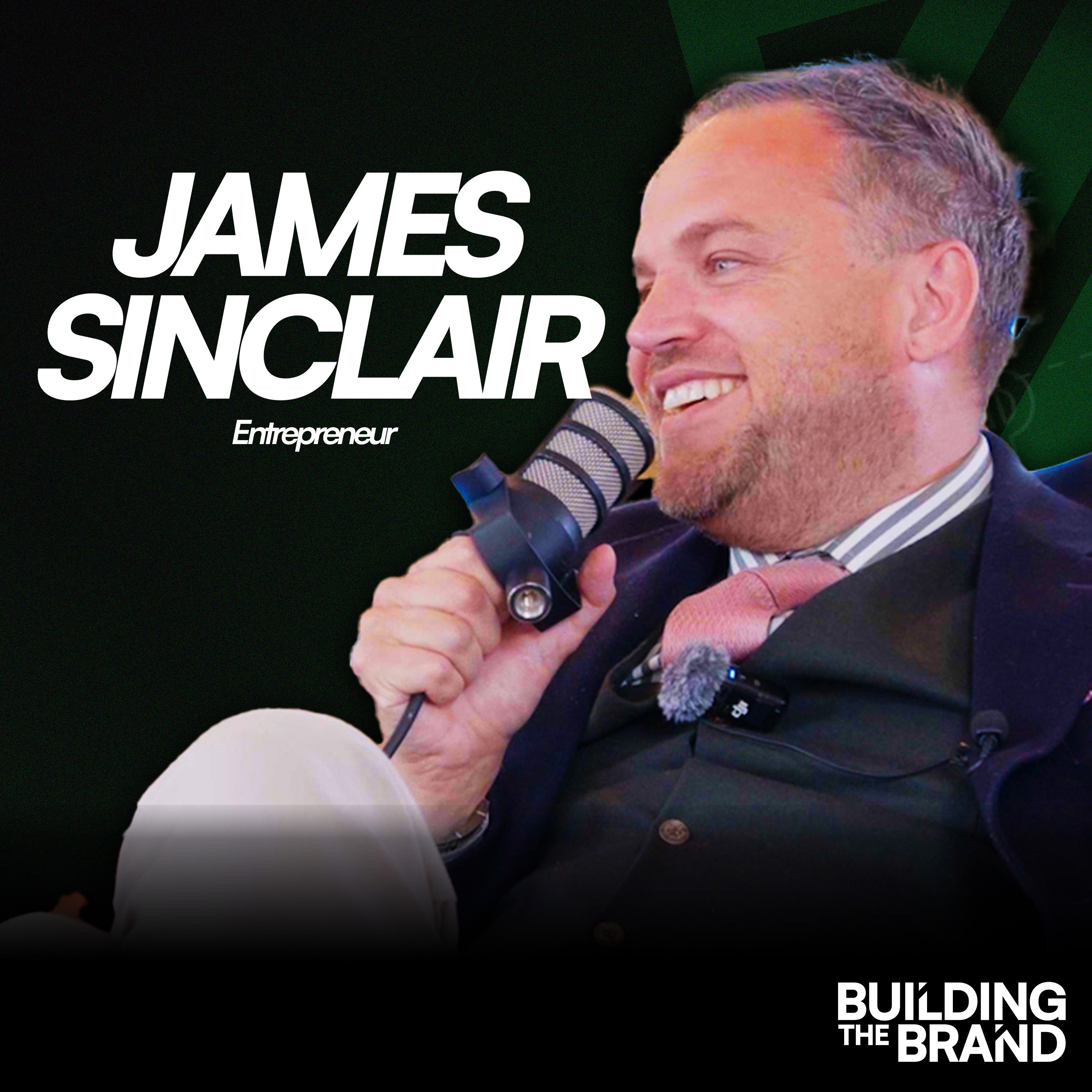
James Sinclair (Jimbo) discusses building and scaling a UK business empire without giving up equity, using acquisitions, protected leverage (especially freeholds), and strong management. He argues UK “turnover taxes” and payroll-related government costs make labor-heavy sectors like hospitality harder, so he prefers moats, lower-labor models, and growth for leadership retention. He also shares his “entrepreneurship + management = success” framework, his skepticism of VC (“vulture capitalists”), and why he’s pro-office/tribal culture over working from home.
None besides the host (JB) and Sinclair. Sinclair is the sole named guest.
Don’t tax revenue before profit; entrepreneurs should innovate while managers run day-to-day; exits enable bigger scaling (Branson/Musk examples); children shouldn’t automatically run the business; grit beats talent; newsletters can outperform podcasts/YouTube for ROI.
Buying The Big Sheep theme park (Devon), a storage company/freehold, and a £10M pie business sold within six months; buying a storage/freehold for £3M making ~£500k profit/year; planning acquisitions of ~£10M and ~£8M food services businesses; Branson at Necker Island; ice cream leading into food service.
Written by AI. May contain mistakes.
Discussion on the recent Ideas Fest and shout outs to sponsors.
“And he has been able to scour and do things in a bigger way on the back of exits.”
James introduces Jimbo and discusses his entrepreneurial journey and personality.
“I hope you enjoy this live from Ideas Fest.”
Jimbo shares insights on the difficulties of running businesses in the UK.
“I mean, anyone that's watched my story, I don't like the turnover taxes.”
Jimbo explains how challenges can lead to new business opportunities.
“that you have to pay in turnover taxes to employ people.”
Discussion on the necessity of growth and the pressures it brings to businesses.
Jimbo shares his thoughts on remote work and its impact on business culture.
“I have some of the best conversations by the water caller catching up with my team.”
A rundown of Jimbo's latest business acquisitions and strategy.
“And I think, you know, and I see people don't get promoted as much when they work from home.”
Learn how strategic exits can lead to larger opportunities in business.
“And he has been able to scale and do things in a bigger way on the back of exits.”
Discover Jim's journey from magician to successful entrepreneur and business owner.
“I'm not saying it's all been smooth sailing.”
Understanding the challenges of leadership in a growing business.
“Obviously, you can learn from anyone, but there's not many people who play in the game at your kind of level that you can have a frank conversation with.”
Explore the importance of grit in achieving success over mere talent.
“So, you know, Aaron is still with me and he's running a different department rather than being the group MD.”
Discuss the challenges of passing on a family business and the emphasis on merit.
“Not that I so much love the music, but I love the brain of the woman.”
Learn how personal loss can drive entrepreneurs towards success.
“It doesn't mean you should be managing the business because the data tells us that only 10 % of wealth gets the fourth generation.”
Finding joy in both the entertainment and business aspects of entrepreneurship.
“I'm actually an introvert inside, but an extrovert.”
Understand the E plus M equals S methodology in business operations.
“I'd much rather go for dinner with you and Chuds, the three of us, than go to a party with the ugly people.”
Learn about the intricacies and timelines involved in acquiring businesses.
“Someone that's already working for me in another part of my business.”
Discuss the importance of maintaining ownership and avoiding investors.
“But surely if you bought investors in, you could do what you're doing.”
Explore how digital content can drive business success and engagement.
“But they have an element of they can't tell you how to run it or they can't just...”
Understand why newsletters can be a powerful tool for building relationships.
“Oh, no, so I'm going to contradict myself.”
Discover James Sinclair's plans for future business acquisitions and sectors.
“Every one of us can do a newsletter and a well-thought-out email to people to build an audience.”
Insights into the self-storage industry and its long-term profitability.
“I'd Google something for sale rather than do my proactive cool ways of buying companies.”
Exploration of the relationship between entrepreneurial success and personal happiness.
“Something called the freedom of entrepreneurs.”
Discussion on the importance of grit and resilience in overcoming business challenges.
“Do you know what I'm going to do at 70 years old?”
Insights into managing the demands of entrepreneurship while valuing family time.
“Is there ever a time where you think you just get bored of having to have the down to have the up?”
Exploring the constant drive and unique thought processes of entrepreneurs.
“and I like going away for two or three days, going away from, this was a nine-day thing.”
Discussion on the importance of designated spaces for creativity and thinking.
“Last night I got in and I wanted to make a video course about newsletters after dinner.”

Get the gist, explore an idea or ask about something said.
 Claude
On Building The Brand with James Burtt, what are the key points of this episode?
Searching your listeningAutomatic transcript. May contain errors.
0:00He said, the thing is, I'd be happy if I did that. What? And then the farmer turned around and says, and do you know the problem with being happy? Happiness is just a little bit boring.
0:10James Burtt: In this episode of the podcast, I'm excited to dive into the business insights on my good pal Jimbo Sinclair, who runs over 30 businesses, employs 3 ,000 staff and turns over 50 million pounds a year. Just so you know, me and JB have never fallen out. Live from Ideas Fest, let's go. In the last six months, we bought Fiend Park in Devon. We bought a massive storage company. We bought a big pie business. It was a 10 million turnover business and we sold that within six months. In 45 days, I'm flying to Necker Island to stay with Sir Richard Branson in his house and do a keynote presentation in there.
0:46And he has been able to scour and do things in a bigger way on the back of exits.
0:51James Burtt: You're not a fan of VCs. I think you call them vulture capitalists. But surely if you've brought investors in, you could do what you're doing. And if I want to enjoy my life, I'd have to answer to them. How about f*** off? Just when you think everything's going well, get ready. It will come and swipe you out. I don't wish my life on anyone, JB. I don't want anyone to be in my head. It's f***ing horrible at times.
1:18James Burtt: Before we start today's episode, I just wanted to give a massive shout out to everybody that was involved in this podcast. What you're about to watch and enjoy was filmed and shot live on location at Ideas Fest just a couple of weeks ago. So I wanted to give a big shout out to Ideas Fest. If you are an entrepreneur or a business owner, you need to make sure you get to Ideas Fest next year. I know I'm talking about 2027, which might be a little bit early, but really this is the Glastonbury of entrepreneurship. You have got to be there. So go and check out their website, just Google Ideas Fest, and you'll find out the details of what's coming up next year.
1:50James Burtt: I don't know what's coming up next year, but based on this year, it will be epic. I also want to give a big shout out to Lucky Number 7 Coffee, who are our coffee collaborators in our tent on site ideas. Everything about this brand is absolutely phenomenal. So go and check them out. They're a new business, four months old, and they are making big waves in the coffee industry. I think these guys are going to be on something big. It's just too good not to be big. And the final big shout out is to Under the Canvas. These guys were the creators of this amazing tent. The creators of the amazing space, the backdrop, the staging, the seating, the lovely rugs on the floor.
2:23James Burtt: Everything you see here was created by Under the Canvas. It was our privilege and pleasure to just get to turn up with the cameras and stick a few lights up and stick a few mics on people and make great looking and sounding content. So big shout out to those guys as well. I'll put links to all of those amazing organisations, Ideas Fest, Lucky Number 7 Coffee and Under the Canvas in the show notes in the description. Let's get into the episode. I hope you enjoy this live from Ideas Fest. Let's go. Genuinely one of the nicest human beings you could ever hope to meet a genuine friend a few years ago i had a bit of a tough time in business and jimbo was on the phone every day some days he'd literally phone me and go i love you okay bye that was it i was okay cheers um raised an exceptionally talented entrepreneur i don't think there's anyone in this country who's giving up as much information about how he's building the thing he's building 30 plus companies 50 million quid a year in turnover but the the most impressive thing about jim i think is the person that he is for those of you that just so me and JB have never fallen out.
3:19Everyone keeps saying they're not friends anymore because you wouldn't meet my schedule to make podcasts. So I wouldn't work around his schedule.
3:26James Burtt: Can we just, after I've just given you a nice intro of what a nice human being you are, you're doing a real good job of unpicking all of that hard work that I've done for you. But since you've left the podcast, numbers have gone up, watch time's gone up. Chud, is that actually true? Oh, Chud has killed me as well. Anyway, this is not your podcast. No. You are on the receiving end of questions today. Yeah. What do you think is the state of entrepreneurship in 2026? Because I know it's all beer and skills in places like this, but it's hard out there, isn't it? And how have you found this trading year so far?
4:02Yeah, definitely. The United Kingdom is more challenging than most. I mean, anyone that's watched my story, I don't like the turnover taxes. I think you should be taxed on profit, not taxed on your way to making a profit. and I think that is devastating difficult for startups and well-established businesses as well. I mean, you've got a situation where hospitality businesses are paying 75 % of their revenue is wages and turnover taxes and then they're left with 25 % to pay for their cost of goods, pay for their rent and I think that is hurting businesses so much. And there's a good little Steve Jobs phrase, most people give up because they're sane and we're the insane people there's probably 6 000 of them on this field today that go yeah yeah
4:45James Burtt: this is difficult i'll carry on what when you talk specifically about how hard hospitality's got it you know a lot of industries have got it difficult but hospitality is you know doubly difficult i would say yeah because you're taxed way more before you've actually paid yourself more than other industries and i'm in other industries and therefore i can't compare it much more so the question becomes why are you still proactively and so aggressively growing in a sector that is so difficult to do i in my head i'm not growing in that sector as much as i was two or three years ago oh really yeah i mean you might see it because of all the collection of assets that i've got around me but i haven't bought a hospitality business in the last six months no way are you okay yeah and and um i would think carefully about doing that again now really yeah but it's just the cost of employing people not what you're paying them what you get taxed from the government to employ someone has just become so aggressive now that you have to think very carefully about labor intensive industries so if you're not as aggressively going after hospitality businesses what is the sort of stuff that you're looking at right now um things that that have what I call rare and protected forms of leverage, that have moats around the business, that are less labour intensive.
6:10It's not, you know, anyone that, I would just show hands, who has to meet payroll each month if you've got team members? Once you get into that world, that is a pressure like no one can ever understand. And I have to meet two million a month. I've got shareholders or private equity behind me. So that's a pressure I don't wish on many people. It's a huge responsibility. And 18 months ago, two years ago, on the same level of people, it would have been 1.8 million. So there's an extra couple of hundred grand a month that you have to pay in turnover taxes to employ people. And until you do a payroll, you don't realise, not what you're paying the staff, what you're paying the government to employ people.
6:52It's become really, really something that you have to keep on all the time and and you find yourself having to be more aggressive on costs and more aggressive on no we can't do that we shouldn't do that and that turns you into someone that i'm a person that wants abundance for everyone i want abundance for everyone in this field i want abundance for the 70 million people that live in this country and the 7 billion people that live on the planet i want everyone to have abundance but i'm also a realist because when you're in business for so long yeah you become you become more serious you can sap the personality out of here i think you've
7:31James Burtt: got a little bit of personality still left in there so so if it's so tough out there and you have it almost to say it's not you have to use the toughness or i like to say you use the difficulty so you find out something's difficulty you can either let it consume you or use you let me give you an example i bought an ice cream company i found it very difficult to make profit from it but that led me into food service which i think is a very good sector and i would never have got into that business without the ice cream business um and i would have never bought one of the oldest ice cream parlors in the country that makes good money so you know you either let it consume you or you use it to fuel you are you at a stage now where you have to grow simply to survive are you such a big company now that you if you're not growing and over that if you're not going you're dying but are you in that place where you actually have to keep bolting stuff on yeah i think to turn more money and try to keep some when you build a business and you start building in really good leadership so if you think about your business you've got your technicians in a business you've got your manual management your senior management and leadership good people want to go where there's growth so if you're not growing they end up going elsewhere what have you human beings that are effective like entrepreneurs uh and senior leadership the number twos the number threes in a company want growth and they want to know that this is future they don't want to be in a steady eddy they just don't so you are you now growing a company for other people not for you out of what it does for them not what it does for you no because i like growing it as well and i am i'm an entrepreneur through and through it so i i'm always looking for the next thing but i'm an entrepreneur now with experience and experience can be dangerous and it stops you being entrepreneurial and leaning more into being a manager which is one of your big things of not being a manager is it so do you still catch yourself out managing stuff too much when you build a business there's there's two you know my little phrase for business success is entrepreneurship plus management equals success and entrepreneurs need to attract great managers to help them look after the day-to-day someone needs to be operating the business and someone needs to be growing the business when the operator sorry when the entrepreneur is doing both things there becomes the ceiling on where they can go to the next level and so i believe that entrepreneurs should be focusing on innovation you don't innovate you evaporate you know all this jb marketing specifically around direct response marketing learning the art of copywriting that makes you better at this it It makes you better at YouTube.
10:12It makes you better at meta ads and everything. So getting good at copywriting. Culture. If you've got good culture in a business, you usually get more sales. Then capital allocation. Adlocating capital to get the best return on investment. That's where entrepreneurs are usually amazing. Like they can, yeah, we're going to build this out of fresh air. We're going to take this pound and turn it into 20. Whereas management would take a pound and turn it into two or three. You know, do you see what I mean? like management would sell lemons entrepreneurs would turn it into lemonade and turn it into way more money and then lastly recruitment recruiting the very best management to look after the day to day and which the entrepreneur knows the day to day is looked after very well they can go again
10:54James Burtt: so with getting good people you're in a sector and a space we've already touched on it it's quite difficult um in and of itself but you're also in businesses where location is important yeah so you're not only location but people still have to go to work there in a culture where there's so much like hybrid or working from home what do you see is is happening to this country because of that yeah i'm not a big fan of working from home i don't think human beings should be on their own and I think we're tribal in our DNA and I think we should be with people. I have some of the best conversations by the water caller catching up with my team.
11:34So whilst senior people, leadership, I do want to manage them on output, not input. And I don't know when they turn up, when they go home, what holidays they have. I don't need to measure all that stuff, but I do want to be around and see my team. That's how I see best working happening. um so yeah i don't believe in coping yourself up in the spare room or working from the dining room
11:57James Burtt: table is highly effective with regards to sort of like scaling stuff and growing my argument to that he's not finished guys he's not my argument to that is people sit there and go i don't agree with that and i go would you like your children to be taught from home on zoom yeah no and they always say no i go so why is everyone like to work from home you don't want your kids to have friends and being part of a community. And I think, you know, and I see people don't get promoted as much when they work from home. Yeah, I'm not a big fan of it. But if people want to do a project and to work at home for the day, I don't, that doesn't bother me.
12:32I just want to be around people that I want to feed off their energy.
12:35James Burtt: What have you bought? I know you said you sort of slow down the hospitality side of things. What have you bought this year? Just to give people a bit of context of the sort of stuff that you are by right now. I know you said you like moats and protected leverage. In the last six months, we bought a theme park in Devon called The Big Sheep. We bought a massive storage company and freehold. We bought a big pie business. It was a 10 million turnover business and we sold that within six months. You bought it and sold it? Within six months, yeah, which is unusual for me. I was about to say, you like holding on to stuff.
13:12James Burtt: I think they're the only three things we bought in the last six months. But look, I think entrepreneurs, you know, like you've watched and listened to all my stuff, JB, you should be building a business to sell, even if you have no intention of selling it. That is the discipline that entrepreneurs need. And you obviously talked about that a lot, but not then actually sold a lot of stuff because you like, yeah, I'm a collector of things. I always sound very Jewish and Asian in my approach to business. Traditionally, Jewish and Asian people keep family businesses. But I'm not saying that's right.
13:44I mean, look, in 45 days, I'm flying to Necker Island to stay with Sir Richard Branson in his house and do a keynote presentation in there. That man has bought and sold, or sorry, sold and started more businesses than most other entrepreneurs. And he has been able to scale and do things in a bigger way on the back of exits. I just think sometimes, although I don't want to exit anything, I'd rather keep everything together. it does show you the data shows you when someone exits something they can go and do stuff in a much bigger way a la elon musk you know he's done all those things that he's been able to do after
14:20James Burtt: selling paypal do you think the this is a weird tangent but the neco island trip and sitting with someone like branson who was the inspiration for you getting started when you were a 16th it was wasn't it yeah um and the journey that you went on of being a kids entertainer and then everything that you've done since then does everyone know who jim like the context of who jim is could you just very quickly summarize who you are in 60 seconds and don't be boring go yeah so i left home at 16 i was a modeler a balloon modeler that's true i was a magician and i had done kids parties um and i was at about 1500 pound a week doing gigs uh then my mum died when i was 17 so i had nothing left home uh bought a house when i was 18 then another one was 19 then 20 remortgaged them um off the back of doing the magic shows uh and then i opened an indoor play center called party man world built a chain of them then put day nurseries in them uh then i bought um a farm attraction and then another two farm attractions then a hotel food service business one of the oldest ice cream companies we've got about 3 000 staff today we do over 50 million in revenue that's what the business is today then i was passionate about helping entrepreneurs and i wrote some books and done a YouTube channel about that.
15:37And that started as an idea 10 years ago and I'm still doing it.
15:40James Burtt: I think that deserves a round of applause. Quite the journey. It's been one of two things, yeah. I'm not saying it's all been smooth sailing. I think it's hard being someone like us. Let's build something from fresh air. we've no and that's why i why i when i listened to that richard branson book you know that some of the things when i was 16 17 there were no youtube podcast personal development books that i was aware of so when i was 16 i started out you know you'd watch dragon's dead and you would find their books and that and you would you would you knew who richard branson was and alan sugar and that was it and then actually now personal development's become such a bigger thing and so much more accessible i mean i think i yeah if i knew some of the stuff i knew now you know i think i could have sped the process up hugely so you've you've worked relentlessly since you're like 16 years old oh sorry go back to the branson thing quickly before i forget do you think there's a chance that you because it must be very difficult in your space with 3 ,000 staff, 50 million quid to have for turnover to have peer-to-peer conversations?
16:57James Burtt: Obviously, you can learn from anyone, but there's not many people who play in the game at your kind of level that you can have a frank conversation with. It becomes more and more lonely and more and more insular the bigger and more successful you get. So do you think there's a chance that he'll have a pearl of wisdom or something that just clicks and you're like, I've got to sell it. I've got a franchise. I, you know, I've interviewed billionaires on my YouTube channel now and Chuds, who's been, unfortunately, doing a decade with me, interviewing and watching and coaching people that I say have idiosyncrasies that have built successful businesses.
17:35They are very similar. And once the person gets passed, I don't know, someone that's running a 25 million pound plus thing, probably could understand and run a billion plus thing and it actually gets easier as you get bigger because you can afford great people uh to come and help you um so actually you know i'm sort of he he has just built great people around him that is better than him but he gets rewarded for rolling the dice and that's that's what he does most people don't want to make the star he he wants to make the star doesn't he also that's part of your methodology isn't it you've
18:10James Burtt: got a lot of your senior team you've got some absolute rock stars who've been with you for like 20 odd years in a world where the culture thing is more difficult and the remote work and work from home how do you bring people through so i know aaron who's one of your sort of right hand people was one of the kids entertainers at the parties on the soft play center that you sort of opened for the first time how do you scale people up so that they can fulfill the roles that you need as you get to be a bigger business and a better entrepreneur yeah i think what is difficult as you build the business that what got you here won't get you there.
18:44So, you know, Aaron is still with me and he's running a different department rather than being the group MD. You know, the management account, I employ nine accountants, now 10. You know, an FD is very different to someone that can produce a P &L. And if you can get through, if anyone is super ambitious and they want to get through, there's these periods of what I call like the desert in business where you know you're burning through cash you're paying everyone else but yourself um but you know there's i will tell you this whenever you go for a period of toughness you do take quantum leaps forward if you can get through to the other side and there are these rare individuals see this thing i i talked to chutz about this and we talk on the podcast and we started rating entrepreneurs as you know on the eight traits of the greats um and i reread recently the seven habits of highly affected people and if anyone has read that book that is a top top book for anyone to you know like it should be mandatory and the children of 15 should read that because i think it just take you on a different path and there's a bit in the book there that talks about grit and grit is more important than talent and people that have grit end up becoming talented that anyone that knows I sort of fan girl over Taylor Swift.
20:05Not that I so much love the music, but I love the brain of the woman. And her grit and determination is, I think, 80 % of what she has done, you know. And I come across great entrepreneurs. They get knots and punched. But nothing, nothing can seem to push them down. Their grit is their talent. And because of their grit, they become more talented. There's another great book called Bounce about the ping pong table tennis. Matthew Syed, isn't it? Yeah, Matthew Syed. And he's just like 10 ,000 hours of personal practice. Environment does make a difference. I think environment really moves people forward.
20:42So if your uncle's a billionaire, your dad's a billionaire, and your mum's a billionaire. I mean, look at Bill Gates' point in case. His dad was the man that got Harold Schlotz, the bloke that started Starbucks, all the money together to do that. He was like the top lawyer for business M &A and acquisitions. and his mum was like the PR person for senators and governors. And Bill Gates would come home and there would be the governor of California that's sitting there for dinner that night, the founder of this big company there. Bill Gates would be sitting there and having dinner with these people on a daily basis.
21:18Is that going to rub off on a guy that's got grit and determination that pushes them forward? Yes, but he definitely had the grit and determination in the first place. Because he's not just about environment. I know loads of people that inherit loads of money, become lottery winners that have all the luck but they don't have the grit and determination and go
21:33James Burtt: no with um you mentioned there about it should be mandatory reading for 15 roles yeah how do you think of because you're building an empire which your family will or won't take on moving forward if you adopt they say like the asian or the jewish family mentality that it all gets passed So my children will not work for me unless they really want to and have the talent to work for me into the marketplace. They can benefit from the business. They can be a shareholder. There is no intent so that it's got to work for me. I would love it if they wanted to, but only if they're talented enough. I haven't seen that yet.
22:14They're nine and six. But there's elements. But it doesn't mean that your children should run the business. If they said, I want to be a social worker or I want to be a landscape gardener or I want to set up my own thing. You go with my love. But you can benefit from what I've got. You can be a shareholder. It doesn't mean you should be managing the business because the data tells us that only 10 % of wealth gets the fourth generation. It might be better that the managers and the senior leadership in my team should take the thing to the next level.
22:46James Burtt: But they only need to do generation two. So surely by... I know it fizzles out by the fourth one. My children might not be the right people to take on and it might be a disservice to the management team and the people that have built the business with me, they're more important than my children in the business. Do you think of the end? Do you always say you should start with the end in mind? People say to sell even if you're not going to. How far out does that foresight go? Do you look five, ten years ahead? Do you look at whether the kids want to take it? Do you look at when you get a bit older and slow down a little bit?
23:17I don't think I'm ever going to slow down because I just keep doing more and more. Death will be my finish. But I do think... Cheery? I do think super successful entrepreneurs have a chip on their shoulder or they have a bit of ego or something to prove and there's definitely a bit of ego What did you have? I left home very young, I was very unhappy, I wanted to prove to people that I could be successful or do stuff and stand on my own two feet Was that a catalyst more than
23:48James Burtt: enjoying it then? Because you did parties and you were a magician and you made balloon animals so did you I wanted my ego said I want to be the best I want to be fully booked but why I'm not trying to prove it to anyone else other than myself but you so my mum died had MS and had nothing so I was like consciously aware that if I don't build something then it would be gone and I would I had to I knew that I had to be responsible for myself that no one was from that age from 16, 17 yeah I left home that age did you know that did that did that get installed did you grow it up or was it when your mum passed away that you were like it was like a moment of yeah i think also you know i'm not i can talk about it easier i'm not super sad about it but i was acutely aware that time was running out so even at 16 i thought yeah mum was 44 that's me in three years time wow you know time's running out so you better get on and work and create stuff but i didn't didn't have personal development tools and youtube and stuff i just you know there was is there some talent i was just working and doing hours and hours of understanding business things didn't work i'd quickly pivot but you had the talent in the in your craft originally because i think there's a journey isn't there you go you're good at your craft then you get good at being in business you are very very talented there's still people now who i know who like who grew up in essex like oh my god you know jimbo like everyone went to a jimbo party like you were famous and infamous in equal measure for how much fun the parties were and the theater shows that you'd put on and all that stuff so there's that journey isn't there if you get exceptionally good at your craft then you become a good business owner yeah i definitely did the hours and hours and hours of practice so yeah i suppose yeah and did you were you enjoying it for what it was at the time i know it's a long time ago now yeah i loved making people laugh and did you love the business side though what did you love yeah i love both i was very lucky i love entertaining people, making people laugh, being an extrovert.
25:48I'm actually an introvert inside, but an extrovert. Cover it well. It's really weird. I mean, I hate parties. I hate going... I'd much rather go for dinner with you and Chuds, the three of us, than go to a party with the ugly people. Notice that he also had to bring Chuds. He couldn't just go for dinner with me. No, or you, you know. No, I just don't... That's true, actually.
26:10James Burtt: Your party, you had a big summer party recently and you were in the kitchen most of the time. Yeah, I want to make sure everyone else is all right. Yeah, you can see that. Where does that come from? My phone's being trained to be an entertainer. It's all about everyone. I'd rather be the sense of attention at the party than say and make everyone laugh than go to a party. I can't stand it. But there's great things there. I've got these Ray-Ban metal glasses. So if I go to something, I can just put them on and listen to a podcast and everyone thinks I'm still there. Do you do that? That whaps a fucking loop.
26:39What, you go to social occasions and you listen to a podcast? I just, look, But you guys are my people. I want to talk about, I can't do small talk. It's just not in me.
26:49James Burtt: If you're loving this conversation, please do us a favour by clicking the subscribe button if you haven't yet done so. Click the follow button if you're listening on Apple or Spotify at the top right-hand corner of your podcast. Plus, if you're loving the learnings and lessons from this episode, every single week as well as doing the video and the audio sort of things, we also do a handwritten blog and we do a breakdown of the key learnings and lessons as a blueprint that you can implement into your business as well. If you'd like to get all of that, click the link that's in the show notes or the description, and you can join our Building the Brand exclusive newsletter.
27:20James Burtt: Let's talk quickly about sort of the E plus M equals S methodology that you've got. So let's put that into practical terms. So let's say you've bought a business. The Big Sheep. Yeah. Brilliant location. People should definitely go and see it. Good festival. Very much enjoyed it. You take on a company like that. What does the first 90 days look like as an operator for you where you go in? Because that's already a good business. Yeah. So when I buy a company now, I'll try and put management in before I bought it. So I'll say to the owner of the business, look, I would like to put my management team in.
27:52You can use them to your full resources. I will pay their salary so they can understand the business. I've done that multiple times. It's a good hack. And who is that management team that's going in? Someone that's already working for me in another part of my business.
28:04James Burtt: Now I get that. I don't realise that. But what sort of level of, how far up? So that when you, because it could take a year to buy a business, like that took a year to buy that business from agreeing the deal. You know, you've got to raise the funding, do the legals. There was a land registry problem on that one because we bought the freehold. So things take time. So I'd much rather, you know, you pay someone through the general managing and they can report back to you all the things that we need to be ready for so that when you buy it, you are ahead of the game. So it's a general manager kind of role.
28:36so someone who sits over everything when i bought the hotel i put two people into the hotel before i bought it what to just to work in it yeah and to see the operations yeah tell us what we need to do that's a good little hack isn't it not everyone's gonna do that but i am it's a cost it's a cost to you as a business but not everyone would do that but i think it's a very smart thing to do
28:55James Burtt: yeah well uh people always receptive day nurseries as well did you yeah not everyone would do it but you know if they do then it's great how far into the deal do you have to be for them to agree to let you do it because like I say if it's going to go on for a year what does help when you've got a youtube channel podcast you wrote four books people know of you and that that has helped see all my content people think that I'm making the content to get people to come to my seminars or buy my books but actually the recruitment and the deals that I've been able to do on the back of content far outweighs anything that I've made off the content directly is there a deal or is there a business that you missed out on that you should have gone in harder on no i was asked that earlier today that same question uh no most of the things that i've wanted to do i've bought and how come you've not sold anything yet because it will get to a point where you need a liquidity because you are um famous for your dislike is too strong about you you're not a fan of vcs I think you call them vulture capitalists.
29:59Yeah, I would never get investors. I like to own everything 100%.
30:03James Burtt: But surely if you bought investors in, you could do what you're doing. Yeah, but I wouldn't enjoy my life. I'd have to answer to them. I'd have to, how about fuck off? See how emotional he gets about it. Just ask him the question. No, I want to own the freeholds that I operate out of. I want to own 100 % of the business. If I sold my business, I would look after my team as if they were shareholders. I would still do that, even though they're not. I want to be very generous, but I just don't want to answer to anyone. So then that only leaves you... Maybe I'm wrong on that, by the way, JB. Because last time I checked, Mark Zuckerberg and Jeff Bezos have done very well out of having shareholders.
30:41But for me, that's how it works.
30:42James Burtt: So the institutional VC banking thing I get, is there not, because you've got a lot of high net... Just pause the thought. It's not finished. But I have borrowed millions and millions and millions of pounds from banks. and they would have debentures and charges over my lot. But I'm comfortable with that. I just don't want to give up equity. But they have an element of they can't tell you how to run it or they can't just... If it goes wrong, they would tell me how to run it. Yeah. But no, I would never get myself into a situation that happens. If you won't do the banking VC or the VC thing, you do the bank thing.
31:15James Burtt: In your sort of immediate circle of influence, there's a lot of successful financially high net worth individuals has no one ever come to you and gone Jim we should do so together I've sold something I know there's a bunch of people in your world who've sold stuff I've sold a bunch of cash people have come to me but I've always I've liked to do things on my own my own way when I sell something and that will happen I am worried about how dangerous I'll become because a well capitalised James Sinclair you know I just worry that one day I come home and I'll say, I bought Heathrow today and I've managed to, that's what my little joke is, I bought an airport and I have no interest in aeroplanes.
32:02But, you know, I would do something outlandish and you have to be careful while you're doing stuff, you have to make sure that it folds into your existing ecosystem, that it's the thing that you know about,
32:15James Burtt: that it's a good business model, all the stuff that I teach people. So why would you not potentially, if you know you could accelerate and ramp things up with a pot of your own cash why would you not take somebody else's pot of cash other than the bank because i'm on ownership jb that's all i think yeah interesting um what are you most excited about at the moment what in your in your world about uh how much our content helps people um and i'm excited i'm making loads of new digital course products for entrepreneurs and business owners you know like people pay thousands of pounds to come to my direct events or a thousand pounds to come to my direct event but that's not affordable for lots of startup people so i want to create like an online business school where people can learn how to do newsletters or buy a company or raise finance and they can do it at home well i've done something like that with my entrepreneurs university but i want to do high hyper specific stuff there's a digital course that'll be the cost of a book i'm very excited about that um i'm actually very passionate about that and it's taken up of my every living thought i made one last night how because i there's something if you don't subscribe to my newsletter if you want to get into content marketing people think they need to do a podcast or a youtube channel i do both of those things or the right book i've done that thing too i think writing a very good newsletter every week could give you more return on investment than a podcast and a youtube channel do you really yeah yeah i do yeah we're getting like a 60 open rate on my newsletter that's amazing i like that's really good you've got a big audience already haven't you so would it be as powerful if you're starting from scratch do you think but i think i would rather have a hundred people read a newsletter than a thousand people watching youtube video really i want the youtube video too i'm not dismissing all that i just think that um a newsletter is something that anyone can do it will make you better it's a great person to develop the thing and as long as you don't sell on it you build relationships after a period of time you'll go that is a great asset that i have and how long have you been doing yours for now a couple of years just how long we've been doing the newsletter three years two years two yeah two years oh i know because letter 120 came out so just over a shake over two years wow and you would let's say that somebody comes you, gun to your head, and they say, right, we're going to take your YouTube channel, your podcast, or your newsletter, you can only keep one, which would you keep?
34:48Oh, no, so I'm going to contradict myself. Because of what the YouTube channel's become, the YouTube channel. But if I was starting out, and only could do one, I think the newsletter is something that could give you huge value very quickly.
35:03James Burtt: So a newsletter over other forms of media, if you were starting from scratch? yeah if you were starting from scratch obviously a youtube channel goes out and finds the audience for you but here's another thing youtube own the data they own the people don't they when you write a newsletter it's your that's your data and i think it's very powerful and obviously you've got you know millions and millions of people's worth of data across all of your different companies but you're very uh you've segmented that audience haven't you so it's only people there'll be newsletter subscribers that don't get any of your other content yes it's people that i think we've got like 100 000 email addresses for people that have bought stuff or signed up to programs but the newsletter we actually put a barrier for you to sign up for it's free to sign up for it but you have to you know resubscribe in your email so that it's proper you know and um i think we got five and a half thousand people subscribed to it so not massive compared to everyone else that follows us but you know they're very very very very valuable people if i send something to the news they're saying i'm running an event we will get sales instantly from it because you haven't done that why haven't you done that yeah we do it occasionally but like hard sell one every 10 would it be yeah we but i mean it look there is some pressure on it i have to write it myself yeah every sunday you know i'm just doing that you haven't missed a week have you apart from when you smashed your knee up yeah but i might have delayed a couple of times but no So as the rule is, Monday morning, 7am, the James Singler letter comes out.
36:36James Burtt: And do you put those rules around yourself to hold yourself to account because you've got so much other stuff going on? Yeah, let me tell you something about this. Why is a newsletter very powerful? It's like exercise. It's easy to do. It's also easy not to do. Every one of us can do a newsletter and a well-thought-out email to people to build an audience. There's more barrier to doing a podcast than doing a YouTube channel, although there isn't really an excuse. But, you know, to do that well takes a bit more practice. But I think you'll do a better podcast and better YouTube if you do a newsletter very well.
37:11James Burtt: What are you working on right now as part of the empire? What's the next thing that gets folded in? I've got two or three deals I'm looking to. We're looking to acquire a£10 million food services business, another£8 million food services business. Is food services the thing that you really... I like it. Low labour relative to the revenue. So my childcare business, you know, is probably 18 million turnover and 10 million of that 18 million goes on labour. Yeah. That's pressure, baby. And I'm getting tired of the pressure of making sure that I'm on the game and I'm making sure that we're getting 2 million of at least that to cover the wages each month.
37:53James Burtt: So you'd prefer something that's got lower labour, but obviously much higher... Without a doubt. Higher cost of delivery. Without a doubt. I'd much rather have the pressure of having lots of stock than meeting a huge payroll each month. Is there one sector that, obviously, you know, the hospitality thing came as a result of where you started, but if, again, if someone comes to your gun chair and you could only stay in one sector, what would it be? Well, leisure is still my heart. You know, I love building visitor attractions and docks. What is it about it that you like? I like. Is it just seeing people enjoying themselves?
38:27I think so, yeah. I know that, yeah, I just love, I feel like I'm Dolly Parton with my Donnywood, you know?
38:37James Burtt: Yeah, so. So if you could only do one sector, what sector would it be based on the stuff? Well, my heart would be leisure, but my head would be probably storage and commercial property. Okay, that's interesting. Talk to us about storage. You've only just started going into that, but you're a mega fan, aren't you? Yeah, I am a mega fan of it. So we did a podcast together when we was doing business broadcasts. And someone came on that. I've probably done 650 episodes of my podcast. And self-storage guy came on. Dean Booty. Dean Booty. Yeah. You don't make any money from self-storage for four years.
39:09But after that, you've paid it all off. And it's just every month the cash comes in. I think it's great. And it's seen as a trade, not an investment. Yeah, I really like storage. So would you, are you proactive? As long as you own the freehold. I'm not a fan of leasing a building and chopping it all up. I want to own the building and then chop it.
39:28James Burtt: That model can work. You just don't like it. Yeah, I don't think it's as good because it can take away from it. So are you proactively chasing those sorts of dealers? Yeah, I will do. Yeah, I mean, I look, but I haven't looked with all the strategies and tactics that I know to buy businesses. I haven't. I've just done what everyone would do. I'd Google something for sale rather than do my proactive cool ways of buying companies. Is that something you think that you could, because there's not really like, I know there's a couple of mega ones that have come over from the States, but there's not really any British grown big brands in that space.
40:03James Burtt: Is that something that you think? Well, have you heard of Big Yellow? Yeah, they're American, aren't they? Oh, right, maybe, yeah. Safe Store. Yeah, American. Are they American? Yeah, but from a British owned, would you create a competitor to those two or three? storage which is stellios which he's franchised out there to be fair joe you know you don't realize until you get in something of who is in it and i you know i'm very excited i bought one i bought it for three million quid it make i mean this is the number so i bought it for three million with the freehold it makes 500 000 profit a year so that's great yeah there's not many ways so Really, I bought the business for 1.4 and the freehold was worth 1.6.
40:46And in that 1.4, there was half a million pounds worth of containers. So you're getting your purchase price back in three years and then you term out the property debt.
40:55James Burtt: It's great. So the container storage thing, is it not just storage in general, it's specifically containers that you like? Yeah, I like, yes, shipping container storage. So you buy a big piece of land, put shipping containers on there. I think it's great. Is there a case that... And I've got a lot of, you know, I've got a lot of commercial property. I rent out a lot of commercial property. What's good about storage is it is commercial property, but it's a trade, which is much more tax efficient. It comes with lots of other advantages. This is getting a bit heavy, this for, but yeah, I do think it's a good business.
41:28James Burtt: And is there a case that you, I know you're enthusiastic about all these other sectors. I'll just tell you why. It's going to carry on. As well. Right. You go for it. I bought a self-storage business and I bought an ice cream shop, you know, and an ice cream shop consumes it. I need new flavours. It needs to be refurbished all the time. You know, it's got customer service, loads of stuff. I bought a self-storage business. I think I've been there three times since we bought it in six months. It's a great model, isn't it? It's so good a model that is there a case... One of those times was to film a video.
41:59James Burtt: Of course it was. Is there a case that it becomes that side of it is so successful that you just can't, despite your heart being in other sectors, you can't justify it in terms of a return on your investment of your time when you're having to make ice cream companies and food service companies and all these other things, or even, you know, farm parks and stuff that are never going to make you. Can I tell you something? Please do. Tell me anything. I do this thing in London. Something called the freedom of entrepreneurs. It's a big thing. And one of the things that you get to do about it is you get to have lunch with the Old Bailey in London, the other big call.
42:40And you only go to the Old Bailey if you're a terrorist or you murder someone. And so you get to have lunch with these 16 judges every year. These are the proper judges, like the highest judges of the land. And I'm sitting next to this judge and he says, oh, what do you do? I said, oh, I've got some business, blah, blah, blah, blah, I do commercial money, yeah. And I just said, look, I really want to ask about murder out the terrorists because i'm not going to be sitting he went well i want to ask about you and ask about me and then um he he said uh he's got a friend that's a farmer uh who's really struggles with farming and if you want to do farming well you have to be quite entrepreneurial because it's difficult anyone watch clartson's farm you know farming is difficult and what entrepreneur farmers do is they get these all these hay barns they go i've got a hay barn over there i'm making dick all from that hay barn i could rent that out and turn that into 80 000 a year.
43:32So I know all this stuff. So I was telling this judge, you should tell your farmer friend to rent out all of his barns. He can make a fortune rather than farming anymore. And he said, I told him that as well. I went, smart, you're a judge. Of course, why don't you do that? Judge him. Tell him you should be doing this. He said, but do you know what the farmer turned around and said to him? And it's always stuck with me, this quote. He said, the thing is, I'd be happy if I did that. And then the farmer turned around and says, and do you know the problem with being happy? happiness is just a little bit boring i've heard you say this a lot and i think that's entrepreneurs yeah i look at my life i get things to a happy situation i solve the problem i sort the cash flow build the great team i get a product that everyone wants to buy everything's running on steady eddy and then i go again like some fucked up weird person that just cannot be content with sorting everything out.
44:27Do you think you'll let me go over that? Look at Richard Branson. Built a great business. Do you know what I'm going to do at 70 years old? I'm going to start a cruise line. Why? Do you know what I'm going to do at 65 years old? I've got my own island. I've got my own airline company. I'm going to start space tourism. Why? He doesn't need to do it. You could ask him in a couple of weeks. Well, I know that because he's, you know, like what lots of entrepreneurs do is they use their business to solve their boredom. They use it as a hobby. And I have always made sure that I channel my cash into property so that I can't be tempted just to go and build the most amazing leisure attraction and become a team you want, Disney.
45:10James Burtt: That is you, actually. Because that's why I want everyone, you know, because your ego, you go, I want this to be the best thing it can ever be. But that doesn't mean it always stacks up on a return on investment. And that's the danger of becoming a more established entrepreneur is you get more experience and you start looking at the numbers more rather than innovation. And that's why you need this yin and yang approach. How do you walk that line between the innovation and the numbers making sense? Experience does it for you. You know, you do need to muck up some stuff. You don't want to muck up stuff so much that, you know.
45:45Kills you off. Kills you off. But every now and then you need to be nearly naked and that's what teaches you the most stuff. your analogies are wild when was the last time you were nearly naked oh last year was a tough year for me now I got done for a couple of million quid did you? yeah people knocked me you know I was having a run I was having a really good run and this is something I will tell all of you you know just when you think everything's going well get ready it will come and swipe you out and then as long as you stay in you've got grit and determination you'll take on some leaps forward again and it goes like this down there and then you go up again and then down there.
46:21And you go up again like that. Is there ever a time where you think
46:25James Burtt: you just get bored of having to have the down to have the up? Is there never going to be that? No, because when you look back, you go, I'm so glad that happened because look how fucking great I am now. I can deal with stuff. I have an understanding of stuff. Like you want to have some cash flow conundrums once or twice in your career because then it'll make you more resourceful. There is always a way out of everything. It just means awkward conversations. it might mean that there's a delay on your ambitions uh it might mean that someone's done you over um but you have to just say no no i'm going to get through this i'm going to sort this out and and that's why i say the real talent is grit it's how much grit have you got but it's also all right to say i'm going to take things easy and be normal i don't wish my life on anyone jb i i don't want anyone to be in my head i i it's it's fucking horrible at times do you enjoy your life when things go my way i enjoy it that wasn't the question there's periods that i do enjoy there's periods where i hate being the person that sorts things out what's what's the percentage ratio well the last year a man that sorts things out could you ever switch off from that when you're as big as you are no i don't not a physical perspective because i know you're spending The brain is on all the time.
47:45Yeah, the responsibility is on all the time.
47:47James Burtt: From the minute you wake up to the minute you go to bed? Yeah, and I'm obsessed as well. Can you ever be present in anything else that you're doing? I try my very best. I love my children. I love Nats. No, but, you know, she went on holiday in May, which, you know, I said I'll pay for it, but I'm not going. I don't feel I deserve to go because I need to sort things out at home. Don't deserve to go. That's a statement. But then I did, I went on holiday to Mexico at the end of August, and I was dreading it, you know, like I've had anxiety about going. Why is, why? It's because I've got so much going on, and I like going away for two or three days, going away from, this was a nine-day thing.
48:31I was like, I do not want to do this. I want to be with them, I want to be around them. I'd much rather go with my camper van for a weekend around Devon. I just don't want to be away. I like, I'm active. Look, I can't help it. You know, I just, I am who I am.
48:48James Burtt: Nat's nose ache. You guys have been together for years. Anyone that's been around me knows that I'm weird. How do you, do you ever hope that, you said, I wouldn't wish anyone else to be in my head and you wish you could go on these holidays and be present, but you can't. Is there work that you should do on yourself to take steps towards that? I went to a Tony Robbins seminar, guys. I'm dangerously motivated right now. Say yes! No, it's not how I am. So my ideal thing, and I actually wrote this in one of my newsletters, so it was all on this Mexican holiday thing, and I thought, I'd much rather a villa in Portugal, I'll go and buy the villa in Portugal, there'll be a swimming pool out there, that I could see them all having fun, and I could dive in and do an hour with them, dive back in and do an hour, and that works for me.
49:33And I could be around them. Like last night, you know, my son's nine, and he's got writing to blackjack and I played a game of blackjack with him, you know, so it's not, I want to be around them, you know, I love my kids, I love Nats, I love my friends, you know, I love my family, I just, I'm not someone that wants to do two weeks on holiday, I want to do two days, whilst, and I will read personal development books and I'll be thinking about, the second I stop, I'm thinking about what's next and that's who I am, I don't think I'm fucked up because of it, I just, I am ambitious and I am... It's the entrepreneur's curse, isn't it?
50:11It is the entrepreneur's curse. I sit in a restaurant, I don't think this is a nice experience. I think, how much am I making here? What could they do better? You know, who owns this, you know?
50:22James Burtt: Weird, isn't it? Yeah, but it's just the way you're wired up, I guess. My best friend, Jones Martin, he's a 64-year-old, you know, weirdo like me. And, you know, we'd done a weekend away and looked at six businesses to buy around Wales. And we had a campfire in the evening and dissected it. We've got matching camper vans, by the way. They bought literally the same camper van. It's so weird. He's upgraded. Oh, has he? He's upgraded. But, you know, like, he's someone that I love dearly and he's on my wavelength and I could spend, you know, he's been to China with me on a buying trip. You know, I said to him, I'm going to speak for Sir Richard Branson.
51:01And he said, can you try and get me a ticket? You know, I went, yeah, I'll put him in touch. I'm just on all the time. Is that a bad thing, though? No. I've just come to accept it. Some people love music and they want to play music all the time. I love entrepreneurship. I love solving problems and I love helping people. Last night I got in and I wanted to make a video course about newsletters after dinner. This sounds right, potentially.
51:30James Burtt: Oh, here we go. I love this stuff because you get so uncomfortable about it. I've got woods at the end of my garden and then at the back of that The estate should we call it an estate? Yeah and then I've put Shepherd's Hut in there and that's where I do my writing and my thinking that's my thinking space You have your own thinking and that's where I went there because I did build an office in the house and everyone comes and talks to you I go Dad Darling do you know where this is Well can you just how about fuck off I'm going to go and do a really good hours thinking so it's like three acres away from the house so if they want me they've really got to think about do we want to walk down to the woods and see it.
52:07So when you're not working
52:08James Burtt: 16 hours a day, you're... You're starling down there. Have you got starling? Oh, yeah, baby. I am set up. Massive screen. One new armchair. Oh, man, I love it. Oh, it's fantastic. I've got all these big oak trees. Have you seen them? It's lovely, yeah. It's nice. Come on. Super sexy, great. Ladies and gentlemen, give it up for one of my very dearest pals and a great force for good in British entrepreneurship, I think, Mr James C. Clare thank you very much that's very kind of you thank you so much for watching this episode of Boo and the Brand genuinely hope that you absolutely love this episode if you want to click here there's another great video that you can watch or this one here oh I've picked it just for you it's an absolute banger click that one right now go on and I'll see you on the next one
How do you build a £50 million business empire, operate more than 30 companies, employ 3,000 people and keep acquiring businesses without giving away equity to investors?
James 'Jimbo' Sinclair has spent his career buying businesses, building management teams, acquiring commercial property and turning struggling or overlooked companies into valuable assets.
Starting out as a teenage children’s entertainer and magician, James has built a portfolio spanning leisure attractions, childcare, food service, hospitality, commercial property and self-storage.
In this live episode of Building The Brand from Ideas Fest, James breaks down the business acquisition strategy, management systems and entrepreneurial mindset behind his £50m group.
Want more from Building The Brand?Connect here: https://buildingthebrand.co.uk/newsletter
Big thanks to our much-loved partners for this pod - go show them some love:
Ideas Fest https://ideasfest.uk/
Lucky No.7 Coffee https://luckyno7coffee.co.uk/
Under The Canvas https://underthecanvas.co.uk/
In this tactical breakdown, James reveals:
Why entrepreneurs should build a business to sell even if they never intend to sell it
His Entrepreneurship + Management = Success framework for scaling beyond the founder
The acquisition strategy he uses to understand a company before he even completes the purchase
Why he refuses to give away equity to investors but is comfortable using bank debt to grow
How content marketing has helped him recruit employees and find business acquisition opportunities
Why James believes a newsletter can generate more business value than a podcast or YouTube channel
How to identify businesses with protected leverage, strong margins and lower labour requirements
Why self-storage and commercial property have become increasingly attractive parts of his portfolio
Why grit can be more important than talent when building a successful business
The reality of cash-flow problems, losing millions and carrying responsibility for thousands of employees
James also opens up about the darker side of entrepreneurship: why success can become increasingly lonely, why his brain never switches off and why entrepreneurs often create new problems the moment everything starts going well.
This is a masterclass in how to buy a business, business acquisitions, scaling a company, entrepreneurship, business management, business growth strategy, content marketing and building wealth through business ownership.
James Sinclair: https://www.youtube.com/@jamessinclairspodcast
Ideas Fest: https://ideasfest.uk/
Lucky No.7 Coffee: https://www.instagram.com/lucky.no7coffee/
Under The Canvas: https://underthecanvas.co.uk/
Questions answered in this episode:
How does James Sinclair buy and grow businesses?
How do you scale a business without giving away equity?
Why should you build a business as if you are going to sell it?
How do entrepreneurs transition from operating a business to leading one?
KEY MOMENTS:
0:00 — Inside James Sinclair’s £50M Business Empire
03:40 — The Reality of Running a Business in the UK in 2026
06:00 — How James Chooses Businesses to Buy
08:25 — Why Your Business Needs Growth to Keep Great People
09:32 — Entrepreneurship + Management = Business Success
12:48 — The Businesses James Sinclair Has Bought This Year
13:12 — Build Your Business to Sell — Even If You Never Sell
17:03 — Why Entrepreneurship Gets Lonelier as You Scale
18:38 — Grit vs Talent: What Actually Creates Successful Entrepreneurs?
27:31 — James Sinclair’s Business Acquisition Hack Before Buying
29:08 — How Content Marketing Generates Deals and Recruitment
30:00 — Why James Refuses Investors but Uses Bank Debt
33:46 — Why Newsletters Can Beat Podcasts and YouTube for Business
38:47 — Why James Sinclair Is Investing in Self-Storage
43:56 — The Entrepreneur’s Curse: Why Happiness Can Feel Boring
45:55 — Losing Millions, Cash-Flow Problems and Building Resilience
47:16 — Does Building a £50M Business Actually Make You Happy?