Ask ChatGPT
 Building The Brand with James Burtt
12 Sep 2026 · 1h 45m · 39 chapters
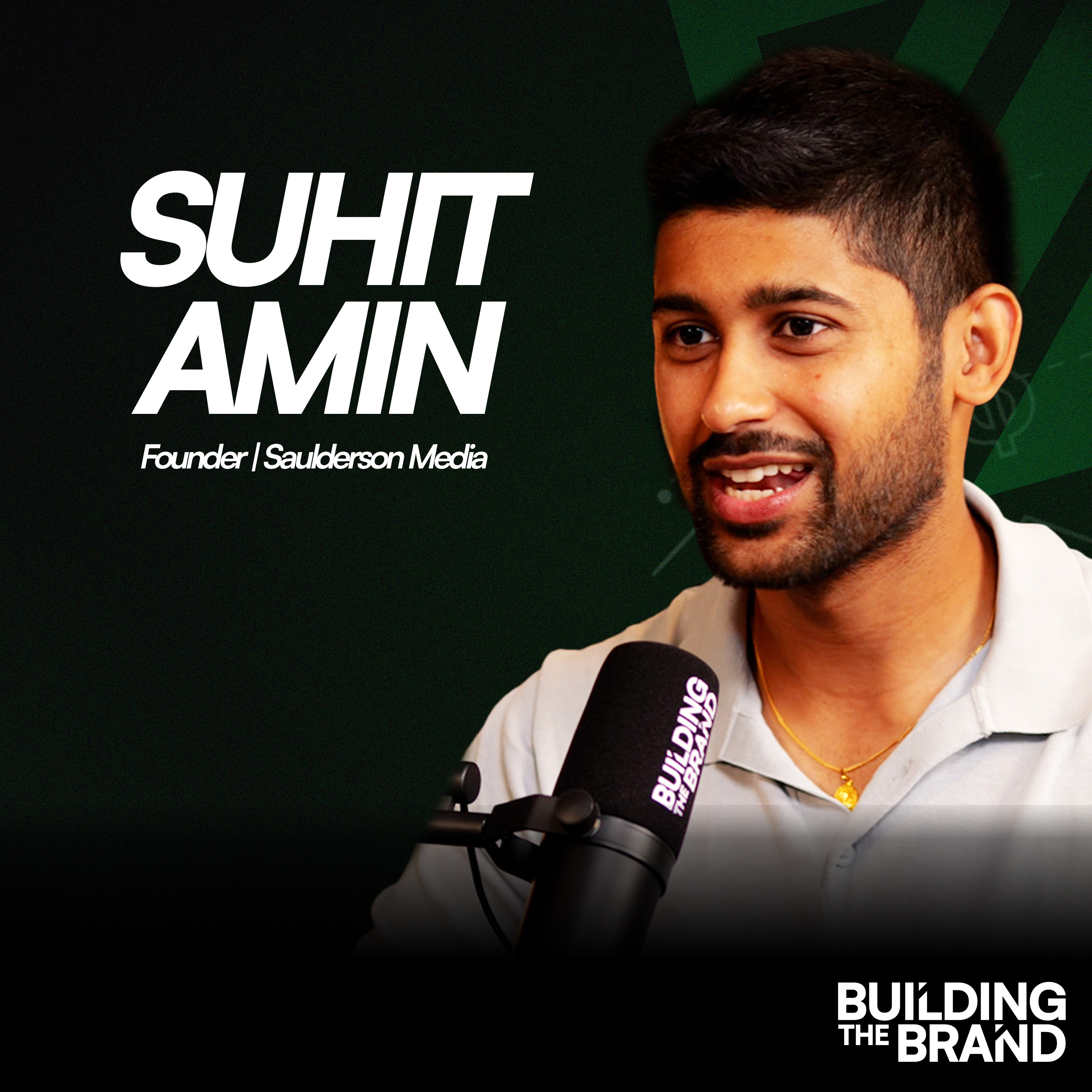
Suhit Amin’s path from teenage YouTuber to building and selling a 7-figure influencer marketing agency before age 25, including how he used early creator relationships as a “trojan horse” to win brand budgets, then scaled via consistent LinkedIn outreach and manual “reps” before automation.
Suhit Amin is a young founder/ex-creator who started making YouTube content around age 13 and later built an influencer marketing/talent-to-agency business. He was diagnosed with stage 2A Hodgkin’s lymphoma at 16, which he says shifted his life perspective. The host is an interviewer (not profiled in the transcript).
Written by AI. May contain mistakes.
Learn how Suhit perceived his youth as both a challenge and an advantage in business.
“Being young in the industry I was in was an unfair advantage.”
Discover how a serious health issue impacted Suhit's outlook on life and success.
“I open the account and the money's there and I almost fall back in my chair.”
Suhit discusses the experience of selling his agency at a young age and the perception of age in business.
“multiple millions of pounds at the age of 24, which I appreciate you probably go, stop talking about my fucking age.”
Suhit reflects on his early aspirations as a content creator and the path that led him to talent management.
“But I think now the internet has democratized the ability for any specific person to be able to gather knowledge and information and become successful where I think people care a lot less about it anymore.”
Learn how Suhit transitioned from creating content to managing influencers and the reasoning behind it.
Suhit explains the evolution of influencer marketing and the strategies he employed for success.
“And I had like a, I had something to sell, right?”
Discover the differences between talent management and influencer marketing, focusing on scalability and margins.
“They obviously have a lot of big creators as well, or very large creators or both.”
Learn how leveraging LinkedIn for outreach can yield better results, especially when it was less crowded.
Understand the value of manual outreach and the strategy behind effectively connecting with brands.
“But not everyone gets given the number of the WhatsApp.”
Explore how consistency in outreach and content creation contributes to business success over time.
“Like we have done like, you know, I had a marketing manager who did organic content, social.”
Discover why performing manual tasks can enhance understanding and improve future automated efforts.
“I can say send, I mean, you can send unlimited amounts of emails per day and instantly if you wanted to, if you had enough inboxes, you're going to burn the leads very, very quickly if you just do it that way.”
Examine the unique challenges faced in influencer marketing compared to talent management, focusing on strategy and campaign customization.
Explore the complexities of managing influencer campaigns and profit margins.
“But for me, it's like this to me was the bigger play, higher stakes, more interesting, more likely to sell for me.”
Learn why focusing on profit margins is crucial for business success.
“Well, let's take a little pause there because I think there's something very, very important that Sue here has just struck on.”
Discover Suhit's perspective on entrepreneurship and his journey towards business growth.
“just listened to proves how important it is to focus on the model that you have and also the margin that that model provides.”
Understand the balance between running a lifestyle business and pursuing growth.
“and do all the stupid things you get up to.”
Learn how Suhit transitioned from a lifestyle business to preparing for a sale.
“traveling the world, doing stupid stuff.”
Explore the emotional and practical challenges of running a growing business.
“were things that I should be doing within my business and my agency and focused me down on who should I hire?”
Learn about Suhit's decision-making process regarding selling his business and the challenges he faced.
“Simon told me to like really think about it.”
Suhit shares valuable lessons from his time in the mergers and acquisitions process, including time management and financial tracking.
“So for those who haven't ever done an M &A sort of strategy or been for that process, I've got a bunch of mates who've sold stuff and apparently it's like the worst year of your life.”
Explore how Suhit navigated the offers he received and the importance of choosing the right buyer.
“It's kind of like, why would you use an influencer agency in principle instead of doing influencer marketing yourself?”
Discover why Suhit prioritized alignment over cash when choosing the buyer for his agency.
“signed the contract and then received the money after you signed the contract.”
Learn how Suhit Amin chose the right buyer for his agency based on values and alignment.
“Now, the US guys, whilst they have a great business, I just didn't feel like I really got on with them.”
Explore insights into the M&A process and how both parties sell themselves.
Discover why Suhit emphasizes factors beyond profit in business decisions.
“to the bigger picture of where we're trying to take the journey further now.”
Understand the emotional landscape after selling a business and its implications.
“But in this instance here, Suhit was very, very smart to understand that actually it wasn't just the biggest number that was going to have the biggest impact on him and everyone else around him.”
Learn how Suhit communicated the sale to his team and the reactions involved.
“But when I just want to understand, so that you sell, and the money lands in the bank, I've heard a bunch from a bunch of my mates that the next day is the worst day of your life.”
Experience the journey of the first days after selling the agency and the feelings involved.
Suhit shares his experience of selling his agency and the emotions that followed.
“And then just went back to my laptop and then started working again.”
Discussing how selling his business changed his relationships and respect from others.
Suhit talks about his feelings regarding the end of one business chapter and moving onto the next.
Exploring the idea of creating mastermind groups for aspiring agency owners.
“Like I'm not trying to force anything right now or like even try to plan or plot for it.”
Details about an upcoming agency retreat and what it aims to achieve.
“And there's this guy called Jordan Platten, who is like one of these big agency kind of coaching consulting kind of guys on YouTube.”
Learn about a unique retreat designed for agency owners to enhance their business skills.
“yeah I live there he's like oh running this mastermind um if you want to speak at it I was like, mate, this is so crazy because I was going to text you to say, I want to run my own and I wanted you to speak at it.”
Discover the importance of mentorship and giving back to the community.
“We'll put the link in the show notes so you'll know obviously by the time this comes out, it's probably already sold out or finished.”
Suhit shares his experience with cancer and how it shaped his life outlook.
“And then you have advanced hires, which are A-levels pretty much.”
Learn about Suhit's journey through cancer and how it shaped his mindset.
“You're pissed off at mum and dad for telling your nan and granddad.”
Discover Suhit's current projects, investments, and future goals.
Find out how to reach out and learn more about Suhit's work.

Get the gist, explore an idea or ask about something said.
 Claude
On Building The Brand with James Burtt, what are the key points of this episode?
Searching your listeningAutomatic transcript. May contain errors.
0:00James Burtt: Being young in the industry I was in was an unfair advantage. Did you realise that the foot in the door with the talent is actually the way to open the doors to all of the rest of the bigger ecosystem almost? You know, I did£100 ,000 in revenue in the first six months. First year working, we actually ended up doubling the revenue. Is there a point where they have to sell themselves to you? Randomly in August 2024, I just started feeling like I just hated running this business. I really felt like I just was not really worth very much. You become a bit of a compulsive liar through the process because I couldn't tell anyone.
0:31I open the account and the money's there and I almost fall back in my chair. I know that I'm obviously materially richer. I actually feel kind of poor.
0:40James Burtt: You were a kid who had very serious cancer at 16 years old. I was diagnosed with stage 2A Hodgkin's lymphoma. I then had this sort of perspective shift in life. I'm not going to be alive in a few years' time. Have I achieved anything in my life yet? Life's not that difficult when you've gone through something like that. Hello, friend. And before we get started today on the pod, can I please just first apologize in a mahoosive way for the fact that you are not getting this show until Saturday morning, when you should have had this goodness. Three days ago on Wednesday, we uploaded the podcast as per usual, went to bed on Tuesday night, very excited, very feeling a little bit smug, quite frankly, that we got so organized and we were excited for you guys to listen to this podcast.
1:20James Burtt: And then Spotify, in their infinite wisdom, decided that there was like some IP problem with one of the music tracks, which we don't have an issue with because we actually own the flipping license to use the music. Anyway, I'm not going to use this as a platform to unpack my own trauma, but just apologies. We're uploading the episode a little bit late on a Saturday morning. It might kill the reach of it, but who knows? Maybe it will be an absolute six-pointer. Maybe this will be a big win. Who knows? Anyway, I hope you enjoyed this episode of the podcast. Apologies again that it is a little bit later than usual.
1:51James Burtt: If you do like this episode, by the way, please make sure you follow it. Leave us a comment here on Spotify, or if you're listening on Apple Podcasts, leave us a follow or a subscribe, whatever they call it these days, and I'll crack on now with the episode. By the way, we're still having issues with uploading the video to Spotify for creators. If you normally watch the video on Spotify and you're only able to listen this week, please click the link in the show notes and you can go and check out the YouTube version of it instead. Right, that's enough of my flipping moaning. Have a wonderful weekend.
2:17James Burtt: Thanks for listening. Massively appreciate you. Normal service will be resumed next week with a Wednesday upload. But for now, enjoy this week's episode. So you are a man who sold an agency for multiple millions of pounds at the age of 24, which I appreciate you probably go, stop talking about my fucking age. It's irrelevant. But being 24 and selling an agency, was your age a help or a hindrance in that exit process, did you think? I think when I started the agency, it was a hindrance, but not because it was actually a hindrance but because i just perceived it to be a hindrance so when i first started started like online entrepreneurship in general i hid my age and i hid my identity so my company was called solar of media and i named it because i used to run under an alias of sol anderson so i pretended i was why that name i think it's just like when you sound grandiose it's just when you choose like um i think when you choose like a alias people tend to go with like the initials of their like so okay and i had a i had a friend's high school called rory anderson i chose the second name and then i don't know i must have been watching like better call yeah but um so i pretended i was like this like brown haired white guy called sol anderson in his 40s well no i just pretend i was two years older than i was because i would go into like online business when i was 14 and i was like okay if i say i'm 16 that's like kind of an old enough age to work so i always just perceived it would be an issue.
3:47I can never turn my camera on, like had all these online calls. But then I realized that actually being young in the industry I was in was unfair advantage because I grown up watching content creators, understanding social media, no one else really understood it. So when I got into rooms with 30, 40, 50 year olds who had no idea how Instagram, YouTube, all these platforms worked, actually living and breathing that space was beneficial. Then when it came to the exit, I don't think it really made much of a difference because I think the various companies that bought me, I think one, they were very impressed that I was so young and I'd been able to do this at such a young age.
4:28And it showed that I was very driven as an individual and probably very driven to, you know, see a really good deal for them. And also I think that it was less about, you know, me being 24 and just more about what I had achieved to that point. and it wouldn't really matter what age I was if I was 30, 40, 24, 16. It was really just the success and the journey that I've been through more so spoke for itself. So I don't really think it makes much of a difference. I think in the past, age was very important in business you weren't taken very seriously. But I think now the internet has democratized the ability for any specific person to be able to gather knowledge and information and become successful where I think people care a lot less about it anymore.
5:14James Burtt: I think you're pretty right. Also, we have to give you credit for the fact that whilst you might have already been 24, you'd done the exit, you had been in the game of content creation as sort of like quite seriously for 11 years by that point, because you generally started at 13 years old as a kid making YouTube content. Take us right back to the origin of you as a creator. So did you want to be one of the side men originally? so and then and then couldn't do that so then you made an agency that made you a load of money doing something different yeah so um i wanted to be a youtuber i think in like late primary school or early high school like a bunch of friends we all just started making like youtube videos so i had all sorts of youtube channels like doing gaming some of them was like challenge videos prank videos i even had a youtube channel dedicated to stick insects it was very weird like i had a stick that's a niche of a niche i had a stick insect farm which i like documented like growing like the seconds it really seems to wow it was very very weird um is it still there now is it still live no no no i think i deleted all the channels only one channel that's still live which was the biggest channel of mine um and i stuck it through all my friends quick because everyone would like make fun of you high school of like doing it so i did it very very privately i had this one channel which was like a animations youtube channel which i ran with this other guy that I met and we grew that one to like 37 ,000 subscribers and then through that process I met a bunch of guys online who one guy one day was just like oh yeah I discovered this business model I'm gonna try and do it and what it was was essentially you launched a YouTube sub network and what a sub network was was we were basically like a almost like a white label company of a YouTube multi-channel network which were companies at the time which partner YouTubers took a percentage of their revenue so a lot of the splits were like 60 40 80 to 80 20 whatever it might be took a percentage of a youtube adsense in return for providing them services in the past every youtuber wanted to be in an mcn because you actually got better cpms being with an mcn oh really okay so like it was this whole like prestige thing of being with an mcn um so we ran so i joined the sub network learned a lot about that and i just throughout the process met a bunch of different guys online and then discovered the sort of talent management business model and realized that this was a more appealing path for me because I didn't think I could make it as a content creator and have the technology to do so.
7:39At the time, I had a high squeaky voice. The content wasn't particularly good. But I felt like I could find a way to stay in the industry, work with YouTubers instead of being the guy on camera myself. This seems more interesting to me. and then went down a whole journey of like I think three four years of just volunteering trying to make little bits of money online working with different people to then eventually start my business after just a whole process of learning and the start of your business you
8:09James Burtt: touched on it there you went straight into the talent management side of it as the sort of the trojan horse into the to the rest of it I thought that was quite interesting so why did you not having seen this uh the sort of the network model why do you not go and try and create your own network or did you realize that the the foot in the door with the talent is actually the way to open the doors to all of the rest of the bigger ecosystem almost yeah so multi-channel networks were getting less popular by the time that i kind of left the space it was because people were going well what are you actually giving me for the money pretty much it became like you know you're taking 40 % of my ad ad revenue you're not really doing anything directly what are they supposed to do for you they got so basically in the beginning it was like youtube were getting worse basically if you were just directly with youtube you got worse cpms than if you were so that was the main thing it was like even on a 60 40 split someone was getting more than just so at the beginning it was that but then over time it normalized to the point where you could get the same splits just direct with youtube to the point where the other services weren't that useful so the other services were like you know channel growth and epidemic sound subscriptions are for you like shit like this yeah like stuff like that that's not really that valuable yeah um and the mcn model like really just had its peak and then just like went crashing down and youtube also uh banned subnetworks so they banned like the white label model of it so i got out just before that it was interesting that one of the sub networks i used to run with a friend he's he ended up exiting it selling it for small amount of cash and then a week later youtube banned them so the buyer the buyer had a terrible deal because obviously no one knew it just like was a youtube article came out it was like we're banning like sub companies of mcn's but mcn's went downhill um and i was working for an mcn prior to launching my business and all of the creators that i was ended up managing came from that MCN, but I couldn't obviously offer them the kind of same services because it'd be competitive.
10:11So I said, all right, let me just do brand deals for them because brand deals have started popping up and becoming more relevant. And I thought this seems very, very early. I already have five creators I can just bring across from my old job in a non-competitive manner, just handle their brand partnerships, don't have to be an MCN relationship. And I could start the business very, very quickly because instead of trying to get brands or new creators i just managed the inboxes of these five influencers and brands would just come into these creators inboxes and then i could just make money literally immediately off the back of it so brands sorry to cut over you were brands
10:46James Burtt: already at that point that's quite early on were they already dming and getting into the inbox yeah yeah some some lab in the gaming space specifically they were um there was other industries that you know weren't doing this at all but it was like fitness beauty fashion was the original stuff like the gym shark days who were the original guys doing it and then gaming started popping up because there was a lot of these i i worked a lot with like counter-strike content where it's like a game cs go and there's a lot of like skin betting and skin gambling companies that were wanting to like use influencers because they couldn't advertise with paid ads because it was illegal and gambling so they use influencers and influencers just play their like it's kind of skin betting ones so they were the original ones and then like gaming chairs because they wanted to be in twitch streamers backgrounds and headsets so there was already like appetite coming through wasn't like huge budgets or anything you know i um you know i did 100 000 pounds in revenue in the first six months which sounds great at principle and it was great for like a 17 year old but now like that amount of money is easy to get in a campaign like now eight years on like some of the agencies popping up and starting now and you'll get that in your first month because how the industry has changed yeah single deal um so it was just more beneficial to do it that way because you get your natural demand coming through i would immediately have a base where i could just start making money instantly and then at the same time i could then start going to try and find brands to partner with those creators.
12:18And I had like a, I had something to sell, right? I had like an, I had a product there versus trying to come up and build a product or service, which I didn't have yet, which would take more time to start convincing people to do influencer marketing campaigns with me.
12:32James Burtt: So you sort of roll that business model part out to start with, how do you know that you needed to sort of expand the offering? Or is it like an actual evolution of like, well, I'm looking after to these people and I'm doing a standard management 80-20 split or whatever of incoming. Now I've got a bit more time and I've got a bit of social proof so I can start doing some outbound two brands to bring in better deals and make more money. Was it like an evolution of, well, we've kind of got this bit now down. What else can we do for these people? Yeah, it came very much just from demand from the clients.
13:02So, you know, I would manage them. I would do deals with like my five creators and then I started signing more over time. And then one day one of the brands was just like, we don't really know what to do with this like budget like you seem to have good access to creators were you happy with us just like allocating you twenty thousand dollars and you just go and manage it for us and i was like that's a nice question and i was like oh that's you know that seems interesting where i could just instead of just only being capped to my five creators the brand gives me the budget i can distribute this across as many come up with the strategy of how to do this and obviously i developed like a lot of knowledge of how to like work with creators, pricing strategy at this point.
13:40So it's just naturally that came and then the brand was like, okay, let's do a 50k campaign. We don't know what to do. We have other things going on. Influencing marketing is pretty tedious as well because you have to specifically go and reach out to influencers who sometimes don't check their DMs, their inboxes, and then run campaigns for them. So it was a natural evolution. And then I realized that that was much more lucrative because running a talent management company you're capped on
14:07James Burtt: two things one the size of your roster because if you have a small number of creators you can only distribute across that many creators and then also the size of your creators so if you want to have a really large talent management company you've got to do what benji who came in your podcast yeah sure hundreds of creators i think you got like 250 creators at this point and have a huge staff team to do it. They obviously have a lot of big creators as well, or very large creators or both. And my view is like, can I compete with these UTAs, CEAs, like these very big global talent management companies?
14:44Probably not, but there's a lot less companies doing campaigns for brands with an influencer marketing space. They also hold the budgets ultimately. So the money is flowing from them to the creators and the margins are higher because you're not having to be only on kind of your 80-20 management split you're doing more more of a service for the brands in a sense and the you know you're coming up with a strategy you're doing the you're doing the strategy sourcing the vetting like the whole full-scale process so you have higher margins on that end and you can probably scale like an individual client faster than you can scale an individual crazier because that's based off of their growth versus based off of the amount they're willing to spend on influencers so i felt that was the direction to go in i kept the talent management as that kind of trojan horse where brands would reach out to the creators i'd do some deals with them and then try and upsell them to the agency and that's how we got a lot of our early clients and also it was a very good outreach mechanism as well because obviously no one likes unsolicited cold outreach about you know what with my agency yeah whereas if i'm like this creator is really interested in working with you has a amazing idea of how you can partner great way in the front door and then you can sell them on the back end and this is one of the things i heard you talking
16:00James Burtt: about on a different podcast was that actually in a world of sort of exciting sexy marketing campaigns and cool clients and cool brands and cool um you know influencers you actually almost went quite old school you went cold linkedin outreach exactly that model what how did you sort of discovered that that was the the way in was that because you realized well actually do you know what rather than looking at the creator first to your point earlier the trickle down revenue comes from the top it's coming from the brands to the creators yeah i just need to go on the slightly more vanilla platform that is linkedin and go and just get them in that way first i think at the time like no one used linkedin like the way they use it now it was very much just like a place where people had their experience as a cv but everyone is off was on the platform still like yeah it's just what it was a platform that everyone was on but it wasn't like that actively used so linkedin dms were very quiet and the feed was very very quiet so i was like right let me be early because this platform will grow like every platform let me be one of the early people here so i just started posting every single day we had like a guy in my team who would also like help me produce posts and whatever and we just started dming people on linkedin just like because we're like right i don't know i didn't know how to get their emails at that point because i didn't realize there was these tools you could scrape people's emails from so i was like right i've got to go on linkedin to get to get access to their email because i had no idea apollo.io existed at this point which is now basically the tool you just used to scrape emails and all the other ones i was like right how do i even get these guys emails where i've got to just dm them so i was just like sending out linkedin dms and because linkedin dms are so empty at that point they generally would see the dm and the response rate was significantly higher whereas now i wake up every day and i have about 7 000 dms of like all sorts of stuff that they don't care about you're getting lost in there but back then dms are so empty so i would just go in talk about the fact that the way that we typically do it is like if we saw a brand had worked with a creator that was similar to careers that we knew or gaming careers that we'd worked with i would let you just go on linkedin go to the brand's page there's a section called people and i would just search like marketing manager influencer manager social media manager who are the people i just connect with them and then dm and be like oh i saw you work through this creator he's really good friends with one of my creators like who'd be interested in partnering with you are you interested in the conversation and then i treated like i treated linkedin i was talking about this like like a dating app like you want to get off the dating app as quickly as possible so it's like you're in you're in the messages yeah and you want to like a few messages to get them on a call or get them on email so my goal of linkedin was never trying to sell them anything there it was always like let's see on a call let me get your email i'll send you more information to try and almost like get to a platform where they have given you access to because how you think about it like again if i look at it from a dating funnel it's like everyone can message or match with them on tinder everyone the best match has them an Instagram DM.
19:04But not everyone gets given the number of the WhatsApp. So the competition is significantly lower at that stage. Not everyone then gets the date because the competition is definitely lower at that stage. It's the same thing. It's like, right, anyone can DM you here. At the time, they weren't like the tools to scrape emails. So not everyone has their email, but they've given me this. So I'm more likely to appear here and then I follow up with them there. I'm going to, you know, be like more, have a higher likelihood. Or if they give me their WhatsApp, that's even better because I'm direct on their phone.
19:29If I get them on a call, we build the rapport. so that was like the whole kind of strategy back then versus trying to do like paid ads ppc these kind of different marketing campaigns i just felt like i was trying to always do things as cost effectively as possible being a bootstrapped company and also quite a stingy guy when i was younger and i was like running ads or trying to build this create marketing campaign or doing ppc whatever it is i could probably get leads from that yes but there's a cost versus just my time DMing people and sending emails. So I focused on that. And we actually didn't really do any formal like paid marketing until this year.
20:07I heard this. Never done anything. Like we have done like, you know, I had a marketing manager who did organic content, social. We ran a tiny paid ads test, but that was just to get influencers to our network. But literally never until this point have we run any sort of paid advertising to the agency. Whereas a lot of other competitors did. Some did it well, some didn't do it well.
20:28James Burtt: Do you think that the reason that you stood out is that you did the simple stuff consistently or how much of a play do you think consistency has had in the success that you've had in a very, not a short career, because as we mentioned earlier, it's been 11 years in the making, but sort of like taking it serious as a business was sort of 17 to 24. course that is only seven years yeah but that consistency piece where other people are doing the paid ads to get the attention do you think that was has been a big differentiator that's created the success that you've had yeah i think there's two things first thing is focusing down into like trying to build my authority in the space because i think young guy goes through this journey that i went on obviously you know i was diagnosed with cancer beat cancer then start the business constantly posting like you know people got to know who I was was at events people saw that perception I think that and the brand built around myself and the trust then in me helped a lot and yeah I think consistency is hugely important like I mentor a bunch of different other agency owners and in the early stages they were all like you know oh so I sent like 100 emails and hearing anything back and I'm like the volume and the consistency is so important like hermosi talks about it a lot you know if you you basically volume negates all for him he's like if you're if you're not getting responses simply just have to do more yeah um and honestly i almost see it as like a bit of a domino effect and like once you get that first bite it all seems to fall into place because i don't know if it's like that newfound confidence you also saw exactly what worked for that individual person so you can just run that exact same thing for someone else i think just the consistency to get that first one and then just being consistent after that with every other one and what i always find is like when it when it rains it pours when you get that first one you get a second one a lot more quickly yeah third one a lot more quickly where was this when i needed it when you get your land your fourth fifth sixth climb yeah exactly and it's like and it's just like you just have to go through the pain and the suffering the struggle to get that first and then you have the framework of what got you one we'll get you the next one and then you have to consistently do that over time so we were just super consistent like daily every single day without fail in most cases five days a week posting content linkedin every single day sending linkedin dms every single day sourcing and finding brands who were spending with influencers every single day on twitter dming content creators to offer them brand deals like just constant outputs uh on a very manual level at the time because they weren't these automated systems this is before you've got all these before we had like instantly which can now send a thousand plus emails from me per day like before all of this but we just just did it do you think that's another secret skill because i've again i'm sort of like i've bootstrapped all of my businesses previously and i've just discovered like instantly yeah and my my team manager she's like oh no we can we need to warm up these emails and then you get your deliverability i'm like what the fuck is this like surely we just get a gmail account and just somebody sits there and sends it she's like no no you old school dumb ass like we could do this at scale but you think actually the old school approach of you've manually sent the dms you've manually sent the emails you've manually reached out to the influencers do you think then when you get the tools that you've now got you've got a predetermined foundational understanding of what's actually coming because i think there'll be a lot of maybe younger entrepreneurs who can go fuck i can just launch an agency you can but have you learned the skill set that you need by doing the reps and I think the reps are so important because then also when you get to doing it at scale, you do it way better because you can burn so many leads, right?
24:11Doing it at scale. I can say send, I mean, you can send unlimited amounts of emails per day and instantly if you wanted to, if you had enough inboxes, you're going to burn the leads very, very quickly if you just do it that way. Whereas if you've done the reps to understand what actually makes someone respond, what makes someone tick, what is like the personalized approach you can take, you're going to actually have better success with your automated. so you know we used to run all of it all of it manually and then we just do basically what we're doing manually at scale now whereas if i hadn't done the manual step then i would never have known what was going to work and i would just send thousands of emails and probably had nothing back so i think the reps are very important the knowledge the understanding the foundations and then when you find a concept or something that works then replicating it double down on it
24:56James Burtt: 100 % with the switch over from being the talent manager of the YouTube thing into the next model where you realize as you say that the the budget is controlled by the brands let's go after the brands first but then you sort of inadvertently merge and morph into an influencer agency which is a very different thing from a talent management agency even from the outside looking you might go well that's the same sort of thing you've got talents who and then you go get brands or you get brands and you get a talent but it is a very different thing especially at scale and the sort of scale that you did it at because to your point influencer marketing is very manual it's very relationship based it's very um yes you have got sort of scales of economy but also you have just got you know you might have a micro influencer campaign or a macro influence influence campaign what was the was there ever a point during that journey i guess is the question where you were like shit this is actually really hard and the talent bit whilst it's the smaller bite of the cherry it's just so much easier yeah i mean um i actually find both hard for different reasons talent management i find hard purely because the talent are not difficult annoying to deal with like it's easier concept it's like you are optimizing to get as much money for your your talent and helping them deliver that deal like it's quite simple in that regard obviously when you get to a bigger scale you're doing more stuff for your talent you know you're helping them with bigger engagements maybe book deals podcasts opportunities like there's more to it but the fundamental stuff is brand deal for talent highest possible rate easiest delivery best sort of service but the talent are annoying to deal with a lot of the time and sometimes you know they don't you're at the mercy of them taking deals as well right of course you know we've had scenarios where we've had talent offered hundreds of thousands and it would have been insane for us you know in terms of our percentages we'd have made of that single deal and they're just like i don't want to It's not in alignment with me right now.
26:50James Burtt: Oh, sure. Yeah, and it's like, nah, I don't want to do it. And it's just like, you're sitting there like this. I would love you to do it though. Whereas on the Influencer Marketing Agency side, it's like, yeah, some creators might not accept your deal, but you have the budget, so you just go find other creators. The Influencer Marketing Agency side is tough because I found that every brand and every influencer campaign kind of required a bespoke strategy. like everyone talks about within the agency, try to promise productize it, you know, to make it simpler, easier to operate and to run, you know, have certain packages, this many influences, this many influences, whatever, this price point.
27:30But every brand has different products, different audience, different cost by the product, different cost to the customer, like all of these different variables and metrics and then different objectives. So I found that every single campaign had to be in some way bespoke. you could productize and pack you up different parts but that made it a bit more difficult when it came to having to constantly ideate new ideas and strategies and how do we approach this also some verticals and niches have way less volume and pool of creators which means that then the creator pool is more expensive so it became just much more difficult to manage on that end we've done a lot of work to kind of make things a bit more you know typical in terms of right every brand has to commit at least this amount of money over this amount of time to us like it's kind of productized from a packaging and offer perspective but the strategy that goes into that differs massively and like some brands may want like to do a large-scale micro campaign versus a small like two or three macro creators and then the delivery between the two are very different because you've got to deal with hundreds of creators versus only dealing with two or three influencers so your
28:40James Burtt: profit margin in that instance you're taking 100 grand but if you've got work with 100 creators versus 100 grand versus two creators your account management on that is yeah 50x so like the net yeah then the the um the gross margin is the same typically each time you have a certain flat percentage but then it's like yeah the actual net after staff labor is significantly worse obviously managing dealing with 100 creators versus two or three so there's like a lot of different variables and you know we've had to obviously build different structures in terms of minimums of what we take on nowadays but it definitely is tough and obviously as the algorithms have shifted so much over time creator pricing has massively changed over time as well creators start getting managers it like it becomes very difficult and also a number of the campaigns we did on this end weren't just like your bog standard right let's get creators to just post stuff digitally and socially we would do irl events with content careers which had way more logistics or paid ad boosting with creators, getting usage rights, more 360 campaigns, bigger brand ambassadorships.
29:45So there's just more to it. But for me, it's like this to me was the bigger play, higher stakes, more interesting, more likely to sell for me. Like you can definitely sell a time management company and it's like a really good asset to have. You can sell them for a lot. But based off of where I was and where I thought I could take the business, I was like, this is the one that is more likely to get, you know, a larger output from it in the end.
30:11James Burtt: Right, my friend. Well, let's take a little pause there because I think there's something very, very important that Sue here has just struck on. I want to make sure we don't just skirt past it onto the next bit of value that this super smart young entrepreneur is sharing with us today. This little section that you've just listened to proves how important it is to focus on the model that you have and also the margin that that model provides. Now, you might have heard very commonly used phrases like turnover is vanity, a profit is sanity. And what we've just been talking about with Suhit there is an exact example that highlights it perfectly.
30:44James Burtt: Let's say, for example, you bring in a campaign for£100 ,000, or maybe you're not in the marketing space. So let's just say you bring in £100 ,000 worth of revenue. Now, in the example that he just gave there, that£100 ,000 could even get split on two campaigns, which pretty requires a maximum of one single person to manage that 100 grand across those two different influencers. But equally, that same 100 ,000 pounds in revenue could be split across 10 people that have to manage 10 influencers each, bringing in 100 people into that campaign. So it just goes to show that, yes, the turnover 100K is exactly the same.
31:21James Burtt: The profit margin that you're going to get is super, super different. And obviously, if you're trying to grow a business for maximum profitability, which you should be doing in most instances, but especially if you're on the way to try to sell the thing like Suhit was already doing, you want your profit to be as high as possible and you want your margins to be as strong as they could be. Now, what we've obviously shared there is made up numbers about a made up scenario, so it doesn't really matter too much. But what you could often find is that your model could actually be completely wrong. Let's say, for example, that Suhit found that actually deal after deal after deal after deal is bringing in 100 grand, but you have to work with 100 influencers every time, then the actual fundamental model that underpins that business is not as strong as a business that's bringing in 100 grand to work with two influencers.
32:04James Burtt: Now, obviously, in an agency sort of scenario, you might get a slight variety. And when you've got client services, you might have a variety of different price points and therefore different profit margins. But what you want to be doing in business as far as humanly possible is strengthening that model so that your highest profit margin thing is the thing that you're spending the most time doing. So you talk about a larger output in the end. When did you, again, I don't want to keep referring back to your age. I sit here as a middle-aged 40-year-old guy. I'm like, oh my God, I was out just drinking and partying every night at 24, 25.
32:38James Burtt: I didn't have a single business bit of acumen in me. But how early were you thinking about an exit effectively or what the output or the bigger play here was going to be for you i think i knew early on that like this was never going to be the be all and end all business i always knew it was going to be the first one okay um i'd always how from how old though from i think when i started it like i 17 you're thinking this is going to be a good training ground well yeah because because i always wanted to do more of like tech entrepreneurship like i always had this idea of like oh it'd be so cool to be like it's one of these silicon valley guys and have like thousand employees in an office i don't think that anymore now i feel like i don't want to deal with that stress yeah yeah um part of me does part of me doesn't um but i always wanted to be like oh these guys are like producing robots and cars it's all this cool stuff like i want to do that and it's like a new social media influencers was just going to be a means to an end anyway so i knew that early i didn't know like what the time frame was going to be though for for selling throughout the process then i kind of went on i ran the business very much as a lifestyle business because i was young and i wanted to just have good cash flow and lean team and spend money and do all the stupid things you get up to.
33:50Hashtag lapsed up lifestyle.
33:51James Burtt: Yeah. I went through the phases of traveling the world and just flexing and doing all this stuff. Good for you. All the things you have to do to get out of your system and drinking and partying and whatever. I don't really do any of that anymore. I don't drink at all. I haven't drunk almost four years now. Really? Yeah, just very focused. But I did all that stuff. And then 2022, I actually got an offer to buy the business, like without me looking for it. Right. There's another agency in the space, very good friends with, I'm sure they won't make me mention this, but they were called Kairos Media at the time and I called Nugen.
34:29And they gave me a lot of advice in the beginning. Okay.
34:32James Burtt: Yeah. And they just were on this kind of like path that they just wanted to buy up all the other smaller gaming agencies to just kind of build this gaming, first like gaming agency unicorn was like their vision. let's buy all the other gaming agencies to get all the smaller ones be like the monopoly in this sort of space so i had a couple of conversations with them and um i just felt like first then the business was in a good enough shape for it to be sold because i was like just running as a lifestyle company very small team don't really have much recurring revenue i also didn't really know like how this whole process worked yeah just like making things up as i went and um and they're not not doing it i wouldn't have gotten off a lot i probably would have got like less than a million at that point i would imagine i did for sure based on like the way the agency was running but like that was like opened my eyes to the first opportunity of oh potentially there's an opportunity to sell this in the near future i remember sitting down for lunch with these two guys called aaron and harry hugo from goat agency oh yeah guys who ended up selling for 300 million and they'd sold at this point and they were like yeah just do it'll be the best thing you've ever done like um you know how much revenue you're doing this whatever like just just sell a business because they were you know they'd sold at this point and i was like oh maybe i should do it but obviously their sale was significantly bigger than what i would have got at that point so slightly different stakes um anyways then lost the idea of wanting to sell for a while continued running as a lifestyle business and then did you change how you're running it at that point though now you i didn't i didn't at that point okay so a year on then came and And I'd finished up doing all this lifestyle business, traveling the world, doing stupid stuff.
36:12What happened?
36:13James Burtt: Why did you finish that? Have you met a sensible girl? Yeah, I think partly that was two reasons. One, I was like, I kind of thought I hadn't really achieved very much. Honestly, there was part of it. I was looking at all these other young, I'd met all these other young entrepreneur guys, right? and i also had seen like kairos i'd seen this other guy agency called afk agency run by a guy called matt woods and i was like how have these guys started at the same time as me and built significantly bigger and better agencies than i have like how how has this happened and i fell behind and i fell behind yeah i really felt like i just was not really worth very much like i just felt like pretty worthless like i i just honestly i felt like a pretty bad entrepreneur that i couldn't do this like how would i start at the same time had the same opportunities these guys and this guy's got a team of 50 people and i'm like here with like seven people like doing this revenue i just can't get past this stage you know kairos are out here with the biggest clients 100 plus people i just felt like i was just bad like at entrepreneurship and it like really was just like you know degrade made me like degrade my value a little bit really and um i was like i And I kind of, you know, was looking at myself and I was like, right, probably part of it's like running it like a bit of an idiot.
37:35Like as a lifestyle business, obviously going through uni, there's all these variables that are there. So I think that part also then coincided with like going out with my current. She got annoyed actually last time I said this on a podcast, going out with my girlfriend. Because I said current.
37:49James Burtt: I said current. Then again. Wow. I said current girlfriend because like she's my girlfriend right now. But that's what I meant. Stop digging the hole. Yeah, yeah. going out with my girlfriend we'll cut it we'll just cut it yeah so i'll start that again so meeting my girlfriend and so part of that so probably that going to my girlfriend and then um kind of feeling this sort of way and then i interestingly just randomly at the blue got this cold email newsletter i don't even know how they got my email from this linkedin cold outreach from this guy called simon penson who ran this man of a consultancy business called scaled and it like on the email it was like want to want to ever sell your agency click here for free strategy i was like you know i think i've had these let me i was like let me let me click this and let me speak to them and i ended up having a chat with simon and simon basically like was like your business is a no position to sell and i was like yeah probably isn't because it's been run like a lifestyle company drawing down the profit to as low as possible every single year you know obviously the tax mitigate and stuff and he was like you know we can you know we can help you get to there he sold his company in 2015 for like i mean like 37 million pounds or something like that you know he was seasoned entrepreneur then started investing and private equity and stuff like that and then i was always very skeptical of this stuff because i hated the idea firstly part of it was like being a bit like stingy with money but then also like oh what if i just pay a guy who you know says he's all this and it doesn't amount to anything i had a previous like really experienced really experienced guy coming to the business as a growth director you know tell me he could do all of this stuff and he had a great cv and then literally six months and then close a single deal um so i was like super skeptical and even and i was and sam was like well you know let's do this in-person session set the stuff up and even until the night before howdy had a hotel booked i was ready to go down he's based in peterborough i was like wanting to like cancel and get out of it and hadn't signed the contract for the day.
39:50It's just super against it. Ended up doing it, committing to it anyway. Spent a day together, like planning out, like what do I ideally want to end up selling for the business? Like how do we reverse engineer the growth to that? What is the business actually positioning, vision, mission, all of these things? And, you know, after that first day, I was kind of like, I don't really know what, did I get, I paid like four grand for the day, right? I was like, did I feel like I got four grand of anything tangible back? Like, obviously, no, because you're not going to make tangibly, you know, 4K back in just like a day of all this stuff.
40:21But I was like, you know what? Let me just try it for a few months. Let me just stick with it. And then I ended up having Simon as my advisor and mentor through that process. And he taught me and showed me a lot of different things that I just simply didn't even know were things that I should be doing within my business and my agency and focused me down on who should I hire? What should I replace? What should I systemize? like how should I focus on growing my existing client base? How can we have a better go-to-market strategy and plan? And then I ended up working with him to build a business to basically get out of this rut and this plateau that I felt that I was in.
40:59First year working, we actually ended up doubling the revenue, which was really great. And then we're having our like best time ever in 2024. Team was building, we were growing. And then randomly in August, 2024, I just like started feeling like I just hated running this business. Really? I had this one day like business was going incredible. We had like our, we signed like our biggest ever client like for test budgets at that point. Everything was going very, very well. And it was this weird feeling that like things are going too well. Things are going to probably not start going well soon. And I kind of just broke down one day and like phoned him and just started like just rambling about like thoughts in my mind and just like not liking what I was doing and he tried to and I was just like you know do you is this normal should I be feeling this way he's like yeah it's normal I've had this many times whatever it's gonna calm me down a little bit but then I started thinking about I'm not really enjoying this and realistically I want to sell this at some point and you know Simon's already told me that if you sell an agency you're realistically going to be in the agency for a little bit you're all you know there's very few agency sales where you don't have like a deferred period or period i'm already 24 if i wait till i'm 28 which when i was considering selling was like towards the end of my 20s to get to a certain number i'm not going to be out until i'm in my 30s and like i want to have like life started by then maybe like you know family kids if i start now i'll be out by the time i'm 26 and you know have that late 20s to figure the rest of things out so i kind of just went through this discovery journey of, oh, could I sell the business?
42:36Simon told me to like really think about it. And then I talked to my parents a little bit about it, I suppose some M &A firms. And I was like, yeah, I want to do this. And then Simon introduced me to an M &A firm, which I ended up using. I spoke to a few others, but I really liked those guys and ended up signing like an engagement letter with them on the 26th of September, 2024 and kicking off with them at that point and kind of starting the sales process from them. So it came out of like, everything's going really well, but I feel like I'm not really enjoying this anymore. I actually decided I want to sell the company.
43:12James Burtt: What changed to make you not enjoy it so much? I don't know, I just feel like - Just that age to be the tech founder. I don't know if it was that or if it was just, I've been doing this for so long at that point. And obviously after doing something for a very, very long time, it's like very repetitive and it feels kind of boring and obviously talk about dealing with influencers is never very enjoyable because like some of these annoying people to deal with a lot of them are pretty entitled individuals i mean they are ultimately and you know no no disrespect to any content creators watching this but a lot of them are especially when you get to a certain level yeah and the industry is quite tough in a sense where like running let's say running a paid ads or an SEO agency, right?
43:55I'd say you're the prospect. I have to sell to you just you once and you pay me a retainer to do the services. Google is always going to take my money because that's just how the platform works. I put 5k a month into PPC and it's going to take it, right? Whereas in the influencer marketing game, I feel like you have to do two sales every single time. You got to sell the brand, but you also have to sell the influencers on taking the deals. And sometimes you can't actually spend the budget. Like we've had scenarios where brand has given us a lot of money. We had one scenario where a brand gave us like 1.7 million for a campaign and we just couldn't spend it either because the brand wasn't approving the creators or the creators weren't taking the amount.
44:33So in principle, like the budgets and the revenue you're potentially getting don't always get realized. So it's always a battle of selling in both ends. So it's quite mentally taxing. And then it's pretty tedious. You're dealing with content creators. Some creators can just go ghost during the campaign and then, you know, you don't have a creator to fill that. So there's a lot of other variables within it because it's a human-based marketing channel versus just creating assets and launching them or putting assets live on social. It's one of those annoying parts of the industry. I think that together had taken a bit of a toll on me, doing it for so long, seeing I'm going to have to be here for a while, thinking about what's next.
45:13And then just all of those things together were like, yeah, I want to just get out and sell at this point.
45:18James Burtt: So for those who haven't ever done an M &A sort of strategy or been for that process, I've got a bunch of mates who've sold stuff and apparently it's like the worst year of your life. Oh, it was a terrible year. So when you go through that, knowing now what you didn't know then, and if you look back retrospectively, what was that light touch, but what were that process? What were the biggest lessons you'd say that you learned during that process to get you out in the way that you wanted to be out, in a way that you weren't going to be tied in for five years and the number made sense for you? Yeah.
45:54So I think the number one lesson I learned was it takes a lot longer than you ever expect.
45:58James Burtt: Everybody has said that to me. I was told at the beginning, like, oh, yeah, you know, we could do it in this time frame, this time. I'm not going to promise you anything. And then it took literally over one year to sign the engagement letter to getting the money in the account. And you're still having to run the thing at this point as well, aren't you? Yeah, and like your work, you're working multiple jobs at this point because you can't have trading go bad during a process because obviously the buyer is buying you on, yes, the numbers that you've just delivered, but also future prospects of growth.
46:28so you're really working hard like harder than you've ever worked before then you're also doing all of the back end process the due diligence dealing with buyers doing meetings super taxing and then also you become a bit of a compulsive liar through the process i had to become because i couldn't tell anyone that i was doing this process because if you tell staff members they might get spooked and want to leave you tell clients they might not want to stay so like you have to lie all the time to like people very close to you you know i was going for these mysterious meetings in london all the time and i'm like you know just saying different things or what it's about saying i'm going to meet potential prospects and clients even though i was not doing that in
47:08James Burtt: pipe drive i can't see them click up exactly like who are these oh no it's a secret one that's so funny you've mentioned the exact two you've mentioned the exact two tech tools in our tech stack that we actually did use as well it's like you just be like in my cr company right now um but yeah so like that And then also I learned a huge amount of value around things that I hadn't set up properly within the business. Like, yeah, Simon was telling me all these things, but like, I didn't realize how real it was until we got to the process. Like we were running our financials wrong for a period of time purely because I was just doing it myself with an accountant.
47:43So then we got a bookkeeper that Simon introduces to, to like go and rework and re-recognize all the revenue in a certain way. And I realized like how important tracking every single data point and metric was as well because it makes due diligence so much easier. I had to pull together so many different things manually that I hadn't tracked properly on dashboards and things like that because I just hadn't done it over time. And there was things that pre-Simon that they obviously wanted to see as well because he wanted to see three years of trading. So Simon always started working the year before where I just didn't have it.
48:16I also, because I was running it like a lifestyle business before, I had to adjust all of the personal expenditure that I ran through the business back in so like that was the whole process of going through every single transaction like was this business was this not like what was i doing at this time like what was this random atm withdrawal in in the south of france put that as a float yeah for a client so like so like all this all this stuff um so like loads of things i learned and then also like what made obviously what makes a business valuable what are the key metrics behind it um the differential between types of marketing agencies because some marketing agencies get higher multiples and higher premiums and others how important you are to the business and what that does for your multiple and how long you have to stay in the company how you should be positioning the future growth of the business because buyers want to buy a company that's not at its peak but one that they can take to speak and extract as much value out of so loads of different things the process in general kind of starts like you engage with the corporate finance company i would also recommend going with a company that actually knows how to sell businesses because yes, whilst you pay them a fee, they're going to get you a better deal and have access to more buyers anyway.
49:25It's kind of like, why would you use an influencer agency in principle instead of doing influencer marketing yourself? It's like they have access to the creators, they can probably get preferential rates. They have a better strategy than you. So engage with them. And we started basically October 1st, like the process. First three months, we just did prep work because there was no point putting the business to market towards the end of q4 when everyone's going out of office and not interested and kind of inquires yes so we did like a bunch of financial modeling and remodeling of previous numbers prepping what is called a information memorandum so like a kind of pack that goes out to buyers that gives them a understanding of who the business is the financials the makeup of the clients how the team operates um future growth prospects tech stack all the kind of information they're interested to want to make an offer so we worked on that for a while and january rolled around and we didn't launch it in january launched in february because still people were still coming back in and the process is very interesting actually it's literally just like again selling any service it's like you cold email a bunch of people do you want are you doing this or the m &a firm were doing it so they identified 100 potential companies that they think could be buyers rank them a to c of a buyers being the best c buyers being the worst and then i could choose like anyone i didn't want to sell to so we excluded two companies actually because i was too friendly with them and i felt like dynamic would be kind of weird to them um and they they then identify like why these types of buyers would be interested in a business like mine score all of that stuff and then they would go and call that reach to um the potential buyers and they would send like a teaser so in that first email it's like here's a little teaser two pager about the business and it's like under a project name so my project name was project elevate and i chose the name from chat gbt because i said right what is uh give me some words that are about me like ascending to the next stage in life and elevate was the one i chose so my project was project elevate um so they send that out a little bit of information about financial the company the space that they're in and then buyers then sign annd if they want more information they then get the im and then from the im you kind of start a process of like further questions back and forth getting on calls meeting them in person because they want to see the guy that they're buying i then went down to london manchester leeds i even flew to sweden for just a two-hour meeting just to kind of meet potential buyers and talk them through through the business so i literally flew in the morning and i flew that same night back from sweden just for for one meeting for offline that day so didn't raise any questions exactly i actually that same day because you know slack changes the time zone that you're in based on where you're going so i yeah so i changed my computer time to london so i didn't think i was going abroad as well i just said i was in london like it's crazy the stuff i had to do to to not like have anyone have any uh like hunches that we were selling the business so yeah we go through that process buyers meet you they ask a bunch of questions we give them a bit more information like that they might want in advance and then you go to offer stage and then offer stage the corporate finance firm will send out a letter to all the interested parties at this point and say gonna make offers by this deadline this is what an offer letter has to entail and you get offers we ended up with five offers which they said was pretty good for the size of agency that we were and then at that point you then just start kind of negotiating the offers to get to to the best offer at that point so then you kind of whittle them down and then choose the offer you want to go to and then you enter a period of exclusivity with that buyer you sign the heads of terms with them which essentially says in principle we're going to buy your company for this amount of money subject to due diligence process you give us exclusivity to do the due diligence and be the potential buyer for X amount of timeframe before you would speak to anyone else.
53:32Then you go through due diligence, which is absolutely brutal, like nonstop, just like obviously having to run the company plus then just getting information prepared and ready for them for due diligence. And your corporate finance company plus your lawyers, you need lawyers, of course, as well, would be running that process and then negotiate the contract, signed the contract and then received the money after you signed the contract.
54:23James Burtt: If you'd like to get all of that, click the link that's in the show notes or the description, and you can join our Booding the Brand exclusive newsletter. Interestingly, I heard you talk on another podcast, and thanks for that breakdown, because that's one of the most tactical breakdowns of an M &A process that I've heard publicly given. So I think that's great, and people take a lot of value from that. You didn't actually take – you took the best offer, but it wasn't the most money. Yeah. What was it about the offer that you took which made you go, know that part of it's more important than the bigger cash yeah so there is the kind of two final best offers in principle one from a u.s company which was a slightly higher multiple than the one that i took by 0.25x more um than the one that i ended up selling to which was journey further um And I went with Journey further for a couple of reasons.
55:20I have heard so many stories from people who've sold their business who have had nightmares with the buyers in terms of just didn't get along with them. They weren't aligned. They left the business early. The buyer did everything they could to not have them get that second chunk of money in terms of, especially it was performance-based earn out. like obviously they could do things to not have them hit that right now and i had so many people tell me these sort of issues like i had a friend that i phoned who saw his seo agency um when he was younger and he was telling me like you know he had to go to court with his buyers and he didn't have enough money at the time to actually like take them fully on in the process so ho So I found it very important to go with a buyer where I didn't feel like this would happen or the risk of this happening would be significantly lower.
56:18Now, the US guys, whilst they have a great business, I just didn't feel like I really got on with them. And I just didn't feel like I would stay the full amount of time working with them. Just didn't feel like personally aligned in terms of values. I'd heard some stuff about them and previous a previous company they had bought like people said a few things about I just didn't feel like I would I would stick it out the whole time and you know that I could really maybe trust their personalities like not saying they're bad or anything like don't know anything about them of course but I just didn't get that that vibe from them so it was an intuition it was an intuition really with them whereas journey further I'd met them you know a number of times so I met Robin who's the CEO originally in his office of Leeds and then I met them again at Cannes Lions him and the two other directors so Lisa who's the CFO and then Matt who's the co-founder I just felt like Robin had gone through a similar journey when it came to hardships to success like not the same as me when it came to cancer but he had I don't think his mum was in his life at the time he was raised by his sisters they were in a council estate his dad was working multiple jobs he'd went through hardships to then see success i was just liked his personality a lot we had similar values similar similar alignment i also liked the journey for their vision more of like where they were trying to go with the business their their time frame for potentially selling their company as well because they want to go on their own sale so i felt like i could get that upside i just overall felt like i was just more aligned closely with them so i ended up selling to them and like as i told you before the podcast you know i really truly do like working with them like i can see myself staying all the way until the end whereas most people don't do that and you know i chat to robin less of him being like a boss but more like we're on the same level you know he treats me that same respect he like almost acts as if he's like a friend he like tells me things that he probably wouldn't tell other people in the business like as if you know i'm a trusted individual and we're kind of on the same thing and he's been very helpful to me in terms of mentorship and and coaching and then also introducing me to potential investment opportunities outside of the business that's amazing he also knows that you know i'm not gonna he knows i'm not gonna stick around forever as well he knows i'm entrepreneurial want to do other stuff and he's like they you know one of the big parts of joining them and actually interestingly my my reasons for selling started changing throughout the process which i which i didn't touch on before was beginning it was i hated what i was doing i started liking it again But then the reasons started changing, which were I actually wanted to almost for a period of time be in a bigger company with other kind of co-founders to not have that loneliness of building a loan, but also learn from a business that was operating at a much bigger scale so that when I go on and do my next thing, I know how to run a business of 250 people with offices and C-suite team.
59:17you know my knowledge right now to this point is only how to run a 25 person boutique influence marketing agency that's so different at that scale so you sold intentionally to be
59:27James Burtt: embedded within an organization that's going to show you what a bigger company operates like so that so that helps a lot and then also access to their client base they work with a lot of like traditional like very cool big clients like gym shark adobe one world british air was like all these companies so being able to get access to doors to these types of businesses as well um and they're just all around quite good people uh that i i've seen so far um so yeah ended up going with them in the end and i've been you know i've been there for half the time now and it's flown by pretty quickly uh things have you know we've not you know we've obviously had disputes and stuff and the way you always have that but nothing material to the point where like i have started disliking them or they've started disliking me in any way and we're very aligned to the bigger picture of where we're trying to take the journey further now.
1:00:16James Burtt: Something that I've never heard talked about, and I wonder whether this is me just making assumptions now because I'm not being for an M &A process. Is there a point in that process when you get down to final offers and there's two or three left on the table where they have to sell themselves to you, Rob, because you've done enough of the selling at this point. They know the multiples, they know the finances, they know the team, they know the structures, they know the percentage breakdown of clients, they know that you've not got too many eggs in one basket they want they've shown their cards at this point they want to do the deal do they then come back and like in this instance like robin's pitching why journey beyond is better than the american offer is it sort of a power down yeah i think i think in both ways you're you're um you're both kind of selling to each other because obviously they're buying you because they're getting the benefit as well so they want your business like yeah like you know when you buy a smaller business, you immediately get the arbitrage of their multiple because you're rolling up into your company.
1:01:13So, you know, they buy you for this multiple and they can get, you know, eight times multiple more. They're immediately making money off the back of it. So they want that. And obviously they want your company for a reason. That's why they're putting an offer in because they see it having value within their wider ecosystem. So yes, they are almost selling the story to you. So even part of the offer letter that Journey Further sent to me was like part of it was like, you know, this is the vision for the business and we are giving you a seat on this ops board and, you know, making direct, you know, decisions to the company, blah, blah, whatever, all of this stuff.
1:01:46So they are like obviously selling their culture, their ambitions, their vision to you as well. Because, you know, if you have two offers on the table, which are exactly the same, there's more than obviously the money to it. It's like, where do you see yourself fitting?
1:01:59James Burtt: Let's take a pause there. Now, obviously in business, you are in it to make money. And in theory, as much money as you humanly can whilst offering the service that you want to offer to your ideal demographic in the way that you want to operate. But what Sue here has just shared there is that it's not always about the money. Sometimes there are bigger factors that define the thing that you're about to do or define the decision that you're about to make that are more important than the money. Yes, 99 % of your time in business, you are going to be focused on doing the thing that makes you the most money in terms of turnover and more importantly, in terms of profit based on the margin, the model that you've got, which we touched on earlier on in our earlier pause point.
1:02:39James Burtt: But in this instance here, Suhit was very, very smart to understand that actually it wasn't just the biggest number that was going to have the biggest impact on him and everyone else around him. When you're doing a deal like this, you've got to really, as he shared, find where you're going to fit. Now, in the majority of M &A situations, there is going to be obviously what they call the initial considerations, so the money that you get paid up front. But then there's also going to be secondary and sometimes even third considerations where you'll get phased payments whilst you're effectively stepping out of the business.
1:03:09James Burtt: Now, what's really important in this instance, or when you're doing a deal like that, is to make sure that you actually see yourself working over the long term with the people that are buying your business. And in Suhit's example there, he could have had an extra 0.25 multiple on the potential money that he was bringing in. But ultimately, would that have been worth it if he couldn't have worked with those people in the way that he's been able to with the buyers that he ultimately chose? The other thing that I think this point brings up is also when you're doing a deal, you're not just doing the deal for you.
1:03:36James Burtt: If you're someone who's grown and nurtured a team and a company, it's like your baby, isn't it? And obviously, that team that you've taken with you or has grown with you, you want to look after them as much as possible. So yes, in the majority of instances in business, you're making the decisions for the biggest profit margin that you can, ensuring that you're doing a great service for the people that you serve. But sometimes and in some instances, in some scenarios and situations, there is actually more to life and more to business than just the money. Worth considering. Anyway, let's get back to it.
1:04:07James Burtt: And within the, we'll talk on hardships in a second, because you mentioned it a couple of times, we can't not have this conversation and work out sort of business is hard, selling a business is hard, running a business is hard, but it's probably not the hardest thing that you've ever been through, which we'll touch on shortly. But when I just want to understand, so that you sell, and the money lands in the bank, I've heard a bunch from a bunch of my mates that the next day is the worst day of your life. I've heard from less people that it's the best day of your life. What's it like the first day you go into the office having sold, but now you're basically a rich employee?
1:04:49James Burtt: What's that mentality? Is that how you feel on that day? Is it not how you feel on that day? Do you feel awkward with your team? Walk me through that for the first couple of weeks as an exited person who's still in the business but no longer running it yeah so prior to selling i ended up telling three people in the bit in my team like three of the more senior people reason for that is because uh they were they actually we actually managed to get like a little structure where they get a bonus out the deal as well so they get like a performance-based bonus in in in march or june next year i can't remember exactly the date um so i told them because i wanted to get their buy-in.
1:05:32And the reason I ended up telling like these three people is like, yeah, one that, but two, it's like when other people on the team get told, I want those three to feel like they're already bought in so that when team members like speak to them and, you know, there's uncertainties, like, no, this is a really great opportunity, very exciting. So I told one guy a little bit earlier because the deal was meant to happen earlier and the deal got delayed a little bit because there's just a few things that happened through the process. And then I told the other two like the week before so they were bought in and interested and then i ended up telling the team so the the deal was ended on october 1st the money didn't land until i want to say yeah later the next day and that was like a nerve-wracking process late in 24 hours for the money to come because yeah like it's like they sent the money the same day and the money just disappeared and it's like my bank didn't know where it was because like hadn't come through yet they had to do obviously all security measures and then the bank holds on to it for a day and they could put out to the market at 10 times yeah and then it came in um so i then i ended up telling the team on i think october the third so i think i took the day immediately off no i didn't actually i told the team the same day we sold yeah yeah october no i think i told them the october 2nd yeah so i think i told them the the day after we sold because i was just like i want to get it you know let them know because journey further we're going to do the announcement on the third oh okay so i told them the day that be sold you know as typical like normally had any questions in the call at that time so i basically just was like tried to be as open as possible and like left like an anonymous form if people had any like questions or whatever but in terms of like you're still fully remote so you're doing this like via like i was in dubai at the time as well so i'm sitting there on a team's call telling them uh you know whilst i'm in dubai and they're all they're trying to make your background look
1:07:18James Burtt: shit don't show the sunshine on the palm trees so um yeah i told i told them the call but like you know like luckily like a couple of people who already knew in advance like on the business or like you know talking about how exciting opportunity they felt it was and everything like that because truly it is i feel like a very exciting opportunity for my team because we still get to operate as our entity solos and media and our team with uh resources of a much bigger team funding of a much bigger team which means their career progression can be significantly better plus benefits for them that we never had before and just wider opportunity to go sideways instead of just only up because a lot of people in my team were interested in like strategy or paid ads or different service offerings so they have more opportunity than we would ever have because you know I have less funding to always promote people through so anyways yeah told them about the opportunity um the first day after signing the paperwork was pretty nerve-wracking because like yeah I'm waiting for the money and just very tense of like where is it gone basically um and then I'm constantly just like checking my bank account every like few hours like phone in the bank like you know some money come through yeah blocks you out because it's a suspicious activity yeah speaking speaking to Lisa the CFO about like you know she's saying that she's got she's phoned in the bank whatever and then I get and give up like waiting like checking the account because I'm like all right the bank told me it's going to take like three to five days at least to come in so I stopped checking it and then I'm um sitting there at lunch eating my meal prep because I've just got meal prep in Dubai and part of the meal prep it's like a little chocolate dessert so i was eating this chocolate dessert i'm saying you know what so my girlfriend's across the table she's eating and i'm there and you know let me just check it one more time and then i open the account and the money's there and i like almost fall back in my chair i'm just like oh my god like like wow like i've never seen this before in my life and my like just like she she said that she she said actually to people was like she never seen me there's a bigger smile on my face ever and the first thing i immediately do is i phone my parents and get them on facetime and like show them like this is real and like show them the bank wow what did they think of it they were just like you know you know make sure you're safe careful with it very very uh very very proud and everything like that so i think we're on the phone for like 12 minutes because my girlfriend videoed the whole thing just the video me just like on the phone like oh that's amazing um and um yeah so do that and like show them show them the money and everything talk to them for a little bit and then i have this whiteboard in in the in the apartment and i was basically like like writing every like stage of the process so like date that we signed the engaged date that we signed the got the first offer that we sent it so then there's a there was a date and a date of like deal closing which i signed the day before and then i had like a like basically first first cash amount and i walked in and i basically wrote the number on the board and then i kind of turned around to my girlfriend i was like i guess i have to get i I guess I have to get back to work then.
1:10:13And then just went back to my laptop and then started working again. So then I had to go on and tell one of my team members who was going on holiday about it first. And the next day I told my other, the rest of my team. And then I took a few days off after that just to like kind of relax. I went on, told the team. I didn't want to be like right on and then off. So I worked that day just so they didn't feel like, all right, you just cashed out and then just dipped. And then I took the, um Friday Saturday obviously Friday Saturday Sunday Monday off and just had a kind of long weekend just to myself and you know I did the I did the thing I rented the rented the supercar and just we just you know had a bit of a fun like four days and uh you know like had a couple of nice meals met some friends in Dubai and um then um left Dubai I think on the Tuesday flew back and then went straight to Manchester to then go to the office in Leeds and then like meet in person and start working and um honestly didn't really feel that much different i kind of just really i didn't i honestly didn't feel that much different like that the um the effect of the money had worn off pretty quickly like i didn't even like feel any certain way like i'd i'd done a few of the things like i bought my dream watch watches when i was in dubai like there's a couple things i wanted to get like as a like a memento to buying so i went and bought two watches i'd always wanted flew back and then like it just kind of felt the same just then just like obviously being in office with other people and spent the first week with robin just planning out like the integration and communications plan everything like those things and it didn't feel all that much different um it honestly doesn't feel that much different to this day because to say they're very trusting and like robin did say at the beginning like we bought your business because we like your business the way that you're running it so like we want you just to run yeah we're not going to change the whole thing yeah yeah um so i just honestly feel like i'm doing the same thing i was doing before other than like i have a bit more admin because i have to talk to like finance teams and different things and like i speak to robin once a week and we like plan things and obviously they're investing other stuff but it's kind of just what i was doing before but like i said the upgraded level with you know better insights and team members and strategy and stuff um but life doesn't didn't feel that much different i didn't start feeling like i was like the king of the world or anything i feel i feel the same you might be the richest guy in dubai anyway yeah of course i would have been i'll probably still be poor for dubai yeah exactly yeah yeah like i still don't want to go out for that dinner in dubai yeah i still feel like the same like i don't feel like any different you know i know that i've obviously materially richer i know that like playing my cards right i don't you know i could never have to work again like if i play the investment scheme and stuff that I'm doing correctly but I still in a way I actually feel I actually feel kind of poor and the reason I say this is very it's very it's a very um like you know people will probably think this is like such a stupid thing to say is like uh you know they're probably sitting there behind the camera like you know you're rich whoever you why are you saying this um I feel poor because I obviously don't have any I don't have a cash flow anymore and obviously when a large amount of money is not coming into you every single month you kind of do feel a bit poorer because obviously i have you know huge you know huge net worth in the back end now but i get paid a salary which is obviously significantly less than what profit the business was making previously so you kind of feel poorer in a sense like i have other streams of income that come from personal brand or whatever but it's not the same as what it was was before um so yeah i don't feel like in any way like super wealthy rich i know there's still a lot more to go uh and i'm very early on in the journey anyway and um i just want to like kind of play the next moves correctly and and get to a position where um i would never have to work again not that i'm not going to because i'm would get very bored but like i could do anything for passion and didn't have to make money and everything would be fine so you don't feel different do people treat you different yeah for sure for sure i think really i think i think is there any like old
1:14:26James Burtt: friends and they met you they're like hey mate how are you or like now i mean my interactions you're like this is just fucking weird or what are you doing now my mates like um they they always just it's no it's no different from when i sold so when i first started making money because i can i think they kind of perceive it on the same level of like he was all he was always rich i think that's how they perceive it so not really that much different obviously like congratulating me and stuff whatever and um and all of that but um yeah people treat you differently more i just feel like there's a greater level of respect that's it when you sell like no matter for like what you know you could have like a 500k exit or a you know 500 million five billion exit whatever you've done i think it's just the fact that you've sold a company is like a whole new level of respect that you gain because it's very hard to do no matter what level most people don't sell a business um so i think like the differential between like people in the business world the respect levels is significantly greater and obviously also people now think that you're significantly more wealthy so they start trying to get you into different investment opportunities and your your networking your access opens my network is massively expanded since i sold because there's specific groups and communities for people who are just exited founders yeah so now i get access a lot lot of these people like you know I've met I'm you know there's a guy in Lisbon that I'm now friendly with who owns a 3.2 billion dollar company in the U.S.
1:15:53and has another business of his there's 100 million ARR you know we meet for lunch and we chat business and chat opportunities so I think it's just the respect level changes massively in my personal life I wouldn't say anything has changed like and I don't want it to be that way I don't want my girlfriend to see me any differently my parents to see me any any differently um my friends you know were you know I was actually out on Saturday night with my closest high school mates for one of our birthdays just like old you know just like old times doesn't feel like any different um but I feel like people that kind of almost honestly idolize you but look up to you um like people who follow my personal brand like they now respect me more treat me differently because they think like oh my god he sold a business it's like that undeniable credibility and social proof that like you know there's so many ways to fake that you're successful and rich and online and on there's a new term that you know larping and stuff that that new term term online but when you have a sale it's undeniable credibility so i think the respect that comes of that is significantly higher than like running a online business in general because you could fake how much you're making very easily do you as you're coming towards the end of your uh sort of the mandatory period yeah and you've
1:17:06James Burtt: said you know and robin who's sort of the ceo of the company that bought you knows that you're entrepreneurially leaning and you're always going to want to go and do something bigger and better and something different yeah how do you feel as the as this part of the journey which was always like in your mind step one to becoming you know tech entrepreneur sass entrepreneur whatever you end up going on to do how do you feel about the end of this first chapter i i got asked this actually by my um by my i have a life coach that i started working with after because i wanted to understand like my emotions better and everything like that because I felt like going through business I became very like logical and stone cold versus like understanding my brain very well so like I've been doing about that work and he asked me this same question um recently and I said to him like I still feel like until that day comes I won't actually feel any like different I don't know i just to me it still feels like i am too far away like i know it's there but i don't feel like it's it's coming up super close or anything like it's there's still a bit of time and i also feel like i'm just so focused on getting to the end where i'm not really trying to think about like what after yet to the point where i'm still very much like focused on wanting to do well for this company of course because it's it's my it's my baby i built it like i'm not like um thinking any such way of like okay let me start planning my next moves whatever and also through working with a life coach I'm kind of just almost trying to be less logical and planning I'm kind of just more like let's just go through life and observe and see what comes to me and what comes to me will kind of come to me like I'm actively of course like exploring opportunities and building things and meeting other people and you know trying to work out what am I interested in do I have any ideas but it's not like right I'm planning every single move for after like the day that I'm that that I end up leaving, I don't know what I'll do.
1:19:07I'll just see what happens at the time. Like I'm not trying to force anything right now or like even try to plan or plot for it.
1:19:16James Burtt: Is that uncomfortable as someone who seems quite tactical and logical, proactively being like more intuition? It was at the beginning of like the journey, but I've like done like six months of work like on this. So now it doesn't feel that uncomfortable. and like I know I have other focuses in a way to the point where I feel like you know I'll just be you know I have other stuff that I do like I have uh I'm running this like agency mastermind next month and next year we're going to do more of these and like I'm very you know part of my time is focused on on you know how do we get enough people and attendees there how do we make sure that we deliver enough value for the agency owners that are coming and next year we're gonna have an event in Cape Town and uh in Q1 in February and then we're gonna do you know a few more so it's like I know that I'll have other things to preoccupy my mind and I'm always focusing on the personal brand uh so you know it's not it doesn't feel like that nerve-wracking or scary right now again maybe when it gets closer it might do but I still feel like there's enough time to the point where I just want to get to the I know what the numbers we have to hit for solderson are like that you know not that I am tied to them but like what we have set that we want to get to and i'm just like i'm always very much i want to hit the numbers and i want to you know i like i like the game so i'm just i want to i want to want to get these and that's what i'm thinking about right now and i'm thinking about like how do i monetize how do i monetize my personal brand and how do i grow these other business opportunities less of like all right this chapter is closing soon what does the next chapter look like and i think once the chapter closes then i'll start then you're not start thinking and it'll just kind of come come to me i think so with the mastermind thing what what's the catalyst to to doing that is it you're almost sort of reaching down to help others or providing the thing that you wish that you had had before you found simon that first time around yeah so it's like i started a info products a while ago which i don't run anymore because i can't because it's competitive to to to the business where i was teaching people how to launch an influencer marketing agency oh okay and through that I had a lot like every single person in that group who took it seriously and has made their money back or more and through that we've had like loads of like really successful guys come through I mean one of the agencies I think actually does more revenue than me now out of that group which isn't which is insane one of the other groups are gonna go sell their business soon like they're going through a process and like I found that there's these there's this group of you get to this point like a similar point to where I was where it's a lot of content online which is very much focused at make money online make your first 10k months start your business yeah but there's less people like teaching that layer of guys who are already doing well and want to get it to the next level maybe want to go from six figures a year to seven figures a year maybe want to sell one day that's harder to do but less information out there so i was like right now i've sold i've got this credibility i could obviously show and teach people how to get to that that stage and that step.
1:22:18And there's this guy called Jordan Platten, who is like one of these big agency kind of coaching consulting kind of guys on YouTube. And he has been running these masterminds for a while where he has like his entry level program. And then he gets these guys who are, you know, doing better. And then it's like a higher ticket for like people who are doing between$30 ,000 a month to one and a half million dollars a month and want to scale, systemize their business and eventually exit it. And he's had a load of guys that have come through and are doing really well. I mean, one of the guys who's speaking at the next mastermind was one of his students and his agency now does 1.2 million a month.
1:22:52They have a 70-person office in London. So he has a lot of these types of people as well. So he's been running these masterminds for a while now where it's like maybe three or four times a year, 30 people in a room, and it's purely focused on very higher leverage, higher value stuff that the broader audience doesn't really care for or want it. It's not going to do as well on YouTube because it's like mostly a broader audience and i was thinking about doing these things because i was like right i've built this community of people i can sell to them i can't sell to new to like part of my agreement is i can't sell to new people i can only sell to my existing customers and community um because they were already people that were part of my program but they need something more like they need more consulting so i consult for a lot of them on a monthly basis one guy i've got a profit share deal with other guys it's just like a really great thing and I was like oh I was always really interested when I was younger like doing events bringing people together like I used to host like house parties and stuff and like dinners so oh why don't I host like a you know in-person retreat for these types of guys so I was like oh I'm gonna run one in Lisbon and then just randomly out the blue Jordan texted me he was like oh are you gonna be in Lisbon in September I was like yeah I live there he's like oh running this mastermind um if you want to speak at it I was like, mate, this is so crazy because I was going to text you to say, I want to run my own and I wanted you to speak at it.
1:24:10So we were like, right, let's just join together and run this. So the idea behind it is that you're going to have very intimate setting, 30 agency owners in Lisbon. It's like a retreat style. So we've booked out this whole like private country club, like the whole thing private for us for five days. And it's going to be three days of like very tactical, like how do you actually implement things for a business of your level to get it to the next level. So Jordan's going to be talking about like this whole era of like AI native agencies. So how do you as an agency go from the manual agency model to being an AI agency operating system to basically increase profits because you're reducing requirements for labor?
1:24:51And we talk about how to sell influencer marketing because a lot of people want to bring influencer marketing as a service in. It's a very high in demand value, but then also how to sell your eventually take your business to sell, how to structure your company to get it to sale. it's gonna be like a lot of talks seminars and then like workshops we're gonna actually implement stuff into the business and then like you know fun activities experiences boat trips atvs and stuff so we're gonna run this and then next year we're probably gonna partner up and i'm gonna just work with him on all of them because he's got a really big audience comparative to me so i think it makes more sense for us to build it together so he usually does like one in london one in europe so this year is lisbon and then one in cape town because loads of entrepreneurs go to cape town and uh q1 so q1 next year is the cape town which will be pretty cool because i love cape town and then we'll do another one in london and then europe again next year um but yeah it's just something that i have gained all this information now no there's not many people talking you know giving that information out to others there's a lot of people who are stuck at that level of how to take to the next level, I saw how valuable it was having an advisor and mentor going to these like masterminds in-person sessions that if I can give this back to others and see their success, that'd be super fulfilling to me.
1:26:06James Burtt: Sounds great. We'll put the link in the show notes so you'll know obviously by the time this comes out, it's probably already sold out or finished. Yeah, I mean, we're almost sold out actually. We've actually, only three more people, three more slots for the next one are available and they'll probably close. But the next one, I think we'll have, we'll have a bigger one in Cape Town. We'll put the link for Cape Town then. So go and click the link in the show notes and you can find out about Cape Town. Before we wrap up, and again, you've sort of mentioned it a couple of times, and I think it would be remiss of me to not bring it up.
1:26:36James Burtt: All of your success in a short period of time is very impressive. It's not the most challenging thing that you've done is to sell a business because you were a kid who had very serious cancer at 16 years old. is that the sort of take us back to that experience just briefly without you know trying to create diver ceo tears for a trailer unnecessarily if you just fake it that'd be lovely um but take us back to what happened and then do you think i guess sub question to that that everything else down the line of an experience like that means it's just life's not that fucking difficult when you've gone through something like that yeah so true um so i was diagnosed with a cancer called stage 2a hodgkin's lymphoma which is essentially a cancer of the lymphatic system so when you get like a sometimes you get lumps in your neck you get a gland when you're l it's like these glands which are like kind of drain like drainage glands so that's your lymphatic system connects your immune system um so they're meant to go away after you're no longer l so i just had these lumps forming in my neck which were just growing and getting bigger and just weren't going away so i went for a number of tests a couple biopsies and then ended up being told i'm diagnosed with cancer this was in 15 16 yeah so this was uh got diagnosed in february 2018 so this is during my most important year of high school because in scotland your fifth year of high school your Your second last year is your hires year, which are basically the grades that get you into university.
1:28:15James Burtt: Oh, so it's like AS or A-level. Yeah, it's AS levels, basically. And then you have advanced hires, which are A-levels pretty much. So you get into university in Scotland based on your hires, your AS levels. So I was doing this. And then I also had a job at a company called ESL, one of the MCNs. I just started in January as well. And then diagnosed with cancer. so had you been ill prior to that no it's like we have no no idea how it happened like there's no hereditary like my grandpa had cancer we had lung cancer because he smoked so not at all relevant to me at all like no idea how it forms and it's very interesting because another guy similar age to me that i knew also got the exact same cancer as me within like the span of a year um which is crazy like i met him at a house party because he was mutual friends and he got the exact same thing lived like 45 minutes away from me so no idea how it forms um but then ended up having to go through six months of chemotherapy from march i remember getting chemotherapy actually like i had to go for take take cake bloods on my birth on my birthday when i was turning 17 to have cancer it was once every two weeks um for four or six months so 12 sessions in total and i did four four different types of chemo so i got chemo called a b v d i forget all the terms for them but three up like intravenously in here and then one actually an injection in your butt which was kind of mental having to have an injection in your in your butt um which um so so i had that um i was still worked at esl during the time up until june because they were it was a very like part-time job i still wanted to do it like i i just i wanted to be normal like there was this whole thing of like i didn't want anyone to know that cancer i told really i I told five people, like five of my closest mates who were going to find out anyway because I hang out with them all the time.
1:30:10And my parents. I even got annoyed when my parents told my grandparents. I didn't want anyone to know because I don't want anyone to treat me differently. Because when you get ill, obviously everyone has sympathy for you and like all this. I just wanted to be normal. I don't want anyone to treat me like I was a sick, ill kid. Right. You still go to school?
1:30:27James Burtt: Still go to school. Yeah. And no one at school knows? So no one knew. like everyone thought i had alopecia because obviously i was losing my hair so is that what you sort of told everyone i never told anyone anything like if people asked i just was like i don't know i just like would would say i didn't know i i didn't i basically what would happen was i got chemo on a friday uh and then you'd be pretty like dead pretty much up until the following thursday so i wouldn't go to school monday to wednesday the following week i think i'd start going back to school thursday friday um of that following week still feeling a bit bad and then the monday after it was kind of all right to go to school and then went school basically monday to thursday morning thursday morning then thursdays i'd have to go do the bloods the day before and then friday i'd go for chemo and then kind of repeat that cycle wow um so like obviously people noticed i was obviously off for a few days but the guys who i was closest with anyway knew like the situation but i made everyone swear to secrecy they wouldn't tell anyone so pretty much my mum my dad my brother two of my grandparents and my like cousins and family we actually never told one of my grandparents like she does never know to this day because um she's very old and sick and like she gets very worried and like anxious about things so like we just we literally never never wanted her to know because like honestly thought it would probably kill her if she like got like that anxiety um and then like told five my close mates who i hung out with all the time and like just so they knew what was going on and why it wasn't around but i know the guys who you were with on saturday night okay so three of them were there through the roller coaster of emotions with you then yeah and um it was interesting because like i didn't know this but apparently friends wanted to come visit me at the at the cancer work and i apparently told my parents i don't want anyone to come and visit me like i didn't want anyone to see me like in that kind of vulnerable state um so only my my mom and dad would come like alternating based on the weeks and they would sit with me whatever but didn't want anyone to like see that i was a cancer patient see me in this kind of situation wanted to be completely normal i still would try to go to like like i with my friends when i could when i wasn't feeling terrible i would just wear like a a cap so like no one would see my hair just try to be as normal as possible what's your mom and dad say at this point when you're like oh i'm gonna go oh please don't i think they wanted me to feel like feel normal um you know within reason like you know i wouldn't be going out as soon as i had chemo but like the weeks after and i wasn't doing anything like crazy i like just go for walks with my mates for like an hour or whatever like go to the super like to the shopping center or whatever and like i they took me to this one house party and i only went and only went for an hour just to hang out with some friends and i would leave because obviously higher chance of getting ill as well of course when you're on chemo because it obviously kills everything in your body um but i literally just wanted to be as normal as i possibly could um obviously couldn't do sport like stopped a lot of like extracurriculars and things but tried to still go to school um but you know it was great i actually got to do my exams at home so like i had an invigilator come to the house and i would do my exams in my living room stuff which was quite which is quite cool as well like um so like tried to just do everything like my teachers were like do you want to like defer and go out of school and i was like no like i'm just so like motivating confident to just still achieve everything i could possibly possibly achieve um and part of that process of going through like being cancer patient whatever um i then had this sort of perspective shift in life which was if i'm not going to be alive in a few years time let's say i die from this situation have i achieved anything in my life yet and most you're 16 most 16 ideals haven't of course but i was like i was always super ambitious i also i always cared very heavily about like status legacy being like someone that had done something in their life like i remember doing these sort of career tests when you're a kid and ask you like what do you optimize for and it would always be like status money like all these are the top ones versus like joy and fulfillment so it's like I need to do something in my life right now and obviously I'd been trying to be a content career entrepreneur for all these many years so I um left ESL and um like they were basically making people a lot of people redundant so I was going to be kind of probably made redundant as like the guy that I was at so I ended up leaving ESL and literally just a day after I just started my business I was just like in the and I was just like in the cancer ward I was just like registering the company setting up the website with like wordpress in the ward yeah i was trying to build all this stuff well obviously i would do it at home as well but for me it was like my brain still worked most of the time my fingers still worked i was kind of just sitting there with like i would still use type in laptop so i was i just got everything set up made a website because i used to be able to code back in the day spoke to five of the creators that i was working with the esl and told them i'm starting this business do they want to be managed by me they all said yes and I just started sending emails and managing emails and building from there my parents knew a local accountant from Falkirk so I started using him and he helped me set up a bunch of stuff I knew this esports lawyer so he drafted some contracts for me so I could manage these creators because I'd obviously had made like I was getting paid 800 euros a month for the last six months I had a bit of money that I could then put into this so I basically probably set up the business all on all in under like maybe like 500 to 800 quid or something like that and then started building from there and then I used the can I used the business as something I could focus my mind on of course to take me out of the situation that I'm obviously a cancer patient because I was just so focused on right let's still do well at school and like be top of as top of class as I possibly can be despite a cancer patient because I always wanted to be number one and let's build this business and just so focused on making it successful and then I kind of almost forget the situation that I was I was in and was able to build that and then ended up finishing up with chemotherapy in September and then started gradually kind of getting back to full speed and getting better and then by the end of the year I was able to hire my first employee that's like six figures in revenue in the first six months and then got all a's and my hires and everything so i was able to like this is wild i was able to achieve everything i was able to achieve and then your sub question then was about does everything else just seem like nothing to you yeah yeah pretty much everything in life just feels a bit trivial like any small problem or issues just a non-issue like now that i've been through and experienced something that is one of the worst things that can ever happen to anyone it's like something small or bad happens just isn't that big a deal to me anymore how serious was the illness because stage three i was i was i was stage two a so like i was luckily in the position where at my age and giving i was caught at that point i had an 85 chance of curing first time so you know i i was that i was lucky with that but it's obviously always like what if you're at 15 what if something goes wrong i actually started getting like some heart problems post chemo because the chemo had like done something to my heart and like there was some marker that was like significantly out of range so I just couldn't do sport for again for a long time after because I had to bring like my keep my heart rate down and stuff so there was still some scares and whatever but honestly I felt like once I had got put in remission I was I just felt like I was cured like there's still the chance of it coming back for the next five years I'm done with that now and luckily everything's been fine but um you know parents were always still worried and everything like that but um yeah high chance of curing and now everything just feels like nothing is ever going to be that bad like i'm very stoic nowadays i'll get that from you part part of it is of course i think you get made that way from business but um also you know the cancer story where it's like someone can that's still a choice though isn't it to have that philosophy and that mentality towards you either go woe is you've literally sworn your five best mates to secrecy.
1:38:53James Burtt: You're pissed off at mum and dad for telling your nan and granddad. Yeah. Because there is the other side of it that goes, well, let me tell everybody in the year group. Let me get all the sympathy. Let me get all of the, you know, the ability to defer the year. Let me get, you know, let's, let me not blag that it's Alopecia. Go, I don't know what was wrong with my hair. Well, you're not here half the fucking time and now you've got no hair. Like what's going on? I don't know. So that is still a choice. So that stoic thing now, you probably were stoic then and made that decision. I think it was just the way I was raised, like to always just want to be, just to be, I was raised to be like very ambitious for my parents.
1:39:32Like they wanted me to, you know, Indian parents, be number one in school and like always like do extra work and be very super hardworking. I just think I could. What do they do? Both doctors. Ah, okay. As you can imagine, Indian parents, doctors, lawyers or engineers pretty much. as I always wanted to be a doctor actually for a very long time prior to discovering online business but I think it's just like super hard-working family my brother was like incredibly smart and gifted as like uh as as like an individual like he was smartest in his year like every year he was in in our school there was like an award for like basically top of the class and he won that like super super gifted and smart so there's always competition between us yeah he was always smarter than me um so like i just so hard working i just don't think i could see it any other way that i just wouldn't can wouldn't do this like if i could if i even felt like five percent that i could make it happen and still complete it i still felt like i was you know i could be better than the rest of people and like i i proved that i could like i was still you know i got all a's whilst having cancer was obviously some people fail their exam i just felt like i did a hundred grand of the business man i just felt like i couldn't have it i just felt like there was no way i could not still be that guy um so unless obviously things took a turn for the worse of course but they didn't and um you know i was i was i was able to keep going with it
1:40:57James Burtt: what well what what a story and what a journey and thank you for sharing all of it um i got i guess in summary like what so what's what's next obviously we've got the end of this sort of chapter potentially um fucking your story is wild man i didn't know about the the as levels and the the cancer and the 100 grand is fucking mental so you're now investing some of your money so you're doing sort of the um bit of the vc thing or angel investing i guess in some stuff and ai and sass and the the masterminds yeah so the the main kind of things that i'm focusing on right now are obviously solace and still as the kind of takes up the majority of my time separate to that the second biggest time sink is like the consulting and mastermind stuff because i consult as a six other agencies that i was previously doing before some like more light touch some a bit more involved um personal brand big focus of making youtube videos creating content trying to come back and be that creator that i always wanted to be um and then yeah investing so do a bit of angel investing invest in a couple of um companies and then mostly just like invest in stable like bigger bigger stocks so i put most of my exit money i put straight in the straight in the stock market um so straight index funds mixture so uh i have like a kind of wealth management company that like invested across a bunch of different stocks so majority i put with them just because every time i've tried to invest in trade i just don't do it correctly so i wanted majority to be like with people that can actively like know what's going on in markets then i kept a portion for my own interest so some that are angel deals some that are just like i just put the same amount every single week into the sb 500 as well like as i just like an additional thing and some single stock like that i have like um conviction in if i see like certain ai stocks growing or whatever or i want to buy like cheaper deals when you know earnings calls happen and stocks goes down or you know things happen in the world and things like that and then crypto as well just because i've always had some money in crypto just to diversify and then we have a property company as well like me and my brother we just have like one property inst andrews that i bought when i was at uni there um he runs that like he just basically runs that it's like a buy to let so we just do airbnb over summer and then student accommodation um i might get a property next year in portugal um just to get the golden visa and then potentially rent it out as well or live in so maybe more in the property side but i didn't really want to tie up too much of my capital in a like physical asset um so that's the main focus is right now and then other than that i just like doing a lot with like cloud code and ai just like doing personal projects just you know building things that are you know sometimes i get ideas and i see if i can build it and that's probably gonna eventually come up with a cool idea that could then be a future next business and software stuff but i've not had a good enough idea yet that i think is um something that could be uh that could be the next business you're grafting for the epiphany yeah i like it uh where can people find out more information about you mate i think you're a fascinating character and what a smart smart operator i appreciate it uh social media luckily i have a very uncommon name so i'm suhit amin on everything uh so you can just search suhit s-u-h-i-t A-M-I-N Yeah, exactly At Suhit Amin on everything Best place if you wanted to actually reach out to me Is probably Instagram DMs Because we actually look at those quite a lot And people reach out And we respond to those a lot Not cold outreach on LinkedIn anymore I do, but the issue is There's just too much spam Too much spam in there now Which I can't even take a look at So probably Instagram Or you can also email me as well It's just in my Instagram bag Because I read those as well Because I have a lot of people that email With like longer stuff and I've outtied my response.
1:44:57Of course they do.
1:44:58James Burtt: Help, I'm scaling this thing. I've got help with this agency. Well, thank you so much for your time. I've genuinely really enjoyed this conversation. I wish you well on whatever the next adventure ends up being for you. Thank you very much. Appreciate having me on. Cheers, pal. Thank you so much for watching this episode of Boo and the Brand. I genuinely hope that you absolutely love this episode. If you want to click here, there's another great video that you can watch. Or this one here. Oh, I've picked it just for you. It's an absolute banger. Click that one right now. Go on, and I'll see you on the next one.
1:45:25you
How do you start an influencer marketing agency at 17 whilst battling stage three Hodgkin's lymphoma, scale it to 7-figures and sell it for millions by 24?
Suhit Amin did exactly that.
WATCH THE FULL PODCAST NOW ON YOUTUBE
In this episode, host James Burtt sits down with Suhit Amin, founder of Saulderson Media, to deconstruct the tactical playbook behind building an influencer marketing agency from scratch, winning clients with cold outreach on LinkedIn, doubling revenue with the right advisor, and navigating the full M&A process to a multi-million pound exit to Journey Further.
If you want to understand how to build an agency from scratch, how to sell your business in the UK, or how to turn cold outreach strategy into compounding revenue - this is your blueprint.
In This Episode You'll Learn:
How Suhit turned an MCN sub-network into a talent management business making £100k in 6 months at 16
The cold LinkedIn DM system he used when LinkedIn was quiet - and why manual reps beat automation early
Why talent management evolves into an influencer marketing agency for higher margins and scale
The exact M&A process: from teaser and information memorandum to 5 offers, due diligence, and the 24-hour wait for money to land
Why he chose a lower multiple from Journey Further over a higher US offer and what founders get wrong about business brokers and valuation
Connect with Suhit Aminhttps://www.suhitamin.com/
Want more from Building The Brand? Connect here:https://buildingthebrand.co.uk/newsletter
Key Moments:
0:00 - Introduction: How a 17-Year-Old Built a 7-Figure Influencer Marketing Agency
02:31 - Why Starting a Business Young Was Suhit Amin's Unfair Advantage
04:11 - From Gaming Videos to 37K Subscribers: Learning YouTube MCNs and Sub-Networks
07:04 - Why Talent Management Beat Being a Creator: Spotting the MCN Decline
09:40 - How to Start an Influencer Marketing Agency From Scratch With 5 Clients
15:35 - Cold Outreach Strategy That Worked: Turning LinkedIn DMs Into Revenue
19:25 - Consistency & Manual Reps: Why Volume Beats Automation When Starting Out
31:47 - Thinking Like a Founder: Why He Always Planned to Sell His First Business
37:18 - Doubling Revenue in 12 Months: How Advisor Simon Penson Restructured the Agency for Sale
44:15 - How to Sell Your Business: The Full M&A Process, Due Diligence & Keeping It Secret
53:54 - Choosing the Right Buyer: Why He Took a Lower Offer From Journey Further
01:04:03 - What Happens When the Money Lands: Telling the Team and Calling His Parents
01:26:14 - Battling Stage Three Hodgkin's Lymphoma at 16 While Starting a Business
01:36:26 - How Cancer Changed His View on Business, Risk and Resilience
In this show we answer:
What is this episode about? This episode of Building The Brand features Suhit Amin explaining how he built and sold a 7-figure influencer marketing agency (Saulderson Media) before age 25, detailing his cold outreach on LinkedIn, transition from talent management to influencer marketing, and the step-by-step process to sell a business including valuation, buyer outreach, and due diligence.
Who is Suhit Amin? Suhit Amin is a UK entrepreneur who founded influencer marketing agency Saulderson Media at 17, scaled it to over £100k revenue in six months, doubled revenue with consultancy Scaled, and achieved a multi-million pound exit to Journey Further - all after undergoing chemotherapy for Hodgkin's lymphoma at age 16.
How did Suhit Amin get clients for his influencer marketing agency? He used cold outreach on LinkedIn, identifying brands working with similar creators, connecting with marketing managers, and moving conversations from DMs to calls. He posted daily when LinkedIn was unsaturated and treated outreach like volume-based reps to learn what messaging converts.