Ask ChatGPT
 Building The Brand with James Burtt
26 Aug 2026 · 1h 32m · 31 chapters
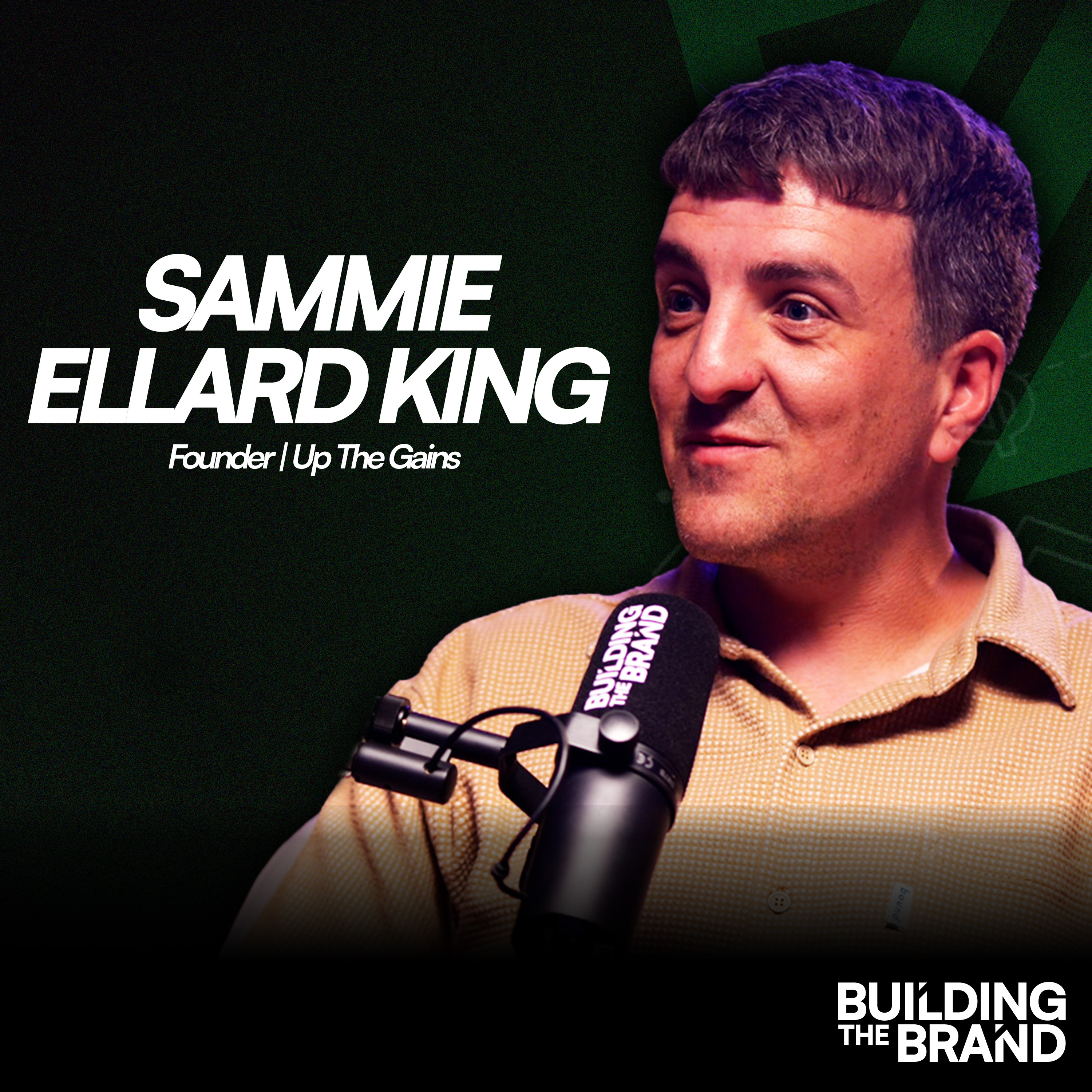
Sammie Ellard King explains how he went from £24,000 in personal debt and “not knowing what to do” to building Up The Gains, a UK personal finance media brand/app. He covers his debt origin story, how he learned money management, how he built an audience from WhatsApp/blog/podcast/video, and why he uses relatable, “bite-sized” education instead of generic tips.
Sammie Ellard King is a former hospitality/nightlife marketer and operator. He grew up around music venues and hospitality (granddad co-founded Ronnie Scott’s; father worked in music venues; mother ran pubs/nightclubs/restaurants). He later worked in promotion/marketing and negotiated major contracts (including Heineken) before starting Up The Gains as a side project.
Personal finance is “simple” but made to sound difficult; people need content that reflects their own lived experience. He says he built Up The Gains by leveraging web/SEO, community Q&A, and branding (colorful, non-boring design). He attributes growth to “edgy” honesty about his past debt and to breaking content into small chunks with analogies.
A WhatsApp group started with 2 people and grew to ~200+; he began posting “I used to be in £24k debt” content; he describes Ronnie Scott’s cashflow volatility and links it to his own entrepreneurship mindset. He also compares his content strategy to “GameStop” style hype and uses “up the gains” as a community chant.
Written by AI. May contain mistakes.
Sammie shares his personal journey from being in debt to building a finance brand.
“I was obsessed and then we started leaning heavily into the light that I used to be in 24 grand worth of debt, but now I'm here and then all of a sudden it just went.”
A discussion on the importance of relatable financial education and overcoming misconceptions about finance.
“I read every single book going, I did every course, I did every YouTube video out there.”
Sammie discusses the impact of his upbringing on his financial habits and decisions.
A look into the challenges of running a business and financial struggles faced by entrepreneurs.
“I had the chance to sort of step back and go, you know, what do I want to do here?”
Discover the challenges and joys of entrepreneurship through personal anecdotes.
“So yeah, I think that's kind of stemmed over into my life now.”
Learn about the transition from a successful hospitality career to personal finance.
“But about a third of my wages was like going on interest payments just to like cover those interest payments back then.”
Explore the origin of the 'Up The Gains' community and its personal finance impact.
“It's got documentaries have been made about it.”
Learn how branding ideas originated from fitness concepts and personal experiences.
Discover the importance of transferable skills in entrepreneurship and how to leverage them.
“Now, if you're a business owner or an entrepreneur, you might be thinking, well, I'm already doing my life's work, James.”
Explore the challenges and milestones in growing a personal finance brand during lockdown.
“Tell us the evolution of what it became then.”
Understand the impact of sharing personal stories in finance content and audience connection.
“Must have been like, it's scary anyway in content.”
Hear about the experience of becoming a full-time content creator and the adjustments involved.
Learn about finding work-life balance and the importance of switching off.
“That's what it feels like building those businesses.”
Discover the journey of transitioning from a stable job to entrepreneurship.
“He stepped himself out of his current situation in order to build a new thing that he wanted to craft.”
Explore the rationale behind developing a finance app and its goals.
“So obviously, you guys are doing 20 to 30 pieces of content a day.”
Explore the tension between public persona and private life.
Learn about the features and benefits of the GainsApp for managing personal finances.
Discover how GainsApp visually simplifies financial management for users.
“And it's designed to sort of based on a little bit on kind of whoop in a way.”
Examine how AI enhances the user experience in managing finances.
“and a NatWest and a Metro and a Monza and a Revolut.”
Understand the tactics for converting users during the onboarding process.
Explore the potential benefits of webinars for app engagement and conversion.
“Emotionally sort of hitting the right nerves without being a bit of a dick about it.”
Exploring the effectiveness of webinars as a conversion tool.
“Because the thing is for you, you've got so much brand affinity because you've been doing it for free for so long for the betterment of other people.”
Discussing conversion rates and the importance of tech in finance.
“And you have to connect your bank to Xero.”
Examining the importance of reciprocity and mailing lists in business.
“We're probably like six to nine months till we hit profit.”
Discussing the importance of follow-up sequences in marketing.
“And this is not the first time we've heard about mailing lists on building the brand.”
Sammy discusses his shift from content creator to fintech founder.
“Now, let's get back to it for the last little bit with Sammy.”
Discussing user acquisition strategies and scaling the business.
Learn about the importance of targeted paid advertising and its impact on audience engagement.
“It's hard to get people to try it if they can't try it before they buy it, especially with something like this.”
Discover the hurdles faced during the app launch process and the importance of user feedback.
Understand the balance between marketing and genuine engagement with the audience.
“And this is a new challenge for me of how do I get people over without selling to them 24 seven?”
Authenticity in business leads to genuine audience respect and loyalty.
“I've been told to start the house all day.”

Get the gist, explore an idea or ask about something said.
 Claude
On Building The Brand with James Burtt, what are the key points of this episode?
Searching your listeningAutomatic transcript. May contain errors.
0:00Sammie Ellard-King: How the hell have you done it? Mate, I think if you'd have said this to me even five years ago, I'd have laughed you out of the room. If I'm not scared, then I think I'm not doing something right here. I'm really badly in debt. I don't really know how to get out of here. I don't really know what to do.
0:13James Burtt: You went to a really posh private school funded by Grandad because he owned Ronnie Scott's. Why did the money stop at 11?
0:20Sammie Ellard-King: I was told it's because he wanted to toughen you up a little bit. I've made all these mistakes, so you don't have to. 24 grand, sadly, that's not a huge amount of debt for somebody to be in these days.
0:31James Burtt: Okay, how do I invest? How do I grow money? How do I manage money? Putting two people into a WhatsApp group to start talking about personal finance, how did that happen?
0:41Sammie Ellard-King: I knew the power of like web. So if one of our picks did really well, it'd be like, up the gains! I was obsessed and then we started leaning heavily into the light that I used to be in 24 grand worth of debt, but now I'm here and then all of a sudden it just went.
0:54James Burtt: you guys are doing 20 to 30 pieces of content a day hundreds of thousands of followers millions
1:01Sammie Ellard-King: of views every single month i liken it to play an xbox all day at four wing but i'm the main
1:06James Burtt: character in the show what is gains app and why the hell are you doing it i think 43 percent of
1:11Sammie Ellard-King: brits lose sleep over money seven and a half thousand have come over from the wait list it's over 50 of those people this allows us to help even more people but it's visible i think
1:23James Burtt: you speak common sense in a world where it's all very confusing.
1:32James Burtt: So as you can see, we have got an amazing show lined up. But before we get into the main content, please, please, please do me a favour. I know I'm begging here, but all of the podcasters and YouTubers have to do it. Please subscribe if you're watching on YouTube. And if you're listening on Apple or Spotify, click the follow button at the top right hand corner of your app. And it will mean that you'll never miss an episode of Boo and the Brand and you'll be massively helping bring us out as well. Let's get into it. Sammy, I have to ask as the first question, as a man who infamously advertises the fact that he was in£24 ,000 worth of debt and didn't really know how to manage his finances, how on earth have you amassed one of the biggest audiences in the UK helping Britain get financially fit as you were so proactively, so honestly out there saying, I didn't know what I was doing, but now I know a bit and I'm going to teach you how the hell
2:18Sammie Ellard-King: have you done it mate i think if you'd have said this to me even five years ago i'd have laughed you out the room no i'd be making personal finance content i just i just kind of fell in love with it and i and i think that kind of comes through in what we do um as we spoke off camera like i i'm just like there's no there's nothing hidden i just say that i've made all these mistakes so you don't have to like and i think that when a lot of these guys come on camera they come on with this like here's exactly what to do and here's the 10 best tips and like i think that kind of content has had its time and its day people are looking for people that are like them and that they can relate to
2:57James Burtt: and so i just lean into that massively i put a post up on the weekend about look here you know
3:03Sammie Ellard-King: because you see on social media you see all these like pristine showroom looking homes and people filming all around it and i was like look here's a wall i haven't done in six months because we run out of money because you needed it for some of the girls and you know here's my dirty dishes and here's my untidy hallway because and then people were like oh my god I really needed that and we're trying to take that approach to everything like when it comes to buying a house and it comes to investing your money and when it comes to managing your money on a day-to-day and like you know my debt relationship was because I was never given the keys and what I always say to people is that actually this stuff is really really simple it's just made to sound difficult and also it's quite overwhelming when you attack all of it in one go and so breaking it down into bite-sized chunks but someone can come away and go oh actually i really got that and we use analogies for everything chocolate and you know things that people like landmarks and things that people can really sort of like oh yeah no i get that because when you break it down in that way it's really obvious um and that's what when i went through that journey of sort of learning about this stuff.
4:06Sammie Ellard-King: I read every single book going, I did every course, I did every YouTube video out there. And I came back to the like crux of it is everyone's made it sound really difficult, but it's not. And that's what I try and approach, I think, with the content.
4:20James Burtt: What made you go on that journey of learning and discovery in yourself? Was it just to put you like, right, this debt's now racked up. I've got more month than I've got money in a lot of instances i've got to do something about it was there almost like a crisis moment or was it just a gentle ebb of dissatisfaction like fuck i've just got to get this under control i kind of
4:43Sammie Ellard-King: pinpointed it back to a moment but i think it had been happening for a while is that i was i think i went out in my 20s you know really sort of trying to impress everybody around me and i think a lot of young lads do that right and they you know they want to be cool they want to be the one that like you know it's got the nice things that the girls all like and that they're out all the time and that you know seemed like a really cool guy and i just wanted to be that guy and so i'd use debt to fund me to look like that person but actually underneath it i was probably quite unhappy um from like a like you know you you're sort of putting in a persona which isn't really necessarily you you don't really got the like source to back it up you're kind of just putting
5:23James Burtt: yourself out there source to back out i love all these like london i'm going to put like transcripts or like subtitles for international listeners source he means the minerals oh actually that still doesn't work either basically why were you why were you doing that though what was it about that you were unhappy within you know in yourself that made you want to pretend to be
5:43Sammie Ellard-King: someone that you weren't I went to I was um some my granddad was co-founder Ronnie Scott so he put me through um like very good schooling until I was about uh 11 and then um I came out of like full-on probably one of the poshest private schools going into like a local sanders secondary school i turned up day one and i'm like hello grandfather you know lovely lovely to meet you you know my little bowler calf and obviously every kid there was like who is that guy like that's it taking his lunch money exactly right so i went through that kind of like first two three years of that experience for me was like you know quite quite wild you know real sort of shift in terms of like who I was I suppose and so you kind of like I started sort of play acting to follow up to
6:31James Burtt: sort of fit in with those kids to protect yourself in a lot of ways yeah and I think that that kind
6:36Sammie Ellard-King: of stemmed over like I don't think that ever left me so when I got like let loose at university it was like that kid was sort of still in there I think still sort of trying to fit in and I always thought that like being out buying people drinks buying everyone like rounds looking cool was how I fitted in and what I came to realize actually was it wasn't and a lot of these you know people are fake friends they latch on to those types of things and you're young so you don't really get that but as you sort of start seeing more of the world you start to realize actually like nobody really cares about all this other stuff they've got like they're so bothered about themselves and when that slowly starts to sink in it takes people a long time I know people in their 40s still showing off eventually it will hit them but like no one cares other than you and so once I sort of started coming away from spending 600 pound on a jacket putting on a credit card and going out and then someone be like oh nice jacket like that was all I needed at the time but then underneath that I'm like well I've got 600 pound credit card now I've got to pay that off and so you start to balance these things and then I had a moment like I'm really lucky all my mates are very entrepreneurial and there's a whatsapp group of like 12 or 13 of us in there and it all of us are either like you know managing directors CEOs or like heads of departments all high flying lads and all doing really well so there's a little bit of like mini competition in there even from a really young age and um I think like having that as well sort of pushed me over that and again a friend of mine sort of turned around to me he said to me you know like when when do you want to retire and I was like oh 50 would be nice you know sell a business do something cool and he was like oh when do you want to pass away and I was like you know I'd love to get to 80 it'd be a nice little end and uh he goes right well that's 30 years and how much are you spending a year at moment and argument's sake i said 30 grand and he's like well 30 times 30 is 900 000 pounds have you got that and i was like what like whoa that was like really slapped me around the chops that's
8:41James Burtt: great simple like goes back to the point though it's simple maths how much are you spending how many years you're gonna live have you got that money yeah what a great what a great uh equation
8:51Sammie Ellard-King: that made made you do yeah literally and i was like i hadn't told anybody that i was in debt as well i was keeping it a secret and i think that that was like not even my girlfriend knew at the time like my mom dad definitely didn't know and i just went like oh my god like i'm really badly in debt like i don't really know how to get out of here i don't really know what to do and um he's like really on it with his personal finance i had been sort of investing from a young age and stuff like that installed to it um by his dad so i always think that you know if you haven't had that sort of help in hand you kind of left your own devices to figure this stuff out and so yeah I went on that sort of journey when I came back I got obsessed with learning about money and I'm just like okay how do I get myself from A to B I've always been entrepreneurial I've always had little businesses and little side hustles on the go and I just really lent into that to get myself out of the debt um and started learning like okay how do I invest how do I grow money how do I manage money and like still to this day I'm a massive overspender you take me in a farm
9:52James Burtt: shock mate i'm coming out six items and 100 quid pill but happy as larry different for your 20s yeah look at that gorgonzola fresh olive bread i'm having two loaves i don't give a fuck literally
10:04Sammie Ellard-King: literally like you know 23 pound manuka honey or well happy like it's got all these fitness benefits though love don't let me put it back yeah exactly but i know that i know that if you put me in those environments I'm going to overspend and I think this is about being a like I became a more aware about myself and my triggers so I have like certain things that I put in place to stop me from spending money and I since like worked out that like most people have a problem with spending money because we live in a digital world with ads and you know stuff being thrown at us left right and center two for three here you know do you actually need that and we are spending an enormous amount of money these days on just stuff that we don't necessarily need and so asking yourself these types of questions and doing these little things can make a massive difference and so you know I started realizing when I was talking to these people about oh I do this and they were like oh my god I'm going to try that and then they would try it and come back to me and go that really worked and I was like oh okay cool so this was kind of happening bubbling away under the surface for sort of three, four years.
11:10Sammie Ellard-King: And, um, it was only really sort of COVID time where I had the chance to sort of step back and go, you know, what do I want to do here? Um, that I sort of really started leaning into sort of the personal finance stuff.
11:21James Burtt: Well, there's a couple of things and I've got, I've written down at 11. So I don't forget it. So you mentioned that you went to a really posh private school funded by granddad because he owned Ronnie Scott's or part owned Ronnie Scott's until 11. Why did the money stop at 11? Did he get into financial difficulties, as in like the Ronnie Scott's brand got into difficulties? Because again, you look, Ronnie Scott's, for those who don't know, it's the most iconic jazz venue, one of the most iconic venues in the world, if not the most iconic venue in the world, definitely the most iconic jazz venue in London.
11:56James Burtt: And if you've never been there, you can't quite explain the magic. Luckily, I've been there once and it was, I'll say to you before we started, it was one of the best nights of my life. It was just a wall of sound. Every single person who is as good at their instrument as you've ever heard. The singers are unbelievable. The food was fantastic. Like I remember leaving there going, I think I might want to be a jazz singer. Yeah, yeah. Like you just, that vibe was so good. So on the outside looking in, the point of that being that you'd look at a brand and I go, that's iconic. It's been there forever.
12:27James Burtt: It will be there forever. But also it's in Soho. It's got business rates. and costs and all these things, you don't necessarily, with certain brands, you don't think about the financial hardship behind, effectively, they're a music venue in hospitality. Two sectors have been fucking hammered recently, but probably have been over the years as well. So was the 11-year-old posh kid out to comprehensive in North London, was that a circumstance of granddad not being able to fund it anymore?
12:54Sammie Ellard-King: At the time, I had no idea why I was told it's because he wanted to toughen you up a little bit.
12:59James Burtt: Oh, really? Yeah. So that gives you a lot of subconscious baggage anyway, doesn't it?
13:03Sammie Ellard-King: Yeah, because my granddad's like a cockney, you know. Proper geezer. Yeah, you know, hanging the circles around. Back in Soho at the time, it was the craze. Of course it was, yeah. You know, they all knew each other. And so it was like, you know, my granddad's from that world, plucked out of East London. And can you imagine me coming home, you know, hello grandfather, off to choir this afternoon? It's probably like, what's going on? And so I get it. And so I think there's an element of that in there, but I've since come to realize that, you know, Bronnie Scott's went bankrupt, potentially more close to bankruptcy.
13:37Sammie Ellard-King: Um, yeah, probably more times than me and you have got fingers and toes to count. Yeah. Um, it was a constant ride and wave, you know, a lot of their early success depended on the, um, cause the dollar and pound rates, you know, you could get artists over quite well. Cause there were quite favorable amounts back in time. and then the dollar would rise and you'd see my granddad like go through the roof because he couldn't get x y and z artists over from the yeah for three weeks in a hotel and all of the fees and stuff that would go in there so i since come to realize that like you know it was constantly up and down and he was probably managing the float and moving money around doing things and you know it was definitely would have been a part of it i'm sure um you know it wasn't it wasn't cheap where I went to school.
14:22Sammie Ellard-King: So yeah, I think that's kind of stemmed over into my life now. I think it's why I'm sort of so understanding of entrepreneurship because I realized that all the stuff that he went through, I'm going through now, you know, cash flow issues and you've got to pay someone's wages and hold that invoice for two weeks while you pay your team. And I'm in that now and it's just like, it's just, I love it. I think it's just awesome but I think there's always a but right with this sort of stuff is that you know you need to have the metal to be able to do all of this because it's not easy it takes its toll um but it's also just extremely enjoyable as well so that was sort of one side
15:09James Burtt: of it so then the other um part that I thought was really interesting so you you've got the sort of the kid from North London going to the posh school and then the posh school kid having to go back into North London. And then you, was there a case that you lost yourself in that process or did you just try and become a chameleon to fit in any environment? So when you're with dad, granddad from the East End, you try and be a bit more East End when you're with the chorister kids doing choir practice, you have to be one of them. And then you, by doing that all the time, you've got this equilibrium of, I guess subconsciously say to yourself, well, you're not enough because you're having to act wherever you go.
15:53James Burtt: You're being a fake version of yourself. Definitely. I'm still like that now. Really?
15:57Sammie Ellard-King: A hundred percent. Like with you.
15:59James Burtt: Do you catch yourself doing, do you know that you're doing it?
16:02Sammie Ellard-King: I do on camera because, um, if I've been on a call with someone who is a bit more well spoken, I'll mirror them. Right. And then I'll come off call and I'll do a video and I'm listening to it back. and I'm like, wow, you sound like you're from Portugal. Yeah. And then I'll come off next video I'll make and I'll be back to talking like this. This is kind of normal me because all of my mates are from North London and we speak like this. But I know that, you know, if I was in a room with someone and I'd just catch myself doing it and then I have to like flick myself back out of it. And so I'm like it now.
16:34Sammie Ellard-King: I just think it's ingrained into me. And it's definitely from that period, I reckon. It's probably stuck it in my head, yeah.
16:40James Burtt: And what were you doing sort of work-wise then? because you've sort of amassed, I say amassed, you've 24 grand in the grand scheme of things. Sadly, that's not a huge amount of debt for somebody to be in these days. But I guess, you know, you're a single person and it is an amount that's hard to climb out of if the average salary these days or at the time probably was about 20 or a grand. If you know that the next coming year, if you paid every single penny that you earn, you would be back to square zero. That's a hard place to be, which I think is why your tactics and strategies have become so popularized because it is breaking it down and keeping it simple and not overcomplicating it but what are you doing sort of work wise when you were going through this period of time as well before you
17:20Sammie Ellard-King: became a so i was quite lucky that um like my dad's general being general manager of like music venues and like not normally scots although he was there for many years my mum's run pubs night
17:30James Burtt: clubs restaurants and so this is a proper family trade then you're you're in the music and
17:34Sammie Ellard-King: hospitality trade through and through yeah yeah so i grew up in that world like i knew it inside out so I had a leg up on I suppose other people coming into that whereas you know these types of things and operations at these venues are just like ingrained and you pick these things up as a kid right um so when I came out of university I moved back to London I went into hospitality but I did a bit of you know standard front of house stuff but then I moved back into um sort of promotion and marketing really quickly and I became like a really young head of marketing um um, at 24 and then, uh, so at 25 is when I sort of had my sort of aha debt moment.
18:15Sammie Ellard-King: Um, so I was earning really good money for my age. I was, you know, on around about 50 K back then, which is 60, 70 K today, which is decent money for that age, especially. But about a third of my wages was like going on interest payments just to like cover those interest payments back then. So it was, you know, a lot of like change. So I had to like flip my life upside down. But yeah, I since after that went into like I've done multiple sort of heads of marketing, director roles, moved into sales and operations sort of.
18:48James Burtt: All in nightlife and hospitality stuff.
18:50Sammie Ellard-King: Yeah, restaurants. So I went and worked for a guy called Neil Benson, who was one of the founders of Flatiron Square in London Bridge. Oh, okay. Yeah. So they had like multiple street food venues where they would go and take sort of disused uh car parks like massive uh so it would be like a big sites that are waiting for planning permission but these planning permissions would take four to sometimes 10 years yeah just to even get like that high-rise skyscraper bill or that student flats or whatever that was going on it so we would go in and say to the you know the landlord and be like well you've got a space here for four years you can't touch like give it to us we'll give we'll pay you a decent amount of rent and we'll flip it over and we turn into like a mad street food like kind of complex with loads of like different bars outside stages and you know brilliant for things like the world cup and stuff like that um so this was our business model um sort of run away from that i worked for neil for four or five years he treated me from day one he sort of took me as his like little protege yeah and i just walking around with him i learned like so fast in the end he would just he couldn't be bothered to go to these meetings he just sent me and then I was negotiating with like massive contracts for like Heineken at 28 so I kind of had like a real taste of it all and then uh two of my friends sort of went out on their own and sort of all within this weird sort of incestuous world of hospitality everybody knows each other and uh they took me over and I sort of went off with them started doing it with them for a bit and then uh yeah I was I started up the gains ran it as a little side hustle for about 24 months 18 24 months and then that started doing some serious numbers and revenue and i was like well i've got a decision to make um and it was covid time obviously going through hospitality and covid was just savage and i sort of realized then that i was because i had that time to sort of step back i realized i was running my entire life on just pure like adrenaline so probably burning a can out both ends uh you know working hospitality those types of industry's rife for it isn't it yeah you stay out late yeah of course
20:58James Burtt: you socialize whenever else has gone home you can't go out whenever else is going out yeah
21:03Sammie Ellard-King: yeah and yeah and you know i had a i'm still with my my missus to this day you know it was kind of early stages back then but you know it was having a tough like relationship but issues and you know constantly out all the time always back late wherever you've been you know don't want those type of i didn't really want that life anymore yeah i fell into it because it was so natural to me of course it never felt like it was my calling if you know what i mean i was just like
21:26James Burtt: i just feel comfortable in this world it's hard to get out of it especially if you like say you've almost got golden handcuffed at 24 if you're a head of marketing on 50 grand a year yeah like you're not gonna go jump to a different industry just because it's ruining your sleep patterns do you know i mean so it makes complete sense but you have got to sometimes in life take those big moments i guess to make those steps to step out of the industry i was thankful for covid like yeah I'm not surprised.
21:51Sammie Ellard-King: Weirdly. Yeah. You know, it's really tough time for a lot of people. For me, it was like an absolute godsend. I needed that hard stop to realize like what the hell I wanted to do.
22:01James Burtt: Would you, do you think it's obviously hard to say because we don't know what the alternative would have been had something not shut down the entire planet and forced you to go, Sammy, what the fuck are you going to do with your life? Do you think you would have carried on just in that industry just because you had always been in it? Definitely.
22:18Sammie Ellard-King: Would you really? Oh yeah. Yeah. A hundred percent. because like the start of up the games was because everybody got obsessed with personal finance and we had a whatsapp group and it was a few mates to start with ended up growing to like 200 odd people and people would ask me questions and i'd write the article and like that was because everybody was home obsessed about how to do this how to do that like literally obsessed you know damien talks money who's uh sort of another one like me but brilliant on youtube he puts all of it down to the fact that everybody was obsessed with like how do i invest my money because they're getting these big fat you know surplus checks coming through and um you you know everybody wanted to like learn and sort of sort their lives out because they got excess excess cash um and so like if i hadn't had that time i don't know if i'd be doing what i'm doing today because i would never have i might have you never know but seems unlikely or much less likely yeah to sit at home
23:16James Burtt: write blogs and build a website like after working 14 hours on multiple sites around London get over three o 'clock in the morning do you know what I'm gonna do I'm gonna blog about monetary policy yeah this is gonna be banging yeah not happening it's not happening so what so I'm really intrigued then at first because you like you said you had almost an element of like financial shame because none of your pals knew about you being in the debt and you're sort of a group of sort of pals that are all doing quite well everyone's flying in their industry in their particular job what was the catalyst to you writing that first ever thing or putting two people into a whatsapp group to start talking about personal finance how did that happen it was um you remember
23:58Sammie Ellard-King: like the game stop sort of vibe so do you remember that when it's the game stop yeah game stop was like um it was the that company it's basically like um you remember game in the uk yeah yeah
24:10James Burtt: yeah so it's like the american version okay right right and then basically this thing happened
24:15Sammie Ellard-King: and all the hedge funds were short in it and it became like this phenomenon. I do remember this.
24:21James Burtt: Yes, yes, yes. It's got documentaries have been made about it. Yeah.
24:25Sammie Ellard-King: Series have been made about it now. But back in the day, all of us were obsessed with this company that was going off. And this is kind of what, it was already bubbling away under the surface. I'd sort of set up the website and I was writing a few bits and bobs, but it was so bad. And then...
24:40James Burtt: But what made you want to start doing that? What made you set up a website and write articles? And I got, um, Were you doing it like anonymously because you didn't want people to know or? No, no, I'm signing it. It's me. I'd said it all like properly. Cause you remember like, um, remember blogging was like a massive thing.
24:57Sammie Ellard-King: Yeah. Yeah. And people were doing serious numbers off Google. Yeah. And as I said before, I was obsessed with side hustles and always in that world and like learning about a lot of things and SEO was sort of a big part of what I had to do for the businesses anyway. Right. so I knew the power of like web and and building websites and driving traffic and you know that's all I did all day on a daily basis so I was like oh I could probably do this in industry which I really enjoy and obviously I was obsessed with personal finance back then so I was like oh let me set up a website and start writing some content and see if I can get some traffic well you just
25:30James Burtt: write it as like an opinion then rather than be like here's my situation here's what I've done to
25:35Sammie Ellard-King: get away from that it was nothing to do with me it was more like how do how do you you know yeah exactly right it was nothing to do with me really um and it wasn't for a while because you know back then when you can get traffic for to your sort of websites and blogs you didn't really even need to sign your name i did because i was quite happy with sort of putting myself out there but a lot of people i know back in that industry like you know it's just anonymous and I've had 10 of these sites just throwing them up and driving tons of traffic, earning money off AdSense and affiliates and stuff like that.
26:09Sammie Ellard-King: And I absolutely loved it because it was kind of cool. I was really into that sort of building stuff and brands. Because you have 12 venues. Every venue had about 12 or 15 different brands that we'd created because they're like mini in-house brands. So, for example, one of our venues, like Amazing Grace, you'd have like, you know, take me to church or just like the Friday night.
26:32James Burtt: Is that the one at London Bridge? Yeah. Oh, amazing venue. Oh, yeah, yeah, yeah. Phenomenal.
26:38Sammie Ellard-King: That was when we opened. Wow, okay. And that was like just as I was getting out, basically.
26:44James Burtt: So you, like you say, you understand brands as in like a venue and then brands as in like nights or sort of bringing communities together. So you kind of took that mentality and put it into your own stuff.
26:53Sammie Ellard-King: Yeah, that's exactly where it's coming from.
26:55James Burtt: I'm making a lot more sense now. Yeah.
26:56Sammie Ellard-King: So it was like, how do I find something cool? It was a bit quirky. It was a bit different. You know, everyone out there was either, you know, it was Martin Lewis and money saving X, Y, and Z. And I was like, oh, there's money saving mom and frugal this. And I was like, that's just boring.
27:13James Burtt: Or it's the finance bros on the other side of it who are. Exactly. Or there's these types. Like 18 going, hey, do the side hustle and rent a Lambo. Yeah. For sure. Yeah. There's that side of it too.
27:22Sammie Ellard-King: That side.
27:23James Burtt: No way. Yeah. That's not the bit of me.
27:25Sammie Ellard-King: something was like a bit more like it's not like laddie culture in any way shape or form but it felt touched like me yeah had that little bit of vibe to it and because we were me and my mates were like doing these like um like we were chucking 50 quid into this investment 50 quid into that investment just having a laugh and just like trying to pick stuff and trying to learn loads as well together um we would like if so if one of our like picks did really well we'd scream like on the old whatsapp voice notes we'd be like up the gains going to each other and it just became this thing and i was like look can i use this do you mind and they were like yeah no go ahead because i was like it just works and then i was like well actually it's got loads of sort of health fitness tie over connotations so the slogan became like helping britain get financially fit because it's that gains element of gains in the gym and gains from that financial
28:20James Burtt: money and it just all sort of yeah it's clever it works it was all an accident yeah as a lot of
28:26Sammie Ellard-King: these things are but you know you build on it and you sort of take it and i was like actually there's a brand in this and so that's sort of where it it came over from i think and i all of the websites that were out there were quite like gray and boring and very like blog heavy and i was like no i went like massive splash of color like um put me on the front like did all these mad branding like i made like custom images for every single article and did all of these things and like i think because i took all of that sort of design over and in people looked at it and went well this is completely new yeah um and it wasn't new it was like as with all brands it's just little bits taken from each person you're like oh he's really good at that and it's the same with content now he's really good at those cap those types of captions i've not seen those yet oh that's really cool maybe i'll use those in one of our like podcast clips or something like that so you take little bits from inspiration frank sinatra says it i know we're both frank friends yeah you're still from one person it's stealing it's still from everyone it's research yeah and i'm a massive fan of that um so i think that's exactly sort of what i formulated over the years just bringing those elements in and and having that experience with branding and coming up with things and driving traffic has really helped me with this and and sort of getting it off the ground now let's just
29:42James Burtt: take a pause there because i think sammy has touched on something that's really really valuable the skill set that he had got in his day-to-day career, he could now utilise and move across to a sector that was ultimately going to end up being more valuable for him. Now, if you're a business owner or an entrepreneur, you might be thinking, well, I'm already doing my life's work, James. I don't need to take that skill set and move it to a different sector because I love the thing that I'm doing. Brilliant. Good for you. Happy days. High five. But if you're not in that position, let's say, for example, you are not exactly where you want to be in life and you're thinking that you might want to make a move at some point within your career, bear in mind that the skill set that you're picking up right now, you could port that talent and take exactly the same attributes and skills that you've got, put it into a different sector or vertical, and that will become infinitely more valuable.
30:23James Burtt: What do I mean? So let's say, for example, you're a social media marketeer for a solicitor's firm in Scunthorpe. I don't know why I've picked that. I just have very random, just popped into my head. But there's only so much, regardless of how brilliant you are, there's only so much value that you can bring that company with a skill set that you've got. However, let's say you're in the job that you currently got right now and you are desperate to start your own thing, but you don't quite know how to do it. You take that skill set that you've learned with organic content from the solicitor's firm in Scunthorpe, and you put that into a finance company down in London, you're going to be infinitely more valuable.
30:54James Burtt: Same skill set, slightly different market, slightly different vertical, and infinitely more valuable. So never get frustrated, even if you're like Samuel was coming to the end of your enjoyment or the end of the natural life cycle of the career that you're in, because the skills that you've already picked up, nine times out of 10, you can move them, take them with you. There's almost like a director's loan. You're directors loaning your own skills to the new sector that you're going into and you can become infinitely more valuable. Right, let's get back to it.
31:19Sammie Ellard-King: So you get it off the ground, it gets a little bit of traction and you put some people in a
31:23James Burtt: WhatsApp group. Tell us the evolution of what it became then. And this is pre you building an app and all that stuff we're going to get to talk about in a little while. You went from literally two or three people in a WhatsApp group chucking questions, you go out to a couple of hundred. What's that time period and what happens over that period of time? it was during lockdown when you had more time to do it i guess yeah it took it took a while to get
31:46Sammie Ellard-King: going because you know when you're sort of doing it with anything with traffic it can take a unless you've got sort of a big social following or lots of money to drive traffic to it especially with like google and seo and stuff it's you know a year's worth of work before you really even start sort of seeing any fruits to your labor but the lucky thing was is that people these asking me questions um and then i was sending it into the whatsapp groups and then a big bigger facebook group that we set up as well and it would get loads of traffic already just off that which is a great signal for google so we sort of helped sort of speed that process up but it took sort of about a year and then it was getting sort of significant traffic enough to sort of justify you know carrying it on and i said to myself look i'll give it two years of just just throwing everything into this and i was getting up at like five in the morning like doing three hours getting on a train or tube into into central cracking on with that for the whole day finishing that and i was but on the way home i had like laptop out writing on my i was obsessed i don't know what
32:49James Burtt: came over me obviously literally you were doing the hospitality job and and this at the same time
32:54Sammie Ellard-King: yeah yeah for like two years oh wow yeah yeah it was nuts it was a full-on like let's see where it goes and if it grows blows up i think it was a lot of it came from like inspiring from seeing sort of martin lewis sell money saving expert for like 90 something million quid and i was like wow like 93 million pounds for a website like that is mental to me i was like well i'd be happy with you know 900 grand so like surely you know if he can do it i can do it and obviously he had naively he had 15 odd years on me by that point but i just thought well you know there's a there's opportunity here and equally as well back then it was kind of a martin and a few other sort of early stage creators the likes of pete matthews and people like that had been doing it for a few years but other than that the in america there was hundreds hundreds of these guys and there was a handful in the uk and i was like well that's an opportunity in itself it feels like a really sort of untapped market like personal finance content creation and so yeah it was the kind of website initially i started a podcast um about a year and a half into it so i realized quickly that you know socials and and podcasting it was gonna go one way and um yeah slowly brought video into it she scrolled back to the first ones they are extremely embarrassing to look at and i've left them there for a like a laugh at myself really um but it's just kind of you live and you learn and you duck and you dive and you keep going but yeah 24 months and then it was earning enough at that point where it was earning the same as what i was taking home from the hospitality businesses right and then i was like okay i've got a decision to make and what i actually did was what i sort of speak to a lot of people about is suggest with this stuff if you ever end up in this position it's like don't just turn the lights out in one of them and go full steam because you never know what you're walking into yeah true um so i went down to three days and then i went down to two days and then eventually i sort of i moved out of it so that's a great idea it did work because it just gave me that like pressure was off yeah uh kind of vibe and it also meant that the money that i earned over here um from the hospitality business i just tucked a load of it away for that rainy day and then when i did finally go full time um with up the gains i had a year's worth a runway if things started going wrong i could sort of lean into and it gave me that pressure off which was kind of nice um but yeah i know i get it with a lot of these things with people like building businesses on the side when you go and you start earning some money you see that taste you just want to go full throttle because once you started earning some money and i was
35:38James Burtt: like wow i'm doing this with 20 hours a week yeah imagine what i could do with 60 imagine what i
35:45Sammie Ellard-King: was like that like it's time and you know i was like i could be doing videos every day i could be doing youtube i'm doing podcasting and i was like oh this is just me like i feel like this is me and it wasn't only really until i think a good sort of year into making social media content that i wasn't really even sort of talking about my story i hadn't really even said anything about me yet i was very much like here's how to do x y and z and it was doing okay and then we started leaning heavily into the light that I used to be in 24 grand worth of debt but now I'm here
36:18James Burtt: and then all of a sudden it just went what made you what made you start testing that kind of content or what was it were you getting a lot of people going well how do you know this stuff how have you worked this stuff out and you just organically started to do it I'm really intrigued but especially for I'd be intrigued about anybody making that decision but so especially someone with your background like say who's tried to chameleon himself into fitting in so coming out and going, this is actually the real version of me. Yeah. Must have been like, it's scary anyway in content. It's scarier in a finance content.
36:52James Burtt: It's even more scary when you're going, I've got this finance content page or pages that you really like. And I know it for a lived experience of actually fucking it up myself. That must have been proper scary.
37:02Sammie Ellard-King: Yeah.
37:03James Burtt: Yeah. It was, man.
37:04Sammie Ellard-King: I don't know. I think like you slow, with all of these things, it's not just like a flick of the switch. You sort of slowly edge into it. Yeah, yeah. And then you're like, oh, I said that one thing about myself and that's what everybody started connecting to. Or that's what all the comments were about. Tell us more about that. And then you're kind of like, oh, damn, really open Pandora's box. Yeah, yeah. But then I think it was kind of, it was weirdly like sort of self-therapy for me to slowly put yourself out there. Because you are worried about what people say. And still to this day, we get 20, 30 a day of people just writing the most maddest stuff.
37:41Sammie Ellard-King: but you're just so oblivious to it. But at the beginning, it's like, someone said this about me. People are vicious when it comes to financial stuff,
37:48James Burtt: isn't it? It's crazy.
37:50Sammie Ellard-King: Yeah, yeah. Because everyone's got their own opinion. It's extremely emotive. Everyone's got their own opinion. Everyone's got their own strategy that works for them.
37:58James Burtt: Yeah, yeah, cool.
37:58Sammie Ellard-King: And so, you know, you come out with your strategy and your idea and someone over there is just going to completely disagree with you. And that's just comes part of the territory. And I think, but when you're first starting out and you get like 20, 30 comments of people going, mad you know it's a lot like you're especially when you're talking about yourself as well so you you have to go through that um but that's what started doing you know you see one video it's 5k views and then you mention oh something like you start with a hook like i used to do x y and z and now i'm doing x y and z and that gets 40 000 views you go well i should probably do more of that and so it becomes like a sort of self-fulfilling prophecy i suppose you sort of you try it it works a little bit you lean into it more it works even more and then you're like okay well you know now i'm just going to talk about like the stuff that i'm doing and what i used to do and it just yeah it literally went from you know 50k views 50k views and then we're getting up 1 million views 1 5 million views and it was just like okay but this is a rocket ship like let's just keep going and see where it goes and it's sort of carried on from there if you're loving
39:04James Burtt: this conversation, please do us a favour by clicking the subscribe button if you haven't yet done so. Click the follow button if you're listening on Apple or Spotify at the top right hand corner of your podcast. Plus, if you're loving the learnings and lessons from this episode, every single week as well as doing the video and the audio sort of things, we also do a handwritten blog and we do a breakdown of the key learnings and lessons as a blueprint that you can implement into your business as well. If you'd like to get all of that, click the link that's in the show notes or the description and you can join our building the brand exclusive newsletter so you have you sort of almost like hedging your bets you've got the the day job and the nighttime slash morning job yeah the full-time side hustle yeah it was yeah what was it like on day one where you went you know i'm gonna step myself out step myself out and then it's like i am now that first morning you sat at the laptop and like fuck i'm actually a full-time content crater now yeah as my job what did that feel like mental do you know what it was is that
40:01Sammie Ellard-King: excitement fear yeah yeah really exciting all of it yeah all of it actually you're right and you know there was like there's times where you sort of sit down and you realize that okay right and you kind of go like what am I going to do
40:17James Burtt: oh my first ever business i remember exactly that yeah what are we gonna do like i should
40:24Sammie Ellard-King: probably think of some like okay i want to you know write all this stuff down i'm gonna start doing all this it takes a little while even though i was edging myself into it um and slowly sort of ramping it up that first couple of weeks is really weird because you know running multiple bars i had teams of hundreds of people yeah and going from that to just me in a spare room is the most maddest experience yeah i'm and it really weirdly now if you put me back into that environment i think i'd go like i'd go the other way like full anxiety because i'm so used to like being on my own in my little teen now that i don't know if i could go back to that whole like hectic life um but it takes a while it's like a massive transition period because you're kind of like so used to just picking up the phone going x1's oh yeah can you do that yeah we've got this fire over here that fire over there and that was my life and then it suddenly it's like no you're on your own mate everything's on you you just got to sort of put this stuff out there and see what happens um it was obviously a big sort of transition for me and the missus as well because she's used to me being out the house and then i'm just there yeah like hello i'm still here
41:31James Burtt: i know i used to complain about you being out or not but could you do a little bit of halfway she's like that now she's literally go out see your mates play some paddle literally find a hobby go play golf because it gets you out for four hours are you her
41:46Sammie Ellard-King: it's literally my life yeah i said to her going into london today for a podcast with you she's like great she's like you should pop into town after do some bits have a long lunch go see your old mate yes it's literally because i will just sit there and just do it and i think it's i think when you find something that you're just like you know this you you've run businesses you just get obsessed you i liken it to play an xbox all day at four wing but i'm the main character in the show that's a great way to look at it and i just i'm doing doing like grand theft auto style game running around doing things obviously not yeah not as nefarious personal finance i say smacking people up you look at the money you know what i mean though yeah it's that first person game you can go anywhere you can do anything you want um but you it's you and so i like it I sit there and I think I'm just playing Xbox all day.
42:40Sammie Ellard-King: That's what it feels like building those businesses. Um, and so I just take that with me. And when my missus explains to me, she's like, you've been working, you've been, you've been in there since 6am. It's now 9pm. Like, do you want to come out? I'm like, is it? Didn't even know. All right. Cool. And when I think you get into that, it's unlock something in you. You're just like, this is awesome. And I just want to do it all the time. There is, you know, I've come to sort of see going through periods of sort of just like completely burning out that there is another side to it. And I think you need to have those abilities to switch off and other things going on.
43:21Sammie Ellard-King: Yeah. Because I know from looking at some of my mates, their entire identity is their life, their business, their work. And if you strip that away from them, like who are they? And so, you know, I've been putting these things into place over the sort of years. Now I'm obsessed with my gardening. and I you know I'm absolutely obsessed with sort of like you know health fitness looking after myself a bit and cooking and doing all of these things which is awesome because it puts like real life back into it gives me a reason to shut off and weirdly what I've found is as well the less I've the less not the less I work but going from a 16 hour day to an eight hour day doesn't affect anything other than the fact that I probably do way better work in that eight hours than I within that 16 hours and so you know why wouldn't i do the eight hours do you know what i mean yeah
44:11James Burtt: there's i'm sure there's a rule i think it's called parkinson's law okay parkinson's law stipulates that a task will take the time that is allocated towards it right so whether you say i've got eight hours to do this thing or 16 hours to do this thing it will take the allotted time that you give it and like you say you'll probably do exactly the same amount of work within that 18 or 16 hours because you your mind is just going to do that work yeah it's hard though isn't it? Especially if you've been raised literally from a kid that you've seen people work really hard and you've got to graft and you've got to work the 16 hours, you're doing shifts.
44:44James Burtt: And in your world, especially like you're doing unsociable hours and split shifts and it's high pressure and lots of people to then go, actually, you can make just as much, you can be a better entrepreneur using half of your time. That's super uncomfortable. It is weird. Which people think is the, you know, the promised land, the mecca that they're all going towards but actually getting there it's probably really really difficult i think at the beginning you kind of have to like don't take this if you are starting out don't take this
45:12Sammie Ellard-King: do half the work because at the beginning you have to brute force it sure once it's going and it's running and it's doing its thing and it's bringing in some cash like your time is better spend being a little bit more strategic about where you're moving to than just blinkers on like let's keep hammering it um and look there is weeks i've just gone through three months of 16 hour days because you know we're doing the app and we've launched that and it required me to be on it and then there's times now where i'm like okay this is moving moving in the right direction where i just step back a little bit put some you know pass some stuff on to the the team members take a little bit of responsibility off your plate and uh share that around with with team members or co-founders or whatever that might all be and suddenly you got your life back in them in in a little bit of sort of rhythm again but there's always periods where you're going to go for it launches you know stuff coming out you've just started your own business you're going through a bit of financial hardship in your business you need to like lock in for a bit then great like crack on and go for it but yeah i think you need to have that balance because having done this for five years and you've done this sort of many many years and obviously running the bars and night cars before that there are periods where you just your body just gives up on you and i think as you get older it happens more often so i see it coming now yeah i see it with a like i'm like okay i can
46:37James Burtt: see this happening i need to just put take a few days out i think that level of self-awareness and self-actualization, you only get that with age. You can't teach it in someone who's necessarily younger because you have to go through the reps and sets to go, oh, actually, I could feel, I'm getting really ratty with everyone. That means I'm tired. Why am I tired? Because I'm never switching off. And also, what's really interesting, how many times you hear it when entrepreneurs have gone, I went, you know, took a week's holiday, sat on the beach, I come up with the maddest idea.
47:05Sammie Ellard-King: Yeah. Now we're going to implement it. You can't outwork creativity
47:10James Burtt: in some instances, but it is so uncomfortable. Yeah, it's mad. Now, let's just take a little pause there because Sammy has once again touched on something that I think is seriously valuable, but it's often overlooked. He stepped himself out of his current situation in order to build a new thing that he wanted to craft. Now, what he didn't do, which makes a bunch of sense for someone who understands personal finance at a massive level, he didn't just stop doing his job that was paying him a very good salary and go, fuck that, I don't want to do it anymore. I want to do this new thing over here and just finish the day job and put himself under the pressure to build something from scratch.
47:42James Burtt: He started to do this on the side. Effectively, it started like a hobby. And how many people out there create something absolutely brilliant as a business or an entrepreneurial organization that actually just started by scratching their own itch and something that they really enjoy doing? But he's doing that hobby. Then he realizes he can help people. And then he starts to very slowly to monetize the thing that he's doing, but he's still doing the day job. He's still doing the early morning starts. He's still getting up at five o 'clock in the morning. He's writing the blogs. Then he's going into work, doing 14 hours, writing stuff on the train on the way home.
48:09James Burtt: That part of the journey isn't always sexy. It isn't always cool. It can lead to burnout. Oh, my God, don't people get tired doing that kind of thing. But ultimately, do you know what? I think that's the better and safer way that if you have the option to do so, that you move from the thing that you're doing to the place that you want to be. Now, look, it doesn't always happen that way and it's not always possible. But to step yourself out of your current role while you're making side money in a different space, it eventually gets to the point where there's parity, where you're making as much in the day job as you are on the side hustle, then you can make that move.
48:38James Burtt: Now, some situations require you to go all in and you need that positive pressure and you need the sleepless nights. But trust me and take it from me. That is a horrible place to be. I had it back in the day. I had a career in the music industry that all of a sudden the company I was working for couldn't pay my wages. We literally got to the end of the month and the person who I was working with said, how would you feel about me paying you in installments? I was like, I think I'd feel pretty shit about that. So I left that company three days later. They told me that on a Friday and on the Wednesday, I started my new company.
49:04James Burtt: And it was scary as fuck because I had no plan B. I had no other options. I had to make it work. And yes, you look at it and go, well, that's why it worked because you had to make it work. But equally, did I need the pressure? Did I need the stress? Did I need the sleepless nights? Did I make the best decisions because under such a place of pressure? Probably not. So if you can, and again, to reiterate, it's not always possible, but if you can step yourself out of the situation that you're currently in in order to take steps towards the place we ultimately want to go. Now, let's get back to it.
49:32James Burtt: You mentioned the app.
49:33Sammie Ellard-King: Yeah.
49:33James Burtt: I'd love to talk about the app. So obviously, you guys are doing 20 to 30 pieces of content a day. You've got hundreds of thousands of followers. You get millions of views every single month. You've become very well respected and very well liked in the personal finance space. Thanks, mate. You could have really had a very nice, comfortable life just being a content creator adsense youtube revenue podcast sponsorships brand deals why the hell have you putting yourself under the duress of creating a fca regulated finance app that is in such an emotive space as money like what what is gains app and why the hell are you doing it in essence thank you we regret my decision i can see why you today because i've looked at what you're doing i'm like oh this makes a whole bunch of sense but you've chosen the hard the harder path potentially i would say i think i always have i get bored man it's just a trait i just get bored yeah quick like eight hour days writing in rams getting to do a bit of gardening no that's not got me for a spanner that works yeah
50:45Sammie Ellard-King: risk the bag i've always just said like i would rather take a hundred percent risk on than 10 % and just sit there. Yeah. I get bored. I think if I'm not like, if I'm not scared, a little bit scared, then I think I'm not doing something right here. So I think I always -
51:06James Burtt: Psychotherapists need to talk to you about that, am I right? Yeah, probably. There's some trauma we need to deal with here.
51:11Sammie Ellard-King: I think all entrepreneurs are a bit -
51:12James Burtt: Yeah, that's true.
51:14Sammie Ellard-King: We all are in some capacity. But I feel like if that's not like there, I don't feel like I'm pushing myself as well. And I'm sure there'll come a time where I'm just like, I don't want this anymore. And I don't want that. But like, I think we built, we built the brand. It was doing like serious numbers. A lot of people were sort of turn around to us and going, there are apps out there that aren't fulfilling our needs, that aren't like doing what we need to do. And, or we're using this app over here for this thing on this app over here for this thing and this app over here for that. and then i was like oh well and it just kept coming up i think you if you you're mad not to listen to your customers if the same problem keeps coming up all the time and so it was like okay well like there's some big players in this space with massive budgets but they don't seem to be ticking the boxes for my audience and i think that was enough for me to go okay well let's look into of it so we started looking into it um April last year and we quickly saw that okay this is quite an interesting space not just from like a sort of a monetary perspective but because um because everything we do is designed to sort of help someone go from A to B and I was like this allows us to help even more people but it's visible so we can actually like see how much we're helping someone from a like an individual user perspective because you put content out you have absolutely no idea who you who's seeing it yeah whether or not it's helped whether or not they've used it whether they've done anything some people tell you they do but whether they do the next month who knows um so you don't really know so then other than people sort of reporting back to you that x y and z worked so i was like we need something that we can see whether or not it's really changing someone's life whether or not it's sort of moving into the next direction and then equally as well sort of a third string to that was when we started looking into this this was about the time when sort of clawed code had sort of slowly started to come out and it meant that what would have taken a team of 12 could probably be done with a team of five and six so what we were looking at going well how on earth are we going to get 200 grand's worth of sort of wage bill covered and how we're gonna have to raise millions and you know do we really want to go down that road um to the like okay we could probably raise like a million quid and be absolutely fine um so that sort of slowly started to sort of eep away and then we in about june we just went yeah all right then let's give it a go um which is kind of mad really and you know we could as i say we could have just sat there and you know the business was doing really well we could have just sat there doing really well and had a nice life and just cracked on but also because of ai as well i thought that the risk to the content business had grown significantly too and so I was like if someone steps in and makes better content than me for an AI and they live in Scunthorpe with zero knowledge of personal finance they probably could in a few years time and I was like that's not necessarily that like that's such a big risk to me and this business eventually I don't know whether or not that content business is going to exist and so I was like well we need a physical product that we can hang the ip and the brand on and help a load more people at the same time and then potentially have a an actual exit from this because from a content standpoint is is my face or my name on it it's not really sellable yeah um other than the fact that like if you're getting loads of website traffic and then you can sort of take that across but then even then martin lewis is still the ceo or not the ceo he's still the face of the face of the brain yeah yeah without him does that business do those numbers no way and so he's you know and a money supermarket who who bought it recognized that and so i'm like is would they would that happen again i don't know i don't think that sale would have happened again potentially would have but it was a bigger risk so i was like with gains app as well um i can remove myself i'm obviously a massive driver of that for now but in the future it doesn't actually need me there to drive the face of that do you don't have to yeah and i quite like that because i think after sort of putting myself out there in the internet for so long and your life is out there and people know more about my life than than and they tell it back to me i'm like oh yeah i forgot about that happened yeah and they're like oh yeah how's your dog and i'm like whoa like that freaks me out a little bit yeah and so i'm not i'm i'm quite i'm as well i'm i would say i'm like an um an extrovert
56:16James Burtt: introvert yeah okay i could see that yeah turn it on but then i also really like being on my own as
56:22Sammie Ellard-King: well and i think it slowly starts to wait on you like how long i'm like can i um do i need to carry on putting myself out there my whole life and as you said like people want to know what i'm doing with with my personal finances it's very like i've sort of opened my life up to the internet yeah and i'm not necessarily sure i want to be that open forever um so this is allowed allowing me to sort of slowly move out of it it's going to take a little while but um yeah i think that's
56:52James Burtt: kind of the idea really so what does games app do i should probably tell you what it does it just went on some mad run so now you're telling us that you're trying to hide in public yeah you don't want people asking you about your dog yeah any other things that gains apps gonna do yeah yeah it does a does a couple of things it's just it's just an app on the app store just
57:11Sammie Ellard-King: download it um so now basically what we spotted was was that um a lot of people had multiple bank accounts and credit cards and the average brit has 2.3 um our audience when we surveyed them was 3.3 uh 3.2 sorry so they were a whole one above and probably my fault for telling them to do like multiple things but you know either way you definitely got a credit card for one provider you never got a bank for one provider potentially even got like a monzo or revolute open somewhere else might have a joint bank account with your partner and a business account if you're a businessman so it's a lot going on yeah and it's quite difficult to sort of actually understand what the hell is going on with your money the largest problem in the uk now because of apple pay and and uh online shopping and these other things is that money's digital so it's moving fast and it's moving around different places and different pots it's quite difficult to just sort of have one central place where i can see what the hell's going on with money and so that was the sort of cusp of it and then budgeting is quite a dated experience for a lot of people they don't really get on with it they get sort of a big wave of motivation and then they go next month they go oh i can't be asked to do that like downloading my bank transactions sitting there with a you know spreadsheet and a thing it's open to mistakes all of those type of things and the third thing was there's a lot of people have like questions when they're going through that period um so for example you know you've got uh how much i spend on takeaways last month you're going through line by line i was like well ai can handle that like that so like i want to know how much i spent at uber last month oh okay now i've got to go line for line or an ai can just tell you immediately so i was like oh interestingly like how can we get people the answers that they want around their money like really really quickly um so ai became a big part of that conversation and then also cash back on your spending so um you can get between sort of three and twenty percent back on every single major retailer it's just not necessarily like a widely accepted thing or used thing yeah So what we found was, and when we surveyed our audience again, it was like 91 % of them had never used cash back before.
59:22Sammie Ellard-King: And when we added up the numbers, this is hundreds of pounds for people in a time where cost of living has gone through the roof. They're cutting back and moved from Tesco to Audi. They've cut down from two holidays to one holiday or a staycation instead of a broad holiday. And people don't want to do those things. But then if I gave you six, 700 quid back on the money that you're already spending, what would you do with that? Well, a lot of people were like, Oh, I'd cover Christmas. I'd cover X, Y, and Z. And I was like, wow, that's a massive, massive thing. Like, how do we educate more people around that?
59:55Sammie Ellard-King: Cause this is available now. Um, and so we integrated that and then, uh, and we've also integrated something called bill switching as well, which is when you, you know, your car insurance renewal comes up, a lot of them just double in cost or they just go ridiculous in price. and having somewhere which monitors these things for you and says, oh, look, your XYZ is up for a new or next month. You probably need to go and check out, go compare the market or whatever those types of things. So I think the average household can save like£590 a year by switching bill providers when the end of their contracts come up.
1:00:30Sammie Ellard-King: It's worth having, isn't it, for people? This is over a grand now for every single person out there.
1:00:35James Burtt: It's a lot of dough.
1:00:36Sammie Ellard-King: It's a lot of dough, and in today's day and age, right? So I think what could a family of four do with a grand? Quite a lot. It's food shopping for an entire month or it's a holiday away or it's kids after school clubs covered. So it's quite a lot. And so I was like, okay, this is a big thing. So we was like, well, let's bring it all into one. So that's what we've built. And so that's what GainsApp is. It's kind of a money management app, which sort of monitors what's going on on a day-to-day basis. You can use it to get cash back on your shopping or anything you buy from any sort of major retailer in the UK.
1:01:11Sammie Ellard-King: It monitors all your upcoming payments, your bills. You can switch your bills if you want to use us or we prompt you to use others if you want. So it's kind of like that sort of layer on top of your day-to-day life. And it's designed to sort of based on a little bit on kind of whoop in a way.
1:01:30James Burtt: Right, yeah, because I heard you talk about this on another podcast because like I say, you talk about personal wellness or personal fitness and those things are like, everyone's up for it. Everyone's, you know, taking nootropics and supplements and testing their sleep score. But if you've said to them, well, what about your personal finances? That becomes a lot less sexy and a lot more emotive. Even as I say it, I can feel myself like, ugh.
1:01:49Sammie Ellard-King: Yeah.
1:01:50James Burtt: But it shouldn't be because it's all part of your life, isn't it? So you're almost like, not gamifying it, but you're making it. It's easily statistical so they can see the bits of matter to them in a way that is almost palpable to a general consumer, not a FD who knows how to read a P &L. Exactly.
1:02:08Sammie Ellard-King: Exactly. It's the FD P &L for the everyday person and they can actually understand. And so it's like, oh, I've overspent on shopping this month, but I haven't, I'm underspent on transport this month. if I match the two together. Oh, okay, cool. I'm all right. Great. That's all I wanted to know. Am I all right?
1:02:28James Burtt: Does it pull the feeds for, let's say I've got a Barclays and a NatWest and a Metro and a Monza and a Revolut. It pulls all my feeds into one place. Yeah. And then it will work all that stuff out across all of those accounts.
1:02:39Sammie Ellard-King: Yeah.
1:02:39James Burtt: This is great.
1:02:40Sammie Ellard-King: Yeah. So see, it will show you like, it'll break it all down by category. You can customize all your categories. You could, you know, have kids after school clubs. You could put a holiday in Greece or whatever that might be. And it will know that all of those transactions are related to that category for you. And you can see it all sort of super visual, it's all nicely laid out with like nice donuts and charts and stuff. So you can see what's going on, see what's coming in, what's going out, what you've got upcoming, whether that's going to affect what you've got left. And so it just sort of shows it all to you in a way you can go, all right, sweet, I'm all right.
1:03:11Oh, I went out this weekend and damn,
1:03:15Sammie Ellard-King: I probably need to be a bit more careful for the upcoming months. but oh look it's told me i've got room over here so i'm actually all right if i just as long as i don't switch my car sure so i save 300 quid or you can pull a trigger and pull some money in yeah so that's the idea um just this is just designed to be that sort of helpful layer because like money stress just i think 43 percent of brits lose sleep over money two and three don't feel confident managing money and um like so much money gets wasted by like people just not knowing these things are out there these brands are sort of just taking advantage of them the fact that like people don't move banks people don't move providers and actually like you shouldn't be loyal to any of these providers unless they're sort of giving you the best possible price and you know i think people get afraid that these things are really difficult so we're just trying to make it super super easy for them so that's the kind of name of the game um we've still got a long way to go um and then sorry then there's the sort of ai layer on top of it so anywhere you are on the app we've got a little sort of g which pops up and you can ask it your own question or there's pre-prompted questions so you can say oh you know uh i've seemed to have gone up in transport this month do you know why and it'll go yeah you you know you spent 144 quid on your trip from it looks like you're in you know leads last week uh you spent 144 quid on a train ticket and petrol or whatever that which you i mean yeah we sort of highlight smart um it'll get better over time as well like the more you use it the more it learns about you and your patterns and things like that so um that's that's the name of the game really we've got a long way to go um but yes it's 10 000 users now as a sort of last week yeah you were saying that's fantastic and when did you launch it so you may 12th may 12th so we'll be in now july so you've got june july so you've done in two months two and a half months yeah 10 000 users wow yeah it's doing all right what i thought would
1:05:14James Burtt: be really interesting for people because our audience is 80 plus percent entrepreneurs and
1:05:20Sammie Ellard-King: 80 in the uk this is a very like british business focused audience i see you know how mad we all are
1:05:26James Burtt: so yeah so yeah but you're going everyone's batshit crazy i'm like yeah i know they all listen to this show which i'm very grateful for i don't go anywhere else um but in that regard so you you built a waitlist which i thought was really interesting yeah built a waitlist so you've got collectively across your channels about half a million followers of the generalized free content yeah you talk about building this app and what it's going to do and you um collected about 13 000 people you were saying onto this mailing list yeah so from 50 from 500 000 that's 13 000 who have practically opted in that's a good opt-in rate and then you were telling me i don't know if you can say on camera so i'll ask you the question how many of those converted to being your sort of early adopters on this app from that wait list yeah so it's about seven and a half
1:06:13Sammie Ellard-King: thousand have come over from the wait list um so over 50 of those people which is really good especially for an app that's so would have so many barriers to getting people to sign up i would say yeah yeah i don't know why it's so high i calculated that 30 35 if we were lucky would come over right um and i think there's a lot of the fact is that kind of we've built up a lot of trust and goodwill with the sort of core subset of people yeah i think if we do anything if we
1:06:46James Burtt: do a big workshop or these types of things we would probably get a few thousand people just
1:06:51Sammie Ellard-King: like automatically like opt in and yeah if it was free um so i think we were quite lucky there i thought we that's sort of three years of work to get to that point but it is a lot higher than we expected and i was saying to you before um you know we've hit them hard really hard so a lot of people do launches especially with wait lists and then the launch happens and then they go well i'll you know 60 70 percent of people haven't come over we were like well you hello you know every few days different things different tactics we we would try like um pushing the buttons or you know talking about a new feature or talking about these different things and you know eventually this is this has happened over the course of two and a half months i think roughly by the end of um the first month it was around about 30 odd percent so about another 20 percent have come over since then and that's just like a re-engagement strategy and also because a lot of these people will have followed us from social media suddenly that's all we're talking about on social media naturally they're coming over from that too so there is a bit of crossover
1:07:59James Burtt: um 20 extra in the next month though i think that's a really important lesson for people to take because i think like say you can go i've got this huge audience and then it becomes 13 000 and then it becomes 7 ,000 you go okay well that's cool but actually do you know what there's another whole percentage of people you just have to nudge and remind a message is only as good as the earbuds or the eyeballs it hits at the right time sometimes the message has to be right for it to actually land and convert at the higher time we see the same thing with our onboarding
1:08:28Sammie Ellard-King: as well for the app so like a lot of people because we make them connect to bank and that's a massive barrier yeah of course we get straight away we know that's 30 % off our onboarding how much we optimize it if we get 70 i'll be so happy it's not going to happen we're about just under 50 just under 60 and we just got to accept that there's loads of things we nudge it up by a percent here and there as we grow and test these things but one of the biggest things the levers that we actually pull is the um post onboarding sequence if you don't connect the bank so we go for a whole educational thing then we go through a whole like you signed up to this for a and almost not guilt, but in a way sort of making them feel something about the reason why they signed up for it.
1:09:11Sammie Ellard-King: It's sort of unpacking that. Compelling them almost.
1:09:14James Burtt: Yeah.
1:09:15Sammie Ellard-King: Emotionally sort of hitting the right nerves without being a bit of a dick about it. Solid strategy.
1:09:21James Burtt: What are we going to do here? We're going to compel them. We hit the emotional thing, but we can't be dicks. You said you were fat. Yeah. Get to the gym. Yeah.
1:09:29Sammie Ellard-King: But I see it all the time.
1:09:30James Burtt: Because it does work. It works. It does work. But with us, we don't want to do it. Yeah.
1:09:35Sammie Ellard-King: We don't want to damage the whole other brand that we've got as well. So we've got to be careful there. So we're bringing it over. But like you said, it's a multiple sequence of emails. There's nudges. There's reminders. There's us hitting them back. There's even dropping a DM. Some of our first things was like, let's DM the people that we know haven't come over yet. Like, why haven't they come over? Let's DM them. DM them. They came over. And so it's just these little tactics and things that we do. Have you done webinars? No. No. I reckon webinars would be good.
1:10:04James Burtt: Yeah. Like a walkthrough. Because the thing is for you, you've got so much brand affinity because you've been doing it for free for so long for the betterment of other people. And vicariously people go, well, he's a good dude. I've bought into him and therefore I'll buy into whatever he does. So I think if you just show, if you did a walkthrough webinar, which was almost, they're showing intent that they want to be shown it at least. If you showed it in its most simplistic form, I think that would convert really well for you guys. Interesting. That's a good show. That's some advice you didn't ask for or didn't want, but you can have that for free.
1:10:34Sammie Ellard-King: No, no. We've done them in the past when we've done little courses and stuff a couple of years ago. And they were amazing conversion rate.
1:10:44James Burtt: Yeah. Because like you say, I remember when my accountant was like, right, we only work with Xero. And you have to connect your bank to Xero. Even though it's my accountant verbally assaulting me on email. I'm going, just connect it. I can't do anything until you do. It's the only bit you have to do. I was still like, oh, do I have to? Because I'm not techie. Oh, is it safe? Do I have to get a VPN first? So all that stuff. So like I say, your conversion rate is always going to suffer because of that fear. But even again, I think hats off to you. 60 % of people doing it is amazing considering that you're not having to be there to twist their arm manually.
1:11:28James Burtt: manually. I think that's really good. Is that good? I would say it's very good.
1:11:32Sammie Ellard-King: Oh, cool. Shows the brand that you've built. This is the thing with this stuff. People say this. I don't know. Yeah, yeah. I have no idea. Yeah, yeah. I have no idea. And then I'm like, I say it to Claude, and Claude's like, oh, no, you're doing really well. And I'm like, really? It's a film. Claude was just telling me
1:11:45James Burtt: what I want to hear. Yeah, I know. Check TPT's going, you're doing amazing. Sammy, in surname here.
1:11:50Sammie Ellard-King: Yeah. Keep going. We just say to it, because one of the big things is that the app needed to be free, but the app needs to be free to a certain degree. It has to make some money. So we have a premium plan as well as a free plan. But like messing around with the numbers on that, I think asking it benchmark. So we've got a 6.3 % pays to free ratio. But apparently that's like bang on industry benchmark, which is great for us because it means that like, okay, we're doing something right. now and we've barely optimized any of it so like what happens if we get that to 7.5 percent well revenue is going to increase so we've got what's good now is that we're looking at and we're like we've got so much room to improve and our numbers are holding up in the right places yeah and that's what's really encouraging for us obviously that could all massively change and a lot of that is skewed by the fact that these are like super warm and warm leads as such um if you wanted to look at it like that and we're well aware of that but even so if i'll be worried if it was 1.5 yeah and so it's not and so i think that's really given us like a really good position now to kick on um and we only like raised a really small amount because we said you know like let us prove what we said we were going to prove we just start the conversations now and then we'll prove it we'll come back to market and then we can kind of command not come on the
1:13:22James Burtt: conversations but we know i position a strength is it rather than yeah we we're thinking we're
1:13:26Sammie Ellard-King: gonna do this you can go back we have done this yeah and like i know apps that with like half the users barely any revenue that have raised millions of quid in a similar space to us and i can't get my head around it i'm like how have you how did you raise all that money off that um and that i know that they're outgoings even to now because thankfully obviously because we've got this big audience because of sort of ai coding and the way that that sort of meant that our tech team could be tenth of the size it's meant that we've got a really small lean team with a massive distribution model behind it which has given us the ability to be able to go okay you know we don't actually need five million quid we probably need a million quid and we'd be absolutely fine and also our path to profitability usually for a fintech and we were talking about this you know a lot of tech products are years and years without even ever making a pound and penny and just burning through cash.
1:14:24Sammie Ellard-King: We're probably like six to nine months till we hit profit. And that gives us a really sort of good benchmark to really kick it on. What happens then if we sort of pour fuel in the fire and inject a load into paid and marketing?
1:14:36James Burtt: Now, let's take a pause right there because Sammy has touched on something that's really, really important. I'm going to make sure that we deep dive into this enough so that we have a clear understanding, not just for you, dear watcher a listener, but also for me, because sometimes when you say these things out loud, you're kind of subconsciously coaching it to yourself. And sometimes I still need to hear this stuff. There's a massive difference between having a fan or a follower and having a customer or a client. And what Sammy has done very, very well within the process of building GainsApp is he's done a great job of converting followers and fans into customers and clients.
1:15:09James Burtt: Now, that's not always easy. Even if you polled your community, if you polled the fan base that you've got and said, hey, I'm going to launch this thing? Would you buy into it? Or who would be interested in it? I bet nine out of 10 people will raise their hands. But it's very, very different when you have to get somebody to take a quid out of their pocket. But Sammy's done some very, very basic, but very, very powerful things here, which I wanted to touch on. Number one, he's used that social media following for mass awareness, and he has given value after value after value after value. So he has got already the law of reciprocity.
1:15:39James Burtt: If people give you something, you want to give them something back in return. So the likelihood is the audience that he's built up will now want to support him in some sort of way because they've been supported by him. There's a brilliant story I remember that Tim Ferriss told where he created a product which was helping kids to get into the right new university. He then formatted that into a business and then he basically messaged people out about it. They'd already had the service, but they still paid him because of how much they appreciated what he'd already done for him. They'd already had the service.
1:16:06James Burtt: They didn't need to pay, but they decided that they wanted to pay. That is the law of reciprocity. And that is what brand awareness can do if you are absolutely categorically giving nothing but value. Second thing, he built a mailing list. And this is not the first time we've heard about mailing lists on building the brand. You might remember there was a brilliant episode with Connor from Football Her. And that was one of the things that he did. He had amassed this audience on TikTok, but realised that ultimately, if you build something on a social media platform, you're always ultimately playing in somebody else's sandbox, and they can ultimately take that away from you.
1:16:37James Burtt: So he built up a mailing list, which was lucky that he did in the case of Football Herb because his TikTok account got shut down the week of launch. Same thing with Sammy. He's taken that law of reciprocity, those people that are fans and followers, and put them into an environment that he can control in that mailing list environment. Number three, he's hit that mailing list hard and he hasn't been afraid to do so. I've worked with loads of people over the years, coaching and consulting on branding and social media and all that kind of good stuff. And when I find out from people or quiz people or not, how often do you utilize your mailing list?
1:17:06James Burtt: or we send them an email once a month. That's not enough. People are going to forget you. How many notifications do we get? There's something like between 5 ,000 and 8 ,000 marketing messages that we see every single day because of social media. They might not all be conscious advertising messages, but ultimately they are. So you've got to be willing to hit people with your message again and again and again. Now, as long as the content is in line with what they signed up for, your unsubscribe rate shouldn't outweigh the benefit you get from hitting people with the same message again and again and again.
1:17:35James Burtt: And don't forget, yes, when you're in a business or an organization, the first time you put a post out or you launch something or you've got a new course or you've got a new website, you've got a new podcast, you've got some new content, you think it is the be all and end all because it's the thing that you've been focusing your time on. But for other people, again, I mentioned it a minute ago, it's one of 8 ,000 messages that they've seen that day. So building the mailing list is super powerful and hitting it hard is very advisable. And the final thing that I think he's done very well amongst doing lots of stuff very well, frankly, is the follow up sequences.
1:18:03James Burtt: It could be all too easy to think with a marketer's mindset and go, right, okay, well, I've got that lead. They're now onto my mailing list. I've then converted them onto the app. Brilliant. But ultimately, as Sammy's mentioned already, that conversion into the app is a hard thing to make people do. So building out a sequence, knowing full well that they are going to drop out at a certain point, is going to help that massively. Now, sequences is something I find people are very, very scared of quite often because it sounds very technical. You've got triggers. You've got automations. You've got lists.
1:18:32James Burtt: you've got notifications. Now, in the back end of most systems, to be brutally honest, whether it's Go High Level, MailChimp, ActiveCampaign, even if you're utilising it for your website, things like Wix, automations and campaigns and follow-up sequences are normally quite easy to build out. The thing that I think you should do when you're doing a follow-up sequence is make it simple, make the triggers obvious, and make it run by default. Don't be too worried about hitting people with a message too often, because ultimately, as we touched on a minute ago, So the benefit of that follow-up sequence and hitting them multiple times with the same message should in theory outweigh the risk that they're going to unsubscribe and leave your mailing list.
1:19:06James Burtt: And ultimately, if they unsubscribe and leave your mailing list, they were never going to be your customer or client in the first place. They were just going to be a consumer of your content. You need, in this instance, customers and clients, not just fans and followers. Now, let's get back to it for the last little bit with Sammy.
1:19:20Sammie Ellard-King: What should have been your own sort of mental shift you've had to make
1:19:23James Burtt: going from content creator to fintech founder, having never been a fintech founder before. And because you've just delivered a value for three or four years, and now it almost feels like you're still giving value because it's like, here's a free app that if you want it to be even more valuable for you, then you could pay us a few quid a month because of the way that that model works. But what's been the shift you've had to go through in your own mentality or mindset? Trust.
1:19:49Sammie Ellard-King: Trust in other people, I think, is paramount number one. because I can't write a line of code. I have to have, like, we've had to spend a bit more money on, like, a CTO that can communicate because most of the sort of techie entrepreneurial types aren't usually the best communicators. And it's just, like, a different side of the brain is the way that they think. But my guy, Daniel, shout out Daniel, who will probably listen to this, he's a big fan of yours, is a, like, he's very good at product and he's extremely good at code at the same time. It's a really sort of odd mix with him. and can communicate and communicate like careful don't give too many shout outs everyone will come and get him i know don't touch him he's mine don't touch daniel great soundbite yeah he's he's wide um no he's just like a great find and because i i have to lean on him because i'm like look you you're talking to i have no idea what you're saying i don't know what you don't know i literally don't know what you don't know um so i think it's been a massive learning experience for me like I now know all of these like weird little tech terms like CAC and you know all of these things I'm like mate come on what's that mean it's like how much does it cost three months ago
1:20:56James Burtt: don't use acronyms like a dick and now you're walking up here hey how's our CAC today yeah
1:21:00Sammie Ellard-King: he's changed yeah tech family's changed didn't he so he did come and say we take the piss out we're trying to like so like oh what's our CAC this week and they're like hey we're doing so there we go um but it's you've got to learn this stuff and you know it's a completely different well to me so i think leaning on the people in the team i also i've also done it with two co-founders because i said i wasn't i was like i'm not doing this if i don't know anything i'm not doing this on my own my co-founder jamie he's he's built apps and he's built affiliate tech products and it's quite versed in that he's equally as well like can't write alone a code but he knows a lot more about than i do yeah so he's sort of been in that world um and then my other co-founder chris is like a just mad uh like growth marketer uh insanely good at like traffic and pulling it
1:21:48James Burtt: off into and building a trio great trio then between the between the three of you for the
1:21:53Sammie Ellard-King: different skill sets that's that's what we thought is like a really good mix is that affiliate he's got an influencer marketing business over him jamie myself like has the sort of up the gains brand chris is just like an insane sort of growth marketer and i was like well you put that three together we don't need a marketing department um and um we have to invest some money in tech and customer success and and product and those sorts of things which is great for us so that's kind of what we're leaning into um so you've got 10k all without paid ads so far so you've got 10 000 wow see that's powerful isn't it yeah we're getting there man and that's why like we we we got this early stage raise out the way and now we want to come back and we want to raise a little bit more again to invest in a few more team members just to kind of like take the responsibility away but also like hyper specialized in a certain area that we know that we now need which is probably in sort of paid media pr partnerships and those types of things because that's really where we can lean into like we're growing around about 100 users a day at the moment
1:23:02James Burtt: um that's good we think that's organic at the moment that's great going isn't it
1:23:08Sammie Ellard-King: but for us we're like there's probably five six x on that yeah of course yeah it's probably 10x on that really with other channels um because there's only so much that i can do and also i've probably burnt through a lot of the warmer leads now it's about getting those sort of colder leads warm move them over which is a harder job um so we're like okay you know we've kind of said what we need to do next phase is like layering in acquisition channels one by one i'm a big fan of not doing everything at once as well like i've always said that everything we've done with other games is like let's launch that let's get it going let's build the processes let's systemize it okay now we can launch the next channel um and so i think we'll do the same here you know pay is just so obvious for us because of the audience over this side yeah now we want to try and bring some of that 500k over and they probably just need telling about it a few times from a few different angles so i think paid is probably the first thing we'll move into that would also mean that you're not
1:24:09James Burtt: burning your own audience too much because you're only showing it to people in you know it's not going to go on main feed or sit on stories it can be you know story ads for example would be really good and also when you start using paid given the audience size you got you could build really good lookalike audiences very quickly so then you're attracting people who look like that audience
1:24:30Sammie Ellard-King: you've already got but it's not keep hammering them with the same message exactly you're gonna
1:24:34James Burtt: get a certain amount of churn because people could be like well hang on what happened to you you sold out you just used to give us advice for free yeah i did and now i can help you more but
1:24:42Sammie Ellard-King: i need to tell people about it yeah yeah yeah but also it's free so yeah again that's why we We played around with the hard payroll thing for so long. We've argued about it a lot.
1:24:55James Burtt: It's hard to get people to try it if they can't try it before they buy it, especially with something like this.
1:25:00Sammie Ellard-King: Yeah. So even a payroll was straight up pay us or there was no free trial. Yeah. And we put a free trial in recently and it's doing a lot better.
1:25:10James Burtt: Look at Spotify. Spotify is one of the best tech companies in the world and they still offer free means paid 15 years later. So there's got to be something for that. you just got to have the i guess the pockets are deep enough to justify the freemium to start with
1:25:25Sammie Ellard-King: haven't you that's the that's our challenge now is because we we still make money off a free user if they if they use us for cashback right but because the app does like lots of different things there's lots of different types of users using it so it's the education point when they come over to try and get them to use some cashback trying to either do a bill switch on these things which are actually beneficial to them they help us but they help you as well yeah so i think it's like playing around with that getting those numbers up is eventually once we grow to the certain point you kind of want to have the free users sort of covering the costs of the app yeah of course and then premium and paid will allow us to sort of really kick on and reinvest etc so that's that's the name of the game at the moment it's a mad are you enjoying it though you you you seem to be like
1:26:13James Burtt: really excited even though it's in a space you don't really know and like you said you've got you could have had a really comfortable life making great content helping a bunch of people being everybody's best mate doing the gardening and the cooking getting out of the house when your miss is like just get out my face for a bit you've gone you know the complete opposite way but are you enjoying it i was i i think i was i was no i mean like i was at the beginning for
1:26:40Sammie Ellard-King: I was obsessed again I was it was back in that mind frame and then we had a few um I can't talk about it too much but there's some there was a couple of ongoing little things of someone that joined and then and then just no longer with us um and um that threw me um we and then I we I decided to like layer on moving house um had family like members pass or and everything sort of hit within a really short time frame and then i started really resenting it because we actually wanted it to come out in november last year oh right it came out in may this year and so that that sort of four or five months was really tough and then it came out and that first few weeks
1:27:24James Burtt: again really really tough because everything breaks when you're putting loads of water through
1:27:28Sammie Ellard-King: the pipes you're gonna find where the leaks are exactly yeah you know you know yeah more leaks and you're i would want it yeah of course all of that jazz you go through that whole process but now it's kicking and running i'm really enjoying it because it's back i'm going back to the old me of like oh okay how do i get someone to come from social media across to this and that's what i'm doing yeah so i'm like okay cool i'm like you know i remember this yeah this is what i've been dreaming of doing again and leaning back into that old me um as we were saying before it's it I'm finding the tough balance of like, I don't always want to, how do I like get people over?
1:28:06Sammie Ellard-King: And this is a new challenge for me of how do I get people over without selling to them 24 seven? I don't want every post to be like, download the app, download the app, download the app. Cause it's just going to be like an invention. And then you've ruined, you burn the whole audience. So now I'm finding the balance of like trying to mix the two together. And that's, yeah, it's quite interesting.
1:28:23James Burtt: Well, I've been watching your socials for a bit. I've been a big fan of what you're doing. I think you speak common sense in a world where it's all very confusing. I think what you are building with GainsApp is admirable. I think it's going to be one hell of a journey, one hell of a challenge, but I think your whole desire to get Britain financially fit, I can see that you're doing it. I can see that you come at it with a good energy and a good ethos. And I think I can see why so many people have bought into you personally, the real version of you. Thanks, man. Not party, Sammy. Yeah.
1:28:55Sammie Ellard-King: Still in there. He's still in there. He comes out a few times a year. Yeah, quite this afternoon.
1:28:59James Burtt: Sunshine in London. I've been told to start the house all day. Okay. I can do that.
1:29:04Sammie Ellard-King: But likewise, mate, honestly, I've been tuning into you and James for God knows how long. I think when I first stumbled across, he was probably those COVID times and you two were sitting in that big hall. Is that right? James and Claire?
1:29:15James Burtt: Oh God. Yeah. We did his first, we relaunched his podcast in 2019. Yeah. It would have been in the first 15 episodes with me, him and Chuds chatting absolute hot air. Then he was like, you two are rubbish. I'll do this by myself. I'm like, cool. That suits us. When did he do that? So we'd done first 15 episodes where we would just like talk. We'd just get together and talk bollocks about business. And he was like, because we called it the business broadcast. And he was like, I want it to sound like a news jingle and all this stuff. So we formatted it in that way. And then we were watching the content back.
1:29:45James Burtt: And it was like, what are we even talking about here? It's me and Chuds talking about the fiscal policies of having loads of staff. I'm like, Chuds works for you. And I worked for Jim at that point. I was like, we can't talk about this. And then he went into that coaching model. So that's evolution and growth. And he's again, someone who I think is testament to doing the right thing by a group of people over a long period of time, builds up genuine affinity. And that's why, you know, he can fill events with no paid ads and he can run retreats with no paid ads because he has got that, um, you know, lifetime of respect from the audience and say, say exactly the same thing that you've got.
1:30:17James Burtt: Yeah.
1:30:18Sammie Ellard-King: I think, you know, I just, it was always cool meeting people you meet on the end. Yeah. I was, you know, you, when you first started out in business, you guys were like there and I was, I was like, oh, that's really interesting. I'm not by myself. Yeah.
1:30:30James Burtt: There are a bunch of other weirdos doing this.
1:30:32Sammie Ellard-King: Yeah, exactly.
1:30:33James Burtt: Because you want to find English people talking about the English stuff and the English way
1:30:37Sammie Ellard-King: of thinking, right? Because everything in business is always American, isn't it? Yeah, for sure. It's nice to have that. And so, yeah, I think you're doing a great job here, man.
1:30:44James Burtt: Thank you. I appreciate it. Where can people go and find more about Gains app and what you're doing and sign up for the free trial? Yeah, yeah. Get on the free trial.
1:30:51Sammie Ellard-King: You'll make us happy and inflate our numbers before we have to raise some more money. So do help us out. Now is the time.
1:30:57James Burtt: no seriously um check it out it's at gainsapp.com um and if you want to come listen to me drew and
1:31:04Sammie Ellard-King: belong about personal finance we're at up the games money on pretty much every social media platform going um and we have a podcast called the money games podcast as well we'll link through to
1:31:13James Burtt: all of that and if you're listening on spotify i believe there's a clever little link that i can now link this show to your show oh cool i didn't know don't quote me on that i know i'm the podcast expert guy but i've seen this thing and it popped up i saw it on somebody else's podcast I said, they just mentioned This American Life. And I was like, how did they do that? So I'm going to work out how to do it. And I'm going to link for you to your podcast as well. Great. And now I've got a job for myself.
1:31:36Sammie Ellard-King: Yeah.
1:31:37James Burtt: She's got to go to the pub and stay at the house. Yeah, true. Come on. Don't be too new Sammy. Old Sammy can come back out for a bit. But honestly, thank you, mate.
1:31:44Sammie Ellard-King: I really enjoyed this conversation. I think you're doing something very cool. I look forward to watching the journey. Cheers, mate. Cheers, pal.
1:31:49James Burtt: Thank you so much for watching this episode of Boo and the Brand. I genuinely hope that you absolutely love this episode. If you want to click here, there's another great video. you can watch. Oh, this one here, oh, I've picked it just for you. It's an absolute banger. Click that one right now. Go on, and I'll see you on the next one.
Can being £24,000 in debt become the foundation for building one of the UK’s fastest-growing personal finance brands?
Sammie Ellard-King is the founder of Up The Gains, a UK personal finance platform built around helping Britain get financially fit, and the founder of Gains App - a money management and fintech app designed to make budgeting, spending, cashback and everyday financial decisions simpler.
Connect with Sammie: https://www.linkedin.com/in/sammieellardking/
Want more from Building The Brand? Connect here:https://buildingthebrand.co.uk/newsletter
In this episode of Building The Brand, Sammie explains how authenticity transformed his content strategy, why talking openly about his £24,000 debt sent social media views from thousands into the millions and how he built Up The Gains by making complicated financial education simple, relatable and entertaining.
He also breaks down the transition from content creator to fintech founder, including why the rise of AI made him question the long-term value of a founder-led media business and why he decided he needed to build a product that could exist without his personal brand.
KEY MOMENTS:
0:00 — From £24,000 debt to becoming a UK personal finance educator
03:00 — The psychology of overspending and trying to impress people
06:17 — The simple retirement calculation that changed his relationship with money
09:36 — Ronnie Scott’s, entrepreneurship and growing up around business uncertainty
16:17 — Becoming Head of Marketing at 24 while struggling with debt
22:06 — How GameStop and a WhatsApp group helped create Up The Gains
29:10 — Building a side hustle around a full-time job
35:20 — How personal storytelling turned thousands of views into millions
39:56 — Founder burnout: why eight productive hours can beat sixteen
43:40 — Why Sammie chose to build a fintech app instead of staying a content creator
47:55 — AI, personal brands and the risk of building a business around your own face
51:00 — How Gains App combines budgeting, bank accounts, cashback and AI
58:43 — Reaching 10,000 users in around two and a half months
1:00:04 — How a 13,000-person waitlist converted more than 7,500 users
1:05:04 — Freemium pricing, fintech economics and building towards profitability
1:09:24 — Choosing co-founders, organic growth and scaling customer acquisition
1:15:34 — The reality of launching a startup, delays, burnout and founder pressure