
In short
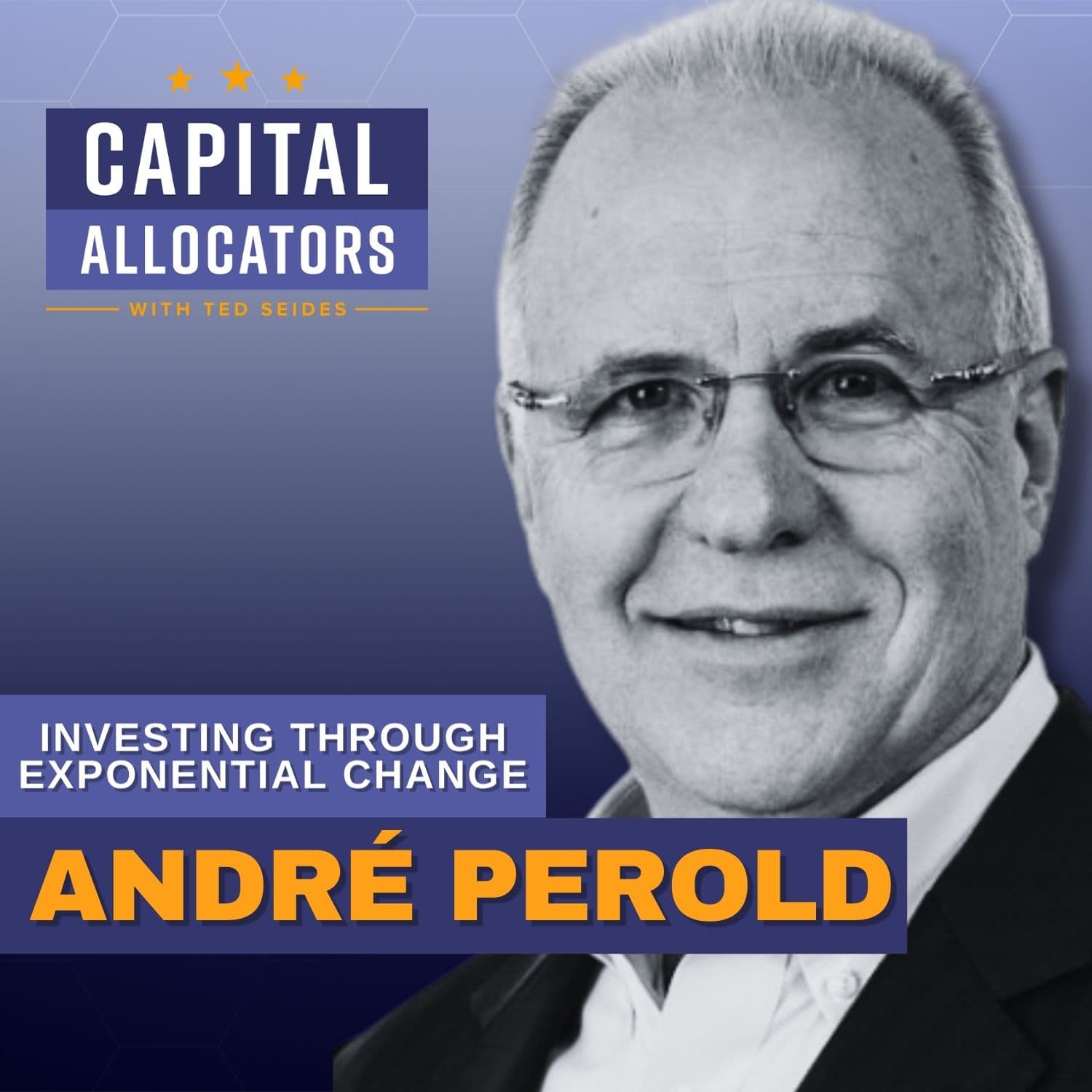
Andre Perold (High Vista Strategies) discusses investing amid exponential, fast-changing fundamentals paired with high valuations. He argues that “this time is different” is dangerous, yet exponential change is real, so investors must think long-term and be comfortable owning high-priced assets. He describes building an “AI sleeve” alongside an “anti-AI” allocation, using exponential math, and gaining an edge via narrow specialization and expert partnerships. He outlines High Vista’s “beautifully inefficient markets” approach to find alpha where competition is limited by capacity and deep expertise needs.
Guest backgrounds
Andre Perold is co-founder and CIO of High Vista Strategies (alternative asset manager overseeing about $14B). High Vista invests across biotech, lower middle market buyouts, early-stage venture, and specialty private credit.
Key claims and notable examples
AI and GLP-1 healthcare shifts; venture valuations rising (e.g., $20B vs $5B earlier); COVID exponential misestimation; compute as an AI bet; biotech micro/small-cap burning-money firms; private credit: short-dated loans where software risk is overblown (e.g., Salesforce terminal value vs credit repayment); avoids uncollateralized direct lending; favors collateralized, one-loan-at-a-time specialist underwriting and GP-solution lending; continuation vehicles for lower middle market “gem” businesses; Europe restructuring opportunities.
Written by AI. May contain mistakes. Listen to the episode to check what was said.
Chapters
Tap a time to open that second in VOInvesting in a Changing World
0:00 to 1:20
Discussion on the dynamics of high valuations and changing fundamentals in investing.
“You're seeing companies with extraordinary earnings growth, high valuations.”
Investing in a Changing World
2:43 to 3:55
Discussion on the dynamics of high valuations and changing fundamentals in investing.
“Most AI tools today are very good at sounding right, but can you actually trace it back to a filing transcript or specific passage that drove the answer?”
The Unique Investment Landscape
5:36 to 8:24
André Perold discusses the unique and exciting investment environment today.
“It's been a little while since you were on the show.”
Strategies for Narrow Specialization
8:24 to 13:06
Exploration of the importance of narrow specialization in investment strategies.
“When things are exciting, because there's so much change, they're also pretty challenging.”
Evolving Investment Strategies
13:06 to 14:00
Discussion on how investment strategies have evolved to seek outsized alpha opportunities.
“I'd love you to walk through some of the evolution of your business that started as one pool.”
Identifying Opportunities in Biotech Investing
14:00 to 18:00
Learn how biotech investments require specialization and the right partnerships.
“Sovereign wealth funds, pension funds, family offices, endowments, anything that is vaguely attractive will get looked at quickly, get analyzed, and money will flow to it.”
Small Company Buyouts: A Unique Investment Strategy
18:00 to 20:40
Explore the potential of investing in small company buyouts and partnering with local sponsors.
“Show me you're no longer constrained by the denominator.”
Navigating the Private Equity Landscape
20:40 to 24:00
Understand the dynamics of private equity, including continuation vehicles and market trends.
“They are also being held by their owners for longer.”
Using AI in Investment Assessment
24:00 to 26:40
Discover how AI tools are transforming the evaluation of investment opportunities.
“The opportunities for multiple expansion are much greater.”
The Role of Venture Capital in Disruption
26:40 to 28:01
Learn about the importance of venture capital in fostering disruptive innovation.
“The smaller managers doing small deals, small firms, they're at the bottom of the food chain.”
Show all 23 chapters
Venture Capital and AI: Investing in the Future
28:01 to 29:22
Discover the importance of venture capital in the context of AI and emerging technologies.
“The venture investments made in the 2010, 2012, when mobile applications were beginning, a few years after the iPhone came out.”
Accessing Venture Capital Opportunities
30:16 to 33:53
Understand how to gain access to top venture capital firms and evaluate opportunities.
“When you think about those two opportunity sets in venture, the established brands and newer firms, most people think of venture as a pure access game.”
Private Credit Strategies Explained
33:53 to 35:59
Explore the nuances and strategies involved in private credit investing.
“Before private credit became the juggernaut that it has over the last couple of years, that was one of the first strategies that you had carved out.”
Evaluating Opportunities in Private Credit
35:59 to 39:48
Learn about the exciting opportunities and risks in the private credit space.
“The multiples have come way down because the future value isn't known.”
Navigating Niche Investment Strategies
39:48 to 42:01
Discover niche strategies and opportunities in the current investment landscape.
“venture, and credit, I'm curious, Chris, what else you've dove into as a niche strategy?”
Understanding Alpha and Beta in Investments
42:01 to 43:28
Learn how alpha and beta interact in investment strategies.
“The recipe is put your money where there's alpha.”
Navigating Inefficient Markets
43:28 to 45:09
Explore the criteria for identifying and investing in inefficient markets.
“There's the basic buy and build at different points in time.”
Building and Sourcing Investment Strategies
45:09 to 46:29
Discover the internal processes for developing investment strategies in a firm.
“A lot of it is the availability of the right people.”
Evolving Organizational Culture and AI Adoption
46:29 to 47:36
Understand how organizational culture and AI impact investment firms.
“What are some of the small things you've found that have been effective in making that work?”
Future Directions for HyVista
47:36 to 48:23
Anticipate the future of investment strategies in a rapidly changing landscape.
“What's next over the next 5, 10 or 20 years for HyVista?”
Personal Insights and Life Lessons
48:23 to 49:58
Hear personal anecdotes that illustrate learning through play and adaptation.
“The next five years, the next 10 years is going to be doing these beautifully inefficient markets at a time of dramatic change.”
Reflections on Change and Its Impacts
49:58 to 50:49
Reflect on the realities of exponential change affecting various sectors.
“I say, hey, that's what everyone should do as an adult.”
Closing Thoughts and Future Aspirations
50:49 to 51:57
Conclude with reflections on upcoming personal and professional chapters.
“If the next five years are a chapter in your life, what's that chapter about?”
Transcript
Automatic transcript. May contain errors.0:00You're seeing companies with extraordinary earnings growth, high valuations. We're seeing venture investments in the many billions, 20 billion value, 5 billion before. How do you decide those? How do you think about investing in a world where the underlying fundamentals are changing very quickly, but the price is very high? If the price was low, would you believe it was changing? because the price is high, it's consistent with things going really well. When the price is high, you always recoil. Part of you needs to say something like, AI is going to work. 10 years from now, we'll be in a world we won't recognize.
0:40May not be the case. That's possible. Maybe only half of that's possible. It's still profound. Maybe only a quarter is possible. It's still profound. If I think that's true, It means that I need to think long-term and be comfortable owning things at high prices, knowing that in any normal investment environment, you'd never own them because this is different. Those are the most dangerous words in investing is saying this time is different, but this time is different.
1:19André Perold:I'm Ted Seides, and this is Capital Allocators. My guest on today's show is Andre Perrold, the co-founder and chief investment officer of High Vista Strategies, an alternative asset manager overseeing$14 billion that searches for alpha opportunities in structurally inefficient markets. Andre has twice been a past guest on the show, starting way back with episode number two, and both conversations are replayed on the feed. This time around, we start with Andre's assessment of the most exciting and unusual investment environment he's experienced, alongside his thoughts on how to build capabilities and construct portfolios to navigate exponential change.
2:05André Perold:We then turned to the beautifully inefficient markets where High Vista has built core capabilities across biotech, lower middle market buyouts, early stage venture, and specialty private credit. Before we get to the interview, we spend a lot of time on this podcast asking other people questions. This time, we're turning the tables on you. We just launched our latest audience survey. We want to learn more about who's listening, how you listen, and what we can do to make capital allocators even better. Links in the show notes. Thanks as always for listening and helping us compound knowledge and relationships.
2:38André Perold:Capital allocators is brought to you by AlphaSense. Here's something for you. Most AI tools today are very good at sounding right, but can you actually trace it back to a filing transcript or specific passage that drove the answer? Or are you just trusting the confidence of the output? For allocators, that's not a minor concern. A missed filing, incorrect source, or context that gets lost somewhere in a retrieval chain aren't edge cases. They're how decisions go wrong. AlphaSense is the AI platform built specifically for this. They own the content. Over 500 million curated documents from broker research and expert transcripts to filings and earnings calls.
3:28André Perold:And they own the retrieval layer on top of it. That means every answer can link back to an exact verifiable source. Because the answer is only as good as what's underneath it. And with AlphaSense, you know exactly what that is. See it for yourself. Try a free trial at alpha-sense.com slash capital. That's alphasense.com with a hyphen in the middle slash capital. Capital Allocators is also brought to you by Morningstar. Morningstar helps break down the barriers that stand between investors and their goals. Access public and private market research and data within your tools and AI platforms. Utilize indexes backed by independent research.
4:15André Perold:Navigate complex markets with clear and timely credit ratings, and help free up time with managed investment solutions and retirement services so you can move forward with greater confidence. Morningstar, nothing in your way. Visit Morningstar.com slash game on to discover your next move. Capital Allocators is also brought to you by Admired Leadership. Back in April on episode 497, I sat down with Randall Stutman, the executive coach behind Admired Leadership, who's advised more than 500 CEOs, including some of the most respected names in asset management. Randall introduced me to Alex, an AI leadership coach's team built on 40 years of proprietary research into what the best leaders actually do.
5:10André Perold:For investment professionals, that means your entire team gets on-demand coaching grounded in the behaviors that drive results and build the kind of followership that retains your top talent. We use Alex and our team at Capital Allocators swears by it. Try Alex for yourself at the link in our show notes, tryalex.admiredleadership.com. Please enjoy my conversation with Andre Herald. Andre, great to see you. Great to be here, Ted. It's been a little while since you were on the show. I'd love you to catch me up with how you're thinking about the investment landscape. A lot has happened over the years.
5:53We started Hyvesta in 2004. We went through the GFC. There's nothing like today. It is the most unique environment that I have ever seen. It's the most exciting investment environment that I've ever seen. It's the most uncertain environment that I've ever seen. The reason is there's so much change going on. It's exponential in nature in many dimensions. It's not just one thing is happening that's big. At the same time that it's exciting from a different perspective, if you care about the next generation, if you care about society, There's some very ugly things. Don't confuse exciting investing with a great world, great society.
6:44It's not that. For investing, it's fantastic. If you put on your investment lens, what makes it exciting? Innovation and rapid change means that if you try to invest well, you need an edge. Your choices are buy an index or you can try and outperform. Your ability to get an edge is much greater and easier when things are changing rapidly. If you were following General Motors decades ago, everyone knew GM, everyone followed it, nothing was changing. To get an edge is hard. At a time when things are changing exponentially, let's rattle off something. AI is exponential in what it's doing on many fronts.
7:29It's a tool for productivity that's helping firms get better margins. It's changing our lives, enabling wars. The facets of AI are hard to fathom, and on each dimension, it's exponential. What's happening in healthcare? Exponential change. The GLP-1 drugs are changing the outlook for our health in profound If you look at the budget deficit, we have$2 trillion and growing. Feels very exponential. The U.S. debt was$5 trillion in early 2000s. It's$40 trillion. It's not all good. A big deficit is very exciting for investing. If the alternative is no deficit, it's not as exciting. The deficit's a problem for the next gen.
8:16If you're investing, it's great. That's the conundrum that we're in. You've got to separate. You've got to wear two hats. What I think about the actual world we're in versus the investing world.
8:26André Perold:When things are exciting, because there's so much change, they're also pretty challenging. We'd love to get your sense of if you're able to capture some of these exciting movements, what are the challenges that you're facing and have to overcome to make that work? You're seeing companies with extraordinary earnings growth, high valuations. we're seeing venture investments in the many billions, 20 billion value, 5 billion before. How do you decide those? How do you think about investing in a world where the underlying fundamentals are changing very quickly, but the price is very high? If the price was low, would you believe it was changing?
9:09Because the price is high, it's consistent with things going really well. When the price is high, you always recoil. oil, part of you needs to say something like, AI is going to work. 10 years from now, we'll be in a world we won't recognize. May not be the case. That's possible. Maybe only half of that's possible. It's still profound. Maybe only a quarter is possible. It's still profound. If I think that's true, it means that I need to think long-term and be comfortable owning things at high prices, knowing that in any normal investment environment, you'd never own them because this is different.
9:51Those are the most dangerous words in investing is saying this time is different, but this time is different. The question is, how do you invest well? So one way to keep your head straight is to say, I'm going to create an AI sleeve on the assumption it will be different. I'm not going to put all my money in it. I'm going to create that sleep because I need to free myself from the idea that I can compare AI and non-AI investments and decide in each day which is the better one. Hard to do. The rest of your money is the anti-AI. You can be good at building a sleep that if AI turns out to be this incredible evolution, innovation over time, will do really well.
10:35Then you need to think, if that's true, what would I invest in? It's a different mindset. You need two sides of your brain at work because we're so programmed to compare investments of all kinds with each other. You can't really compare them easily. That's a way trying to keep our head straight and how to get it right. How do you think about navigating the investment world? You need to try to understand exponential math. We're very bad at exponential math. In COVID, we were going around the table here at High Vista, asking people, how many COVID cases would there be in the country? The numbers were ridiculously low.
11:17No one could imagine an exponential phenomenon. Of course, the whole world got it. If it's truly exponential for the long time, there's almost no price you shouldn't pay, but you're not going to pay. That's hard. So you need to find a way to get an edge. The only way we know to get an edge is to partner with experts in increasingly narrow areas. For example, if you think AI has legs, how do you figure it out? We've spent a lot of time trying to think where in AI should we place our bets? We have a lot riding on compute. We decided if AI was going to work, compute would be very big. We have found hard tech and other experts to work with to try and figure out where to do it.
12:02You need that narrow specialization to help you build a picture of what's going on to have some conviction. That's how we do. In all of these areas of evolution, rapid change, you have to do that.
12:15André Perold:What are some of the other areas where you found that narrow specialization that you can identify and partner with? We do a lot of narrow specialization in everything we do. It's a hallmark of high vista. We do a lot in biotech. Some things in biotech might be exponential in change GLP-1 drugs is a systemic thing in healthcare In PE, we're trying to invest in a roofing company Small buyout How do you figure out that the roofing companies And you need to be with someone who really knows that space We did a bottling company in small buyouts We have evolved to where in everything we do We look for very local specialization It's a vast array of local specialists that inform these various portfolios that we run that then aggravate up.
13:08André Perold:I'd love you to walk through some of the evolution of your business that started as one pool. Now there's a couple other strategies within that. We started off with a multi-asset mandate. Look around the world for the best opportunities. That's an important piece of what we do. There you get a sense from a top-down point of view, where are you cross-comparing against different areas? What are the best places to go to? It's bottom-up, but you're looking top-down and you're very macro-aware. We've also realized that over time, things get competed away very fast. The world has become much more sophisticated.
13:50The firms that invest are super sophisticated today. Their clients are sophisticated today. If you look at what the clients can do today versus in the past, it's incredible to see the sophistication of clients across the board. Sovereign wealth funds, pension funds, family offices, endowments, anything that is vaguely attractive will get looked at quickly, get analyzed, and money will flow to it. We learned that, saw that happen when we started. Simple value investing was a great strategy. Today, that's no longer interesting. we said, where can we find outsized alpha that is endearing? That sounds like an oxymoron, because if it's outsized, it shouldn't last.
14:38It should get competed away. We've come across a range of areas where we think it can occur. They tend to be areas with a large number of opportunities, small opportunities, where you need deep specialization, where there's big upside. An example would be in biotech equities. Micro-cap, small-cap biotech stocks, they're all burning money in pursuit of a therapy or two or three. They're either going to die if it fails or if they succeed, they'll get sold to pharma. They seldom have any revenues. They're burning money. They're diluting shareholders, capital inefficient, risky, and you need to know the science.
15:22You need that specialization. Big money can't come and buy and sell easily. So the big money in biotech is buy and hold. The small money can come in and move around. We have found a way to find partners who are small, extraordinary investors who know the science and can figure it out. They run small amounts of money that can put up big numbers because they can buy and sell while the big guys can't.
15:49André Perold:What have you learned from doing that in biotech over the years about how to figure out who's good? When your DNA is to work with lots of experts, it becomes wash, rinse, repeat. There's certain characteristics you look for. They are basic characteristics to working with any expert. How good are they? Are they original thinkers. How do they form judgments? You have to know the science. You have to also be what is a traditional great investor. You need to know when to buy or sell. If there's bad news and the stock is down, do you sell or buy or do you buy more? If the stock is up, do you sell, take profits or buy even more?
16:28Those judgments are investment skills that transcend any area. You've got to make those judgments. We've been doing that forever. Also, in the case of biotech, as an example, it's the small firms that do well. So how do you get a brilliant person who's running a small amount of money? Another oxymoron. A brilliant person is running a small, they should have a lot of money. Turns out there's a large supply of brilliant people at bigger firms who leave to form their own firm, and we will back them. They attract capital. Now they're big. Then we have a question, what do we do? That's a high-class problem to have.
17:07There's that dimension as to how sized are they for the opportunity set, and you can be too big or not. Then all the other normal questions, are they still aligned? Are they still coming to work? That's our business every single day. Wash, rinse, repeat.
17:23André Perold:On the back end, getting to the point where you think a particular manager who's been successful for you may not be able to continue to deliver that going forward. And let's assume all the durable characteristics are still in place. They're still hungry. They're still coming to work. They're still motivated. They're still aligned with you. What have been the determinants of the times when you've decided to exit one of the biotech managers? It's seldom performance. It's more the alignment isn't there. When someone has been successful and they have a large pool, it's a real conversation. Show me that this larger denominator, you can still do well.
18:02Show me you're no longer constrained by the denominator. Sometimes you get a good answer. An answer might be, I never was. I was always running a strategy that was much more liquid. I'll show you the statistics. Nothing's changed. That's fine. In other cases, you see big changes because size is a real issue in the space. Then you have to make a decision.
18:26André Perold:Biotech was one of the original strategies you offered in addition to the diversified multi-asset strategy. What have the other ones been that you've grown into? One is small company buyouts. Small company buyouts is the bottom of the food chain of private equity. Mostly family-owned businesses being sold that have a future that is fantastic. If you can roll it up, fix it up, morph it into something exciting, that you can buy at a low price. Families don't sell companies in auctions. They care very much who they sell to. There's thousands of these available. If we can find small PE players, partner with them, put some money in their funds, invest alongside them directly as well, we can find the right ones.
19:17Fantastic way to do it.
19:19André Perold:What are some of the things you've learned from doing that over the years that might be not obvious? Let's just go find some smart people with a good track record in this space. The thing to emphasize is the scale. Your ability to look across thousands of opportunities is profoundly valuable. There are tens of thousands of small companies. How do you pick them? You need to follow small sponsors, fund sizes of a few hundred million. Fundless sponsors, independent sponsors have no funds. They may have come from PE. There's a whole thing going on with PE where there's no longer carry available and they leave a PE firm and now they have their own thing, but they don't have a fund.
20:00There's 2 ,000 such either fundless or small sponsors in total. When you have that breadth, we have a brand. Most investments we've ever made are working with partners that are early in that entity. We back early players. That's when the motivation is the greatest, when they're most able to put up the numbers. That's a fantastic recipe.
20:25André Perold:You mentioned that there's a wave of people spinning out of larger buyout funds because the carry isn't there. I'd love you to talk more about the implications of that dynamic in the private equity landscape more broadly than what you're doing. There's several things going on. One is firms are private for longer. They are also being held by their owners for longer. If you own a private, you can tell it to someone else who's private. Few of these go public. The public firms come out of VC, not out of PE. PE is not a breeding ground for public firms. It's a place for concentrated ownership to own, fix up, and create a firm from A to B.
21:07Then you exit either to a strategic or to another PE firm, seldom do you go public. Increasingly, it's the same owner wants to hang on to it. That leads to continuation vehicles, GP-led secondaries, same thing. Because it's private for longer, there's fewer realizations, so there's much less carry. You've had a phenomenon that people tended to overpay a few years ago. Those are going to struggle to hurdle and generate carry. If you're working at one of these firms, what do you do? Is it worth hanging on for a small carry or you go somewhere else for a better opportunity? Secondly, it's leading to this continuation vehicle world where we're also doing things.
21:48That's a rich hunting ground for fantastic companies in the lower middle market area. The low DPI is a problem. A private equity business is simple. You have fund N, then you've got to raise fund N plus one. Fund N is what it is. It's invested. The question is, can you raise fund N plus one? For a lot of these firms, raising fund N plus one is going to be hard. It's going to be hard to raise a bigger fund. Some of them won't be able to raise the next fund. That's leading to the talent is then shifting. We partner with that talent.
22:23André Perold:You mentioned the continuation vehicles, direct investing as other prongs. How have you leaned into that side of pursuing small buyouts? In the continuation vehicles, we've hired a team that is now directly looking at continuation vehicles. The beauty there is you can find these gem businesses. If you're a PE sponsor and you have a gem business, there's much more to be done with the business. You can keep rolling up stuff. You can keep adding to it and get a much higher value down the road. Why do you want to sell it? Someone has to take that business and continue to morph it. You're in the best position to do that.
23:05Better you keep it and fix it, yet you want DPI. The continuation vehicle is a way to bring in new investors to take out investors who want out. Our whole idea is to go in there, create a capability to do exactly that. look for those gem businesses. By definition, those are the ones they want to keep.
23:25André Perold:As you look at the universe of potential opportunities for continuation vehicles, how do you assess what portion of those are a real gem business compared to whatever else is being put into CVs? It's hard to know, except there's a bias towards the gems. The gems is a combination of what can be done with them, but also the price at which you can get in. In some cases, you can get in very attractive prices. It's a combination of the price and the firm itself. The lower middle market is especially interesting because the prices are lower. The opportunities for multiple expansion are much greater.
24:04That's true in CVs as well. How much of those are gems versus not? There's a lot of stuff that isn't, but it's going to be hard to do a real CV if it's not a gem. We're not saying all gem. There's a range. Some of the stuff is pretty phenomenal.
24:19André Perold:Has the team tilted their underwriting process to direct assets from what was a fund underwriting process? We've been doing co-invests for a very long time. A co-invest with a sponsor is different than a GP-led investment. It's usually an investment they're making that is new for them, new for us. We'll work with them, but we have to do a lot of our own work. With a GP-led, you have a lot more information working with a sponsor and you see their whole history with that firm. It's a different underwriting. When there are more and more of these opportunities for all the structural dynamics in the industry, how do you go about finding the time and the process to assess potential opportunities?
Read the full transcript
25:09The inbox, whether it's stuff we didn't solicit or did, is big these days. We have built AI tools to help us do it. We work inside an AI sandbox that's secure, need to protect our data and everything. We have created an AI robot to imagine it's the investor. How would it evaluate each of these opportunities? It's an AI agent that takes the decks, gets industry information, gets information about the sponsor, gets information about the management team, gets information about the industry and the opportunity set. We'll build a little model. We'll create a scorecard. We've given it what the scorecard entries are.
25:55Client concentration would be an example. As a risk mid, you have a whole pile of things that you are scoring it on. And if it scores high, the team will look at it and say, wow, this looks incredible. Then we need to do the work to make sure that the AI did it correctly. We're running a back test to see if we had done this in the past, how well would it have done without any intervention on our product? It's an attempt to say, use AI to get you a long way without human intervention. Where can the humans spend the time where they are the best?
26:28André Perold:As you're able to put more money in the ground, the co-invests and the funds in that space, there's been this DPI problem across private equity. How do you think about what that looks like in smaller managers compared to the industry as a whole? The smaller managers doing small deals, small firms, they're at the bottom of the food chain. They are selling to the next layer up of PE that sells to the next layer up of PE, ultimately to the large cap PE. It's toughest at the large end where the entry multiples are the highest. The carry problem is the highest. We have found the DPI is much less of an issue in the lower middle market.
27:10It's still there, but it's nothing as bad as at the high end.
27:14André Perold:Let's move on to the next category, maybe venture. How have you thought about prosecuting that opportunity? Venture is a fantastic area. If you think about AI, there's non-AI venture, but most of venture today is basically AI. There's the AI side of how you invest, and there's the anti-AI. So if you think of small buyouts, roofing company, healthcare delivery services company, an engine testing company, it's not AI. It's the anti-AI. On the other side, venture is all about disruption. You want to be a disruptor. Exposure to venture and great VC firms is a fantastic way to be a disruptor. A balanced portfolio, you want both.
27:57Venture is a way of doing it. It's hard to time venture. The venture investments made in the 2010, 2012, when mobile applications were beginning, a few years after the iPhone came out. Incredible returns from that period. But would you have known at the time? I don't think so. Would you have known that crypto would have worked out as well as it has? You have to be in venture. You got to be thoughtful. Who are you partnering with? Do you partner with durable firms, the bigger firms that have a lot of money, have a lot of clout? We always love newer firms. Partners at the big firms leave and form a new firm.
28:38We do both. Then do you partner with highly specialized? Some of the VCs are super specialized in what they do. If you think AI will change the world profoundly down the road, which we do, how exactly? We don't. How much exactly? We don't. If you think there's a chance it's real, that five to 10 years from now, it's a world we don't really recognize, You need to be invested in things like VC. It's a critical piece of an AI strategy. A balanced portfolio will have that with other things. You'll have biotech, you'll have small biots and other things. The AI piece and venture is just a fantastic way.
29:18It's an arrow in that AI quiver.
29:21André Perold:We're going to take a quick break in the action to tell you about Ridgeline. Ridgeline makes your day unrecognizable. That's how refreshingly different it is from legacy investment management technology. With Ridgeline's front-to-back AI-native platform, your typical tech pains disappear. No integration headaches, no data discrepancies, and no upgrade cycles. Instead, you get real-time data flowing through everything from portfolio accounting to reporting to reconciliation, trading, compliance, and more. In the AI era, asset and wealth management firms moving to Ridgeline gain a decided advantage.
30:03André Perold:That's why customers call it miraculous, game-changing, and an awakening. If that's not how you would describe your investment management tech, request a demo at ridgeline.ai. And now, back to the show. When you think about those two opportunity sets in venture, the established brands and newer firms, most people think of venture as a pure access game. On that first side, how do you go about getting access to firms that already are well known as top players in the space? In our case, we're fortunate to have been doing VC for decades. We have longstanding relationships. We have access that we keep nurturing.
30:50That part is a continuation of what we have always done.
30:54André Perold:Outside of it, most of the firms that have been stars in the venture world have stayed that way. Occasionally, there's one that falls off. How have you thought about trying to be rigorous about, well, we think something might be wrong here. We should move on. But if we're wrong, we're done. it's nuanced because it's so relationship driven that not continuing is basically saying we're done this is how it works it's not like in a hedge fund you can take out half your position it's a critical piece of the value add to say we want to re-up in size with these in those we are going to pass knowing it may be a mistake for us on average these are good decisions you know that you're ending a relationship potentially.
31:47You've got to think it through.
31:48André Perold:How obvious is it to you when you decide to not continue with someone who has a longstanding pedigree? Some of it is easier. It's a version of what I was saying in the biotech stuff. You were the venture firm. They haven't added any partners. They're raising a ton of money. But the organization isn't adapting to the capital flowing in. Therefore, what they're doing is different from what they were doing in the past in an obvious way. Then you have to say, why all of a sudden are they doing bigger investments that they've never done before? The same people with no additional resources. Why is that still a good bet?
32:29Sometimes you can see maybe there's a path to that. Sometimes this is clear. Can't be.
32:34André Perold:How about on the lesser known manager side, huge universe of those venture capital managers, however many people used to be at Google or Meta or wherever else they're coming out of now. How do you filter through to decide the ones that you think are more likely to be successful, even knowing they don't have that many at bats? A lot of the ones that we do are experienced people with great track records coming out of big firms. Sometimes it's someone out of firm A and someone out of firm B. They've done some investing together. They may sit on boards together. They know each other well. They decide to team up.
33:17We look at their track records. The track records take work to sort out. We do the work. You try and understand the firm's strategy and everything else. Usually other people see the same thing. It's often clear these are superstars. They're going places. Then it's a question of can we get access? You can get in more easily than you think. You have to ask why. It's the Groucho Marx problem. Why do you want to join a club that'll have you? That's called investing. Investing is all about you joining clubs that'll have you. How you do that well, that's our skill set.
33:53André Perold:Before private credit became the juggernaut that it has over the last couple of years, that was one of the first strategies that you had carved out. Would love to hear what's happened with your private credit investing. Private credit's a fantastic space. It's a space of many things. Credit's just a contract. Someone says, I'll pay you X under these conditions. There's direct lending, unsecured. If there's EBITDA, you get paid back. If there isn't, you don't. There's collateralized lending. Our credit strategy is always based on where can I find great borrowers where making a loan in size is what they need.
34:35And fashion alone that's highly collateralized, that meets our needs, takes a lot of work. For that work, we solve their problem, but we get paid an extra return. It's a return for the work we're putting in. to return for complexity. If you can do those well, it's great. There's a lot of hoopla today, a lot of concern about software and private credit. The software thing is not something we have done. It's out there. It's overblown. We think a lot of the software will be okay because the credits are short-term loans. They're not long dated. The software, you just need it to pay off within a few years and you're going to be okay.
35:16it's not like if you own a software firm where if you own the equity the terminal value of that software firm is critical terminal value at a time of disruption is one of the hardest things to sort out if you take salesforce a great crm its market cap peaked over 300 billion it's down by 40 percent in less than a year because of the fear of disruption its earnings growth is fantastic. The earnings growth continues high and expectations are for it to continue to be spectacular through something like 2028. Beyond that, we don't know. It's croaked in price. The multiples have come way down because the future value isn't known.
36:02The earnings are great. Could you lend to Salesforce and be okay all day? You want to be an equity owner of Salesforce, you need to understand terminal value at a time of enormous disruption. On the credit side, there's a lot of software that could be just fine. Even though software is suffering, it doesn't mean the loans are a problem.
36:21André Perold:The notion that the loans are short dated, you only need to get paid back, almost presumes that someone else is going to take you out. How do you think about when you're underwriting a private credit manager, they may make a short dated loan. If there's no one else take them out, they're the ones who need to roll to keep the company going. So the end game in credit, it's rolling. Where there's a risk of impairment, it's a negotiation. It's extension. Extension on what terms? If you're sufficiently collateralized, then the issue is you can take a fair hit and still get your money back. We do most of our loans with originators.
36:59We do one loan at a time. We'll do an energy loan. We'll do a transitional real estate loan. We'll do a housing loan. We'll do an equipment loan, each with a specialist in that area. Equipment lending needs a specialist. You wouldn't do it with a generalist. We have a detailed, very sharp pencil on what is the loan, what is the collateral, what would have to happen for it to be impaired in the way you're describing, where things get worse. Maybe you're in a negotiation, an extension. You have to handicap that risk. That's part of the math.
37:35André Perold:In the broad universe of types of loans you could make, where have you found the most exciting opportunities? It's in GP solutions. GPs have a need for money. GPs have to commit to their funds. They have to raise money for their funds. They have to show they can't always raise the money. If we can structure a solution through a form of a loan that helps them do that, It's an interesting part of the credit space is the GP solution space. What are some of the other ones you like? They come and go. Energy was fantastic. These days, everyone's back into energy. It's less interesting. Data centers are huge and massive.
38:17There's only so much that the end investors want to do in data centers. So you can get some fantastic loans in the data center space. Someone's building a data center. It's a construction loan. under certain conditions. It's highly collateralized. There are deposits people put up and you get the deposits the minute you cross thresholds. The collateral is directly or indirectly related to a hyperscaler often. You've got to think about their credit. What if it goes wrong? But it's become a fantastic space. Are there areas in private credit you're decidedly avoiding? We've always avoided direct lending.
38:54Lending to sponsors, uncollateralized, where you make a loan and you hope there's enough profits. That's the vast bulk of private credit is direct lending. So we've always avoided that. Why? Because we want to see the collateral. We want to get paid for complexity. It's a far more commodity space in the lending markets. It used to be you got very high returns. We're not sure you're getting paid enough for the risks. If things don't work, you're arm wrestling the PE sponsor as to how to renegotiate the loan to extend it if they can't exit their position in the firm that they own. We can't easily get an edge there.
39:35We think it's a pretty commoditized space. The bespoke loans where you're solving someone's problem one loan at a time, there's a lot of complexity, but a lot of value you can create.
39:47André Perold:In addition to these four, biotech, private equity, venture, and credit, I'm curious, Chris, what else you've dove into as a niche strategy? There's a lot of niche stuff you can do. It's not clear how long lasting it is. These others we've talked about, we're deep in the weeds. We see it as being pretty enduring. I'll give an example. Japan activism is a very interesting strategy, but we don't have to stay there. We'll go there opportunistically in a multi-asset mandate. Long short traded credits. Is it enduring? Not so clear. Is it a niche that has the moats that these other niches we've talked about have?
40:29No. Can others carton onto it and go and compete away? Yes. We expect that'll happen. Right now, they're very interesting. That's being opportunistic in the moment to take advantage of them. What are some of those other opportunities that you have your eye on today? There's interesting things going on in Europe. If you look at Europe compared to the U.S. and emerging markets, slower growth, it's messy. There are fantastic opportunities, for example, in restructuring. There are opportunities cross-jurisdictional. Every country is its own jurisdiction. A firm is doing business in two or three or four or five jurisdictions, or there are several firms involved.
41:10There's an issue to be resolved. If you can find a way to cut across those and solve a problem, you've got something real. In Europe, there are great franchises that people don't seem to care about. It's non-AI. Europe's an interesting place for less flashy things, but phenomenal stuff if you're set up for it.
41:31André Perold:If you take a step back with your flagship multi-asset portfolio, you have a couple of core prongs in these activities and then this series of tactical opportunities that come and go. How have you brought that all together into a single strategy? The compass has always been, where can we find alpha? In a multi-asset fund, where can we find interesting opportunities through a lens of alpha. What is scarce is alpha. Beta, you can get cheaply. The recipe is put your money where there's alpha. For each investment that has alpha comes with some exposure to a market, beta. You say, okay, I put my money in all these places where there's alpha.
42:18What is the beta I'm getting from each? You aggregate the beta. Then you ask, is the beta where I want it to be. There are two investment processes. The main one, what we do every day, come to work, bottom up, find alpha. Then we run a beta management process that adds it all up, and then we true it up to the beta we want. So if we're way underweight Europe because we didn't find much alpha in Europe, we'll add to Europe to get the beta right. If we like that beta, not always. There's a beta process and an alpha process. The firm is about alpha. The beta thing is important, but side process. How do you calibrate your desired beta selection?
42:59It's mostly broad market weights. We're going to have a strong bias to the U.S. We find a lot of alpha in the U.S. We'll find alpha in China. We'll find other stuff in Asia. We'll find stuff in Europe. It's not that different from the broad market beta weights.
43:17André Perold:Over the last bunch of years, you've gone from that one multi-asset strategy to a whole set of different things in different ways. There's the basic buy and build at different points in time. I would love you to take me through each step of how you did that, the decisions you made to buy or build along the way. The main thing was the realization, if we could find these inefficient markets, I call them beautifully inefficient markets. There are a lot of inefficient markets that are ugly. You can be right about some company in Africa will make money, wrong that you'll get your money back. Because when they make money, things go wrong.
44:00The government will tax them. Insiders will transfer price the money away. There are a lot of inefficient markets you don't want to touch. The beautifully inefficient ones are the ones where it's very clean. If you can figure it out, it'll work. It needs a moat from competition. What protects you is limited capacity and the need for deep specialization. Once we saw that recipe, we said, wow, where can we do this? We made some. We acquired others. So we made the biotech and the credit. We acquired the small buyouts and the venture capitalists in continuation vehicles we are making. We've added a team that is doing that.
44:40It's related to the small buyout thing that we have now. that we acquired a number of years ago.
44:46André Perold:What does that process look like internally when you know there's a strategy you're interested and you're trying to figure out how to go about building it or buying it? A lot of it is understand the opportunity. You say to yourself, there are opportunities. How would I source them? How would I underwrite them? What team would I require? How protected is it? Are they moats? A lot of it is the availability of the right people. Sourcing is the name of the game. Our firm is built on making connections. It's finding the right people. Some of that has all happened through COVID, which changed a lot in the way people were working.
45:27André Perold:How has the culture of the organization evolved over the years? There's many aspects to culture. One is, what is hardcore will never waver from it. rigorous thinking, honest communication, being very frank, having debate about an investment, we'll always do that. Increasingly, you need to source further afield. There's not a lot of investment opportunities sitting here in the Boston Common. There's more opportunities walking down Fifth Avenue. Even there, there are a lot of people chasing them. How you source is the single biggest thing. Where and how? You've got to locate yourself in those places.
46:07Increasingly, we find we need to go further afield. Everyone comes to work every day. How do you build a culture where you can have that rigor? People know each other, yet more of it is done remotely. It's a constant tension because you're trying to get the best of both worlds. You want to be remote, but you want the culture to be intact.
46:29André Perold:What are some of the small things you've found that have been effective in making that work? Four times a year at a minimum, maybe five, maybe six. Everyone comes to the office. We do a lot of sessions. We do town halls. We'll have company outings. We'll have deep dive investment sessions, meetings with a senior leadership about a question such as data. What do we do about data? How important is data? Critical. Where can we do better? What skill sets do we need? Who do we need to hire? We had a phenomenal session on each team. We talk about if they had to build a robot, what would it be? In the presentation, they came out and said, oh yeah, I've already built it.
47:14Don't worry. Here it is. It was fantastic. Things like that where people talk about what they're doing. The rate of adoption of AI in each team has been amazing. As they talk about it, everyone learns. The value of being together and sharing these ideas, it's profoundly valuable. You do that enough, the place keeps humming, but you got to do it enough and you have to do it well. What's next over the next 5, 10 or 20 years for HyVista? We love the recipe of beautifully inefficient markets. It's looking for new opportunities to do those. We have a bunch we're looking at as we speak. as you talk about the next five or 10 years, we just have to understand AI is big.
47:58It's going to be a different world. The nature of investing, the nature of competition, it's all going to change. How do we do well for our clients, put up great numbers in a world of dramatic change? That's what we need to do. To have a compass that keeps you balanced, have an edge, it's exciting. You got to keep at it. You can't relax. The next five years, the next 10 years is going to be doing these beautifully inefficient markets at a time of dramatic change.
48:32André Perold:What will it take for both you and your team, the partners that you're working with, to be able to stay on the ball in a time where there is such rapid change? It's a version of what I said about the AI robots and the adoption It's incredible to see how people naturally are drawn to AI If I say, hey, Ted, I don't have to tell you it's cold outside, take a sweater You know if you take a sweater, you're better off The team naturally is adopting AI, not because you're pushing them into it Because they're finding it helpful, they get much more done If we are that kind of firm where we give people the ability to do that, make available the resources that they can innovate in what they do.
49:22André Perold:All right, Andre, I want to make sure I ask you a couple of additional closing questions from the last time we talked. What's the most rewarding thing you do outside of work? My wife and I are blessed with a small, young grandson, our first, Remy. we watch him play and learn. It's fantastic to watch. What is so interesting is you see how much you learn by playing as a kid. Then you draw the parallel with AI. The way to learn AI is to play. You prompt, you try, you learn. If you can't play, improvise and be comfortable just being a kid in AI, you can. So we watch Remy. I say, hey, that's what everyone should do as an adult.
50:07It's fantastic.
50:09André Perold:What are you unusually good at that most people don't know about? I love making things, fixing things. I'm a good carpenter, plumber, electrician. I used to do it as a kid. I still love doing it. It's therapeutic. What have you changed your mind about the last few years? The single biggest thing is coming to believe that exponential change is real on many dimensions. War is never going away. It's too easy to make a drone and shoot at someone. I don't see deficits going away for a long time. I don't see AI suddenly withering. I don't see innovations in healthcare disappearing. It's a different mindset.
50:53It's a very big change. Andre, last one.
50:56André Perold:If the next five years are a chapter in your life, what's that chapter about? I go back to one of my first chapters, which is I was a pretty hardcore programmer back in the day. You play with Claude Code, Claude Cowork, Vibe Code. It's amazing. I want to program my calendar. I want to program my email. I want to program a lot of this. And only I can do it because it's me. It's my life. It's my tastes. I'm now playing with it and doing it. It's exciting. Andre, always so much fun to catch up. Thanks for taking the time. Thanks, Ted. Thanks for listening all the way to the end. If you made it this far, how about one ask from me?
51:38André Perold:Tell one friend about the show. It's the best way to keep growing this incredible community. Thanks so much. And until the next one, stay curious and keep compounding knowledge, relationships, and capital a little bit at a time. All opinions expressed by TED and podcast guests are solely their own opinions and do not reflect the opinion of capital allocators or their firms. This podcast is for informational purposes only and should not be relied upon as a basis for investment decisions. Clients of capital allocators or podcast guests may maintain positions and securities discussed on this podcast.
From the publisher
André Perold is the co-founder and CIO of HighVista Strategies, an alternative asset manager overseeing $14 billion that searches for alpha opportunities in structurally inefficient markets. André has twice been a past guest on the show, starting way back with episode #2 and both conversations are replayed on the feed.
This conversation starts with André's assessment of the most exciting and unusual investment environment he has experienced, alongside his thoughts on how to build capabilities and construct portfolios to navigate exponential change. We then turn to the beautifully inefficient markets where HighVista has built core capabilities across biotech, lower middle-market buyouts, early-stage venture, and specialty private credit.
Take our audience survey. Tell us more about you, how you listen, and what we can do to make the podcast and platform better.
Try ALEX by Admired Leadership.
Learn More
Follow Ted on X at @tseides or LinkedIn
Subscribe to the mailing list
Access Transcript with Premium Membership
Editing and post-production work for this episode was provided by The Podcast Consultant (https://thepodcastconsultant.com)