In short
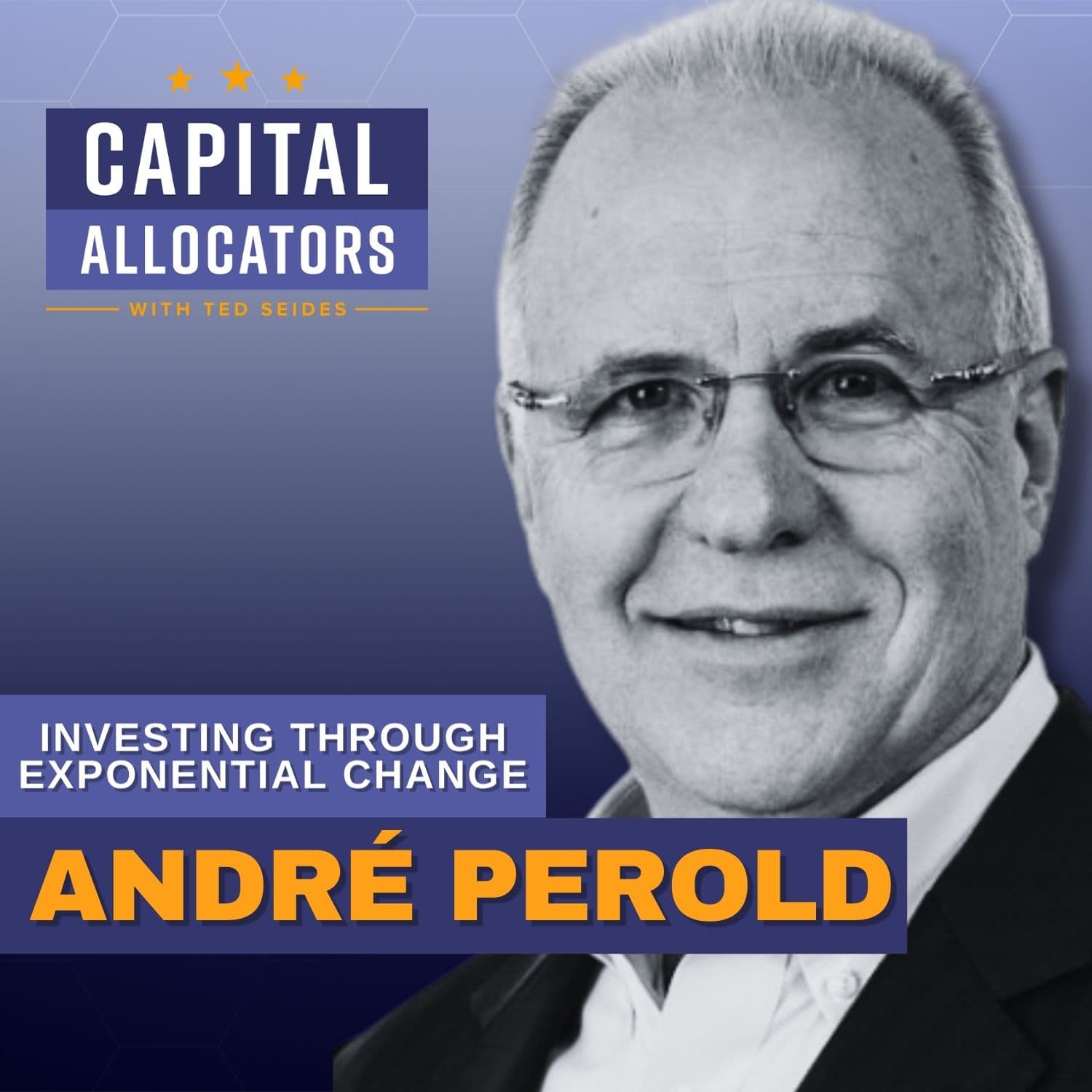
Andre Perold (High Vista) discusses how investing should be taught and practiced: active vs passive, finding “edge,” risk measurement at the portfolio level (volatility/correlation), illiquidity and lockups, manager selection, and where opportunities exist in a crowded market. He also reflects on luck vs skill using subprime as an example.
Guest backgrounds
Andre Perold is a Harvard Business School George Gund Professor of Finance and Banking Emeritus. He taught for 30+ years, is known for the case-study classroom, authored/co-authored 27 journal articles, 2 books, and 100+ case studies, and has been voted Harvard’s most outstanding professor (Business Week survey). He is a Vanguard board member and is an active investor/manager at High Vista.
Key claims
Indexing is appropriate when you lack an edge; most investors have no edge most of the time. Risk should be defined as probability of losing X dollars, not just volatility. Illiquid investments still carry redemption, short-selling, and opportunity-cost risks. Fees matter only relative to net-of-fee returns; talent is expensive.
Notable examples
Harvard case studies (e.g., RJR Nabisco LBO, Bankers Trust derivatives, long-term capital management, leveraged loans, endowment cases). Subprime short as a mix of skill, timing, and luck; and a personal story about Yale’s managers hiding internal conflict.
Written by AI. May contain mistakes. Listen to the episode to check what was said.
Chapters
Tap a time to open that second in VOAndré Perold's Academic Journey
0:06 to 1:19
Explore André Perold's extensive career in academia and investment management.
“Most AI tools today are very good at sounding right.”
André Perold's Academic Journey
2:08 to 3:06
Explore André Perold's extensive career in academia and investment management.
“Back in April on episode 497, I sat down with Randall Stutman, the executive coach behind Admired Leadership, who's advised more than 500 CEOs, including some of the most respected names in asset management.”
André Perold's Academic Journey
3:55 to 6:46
Explore André Perold's extensive career in academia and investment management.
“You see, in his prior career, he spent over 30 years teaching at the Harvard Business School, where he is the George Gund Professor of Finance and Banking Emeritus.”
Teaching Philosophy and Classroom Dynamics
6:46 to 12:14
Discussing the challenges and rewards of teaching at Harvard Business School.
“How did you first get interested in investing?”
Active vs. Passive Investment Strategies
12:14 to 14:00
André shares insights on the active versus passive investment management debate.
“Look, the good students are good students in any setting.”
The Challenge of Unique Investments
14:00 to 17:28
Exploration of the unique challenges faced by institutions in investing, emphasizing the need for commitment and expertise.
“when you're doing something very unique, it requires a heroic effort all the time to make sure that you can actually pull it off.”
Navigating Active vs Passive Management
17:28 to 21:57
Discussion on the dynamics between active and passive management, highlighting Vanguard's approach and the concept of having an investment edge.
“What was the light bulb that went off in your head that said, hey, I got to go do this?”
Understanding Risk in Investments
21:57 to 24:25
Insights into how risk is measured and managed in investments, including the significance of volatility and the nature of illiquid assets.
“So risk, if you're measuring it in the markets, commonly volatility, lots of investors think that's not a great metric of risk.”
Evaluating Investment Talent and Opportunities
24:25 to 28:00
Exploration of the complexities in assessing investment managers and the challenges of finding opportunities in competitive markets.
“So I think one has to think of illiquid investments as risky in many ways.”
The Challenges of Investing
28:00 to 30:27
Explore the complexities and dynamics of making investment decisions in today's market.
“If you have a good idea, the odds are high.”
Show all 15 chapters
Identifying Niche Investment Opportunities
31:26 to 36:20
Discover how to find and evaluate niche investment areas for better returns.
“Are there any particular niches that you're excited about today?”
Luck vs. Skill in Investing
36:20 to 42:01
Understand the fine line between luck and skill in investment success and decision-making.
“to be looking opportunistically around the world?”
Building Strong Manager Relationships
42:01 to 44:47
Learn how to foster partnership and effective communication with investment managers.
“I think the way we think about it is, firstly, investing with a manager is only the starting point for the relationship.”
Navigating Market Challenges and Risks
44:48 to 47:04
Explore current challenges in capital markets and the importance of being prepared for downturns.
“I think a lot of the time it is that because that's where it's harder to put money to work.”
Life Lessons and Investment Philosophy
47:05 to 53:02
Discover valuable life and investment insights from personal reflections and experiences.
“And there I worry about, you know, it may not be in my lifetime, but in my kids' lifetime, and I worry a lot about that.”
Transcript
Automatic transcript. May contain errors.0:01André Perold:Capital Allocators is brought to you by AlphaSense. Here's something for you. Most AI tools today are very good at sounding right. But can you actually trace it back to a filing, transcript, or specific passage that drove the answer? Or are you just trusting the confidence of the output? For allocators, that's not a minor concern. A missed filing, incorrect source, or context that gets lost somewhere in a retrieval chain aren't edge cases. They're how decisions go wrong. AlphaSense is the AI platform built specifically for this. They own the content, over 500 million curated documents from broker research and expert transcripts to filings and earnings calls.
0:51André Perold:And they own the retrieval layer on top of it. That means every answer can link back to an exact verifiable source. Because the answer is only as good as what's underneath it. And with AlphaSense, you know exactly what that is. See it for yourself. Try a free trial at alpha-sense.com slash capital. That's alpha-sense.com with a hyphen in the middle slash capital. Capital Allocators is also brought to you by Morningstar. Morningstar helps break down the barriers that stand between investors and their goals. Access public and private market research and data within your tools and AI platforms. Utilize indexes backed by independent research.
1:40André Perold:Navigate complex markets with clear and timely credit ratings. and help free up time with managed investment solutions and retirement services so you can move forward with greater confidence. Morningstar, nothing in your way. Visit Morningstar.com slash game on to discover your next move. Capital Allocators is also brought to you by Admired Leadership. Back in April on episode 497, I sat down with Randall Stutman, the executive coach behind Admired Leadership, who's advised more than 500 CEOs, including some of the most respected names in asset management. Randall introduced me to Alex, an AI leadership coach's team built on 40 years of proprietary research into what the best leaders actually do.
2:35André Perold:For investment professionals, that means your entire team gets on-demand coaching grounded in the behaviors that drive results and build the kind of followership that retains your top talent. We use Alex, and our team at Capital Allocators swears by it. Try Alex for yourself at the link in our show notes, tryalex.admiredleadership.com.
3:06Hello, I'm Ted Seides, and this is Capital Allocators. This show is an open exploration of the people and process behind capital allocation. Through conversations with leaders in the money game, we learn how these holders of the keys to the kingdom allocate their time and their capital. You can keep up to date by visiting www.capitalallocatorspodcast.com.
3:55discussed on this podcast.
4:25do, teach. You see, in his prior career, he spent over 30 years teaching at the Harvard Business School, where he is the George Gund Professor of Finance and Banking Emeritus. Andre had a distinguished career teaching investment management at Harvard and is a legendary master of the case study classroom. Just about everyone in the investment profession with Harvard Business School on their resume once took a seat in his classroom. Andre received numerous awards for teaching excellence, including being voted the school's most outstanding professor in a Business Week student survey. While at Harvard, Andre authored and co-authored 27 articles in financial journals, two books, and over 100 case studies, all relating to investment management, capital markets, and the financial system.
5:11He literally chronicled the development of modern finance as it occurred through his work at Harvard Business School. To give you a sense, some of my favorites among his collection of case studies includes, in 1994, Black-Scholes pricing for the HP-12C calculator. In 1990, the RJR Nabisco LBO. In 1994, Bankers Trust Derivatives. In 1996, private equity in Russia. In 1998, the Vanguard Group. In 1999, a series on long-term capital management. In 2007, before the financial crisis, a case on leveraged loans. And over the last decade, cases on the Notre Dame and Harvard endowments. Among his directorships and trustee roles over the years, Andre is currently a board member at the Vanguard Group.
6:01In this episode, we spent the first 11 and a half minutes talking about teaching at Harvard, and then turned to the practice of investing, the active versus passive debate, a risk-based approach to asset allocation, and what makes investing so hard. I found it fascinating hearing how Andre takes all of his academic experience and knowledge and applies it to the practice of investing at High Vista. His wisdom and clarity of thought are second to none, and his soothing South African accent only adds to the allure. If you like the show, please subscribe on iTunes and maybe even write a review. You'll help others discover the podcast, and I thank you for it.
6:40And with that, I bring you my conversation with Andre Peralt.
6:48How did you first get interested in investing? So I sort of got into investing in a variety of ways. There were two essential aspects to it. One was I was always interested in probability and statistics. I was always trying to figure out odds. And investing is very much a game of odds. We're always trying to handicap outcomes. And so that was one side of it. Another side of it is I grew up in a family that had no money. And my parents figured out how to make everything, how to knit and sew and carpentry. And there was nothing. We made our own toys. And so from an early age, I did that myself. And I was always interested in how things worked.
7:29And that extended over time to how the world works. And investing is the best way or a fantastic way to think about how the world works. And so the combination of probability and statistics on the one hand and a sort of deep interest in how the world works combines to make investing a lot of fun. What was the most rewarding thing for you about teaching? So I would say in academia, teaching is one of the great privileges in life. I think being able to have a place of honor where you're in front of a large group of very talented, or it doesn't matter if they're talented or not, students, and being able to engage them.
8:10There's a side conversation there. you know and and i guess i think it's a privilege to be able to teach and i find for me teaching i think teaching in the classroom is one part of teaching but we're always teaching we're always we're always helping other people we're always if you're selling your teaching teaching shows up in everything you do but but i found teaching besides helping others it was very much a way to understand things. So I always love to teach things, to teach about things I didn't really understand. Because I feel like if you can't explain something, you don't really understand it.
8:51And so for me, teaching was a way to learn. I taught myself finance. I've taught myself a million things by just going into the classroom and trying to figure it out in the class with students. And that's one of the greatest fun things to do. You started teaching at Harvard Business School at the age of 27, right? Yes. What was the average age of the students at the time? About the same. So go back to what was that like, that first year? It was the blind leading the blind. Let's start there. When you walk into a Harvard Business School classroom, it's as intimidating as hell. And yet there's a sense that we're all in this to learn.
9:30It was nerve-wracking. I got students who would come and see me. One in particular came to see me midway through the course to tell me what an absolutely terrible teacher I was. And the nice thing is by the end of the semester, we learned to like each other. And they actually really liked it. And I think it's just because they sort of appreciated that I was trying. And over time, you learn how to do it. You learn how to do it. And you sort of grow into it. What does it take to be a good master of the classroom? Look, I think it takes humility, self-awareness. I think it's very interpersonal. You need to understand what they are thinking and struggling with.
10:10You need to think of ways to get people to see things. And so I would always spend a lot of time thinking about what questions I wanted to ask. Questions that if I asked them, they could struggle with that question, that single question for a long time, and it would shed a lot of light on something. You know, it's sometimes a very simple question like what is a P-E ratio and what do you do with it? Sounds easy and you can look it up in textbooks. But in fact, when you peel away the layers of the onion, it's very deep and you can get into any and every aspect of investing through that simple little question.
10:46So I think that's one. Another one is you really have to be willing to challenge your audience and make them think. I vividly remember you doing that quite a bit. You have to make them think, and they respect that. They really respect that. And when they come to class knowing they're going to be challenged, they prepare that much more. They are deathly afraid of being embarrassed in front of their peers. And so when you do that, it's sort of a win-win-win, and it just works. Were you teaching investing from the beginning, investment management, straight through, or did you evolve into that? No, I evolved into it.
11:25But I taught, so my training was in a field called operations research. It wasn't finance, which is sort of the math of doing stuff in business, scheduling and various things like that. And so I taught a course called managerial economics, which was about decision trees and statistics and game theory. But I was fascinated by investing and asked if they let me teach something I didn't know anything about, and they did. And I taught myself. How many years in was that to your tenure? About three years, two years in. Okay. You certainly have taught lots of investment managers, hedge fund managers, probably lots of people in private equity as well.
12:02Let's start with what were the characteristics that you found of good students in your classroom? And then the big question is going to be, was there a correlation with success and understanding investing investment management in the classroom and what people did later in their lives? Look, the good students are good students in any setting. They're curious, they work hard, They go beyond what they're asked to do. At Harvard Business School, we demand that people are active learners. And so it's not enough to parrot something. You've got to think hard about what's going on. In so many cases, the good students would draw upon their own experiences and bring it into the classroom and be very reflective about what they were learning and seeing and hearing.
12:43And the good students were ones that moved the ball in the conversation, that they weren't just trying to make a point. They would understand what we were all struggling with and would help us along. Even good didn't mean you knew what was going on, but just being unafraid to ask even a dumb question that would actually help us all learn. Those were the good students, and a lot of them did fabulously in the real world thereafter. These are personality traits that are pretty powerful in many settings. Harvard Business School, like anything else, is a business, and I'm curious if there are any parallels of some of the challenges that a school faces that a student who goes through wouldn't really understand.
13:30But what actually happens in a school that makes it successful? Look, the first, the single most important thing about Harvard Business School is that Harvard Business School knows who it is. It's grounded in practice. It cares about active learning in the classroom. It's not about lecturing. It's not about being extremely esoteric. And Harvard Business School is excellent at that. To pull it off, you need to attract and train faculty who can do it. It's very hard to do because when you're the only school doing it, when you're doing something very unique, it requires a heroic effort all the time to make sure that you can actually pull it off.
14:08And it's a little bit like a religion where you're always fighting to keep the flock coming to church and the same thing here. And I think Harvard Business School is extremely good at doing that. So one of the things that, I guess Harvard Business School professors often have advisory consulting projects to be active in the real world, as you said, and one of yours has been a long time association with Vanguard. Today, and we'll certainly spend a lot more time talking about this, you are an active manager. And Vanguard has a lot of active products, but it's particularly well known for passive management.
14:43It seems that active versus passive is on a lot of people's minds these days. And I was wondering if you could weigh in, given that you're so much deeper in the actual practice of what Vanguard does and understand it so much more than most, and yet you also are an active manager, investing in active managers. How do you feel about all of this? So look, I think the first thing to say is Vanguard, as you just said, has a lot of active product. a very significant part of our AUM is in actively managed funds. Equities, various kinds of fixed income, things like that. Vanguard is known for indexing, but the key is to understand it's also doing so at very low cost.
15:25And so they ring costs out of the system in a very efficient way. And the combination of products that perform as advertised, so when you're tracking an index, you track the index at a low cost, is a very powerful idea that gives them a huge advantage. Indexing, the way I think about indexing is it's very simple. You either do or don't have an edge in investing. And each of us, most people have no edge ever in investing. And some people have an edge some of the time. And the key is to know when do you have an edge and when do you not. You may have an edge at a particular point in time because you know something about something.
16:05you're very familiar or expert in a certain area that happens to be ripe for investing. You may have an industry expertise or something or knowledge about something where you can take advantage of it. I think some people think they have an edge all the time. That's a big mistake. And most people have no edge at any point in time. And so the way I think about it is when you do have an edge, by all means, try and take advantage of it. The edge might be also knowing certain managers who are very good. You know, give money to others who actually may have an edge and pay them a fee for it. But most people don't.
16:42And if you don't have an edge, you should probably index. It still doesn't answer the question of how you invest because you have to decide how to allocate your assets across different asset categories. But as a way of executing, well, indexing is very good for folks who don't have an edge. At High Vista, we do that all the time. When we don't have an edge somewhere and don't see opportunities, we'll totally buy indices as a placeholder until we do. Warren Buffett, I think, said it very nicely. He said, when dumb money acknowledges its limitations, it ceases to be dumb. And so folks who index, at least they'll track the index and not be taken advantage of.
17:25And that's a very powerful thing to understand. So now, I guess 13-ish years ago, you started HiVista Strategies. What was the light bulb that went off in your head that said, hey, I got to go do this? So I had spent my academic life thinking about many aspects of investing, about asset allocation, about trying to outperform, thinking about where you could get an edge, understanding the business of hedge funds and other investment firms. And you think questions like currency hedging, questions like how do you minimize execution costs, questions about how do you reshape the probability distribution, all sorts of questions relating to just about every facet of investing.
18:15How do you do securities lending and why would you do it and when? And having studied all that, when the idea of High Vista came along, the idea being to invest in a single fund, you know, in everything and everything, anything and everything that moved the way the large endowments do, it's called unfettered investing. It just really appealed to me because I could draw on everything I'd studied until then, including risk management and all those kinds of things. And what are your core beliefs about investing? Everyone who has an approach, who's allocating capital has to start with a philosophy.
18:57What is yours? So look, I think at High Vista, we think about two things. One is we think about where and how can we outperform by finding extraordinary managers to give money to? Where and how can we outperform by doing things in-house that are fairly simple strategies where we may be able to earn an extra return without being too clever. Think of all of that as how do you execute on trying to earn alpha in the area and then combine that with sort of trying to think pretty deeply about risk and be very deliberate about the risks we are taking and try and manage to those risk targets that we set for ourselves.
19:40And so has that started, the one fund, does that start with a certain type of asset allocation? It starts with a level of risk that we want to take, and we try and quantify what that risk is. Risk to us is for at the level of a portfolio, what is the probability of losing X dollars over a certain period of time, something like a year, and then try and quantify those risks based on how we're invested. And the world is a very dynamic place. And as risks evolve in the markets, it was pretty a risky time in the world in 08. It's a lot calmer time in the world today. And you think very differently about risk when you're in different kinds of market environments and trying to be very cognizant of those environments and reflect that in the portfolio as we think about risk is pretty important.
20:32So a lot of people, if you think about how Warren Buffett might talk about risk, the time horizon really impacts what that means to say you're going to lose money over a specified period of time. When you set that up for High Vista, is that tied to the business and therefore the liquidity that you provide your investors as the metric of risk? Absolutely. I think we all have to understand that our capital is from a given source at any point in time. Any firm has capital from some source. And capital often moves for good reasons and sometimes for not so good reasons. The good reasons are people need to spend.
21:12They want to buy a house. They want to buy something, make a capital investment, and they need the money, and those are good reasons. The less good reasons are when people are afraid. They suddenly get fearful. They suddenly get very euphoric and optimistic about markets and want to chase returns, and they move around for psychological reasons that sometimes are not so good. So one has to understand your client base. You always want to educate your client base as to what you do and keep the clients confident that the kinds of things you're trying to do for them are really in their best interests.
21:49But it isn't always the case. Warren Buffett has the absolutely wonderful benefit that he has permanent capital. And it completely changes what he can do because he has permanent capital than any other investor can do who does not have permanent capital. So risk, if you're measuring it in the markets, commonly volatility, lots of investors think that's not a great metric of risk. And yet, I'm not sure if you're trying to calculate risks across different asset classes, what else you would use? How do you think about that? So we've done a lot of research on risk at the portfolio level versus at the individual security level.
22:27And I think the first thing to say is at the individual security level, volatility need not be a good measure of risk at all. You know, a strategy that sells options and has limited upside and big downside, you're not going to detect that from volatility statistics. Examples might be credit investments that give you a small, nice return for a long time and then suddenly blow up. I think at the portfolio level, your biggest, if you're diversified, your biggest exposures are to the broad markets, usually the equity markets. Exposure to the equity markets is your biggest risk. And there, there's very strong evidence that when things are volatile, thereafter, the risk of a big drawdown is much higher than when things are calm.
23:16Thereafter. Thereafter. So, usually, volatility is associated with times of stress. That's correct. But what happens, what is so striking is that once you have volatility, it tends to continue. And if things are volatile today, the risk of a big drawdown are much higher tomorrow than if things are not so volatile today. A very simple idea. It's very effective. We use that idea as part of what we do. There are related ideas that go with that, ideas like correlation. How are things moving together. How are they moving together today? Maybe versus it could be different from how they may have moved together in the past.
23:56The idea of correlation, the idea of volatility as a predictor of risk. These are all very useful concepts that work at the portfolio level. They may or may not be helpful. A lot of that, those metrics are tied to public markets. Volatility doesn't matter if someone's investing in private equity and giving them their money for 10 years. So how do you balance the public market where you can measure those risks and investments in private markets where you're kind of setting it and forgetting it for a while? So I think one has to think of illiquid investments as risky in many ways. So something can be illiquid, yet the underlying assets can be in public instruments.
24:37For example, a hedge fund with long-dated lockups is an example of an illiquid asset. Your investment in the hedge fund, but the underlying is liquid So you can get a sense for the risk of your investment with that hedge fund, but the fact is there are other factors that affect the risk of the hedge fund. Their clients may suddenly want to redeem, or the person may want to change their mind as to what they really want to do. There's a variety of risks that could occur. There could be a ban on short selling like we saw in 2008. You've got to think about all of those risks, even though the underlying assets are liquid.
25:10But then, of course, there are assets that are illiquid, inherently illiquid, such as in private equity, private loans, private many things. And there you need to understand you're making a bet that something will work over a long period of time. And a lot of things have to go right for those things to work over a long period of time. They may seem great today, but when you make a long-dated commitment, you're assuming that things will be in place for the duration. And at the very least, there's an opportunity cost. You can't change your mind very easily. The world is very dynamic and changes, and you may find that you're stuck, and it's pretty costly that you tied your hands.
25:50On the other hand, often you tie your hands and you get handsomely rewarded for that, and you always have to balance those two concerns. This is ultimately a people business, and you've worked with – you've taught lots of people over the years. how do you get inside the heads of the people you're thinking of investing in to really get comfort that you're ready to commit capital to them? So that's a really hard question. I think talent, identifying talent is really hard. Sometimes you know there's talent, you know they're exactly what you want, but they're so good you can't get in. So the issue is, so the hardest cases are usually the ones where someone will take your money.
26:35You always have to ask why you're so lucky. But they'll take your money. You think they're very talented, but you have to convince yourself. But it's not just talent. It's are they talented? What is the opportunity that they're pursuing? Is that opportunity still in place? Do they have a team that can execute? Remember, this talent is also running a business. Are they good business managers? They have to worry about their clients and keep them happy. They need to attract a talent to work for them and mentor and keep those folks happy. And you're asking an awful lot of somebody. So you need multifaceted talent at the very least where you're making a commitment to them.
Read the full transcript
27:16I would say it's pretty hard. It's pretty hard. After the fact, it's, of course, always easy. but there are a lot of folks who are on paper extraordinarily talented who end up not performing so well after the fact as we all know so you need to make judgments i think the ability to judge people is an essential skill that one needs and it's very hard yeah everything seems like it's hard today markets you talk to people everybody says markets are expensive asset classes are expensive. You are tasked with making money for your clients. Where are you seeing opportunities? So let's understand why it's hard.
27:55It's hard because the world's competitive. It's also hard because the world doesn't stand still. And so the industry is always evolving. If you have a good idea, the odds are high. Others have that same idea. So I think investing is always hard. It's harder than you think. It's the same as any other aspect of business. If you try and compete as a firm, it doesn't matter who you are, there's competition. It's seldom easy. And so I would just say this idea that there are times when it's easy and there are times that it's hard. No, I think it's hard all the time. I think in today's world, I think it is hard.
28:36It's hard to see anything obvious. Equity markets are high. It's hard to sort of have a belief that equity market returns will be fantastic over the next 10 years. I think we sort of think about it in sort of along two dimensions. One is there's a very dynamic aspect to the world. And it may be that there may not be great places to put money today, but there will be in the future and you need to prepare yourself for those instances. So we think of managers who have flexible mandates, for example, as being a prime candidate for folks we want to partner with, folks that are prepared for things. Being prepared takes work.
29:19Being prepared and not investing is very hard because it looks like you're not doing anything. But the fact is you need to be good enough to guess where the opportunities might be. And then the minute they occur, you have to jump and pounce on them. So finding firms that are good at that is one of the things that we're always looking for. On the basis that the world's very dynamic and it's the day you buy is when you make your money, not the day you sell. And being ready for those buying opportunities is sort of critical. That's one kind. The other kind is looking for niches where specialists can outperform and just thinking about very niche off-the-run areas.
30:01Example might be direct lending, for example. The lending space is interesting because banks have exited vast swaths of the lending space. and I think there's money to be made there. And there are other areas, niche areas that are a little off the run where you find a team that can do well and then you just have to keep reaffirming A, that it's the right team and B, that the opportunity set is still there.
30:26André Perold:We're going to take a quick break in the action to tell you about Ridgeline. Ridgeline makes your day unrecognizable. That's how refreshingly different it is from legacy investment management technology. With Ridgeline's front-to-back AI-native platform, your typical tech pains disappear. No integration headaches, no data discrepancies, and no upgrade cycles. Instead, you get real-time data flowing through everything from portfolio accounting to reporting to reconciliation, trading, compliance, and more. In the AI era, asset and wealth management firms moving to Ridgeline gain a decided advantage.
31:08André Perold:That's why customers call it miraculous, game-changing, and an awakening. If that's not how you would describe your investment management tech, request a demo at ridgeline.ai. And now, back to the show. And I think there are ways to make money there too. Are there any particular niches that you're excited about today? I think if you look at areas like biotech, there are a lot of smaller biotech companies that are not well understood at all. It's a, people love, it's sort of faddish and people chase things based on psychology. It's a particularly nice area to be able to try and play that game. I think smaller banks are an area as well where you see, they just not very glamorous kinds of things.
31:57And you just need to go from one to the next and try to understand what they're doing. but there's just a very broad range of these things. Small cap activism is another one where these are, again, off-the-run things. They're not buying the large caps and doing things like that, although the large caps themselves, not all of them are that expensive and there are opportunities, it seems, there as well. So you and your team spend all this time exploring these niches, trying to find these great opportunities. You're hunting where other people aren't. And at the same time, the studies all say that asset allocation drives returns.
32:39So if you step back from the biotech investing, the small cap banks, small cap activism, the banks, what does your overall asset allocation look like today? And does it jive with sort of how much time do you spend at that level as opposed to really looking at the underneath the corners to execute as well as you can? Look, so I think of it very differently. I would say, you know, people, I think there's a bit of a false dichotomy that people draw between what's more important, manager selection or asset allocation. So let me first say, if you're selecting managers who can't outperform, then it's a problem.
33:19You should just index and be done. And then it's all about asset allocation. If you can find managers who can add a lot of alpha, it changes the game completely. and then it's a function of how many of those do you have if you have all your money split between three managers who are very active in what they do but really good i think it's all about managers and i think so it's you know if you're highly diversified across managers it's a different story then most of what they do cancels out and you're left with beta risk which is about asset allocation. We sort of think about it as, look, finding alpha is scarce.
33:58Finding alpha is hard, and you need to find it where it is. You find alpha most of the time where there are dislocations, where there are capital shortages in the world. You don't find alpha all the time on the corner of Fifth Avenue and 47th. It just doesn't sit there all the time. You may occasionally, but it doesn't sit there all the time. So you need to go where it is and it may be it's there in Japan. It may be there. It's there in distressed investing. It may be it's in some place and you need to go there. So our view is alpha, the pursuit of alpha is always opportunistic and you must go where it is, not where you'd like it to be conveniently.
34:37When you find it, invest in it unless there's some reason it doesn't make sense and that always leaves you with an idiosyncratic set of managers and an idiosyncratic exposure to the broad markets because each place you find, each pond you find has its own set of exposures to the broad market. So you can get pretty lopsided exposures if you follow money opportunistically, if you follow the opportunities where they are. And so our view is look for the opportunities where they are and then true up the exposures you get so that your overall exposures make sense. So how much U.S. equity exposure am I getting by virtue of these terrific opportunities?
35:19And if it's less than I would like, add to it, perhaps in a passive way. And if it's more than I really want, I can hedge it out. And that bounds, is that sort of, there's ranges that you're comfortable with? That's where the risk target really matters. So, you know, we are very risk conscious. And a portion of our capital is in a very low risk fund. and there the ranges are much lower for equity exposure than they would be in a higher risk version. So we set those based on a broad sense of risk and just depends on the risk target. You know, I found in my time at Protege that when you're looking for the great opportunities, you'd like your team who's out talking to people to also be looking at.
36:06But I also found there was a lot more art than science into being able to spot what is a great opportunity. And that takes a lot of experience, and you only have a limited bandwidth. How do you try to get the people on your team to be looking opportunistically around the world? Look, I think it's hard and it's easy. The easy part is it's amazing the inbound traffic that we get. Wait, when you have money, people want to talk to you? Is that what you're saying? It's shocking that when we have money, people want to talk to us. And so that's one of the things. So the issue is you are chasing down a whole range of things.
36:45Often there are opportunities you can't find the team. Often there are opportunities and you can find the team, but the terms don't work. It's too long a lockup or it's too expensive along some dimensions. Sometimes it's too expensive because of taxes. And so even though you might see something, you don't have a way to execute on it. And we work hard to try and find ways to execute. Sometimes there are ways to execute through derivatives or some other way of doing something or create a sort of an LP-friendly structure that sort of helps. But I think in each case, one just has to – this is where being an investor really helps.
37:22And having an investment mindset where you have to put yourself in the shoes of the folks making these investments and ask yourself, if you were doing these, would you see it the same way? and it's very much the same kind of work that someone would do is actually doing it and making those investment decisions. So we all learn from our mistakes. Can you talk about what you've learned in this period of time over the last decade that's different from what you thought investment firms did or had to do to execute well when you were teaching and studying firms? I think the biggest lesson has been that the world is extremely competitive.
38:05And that competitiveness is not something you see until later in a given area. So you think you found something, you think you're the first to see it or maybe the second or the third. And you realize later that you were just one of many and it's already competed away before you can actually take advantage of it. It is so surprising to see after the fact how things almost always don't work out nearly as well as you thought they did before the fact, you're always disappointed. It's a bit like golf. You're always disappointed. Hope springs eternal. You know, outside of the story, it goes both ways because I remember being involved in the subprime short and it was a perfect trade.
38:50And you looked at it and you mapped it out and you said, boy, if this goes as we think, and we're going to pay 8 % and we're going to make 10 times our money. And then it worked. And one of the things you saw afterwards with some of the people who were in that trade without pointing to any particular manager is that it almost changed the way they thought. They did something that was perfect. And then they proceeded to search for the next thing that was perfect. And if it wasn't the big grand slam home run, they couldn't do it the same way anymore. Look, I couldn't agree more. And what that says is that there's a huge amount of luck in our business.
39:30So subprime worked in two ways. One, it was just a good trade where if housing did badly, you could do well. What I don't think people understood at the time was it was also a huge macro trade. So if you got it right, it was a hedge on your overall portfolio. The benefits of being short subprime were extraordinary at the time. The other thing is I think timing really mattered. We did subprime and it really worked well for us. Our predecessors in the trade, meaning others in the industry who tried it earlier, did not do so well. And some got shut down because they were too early. Just read Michael Lewis's big short and it's all in there.
40:13And I think people don't understand the role of luck is huge. And I think we in the industry and society at large celebrate as skill what really is luck often, not always. And when you're lucky, you can be lucky and come across like a genius. And the mistake we make as investors is to assume it was skill and not luck. or not correctly or sufficiently adjusting for the fact that there's a lot of luck in this business and in investing. And that's really hard to sort out. So Subprime is a great example of trying to parse that out. I think a lot about the question of luck and skill. And when you're investing in managers, things change inside the organizations.
40:58I remember leaving business school and going to work for a manager that Yale had money with. And so my prior training taught me that anybody Yale had money with was a superstar. And it was a great story. It was a small average buyout shop. And I went there the first day. I was the first associate they'd ever hired. And there were four or five partners. And the first week, one or two of the partners were in the office and the other guys weren't. And then the next week, there was a different guy in the office. And the third week, the other guys were in the office. And it took me until the fourth week to realize that that was happening because the guys hated each other.
41:31And then my big lesson was, wow, the people at Yale had no idea this was going on. And they had entrusted their money with them. How do you, over time, when you have a relationship with a manager, their life circumstances change. In this business, their wealth changes. How do you stay in touch with them enough to detect if what was, let's say, skill or luck turns into something else because the person changes or their temperament changes or their motivation changes? Again, a great question. I think the way we think about it is, firstly, investing with a manager is only the starting point for the relationship.
42:12It's really about partnership, that you want to give folks money that you can be in constant dialogue with and learn from. And hopefully, you can be of help to them as well. Those are the best. So when you have a real relationship with a firm where you're always talking about various things, They get to know you pretty well, but you get to know them pretty well. And I think when you have that kind of relationship, it's a lot easier to get a sense for what is the cadence of the firm? How is it changing? You can look at what they own. You can better interpret the things that you're seeing in their portfolios as to how they got into the portfolio in the first place and who might be driving decisions.
42:53And I think that's helpful. Nothing's perfect in this world. But I think that's sort of absolutely one way to think about it. There's a lot of talk today about fees across active management.
43:05André Perold:How have you thought about it differently in your relationships with your managers, if you have in the last couple of years than before that? And what, if anything, are you doing differently? So look, I think the first thing to say about fees is we always think of the returns we're getting from our managers net of fees. Very simply, if they can generate great returns net of fees, so be it. And if they can't, that's a problem. And so that's the starting point. All else equal, obviously, we would prefer lower fees if all else is equal. The question is, is all else equal? I think, and the answer often is no.
43:42For the kinds of skill we're looking for, you need talent. And talent is expensive. So the idea that you can generate high alpha for low fees, I think, is a complete misnomer. Very hard to do. I think I can see how there are certain firms where the fee levels are needed to be high or maybe are egregiously high, and it wipes out the value they can add, and you just don't need to invest with them. That's very easy. But when you find true talent, you've got to pay them. and I think you're kidding yourself if you think you can get the combination of extraordinary performance and talent for very low fees.
44:21I don't see how that works. What are you concerned most about in the capital markets today? It's crowded. I think it's crowded. There's a lot of money chasing. It seems like fewer opportunities. You need to go further and further afield to find things. So for example, as I said earlier, we're looking to give folks more specialized mandates in areas, but you have to go further afield to find those. When you do go further afield for those, do you find you tend to gravitate to smaller cap and less liquid necessarily? I think a lot of the time it is that because that's where it's harder to put money to work.
44:59But you also find there are smaller firms. They're not well known. You need to better understand the people. You're often one of a very small number of investors with that firm. and you just can't take, there's no such thing as safety in numbers where you can hope and rely on other people doing the work. You have to absolutely do your own work and have confidence that you can identify these things. So I think it's crowded. I do worry a lot about the political system today. I do worry about protectionism. I do worry about the freedom of the press. Things that go well beyond investing, but I think these things all hang together.
45:38The economy seems to be doing fine. but valuations are high. And so the question always is valuations are high. My sincere hope is that they're high because things are going to be great and that would be awesome. But you always have to worry they may be high because there's a little more exuberance in the markets today than is justified by the fundamentals. And so one has to be cautious and always be prepared for downturns. But part of being prepared for a downturn is thinking about where will there be opportunities and having dry powder to put to work on those days. You know, I guess we all hope that we're going to be able to make America great again.
46:15But at the same time, the political, the populism, everything you mentioned, it's hard not to wake up some days and sort of be worried that the world we're looking at for the next, I don't know, 10, 20 years is so different and a lot less comfortable than the world we've been living in. Or maybe that we in the financial markets were a little bit blind to what the rest of the country was really feeling all along. How do you take that awareness and apply it, certainly in your investment portfolios, but also in how you think about both the business and investing and then in life? Look, I think in life, the hardest question is we all know how this could evolve.
46:59We can all see the beginnings of authoritarianism, nationalism, economic nationalism, and we all know where that could lead. And there I worry about, you know, it may not be in my lifetime, but in my kids' lifetime, and I worry a lot about that. I think for investing, I think one has to take the view that good things can happen. There's certainly, I see a lot of good things that could happen. If society has, and today we have the extraordinary ability to make good things happen if we would just work together. And so there's upside and we may come to our senses and things could be fantastic. But I think the tail risks are high today.
47:41I think one has to think about tail risk. Small probability but big impact events. Including, I would say, I think whatever probability you put on having a major war in the world, I think it's always been small in recent years. But however small it is, it's probably double that small. Still small, but maybe a little bigger than it was before. It's a tail risk. It's something we need to think about and just be a little more conscious of as we make investment decisions. At the end of these podcasts, I always try to ask some fun closing questions. My first question, what was your favorite sports moment as a participant or an observer?
48:22I think you should know I love to play golf. I'm a golf nut. Apparently, you have a great short game. Is that right? I'll let others be the judge of that. But every now and then, I'm able to really score. A lot of the time, it's useless. But every now and then, I can really score. And I've had a couple of fantastic rounds. And those, you never forget. Those are very special and last forever in your mind. So one of those was at the Masters, and that was your favorite moment. One of those was at the Masters, and you can never forget playing Augusta and having a good time. How about recommending a recent book, TV show, or podcast that you've enjoyed?
49:00So I love Michael Lewis's writings. I think he's someone who thinks about the world in a way that is very unique. He has a way of seeing through what's really going on and developing a framework. So I like all his books. The one I think is most profound is Moneyball. I think it's not that recent, but it's an example of how he wrote about applying techniques of investing to talent management and finding great players on a team. And it extends to so many aspects of life. I just love the guy. What is your favorite thing to do that is a complete waste of time? Back to golf. I love, I'm always struggling.
49:40As any golfer knows, it's a struggle. And putting often just doesn't work. And I will go and research new putters, buy new putters, and find the problem is the six inches between the ears, not the putter. And talk about a waste of time. That's what it is. But it's great fun to always imagine. Wait, are you saying it's the magician and not the want? Exactly. Exactly. What do you know today that you wish you knew 10 years ago? You know, well, obviously, I'd like to know where markets have gone. That's always nice to know. In the 10 years. There's a movie. There's a Back to the Future 2 or 3 with the sports book.
50:13I think something like that. Exactly. Yeah. You know, I think in the last 10 years, if you think what's happened, we've had a terrible year and a bit during the financial crisis where extraordinary things happened far beyond anything we could imagine. And then, likewise, we've had a recovery in the markets that's been unbelievable. including U.S. equities in particular. I wish I'd known then how bad it could be, but also how resilient the world could be and how we've come back. So things like that, but that's always in hindsight. It's always easier to think back what you'd like to have known. You are now 110 years old.
50:53You are sitting in your rocking chair, which is your favorite passion at the time. What advice would you give yourself looking back at your life today? You mean what advice would I give myself for the next phase in my life starting now? Correct. And I would say, firstly, I think the beauty of life is there's no such thing as being too old. I think there's no such thing as retirement. I think you should never retire. There's no such thing as think small. You should always think big. You should always try and have an impact and think about what can you do to have an impact. have energy. I think basic things like the power of networking, it's critical to do anything in this world.
51:44You have to be able to network well. And you can never rest on an old network. You have to keep refreshing, replenishing. And that takes hard work. It's all about relationships. And I would say those things never get old. They never stop. And those are the things that make life interesting, work life interesting, and just keep doing them. You realize as you get older that life's about family, family, family. Never forget that. And I think we talked about luck. Luck really matters. So if you can make your luck, you're that much better off. And it's a version of you can't win the lottery if you don't buy a lottery ticket.
52:32You've got to find ways to make luck for yourself. Are you recommending buying lottery tickets? I'm just trying to clarify that. So I think you should always be taking risks. You want to manage your risks, but you want to take risks. Because good things happen when you take risks. Not crazy risks. I'm not saying not be prudent. But you want to take risks. If you don't take risks, taking risks is interesting. You learn. It's exciting. It works. if you're thoughtful about it and you always have a chance when you do that. Fantastic. Andre, this is so much fun. Thanks for doing this.
53:08André Perold:Thanks, Ted. I appreciate it. Thanks for listening to this episode. I hope you found a nugget or two to take away and apply in your investing and your life. If you've liked what you've heard, please rate a review on iTunes or Google Play to help others find out about the show. Have a good one and see you next time.
53:30Thank you.
From the publisher
André Perold is the Chief Investment Officer and Co-Managing Partner at HighVista Strategies, where for the last dozen years he has sat at the helm of a now $3 billion fund that takes a multi-asset class, endowment-like approach emphasizing broad diversification and risk management.
Over this period, André has definitively rebuffed the cliché that those who can't do, teach. In his prior career, he spent over 30 years teaching at the HBS, where he is the George Gund Professor of Finance and Banking, Emeritus.
André had a distinguished career teaching investment management at Harvard and is a legendary master of the case study classroom. Just about everyone in the investment profession with Harvard Business School on their resume took a seat in his classroom at one point in time. André received numerous awards for teaching excellence, including being voted the School's most outstanding professor in a Business Week student survey.
While at Harvard, André authored and co-authored 27 articles in financial journals, two books, and over 100 case studies, all relating to investment management, capital markets, and the financial system. He literally chronicled the development of modern finance as it occurred through is work at HBS.
Among his directorships and trustee roles over the years, André currently is a Board member at The Vanguard Group.
In this episode, we spend the first 11:30 talking about teaching at Harvard, and then turn to the practice of investing: the active vs. passive debate, a risk-based approach to asset allocation, and what makes investing so hard. I found it fascinating hearing how André takes all of his academic experience and knowledge and applies it the practice of investing at HighVista. His wisdom and clarity of thought are second to none, and his soothing South African accent only adds to the allure.
Learn More
Follow Ted on Twitter at @tseides or LinkedIn
Subscribe to the mailing list
Access Transcript with Premium Membership