In short
Negotiation preparation and execution, emphasizing “walking away,” learning about the other side, valuing trade-offs (including intangibles), and using frameworks like contingent agreements and the “pie” theory.
Guests
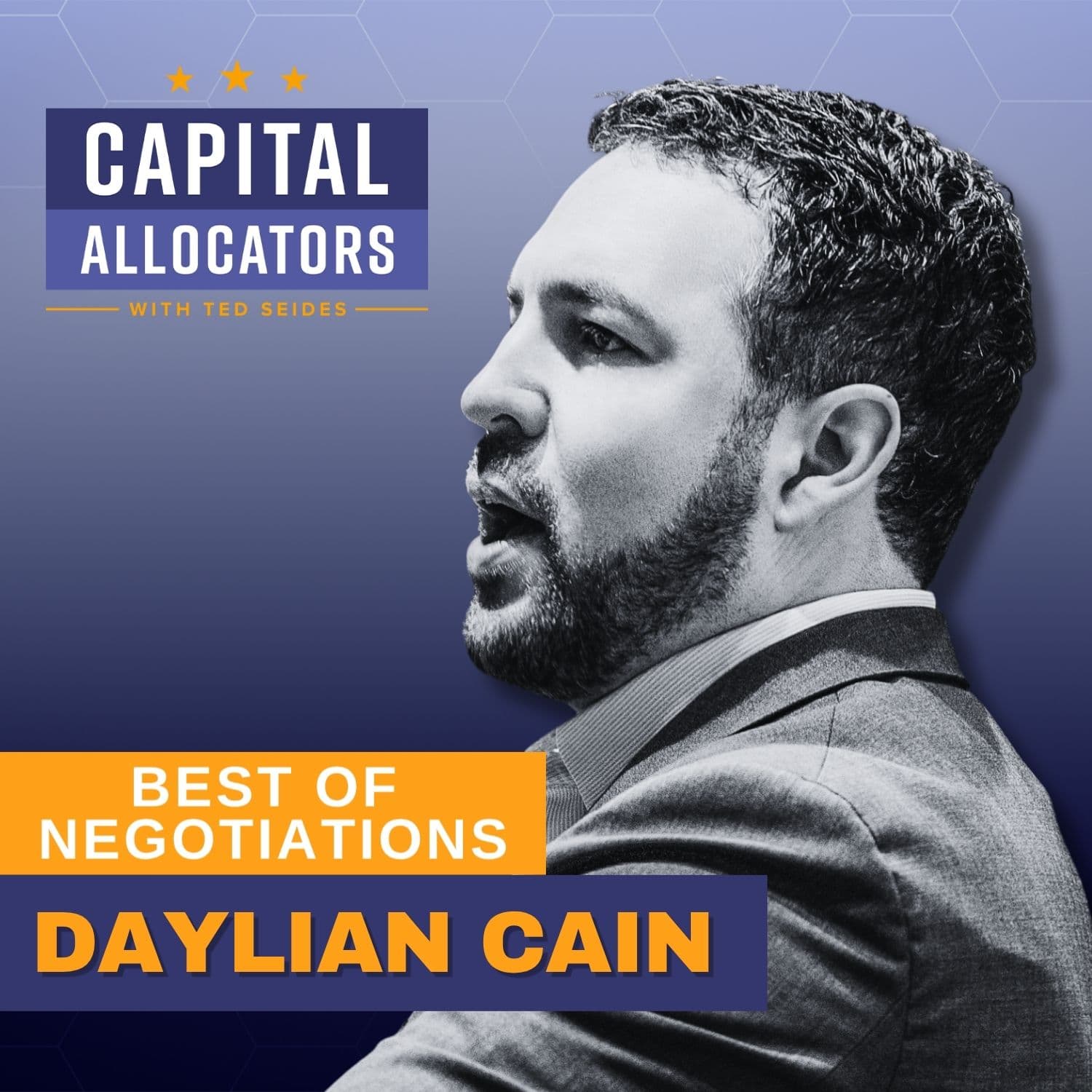
Dalian Cain, Yale professor (since 2007), co-teaches Yale’s core MBA negotiations class with Barry Nalebuff; background in decision-making and psychology/sales; teaches negotiation and sales workshops and coaches students by reviewing videotaped negotiations.
Key claims
- Negotiation is “investigation”/“learning”: spend time before the meeting learning the other person’s priorities, constraints, and exchange rates.
- Prepare your own trade-offs and quantify intangibles; don’t decide during the moment of handshakes.
- Don’t over-plan by predicting outcomes; plan contingencies (medium/high/low) and script tough answers.
- Listening early beats pitching; first offers can anchor, but only after estimating the bargaining zone.
- Use “pie” thinking: power shrinks the pie; don’t double-count.
- Walk away is essential; successful negotiators can leave with a path to graceful re-entry.
- For emotional disagreements, use contingent agreements; structure “if X, then Y” to cool conflict.
- In career/job negotiations, focus on “deal makers not deal breakers” and signal sincere hesitation rather than threats.
Notable examples
Yale videotaping 180+ students; house commute vs kitchen trade-off; mining-company synergy split (30B synergies); allocator/fund fee negotiations with non-monetary terms (transparency, duration, founder advantage); job offers in Boston vs current role; cashmere sweater “walk away then re-enter” scenario.
Written by AI. May contain mistakes. Listen to the episode to check what was said.
Chapters
Tap a time to open that second in VOOverview of Featured Guests
0:48 to 1:27
An introduction to Chris Voss and Dalian Cain, focusing on their expertise.
“The first is with legendary former FBI hostage negotiator Chris Voss, the author of Never Split the Difference and founder of the Black Swan Group, where he teaches tactical empathy in negotiations.”
Overview of Featured Guests
2:12 to 3:20
An introduction to Chris Voss and Dalian Cain, focusing on their expertise.
“Most AI tools today are very good at sounding right.”
Overview of Featured Guests
3:30 to 4:31
An introduction to Chris Voss and Dalian Cain, focusing on their expertise.
“It's where your firm keeps its pipeline, its relationships, and years of deal history.”
Overview of Featured Guests
4:42 to 5:35
An introduction to Chris Voss and Dalian Cain, focusing on their expertise.
“Back in April on episode 497, I sat down with Randall Stutman, the executive coach behind Admired Leadership, who's advised more than 500 CEOs, including some of the most respected names in asset management.”
Dalian Cain's Background
5:44 to 7:30
Dalian shares his journey in negotiation and decision-making education.
“Why don't we just quickly go through your background and how you got into this line of work?”
Principles of Effective Negotiation
7:30 to 11:19
Dalian discusses key principles and preparation strategies for successful negotiations.
“I teach a bunch of stuff, but negotiations, it's such a mix of psychology, but it's so practical.”
Advanced Negotiation Tactics
11:19 to 14:00
Insights on contingency planning and critical preparation in negotiations.
“when I teach a lot about developing a score sheet and putting values on your intangibles.”
The Importance of Preparation in Negotiation
14:00 to 17:03
Learn why thorough preparation and scripting responses can significantly influence negotiation outcomes.
“it wasn't a negotiation thing, but it was a speaking thing.”
Initial Steps in Negotiation
17:04 to 18:56
Understand the significance of information gathering and listening in the early stages of negotiation.
“How should someone sort of think about what those first steps should be to present themselves in the right way?”
Going First in Negotiations
18:57 to 22:23
Explore the pros and cons of whether to make the first offer in a negotiation.
“pitch and they talk about money too much and they offer some persuasive deal.”
Show all 22 chapters
Understanding Power Dynamics in Negotiations
22:24 to 27:36
Learn how bargaining power affects negotiations and the importance of recognizing unique synergies.
“The core thing we teach with Barry Nailbuff, who has done this, I'm drinking Honesty, or a company that he and a Yale student invented and sold off to Coca-Cola.”
Negotiating with Allocators
27:37 to 28:00
Discover strategies for negotiating terms with investment allocators based on varying power dynamics.
“And is it a certain 20 or an uncertain 20?”
Negotiating Power Dynamics
28:00 to 35:00
Explore how negotiating power varies in investment situations and the importance of non-monetary terms.
“Well, you know what you have to get half of that.”
Handling Multiple Offers
35:47 to 42:00
Discover strategies for negotiating between competing job offers and enhancing deal value responsibly.
“Let's go back to, you've now tried to structure contingencies.”
The Importance of Walking Away in Negotiations
42:00 to 47:44
Learn why knowing when to walk away can be crucial for successful negotiations.
“It's bad for you to set a precedent of matching.”
Understanding Risk in Career Negotiations
47:44 to 52:02
Explore the balance between risk and opportunity when negotiating job offers.
“Is that top three negotiation techniques?”
Gender Dynamics in Negotiation
52:02 to 56:00
Discover the impact of gender on negotiation outcomes and strategies to overcome biases.
“What is at the forefront of your research on negotiations?”
Balancing Gender Effects in Negotiation
56:00 to 58:00
Explore how to minimize gender disparities in negotiation outcomes.
“of the bargaining zone, a lot of these gender effects go away.”
The Challenge of Implementing Wisdom
58:00 to 1:00:06
Discuss the difficulty in getting people to apply known wisdom and mental models.
“All right, Dylan, let's turn to a few closing questions.”
Feedback and Constructive Criticism
1:00:06 to 1:02:08
Learn about the importance of framing criticism to make it constructive and effective.
“And so we leave the table and the guy comes running up, the owner now.”
Life Lessons from Parents
1:02:08 to 1:04:31
Discover valuable life lessons learned from parental figures and their impact.
“And what we do now is we criticize from a position of dislike.”
Procrastination and Time Management
1:04:31 to 1:07:18
Understand the importance of time management and planning to overcome procrastination.
“There's socioeconomic status in between.”
Transcript
Automatic transcript. May contain errors.0:06I'm Ted Seides, and this is Capital Allocators. For the second year, our summer series will share some of the best episodes of the past, curated from our favorites and yours. You can pull down many of the great ones on our Spotify playlists. This series pushes them to your regular listening feed. Our 2026 Summer Series focuses on improving the investment process. Over the next six weeks, we'll share 10 gems from interdisciplinary skill sets that will help you level up your investing across decision making, interviewing, storytelling, negotiations, and habit formation. This week's Summer Series is another twofer, this time on negotiations.
0:52The first is with legendary former FBI hostage negotiator Chris Voss, the author of Never Split the Difference and founder of the Black Swan Group, where he teaches tactical empathy in negotiations. The second is with Yale professor Dalian Kane, who opened my eyes to the importance of walking away. Before we get to the interview, we're excited to introduce the next chapter of Capital Allocators University, an online on-demand curriculum with an annual in-person gathering for investment professionals committed to continuous learning. One of the great ironies of investing is that the skills that matter most over a long career are often the ones least formally taught.
1:33Things like decision-making, communication, leadership, time management, interviewing, and building relationships. That's why we've evolved Capital Allocators University into an online on-demand experience, making those lessons accessible to investment professionals everywhere. The best careers don't compound through knowledge alone. They compound through knowledge and relationships. If you'd like to explore the curriculum or someone on your team comes to mind, visit the link in our show notes or the university page on our website. Thanks so much for spreading the word about the next chapter of Capital Allocators University.
2:08Capital Allocators is brought to you by AlphaSense. Here's something for you. Most AI tools today are very good at sounding right. But can you actually trace it back to a filing transcript or specific passage that drove the answer? Or are you just trusting the confidence of the output? For allocators, that's not a minor concern. A missed filing, incorrect source, or context that gets lost somewhere in a retrieval chain aren't edge cases. They're how decisions go wrong. AlphaSense is the AI platform built specifically for this. They own the content, over 500 million curated documents from broker research and expert transcripts to filings and earnings calls.
2:57and they own the retrieval layer on top of it. That means every answer can link back to an exact verifiable source because the answer is only as good as what's underneath it. And with AlphaSense, you know exactly what that is. See it for yourself. Try a free trial at alpha-sense.com slash capital. That's alpha-sense.com with a hyphen in the middle slash capital. Capital Allocators is also brought to you by Intap DealCloud. You already know Intap DealCloud. It's where your firm keeps its pipeline, its relationships, and years of deal history. Now meet Celeste, Intap's new agentic AI and an expert coworker that works right inside DealCloud.
3:46Together, DealCloud with Celeste changes what your firm can do. Celeste runs on your firm's own data and your own playbook, how you source, diligence, and decide. It works inside your compliance rules from day one, so it screens your inbound deals against your thesis far more than your team could reach on its own. It tells you which LPs are most likely to re-up in your next race. Hand it a sim, and it builds your first LBO model in minutes. Every firm can only chase as many deals as its people have hours to work. Celeste lifts that ceiling. Now the deals you walk away from are the ones you meant to.
4:26DealCloud with Celeste is generally available now from Intap. Learn more and book your demo at intap.com slash capital allocators. Capital Allocators is also brought to you by Admired Leadership. Back in April on episode 497, I sat down with Randall Stutman, the executive coach behind Admired Leadership, who's advised more than 500 CEOs, including some of the most respected names in asset management. Randall introduced me to Alex, an AI leadership coach's team built on 40 years of proprietary research into what the best leaders actually do. For investment professionals, that means your entire team gets on-demand coaching grounded in the behaviors that drive results and build the kind of followership that retains your top talent.
5:22We use Alex, and our team at Capital Allocators swears by it. Try Alex for yourself at the link in our show notes, tryalex.admiredleadership.com. Please enjoy my conversations with Chris Voss from 2022 and Dalian Cain from 2020. Dalian, thanks for doing this. Thanks, Ted. Why don't we just quickly go through your background and how you got into this line of work? I've been teaching at Yale since 2007 full time. I co-teach with Barry Nailbuff, the core negotiations class that all MBAs have to take. and he's like the game theorist entrepreneur and I come with a psychology sales side and we co-teach it and Yale does this insane thing which we videotape all students negotiating the entire incoming class and he coaches half of them and I meet in my office and coach the other half so I meet in January 180 some odd students in my office.
6:28It's insane. And so we watch their videos and see what they do right and give them coaching what they do wrong. And I teach my own stuff. I have some advanced electives. I do sales workshops. I've been doing this for a while now. How'd you initially get into it? I studied decision making. I like to say I study why smart people do dumb things. And it turned out that one of my advisors, Max Bazerman, was one of the people that kind of invented or at least pioneered taking experiments to negotiations. In other words, there was an old school tried in the streets. Here's what works in sales. And he said, well, let's just test this stuff.
7:06So 500 people do it this way. 500 people do it that way. And let's use experimental techniques in judgment, decision-making, behavioral economics, kind of like Kahneman negotiation meets negotiations. And so it's a lot. It's just the subject that a lot of us were drawn to because of people like that. And I'd already had a sales and negotiation background. And so I love it. It's my favorite thing to teach. I teach a bunch of stuff, but negotiations, it's such a mix of psychology, but it's so practical. Even if someone's been doing it for years or something, and I love this. If you're starting a course or starting a negotiation, what are the first set of principles that people need to think about?
7:50I should be more of a framework person, but I'm not. And so I don't know in what order are the top three things, but I can tell you somewhere in the top 10, there's a few things. People don't learn enough about the person sitting across from them before they meet them. And it's not sexy. It's not rocket science. A lot of it is just elbow grease. Like before I meet you three weeks ahead of time, if you and I are negotiating, I want to know what do you want? Why? In what order? And ideally, I want to know what you'll pay for those things. But that might be a bit too much to ask from the information game.
8:28But I just kind of want to know like at least what are your top priorities? What's easy for you? What's hard for you? And the way I do that is I call people who know you or know people like you. I just spend a lot of time on the phone. and if I've gotten to you, if you're a gatekeeper of some sort, for example, for my students, if they're dealing with a vice president of HR, it's only because they've done seven rounds of interviews with that same company and every single person has to like you or else you don't make it to the gatekeeper. So I often say like pick up the phone with one of those people you had rapport with and pick their brain two weeks ahead of time.
9:04They're not going to give you the keys to the kingdom. They might not know them, but even if they have them, they're not going to sell out their firm and tell you what to ask for exactly. Here's the safe, go get it. But you can ask in terms of, let's say they have to negotiate against Shelly in a month. Don't ask where Shelly flexible, ask where she least flexible. What shouldn't I ask for? Cause I don't want to ask for too much. That kind of thing. And so you're trying to figure out what are the right trees to bark up. And that's a lot of, I say that negotiation is investigation. My colleague Deepak Malhotra at HBS says it much more suavely.
9:41Negotiation is learning. So that first step is learning as much as you can about the person. Depending on the type of negotiation, what else do you need to think about before you even get started? You have to turn that lens inward, right? What are your priorities? What do you want and why? And there's a bunch of things that are important, but I don't focus on them because I focus on the things that people aren't doing. So people generally know what they want. So I don't say figure out what you want. They can do that already without me. But what they don't do a good job at is figuring out what they would choose if they couldn't have everything.
10:21In other words, what do you want with constraints? So like simple in a pedestrian example, you're buying a house. You want a short commute, but you want a big kitchen. Okay, but when you have to trade those off, the question you need to know before you go into that negotiation, before you go into that decision is how many extra minutes are you willing to spend in traffic to get a kitchen from an eight out of 10 on your scale to a nine out of 10 on your scale. And there's no book that has the answer to that. You got to get in your car and drive a commute. Oh, that would be my house right there.
10:53There it goes. How do I feel about driving another 15 minutes twice a day, two weeks a year in a car just to get a nicer kitchen? Is there some other thing I should be doing. And so in a negotiation, it might not be about kitchens and commutes, but it'll be about how different issues trade off against each other. And you want to know your exchange rate for those trade-offs before you go into the negotiation. People hate this when I teach a lot about developing a score sheet and putting values on your intangibles. and people feel like it's inhuman to quantify or put a price on relationship, work-life balance, commuting.
11:34Like they know they don't like commuting, but they don't want to put a number on it. And they feel like I'll just kind of see to my pants. And the problem with that is your decision will put a number on it. In other words, if you accept the deal, I guess it was good enough. And if you walk away, it wasn't good enough. And so your actions imply a price on your values. And I just think you should be thoughtful ahead of time. So it's not reducing everything to money or points, but it's the world will reduce things for you. And so you should be more thoughtful about that exchange two weeks ahead of time.
12:08You don't want to be thinking about your value of commutes or relationships while a person has his hand extended to you. That's the worst time to be putting a value on your relationships because you'll either pay too much or even worse, too little. So be thoughtful ahead of time about the intangibles. What are the other things you need to think about in preparation? Well, you want to know what you want, why, in what order, and exactly the exchange rate. You want to figure out in their side what they want, in what order, and why, and you can only hope to estimate their exchange rate. One thing that people do wrong is when I look at their planning documents that I make them write up, their plan is more of a victory lap.
12:51any good business person will kind of resonate like an inexperienced planner is just like i'm going to do this and then that then i'm going to dunk on this person and posterize that person and or they spend too much time predicting what will happen during the negotiation so when thoughtful people prepare one of the things that my colleague paul bracken at yale nicely points out is that people spend far too long predicting what will happen in an exchange. And so in other words, you and I are negotiating in two weeks and it could go X, Y, or Z way. And people will sit there and try to plan and think like, is it going to be X?
13:29Is it going to be Y? And rather than predict which of the many possibilities we'll realize, just plan for like, what will you do if X happens? What will you do if Y happens? So kind of contingency planning and they have cliches, like hope for the best, prepare for the worst and all of that. But just having a few medium, high, low plans of how things could go. And if you're really good at this, then some of my favorite teachers, so Nick Barbera's behavioral finance legend at Yale, one of the things, it wasn't a negotiation thing, but it was a speaking thing. He welcomed me when I joined at 2007 and he's kind of a shy, mild-mannered person, but he's extremely brilliant in his field.
14:17He's a rock star professor, rock star. And I just kind of asked, what are you, he just said, I practice this stuff to my closet the night ahead of time, two weeks ahead of time, the transitions, the segues, the start, the end, the pauses. So it's what most people do when they're going to have a conversation is at best, they might have an outline for what they're going to say. But the master class people like actually word it and say it to their closet ahead of time with a critical lens. Like they'll say, so if Ted asked me this tough question during our negotiation, I'm going to answer it this way.
14:54And then you say it out loud and you kind of hear critically how it sounds. How could this tick him off? How could this underrepresent what I'm selling to him? How could this steer the conversation the wrong way? In other words, what are three things wrong with the way I said it? So really scripting and practicing your answers to tough questions. How much of the variability of outcome can get driven just by the preparation? I don't know what the right number is, but anecdotally, it seems like a lot of it, I should run the data, but it'd be so confounded with massive co-correlated variables. It's always the case that the person who's voted most prepared is also has one of the highest performance case ratings as well.
15:44And they just out plan it and they talk to me and they get advice ahead of time. I'm shocked at how few students do that. Hey, Daly, I've got this case coming up in your class. Any advice? You know, I'm not supposed to give too much advice, but yeah. Oh geez. I've opened up a can of worms now. Maybe edit that out. But the people who prepare thoughtfully ahead of time, just crush it. And one of the things I talk about in the class on day one, I have to give kind of a speech on not lying to classmates on a case that's not even graded, right? Like even a smart sociopath wouldn't do that because the grade doesn't matter and the network does.
16:23And so don't reveal yourself yet. the stakes are too low. And so I talk about how people can crush this negotiation with integrity and they don't have to misrepresent their interest. They don't have to lay them out on the table either. They can be honest when they talk to their partner. But if you ask me, what is your budget, Dalian? I will say, go pound sand. I'm not telling you that. No misleading there. So you can be honest with this, but usually it's the people who are prepared to answer tough questions in an honest way. They don't have to be revealing, but they kind of know their answer ahead of time.
16:59And those people are always in the top five of my class. All right. So now we've hopefully gotten this preparation done and we're entering into the beginning of a negotiation. How should someone sort of think about what those first steps should be to present themselves in the right way? So it's not a very sexy metaphor. And the answer is so obvious it's basically a rhetorical question but it turns out to be a powerful moment for many of my students one of the very first thing i do before i teach anything is i just give them a page to read so half get buyer half get seller and they're buying a gas station or a convenience store or whatever hypothetically and the way the class goes is they're going to go out in the hallway and you've been in classes like these that you negotiate and get coaching and see how you do But before I teach them anything, what I say is I'll pick someone randomly.
17:49Let's call her Susie. I say, this is basically rhetorical, but if Susie cheats, please don't. But if Susie cheats and reads Mark's sheet and Mark doesn't know, who's going to win? Everyone points and looks at Susie. And what's interesting about that is, and we don't have to know anything about Susie. We don't have to know if she's an introvert, an extrovert, if she's a slick talker, how firm her handshake is. All these useful things that would be probably good to have in a personality for a negotiator will pale in comparison to what she has, which is so clear, massive information advantage. And so that silly little example, very pedestrian example, I say is I want you to see negotiation this way as figuring out their sheet.
18:37And that simple metaphor can be a guiding light for how you approach. that you've prepared. You've got your sheet. You've tried to estimate theirs. But if negotiation is figuring out their sheet, I asked, should you be talking or listening? It's listening, but none of them do it. The first 10 minutes of their negotiation is they go into a big sales pitch and they talk about money too much and they offer some persuasive deal. And here's why I got to get you in Shanghai and all of this. And I'm like, you never found out what they wanted, why they wanted it. So it's kind of more of a learning lens.
19:13And if they have the right mental model, I think a lot of the right strategies and tactics will flow. Is there a preferred approach? I mean, there's listening, there's asking questions of when someone makes an initial overture, does anchoring matter, all the behavioral things we know about? Yeah, this is a contested question in the literature and amongst the experts. It's interesting. The data is mixed. So picking up in your question, for example, do you go first or do you let them go first? The old schoolers say go first and lose. Let them go first so that you get information. And the new schoolers based on behavioral economics research and anchoring and this idea of putting ideas and framing, gaining the initiative and putting numbers in people's heads that stick say you should go first.
20:01And a lot of the research bears that out. But I think it's actually mixed. I think you should have an idea for is the information you get when you let them go first worth the initiative you lose? In other words, if you let them go first, what are you gaining? How reliable is that information? And in most negotiations where the zone of agreement is really wide, your first offer basically tells me nothing about your budget. in math speak, your first offers in my data are very poorly correlated to budgets because we have 400 people doing the same case with the same budget on the same darn sugar bowl.
20:42And the offers are from 300 to 3 ,300. So like, what have you really learned by letting them go first? At the same time, people who go first, the old schoolers say, ha ha, we're right. Cause they're not doing so well either. And what it looks like in the data is that the people who go first, who don't ask questions beforehand and don't do a good job of estimating the bargaining zone, if the bargaining zone is wide, they can go first and shoot themselves in the foot with not an ambitious enough offer. So you don't come into the room and say, hey, Ted, how about 800? You say, hey, Ted, you talk about the weather, you talk about the Steelers, Then you talk about the deal.
21:24What does he want? Why? Once you have a good estimate of the bargaining zone, then you go first and you go for the whole thing. In other words, a good first offer as an anchor is usually the way to go. But that doesn't mean that you come in guns blazing. But if there's an offer to be made, the research tends to say, go first. But ironically, I tell my graduates, often if they're negotiating with McKinsey, they shouldn't go first. Why? Why? Because McKinsey's going to give them a contract with a signature on it. So get that before you start haggling. And it's another example of what are you losing when you let them go first?
22:04Well, if they're going to give you a contract, then let them go. If they're just going to give you some random number, then maybe you should go first yourself. As you get into the back and forth of a negotiation, there's usually an asymmetric bargaining power. And then other times there are people who are just really good personality-wise of making it at least seem like they have all the power and then others personality-wise who are not as good at negotiating. How does that play out? The core thing we teach with Barry Nailbuff, who has done this, I'm drinking Honesty, or a company that he and a Yale student invented and sold off to Coca-Cola.
22:46And he's a serial entrepreneur. He's taken many companies to market. And one of the things he's really made me appreciate is this theory of the pie. Everyone knows, like, expand the pie, have some pie, all of this. He's defined it as the unique synergies of the deal that we can't get without each other. Okay, so what is that doing for you? Here's what it does. Let's say you have 3x market cap as I do. And you have 10x more supply suitors than I do. In other words, you have all the power. It's not just slick talk. You have better alternatives than me. You have better distribution lines than me.
23:24You have the power. There's nothing I can do about that. Here's what we teach our students. What your power does to the situation is it shrinks the pie. It shrinks my value add to you because you can go to other suppliers. And so I'm not offering you$8 million in unique synergies now. Your power suggests that I'm offering you$2 million unique synergies. That's all I offer you that you can't get anywhere else. my synergies are less unique. The theory of the pie says that once you've correctly identified your unique synergies, no matter how small they are, they need you just as much as you need them.
24:01For example, market cap and market power shrinks the pie, but it doesn't give you proportional advantage to claim the pie. One of the biggest mistakes that MBAs will do is they see themselves perhaps correctly as the small player early on in their career, But they give the power player double counting. They say, you shrink the pie and you get 90 % of it. So they're giving the proportional player an ever-increasing share of an ever-shrinking pie. It's terrible. So when two of the world's largest mining companies merged, Barry was one of the negotiation consultants. And they were going to create$30 billion of synergies with this merger.
24:4630 billion. It's so much synergies, it's hard to even come up with that kind of bag of cash to split. And so they had to decide, like, how are we going to split these synergies over the next few years if we realize them? And the number one answer is by market cap. And so 30 billion here and I'm three to two. So let's do 18 billion to me and 12 billion to you. if these synergies are unique to this deal and the two companies can't get them without each other the smaller company absolutely has to fight for half of them and that is a three billion dollar gain if they pull this off i'm not saying you're going to get it but it's kind of like out of my cold dead hands if i have to give it up i will but i'm fighting hard for half that pie once i've correctly identified it.
25:36Now, for many of my students, if they feel like they're a replaceable cog or a widget, and I think they overly feel this, they think I'm Ivy League educated, but there's a lot of Ivy League universities and Stanford's and MIT's. And so they were like, what do I bring a firm? And I say, you know, I think you're not appreciating the backend process by the time you get the deal. Do you know how many hours and how much resources they poured into this process, they have a lot riding on you now. And they don't want to go to the next. Even if you have a twin sister at Stanford who's just like you in every way, she's not in their target right now.
26:15You are. And so often what you bring is the now. In other words, if they secure you, they can go on and fry those bigger fish. They just want this deal done. And will they throw you an extra 5 % or 10 % to be done? Often, yes, if it doesn't upset the apple cart. And so sometimes the pie, if you're a very weak, low power player and you're dealing with someone who has a zillion options, the pie is just you're the one they're staring at. And their powers, ironically, the reason they can afford to pay you so much because they want to go on and do other stuff. You're just a small player. So if you take either one of those examples, let's just take the mining example.
26:58If you are the smaller company and there's this recognized 30 billion of synergies and the other company has other, now maybe 30 billion is unique to the deal, but maybe 20 something isn't. How do you go about thinking, okay, I want to try to capture the 3 billion extra in that negotiation, but I know that they can walk away and pick up 20 billion without me or something. Yeah, so then the pie is really 10 because I create 30, but you can get 20 without me. And then we have to look at my alternatives and then transaction costs of getting out of this deal and going chasing the other deal. And is it a certain 20 or an uncertain 20?
27:43And is it a painless 20 or a painful 20? And so all those things should be quantified and hopefully in your favor. but let's say net of everything, there's you offer a$10.2 billion unique premium. Well, you know what you have to get half of that. And they're not going to like this, but you can draw a line in the sand and stick to it. It's not the theory of the pie that convinces them. It's the pie itself. I want to take an example that is probably common to a lot of people listening. So the relationship with an allocator investing in a fund. So it could be private equity fund. You have a lot of situations where the negotiating power can vary.
Read the full transcript
28:32And if it's an early stage fund, it might have a lot of negotiating power. If you're one of the few investors, then take to the other extreme, you have some hot venture capital fund where you can barely get in. how should someone think about creating that sheet and entering that negotiation cross if that's one key term is fees and then you have sometimes there's other duration and other things that are on the table. Before I answer that let me ask you how many terms do you think are non-monetary in deals like this like if I was coaching someone on either side of this let's say the low power player especially do they come up with just money terms like you talked about relationship and and so before i go on this dialogue of finding non-monetary terms from your experience how many deals are built on the non-monetary and what kind of non-monetaries do you think seal deals because like they can make deals with anyone and they can get money from anyone but why them so give me a sense of is it realistic to look for non-monetary things in It depends on the situation.
29:39In some situations, it's a price-taking model. But there are things like, in certain instances, transparency, sometimes duration, sometimes scaling. So it's monetary, but there are a lot of flex forms. Founder advantage. Yeah. Yeah. What role the founder will have as different takeovers happen. Yeah. Transparency is huge. Also risk profiles or risk tolerances. Maybe the founder just needs to pay her mortgage, but the venture person is looking for home runs. In other words, if this is a$2 million deal, the founder can have all of it. But if it's a$2 billion deal, the venture cap person wants all of it.
30:22And so there's different preferences for different levels of success. So what I'm getting at is what I see most people make a mistake about, especially the low power person is they're in there fighting over the things like money. What's bad about money in a negotiation, you have to deal with money. You have to talk about it. It's the thing. But what's bad about focusing on it first is it's a win-lose. What I mean is it's valuable to both of us. So I'm not about to launch into some cheesy, you got to go for the win-win. Like you're a smart guy. If you see a win-win, we're going to figure that out.
30:57Ideally. The books talk about win-wins and the negotiators focus too much on the win loss, I would say the vast middle, what I would coach, especially the low power person, what I mean by the middle is it's a big win for one side and it's a small loss for the other. And so it's a smart trade to make it less sexy sounding. Imagine an issue is worth 20 ,000 to you and it's worth 2000 to me. 100 % you should win that and just pay me, pay me in money or in some other terms, 11 grand would be about halfway. I want to get as much as I can. You want to pay me as little as I can. We'll just haggle it out.
31:36But the right answer is you should 100 % win on that issue. And so the number one phrase I try to teach is, and people already know the front half, but they missed the second half, which is you got to find something valuable to you. No kidding, but cheap to the other side. And transparency or whether the founder stays on longer or leaves, gets out of the way earlier, or these kinds of things can be super valuable to one side or the other. Often negotiators, when I see entrepreneurs do entrepreneur buyouts and spin outs through Yale a lot, and they fight on every issue. Like if it's a low success, a medium success, a high success, They grab at each level, even though one level is super valuable to the entrepreneur and the other level is super valuable to the funder.
32:27And I want to kind of say like you take all the guarantees and give them most of the upside because they'll give you amazing guarantees if you give them amazing upside or could be vice versa. So, yeah, looking for the smart trades. Easier said than done, but it's amazing that people don't even have that goal often. And once you frame out some of what you're trying to accomplish, that's when you get into the emotions and how people behave in the context of the negotiation. And so how do you coach that aspect of it? I don't have a recipe there. I mean, it usually depends on the emotions and the context.
33:03I usually end up saying something like, well, they're not all wrong, right? Trying to figure out where the other side is coming from without demonizing them. You disagree with them, but like they're not entirely, where are they right? They're right about something. When you're dealing with difficult people who see the world massively different from each other, an old school technique is called contingent agreements. And anyone listening will know what a contingent contract is. So if you sell more of this, you get more salary or something. In other words, my payoffs are based on different futures.
33:38but what a good negotiator does is if you and I disagree dearly and it gets emotional about say the future value of this company so the founder might be overconfident it's often right and the venture people might have more experience more a sense of what base rate is we might not do 300 million next year just saying so when you have different opinions and it gets really heated about different futures. It's similar to an earlier comment I made about not trying to predict the future, just planning for it. So a contingent agreement, what you do is it's not you think we're going to be this and I think we're going to be that and let's fight about who's right.
34:21It's instead, let's structure a contract with two parts. What happens if we do this? What happens if we do that? What's really great about the contingent agreement is it can cool the emotions thusly. We don't have to fight about the future. We just agree on what happens if you're right. And we agree on what happens if I'm right. And if you structure the contract sensibly, now we don't have, well, I'm happy to lose now. And so you can structure a lot of emotions out of smart contracts. We're going to take a quick break in the action to tell you about Ridgeline. Ridgeline makes your day unrecognizable.
34:59That's how refreshingly different it is from legacy investment management technology. With Ridgeline's front-to-back AI-native platform, your typical tech pains disappear. No integration headaches, no data discrepancies, and no upgrade cycles. Instead, you get real-time data flowing through everything from portfolio accounting to reporting to reconciliation, trading, compliance, and more. In the AI era, asset and wealth management firms moving to Ridgeline gain a decided advantage. That's why customers call it miraculous, game-changing, and an awakening. If that's not how you would describe your investment management tech, request a demo at ridgeline.ai.
35:46And now, back to the show. Let's go back to, you've now tried to structure contingencies. you're getting through the negotiation. What happens when there's another party involved? There's someone else who could derail the one-on-one agreement. Let me spin it. There's a million ways I could go with that question. Let me go this way. A lot of people ask me for negotiation advice and I give it freely. I just ask for two weeks warning. and often they face a decision between, it's not quite the three-party dynamic you envision, but it's they face a choice between two parties and they're wondering what to do.
36:31And it's a hard decision. It could be their dream job in Boston, strategy consulting, but they live in Darien and have kids in private school and they have to uproot their family and what should they do. And they're upset about this and excited about that and it's just a mixed bag. They're torn. It's like an apples and oranges and maybe the apple's a little shinier and newer or something. And I often say like, can you negotiate a hard decision into a no brainer? And that sounds kind of like cheesy fluff talk, but I'll give you some examples. It's really helped a lot of mid-career executives who get an offer, let's say from Boston.
37:08It's a VP level offer. They're really excited, but they're sincerely hesitating. What I like to say to them is you tell that other offer, you say, this is amazing. This is my dream job. I went with you in grad school. I'd love to work with you, Ted. I'm so excited. How long do I have to decide? They really need to know by September. Then what you want to signal is you don't tell them your sob story or that you love your kid's private school or anything. You don't signal any distaste for the new offer, but you just signal a little sincere hesitation. Like you've given me something amazing, Ted.
37:45Let me think about it. and then the negotiation thing is but if you made it i don't even know if i deserve this but if you gave it somehow this could be an evp offer that sign yesterday that sign right now now that sounds like oh yeah is that really going to work just because you use that language a few things on this the cheesy descriptor of it is i like to say sell the deal makers not the deal breakers in other words, you don't say, give me EVP or I'm not coming, Ted. There's always some bargaining zone where there's the high end and the low end of it. And people often focus on the low end and say, what do they need to give me at minimum for me to go to Boston?
38:31You need to know that, but let's not talk about that. Let's talk about the high end. But the problem they'll face is they'll say, well, Dalian, I don't want to shoot too high and make the deal go away. So the question is like, how do you mention what a reasonable, you're not asking for CEO, EVP should have come up. It should have been out there. But how do I ask for a reasonable but optimistic thing without making it a threat? And what I say is talk about the deal makers, not the deal breakers. And so you say EVP isn't maybe necessary in the cards, but I've got a lot to think about. But if it was an EVP deal, I wouldn't even have to think.
39:08I don't even talk to my kids. I'll buy them a trampoline, a pony. I'm in. The reason that works and when it works, it often they'll come back and say no to this, yes to that, maybe to some other thing. You don't say give me X and Y and Z. You'll say give me X or Y or Z. And they'll come back and say, yeah, we can do X and we'll look into Y and Z. It's not that you get those things. It allows you to put them out there in a friendly, non-threatening way. You're saying I would sign right now versus I'll never sign. And the last thing on this is it's not the words. The friendly wording of it allows people to actually say the thing.
39:45It's not a nuclear threat. It's a very friendly offer. And so it allows people to actually say it. They might say, look, I'm not saying I need EVP. I'm just saying, is it possible? Is it in the cards? Would I be wasting my time talking to Ted about an EVP deal? Or should I be talking about something else? And they'll tell you, are you wasting your time? Or will they talk about it? and say, because if we could talk about that, man, I'm 100 % in. Anyway, the real thing that you're offering with this when you're trying to decide between two parties is the now. It's, you give me this, I won't even talk to the other people.
40:21You give me this, you can go on with your life. It's not because you're so important that you get this thing. It's ironically, it's they have bigger fish to fry. And often what happens when you ask for a lot, and I've seen these meetings internally is 90 % of the people in the room don't think you deserve it. They don't because you're asking for a lot here, but someone in the room, your champion is saying, she's awesome. I went to school with her. If we can just get her this, we've got her, please. My team needs her. Do it for me. And you need a champion like that to get some amazing deal. And what you're offering your champion is the security, a very important security, that if she burns her social capital, we'll get this for you.
41:02Oh my goodness, don't say no. Because that's the worst is if we give you a great deal and all you're doing with a deal is shopping around to the other players like a bargaining chip. And so I'm sure many people out there, I've had that happen to me. Yale's gotten burned and people who used us as a bargaining chip to get a higher offer that they didn't intend to take. And so making a promise of a deal maker that you will honorably sign and live out and fulfill. And last thing on this is you can also go to your current employer or the current player, your current relationship, and say, I'll make up numbers.
41:40You're currently providing$1.2 million of business. They're offering$1.4. It's not all about money, Ted. You were my first supplier. We've known each other for 30 years now. I want to do business with you. So you don't have to match them. Because, of course, if I make you match them, it's this never ending of matching and it's no good. It's bad for you to set a precedent of matching. But I say, look, Ted, you don't have to match them. Just like, this is a lot of money. I got to feed my family here. I've got suppliers. Meet it halfway. If you meet me halfway to 1.3, I'll never talk to them ever again.
42:15And you have to have some leverage. I'm not saying you'll get the 1.3, but you can do it in a friendly way and not gouge and say, I am putting a value on a relationship and I'm not trying to gouge. It's not all about money. It's just that the delta in money has given me reason to pause. Can we do something to unpause me? Give me X, Y, Z, and I'll sound right now. What are the common mistakes that people make at the stage of the game? I see two that ironically young and experienced negotiators don't walk away enough and so sometimes Yale puts me in front of very successful audiences and he's literally coaching billionaires I went to Beijing I'm coaching billionaires on how to negotiate I'm kind of wondering like wow y 'all could teach me something right now and they do they are very successful people and experienced negotiators are very comfortable walking away they'll walk away no problem and it's something I'm trying to teach my students and it's a fact I think it's my biggest failure as an educator leader.
43:21I can't get them to do it. Cannot. And the only thing I can do is tell them how much I'm pleading. So I once made it a requirement to get a grade in my course that you had to walk away. I was teaching a seven week course. You had to walk away at least once. And the other person just had to verify that you walked away. You don't have to walk away forever. You don't have to get no deal. Just leave the room, be thoughtful. And I would give them coaching. I'm like, this is not nuclear. I'm not saying, you don't have to say you're a jerk. I'm out. I'm never coming back. Just saying, I don't know if I can do those numbers.
43:54Let me go think about it. Have a Kit Kat break. Think about it. And as the class progressed, I'd say, show of hands, who's walked away? Nobody. One or two people, one of the two like super nerds. I'll do everything you say. It's in the syllabus. Walk away. And then the penultimate class, who's walked away? 90 % in the class hadn't walked away. On the last day of class, I said, you've put me up against the wall. I can't give you a grade here. You all have to walk away now. And it's going to be strange because everyone's going to know you're just walking away because I said so. And then even then half didn't walk away.
44:31I can't fail half my class. And I just buckled and said, you know, I don't understand this. If a few of you didn't do it, I'd be mad at you. But since so many of you're doing it, I know that it's got to be on me. Because if 50 smart people aren't doing something that I'm teaching, then I'm teaching it wrong. So I just dropped the requirement and I've been thinking carefully about how to bring it back. I can't get young people to walk away. They get in there, they feel pressure to do deals that aren't good or aren't good enough, or even worse, ironically, they need 20 ,000 in some hypothetical deal.
45:08They were hoping for 30 ,000 and the partner comes out right out of the gate and offers them 52 ,000. And they're like, how I walk away from that. That's better than I was going to ask for. Yeah. Well, what did you just learn about them? If their first offer is 52 ,000, what do you think their budget is? You've clearly totally underestimated their budget. You have no sense of the bargaining zone. You didn't ask the right questions. You're totally unprepared. You need to leave the room and rethink things. And I asked them a few questions at the end of those questions. I just, I don't reveal what the other person's budget is.
45:39I just say, now that I've asked you those things, you've thought about it and you've got out of the room, so to speak, what do you think her budget was? And I'm like, yeah, I guess around 90 or so. Well, yeah, that's right. Actually it's dead on. It was 92, five. What do you think of 52 now? And so just leaving the room and collecting your thoughts and negotiation is learning, but it's also being thoughtful about what you've learned and thinking about what to ask next. Now, the upside is a very experienced people. They walk away, just I'll do a case and they're just like walking away and turning down amazing offers.
46:13I had to plead with the billionaire. I won't reveal which company he owns, but he's literally a billionaire and he had secured in my course, I was doing a workshop for him and others, the best deal on a case I wrote I had ever seen in real life. He had secured it. Number one, thousands of students. He's number one. And he was walking away. I was like, you can't even do better theoretically. Like I couldn't get this deal. Like you crushed the case. He's a world record leader. Please don't walk away. Please, please, please. I will make fun of you. And so on one end are people who don't walk away enough.
46:50And then the other end are people who they're walking away, but it's more of a stalemate and an insult. It's like, I don't need you. It's not a thoughtful walk away with a path to coming back to make the deal. So what I often say is walk away, but when you do, you have to pave a path for graceful re-entry. So a pedestrian example would be, I don't say$300 for a cashmere sweater. I don't have that kind of money. I'm out of here. And then you look to see if the seller is following you out on the sidewalk, because then if he doesn't follow you, how do you save face and come back and buy that sweater?
47:29So it's walking away with a graceful re-entry and that's what the successful people need to learn. It's the graceful re-entry paving and the young people need to just know where the exit door is. Is that top three negotiation techniques? No, but that's top three on tactics my students have had trouble with. What are some of the other ones? They make it about money way too fast. We've talked about that. Everyone has their own dragons they're battling, but a lot of the people I coach at a young age, the young ones don't take enough risk with their careers. And so you're a master of the markets. When you're young, go long on equities, I hear, because you have time to recover.
48:20and as you get a little old older maybe bonds because it's not just that they're safer it's that if something goes bad if we have a 2007 you don't have time to recover from that kind of event but a 20 year old does and likewise in the career I say the big mistakes that my students are making is they're a little too risk averse and I don't mean as a personality or as a person these are brave, intelligent, creative people. I don't mean that they're boring, risk-averse personalities. I just mean often they're asking me to help them negotiate the first job that came along. And they already have a job.
49:01They have a job that they have on hold because it was grinding them. And they wanted to get their MBA because they wanted to get away from the grind. And they'll sell a grind to go join a startup. And you want to tell them like, this is just the first startup to hit your face. Like there's a zillion startups. Why this one? Go for it. But what if I lose it? Yeah, I know you're young. Go. And how about as someone different in mid-career or later career? Those people are usually in job crafting mode. Like they can write their own ticket, especially if they get headhunted or poached by another firm.
49:36As you know, if another hedge fund approaches you, wow, you can really write your own ticket. And that's when the XYZ technique I was talking about earlier, like it's not naming your minimum price. That's not what I mean. It's naming your dream job, which is probably should be less about price and more about roles and responsibilities and progression through the org chart. In fact, for mid-career people, even young people with startups, when there's org chart flexibility, like if you're doing an internship, there's one place for you in the org chart. But as you progress through your career, or as you deal with young, flexible startups, I think that the people I coach focus way too much on money and then sat at the end of the conversation.
50:15They're like, you know, right, Dalian, I shouldn't focus on salary. It's signing bonus, right? No, no, no, that's not what I meant. You're looking for things that are valuable to you and cheap to them and where you are. And even if the deal is not negotiable at all, you should understand what the roadmap to success looks like and set yourself in a position down the road. So title, I find that mid-career people negotiating the title is the number one thing I've seen. So if you're EVP and you want an extra 40K, it's sometimes harder to be the highest paid EVP in the room because that upsets the Alpacar.
50:51Easier to be the least experienced managing director in the room. And if your champion can get you that role, and if we just get you that role, you'll sign right now and it's semi-reasonable. So long story short, it's all about titles and work charts and work-life balance. And it's usually for successful people, I often say like, even if money is number one to you, I'm not saying money can't buy happiness. I'm not saying any of that. If you're a smart shopper, you can buy a lot of happiness. It's that often for successful people, even if all you care about is money, there's money in both paths.
51:27And the delta in the money between option A and option B is in pivotal. and so even though money might be your number one priority the thing that's pivotal could be way deep on your priority list like it's the number four issue that these two offers differ a lot on work-life balance commuting time or stress and so a lot of people just go for what's important to them and not thinking about the interaction between what's important to them and what the other side is offering. What's valuable to you, cheap to them is a two-sided equation. People make it one-sided too much. What is at the forefront of your research on negotiations?
52:09We got a lot of data on who should go first. We're trying to figure that out. Some interesting research on gender negotiations right now and some research showing that, can I tell you a story about someone else's experiment? And then, okay, so very clever experiment, Linda Babcock and colleagues at Carnegie Mellon. And so they did this clever experiment where allow me to butcher the details for brevity. So the kids go past a poster and it says, come down to the lab. We'll pay you seven to$11. You'll do 20 minutes of market research. And everyone does the market research, a bunch of surveys. They're just a filler task and everyone gets paid seven and the question is who negotiates for 11 if anyone does you get paid 11 immediately there's no like do they negotiate well poorly medium it's just if they lean in at all and say dude why did i get paid seven who do i got to talk to to get 11 they've got paid immediately 11 but then the demographic data that the surveys collected are used to predict who asks and there's this interesting book called women don't ask which the conclusion was that the gender was some of the biggest predictors and it's not a estrogen testosterone thing if you train your daughters to negotiate from a young age they will negotiate better than my son i'm training him too though and i doubt if we did a hormone check midlife that their hormones had changed it's more of a culture and expectation thing and the problem though is a new set of experiments hired actors and actresses to reenact the first experiment and show people like you.
53:51So you, Ted one sees a video of a gal negotiate. And so she sees this experiment seven to$11. She gets paid seven. She asks for 11. She does it pretty well to respectful, courteous, assertive Ted rate this woman on a scale of one to seven. Where do you think she went to school? Would you hire her? Do you want her on your team? Do you think she's friendly? Do you like her? Do you want her on the pod and then another group of people see a male actor do the exact same thing with the same script and same body language he gets paid seven ask for 11 on a scale of one to seven whatever do you like him do you want him on the pod and you know where this is going the female negotiator gets ranked lower than the male negotiator and women raiders do this too Female raters rate women worse.
54:44Now, if you saw both videos, only a card-carrying sexist would rate them differently because there's nothing else to differ them. So what I like to explain, the way that bias works is if both negotiators were insulting and terrible, they would both get zeros. You wouldn't bump the guy up. And if both were perfect, they would both get tens. You wouldn't penalize the female for wearing a dress or something. it's where bias happens is when the video shows someone doing something pretty well but not perfectly like an eight out of ten seven or eight somewhere in there then the man gets the eight the female gets the seven and the biased rater doesn't know you're doing this because it's legit it is seven it's assertive but a little antagonistic it's not perfect seven is you wouldn't think you're a racist or a sexist giving that person a seven because it's seven or eight and you don't think you're giving him a bump when you give him an eight because it's seven or eight.
55:40It's pretty good, not perfect. And so some of the coolest research coming out now and what I'm teaching and trying to figure out is how female negotiators can do a better job avoiding the sexist backlash. And I'm a consumer of this research more than a producer, but it's something I'm very interested in lately. And by the way, kudos to Barry and I, it looks like that once women have a good sense of the bargaining zone, a lot of these gender effects go away. Which seems anecdotally right, right? Like if your niece was in the Carnegie Mellon experiment and got paid seven, but was told this is an experiment, all you have to do is ask and get 11.
56:22I mean, she's going to ask, right? So how do we strike a balance? How do we make some of these differences disappear? I think that's where the research is going. That's really cool. Anything else you're excited about? Got an online negotiation course that Yale's putting together coming out in April. Got an alumni, Arjun Reddy. Shout out to him. He is a very successful investor and a Charlie Munger disciple. Loves Munger. And the mental models, which many of your listeners will be familiar with. And he wants, and we've kind of agreed, this is very recent, but he wants there to be a more better collected, better curated group of mental models.
57:02And what I'm interested in is, like I said, I'm interested in why smart people do dumb things. And so I don't like to drop truths on people like exercise more, eat less. I want to figure out how do you get people to actually do that? So there's all these wisdoms and mental models already out there. But I think something needs to be written and curated to how to get normal people to actually do them. So it's very new, but my goal is to give people some either in a course, an EMBA course or a book or podcast or a video. I don't know, but I want to produce something that parents can give to their 18 year olds on the way to college and say, I will pay for the first semester.
57:41But if you want that second check, prove to me you read this compound interest and version stuff that you already know. But like people aren't doing it. How do you lose weight? Exercise more, eat less. but it's getting people to do that. That's the interesting challenge to me. That's where teaching is. It's taking people from A to B. So we'll see and doing a lot of sales workshops and that's a lot of fun. All right, Dylan, let's turn to a few closing questions. What's your favorite hobby or activity outside of work and family? I don't have much time for poker, but I love it. I love playing No Limit Hold 'em and being on Candlewood Lake on a boat.
58:16And it's just how we met our friend Jed and the Dream Team. Being out there on Candlewood Lake with my boat is my favorite thing. What's your biggest pet peeve? So I can be a bit of a procrastinator, but I'm good at game time. People who are on my team that don't see that the clock is running up. Like it's time. Not just in games, in any... Yeah, projects. Our fault that we let it get this close, but it's time now. So people who don't respond to game time. What do you do for self-growth? Read a ton. Well, listen. Listen to books constantly. I do a lot of reflecting on my mistakes, figuring out why students aren't learning something I'm teaching constantly.
59:03These are smart people. Why didn't it connect? I love going through my mistakes. How do you get that feedback clip? It's not easy. Teach a seminar on how to create a culture of constructive criticism, but I could tell you a quick story. That's a pedestrian example, but me and another professor at a restaurant I'll leave unnamed and the manager wanted constructive feedback on the food and he asked the terrible question which you all have been asked is everything okay with the meal is your food all right how do you like it you just don't want to criticize first of all they're a great restaurant they have many chains in New Haven they have a lot of places they're better restaurateurs than I could ever be they'll figure it out it's week one there's going to be flaws they don't need me they'll figure it out I don't want to criticize the person who's having a meal you're not hiring me as a consultant I just it's fine and so they send waitresses to ask because they can see the foods piling up we're not complaining we'll pay for it all we left a great tip but we're just not eating it and there was something wrong with it it was over chipotle over charred over salted over vinegar over sauce over spiced over over it was over and everyone at the table agreed.
1:00:14And so we leave the table and the guy comes running up, the owner now. He's tiptoeing, trying to be discreet. It's hilarious. He's tiptoeing at full speed and he blocks us at the door. And he goes, gentlemen, just one that you paid with the Yale card. And so you work at Yale. That's a big client for us. How's the food? It's great. In fact, we're going to your other restaurant. Great. And that's it. And we leave and we're sitting in the parking lot. I found this interesting moment. I said to the group, I said, here we are a bunch of management marketing professors. We teach feedback stuff. And here's feedback that for once someone wanted, because we're critical jerks.
1:00:56A lot of us, right? We're critical academics, finding flaws all the time. I was like, here's a guy who wanted our feedback, wanted our criticism, couldn't get it. how could he have asked that question now we don't know we're making up stuff but here's what we came up with he should have interrupted our exit and said this is our first week we hope you love it but it's our first week and we've learned from restaurant business that you can always improve how'd you like the meal it's great give me one thing that i could improve now i don't think he's going to get it that easy i'm going to say oh it's great it's great it's please, sir, please, please.
1:01:36There's always one thing you can improve. Consistent with loving the meal. Consistent with coming back. Consistent with doing business with me. What is one thing I could improve? Oh my goodness, I would have had a list for him. In other words, making criticism separate from personal opinion, like you love the meal, but what might someone else say? I would have said, I love the meal, but you know, someone else might say too much sauce. I don't know. Just saying. So making criticism safe, impersonal and consistent with liking. And what we do now is we criticize from a position of dislike. And that's why no one does that because I don't want to signal that I dislike you or your food.
1:02:19So making criticism friendly. And I try to do that with my students as best I can. What teaching from your parents has most stayed with you? got a bunch of step parents so there's a list here stepfather didn't teach but exemplified like it wasn't a jack of all trades but he'd done a lot in his life bush pilot real estate person and i've once found his collection of ex-business cards and just blew my mind as like life is long like you can taste a lot and my mom wouldn't put it this way but i say that my mom taught me to not pay$20 for a$20 bill, not even pay 19. If your deal constraints, we're in real estate.
1:03:02If you can only do a few deals a year, you can't afford to pay 19 because there's better deals come on along. You just got to do them. And so she taught me, and I mean taught me by I would construct real estate deals that looked amazing. And she would say, that's amazing. Good job, son. We're not going to do that deal though. Cause it's super amazing. And my father wouldn't even remember this, I doubt. Shout out to him. It was his birthday yesterday. He got a speeding ticket. I said, did you ask, did you tell him it was your birthday? So I forgot. I was like, well, okay for your birthday, I'll pay for it.
1:03:36Anyway, one time we were in the grocery store and there's a long line everywhere and everyone was rolling their eyes and humming and huffing and puffing. And he said, he put his hand on my shoulder. He goes, look at all these people. How unhappy they are he goes why are they so unhappy so i don't know they're sick of waiting maybe some of them have bad news in their family maybe it's a bad back i don't know he's like but most of them are just sick of waiting right he goes yeah he says son you better get good at waiting because there's a lot of it and it really blew my mind that it doesn't sound so wise but it's not that i'm a patient person.
1:04:14I'm just really good at finding my happy place. I'm smiling in the line because I'm free to think about whatever the heck I want. And you got to get good at the mundane. Maybe not get good at it. You have to make peace with the mundane because most of life is average. All right. Last one. What life lesson have you learned that you wish you knew a lot earlier in life short version of the long version short version is as a former and maybe still procrastinator i still wait for the last moment i just have a much healthier sense of when the last moment is it's not the night before it's two weeks before and i saw this guy i won't name him but he got into every grad school imaginable which was amazing not so amazing he's printed up a t-shirt about it and it said Princeton on the front and on the back this is gonna sound awful thanks no thanks Harvard Yale MIT Stanford okay so okay hate the t-shirt you know he was young it was before bragging was uncool whatever I don't know but I'm glad he did that because I saw that t-shirt and I asked everyone said how did he do this so you are Yale Harvard educated but you have to understand I come from a fishing town where that's just not normal.
1:05:33There's a border in between. There's socioeconomic status in between. There's a universe between us and going to those places. And so I couldn't believe that he got in and I asked everyone, how did he do it? Is he connected? Is he a son of a governor? Is he donating millions? No, he got straight A pluses last year. And that sounds impressive and it is. But I was like, that's it? That's all you have to do? Not everyone out there could get A pluses, but here's what was, I could, but here's what's worse is I didn't. I was a very smart kid who didn't apply myself. I waited to the last minute. The night before I would shoot in a final paper that might get an A, but might be incomprehensible.
1:06:15And so I made a promise to myself. I just did it. I just decided, I just did it. I said, you know, I'm going to get out of this town. And that's the way it's a simple way. And I don't know any other way. So I just worked my butt off and tried to get as many A pluses as I could. I almost got all of them. And I learned that to get an A plus, you can, if you're smart and the class is not rocket science, you can do it three days ahead of time. But to secure an A plus, to guarantee it, you got to start 10 days, 17, 21 days ahead of time. And so I just did. And so I learned that I waited to the last minute, but I had a much healthier sense of when the last minute was.
1:06:57And the people, when they're planning, they plan for everything to go right. And what you got to do is kind of unpack all the ways this could go longer than you think. The last minute is many nights before. So when you prepare for your negotiation person, that's why you got to prepare months before you meet them. Dylan, thanks so much. Thank you so much. Thank you. Thanks for listening to the show. If you like what you heard, hop on our website at CapitalAllocators.com, where you can access past shows, join our mailing list, and sign up for premium content. Have a good one and see you next time.
1:07:50and securities discussed on this podcast.
From the publisher
This week's Summer Series is another two-fer, this time on negotiations. The first is with legendary former FBI-hostage negotiator Chris Voss, the author of Never Split the Difference and founder of the Black Swan group where he teaches tactical empathy in negotiations. The second is with Yale professor Daylian Cain, who opened my eyes to the importance of walking away.
Learn more about Capital Allocators University.
Try ALEX by Admired Leadership.
Learn More
Follow Ted on Twitter at @tseides or LinkedIn
Subscribe to the mailing list
Access Transcript with Premium Membership
Editing and post-production work for this episode was provided by The Podcast Consultant (https://thepodcastconsultant.com)