In short
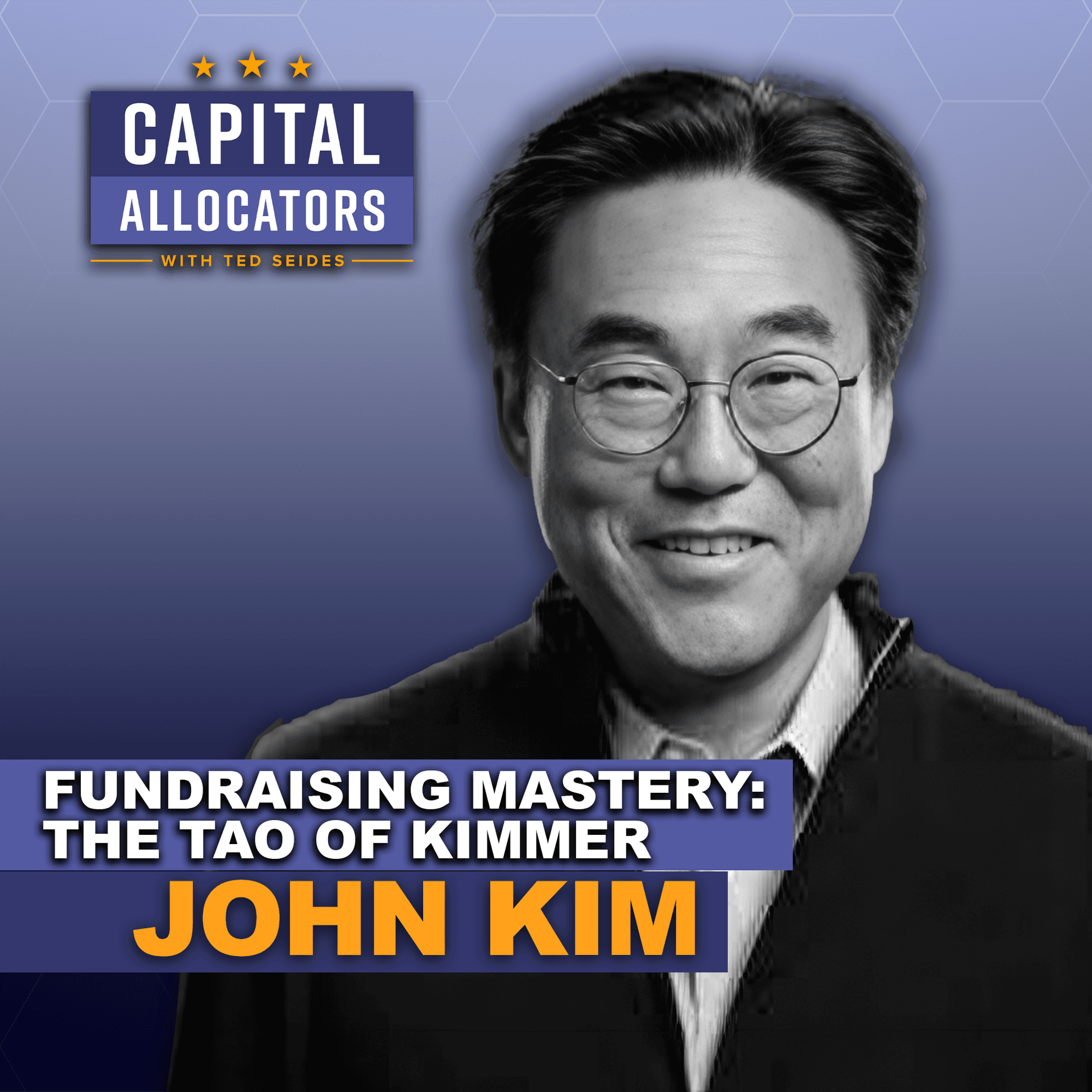
Fundraising “mastery” through persuasion and meeting execution. John “Kimmer” Kim argues fundraising success comes from a repeatable sales process plus reducing investor fear and building trust, using a “Tao of Fundraising” dualities framework.
Guest background
John Kim (Kimmer) has raised over $70B across venture capital and private equity for leading firms. He distilled 30 years of lessons into The Tao of Fundraising. After finishing a major fundraiser for General Catalyst, he joined Lila Sciences as chairman and president of corporate development; he previously worked in sales/trading at Merrill Lynch and moved into investor relations/placement roles at Bank of America and Chase.
Key claims
- Every meeting should start fast with rapport, credibility, attention, and interest.
- Persuasion = desire minus fear; don’t “sell features,” address cynicism by asking what they’re afraid of.
- Trust beats belief; use persuasion levers (authority, consistency, liking, reciprocity, scarcity, consensus) to reduce insecurity.
- Macro fundraising math: pipeline x conversion ratio x “bite size.”
- In objections, repeat back, clarify the real issue (often “not enough trust/track record”), then close or discover constraints.
Notable examples
- “Copernican theory of selling”: the prospect’s world is the center; you must earn their attention.
- Nash equilibrium duality: cooperate only if you expect reciprocity.
- Ted Williams analogy: don’t swing at “guaranteed outs” until the pitch you want arrives.
Written by AI. May contain mistakes. Listen to the episode to check what was said.
Chapters
Tap a time to open that second in VOMeeting Structure and Persona in Fundraising
0:00 to 2:29
Learn the importance of meeting structure and persona in fundraising discussions.
“The structure of the meeting is very important, but the persona can be even more potent.”
John Kim's Journey into Fundraising
7:35 to 14:06
Hear John Kim's journey from sales to fundraising and his insights on persuasion.
“Why don't you take me back to your background that led you into this path of fundraising?”
The Art of Persuasion in Sales
14:06 to 18:03
Learn how to effectively address client fears and build trust in sales.
“When the right answer is to sit down and say, I see you're pissed.”
Understanding the Sales Process
18:03 to 20:50
Explore the structured approach to fundraising and sales meetings.
“and that's the consensus, you don't run the other way, you're the one that got eaten by the bear.”
Strategic Networking for Investors
20:50 to 23:11
Discover the importance of credibility and reputation in networking.
“Well, let's dive into being in the room as you walk through and say there's a target.”
Effective Meeting Structures and Techniques
23:11 to 28:05
Master the key elements of conducting successful meetings in sales.
“There are two things about being in the room that are super important.”
Establishing Rapport in Conversations
28:05 to 28:34
Learn effective techniques for starting conversations and building rapport.
“Did you see the Knicks are just killing it now?”
Persuasion Techniques: Logos, Ethos, Pathos
28:34 to 29:24
Discover the key components of persuasion and how to effectively use them.
“You also mentioned in this Copernicus way of looking at the world, it's not about you, it's about them.”
The Role of Emotions in Decision Making
29:24 to 30:24
Understand the impact of emotions on decision-making and rationalization.
“Everybody focuses on the logos, the logic.”
The Law of Differentiation in Fundraising
30:24 to 31:17
Learn how differentiation impacts fundraising success and investor relationships.
“When you're talking to somebody, you hope that you're able to sit down and say, hey, you want to know the why I'm doing something.”
Show all 28 chapters
Understanding Investor Dynamics: Track Record and Trust
31:17 to 32:52
Explore how track records and trust influence investor decisions.
“Your track record plus your differentiation divided by the complexity of your story is generally how much money you can raise.”
Simplifying Complex Stories for Investors
32:52 to 34:19
Find out how to simplify your narrative to maintain investor trust.
“Complications in the story, they divide the potential.”
Taxonomy of Investors: Tailoring Your Approach
34:19 to 35:38
Learn how to categorize investors and tailor your approach accordingly.
“Track record and the performance characteristics, that's generally facts.”
Objection Handling in Fundraising
35:38 to 38:10
Master techniques for overcoming objections during fundraising conversations.
“all wrong, but sometimes they're useful.”
Identifying Strengths in Fundraising Discussions
38:10 to 41:49
Learn how to identify and leverage your strengths during fundraising.
“Everybody can sit around a room and talk about what's interesting and how you want to sell something, put something together.”
Understanding GP and LP Dynamics
42:58 to 47:32
Explore the dynamics between general partners and limited partners in investment.
“A lot of what you're describing gets to this dynamic that inevitably you're trying to put yourself on the same side of the table to form a partnership.”
Authenticity and Persona Play
47:32 to 48:56
Learn how to balance authenticity with the need to present a suitable persona.
“One of the best things I've ever heard about parenting is that we parent our children the way we wish we were parented.”
Key Laws of Fundraising
48:56 to 53:01
Discover essential laws that govern successful fundraising strategies.
“Maybe I'll take the conversation into a few more laws that actually are useful.”
The Role of Investor Relations
53:01 to 56:00
Understand the importance of investor relations and what makes a good team.
“And when the tide comes back in, they just then catapult forward.”
Understanding the Persona in Fundraising
56:00 to 57:20
Learn how the right persona can influence hiring in investment roles.
“The salesman says, OK, I heard you said I can't make policy.”
Aligning Motivations in Investment Teams
57:20 to 59:10
Explore the differences in motivations between salespeople and service providers.
“So an investment banker, like, oh, smart, good looking, went to good business school, wealthy.”
Compensation Structures in Investor Relations
59:10 to 1:01:10
Understand the complexities behind compensation in investor relations roles.
“A salesperson is going to say, hey, I have attribution for bringing this money in.”
Creating Equitable Compensation
1:01:10 to 1:03:10
Learn the importance of matching compensation to roles in investment firms.
“multiply by those ratios, it almost always perfectly describes the person's compensation.”
Translating Skills to New Roles
1:03:10 to 1:05:30
Discover how skills from fundraising can apply across different industries.
“anybody who opts into an all-terms business knows what exactly the compensation structures look like.”
Lessons from Sales Training
1:05:30 to 1:08:20
Gain insights into effective sales techniques learned over a career.
“The thing that I got to keep first is the relationships.”
Empathy and Reciprocity in Relationships
1:08:20 to 1:10:00
Learn how empathy enhances personal and professional relationships.
“There are a lot of people who are naturally good at it.”
Understanding Reciprocity in Relationships
1:10:00 to 1:11:17
Learn about the importance of treating others how they wish to be treated.
“Reciprocity tends to underpin all ethics.”
Personal Growth and Embracing Potential
1:11:18 to 1:12:08
Explore the speaker's reflections on personal growth and leadership potential.
“If the next five years are a chapter in your life, what's that chapter about?”
Transcript
Automatic transcript. May contain errors.0:00The structure of the meeting is very important, but the persona can be even more potent. First, let me talk about the structure. Every meeting must start with four things. You must establish rapport. You must establish credibility. You have to gain their attention. You have to generate interest. And you better do it fast. It's a conceit that when somebody walks into a meeting, they say, Oh, well, you are meeting with me, and so I have all of your attention. No, you're doing something right before you met me, and you're going to be doing something right after you meet me. Because by definition, if you're not busy, you probably don't have any money.
0:36Of course you're busy because everybody wants your money. So it is completely arrogant to believe that you're not thinking of something before you come in the meeting, and you're not stressed about something else in your life. You've got your own life. And that's the whole idea of the Copernican theory of selling. When I walk in the room, the whole world is you. I literally only exist in your mind. My existence, and this is actually very meditative, the whole idea that we make up our own realities, our own mind, the whole idea is, therefore, I need to establish rapport. I need to say, hey, let's change the setting.
1:09Hopefully it makes it a little bit charming. Sometimes you just talk about the weather. I know it sounds silly, but today happens to be a beautiful day. Well, talk about it if you want. If you've got something else you can talk about, it's particularly worthwhile if you walk into somebody's office and just pick out something in the office to talk about. That happens all the time. Very few times we say, okay, great. Thanks for meeting me. Let's just jump to business. That is a terrible way to start because they're not paying attention. If that happens, just run with it. But then later, make sure you charm them.
1:36Make sure it happens because they've got to have some likability. So that clears your mind. Then establish credibility. Say something about yourself. Say something about what's going on. Say something. They go, oh, there's a reason for me to be here. Ah, you're credible. That's the authority piece of it. Then you want to gain their attention. Okay, well, you're credible. You've done stuff before. What's so interesting about you? You better say something interesting. Then you want to make sure you gain their attention. Gaining attention can happen in any different way. Gaining attention can simply be the way you sound, the way you look, the way you smell.
2:12It could be the way your pitch book looks. It just happens to look different. You have to do all four of those things. You can do them in any order, but you make sure you do all those four things, and then you start to actually sell.
2:28I'm Ted Seides, and this is Capital Allocators. My guest on today's show is John Kim, or Kimmer, who's raised more than$70 billion across his career for leading venture capital and private equity firms. Kimmer recently distilled three decades of lessons into The Dow of Fundraising, the best book I've ever read on fundraising for investment managers. Since then, Kimmer joined a general catalyst portfolio company, Lila Sciences, as chairman and president of corporate development. Our conversation covers Kimmer's philosophy about raising capital, the sales process, art of persuasion, best practices in a meeting, frameworks determining fundraising success, taxonomy of institutional investors, ideal sales team structure and compensation, and the features he's carried over from capital formation for funds to a new operating role.
3:32Before we get going, summer's in the air, and with that comes summer vacations and out-of-the-office email responses. At the beginning of the year, I pledged to my team that I'd respond less rapidly to emails while traveling. So I started writing, entertaining, out-of-the-office emails every time I'd be away from my computer. There was one about ditching my cell phone for a day at the Masters with no chance I'd respond, just like it ought to be. There was another about not responding because I was attending Will Gadara's Unreasonable Hospitality Summit, which created some cognitive dissonance for me, knowing that I wouldn't respond while allegedly learning how to see others better.
4:13And there was yet another about attending Milken, with the recognition that anyone getting the response would probably see me before I responded anyway. Now, many of these out-of-the-offices increased my email count when I got back with a positive response about my reply. That caused me some confusion about whether I should reply to their reply to my reply to their email. One thing I learned from the exercise is we really don't have to reply to email when it comes in. Knowing that others know I won't respond reduces my people-pleasing angst. That's especially true when I get interrupted, like while listening to an episode of Capital Allocators.
4:53So if you're listening, ignore your email for a while. And if you do grab your phone to send an email, you may just want to reply that you're engrossed in the latest episode and need some time to thoughtfully reply. Yeah, that works for me. Thanks so much for spreading the word.
5:35Take it one step further. Your call transcripts flow natively into your AlphaSense experience and become searchable and comparable, so your primary insights plug directly into your earnings, diligence, and pitchbook workflows with no tool switching. AI for coverage and efficiency, humans for complexity and conviction. Sounds like just the right mix to create a scalable institutional edge without growing headcount. For hedge funds, this means validating thesis assumptions before earnings across dozens of experts instead of a handful. For private equity, it means faster pre-IOI scans and deeper commercial diligence.
6:11And for asset managers, it means pulling real operators' perspectives straight into models without disconnected tools or manual handoffs. All of this lives inside the AlphaSense platform, turning raw conversations into comparable auditable insight. The first to see wins, the rest follow. Learn more at alpha-cents.com slash capital. Capital Allocators is also brought to you by BipSync. The investment teams I speak with often spend more time than they'd like tracking down research and diligence materials and trying to understand why their AI tools haven't quite lived up to expectations. The common thread is the system where their data lives.
6:57General purpose tools were never designed for institutional investment processes, and most firms are still running on them. VipSync is the system of action for investment intelligence, structured, searchable, and secure. Every insight gets captured, and every decision is traceable. It's built for institutional investment teams and trusted by asset owners and managers overseeing$4 trillion in assets. See why 75 % of the top 20 U.S. endowments have partnered with BipSync. Visit BipSync.com slash capital allocators to learn more. Please enjoy my conversation with Kimmer, John Kimmer. Kimmer, so excited to do this with you.
7:42I'm excited to be here too. Thanks so much for inviting me, Ted. Why don't you take me back to your background that led you into this path of fundraising? I started my career as a cash register salesperson at IBM. If you want to learn how to sell, there's an area where you actually figure out how to sell because the cash register that IBM were selling back in the late 80s were way more expensive than the NCR, the Casio cash registers. You had to go door to door and try to figure out who's going to buy them and why. Fortunately, IBM had an exquisite training program. They trained us and trained us and trained us.
8:14Eventually, I got pretty good at selling cash registers. I did well enough to make it to business school. And then when I got to business school, everybody was going into banking and consulting. I guess somewhere in my life, I just want to be different than this. Instead of following that path, I just said, why don't I just stick to a career in sales? Then I went into sales and trading at Merrill Lynch, then a couple other Wall Street firms. Then one day, I had an opportunity to move into fundraising. A friend of mine from business school had told me about this job of going around to talk to pensions and endowments to invest in venture capital and private equity.
8:47In the late 90s, I made the jump. There were very few of us in the industry at the time. From there, I quickly said, rather than being a placement agent, I should join the industry as a placement agent at Bank of America, then Chase. I moved into being investor relations because I realized that the investor relations piece had more agency to it. It had more representation and it felt like it had more identity. In 2000, I was an investor relations professional. There are very few investor relations professionals in the entire industry. Then, of course, the industry grew and grew and grew to a place where it is now, where investor relations for many firms is a core function.
9:21You do this throughout your career. There's this great aphorism, if you can't do teach, so you end up writing a book. That's probably met with the other aphorism that if you want to know how little you know about something, start writing about it. And that's what happened to me. One of the things that I should get out in the open is I wrote the book as my farewell gift to the industry. I now run an artificial intelligence company called Lila Sciences, which has fundraising as a component to it. But I was finishing a big fundraiser, my last from General Catalyst, and I was feeling the urge to try something different the last chapter of my life.
9:55The essence of the book, where it would start was, is that I was going to teach a class. I was going to teach a class on fundraising at a school that I was affiliated with. This was basically the syllabus. Then I thought, I don't have time to teach the class, so why don't I put it out in a blog post? And a friend of mine read my blog post before I sent them out and said, you should turn this into a book. So I wrote the book. The first half was lessons on fundraising. How do you fundraise? What are the techniques? What are the things you have to think about? Then as I started writing the book and I started realizing I'm moving out of the industry as my core profession, I started realizing some of the more emotional lessons that I learned and more value lessons that I learned.
10:31about how persuasion writ large actually is very powerful everywhere from your personal life to your professional life. I started writing about how the art of persuasion and the way you can use it to change people's minds can be used for good or for things that are not as productive. Those things have a real cost on your well-being and who you are and your character. So I wrote about that. That's why I decided to call it the Tao Fundraising. I'm not a Taoist and I'm not somebody who is trying to be moralistic about it. Hopefully, I try to be balanced about the idea that if you're going to learn something that has real skill and effectiveness, then you've got to be careful on how you use it.
11:08That frame of the DAO, how do you think about applying that to the process of raising capital? My interpretation of the DAO, and so anybody who's listening to this, you're going to look, that's not DAOism, and I'm like, yes, it probably isn't. The whole idea of the DAO was it was all about opposites, balance, about dualities. There's so much about fundraising and persuasion that is about dualities. Things that are completely not true, yet people believe them. The things that people hate, yet they're addicted to. The things that people don't want to do, yet they are compelled to do it all the time.
11:39What's the most amazing thing that you would see in so many professions, and you have to watch out for in sales, is something called the Nash equilibrium, which is when in order for some positive outcome to happen, both people have to cooperate. But if you know the other person is not going to cooperate, then you don't cooperate, and then both people lose. That's a duality. That's the, well, now on the one hand, I've got this energy that says, hey, look, I want to go be positive, be first. And if I don't think you are going to actually reciprocate, then I shouldn't go positive and be first. At the same time, you will never know if the person is going to react positively.
12:19So you have no choice but to be positive and go first. That sounds confusing. In some ways, it really is very elegant in what is a Taoist view of the world, which is filled with contradictions. You have to be able to hold those contradictions in place in order to be effective, particularly when you're talking to other people and trying to figure out what they're thinking, how they're going to react, how they're going to answer questions, how they're going to change their minds. How did you think about the positive application of persuasion in the process of raising capital? There's so many positive ways to think about persuasion.
12:50I believe that persuasion is desire minus fear. So what people want minus how scared they are. So many books on persuasion talk about how to stoke desire, how to get people interested. I think that that's very credible, very real. But I find that most of successful communication table stakes are actually to get past people's fears, their insecurities, their doubts, their cynicisms. The positive way you can use persuasion is that when you're in a meeting, this simple rule that I use, you meet someone who's very cynical. There are some people who just believe that the glass is half empty. That's their mode of operation.
13:31But then there are some people who are cynical and you can hear charge in their voice. You can feel it. When that happens, it means they've been burned. It means they're scared of something. Like, oh, I use this service and it never works. Or I go to the airport and I know I'm going to have a difficult time with whatever service it is because you've had a bad experience. Or even worse, you've had an experience that's been harmful to you. When you're trying to sell something to somebody, try to persuade them, and all of a sudden they meet you with cynicism, I'd say 99 % of people try to talk about the positive side of life and talk about all the great things and try to convince you and try to balance the energy.
14:11When the right answer is to sit down and say, I see you're pissed. Can you just give me a second and tell me what you're pissed about? And it's unbelievable. They'll say, you know what? I'll tell you what I'm pissed about. Blah, blah, blah. Last time somebody gave me a demonstration, it didn't work and I ended up paying for it. I lost all my money and I had an answer to my boss. Now you know exactly what the key is to sell. You don't have to convince them of the features, functions, and benefits or the wonderful opportunities they have in front of them. You need to convince them that they don't need to be scared and you can give them an opportunity.
14:43What if I could give you a trial run? What if I can give you an opportunity to do this on a less risky basis? There's always a way to create that in somebody. When you do that, what happens is you've reduced somebody's fear and you've seen them. And I promise that that person goes home a little happier. That person goes home a little bit more seen. So in the process of trying to get somebody to do something using persuasion, you have met them where they are and have helped them understand. Sometimes they don't understand their own cynicism. That's a pleasing feeling to them. And it ends up being reflected back on yourself.
15:18It ties to the idea that when somebody is persuading somebody, too many people try to get them to believe what they're saying is true. The fundamental truth is that's usually not where the sale falls down. Most people will believe that people are good investors. Most people will believe that the opportunity makes sense. They just don't trust the person. There's a big difference between belief and trust. The idea that I believe that the Uber that I took here is not going to get into an accident, that there's a professional driver. But I still buckle up because I don't trust that the system works.
15:53However, I don't buckle up in certain situations. I just trust it completely and implicitly. I don't strap myself into a bus when I get into a bus, even though they're off the seatbelts there. If you can get somebody into a world where, gosh, you get them to trust you, you've gotten through a lot of insecurities. That feels pretty good. How do you think about in the context of asset management, building that trust to get people comfortable? This is the part where I caution people because there are simple techniques to do that. There's a beautiful book by Robert Cialdini in 1986, Ethical Persuasion, A Power of Persuasion.
16:30I've never met him, but he has been a guiding light for most people in persuasion for generations. And I believe the book is written to protect people from people who are trying to sell you things. He articulates six different ways that people do that. These six different things, when you look at them, what they are, are ways for people to get past insecurities or to learn to trust you. So no particular order. The first one is authority. But authority, if I happen to have a PhD in science and I'd say something about science or I'm a medical doctor, I have authority. And so I say something, then people, okay, I trust you.
17:02Next is consistency. If I'm always behaving a certain way, then I know that the next time I say, I'll behave that way again, oh, I trust you. Then another one is liking. I like you. You like me. I am like you. And you trust what you like. You trust what you're attracted to. And that's part of the human condition. Another rule was reciprocity. If I do something for you, then you'll tend to do something for me. Reciprocity tends to be at the core of all ethics. If people didn't do things back for people, then we wouldn't be able to have community. If you think about how many times people feel like they've been wronged, then usually there's some reciprocal experience where they have not done to others as they wish they would have done to themselves.
17:44Then there's scarcity. You sometimes say, look, everybody's buying it. It's off the shelf or it's about to get off the shelf or I can't get it. And if I can't get something, then I say, look, I just trust it must work. And finally, there's consensus. Consensus is, well, everybody's doing it. At some levels, these are hardwired into the human condition, like consensus. If you're walking through the forest and all of a sudden a bunch of people are running the other way, and that's the consensus, you don't run the other way, you're the one that got eaten by the bear. Consensus also can be insidious in terms of fear of missing out.
18:15Well, fear of missing out is a scarcity issue, but consensus can be really powerful. It's one of the most powerful tools at macro. If everybody's doing it, then you start to do it. I'll stop with this one statement about consensus. It also reflects the idea of moving through the adoption cycle of innovator to early adopter to early majority to late majority to laggard, that everybody's trying to make that early adopter to early majority leap. And that leap is usually defined as trust. In other words, there's enough evidence now that people can trust that it works. And then the consensus is it works.
18:51And now early majority comes in. So you take that lens of persuasion, reducing fear, and bring it into the process of raising capital for a fund. Walk me through how you break down that whole process. There's a process of raising money, and then there's a process of actually being in the sales meeting. And those are two separate things. The reason why it's called selling, selling is generally persuasion with a process. I can be persuasive, but I have no process. Nothing's going to happen. The macro process is your pipeline times your conversion ratio times the size of the contract or the bite size of the investment equals the amount of money you're going to receive as a sale or how much money you're going to raise.
19:40If you know the pipeline is the first piece, then you have to have a pipeline process. It's that simple. There are six different steps around it. Basically, you have to be able to identify who are the potential buyers. You have to then go contact them. Then you have to go qualify them and say, hey, are you in the market to invest in mid-market buyout funds? You have to then persuade them. You have to pitch them. And then you have to close them. And closing is handling objections. It's all part of the selling process because the better you identify the marketplace, the better you qualify the marketplace, the quicker you contact the marketplace, the better your pitch sounds to the marketplace.
20:21the better you handle objections and close, the better your conversion ratio. The better you identify the largest investors and how they work versus the smallest investors, you then affect your bite size. The big sovereign wealth and pension plans act very differently than family offices or consultants. So that's the macro process. You can dial in the whole idea that pipeline times conversion ratio times bite size is how much money you're going to raise. Then there's a specific way of saying, okay, how do I affect each one of these variables? Well, let's dive into being in the room as you walk through and say there's a target.
20:55It starts with how are you going to reach out to them? Let's assume it's not someone you ever want to intro to. When you reach out to somebody, if you don't have a brand, if you happen to be one of the big major firms, you have a brand, which helps a lot. By the way, the brand in our industry can be personal brand or institutional brand. There are plenty of fundraisers. There are plenty of individuals or plenty of investors that have an exquisite personal brand. If you don't, then you are always better off getting referenced into somebody. One of the challenges is, this is a pro tip that I should never talk about anywhere.
21:28If I want somebody to help me get into an account, that individual's relationship with the person they need to contact, I don't need an intimacy between them. They don't have to be close friends. It does help, obviously. That person just has to be respected. If that person is respected, the second thing that has to happen is that person has to be credible. Let's say I want to have somebody introduce my firm, let's say I'm Lila Sciences, to some potential investor. Well, if that person is credible either because that person happens to be a successful artificial intelligence investor, or that person is somebody who is recognized as credible and smart, but knows Lila Sciences really well.
22:10For instance, if I leave a firm and I say, I would like you to meet former colleagues from my firm, everybody knows I know those people really well. What will happen is they'll say, this person has credibility with me. That helps. What never works is when you send a note out to somebody. I said, hey, would you like to meet these people? They say, well, Kim, how much do you know about these guys? Oh, nothing. A friend of mine like, well, why would you waste my time? The only way I will meet them is a favor to you. Now I'm doing a favor for somebody I don't even know. So Ted, you say, Kim, I've got these guys, you're friends with so-and-so at such-and-state pension.
22:49Would you just introduce them? Sure. But if they take the meeting, and if they don't like the meeting even, now I owe that person a favor. And this person does not owe me anything. Maybe they do owe me something, but people don't understand that reciprocity. So now, wow, I just mortgaged a favor when I can be using that favor for something more special for myself. That's the start of getting the meeting. Then once you're in the room, that's a totally different thing. We can talk about that if you'd like. Sure. There are two things about being in the room that are super important. One is the structure of the meeting.
23:19The other is the persona that you're bringing in. The structure of the meeting is very important, but the persona can be even more potent. First, let me talk about the structure. Every meeting must start with four things. You must establish rapport. You must establish credibility. You have to gain their attention. You have to generate interest. And you better do it fast. It's a conceit that when somebody walks into a meeting, they say, oh, well, you are meeting with me and so I have all of your attention. No, you're doing something right before you met me and you're going to be doing something right after you meet me because by definition, if you're not busy, you probably don't have any money.
23:59Of course you're busy because everybody wants your money. So it is completely arrogant to believe that you're not thinking of something before you come in the meeting and you're not stressed about something else in your life. You've got your own life. And that's the whole idea of the Copernican theory of selling. When I walk in the room, the whole world is you. I literally only exist in your mind. My existence, and this is actually very meditative, the whole idea that we make up our own realities, our own mind. The whole idea is, therefore, I need to establish rapport. I need to say, hey, let's change the setting.
Read the full transcript
24:31Hopefully it makes it a little bit charming. Sometimes you just talk about the weather. I I know it sounds silly, but today happens to be a beautiful day. Well, talk about it if you want. If you've got something else you can talk about, it's particularly worthwhile if you walk into somebody's office and just pick out something in the office to talk about. That happens all the time. Very few times we say, okay, great. Thanks for meeting me. Let's just jump to business. That is a terrible way to start because they're not paying attention. If that happens, just run with it. But then later, make sure you charm them.
24:59Make sure it happens because they've got to have some likability. So that clears your mind. then establish credibility. Say something about yourself. Say something about what's going on. Say something that you go, oh, there's a reason for me to be here. Ah, you're credible. That's the authority piece of it. Then you want to gain their attention. Okay, well, you're credible. You've done stuff before. What's so interesting about you? You better say something interesting. Then you want to make sure you gain their attention. Gaining attention can happen in any different way. Gaining attention can simply be the way you sound, the way you look, the way you smell.
25:34It could be the way your pitch books looks. It just happens to look different. You have to do all four of those things. You can do them in any order, but you make sure you do all those four things. And then you start to actually sell. Sometimes you don't get to do that, but then I'll always come back and then say, okay, let me establish some credibility here. And I see or feel in the meeting, oh, I can see there's some doubt here. What do I need to do? I probably need to come back with credibility. And so I'll tell the general partner, hey, why don't you tell them about that deal that did really, really well, that actually sounds like this, that you're actually pitching, something that's credible.
26:05Then you have to have a closing. One of the things that I recommend, whenever I walk into a meeting, 100 % of the time, I have two things that I will do. And this is Christ's birth. I will know what my first thing I'm going to say is. Then I know what my closing objective is. Now you have to be quick to give that up if something else, but I know where I'm going with the conversation. That is important because then you can shape the conversation. I've got a friend of mine who was talking about cocktail parties. He hates cocktail parties. He's a brilliant guy. He lives in Connecticut, and the cocktail party scene is not his scene.
26:42So I said, look, what you want to do is pre-program your discussion. That's it. Have something on your phone that you can show people. Like, oh, I saw this video. Have you seen this video? Something that you can actually have a prop, have something to talk about, but know what you're going to talk about before you go. Then you have to just have the mentality that this is a social tax. You live in Connecticut. You want to be accepted by your community. It's totally fine. Then stop thinking about it. It's a tax. I don't think about my taxes. And if I don't like it, I move. It works like a charm.
27:13Here's the net benefit. If I know generally what I'm going to talk about when I go into a party, I remember everybody's name I met. The reason why you don't remember somebody's name is, hey, my name's Ted. And I'm thinking, what am I going to say next? Oh, shoot. I don't know what your name is. That's almost always what happens. If I know, oh gosh, you know, Ted, I'm going to talk about, or I knew you were going to be at the party or something. I'm going to talk about your podcast. I'm going to talk about the last guest if I know you're going to be at the party. If I don't know you're at the party, I'll probably have a question that will be relevant.
27:42That'll be somewhat interesting. And hopefully I stick the landing. I'm going on because there's so much to be said about the process of having a conversation. A sales pitch is a process. If you go through these processes, establish rapport, establish credibility, gain attention, generate interest, discuss needs, present your solution, and then close, you'll find that even social interactions work this way. You go to a party, establish rapport. Hey, how you doing? You know what? You look great tonight. Gain attention. Did you see the Knicks are just killing it now? And then you say, I was just at the game.
28:16Well, you were just at the game. Now I'm interested. And so you'll move into, what are you doing this weekend? That wasn't a super great example, but it is the same process. It's just different words around it. So would you come in knowing there are these four things that you have to engage with to get the conversation going? You also mentioned in this Copernicus way of looking at the world, it's not about you, it's about them. How do you think about addressing what the needs are of the prospect? When you're in the meeting, there are two things that you're always looking for. First, you're looking for what is the way I'm going to persuade you, and then what are your insecurities.
28:54Those are about you. First, let's talk about the persuasion piece. It's one of these things where Aristotle writes about this 300 BC, that in order to convince somebody of something, you must use logos, ethos, pathos. Logic, logos. Pathos, emotion, so empathy, sympathy, compassion, pathos. and then ethos, ethics or your values. But here's the trick. Every argument, if you can win two of the three, you're in pretty good shape. Here's where almost everybody gets it wrong. Everybody focuses on the logos, the logic. That is almost never where you want to start. You have to be logical, but you want to address the person's emotional desires for what they want.
29:41and then their ethical or intuitive desires, what they believe they should be doing. That is the key. There are lots of different ways to argue why that is the right thing. Simon Sinek talks about this very beautifully, saying, well, actually, the hindbrain governs the emotions and values, and the frontal lobe governs the logic. Therefore, we know that the hindbrain does not have language. The frontal lobe is created to actually interpret feelings from the hindbrain. That's what rationalization is. Rationalization is you take something that is emotional and you create basically an artificial construct that allows you to hold what was once not rational.
30:21And we call it rationalization. So rationalization ties to every single discussion of sales, yet it is the thing that is the output of the ethics and emotions. When you're talking to somebody, you hope that you're able to sit down and say, hey, you want to know the why I'm doing something. I'm doing this because I believe in, and by the way, it doesn't have to be super highfalutin. I just believe that, let's say mid-market buy-in firms, that there is such an important role for increasing efficiencies in the economy. Because if we don't do that, then we're just going to be hollowed out as a nation.
31:00Standing for something is always difficult because differentiation is key to selling something. But with great differentiation comes great sacrifice. If your why, as famously said by Simon Sinek, doesn't cost you anything, then it's just branding or just a slogan. This is the essence of the equation I call the law of differentiation. Your track record plus your differentiation divided by the complexity of your story is generally how much money you can raise. Your track record plus your differentiation divided by the complications of your story. Your track record is logic. This just happened. And that's the belief versus trust.
31:36If you've got a great track record, I trust that you've done something in the past, therefore you can do it in the future. That's logic. Differentiation, that's a little bit more intuitive. That's more like, do I believe you're really different? First, I have to believe it. Second, do I believe it's important to be different? So what you're doing with operating partners or technology. And then do I want it? In other words, almost everybody investing money has a portfolio. They want that portfolio to have a diversification. of different things. And at some level, they just want to be interested.
32:07You're going to make money by doing something different than everybody else does. That's an intuition. That's not a logic, actually, but it's very powerful. It can also be emotional. For a lot of people, they like to be special. And this is a huge thing, specialness. I find this to be true with endowments. Endowments love to feel special. They are very special. And it makes sense because if you're in an endowment, you sit in a school, usually if it's got a lot of money, it's got very talented people. And when When you show up into those communities, everybody says, well, look, you belong to a talented community and you want to look special.
32:38Everybody else is special. The head of the physics department, the head of the English department, they're all very special people. The head of the endowment needs to be special. That's almost always the case. So specialness, that can also be tied to differentiation. Now let's talk about complications. Complications in the story, they divide the potential. Why? Well, first, complications are what gut trust. It just guts it. You know, like, okay, first I have to do this and I do that. Or, you know, this person left the firm or no, I don't have a successor. Yeah, there's a lawsuit against us. Like, oh gosh, I don't trust you.
33:10The second is there's a real piece of fear that says, I trust and believe that the track record is good. It's good enough for me. The differentiation makes sense to me. I like it. But the complications make it hard for me to explain this to somebody. And I don't have agency over the decision. I must explain to a group of people. Often these group of people use the investment process to create a power dynamic within the firm. That's where you get to debate things. That's where you're allowed to have a safe space to criticize things. It can get personal. Anybody's been an investment committee. It can be condescending.
33:48It can be righteous. I need to be able to have a phrase to tell people that allows them to justify what I've done. The most famous phrase ever is if the glove does not fit, you must acquit. I explain why I made the decision that I did, because I'm not trying to find the person guilty or innocent. I'm trying to adjudicate the law. The law says, beyond a reasonable doubt, glove didn't fit. That's actually the golden rule. If I gave anybody one single thing in a fundraise that you want is to be able to give them one phrase that they can repeat to other people why they want to do this and allows the complications to be very simple.
34:24Track record and the performance characteristics, that's generally facts. So that's the logos, ethos, pathos of dynamics in formula form. If you're in a debate, when people get righteous, you know that the debate's over. Righteousness means your ego is committed to the emotion and usually you're bringing in the value system. I need to be right. The more you fight against that, the more you're going to feel like you've done them wrong. You see this with the issues of wokeness. You see the issues of conservatism. The more you fight it, the more they are offended that you are actually going after their belief system.
35:03In the context of this Logos Ethos Pathos, you mentioned at the onset that allocators might be cynical coming in. There's a lot of no's that they're going to say before they say yes. Also that it's a endowments. They want to feel special. Everyone who's across from you has a different bias or a different way of approaching this. How do you take that framework in the meeting and then try to figure out how to best present what you're doing? I'll give a taxonomy of the general investors. The problem with all frameworks is that they're all wrong, but sometimes they're useful. Obviously, there's only a certain percentage of the time this is right, but the percentage is higher than zero.
35:46I have found that pension plan investors, people who don't have a lot of upside. If I make 10 times money for you, you don't get paid anymore. Your job is hard because you work in an environment that can be bureaucratic, political, disrespectful. Can be. Not all pension plans are this way. Generally, respect is what they're looking for. Respect who they are. Respect their opinion. Respect their needs. Respect their requirements. When somebody says, here's the forms you have to fill out for reporting, don't roll your eyes. Smile and say, I respect you need this. I got it and I'll take care of it.
36:22I'm sorry. Our investment committee can't meet this week after all. Just respect it. At the core of their culture, if you don't respect it, you're not respecting what they do. What they're doing, pension plans, are there to serve their constituents, which tend to be people who serve the public. There's corrections officers and policemen and firemen and garbage men. So that's respect. If you're talking to sovereigns, You better have something strategic. You better have some reason why it benefits the country. Better look through and say, hey, this is why your nation benefits. Sovereign, by definition, sovereign wealth money is money that they did not need.
37:01It's surplus money. They want to make money out of it, of course. But if they don't need it, they can put it in treasuries. That's what the Japanese do. If you've got a surplus, use it. And the government says they want to use it for productive reasons. So that productive reasons is what? The national interest. So you better say something strategic. If you're talking to a fund of funds, an asset manager, you better say something really differentiated because they're selling differentiation. The differentiation oftentimes is performance, but they want to be able to say, hey, we're differentiated.
37:29So give them a reason to say we're differentiated. Sometimes scarcity is a great differentiator. You can't get into this fund. We did. With family offices, you have to be careful because you have to find out whether or not you are talking to the decision maker. I always say if you talk to five family offices, you're talking to seven different types of decision makers. but they tend to be more aligned. If they make money, then you make money. Insurance companies tend to be very risk adverse. So you better talk about risk mitigation, be intelligent about it. And endowments, as I mentioned before, feel special.
37:58So that's the taxonomy. When you're walking through your presentation, inevitably you get the objections. How do you best go about getting past objections? Objection handling, that's selling. Everybody can sit around a room and talk about what's interesting and how you want to sell something, put something together. It's when somebody's saying no and you have to get them to say yes, that's the good stuff. That's the selling. The traditional way, it works all the time. Repeat back what they said. You want to make sure they say an objection. I think your fees are too high. Okay, that's an objection.
38:33Then you literally just have to repeat back. Okay, so hey, you just said our fees are too high. Can you give me some more color on that. Why do you have that perspective? So you answer it with a question. Make sure you repeat back what they said. A lot of times they say, well, not the fees are too high. What I'm saying is your track record doesn't justify the fees you have. Ah, I see. It's not that the fees are too high. It's that I'm not good enough. That is a very big thing to find out in an objection. You could easily turn around, well, fees are too high. And then you start talking about, well, I have to maintain a firm, et cetera.
39:07This is market. I've got 50 % of my fundraiser standing up to it. There's nothing you've done. If you said, so ask the question and clarify. Now, sometimes they just say, no, look, yeah, you've got great performance. We just don't invest with funds or those fees. Sometimes you look and go, all right, is that really true? So then you have to actually get to truth. Thank you. You think the fees are generally too high, but I see you're investing in a lot of funds. Are all the funds then at a discount to what I perceive as market? I got to know that. If that's the case, that's good signal value to me.
39:39And you can just say it that way. So I'm going to say, all right, you'll almost always find that's not the case. No, not every single one. Now, if they say every single one, then you'll smile and go, great. I know how to solve the objection. Then if you really want to sell it, it's like, okay, we're done here on this objection. Do you like my fund enough that I actually drop my terms to that, will you invest? If you are willing to do that, then you just close them right there. But if they're not, they say, well, I've got other, okay, what else is there then? Now it's discovery. This is the part that's really fun.
40:11A lot of times you're going to find that there are certain rules and regulations that they have to stand up to. There are certain things that the institution is putting on top of them that they have to abide by. And you can find those rules. The trick of that is you want to be able to make sure that whatever you're selling can fit within those rules. Sometimes they can't. The sometimes they can't is the important part. When I talked about conversion ratio, Ted Williams, 400 batter, one of the best hitters, maybe the best hitter in the history of baseball, won so many awards. Despite the fact that he actually went and served in the military, he had five years off, he would have broken every single record.
40:48Famously, this guy was the first guy to deal statistics and say, I know that these are the five pitches that I can hit. Every time I hit them, I get on base. But within the strike zone, there are plenty of balls that if I swing at them, there's a high probability that I'm going to get thrown out. But it's in the strike zone. So he would sit there and a ball would come and strike and he would just let it go. And people like, whoa, why don't you swing at the strike? Because it's a guaranteed out. Then when the ball came exactly where he wanted. He crushed it. That to a certain degree is in the room of fundraising.
41:26When you get the objection, you know, you can handle maybe it's fees or maybe it's performance or maybe it's the complication, maybe it's differentiation. And you know, whoa, whoa, whoa, I'm not differentiated enough. Knuckles go on the table. You lean over and you just rip it because you know, that's your strength. A track record is not good enough. Whoa, whoa, let me just get into that. If somebody hits something that you got to get to this, like, oh, I'm going to try. But if I know that this is something that you're gutting after, I know I've got to reduce my expectations. We're going to take a quick break in the action to tell you about SRS Aquium.
42:04Want to make sure your M &A processes aren't stuck in the past? Partner with a company that's been defining the future of dealmaking for nearly two decades instead. When it comes to M &A innovation, SRS Aquium has reshaped the way that deals get done, streamlining processes for maximum efficiency and minimum headaches. Professional shareholder representation, online M &A payments, digital stockholder solicitation, SRS Aquium pioneered each and continues to set the bar for game-changing innovation. So leave the days of disjointed deal management behind and define your future with SRS Aquium, the smartest way to run a deal.
42:49Learn more at srsaquium.com. That's S-R-S-A-C-Q-U-I-O-M.com. And now, back to the show. A lot of what you're describing gets to this dynamic that inevitably you're trying to put yourself on the same side of the table to form a partnership. But there's always this different tribe, GP, LP dynamic. How have you gone about trying to broach that and meet people where they are? Now we're talking about persona play. There are two basic ideas that talk about developing relationship. And this is any relationship. How do you get past a guarded relationship? One is you put on a persona that you think that they want.
43:35If somebody's intellectual, put on an intellectual persona. They trust you more. That's what they're looking for. Remember, I like you. I am like you. That doesn't necessarily mean that's true. There are other people who are boisterous, but they're looking for a patent fund and they want the person to be intellectual, even though they're boisterous. You need to know what you're auditioning for because it's not a sales pitch. It's not an interview. It's an audition. The idea that you're walking in, they know what they think they're looking for. So try to be it. That's the persona. Some personas, they just, aw shucks, Midwestern kind of thing.
44:12There are plenty of hedge funds. You walk in, aw shucks, people are like, okay, this guy's just out of the eye of the tiger. They don't have a hustle. Some people go, oh, you're the one I trust. Everybody else is really slick. You have to gauge your audience of what kind of persona do you think. Now, that's tough. But if you know somebody in advance or if you had one meeting with them before, and that's what I always ask somebody. They say, I'm about to meet this person. What kind of person do they really like? I think they like this kind of person. All right, let me try it out. But, Ted, I promise you, if you get it wrong, sometimes you blow it.
44:43I've had plenty of big meetings where I come in, somebody's giving me advice, something, I come in with this persona like, hey, I'm here to deal. Oh, my God, you're a jerk. Well, I'm going to try to back off this persona. And I back off. It's too late. It's just too late. I just came in the wrong way. Or I come in all goofy, like, oh, you're not serious. That's one. The other is their insecurities. There are a lot of people, it's called the Sedona method. Do they care about control? Do they care about approval? Do they care about feeling special? Do they care about being safe? I think that AI is a really dangerous thing.
45:13And I think that AI has equal potential of destroying the world and saving it. Okay, there are two ways to answer that. Wow. And come in aggressively like, look, let me just tell you, either we get in front of AI and we win the race or we get behind it and just capitulate and it doesn't matter. Everybody rolls over us. Okay, that's one way to look at it. That's a very persuasive argument. Or there's another argument that goes, you're right. Yeah, there's a lot scary about it. We're doing our part. That's a really good question. I'm glad you feel that way. I feel that way too. Completely different answer.
45:45So that one person wants approval and wants to feel safe. The other person wants control, wants to say, hey, look, I don't like this. I'm like, right, you don't. We're going to control this. It's this way. And oneness is another one. There are a lot of people who actually care about go along to get along. So you'll see this in a lot of beings too, that people will agree with people a lot, not because they're afraid of being criticized, but they really want everybody to be one group. It's more common than you think, this idea of oneness. People just really love groups and love culture. The two things I described, first is the idea of persona play.
46:17The second is if you see somebody, you want to actually get close to them, figure out how they manage their insecurities. I can't accept what's going to happen, so I want to control it. I want to feel safe. I don't want to engage in it. I am afraid that my self-worth and self-esteem isn't up to par. So I need your approval. Those are powerful things to use. When you have the potential to play these different personas, how do you maintain your authenticity and stay being true to what you're trying to present and not acting something to persuade somebody? It is probably the most important lesson I had to learn.
46:53It's completely okay if you make them the center of your attention. The idea that I can meet you where you are, see you, and I have tools and ways to actually make you feel okay. And it's not inauthentic. We do it all the time. When you're the boss, your jokes are a little bit funnier. People laugh a little harder. When you're the LP, the GP tends to be a little less aggressive with you. That's approval. That's also a submission of control. You can be authentic about it. Authenticity starts with, I'm here to serve you and your needs. I'm meeting you where you are. Parenting is a little bit this way, too.
47:33One of the best things I've ever heard about parenting is that we parent our children the way we wish we were parented. Nine times out of ten is the wrong way to parent. Fortunately, sometimes it is. One of the things you say about selling and persuading is that people tend to talk to people the way they want to be talked to. That's pretty self-centered. If I'm talking, I should talk to you the way you want to be talked to. I don't think that there's anything inauthentic about that. If I'm just being utilitarian about it, it is if I'm just saying all I care about is the end. I don't care about you.
48:05People will see through that. Not always. That's what a fraudster is. These tools, the DAO fundraising, the idea of presenting these ideas to people to use them to hopefully acquire resources that allow them to do what they can do. can be used very authentically, and it can be used very manipulatively. There's a duality of this. That's almost the contradiction. Persuasion is not bad. It's not inauthentic. It can be inauthentic. It can be authentic. If you take a step back from the one-on-one meeting where you're trying to persuade a single prospect to invest in a fund and broaden that out to the process of raising capital for a fund, you mentioned a couple of these laws.
48:51I know there are a few others you put in the book and would love to walk through some of what goes into a successful fund rate. Maybe I'll take the conversation into a few more laws that actually are useful. The law of differentiation, I mentioned track record plus differentiation divided by complexity of story. The law of pipeline, which is pipeline times conversion ratio times bite size is how much money you're going to raise. Then the law of trade-offs. It's one of the easiest and best laws to understand that you're always trading off size and terms and speed. It's size times terms times speed.
49:27I'm in a situation right now where a customer is giving me terms that are not so great for me. I can either choose to tighten those up and then slow down the process of getting to yes. We're going to get to yes, but I can tighten up those terms and make them more beneficial to me. And I'm going to have to assume that I'm going to slow down the process. And I have to look and I say, do I want to slow down the process. If I tighten up the terms, it'll make it harder to get a larger commitment. And there's probably more money on the table for me. My partner says, well, look, I want to get better terms.
49:58All right. Well, are you willing to take less money? Well, no. All right. Then I don't know what to do for you because that's in contradiction with each other. Well, that's what you think. Well, no, it's always what happens. It is F equals MA. That's just the nature of trade-offs. Now, you can maximize these things. There are ways to maximize them. And that's the whole art of negotiation. How can I get better terms? And how can I do this? That works. And I love people who will challenge you because then you want to be able to challenge, hey, am I getting the best terms for the right size, et cetera?
50:28That one is a really beautiful one because so many people in isolation say, I want this. And it literally is the same way. It's like, I want to lose weight. All right, great. Well, I'm just going to have one cookie. Well, yeah, but I had that same cookie every day. Well, that can't be the reason why I'm gaining weight. Well, that plus the beer, plus the fact you're not exercising. There's always a combination of these things. The law of leverage is something important too, that great fundraisers do not just create great demand. It is true. You have to start with something that actually has great potential energy.
51:00You can't just make something up. If the product is not worth raising money for, no matter how good you are, you can't raise money. In other words, you have no differentiation. Your track record's bad. It's a really complicated story. you're out of business. The general partners in that situation, there's no fundraiser you can hire that's going to change that outcome. What will happen is, is that when you get a really good fundraising team, a really good fundraising capability, then you'll greatly amplify your potential energy. What is your potential energy? Your track record plus your differentiation divided by your complexity of story.
51:33That will allow you to raise a certain amount of money. If you get a fundraiser, they will use logos, ethos, or pathos to affect and improve each category. Now the whole circle completes. The idea of persuasion comes into the idea of your potential, which adds on top of it the ability to actually leverage your potential. And the big firms have figured this out. It's not distribution. It is about saying, hey, here's my almost entitlement, how much money I should be able to raise. Let me get some excellent fundraising on top of it, and I'll be able to raise a lot more money. How do you think about the potential outside of the organization, trends and styles that go in and out of favor?
52:14One of the things that is frustrating is that so many people fight the tape. They fight the wave. When the wave comes in, and what you're hoping for is to catch a good wave in and get balanced and surf it in. So you have no one to turn the surfboard into the wave. If your strategy is out of favor, if it's not in vogue, then what do you do? You raise less money. That's a little bit of the serenity prayer. God, give me the serenity to do except I cannot change. And give me the courage to change what I can. The fundraiser needs to have the courage to change what they can to maximize what the outcome is.
52:49The cosmic joke of it is that that's when firms usually make the best investments because it's the hardest to get money. But if they get good fundraising, they'll raise materially more money than someone who doesn't have a good fundraiser. So when the market moves and the tide comes out, those who are the strongest swimmers end up making the most advancement. And when the tide comes back in, they just then catapult forward. Who are those groups? Those are the megafunds. When 2009 came around, there was a set of very large funds. The market went into a nuclear winter, but those megafunds already had great fundraisers.
53:23And they were going out and servicing clients and making sure that they knew what was going on and the global financial crisis and doing this. The other folks are just heading the ground like, okay, I don't know what to do. The big mega funds had people holding people's hands. Every week, they'd have some update on what the crisis was. What happened? What little money they had, they put to work, did incredibly well. And that's when they actually went mega. That's when$6 billion funds became$20 billion funds. If you do have the product that the law tells you you have potential to raise a lot of money, What does a good fundraiser or investor relations team look like to get there?
54:02The way to think about it is you have a two-by-two graph. GP information is on the x-axis and LP information is on the y-axis. So you want to cover all four boxes. You have low GP information and low LP information. You're a data service. You're Prequin or you're Salesforce. That's important to have. You got to have those tools. If you've got high GP information and low LP information, in other words, you know a lot about what's going on in the firm, you know everybody in the firm, you know capital accounts and valuations, but you don't really know the LP that well. You don't know their decision making.
54:39You don't have a relationship with them. That's investor relations. Somebody calls in, you're a service provider. I don't really know you very well, but I can get your service. If you know the LP really well, but you don't know that much about the GP, you're not sitting in all the meetings. You know some, but you're not running the firm. You don't speak for the firm. That's a relationship manager or a territory coverage person. A lot of the mega funds have some exquisite relationship managers. Placement agents have wonderful relationship managers. These are salespeople. And that's what you call distribution or whatever you call it.
55:12Those are really helpful because they're the people who actually build trust with the LP. And the firm is monetizing that trust. So it's a very important job. Then there are the occasional few who make it to the upper right-hand corner. Most investor relations professionals want this, and most general partners want to find this person, which is the secretary of state. You have high GP information and high LP information. You know a lot about the LP. You know a lot about the GP. But you're not the CEO of the firm. That looks like a secretary of state. Secretary of state of the United States, third most powerful position.
55:48The Secretary of State, when they go to another country, generally understands politic, understands diplomacy, understands different cultures. The other amazing thing is that that Secretary of State can speak for the president. That's an ambassador. The salesman says, OK, I heard you said I can't make policy. I can't tell you, but I'll tell the Secretary of State. Secretary of State walks in and says, you need what done? But then I need you to get your president to say X. My president will say this. They shake on it. Secretary of State goes back and the Secretary of State says, I agreed to this.
56:19And generally, a good Secretary of State knows what they can get away with. People ask me if you're a general partner or if you're somebody in IR, they all want that job. I don't think it's the best job necessarily, but they want that job. How do you get that job? Or if you're a GP, what are you looking for? It's the most incredible thing. One of the reasons I wrote my book is because I really wanted to show people that this is a skill that you can learn. Yet people hire people who have never done this before. It's incredible. It cracks me up. You would never go to a doctor and say, have you ever performed surgery before?
56:49No, but I'm a veterinarian. Close enough. Go ahead. Operate on me. So have you flown a jet before? No, I've flown propeller planes before. Good enough. The amount of people say, oh, you've been an investment banker before. Oh, well, you know how to sell. Why would we put you in this job? Never fundraise before. Oh, you're a deal guy before. I've met LPs. Never done it before. It's a skill you have to learn. Yet people put it in. And why do they do that? Because GPs tend to put in that position the person they want other people to think they are before they meet them. So an investment banker, like, oh, smart, good looking, went to good business school, wealthy.
57:27That's what I want. That's a powerful person. Somebody who's very attractive, very nice. That's what I want. I want them to know that I'm a very friendly firm. Somebody who is aggressive. Somebody who's charming. Somebody who is Midwest. Somebody who's very New York. And if you don't believe me, just take a look at the presidents of the United States. Bill Clinton chooses Madeleine Albright. Madeleine Albright, super nerdy policy wonk. That was Bill Clinton. That's what he wanted the outside world to see. You take a look at George W. Bush. First Secretary of State, Colin Powell, war hero. That's what he wanted.
57:58The war didn't work out so well. People criticize his intelligence, then replaces him with one of the most intelligent people to ever sit in that job, Condoleezza Rice. Okay, then you get to Obama. He wants to be that person who is a peacemaker. He recruits his nemesis, his opponent, who is actually one of the most experienced international politicians ever, Hillary Clinton. Then you get Donald Trump. First term, he gets Rex Tillerson, the CEO of Exxon. He wants to be the corporate. That doesn't work. he gets Mike Pompeo, the head of the spy agencies. It's always that way. If you want the job, then what you want to do is say, hey, what is the persona that they're looking for?
58:36Pretend to be that persona. You'll get the job. If you're a GP, be careful. You're not hiring the persona. You actually want to hire the skill. That's the dichotomy of the industry. The whole industry is upside down. People aren't looking for skills. They're looking for personas. If you have a great persona that actually fits, you'll get the job even though you have no experience. In those different boxes, when you're building out a team to serve in this role, how do you think about aligning those people with the objectives? It is true that a service provider is going to be motivated differently than somebody who is a salesperson.
59:13A salesperson is going to say, hey, I have attribution for bringing this money in. a service provider says, look, I'm actually here to make sure everybody is happy. Therefore, you need to create an alignment. The investor relations provider is fairly easy. You just pay them the same way you pay everybody else. With the salesperson in that job, you should vary their compensation. That will make them feel better. Most people, and this is not terrible, in fact, is awesome in some cases, give that person carried interest. So here's what happens, Ted. You literally will not find a sales organization that's a high-performing sales organization that doesn't have some sort of volume incentive.
59:58You never find a service organization that does anything but pay people on a group. But somehow, someway, the alternatives industry doesn't actually figure that out. What they do is they break up the investor relations job into three different buckets. There's the service-providing analyst job. They have to do the DDQs, do the reports, do the presentations. It's a real analyst job. Then there's the vice president or director's job, which is the transactor. They're the person who has to help the GP find the deals or get in front of the LP, sometimes represent the GP without them, but the sales component, the actual selling, the getting on the road and doing this with the GP.
1:00:38But they're still a service provider. They're transacting. That's what investment bankers do. Then there's the strategic piece or the partner's job. Say, how do we position the firm? What's our differentiation? How do we want to go to the market? How much money do we want to raise? What kind of terms do we want? Very strategic. What happens is they look at the professional and they say, what percent of your job is in the associate's bucket? What percent of your job is in the vice president's bucket? What percent of your job is in the senior bucket? And multiply by those percentages, what does an associate get paid?
1:01:07What does a vice president get paid? What does a partner get paid? What is the carried interest? multiply by those ratios, it almost always perfectly describes the person's compensation. Anybody can do that calculation. How much time do they spend doing pitch books? I'm 59 years old this year. I still write pitch books. That's just the way it is. That's not every head of IR, every salesman, but a lot still do. You're always doing the selling piece and then you get to do the partner piece. So what's kind of interesting is that the younger you are in their career, actually the more money you make relative to your peers, because the younger professional gets to do some of the selling.
1:01:43Occasionally, he actually gets to advise the GP because you're traveling with them all the time. So, they actually generally get paid a little more. Then they move into the vice president's role and they get paid the same. Then they move to the partner's role and they actually get paid less than other partners because you're doing this other thing. I've described 90%, if not 99%, of the investor relations industry. People find that objectionable because it devalues the partner when you make a partner and it actually makes the analyst more expensive when they're an analyst. But it tends to be what happens.
1:02:15Back to your incentive structures. The incentive structures are awesome. No one ever uses them. There's also reasons why you can't actually make a person a pure commission salesperson because there's a broker-dealer issue. You can still vary the compensation. That's perfectly kosher. How do you do it? There's a way to do it. What do people do? They don't do that. They do the buckets. What's a better way to go about it? The better way to go about it is to match the level with the class of investor. If you're an associate and you get to do other things, great, but you should be paid like an associate.
1:02:44If you're a vice president, you should get paid like a vice president. When I'm looking at the vice president, we're equal. If I'm in the Navy and you're in the Army and we're the same rank, we should be paid the same. You're doing something very different than what I'm doing. I'm on the water, you're on the land, but we're equally important. Same thing with a partner. If the partner is doing all this other stuff, that's great, but you're a partner. Pay them like a partner. Pay them like a deal partner. Because the whole idea is that even though the incentive structures are, you can actually vary them some, anybody who opts into an all-terms business knows what exactly the compensation structures look like.
1:03:16You're just opting into these classes. There are people who do that very well. And the reason why it's important is basically retention. Here's the problem, and this happens a lot. The person who sits at the top, when they get really good, and you're not paying them as much as the other partner, other people can pick them off. Happens all the time. When that happens, for that person who's good, it's a very expensive mistake. It also creates more of a harmony culturally. The whole idea of ego deprivation, of walking around being a second-class citizen in a job, that creates a dystopia. It creates a victimhood for a lot of people in the industry.
1:03:55If I actually think about the thing that people complain about most in the job of investor relations is that they don't feel like they are equal to – and by the way, the general partner often says that's true until they can't raise money. So you stepped away from the alternatives industry into this AI healthcare company. Of all of these things you've learned, which ones have you found most applicable and which ones were you able to leave behind? The leaving behind part is probably the easiest. I left behind the notion that my job was different than everybody else's. When I was working at a venture capital firm or working at a leveraged buyout firm, my job was different than everybody else's.
1:04:46Now that I work at Lila Sciences, I am responsible for the fundraising for our Series A, Series B. But my job's not different than everybody else's. I am the chairman and co-president, and that's my role. But my job is to make Lila successful. It's not different than anybody else's. I happen to be doing something different. And that's really different. There are other scientists that are doing things that are amazing. There are software and AI programmers. There are financial people. There are laboratory people. There are development people. Their jobs aren't different. We're all trying to make Lila successful.
1:05:26They do different things. That's a real difference. I got to leave that behind. And I really enjoy that. The thing that I got to keep first is the relationships. That's been great. I've really enjoyed the ability to keep many of the relationships who still are investing directly into technology companies. That's very satisfying. The second thing you get to keep is the outward centricity. When I'm talking to clients or customers, I use the same techniques of, I see you're cynical. What's going on? Well, I got it. I got it. Or I get your sales pitch, but this is not differentiated enough. I get it.
1:06:07Or it's just too complicated. One of the things about Lila sciences. It's very complicated what we're doing. We're using artificial intelligence to combine it with laboratories to create a better scientific system. Well, that explanation takes forever. Instead, there are lots of different quick phrases I use. I say, hey, look, realistically, the entire world is trying to use AI to not need laboratories. You do realize that the Lila paradox is that in order to actually not need laboratories, you need to train on laboratories. Everybody literally nods their head, going, yeah, that's right. We're the largest firm in the world that actually trains in laboratories.
1:06:43And we've got a head start. And everybody goes, well, that makes sense. That is repeatable to somebody else's investment committee. Well, why Lila? Well, to get rid of laboratories, you need to train on them. There's a whole discussion of why training on laboratories creates a better system that can move 37. All that's true. It's quite complicated. I need to tell that story. But in the end, I give them that little thing. So that's something I bring into the experience. If you circle all the way back to your early training at IBM, what were some of those seminal lessons you learned in that fantastic sales training program that have carried all the way through?
1:07:19The two things that I learned, the custom tailored sales calls. For any IBMer in the late 80s, they would know the custom tailored sales call. This brings us back to not a surprise. The custom tailored sales call is establish rapport, establish credibility, generate interest, gain attention, discuss needs and qualify, present solution and qualify, handle objections and close. For 30 plus years, almost every conversation I have fits that structure. It's a habit. Anybody I ever meet, that is how I will structure a conversation. It's habit for me now. The other thing that I took with me is that sales can be a trained skill.
1:08:00I sat next to very introverted people who were exquisite salespeople. I sat next to people who I consider to be pretty average horsepower, very strong salespeople. I sat next to very good-looking, very charming people who couldn't cut it as salespeople. and that is a really important lesson. It's a learned skill. It can be a learned skill. There are a lot of people who are naturally good at it. Usually they're doing the same things naturally. Somehow they learned it because a lot of these things are about life. How do people get along with other people? You can learn it very quickly. That was a lesson that I've taken with me in my entire life that it's a trainable skill.
1:08:37Anybody who's ever worked with me will smile and go, yep, I've heard of all these things from Kimmer before. Every single thing. Kimmer, I want to make sure I get a chance to ask you a couple of closing questions. What is the best advice you've ever received? The best advice I've ever received is knowing when to release the tension. My personality type is I hate tension, which is why I'm so empathetic. To learn to sit in tension was one of the most important lessons of my life because it's the tension that the real truth will emerge. But you have to know when to release it. How's your life turned out differently from how you expected it to?
1:09:19Ted, I never expected I'd be an entrepreneur. I had such an identity of being a salesperson, but I never thought I'd be an entrepreneur because I knew how hard it was. I knew how risky it was. I'm really lucky. My life allowed me to find my way into a neat entrepreneur experience where no matter how it works out, it was one of the best decisions of my life. What life lesson have you learned that you wish you knew a lot earlier in life? the way empathetic people move through the world in their most beautiful form tends to be do unto others as they would do unto you because they put the other person first.
1:09:53By the way, it's a wonderful way to live. The golden rule, as a matter of fact, is the one rule that exists in all religions. That's because it's reciprocity. Reciprocity tends to underpin all ethics. Turns out that's not right. It turns out you want to do unto others as they want to be done unto them. The way I want to be treated is not the way you want to be treated. We want our freedom. We want our respect. But how we deliver freedom, how we deliver respect, there's plenty of freedoms I do not need. There's plenty of gifts that I do not care for. You could gift me with so many wonderful things psychologically, emotionally, intellectually that I don't care for.
1:10:33Then there are things that you could give me that I really do care for. Last night, my wife did a wonderful thing. She had this surprise book signing party for me and she rented out a pizza place, which I happen to love pizza. She brought in all this Budweiser beer because the restaurant didn't sell Budweiser. She knew that's what I like to drink. She's doing unto me how I want to be received. If it was up to her, we would have something different. I wish I had learned that lesson a lot earlier. I thought I was doing good by treating other people the way I want to be treated. I thought I was a good parent by actually parenting the way I wanted to be parented.
1:11:08Turns out it's the Copernican rule. If you really want to be empathetic, treat them the way they want to be treated. And that will get you really far. All right, Cameron, last one. If the next five years are a chapter in your life, what's that chapter about? The next chapter of my life is trying to fulfill my potential. At some level, I think I've underperformed my true potential. I got so so attached to the sales persona and being this super fundraiser. I raised a lot of money in my career. I'm proud of it, but I got really attached to that persona, that identity. When there are a lot of other things I discovered that I can do pretty well, and I might have done exceptionally well had I practiced it much earlier in my life, leadership, strategic thinking.
1:11:52I've got a lot of catching up to do, but there are some areas of leadership and strategic thinking that I think I've got some potential. So the next five years, I'm going to see if I can't hit that and grow those areas of my being, my soul, my ethos, my pathos. I can grow those in a much more beautiful way. Well, Cameron, thanks so much for sharing your wisdom. Oh, Ted, thanks so much for having me. I've really, really enjoyed this. Thanks for listening to the show. If you like what you heard, hop on our website at capitalallocators.com where you can access past shows, join our mailing list, and sign up for premium content.
1:12:26Have a good one and see you next time. All opinions expressed by TED and podcast guests are solely their own opinions and do not reflect the opinion of capital allocators or their firms. This podcast is for informational purposes only and should not be relied upon as a basis for investment decisions. Clients of capital allocators or podcast guests may maintain positions in securities discussed on this podcast.
From the publisher
John Kim, or Kimmer, has raised more than $70 billion across his career for leading venture capital and private equity firms. Kimmer recently distilled three decades of lessons into The Tao of Fundraising, the best book I've ever read on fundraising for investment managers. Since then, Kimmer joined a General Catalyst portfolio company, Lila Sciences, as Chairman and President of Corporate Development.
Our conversation covers Kimmer's philosophy about raising capital, the sales process, art of persuasion, best practices in a meeting, frameworks determining fundraising success, taxonomy of institutional investors, ideal sales team structure and compensation, and the features he carried over from capital formation for funds to a new operating role.
Learn More
Follow Ted on Twitter at @tseides or LinkedIn
Subscribe to the mailing list
Access Transcript with Premium Membership