In short
Podcast Summary: Change Makers - Episode 183: From Strings to Stories: Cathy Newman’s Journey
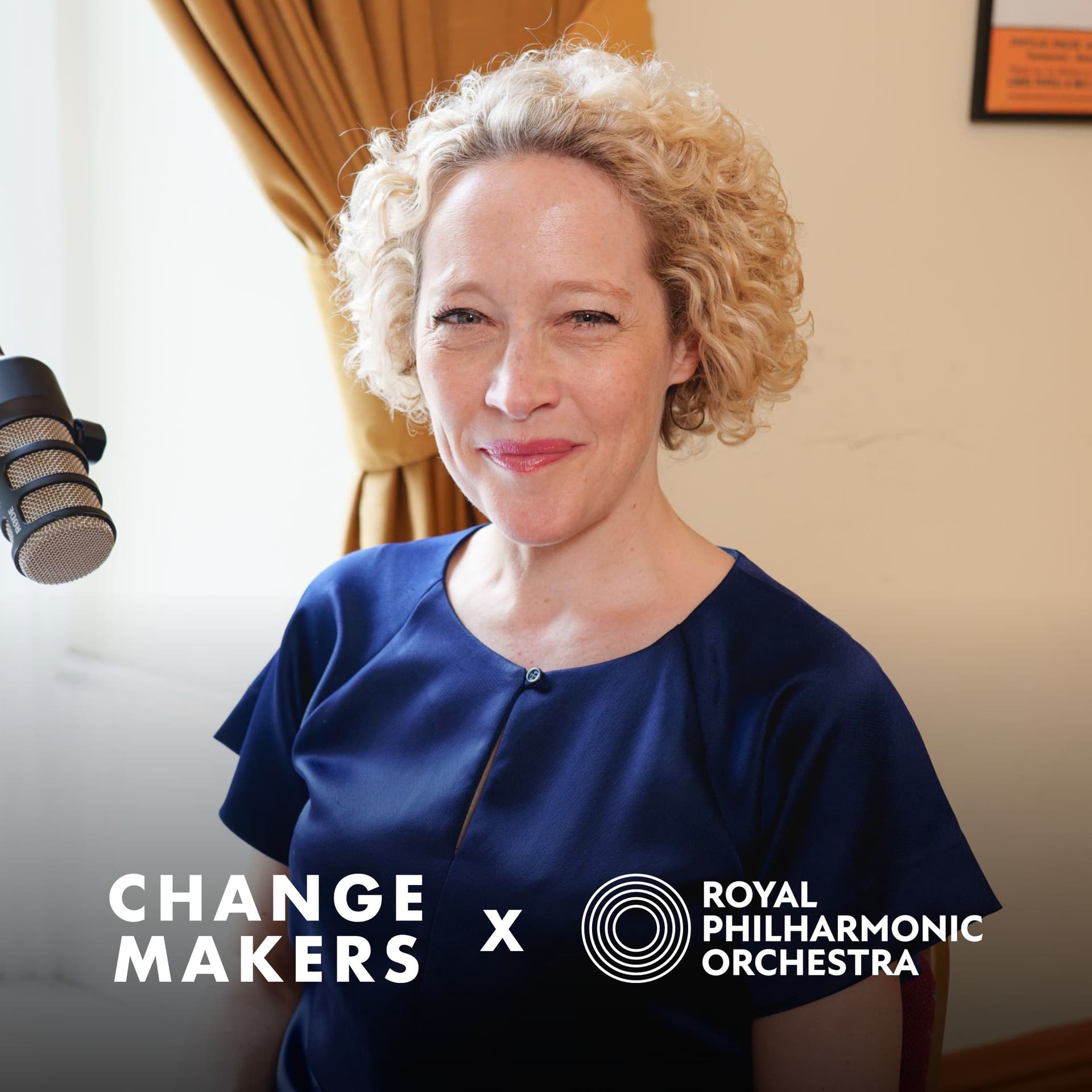
Episode Overview In this episode of Change Makers, host Michael Hayman interviews journalist and author Cathy Newman at the iconic Royal Albert Hall alongside the Royal Philharmonic Orchestra. The discussion focuses on Cathy’s early life, her journey in music, and her successful career in journalism, emphasizing the interplay between these two passions. Cathy shares personal anecdotes about her experiences, challenges faced as a woman in media, and her advocacy for music education.
---
Key Themes and Concepts
- Cathy’s Musical Journey
- Early Introduction to Music:
- Cathy’s passion for music ignited when her father brought home a violin during her childhood illness (chickenpox).
- She struggled with the piano but discovered a love for the violin, which became a lifelong companion.
- Influence of Family:
- Cathy's parents, though not musicians themselves, encouraged her and her sister to explore music, emphasizing the importance of education.
- Musical Experiences:
- She reminisces about attending live concerts, particularly at the Royal Albert Hall, which shaped her appreciation for music and performance.
- Transition to Journalism
- From Music to Media:
- Initially aspiring to be a professional violinist, Cathy's focus shifted towards journalism after being inspired by female journalists like Kay Adie.
- She faced challenges securing a position in journalism but persevered, sharing her journey of overcoming initial setbacks.
- Rhythm of Journalism:
- Cathy draws parallels between music and journalism—both require rhythm, focus, and deep listening skills.
- She emphasizes the importance of storytelling in both fields.
- Challenges as a Woman in Media
- Breaking Barriers:
- Cathy discusses her experiences as one of the few women in media during her early career, addressing issues like sexual harassment and the need for representation.
- Empathy Through Experience:
- Her background has fueled her desire to advocate for underrepresented voices, particularly abuse survivors, showcasing a strong commitment to social justice through journalism.
- Advocacy for Music Education
- Music for All Initiative:
- Cathy is an ambassador for Music for All, advocating for accessible music education, especially in state schools.
- She notes the decline in diversity in music education compared to her childhood and stresses the need for broader access to music opportunities.
- Cultural Significance:
- Music is portrayed as vital not only for individual growth but also for national identity and creativity, highlighting the challenges arts and culture face in policy discussions.
- Personal Reflections and Growth
- Connection to Music:
- Cathy reflects on how music now serves as a source of joy rather than pressure, allowing her to enjoy playing the violin without the burden of perfectionism.
- Legacy and Future:
- She expresses hope for the future of music and journalism, emphasizing creativity's importance for societal growth and urging for continued support and funding for the arts.
---
Key Takeaways
- Passion and Perseverance: Cathy’s journey illustrates the importance of following one’s passions and the perseverance needed to overcome challenges, especially in male-dominated fields.
- Music as a Lifelong Companion: Music remains a significant part of Cathy’s identity, enhancing her life and career in unexpected ways.
- Advocacy Matters: There is a crucial need for advocacy in music education to encourage future generations and promote a more inclusive cultural landscape.
- Empathy in Journalism: Cathy's experiences show how personal challenges can shape one's approach to journalism, fostering a deeper connection to the stories of marginalized individuals.
---
Conclusion Cathy Newman’s journey from a violin-loving child to a prominent journalist exemplifies the powerful interplay between passion and profession. Her advocacy for music education and representation highlights the need for accessible opportunities in the arts, reinforcing the idea that creativity and storytelling are essential for a vibrant society. The episode serves as both an inspiring narrative and a call to action for listeners to support the arts and champion the voices that need to be heard.
Written by AI. May contain mistakes. Listen to the episode to check what was said.
Transcript
Automatic transcript. May contain errors.0:00Welcome to Journeys of Discovery, a changemakers collaboration with the Royal Philharmonic orchestra. I'm Michael Heyman and today we're at the Royal Albert Hall in London where I'm joined by the journalist, broadcaster and author Kathy Newman. As the lead presenter on Channel 4 News, Kathy is known for holding power to account and getting to the heart of a story. But before journalism came music and a talent for the violin. And in this episode, Kathy reflects on her early ambitions, the moments that shaped her career and the role of music along the way.
0:34Cathy, welcome to the Royal Philharmonic Orchestra Welcome to Journeys I feel like I'm going to be on my interviewing A game today Well, this is, you know, the boots on the other foot Well, it is I mean, I was thinking about the, you know, the sort of The headlines we might be going for You know, Cathy Newman is on the fiddle Was the first idea What's tiniest violin? Well, let's get it You are a violinist And a very accomplished writer I've been listening to you on Twitter I think was. Was. Accomplished, maybe. Amateur. Enthusiastic, let's just say. Part of a parliamentary string quartet, the statutory instruments.
1:09Yeah, we love that, yeah. So we have Fangham Debonair, who unfortunately lost her seat, but we're still going to call ourselves the statutory instruments. But she was Labour MP. She was going to be Culture Secretary. Because she had a culture. Yeah. So she's the cellist. She's a professional standard cellist. We have Catherine Sheba on the viola, and she plays a lot of professional music now. So she is very definitely concert standard. And then Emily Benn on First Violin, who's well known around Parliament, granddaughter of Tony Benn. But I feel like for all of them, they're professionally trained.
1:43And so I feel very much that I am the kind of, I don't know, poor relation, I'm just riding on their coattails. You're riding on their coattails. But well, let's go back. Everybody's at different levels in music. But I mean, obviously, this was a passion. I mean, you talk about music, you work hard to provide opportunities for people to experience music. How was your journey into music? When did the lights go on? Well, I think you have to go back to me having chicken pox as a child. And I'd sort of tried a bit on the piano and it hadn't really sort of worked for me. I must have been about four or five, that kind of...
2:21So, you know, my parents had this piano and my mum had never really been given the chance to learn when she was a child. So she was very keen that we learned. So the piano was there, but I just didn't really sort of gel. I couldn't coordinate the hands, I think. So then I had chickenpox. I was at home and my dad, who's a chemistry teacher, was a chemistry teacher. He came home from school with a violin that someone had just, he was just like, oh, you know, they were. So it was a totally random incident. Yeah, totally random. And I just loved it. and you know stuck at home playing chicken pox I was sort of plucking away and you know just getting to know what the instrument was like and then I started learning with a teacher you know nearby um and yeah I just had an absolute passion for it were your mum and dad musical not really I mean you know like I say they'd always wished they'd been given a chance to learn and they hadn't really had that opportunity so when they became parents they were very keen that we had that chance me and my sister and I think my mum was because she was a teacher as well so they had this kind of like educational zeal really and my mum read this book called I think it's called the children who live on the hill and it was like a sort of progressive educational book about the way to parent was to see what your kids were interested in and then give them everything they needed to fuel that interest right so my mum adopted this approach with music she could see that we were both into music and she kind of just threw everything at it.
3:45Massive encouragement. Yeah, massive. I mean, I'm just thinking, I mean, we're here at the Royal Albert Hall, we're just listening to all of tonight's preparations for She-Pan. It will be amazing in terms of a live experience. Do you remember your first live experience? Well, funnily enough, I'm pretty sure one of the very first was here with Alfred Brendel playing, I think, Beethoven Emperor Concerto. And my memory, it's all very hazy because I know I definitely saw the Tchaikovsky Violin Concerto at some point here as well. But it's... And what, was this a childhood experience? Yeah, my parents brought us up here.
4:18You know, we lived in Surrey, so it was, you know, a bit of a trek. But, you know, my mum had had a very formative experience going to the Edinburgh Festival. And so she, I think, must have been the proms. Right. I don't think we were promenading. I think we got a posh seat. Yeah. And it was a real sort of family treat. But, yeah, no, I just remember... Did it make an impression on you? Yeah, I mean... I used to say that the Emperor Concerto slow movement was what I wanted played at my funeral, but then I sort of thought about it and thought, it's got to be violin, doesn't it? It's got to be slow movement at the Tchaikovsky Violin Concerto, right?
4:54But yeah, that was one of my favourite pieces of piano repertoire. I mean, it's going to be absolutely amazing. Yeah, I can't wait. But I also think there is just something about, you come to sort of a concert, and it has so many, you never kind of hear it the same way twice, I think. I mean, everything creates a kind of impression, it creates a kind of emotional reaction. And a memory. Yeah, and a memory, exactly. So on that kind of emotional part of music, it quite often brings out something different in people. What does it bring out in you? I think music was absolutely the kind of soundtrack of my childhood.
5:35You know, it was something that, you know, we didn't have a telly, ironically, given what I went into. So I was slightly, my husband always thinks it's really funny that there's kind of huge pop cultural experiences that I just missed out on as a child because we didn't have a telly and I wasn't really into pop music. So I suppose the substitute for that is we used to compete in these little music festivals nearby. There's one called the Bramley Music Festival. And if you won a prize, you've got a goblet. And I remember one prize I won was a record of, a record that dates it, doesn't it, of Heifetz playing the Tchaikovsky Violin Concerto.
6:16And so that, it's things like that, and, you know, coming to the proms here, you know, Edinburgh Music Festival, it's things like that that you just remember, and I knew every note of that concerto. And that soundtrack of your life, because, I mean, that's so interesting. I mean, I was reading something where it said that you'd be as happy playing the honky-tonk piano as you would be violin. So it goes more than just strings and pass. Yeah, although I can't. I'd love to be able to sit down and just play the piano and I can't. Whereas I can, you know, I could just pick up the violin now even though I haven't practised for months and love it and love playing it.
6:49I had an uncle that could play the honky solo piano. Yeah, respect. He never read music, but he could play like an incredible level of detail. And it was just to be, and it was one of those things you just think back to your childhood of actually like that whole sound, everything. But there's something sort of in your DNA you go with certain instruments because I just always, I couldn't just sit down at the piano and play any old piece. I couldn't do that. I couldn't sight read it. Whereas the violin, it's sort of instinctive. It's instinctive. And singing as well. Because we were just talking a moment ago that I love strings as well.
7:26I mean, it just does something to me in terms of the experience, the kind of the yeah I always go very weepy very emotional very quickly it's sort of like it's the instrument that gets me I mean is that is that but also it's so versatile isn't it you know um you kind of I went to see the um the red priest the the you know that played they played just Vivaldi it might have got the names right but you know there's that sort of energizing effect of hearing strings playing something fast and furious you know but then also yeah some of the most emotional moments of my life you know i played salut d 'amour at our wedding for example i actually played massonet's meditation meditation at um i mean we are creating the ultimate playlist i'm just giving you all the cues we're gonna have to actually put this together for you exactly yeah my greatest hits but yeah you know i played actually massonet at um someone in our year took her own life in the first week of of my time at university at oxford and it was just the most harrowing experience for for everybody and for her family clearly and i played the mass at her memorial service there and so you know things like that for many many years afterwards i couldn't actually hear that piece without feeling upset and that and then i felt that i had to kind of reclaim it somehow because you've got to be able to divorce because you're about particular types of music, but it is, I've seen violinists that are basically so much energy is coming through the instrument.
9:01I mean, and actually the physicality of it, the way that, you know, sort of three, four hundred year old sort of pieces of kit are just thrown around. I mean, it can be absolutely amazing. How far did you think you were going to get with it, Cathy? I mean, did you, did you see? Well, when I was growing up, I would say I wanted to be a violinist. Right. And I would dream of that. As you get sort of more realistic, the older you get, don't There were these very influential two old teachers who were friends of my parents. They were two old spinsters. And I remember Frances, one of them, who was very sort of down to earth, she said to me, oh, you don't want to be a violin teacher.
9:35That's a dog's life. Because by that point, I think I'd realised I was never going to be good enough to be a performer, a soloist. I wasn't interested in playing in an orchestra, I'm afraid. Much respect to the RPO. Was there a moment where you just thought, this is as far as I can? Well, I think a bit of a crossroads was I auditioned for the Yehudi Menuhin School. Yeah. And they said I was quite young and I hadn't had very good teaching at that point. Later, I learned with Dona Lee Croft at the Royal College and she was amazing. This incredible, larger than life, redheaded Texan. And she was absolutely brilliant.
10:09I was reading about her. She sounded amazing. I mean, she was. So I feel like if I'd auditioned when I was learning with her, I might have taken a different route. But anyway, I auditioned when I had quite a sort of amateur experience. And they said they could see something and they said, come back next year. And it was at that point that it was a bit of a crossroads. I just thought, actually, I'm not good enough to be like a prodigy on stage, you know. So I suppose I sort of dialed back into my schoolwork. I still was very passionate about the violin, but I thought, oh, you know, maybe I'll be in a quartet.
10:43And then again, you'd sort of progress. and then we got a telly when I was about 16 and I saw, basically screwed it all up but no, I saw Kay Adie standing up being a war reporter and I thought, okay, never mind the violin this old lady Frances says it's a dog's life being a violinist anyway I'll go and be a journalist well look, let's go, strings to sticks let's move on so Kay Adie, she was the inspiration in terms of being a breakthrough strong female reporter on the front line pick up the story what were you seeing well i haven't actually got around to being a foreign uh you know war reporter yet so i mean that's obviously still to come at the age of 50 um but yeah no so that was definitely inspiration because i think you know there weren't that many women on tv so it was like oh a bit of a revelation oh you can be a woman on tv and do something that isn't just sitting behind a desk so that i that sort of fueled me and I did lots of student journalism at Oxford.
11:45Not loads. Is there any musical link to this? I mean, is there always that stretch as well? No, I think there is because as a presenter now, I mean, I was a print journalist for quite some time. So that's a sort of different cup of tea. But as a presenter now, there is an element of performance about it. You know, I always think the best presenters are sort of who they are on screen, same as off screen. However, you do have to sort of slightly dial it up is it rhythmical yeah sometimes the relationships and your forming can be quite yeah you've got to listen to who you're interviewing and you've got to know the right moment to jump in and yeah you know so there is a kind of there is a rhythm to it and yeah i think there's also that obsessiveness that you need as a musician you kind of that's quite useful as a journalist not letting go of a story you know just yeah determined and finding a voice i guess yeah because yeah because today we know kathy newman as a fearless um interviewer somebody that's going to if you know if there's truth to find you're going to find it what what that's that's a big pressure that well i can imagine right but i mean but that's what we want right that's what we tune in to watch is because you know we want somebody that's going to hold people's feet to the fire but i'm i'm imagining that that was a journey all of its own oh yeah i mean you You know, when I started as a print journalist, I, it's quite funny actually, because I applied for a whole load of traineeships and didn't get them.
13:10And I always say this to young journalists and, you know, young people in schools. I do a lot of mentoring at schools and so on. And I always say to them, don't worry if you don't succeed at first, because I didn't get any of them, you know, any of the natural routes in. And so I definitely lacked a bit of confidence. How did you go? What was the... Well, and I remember once one of the interviews, they said, oh, what's your absolute ambition? and I was like oh you know I'd like to be media editor of the Guardian and they were kind of like you know so it's that kind of thing just sort of realizing that you can have an amazing goal and go for it and having the confidence to do that and you know I remember I was very I looked really really young I know it's hard to imagine now but um I looked really young for my age and so I I remember once I went to interview a big European broadcaster for the FT because I was media correspondent ironically I'd sort of achieved a bit of my ambition at that point um and I went to interview him and he he looked at me I came into reception he looked at me and said oh no no there's some mistake I'm being interviewed by the FT right and I said well I am the FT and so I suppose you learn from things like that that you know I was able at that point not to go oh my god I must look so you know in my head I was thinking I must look so young and inexperienced he's not expecting me but it didn't sort of crush me right and being a woman in media yeah part of a generation that's breaking through part of like actually you've got to go out there and make your own like you've got no yeah there's no there's you know how did tell us a little bit about that that side although it does sometimes it did sometimes have advantages in that for example when i was media correspondent um it was a big press conference with rupert murdoch sam chisholm the guy who was running Sky, you know, it was such a big event, those big sort of media barren press conferences.
14:58And I was probably one of the very few women in the room. So of course, they picked me to ask a question. And, you know, Rupert Murdoch quite enjoyed that kind of little sparring. So, you know, it can have its advantages. But, you know, there's a lot of I've talked in the past about, you know, the sexual harassment that goes on in Westminster, you know, that I experienced and well it was an issue at school as well but you know that was also a male dominated environment my sick form but I think you sort of learn I'm sort of thinking when you've experienced that what's the kind of the leftovers in your mind about actually how you approach the world today how you approach well I think that's why I've ended up doing a lot of stories championing people whose voices don't get heard so women abuse survivors but also the church story that I've just been doing you know the abuse survivors there because I think there's an empathy there that you sort of you you know what it is to be a victim of sexual assault I mean very different circumstances for me obviously than for them but you you you want to listen to people and hear their stories and help them tell their stories and does it give you a fire as well yeah definitely getting to the truth finding things and wanting to change the world and hopefully try and make the world a better place i mean it sounds cliche cliched it sounds a bit corny but you know there's i i do think journalism particularly now when there are so many injustices around the world and there's so much wrongdoing that needs exposing i think there's a huge responsibility there but also a huge um you know it's it's public service journalism i think has be more important around the world well let's let's talk about that through the lens of channel four so this i suppose where where your your public prominence really did go to the next level in terms of people being able to watch watch you every evening follow your stories um in terms of actually moving from print journalism to broadcast tell us a little bit about that yeah that's not It's not as easy as it seems.
17:11Well, one of the things was, because I'd been doing sort of punditry on TV when I was at the FT, and that's what gave me a little bit of a sort of idea, well, this might be quite fun. But punditry is so different, because when you're a newspaper journalist, you can basically say what you think. Of course, when you get onto TV as, you know, well, I was political correspondent first, there's all these Ofcom rules that you've got to obey on impartiality. So at first... Do you find it hard being impartial? well it is because of you know at first i arrived thinking i can just do what i did on newspapers well you can't yeah so it's you feel slightly restricted um and you have to be careful all the time am i being fair am i giving both sides um equal representation you know am i making sure i've got a right reply in there you can't just wing it you've got to think very carefully so that was and i'm presuming it might even have an effect on your own performance in terms of actually how you actually handle an interview.
18:05Well, I think initially I probably planned everything too much and that sort of hems you in a bit because I didn't want to go wrong and fall foul of all these rules I'd just learned applied. And you almost have to sort of leave some of, just shed some of that information and sort of focus on. So, you know, I used to write out every question in immense detail and, you know, it was 60 million follow-ups. I kind of more, it's more of a sort of bullet point situation. Do you ever look back on your old interviews? Oh, God, no. No, I can bear to do that. No, it'd be awful. Because I always think, well, when you see things of yourself like 10 years ago, you go, oh my God, I'm so embarrassed.
18:46Well, actually, with the church story, I did, because I was interviewed about that yesterday for several hours. And I did watch back some of my early coverage, which was eight years ago. And I was amazed at how sort of, I don't know, well, how much younger I looked, obviously. but also just how sort of buttoned up I was. And that made me think, oh, maybe I've chilled out a bit in my old age. I was just, while you're speaking, I think there's a great Iris Murdoch line where she said, jump and a net will appear. And I sort of think that thing about just revealing who you are, revealing your inner self, where in an interview situation, which is the most unnatural thing in a way, you still, the best interviews, I often think are the most natural, where there is a clear rapport, you've got, you're able to bring things up.
19:29But that's a hard one. It probably mitigates against that because you've got kind of potentially four minutes with, you know, a politician that you want to know all sorts of things about. And you just, the timing is the enemy of being relaxed. How do you feel about the political interview? I mean, is that something you enjoy? I mean, I love interviewing politicians because I love politics. And I'm, you know, that was where I kind of cut my teeth as a TV journalist. Yeah, you know what? They're characters. and that's the worst thing about doing an interview is if you interview someone boring you know and that obviously does happen but you know they they're larger than life a lot of them I mean I can't bear the line to take the more responsibility they've got the harder it is to get them into the interesting zone yeah and I can't bear the kind of line to take and the scripted answers but you know you've got to that's your job as a journalist is to sort of puncture that I mean I once did an interview with someone who did the line to take literally the same answer about four times because they thought I was going to click the interview and I was so incensed that I ended up using the same answer several times just to make the point that they'd learned what they wanted to say and I just don't think that's acceptable.
20:38Is it moving on the political interview because I mean I'm just thinking about the sort of the Jeremy Paxman interview where Michael Howard said this you know it was that kind of like. Well I kind of miss that bit but I miss it but I do think people don't want that kind of aggression. Viewers don't want they don't want me I don't think they want me as the interviewer to absolutely nail this right but they don't want the repetition either do they no and I think you've got to cut through that but I think you have to do it in a I think it needs to be polite but persistent and you've got to and you don't always get it right you know sometimes I you say do I watch my interviews back sometimes I think back and think I was too aggressive in that one or I mean rarely not aggressive enough to be honest because you know your instinct is always to jump in and sometimes that's just uncomfortable.
21:24Well I suppose sometimes you've got to coax on also sometimes you've got to see it. But I mean I'm just thinking like your two key broadcast outlets at the moment so Channel 4 and Times Radio I mean they're both outlets where I guess you've got a bit of latitude to bring more of a kind of an opinion more of a kind of something more than just reporting the news I guess. I think you can bring passion to Channel 4 news but I don't think you can bring an opinion. You can't bring an opinion. I mean, hopefully, I hope no one knows which way I vote, because I don't think it's obvious from my output. And obviously, although Times Radio is regulated in a slightly different way, you know, I'm still a public service journalist, so I sort of apply the same, well, I have to apply the same standard.
22:07But I think the difference is Times Radio, you've got longer to let an interview spool out, so that's quite nice. Is there a different level of enjoyment between radio, long form, and sort of the kind of bright lights, cameras, and TV? It's so different. I mean, I'm fortunate to have a very varied job, even on Channel 4, because I do my investigative stuff. But I also do the kind of live moments. So and there's just so much, you know, I love doing the big live TV thing. That's great. But, you know, I also love digging away the years. Is that because of the buzz? Is that because you're around a great moment?
22:41And there's nothing beats it. You know, a big political, you know, the fall of a prime minister or, you know, I was literally yards away when Rishi Sunak left. and Keir Starmer came in in Downing Street. I mean, you remember things like, I don't know, just watching how... There was one moment where Keir Starmer was with... Yeah, Ringside Seat, the making of history and all that, but it's just little moments where you see the human being. Right. You were going to say Keir Starmer. Well, so Keir Starmer was there with Vic, his wife. You know, their life was about to change irrevocably. And I just noticed that he was there sort of greeting people who the crowds of his party supporters and I could see Vic sort of suddenly sort of left on her own and I was thinking when's he going to turn back and like you know and it was just a silly little thing but it's just you think your way into their heads at that point and think what are they thinking what's she thinking this is it my prime minister now my my husband sorry is now prime minister and he's been sort of captured by this the machine do you ever find out because it's a They're fantastically human dramas, aren't they?
23:48But do those dramas stay private? Well, it's interesting because I actually, I talked about this on Have I Got News For You, of all places, but I bumped into the prime minister and his wife and I was having dinner with a contact and they were over the other side of the room and suddenly you get this sort of whoosh of security and there they are and, you know, I went to say hello to them and he was in the middle of signing all these trade deals and I just, you know, rather, it was their anniversary dinner, they said to me, so I didn't want to sort of be a gooseberry and, you know, doorstep him.
24:16Ask him a question on the record. Yeah, exactly. I was just like, you know, oh gosh, you know, everything must be all quite overwhelming. And he sort of let out a sigh. And I just thought, you can sort of see from the body language or something like that in that situation, the weight of responsibility, you know. And there they were grabbing a few hours for an anniversary dinner. You know, they must have stayed about an hour and a half and then it's back to negotiating the next trade deal. Yeah, no, I mean, I think for a lot of people, of that being outside of that kind of bubble it's kind of when you do get those peaks in i mean it's just a whole other world yeah i guess the the pressure's on it but i suppose you you though as well as um your broadcast i mean you bring a campaigning style into your own life and i mean that's a good segue back into music because it tells about music for all and music education yeah so i'm an ambassador for music for all um i just think i really noticed bringing up our own kids so they're 20 and 16 now but they've always done played violin i took the working mum's shortcut and said look i know how to do this here's a violin choice kathy no um well they did suzuki the suzuki school which was interesting because it was a whole different um ball game from what i how i learned but i was really odd so they both went to the guildhall school of music and it was really striking that when they were there they went to the local state school but there was hardly anybody else who attended a state school there and I just thought there's such a change from my childhood where it was actually quite diverse the people who did music we didn't have to be wealthy you know my parents were not wealthy we were just solidly middle class and we could afford music lessons and it was just a given yeah music just seemed to be a big part of people's lives yeah that was part of school um and ordinary schools and that just isn't the case anymore so music for all the whole remit is to to bring it to a wider audience at a time when I think that is just so needed because you know you I think I think the proms for example here at the Albert Hall they do a great job of diversifying access but you go to classical music concert and it's very niche the audience and I think that's a great shame yeah I mean well I mean it's one of the reasons why I think with the RPO is the diversity of programming I mean, it's a big part of actually the diversity of audience and actually how you take that forward.
26:36But I mean, it's also, I mean, the fact that, I mean, tough times, tough decisions. I mean, culture, the arts often has to pay quite a high price in that environment. Do you worry about that? Yeah, I worry about it a lot, but I also think it's really short-sighted because Britain is, you know, I can hardly get my words out. I'm so infuriated by this because creative industries is something that Britain excels at. And it's a great sort of export opportunity. And we have incredible talent that we nurture in, you know, specialist music schools, for example. But, you know, that doesn't seem to me that that has been front of mind of successive governments.
27:16Well, because I think it's intangible, isn't it? It's quite hard to sort of like, you know, stab it, put a value on it, box it up. But I think, you know, creativity, I mean, A, it's hugely important sort of for a nation commercially, for a person's life um but and as you say we've excelled at it but i suppose do you get a sense that well also kirsten played the flute the girl so you know he should understand he should get it but i suppose is there a kind of message here because i mean we're saying there's a henry cold room and of course he was the inspiration the driving force behind the royal albert hall the great exhibition i suppose the epitome of thinking big i mean i think it's culture one of those areas that we could think a hell of a while bigger yeah yes absolutely but i also think we we fought thanks to people like henry cole we have big thoughts from previous generations that we need to nurture and and preserve and and make accessible to a wider audience i mean you know the way musicians are treated the the the touring issues post-brexit have not been sorted in this latest round with of trade negotiations with the eu so i know a lot of musicians are hugely concerned about that um the culture department might get split up what does that mean for culture and the arts i mean i i think it's just always been an afterthought because there's been you know it's it's probably because there's been a sort of perma crisis in governments around the world so the arts are always sort of like nice to have but not essential but for me they are essential and i think that's really worth remembering presumably there's going to be a bigger team that gets behind it because if government can't do it or presumably it's going to have to be big amounts of philanthropy yeah other people stepping in because a lot of a lot of charitable institutions are absolutely on their knees so i think it is about yeah attracting philanthropists and hopefully showcasing what amazing institutions we have for the arts in this country.
29:16I'm just thinking, you mentioned your daughters are musicians, and I was thinking about how their journeys have differed to yours in terms of your kind of, I suppose, the generational difference in terms of actually how music has affected their lives. Well, I suppose we're lucky because we live in London, so actually there's a load of music on their doorsteps and our doorsteps that I didn't have ready access to. so that's kind of incredible you know we've always probably annoyed them by taking them off to concerts and things like that but I just it's the school stuff that is their school does have a grand piano but a lot of schools don't and I think there's some great initiatives going on for example you know mandolin orchestras at schools I think the experiment of giving every child a free violin for a while is probably not a great idea because it's not the easiest instrument to just pick up.
30:11You need to be taught in the right way. There's a journey into it. Yeah, much as it pains me to say that. But, you know, the idea of everyone picking up a guitar or a mandolin, you know, something like that, it does, it's a good idea. It's a good initiative. I mean, I've been reflecting on something you said early on, which is that it's almost like you met a teacher too late. It was one experience later. and I'm presuming that in your media career you met people at the right time to sort of, you know, to the pathway. Would you change, if I could wave a magic wand and allow you to give some advice to yourself when you were thinking about the journey of music, where presumably you were completely pumped about the possibilities, about the commitments, about maybe sticking with it, would you change your mind?
31:02You know what, I wouldn't, because I do see so many professional musicians and actually the old lady that I spoke about earlier, I think she was right because I think it is a very hard life for musicians. And, you know, I'm very fortunate that I have a really interesting job and I have a really exciting life. I'm very lucky with that. And a passion you can keep. Yeah, and now music is pure fun. Whereas there was a period where, when I did think that I wanted it, when I wanted to play music professionally, that actually I found it almost too painful to pick it up after I made the decision to ditch that because I just would always find the mistakes in what I was playing.
31:41Whereas now I pick up the violin and I'm nowhere near as good as I was, but I just love it and it's pure enjoyment. Well, and pure enjoyment. I saw the photograph of you with the statue of your instruments in the Chamber of the House of Commons. I mean, what a fun moment. Yeah, and we have such great fun going. We're playing at the Women's Prize, for example, in the gardens in Bedford Square. You know, we get all these amazing, lovely, fun gigs and we need to practice more. We definitely need to practice more. But, you know, the other members of the quartet bring music that I've never heard of, like the Danish String Quartet is one that has become a bit of a favourite of ours.
32:17And, you know, so it's just a whole sort of new learning experience, really, and a very enjoyable one. Brilliant. A passionate case for the amateur musician with lots of fun, lots of pleasure. So, Kathleen Newman, thank you very much for joining me on Journeys. Thank you.
From the publisher
From a childhood spark - a stray violin brought home during a bout of chickenpox - to performing in the parliamentary String Quartet, music remained a constant companion. Yet journalism became her stage, and Cathy reflects on the rhythm, focus, and listening both disciplines demand.
Recorded at the Royal Albert Hall in collaboration with the Royal Philharmonic Orchestra, Cathy reflects on her early musical experiences, the challenges of being a woman in media, and her advocacy for music education through Music for All. Along the way, she shows how passion, perseverance, and listening deeply - whether to a piece of music or a person - can shape both life and work.