In short
Change Makers Podcast Episode Notes
Episode Title
192: Guto Harri on Leadership, Resilience and the Future of Reputation
Podcast Overview
- Podcast Title: Change Makers
- Host: Michael Hayman
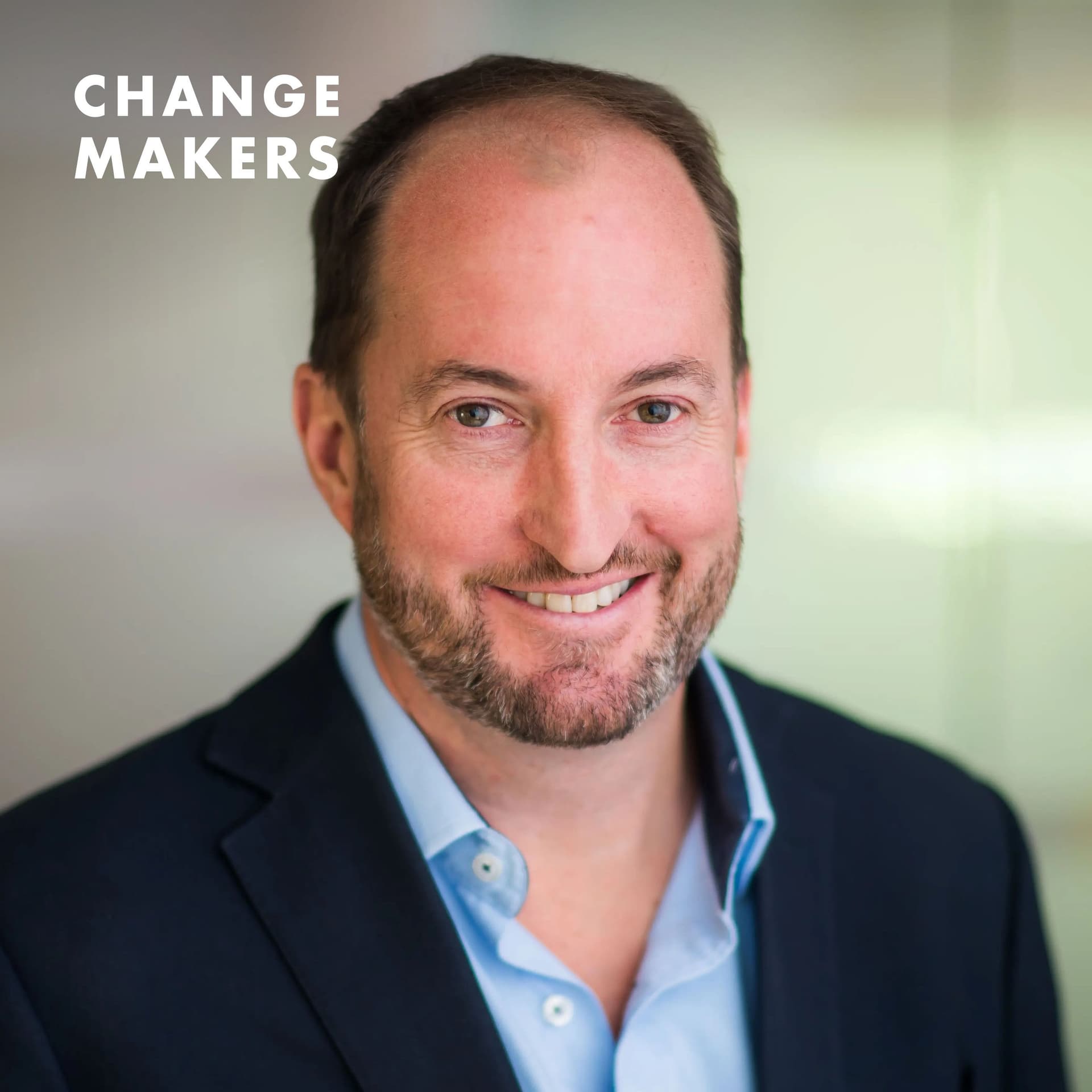
- Guest: Guto Harri CBE
- Description: Discussion on leadership, resilience, and the evolving nature of reputation in a rapidly changing world.
---
Key Themes Discussed
- Leadership Under Pressure
- Guto Harri, a seasoned communications expert, shares insights from his extensive career.
- Importance of maintaining a good reputation before a crisis hits.
- Leaders need to be adaptable and “match fit” for an unpredictable world.
- Personal Background of Guto Harri
- Describes his upbringing and early experiences that shaped his comfort in crisis situations.
- His career highlights include covering significant events like the fall of the Berlin Wall and his role as Director of Communications under Prime Minister Boris Johnson.
- The Nature of Crisis Management
- Crisis situations often reveal a leader's true character.
- Harri reflects on his experience at News International during the phone-hacking scandal and the importance of clear communication in crisis management.
- Employee Expectations and Corporate Politics
- Discussion on the increasing intersection of business and politics.
- Organizations must engage in social issues to meet the expectations of their workforce.
- Resilience and a proactive stance are key for modern leaders.
- Lessons from Political Figures
- Harri shares lessons learned from working with notable leaders, especially Boris Johnson.
- The significance of having a pre-established reputation to weather crises.
- The need for action-oriented leadership, illustrated by Johnson's response to the COVID-19 pandemic.
- The Role of Advisors
- The unique position that advisors hold in political and corporate settings.
- Importance of trust and adaptability in advisory roles.
- Consequences of high turnover among advisors in political environments.
---
Key Takeaways
- Building Reputation: Leaders need to cultivate a strong reputation before crises arise, as it is challenging to change perceptions during difficult times.
- Resilience is Crucial: The ability to remain calm and collected during crises is essential for effective leadership.
- Rapid Change: The pace of societal, political, and technological change requires leaders to be agile and responsive.
- Empowerment through AI: The need for leaders to embrace technological advancements like AI, which can augment their capabilities.
- Political Landscape: Current political leaders must navigate complexities in governance while maintaining a strong public trust.
---
Noteworthy Quotes
- “You cannot turn an idiot into a genius using AI, but what you can do is empower somebody who's got good judgment.”
- “It takes a good individual to make a difference, regardless of the dynamics of the age.”
- “You should leave the country in a better state than you found it.”
---
Conclusion The conversation with Guto Harri provides critical insights into the nature of leadership, the importance of reputation, and the evolving demands placed on leaders in both political and corporate environments. His experiences illustrate the need for resilience, adaptability, and proactive engagement in a world characterized by rapid change.
Written by AI. May contain mistakes. Listen to the episode to check what was said.
Chapters
Tap a time to open that second in VOGuto Harri's Career Journey
0:45 to 1:53
An overview of Guto Harri's varied career in communications and politics.
“So good to see you and what a week to be actually getting together to talk politics, government, the future of the world as we know it.”
Experiences in Crisis Communication
1:53 to 4:00
Guto shares insights from his experiences during crises and challenges faced.
“It almost goes back to I was born on the campus of a mental hospital because dad was a psychiatrist.”
Working with Different Leadership Styles
4:00 to 6:52
Discussion on the types of leaders Guto works best with and their varying styles.
“Well, that was the toughest thing I did.”
The Political Landscape Today
6:52 to 10:34
Exploring how modern leaders must navigate an increasingly complex political environment.
“Yeah, but it strikes me with some of the styles of personality that you've worked with is that some of them would have been a bit more contemplating about, you know, what the situation is and thinking through it.”
Lessons from Boris Johnson's Leadership
10:34 to 14:00
Guto reflects on his time advising Boris Johnson and the challenges faced during that period.
“Because, I mean, whether it's the big issues of the day, or as you say, frankly, I want to trade internationally, you have to take a perspective that perhaps your predecessors didn't.”
Lessons from Leadership in Crisis
14:00 to 15:00
Explore the challenges and lessons learned from leadership during COVID-19.
“And while he was on his knee, I said, are you going to survive?”
The Role of a Prime Minister
15:00 to 16:20
Discuss the characteristics and decisions that define effective prime ministerial leadership.
“You go and invest in anything you think has a chance of making it, and I'll cover your back politically.”
High-Performance Government Teams
16:20 to 17:40
Examine the dynamics of high-performance teams within government during crises.
“I'd have never missed that for the world.”
The Nature of Advising in Politics
17:40 to 19:00
Insights into the precarious role of political advisors and the nature of their work.
“Okay, well, look, let's fast forward many, many, many prime ministers to today's prime minister, Keir Starmer.”
Trust and Reputation in Governance
19:00 to 21:40
Discuss the importance of trust in political leadership and the impact on governance.
“You have fewer rights as, you know, a special advisor to the prime minister than anyone.”
Show all 17 chapters
Lessons from Corporate Leadership
21:40 to 24:20
Draw parallels between political leadership and corporate governance for resilient decision-making.
“It's obviously the trigger, and it's going to cause him a lot more pain.”
The Evolution of Communication Roles
24:20 to 27:00
Explore the changing role of communications in leadership and their strategic importance.
“that is hemorrhaging money and tying up a lot of resource.”
The Future of Leadership Skills
27:00 to 28:07
Identify essential skills for future leaders and their relevance in today's political landscape.
“It's getting your head around what it is and what it isn't.”
Political Skills for the Future
28:07 to 29:05
Exploration of the skills needed in politics and the shortcomings of the current political class.
“I mean, that's what we need from people to be able to actually use the tools.”
Challenges Facing British Politics
29:06 to 30:26
Discussion on the recruitment challenges in public service and the urgent decisions needed for the energy sector and AI.
“Well, I struggle even with my wiring as a human being.”
Leaving a Legacy in Politics and Business
30:27 to 31:06
The importance of leaving the country and companies in a better state than when one took over.
“And so they're taking decisions thinking the most important thing is that we have to maintain the triple lock on pensions, thinking, really, guys?”
The Power of Leadership in Change
31:07 to 32:29
Reflection on significant historical changes and the impact of strong leadership in driving progress.
“Back to your kind of battle-hardened career, Gita.”
Transcript
Automatic transcript. May contain errors.0:03Michael Hayman:Hello, I'm Michael Hayman and you're listening to Changemakers. Now, my guest today is Guto Harri, the self-described battle-hardened communications expert. And what a career. It's taken him from covering the fall of communism as the voice of the BBC to City Hall and the corridors of Number 10 Downing Street as Director of Communications to then Prime Minister Boris Johnson. And it's given him a bird's-eye view of leaders in action and the modern story of politics and government. Now a senior advisor at BPI Group in London, Guito works with leaders to succeed and communicate in complex times. It's a brilliant life story of how you build resilience
0:42Guto Harri:and the lessons you can learn along the way.
0:44Michael Hayman:Guito, welcome to Changemakers. So good to see you and what a week to be actually getting together to talk politics, government, the future of the world as we know it. Welcome to Changemakers.
0:54Guto Harri:Thank you very much. And change, I thought we would have seen a big moment of change.
0:59Michael Hayman:It's not quite there yet. Well, I suppose depending on when viewers are watching this, we're either discussing this sort of one side of a political career or another, depending on who we're talking about. But it's a big time of change in the UK right now. But I guess your career has also been about change. I was thinking, you know, from weapons of mass destruction under Tony Blair to the destruction of Downing Street under Boris. I mean, you've kind of seen it all. And I think for good reason, you've described yourself as battle-hardened when it comes to communication. Give us a sense of what that means to you in terms of, I guess, a career that's seen you go from the BBC to the mayor's office to government and now advising people about reputation.
1:42Guto Harri:I don't think I actively sought out to always be in a situation where there's criminals or a crisis. But I've ended up spending a lot of time in those situations. It almost goes back to I was born on the campus of a mental hospital because dad was a psychiatrist. And so I was surrounded by people who were literally condemned. They were locked up. These are not people with learning difficulties or whatever. They were schizophrenics and psychotics and all that. And so I don't know whether deep down I'm comfortable in situations where most people would run a mile. Because very early on as a journalist, I covered quite a lot of war.
2:18Guto Harri:The first Gulf War. I covered the collapse of communism, which was quite violent in places like Romania. I was there when the Berlin Wall came down. That was less violent. That was happier. And then, yeah, I guess, you know, the first four years of Boris Johnson as mayor was actually quite tranquil. It was, you know, it was a roller coaster, but it was going well and it ended well. Well, yeah, Olympics, 2012, Golden Summers. You know, and I left before he got stuck on the zip wire. So I wasn't there for now. That wasn't one of your great ideas. That wasn't. I'd left at that point. I left when he actually was in Hyde Park.
2:57And Mitt Romney, who'll be familiar with some of our listeners,
3:01Guto Harri:who was going for the U.S. presidency at the time, questioned whether London was ready to host the Olympics. And Boris said to a crowd of about 60 ,000 people, there's some chap, Romney. He doesn't think we're ready. Let's shout loud enough so he hears us across the Atlantic. Are we ready? We're ready. Are we ready? And I thought, my work is done. This guy is walking on water. But then from that to a proper crisis, I walked into the UK offshoot of News Corporation when there had been phone hacking at what was described as an industrial scale and the mass bribing of public officials, police officers, prison officers, and so forth.
3:44Guto Harri:and it was an existential threat to a big company and to one of the biggest, scariest guys on the planet, Rupert Murdoch. But three years, we turned it around and I think that was a moment that really battle-hardened.
4:00Michael Hayman:I'm understanding why battle-hardened. Well, that was the toughest thing I did.
4:04Guto Harri:And this is before Downing Street. Yeah, Downing Street then was Trump that.
4:08Michael Hayman:Well, let's combat things. I think that deserves a section all of its own inside of what goes on the other side of the black door. But I guess one of the things that, you know, people who listen to you on Times Radio or people that work with you, as we do on our kind of BPI level, I think people would say perpetually cheerful, optimistic, positive. I mean, but you've worked in some situations where all of that must have been tested to the limit, hasn't it?
4:35Guto Harri:Yeah, and I think you have to start out with that sort of optimism. Otherwise, you just give up when something like that happens. And you have to sort of find the situation not necessarily enjoyable, but your curiosity has got to be higher than your stress threshold. And I think some of the people in News International, you know, the lawyers in particular, found it so traumatic that some of them got seriously ill from it. Whereas I think because of that deeply ingrained journalistic instinct, I see every situation as this is fascinating. This is so interesting. what are we going to do about it?
5:12Guto Harri:And it's also like a little puzzle. And I have learned that, you know, however bad a situation is, it will be worse if you panic.
5:22Michael Hayman:Right. I mean, as an advisor, though, does that sort of also create a sense of the sorts of leaders that you work best with? I mean, are you the sort of like the, you know, the calm head in the storm, where actually it doesn't matter who you work with? Or are there certain styles of leaders because they're very different people you've worked with right yeah over the years what kind of leader brings the best out in you as an advisor i work best with people who want to do
5:51Guto Harri:something you know i'm not very good at sitting on the bench waiting for somebody you know add infinitum to eventually take a decision that a politician takes every three or four minutes in in at the heart of government and those situations in house in corporate life i have found quite frustrating, but there hasn't been a lot of them. But otherwise, I think, you know, crisis can hit all kinds of people. And, you know, you don't expect a software company in the north of England to have a major crisis and be, you know, headline news and all that. But it happened. And, you know, for me, it was kind of bread and butter.
6:27Guto Harri:It was relatively minor compared to what I was used to. For them, it was deeply traumatic. And some of them said afterwards, how come you were so calm? and said, look, I can't code for toffee. What you do is genius. You know, I'm in total awe and baffled by what you guys managed to do for a living. So to be able to just walk into the room and, you know, think calmly about how we get through the storm and come out the other end, that feels relatively easy to me.
6:53Michael Hayman:Yeah, but it strikes me with some of the styles of personality that you've worked with is that some of them would have been a bit more contemplating about, you know, what the situation is and thinking through it. Some would have been, let's get ahead of it. It's all about the action. We've got to sort the problem out, even if we don't know what the question is. I mean, what's the style, I guess, from an advisor's point of view that has been the one that has sort of got you on your greatest day?
7:20Guto Harri:Some people have got to rein them in. I think you can all guess who we're talking about that. And some people have got to just push them out of the comfort zone. The important thing is that they trust you. And so they will essentially take your advice because that is important. And to his credit, one man that I worked for, I think he'd be happy for me to name him, Mike Darcy, took over as CEO of News International.
7:46Michael Hayman:It was his first role as CEO.
7:48Guto Harri:He'd never run a newspaper company before. He'd been very brilliant as the strategy guy at Sky. But he walks into basically a newsroom where people are being arrested and carted off and some of them, you know, attempting suicide and getting into fights. All kinds of horrible things happen. And he had no experience of being the front man. But he was amazing at just saying, so what do you recommend? And he would analyze it as the guy with, I think, a maths degree and then statistics. He would think it through like an AI would these days. And he would just say, yeah, that makes sense. And then he would do, you know, what was recommended.
8:27Guto Harri:And funny enough, the guy before him had much more of a gut feeling, felt more like I operate. But we achieved a little less than we did with the combination of somebody who goes on gut and somebody who goes with analysis.
8:40Michael Hayman:But I guess all these different styles of leaders are facing one common denominator, which is that the speed of change is exponentially accelerating, whether it's social change, political change, economic change, technological change. We could keep on going. There's so many factors. I mean, I was thinking about your kind of like your leading on our chat about the sort of like the things that you're looking at. I mean, full of the Berlin Wall feels like, you know, halcyon days compared to something. I mean, but at the time, for those of us that lived through it, it was very orderly. It was, wasn't it?
9:13Michael Hayman:It was a sort of, you know, you kind of knew that bit of the walls coming down, you know, and it's sort of like, it seemed like a kind of, with the benefit of hindsight now, a bit more straightforward. Whereas now, of course, there were so many unknown unknowns, which seems to be the day to day reality of leadership, whether you're in a political environment or a corporate environment. I mean, I think how does that factor in terms of being able to sort of take people through a crisis, take people through even a day-to-day situation with good advice?
9:44Guto Harri:Yeah, it's a really good question because I think there are a whole load of industries where you didn't have to be part of the big debate. The geopolitics didn't really affect you unless it literally directly affected, you know, the tariffs charged on your goods or your right to send staff to a certain place. But the broad picture, you were not expected to take sides on controversial issues, you know, affecting society. And these days you are, your own staff want you to be on one side of the debate about transgender rights, for instance. And when that swings completely the other way because there's a new man in the White House, you know, we saw a whole lot of companies have to wrestle with, you know, major sort of HR policies that affected everyone for the globally.
10:31Michael Hayman:All business is political these days, I think. Because, I mean, whether it's the big issues of the day, or as you say, frankly, I want to trade internationally, you have to take a perspective that perhaps your predecessors didn't. So let's talk about the lessons of politicians for business. I mean, you worked for some of the biggest characters, possibly the biggest character of recent memory in terms of Boris. I mean, let's go the other side of, maybe let's start at Downing Street, because I think the City Hall, Boris, was a very different person to Boris. I mean, you arrived at a time of great stress in the system with party gates and all the things that were kind of kicking off at the time.
11:11Michael Hayman:I mean, what was the first meeting like?
11:13Guto Harri:Well, the first meeting was slightly bonkers when I went in to discuss taking the role. You know, I went in and he stood up to salute me. Well, I think I went in and said, get to Harry reporting for duty, sir. Was it Navy or Army? He said he stood up to take the salute. But mid-movement, got down on one knee and said, I shouldn't salute you. I should take the knee because I once took the knee on live television. And suddenly the Prime Minister of the United Kingdom is on one knee in front of me. And I'm just, we'll talk about that another time. I think it was, I think I decided I was going to,
11:45Michael Hayman:but I was still wobbling and it wasn't public.
11:48Guto Harri:And I just looked at him and, you know, how can you say no, really? I said, but while you're down there, while you're down there.
11:54Michael Hayman:I think a lot of us could probably think of a few reasons. Why did you say yes? Because I always think this about you, Gita. I mean, I can remember you reporting on the BBC where, you know, you had this sort of very straightforward reputation of like, this is the guy, he's on the front line, he's doing all these big stories. And then all of a sudden, you are advising the Marmite character of British politics, right? Because for those that love him, as you know, there are those that loathe him. I mean, it's one of the biggest reputations in politics this side of the Atlantic that you could possibly have ever managed.
12:27Guto Harri:It's tragic for me that he went from being somebody who was not Marmite. You know, he was very popular in the mayoralty across the board. He would have never won a left-leaning city, you know, midterm of a conservative-led government, mid-financial crisis, and just immediately after what was described as an Omni Shambles budget. But he definitely became Marmite after Brexit. and that makes things harder. So one lesson in general for everybody else is you need a reputation that's established before you hit a crisis because it's very hard to change a reputation and build a reputation in the crisis.
13:05Guto Harri:What you're trying to do is get back to the good reputation you had and if you never had that in the first place, your work is a lot harder.
13:10Michael Hayman:But he was the ultimate booster, wasn't he? Yeah. He loved the positive stuff. He loved the natural seller. And the evidence backed it for a while, didn't it?
13:18Guto Harri:And then he was the worst possible, well, it was the worst possible thing to have somebody who is so liberal, libertarian, depending on your perspective, to be in charge of the country when whoever was in charge had to lock down, had to put people on the payroll, had to sort of tell them they couldn't see their granny or whatever. And so it went against every tiny bit of Boris's DNA. So anyway, I got in there and it felt like, I think I described it like stepping onto a boat that was held beneath the waterline with a fire in the galley, a broken mast and the captain tied to the mast by a crew that had mutinied.
13:53Guto Harri:And I am a lifeboat man in my private life. I volunteer with the RNLI here in London. Yes, of course you are. So it felt like a rescue. And while he was on his knee, I said, are you going to survive? And he went, Gloria Gaynor, and he said, I will survive. And the tragic thing is he didn't, because that's the other lesson, I guess, beyond politics.
14:15Michael Hayman:Was he fit to be Prime Minister?
14:17Guto Harri:Absolutely.
14:18Michael Hayman:But I mean, obviously, he went through these big moments like COVID and others. And I suppose, you know, if you're a historian like Anthony Seldon or somebody else, he'll say, well, look, he was found wanting. I mean, if you were to sort of objectively look at him, I mean, Was it a situation that actually he was PM at a time when actually you just couldn't govern well because of just how big the issues were? Or were there particular things about him, do you think?
Read the full transcript
14:42Guto Harri:No, I think in one particular way, he was utterly brilliantly suited to COVID. Because if you relied on Gordon Brown, Theresa May, even Rishi Sunak, Keir Starmer to create the framework for discovering a vaccine and rolling it out, they'd still be working on the governance today. It takes someone like Boris to say, find me a woman who understands this thing, found Kate Bingham, said, right, here's a blank checkbook. You go and invest in anything you think has a chance of making it, and I'll cover your back politically. He actually was fundamental to the fact that we got the vaccine in front of everyone else.
15:18Guto Harri:And I think on a whole load of other things, he would have been brilliant, but it went against the grain for him to shut people down.
15:24Michael Hayman:What was his biggest weakness?
15:26Guto Harri:Well, he didn't really ultimately believe that we had to lock down. But he'd gone into a trap, you know, ill-advised, I think, but he also went along with it, that he actually listened to the scientists. The scientists are an important voice, but so are the economists. So are people who can see beyond the immediate crisis to what is the effect on the economy, and through that, the public finances, and through that, the health of the nation in five years' time and in 10 years' time. Not just today, screaming, follow the science and the scientists say, shut everything down because that's the safest thing.
15:58Michael Hayman:Is it one of those jobs you look back on and think, I'm glad I did it? Or do you think people have an easier life?
16:03Guto Harri:Well, I wasn't there when all that grim stuff. But when I went in to try the rescue operation, God, I'm glad because there was some fascinating, you know, we actually had the challenge of responding to Putin invading Ukraine or attempting to invade Ukraine. That was amazing. We ended the COVID restrictions. Right. I'd have never missed that for the world.
16:21Michael Hayman:And in those moments, for those that haven't lived that side of the door, I mean, how does the Downing Street operation work? Because it strikes me it can work at moments like a very high-performance engine and at times like a spluttering wreck, and we might get on to it.
16:38Guto Harri:Well, you're spot on on that. And so when I look at how well it worked on the Ukraine, I have a lot of reflections. One is that in the room was the military attaché, who, as it turned out, had been commanding officer of one of our special forces. And we had a very competent Secretary of State. We had a prime minister who was so on it and had a personal, very deep personal connection with President Zelensky. So Boris would speak to Zelensky in the early hours of the morning. The other people in the room would say, okay, prime minister, we heard what he said. He wants anti-tank missiles. We can get them to him by the end of the week.
17:16Guto Harri:And funnily enough, it happened. There were planes taking off from RAF lineup. When you actually hold a, and Boris did host the roundtable on energy, because that's the best way of avoiding the next cost of living crisis, people talk about this thing for hours and say, come back in a week with proposals. They come back and say, oh, we'll advertise for somebody to chair a quango called Great British Energy. I think Keir Starmer recently re-announced it four years on or wherever, and then we'll get some branding and then we'll do some research, then some consultation. Nothing ever happens.
17:49Michael Hayman:And so if you had... So he was an action man. Yeah.
17:53Guto Harri:So if you had Ben Wallace and you had the military attache and the other people who were working in that, and ex-military people in the MOD, in virtually every government department, you may just get a lot done, more done in health and in education and in policing.
18:07Michael Hayman:Okay, well, look, let's fast forward many, many, many prime ministers to today's prime minister, Keir Starmer. I mean, we are speaking at the most febrile of moments. I mean, you know, the list of advisors keeps growing. We've had Morgan McSweeney. We've had Tim Allen. We've had a number of big names in the advisory world that are now no longer in Downing Street. In terms of, I suppose, not just turning this into a kind of punditry of will Keir Starmer be here or not. In terms of the role of the advisors, I guess, falling on their sword at this moment. in terms of what do you draw from that in terms of, I mean, does that just go with the territory because of the sort of job you're in?
18:53Michael Hayman:Or is there something more fundamental we should draw from it in terms of, I guess, a lesson about what it means to advise at the highest of stakes?
19:03Guto Harri:You are expendable. There's no doubt about that. You have fewer rights as, you know, a special advisor to the prime minister than anyone. If he goes, you go, and you can go because he's just changed his mind about you. But you mentioned the word sword. So I'd say it's a double-edged sword. Right. And it's painful to me. Yeah, exactly. It's a world of pain. But the danger is that, you know, you are trying to do the prime minister a favor by saying, look what, I'll take the hit for Mandelson. And that means you don't take the hit. But the loss of a key advisor like Morgan McSweeney is as damaging to the prime minister almost as the allegations about Mandelson were.
19:42Guto Harri:because it's a different kind of damage. So your departure actually, A, leaves him underpowered at a time when he needs to be at his best. It's intellectual damage. It's intellectual damage, but it's also, we all need our comfort blankets. You know, when you are taking massive decisions and the kind of decisions that you take as prime minister, you know, you take the kind of as many decisions in an hour as most CEOs of mid-sized companies have to take in a month, maybe more. and they are so tightly scrutinized that you need people around you where you're not questioning their competence or their loyalty and their instincts.
20:19Guto Harri:And so the loss of that is damaging in itself and it also creates a sort of narrative of chaos. And then when you lose two, it really adds to the narrative of chaos. And then when it's the third chief of staff and it's the fourth director of comms, it creates its own world, hence the sort of double-edged sword. But you're right, it's very hard in that situation because you do have skin in the game, you know.
20:41Michael Hayman:I mean, I suppose the behind-the-scenes story of this is the sort of work we cover at BPI and things like our Resilience Index where we look at this issue of trust. And it strikes me that the front line of trust is what we're looking at and is what's being played out right now in front of us in terms of actually... It's almost as important how I feel about a situation as what I know about a situation in terms of how governable the country is right now, in terms of the ability of people to trust in their political leaders. I mean, we are at this moment in time in a situation where it strikes me how much further can trust drop in institutions in a country like the UK, which is famed for that fabric of institutions that keeps it together.
21:30Guto Harri:Yeah, that's very interesting. And I think when we step back a little from Keir Starmer to what is relevant to any leadership scenario, I don't think he's in trouble because of the Peter Mandelson thing. That was the trigger. It's obviously the trigger, and it's going to cause him a lot more pain. But he was in trouble before then, and everyone was waiting for the trigger to blow up what had already been stacked as a potential bonfire. So the moral of the story for other companies is don't get into a situation where your reputation is that you change your mind, as Keir Starmer has done, where you change your staff, as Keir Starmer has done, where you said that you stood for one thing and then you appear to be doing another.
22:10Guto Harri:So all those lessons apply to virtually every sort of boardroom and every sort of organization in the land. And the better placed you are, and the more you know yourself, the more convincingly you project to others, the less vulnerable and the more resilient you will be when something does hit you.
22:28Michael Hayman:And resilience is the word, right? Yeah. I think when we look at companies, when we look at the political situation, I suppose what people are looking for are resilient leaders. Yeah. is it a situation where you can be resilient? I mean, who would have to be sat in number 10 right now to be delivering the sort of strong, stable government that we all say we want?
22:53Guto Harri:Yeah, I think there are structural issues, and one without getting down that rabbit hole, but we spend so much on welfare and on interest payments, largely to fund the welfare state that we have, that there's no money left for any leader. Now, if you're a right of center leader, your party wants tax cuts. Successive Tory leaders could not provide them. The parliamentary party got rabid and actually toppled three leaders. Labour want to spend more, and the money is not there to spend. So again, the backbenchers get frustrated. They look like they're set to topple a leader. So again, you've got to...
23:30Michael Hayman:I mean, that's quite an interesting point. In a way, everything comes back to the same problem. I mean, I suppose... So money, I mean, in terms of... for companies, that's quite often it's seen as like, are you winning? I'm just thinking about the lessons CEOs might draw from situations like the political world where actually it just seems to be about degrees of losing and which is the least worst decision you can take in terms of what you face today. I mean, how far do these examples actually travel through in terms of learnable advice for commercial leaders?
24:05Guto Harri:I think where CEOs are better on the whole than political leaders is that they are less attached to things that don't work. So if you launch a new product that doesn't work, you pull it. It's not like murdering your own child, which is, you know, how some politicians talk about getting rid of some obscure scheme that nobody appreciates, that is hemorrhaging money and tying up a lot of resource. Most companies are quite ruthless, rightly so, about things like that. So you don't have these ongoing things.
24:32Michael Hayman:The purifying flame of profit. Yeah, they do. You know. Yeah. So that's an important lesson. But they also want to be, or many companies will say they want to be more purposeful, they want to be more driven by agendas that might well fuel profit and performance, but they do speak to a kind of, I guess, a core mission, a core sense of purpose, and a commitment to the best side of change.
24:58Guto Harri:Yeah, I think, you know, the experience of being the comms person in a company, which, you know, we've both been in-house, going to see the CFO to discuss your annual budget, you know that you don't have a revenue line. You know, you are just a burden. And that is a great discipline. Very few people, even at the top of politics, have been through the rigor that that produces, where you say, but this is a nice thing to do. And so, but why? What is it adding? And so, you don't get forced to align what you're recommending as a comms person, for instance, or an HR person with the core success and mission of the business.
25:34Michael Hayman:But I think the thing that has changed is that the seat that that corporate affairs director sits in seems to be a lot closer to the top. So we often call it the first chair advisor, right? That actually the role of strategic communicators in a world which is so subject to sort of change seems to be on the rise and of more critical importance to a company than perhaps it was 20 years ago.
26:04Guto Harri:Absolutely. And it should be, because back to where we started, the nature of leadership, your leader gets drawn into, he or she gets drawn into debates. They have to sort of live the mission. They have to be an incorporation, if you like, of the values of the company, not just preach them. They have to navigate this tricky territory. And so, yeah, You are often the number two, pretty much, even more than the COO, depending on the company. In my situations, I've usually been in a situation where I'm arguing for one thing, the lawyers are trying to shut everything down, and the COO has got to decide between us.
26:41Guto Harri:And I've got to win that battle.
26:43Michael Hayman:But you've got to win that battle. And I suppose you win that battle through your skills, but also how you develop your skills. And I suppose actually how you keep on top of the game is a really important thing. I was really taken by the fact that you've just done an AI course, which is great, right? Because actually how we evolve as advisors is a really important part of how we stay match fit for the future.
27:04Guto Harri:Yeah, absolutely. I think it's fundamental, isn't it? It's getting your head around what it is and what it isn't. And what it isn't, you know, in a nutshell, is something that's just suddenly been discovered in the last two years called ChatGBT. This has been with us for decades. And it's been incorporated into all kinds of things that we're all, you know, well used to sort of dealing with. But where it's heading is breathtaking. And I think the challenge and the companies that will win and the leaders that will win and the individuals that will win are the people who see it as a way of augmenting what they do rather than replacing what they do.
27:38Guto Harri:And you cannot turn an idiot into a genius using AI, but what you can do is empower somebody who's got good judgment, who has got sound instincts to actually operate even more effectively. And I think that sort of eureka moment for me, in a way, is sort of very important. And in the world we're in, it's critical.
27:59Michael Hayman:Well, I've heard it described as the three superpowers of the future are the three C's of curiosity, creativity, and critical thinking. I mean, that's what we need from people to be able to actually use the tools. I like that. Well, it's free of charge there. Thank you. I suppose just in terms of if they are the skills or the superpowers of the future, I mean, let's go back. Let's finish our time together going back to the Westminster bubble, because I think this is an area where, especially in a country like the UK, where so much attention is on what goes on there. And actually, we feel, I think, a lot of people will feel that actually a lot of those skills are missing in terms of that world, that there is something just fundamentally unfit for the future that you get from a two-party system operating on the green and purple benches, red benches, in a very old building with a lot of mice in it.
29:04Michael Hayman:I now understand. I mean, in terms of how Britain gets fit for the future, I mean, how optimistic do you feel about the political class and its ability to sort of take the nation on that journey? Do you remain optimistic?
29:20Guto Harri:Well, I struggle even with my wiring as a human being. I struggle because I don't think we recruit the right people into public service as civil servants. And I think it's really hard to get decent people into politics when it's such a rough game and you are paid so little. I would halve the number of MPs, double what they're paid, and pay the prime minister of the UK at least half a million. Not because you're going to make money in the job, but you shouldn't be struggling to sort of keep – Well, you know, I think in the end, you pay penis, you get monkey. So that's a start. And then you get people who understand this.
29:54Guto Harri:Because a basic understanding of what's happening with AI means we're not going to get this without a lot more energy, cheaper energy. And nobody's taking the decisions that's going to provide the energy needed for that. And also the raw materials. China saw this, you know, decades ago. But the cost of – we are running out of memory apparently at the moment. And you need a lot of memory to operate AI systems. And the price of memory is going to go up because we don't have enough of it and we can't build enough of it because you need a lot of particularly raw materials to do that. So in a nutshell, there's one big problem that I don't think 85 % of the people in Parliament, in the British Parliament at the moment, are aware of.
30:32Guto Harri:And so they're taking decisions thinking the most important thing is that we have to maintain the triple lock on pensions, thinking, really, guys? So the rules of the game are going to change? Well, they have to. Otherwise, we're just managing decline. And that is the depressing thought. Yeah. That all you're doing is managing decline because I think there's a very simple mission when you go into politics, whoever you are. You should leave the country in a better state than you found it. And the same goes for companies. When you stand down as CEO, you'd like to look back and think this company is in hopefully even better shape than it was when you took over.
31:06Michael Hayman:So last question. Back to your kind of battle-hardened career, Gita. I mean, you've had amazing stints in the media, in public service and politics, and in business. this idea of change and where you see it most easy to affect change what what where where has the heart lifted the most in terms of the the kind of those those areas of focus that you've
31:29Guto Harri:had in in your in your time of work well you know in journalism you know it seemed improbable but i witnessed firsthand the end of communism and the the iron curtain that divided britain uh witnessed, you know, as a journalist, though I wasn't in South Africa at the time, the end of apartheid. The world got better for a long time. A lot of things got better about the UK. Politics got, you know, more stable for a while. You know, in the first 50 years of my life, eight prime ministers of the UK, the last 10, six, and we're now heading for seven. So I know that it's possible. I know in companies and I know in politics, you know, what Boris managed to do in his first term as mayor was incredible.
32:10Guto Harri:So I still believe that a good individual can make a difference. And that goes back to a theory of history. It's people stupid. So a good leader can transform history, regardless of where the dynamics of the age is going. And that applies to our age. That applies to now as well as then.
32:28Michael Hayman:Yeah, brilliant. I mean, I'm just thinking effervescent, booster-ish, positive. Your old boss would be proud. Gita, thank you very much for joining me Thank you.
From the publisher
In the latest episode of Change Makers, Michael Hayman sits down with one of Britain's most battle-hardened communications experts and BPI Senior Advisor, Guto Harri CBE, to explore what great leadership really looks like under pressure.
Guto has spent decades on the frontline of change at home and around the world – from covering the fall of the Berlin Wall to sitting in the heart of Downing Street.
In this conversation, Guto draws on a career spanning media, politics and business to share what every leader needs to know: why reputation must be built long before a crisis hits, why all business is now political, and why the strategic communications adviser is moving closer to the top table than ever before.
The question for every leader is whether they're ‘match fit’ for a changing world.