In short
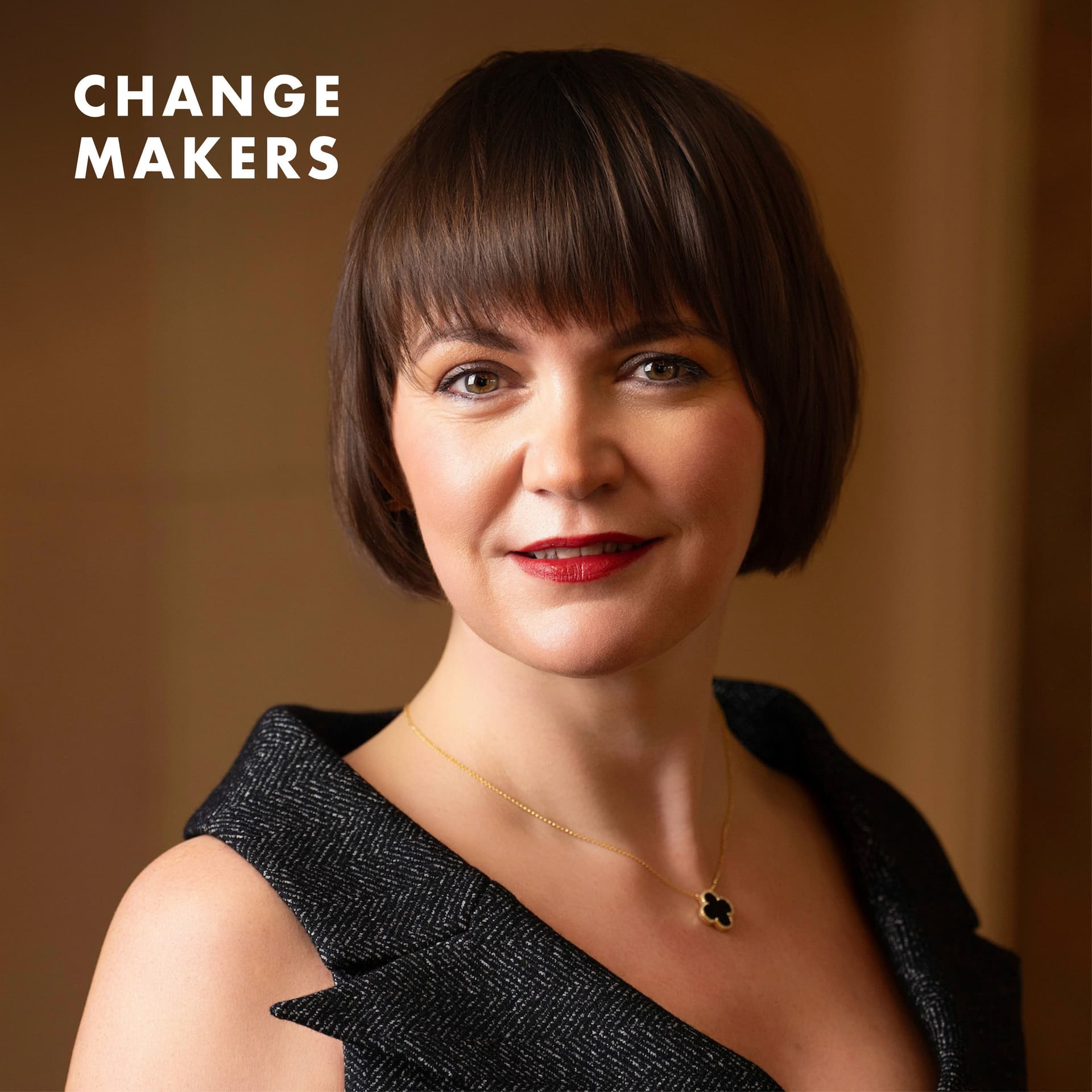
Jo-ann Robertson (BPI Europe President; transatlantic growth at BPI Group) argues that progress needs “big ideas” plus bravery in advising and communications. She says leaders should be agile without constantly changing course, use communications as a tool (not the starting point), and keep a “north star” amid geopolitical/economic uncertainty. She also discusses how climate, DEI, and environmental messaging can be polarized by social media and loaded language, and how advisors build trust through curiosity, truth-telling, and admitting “I don’t know.”
Guest background
Robertson is a Glasgow-raised, working-class first-generation university graduate; former student politics activist at University of Strathclyde; worked in PR/jury at Cannes; led one of the world’s largest agency networks; now leads BPI Europe/transatlantic growth.
Key claims
brevity + a clear point of view; “don’t over-intellectualize”; advisors must speak truth and be accountable; clients need navigators, not endless options; resilient corporations require trust.
Notable examples
Theodore Roosevelt’s “ideas…communication” definition of a bully pulpit moment; Omnicom tech claim of “50 creative options” as the wrong game; reading The Telegraph after Brexit to understand opposing views; “I don’t know” as a superpower; “clean vs green” language differences in the US.
Written by AI. May contain mistakes. Listen to the episode to check what was said.
Chapters
Tap a time to open that second in VOThe Bully Pulpit Moment
0:45 to 1:50
Jo-ann discusses her transition to BPI Group and the concept of a bully pulpit.
“If I was looking for a definition of you, it is the glass half full.”
The Importance of Ideas
1:50 to 3:16
Exploring the role of ideas in driving business and societal progress.
“In our industry, in the world, it's funny, I grew up in corporate comms, right?”
Embracing Change
3:16 to 4:10
Jo-ann shares her thoughts on the fear of change and its necessity for progress.
“So as I come to Bully Pulpit International, the fact that that's embedded in so much of the firm already, and I think we can take it to a whole new level, was incredibly attractive because ideas matter more than ever.”
Glaswegian Negotiation Skills
4:10 to 5:36
Jo-ann reflects on her Glaswegian roots and negotiating style in business.
“But it's at the heart of progress, of course.”
Navigating Complexity
5:36 to 6:59
Discussing the need for advisory roles to be bolder in their recommendations.
Communication Strategy
6:59 to 8:13
Jo-ann emphasizes the importance of core business decisions over communication.
“I mean, I read, I read, it was actually an analyst report of the recent Omnicom earnings.”
Resilience in Business Leadership
8:13 to 10:57
Exploring how leaders can foster resilience in uncertain times.
“But that does speak to an environmental position in terms of how leaders feel about business at the moment.”
Purpose and Leadership
10:57 to 13:08
Jo-ann discusses the current state of purpose-driven initiatives in business.
“I mean, I suppose how you prepare for that because I think every generation kind of reaches a point where they think they've got it sorted and they kind of understand the world.”
The Importance of Climate Action
14:00 to 14:20
Leaders must build confidence to address climate change effectively.
“across the spectrum in the UK, in Europe, in the US, there isn't a person I meet who privately won't say how important it is to continue that agenda.”
Navigating Political Polarization
14:20 to 15:10
Discussion on the political polarization affecting climate dialogue.
“in our own right, and then the access we have to very senior leaders in business and politics and society, how do we give them the confidence?”
Show all 24 chapters
Finding Middle Ground in Climate Solutions
15:10 to 15:50
Exploring the need for balanced discussions on climate solutions.
“Because, you know, in a US context, if you use green, it's politically loaded.”
Real-world Experiences in Leadership
15:50 to 16:50
Analyzing the impacts of personal experiences on political leadership.
“But I think, look, when I say they don't disagree with me, they might disagree with me on what we should do about it.”
Disillusionment with Politicians
16:50 to 17:40
Public skepticism towards politicians and their motives is discussed.
“I think often we want to narrow down into the most simplest format.”
The Role of Optimism in Leadership
17:40 to 19:10
Emphasizing optimism and the belief in human goodness in leadership.
“I think if you look at politics, I think there does have to be a reckoning in Western democracies.”
Building Thriving Communities
19:10 to 20:40
The importance of community and mutual support for growth.
“They want good things for themselves or families and for other people in society.”
The Challenge of Civic Engagement
20:40 to 21:40
Discussing how divisive narratives hinder community building.
“you look at industries that are thriving, it's because the majority of the firms in them are thriving, right?”
Resilience as Corporate Currency
21:40 to 22:40
Exploring the value of resilience and trust in corporate environments.
“where everyone's coming together and supporting each other and thriving.”
The Importance of Curiosity in Advising
22:40 to 24:20
Curiosity and diverse knowledge enhance advisory roles in business.
“How much better do we need to get as a sector to actually live up to the requirements of that role?”
Navigating Client Relationships
24:20 to 26:00
Building long-term client relationships through trust and honesty.
“And this is where I say AI is never going to take our job to guide them through that process.”
The Role of Advisors in Business
26:00 to 27:00
Advisors must provide honest insights to be truly effective.
“Because your job is to see all the angles, isn't it?”
Diverse Career Paths in Advising
27:00 to 28:00
The value of diverse experiences in becoming a strong advisor.
“in terms of how we as a sector start to see that because I think we've both worked in the comm sector in an environment where I suppose we've been moving through those seats.”
Career Journey: From Lobbyist to Consumer Insights
28:00 to 29:00
Learn about Jo-ann Robertson's diverse career path and the expertise she gained across sectors.
“And then when I made my move, so that was like my kind of Weber career, very corporate and public affairs heavy, but the entire expansive world of that.”
Embracing Bravery in Leadership
29:00 to 30:28
Jo-ann discusses the importance of bravery and optimism in her leadership style.
The Value of Loyalty in Community
30:28 to 31:09
Explore how loyalty shapes Jo-ann's relationships and leadership approach.
“Well, listen, Jan, thank you so much for joining me on Changemakers.”
Transcript
Automatic transcript. May contain errors.0:03Michael Hayman:Hello, I'm Michael Hayman and you're listening to Changemakers. Now, my guest today is Jo-ann Robertson, the new president of Europe and transatlantic growth at BPI Group. Self-described as positivity personified and fueled by Glaswegian negotiating skills, her career has taken her from student politics at the University of Strathclyde to the PR jury at Cannes to leading one of the world's largest agency networks. Now with BPI, she's leaning into her roots as a disruptor to build a transatlantic business bridge at a moment of intense global change. This is a story about resilience and why sometimes you need a bit of grit in the oyster to drive progress.
0:45Michael Hayman:Joanne, welcome to Changemakers. It's great to see you. If I was looking for a definition of you, it is the glass half full. Positivity personified. Great to see you. Great to see you too. Thank you for having me. Oh, well, brilliant to get you on your first few days in the new job. Bully Pulpit International, BPI. You've just written a really interesting post about what a bully pulpit moment is and what it means to you. Pick up the story. Definitely. Well, look, when I was approached by bully pulpit, God, almost a year ago exactly, because I was in a global role, I had heard of them in the US, but I'd never really paid much attention.
1:24and I was enamored by this thing. Like, what is this bully pulpit international? Now, my husband is obsessed with American politics. So he gave me a quick, you know, summary rundown. But as I... So what did he say?
1:39Michael Hayman:What's the one line? He said it was defined by Theodore Roosevelt that ideas are fine, but unless they have incredible communication, they don't drive progress. And I think that's absolutely right. That's great. Yeah. And look, as I got to know... uh the bpi team in the us europe the uk i could see why it was such a perfect name because for for the firm but also for the industry right we are in a time where big ideas in every walk of life are needed yeah it's funny you say that because i was just as you were speaking i was thinking idealism is a word that i would very much associate with you and and not just as in the idea of it being idealistic, but the very fact that ideas matter.
2:24Michael Hayman:They matter so much. Right. They matter so much. In our industry, in the world, it's funny, I grew up in corporate comms, right? And then I moved to Ketchum, which is a very brand agency. And so I was immediately immersed in the world of consumer brand communications where creative is like the heart and soul. What's the lesson for corporates? And I embraced it, right? Because I was like, well, if I'm in this new world, I was still at the beginning doing corporate and public affairs. I then went on to do, actually mostly consumer brand, but with a deep corporate sense. And for me, when you have people who are curious, both intellectually and culturally, who are not afraid to throw big, meaningful, purposeful ideas into the mix and be able to bring a client on that journey, bring another human on that journey, that's game changing for businesses, for people, for organizations.
3:16So as I come to Bully Pulpit International, the fact that that's embedded in so much of the firm already, and I think we can take it to a whole new level, was incredibly attractive because ideas matter more than ever. Well, I suppose ideas matter,
3:31Michael Hayman:but you've also got to have the bravery to implement them. And I suppose the question of the brave advisor is a big one, right? In terms of a very febrile commercial environment, political environment, economic environment. I mean, speaking truth and to power is not for the faint-hearted. No, and people are scared, right? If anyone's out there right now claiming that they're not frightened of what's happening in the world and in society, they've definitely got their head in the sand. People are scared. And people are scared of change. They always have been. You look at all the psychology around it.
4:07It's rare to find people who embrace change.
4:09Michael Hayman:We say we want it. We don't really. It's uncomfortable, right? It's really uncomfortable. But it's at the heart of progress, of course. Indeed. And I'm someone who does genuinely love change. I love a bit of grit in the oyster. I love to have a debate. And I always say, you know, I grew up in a working class family on a council estate in Scotland. Yeah, first in my family to go to university. Never knew anybody who was in this type of job. How did that shape you? Well, I don't see hierarchy. Right. And I was never taught middle class norms, right? It wasn't part of growing up. obviously I started to then understand it because I went to a middle class school, cell estate school, but out of my town.
4:51So I started, when I got to 11, 12, I started to realise.
4:54Michael Hayman:But you see things from a lot of different angles. I do, but also I'm never afraid. And I would say 80 % of my career that has served me so incredibly well. There's been a 20 % where people haven't liked it or enjoyed it. I mean, being married to a Glaswegian, I love that you've described yourself as having Glaswegian negotiating skills. I mean, I have some insights into what they might be, but I think that does speak to a certain element of toughness. It speaks to a certain element of no nonsense. And what else does it speak to? Straight talking. Straight talking. You know, no one ever has to guess where they are with me.
5:35I really believe, and I would say that's the superpower I have with clients, you know. I'm also I don't try to make things sound more intellectually
5:45Michael Hayman:than they are intelligent than they are because often the answer is the obvious one right so I remember early in my career sitting in rooms where there were many people pontificating over an issue and then I would be the one who would say I've never been accused of pontificating I'm sure not I'm sure not but I would be the one in the room who would say sorry like isn't it just a cup and around the room like what would happen is like clients would be like yes it is and i think there's a lot of bravery and a lot of self-awareness where you don't feel you have to over intellectualize things well there's also a lot of smarts and simplicity of course as well i mean one of the things though i guess is what a lot of people will say is that the advisory world is not brave enough in offering its opinion it will often say well on the one hand you could do this on the other hand you could do that i mean are we at an environment now where in a world where there is so much you know sort of uncertainty this this stormy environment i mean do do advisors need to have more lead in the pencil in their ability to give the point of view give the advice and ultimately stand by the advice accountable for it yes i mean i've always felt that and in a world that is more complex and more volatile than ever it's not useful to a client.
7:08I mean, I read, I read, it was actually an analyst report of the recent Omnicom earnings. Having just come out of Omnicom, I'm still interested in what's happening there and the consolidation after the acquisition of IPG. And their chief technology officer basically said, and I'm paraphrasing, but essentially what he said was, with our tech stat, we will be able to give clients 50 different creative options and they can choose which one they want.
7:37Michael Hayman:And my immediate reaction was like, what client in their right mind wants that, right? And actually, most clients could probably generate that themselves with the fast-paced evolution of technology. And so I think that's playing the wrong game. Well, they always want the navigator, don't they? They want somebody who can take the compass points and actually make some sense of what the chart is showing them. Yes, and I think it's about, I always do think you have to be curious and well-read and interested enough in the world that you can see the different perspectives, right? So you cannot be narrow-minded in that your solution is the only solution because that's not true.
8:12For most issues that clients face, there are multiple options. But the point is you briefly, I'm a big fan of brevity, you briefly outline what those options are and then you stick your flag in the sand and say, based on my experience, my knowledge of your company and what's happening in the world, this is my best advice to you. Right.
8:34Michael Hayman:Now, you and I have been speaking this morning at a business event where I think I would sum it up by saying you had this macro pessimism about the world around us and this micro positivity of that might be the case, but we'll be all right because of whatever the local conditions might be. But that does speak to an environmental position in terms of how leaders feel about business at the moment. Talk to us about good communications in that environment and I suppose how they contribute to the rise of the resilient corporation. Oh, I love that phrase, the rise of the resilient corporation. Well, look, I think comms is a tool.
9:16It's not the starting point. And I think that's a mistake that many businesses make. They think communications is the answer when actually the core decisions they make about their business are the most important thing. And we go back to the word bravery. I think because people are fearful, because there's so much uncertainty. I mean, you go to bed and you don't know what you're going to wake up to the next morning, geopolitically, economically. And so leaders, and I say this politically and in business and in society, become too passive. they're like oh I'm going to move whatever way the wind has blown overnight I want to be agile enough to move against it.
9:58What's behind that do you think?
9:59Michael Hayman:Because I suppose there has been you know for most of our lifetimes there's been a view where you know I suppose political environments are relatively benign because they've been quite stable. Well you look back I was joking with a friend of mine at the weekend where it was like you think back, now I was kind of a young political activist at university when we were having the transition from like Bush to Clinton. And we thought they were like polar opposites. Like, you know, one was left and one was right. In fact, I mean, now I'm older, wiser, hopefully. I look back and I'm like, God, they were like two sides of the same coin, right?
10:37So there was differentiation. There was a different political philosophy. But it was a very stable transition, right? You now look at how we've moved from a Biden to a Trump and it has been seismic for society and for business. So we can no longer rely on...
10:56Michael Hayman:It might be more seismic again in the future. Well, probably, right? I mean, I suppose how you prepare for that because I think every generation kind of reaches a point where they think they've got it sorted and they kind of understand the world. And then, of course, the world then changes again. And Gito Harry, our colleague Gito Harry, this morning, I think, made a point that I make all the time to my own family, never many clients, which is, my mum always said this to me growing up, don't worry about what you can't control. Because that's time wasted. And I do think there are too many humans right now, what we cannot control this Trump administration, and the decisions they make, for example, to go to war in Iran.
11:36We have no control. But what we do control, have control over, what businesses have control over is where they are taking their organization. And not enough of them have that North Star, that vision for, even if it's for 12 months. And we used to talk about having a five-year strategy, right? And I still think that's relevant. I think if you have a business strategy for five years, you do need agility. You do have to adapt, but you don't have to change course. And so for me, that's the core of it.
12:03Michael Hayman:Well, I think the agility point is really interesting. By the way, we should just say for listeners, Geeta Harig, former director of communications at Number 10. So he knows a thing or two about some of these issues, I guess. But I suppose one thing that comes to mind is that when I look at your career, Jan, I would say purpose leadership is an important part of it in terms of the causes, the ideas that you have championed and made at the heart of your own leadership style. But quite a lot of those ideas are under pressure at the moment. Oh, to fashion, you might see. Well, environment, diversity, equity, and inclusion, they were things that seemed to be increasingly mainstream.
12:46Michael Hayman:And now, as you say, there is a much bigger issue in terms of actually where they sit within business priorities. And I suppose your feeling about that as a naturally positive person, I mean, is that time to double down in the fight to make your case? or actually is it now the importance is to reposition and rethink? I think it's both, right? So I think I'm so hugely disappointed by many people who've just collapsed like a house of cards at the first sign. Right. DI in particular was out of fashion. And what that teaches us, what certainly teaches me is so much of what happened between 2020 and 2024-5 was performative because it was in fashion.
13:39So it wasn't deep and meaningful. And that's, you know, I am an everly optimistic person. It's just disappointing. You know, it kind of just makes me feel a bit sad that there was so much performative action in that area. The truth is, though, there isn't a person that I meet, and I'm, you know, I'm very politically connected across the spectrum in the UK, in Europe, in the US, there isn't a person I meet who privately won't say how important it is to continue that agenda. I don't meet anybody who doesn't believe in climate change and the action we need to take. And so there's a piece for me about how do we as leaders in our own right, and then the access we have to very senior leaders in business and politics and society, how do we give them the confidence?
14:29to make that case. Now, I think part of the problem is we've ended up partly social media, partly polarization of politics. We've ended up in this position where you're either pro-environmental change and progressiveness or you're anti-climate change. You're either someone who wants to see a diversification of the boardroom and more diverse voices around every business table or that's woke and it's, you know, extremist. There is a, most people are still in the middle ground and, you know, the centre and the middle ground is not a popular, again, it's out of fashion. But the majority of people are there.
15:10How do we build their confidence?
15:11Michael Hayman:Well, also language matters, right? Because, you know, in a US context, if you use green, it's politically loaded. If you use clean, it's a completely different phrase in terms of actually what it suggests. Something, though, just to go back on, that you said there, which I think is at the heart of perhaps what the challenge is now, is that when you say that I've not met a person that disagrees with me, well, a lot of people will say, well, actually, this is the challenge that leaders have, is that they reinforce it off each other. How do you get lenses elsewhere in terms of, and actually, how do you reach out beyond the consensus to actually win the case, win hearts and minds, actually make it real?
15:52But I think, look, when I say they don't disagree with me, they might disagree with me on what we should do about it. So what I'm saying is, I think in professional and political life, and actually just the people I know in my own personal life, there aren't that many hardcore climate deniers.
16:12Michael Hayman:Right. Right. And now there may be really varying views on how we should tackle climate change and the investment we should put in it. and being able to create environments that that debate can happen without it being polarised, without it being personal. Because the big issues of the day, we can't seem to have a sensible conversation. We don't want to concede ground. Yeah, but I suppose the issue is it's somewhere in the middle, isn't it? Always. So it's not about denying climate as much as, well, actually, would I rather address this issue as opposed to being wealthy or poor or whatever in terms of the decisions on the table.
16:50And that's the complexity. I think often we want to narrow down into the most simplest format. That's the complexity because the fact is, as I believe it and as all the data I've read on it, if we don't tackle climate change, all the other things that are important to us, healthcare systems, you know, the economy, etc., it's going to be fundamentally upended, right? So they're all connected.
17:13Michael Hayman:But it's interesting, isn't it? because I think what you've got your finger on is exactly the point, right, which is that the easier stories are also easier to land. So if you say things like leaders are out of touch, people go, yeah, leaders are out of touch. But I suppose the issue is that are they or are there other factors at play here in terms of their ability to land their message and make their case? Well, and I think you can definitely initiate in different walks of life, right? I think if you look at politics, I think there does have to be a reckoning in Western democracies. Because if you look at the career paths of politicians today, so many of them are career politicians.
17:56And I'm not saying that makes them bad politicians, but the majority have kind of been in student politics and then gone on to be an advisor.
18:05Michael Hayman:So they're lacking vital experiences. What I think is real world experience. But I also look at the other side of the coin. if you're someone who has built a career in the public sector or in business successfully, why would you choose politics? Not even because it's not paid as well as many of those other professions. I think that's a factor in it. I think the fact we can't have a sensible conversation about MPs' pay is ridiculous. I think it's the same in many Western democracies. There's so many different ways you can take this interview. I know. But more importantly, to your point earlier, like the absolute disillusionment with politicians, the belief, and again, the majority of people that I meet believe that politicians are in it for themselves, that they're not there to serve society.
18:51Michael Hayman:A lot of people in business feel that, of course, is that a lot of people in business will put the same charge to political leaders as maybe employees and actually political leaders themselves. So in terms of this kind of, it feels like there's a lack of connectivity, a lack of mutual respect a lack of potentially of understanding to your point about optimism right I don't life is really short and I don't know how you can go through life being pessimistic and cynical about everyone and everything that's happening in the world and look there are institutions and infrastructures that were created hundreds or tens of hundreds of years ago that are essentially like broken and should be fixed fine but people humanity I still believe the majority of people that I meet on any given day are good.
19:42They want good things for themselves or families and for other people in society. And so unless we can break this cycle of cynicism that everyone's out for themselves and greedy.
19:53Michael Hayman:I think you're right because I think a lot about, you know, if you think about creation, if you think about, you know, new businesses, if you think about, you know, all of these things is that they are all a process of positivity, you know, sometimes unreasonable positivity. but that's what gives you the stretch. It gives you the ambition to actually go for something. A hundred percent. And I also believe there's enough room in this world for everyone to thrive. You know, it doesn't have to be at the expense of someone else, of another business. You know, I'm a big fan of like all ships rise together.
20:31And so creating that camaraderie, that supportive nature, wishing like your competitors well. Yeah. You know, because I think, you look at industries that are thriving, it's because the majority of the firms in them are thriving, right?
20:45Michael Hayman:And it's interesting when you talk about that idea about the ships rising, you know, I suppose that's because the tide rises with it. And of course, a lot of that tide is usually about growth. It's about economic progress. And of course, we're living in a part of the world in the UK and in Northern Europe where actually growth eludes it. And I suppose in terms of how that environment changes, how that positivity exudes, there is a role for the communicator because belief matters, right? Yeah. And to your point about simplicity earlier, it's so much easier to divide people. It's easy to create, you know, those, you're that side, it's your fault that I'm not succeeding, right?
Read the full transcript
21:29And that's what's happened so much in politics and in the media. and not like creating an environment where you look at some local communities, you see them now and again in the national news where everyone's coming together and supporting each other and thriving. They've got a thriving town centre and all the things that make a little community just beautiful. And it's because they believe in each other. And it doesn't matter where they've come from, what colour their skin is, what their accent's like. They're all pulling together for the benefit of something that makes life better.
22:01Michael Hayman:analogy in the idea of a town center because of course town centers are where people come to convene and come to meet and and actually you know quite a lot of the the challenge of a more polemic driven world is of course people don't meet in the middle there's not a mutual um respect i guess that that then brings on to our job our role um you know working as professional advisors where the growth of resilience in corporations really matters, where actually trust is the currency, which can be either the making or breaking of companies. How much better do we need to get as a sector to actually live up to the requirements of that role?
22:50I think there's two things for me. I think the first is how curious are we about the world around us? And to your point earlier, you know, a few good few years ago, it was probably in the Brexit debate, which I'm sure everyone can guess from what I've said so far, what side of the debate I was on there. But actually it was a moment in time where I decided to start reading The Telegraph. So I was an avid, always read the FT, it was important for my job, but I was an avid Guardian reader, like very stereotypical in that regard. although I did always read The Sun and The Daily Record as well
23:24Michael Hayman:the big reveal of our interview is J.Y. Roberts is reading The Daily Telegraph but it was important right because I really didn't understand I didn't understand the venom with which people held in this debate and I started and I could see and agree but I could see a point of view that was different to mine I could understand why I still read The Telegraph to this day I very rarely agree with anything they write, but it's just one tiny example of if you want to be a successful advisor and you want to be trusted by the C-suite, they need to know that you're curious about the world. But you also have to have a confidence that you can give really good advice and you can, it's not always, in fact, it probably rarely should be the advice they think they want and that they're going to get.
24:19And you have to have the skills, the human skills. And this is where I say AI is never going to take our job to guide them through that process. But you also have to have the respect. And this is something I've had to come to terms with is it's also not my business. It's their business. And I can give them the best advice for my ability and I can guide them to where I think they should go. But at the end of the day, if they make a decision to go in a different direction, it's my job to then make that the best possible outcome. and I think the longevity of the client relationships I've had in my career are testament to my ability to do that and get them the best outcome whether they take my advice or not and they will always know I'll come at it with passion and energy and optimism
25:05Michael Hayman:they probably want the lens, they probably want the mirror see how it looks and then they know that whatever we decide they will get the best execution of that decision and I think we've got too many I think calling them advisors is probably generous but people in our industry who just tell clients what they want to hear for an easy life to keep the bucks rolling in you know for fear of being fired or but I think when you look at the best advisors across our industry and the ones that I really admire and who've had very long and illustrious careers with amazing longevity of client relationships they're the ones who who speak truth to your point they speak to truth I think really good advisors also see things differently I mean, and I think that goes back to your point about curiosity in the world, which means that actually, if you're prepared to see life from a lot of different angles, I think your ability to advise is exponentially better.
26:01Michael Hayman:Because your job is to see all the angles, isn't it? And maybe spot the things somebody else hasn't actually seen. I totally agree with that. There's one other thing I'd add to it, though. And I think this is a superpower of the best advisors is using three words that say, I don't know. I don't know. Yeah. Because you can't possibly know everything. It's impossible about every issue, about every geography, about every decision that needs to be made, especially if you're working with the sort of clients we work with, big international, complex media businesses. And I've never been afraid to say, I don't know.
26:31Now, obviously, I follow up with, and I'm going to go educate myself, and I'll come back with a point of view, right?
26:36Michael Hayman:Well, and I suppose the thing is, is that as a business, we aspire to sit in quite a big seat, right? The first seat advisor is what we talk about. And that is a big step forward for people that may well have said, well, actually, we do corporate comms or public affairs or, you know, we do data. This is a seat that requires all of that because it's the seat that is ultimately going to have one of the biggest and most influential impacts on the leader, on the CEO. in terms of how we as a sector start to see that because I think we've both worked in the comm sector in an environment where I suppose we've been moving through those seats.
27:19Michael Hayman:Talk to us about the first seat advisor. So for me, the strongest first seat advisor, we talked a lot about some of the characteristics already, but I think from an experience point of view, it's the people who have been curious and brave enough to really give themselves a diverse career. and you know i've always completely disagreed with the whole idea that you need deep sector expertise in our business because as i've seen it over 20 odd years in this industry the client always knows more about their sector than i ever have so energy and infrastructure financial services whatever it might be yes i know a lot but they live and breathe it from the minute they wake up till they go to sleep right and the reason i've never gone in-house is because that's never be my desire and so how I built my career was not to go down that route worked in probably every sector there is but actually to build expertise so I started as a lobbyist was very deep blood actually loved that early part of my career I then grew into issues in crisis mostly political issues in crisis but then from there corporate issues in crisis from their corporate reputation I then did CSR ESG for a while.
28:33And then when I made my move, so that was like my kind of Weber career, very corporate and public affairs heavy, but the entire expansive world of that. And then I was really intentional about choosing Ketchum because it was a consumer brand agency. And I had no clue about the world of consumer, right? And actually, most of our clients obsess about their consumers all day, every day. and so I went there and I brought something heavy to them because they didn't really have a corporate and PA team at that time very very small so I brought something valuable to them but they taught me the world of consumer and really understanding consumer audiences and how to bring consumers on a journey with you insights and so now I look 20 odd years later I also did a lot of healthcare at Ketchum as well like although I would that is an area where I do think you need the sector expertise to be a first chair advisor but for me like I can draw on all of that in any given moment or issue when I get a call from a CEO or a CCO or a CMO whatever it might be and also for each of them less with a CEO but if I'm talking to a CMO I can come at it through the consumer lens which is important for them
29:42Michael Hayman:and I suppose lots of different lenses lead to the advice now listen we're almost out of time I want to come back to bravery I've been looking through the LinkedIn family album I'm seeing oh scary I'm seeing Glasgow Rangers, Arsenal Sir Keir Starmer, I mean there's a lot of brave decisions on those photos Joanne, what are we to make of the photo album in terms of what the world can expect from Joanne in this next chapter Well look, a lot of optimism I've definitely needed that with Glasgow Rangers, Arsenal and the Labour Party but yeah a lot of optimism a lot of bravery, I will be on that frontline locked in arms with you but you know what i think one of the things that really defines me as a friend as a colleague as an advisor is loyalty you know i deeply deeply and i think that comes from work growing up in a working class community like you you have to be loyal to each other and help each other and support each other because lots of people are going through tough times and working class communities then and now so you know if you if you're in my orbit loyalty kind of defends how I show up.
30:52Michael Hayman:Right. Well, listen, Jan, thank you so much for joining me on Changemakers. Your first week as European president. I mean, it's been a big week for presidents around the world. I hope you enjoy your new role here at Bully Pulfit International BPI. Thank you. Thank you, Michael.
From the publisher
In this episode of Change Makers, Michael Hayman sits down with Jo-ann Robertson, the newly appointed President for Europe and Transatlantic Growth at BPI Group.
Self-described as "positivity personified" and fuelled by Glaswegian grit, Jo-ann explores what it takes to lead at a moment of intense global change.
From her roots in student politics to leading some of the world’s largest agency networks, Jo-ann has built a career on being a disruptor who values straight-talking above over-intellectualising. In this conversation, she discusses why this is a "bully pulpit" moment for modern leaders and why big ideas require brave communication to drive real progress.
As businesses navigate the current landscape, Jo-ann shares her insights on building resilient corporations, the importance of authentic purpose over performative action, and why a "North Star" vision is essential for stability. It's a look at why a bit of "grit in the oyster" is often the necessary catalyst for growth and why the best advisors are those who remain eternally curious.