In short
Change Makers Podcast Episode 186 Summary
Episode Information
- Title: Making the Difference: The True North Conversations
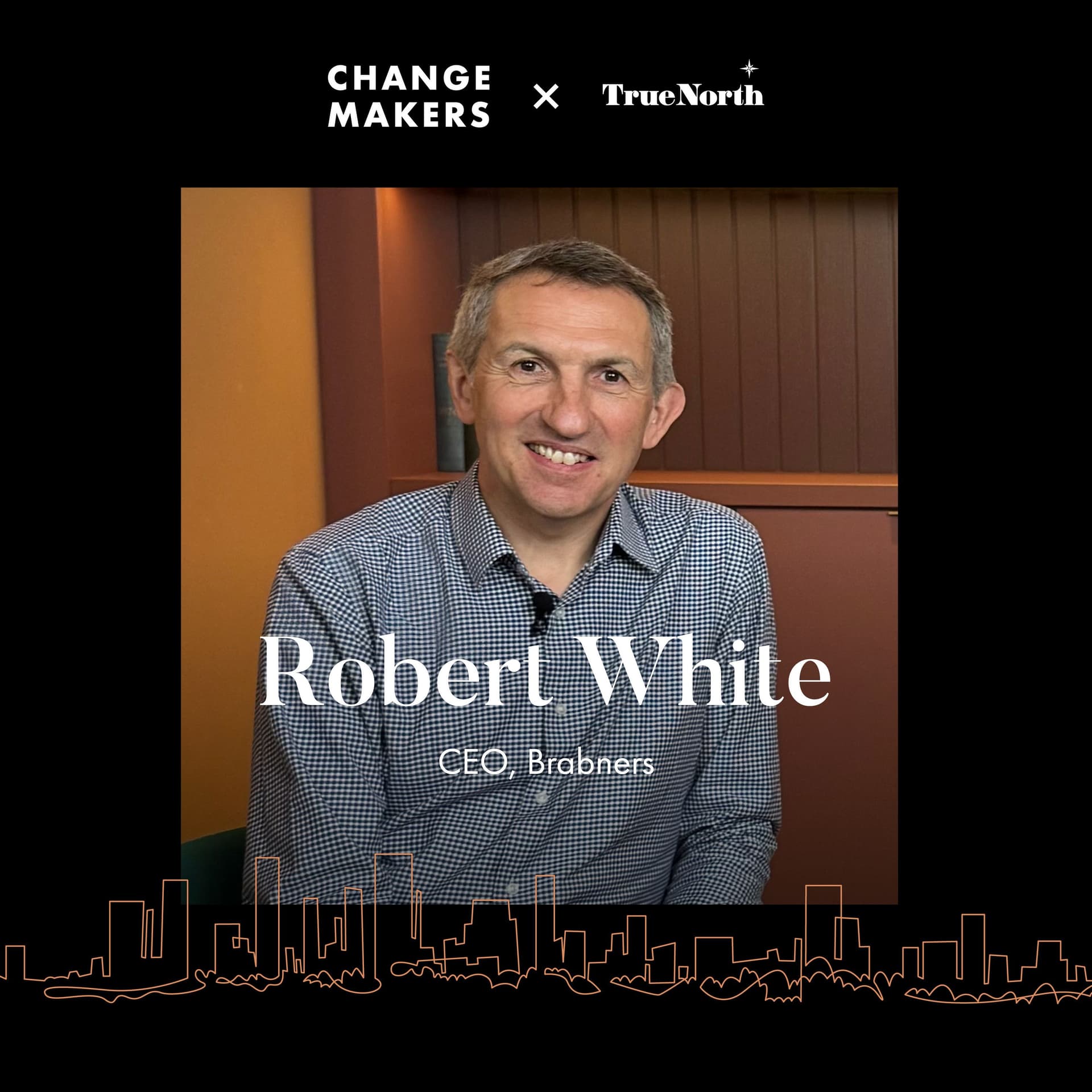
- Host: Michael Hayman
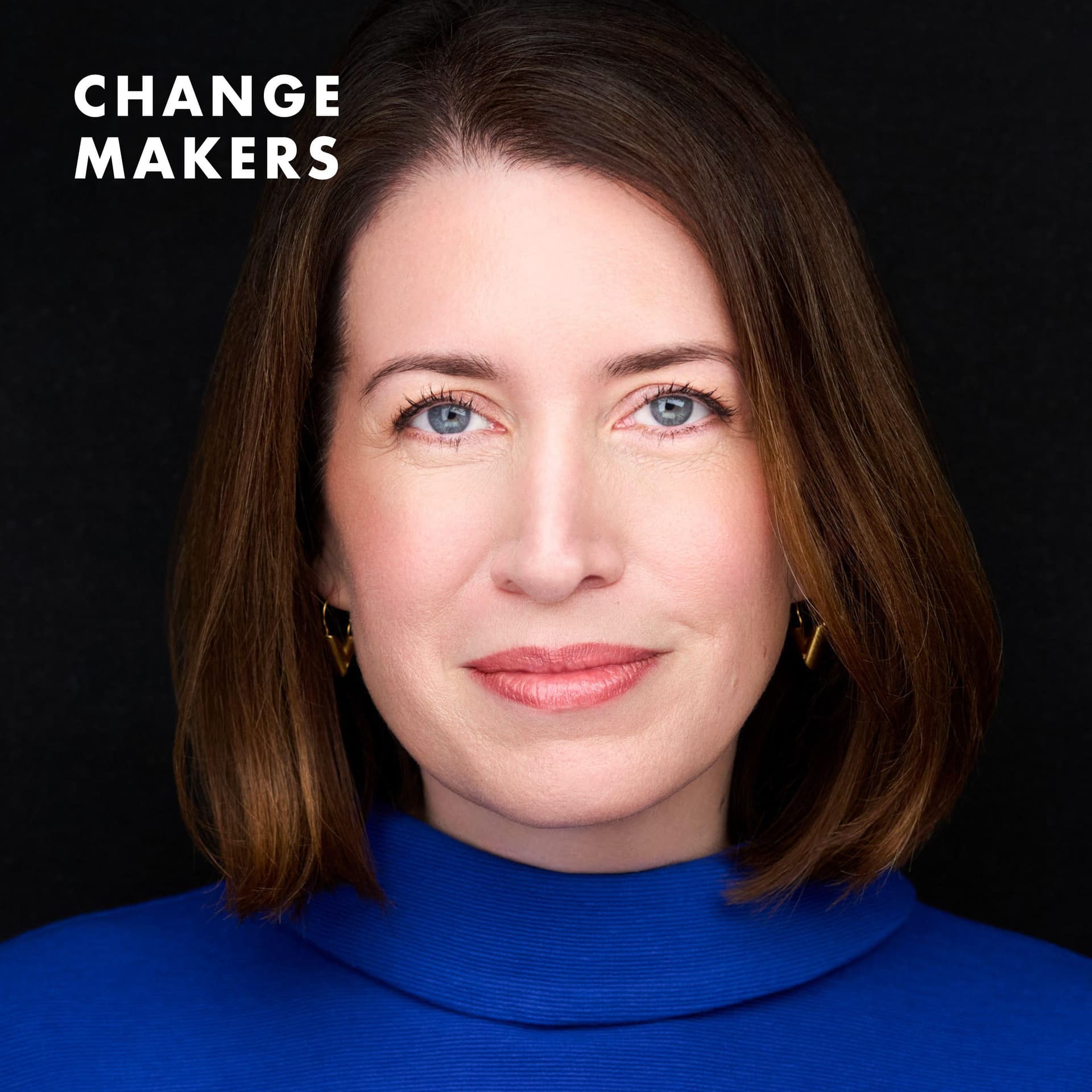
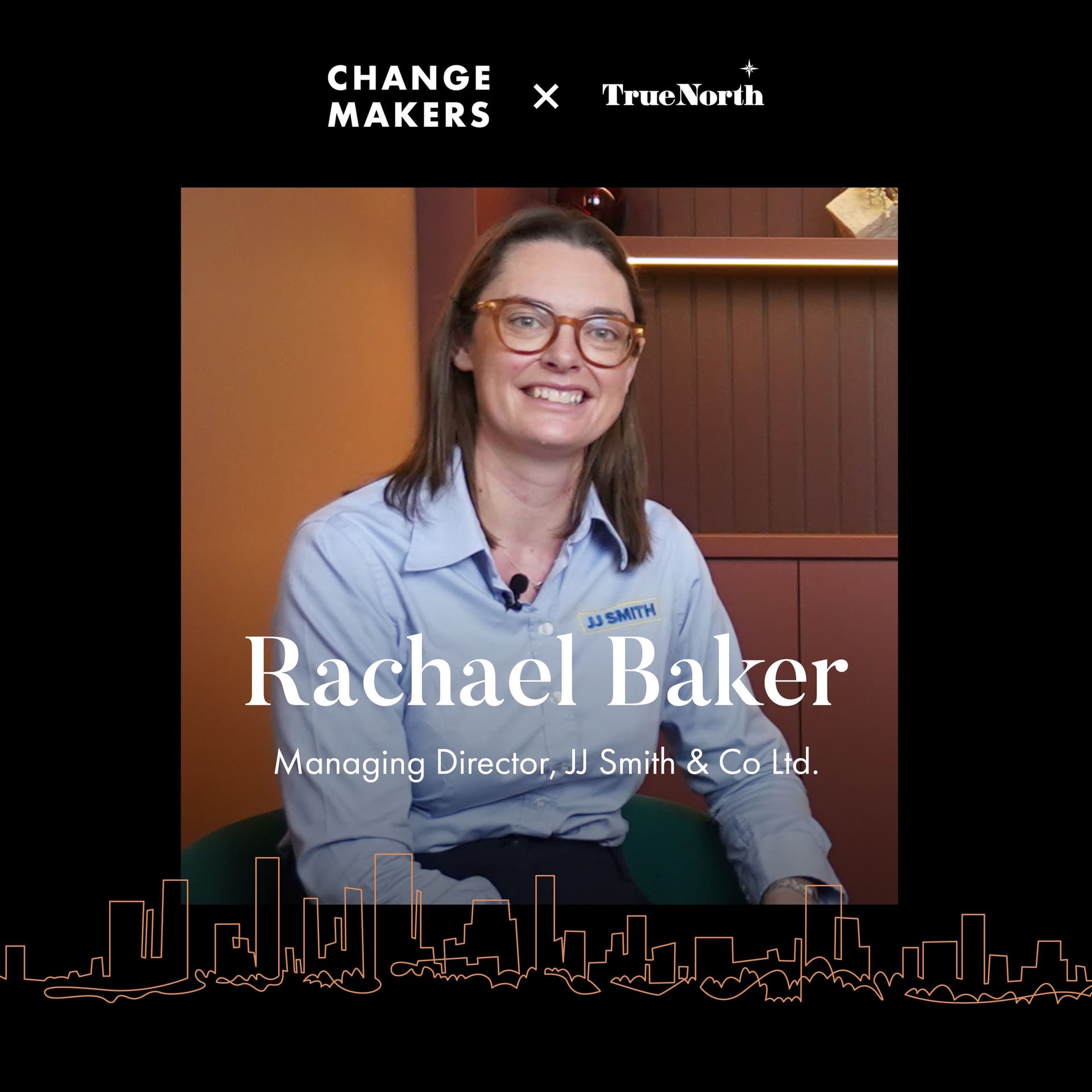
- Guest: Rachael Baker, Managing Director at JJ Smith & Co Ltd
- Description: In this episode, Michael Hayman speaks with Rachael Baker, a fourth-generation leader at JJ Smith, a century-old woodworking machinery company. The conversation explores her transition from a PhD in veterinary science to leading a family-owned business, the company's commitment to sustainability, and the importance of community and skills development.
Key Themes and Insights
- Background of JJ Smith & Co Ltd
- Founding: The company was established over 100 years ago by Rachael's great-grandfather.
- Industry: Specializes in woodworking machinery for various sectors, primarily construction.
- Impact: The products made using their machinery are integral to everyday life, as they contribute to building homes and other wooden structures.
- Rachael Baker's Leadership Journey
- Education: Rachael holds a PhD in veterinary parasitology, showcasing her scientific background.
- Transition to Business: After taking a career break to raise her children, she joined the family business as a non-executive director and eventually became managing director.
- Responsibility in Leadership: Rachael emphasizes the importance of her role in continuing the family legacy and supporting long-term employees.
- Sustainability and Innovation in Construction
- Waste Reduction: Offsite construction can significantly reduce waste compared to traditional building methods, with a focus on sustainable forestry practices.
- Zero Carbon Homes: Rachael advocates for the development of homes that do not incur energy costs, leveraging technology for improved construction practices.
- Community Engagement and Skills Development
- Local Workforce: Over half of JJ Smith's workforce consists of former or current apprentices, emphasizing the importance of training and community involvement.
- Partnership with Schools: Rachael believes businesses should actively engage with educational institutions to inspire the next generation and tackle skill shortages in engineering and construction.
- Cultural and Regional Insights
- Northern Business Identity: Rachael discusses the unique characteristics of Northern businesses, highlighting warmth, integrity, and a commitment to community.
- Innovation in the North: Liverpool is recognized as a potential European city of innovation, reflecting a growing spirit of innovation and collaboration within the region.
- Future Aspirations
- Long-Term Vision: Rachael emphasizes a long-term view of business, considering the impact on employees' livelihoods and the community.
- Call to Action for Housing: She advocates for the construction of social homes and zero-carbon houses, underscoring the urgent need for sustainable development in the region.
- Personal Philosophy
- Focus on People: Rachael's guiding principle is centered around people, believing that by nurturing her team, they will in turn support the community and contribute to the economy.
Conclusion In this episode of Change Makers, Rachael Baker exemplifies the blend of tradition and innovation in family businesses. Her commitment to sustainability, community engagement, and the development of future generations reflects the core values of leadership in today's rapidly changing world.
Written by AI. May contain mistakes. Listen to the episode to check what was said.
Transcript
Automatic transcript. May contain errors.0:01Welcome to Making the Difference, the True North Conversations, powered by the purpose-led independent law firm, Rabner's. I'm Michael Heyman, and over the course of six episodes, I'll be speaking to entrepreneurs and business leaders from across the North, each providing incredible insights, stories, and a commitment to people, communities, and the Northern economy. It's bold ideas for change, from a constellation of Northern stars, doing things differently, and making the difference. My guest today is Rachel Baker, the Managing Director of JJ Smith, a family-owned woodworking machinery business based in Merseyside and founded over 100 years ago.
0:45Rachel, hello. Welcome to these True North Conversations. You're one of our northern stars. It's brilliant to be talking to you, not only because you've just celebrated 100 years of your family business. Two years ago, I think it was, but what an achievement. Tell us a little bit about the business. Thank you very much. Yes, we are JJ Smith. We're a woodworking machinery company. So we supply exactly what it says, woodworking machines to a whole variety of sectors, predominantly construction focused. Right. So windows, doors, staircases, furniture, offsite constructed houses, playground equipment, anything you can make out of wood.
1:20I like to think probably most people in the country touch something each day. I was just thinking there must be a real sense of actually 100 years of seeing your products placed in homes and town cities, places. And because we sell the machines that make those products, that's a huge number of products out there. How many generations of the family have been involved? So I'm generation four. It was my great grandfather who started the business with his three brothers. So he was John James Smith. Yeah. I mean, bring us up right up to date. I mean, you know, I suppose you're dealing in an environment where in theory we're going to have 1.5 million new homes.
1:54This should be a good sort of time for a business like yours. Yeah, absolutely. So we're really excited and the country desperately needs those homes. We really need those homes to get building. I think there has been quite a long period where we haven't built the homes we've needed. And that's meant that people are living in temporary accommodation and we all know the huge amounts of money that's being spent on that. and so if we can get those homes being built um and i'm a believer that we can build those homes better right so we have the technology now to build homes in which you never pay an energy bill those homes are zero carbon and we want to try and help uh all of the industries that enable that to happen because i was thinking actually when i was reading a little bit about the business is presumably sustainable forestry sustainable practices bringing that into a construction industry which which probably needs quite a bit of this type of style of things i mean is that is that the dividend that we're playing for it's absolutely one of the dividends so if you think about a traditional construction site there is a phenomenal amount of waste there's an awful lot of piles of rubble there's a lot of things that get left out in the rain there's a lot of things that end up in landfill if we start to build more of those houses inside factories you transform that into a manufacturing process and suddenly you don't have a third of your product going as waste no factory in the country would allow a third of their goods in to become waste but we allow that on a building site yeah so let's start to use that timber that's already capturing the carbon have sustainable forests and then use that wood in construction brilliant now it could have all been very different of course for you because i mean you know it could have been life as a sort of veterinary scientist let's just go back a step in terms of where you thought life was going and then let's look at the pivot.
3:37Yeah absolutely so I originally I did zoology at university had a fantastic time I went on I was really lucky to work at the Morden Research Institute up in the Edinburgh Science Triangle and I my PhD is in veterinary parasitology. I worked on a very specific worm that lives inside the stomach of sheep and all PhDs are very niche and there was one particular enzyme in that one particular worm. I hope that you're asking the question. okay so you could have been a very very specialist scientist absolutely yep but you've chosen to go into a family business tell us a little bit about that I suppose the the kind of the the life changes that that that leads you to today because obviously we're looking at well branded on brand JJ Smith is where you've chosen to build your career tell us tell us why yeah so I had a little of a career break from science to have children and I was at home with a six-month-old baby and I was approached by the family business at the time to see if I'd come in.
4:36Dad at the time was the managing director and he asked would I come and do a day a month as a non-exec director so to bring some of my science and data skills into the business. How many days a month are you doing now? Considerably more than that. Every day. So yeah that baby is now at high school and I'm now managing director so life life is never a straight line but i love it what's the sort of the the feel of a family business i mean i mean a lot of i mean we're talking off camera about the difference i suppose between an entrepreneur and a and a generational business leader i mean one of those has got to be the issue of time hasn't it in terms of that sense of people have gone before you and and the people that will come after you i guess absolutely i think there's a huge responsibility So there are people working in the business who started work in our business before I was born.
5:24I've known them my entire life. And there is this huge sense of responsibility. Does that bring challenges when they've known you this high? So I think I am very keen and I have always been very keen to demonstrate that I've not ended up where I am because accidentally of genetics. And hopefully everybody would agree that I brought some skills to the role. But I think there are, I think it brings added responsibilities. So there's a, within our business, so just this year, I've done three retirements for people who each worked for 48 years for our business. So that's just three people. That's a huge amount of knowledge retained within that.
6:01And I think that's something in family businesses where people tend to stay for quite a long time. Right. And you need to capture that knowledge and then transition it as well. You know, we spend a lot of time talking about first generation businesses, entrepreneurs that, you know, are there. They do it really quickly. They might have exited really quickly. I mean, in terms of the family business experience, I mean, is patience the virtue here, do you think, in terms of what you get? Yeah. And I think there's a long view approach that we definitely embody. So we know there will be good times and there will be bad times and we take the longer view.
6:34I think it probably makes us more conservative, small c conservative and cautious. And maybe that's not the original entrepreneurial spirit. But in the back of your mind, there's all of these people's mortgages and significant numbers of family members, both from my family, but also other people who are related to other people in the business. And you think about their pensions. Would you advise your own children to go into it? So I would always give them the choice. So I was given the choice to go and do what I wanted to do and then you know asked and I would never I would never force anyone I don't think that's the right way of going in and and I think so my my grandfather I think um I think he wanted to go off and do history but he was encouraged into the business but I think um you have smaller numbers of people when you're in generation two as to who you pass it on to and times were different it was a long time ago it's very special about family business cultures I'm thinking about people I've met over the years like the Waits families or the Warburton's or you know people that can actually point back to serious sort of timelines and actually what that does to them in terms of their sense of responsibility and other factors that actually probably are different than if you are a sole entrepreneur running a single generation business.
7:48I absolutely think that's the case and I think it makes you for your own role in that it makes you much more aware that you're a small piece in this puzzle as opposed to this is entirely your thing. Is there a northern dimension here in terms of being a northern business? I think so. Tell us, I mean, and actually, you know, we're speaking in Liverpool and you've got a Merseyside sort of like business. I mean, is it just the north or is it the northwest or is it Merseyside? Yeah. So I think there is something very special about all three of those. So I'm lucky I live in I live in Lancashire, but I work in Merseyside.
8:24My children go to school in Sefton. So I get to sort of claim both Lancashire and Liverpool City region for home, really. And I think there is something very special about northern businesses. I think there is a warmth. There is a caring for the people, which extends beyond our own people. And I think there is an integrity and an honesty that I think comes from businesses here. Tell us how that manifests within a kind of JJ Smith perspective. So for us, we have customers that will, we sell capital equipment. So you might not need to buy a machine from us, you know, every day. It's not like Warburton's where you need to buy a new loaf of bread every couple of days.
9:04You might not need to buy a machine from us for years at a time. But what we want to do is build that long-term relationship with somebody. So we will do absolutely the right thing to look after you from the beginning. We will never sell you the wrong machine and we will hold your hand on your business journey, however long that takes. And it might be that you don't come back to us for 25, 30 years. Another thing that I was reading about the business is that the development of your people matters in terms of the skills. Tell us a little bit about that, because you're a generation that is looking at things like data and algorithms and AI from a business where I guess a lot of people will be more from a kind of artisan's background of actually the craft, the actual, the manufacture.
9:48We're actually got to bring people into the future. How does that work? Yeah, so I think the skills and the development piece is really important. At a community level, I am a firm believer that we cannot leave the skills challenge as it gets a lot of media attention to just the schools and the colleges. Businesses have to play a part in that. So we do a lot of work in our community about aspiration. So you can't be what you can't see. show me a seven-year-old girl that doesn't like lego show me that same girl at 14 that's determined to be an engineer something's happened along the way that those were not the edges get yeah and their exposure to understand that you can still have that career or whatever that happens to be does that then manifest in a in a business issue for you in terms of actually finding people for the business i mean because i think that a lot of people will hear that and say yeah well that's a that's a lovely social ambition but actually does it does it then transfer into a bottleneck it says well actually we can't get the right people through the door so as a country we didn't do a very good job of training engineers for quite a long time so there is within construction and within engineering there was a huge cliff edge of people approaching retirement um and so we trained a lot of people we didn't do anything for about 20 years and then about 10 years ago everyone went oh my goodness we're not going to have anyone left and so we you know we we were guilty of that the same as everyone else so we had lots of people and then about 10 years ago we thought we needed to re-engage with training people up and so over um i think it's just over half of our workforce are either current or former apprentices so they started there with us as an apprentice and that goes all the way up to director level how much of the workforce is people that are directly sourced from the local community and how many people are you kind of bringing in from from elsewhere so we have a few engineers who are dotted around the country who we've recruited from other places we service the whole country and Ireland and other countries as well so if you're an engineer you can live anywhere and get in your car the same um so I think we we have a handful of engineers and then everybody else is sourced from within our local community right and so that community connection presumably then matters I suppose I'm talking about here core purpose core core commitment to place to actually the people that are part of your wider community tell us a little bit about how you work with them yeah we work within within schools within the colleges so opportunities for young people but then also trying to build up the ecosystem within Liverpool city region so one of the things that we want to try and do is to build up this circular economy so within Liverpool city region we have some amazing opportunities for house building we're one of the few places where we have enough brownfield sites for 40 ,000 homes.
12:34That's a phenomenal opportunity that people in the Cotswolds would love to have. And so we have those abilities here and we can build that as a strength. So if we can help enable some of those factories and those skills and that ecosystem, then that's higher quality jobs. So if those are some of the vital ingredients, how do they get them? Are they moving or are there things that they could do to get moving and think about those brownfield sides yeah i think that there are lots of people working very hard at it hard at it um i'm an inherently impatient person and i would love it to happen quicker i think you might be an entrepreneur i think there are you know i think every day there's somebody in a bed and breakfast bringing up a child in a bed and breakfast rather than in a house is is a scandal and we should be building those houses and we should be building those social homes i would desperately like that to happen quicker um and i think as a region we can be bold we can lead the way and we can say we're going to do things differently.
13:28And how much is technology driving your business? I mean, you sometimes think about, we kind of touched on, I suppose, the kind of some of the sustainability issues for construction. But I think there are also discussions that are going on about AI, about quantum, about things where actually a lot of people in construction think, well, that's not really for us. Is it? And how are you embracing it? So I think everybody's using AI already and they just don't realize it. And I think it's the more of that message we get out. So we are embracing it as a business. I am very keen that AI is used for good.
14:05I'm very keen that we develop the guardrails so that we're using it in the right way. But if you take planning, for example, there's some brilliant work that's being done on the planning to do with identification of sites and assessment. So anything that we can do to shorten the planning process, that has got to be a good thing. And the same with the design of houses. the more that we can do digitally, the better. Well, you mentioned the Brownfield sites as being part of, I suppose, the northern mix. Actually, there's space, there's opportunity. We're talking now about, I suppose, that innovation culture.
14:37If you look at the northern innovation culture in terms of actually what does it mean to you and actually how does it affect the business, pick up the story for us. So Liverpool, I believe, is one of three that's up for the city of innovation, European city of innovation, which I think is amazing. and and i think reflects a lot of hidden innovation that's been happening that people just didn't know about and i think that's one of the things probably as northerners we're a little bit humble some of the time and i think we're not always as good at shouting about just how great the things are happening here and the spirit of discovery and the spirit of discovery yeah yeah and so i think it's it's a balance we don't want to lose the you don't want to lose what makes us northern but also sometimes you do have to shout about these amazing things that are happening right here on our doorstep so when you travel around i mean i'm thinking about the kind of the i suppose the regional economy in terms of what it's got what's missing what would you do if you were running the show uh i think rachel from there steve rather me safe it's okay i'm not i have no desire to be mayor of local city region uh if i was catapulted into the role for a day with unlimited funds and a magic wand i would uh i would i would focus on housing and i would i would i would wave the magic wand which says from now on in liverpool city region we are only going to build zero carbon zero bill homes and we're going to build thousands of social homes and then by values and and then really kickstart that ecosystem that shows that you can change it so we we enable the jobs we enable the factories and we become the place that builds the houses for other bits of the country and you know in a day when you can put panels and houses on wagons let's be the place that builds them i mean rachel our time is almost up i'm i'm sorry to say but i'm gonna i'm gonna give you one last question because i think first of all congratulations on becoming one of our northern stars and as well as a geographical point i guess a true north is a sense of direction a sense of destination and i suppose last question for you as a business leader what's your northern star so my northern star is all about people and it's about the people that i get to interact with on a day-to-day basis so if i look after those people and i do the very best by them they will go out to do the very best for for the businesses that they're interacting with and the communities in which we are and the the whole economies that we serve really so yeah the center of everything i do is people rachel thank you so much for joining us on the true north conversation sharing the story with JJ Smith.
17:08It's been brilliant speaking with you. Thank you very much.
From the publisher
In this episode, he speaks to Rachael Baker, Managing Director at JJ Smith & Co Ltd. A fourth-generation leader, Rachael reveals how she pivoted from a PhD in veterinary parasitology to running a century-old family firm. She shares what it means to lead a Merseyside manufacturer with employees who’ve stayed for nearly 50 years, how offsite construction can cut waste, and why inspiring the next generation is key to building the homes of the future.