In short
Change Makers Podcast Notes
Episode Title
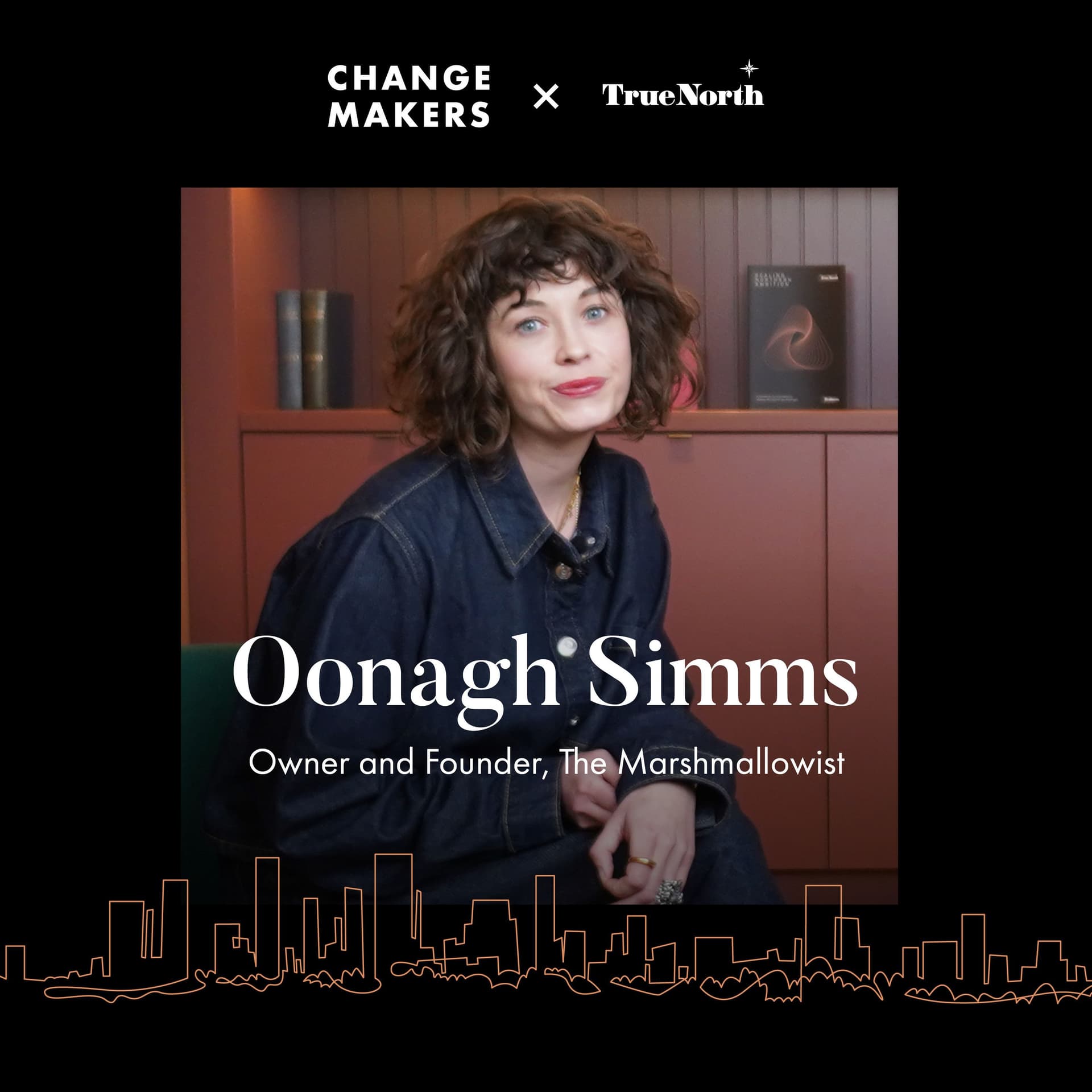
187: Making the Difference: The True North Conversations | Oonagh Simms, The Marshmallowist
Podcast Overview
- Host: Michael Hayman
- Theme: The podcast focuses on interviews with entrepreneurs and business leaders who are making a positive impact on their communities and the economy in Northern England. It promotes bold ideas and the difference these leaders are making in their sectors.
Episode Highlights
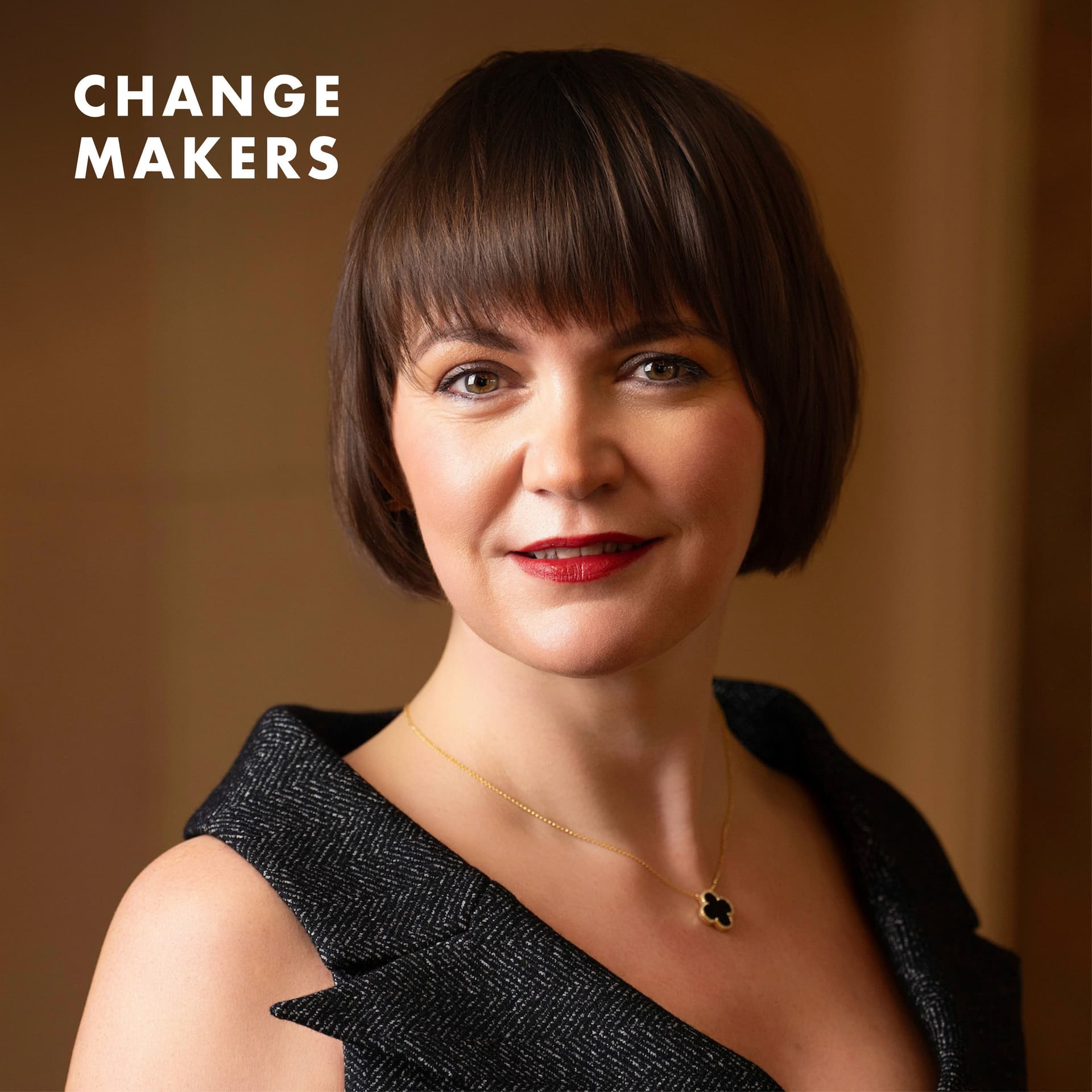
- Guest: Oonagh Simms, Founder of The Marshmallowist
- The UK's first gourmet marshmallow producer.
Key Concepts
- Background and Founding of The Marshmallowist
- Oonagh trained as a chocolatier in Paris before launching The Marshmallowist in 2012.
- Started from a market stall in Portobello Road, London, transitioning to a successful brand with three bakeries in Leeds.
- The business is a family affair, co-managed with her sister, which presents both advantages and challenges.
- Challenges and Growth
- Oonagh discusses various challenges faced in business, emphasizing the importance of learning from setbacks.
- The importance of collaboration and trust with team members is highlighted, especially with family in the business.
- Craft and Innovation in Marshmallow Production
- Unique approach to marshmallow making, focusing on flavor layering and aesthetics.
- Compared the art of marshmallow-making to fine dining, emphasizing the sophistication of flavors and presentation.
- Historical context provided regarding the evolution of marshmallows from ancient Egypt to modern confectionery.
- Business Philosophy
- Emphasis on creating a product aimed at adult consumers, moving away from nostalgic childhood confections.
- A vision to elevate marshmallows to a luxury market comparable to fine chocolate.
- Investment and Female Entrepreneurship
- Discussion on securing investment from the Northern Powerhouse Investment Fund.
- Challenges faced by female founders in securing funding and support.
- Importance of creating a workplace that accommodates diverse life responsibilities, particularly for women.
- Sustainability and Community
- Oonagh advocates for a flexible work environment that caters to the needs of her predominantly female workforce.
- Discussion on the impact of transportation infrastructure on local businesses and communities.
- Future Aspirations
- Despite current challenges, Oonagh expresses hope for the future of her business while acknowledging the rising costs and economic pressures.
Key Takeaways
- The journey of Oonagh Simms showcases how passion for food can translate into a successful business model.
- Building a business is not just about the product but also about fostering a supportive team environment and adapting to market changes.
- Female entrepreneurs face unique challenges and require tailored support systems to thrive in a predominantly male-dominated investment landscape.
- The discussion touches upon themes of community, sustainability, and the importance of local economies in supporting small businesses.
Closing Thoughts
- The episode concludes with a sense of optimism despite the challenges posed by the current economic landscape, reaffirming Oonagh's commitment to her craft and her community.
This episode represents the essence of the "Change Makers" podcast by highlighting a leader’s journey, the intricacies of innovation in the culinary arts, and the importance of community support in nurturing successful enterprises.
Written by AI. May contain mistakes. Listen to the episode to check what was said.
Transcript
Automatic transcript. May contain errors.0:01Welcome to Making the Difference, the True North Conversations, powered by the purpose-led independent law firm, Rabner's. I'm Michael Heyman, and over the course of six episodes, I'll be speaking to entrepreneurs and business leaders from across the North, each providing incredible insights, stories, and a commitment to people, communities, and the Northern economy. It's bold ideas for change, from a constellation of Northern stars, doing things differently, and making the difference. Joining me today is Una Sims, founder of The Marshmallowist, the UK's first gourmet marshmallow producer. And you Una, welcome to the True North Conversations.
0:45Absolute pleasure to see you. Tell us a bit about The Marshmallow. It's what a business. Oh, thank you so much. I started the business in 2012. I trained as a chocolatier patissier in Paris. And my sister and I now run the company. We're based in Leeds. We've got three bakeries. and yeah we've had a really fascinating and fantastic few years and we're sort of hoping to grow from there really yeah a lot of the businesses we've been interviewing today that family members have been an important part of the uh the secret sauce what's it like working with your sister it's lovely i'm really glad to hear that oh it's fantastic she's my best friend um but obviously that has its challenges we're very it can very much become an echo chamber of, oh no, that's a fantastic idea.
1:31But we're managing it in the sense that she does the day-to-day and I do operations. You've been in business since 2012. How do the bumps in the road sort of get sorted? Goodness, what a difficult question. They sort of iron itself out, obviously. There have been many circumstances where things haven't quite gone as we would like, but I suppose you just learn and you move on from there. Now, let's talk marshmallows, because I was thinking this morning, what do I actually know about marshmallows? So I was looking at your LinkedIn page and I was reading about the raspberry concentrate sort of droughts and all sorts of things.
2:12That was a drama. I mean, that was a drama. But then I was thinking, what else? I mean, Ghostbusters, there was the marshmallow man, wasn't there? And then there is the marshmallow test, the Walter Mischel test, which is so much more than marshmallows. Before we get into marshmallows, let's talk about the test. So let's remind ourselves of it. You can have one now or two later. Yep. Which do you choose? I have spent the last 13 years around marshmallows, so I can definitely hold off to have the second marshmallow. If you've got the patience, you get more if you wait. And of course, the patience is being tested because all of your wonderful products are part of a takeover of the True North set.
2:50So we're looking behind us. And I must say to viewers is that all of these boxes have the most glorious looking marshmallows. Yeah, we have glammed it up. And even a festive touch here, marshmallow baubles. So they're works of art, aren't they? Thank you. They really are. We do spend a lot of time making sure that they're as aesthetically pleasing as they are delicious. You eat with your eyes. Well, you do eat with your eyes. And I suppose that is the thing about let's go into the kind of, I suppose, the marshmallow industry. We were talking just a moment ago about Egypt, roots, swamps. Tell us more.
3:28It has a really fascinating backstory. So marshmallows developed in ancient Egypt from the marshmallow root. It's basically a sap that you find along like, well, they found along the Nile, but like swampy areas, marshlands. And they use this sap to mix with like honeys and like sugar syrups to create a confectionery, like a marshmallow. Right. And it's evolved from there. We the marshmallow was created. The marshmallow that we know was created in France, which is a nice little echo of my journey. And it was replaced with gelatin. So the marshmallow of sap was replaced with gelatin and sugar processes evolved.
4:08And that's where we got the sort of the confectionery that we know today. You can see here you can do incredible things in the shaping and the sort of I mean, the artwork of it. Yeah, very much so. And also what's crucial for us, it's the flavors that we use. We like to layer our flavors. So we sort of treat it in the same way that you would treat like a fine patisserie or a wine or a cocktail. Like you have your base note, you've got your top note and you've got your middle. And that's really important to us when we create our new flavors because we use a lot of fruit purees, botanicals, spirits.
4:41Every bite has to have a different sort of... I'm just thinking about the discussion you'd have of seeing me and my daughters at a barbecue, sort of with a sort of stick, sticking a marshmallow in and the burnt. This is, as you're saying, we're on a completely different league here, aren't we? Very different level here, yes. But our marshmallows are delicious toasted, but they don't burn. First of all, before we leave marshmallows as a category, I mean, what you're talking about is, you know, I could imagine us listening to a master of wine talk about, you know, talk about wine in the same way, the provenance, the sort of the notes, all of that kind of thing.
5:18High end chocolate, all those sorts of things. For those that I suppose don't really have the same appreciation of of marshmallows. Tell us what they're missing. Tell us what you see in it as something to to eat, something to have in as a sort of a product. So a little bit of backstory. I trained as a chocolatier patissier in Paris. And what I learned whilst I was studying in patisserie was that it's all about precision and it's all about layering these flavours. And it was there that I tasted like a guillemot French for marshmallow for the first time. And it blew my whole concept of marshmallow.
6:04why why just because they were unlike anything i had before they were made from fresh fruit they were soft they were um like they were juicy and it was confectionery taken to a very adult level and before that i'd never seen confectionery specifically for adults it was and it's like it was for children or if it had if the target audience was for adults it was based on nostalgia it was like a banana foam cookie and i'm i was not interested in doing that i wanted it's really It's sophisticated. It's sophisticated. I wanted people to see it in the same way that they do the chocolate industry. Like, you can have a Chilean chocolate now, and it's almost commonplace.
6:42You get it in Morrison's. I wanted that to be the same for marshmallow. I wanted to be progressive, and I wanted to try different flavors, and I wanted people's concept of confectionery to shift into that luxury market. Got it. Now, there's always been a sweet tooth to your career, as you were saying, like the chocolate tier. Let's go one step back. What did I originally think she was going to do? And then what gets you to becoming a chocolatier? I really struggle with this because my mum and dad are going to watch this podcast. And I wanted to be a dentist. And they're going to really be disappointed that I didn't do that.
7:15So sorry, mum and dad. Slightly weird on that fact. There's a relationship between chocolates and teeth, I think, isn't there? But now I couldn't think of anything else I would want to do. Right. So, OK. So you've got an amazing experience in terms of, you know, working and training in Paris and sort of obviously your early career selling on the Portobello Road and all that sort of thing. But then you've decided to come home, set up a bakery in your hometown of Leeds. Let's pick up the story there in terms of actually the founding of the business and actually what it means in terms of where you found it.
7:54um so as you touched upon um we did we started from portobello road um or i started from portobello road um i had a little market stall on a saturday it was basically just to get extra cash um selling baked goods um and this is good so this is where i'm gonna do it for you um that's where i discovered like the magic test yeah so when someone tries something that you've baked or something that you've created and their whole face changes it's like that's when you know you're onto something really special and that's when I started like when we were selling the marshmallows every week that magic test was totally like worked um and that's when I knew that marshmallows would be something that we could take that I could take forward we then got approached by a buyer from harvey nichols who was basically just passing the stall on a saturday morning and she's like interesting and then we got picked up by various bits of press like we approached by a journalist from vogue and then the times did a huge double page spread on us and then we got a book deal and things sort of snowballed really quickly it's like these tiny little big changes and big impacts um but then i finally realized that i was not going to make any money and this was not sustainable in London.
9:16And I'm from Leeds. So I wanted to return home. I wanted to come back. And I wanted to be able to be around a community that would support me to grow. Okay, I'm going to come back to Leeds in a second. But I'm going to have another go at an earlier question. Because as you're speaking, and you're talking about that moment, the bakery moment, actually, you're seeing the look on a customer's face. When I've interviewed people that, you know, restauranteurs, people that have got exactly that same relationship where there is a delight in seeing customers that really enjoy the product. And it's usually very immediate because you know the moment that they taste something has it gone, right?
10:01But in terms of the magic test, right, let's call it the magic test. What was the aha moment for you that sort of made you think, well, actually, you know, you're not going to get that in a dentist chair um but but you do get it in what you feel in what you chose as a career where did all become clear i think if you work in food you it becomes such a visceral job and such a visceral relation to what you're working with your hands and everything is related like your taste buds your scent your smell your sight i couldn't imagine doing anything else now because it's all food for me is all consuming it's all i talk about it's all i think about right it's all i do and but it's always but it's always sort of been there has it always always been there right yeah right but and i think the biggest pleasure of my life is being able to run a company based around my absolute joy of food yeah i mean and that is a real that's the definition of a passion project right isn't it i mean and i suppose in terms of now building that business which which you're you know i mean the roll call of companies that you work with fortman Mason's, Harvey Nichols, M &S.
11:10I mean, so many sort of like incredible names in terms of actually, you know, let's move back to Leeds in terms of building that team, building that offer. I mean, how have you franchised the magic, I suppose, in terms of the, you know, turning the magic test into the magic production of the business? I think that comes down to building a really strong team around me um it I was obviously a solo founder um before Jen my sister came on board um and as a solo founder you you do everything yourself and you become very self-reliant um and over time I realized that there is limitations to that and if you want to grow and you want to expand then you're going to have to make other people make the decisions for you so you've got let it give control i mean a little bit well yeah because you would trust people around you to make the best decisions for the company and i'm really lucky in the sense that my sister and i have because she comes from a completely different background she was in comms and politics right um but we've got basically the same values so we knew what we wanted the company to be and we sort of thought we had an idea of how to get there right so it strikes me this is the first time we've met but it would strike me that in in business is that you will have a very strong work ethic that you'll have a very strong sense of what perfection may look like you may never get there but you've got a very strong sense of what that true north is for the business I think when you're a solo founder that is often where it is most potent it's basically as the business grows how has your style changed bringing your sister in other people that you're working with are you essentially the same character but part of a wider team or does or do you have to change as the business grows um i was very young when i started this company i was 21 years old um so i have naturally i have grown up with the business um and i feel like i've learned a lot along the way um and i suppose because i didn't have like strict um prior i didn't have any prior experience really or any sort of like bad habits to unlearn.
13:22Yeah. So it evolved quite naturally. But also we're really lucky in the sense that we have built a team around us that also feel really passionate about this company. Yeah. You've secured investment from the Northern Powerhouse Investment Fund. I mean, they've seen your potential. We hadn't really gone out looking for investment before that. Obviously, we'd been approached by Dragon's Den, and all those sort of similar sort of avenues that you would go down with a company like ours. But, oh, inherently we're quite selfish. We don't really like, we don't like being told what to do. And we feel like we've got a lot of ownership over the company, obviously.
14:05But, and then also, look, 3 % of solo female founded companies. Hugely, I mean, I wanted to get into that. I mean, just - It's a very long podcast whereabouts are, Michael. It's a very long podcast. Well, we're going to get through these points. But I think just in terms of the very act of taking on investment, I mean, for a lot of entrepreneurs, that is a major moment because things change. Accountability changes. Guardrails suddenly start to emerge. There's lots of things that actually are there. How was the process of taking on investment? So I think herein lies the spectacular difference between VC funding and what we were very fortunate to receive.
14:46There was no strings attached here. They saw our creativity and they believed in our ability to scale and they allowed us to do so. And you're right. It's been such a it was such a pinnacle moment in our year. We were just about to launch into Marks and Spencer's. It really helped our team grow, improved our packaging, improved our systems and process. Everything about that money was really needed. Right. But it really helped us mature. It sounds like you've got a patient investor as well. They're not on your case in terms of where you are this year. Not at all, no. But you touched on, I think, a really pivotal and critical question right now, which is the undersupply of finance to female founders.
15:33I mean, had you had experience of that in conversations? I'm just wondering how the actual investment round happened. Were you approached or were you looking for it? We were looking for it at that time, but we had to make sure that we were partnering with the right people because we didn't want to get in a situation where we were being told what to do. Also, we didn't want to be in a situation where everything was about the bottom line because that's not what this company is about. Me and Jen are both mums and we wanted a lifestyle with a job that could accommodate that. And crucially also, 90 % of our staff are women.
16:14So we also wanted a company that would allow the flexibility to be a mum or to have hobbies or anything that they wanted in their lives to be a completely fulfilling job role. And did you find that investors got that and saw that they're actually... Very few... Right. like female angel investors who would understand that um because that's the situation yeah and you see i i think the other side of the equation of what you've outlined is that you get performance cultures from that because you get people with lives you get people with creativity you get people with you know commitments right people who stay yeah like yeah my the majority of my team have been with me for seven seven years like that's very rare in what is basically a manufacturing role.
17:03Also, we do not hire people for a role. We hire people for their future roles or what job they want to achieve within this company. We hired a temporary packing role 12 months ago and this lovely girl and she came in and she did amazing. And now 12 months on, she's running a whole production run and she stayed with the company. And it's just, it's magical to see that development. It's often the thing in entrepreneurial cultures, of course, is people can fast track their careers. You can go take on responsibilities. Yeah. Tell me something. Is there a northern dimension to this? Is there a northern soul to the business in terms of actually, I mean, if you'd stayed on the Portobello Road, what would be the marshmallowist?
17:49There would be no marshmallowist. Come on. Because there is a capacity to grow in Leeds. you can find production units that are affordable for startups and also it's this the space not just even for you to have a production the space to breathe in leads like in terms of like just being my as a person myself right um the ability to like go on big walks up the more or just like just to be like around nature as well i feel really strongly in it right we're almost out out of time unfortunately because there's so much more we can talk about i mean it's so fast I mean, it does go somewhere. But thinking about, though, growth potential in the North, I mean, in terms of the flavour of the Northern economy, the what's next, what you would like to see in terms of the future, in terms of the support structures.
18:42Because we talked a little bit about that, I guess, in terms of the investment side. But if you were to look at the recipe that's here in terms of things around you that makes a growth business capable of going for it, how would you score it? I'm not going to give it a score because there's room for improvement on all sides here. But we touched about it earlier. We're in Liverpool today. And obviously we're based in Leeds. It took me two and a half hours to get here. Right. And that should not be the case. We should have an integrated transport system that allows people to get to their jobs in as efficient a way as possible and also for a really reasonable price.
19:20Like if you have to get on two trains and a bus to get to work, not only are you going to be exhausted, but you're not going to be able to achieve what you want to achieve in that role. Because like you couldn't. And also you spend all your time traveling. And then also, as I mentioned, 90 percent of our team are female. And I don't just need a bus to go into the city center to get to work. I actually need a bus to drop my kid off at nursery or to go and run to the shops. And I need a system that allows for those shorter journeys on one payment system. Right. Well, so it's well said. So there's a 21st century transport system.
19:55If you want to support local businesses, you have to get to those local businesses. And you have to want people to get to you. Understood. And as one of our northern stars, I mean, in terms of your own direction, I mean, what a journey you've had. I mean, what's the direction, do you think? Is there a what's next? Is this it? Is this the passion? Is this the pinnacle? Oh, boy. I really hope not. Is it all downhill from here? Oh, God, it's just been such a tricky time for small businesses in the past couple of years. Like, it really has. It's expensive to hire. Our national insurance contributions this month literally made me cry this week.
20:34And I don't want to replace staff with machinery. This is a really skilled role for skilled people. I also love my team. I have to work with them eight hours a day. I want to work with a team, not just machines. So that's been really tricky. And then chocolate prices have gone up like 300 % in the past two years. I can't put my prices up. So you sort of have to, you have to shoulder that burden. So not to end this on a negative note, but I would love to still be here in 18 months. If I was putting a bet on it, I think we will be seeing you in 18 minutes. Una, thank you so much for sharing the story.
21:15Absolutely brilliant business, The Marshmallowist. One of our sort of northern stars. Thank you for joining us on the True North Conversations. Thank you so much for having me.
From the publisher
In this episode, Oonagh Simms, Founder of the Marshmallowist, shares how her story began training as a chocolatier in Paris. From a Portobello market stall to Harvey Nichols, Vogue and a move back to Leeds, she explains the craft and chemistry behind luxury marshmallows, working with her sister, and why flavour layering is redefining modern confectionery.