
In short
“Pursuit of Pain” in endurance running—why people choose suffering, how pain is defined (physical vs psychological), and how conscious self-inquiry turns “pain caves” into insight rather than identity collapse.
Guests
No external guests. Two hosts: Ryan Willms (founder of Mindful Endurance Program; lifelong athlete using movement for personal/spiritual exploration) and a co-host also named Ryan (lifelong athlete; focuses on training conversations and vulnerability around illness/injury/performance).
Key claims
Pain isn’t one thing—muscular/lactic/cardiovascular sensations differ from psychological pain (shame, guilt). Many runners chase proving they’re “good enough,” not peace. Goals should be a “devotional” container: pursue competition while holding outcomes lightly. Endurance can be a safe container to face unconscious beliefs; suffering can illuminate truth, but identity-based failure becomes toxic.
Notable examples
Post-ACL return to running; breakup triggering marathon/triathlon “proving” motives; triathlon fear at the “door of the pain cave”; a half-marathon where embracing fear improved time; discussion of hormesis (edge without toxicity) and Michael Jordan’s fear/anger drive.
Written by AI. May contain mistakes. Listen to the episode to check what was said.
Chapters
Tap a time to open that second in VOExploring Movement and Collaboration
0:45 to 2:44
Discussion on using movement for personal exploration and the excitement of collaboration.
“forth on message leading up recording a dialogue and hopefully, you know, having people be a part of that afterwards, you know, same with whatever other essays and articles and things are shared.”
The Value of Sharing Experiences
2:44 to 3:17
The importance of discussing personal experiences in athletics beyond surface-level interactions.
“wow, I've never gone on like a big ride.”
The Pursuit of Pain in Running
3:17 to 6:27
Introduction of the main topic: the pursuit of pain and its implications in running.
“And to your point, I think as a means of these conversations, I'm interrogating that myself as to what, why is that?”
Defining Pain and Its Types
6:27 to 7:56
A deep dive into the definition of pain, its different types, and the psychological aspects associated with it.
“We're choosing it, you know, and it's this really interesting balance and mix.”
Personal Experiences with Pain
7:56 to 10:57
Reflecting on personal experiences with pain during running and the motivations behind pursuing endurance sports.
“but before we we jump too deeply into that I want to just start talking about this idea of pain and in trying to set some parameters around it and to understand maybe how you think about it.”
Unpacking the Pursuit of Running
10:57 to 14:01
Discussion on the motivations behind running, personal growth, and the impact of unconscious beliefs.
“curious about and try to sort of draw out through some of the MEP process.”
The Origin of Running and Pain
14:01 to 18:08
Discover how a breakup led to a transformative journey in running and self-discovery.
“And then just kind of like laughing and putting that down.”
Lessons from Suffering and Acceptance
18:09 to 22:38
Explore the lessons learned from the pain of competition and the journey toward acceptance.
“you know, and I remember like running on the treadmill, looking in the mirror and being like, man, if I'm like this fast and this fit now, like I'm just going to be awesome forever, you know?”
The Role of Goals in Endurance Sports
22:39 to 26:32
Understand how to set goals wisely in endurance sports without being tied to outcomes.
“I can, and I can explore that for the next couple hours of the race as well, you know?”
Embracing Competition and Personal Growth
26:33 to 28:00
Learn about the value of competition and personal growth through physical challenges.
“Is that just something that comes along the way?”
Show all 24 chapters
Exploring Competition and Personal Growth
28:00 to 30:15
Learn how competition can be a catalyst for self-discovery and personal development.
“Like it's, it's such a unique experience that we get to have.”
The Role of Goals in Athletic Endeavors
30:15 to 32:16
Discover the importance and impact of setting goals in athletic performance.
“And so can I go into the unknown with training partners, with a team really devoted to my goal, running my race, you know, having my experience and just using the metrics as like the guidelines basically for exploration.”
Resilience Through Competitive Experiences
32:16 to 35:01
Understand how competitive experiences shape resilience and self-perception.
“And I think, at least for me, I, you know, I felt very fortunate growing up where I was in an environment as a soccer player, primarily where there was, you know, my dad's a coach, there's high expectations of me.”
Belief in Self and the Nature of Failure
35:01 to 37:46
Explore how belief in oneself can coexist with the reality of failure in sports.
“that means that person's better than you forever, but sometimes that's what it feels like.”
Hormesis: Growth Through Challenge
37:46 to 39:52
Learn about hormesis and how manageable doses of stress can lead to growth.
“They did an exhibition all on, it was all about, you know, the athletic experience and mindset.”
Navigating Pain and Identity in Sport
39:52 to 42:00
Examine the balance between pushing limits in sports and maintaining self-identity.
“research here, I was reminded of this idea of hormesis, right?”
Understanding Pain and Awareness in Sport
42:00 to 46:00
Learn how pain and conscious awareness in sports can lead to personal discovery and growth.
“I think he's the greatest basketball player ever.”
The Role of Fear and Embracing Challenges
46:00 to 50:50
Discover how facing fear and challenges in sports can reveal strengths and opportunities for growth.
“And sometimes if you're able to continue to practice it and cultivate it, it can extend beyond that moment in a way that's also really useful.”
Experiences in Endurance and the Nature of Change
50:50 to 55:00
Explore the nature of change and the lessons learned from endurance events and training.
“I was not like expressing freedom and peace, you know?”
Alter Egos in High Performance
55:00 to 56:00
Examine the concept of alter egos and their impact on performance both in sports and life.
“Do you, how do you feel about alter egos in the context of, of performance?”
The Duality of Self in High Pressure Situations
56:00 to 1:01:20
Explore how individuals navigate different aspects of their identity in high-pressure environments, like parenting versus military service.
“And the examples he gives are not just for the sake of becoming, you know, a better runner, but also, you know, a lot of the examples about becoming a better husband.”
The Pursuit of Play in Endurance Practices
1:01:20 to 1:04:00
Discuss the balance between pain and joy in endurance sports, emphasizing the playful aspects of activities like running and cycling.
“I'm curious also what the pursuit of, of play and the pursuit of joy and the pursuit of pleasure looks like for you in your endurance practice.”
Reflections on the Paradox of Running
1:04:00 to 1:06:10
A compelling reflection on the deeper meanings of running and endurance, touching on the lessons learned from pain and joy.
“but like that to me is just like the funnest stuff, you know?”
Closing Thoughts on Purpose
1:06:10 to 1:07:24
The hosts contemplate the broader purpose behind running and life choices, encouraging listeners to reflect on their motivations.
“And go, you know, contemplate that, pull on that thread.”
Transcript
Automatic transcript. May contain errors.0:02Ryan Willms:All right, welcome to Dialogues Issue 1, I guess. My name is Ryan Willms, founder of Mindful Endurance Program and co-host of this ongoing show. We're going to have one of these episodes with every issue. So, Ryan, my other co-host, do you want to introduce yourself?
0:19Ryan Lynch:yeah uh also ryan uh yeah lifelong athlete someone who's personally interested in using movement as a means of personal and spiritual exploration as well and uh yeah super excited to
0:33Ryan Willms:to have this dialogue yeah me as well um you know the idea of the the publication using substack to kind of create a digital magazine having dialogues and i really find it enjoying us going back and forth on message leading up recording a dialogue and hopefully, you know, having people be a part of that afterwards, you know, same with whatever other essays and articles and things are shared. And yeah, really for me, like I'm excited about collaborating. I'm excited about making something that feels alive that people can contribute to, can comment on, can share, can consume on a run, you know, anything like that.
1:15Ryan Willms:Um, and I think it's really going to be interesting to have like a monthly touch base with you and like, how are things evolving? What's going on? You know, whatever we're navigating illness, injury, performance pursuits, uh, whatever that is. So yeah, I'm excited. Yeah.
1:34Ryan Lynch:Likewise. It was super fun. I think when we were chatting about this, over the last few weeks, months, just about what is this and what are we offering here? And the more we talked about it, the more it just reminded me of really the conversations that take place in the midst of training, kind of like whatever type of training you're doing, especially if you're doing it with another person or a group, even sometimes internally with yourself where you find yourself kind of mulling over these these questions um and so it's exciting to think about yeah what what this could turn into and i'm just mostly excited to hear what it stimulates in other people because i'm i'm sure we're not the only people thinking
2:21Ryan Willms:about these things in the way that we are yeah i don't think so um but it is interesting just how unique everyone's perspective and experience conscious and unconscious of life is. And so, yeah, I think one of the things that really stuck out to me after the first cycling retreat we did was like, we went for a big ride and then we talked about it after. And somebody was like, wow, I've never gone on like a big ride. And then just talked about the experience after, you know? And it was like, yes, that's it. You know, like, let's do the thing, but like bring in that sort of conscious intention and pull it apart and explore it in like a fun, curious way, because there's so many more layers to what we're experiencing than, you know, if we just take it at surface value.
3:08Ryan Lynch:Yeah, it does seem like almost an athletic taboo sometimes to talk about like what you were going through. And to your point, I think as a means of these conversations, I'm interrogating that myself as to what, why is that? You know, is it, is it because I'm maybe scared to share where I went on that, on that run or where I went, you know, what are, what are these things that are actually percolating here? And to your point to do it in a way that feels a little bit more intentional, feels really good as opposed to kind of the tip more typical whoa that was crazy yeah yeah or i
3:52Ryan Willms:think about like on a ride on a group ride or something or a group run if somebody gets dropped you know the sort of psychological suffering or loops you can get trapped in and i think like probably most of the time you just are like try to bury that you know not think about it not feel the feelings that came up. Whereas this is really like the opposite. It's like, wow, that's actually great. Cause now we have an opportunity to, what were you thinking when that was going on? How are you feeling? How did it affect your running? Like when somebody dropped back to come, you know, meet up with you and run with you.
4:26Ryan Willms:So you weren't alone. Like, what was that like for that person? And, um, yeah, I just think it's, there's so much interesting complexity going on that, you know, if we can share and we feel safe enough to be vulnerable about these experiences, good or bad or in between there's just so much more richness um to kind of like soak up from
4:47Ryan Lynch:the experience yeah to to segue into our first topic uh i know you really wanted to explore uh the pursuit of pain and specifically like running as a pursuit of pain i'm curious um why you chose this as the first topic to explore.
5:08Ryan Willms:Yeah, I just, I find it such an interesting thing that so many people choose to do. You know, and I think when we were texting, I was kind of saying like, what are we running away from and what are we running to, you know, push and pull of this pain, this experience, because, you know, there's a lot of people running half marathons and full marathons these days. And I think it's pretty easy to show why that's not a healthy thing to do generally. Right. So it's like we can kind of just say, like, we're not talking about just running for getting your two hours of zone two cardio for longevity and health.
5:51Ryan Willms:Right. We're kind of talking to people running further and harder and pushing themselves. and that always requires kind of bumping into that edge and seeing, you know, finding out who you are, I guess, is kind of the point, the big point, but I don't think most people are asking that question. And so then it's like, well, what are they doing? What are we looking for? Right. And I think so much of life, we are avoiding suffering and avoiding pain, you know? Um, And then we have these pursuits with sports and with running where it's a lot of that. We're choosing it, you know, and it's this really interesting balance and mix.
6:36Ryan Willms:And it's almost confusing to the mind, you know, it's like, well, we have one of the truths that Buddha shared that all life is suffering. Yet we're trying to avoid as much suffering as possible. but if we can choose our suffering, you know, then are we learning? Are we growing? Are we learning to self-regulate in the midst of chaos or overwhelm or physical strain? Um, I think there's so many layers to it and so many reasons. And I just don't think that people think about it too much. Um, you know, it's like, I want to lose 20 pounds or I want to be part of this run group or I want to, you know, get back in shape or I've never thought I could do a marathon.
7:20Ryan Willms:Maybe I can do one, you know, and so there can be self-belief, social connection, all sorts of stuff. But there's also a lot easier ways to attain those things.
7:32Ryan Lynch:Yeah, I think that's something we'll continue to talk about in this conversation because that's the through line of our conversations is really what are we exploring and why are we choosing this avenue for it and how does it compare to other avenues I think you have a particularly unique perspective in terms of the other avenues and how it compares but before we we jump too deeply into that I want to just start talking about this idea of pain and in trying to set some parameters around it and to understand maybe how you think about it. To start, I did a little bit of research myself just on the etymology of pain.
8:17Ryan Lynch:So what does it mean? Where does it come from? Just because it's something that I realize I throw around a lot, but maybe you don't actually know it's Genesis. So in looking back, it really comes from a mixture of like Latin and ancient Greek, but it essentially translates to punishment or penalty. In its Latin context, in its Greek context, it was more blood money or a fine paid to settle a penalty. This is according to, you know, I think Webster's dictionary. But so I thought that was kind of a funny notion, especially in that maybe the more masochistic cliches of endurance sports. but I'm curious, how, how do you define, uh, pain?
9:03Ryan Willms:You know, I think it's hard to define actually, you know, because I think purely from like a physiological standpoint and running as the sort of example to sort of just kind of stay with, you know, there's, there's different types of pain, right? There's like muscular pain. There's like that sort of beating in the muscles. There's like a lactic acid buildup pain, there can be like a kind of reaching the capacity of your cardiovascular system, which to me is like a different sort of pain of the heart and the lungs, you know, and that sort of level. And so I think for different people based on their physiology and their training, you know, there's different types of physical pain, you know, which is, which is interesting, But I think like the, the mental pain, you know, psychological pain is, is the hardest, right?
9:59Ryan Willms:And so feeling guilty, feeling ashamed, feeling something like that. And so I think that is where kind of the potential for, you know, real growth and insight comes from, you know, like setting a goal for a race. time, let's just say, and do you pour everything into it? And then if you don't hit it, what does that mean to you? If you do hit it, what does it mean to you? Do you set that goal? But maybe you're afraid of setting it, right? Maybe you don't write it down. Maybe you don't say it out loud. And then you kind of don't really commit to the process out of the fear of, if I give it everything I got and I'm still not good enough, like the pain of that would be so devastating and affirming of some deep unconscious belief.
10:52Ryan Willms:And so those are the sorts of things that like, I'm really curious about and try to sort of draw out through some of the MEP process. And at least in my own process, because they, it can act like movement and running and performance and endurance can almost act as like a, like a Zen koan or something where it kind of breaks the mind. It doesn't make sense. You know, it's like, I can hit my goal and I'm still not fulfilled where I can beat my friend and not hit my goal, come in the top 5 % of the race, but not run as fast as I could have because I was stressed out or whatever. And you know, my girlfriend that actually doesn't care like how fast I run, you know?
11:40Ryan Willms:So it's like, it doesn't make sense. I can't make sense of this, this experience in some way. And so like, if those are the types of things motivating our performance, then that is going to lead to that sort of more like spiritual pain almost, which is really where like the, the deep value is, um, beyond just like our muscles hurting.
12:04Ryan Lynch:Do you have a, a particular, you know race or difficult period of training where you remember interrogating pain maybe for like uh maybe at your threshold level like do you remember do you remember that moment and where you went and maybe how that's changed your journey going forward because i think it's what i've noticed specifically with people that pursue endurance sports, you find that, uh, you know, it's all fun and games as you have this nice progression curve, you start maybe running with friends, you're getting faster. And then as you set some of these bigger and bigger goals, you'll, you will eventually hit a wall.
12:51Ryan Lynch:And, um, I'm just curious where you hit that wall and what your reaction was, um, at that time. Yeah.
13:01Ryan Willms:Well, like when I first got into running, it was after ACL tear from playing soccer. And so it was just like an easy way to get back into moving and like going in straight lines and stuff like that. So it felt safe and, and I kind of fell in love with it and it was really quite pure. Uh, I just liked it. And so I didn't fall, I didn't know how, like how to train or anything. I just went running, you know, and I just kind of was like, I'm just going to go run this 10 K loop, like four or five times a week. And I like my friends would be like, Oh, what are your splits? I'm like, I literally don't know what that means.
13:35Ryan Willms:I push start and stop on my watch. Um, and it's like, I'm just getting closer and closer to 40 minutes. And then like, Oh, there's a 10 K race. Okay. Like there's a half marathon race. I just, I remember doing these races and having no attachment to any time. Like I didn't even know what time was good, you know? And it was only like years later where I'm like, oh, I was actually like reasonably fast, you know? But then it was, uh, I went through this breakup and then I, you know, signed up for my first marathon and really started pursuing, you know, running, you know, I remember on one run being like, I wonder what I'm running away from, you know?
14:17Ryan Willms:And then just kind of like laughing and putting that down. Um, but it was like this pursuit of proving that I'm good enough, you know, and that breakup just really opened up an old wound. And so for a long time, like that's really what it was. And I remember being on the bike ride of a half Ironman and just being like, I can't do this ever again for that reason, you know? And, you know, I've had to like go into meditation and be like, do I even like triathlon? Or am I really just trying to prove something to somebody or a bunch of somebodies, you know? And so that was really an eye-opening moment of just like, oh, wow, okay, there's a lot of like just unconscious material driving this pursuit, you know?
15:08Ryan Willms:And at the same time, I want to be skinny and lean and look good. I want to be fast so that my peers think I'm fast or brands want to give me money and products and all sorts of stuff. My parents will be proud of me. That girlfriend who dumped me eight years ago will be like, oh, he's a half Ironman and now I really want him back. It's ridiculous. But that was in the mix too. you know so really from that moment on it became a much like oh this there's a deeper purpose to kind of getting to the door of the pain cave right that's kind of like what i what i talk about it as and it's like you can get there in like 12 14 minutes on a 5k you know and spend five minutes eight minutes in that place you know or in a half iron man it's like you get there after a couple hours and you're there for a couple more hours, you know?
16:04Ryan Willms:So I think that the sport can offer different experiences with that, but really it's like, okay, at some point it's like, wait a second, why the heck am I doing this? And then it's like, you're at the door. Do I want to find out? And then, you know, the invitation is there really.
16:24Ryan Lynch:So you start out running just to keep moving it sounds like right post ACL you can't probably play a lot of sports that require a lot of lateral movement I would imagine um and you know you've lo and behold you're actually doing great sounds like you're actually having quite a fun time running it was fun it sounds like a like a lovely experience um and then break up things get serious uh you're now going for these goals and you start to hit maybe you you enter the door of the pain cave um in the midst of that transition looking back now is there anything you wish you could have told that version of ryan that had just started running uh and is maybe headed into uh the the entrance
17:21Ryan Willms:headed into more, more different types of pain.
17:24Ryan Lynch:Yeah.
17:25Ryan Willms:You know, not, not really like some, when I turned 40, somebody asked me like, what would you have told yourself when you turned 20? Like at this point? And it was an interesting question. And the thing that came to me was just like, do whatever you think you have to do, but just really do it. Just go for it. You know? And I think you just can't tell somebody something if they're not ready to hear it or embody it or feel it or know the experience. And so I think if anything, I would just say like, hey, just like enjoy running because you might never feel this good again, honestly, you know, and not from like a fearful place, but you know, at that time I remember I was just like such a egotistical, like not a terrible person, but definitely thought I was pretty sweet, you know, and I remember like running on the treadmill, looking in the mirror and being like, man, if I'm like this fast and this fit now, like I'm just going to be awesome forever, you know?
18:27Ryan Willms:And it was like, you know, the Achilles heel, just the crack and everything, just like health falling away. Can't run. Oh no. Like, you know, I got super sick after the marathon and just like basically couldn't race again for years. I didn't do another race, you know, um, and then tore another ACL. And then it was just like, it's been a tumultuous journey, you know, from through those challenges. And so much of like, even just like the deep spiritual work I do is to like, get back to feeling as good as I did then, you know? And I think there is like a, like, we all want to feel good in our bodies.
19:07Ryan Willms:And I, that's not a bad desire at all, you know, but it wasn't for the right reasons. And it was actually causing more stress and more pain and more suffering to like hanging onto this idea, you know? And so I've, it's taken a lot to learn that. And, um, you know, it's sometimes I'm like, wow, I'm performing better than I ever have, but I actually still don't feel good in my body at all, but I'm also healthy. So it's not, it's like, it doesn't make sense. Right. At times. And so coming back to just like the experience is the point, like, what is the experience right now? That's the point.
19:49Ryan Lynch:How does that relate to that moment in the triathlon where you realize this reason wasn't enough? This reason isn't this. Why isn't going to get me through this pain cave is what it sounds like, how does this idea of the experience being enough relate to that? Or how did you get to that point? Because I don't imagine that being where you started.
20:11Ryan Willms:Yeah. Well, like if we're, if we're ever trying to get something by doing something, we're already taking ourselves out of the moment and creating tension and constriction and probably suffering. You know, if it's like, I need to be sub five hour half Ironman, and then I'll be good enough. I need to be a sub three hour marathon and then I'll be good enough. We're replacing our experience. It's like a codependent conditional relationship that we're setting ourselves up for. Then we'll just always move the goalposts. You know, it's like the person who's like, I want to make a million dollars. Well, now I need$10 million.
20:51Ryan Willms:Now I need a$50 million. You know, it's like, it's never going to give you the thing, right? Like if I want to feel like what I really want to feel is peace. Like if I believed and felt like I was good enough, I would just be at peace. I would be at ease in my body. I would be relaxed. There wouldn't be tension. Right. And so I can feel that right now. Right. I don't need, you know, if somebody gave me a couple hundred thousand dollars, that would make it easier. If I felt great in my body right now, that would make it easier. But if it's like, I need one of these conditions to feel that way, then I'm kind of setting myself up for unnecessary suffering versus like, you know, I, there's nothing to prove.
21:39Ryan Willms:If I prove that I'm good enough to who, right. If it's an unconscious belief, that's driving us, it's like, you're, you're kind of screwed, you know, cause you, you don't even know who you're trying to prove it to, you know? And so I was like, Oh, I'm, I can't do this to prove that I'm good enough or to feel good enough because no race time or anything is ever going to change that belief. But what the racing did because of the challenge, challenging endurance process, the challenge of the mind of something like that, is it allowed that belief to come up? Oh, wow, I've been doing this because I'm trying to show that I'm good enough and feel good enough.
22:22Ryan Willms:All right, well, now that I'm aware of that unconscious belief that's been driving me, I can't use it anymore. And I don't really want to either because it's not very fun. Right? And so then it's like the sort of illumination or insight comes and now I can start to work with that. Well, why do I feel that way? What belief is that stemming from? where is that coming from? I can, and I can explore that for the next couple hours of the race as well, you know? So, um, I think these endurance pursuits, especially, you know, they're like a ceremony. They're like a medicine journey or a breathwork journey where it's like, they give us the opportunity to open up, to open up like the pain cave doors inside of us, right?
23:04Ryan Willms:It's like that door is inside of me to my shadow. So I can open it and see what's there, you know, and work with it and be with it. And, and it doesn't have to always be like that. But I think that is part of why the practice is there is like going to those places gives me an opportunity to remember and see more truth.
23:35Ryan Lynch:Is seeing the truth motivating enough for you at mile 50 of the race?
Read the full transcript
23:46Ryan Willms:Yeah, now it is. Now it is for sure. Because I think like, you know, having clarity of what the truth is and then embodying it, that's what brings peace and freedom. And that's all we want. We just want to feel at peace, to be free, to be ourselves, to be free of suffering. right and it's like funny that the suffering leads us to the peace and the freedom right like it's kind of a it's kind of a dangerous game that we're playing like we kind of we forget that but that's like the great purpose of suffering is to help us remember the truth of of who we are what we are but if we're not relating to it in that way, then we just keep doing it and doing it, right?
24:34Ryan Willms:It's like we just keep accruing karma, we just keep suffering and wondering why it's not working. And we're kind of in that loop of insanity of you're trying to do the same thing over and over again. But you're trying to like, solve the problem from the same level of consciousness that created it. And so it's like, oh, wait, this actually is for a greater purpose, right? And then I remember that. And so okay, now the suffering, the intensity of that suffering has allowed me to see the truth and remember who I am, what I am, now I can kind of put down the suffering, you know, like Ram Dass says, like you can use a thorn to get the thorn out of your foot, but put down the second thorn, you know, don't just jam that one in and leave it there.
25:18Ryan Willms:And I think that's what we see a lot, especially with like ultra stuff right it's like the addict or the whatever and you know and and endurance just generally too um it's like yeah you could say like running marathons or ultra marathons is healthier than doing loads of drugs right and the issues that that leads to it for sure but at the same time it can be that next thorn right and you just leave it in and it's like I deserve to suffer. It's the only way I can ever be useful to the world is just to suffer eternally, you know, and try to, I don't know what that's supposed to do, but, you know, it's, it's an interesting part of the human experience and I don't think it's becoming less popular, which is quite funny.
26:11Ryan Lynch:Yeah, that is interesting. When you're, I'm wondering how you set goals, because if you don't want to be tied to an outcome,
26:25Ryan Lynch:and is it fair to say that you are interested in pursuing pain in an arena like this, or is that not a fair statement? Is that just something that comes along the way?
26:36Ryan Willms:Yeah, I don't particularly like pain, and I don't want it. And I find that when I have hard sessions, fear comes up. I get nervous. I'm like, Oh, like 14 times four minutes at threshold, you know, like, I don't know if I can do it, you know? And so lately, especially the last couple of months, my practice is like, well, I don't know. It's possible. I don't know. I can't do that. I don't know. It's not going to be easy, you know? And so I don't go looking for pain. Like what I go looking for is the most dynamic, expansive, richest human experiences for me. You know, it's like, that was the clarity I had of why to have a child, you know, it was the same as like, why to do a half Ironman, why to run a marathon.
27:28And so like, I don't need to go run a hundred
27:31Ryan Willms:miles to have a really intense physical experience, be connected to people to share, share that, you know? Um, but maybe I will someday, you know, maybe that will be a chapter of pursuing that, you know, but, you know, to come back to your question about goal setting, like, I think this is a really interesting one because I'm actually like very pro competition and racing. Like, I think, I think it's, it's freaking awesome. Like it's, it's such a unique experience that we get to have. Right. And like, I'm about looking for exciting, interesting experiences and competition racing. This is a really unique experience that we get to have generally in a pretty safe environment, you know?
28:21Ryan Willms:So like, we can be safe to go into the unknown, to find out what's possible to, you know, witness that in other humans as well. And so like, I think it would be healthy if more people and, you know, I think women too, for sure, you know, they're very inspiring, but as a man, I just know the male experience more intimately. And so, and kind of looking at the sort of archetype of the masculine, I think more men should be in competition, you know, whether it's running or a jujitsu competition or, you know, something physical. Um, I think there's so much value in learning who you are and what's possible and, and skills and connection and all these things, um, and being embodied, right?
29:07Ryan Willms:Like so much of movement is about being embodied and not thinking and overthinking. And so again, back to your question, I think the goal setting is, is really important. Like, and I kind of look at it as like a devotional practice, like here's my goal and I'm going to be so devoted to it because I want to reflect back and be like, wow, I did my best, right? I did my best in this process day after day after day, but holding that goal as lightly as possible, you know? And so then the goal and the training block is the catalyst. like it's you need you kind of need a container you need a catalyst for what are you aiming at right like if i'm gonna aim at a four-hour marathon or a three-hour marathon it's gonna be a very different pursuit um and so it's like we try to figure out what is going to be hard for us to aim at you know can i do it i don't know and so that makes it exciting that makes it like going into the unknown.
30:16Ryan Willms:And so can I go into the unknown with training partners, with a team really devoted to my goal, running my race, you know, having my experience and just using the metrics as like the guidelines basically for exploration. So that, that's kind of like how I pursue and think about goal setting. Like, I think it's really valuable and I think it really is a potent catalyst for, you know, not only self-knowledge through movement, but just lifestyle, you know, like if I'm like, oh, I just signed up for marathon. I'm just going to like, whatever. I'm not going to like go do a hot cold. I'm not going to worry about eating as healthy.
30:59Ryan Willms:I'm not going to like get my blood tested and make sure like I'm healthy. I'm not going to like maybe go see a PT and see like, oh, are my hips aligned? Like is running this much like a good idea even, or is there something I should do to make sure not only I can run, but run healthy, run for a long time? And so I think all of these really positive pieces fall into alignment more when we've got this kind of catalyst to tie them together. Yeah.
31:33Ryan Lynch:It's fascinating how much you seem to need those big goals in those competitive environments to meet the truth, you know. And in meeting of that truth, how one stays sensitive to the world and not, you know, so pain tolerant or not dissociative in some sort of way. and also able to still accept oneself irrespective of if you hit the goal or not right and maybe sometimes in hitting the goal not letting yourself get out of that moment as well you know it's fascinating how much the wins and the losses impact you. And I think, at least for me, I, you know, I felt very fortunate growing up where I was in an environment as a soccer player, primarily where there was, you know, my dad's a coach, there's high expectations of me.
32:46Ryan Lynch:I appreciate those expectations. I'm going to be in a competitive environment and the expectation is that i'm going to win every time and a large part of that is going to have to do with me doing something to make sure that happens i know that the opposing team knows that every player that i matched up against knows that and they're actively going to be trying to stop that and so of course it doesn't always work and then funnily enough when it does work they go okay cool now you're going to be playing a year up and then you finally you know you get beaten down for a while we're making it way harder for you yeah we're gonna make it way harder for you and you know as soon as you start to feel like you know like you're the man we're gonna make it harder for you and how do you deal with that going from okay now you're you know scoring a couple goals a game doing this that and the other thing to now you're lowest on the totem pole again you got to work your way up and everybody's gonna be beating up on you and you don't have your physicality now because they're older than you and you know that kept you know kept happening and I think uh now that I've you know in adulthood I didn't really understand the value of that at the time.
33:51Ryan Lynch:And I think the reason it became fruitful for me was just because, you know, I didn't end up making it to what I wanted to make. But it did cultivate a space in me where the pursuit of that, of those difficult goals and not getting comfortable while also still appreciating oneself, irrespective of what happens, was something that, yeah, I can't really put a price on. And it's still something that I have to work with because, you know, I'll say all this and then I'll go train or I'll go play a pickup game or I'll go run. And I'll find myself being like, oh, you know, I'm only as good as my last race or I'm only as good as I.
34:31Ryan Lynch:I can't believe that person beat me. And I'm also so glad that they beat me because now I'm closer to the truth of where I'm at. and and now i have to face that and i have to figure out how to frame that in a way that's useful um you have to do that over and over and it's it's something that's not static like it is something that you have to continue to condition irrespective of how much you've done it really is a practice yeah because you might be that person next month or whatever right like it's not like
35:09Ryan Willms:that means that person's better than you forever, but sometimes that's what it feels like. And so, yeah, I mean, it is super interesting. Like you're making me think of like high school times. Right. And like I, basketball was like my main pursuit in high school. Like I loved it the most and our team was good. I went to this high school to play basketball. It was the high school Steve Nash went to, um, you know, we dominated our area, you know, but come provincials like, you know we weren't favorites by any means and we fell short there the summer before like senior year I made like the provincial team which is like the state team and so there's like 12 of us from like all the teams all over the the province and it's like I go from being like the man to I'm on the bench and I'm like why did this coach even pick me like I don't fit his style at all you know it's like really confusing and so it's like to make sense of that right and and yeah to get put in these places where it's like oh this it feels like the stakes are higher it's harder like the competition's harder the coaching is different and it's like yeah what is the point of that like as a height as a 15 16 year old or whatever you know it's like it's pretty hard to just not be experiencing it and doing your best to handle it but like i think like resilience you know and self-belief is got to be the deeper lessons you know and um there's this scene in in cars three where like this car always wanted to be a racer and she's like she chickened out basically on her first race and just never went for it and she became a trainer and so her and lightning McQueen are having a fight and she's like can I ask you like what was it like for you to like you know think you could do it and he's like I just never thought I couldn't you know and it's like man what a potent like line and there's so much in that from like you know white privilege and men versus women and all that kind of stuff but like how can we embody that level of belief in ourselves consciously like that is like the goal right it's like i can do anything and believe it and live it and know that if i fail it doesn't mean i still can't do anything like i can do anything doesn't mean i can't do anything and so that that to me is like really from a human level is like yeah like cultivating that
38:00Ryan Lynch:belief with awareness is what's interesting yeah i've long wondered how one does that and i think the greatest athletes all have a version of that and it reminds me actually of and it doesn't mean that they don't lose. I think that's the other thing people have to remember that, you know, in every sporting event, no matter what it is, 99 % of the participants lose, you know, and there's far more losing than there is winning, even if you're, you know, at the top top. And And I saw a work at the SF MoMA. They did an exhibition all on, it was all about, you know, the athletic experience and mindset.
38:52Ryan Lynch:I can't remember the exact curatorial title or I unfortunately can't remember the artist either. But I'll never forget it was this high school letterman jacket. So classic, you know, leather jacket. it. And on the back, in the in the brush script cursive, it just said, like, biggest failure. And in reading more about the work, it was reframing the understanding of the athlete. And, you know, the typical notion of the jock being this hyper confident person who wins all the time, when in fact, they're just the most intimate with failure. And they pursue it over and over and over again. And funnily enough, that the further you get, the more you have to reach for that edge, right?
39:39Ryan Lynch:Or you have to, you know, reach for the places that will often cause pain, not for the sake of pain, but for the sake of what's required to grow. You know, I think when I was doing some research here, I was reminded of this idea of hormesis, right? So the phenomenon where, you You know, a small dose of something that typically would be really damaging for you or toxic becomes a beneficial adaptive response in an organism. Whereas too much of it actually does cause damage and can hurt you or kill you. And this is really the basic biological premise of, you know, all biological growth in most cases.
40:28Ryan Lynch:So, you know, exercise, you know, weightlifting, sauna, cold plunge, even you could say the immune system is a version of this. And I think the constant dance is finding, it's peering, getting to that edge, peering over it, and knowing when to come back before it goes too far. In the spirit of that, I'm curious how you discern when pain and or suffering feels like it's gone past the point of hormesis and maybe goes into that zone of toxicity and how you respond to something like that.
41:14Ryan Willms:I mean, I think that is really, it's, it's a, that's like the psychological pain that you're talking about. Like if you just run so far that your legs literally just collapse, like you're kind of okay. Like you'll probably be able to walk and run again, you know, within a couple months or something. Like it's not that big of a deal, you know, but like if you're just constantly placing all of your identity on the results of your sport, you know, and you just keep failing and failing and failing and failing and failing, you're going to believe that you're a failure. And no matter how hard you try, it's not good enough.
41:56Ryan Willms:Right. And so I think like, that's where, you know, I think of Michael Jordan, right. I think he's the greatest basketball player ever. And, you know, he was so fueled by like anger and fear, you know, he would read a tiny snippet in a newspaper and like, use that, you know, to just get to just want to absolutely bury somebody. and i think like because he wasn't aware of what he was doing you know on on a deeper level so like you can use it for that and that's what like most of the best athletes are fueled by right so like what we're talking about i generally wouldn't prescribe this level of self-inquiry if you're trying to win a gold at the Olympics.
42:46Ryan Willms:Like you should just stay, keep your horse blinders on, do it, no sense. And just like, you know, take care of your body, you know, have that experience. But, you know, we're talking about basically everyone else. Right. And so if we are unaware of what's driving us and it's fear and shame and guilt and the belief that we're bad, like that is going to be a buildup of toxicity, whether or not we hit the time or not, you know? And so I think like, that's why like doing this with conscious awareness is, is important because reframing like the, the actual goal, it's like, yeah, I have a time goal.
43:32Ryan Willms:That's the catalyst to inform my training, you know, where is my fitness and how can I push myself into that pain cave, enjoyment, expression of the training in a like responsible way, you know, but really the win is knowing like, wow, I gave that my best. I tried my best, you know, and I, and I soaked up each training session. I wasn't like, got to do this to get to the next one. Got to do this to get the next one. It's like, you know hopefully part of the goal is being present with our experience of life like that joseph campbell quote you know i don't think most people are looking for purpose but more they're looking for the experience of life you know and it's like or the experience of being alive and it's like yeah like that's why we're doing it right and you can experience being alive on a three mile recovery run and you can experience being alive on a full marathon race day, you know, and it's like to just show up, soak it up.
44:43Ryan Willms:The experience is the point and do your best. And you will find out some stuff about yourself and the universe in the process. And that's interesting. You know, it might be, it might just be like a belief. It might be like, Oh my God, I know the meaning of life and the purpose of the universe and like what I'm here for, it might be like, oh, I believe I can't do it. My mind is saying you can't do it. You should quit. That's interesting. You know, is that true? Like that is a profound experience. If you can bring your awareness to it and be the observer of it and not get sucked into the belief, right?
45:26Ryan Willms:Like we don't want to get rid of the ego, we can't, but we do want to transcend its beliefs, those unconscious beliefs. And I find sport is a great way to bring awareness to them and illuminate them so that we can start to actually work with them and find out what's actually true. Yeah.
45:46Ryan Lynch:And it feels like something where in that truth, you can experience it in that moment, which to your point is really the ultimate goal here. And sometimes if you're able to continue to practice it and cultivate it, it can extend beyond that moment in a way that's also really useful. I think there's something about pushing yourself and where that takes you, often pain being one of those illuminators where you really find out, you know, who you are. I know we were talking a little bit about, you know, René Desmal, the infamous French alpinist and philosopher, writer. And, you know, he has this quote that I love from his book, A Night of Serious Drinking, which one of the better titles you could probably write.
46:49Ryan Lynch:Philosophy teaches man how he thinks he thinks, but drinking shows how he really thinks. And I think you could substitute that with running or even in this case, pain, right? Like you may think that you know how you think. But trust me, when you reach the door of the pain cave, you will learn how you really think. And there's something about that moment or right when you get into the ice bath, where you find out exactly who you are in those sorts of moments. And what's interesting is the more you do it, the more discovery you tend to have. Like, I mean, I've even had experiences where as many times as I've went, oh my, oh my goodness, like I'm really afraid in this moment.
47:39Ryan Lynch:And I thought I was prepared. I've also had moments where the opposite happens and I go, oh, I'm significantly stronger than I thought. uh and and and who knows what i could withstand yeah who knows what's possible you know who knows what's possible and i think it was it's important for people to have those experiences too um and and they really do happen in a wonderful way in these arenas as well yeah no i think so i mean
48:12Ryan Willms:and it's like it could be in a job interview right or like a big meeting or a presentation like you know we're talking of like sport as a metaphor it's like sport's not really a metaphor it's just life and then the other parts of life are also life like there's not work-life balance there's working as part of life not working as part of life eating as part of life sleeping it's like it's all life right and so we can use sport to consciously enter into something right and it's like that's for me what i find interesting about like medicine work with like mushrooms or mdma or ayahuasca where it's like, I'm choosing to step into this unknown scary arena, but it's a held container.
48:53Ryan Willms:It's for a period of time. And so in that space, I feel safe enough to go into the unknown. Right. And so running a marathon, I don't know if I can run a marathon in two hours, 58 minutes, you know, but I'm going to do my training. I'm going to enter into this unknown space that is, you know, a safe container, relatively speaking and find out what comes up. Right. And so like we can use anything as a spiritual practice, but I find yeah, sport and endurance sport is unique in that way. And like last year we did a 12 week half marathon group program with like six or seven of us. And, you know, it was super fun, super interesting.
49:39Ryan Willms:Everyone had a good race, which was, it makes it more fun. But, you know, I noticed how tense I was going into like the race and the night before and just all these factors. And so three of us signed up for another half marathon, I want to say four weeks later, maybe four or five weeks later. And my whole next, like took probably one or two weeks off. And then it was like, I was noticing that fear on the like intensive workouts, intervals and stuff like that. And so I was like, okay, I'm going to like really orient to this fear coming up. I don't even know what it is, but I know I feel it. And so I started doing like micro doses before the run and just being like, okay, like two miles into this interval, I know it's going to bubble up.
50:26Ryan Willms:Can I just stay calm and feel my way through? And there was always like peace and clarity on the other side of that, you know? And so So after being all attached to a goal in the first race, the second race, I was just like, all right, I'm going to take a microdose before I'm going to go out dangerously fast for me. And cause I don't know what's possible. Like, I know the fear was restricting me in the last race. I was not like expressing freedom and peace, you know? And so this was like, okay, if I blow up after 10 miles and walk back to the start, like I'm okay with that. And so I really like put myself deeper into that place.
51:07Ryan Willms:And because there wasn't a part of a program, nobody was there documenting it. I felt more free and safe to do that. and um you know i ended up beating that half marathon time by like two or three minutes and you know met some demons for sure mile 10 11 12 and it was like you can't do this you better stop you better stop and i was just like i hear you but i don't know if that's true you know and what is true and like the body i could hang on for sure you know and i remember i'm like wow I didn't gain any, you're not improving three minutes on a half marathon in four weeks due to any type of training.
51:50Ryan Willms:It was pure embrace the fear, open the mind to it, open my mind to the possibility of failure, you know, as well as the, the opportunity for success, whatever that is, you know. and I remember crossing the line and I was like, well, that was fun. Like that was, that was a quite an experience, you know? And it was really cool, you know? And like, I think, you know, this is a funny way this ties in, in my mind right now, but like, I always have been a fearful of like couples counseling. The reason you want to do couples counseling is because you want success. You want more connection and a healthy relationship.
52:33Ryan Willms:But you also have to accept the fact that maybe after a year of that, you are like, oh, maybe this isn't the relationship that we're supposed to be in right now. Right? So like that level of failure and pain is scary, but resisting the pain, resisting the failure, resisting what we mentally make of that limits and restricts the top end, right? The more love, the more openness, the more freedom. And so I think like that's another key part of like what sport and endurance sport can really offer when we're really like bringing awareness to it and engaging with these different kind of levels of it.
53:19Ryan Lynch:Yeah, I feel like the only, what's really great about sport is it really showcases this idea that the only constant is change. And some days you're going to be like, every day you're either better or worse. That's it. There actually is no, you never are the same as the next day. And I think that applies to all of your life in a way that can be pretty harrowing. It's not what you want to hear.
53:52Ryan Willms:It's the opposite of what the ego is looking for.
53:54Ryan Lynch:Yeah, absolutely. Um, but that, that's it.
53:58Ryan Willms:Yeah, sorry. Go ahead.
53:59Ryan Lynch:No, go ahead. Go ahead. Go ahead.
54:00Ryan Willms:I was just going to say like, that was a huge learning from like the race team program last year to this year, you know, like you do go to training camp and you got a big day, like race day simulation five weeks before the race. And it just goes really bad. Like the mind is just like, Oh, I'm cooked. Like I can't even do the race. Like all my goals out the window, you know? And it's like, today's not the race. It's not the race today. You know, I had a four mile easy run last Friday that just felt terrible. And I'm like, well, good thing. It's not the race today. You know, then the next day we did like a hard brick section and I, you know, crushed it.
54:43Ryan Willms:And I'm like, wow, today's not the race either. Like don't get attached to anything. Just have the experience. And I think like, that is such a key thing is like, I don't know what's possible. And today doesn't actually mean anything. So just experience it for what it is.
55:02Ryan Lynch:Exactly. Do you, how do you feel about alter egos in the context of, of performance? I ask because I've noticed it's such a common thing that you find in really high performers. And you could talk about maybe why that is but i'm curious in your own self like
55:24Ryan Willms:that's interesting i've never yeah even thought about that like who what would you say like
55:30Ryan Lynch:conor mcgregor or like somebody like that i could go yeah i could go on and on um i think maybe the the inroad for the sake of conversation is probably eric potter as a good example very um very successful performance sports psychologist, you could say. He worked, he started actually with, I believe, like in the military with Navy SEALs. He then was with, you know, the Dodgers. He's worked with Michael Phelps. I mean, he could go on and on with his track record. But one of the things that he speaks a lot about that is common, you know, when you hear from at least contemporary sports or performance psychs is especially in extremely high pressure high intensity scenarios there seems to be a cognitive benefit at least in that context and often out of that context to having a specific place that one goes to that is still you, but it's just a dimension of you.
56:38Ryan Lynch:And the examples he gives are not just for the sake of becoming, you know, a better runner, but also, you know, a lot of the examples about becoming a better husband. You know, he talks about, you know, there's one example I remember from this Navy SEAL who'd gone through, you know, a lot of really intense situations where his core issue is that he would overreact to his three-year-old spilling milk in a way that was far greater than, you know, what is probably required. And in the interrogation, or not interrogation, the session, we should say, with Eric, they identified that in the context of being a Navy SEAL, yeah, you cannot afford those kinds of mistakes.
57:31Ryan Lynch:And that that would be an appropriate response because a mistake like that might get everyone killed. And so what he needed to do was essentially create a version of himself and a set of rituals that allow him to go in and out of that place, such that when he's at home, he's a version of himself as a father that he wants to be to perform as a great father, just in the same way that he makes him perform as a great seal. But those are not the same thing. And often bringing that version of himself into this other context is not usually fruitful. And my question has always been just like, is how integrated is that or not?
58:17Ryan Lynch:Or is that, you know, is that like, you know, is that disassociation healthy or not? Of course it's, it's a big topic, but I'm just curious if you've ever considered that or how that feels.
58:27Ryan Willms:My sense from like a big picture is that it's probably not healthy. Like it's probably functional, right? And it's good that somebody like that is going to do that. So you're not being a Navy SEAL with your three-year-old. Like, so that is, that's good and functional, but like, in the deepest sense, like we don't want to have any ego in the way of how we're reacting, right? Like essentially like, at least for me, you know, like the highest goal would be that spirit or love or God is just expressing through me, right? Through my heart in all moments. And it's infinite intelligence and wisdom is going to know what's required.
59:12Ryan Willms:So like if I'm on training camp with five teammates, like the warrior archetype, whatever that is for me naturally is going to express like, and then within that environment, it might be a tearful hug and it might be a gentle push and it might be a piercing challenge and it might be, you know, something else, just a compassionate look, you know? And so then I come home and, you know, my wife doesn't want that, you know, and, but like, if ideally I'm not even thinking about it. Right. It's just like through my heart, through my intuition, through that wisdom, it is known what is needed. Like, I don't have to do anything.
59:58Ryan Willms:I'm not shifting gears. Right. Like the nervous system and the whole system is just in alignment with the moment. And so whatever is the correct action or non-action is emerging. Right. And so, you know, I think that would be sort of like the healthier version of that because yeah, sometimes you like, you need, you want the warrior. Sometimes you want the King. Sometimes you need the magician. You like, sometimes you got to say something to somebody that you don't feel comfortable saying, but it's what is required in that moment. Right. And so, you know, trusting that, I think that would be like integrated, that would be more of a like integrated trusting, you're not figuring it out or shifting psychological gears.
1:00:52Ryan Willms:So that, I mean, that would be my answer, but like, I do understand how, you know, cause it's hard to get to that place. So like, I also understand like some functional tools that can help you act appropriately in different situations, like isn't a bad thing.
1:01:11Ryan Lynch:Yeah, sure. I think just to close this little segment, I know we want to keep it around about an hour. I think our thought was, you know, a nice, it could be nice for a little training run, you know, 45, 60 minutes. but I'd love to end with really the other side of this conversation, maybe even a teaser as to what could come, you know, in future episodes, but we've talked so much about, you know, the pursuit of pain and suffering as a big part of, you know, mindful endurance. I'm curious also what the pursuit of, of play and the pursuit of joy and the pursuit of pleasure looks like for you in your endurance practice.
1:01:56Ryan Willms:yeah i mean it's a good question and it's a challenging one sometimes with triathlon or running sometimes cycling has a more like pure like i just think of childhood and be like want to ride bikes you know and it's like you grab your bike and you're just like jumping in and out of ditches and like looking for any curb to jump off of it like um so i think like that can be a part of cycling and maybe trail running like brings more of that in as well. Um, but it's funny because like, I honestly love running on the treadmill. Like I'm not going anywhere. Like I don't need to like, like, yeah, it's nice to like see different places and stuff, but like I'm going in, you know, I'm not going out.
1:02:42Ryan Willms:And so I enjoy both, but the inn is like the more interesting terrain to explore for me. And I just love running. Like I love 30 minutes into the run when I'm like, Oh, I'm not even, I'm not the one running. Like my body is just running and I'm just experiencing running and whatever comes up and whatever that feels like. And maybe it's fear, Maybe it's love. Maybe it's a creative insight and impulse to make something or reach out to someone. And it's like, that to me is playful, you know, that sort of, and it's also fun to be like, man, can I do this interval? Like, I don't know, like, I can do this race.
1:03:32Ryan Willms:Can I do the race? Can I bike this hard and then run that hard? You know, it's like this funny game, you know. But ultimately, it's like there is no one to race, you know. I'm just the one experiencing this, you know. Like I think like we come to Earth to experience Earth, to experience humanity, you know. And a single 60-minute run can give you a lot of flavors of humanity. And so that is fun to me. I mean, like, what's my dream day? You know, it's like a big training session and breastwork or mushrooms and conversations about like exploring the outer reaches of consciousness, you know, and, and seeing what comes being surprised by that, you know, like, I don't know if that would sound fun to a lot of people.
1:04:30Ryan Willms:Maybe it does. but like that to me is just like the funnest stuff, you know? And then I come home from that and I'm chasing the neighborhood peacocks with my four year olds. So there's some running as well. That's like really fun and playful and, you know, uh, trying to catch peacocks.
1:04:48Ryan Lynch:Yeah, totally. I love that. I've been, uh, yeah, I've been trying to figure out throughout this episode, um, how I would, how I would then sell the idea of running to someone that like hasn't run I think there's a funny runner's paradox here where um talking about running for those that don't run makes you sound insane um because you're just pursuing pain and it's not that fun unless there's peacocks and you know like so uh why would one do it and and so I I found this little quote just to maybe maybe cap it off. Again, from Rene in his infamous book, Mount Analog, the quote goes, you cannot stay on the summit forever.
1:05:34Ryan Lynch:You have to come down again. So why bother in the first place? Just this, what is above knows what is below, but what is below does not know what is above. one climbs one sees one descends one sees no longer but one has seen there is an art of conducting oneself in the lower regions by the memory of what one saw higher up when one can no longer see one can at least still know i love that so much because i think it also works in the inverse you know one cannot stay in the pain cave forever you have to go up again yeah yeah why about in the first place and so i think irrespective of which direction it's going um there's something that it offers that allows you to see the other layers and much deeper clarity and um for me that's i think what i what i feel most grateful for when i think about what what endurance sports has offered me yeah yeah that's beautiful i really like that and
1:06:44Ryan Willms:you know it's funny like i've never tried to convince anyone to start running sometimes people are like oh yeah you probably want me to like go on runs with you i'm like i really don't care if you go for runs with me or never in your life you know but like the question of like why would i go for a run why would you go for a run it's like why would you do anything why are you doing anything in your life you know like i think for me that's what i'll leave the listeners with is like running or otherwise. Why are you doing anything? And go, you know, contemplate that, pull on that thread. Beautiful.
1:07:22All right.
1:07:23Ryan Willms:Thank you.
From the publisher
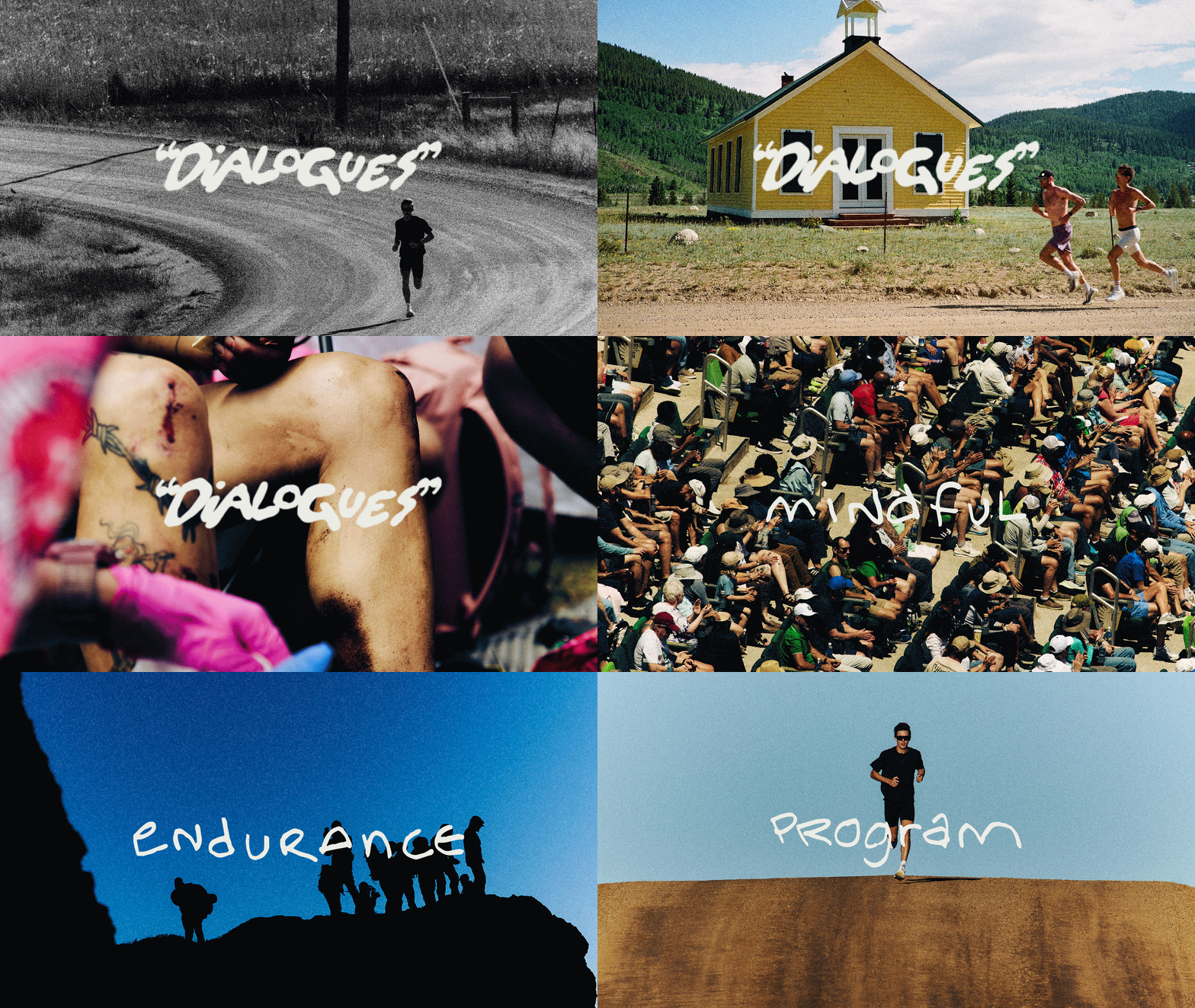
Our first episode dives into the ‘Pursuit of Pain’ in endurance sport, exploring the layers of motivation and the unconscious beliefs that move us. The Dialogues podcast is a monthly conversation between Ryan Willms and Ryan Lynch, where we’ll be diving into themes in sport, performance, the human experience and Self-Realization.
“You cannot stay on the summit forever; you have to come down again. So why bother in the first place? Just this: What is above knows what is below, but what is below does not know what is above. One climbs, one sees. One descends, one sees no longer, but one has seen. There is an art of conducting oneself in the lower regions by the memory of what one saw higher up. When one can no longer see, one can at least still know.”
-Renée Daumal
VIDEO WESTERN STATES by Asa Fletcher
Asa Fletcher captures the Western States Endurance Run. 100 miles of racing from Olympic Valley to Auburn, California. Shot for Hoka, 2026. Read our interview with Asa below.
“I think it was a game of daring to try, while for me, the strategy was to try and not burn too many matches too early, especially because of the altitude exposure and the fact that even though it runs faster, it’s still a hundred miles. It’s still a long way to go to Auburn.”
-Vincent Bouillard, 2026 Western States winner
PRACTICE Pre-Run Meditation
A short pause before movement. An invitation to breath, center and be curious about what you need from your run today. Play or download and use this brief check-in with yourself, each time you are ready to move.
INTERVIEW ASA FLETCHER
RW: What’s your name and where are you based?AF: My name is Asa Fletcher, and I am currently based in Boulder, Colorado.
How would you describe your job?I’m a freelance commercial photographer and filmmaker with an interest in capturing people and their connection to sport through a documentary approach.
How did you end up tying your experience as a runner into capturing the experience of running?I ran briefly in college at NYU before deciding I wanted to fully commit to creative work. That ultimately led me to drop out of school and move to Colorado to work with some of the best professional athletes in the world. I always knew I wanted to tell the stories of elite athletes, so it was just a matter of time before I met some of them and had the opportunity to document their training and pursuit of the Olympics.
What are you looking for when you are capturing a race or a workout?I try to bring an editorial feel while documenting more than just the intensity of a workout or race. I think people often care more about seeing the behind-the-scenes moments than the actual result. That gives me the opportunity to show what an athlete does before stepping onto the starting line.
Whether it’s the athlete’s emotions, the environment they’re in, or the way they interact with their surroundings, all of those details shape my approach to making meaningful work that resonates with an audience.
Lately you’ve been at some of the biggest ultra trail races in the U.S. What do you find unique about these races, the overall experience, the type of runner, and how you approach them in your work?Yeah, it’s definitely been something new. I had a friend in the space who invited me to shoot a documentary about his 100-miler in Leadville. Putting that film together had such an impact on me that I knew I wanted to document more of these longer efforts.
There is often so much more emotion and grit that emerges over the course of tens of hours spent climbing mountains. I think that creates opportunities for stories that simply couldn’t be told over the course of a few minutes on the track. Since then, I’ve had the opportunity to shoot Western States, Hardrock 100, and the upcoming UTMB race, all of which have pushed me creatively and left me feeling incredibly inspired.
One of my favorite things about shooting these races is that they demand a lot from you as a filmmaker. Whether it’s hiking for hours or pulling all-nighters to follow a particular athlete, I love the idea that I have to be a good athlete myself in order to keep up with an elite athlete. That creates an interesting dynamic and makes the work feel even more rewarding.
Do you still have goals in your own practice of running?Yes, and even though my NCAA career was short-lived, I still like to think I could be pretty fast on the track. Whether that’s getting back into the 800 or the mile, or moving to the roads and running my first marathon, I know I still have goals.
I’d say I’m a pretty competitive person, and while I don’t have any races on the calendar right now, I know they’ll come. For now, the routine is usually an evening run on the dirt roads around Boulder, and that’s enough to keep me in the right headspace creatively. Running fuels my work without feeling draining.
You have a unique style in how you process your imagery, combine shots, and share your vision of movement. How has that developed?I think it goes back to being an athlete myself. I’ve witnessed the highest highs and the lowest lows, and those are often the moments when I want to have a camera nearby. Of course, that’s not always the story that needs to be told, but I think people have an incredible willingness to dig deep. Being able to document that alongside movement is something I find really special. Our bodies are capable of enduring so much, and seeing just how far we can push ourselves is often where we learn the most about who we are.
I like to approach my work as a documentarian, almost as if I’m a fly on the wall, allowing the person in front of the camera to move naturally and exist without distraction. I think that approach naturally creates more honest images because the moments aren’t manufactured. Movement is already compelling on its own, and my goal is simply to be present enough to recognize those moments when they happen.
WATCH Race Weekend, IRONMAN 70.3 Oregon
Follow the MEP Racing team through the finale of our 4-month journey to racing Ironman 70.3 Oregon. Through adversity and challenge, connection and discipline, the team came together healthy and ready to celebrate the work together. It was an epic course, and day of PRs, disappointment and heart.
In three weeks the next MEP program begins as we prepare for the CIM Marathon in December, we still have a couple of spots available to join the Running Satsanga Link
INDEX Latest products, updates and inspiration
* Wear: The latest racing shoe from On is now out, the Cloudboom Strike 2. The original version became my favorite racing shoe last year, topping the Adidas Adizero Adios Pro 4. I haven’t yet tried the new On shoe, but the reviews I’ve read sound promising and aesthetically it’s a step forward.
.
* Fuel: Maurten continue to evolve the sports nutrition game with their latest Gel Mix 480, combining their Hydrogel Technology with drink mix, creating 120g in only 350ml, ideal for big sessions and long distance.
* Listen: A reading of Star Child by Joaquin Phoenix in C’mon C’mon cracked me open.
* Watch: A Pure Desert Feeling, follows Robert Irwin and his work. It’s incredibly inspiring, and while he doesn’t refer to his work as spiritual, there is an undeniable evolution of awareness and curiosity to explore the horizon eternally that unites humanity and our essential Beingness.
Thanks for reading DIALOGUES by Mindful Endurance Program. Subscribe for free to receive monthly issues. Check our website for information on upcoming programs and retreats.
This is a public episode. If you would like to discuss this with other subscribers or get access to bonus episodes, visit mindfulenduranceprogram.substack.com