
In short
Economist Podcasts - Episode Summary: Blood from a Drone: Iran’s Deadly Arsenal
Episode Overview In this episode of the Economist Podcasts, the hosts and expert guests dive deep into several critical global issues, primarily focusing on:
- Iran's aggressive military actions and drone capabilities.
- The burgeoning data center industry in India.
- Trends in adult gaming and the rise of competitive socializing.
Host and Guests
- Host: Rosie Blau and Jason Palmer
- Guests:
- Shashank Joshi, Defence Editor
- Gavin Jackson, South Asia Business and Finance Correspondent
---
Key Topics Covered
- Iran's Military Strategy and Drone Warfare
- Iran's Response to Conflict:
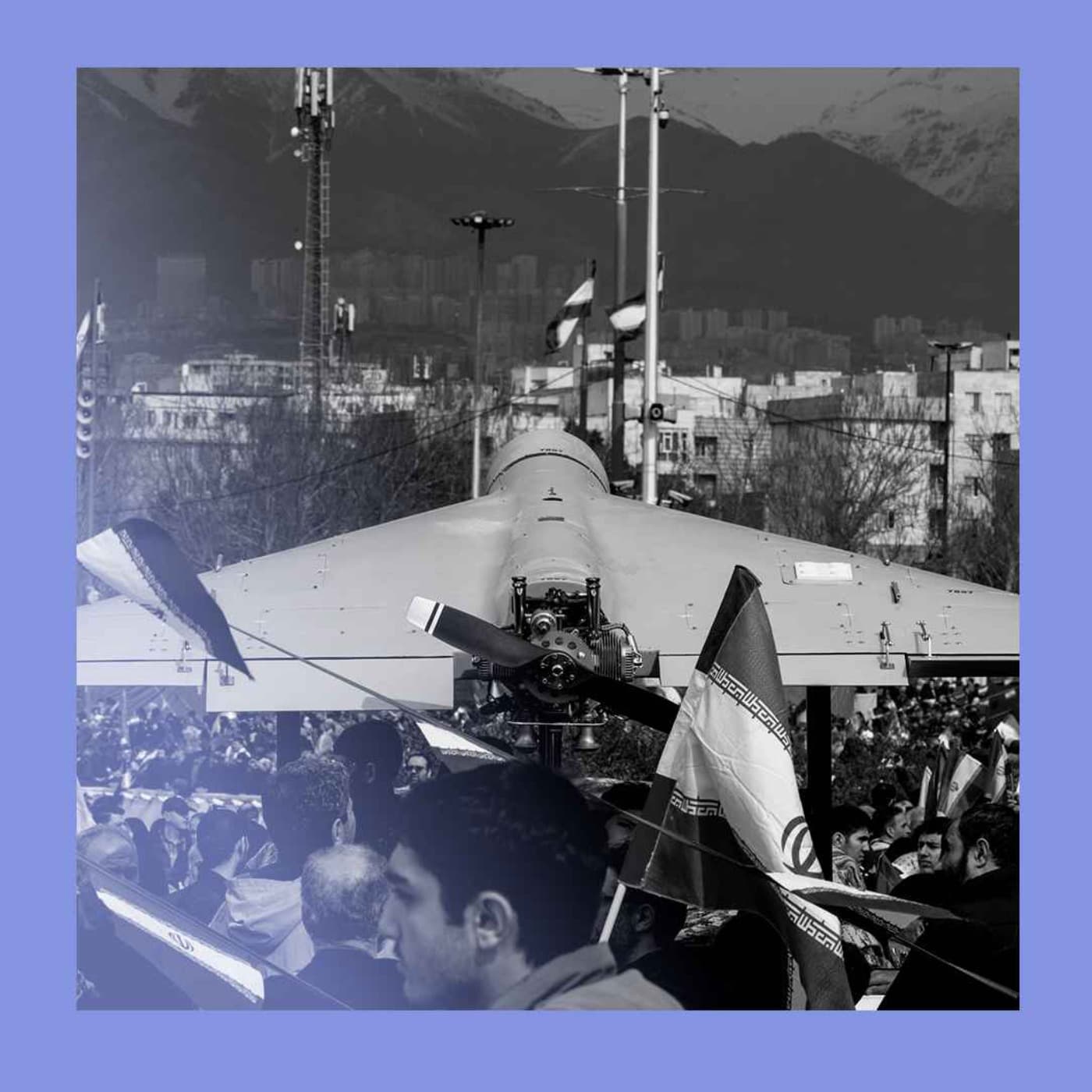
- Iran has retaliated fiercely against external attacks, utilizing a vast arsenal of drones, specifically the Shaheed drones.
- Attacks have included strikes on tankers and energy infrastructures in the Persian Gulf.
- Shaheed Drones:
- Characterized as cheap, precise, and deadly, these drones are a notable component of Iran's military capabilities, with over 2,000 deployed against Israel and other regions.
- They are slow-moving compared to missiles, making them easier and cheaper to produce, thus allowing for mass production.
- Defense Against Drones:
- Various defense systems exist, but cost-effectiveness is a significant challenge as intercepting drones often incurs higher costs than the drones themselves.
- Ukraine's experience with drone defense has spurred collaborative efforts with Gulf states and has influenced defense strategies globally.
- India’s Data Center Boom
- Growth of Data Centers:
- India is experiencing a significant increase in data center construction, driven by both domestic and international players like Amazon, Google, and Meta.
- The country produces approximately 20% of the world's data but holds only 3% of its data center capacity.
- Investment and Infrastructure:
- Indian government incentives, such as tax holidays for data center operators, are crucial to attracting investment.
- The center construction boom is primarily located in major cities, with a growing interest in tier two cities.
- Economic and Environmental Considerations:
- Data centers offer potential job creation during construction, although they tend to be less labor-intensive once operational.
- Environmental impacts, particularly regarding water and energy use, are ongoing concerns.
- The Rise of Adult Gaming and Competitive Socializing
- Evolution of Social Gaming:
- Recent trends show a growing interest among adults in interactive games, such as life-sized versions of Monopoly and other competitive socializing activities.
- The adult gaming market is rapidly expanding, with adults comprising a significant portion of participants in games traditionally aimed at children.
- Cultural Shift:
- The return to games is partly nostalgic but also reflects a shift towards more experiential, interactive forms of entertainment.
- Businesses are capitalizing on this trend by creating venues that offer immersive gaming experiences, further promoting social bonding.
---
Key Takeaways
- Iran's Drone Capabilities: Understanding how drone warfare is shaping modern conflict, particularly in the Middle East, remains critical for global stability and security.
- Data Center Infrastructure in India: The growth of data centers reflects India's potential as a significant player in the global data economy while posing challenges related to job creation and environmental sustainability.
- Adult Gaming Trends: The rise of competitive games for adults indicates a cultural shift towards interactive leisure activities, encouraging social engagement and new forms of entertainment.
---
Conclusion This episode of the Economist Podcasts provides a comprehensive look at critical geopolitical and economic issues. By examining Iran's military strategies, India's data center boom, and the transformation of adult leisure activities, the discussion highlights significant trends and challenges impacting the global landscape.
Written by AI. May contain mistakes. Listen to the episode to check what was said.
Chapters
Tap a time to open that second in VOIntroduction to the Podcast Episode
0:59 to 2:14
Overview of the episode's topics, including drones and their impact.
“The fringes of India's biggest cities are some of its buildings with the biggest footprints.”
Iran's Drone Warfare and Tactics
2:14 to 4:25
Explore Iran's use of cheap, precise drones in modern warfare.
“Nearly two weeks into the war and the display of American and Israeli firepower has been fast-paced and overwhelming.”
The Evolution of Drone Technology
4:25 to 7:31
Understanding how drone technology has blurred lines with missiles and aircraft.
“They've got a long history of doing that.”
Defensive Strategies Against Drones
7:31 to 10:07
Learn about various methods to defend against drone attacks, focusing on cost-effectiveness.
“In fact, interestingly, Russia, having pioneered the use of these at scale, is now sending and sharing some of its tactics with Iran, the originator of these systems.”
Ukraine's Experience with Drone Defense
10:07 to 10:51
Discover how Ukraine is successfully using technology to combat drone threats.
“So he is willing to, yes, give this technology to the Gulf.”
Iran's Enduring Influence
10:51 to 11:01
A discussion on Iran's potential long-term impact on global affairs.
“And Iran looks set to dominate our thoughts, our lives and our economies for some time to come.”
India's Data Boom and Its Challenges
14:03 to 18:00
Explore how India's data center boom is driven by international players and government incentives.
“but this figure is triple what it was in 2020.”
The Rise of Competitive Socializing
18:00 to 22:49
Discover the growing trend of competitive socializing through tabletop games and social experiences.
“I recently went with a team of producers to play a game of Giant Monopoly.”
Transcript
Automatic transcript. May contain errors.0:00Gavin Jackson:When you manage procurement for multiple facilities, every order matters. But when it's for a hospital system, they matter even more. Grainger gets it and knows there's no time for managing multiple suppliers and no room for shipping delays. That's why Grainger offers millions of products and fast, dependable delivery. So you can keep your facility stocked, safe and running smoothly. Call 1-800-GRAINGER, click grainger.com or just stop by. Grainger, for the ones who get it done. If your eyes are the windows to your soul and your glasses are the windows to your eyes, then it's pretty important to find your perfect frames.
0:39Gavin Jackson:That's why at Warby Parker, we've made shopping for eyewear as easy and fun as can be. Peruse endless styles in our stores or use our app to virtually try on frames and get personalized recommendations. To find your next favorite pair of glasses, sunglasses, or contact lenses, or to locate your nearest Warby Parker store, head over to warbyparker.com. That's worbyparker.com.
1:29Gavin Jackson:The fringes of India's biggest cities are some of its buildings with the biggest footprints. A data center boom is going on and we ask who stands to benefit.
1:40Rosie Blau:And if playing interminable games of Monopoly is also one of your childhood traumas, imagine a life-sized version. Last week, I took a crack team of intelligence producers to try it and discover why adults are embracing live-action games. Spoiler alert, Mayfair eluded us.
2:06But first...
2:14Rosie Blau:Nearly two weeks into the war and the display of American and Israeli firepower has been fast-paced and overwhelming. Iran's response, too, has been fiercer than some expected. Overnight, Iran attacked two foreign tankers in the Persian Gulf. It continued to strike energy infrastructure across the region, and its Revolutionary Guard Corps threatened Western financial institutions after a bank in Tehran was hit. As well as deploying ballistic missiles, Iran's retaliation relies on another weapon too, a vast arsenal of cheap, precise and deadly drones.
2:53Jason Palmer:Iran has fired more than 2 ,000 Shahid-type drones at Israel, at Arab countries, indeed as far afield as Cyprus, throughout this conflict. And they've been incredibly important.
3:07Rosie Blau:Shashank Joshi is the Economist's defense editor.
3:10Jason Palmer:They've struck some important American facilities, American consulates, embassies, military bases. They've killed American troops. They've even destroyed some of America's most valuable military radars in the region. Now, over long distances on their way to Israel, they've typically been shot down. But at short range, they have proved very effective, very dangerous and a really formidable threat in this conflict.
3:38Rosie Blau:So what exactly is a Shahid drone?
3:42Jason Palmer:So Shaheed is the name that Iran has given to these strange delta wing shaped drones. And we probably know them best from Ukraine, where they've been thick and fast in Ukraine skies, because Russia basically bought them off Iran, they licensed produce these inside Russia, they called them the Geran, they've improved upon them in Russia, then they've churned out absolutely masses of them every single month and fire them at Ukraine in huge quantities. and they, for me, epitomise the way in which the boundary between what you would once have considered a drone, a kamikaze drone, a missile, a cruise missile, an aircraft, between all those things has just blurred.
4:21Jason Palmer:Now, the drones that Iran is using, I'm fairly certain, are manufactured in the country. They've got a long history of doing that. They're capable of doing it. But they are seeing assistance from Russia in terms of how to use these to maximum effect.
4:34Rosie Blau:So why are they being used so frequently now?
4:36Jason Palmer:A Shaheed-type drone, it travels more slowly than the ballistic missiles that we talked about last week. They carry smaller warheads. They're far, far more basic in many ways, but they're much, much cheaper. So Russia, in producing them, probably spends about$55 ,000 for each Shaheed drone. Maybe that goes up to more than$100 ,000 per unit if you add in various spits and bobs to make it more advanced. But these are fundamentally very cheap compared to a ballistic missile. And so that low cost allows Russia or any country like Iran now to churn out huge numbers of these per day. They're also a bit easier to launch.
5:11Jason Palmer:You can launch them from a variety of different places from the back of a truck. A ballistic missile maybe needs a silo or it needs a big transporter. You can spot them from the air more easily and therefore bomb them. These things can be launched from a much more flexible variety of sites. And unlike a ballistic missile, they fly low, they can skim the ocean. And for any traditional radar, that's a bit of a nightmare. air.
5:32Rosie Blau:So they're harder to spot and there are far more of them. Is there any way to defend against these?
5:37Jason Palmer:There's loads of ways to defend against them. The problem is how do you defend against them in cost-effective and sustainable fashion? Now, if you take a Patriot or a THAAD system, the big air defence systems, very high end, we've spoken about before, these are taking out your big ballistic missiles, zooming in, arcing up high, sometimes into space, and then zooming back down at massive speeds. Those will very happily take out a Shahid for you. If you point them at the right Shahid and fire an interceptor missile. The problem is you are taking out a$55 ,000 Shahid with an interceptor that costs much, much more.
6:09Jason Palmer:Now, sometimes maybe that's worth it, but what you really want to do is try and use cheaper means. There's a lot of ways to do it. Currently, you can get a plane up in the air. You can fire an air-to-air missile at the Shahid. After all, as I said, it's a bit like an aircraft. So you would expect just like you would take out an aircraft, you might take out a Shahid. You've also got a bit more of an economical method, which involves laser-guided rocket pods mounted on warplanes. And these can shoot down Shahids at closer ranges, so you wouldn't fire it so far away. But that's much more cost-effective.
6:38Jason Palmer:You can also use maybe a burst of your cannon. But at that point, you're getting pretty close to this drone. It's pretty hairy if you're shooting it down with your cannon. Israelis in their wars with Hezbollah in Lebanon have tried other messes. They've tried repurposing old anti-aircraft cannons on the ground and pointing them up. and they actually proved fairly successful depending on the height the drone is flying at. There are also lasers you could use. Israel has something called iron beam, but that's only at a fairly early stage. The technology is quite nascent and lasers, interestingly, need very clear weather to be effective.
7:10Jason Palmer:That is a bit of a problem in the Gulf where you often have sandy, dusty conditions and your laser beam isn't always working perfectly in those circumstances.
7:18Rosie Blau:You say that these drones have been used a lot in Ukraine. What can we learn from the experience there of them.
7:25Jason Palmer:Ukraine has by far the most extensive experience of defending against these things. In fact, interestingly, Russia, having pioneered the use of these at scale, is now sending and sharing some of its tactics with Iran, the originator of these systems. So there's an interesting transfer of knowledge. And in the same way, Ukrainian knowledge is now flowing to the Gulf. Volodymyr Zelensky, Ukraine's president, has said he is going to help the Gulf states. I think there's already expert advisory teams in countries like Jordan. The technology is active. And the interesting thing about the Ukrainians is they've gone through that learning journey of how the hell do we shoot these down without wasting all of our interceptors and spending huge sums of money.
8:03Jason Palmer:And what they've basically hit on is a really interesting method that uses a drone to kill a drone. They are using FPV interceptor drones. And FPV stands for first-person view. These are small racing drones. There are other sorts. Some of them have fins and a bit bigger. But the concept is basically you send a very fast, very manoeuvrable and hopefully very cheap drone up to go and intercept the Shahid. And it can manoeuvre more quickly than the Shahid can and basically either ram it or blow up near it. And some of the most recent drones Ukraine is using for this purpose have AI guidance. So you get them close to the Shahid and autonomous guidance takes over and does that final stage of intercept.
8:45Jason Palmer:We're also seeing Ukraine do some very clever things that are actually quite relevant to the Gulf, which is that Russia often sends its Shahids on these big long runs over the Black Sea, skimming the sea. And so Ukraine has put some of these intercept drones on uncrewed boats that then pop up and go intercept when they're over the water. This is working really well. If you look at the statistics in January, Ukraine destroyed, I think, over 1 ,700 Shahids. That was half the total that month. That's a record. That was half of the total launched by Russia. Of those, about 70 % were taken out using FPV interceptors.
9:20Jason Palmer:And actually, skill is very important there, because a handful of units were responsible for a bulk of those kills. You need very well-practiced, very skillful people operating these things. Now, that's not the only way to tackle these drones, and tactics change all the time. There's a constant game of cat and mouse. But the point is, the Ukrainians are so far ahead in that game that they have huge amounts of the expertise necessary for this problem today.
9:44Rosie Blau:And are the Ukrainians now going to lend their tech and skill to those fighting Iran?
9:50Jason Palmer:They're doing it already, but it's very clear that Zelensky sees an opportunity here to leverage this expertise for something he wants. I think that's made some people in the Gulf a little bit irritated, actually. But he's in a position where he's watching these Gulf countries use up more patriot interceptors in this war than he's had throughout the entire conflict at his disposal. So he is willing to, yes, give this technology to the Gulf. But I think naturally he'd be looking for Gulf investment in Ukrainian production. Gulf has money. Ukraine has tech. It's an obvious marriage of skill and cash.
10:21Jason Palmer:And I think he also would like to say to Western partners, I'm happy to share this with you guys, but I need weapons. I need aid. And he has struggled in recent months to get America to sell him the big interceptors for missiles that he needs. So I think the Ukrainians are looking at this as a big opportunity for defence industry and for the munitions they need to replenish their war. But as Donald Trump famously said, Ukraine has none of the cards. I think we're clearly seeing Ukraine does in fact have plenty of cards.
10:50Rosie Blau:Shashank, thank you very much.
10:52Jason Palmer:Thank you.
10:55Rosie Blau:And Iran looks set to dominate our thoughts, our lives and our economies for some time to come. Later today on The Insider, our video offering, editor of The Economist Zannie Minton-Beddoes will be asking if the war could trigger a global economic crisis. Do watch. You'll need to be a subscriber.
11:30Gavin Jackson:Jerry handles the legwork by comparing quotes side-by-side from over 50 top insurers so you can confidently hit buy. No spam calls, no hidden fees. Jerry even tracks rates and alerts you when it's best to shop. Drivers who save with Jerry could save over$1 ,300 a year. Don't settle for higher rates. Download the Jerry app or visit jerry.ai slash acast today. If you work in university maintenance, Granger considers you an MVP because your playbook ensures your arena is always ready for tip-off and Grainger is your trusted partner. Offering the products you need all in one place, from HVAC and plumbing supplies to lighting and more, and all delivered with plenty of time left on the clock so your team always gets the win.
12:16Gavin Jackson:Call 1-800-GRAINGER, visit grainger.com, or just stop by Grainger. For the ones who get it done.
12:34Gavin Jackson:As you'll have heard many times on the show, the soundscape of India is ever-present. Not just the traffic, but also the construction.
12:46Gavin Jackson:One kind of building is showing up more and more, though. Data centers. India needs more of these vast sheds full of blinking servers. And investors, both foreign and domestic, are proving happy to pony up for them.
13:03Shashank Joshi:All sorts of people benefit from this big push by any data centers. Probably the chief one is India's legions of data users. Gavin Jackson is our South Asia business and economics correspondent. The people are streaming videos, they have lower latency, all those hundreds of millions of people who want the latest YouTube video and they want it now and they want it quickly. People will have WhatsApp videos on their phone just constantly. They'll just be WhatsAppping with their family all day. WhatsApp is where I do journalism now.
13:38Gavin Jackson:So let's wind back then. Tell me what the data center boom looks like in India.
13:43Shashank Joshi:It looks like huge shiny sheds going up in industrial parks on the outskirts of major cities. They've got all kinds of pipework on the top keeping them cool and not very many people going through their security gates to get in. Their capacity reached about 1.3 gigawatts last year, according to JLL, a property firm. Now that means India is still a minnow compared to the US and China, but this figure is triple what it was in 2020. Big international players are often teaming up with local groups. That includes the likes of Amazon, Meta, Google, or the hyperscalers, as they're called.
14:17Gavin Jackson:So really, this is just the wider world cashing in, in part, on the India data boom, becoming a data center boom?
14:24Shashank Joshi:Partly. So India produces around a fifth of the world's data, but only has about 3 % of its data center capacity. So meeting that demand by the big international players means locating closer to the Indians who use them. But also partly it's a data sovereignty angle. There's mandates for financial institutions to house client data in country, and some speculation that rules can change in the future to keep more data within India.
Read the full transcript
14:50Gavin Jackson:So the government is backing this. This is not just a free market effect.
14:54Shashank Joshi:Tax breaks incentives are a big part of the story. At the budget, the finance minister announced that foreign owners of data centres will enjoy a tax holiday until 2047. That's more than 20 years from now. A handful of states in southern India are also competing for this investment in data centres. They offer all kinds of different incentives from cheaper electricity rates to help finding land. Most of them have big IT industries and they want to keep some of the infrastructure close to those and want to attract more of it as well. For the moment, most of the boom is what people call the tier one cities.
15:25Shashank Joshi:So you're talking places like Mumbai, Hyderabad, Chennai, big cities. You know, these are huge by European standards, 20 million people sort of thing. Increasingly, there's a few data centers popping up in what they call the tier two cities, where they're more about, again, bringing data closer to the people who are using it. But smaller than that, the villages, towns, no, this is mostly in the outskirts of India's megacities, especially in Mumbai and Chennai. They have subsea cables. So Mumbai connects to Europe and Chennai connects over to Singapore. So that's mostly one reason why they're based there as well.
15:59Gavin Jackson:But for the workers in those megacities, at least there is a temporary promise of good work.
16:06Shashank Joshi:Construction generates a lot of jobs and that's good for India. India needs good, well-paid jobs. That's its big development challenge. But once they're running, they tend to mostly run themselves. So NVIDIA boss Jensen Huang suggested that data center boom could lead to as many jobs as the internet. And that's almost certainly overinflated. The internet has done all kinds of things for India, whereas data centers are largely just big sheds full of servers.
16:30Gavin Jackson:The other thing about data center booms in India as elsewhere is how much they lean on the environment in a country that has resource issues already.
16:39Shashank Joshi:Yeah, so the big companies I spoke to, they say this kind of worry is overblown. India is a good place to put renewables. It's very sunny. It's also often quite windy. So if you locate in the right spot, you can mostly power them from renewables. Now that's a bit cheeky because higher power demand means that lots of India's coal plants may stay open for longer, even if they're not directly powering the data centers themselves, just because if electricity demand is higher, that demand has to be satisfied. A lot of India, a lot of the time, is water-starved. You know, there's the monsoon when often there's too much water, But in between that, it often requires extracting water from the ground, and that gets used up over time.
17:19Shashank Joshi:Now, again, the company suggests that there isn't so much of a problem because power is cheaper than in somewhere like America, and water is more expensive. What you do is you run air conditioning off solar power instead of trying to cool it with water. So that's what they argue. I've not been able to verify that. I mean, people are much, much more concerned about development than the environment. If these things bring jobs, they're happy about it. If you're an Indian environmentalist, data centers are pretty far down your list of concerns. This is happening. India is a massive country with a lot of people who consume a lot of data, and it is inevitably going to grow to be a huge producer and consumer of data.
17:57Shashank Joshi:Gavin, thanks very much for your time. Thank you very much for having me.
18:26Rosie Blau:I recently went with a team of producers to play a game of Giant Monopoly. There was a host who was dressed like an iron, which has always been my favourite token. But the biggest difference from the board game is that at each property you didn't just have to fork out cash. You also had to solve a challenge against the clock.
18:48Jason Palmer:There we go, it's like that.
18:51Rosie Blau:OK, great.
18:52Jason Palmer:We built our house.
18:55Gavin Jackson:Sausage. Cabbage, tomatoes. Where's tomatoes?
18:59Rosie Blau:There was another challenge where we had to do a twister-like activity with foods being read out from a menu and we had to step on them. Prawns, melons, sausages. And you had to kind of turn around and find them and stand on them.
19:18Rosie Blau:Thankfully, unlike a real game of Monopoly, it only lasted 80 minutes and we didn't win. But it was fun and that game is one of a growing number of tabletop pastimes that are moving out of the home and into specialised destinations devoted to competitive socialising. Puzzles and games are now the fastest growing part of the toy market. Last year's sales grew by 30 % in value compared to an overall rise in the toy market of 7%. That's partly because the social experience of play has spurred an increase in gatherings at places like board game cafes and games nights at pubs. But there's also a whole host of new entertainment outlets.
20:01Rosie Blau:Escape rooms have proliferated and across the world there are thousands and thousands of scavenger hunts where participants solve clues and find particular items within a physical location.
20:17Rosie Blau:Adults are particularly keen. About 70 % of the players at Monopoly life-size are over 18 and even more than that in escape rooms. There are, of course, historical precedents for this kind of gaming for adults, but most of those, like amusement arcades, casinos, betting shops, typically involved gambling. Now we've moved from games that are about financial reward to ones that are really about social bonding. Part of the appeal is, of course, nostalgia, a return to thinking about childhood and the experience of playing games. but it's also about a wider trend of the gamification of leisure. In the past, we might go to a play or film and we'd very much be passive recipients as a member of the audience but now you see people going to musicals dressed as cast characters, you go to sing-along films or interact with actors at theatrical performances.
21:17Rosie Blau:you might say that the rise in game playing has done something to fill a gap left by a decline in activities earlier generations of young adults particularly enjoyed i'm thinking here sex drugs alcohol the experience economy is also geared towards those who want to generate instagram or TikTok content. Businesses buy an opportunity. Competitive socializing attractions are filling vacant retail outlets and high streets. And appealing to adults means that you can sell tickets during the school day and late at night. And of course, adults pay higher prices for tickets.
21:57Rosie Blau:A Monopoly board game can be handed down through the generations, and it costs half as much as a single ticket to life-size Monopoly, where 24 players can compete at any one time. Giant Monopoly has already toured in America and Saudi Arabia. Now there are plans to open in Mexico and perhaps the Middle East. Its creators are clearly inspired by the game's own goal. How to be the wealthiest player? Build an empire.
22:33Rosie Blau:And believe it or not, this is not the end of my game playing. For this weekend's episode of The Weekend Intelligence, I tried to solve a slightly different puzzle, why adults are buying toys for themselves. And no, not that type of toy. On Saturday, you can hear my journey, which took me from Reading to Nuremberg, where I conversed with plushy avocados and singing polar bears. You'll need to be a subscriber to listen to that.
23:15Rosie Blau:that's it for this episode of the intelligence we'll see you back here tomorrow
23:43Gavin Jackson:We'll see you next time.
24:01Gavin Jackson:Grainger, click Grainger.com or just stop by. Grainger, for the ones who get it done. Youth mental health is a complex challenge that requires comprehensive solutions. We must strengthen after-school programs. We must make digital literacy tools available in our schools. We must work with mental health professionals to support children. And we must empower mentors, educators, and parents to keep kids happy. Learn more about our commitment to finding lasting solutions at empower our future coalition.com slash solutions paid for by the coalition to empower our future.
From the publisher
Iran continues to retaliate against attacks with ferocity. Though many of its ballistic missile facilities have been razed, its vast drone armoury is powerful and destructive. Who will benefit from India’s boom in data centres? And why giant board games are not child’s play.
Guests and host:
- Shashank Joshi, defence editor
- Gavin Jackson, South Asia business and finance correspondent
- Rosie Blau, co-host of “The Intelligence”
- Jason Palmer, co-host of “The intelligence”
Topics covered:
- Iran, America, Shahed drones, Geran, Ukraine, Zelenksy
- India, data centres, Amazon, Meta, Google, Nvidia
- Monopoly, board games, toys, kidults
Listen to what matters most, from global politics and business to science and technology—Subscribe to Economist Podcasts+
For more information about how to access Economist Podcasts+, please visit our FAQs page or watch our video explaining how to link your account.
Hosted on Acast. See acast.com/privacy for more information.