In short
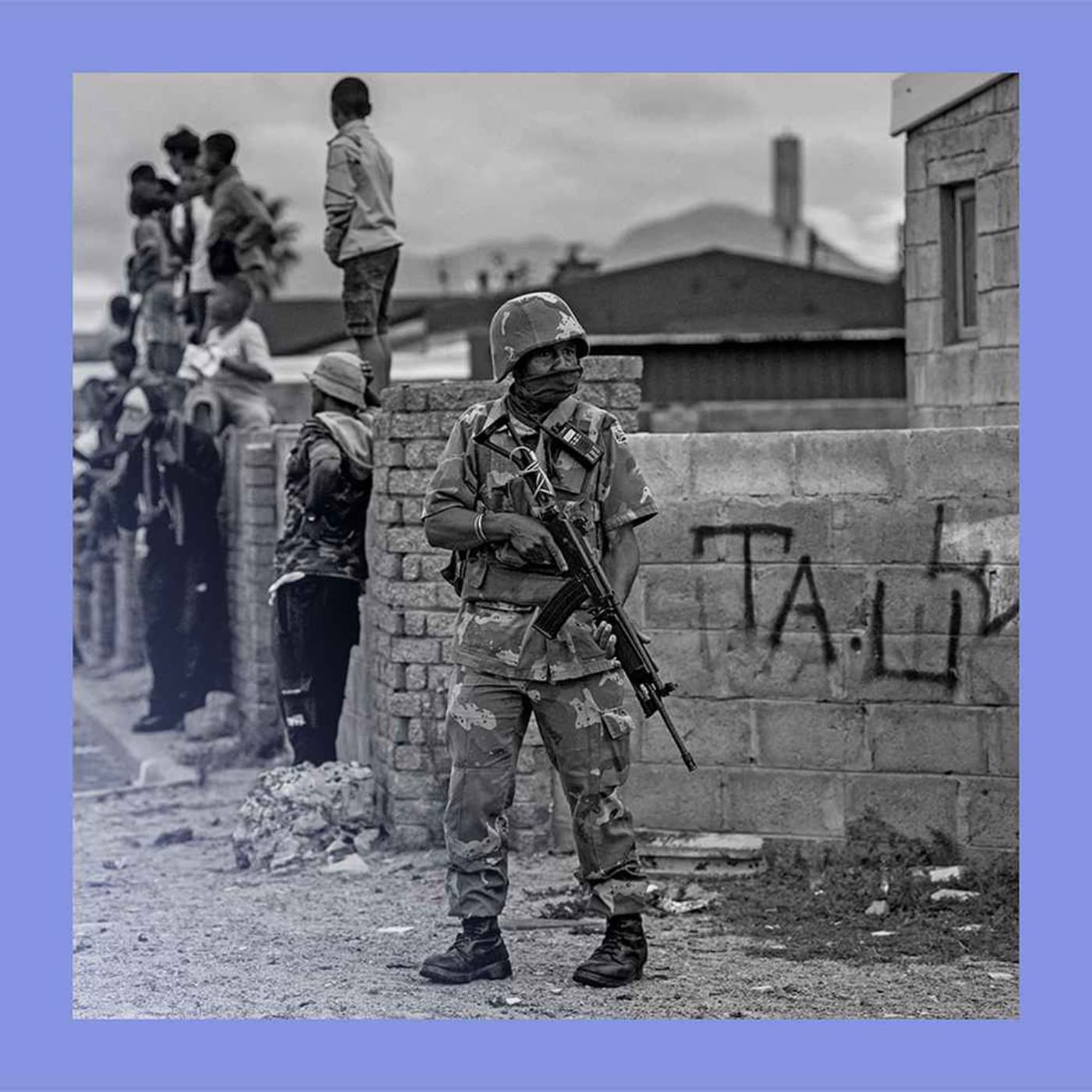
UK police detain five men after explosives are found near RAF Fairford, with suspicion of Iranian hybrid warfare; episode also covers how the Iran conflict boosts oil company profits and a study on how male managers’ daughters affect women’s earnings.
Guests
Matthew Simons, contributing editor at The Economist (focus: UK/Iran hybrid warfare and Fairford incident). Mathieu Favas, commodities editor at The Economist (focus: oil markets and energy transition). Michelle Hennessey, leads online data journalism at The Economist’s Graphic Detail (discusses the gender-pay study).
Key claims
Fairford is a major US base used for operations against Iran; Iranian activity in the UK has increased since the war began; if confirmed, a direct explosive attack on a UK sovereign base would be a major escalation. Oil majors’ combined profits hit $91bn in Q2 2026, driven by higher export prices. Study: in Denmark, women’s earnings rise by 4%+ when a male manager has a daughter; effect is linked to hiring/promotions, not performance.
Notable examples
three white vans near the base; prior Iranian cyber attack attributed to a July power station outage; MI5 reported 20+ potentially lethal Iranian backplots in 12 months; oil profit surge after the Iran conflict; Denmark dataset tracking workers over 25 years.
Written by AI. May contain mistakes. Listen to the episode to check what was said.
Chapters
Tap a time to open that second in VOIran Conflict and Terrorism Threat
1:20 to 3:19
Discussion about the recent explosives incident near a British airbase and its context.
“And why women's earnings go up when their male manager has a baby daughter.”
Hybrid Warfare and Iranian Activities
3:19 to 5:13
Exploration of Iran's hybrid warfare tactics and their implications for the UK.
“But the suspicion is because the police evacuated the immediate area that there were explosives, which were intended to detonate soon.”
Escalating Threat and Modus Operandi
5:13 to 6:39
Analysis of the recruitment methods used by Iranian operatives for attacks.
“For a long time, there has been Iranian hybrid activity in the UK.”
Potential Implications of an Iranian Attack
6:39 to 9:03
Examining the potential significance of an attack on a UK military base by Iran.
“What do we know about the people who carried out the other attacks you've just spoken about?”
Oil Industry Profits Amid Conflict
9:03 to 11:13
Overview of how the conflict in Iran has positively impacted oil companies' profits.
“Oil companies were expecting this to be a pretty miserable year.”
Future Investments and Market Trends
11:13 to 14:01
Discussion on what oil companies should do with their increased profits and market trends.
“So what are they going to do with these piles of cash?”
Oil Market Dynamics and Future Trends
14:01 to 16:38
Explore how recent geopolitical events are impacting oil acquisition and pricing strategies.
“and you want to have more reserves that you can extract, the slow route is to find these reserves yourself.”
Impact of Fatherhood on Gender Pay Gap
18:48 to 22:18
Understand how male managers having daughters can influence women's earnings in the workplace.
“women across the rich world still earn quite a bit less than men do.”
Transcript
Automatic transcript. May contain errors.0:00This intelligence podcast is sponsored by Perk, the intelligent platform for travel and spend. Every person on your team loses up to seven hours a week doing the work behind the work, submitting expenses, matching receipts and booking travel. Using AI and automation, Perk can do that work, bringing travel and spend together in one place. Enjoy three months without platform fees when you sign up at Perk.com forward slash the intelligence. That's Perk.com forward slash the intelligence. New U.S.-based corporate customers only. Terms apply. This Economist podcast is sponsored by Scribd, the knowledge platform with more than 350 million documents shared by real people.
0:39Whatever you're working on, Scribd is where you go to find information, build understanding, and get it done. And if you're a student or educator in the U.S., a valid school email address gets you a discounted subscription plan. Head to Scribd.com to claim yours. That's S-C-R-I-B-D dot com. Must be 18 or over.
1:03The Economist.
1:10Rosie Blau:Hello and welcome to The Intelligence from The Economist. I'm Rosie Bloor. And I'm Jason Palmer.
1:19Rosie Blau:Today on the show, the Iran conflict has boosted oil firms' profits. And why women's earnings go up when their male manager has a baby daughter.
1:35But first...
1:42Rosie Blau:Five men remain in custody after explosives were found near RAF Fairford, a British airbase used by American forces about 25 miles from Oxford. The men were detained close to the base in the early hours of Sunday morning and arrested under the Explosives Act and on suspicion of preparing a terrorist offence. We don't know yet which group is behind the incident, but suspicion so far has focused on one possible perpetrator. We don't know all details yet. The strong suspicion is that this may be an example of Iranian hybrid warfare. Matthew Simons is a contributing editor at The Economist. We've seen quite a lot of that in the UK, but we don't know for certain yet.
2:32If it is Iranian, then this would mark a significant escalation.
2:39Rosie Blau:Matthew, we'll come on to that in a minute. Tell me, first of all, what we know about what happened. Well, it's an extraordinary story, really. There were three people in a car coming back from a party in the small hours of Sunday morning. and they saw some suspicious activity near Fairford Air Base. And what they saw was, first of all, three white vans about 300 yards away from the air base perimeter in a sort of fan shape. And then a little bit later, they saw men wearing bannaclathers and black outfits gathering around. they rang a number that they had been given as an emergency number for the airbase nobody replied they then rang 999 which is the emergency uk number for the police and then things happened pretty rapidly with helicopters arriving and police and as far as we know the people were rounded up pretty quickly and were taken away.
3:54And that's all we know for certain. But the suspicion is because the police evacuated the immediate area that there were explosives, which were intended to detonate soon. And that was a reason for the evacuation. But again, nothing has been confirmed yet.
4:16Rosie Blau:And just give us a bit of context. Why were the US using a British base? Well, this has been a UK sovereign base always, but the Americans have used this for a very long time. It's part of our agreements under NATO and with the US bilaterally. This base is, I think, almost entirely used by the US and it flies B-17 transport aircraft, it flies B-1 bombers, even B-52s. I mean, these are big, noisy aircraft, so it has a significant presence in the neighbourhood. And it is a crucial base for America when operating particularly in either Europe or the Middle East. And indeed, it has been a very important base for the US in terms of its war with Iran.
5:06Rosie Blau:Now, Matthew, you said that this fits into a pattern of escalating hybrid warfare attacks by Iran. Explain that. For a long time, there has been Iranian hybrid activity in the UK. It's mostly been aimed towards either the Jewish community or against Iranian dissidents in the UK. There was also an attack on an Iranian London-based TV station about two years ago. Even before this year's war, MI5, the UK's secret intelligence service, had been flagging Iranian activity as a serious threat. MI5 Director General Ken McCallum said in October that service attract more than 20 potentially lethal Iranian backplots in the UK over a 12-month period.
5:56But when the Iran war kicked off earlier this year, the frequency and the level of attacks began to increase. And the Iranians made it clear when the previous Prime Minister, Keir Starmer, agreed that Fairfield could be used to attack defensive targets, not offensive. So in other words, it couldn't be used to attack Iranian infrastructure, but it could be used to attack missile launchers, for example. The Iranians made it clear at that time that they would regard any such military activity originating from the UK as a legitimate target.
6:35Rosie Blau:We don't know what happened at Fairford. We don't know who was arrested. What do we know about the people who carried out the other attacks you've just spoken about? Well, we know that the modus operandi is recruitment of low-level operatives. So it's not carried out by Iranian intelligence people or the Revolutionary Guard operating in the UK. But typically they recruit teenagers through criminal intermediaries to carry out fairly low-level attacks. They're often recruited via social media platforms. They're paid. We also know that the Iranians used cyber attacks against UK targets. In July, a small power station went offline four days as a result of what was attributed as an Iranian cyber attack.
7:26So it may be that the sort of people who were engaged in this activity may be of a slightly higher operational grade than we've seen previously, but we don't know yet.
7:37Rosie Blau:Are there other contenders if it wasn't Iran? Russian hybrid warfare against targets in both the UK and across Europe generally as well. I mean, probably we think more about Russia than we do about Iran immediately. But this has the hallmarks of Iran simply because of the nature of the target. This is an airbase used to hit targets in Iran. So it makes Iran by far the prime suspect. If it does turn out to have been an Iranian attack, how significant an escalation is this? I think it's very significant. I mean, this is a direct attack on a UK sovereign military base. If it's using explosives, and there were three vans, so there could be quite a significant amount of explosives used, then presumably the objective was to find a way through the perimeter fence and blow up an aircraft.
8:37Maybe they were going to use FPV drones to fly into the airbase and to do it that way. But a large scale kinetic attack on a UK military target, which is much harder to deny than a lot of the things that Iran has done here previously, would be a really significant escalation and the UK would have to respond, I think.
9:03Rosie Blau:Matthew, thank you very much. Thank you, Rosie. Always a pleasure.
9:31Rosie Blau:Oil companies were expecting this to be a pretty miserable year. Forecasters predicted a glut of supply and falling prices. Then Donald Trump's administration launched the conflict in Iran, and the ripples from that propelled prices into triple digits. The price surge triggered by the war in the Middle East has been a boon to the oil industry. Mathieu Favas is our commodities editor. If you look at the combined profits of the West's seven biggest integrated oil companies, plus Aramco, Saudi Arabia's state-owned Colossus. They hit$91 billion in the second quarter of 2026, and that's twice the level of a year earlier.
10:15So that's huge.
10:19Rosie Blau:Why is war so good for the oil companies? Well, if you are an oil company and before the war you did not get much of your production out of the Gulf, so most of your production came from elsewhere, What the war has meant is that you've been able to export about the same volumes, if not more, at higher prices. This big margin between what we expected and what's happening means bumper profits for these companies. What's interesting is that this comes after years of restraints from the companies because their shareholders didn't want them to invest. The last time there was a big surge in profits, a big surge in cash flows for these companies.
10:58That was after the invasion of Ukraine by Russia in 2022. And comparatively, what they invested back into new production was pretty small. But this time, they're going to have a lot of cash. And there are reasons to believe they may do something more productive with that money.
11:16Rosie Blau:So what are they going to do with these piles of cash? So what they've done so far is pretty much what they did in the past, which is paying down debt. And one reason for that is after the war in Ukraine, oil prices rose really fast. They stayed high for quite a while. But then they fell because the situation normalized. Oil flows were rejigged around the world. And therefore, the profits fell as well. And so to keep paying the same dividends to their shareholders, a lot of these oil companies, they started borrowing money. So the first thing they're doing is to pay back this debt that they've taken on.
11:49And then they're lining their owners' pockets. What they've not done is to invest more. They've been very cautious about investing in expansion. They're quite keen to ratio investors that most of the windfall will trickle down to them. Which, you know, you can understand the logic at the beginning of the war because nobody knew how long it would last. So caution was deserved. But now it looks like it's a protracted conflict. And even when it ends, you know, maybe a lot of importing countries will want to buy more oil to restock what they've drawn on during the war. So you're looking at an environment where maybe it makes more sense to be a bit less cautious.
12:26Rosie Blau:Mathieu, you've been writing about commodities for a long time. What should they be doing instead then? Well, it's not for me to advise the senior leadership of these companies. But from their perspective, if they want to keep on producing oil at the same rates, they need new projects. And that's because every two years, the depletion of oil fields that are currently running, It means that the global supply of oil diminishes by the equivalent of one Saudi Arabia, which is huge given Saudi Arabia is one of the very largest producers. And replacing this supply is getting harder. And if you look at the 2030s, a lot of these companies, they will see their production fall dramatically if they do not invest more.
13:08So they need to refresh their portfolios. And we're seeing signs of that already. A lot of the majors, they are amassing a huge amount of land. They're not committed to drilling it, but they're amassing rights to look for oil beneath the surface of this land. They're using AI or other tools to scan for drilling sites. And so that's been quite dramatic, you know, in a number of countries around the world. And then there's another trend, which is a lot of these private oil firms, they are partnering with national champions in oil-producing countries, whereby these big public state-owned companies will invest or give money to the private firms in exchange for a stake in local projects, which means the project can progress faster because they're being funded.
13:51And that's because a lot of these countries, they want more domestic production in an age where energy security is becoming more important.
13:58Rosie Blau:And what about deal-making? Basically, if you're an old company and you want to have more reserves that you can extract, the slow route is to find these reserves yourself. The quicker route is to acquire a company that does it already. And so deal-making in recent years has been pretty slow and it's slowed down even more when the war started. But that is changing because buyers and sellers, they've started to accept that prices are going to stay high for longer. So we've seen more deals, seven deals above$1 billion in the past two months. And it's possible this will accelerate next year because you've got the oil firm that are looking for new sites to drill for new assets.
14:38But also you've got private equity firms, commodity traders, they're also hunting for assets. And another factor also maybe is in America, you've got two years left of a deal-friendly administration, of an oil-friendly administration. So this may create the environment whereby more measures and acquisition happen. Now, what I should say here is that this is not guaranteed. There's a lot of uncertainty about it. Exploration could disappoint. We don't know where the war is going, where prices are going. And there's few obvious acquisition targets, big acquisition targets. But the situation in the Gulf is definitely providing a sort of reset for these companies, whereby they have much more firepower that they can use to invest in expansion.
15:23Rosie Blau:Mathieu, I thought the age of oil was supposed to be coming to an end. What does this all mean for the rise of renewables and the energy transition? Yeah, it's a really good question. And the impact of this crisis is really nuanced in the sense that, yes, is giving a lot more firepower to the oil companies, which means they can invest in new production potentially, which will prolong the oil era. But at the same time, you know, high oil prices and high gas prices, they are providing strong incentives for countries that depend on imports, depend on these global supplies to diversify away from them.
15:58I'm in Asia right now. And what we've seen during this crisis is a will to produce more gas at home, to import more energy from more places, but also much more investment in renewables. So there's a bit of both. In other countries, typically poorer ones in the region, they've also swung back to coal. So, you know, in some countries it's more renewables, some others it's more coal, in some countries it's everything at once. It's not one clear narrative. From the point of view of the old firms, if we come back to them, is in the short term, for sure, there's big gains. But in the long run, it might be pain because demand for their products might diminish.
16:36Rosie Blau:Mathieu, thank you very much. Thank you, Rosie.
17:05Say what you actually mean instead of what would hurt someone else the most. Nobody applauds those moments, but they quietly change your life. That's what growing feels like. And that's exactly what Grow Therapy is here for. Grow is therapy that works, covered by insurance. Sessions average$21 with insurance and some pay as little as$0 depending on their plan. There are no subscriptions, no long-term commitments. You just pay per session. Grow connects you with thousands of high-quality, licensed therapists across the U.S., offering both virtual and in-person sessions, nights and weekends. You can search by what matters, like insurance, specialty, identity, or availability.
17:45And you can book a therapy session in minutes and begin in as little as two days, not the national 48-day average. See if you could pay as little as$0 for therapy in seconds at growtherapy.com slash ACAST. That's growtherapy.com slash ACAST. growtherapy.com slash ACAST. Availability and coverage vary by state and insurance plan. Meet Amazon Ads rising star Daryl Spencer, who set out to redefine men's self-care with his brand Crown Skin. Amazon Ads helped him grow. I walked away from big tech to build a luxury brand in a category that no one was paying attention to. With the help of Amazon Ads, I'm reaching relevant audiences and competing with the biggest names in men's grooming.
18:31We've scaled to over$500 ,000 in monthly revenue. Watch Crown Skin's story at advertising.amazon.com slash rising-stars.
18:47For all the big corporate talk about narrowing the gender pay gap, women across the rich world still earn quite a bit less than men do. Schemes that try to even the score or creative accounting often backfire. But I've heard from Michelle Hennessey, who leads our online data journalism section, Graphic Detail. And she says there's one clear thing that men in high places can do, or rather that their partners can do. It's a pretty striking finding. It comes from a new study that we just covered, and it found that basically immediately after a male manager has a daughter, women's earnings at his firm go up.
19:26So tell me about the study. How do we know this fact? Right. How can this be? How can an infant baby girl affect workplace salaries at her dad's company? If you look at the charts in the story, it's quite a significant effect. The ratio of female to male earnings goes up by more than 4 % if the men have a daughter. And the share of women working at the firm goes up by a similar amount too. We're talking here specifically about small firms in Denmark. One of the authors, Nina Smith, she's an economist there. The other author is Madalena Ronchi in the US. And together they tracked every worker at these companies over 25 years.
20:02And it's specifically an effect of a manager having a daughter. What about a son? Sons had no effect. No effect. Okay. And as for women at the firm, what, everybody gets an instant raise? How does this work? So of course, this isn't in the form of a bonus, right? If my manager has a daughter next year, I'm not getting a 4 % raise. Instead, the data point to this being about hiring decisions. So it seems like it influences who men, male managers, pick for new hires and to a lesser extent for promotions. Actually, the probability that the best paid person at the firm is a woman goes up by two percentage points.
20:38So it's a measurable impact. And what about the impact on the firm after those changes? So on a bunch of measures, things like firm sales, they barely budged. And that's because we're not saying that girl dads suddenly hire all these unqualified women over men, right? Nor are we saying that there were much more qualified women that had previously been overlooked. It's a lot more subtle than that. If you compare the new female hires to the new male hires in firms that didn't have a new dad, you see that their qualifications and years of experience, things like that, they're basically the same. So it sort of points to this hidden bias that managers may have, right?
21:15If two candidates are just as qualified, what tips one over the edge? And what about the reverse case, though, female managers? What's interesting and disappointing, I suppose, is that there weren't enough female managers in the sample to do the same analysis on them, so to see if them having sons had the same effect. So we don't know if this is exclusively to fatherhood. But if we better understand some of the factors that play into hiring decisions, then maybe there's ways that companies can experiment with, ways to tackle specific biases, right? Not through quotas and things like that, but something that explains the root cause of these decisions.
Read the full transcript
21:52And anything we can do operationally here, turn this into some sort of policy? So it's not the economist's view, of course, that HR departments should encourage male managers to have daughters. To be clear, that's not how companies are going to close their gender pay gaps. But if we better understand some of the factors that play into why sometimes male managers will hire more men over women, then that can lead to better solutions to close the gender pay gap. Thanks very much for joining us, Michelle. Thank you.
22:36Rosie Blau:That's all for this episode of The Intelligence. We'll see you back here tomorrow.
22:59There's a lot people don't tell you about owning a home. And for most of us, the questions pile up a lot quicker than the answers. The costs you don't see coming, the decisions you don't feel ready to make. It all leaves you wondering, do you own your home or does it own you? I'm Angie Hicks, co-founder of Angie. And in my new podcast, Own It, I'm talking to the experts for real talk and real tips to understand what homeownership really takes. Tune in wherever you get your podcasts. Investing with Schwab is like spending a Saturday at a great farmer's market. You can fill your reusable tote with a bit of everything.
23:36Maybe you go for some free-range, self-directed investing. Or perhaps you pick up a few farm-fresh trades while you peruse. You can even get help from a dedicated advisor. That's full-service wealth management. Mix, match, and change your mind whenever you want. Because at Schwab, you can invest your way. No matter your goals or appetite for investing, Schwab has everything you need, all in one place. Visit schwab.com to learn more.
From the publisher
Five men are in custody under suspicion of explosives and terrorism offences after being arrested near a British military base used by American aircraft. This could mark a significant escalation in Iranian hybrid warfare. What oil firms are doing with their profits from the Gulf conflict. And why women’s wages rise after their male managers have daughters.
Guests and host:
- Matthew Symonds, contributing editor
- Matthieu Favas, commodities editor
- Michelle Hennessy, graphic detail editor
- Rosie Blau, co-host of “The Intelligence”
- Jason Palmer, co-host of “The Intelligence”
Topics covered:
- Fairford, Iran, hybrid warfare, terrorist attack
- Oil, oil prices, Iran
- Gender-pay gap, fatherhood, daughters
Listen to what matters most, from global politics and business to science and technology—subscribe to The Economist.
Hosted on Acast. See acast.com/privacy for more information.