In short
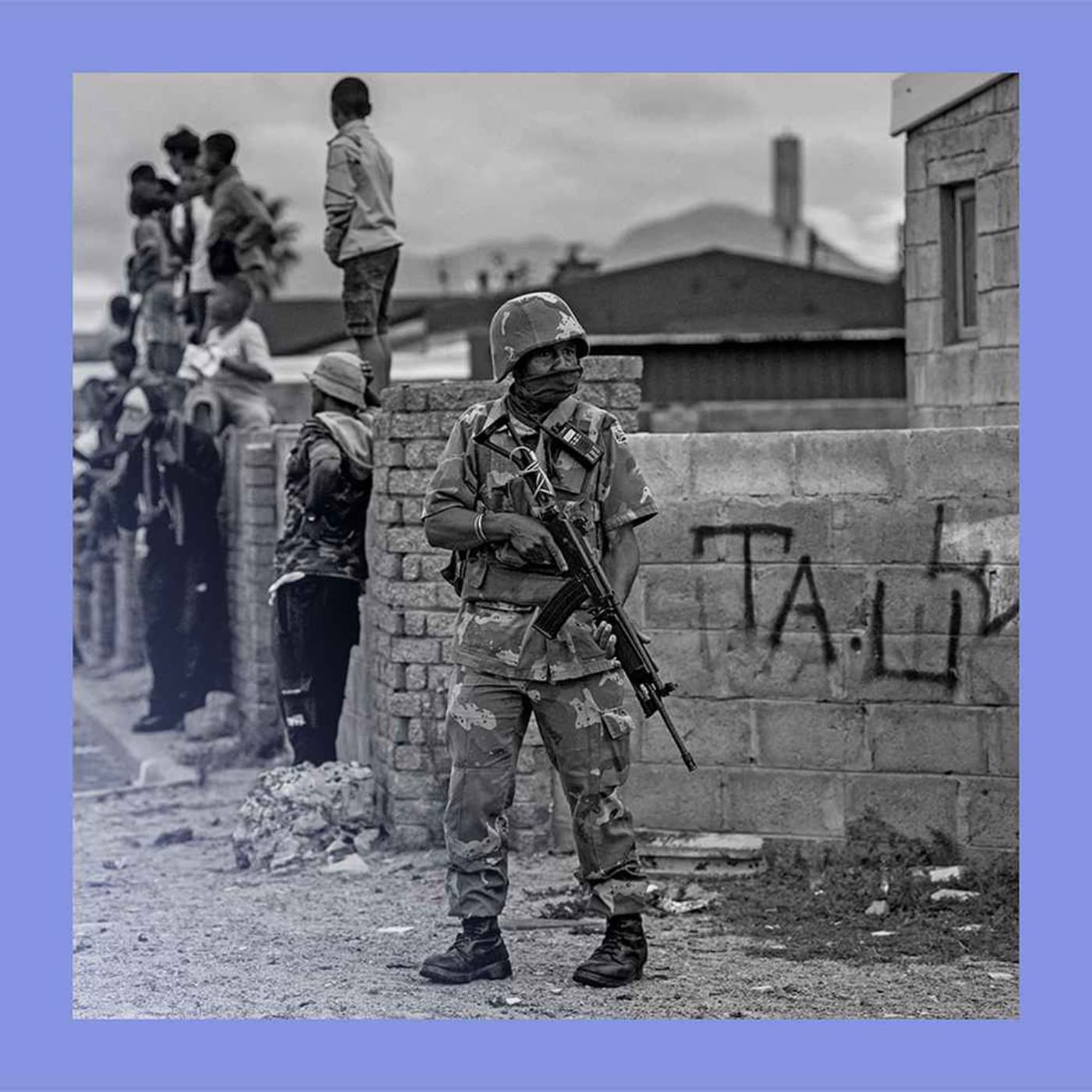
The episode covers two main stories. First, South Africa’s “mob rule”: organized crime increasingly infiltrates the state and formal business. John McDermott (Economist chief Africa correspondent) says organized crime costs South Africa about 10% of GDP (World Bank) and ranks it among the most susceptible countries (e.g., number 7 of 193). Key trends: a growing illicit economy (cigarettes/alcohol, dodgy petrol, copper, plastics), extortion mafias (construction “muscle” demanding cuts; about 50 Cape Town infrastructure sites using war rooms), and criminal capture of police/prosecutors. A turning point was KwaZulu-Natal senior cop Nalanla Mukwanazi’s allegations of collusion among police, gangsters, and politicians, leading to suspensions/departures of top police and prosecutors. Second, Shira Avigona (Economist business correspondent) explains Oura smart rings: founded in Finland (2013), health-first positioning, thin design, stress/sleep/fertility tracking, and subscription software; it filed for IPO and reported $1.2bn sales (up ~75%). The episode also reviews the Lucas Museum of Narrative Art in LA (George Lucas; chief exec Tracy Bates; culture editor Alexandra Sewage Bass), questioning whether the $1bn, spaceship-like museum will be creative or flawed.
Written by AI. May contain mistakes. Listen to the episode to check what was said.
Chapters
Tap a time to open that second in VOCrime and Economy in South Africa
1:34 to 2:58
Exploring the impact of organized crime on South Africa's economy.
“As recently as a couple of years ago, South Africa's bosses would have told you the biggest problem they faced was the electricity supply.”
Trends in Organized Crime
2:58 to 4:49
Discussing three worrying trends in South African organized crime.
“The World Bank, for its part, says organized crime costs the South African economy about 10 % of GDP, which is a huge amount.”
The Capture of State and Criminal Justice
4:49 to 7:16
Examining how organized crime influences South African governance.
“And you mentioned also the capture of the state of the criminal justice system by mafias.”
Future of South African Governance
7:16 to 9:29
Analyzing the potential for reform in South Africa's leadership.
“So do you think that the inquest is going to change anything?”
Conclusion
10:11 to 10:45
Wrapping up the discussion on crime and governance in South Africa.
“With no fees or minimums on checking accounts, it's no wonder the Capital One Bank guy is so passionate about banking with Capital One.”
The Rise of Health Monitoring Rings
14:00 to 16:26
Explore the increasing popularity and competition of health monitoring rings.
“And the app compared to the competition, they work really hard to make it user friendly.”
George Lucas's New Museum of Narrative Art
16:42 to 19:15
An overview of the unique features and ambitions of Lucas's new museum.
“including Star Wars with its iconic theme and Indiana Jones.”
The Controversial Approach to Art Display
19:15 to 22:33
Discusses the unconventional display methods and implications for art appreciation.
“About 7 % of galleries are dedicated to Star Wars.”
Transcript
Automatic transcript. May contain errors.0:00This intelligence podcast is sponsored by Business Travel on Hotels.com. Does booking business travel feel like another job? Hotels.com makes booking work trips easy and rewarding. It's easy because you can set your preferences once and get results tailored to your business travel needs every time. It's rewarding because with Hotels.com's free rewards program, you can save instantly on your next work trip and earn rewards for future travel. Book faster with confidence at Hotels.com. Loyalty members 18+. This intelligence podcast is sponsored by Perk, the intelligent platform for travel and spend.
0:36Every person on your team loses up to seven hours a week doing the work behind the work, submitting expenses, matching receipts and booking travel. Using AI and automation, Perk can do that work, bringing travel and spend together in one place. Enjoy three months without platform fees when you sign up at perk.com forward slash the intelligence. That's perk.com forward slash the intelligence. New U.S.-based corporate customers only. Terms apply.
1:03The Economist.
1:10Hello and welcome to The Intelligence from The Economist. I'm Jason Palmer.
1:20Today on the show, how Oura Rings found their way onto millions of fingers and a slightly discombobulating visit to the new Lucas Museum.
1:34First up, though.
1:43As recently as a couple of years ago, South Africa's bosses would have told you the biggest problem they faced was the electricity supply.
1:59Relentless blackouts were crushing the economy. These days, a problem with a different kind of power is top of their list. South Africa has long had a criminal underworld, but increasingly it infects the overworld, the state and formal business. John McDermott is our chief Africa correspondent. So much so that it is often the number one problem that South Africa and businesses will tell you about.
2:33Well, tell me about the scope of it, first of all, John. What sort of form does this crime take? People who put together rankings of countries by their susceptibility to organized crime put South Africa in a vaguely kind of Latin American league. So a recent report had it number seven out of 193 countries behind places like Myanmar, Colombia, Mexico. Well, put this into perspective. How bad is it in South Africa? The World Bank, for its part, says organized crime costs the South African economy about 10 % of GDP, which is a huge amount. And while listeners might think, well, I vaguely know that South Africa has a lot of crime.
3:19It's a place where there is a lot of trafficking of drugs and people, animals, rare plants and the like. There are three new trends that are especially worrying. The growth of the illicit economy, extortion mafias, and the extent of criminals' capture of the state and the criminal justice system. Well, let's take those three trends in turn then. What's going on with the illicit economy? In South Africa, there's a growing cornucopia of things that you can find in illicit marketplaces. So the most common are goods like cigarettes and alcohol, but it extends to dodgy petrol, dodgy copper, dodgy plastics.
4:00In isolation, none of these things are going to break the economy. When you add it all up, it is a huge sum of money. So the guy who used to run the tax authority reckons South Africa is losing the equivalent in tax revenue to what it costs to fund the health budget. And to the second trend then, the rise in extortion? Yeah, this is a particularly fascinating one. Around a decade ago, so-called construction mafia emerged in a province known as KwaZulu-Natal. And these are essentially muscle that will come to an infrastructure project site and say, if you don't cut us in on the project, then bad things will happen.
4:43And that sort of extortion mafia has expanded beyond that province to the rest of the country. I was talking to the mayor of Cape Town for this piece, and he was telling me that they have around 50 infrastructure sites at the moment where they've set up a war room to coordinate security protection because of these guys. It's a virus and it's spreading. And you mentioned also the capture of the state of the criminal justice system by mafias. Yes, I think this is probably the most worrying of the three trends. Most South Africans had a sense that organized crime was burgeoning in the country. But about a year ago, a lot of this burst out into the open when a senior cop from KwaZulu-Natal, Nalanla Mukwanazi went public with some explosive allegations about collusion among police, organized gangsters, and politicians.
5:38And that press conference where he was dressed in fatigues and had officers carrying guns right next to him, I mean, it looked like he was about to announce a coup. That led to this public inquiry, which over the past year has proved kind of dramatic viewing across the country, and it's revealed more skeletons than a Halloween party, quite frankly. These hearings have already led to the suspension or departure of, let me take a breath, the police minister, the police commissioner, his deputy, the head of the police's organized crime unit, and the lawyer leading a crack team supposedly tackling corruption within the national prosecutor.
6:18And we knew there was deep corruption in South Africa. That was revealed extensively under the former president, Jacob Zuma. But what we've learned over the past year is the way in which that is increasingly meshing with mobsters as well. So there's good reason then for the list compilers to put South Africa where it exists on the list of countries that are susceptible to organized crime? Yes, I think so. I mean, rankings like that are kind of rather macabre, parlor game. The Latin American countries probably have more singular problems with drugs and the infiltration of cartels into their political economies.
6:56But South Africa, in the breadth of the problem, is arguably as bad as anywhere else. And I think what you have here is the combination of a open, fairly rich economy and an utterly corrupted state. And we've known that the public sector is being captured for some time through graft and political patronage. But what's new and what this inquiry led by a retired judge known as Mio Bicirelli Madlanga has revealed is the way in which the lines are blurring often between politically compromised individuals and outright gangsters. So do you think that the inquest is going to change anything? I mean, the results are already shocking.
7:47What happens after? That's the big question. Because the inquiry also speaks to some of South Africa's strengths as well. It's a very diverse country and it has a very diverse array of organized criminals. But it also has a diversity of institutional strengths. NGOs that will sound alarms. It will have judges such as Mr. Madlanga, and it has a feisty media as well. And it also has a lot of still very honorable public servants. What I don't know yet is whether it can take advantage of the once-in-a-generation opportunity that the Madlanga Commission provides it. I think back to some of the investigations in Italy in the 1990s, or some of the reforms more recently in places like Guatemala and Colombia, that showed it is possible to clean up the police.
8:42It is possible to clean up prosecutorial authorities. But it's also incredibly difficult unless you have that political leadership right at the top who's committed to doing the same. And do you think that's there, the leadership from the top that can turn this into real change? I don't know. The African National Congress, which has been running South Africa for more than three decades now, is deeply implicated in much of the criminality But the president, Cyril Ramaphosa, wants his legacy to be that he has cleaned up the country, at least in part. The problem is the clock is ticking. Next year, he will be out as leader of the ANC.
9:22And who knows? His successor could be far worse and even a friend of the gangsters. John, thanks very much for joining us. Thank you, Jason.
10:03Thank you. subscription plan. Head to Scribd.com to claim yours. That's S-C-R-I-B-D.com. Must be 18 or over. With no fees or minimums on checking accounts, it's no wonder the Capital One Bank guy is so passionate about banking with Capital One. If he were here, he wouldn't just tell you about no fees or minimums. He'd also talk about how most Capital One cafes are open seven days a week to assist with your banking needs. Yep, even on weekends, it's pretty much all he talks about, in a good way. What's in your wallet? Terms apply. See CapitalOne.com slash bank. Capital One N.A. Member FDIC.
10:55By now, there are a lot of fitness wearables out there. Bracelets and watches and chest straps and all sorts. A lesser developed category is the smart ring, the leader of which is Aura. You, like me, probably get your fashion tips from Kim Kardashian, and she's got one. Tom Holland, too. So why is Aura the one ring that rules them all? Aura, which makes smart rings, is already on millions of people's fingers, and it's very fast growing. So that's one reason why on September 3rd it filed to IPO in America.
11:32Shira Avigona is a business correspondent for The Economist. And in the nine months to June, it took in$1.2 billion in sales, which is up almost 75 % from the same period last year. And unlike many fast-growing startups, it has managed to turn a profit. So let's wind back in history. How did this company get its start? Orr was founded all the way back in 2013 in Finland, of all places, which might sound surprising, but actually when you think about companies like Nokia, has a long tradition of spawning hardware startups. And the initial ideas behind Aura were first that smart rings would be less intrusive than, say, smart watches or wristbands or other kind of fitness devices.
12:20And the second was that for various reasons that have to do with how blood vessels are concentrated in the finger, it's a good place to track blood flow and other vital signs more accurately than the wrist. And the third thing was really to pitch ORA more as a company about health than about fitness. The idea being, as any couch potato knows, the population of people who care about their health is much larger as an addressable market than just gym goers. So that is to say they, dare I say, hit the ground running in 2013? Not really. So it took them a couple of years to come out with their first generation ring.
13:00And even then, despite the health related focus, the initial adopters were biohackers, the kind of Brian Johnsons of the world, Silicon Valley nerds who, you know, wanted more and more and more data about everything, but also about their own bodies. But over time, Aura has slimmed down its devices, so they don't look like you have some sort of bionic finger or something like that. And it just looks kind of like a normal ring. So their most recent version is super thin. They really managed to slim down the size. And that has appealed to people who basically think a lot of fitness and health tech is ugly.
13:41So for the health conscious, but not necessarily super fit, what does it tell you? So it can tell you things like your stress level throughout the day, how well you're sleeping compared to a month ago. It does fertility tracking, which has helped it grow for this kind of device, quite a large user base among women. And the app compared to the competition, they work really hard to make it user friendly. And that's allowed it to not just grow the hardware business through the rings, but also a monthly subscription-based software business, which is very high margin because it doesn't cost that much to develop the software and also enables it to have ongoing revenue base that doesn't just have to do with selling more and newer versions of the ring.
14:25Is it actually useful to know this stuff or is this just kind of an extreme version of the quantified self-movement of Roundabout when they were founded? it. So Aura's argument would be that we're actually trying to reduce people's anxiety by reassuring them oftentimes that things are fine or that they're doing well. So the idea that more information actually makes you less anxious. Whether or not that's true is kind of an open question. And I think we're still in the early days of this mass wave of people viewing health as yet another consumer product. Not to state the obvious, but I think time will tell whether or not being flooded with data, even if it's in a very user-friendly format, is more anxiety increasing or reducing.
15:13So this company seems to have defined the product class of the measuring device as a ring. Surely it's got rivals nipping at its heels if there is that demand. It has competition, although they have had an incredibly good patent strategy and have and say they intend to enforce their intellectual property rights aggressively. So that will help. But nonetheless, even if they're dominating the smart ring market, that is still a tiny proportion of wearable tech in general. And if you watched Apple's big fall event, they keep expanding the health features that go alongside the Apple Watch. They could release a ring someday and obviously have a massive user base built in.
16:01So even if some people prefer the ring as a form factor, they have a long way to go before this is a kind of mass device. That said, they are very confident and disciplined. So they say, yes, we may not be the next iPhone, but a lot of people care about their health. So we think we can close that gap in a meaningful way. Shira, thanks very much for your time. Thanks so much, Jason.
16:41George Lucas is behind some of the most enduring pop cultural works of the 20th century, including Star Wars with its iconic theme and Indiana Jones. Alexandra Sewage Bass is The Economist's culture editor. His new Lucas Museum of Narrative Art in Los Angeles has galactic proportions. some 300 ,000 square feet, and a reported price tag of$1 billion. It opens to the public today and will be one of the most conspicuous and intriguing museums to launch this decade anywhere in the world. But will George Lucas's blockbuster project be remembered as an inspired creative endeavor or as an expensive and flawed edifice complex?
17:31It's a very unusual institution. Outside, the museum resembles a white spaceship destined for a different galaxy. Inside, it looks like a Hollywood version of a prop-heavy set designed to look like a museum. There are the screens displaying digital copies of masterpieces held elsewhere, from Trajan's Column to Michelangelo's frescoes in the Zistine Chapel, and many paintings from the Louvre. There are the two plush cinemas, where visitors can watch documentaries and older films, including some of Lucas's work. The visitor journey is you'll enter through our two portals and you'll come through.
18:14Tracy Bates is the chief executive of the museum. She guided me through the portal, otherwise known as a lobby, and spoke about the museum's unique spaceship-like design. The architecture in this space, as you can see, is pretty spectacular. There are no right angles outside of where there's code, a security sign or anything on this entire floor. When you first enter on the first floor, you see about 30 ,000 years worth of the history of art. You have cave paintings, you have reproductions of the Sistine Chapel and other masterpieces on huge screens. And so it's a really interesting mishmash between some original works and then reproductions of works that are held in other major museums.
19:04And the idea is that you're going to be grounded in the history of visual storytelling. Although I have to say, it felt a bit like a jumble. The museum's more effective when it owns what it wants to be. About 7 % of galleries are dedicated to Star Wars. You can marvel at Luke Skywalker's Landspeeder and Anakin's Podracer. R2-D2 stares out beepless from a corner. And then nearby are more conventional galleries, but they're filled with a lot of unconventional art, with children's book illustrations, manga, and posters, and more. Lucas and his wife, Melody Hobson, started this museum to display their personal collection.
19:48About 1 ,300 works are on view right now. And as its name asserts, its focus is narrative art, which quote-unquote tells a story. Though you might wonder, don't most images do exactly that? Lucas decided to create his own museum after he visited one and asked to see their pieces by Norman Rockwell, an American painter and illustrator whose work he collects. That museum didn't have their Rockwell on view. Some have dismissed him as a commercial illustrator and not a fine artist. Lucas was incensed and decided, as perhaps only a billionaire can, to launch his own museum to give illustration its due.
20:26People who, artists, I think, who illustrate stories that are already written, and most of those stories are missed. They're not real. But the illustrations make them real. The museum exhibits a certain scorning of traditional expertise. Both the director and chief curator left last year, suggesting a clash between professional judgment and the founder's will for control. Lucas has been acting as a chief curator himself. There is barely any wall text to help explain what things are and why they matter. People can use a website to scan paintings, which then shows text for some works. What was Lucas wanting to say by putting a Van Gogh sketch of a mother and child, for instance, next to a work by Rosa O 'Neill, the cartoonist behind Cutesy Cupies?
21:18Those not steeped in art history, precisely the people Lucas is hoping to attract by founding an accessible museum, need lots of guidance and information, not less. This jumbled, almost informationless approach is in vogue, including at the new David Geffen Galleries at the Los Angeles County Museum of Art, which costs$724 million. With so much money and so much space, few museums have achieved so little. Lucas is part of a long tradition of philanthropists collecting and then leaving their art as their legacy. I spoke with Anne Higone, an academic at Barnard, who told me this type of museum is so selfish and so civic at the same time.
22:03Its legacy will depend on the programs that it runs and how it changes after the founders' deaths. In the meantime, fine art lovers may sneer, but many visitors will find much to delight them. They will want more about how Lucas sees his works, not less.
22:33That's all for this episode of The Intelligence. We'll see you back here tomorrow.
23:13Yep, even on weekends, it's pretty much all he talks about, in a good way. What's in your wallet? Terms apply. See CapitalOne.com slash bank. Capital One N.A. Member FDIC.
23:42Navigating competing priorities, reliability isn't a luxury. It's a foundation. AT &T Business is built to work so you can spend less time troubleshooting and more time focusing on what actually matters. Powered by AT &T Business. Built to work. Get today at business.att.com.
From the publisher
An illicit shadow economy, rampant extortion and the capture of the criminal justice system: mafia members and tactics are eating away at the state. Oura seems to have captured the market for smart rings; we ask whether it can keep its lead finger-tight. And our correspondent finds convention upended, for good and bad, at the Lucas Museum of Narrative Art.
Guests and host:
- John McDermott, chief Africa correspondent
- Shera Avi-Yonah, business correspondent
- Alexandra Suich Bass, culture editor
- Jason Palmer, co-host of “The Intelligence”
Topics covered:
- South Africa, organised crime, criminal justice
- wearable tech, Oura rings
- Lucas Museum
Listen to what matters most, from global politics and business to science and technology—subscribe to The Economist.
Hosted on Acast. See acast.com/privacy for more information.