
In short
Podcast Episode Summary: Boom with a View - Our Economy of the Year
Podcast Overview
- Title: Economist Podcasts
- Description: The podcast provides insights into global stories related to current affairs, business, finance, science, and technology. Hosted on Acast.
Episode Details
- Title: Boom with a view: our economy of the year
- Description: The episode reveals The Economist’s annual ranking of the best-performing economy for 2025. It also highlights the overlooked cuisine of the Dalits in India and the resurgence of river boats in London.
---
Key Discussions
Best Performing Economy of 2025
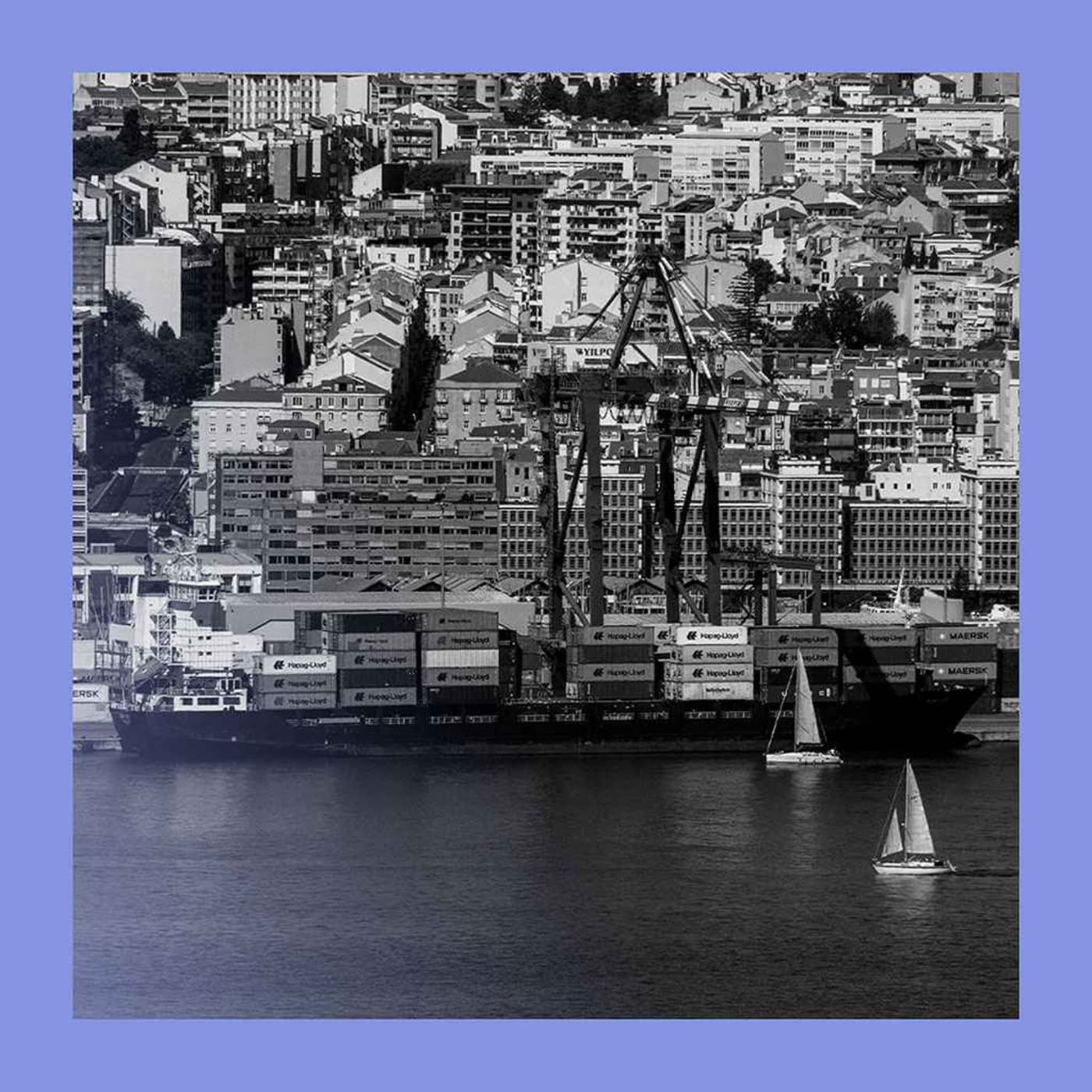
- Rankings: Portugal is named the best-performing economy, with Ireland closely behind.
- Indicators Used:
- Inflation
- Inflation breadth
- GDP growth
- Employment growth
- Share price growth
- Portugal's Success Factors:
- Strong tourism sector
- Influx of foreign residents attracted by favorable tax policies
- Recovery from the 2008 recession
- Controlled inflation and a thriving stock market
- Trends in Southern Europe:
- Four consecutive years of Southern European countries topping the rankings (Greece, Spain, and now Portugal).
Poor Performers
- Countries at the Bottom: Estonia, Finland, and Slovakia.
- Britain and Germany: Also ranked poorly but slightly better than Slovakia.
- Common Factors for Poor Performance:
- Significant exposure to energy price shocks post-Russian invasion of Ukraine.
- Employment Trends:
- Most countries maintain low unemployment rates, with only a few showing negative job growth.
Stock Market Insights
- Top Performers: The Israeli stock market performed exceptionally well.
- U.S. Market: While good, it was not the best compared to other countries.
- Portugal’s Stock Market: Gained over 20% in value, aligning with trends observed in previous years after being named top economy.
---
Cultural Insights
Dalit Cuisine
- Dalit Community: Comprising 20-25% of India's population, historically marginalized and often associated with a unique but overlooked cuisine.
- Culinary Characteristics:
- Use of less common ingredients due to historical scarcity and lack of access.
- Dishes such as blood pudding, mutton intestine, and wild green curry.
- Challenges:
- Historical stigma attached to Dalit cuisine, resulting in reluctance to embrace it even within the community.
- Ongoing discrimination and political implications surrounding food choices in the context of caste.
- Culinary Advocacy:
- Shahu Patole’s efforts to document and celebrate Dalit cuisine, facing initial backlash from his community for drawing attention to it.
- Shift towards a younger generation reconnecting with this culinary heritage.
---
Transportation in London
River Boats
- Resurgence: River taxis in London experiencing a revival, with passenger numbers nearing Victorian-era levels.
- Reasons for Popularity:
- Scenic travel experience compared to crowded underground trains.
- Post-pandemic increase in river traffic, up 23% since 2019.
- Future Developments:
- Introduction of electric ferries aimed at making river transport more environmentally friendly.
- Affordability Concerns: Current pricing structures make river travel more expensive compared to other forms of transport, raising questions about its viability as a regular commuting option.
---
Conclusion The episode showcases a comprehensive analysis of economic performance across countries in 2025, with Portugal emerging as a notable success. It also sheds light on the cultural significance of Dalit cuisine and the revitalization of London's river transport, emphasizing the interconnectedness of economic, cultural, and environmental factors in shaping global narratives.
Written by AI. May contain mistakes. Listen to the episode to check what was said.
Chapters
Tap a time to open that second in VOThe Caste System and Dalit Cuisine
1:27 to 2:05
Exploring the Dalit community's overlooked cuisine in India.
“In India, the bottom rung of the caste system is occupied by the Dalits, once called untouchables, who make up perhaps a quarter of the country.”
Global Economic Overview for 2025
2:05 to 2:51
An analysis of the world economy's performance in 2025.
“That overall, the world economy did okay in 2025, especially given all those tariff-driven recession fears.”
Top Performing Economies: Portugal and Ireland
2:51 to 4:09
Insights into why Portugal was the best performing economy of 2025.
“Our economy of the year ranking is composed of five different indicators.”
Bottom of the Economic Rankings
4:09 to 5:00
Discussion on countries that performed poorly in the economy rankings.
“So it's been an overall very successful year for Portugal.”
Impact of Energy Prices on Economies
5:00 to 5:54
How the energy price shock affected various countries' economies.
“Canada's the best performing G7 economy.”
Inflation and Its Effects on Economies
5:54 to 7:03
Understanding inflation's impact across different countries.
“On that measure, Turkey does terribly, as anyone who follows Turkish news will know.”
Job Growth and Employment Trends
7:03 to 8:13
Exploring employment trends and job growth across economies.
“So actually, 0 % inflation is not a great thing.”
Global Stock Market Performance Analysis
8:13 to 9:39
Analysis of stock market performance in 2025 and key players.
“So in a sense, the differences may seem trivial, but when you're worried about tipping points and the possibility of recession, then it does become a little bit more important.”
The Politics of Dalit Cuisine in India
14:03 to 17:40
Explore the historical and social implications of Dalit cuisine in India.
“because cow is considered very holy in certain sections of Hindu society.”
A Journey on the Thames Clippers
17:40 to 18:26
The hosts discuss their experience traveling on the Thames Clippers boat service.
“to learn about this cuisine and I'll tell you why.”
Show all 11 chapters
Historical Insights on London's River Transport
18:26 to 22:28
Learn about the history of river transport in London and its evolution over time.
“All right, we are at Canary Wharf Pier in central east-ish London.”
Transcript
Automatic transcript. May contain errors.0:00With no fees or minimums on checking accounts, it's no wonder the Capital One Bank Guy is so passionate about banking with Capital One. If he were here, he wouldn't just tell you about no fees or minimums. He'd also talk about how most Capital One cafes are open seven days a week to assist with your banking needs. Yep, even on weekends, it's pretty much all he talks about. In a good way. What's in your wallet? Terms apply. See CapitalOne.com slash bank. Capital One N.A. member FDIC. Every idea starts with a problem. Morby Parker's was simple. Glasses are too expensive. So they set out to change that.
0:37By designing glasses in-house and selling directly to customers, they're able to offer prescription eyewear that's expertly crafted and unexpectedly affordable. Warby Parker glasses are made from premium materials like impact-resistant polycarbonate and custom acetate. And they start at just$95, including prescription lenses. Get glasses made from the good stuff. Stop by a Warby Parker store near you.
1:05The Economist
1:13Hello and welcome to The Intelligence from The Economist. I'm Jason Palmer. Every weekday, we provide a fresh perspective on the events shaping your world.
1:27In India, the bottom rung of the caste system is occupied by the Dalits, once called untouchables, who make up perhaps a quarter of the country. Our correspondent says their exceptionally rich cuisine is woefully overlooked.
1:43And we take a ride on the River Thames with a bunch of other commuters. The number of people moving around by river taxi is breaking Victorian-era records, and it's even becoming a slightly more environmentally sound way to get around.
2:05First up, though.
2:13I know what you're thinking. That overall, the world economy did okay in 2025, especially given all those tariff-driven recession fears. You're thinking labor markets are pretty healthy, and stock market returns have been pretty good. But you know that average picture hides a lot of variation, and that some countries have had a far better 2025 than others. If only there were a way, you lament, to rank which countries did best. Well, fear not. Our senior economics writer, Callum Williams, is here to help.
2:51Our economy of the year ranking is composed of five different indicators. that's inflation, inflation breadth, GDP growth, employment growth, and share price growth. And what we do is we look at each of those indicators for as many different rich countries as we can find. And then we rank them all together. And we combine the rankings for each indicator. And so it produces a final score. And we use that to rank countries from best to worst. Inflation I get. What's inflation breadth? It's a bit more complicated. Inflation is an average measure. Inflation breadth is the share of goods and services in the inflation basket that are rising by more than 2 % a year.
3:32Okay, so before we pick apart the different factors, let's just get right to the money shot here. What is the best performing economy of 2025?
3:43It is Portugal, with Ireland very close behind, but Portugal is the winner. Okay, why? A few reasons. Tourism's doing very well. You've had a lot of people moving there from abroad to take advantage of favourable tax regimes. The country also continues to bounce back from the pretty big recession that happened in 2008. Inflation's been kept under control. The stock market is doing pretty well. So it's been an overall very successful year for Portugal. What's interesting is that this is actually the fourth year running in our ranking where a country in Southern Europe has come top. So last year it was Spain.
4:21The two years before that, it was Greece. So this is a very good period for Southern Europe after what was 15 years of very, very poor economic performance. Okay, so we've got the top out of the way. Let's talk about who's further down the league table. Who's had a bad 2025? Okay, so right at the bottom we have Estonia, Finland, and Slovakia. There's a few other countries that didn't do quite so well. Britain is towards the bottom, although not quite as bad as the Slovaks. Germany doesn't do very well, although it does do a bit better than it did last year. And then in the middle, there are some surprises.
4:56You might think that America would be quite high up the rankings. In fact, it's middle of the road. And ditto with Italy. Canada's the best performing G7 economy. Is there anything that ties together the countries that are towards the bottom? Yes. I think if you had to isolate one factor, it would be the energy price shock of 2022. After Russia invaded Ukraine, energy prices went through the roof. And what you can see is that countries that were highly exposed to Russian gas and Russian gas prices, those were the ones that have done badly now for quite a few years. So Estonia and Finland were again towards the bottom of our ranking in previous years, British energy prices went sort of parabolic at one stage.
5:40So yes, if I had to identify one factor, it would be that. And coming to the factors individually, give us a picture that this study reveals on inflation. So what we say in this exercise is the closer a country's inflation is to 2%, the better. On that measure, Turkey does terribly, as anyone who follows Turkish news will know. inflation remains very high there although it has come down quite a lot in recent months. Estonia is still doing badly. I think this is in part to do with the energy price shock of 2022 but there are actually quite a few other countries that are quite a long way from having inflation under control.
6:15So Britain is one example there. Inflation is kind of edging back up and the same is true of America partly to do with fiscal policy perhaps and partly to do with the effect of tariffs. after three years of inflation that was really high, it's reasonable to think that 0 % inflation, which is what Sweden is kind of dealing with at the moment, is great because prices don't rise at all. So a lot of people would think that was a perfect outcome. The issue is, and this is where economists start to worry, is that when you have 0 % inflation, you're very close to having negative inflation. And when you have negative inflation, that introduces all sorts of problems into an economy.
6:54So people start to hold back on spending because they think prices are going to come down. The real value of debt starts to go up. So that makes it more difficult to be paid debt. So you really don't want to have deflation. So actually, 0 % inflation is not a great thing. And taking in other indicators, growth, jobs? Well, growth has been pretty good in Ireland, pretty good in Portugal, indeed, pretty good across Southern Europe. It's been pretty good in Greece as well. And then employment, We're a long way from the glory days of 2021 and early 2022, where there was this recovery from the pandemic and there was a very, very strong employment growth across the rich world.
7:30There are only still, though, a few countries or really a handful of countries where employment is actually negative, where growth is negative. So on the labor market front, it's still pretty positive everywhere. Frankly, unemployment is low and jobs are still being created. Is that to say that essentially you get the same ranking if you took those factors out of your equations? I think that's probably right. There is a big difference between the job growth, say, of somewhere like Ireland, which did create quite a few jobs in 2025, and somewhere like South Korea, where job growth is negative. When you have negative job growth, then it can quite quickly spiral into a situation where the unemployment rate starts to rise quite sharply.
8:12People get nervous and start cutting back expenditure. So in a sense, the differences may seem trivial, but when you're worried about tipping points and the possibility of recession, then it does become a little bit more important. And last one, then global stock markets. How was 2025 and who did well out of it? Well, this was the most surprising one for me because the American stock market gets obviously a lot of attention, the most attention by far. It's had a good year. You might think it's had the best year of any country, but that is very far from the truth. There are many stock markets that have had a much better year than the American stock market.
8:47Israel stock market has done the best. There are some stock markets that have done really badly this year. The worst performer is Denmark. And that is at least partly due to the fact that the biggest company in Denmark, Novo Nordisk, which manufactures a lot of weight loss drugs, had an amazing 2023. But the share price has come right back down this year to really where it was before the whole Ozempic stuff began. So as a result, it's dragged down the overall Danish index. And presumably as occupier of top of the table, Portugal did pretty well too. Yes, very respectively, rose by more than 20%.
9:24And there's something interesting here. We went back and looked at what happened to the stock market of the country that we nominated economy of the year in the following year. And on average, the stock market rises by about 20%. So we are not offering any investment recommendations, but it's worth thinking about. So that is to say then that you reckon those close to the top of the table in 2025 have a good shot for 2026. That definitely is the lesson of our exercise over five years so far. Thanks very much for your time, Callum. Thanks for having me, Jason.
10:08with no fees or minimums on checking accounts. It's no wonder the Capital One bank guy is so passionate about banking with Capital One. If he were here, he wouldn't just tell you about no fees or minimums. He'd also talk about how most Capital One cafes are open seven days a week to to assist with your banking needs. Yep, even on weekends, it's pretty much all he talks about, in a good way. What's in your wallet? Terms apply. See CapitalOne.com slash bank. Capital One N.A. member FDIC. There's one place for the newest drops in wellness and performance and the biggest sale of the year. It's The Drop by GNC, curating the best of what's new, handpicked by the pros who know what works.
10:50And right now, get it all, buy one, get one 50 % off during the semi-annual LiveWell sale. From crushing workouts to leveling up your nutrition and everything in between, get the best deals on the latest innovations. All the newness is all on sale right now during the LiveWell sale on The Drop by GNC.
11:18When most people think about Indian food, they think about butter chicken, paneer tikka masala, naan, which are all tasty. But there's this whole other set of Indian cuisine that a lot of people may not have heard of. And this is called Dalit cuisine. Shailesh Chitnis is our global business writer. Dalits, for those who may not know, are what is one considered, quote-unquote, untouchables in India. These are the lower caste that were shunned from society. And they essentially have a form of cooking that is very different. It uses ingredients in very different ways to come up with dishes that, frankly, even most Indians may not know about.
11:56And it's quite tasty, in my opinion. I've eaten those dishes. And so I would say it's probably one of Indian food's best kept secrets.
12:09A lot of these dishes are cooked in villages. And the reason I mention villages, which is separate from cities, is in cities you'll have people with regular kitchens, gas stoves, things like that. whereas in villages people do still tend to in India cook on fire stoves which would be outside or inside the house.
12:27And so what you're hearing is actually sounds of a kitchen that is in a village where this food is being prepared. A group of women sitting around a fire stove. They're chopping onions, vegetables with their hands and then they mix that frequently with either meat or vegetables.
12:48I was actually introduced to this particular genre of cooking by a book by this author called Shahu Patule. He wrote a book in Marathi, which is a local language in Western India, in sometime around 2014, where he started talking about this kind of food. And really, it was the first time when somebody had actually put these dishes on paper. Now, what is interesting is, even after the book was published, it was not really very popular. Only when the book was translated from Marathi into English in 2020, did more Indians start to realize there is something like this that exists. So I got in touch with Mr.
13:20Patole and a lot of what I've learned was based on my conversations with him and he was really kind enough to actually take the time to go through his village to cook these dishes to show how it is prepared. Now the dishes Mr. Patole cooked for us were quite interesting. There was blood pudding, there was mutton and intestine, there was roasted lung and wild green curry. And so the sounds that you hear are exactly how it is prepared.
13:48Traditionally, these villages would not have access to the best cuts of meat, for example, chicken or goat.
13:58And so what they had to do is they would resort to, for example, eating cow meat. Now, in India, that's a very sensitive topic because cow is considered very holy in certain sections of Hindu society. Now, this food is very different, And the reason that is so is because of the history. Certain upper caste Hindus felt that the Dalits touch was polluting. And that essentially created this whole culture of a hierarchical society wherein villages, Dalits and other lower castes were essentially staying outside the boundaries of the village. Their houses were outside. And even the food that they ate essentially was segregated from a lot of what the upper caste Hindus would eat.
14:36After independence, discrimination on the basis of caste was outlawed. But again, that's law versus in society and that's not really kept pace. And Dalits constitute between a fifth and a quarter of India's 1.4 billion people. So this is not a small number of people we're talking about. This is a huge community and their food has gone unnoticed until now. This cuisine evolved from scarcity, them not getting access to different resources. And so what would happen is anytime a farmer's car would die, they would then look to people from these Dalit communities to take the carcass away and dispose it off for leather making or bones or whatever it is.
15:14And in the process, people in this community would then use the meat from the cow or the buffalo, whatever the case may be, to then cook their own food. That again added to this feeling of segregation or their food being somehow lower or inferior to what upper caste Hindus may eat.
15:33And so I had a very good conversation with Mr. Patole where we talked about this and he explained some of the issues not just in terms of history, but even today that he faces when he goes out and talks about these dishes and what it represents and means to his community.
15:49Surprisingly, he said that people from his community were actually initially angry with him. And the reason for that was they pointed to him saying that you're actually drawing attention to a kind of cuisine that we don't want attention to be drawn to. People may look down upon us, which, frankly, he found quite surprising because, in his opinion, this is what we eat and it should be celebrated. We should not be ashamed about it. So that was the first reaction. But gradually, he also started to see a lot of the young people from his community wanted to connect with that food and wanted to learn more about it.
16:22He had an interesting story where he tried to talk about this in the early 90s by publishing some of these recipes with local Indian newspapers. And when he sent these recipes in where they would have a section for local recipes, they just politely declined and sent it back saying we're unable to publish it. And so for almost 20 years, he didn't do anything about it. And then I think once he retired, he decided to actually just write a book himself.
16:47And while a lot of things have improved since independence and even probably since 1990, food is still a very political issue in India, particularly meat. And a lot of it has to do with the rise of the BJP, which is the current ruling government and their right-wing agenda, as I would call it, where it's kind of a return to Hindu nationalism as they perceive it. And that is tied to this notion of vegetarianism. So being a good Hindu means you're a vegetarian. And if you eat meat, particularly the quote-unquote bad kind of meat, you're not a good Hindu. It's not just an armchair discussion. it has real repercussions to people on the ground in terms of what they can eat.
17:24And it's important to remember that per calorie, in reality in India, cow meat or buffalo meat is the cheapest source of calories that you can find. And so when you're cutting off access to that, you're also cutting off access to important source of calorie to a lot of section of people who cannot afford that. For me personally, it has been quite a journey to learn about this cuisine and I'll tell you why. I grew up in India. I grew up all in many different cities in India, but I never knew about this cuisine. And so to me, it was almost like a little bit, I felt a sense of shame where I just didn't know this entire strand of cuisine that was there.
17:55And so hopefully now more people can know about it. We can celebrate it and we can bring it into regular cuisine. If you go out to a restaurant, we should be able to have these meals as well. And so that's my hope is more people start to have a conversation around this.
18:26All right, we are at Canary Wharf Pier in central east-ish London. I'm with Charlotte Kilpatrick. We are about to get on a Uber boat by Thames Clippers. We're going through the center of town on a boat. On a boat. There we are.
18:47There's a bar. You could have a pastry. You could have a beer. You could have coffee. You could have a little bag of nuts. How about a tea? This is a safety announcement. Oh, good. Please take a moment to read and familiarize yourself with the safety cards in the seat back pockets. Back in the Tudor times, this river was really clogged. So Henry VIII stepped in and introduced fair journeys along the river and regulated who was allowed to operate the boats, which created the Guild of the Watermen.
Read the full transcript
19:20We are now going under the real London Bridge, which was the first bridge across the river. Fun fact, the reason that there were not more bridges built throughout the centuries is because of the watermen who operated on the river, who lobbied together to make sure no bridges were built so they could stay in business. And then we had the underground trains and the commuter trains, which got rid of the boats. And now the boats are coming back. So fell out of fashion because different modes of transport, but is now back on the up. It is, because as you can see, we are sitting here, sipping our coffee and tea, and enjoying the lovely view of the London Eye.
19:55This is a much more enjoyable way to travel than being stuck in the tube, crowded along with lots of people on the central line. So the numbers are back up. In the mid-19th century, the steamboats carried 15 ,000 commuters per day, and now they are carrying similar numbers up and down the river. Since the pandemic in 2019, traffic has risen 23%. In 2024, the river bus service recorded 5.2 million journeys. River bus or Uber boat by Thames Clippers? Uber boat by Thames Clippers. Tell me why it's called that. So the way I heard it described is that Uber is the Uber partnership that they've had. So this is not run by Uber.
20:43This is just exposure for Uber. So they can be seen as the Uber transport company. Raw, ugly advertising. Fine. Exactly. So the crew we see here on the, and I'm not properly, Uber boat by Thames Clippers are basically modern watermen. They are indeed. Indeed, although I did ask before I got on if all of them are watermen, and it appears they are not. But there is still a waterman's guild built farther up the river in 1780 that operates to this day. So you could, in principle, still get a ride on little skiff kind of thing across the river from a waterman who has a little medallion and the whole thing.
21:20I don't know if he has a medallion, but I took a sightseeing boat with my daughter earlier last month, and it was a waterman who was giving us the full history of the river, including the price of the first regulated fare voyage, which was two pence something to travel from London to Gravesend. The boat to exit. That's the back of the boat for Tower. And you'll pick it in queue. Not audio professionals on the Clipper. The exit at the back of the boat. It's nice, it's warm, we're drinking coffee and tea, but it comes at a certain cost. It does. This same journey on the tube from Canary Wharf to Embankment is£2.90.
21:58To travel that same distance on the boat is three times as much. So instead of the old school people powered as we can hear here, this is a big gnarly marine diesel engine powering us down the river. It is, but that might soon change. They are introducing a fully electric ferry to go between Rotherhithe and Canary Wharf. This is about a push to make the river go from blue to green. I guess the question is, I don't use this as a commuter service, in largest part, because it's so expensive. The numbers might be going up, but is this really going to rival the other ways to get around this city? Probably not in the immediate future.
22:35As you mentioned, the price is a problem, and also the timing. So, it says it runs every 20 minutes, you can wait up to 30. But, back in the Victorian days, the boat ran every 4 minutes. But do you think we'll get there? Is there enough appetite, do you think, such that you could make the numbers work for frequent, cheap journeys that are this pleasant? Maybe not yet, but perhaps if people start taking the boat and see how nice it is that you can sit and drink coffee, that might turn around. Tap out the forehead.
23:11There. Sorry, that happens sometimes.
23:25That's all for this episode of The Intelligence. We'll see you back here tomorrow.
23:43With no fees or minimums on checking accounts, It's no wonder the Capital One bank guy is so passionate about banking with Capital One. If he were here, he wouldn't just tell you about no fees or minimums. He'd also talk about how most Capital One cafes are open seven days a week to assist with your banking needs. Yep, even on weekends, it's pretty much all he talks about. In a good way. What's in your wallet? Terms apply. See CapitalOne.com slash bank. Capital One N.A. Member FDIC. There's one place for the newest drops in wellness and performance and the biggest sale of the year. It's The Drop by GNC, curating the best of what's new, handpicked by the pros who know what works.
24:25And right now, get it all, buy one, get one 50 % off during the semi-annual LiveWell sale. From crushing workouts to leveling up your nutrition and everything in between, get the best deals on the latest innovations. All the newness is all on sale right now during the LiveWell sale. On the Drop by GNC.
From the publisher
Announcing the return of The Economist’s annual ranking for best performing economy. Are you ready for the big reveal? Dalit cuisine is barely visible, in India or beyond. And why London’s river boats are making a comeback.
Get a world of insights by subscribing to Economist Podcasts+. For more information about how to access Economist Podcasts+, please visit our FAQs page or watch our video explaining how to link your account.
Hosted on Acast. See acast.com/privacy for more information.