
In short
Turkey’s opposition overhaul under President Recep Tayyip Erdoğan, plus Germany’s surrogacy scandal and Gen Z career advice amid AI hiring.
Guests/backgrounds
Piotr Zilebski, Turkey correspondent (covers Turkish politics). Wendelin von Bredow, senior Germany correspondent (covers German politics). Tom Wainwright, culture correspondent (discusses Gen Z job market and careers).
Key claims
Erdoğan is creating “manageable” opposition by using courts to weaken rivals; Oscar Özel’s new party is rapidly absorbing CHP MPs and voters, but may struggle to broaden beyond CHP’s secular base and face repression. In Germany, Jens Spahn’s surrogate-parenting revelation forces his resignation, reflecting hypocrisy and public opposition to surrogacy. For Gen Z, AI screening worsens job searches; “follow your passion” advice is criticized as survivorship-biased.
Notable examples
Özel’s New Party gains at least 91 defecting CHP MPs; CHP support drops to single digits; Ekrem İmamoğlu is arrested; Spahn previously backed a full surrogacy ban; Germany coalition votes Thorsten Frei as successor; AI rejects applications via HR systems; Benjamin Todd’s 80,000 Hours and malaria-charity impact example.
Written by AI. May contain mistakes. Listen to the episode to check what was said.
Chapters
Tap a time to open that second in VOÖzel's New Party Dynamics
2:00 to 3:05
Discussion on the formation and early success of Özel's new party.
“Oscar Ozel had been leader of the Republican People's Party.”
Historical Context of CHP and Elections
3:12 to 5:28
Exploration of CHP's history and Erdogan's strategies for power.
“So before we get into the new party, let's talk about how we got where we are.”
Challenges for the New Party
5:37 to 7:20
Insight into the challenges facing Özel's new party and potential voter base.
“What is going to be more difficult is for the new party to draw in voters from the center right, to draw in some secular nationalists and some Kurdish voters.”
Future of CHP and Political Survival
7:25 to 8:22
Analysis of the CHP's decline and the prospects for effective opposition.
“Meanwhile, though, what happens to the CHP or what's left of it?”
Erdogan's Control Over Opposition
8:24 to 9:42
Discussion on Erdogan's control and the potential for opposition resurgence.
“on paper, Özel and his party have a decent chance to give Erdogan and Ack a run for their money.”
Germany's Surrogacy Scandal
10:48 to 14:00
Analysis of Jens Spahn's surrogacy scandal and its political implications.
“Spahn is now out, and it's Chancellor Friedrich Merz who's left holding the proverbial baby.”
Chancellor Merz's Cabinet Changes
14:00 to 17:08
Discussion on Chancellor Merz's recent cabinet reshuffles and their implications.
“even before this latest episode happened.”
Introduction to Job Market Challenges
17:08 to 17:24
Overview of the rising unemployment rate among new college graduates.
“Thanks very much as ever for joining us, Van der Lid.”
Navigating Career Advice in the Age of AI
17:24 to 21:45
Exploration of career advice for Gen Z graduates facing AI challenges in job applications.
“The unemployment rate for new college grads has recently surged, and some economists say businesses are now replacing entry-level jobs with artificial intelligence.”
Transcript
Automatic transcript. May contain errors.0:00With no fees or minimums on checking accounts, it's no wonder the Capital One bank guy is so passionate about banking with Capital One. If he were here, he wouldn't just tell you about no fees or minimums. He'd also talk about how most Capital One cafes are open seven days a week to assist with your banking needs. Yep, even on weekends, it's pretty much all he talks about. In a good way. What's in your wallet? Terms apply. See CapitalOne.com slash bank. Capital One N.A. Member FDIC.
0:32This intelligence podcast is sponsored by Backmarket, the leading global marketplace for refurbished tech. When the kids need phones, laptops, or tablets for school, buying refurbished tech makes sense for families trying to save money without sacrificing quality. At Backmarket, tech costs up to 50 % less compared to new. All devices have been professionally refurbished and come with a one-year warranty and 30-day return policy. Start saving money. Visit Backmarket.com or the Backmarket app to shop now.
1:05The Economist
1:12Hello and welcome to The Intelligence from The Economist. I'm Jason Palmer.
1:21Today on the show, a surrogacy scandal continues to royal German politics and traditional career advice falls short for Gen Z.
1:36First up, though.
1:45Turkey's president Recep Tayyip Erdogan has long claimed that his Justice and Development, or AK party, deserved new opposition. Well, on Friday, he got his wish.
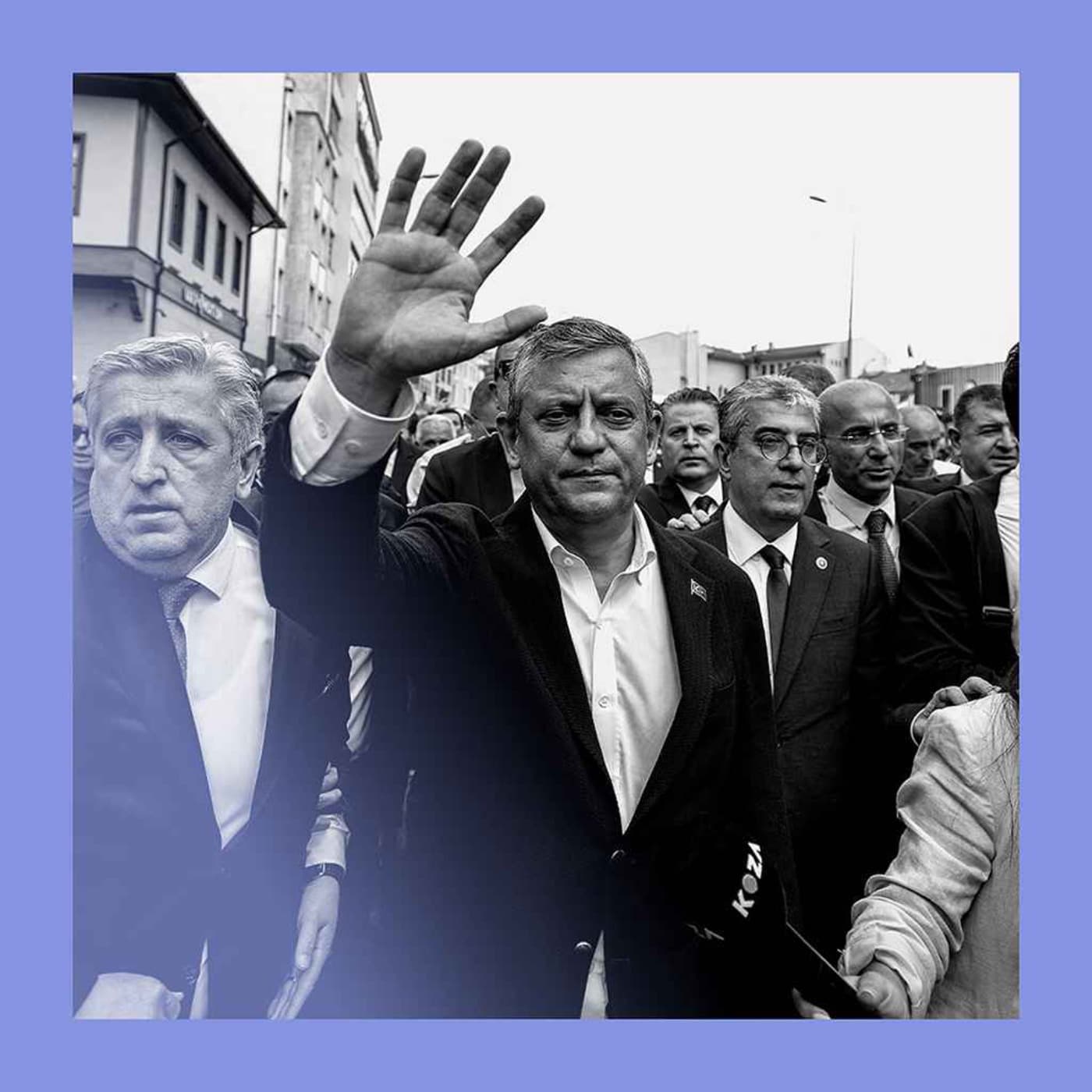
2:00Oscar Ozel had been leader of the Republican People's Party. But in May, he was shunted aside in suspicious circumstances. So he started a new party called the New Party. As an opening move, it's gone surprisingly well. Problem is, as recent history has shown again and again, Mr. Erdogan doesn't really want a credible opposition. At a stroke, Özel has redrawn Turkey's political map. Piotr Zilebski is our Turkey correspondent. At least 91 MPs from the Republican People's Party, or CHP, the party Özel headed until May, have defected to his new party already, making it the second biggest in parliament.
2:55The CHP had been Turkey's biggest opposition party since 2002. That honor now belongs to the new party. Polls suggest Özel has taken with him not only CHP grandees, but its voters as well. Some put support for the new party at over 30 % ahead of Erdogan's Justice and Development Party. So before we get into the new party, let's talk about how we got where we are. What's the backdrop in which all of this is happening? Erdogan and his Justice and Development, or AK Party, have led Turkey for the past quarter century. They swept to power in 2002, with Erdogan becoming prime minister in 2003 and president in 2014.
3:47The CHP had been, until the emergence of the new party, the country's main opposition from that very moment, meaning from 2002 onwards. Erdogan has already extended his time in office once through constitutional changes he pushed through in 2017. This time around, to give himself a shot at another term, he is widely expected to ask parliament to bring forward the coming presidential elections, officially scheduled for 2028, to next year. And the courts have already begun paving the path to another term in office for Turkey's leader or his successor, should Erdogan, who turns 73 next year, be unable to run.
4:29The man acknowledged by pollsters as the candidate best placed to take on Erdogan in the coming presidential elections, Ekrem Imamoglu, was arrested in March of last year on trumped up corruption charges and now faces roughly 2 ,300 years in prison. So in a sense, a more effective opposition party was needed. I mean, what is Mr. Ozel's plan here? Well, it remains to be seen whether the new party becomes a more effective opposition than the CHP. For now, obviously, it has positioned itself as the main opposition to Erdogan's AK party. It is critical of Erdogan's concentration of power. But it's still unclear whether the new party can become more than a clone of the CHP, the party from which it broke away.
5:22Now, the CHP is a secular social democratic party. For the new party to inherit the CHP base will probably be relatively easy. And polls suggest this has happened already. What is going to be more difficult is for the new party to draw in voters from the center right, to draw in some secular nationalists and some Kurdish voters. And it does not appear to have done so yet. Well, I guess that's Mr. Ozel's job now that he's got this new party under him and all this momentum. But what do you expect from him? Who is he? Well, Ozel is not new to politics at all, had been a longtime member of the CHP before his resignation.
6:06He took over the party in 2023 after general elections that the CHP was expected to do well in, but in which it badly underperformed. He headed the CHP for three years until May when he was deposed by court decree. His biggest achievement came in 2024 when the CHP prevailed over the AK party in local elections en route to its best result in about half a century. Now, the court that deposed Özel did so by concluding that the party congress that had elected him in 2023 had been rigged and replaced him with Kemal Kilishtaroulu, the CHP's former leader. When Özel's supporters said they would not abide by the verdict, police stormed the party's headquarters.
7:02Critics see Erdogan's fingerprints all over the court ruling. Kilis-Taroglu is seen as an opponent that Erdogan can tame. And indeed, during his previous tenure as head of the CHP, Kilis-Taroglu had guided the party to a string of defeats, including his own loss to Erdogan in the 2023 presidential elections. So Mr. Erdogan tried to eliminate a threat, and now his threat finds himself at the top of a new party that has all this momentum. Meanwhile, though, what happens to the CHP or what's left of it? Well, the CHP seems to be on its way to obscurity or to becoming something of a political zombie.
7:44Polls suggest that its support has melted down to the single digits. A new low for the CHP came on July 25th when the party held the ceremony presided over by Mr. Kilisnarolo to welcome new members. only for reporters to discover that hundreds of the people in attendance had in fact been extras who had been recruited by casting agencies and paid roughly$20 each to show up and cheer. So you wonder whether Mr. Ozel in his new guise has a chance. He hasn't shored up all the support you said he may well need and he is definitely going to face some old and some new challenges from Mr. Erdogan and the AK party.
8:24Do you think there's a shot for him? On paper, yes. on paper, Özel and his party have a decent chance to give Erdogan and Ack a run for their money. In practice, however, they do face a number of major hurdles, not least growing repression and a judiciary beholden to Erdogan. The biggest challenger to Erdogan, Ekremi Mamoru, has already been all but eliminated from the race. At least 26 other CHP mayors, as well as hundreds of other local officials and municipal workers, have been arrested in the past couple of years. There are rumors that Mansur Yavash, the mayor of Ankara and Imamogluz, the CHP's backup candidate for president, might be next.
9:13So in the short term, it seems that the opposition and the new party will be consumed less by how to prepare for elections than how to ensure their own political survival. So assuming the new party and the rest of the opposition can endure the crackdowns that are almost bound to take place over the next months, they may emerge in fighting shape or at least be poised to give Erdogan a fight. Erdogan has pruned the opposition into what he believes to be manageable shape. But the opposition may yet grow back stronger. Piotr, thank you very much for your time. And thanks for having me.
10:09With no fees or minimums on checking accounts, it's no wonder the Capital One Bank guy is so passionate about banking with Capital One. If he were here, he wouldn't just tell you about no fees or minimums. He'd also talk about how most Capital One cafes are open seven days a week to assist with your banking needs. Yep, even on weekends, it's pretty much all he talks about in a good way. What's in your wallet? Terms apply. See CapitalOne.com slash bank. Capital One N.A. Member FDIC.
10:47It's not often that a picture of a baby can lead to a government reshuffle, but that is what's going on in Germany. Jens Spahn was until recently the parliamentary leader of the governing center-right coalition, but then he casually revealed that he and his husband had become parents, having used a surrogate abroad, a practice that, as he well knows, would have been illegal in Germany. Mr. Spahn is now out, and it's Chancellor Friedrich Merz who's left holding the proverbial baby. So it caused such an outrage because of the hypocrisy, because of the double standard. Wendelin von Bredow is our senior Germany correspondent.
11:28Jens Spahn was an outspoken defender of the complete ban of surrogacy in Germany. In February, he signed this resolution advocating a complete ban of surrogacy in Germany. his baby was in the oven. This was just so obviously not what he said he should do and what's legal in Germany that it really rubbed people the wrong way. So tell me about the outcry. What are you hearing about it? Well, this story has been the talk of Berlin. I had people in the queue at the supermarket. I had people in a cafe. A friend told me she landed in Berlin coming back from Mallorca full of Germans, of course. And when the news of Jens Spahn's resignation broke, they were cheering and clapping the news, which is very unusual.
12:15These things normally don't happen. Public outrage was such that Chancellor Merz, Friedrich Merz, who had initially also, I think, underestimated how people would react. You know, after a few days of this storm, he asked Jens Spahn to resign. So initially they thought he could get away with it, but then he didn't. And so what is the general German attitude towards surrogacy at the moment? At the moment, the majority of public opinion is very much in favor of the ban, as was Jens Spahn in the past. And Germany is not alone. So surrogacy is banned in all big European Union countries. It's banned in France, Spain and Italy.
12:54But then it's also about Jens Spahn, who has been a divisive figure even before the scandal. What do you mean by that? Well, he has been for a while one of Germany's least popular politicians. He's always very close to the bottom of these popularity rankings. And there's been a series of mini scandals that he's been involved in. I mean, in 2020, he got a loan for a villa in Dahlem, which is a very posh part of Berlin, a four million euro loan from a bank where he had served on a supervisory board. And then during the pandemic, when he was health minister, he had awarded a contract for overpriced face masks to a firm employing his husband.
13:38And of course, the health ministry says that there's been no preferential treatment, but the optics is not good. And then many in Germany really don't like his MAGA connections. So Jens Spahn is friendly with Richard Grenell, who was a Burma American ambassador here in Berlin, and Peter Thiel, who is a controversial hard-right tech mogul. So all this, this whole package, made Spahn a disliked and unpopular figure even before this latest episode happened. And what is Chancellor Mertz saying about this latest episode? Well, initially, I think he was intending to hold on to Jens Spahn in his job, but then he realized the extent of the public outcry and the outrage And so he then asked him to resign.
14:26So this was not something Jens Spahn had offered to do, but he was made to go. Spahn was actually a one-time rival of Merz. He ran against Merz for the leadership of the CDU, the Christian Democratic Union. But he was useful to Marz as a very effective negotiator in the coalition talks at the beginning of the Marz government and also more recently in the talks about a big reform package, which was passed on the 1st of July. So he was useful for the chancellor, but they were never buddies. So question is, what happens now? So today, on July 29th, lawmakers from the coalition parties, so the Christian Democratic Union and the Christian Social Union, are interrupting their holiday to vote in person on Mr.
15:13Spahn's successor in Berlin. And it is Thorsten Frey, the head of the federal chancellor, who will be his replacement. But actually, Merz also took this whole episode as a reason for not a big cabinet reshuffle, but a small one. And he also, over the weekend, decided to fire his transport minister, who is very unpopular. One of the main reasons for his lack of popularity are the troubles of Deutsche Bahn, of the national railways, which is notoriously late and just doesn't work properly. But there are many things to sort out in Germany. It's the trains that are late. It's the economy that's weakening.
15:52So this was the last thing Mr. Mertz needed. I guess the last question is whether this will have a sort of lasting effect on Mr. Mertz himself. Well, it could have helped him. It could have been a chance to somehow reboot his government with a slight change of personnel, in particular in the light of the upcoming elections in eastern German states. There's one in September, a really important election in Sachsen-Anhalt, another in Mecklenburg-Vorpommern, and in both states the populist right, AFD, is in the lead. But it is actually probably hurting Mr. Mertz just because of the way he handled it.
16:31I mean, the surrogacy scandal was certainly not good for the CDU because it was such an incident of double standards and of a very unpopular politician who is still part of his team. So Chancellor Mertz could have had a fine start of the summer. He had just passed his big reform package, which was generally well received. And his last press conference before the summer was also sort of quite optimistic. But then this whole scandal erupted and the way he handled it made him even more unpopular than he was before and will probably hurt his party's chances at these very important elections in Eastern Germany in September.
17:08Thanks very much as ever for joining us, Van der Lid. It's always a pleasure, Jason.
17:24The unemployment rate for new college grads has recently surged, and some economists say businesses are now replacing entry-level jobs with artificial intelligence.
17:38Leaving university for the tundra of the job market has always been tough. But these days, artificial intelligence is making the transition even harder. Tom Wainwright is a culture correspondent at The Economist. Gen Z graduates are sending off hundreds of applications with the help of AI just to be rejected by AI-powered human resources departments Some economists have warned that AI could cause large-scale unemployment So what's Gen Z to do? Thankfully, lots of people have written new books offering advice and I read three of them so you don't have to
18:18The age-old advice goes that you should pursue your passions and follow your dreams. That's what's recommended by Bill Gurley, a Silicon Valley venture capitalist who has written a careers book called Running Down a Dream, and also by Jodie Cantor, a Pulitzer Prize-winning journalist at the New York Times, who has published a book called How to Start.
18:42While that sounds ideal, I couldn't help but feel that both authors show why successful people like them can sometimes make bad careers advisors. Jodie Cantor's success as a journalist who uncovered the Harvey Weinstein scandal is not typical. She won a Pulitzer Prize, her book was made into a Hollywood film, and so on. Bill Gurley's book cites podcasters who did what they loved and then made money from it. But despite the fact that you're listening to me on a podcast right now, it's hard to think of a better example than podcasting to illustrate how doing what you love doesn't always lead to a viable job.
19:13So while both of these books contain some good advice, I felt they both suffered from a bit of survivorship bias, which made them not totally convincing to me.
19:25A more helpful book is Benjamin Todd's 80 ,000 Hours. It's named after the amount of time you can expect to spend at work over the course of your life. Contrary to popular belief, he argues, you should not follow your dreams. For one thing, plenty of people don't actually know what they want to do when they're 21 years old. And even if they do have a great passion, it may not lead to a job. One study he cites found that nearly 90 % of Canadian students said that they loved music, the arts or sport. But these fields accounted for only about 3 % of jobs in Canada at the time. Instead, he argues that the advice to follow your passion gets it backwards.
20:04In his view, people should focus on getting really good at something, ideally something that helps other people, and they will find that passion for their work will follow from that. The question of how best to help other people is a tricky one. Benjamin Todd draws on the effective altruism movement to argue that, for instance, if you give 10 % of an average American salary to a malaria charity, you can expect that over the course of your career, you will save about 20 times more lives than if you'd become a doctor. His book tries to identify which fields of work are likely to have the most impact on the global good, from pandemic prevention to AI regulation.
20:40It's all very admirable, but I can see that it could become a bit demoralising. An emergency doctor could save more lives by working in public health, perhaps, which in turn could be less important than nuclear disarmament, and so on and so on. And if you choose to spend your career on something as frivolous as reviewing books, well, God help you. Either way, job seekers can be reassured that plenty of people take a while to find their life's work. Tony Blair, for example, was a music promoter before he became Britain's Prime Minister. And before she became one of America's most celebrated writers, Maya Angelou was a streetcar conductor.
21:17The main takeaway from all this? Give it time. And above all, don't fall for the passion trap. Instead of looking inward, get good at something that helps others, and passion will follow.
21:44That's all for this episode of The Intelligence. We'll see you back here tomorrow.
22:27Thank you. in a good way. What's in your wallet? Terms apply. See CapitalOne.com slash bank. Capital One N.A. Member FDIC.
From the publisher
An ousted former opposition leader started a new party—called the New Party. We assess its chances at the ballot box, and under President Recep Tayyip Erdogan’s thumb. A surrogacy scandal in Germany has prompted a government reshuffle, with Chancellor Friedrich Merz left holding the proverbial baby. And how traditional career advice is falling short for Gen Z.
Guests and host:
- Piotr Zalewski, Turkey correspondent
- Vendeline von Bredow, senior Germany correspondent
- Tom Wainwright, culture correspondent
- Jason Palmer, co-host of “The Intelligence”
Topics covered:
- Turkish politics, New Party, Recep Tayyip Erdogan
- German politics, Jens Spahn, Friedrich Merz
- Gen Z, careers
Listen to what matters most, from global politics and business to science and technology—subscribe to The Economist.
Hosted on Acast. See acast.com/privacy for more information.