In short
The episode covers three linked stories: how climate change—especially heatwaves—harms maternal and infant health; how Marks & Spencer (M&S) has tried to become “cool again”; and why Indian cities’ streets are chaotic and how some places are redesigning them.
Guests
Rachel Dobbs, Economist environment editor; Avantika Chilkoti, Economist global business correspondent; Leo Marani, Economist India correspondent (based in Mumbai/Bombay).
Key claims
heat exposure raises preterm birth risk (meta-analysis: ~4% per 1°C; ~26% during heatwaves), with preterm birth causing ~40% of neonatal mortality and also linked to stillbirth, low birth weight, birth defects, and preeclampsia. Mechanism research is underway in Pakistan with 6,000 pregnant women using temperature sensors and placenta sampling. M&S turnaround: CEO Stuart Machen (from 2022) cut food prices/assortment and upgraded fashion/home/beauty; a Good Friday cyberattack took systems offline, costing an estimated £300m operating profit. India streets: widening roads without removing street obstacles increases pedestrian deaths and emissions; examples include Andhra Pradesh bypasses/heavy-vehicle curbs and Bangalore’s rebuilt street system with wide pavements and signage.
Written by AI. May contain mistakes. Listen to the episode to check what was said.
Chapters
Tap a time to open that second in VOOverview of the Episode
0:29 to 0:40
The episode discusses the impact of climate change on health, especially maternal health.
Overview of the Episode
0:55 to 1:48
The episode discusses the impact of climate change on health, especially maternal health.
“Marks & Spencers is as British as tea and the Queen.”
The Health Risks of Heat
1:48 to 3:05
Exploration of how increased heat from climate change affects health, specifically for pregnant women.
“Humans have to maintain a pretty constant temperature to function properly.”
Preterm Birth and Heat Exposure
3:05 to 4:51
Discusses the correlation between heat exposure and preterm births, including statistics.
“And what are the consequences of preterm birth?”
Research Challenges
4:51 to 5:36
Challenges in researching the biological mechanisms linking heat and pregnancy outcomes.
“And you also have to track, you know, the temperatures that they are exposed to the whole time.”
Case Study in Pakistan
5:36 to 7:40
Details the logistics and challenges of a major study on heat exposure effects on pregnant women in Pakistan.
“which means the people in the poorest countries.”
Global Context of Heat Effects
7:40 to 8:15
Examines how heat affects pregnant women across various regions and existing inequalities.
“You also don't have a lot of options to be out of the heat.”
Future Projections
8:15 to 9:42
Discusses projections on preterm births and child mortality due to climate change.
“There are no unified global statistics on this because in part governments do not track heat and health outcomes.”
M&S's Cyber Attack and Its Impact
14:00 to 17:30
Learn about the implications of a cyber attack on M&S and its recovery efforts.
“one look at it, found loads and loads of products being repeated, you know, like far too many types of black trousers.”
The Chaos of Indian Streets
17:30 to 23:19
Explore the unique challenges of traffic and urban planning in Indian cities.
“Every time I record for this podcast, the producers in London complain that the sounds coming into my study are making their lives very difficult.”
Transcript
Automatic transcript. May contain errors.0:00This intelligence podcast is sponsored by Backmarket, the leading global marketplace for refurbished tech. When the kids need phones, laptops, or tablets for school, buying refurbished tech makes sense for families trying to save money without sacrificing quality. At Backmarket, tech costs up to 50 % less compared to new. All devices have been professionally refurbished and come with a one-year warranty and 30-day return policy. Start saving money. Visit Backmarket.com or the Backmarket app to shop now.
0:40Hello, and welcome to The Intelligence from The Economist. I'm Rosie Bloor. And I'm Jason Palmer. Every weekday, we provide a fresh perspective on the events shaping your world.
0:55Marks & Spencers is as British as tea and the Queen. But like some other of the UK's iconic institutions, it's had its share of troubles along the way. Our correspondent ventures in for a Percy pig. And India's roads are just jam-packed. But not only with cars. In fact, not even mostly cars. Our correspondent takes us into the filthy cacophony to examine some efforts at making streets a bit more navigable.
1:31But first...
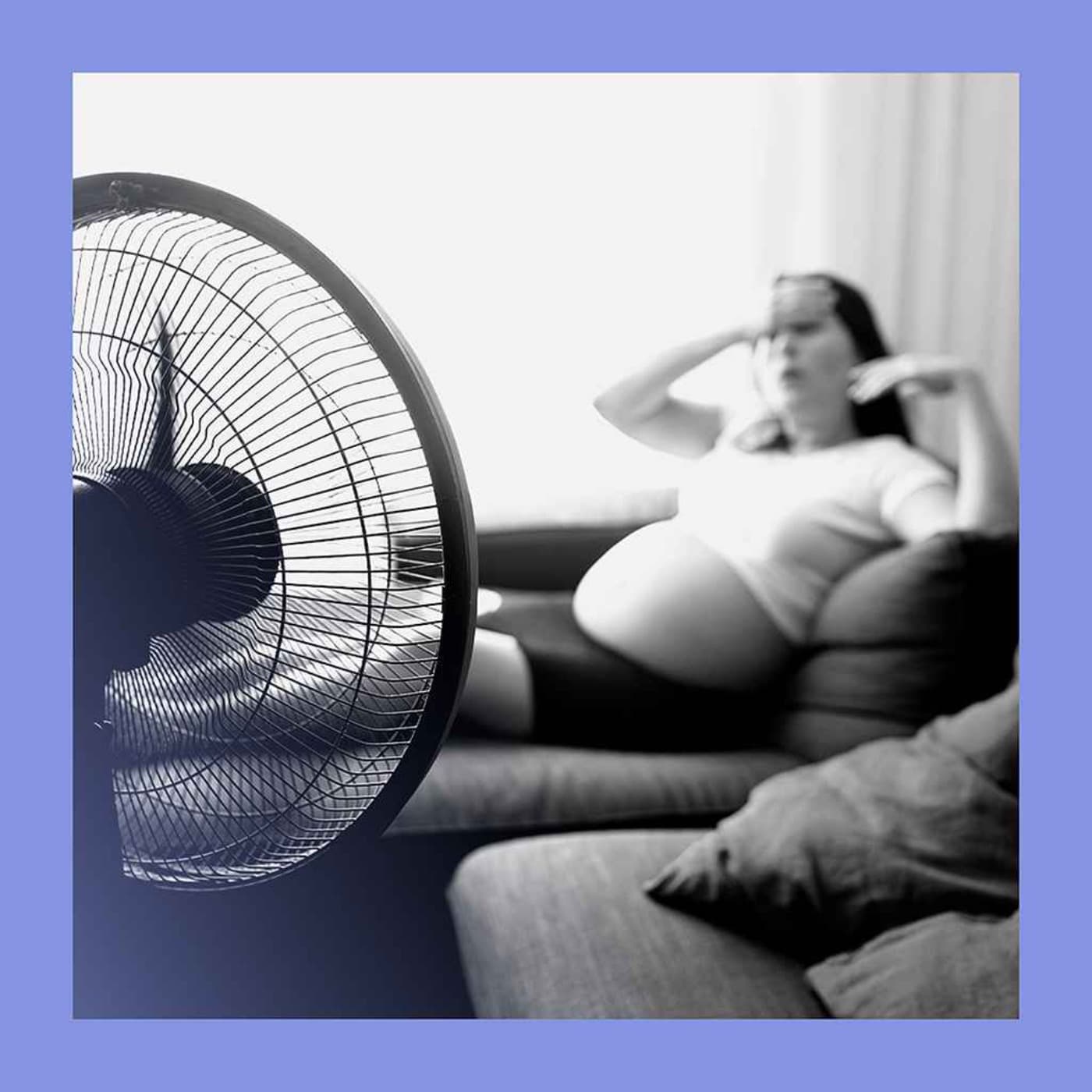
1:44It's pretty clear that climate change is bad for health. Take the heat. Humans have to maintain a pretty constant temperature to function properly. The hotter it gets, the harder the body has to work to cool itself down. If you're healthy, that puts your body under undue strain. For people facing chronic conditions, it can be fatal.
2:09Floods too wreck sanitation systems. Droughts limit access to clean water. Hotter temperatures expand the reach of disease-carrying vectors like mosquitoes. But research shows that climate change might particularly affect another group. There's now evidence from every country in the world that climate change, and particularly heat, is having negative impacts on the health of pregnant women. and their babies. Rachel Dobbs is our environment editor. Research is currently underway to find out why that is and how to alleviate it. And how much research is there into this? The evidence base now is pretty unequivocal.
2:48There have been large studies in every country in the world. They started in rich countries that could afford to do that kind of research, but they have now been done to a lesser degree everywhere else. those studies are almost always looking at just the links between high temperatures and certain birth outcomes the one that has been studied the most is preterm birth which is birth before 37 weeks of pregnancy and the first substantive study on that was in california in 2010 and they found a significant relationship between temperatures that women were exposed to and how early they gave birth and a meta-analysis last year of 198 studies across 66 different countries so lots of different contexts found on average that for every one degree increase in the heat that a woman is exposed to normally in the month before giving birth although some differed slightly the odds of her having a preterm birth go up by four percent and if she is in a heat wave they go up by 26 percent and it's useful to remember also that those heat waves are defined as a heat wave for that location because a heat wave in Sweden is not going to be the same as a heat wave in Senegal but it's about the heat that your body is used to.
3:57And what are the consequences of preterm birth? So preterm birth is one of the leading causes of neonatal mortality. So the death of the baby within the first 28 days of life in the world, the estimates for that are that it causes about 40%. And even the babies that survive have a much, much higher risk of having a whole range of kind of developmental disorders, sometimes heart problems, sometimes kidney problems. So A, that's obviously devastating for them, that kind of cost also ripples across economies. And beyond preterm birth, high temperatures are also associated with stillbirths, with low birth weight, with some birth defects, and also with hypertensive disorders like preeclampsia in the mother, which can be fatal.
4:41So researchers have established a definite connection between heat and risks in pregnancy to the child and to the mother? Yes, they have. But what they don't have yet is an understanding of the biological mechanisms by which that happens because also all of these studies are based just on the statistics of temperatures and statistics of stuff like preterm birth and it's really important to know why this kind of heat exposure affects pregnancies in this way because then you can actually start tailoring your interventions in response but researching that is incredibly difficult because you have to monitor women all throughout their pregnancies you have to track very carefully both how their health changes and how the health of the baby changes.
5:23And you also have to track, you know, the temperatures that they are exposed to the whole time. And for this kind of work to really make a difference, it also has to be done in the places and with the people who are being most affected at the moment, which means the people in the poorest countries. I was in Pakistan where the largest scale study into this kind of biological mechanism is going on. And the logistics were mind-boggling. So they're going to have 6 ,000 pregnant women in this cohort by the end. They've only just started, so they've currently got 400. They are from three different locations.
5:57So one is the kind of outskirts of Karachi. One is Mitari, which is a sort of rural agricultural village setting. And then the last one is Miti, which is a city in the desert. And for each of those women that they have currently got, they have to find them before their 13th week of pregnancy, which is difficult given that a lot of them would not normally disclose it or seek medical attention at that point. And the way that they do that is that there are sort of government and NGO funded lady health workers, they're called, who will sort of check in on villages and talk to women about their health.
6:27Once they've done that, you know, they have to persuade them to come in for incredibly detailed sonograms and blood tests, despite quite pervasive myths that detailed scans are harmful to the baby. a lot of these women are not allowed to go places on their own and so they have to have their transport organized to and from everything also with a chaperone but you're organizing all of this in context where you don't have phone signal a lot of the time or you're with people who do not have phones they have to wear a temperature sensor 24 7 there's another subset that has to have a sample of their placenta collected 30 minutes after birth so you know you're organizing all of this and it will take five years, but the kind of findings from this size of study should be really, really helpful at working out exactly at which points this heat exposure may result in a bad outcome.
7:18And when we're talking about heat affecting pregnant women, are we just talking about really hot places like Pakistan? No, we're not at all. And as I said earlier, it's to do with the amount of heat that your body is acclimatised to. That said, it is worse currently in the hottest, poorest places because A, temperatures are really very high, and B, you don't have a lot of access to healthcare. You also don't have a lot of options to be out of the heat. You know, in places like the Gambia, women are 50 % of the agricultural workforce and they will work throughout their entire pregnancies. And they're really, really exposed.
7:52But you see this in every country in the world. And you also, within countries, see it being worse along the lines of existing inequalities. So in the Californian study in 2010, the risk of a preterm birth went up more than double for black mothers than for white mothers, even if they were living in the same area and were exposed to the same kind of temperatures. So how bad could it get? There are no unified global statistics on this because in part governments do not track heat and health outcomes. But there is modelling that has been done in several countries. And so, for example, in China, they think that over 13 ,000 preterm births a year are caused by heat waves and that at least a quarter of them over the last couple of decades has been caused by climate change.
8:41And then that starts rising and it's about a third after about 2015. And then that is obviously going to rise as temperatures increase. and some modelling that was recently done by the London School of Hygiene and Tropical Medicine looked at Kenya and South Africa in a factual scenario, so what we actually have now, and a counterfactual scenario in what would happen in a world that hit net zero by 2050 and were at 1.5 degrees of temperature rise at the end of the century, both of which we are so far off track to do. In both Kenya and South Africa, even if we cut emissions so rapidly, you would A, see child mortality reducing much more slowly than it otherwise would, and you would also see preterm births rising by at least a fifth.
9:23And then in the modelling for the trajectory that we're actually on, those numbers go up to preterm births rising by 50%. So it is then really, really significant. And often when we talk about climate change, we're thinking about impacts that will happen in the future, possibly for other generations. They can seem kind of vague and far off. This is something that we can see now with devastating effects. Rachel, thank you very much. Thank you, Rosie.
10:05Oh my gosh, I love M &S. Percy Pigs. I like the crispy... In Britain, people talk about the National Health Service, the NHS, as this cradle-to-grave organisation that really sticks with you through life. And to me, actually, M &S is that organisation. Avantika Chilkoti is our global business correspondent. One of the first times people interact with M &S is as soon as they come out of the womb. It's quite normal to buy sensibly priced, decent baby wear in M &S. and then birthday cakes when you're at school. You really want the Colin the Caterpillar chocolate cake. It's pretty iconic. I like Colin the Caterpillar.
10:44That's the only chocolate cake I like, Colin the Caterpillar. Want a quick treat, maybe a strawberry sweet, a Percy Pig from M &S. And the one in Battersea, I cycle. I will go out of my way to cycle and look at all the discounted stuff. And then I'd say there's a few decades when British people don't really go to M &S. You might stop for a sandwich or a deli deal at a train station or an airport. Or a salad. and a smoothie and it's all really good. The chicken Caesar wrap's really good. Everything else way overpriced. Then when you're a grandmother, I think historically we've thought sensible jeans and stretchy waists and not too sexy underwear, M &S is the place to go.
11:22So really cradle to grave, M &S sticks with you as a British person. So Avantika, as you say, Marks and Spencers is an iconic British institution. How's it doing? So M &S, until a few years ago, wasn't doing very well. So you think about Brexit, which really made it difficult to get products in and out of the UK. And then you think about COVID-19 pandemic, where you had lockdowns. And around 2021, 2022, M &S was doing badly. Sales were coming down. This was a business that a lot of us thought of the food as a bit too expensive, if quite nice, and the clothes as pretty dated. The estate of M &S was a mess.
12:05You had all of these stores in completely the wrong place, in city centres that were emptying out. And they were pretty depressing. I mean, even now, the M &S near my house in Islington, it's just not a fun place to go. It's pretty bleak. It looks tired. It wasn't a business that was doing well. Britain's also not immune from having institutions that are in decline. But M &S has seen things improve recently, right? So the last financial report that came out earlier this year, you had sales growing 6 % year on year, which given the economic climate for a retailer is good. The profit before tax and all these things they adjust for was up 22%.
12:43And the stock was rallying. It was the highest it's been pretty much since Brexit. And suddenly people that I wouldn't expect to be wearing M &S clothing, I saw wearing M &S clothing. So on Instagram, these fashion bloggers were suddenly wearing M &S clothes, M &S dresses. You'd see viral food products on social media, hot honey pizza and pistachio Dubai chocolate by M &S. And you're really getting the sense that M &S is somehow becoming cool again. So how's the company found its way back into our hearts? The first thing that they really had to change was that product offering. And the new CEO or The current CEO, Stuart Machen, came in in 2022, and that was really his focus.
13:26In food, the first thing they tried to do was reduce prices, make them more comparable to other British grocers, and completely change the assortment. I was probably the typical mid-30s person who saw this as a place to pick up snacks but not do a full food shop. Now they're doing big family-sized packs of food like pasta and fruit. They're trying to sell themselves as a place where you can do a full food shop. To the contrary, they needed to change their fashion, home and beauty offering in completely the opposite direction. So they actually made it a little bit more expensive. In 2022, a woman called Maddie Evans took over the women's wear division and she took one look at it, found loads and loads of products being repeated, you know, like far too many types of black trousers.
14:11Then she found some products that she frankly seemed to think were hideous. There was a pair of boots she was telling me about that she says are shaped like a Cornish pasty. I think they were sort of ruched boots and she just got rid of them. But for the customer who was buying them, created a new version of it. And so they just amped up their entire product offering into a way that it became attractive again. But Afantica, people have been saying they were going to do that at M &S for decades. So what have they actually done? I think the change of leadership is a very big deal. So Stuart Machen, a CEO, comes in.
14:43He's working with a chairman called Archie Norman, who's been trying to do this for a while. They've just rolled it out. They've spent money on it. They've basically invested, which is the really big thing that needed to change. But recently they had a huge setback. Everyone in Britain will know that there was this enormous cyber attack on M &S. Yeah, this was the real shocker. The CEO told me about it. Good Friday, he gets a phone call saying they think that they're under attack. All of their systems had to be taken offline, which means no one could order M &S online for a very long time, for quite a few weeks.
15:16their internal systems weren't working. If the warehouse can't communicate with the stores about stock, you end up with a ton of food waste. The company now estimates they have lost 300 million pounds in operating profits, which is a big chunk of the operating profits last year, for example. It's going to hurt the business. I think the fact that the stock is even recovering, the fact that investors still overweight M &S really says something, the fact that they've survived that cyber attack. So how does M &S now sit amid the pantheon of other British stores then? The cyber attack really brought this to light because one thing I kept hearing from analysts and customers was M &S is not the only retailer that suffered from this.
15:56Harrods, massive luxury department store, also faced a cyber attack. Archie Norman, the chairman, spoke in front of Parliament this year and he mentioned there's actually two other retailers that he has reason to believe suffered from cyber attacks and just didn't tell the public. It's actually an industry wide problem. It's just not a good time to be a retailer. You've got really high inflation, you've got trade wars that are completely confusing supply chains. At the same time, there's a bunch of policies that Labour government has brought in that are adding to their costs. So their wage costs have gone up.
16:26There's recycling rules that have been hanging about for a while that are going to also add to their costs. This is not a straightforward turnaround that is definitely just going to continue. The economy is going to make this pretty difficult for M &S, even if a cyber attack didn't. And Avantika, of course, you've already told us you're not at your M &S moment, but what's the last thing you bought there? Actually, when I went into the store, they were telling me about this strawberries and cream sandwich. Unfortunately, it's now taken off the shelves, I'm sorry to tell you, but I did get a strawberry and cream sandwich.
16:57It was around Wimbledon. And was it any good? I actually took one bite and left it in the business desk's kitchen and nobody else ate any more of it. I mean, a sandwich with one bite out of it, come on. Avantika. Thank you so much. Thanks for having me.
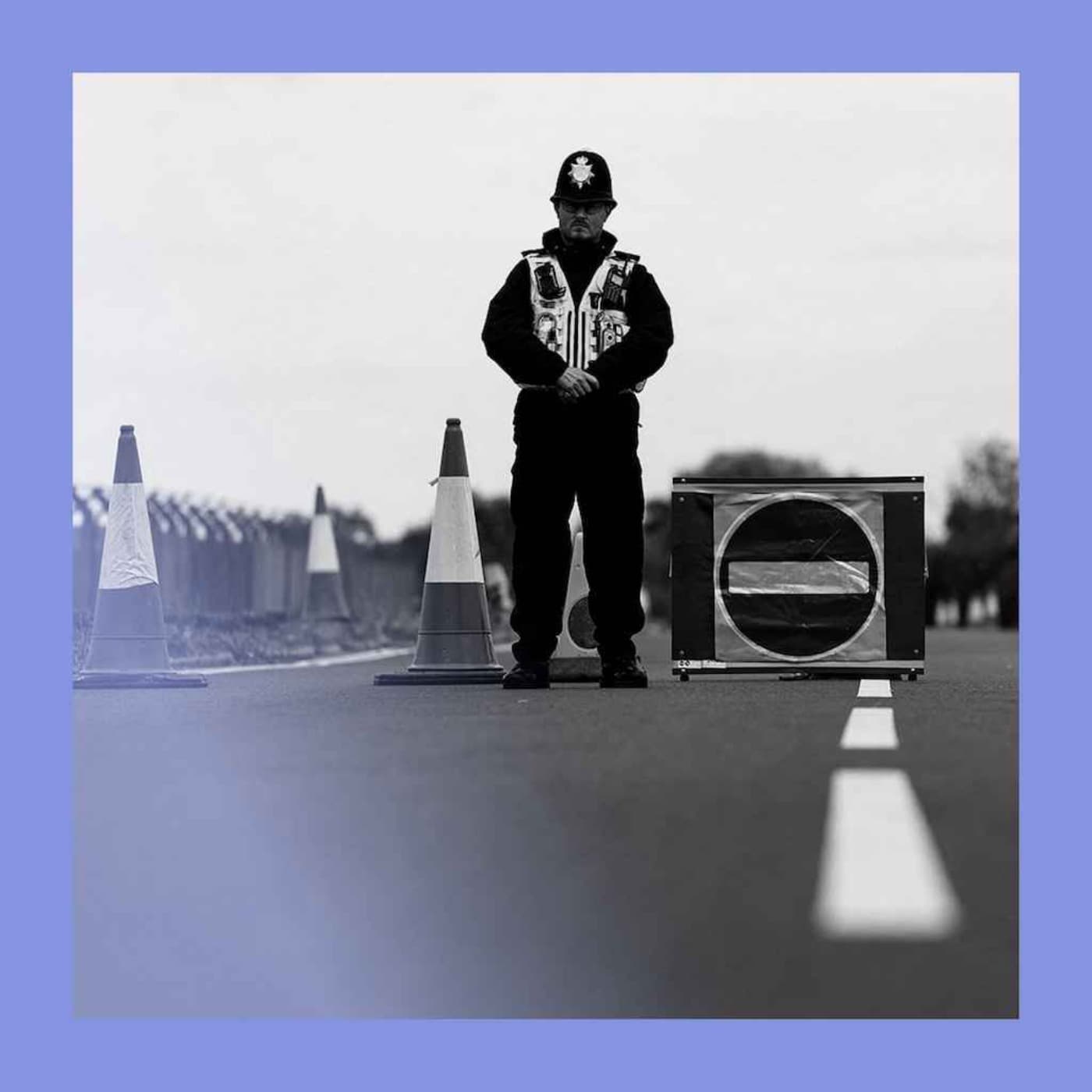
17:30Every time I record for this podcast, the producers in London complain that the sounds coming into my study are making their lives very difficult. They say that there's a lot of honking and traffic. Nonetheless, there is a lot of noise in Bombay, as there is in India. Leo Marani is an India correspondent for The Economist and is based in Mumbai, which he still insists on calling Bombay. The root of the problem is chaos on the streets of India. So now I want you to imagine a street, a normal street. It's got some cars, some pedestrians perhaps, maybe a heavy vehicle or two.
18:12Now I want you to imagine an Indian street to which you will have to add the following items. Lots of pedestrians, street vendors, utility boxes, construction debris, abandoned roadworks, piles of garbage. Trees, trees just in the middle of the road for no apparent reason. Cows, dogs, places of worship. All sorts of things. And Indian street is not a carriageway. It is not dedicated to the automobile. So in thinking about Indian streets, what you want to imagine is gridlock. Not just a gridlock of cars. In fact, grid is probably the wrong word. But a gridlock of everything that is possible in an Indian city.
18:48And the reason this happens is that a lot of it is self-inflicted. Indian streets over the past, let's say, a decade or two decades have seen an influx of automobiles. in order to ease congestion, what city authorities tend to do is they widen roads. But when they widen the roads, they leave all the other stuff that exists on any street anywhere in the world, such as trees and utility boxes and so on, just where it was. They remove the pavements, which means pedestrians have nowhere to walk, and therefore they also end up on the road. So instead of having a smooth flow of traffic, you have a flow of traffic that's a bit like an obstacle course, where the cars are constantly dodging around all of these items.
19:26And this is not just bad for cars and drivers for whom I have very little sympathy. It's bad for me. It increases the incidence of traffic accidents and collisions. India has some of the highest rates of pedestrian deaths in the world. And it's bad for everybody else in the city because the constant stopping and starting leads to much greater emissions. Now let's say someone decided to fix this problem, unlikely as that may be. How would they go about it? There are a few places in India where officials have recognized that this is, let's face it, nuts. So one method is to just look at the busiest, most congested and indeed most important roads.
20:09So in the southern state of Andhra Pradesh, they're working on a project where they're looking at these arterial roads that run through the middle of the city, which are in fact highways. And they're trying various things. One is to build bypasses so that the traffic that is actually not even trying to get into the city just goes around the city. The other thing is they're prohibiting heavy vehicles from using the roads at the busiest times of day. A third is they're rationalizing parking. Oh, I forgot to mention parked cars, another big cause of congestion. And they're hoping that by doing all of these things, not only will they smooth the flow of traffic, but also reduce emissions.
20:43In fact, this whole project is set up as clean air zones rather than traffic easing zones. Another place they're trying this is in Bangalore, the tech capital of India. There, about a decade ago, what they did was in the central and nicest part of Bangalore, they completely redid their street system. So they dug everything up, they installed these utility cables and whatever, and then they installed nice, big, wide pavements, contrary to what every other authority in India does. They've added some signage, they've added lane markings, all sorts of stuff. And the result has been skyrocketing rates of satisfaction from pedestrians and drivers, much greater numbers of pedestrians, and just much better living for everybody who's in that part of town.
21:28Why, I sometimes, or in fact often wonder, are all cities not doing this? Specifically, why is Bombay, where I live, not doing this? Many reasons, as I have discovered. The first is, it costs money. Easy enough to understand, I won't explain that. The second is the way Indian cities are run. And they're mostly run by unelected bureaucrats who serve for a few years, don't see it as a particularly prestigious posting, and then move on to something else. They have a little connection to the city, but more importantly, they're not really accountable to the citizens of the city. The real power resides at the level of the state.
22:03The politicians at the state level, who do they care about? They care about the entire electorate in the state. And because more people live outside Bombay than live in Bombay, that's where they're focused on. And then there's a third issue here, which is the actual drivers themselves. drivers in India constitute a tiny little proportion of the population. But because they can afford cars in a relatively poor country, they have outsized power, outsized economic power and outsized political power. So even in cities that have tried to do some sensible things, like introduce bus lanes, for instance, or stricter parking rules and fines, or cycle paths, all of these have had to be rolled back.
22:41Because the drivers are convinced that they need more road space, which brings us back to the root of the problem, instead of more rational road space, which would actually help solve some of these things, make my life better, make everybody else's life better, and in fact, make my producers' lives in London better, which I suppose is the really important thing here.
23:16That's all for this episode of The Intelligence. We'll see you back here tomorrow.
From the publisher
There is a growing awareness of how high temperatures affect expectant mothers and their babies. We look at the evidence for a climate-change effect that is already manifest. Marks and Spencer, a beloved retail chain, is emerging from sales slumps and recovering handily from a cyber-attack. And the policy moves to address India’s notoriously gridlocked roads.
Get a world of insights by subscribing to Economist Podcasts+. For more information about how to access Economist Podcasts+, please visit our FAQs page or watch our video explaining how to link your account.
Hosted on Acast. See acast.com/privacy for more information.