
In short
The episode links US vaccine politics to global health risk, then pivots to UK supercomputing and Mexico’s growing Japanese/Korean cultural influence.
Guests/backgrounds
Natasha Loda, The Economist health editor, explains mRNA vaccine science and the implications of US funding cuts. Georgia Banjo, Britain correspondent, reports from Isambard AI in Bristol with Prof Simon McIntosh-Smith (Bristol University). Sarah Burke, Mexico bureau chief, interviews Mexican fans Adrián and Alejandra at a Korean-themed café.
Key claims
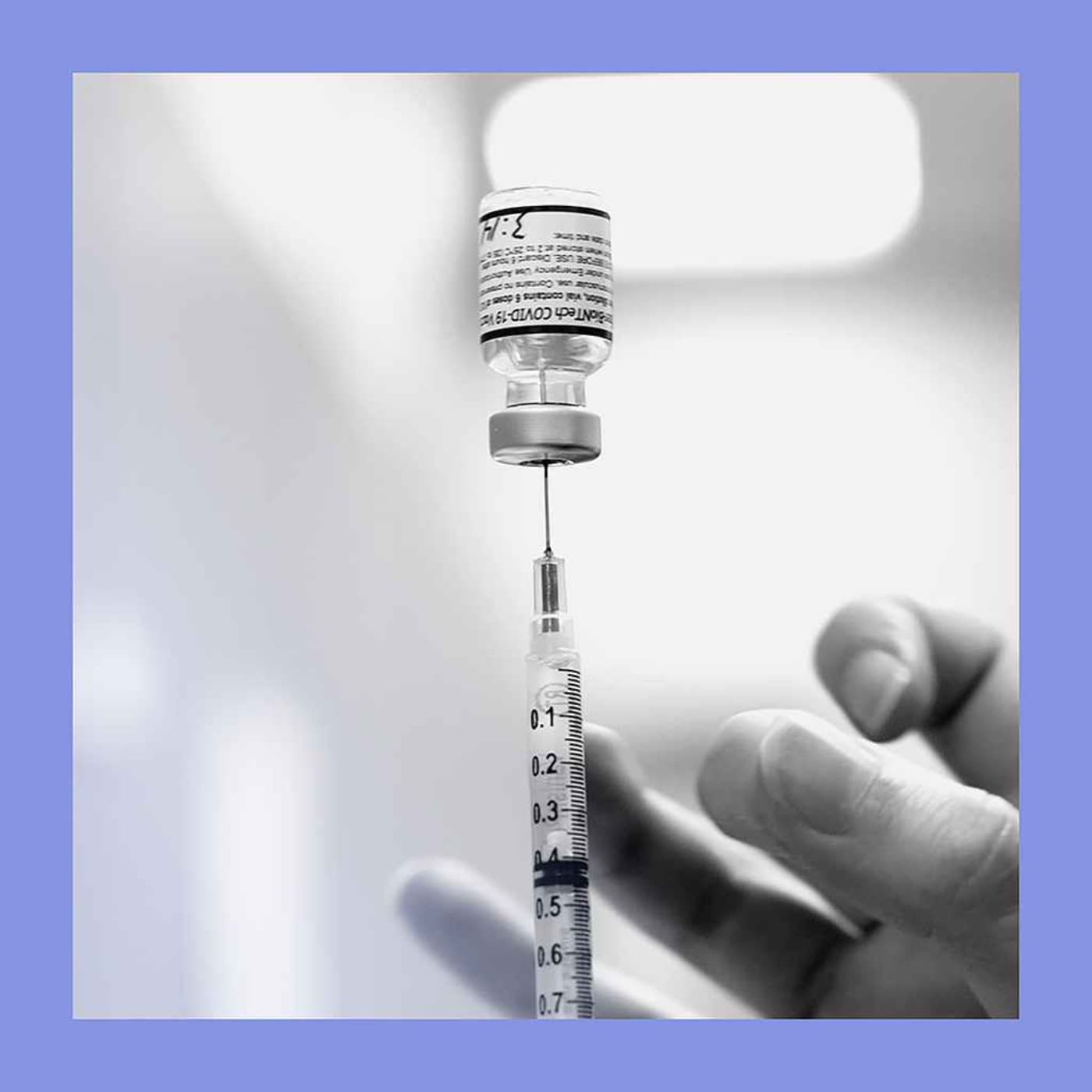
RFK Jr. (health secretary) is cutting mRNA vaccine funding, including Moderna bird-flu/pandemic contracts, risking US preparedness and potentially global health. mRNA vaccines are described as temporary “biological messages” that prompt cells to make target proteins.
Notable examples
bird-flu mRNA work at Moderna; Isambard AI uses (life sciences, drug design, wearable-camera video for home-robot training); Mexico City BTS Army fan culture and rising Korean tourism/language courses.
Written by AI. May contain mistakes. Listen to the episode to check what was said.
Chapters
Tap a time to open that second in VOLeadership Changes at CDC
1:28 to 2:16
Discussion on the chaos at the CDC after the firing of Dr. Susan Minares.
“Now our correspondent visits a car park in Bristol to see Britain's newest and biggest supercomputer.”
Vaccine Funding Cuts and Their Implications
2:16 to 3:47
Exploring the implications of funding cuts to mRNA vaccines and public health.
“were thrown into chaos after the White House said its boss, Dr.”
Understanding mRNA Vaccines
3:47 to 5:48
Explanation of mRNA vaccines and their potential for future medicine.
“directed towards mRNA vaccines in particular.”
RFK Jr.'s Opposition to Vaccines
5:48 to 8:16
Examining RFK Jr.'s views on vaccines and their misinformation.
“and it's kind of entrenched itself within a certain portion, I would say, of the right.”
Impact of Funding Cuts on Research
8:16 to 9:51
Analyzing the long-term effects of cuts on mRNA vaccine research and public health.
“that doesn't stop the science still being correct in having this potential.”
The Power of Isambard AI in Science
14:00 to 16:52
Learn how Isambard AI enhances research in areas like dairy farming and sound absorption.
“Until Isambard AI Day, they weren't able to process them.”
Cultural Exchange: Mexico's Love for K-Pop and Anime
16:52 to 19:31
Discover the growing interest in Korean and Japanese culture in Mexico.
“There were people in there, both men and women, who were sipping these extraordinarily coloured jelly sodas with bits of tapioca in them.”
Historical Influences: Japan and South Korea in Mexico
19:31 to 22:31
Examine the historical and economic factors behind Japan and South Korea's cultural influence in Mexico.
“In 2024, 150 ,000 people flew there from Mexico.”
Conclusion and Episode Wrap-Up
22:31 to 24:05
Wrap up of the episode with thanks and a teaser for the next episode.
“But for the moment, it really is about this boom of interest in Japan and South Korea.”
Transcript
Automatic transcript. May contain errors.0:00Did you know the SIBO VIX Index at its core is a measure of market uncertainty? The VIX index could be rising because of bullish positioning in the underlying SIBO SBX index options market due to fear of missing out rather than fear of downside. Download our white paper at SIBO.com slash VIX insight. There are risks associated with SIBO company products. Review the disclosures and disclaimers at SIBO.com slash US underscore disclaimers.
0:32This intelligence podcast is sponsored by Backmarket, the leading global marketplace for refurbished tech. When the kids need phones, laptops, or tablets for school, buying refurbished tech makes sense for families trying to save money without sacrificing quality. At Backmarket, tech costs up to 50 % less compared to new. All devices have been professionally refurbished and come with a one-year warranty and 30-day return policy. Start saving money. Visit Backmarket.com or the Backmarket app to shop now.
1:05The Economist
1:12Hello and welcome to The Intelligence from The Economist. I'm your host, Rosie Blore. Every weekday, we provide a fresh perspective on the events shaping your world.
1:27Britain has some of the world's top AI talent, but it's been slower to develop the ultra-fast machines those engineers need. Now our correspondent visits a car park in Bristol to see Britain's newest and biggest supercomputer. And we hear a lot about growing Chinese influence in Mexico. Though that's true when it comes to economic ties, in cultural terms it's Japan and South Korea that have caught the imagination of ordinary Mexicans.
2:05But first...
2:12Last week, America's Centers for Disease Control and Prevention were thrown into chaos after the White House said its boss, Dr. Susan Minares, had been fired less than a month into the job. The secretary asked her to resign. She said she would, and then she said she wouldn't. So the president fired her, which he has every right to do. Her failing was apparently that she didn't back the administration's policy on vaccines. The outgoing CDC chief accused RFK Jr., the health secretary, of weaponizing public health. He is a well-known vaccine skeptic, in particular the use of mRNA vaccines that have the potential to fight a large swathe of diseases.
2:51Several other senior leaders of the public health body have since resigned. and the implications could reach far beyond America. The news from the CDC with the firing of Director Susan Monerais is really just the latest in an ongoing series of battles between RFK Jr., the health secretary in the United States, and vaccines, which he has long been a sceptic over. Natasha Loda is our health editor. In the centre of disease control is not just the loss of the director. There have been a series of large-scale job losses. There's been the complete replacement of a key vaccine committee on immunisation practices.
3:39And lastly, there have been really most troublingly a series of statements and funding cuts directed towards mRNA vaccines in particular. these cuts to the funding of these vaccines are now widely seen as not only damaging to the research but also as a threat to health in America and potentially even global health itself. Natasha there's a lot to unpick there we obviously heard a lot about mRNA vaccines during the pandemic just remind us what they are. So like all vaccines you are trying to present a little broken bit of the virus into the body so that it recognizes it in future and is prepared to deal with an infection.
4:24And the mRNA vaccines are special because what they're doing is they're introducing a sort of biological message into your cells, which tell your protein factories to manufacture the bit of the virus that you want the body to see. And then it disappears. It's not permanent in the cell at all. And so that's it. You can design a vaccine based on a message quite easily and they're easier to make. And the brilliant thing about these messages is that the potential for adding to them or changing these messages means that you could create any kind of medicine that you can imagine. A lot of people think that mRNA is essentially the future of personalized medicines.
5:08And so by funding mRNA vaccines and certainly funding them as pandemic vaccines, a lot of countries believe that they're building the infrastructure for what is in future a sort of whole industry of personalized medicines. And that's why people really get excited about them. It's kind of like this is the technology of the future. So what does RFK Jr. have against these vaccines? RFK Jr. doesn't like vaccines in general. and there's a lot of misinformation going around about mRNA vaccines, some of which is that they killed or harmed millions of people, which is nonsense. But as is the case these days, health misinformation is rife and it's kind of entrenched itself within a certain portion, I would say, of the right.
5:55This idea also that mRNA vaccines were pushed politically on them by the Biden administration. they were advanced too rapidly and that they just aren't safe enough and also that they're not effective enough for respiratory vaccines there's a whole raft of misinformation and all of this flies in the face of what we actually know is possible from these vaccines and also of how they're being developed and their potential and so rfk is now cutting funding for this sort of vaccine Yeah, I mean, over the last year, he's cut a huge contract to the firm Moderna, which was developing an mRNA vaccine against bird flu.
6:38And a lot of people are worried that that's going to be the next human pandemic. The US government not only was developing this vaccine, it had acquired the rights to doses from Moderna. And along with that, Moderna was also developing a series of pandemic influenza vaccines. Oof, all of it, up in smoke, crazy stuff, right? And then last month, another 22 contracts was terminated, again, across a range of conditions. And they weren't just for respiratory vaccines. They actually touched on a much wider and broader range of mRNA research. And just lay out for me what impact those cuts will really have.
7:15When funding gets cut to any individual project, there's always the possibility that it will get funded in some other way. And some of the research that got cut, I can see perhaps the firms themselves looking for other funding for. So there's that. When you cut a big project like a pandemic preparedness project, I think you just have to accept that the US is not going to be as prepared now for bird flu, should it arise in the next year or two that has a human potential for infection. Then the consequences could be unbelievably dire. So we can only hope that that doesn't happen. And then, of course, because large portions of the world rely on American innovation, that could have global consequences.
8:02Over the sort of medium term, long term science will win. You can have these views about the potential of a particular technology. If you're wrong, as I believe that RFK Jr. is, that doesn't stop the science still being correct in having this potential. And I think you will see other countries pick up the baton. It's actually a huge opportunity for other countries. America is such a huge gorilla in health research that if they're funding something big, it's like, well, how do you even compete? Well, actually, now you can compete. There's an open doorway now for anyone who wants to build their own pandemic vaccine.
8:42So who's going to pick up the baton then on mRNA vaccine research? I think we'll see lots of little bits of research continuing. I think the big projects, the bigger projects, we could actually see moving to other regions or countries. There's huge potential for the EU, for example, to advance a pandemic vaccine. The UK is also really gung-ho on mRNA vaccines, particularly for cancer. There are other countries in Europe and in the Middle East as well, who all see the potential. So you will see private funding still continue. There is and will be an attitude that RFK's tenure at the Department of Health is finite, right?
9:26And he's not going to last beyond the end of this administration. And so the science will return. The damage, I think, is that because such a huge amount of funding has been taken away from these vaccines. And because such a huge amount of funding is also being taken from federal funding to science, you are going to lose a whole generation of researchers and there's just nothing you can do about that. Natasha, thank you very much. Thank you, Rosie.
10:25has securely processed over a trillion dollars in transactions. That's proven infrastructure. Ready to talk with an expert? Visit bill.com slash proven and get a$150 gift card as a thank you. That's bill.com slash proven. Terms and conditions apply. See offer page for details. Did you know SIBO VIX index measures market uncertainty? Meaning it could rise from bullish positioning in SIBO SPX options due to fear of missing out rather than fear of downside. More at SIBO.com slash VIX Insight. Review important risk disclosures and disclaimers at SIBO.com slash US underscore disclaimers.
11:06In a car park on the outskirts of Bristol, security is unusually tight. Georgia Banjo is a Britain correspondent. This works on facial recognition. So I'm going to be the face and you're just going to walk through. so one at a time please. Hang on. Can you hear the music? I got it. Thank you. Anti-crash barriers block the entrance to a fenced compound wrestling with cameras and barbed wire. My guide is Simon McIntosh-Smith. He's a professor at Bristol University. We've lovingly turned these to Jurassic Park gates because they look a bit like there should be a Tyrannosaurus or something behind here but it's just a supercomputer.
11:51I think I'm the only dinosaur.
11:58Supercomputers are kind of cool at the moment. Their most famous use is to train AI models, which is all that the world's talking about. Britain has some of the world's top AI talent. Think DeepMind, Google's AI company. On supercomputers, though, it's been rather slow to the party. And that's what led me to this car park in Bristol, here to see Isambard AI, Britain's newest and biggest supercomputer.
12:31So this is the sound of Isambard AI. It was built in a hurry and opened in July. It only took one year to build, when supercomputers usually take four or five. Inside the data centre, huge black cabinets are filled with blades, each holding copper-plated GPUs cooled by thick red and blue pipes. Cables twist along the ceiling. Isambard AI is more powerful than all other British supercomputers combined. Its performance is about 20 petal blocks. And you go, what is that? The fastest supercomputer in the UK before Isambard was about 20 petal blocks. So one of these cabinets. One of these is as fast as all of Archer 2 or all of Dawn.
13:16One's in Cambridge, one's in Edinburgh. and we've got 12 options. So what's the point of a supercomputer? Britain's not going to be training the world's largest language models like OpenAI does with ChatGPT. Although BritLLM, a chatbot that speaks Welsh and knows about British case law, is one of the projects. Britain's not going to be able to build data centres like the UAE and it's not got the land of Canada, even though Isambard AI is relatively green. UK electricity prices are among the highest in Europe. It is, though, important for researchers. At Bristol University, a team has been building the world's largest data set of video from wearable cameras, showing humans doing everyday tasks.
14:04Until Isambard AI Day, they weren't able to process them. Now, the models they train will ultimately help home robots to do human tasks better. Some of its other uses are a little bit more zany Some cows may, dominant ones might bump into the front of the queue And some more submissive ones don't get milked in the same time period So there's all this that we need to keep and continue being vigilant About how all the new tech affects animal welfare One person using the resource is Professor Andrew Downsey He plans to use Isenbad to better understand the behaviour of dairy cows. We can have a computer simulation of cows wandering around and change the management, change something about the barn, change the way it's milked, and do that all on computer rather than having to do it practice.
14:59Another scientist hoping to use Isenbad is Professor Mark Holderead. He's passionate about moths, and for good reason. Wallpaper that absorbs sound, wouldn't that be something? The problem is that current sound absorbers are way too thick to make that an option. But evolution has found a way that brings this technology within reach. His video explaining it went viral on TikTok last year. I'm a social media phenomenon with hundreds of thousands of views, and then it just spiralled. If I run a single tip of a scale, it runs for two days on a normal workstation. So having supercomputers like Isambard, free and the AI, is a breakthrough.
15:50Fundamentally, Isambard is a vital tool for British scientists and the British public. Around 80 % of current projects are in life sciences and health, with projects ranging from skin cancer detection to drug design. Isambard AI is an impressive bit of kit, named after an even more impressive man. Isambard Kingdom Brinnell was an engineer who helped build modern Britain's bridges, tunnels and railways. So will Isambard live up to the legacy of Brinnell? Isambard's director, Simon McIntosh Smith, called Brinnell the Steve Jobs of his day. But that was the past. Britain now needs the infrastructure of the future.
16:51I recently visited Kaibai Bok, which is a Korean-themed cafe in Mexico City. Sarah Burke is our Mexico Bureau Chief. It was relatively busy. There were people in there, both men and women, who were sipping these extraordinarily coloured jelly sodas with bits of tapioca in them. And I sat down to meet two women who were discussing BTS with me and their love of the group and other South Korean pop stars. In fact, you'll probably recognise their first English language single, Dynamite.
17:28Adrián and Alejandra, who I met at the cafe, said the band had really changed their life. They're part of this global fandom, they call themselves the BTS Army, that goes after the band and organizes parties and explains the rules of K-pop fandom and how to vote for them in contests. Now, they're not alone. There are tons of Mexicans who have developed this affection, not just for Korean pop, but also for Japanese anime, for Asian languages, food, fashion, makeup, and even the values of both Japan and Korea. So you find fan clubs for BTS in Mexico City, you find Japanese language schools in Aguas Calientes, Korean cooking classes in Querétaro.
18:09This is really a widespread trend, not just in the capital, Mexico City. Sarah, when did this obsession with Korean and Japanese culture start? So the relationship between Mexico and Japan dates back a long way. There was early waves of immigration from the country. And then really the sort of cultural input came when dubbed anime shows started airing on Mexican TV. And that was in the late 1970s. But the real boom began in the 1990s when Japan's asset price bubble piqued global interest in the country. And the Japanese government started to really push its cultural output as this form of soft power.
18:47Now, this also happily in Mexico coincided with the liberalization of the economy. And so you had all these other things arriving like Japanese toy company Bandai. And so there was really this flood of content and merchandise. And at the same time, you had foreign investment by Japanese companies. So Nissan, the carmaker, opened its first assembly plant in Aguascalientes in the 90s. And that's a city, which I also visited for this piece, that is home to a very large Japanese community. And you've also seen more recently this spread of Japanese restaurants. I have been in lots of cities seeking out Japanese food and really it's hard to beat Mexico City for the range of home cooking that you can find here.
19:28Now, all this has pushed this demand for travel to Japan. In 2024, 150 ,000 people flew there from Mexico. That doesn't sound like a huge number, and it's not compared to some countries, but this is the highest tally on record, up 60 % from 2023. And it's the fastest nationality in terms of growth of tourism to the country. And Korean culture, you also mentioned that. Yeah, so that really seems to be slightly more recent. But likewise, it's been this boom. So in 2023, South Korea's global exports of cultural products was worth over 13 billion. So you can see Mexico is not alone. But Mexico has played its part.
20:08The number of fans of Korean culture are estimated by the cultural centre here to have jumped from 7 million in 2023 to over 11 million in 2024. They pointed to things such as Korean language courses, which are heavily oversubscribed. People are super interested in learning the language. You also regularly find Korean skincare products and beauty products sold around here in supermarkets or specialist stores. And you also hear people talking about K-dramas, not just the telenovelas from this region that are popular now. Sarah, I know you have skin in the game in this one. Your kids go to a Japanese school, I believe.
20:46who else is interested in Japanese and Korean culture? You're right. My kids were born in Japan where I was the bureau chief there for a while before moving to Mexico. Other people, it's simply an interest or they like the values. I mean, one of the things, for example, at the Japanese school is this real emphasis in the early years on creativity, but later on, on this sense of building a mini community, getting kids to really run the school themselves. They all have jobs rubbing out what's on the blackboard, whatever it might be. So there are lots of reasons people are interested in the place.
21:19They might have read manga or they might want to go on holiday. Many of them seem to be interested in the traditional parts of the culture, the origami, the tea ceremonies. When you talk to people who are studying Korean, often it's driven by the more modern aspects, pop culture. And students skew younger, according to language providers. Sarah, when we talk about the rise of Asian influence in Mexico, we normally hear about China. So where does the popularity of Japanese and South Korean culture fit into that? That's true, Rosie. And there's this fascination with the growing influence of China in Latin America and Mexico in particular.
21:58But it's really more about its economic interests. This is a country that's investing fast in the region. There are Chinese car makers, growing numbers of Chinese cars. And that has peaked discussion of and some interest in China beyond just the business aspect. But really, there isn't the fandom for Chinese culture that there is for Japanese and South Korean. Japan and South Korea have their businesses, but they also have this cultural influence in the country. Now, who knows will that change about China? Perhaps it will start to find enthusiasts for its culture. But for the moment, it really is about this boom of interest in Japan and South Korea.
22:36China is more about boardroom, not bedroom walls. Sarah, thank you so much. Thanks so much, Rosie.
23:01That's it for this episode of The Intelligence. We'll see you back here tomorrow.
23:42Best don't just do their work. They change what's possible. Cases won, audits completed, jobs saved. Behind every one of those moments is a professional who needed to get it right and did. Thomson Reuters builds the technology that sharpens insights, speeds up decision making, and powers the outcomes that matter. So when professionals act, the impact is felt by everyone. Be a changemaker. Visit tr.com forward slash changemakers.
From the publisher
America’s health secretary, RFK Jr, is known for his opposition to vaccines, particularly mRNA jabs, that have the potential to treat a large swathe of diseases. Slashing funding will have long term implications beyond America. Our correspondent visits Britain’s biggest and newest supercomputer. And why Mexicans love Japanese and Korean culture.
Listen to what matters most, from global politics and business to science and technology—Subscribe to Economist Podcasts+
For more information about how to access Economist Podcasts+, please visit our FAQs page or watch our video explaining how to link your account.
Hosted on Acast. See acast.com/privacy for more information.