In short
The episode explains The Economist’s “Country of the Year” process and why Syria won for 2025. It argues that the award goes to the country “most improved,” not the best or most important, using economic, political, cultural, and geopolitical metrics.
Guests
Chris Lockwood (The Economist Deputy Foreign Editor) leads the debate; Josie DeLapp (Middle East section editor) argues for Syria; Hal Hodson (Americas section editor) argues for Argentina; Noah Schneider (East Asia bureau chief) is cited for pitching South Korea.
Key claims
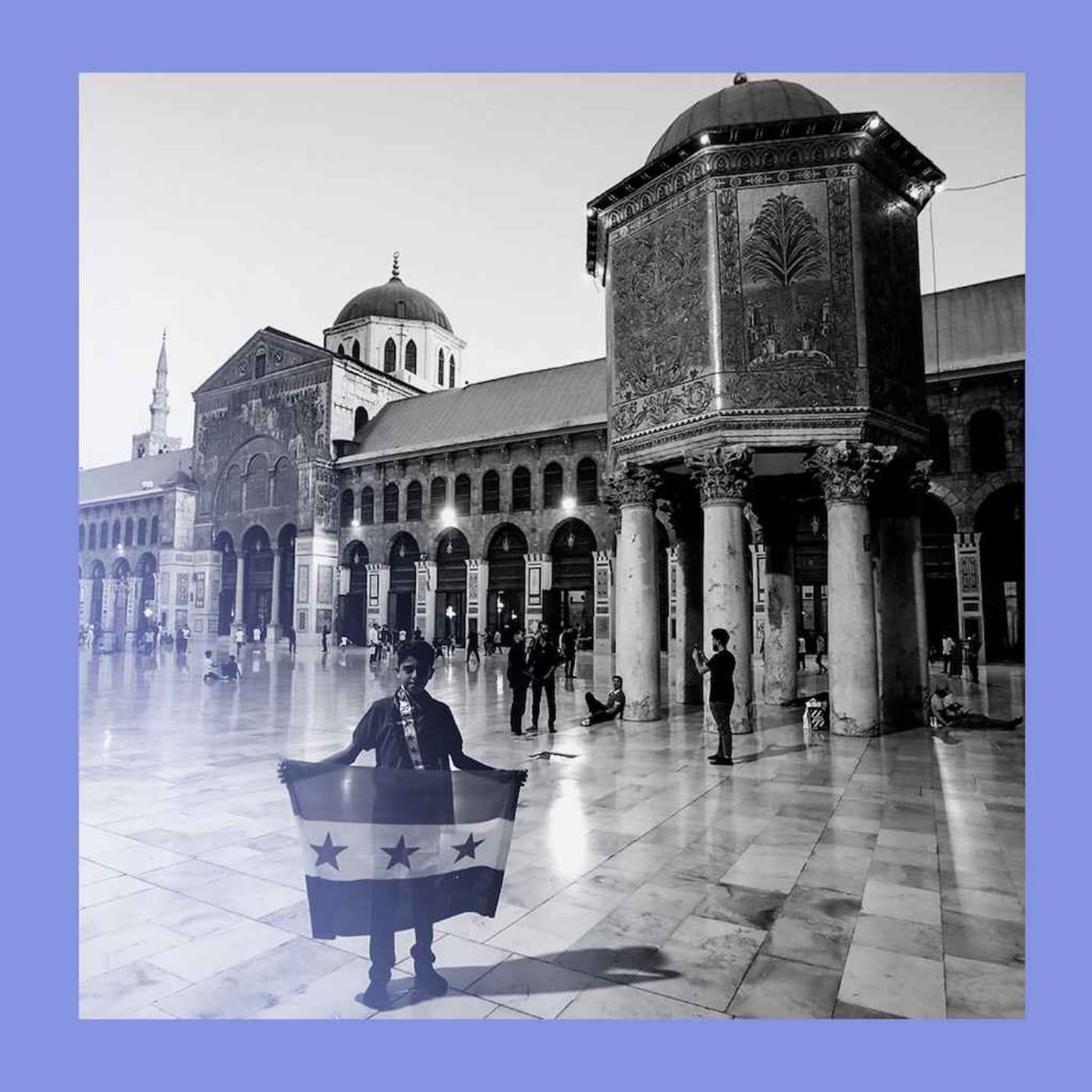
Syria improved dramatically after Assad’s December overthrow—3.5 million Syrians returned home; relations with Gulf states and America improved; sanctions waivers are being pursued. Counterpoints: Ahmad al-Shara is ex–al-Qaeda and power is concentrated; sectarian divisions persist; two massacres occurred. Argentina’s case: Javier Milei cut inflation from ~120% to ~20% and reduced poverty ~30 points; voters backed reforms in October midterms. South Korea is rejected as “recovery” from self-inflicted turmoil. Notable examples include Brazil’s prosecuted coup attempt and South Korea’s tariff deal and AI-driven stock surge.
Written by AI. May contain mistakes. Listen to the episode to check what was said.
Chapters
Tap a time to open that second in VOThe Economist Educational Foundation
1:29 to 2:06
Discussion on the foundation's efforts to enhance news literacy among children.
“In my off time, I've been doing a lot of work with our sister organization, the Economist Educational Foundation, making kids worldwide more news-savvy.”
Reflecting on a Tumultuous Year
2:06 to 3:45
A recap of significant global events of 2025 and their implications.
“The smoke was coming and the fire was coming and I just had to walk.”
Choosing the Country of the Year
3:45 to 5:00
Explaining the criteria used to select the Country of the Year by The Economist.
“The Economist has been holding its annual debate, which nation deserves the much-coveted title of Country of the Year.”
Contenders for Country of the Year
5:00 to 7:11
Discussion of potential nominees, including Canada and Brazil, and their respective situations.
“This can be economic, it can be political, it could even be cultural or geopolitical.”
South Korea's Political Landscape
7:11 to 9:16
Analysis of South Korea's political recovery and democratic processes.
“And a lot of that credit goes to Mark Carney, the prime minister who was elected during the year.”
Syria's Improvements Under New Leadership
9:16 to 11:21
Examining Syria's transformation and challenges after the fall of Bashar al-Assad.
“So there was a lot to recommend South Korea, and you could definitely say it was in a better place now than it was a year ago.”
Argentina's Economic Turnaround
11:21 to 14:00
Overview of Argentina's economic improvements and the significance of Javier Milei's policies.
“Shara has been extremely deaf diplomatically at persuading America and others to waive sanctions that have crushed its economy for many years.”
Economic Turnaround in Argentina
14:00 to 17:08
Learn about Argentina's significant economic reforms and their impact.
“And not only is this important for Argentines, it's important for the entire world because it shows that it is possible for fiscal discipline and normal economics to win at the ballot box.”
Announcing Country of the Year
17:08 to 18:10
Discover the criteria and rationale behind choosing Syria as Country of the Year.
“In the past year, 3.5 million Syrians have returned to their homes, and that's a statistic that is very hard to beat.”
Teaser for Upcoming Episode
18:10 to 23:30
Get a preview of the next episode's focus on favorite yearly episodes.
“Tomorrow on The Weekend Intelligence, we revisit some of our favourite episodes of the year.”
Transcript
Automatic transcript. May contain errors.0:28A BetterHelp ad. When everything is moving all at once, your workforce, your tech stack, your business, you don't need more tools. You need one solution. That's why Paylocity built a single platform to connect HR, finance, and IT with AI-driven insights and automated workflows that simplify the complex and power what's next. Because when everything comes together in one place, growth comes easy. Experience one place for all your HCM needs. Start now at paylocity.com slash one.
1:29In my off time, I've been doing a lot of work with our sister organization, the Economist Educational Foundation, making kids worldwide more news-savvy. Today, we visit a school to see the foundation's work in action and talk about how you can be a part of it.
2:06But first...
2:142025 has been quite the year. Just cast your mind back a little. The smoke was coming and the fire was coming and I just had to walk. You should be thanking the president for trying to bring an end to this conflict. I've never been to Ukraine that you say what problems we have. Explosions have been heard in the capital, Tehran, at least six explosions. The new pope will be chosen by cardinal electors. And splashdown, crew nine, back on Earth. January saw the start of Donald Trump's second term in the White House. Please raise your right hand and repeat after me. I, Donald John Trump, do solemnly swear.
2:50I, Donald John Trump, do solemnly swear. A ceasefire was finally reached in Israel's war in Gaza.
2:58Though the future of the enclave remains unclear. Meanwhile, the war in Ukraine drags on.
3:09Other countries around the world face political flux and leadership changes, from the Netherlands to Nepal and South Korea. Even Canada, as Mark Carney took over from Justin Trudeau. And that's what we're going to do.
3:26At least Trudeau's golden parachute came with a benefit. He's now free to date pop stars. Parents have been confused over their kids saying 6 '7", and Coldplay's Kiss Cam went viral. So, as we lurch towards the end of this tumultuous year, The Economist has been holding its annual debate, which nation deserves the much-coveted title of Country of the Year. It's been a bit tricky because what we do when we choose our country of the year is choose the country that we think has improved the most. And obviously this has been a year in which most countries have gone backwards, not forwards. And the reason for that is simply Donald Trump, whether unravelling alliances, whether assaults on democracy, whether coddling dictators, whether slashing UN budgets.
4:16Chris Lockwood is The Economist's Deputy Foreign Editor. Whether imposing tariffs on most countries in the world, there's been a whole series of moves in the wrong direction for pretty much every country. And so this really limited our options. OK, so just tell me about the rules of this supposed country of the year. What do we really mean by improved? Well, it's a tricky one. We define it as the country that is most improved. So we don't say the best country, you know, if it was the best country, it would probably be Finland every time and everyone would get incredibly bored. And we don't say the most important or consequential country, because in that case, you know, certainly this year it would have been America, but for a lot of bad reasons, not good ones.
4:59No, we mean best improved, but improved by whatever metrics we think are particularly salient that year. This can be economic, it can be political, it could even be cultural or geopolitical. But improved has to be better than it was before in some very marked way. So I should say, actually, I dug into The Economist archives and found the original email which set out this plan for Country of the Year from December 2013. A nice suggestion, it reads, which we discussed in today's meeting, instead of the rather tired person of the year, which everyone else does, we might do a Country of the Year. It would not be entirely serious.
5:36Chris, just give us a little insight onto how The Economist decides the contenders for this. Well, I started out the process by emailing everybody that worked on the entire paper, editorial worldwide, saying, who would you like to see as our country of the year? And we had lots of responses. So, of course, the danger of reply all is literally that all can reply. And we sometimes get hobby horses being flogged to death, if that's not mixing too much of a metaphor. And some of them are very good and worthy. Moldova, I might single out as one that routinely pops up. And it is a plucky little country.
6:11You know, it's up against tremendous odds. It's got Russia breathing down its neck. It's got a terrible problem with what you can really call sort of traitors inside the country, people that are loyal to Russia and not to Moldova. And they came through it. But you can't really call that improvement, of course. And others too. And we got a discussion going. And then we had an in-person and Zoom discussion in much more detail about a number of the countries. Then we drew up a shortlist and then we had a further discussion where we borrowed the shortlist down to a couple and then a final decision was made.
6:44I'm sure that Moldova will choose plucky little country as its bumper sticker. Chris, tell me what countries were in contention this year? Well, Canada was the country that got the most initial nominations when we did our reply or email by a long chalk, actually. But when you started to analyse why, it's pretty clear that Canada hadn't really improved very much. Rather, it had failed to catastrophically decline. And a lot of that credit goes to Mark Carney, the prime minister who was elected during the year. Mark Carney stood up to Donald Trump in a way that, frankly, I'd like to have seen more European countries do this year.
7:21I think grovelling to the president has been the order of the day in Europe. So another country that got a lot of support was Brazil, mainly on political grounds. This was the first year that we saw a trial for a coup attempt. The former president, Jair Bolsonaro, was sent to jail. And this is the first time that a coup attempt has been prosecuted in Brazil's long history of coups. So now you've seen a political system that is properly growing up. You've got a re-elected president. You've got the prospect of a real genuine contest between him and a candidate from the populist right to be agreed on, but it will be done in a proper democratic and non-coup ridden way, we hope.
8:03Another strong contender was South Korea. And in fact, alerted by the email chain, we had Noah Schneider, our East Asia bureau chief, giving us his reasoning for pitching South Korea. At the start of 2025, every pillar of South Korea's prosperity looked shaky. Its democracy had come under assault when then-President Yoon Suk-yeol tried to impose martial law in late 2024. Its alliance with America looked uncertain with Donald Trump's return to the White House. Its economy was rattled by the political turmoil at home and then by America's new tariffs. Relations with neighbors such as Japan and China looked fragile.
8:38And yet South Korea emerged from the year stronger. Its democracy worked as designed. There was impeachment, a snap presidential election, and now prosecutions of those involved in the martial law incident. South Korea's new president, Lee Jae-myung, managed to cut a deal with Trump, reducing tariffs to 15 % while securing key security gains. He stabilized relations with his neighbors. And in the meantime, South Korea's stock market has surged 60, 70 % on the year on the back of chip makers powering the AI boom. And all the while, its cultural reach keeps on expanding. Okay, so Chris, why not South Korea?
9:14That sounded pretty convincing. So there was a lot to recommend South Korea, and you could definitely say it was in a better place now than it was a year ago. But still, this was mainly recovery from entirely ridiculous and self-inflicted wounds, and we thought we could do a bit better than that. OK, so we've ruled out South Korea. Where does the debate come down to? So after a not entirely scientific process of elimination, we narrowed it down to two countries, Syria and Argentina. We've invited the proponents of these contenders into the studio to put forward their arguments. Josie DeLapp is the Middle East section editor here to put forward the case for Syria.
9:51Hi, Josie. Hi, Rosie. And Hal Hodson, the America's section editor, is speaking on Argentina's behalf. Hello, Rosie. So Argentina v. Syria, that's a match we haven't seen for a while. Josie, tell me why Syria? I think it is easy to forget a year into Syria's revolution just how horrific the rule of Bashar al-Assad and his father Hafez was. Syria had been living under a monstrous dictatorship, one where the government used chemical weapons against its people, where it routinely jailed and tortured anyone who spoke out against it. It had been embroiled in a 13-year civil war in which over half a million people had been killed, five million people fled or were displaced.
10:41And in a matter of days, in December last year, the government of Assad was overthrown. And just a week or two after, we were discussing country of the year and I was here to put forward Syria. And at that point, we felt that it was too soon to give Syria the award. The new ruler, Ahmad al-Shara, was a former al-Qaeda commander. We were deeply worried that he would either impose some kind of Taliban-style Islamic rule or that the country would lapse into chaos, civil war, deeply sectarian violence. In fact, neither of those things has happened. Syria under Ahmad al-Shara has begun to develop good relations with Gulf states.
11:27It's rebuilt relations with America. Mr. Shara has been extremely deaf diplomatically at persuading America and others to waive sanctions that have crushed its economy for many years. That said, significant problems remain. The country is still deeply divided along sectarian lines and there have been two horrific massacres over the course of the last year. Shara continues to rule in a way that concentrates power around him. He has not done nearly enough to reassure minorities that they are safe and secure and face an equal and prosperous future in Syria. And you should in no way minimise these problems.
12:13But the fact remains that if you are looking for a country where a year ago things were indescribably worse, and which has improved over the last year, I think it's hard to top Syria. Okay, Hal, the challenge is there. Top that. The floor is yours. What are the arguments in favour of Argentina? Well, I'll give it a go. The arguments for Argentina could not be any more different than Syria. This is about economics fundamentally. And I think it was perhaps the broadest argument for country of the year. And what I mean by that is that there is no one in Argentina whose life has not been incredibly negatively influenced by the chronic inflation, often hyperinflation, that has dogged this country for decades because Peronists are from the country, A left-wing group of parties in Argentina, they've been running the country for a very long time, and their way of dealing with problems is to spend more money and drive up the rate of inflation.
13:09Malay came in after such a long time promising to fix this, promising to cut spending dramatically. And this was the year, 2025, when you started to see his policies have a really huge impact. The annual run rate for inflation went from about 120 % to something like 20%. Poverty at the same time came down by about 30 percentage points. And this is just such an enormous across-the-board improvement for millions and millions of people in Argentina. Everyone was suffering, not in anything like the same way as in Syria, but it was an across-the-board massive improvement. And to top it all off, at the end of the year in the midterms, in October, Argentines voted to support Malay to continue these reforms, giving Argentina and Argentines a chance to become, for the first time in living memory for any Argentine, a normal economy, perhaps sometime in the next few years.
14:03And not only is this important for Argentines, it's important for the entire world because it shows that it is possible for fiscal discipline and normal economics to win at the ballot box. And that's a super important thing for countries that have not Argentina level problems, but big debt problems, big economic problems across the world to look at Argentina and say, right, well, there is a way to do it. Probably it doesn't mean being like Javier Malay, because that's a pretty unique kind of way to be. But it was an incredibly big improvement for Argentina and Argentines and like nothing we've seen in recent years.
14:38Chris, fascinating fight there. What do you make of it? Well, we've heard two very strong and remarkably different kinds of case. One is plainly almost all economic. And if this were a prize for most improved economy, no question, it would be Argentina. It's one of the most remarkable turnarounds that we've seen. And more to the point, it has happened because they followed the sort of prescriptions that The Economist has been offering the world for a long time. Get your budget and your finances under control, cut the size of the state, deal with inflation. These are simple, basic things, but incredibly hard to do when the markets don't like them and people don't like them.
15:17And one, of course, the most interesting points about the Argentine pitch is that the people, the voters, backed these reforms rather than throwing them out. And so often we've seen governments lose their nerve halfway through because the measures that are necessary are sometimes unpopular, at least in the short term. So this is a very important and strong pitch. Turning to Syria, look, Syria is much more imperfect as a place than Argentina is now. And it's clear that any support for Syria has to be qualified by acknowledging the two terrible massacres that took place. And also the fact that, as Josie said, Ahmed al-Shara is not ruling like a pure liberal Democrat by no means.
16:00You know, he's rather clannish, he's accreting a bit too much power to himself. But the fact remains that the lot of your average Syrian compared to where it was a year ago is just so much immeasurably better that this counts for a very great deal. This was a country where people lived in terror of expressing a word of dissent that might see them ending up being tortured to death. This is a country that was wracked by 13 years of one of the worst civil wars the world has ever seen, which involved more than 5 million people being displaced beyond Syria's borders. It was a really, really terrible place.
16:38And a year later, it is immeasurably better than that. So all that makes it really very difficult to compare the two. But at the end of the day, we had to make a choice. So cue the final decision. Drum roll. Cheesy music.
16:58Here we go, Chris. What's the answer? So the winner of our country of the year for 2025 is Syria.
17:08In the past year, 3.5 million Syrians have returned to their homes, and that's a statistic that is very hard to beat. So congratulations, Josie. We won't need to have you back next year. So Josie, how do you feel? I feel delighted. I think the thing for me is that this is an award for country of the year. It's not for government of the year. It's not for leader of the year. There are many, many problems in Syria, and a lot of them stem from those who are ruling the country. but the people of Syria did not turn on each other. Hal, I feel like you've got some last thoughts about Javier Millet. I think Syria is a very worthy winner.
17:43You can't overlook that and economics at the end of the day is abstract. People don't feel it in the same way as they feel not being killed, not being tortured, not being afraid that they're going to be killed or tortured. So congratulations Josie. You do start to embody your country a little bit when you're making these arguments. You're really starting to care who wins. but I fully accept the worthiness of Syria. And we end with a slightly improved world in a few respects. Chris, Josie, Hal, thank you very much to you all. Thank you. Thanks, Rosie. Thank you.
18:27Tomorrow on The Weekend Intelligence, we revisit some of our favourite episodes of the year. to find out what happened next to the characters we met, and talk to correspondents about reporting these stories. You'll need to be a subscriber to listen.
18:53When I was a kid, I didn't absorb a whole lot of news, aside from background dinnertime television. For a few years, my mom often brought me a newspaper they had lying around at her work. Don't tell my bosses it was actually the Wall Street Journal. I didn't get a whole lot out of it, to be honest. I wish I'd had access to what I saw earlier this year, when I went to Meridian High School in South London.
19:22Quite a few of you guys have worked on the Topical Talks with me in the past, and some of you will remember when we did the live lesson where we joined up with schools from around the world and got to do some really good activities with them. We have been asked today to participate. I was there with some colleagues from the Economist Educational Foundation. It's an independent charity dedicated to helping students develop news literacy. Part of that is those topical talk events, chewing through the news of the day and helping kids around the world think critically about not only events, but also how those events are reported.
19:56The 2025 Global Wage Report revealed that in more than half of countries, minimum wages are not keeping pace with prices. So the prices of things are going up, but people's money isn't. So it means that people are finding those things they can't afford to buy now that they could afford to buy maybe in the past. After a lesson about the economists' McWages Index talking about pay and fairness in the workplace, I sat down with the school's podcast club. I live for and I live because of the news. The news pretty much runs my whole working life. Who likes the news? I like the news. It keeps me busy, keeps me off the street.
20:33Where do you get your news? So when you're talking about news in that sort of sense, it's hard to find someone that you can trust when you're getting told the news because you've got loads of outlets and stuff that will be given tips on fake news, which isn't really actually true. So finding a certain outlet or a certain place where you get all your news from is a really hard decision. There's a real difference, though, between a claim being repeated and one being verified. When does something become verified? What's the thing you would consider a verification for an unbelievable piece of news?
21:05Just say, like, anything happened, like the king died. If I got told by Brooke or Charlotte or anyone, you wouldn't really believe it because it's just from them. But if you heard it from, like, a news agency or the king's family itself, then you would believe it and it would be verified because you can't not believe them. Because of how high up they are, everyone kind of just believes what they say because of how high up they are. You won't be surprised to hear that I think this is vital stuff. I can barely navigate the media landscape myself and I do it for a living. Schools need the support and resources that the Economist Educational Foundation provides.
21:48This year, more than half a million students took part in foundation lessons or events, nearly double last year's number. And the foundation works with more than 10 ,000 teachers, like Gemma Papworth at Meridian. A couple of years ago, through my role as Aura C. Lead, we were contacted by the Education Foundation to take part in the Topical Talk Festival. We have now done that, I think, for four years. And through our work with them, we've just seen how valuable it is for our students to open their eyes to the world around them, the news, what's happening in and around the world. And they've enjoyed it so much that we've just every year come back.
22:24What do you think is in the programming and the stuff that you get from the foundation that they wouldn't normally get from the curriculum? It's very up to date. It's very topical. There's lots of statistics and facts in there that I think can be quite difficult to find. But I think it's made with the students in mind and it's made for students around the world in mind. So it's not just based on a cohort in a school, but how can we get this message to all young people across the globe? It just gets them thinking more about the world and sort of their place in it, but also the ability to question it and be savvy in the sense that I'm not just going to take this as fact, I want to take lots of different ideas, bring it together, particularly with statistics, and then use those to make up their minds.
23:08The Economist Educational Foundation is growing fast in 86 countries. Young people need its help, and the foundation, I'm here to tell you, needs yours. Do them a favor that is a sound investment in a well-informed future. Please give what you can to the foundation so they can keep teaching students how to think critically about their world. Go to economistfoundation.org slash donate. You can find the link in the show notes. Thanks.
23:47That's all for this episode of The Intelligence. The show's editors are Chris Impey and Jack Gill. Our deputy editor is John-Joe Devlin. And our sound designer is Will Rowe. Our audio correspondent is Sarah Larniuk. Our senior producers are Henrietta McFarlane and Alize Jean-Baptiste. And our senior creative producer is William Warren. Our producers are Anne Hanna and Jonathan Day. with extra production help this week from Emily Elias and Benji Guy. We'll all see you back here for the Weekend Intelligence tomorrow.
From the publisher
Each year, The Economist tries to identify which country has improved the most, whether economically, politically or in other ways. In a turbulent year, the choice was tricky. We unveil the result. And The Economist Educational Foundation helps kids worldwide be more news-savvy. We invite you to donate and support its work: https://economistfoundation.org/donate/.
Listen to what matters most, from global politics and business to science and technology—Subscribe to Economist Podcasts+
For more information about how to access Economist Podcasts+, please visit our FAQs page or watch our video explaining how to link your account.
Hosted on Acast. See acast.com/privacy for more information.