In short
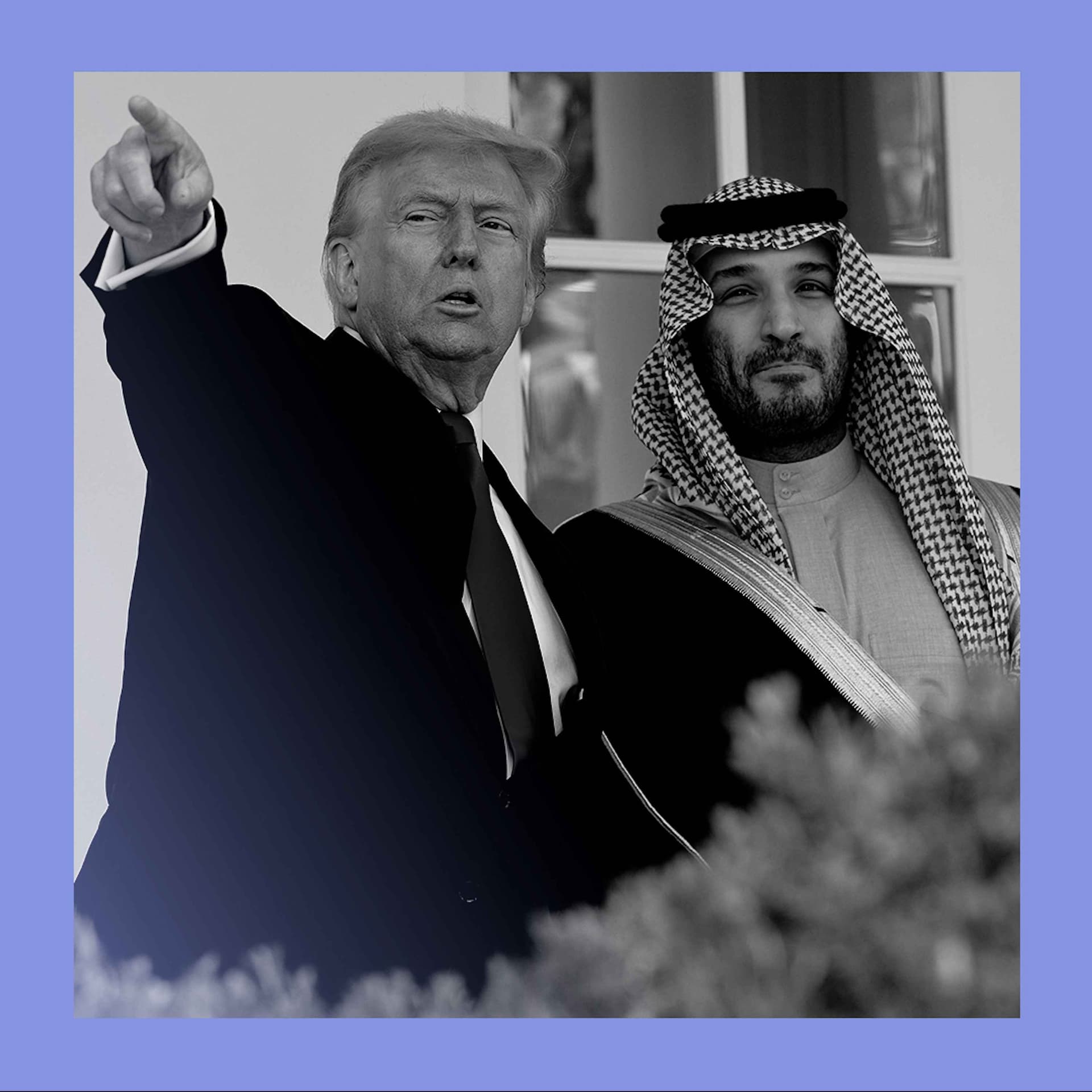
The episode of The Intelligence from The Economist covers three stories. First, it discusses the Trump–Saudi Crown Prince Mohammed bin Salman (MBS) meeting after a seven-year gap, framing it as a shift from earlier international backlash over Jamal Khashoggi’s 2018 murder.
Key claims
Trump brushed off Khashoggi concerns; the US and Saudi Arabia agreed a major defense deal and made Saudi a “major non-NATO ally”; Trump announced sale of 48 F-35 jets; Saudi investment promises rose from $600B to $1T; no Abraham Accords breakthrough was announced.
Notable examples
F-35s flying overhead; Israel’s concern about regional military balance.
Second, it profiles Hong Kong LGBT rights
a same-sex marriage bill was rejected; the government will use “administrative measures” instead.
Guest
Emma Irving, Asian news editor.
Third, it explains UK “snail farm” business-rates tax avoidance.
Guest
James Fransham, data correspondent. Examples: Liverpool and Leeds “snail farms” using shell companies; High Court ruling against a Leeds scheme (2021).
Written by AI. May contain mistakes. Listen to the episode to check what was said.
Chapters
Tap a time to open that second in VOChanging Landscape in Hong Kong
1:28 to 2:31
Exploring Hong Kong's evolving societal pressures and reputation.
“Hong Kong used to have a reputation for being one of its region's more enlightened places, accepting of people of all kinds.”
Trump and MBS: A New Alliance
2:31 to 3:00
An overview of the relationship between Trump and Crown Prince MBS.
“The crown prince left the meeting in Washington, replete with weapons, tech deals, and a fantastically burnished reputation.”
Vision 2030 and Its Impact
3:00 to 4:27
Discussion on MBS's reforms and Vision 2030 in Saudi Arabia.
“to me, felt a bit like a meeting of kindred spirits.”
Khashoggi's Murder and Its Fallout
4:27 to 5:45
Impact of Khashoggi's murder on MBS's international standing.
“But in 2018, we saw the killing of the Saudi American journalist Jamal Khashoggi.”
US-Saudi Weapons Deal: A Game Changer
5:45 to 7:07
Details of the historic weapons deal between the US and Saudi Arabia.
“really marks a homecoming, a transformation of the American view of this man and his country.”
Investment Commitment from Saudi Arabia
7:07 to 7:56
MBS's promise of investment and its implications for the US.
“ways in which it sees itself retaining its position as a regional hegemon or power.”
Abraham Accords Speculation
7:56 to 10:00
Discussion on Saudi Arabia's potential involvement in the Abraham Accords.
“As MBS made clear, it's not just a sop to placate anyone.”
Evaluating the Benefits of the Meeting
10:00 to 10:38
Analysis of who gained more from the Trump-MBS meeting.
“Donald Trump is clearly very committed to Saudi Arabia joining the Abraham Accords.”
Challenges for the LGBT Community in Hong Kong
12:36 to 14:00
Current issues facing LGBT rights and recognition in Hong Kong.
“That's drinkag1.com slash the intelligence.”
LGBT Rights Legislation in Hong Kong
14:00 to 18:16
Learn about the legislative challenges facing LGBT rights in Hong Kong and public perceptions.
“It would only have given some legal recognition to gay couples who got married abroad.”
Show all 12 chapters
Tax Evasion Tactics in Britain
18:16 to 24:13
Discover how landlords in Britain are evading taxes using creative loopholes.
“Unlike the French, Britons don't really like eating snails, but there is something about snails that the Brits do like, and that is tax evasion.”
Winning with AI Podcast Introduction
24:45 to 25:19
Get an overview of the podcast 'Winning with AI' focusing on AI in business.
“Many business leaders see AI's tremendous potential for the companies, but are still struggling to turn that potential into measurable results and competitive advantage.”
Transcript
Automatic transcript. May contain errors.0:28Self-directed investing, trading, The Optimist Podcast is sponsored by Bill, the intelligent finance platform that helps businesses and accounting firms scale with proven results. With AI-powered automation, Bill isn't just moving money. They're simplifying financial operations for nearly half a million customers. Bill has securely processed over a trillion dollars in transactions. That's proven infrastructure. Ready to talk with an expert? Visit bill.com slash proven and get a$150 gift card as a thank you. That's bill.com slash proven. Terms and conditions apply. See offer page for details.
1:06The Economist
1:13Hello and welcome to The Intelligence from The Economist. I'm Jason Palmer. And I'm Rosie Bloor. Every weekday we provide a fresh perspective on the events shaping your world.
1:28Hong Kong used to have a reputation for being one of its region's more enlightened places, accepting of people of all kinds. But as its government aligns more and more with the mainland, its LGBT communities are feeling an unfamiliar pressure. And we seem to be on a bit of a sluggish trail at the intelligence. We've recently ran a segment about snail racing in rural Britain. Now we've got one about shell companies running fake mollusk farms in empty offices. It's a real snail biter.
2:04But first...
2:13It was an effusive welcome. American President Donald Trump greeted Saudi Crown Prince Mohammed bin Salman at the White House for the first time in seven years We have an extremely respected man in the Oval Office today and a friend of mine for a long time, a very good friend of mine I'm very proud of the job he's done What he's done is incredible in terms of human rights and everything else That warm reception yesterday was a stark change from the cold shoulder bin Salman, or MBS as he's known, was given after the murder of a Saudi journalist in 2018. The crown prince left the meeting in Washington, replete with weapons, tech deals, and a fantastically burnished reputation.
3:00The meeting between Mohammed bin Salman and Donald Trump, to me, felt a bit like a meeting of kindred spirits. Josie DeLapp is our Middle East editor. And not just because of their love of lavish, gold-embellished interiors, but these two men who head up two very powerful economies, whose countries have had a long but at times tricky relationship, met in what was not a state visit, because MBS isn't actually the Saudi head of state, but what was as close to it as possible. and he was welcomed and feted and the two of them seemed extraordinarily close. So talk me through how we got here then from tricky relationship to kindred spirit.
3:56Well, as I said, MBS isn't the head of the Saudi state. His father, King Salman, who became king in 2015, is. But his father made him crown prince in 2017 and that is when MBS became effectively the ruler of Saudi Arabia. And he has set in place a program of very profound reforms in Saudi Arabia called Vision 2030. They are both economic, with the aim of transforming Saudi Arabia away from being a petro-state, but also include fairly radical, at least for Saudi Arabia, social reforms, in particular for women, and have really seen religious conservatives who have been such a dominant force in the kingdom for so many decades, sidelined.
4:49But in 2018, we saw the killing of the Saudi American journalist Jamal Khashoggi. His body was chopped up and disposed of. and in 2021, American intelligence determined that MBS had approved the murder. He has always denied this, but it made him a pariah on the international stage. And one of the particularly striking comments that Donald Trump made in the course of this visit was about the murder of Khashoggi, in which he basically brushed it off entirely. He's done a phenomenal job. Whether you like him or didn't like him, things happen. But he knew nothing about it. And we can leave it at that.
5:35You don't have to embarrass our guests by asking a question like that. And so this, which is his first visit to America since the killing of Khashoggi in 2018, really marks a homecoming, a transformation of the American view of this man and his country. So friendly relationships is one big thing. but what did they actually agree between them? So we saw a couple of striking announcements. Trump declared that he was making Saudi Arabia a major non-NATO ally and that Saudi Arabia and America would sign a historic strategic defense agreement, which will, among other things, make it much easier for American defense firms to operate in Saudi Arabia.
6:22But perhaps even more striking was Trump's announcement that America would sell 48 F-35s, which are the most advanced fighter jets, to Saudi Arabia. Part of the pomp and circumstance of the American welcome to the Saudi crown prince was F-35s flying overhead. No other country in the Middle East apart from Israel has F-35s. America said that it would sell them to the United Arab Emirates about five years ago, but they haven't actually been delivered yet. Israel is decidedly worried about the idea of another country in the region having this kind of advanced weaponry because Israel's military might is one of the most important ways in which it sees itself retaining its position as a regional hegemon or power.
7:20And so the decision by Trump to sell Saudi Arabia these weapons marks a really significant shift in the dynamics in the region. And what has the US got in return for that? A trillion dollars. I mean, it seems a pretty good deal, doesn't it? MBS has previously promised$600 billion of investment to America. But on this visit, he bumped that up to a trillion dollars. Now, it's not exactly clear what that's going to consist of, how much will be direct investment in America, but it is a clear sign of a commitment to a deepening relationship between these two countries. As MBS made clear, it's not just a sop to placate anyone.
8:08We are not creating fake opportunities to, you know, please America or please Trump. It's real opportunities. For example, when you ask about the AI and the chips, Saudi Arabia have a huge demand of, a huge need of computing power. And we're going to spend in the short term, around 50 years now... Josie, something we've spoken about on the show before is that Trump wants to expand the Abraham Accords. This is the treaty brokered by the Trump administration in the first term, normalising diplomatic relations between Israel and several Arab states. There was speculation before this meeting that Saudi might actually join the Abraham Accords.
8:45Was there any movement? There's so much speculation about who is going to join the Abraham Accords next. We saw an announcement about Kazakhstan recently joining the Accords, but Kazakhstan has actually had diplomatic ties with Israel for many years, so that was a much less significant shift than it would be if a country like Saudi Arabia were to sign a deal like that. But no, we didn't see any actual movement on this. I think we're, you know, I don't want to use the word commitment, but we've had a very good talk on the Abraham Accords. We talked about one state, two states. You know, we talked about a lot of things.
9:26But I think you have a very good feeling toward the Abraham Accords. Yes, definitely, Mr. President. We want peace for the Israelis. We want peace for the Palestinians. We want them to coexist peacefully in the region. And we will do our best to reach that day. Its officials have made very clear, publicly and privately, that they are not willing to recognize Israel until there is significant and meaningful progress towards a Palestinian state. And that is something that Ben-Yuan Netanyahu and his government in Israel have made very clear that they have absolutely no interest in pursuing. Donald Trump is clearly very committed to Saudi Arabia joining the Abraham Accords.
10:07And that fact does give MBS at least some leverage over America. So who ultimately got more out of this visit, Josie? MBS or Trump? Look, I think it was useful for Donald Trump. It was a different piece of news from, for example, the focus on the Epstein files. But fundamentally, I think for Saudi Arabia and for MBS as an individual, this was an incredibly significant visit. It was one that put the Saudi-American relationship on a much warmer and closer footing. It was one that underlined MBS's role as a leader in the Middle East. He very much is remaking himself on the international stage as a peacemaker and to put himself next to Donald Trump, who is also very committed at the moment to seeing change in the Middle East.
11:07I think can be seen as a real success for MBS. Josie, good to talk to you. Thank you so much. Rosie, thank you.
11:30This Economist podcast is sponsored by Bill, the intelligent finance platform that helps businesses and accounting firms scale with proven results. With AI-powered automation, Bill isn't just moving money. They're simplifying financial operations for nearly half a million customers. Bill has securely processed over a trillion dollars in transactions. That's proven infrastructure. Ready to talk with an expert? Visit bill.com slash proven and get a$150 gift card as a thank you. That's bill.com slash proven. Terms and conditions apply. See offer page for details. Summer can throw off even the best routines, but AG1 makes it easy to keep one healthy habit consistent.
12:10AG1 is a daily health drink that combines a multivitamin, pre and probiotics, superfoods, and antioxidants in one scoop mixed with eight ounces of water. From late nights to long weekends and everything in between, AG1 offers a simple way to add consistent nutritional support to your day, wherever the morning begins. Visit drinkag1.com slash the intelligence to get a free morning person hat and a free AG1 sampler in your welcome kit with your first AG1 subscription, an$82 value. That's drinkag1.com slash the intelligence.
12:49I'll say that the acceptance towards the LGBT community has been improving throughout the past two decades, but the related public policies are not in compliance with such kind of improvement in the general acceptance of the LGBT community. The people will say that, okay. That's Priscilla, a trans woman and activist in Hong Kong. This is exactly why the same-sex marriage is very important to the LGBT community, because through the same-sex marriage, lesbians or gays or LGBT would have the opportunity to form their own family and so they can enjoy the love from the family, which they can... It's a troubling time for sexual minorities in Hong Kong.
13:43Emma Irving is an Asian news editor for The Economist. Two years ago, Hong Kong's Top Corps ordered the government to introduce a framework for giving some legal recognition to same-sex couples. although it did fall short of calling for full marriage equality. And the government here responded by coming up with this bill, which was pretty limited. It would only have given some legal recognition to gay couples who got married abroad. But when it presented that bill to the legislature in September, it was voted down by an overwhelming majority. And now the government says it will instead rely on quite flimsy and vague administrative measures to protect gay rights in the city.
14:22so why is it that the the legislature came to that decision do you think so a few lawmakers here argued that the bill was a really good way of showing how open and diverse and international hong kong is which is how it often likes to present itself but since 2021 hong kong has been exclusively governed by patriots which means people who are loyal to beijing and many more lawmakers actually kind of espoused views about the bill that you would really normally associate with the mainland, where sexual minorities are considered a moral and political threat. For example, they said that the bill could subvert traditional family values and that it might teach schoolchildren that it was, quote, normal to be gay.
15:06And it's really hard for people here to counter those narratives who are from the LGBT community. But quite apart from what the legislature your things. What do the people of Hong Kong think about these questions? Well, most people I spoke to within the LGBT community said that they'd really felt a growing sense of acceptance in recent years. And two years ago, there was a survey that found that 60 % of Hong Kongers now support gay marriage, which was up from 38 % a decade ago, so quite a big increase. And the city has hosted some gay-friendly events in the past, like the Gay Games or Pink Dot, which is a kind of equivalent to London's gay pride.
15:44But since 2020, civil society has really been eroded in Hong Kong because the government then introduced this sweeping national security law. Hong Kong has been brought much more in line with the mainland. And actually, there's been a really big clampdown on civil society. And actually, lots of people I spoke to within the LGBT community said that they felt they were generally pretty accepted by acquaintances or friends or colleagues. phenomenon, that means, OK, if other people, LGBT, I'm OK. When they came out to their own families, there was still a lot of prejudice. If this happens in my own family, this would be another story.
16:24But I guess the wider context is also kind of important here. How does Hong Kong, as it is now anyway, fit into the wider region in terms of cultural attitudes towards the LGBT community? Well, in many countries in Asia, same-sex relationships is still stigmatized or even criminalized. But gay rights have been improving in parts of the region. So, for example, in Thailand, Taiwan and Nepal, same-sex marriage is now legal. But progress has been quite slow across the region. So how does the Hong Kong government's response to this, the way it's dealing with these questions, fit into, as you say, the way it likes to present itself in the wider community as being open and international?
17:06Well, I think that this bill really shows that despite Hong Kong saying that it's still very internationally minded and still really open and friendly to people of all different backgrounds, ultimately the desire from the government's perspective to fall in step with the leaders in Beijing is going to win out when it comes to these big legislative matters, because they really just don't want to be seen to be doing anything that could get them in trouble with who's up north. But how do you think this tension will be resolved, the degree to which the legislature is not making a lot of room for the LGBT community and yet it wants for there to be this view of the city as open-minded and welcoming and international?
17:48A lot of the people I spoke to within the LGBT community weren't particularly hopeful that they would see any real improvement within their lifetimes. They said they actually thought that it would be at least a couple of generations before they saw any real change in Hong Kong. Perhaps when, for example, Gen Z leaders are running Hong Kong, that there might be some more leeway when it comes to LGBT rights. But they thought that under the current setup, it was unlikely to happen until that time. Emma, thanks very much for joining us. Thank you so much for having me.
18:33Unlike the French, Britons don't really like eating snails, but there is something about snails that the Brits do like, and that is tax evasion. James Fransham is a data correspondent. The story starts with a kind of slimy tale of landlord subterfuge. In commercial properties in Britain, such as the office we're sitting in right now, they're charged a property tax by the local council or the local government, and that's known as business rates. And normally tenants of these properties pay those rates, and they can be pretty pricey, for the snazziest offices at least. For example, The Economist pays a somewhat eye-watering£65 ,000 per month.
19:13to Westminster City Council for its 20 ,000 square feet of office space overlooking the Thames. So when those commercial buildings are vacated by their tenants, if The Economist left its office here, the landlord would become liable to pay those rates after a grace period of actually 91 days. And this is where it gets a bit slimy. So to avoid paying those rents, landlords have started turning their properties into urban farms. okay so we've got urban farms and business rates and snails are coming slowly into view explain what's actually going on james yeah sorry this is crawling along a little bit but let me get to the point so they purchase boxes of live snails for 15 pounds a kilo and they place them sparingly around their building and then they claim that the office is now a farm and it's exempt from paying business rates one venture in liverpool had 15 boxes in an office in the city center with as few as two snails in each box.
20:09Another in Leeds, which was ruled a sham by the High Court in 2021, contained as many as 50 crates on each floor, but some with just one snail covered with a bit of straw. And so when the local authorities come to investigate, they gain access to the properties and they challenge the legitimacy of these farms. But the problem that they have is that landlords basically lease out their properties to shell companies. And these shell companies then run these farms on their behalf. When the local authorities get to the courts and they challenge the legitimacy of these ventures, the Shell company declares itself insolvent and the tax liability has to be written off by the local authority.
20:46Okay, so can the authorities close that loophole? It feels like an obvious one to crack down on. Well, tax evasion is illegal, tax avoidance or mitigation is not, and it's really a spectrum. So such a brazen attempt of tax avoidance that it's actually quite difficult to close down insofar as if you're going to hide behind your shell company, you can just avoid the authorities. So what the authorities want is more power. If this looks and smells like evasion, it is evasion and we don't need to go to the courts. The London-centric, a local newspaper here, got onto this snail trail by finding a chap in Preston who is sending these snails around the country.
21:25But there are other ways in which landlords are seeking to avoid paying business rates. If, say, again, the economist vacates its property and the landlord here doesn't want to pay business rates after a period of 91 days, what they can do is find some empty boxes. And they place these empty boxes in the building and then they say, hey, I'm using this building, it's occupied. And it's occupied for a period of six weeks. And then after that six-week period, they can then claim empty property relief, EPR, as it's known, for another 91 days. And they can do this continuously on an oncoming basis.
21:58So if they do this systematically over the course of one year, they cut their business rates liabilities by 75%. Now acknowledging this problem in 2023-2024, the government changed the rules and said, actually, in order to get this exemption, this EPR, that period of occupation needs to be 13 weeks. But you can still, by the letter of the law, perhaps not the spirit, you can just stick boxes or Bluetooth devices or any other thing in your building. And you can say, sorry, it's been occupied and then get empty property relief. Another scheme is to claim that your office is a place of God. And you can say, hey, we're now using this as a church.
22:35And a lot of these places they're not actually accessible to the public. But again, you have the same problem whereby it's hard for the local authority to investigate. And when they do challenge it, these places are hiding behind shell companies and shady businesses and middlemen and so on. So snail rights and God-fearing citizens aside, why does it really matter? It's kind of a fun story, but there is a serious point to it. And that is this, that local authority finances are really, really challenged at the moment, not least because of council tax, because of business rates. The high street is dying for various different reasons because of online shopping and so on.
23:06But business rates bring in about 25 billion to government coffers. That's collected principally by the local authorities, but in the case of Westminster City Council, which collect about 10 % of the business rates in the whole of England, and 90 % of that goes back to the Treasury, there's a serious point here that actually a shell company avoiding taxes with a snail farm in Marleybone really impacts actually the provision of, say, social care in Middlesbrough. And the government really needs to do something to stop the abuses of the system. Snailed it, James. Thanks very much. My pleasure.
23:52That's all for this episode of The Intelligence. See you back here tomorrow.
24:13This Economist podcast is sponsored by Bill, the intelligent finance platform that helps businesses and accounting firms scale with proven results. With AI-powered automation, Bill isn't just moving money. They're simplifying financial operations for nearly half a million customers. Bill has securely processed over a trillion dollars in transactions. That's proven infrastructure. Ready to talk with an expert? Visit bill.com slash proven and get a$150 gift card as a thank you. That's bill.com slash proven. Terms and conditions apply. See offer page for details. Many business leaders see AI's tremendous potential for the companies, but are still struggling to turn that potential into measurable results and competitive advantage.
24:59I'm Andrew. And I'm Sarah Elk. And on our new podcast, Winning with AI, we're talking to CEOs who are using AI to drive business transformation, delivering real wins and changing how their companies run. We hear how leaders empower and mobilize their people and make the use of AI part of how the whole organization thinks. Winning with AI.
From the publisher
Muhammad bin Salman’s first visit to the White House in seven years earned the Saudi crown prince new weapons, giant tech deals and a burnished reputation. Our correspondent explains Trump’s warm welcome. Why gay rights in Hong Kong are going backwards. And how snail farms help Britons dodge tax.
Listen to what matters most, from global politics and business to science and technology—Subscribe to Economist Podcasts+
For more information about how to access Economist Podcasts+, please visit our FAQs page or watch our video explaining how to link your account.
Hosted on Acast. See acast.com/privacy for more information.