In short
Episode topic: The Trump-Xi summit in Beijing—what to expect and what’s at stake—plus two additional Economist segments: Coke vs Pepsi business rivalry and a fraught Venice Biennale overview.
Guests
Simon Rabinovich (Economist Beijing bureau chief) and Chao Guang columnist.
Guest backgrounds
Rabinovich is the Economist’s Beijing bureau chief; Chao Guang is a China-focused columnist.
Key claims
US-China relations were near a 2025 economic breakdown due to tariffs (>100% each) and China’s rare-earth export controls; a truce runs until November. Expectations for a “grand bargain” are low; the summit aims to prevent escalation and stabilize trade.
Notable examples
China’s proposed “three Bs” purchases (Boeing, beef, beans/soybeans); Taiwan language and arms-sales demands; export-control cooperation; Iran (Strait of Hormuz reopening) and Russia-Ukraine.
Written by AI. May contain mistakes. Listen to the episode to check what was said.
Chapters
Tap a time to open that second in VOContext of the Trump-Xi Summit
1:12 to 2:30
Understanding the significance and urgency of the upcoming Trump-Xi summit.
“and a curtain raiser on a particularly fraught Venice Biennale.”
Diplomatic Tensions in US-China Relations
2:30 to 3:20
Explore the historical context of the US-China trade conflicts.
“So just fill in a bit more of that context for us for a minute, Simon.”
Expectations for the Summit
3:20 to 5:26
What outcomes are likely from the upcoming Trump-Xi meeting?
“And so we're now at the point where diplomacy is once again underway.”
Taiwan's Role in US-China Talks
5:26 to 6:46
Discussing Taiwan's influence on US-China relations and negotiation terms.
“Well, the big one that the Chinese side are pushing is to bring Taiwan into the discussion.”
Security Issues on the Agenda
6:46 to 8:09
An overview of the pressing security topics: Iran and Russia-Ukraine.
“dance back and forth between the two leaders, and then potentially on the American side to interpret or to reinterpret whatever Donald Trump actually does or says on Taiwan.”
Summit Outcomes and Future Relations
8:09 to 9:23
What is the best-case scenario for the Trump-Xi summit and beyond?
“Simon, you've outlined a laundry list of thorny topics, it seems like the best case scenario for this week's summit might simply be that it happens, that things are stable.”
Coke vs. Pepsi Rivalry
9:45 to 14:00
Analyzing the long-standing business competition between Coca-Cola and Pepsi.
“And on next week's episode of Drum Tower, our China podcast, we'll be analysing how the Great Meeting went.”
Pepsi's Comeback Strategy
14:00 to 14:43
Learn about Pepsi's recent strategies and performance metrics in the beverage market.
“They've agreed to lower prices, and they're trying to streamline their manufacturing.”
Introduction to the Venice Biennale
14:43 to 15:01
Explore the contrasting atmosphere of the Russian pavilion at the Venice Biennale.
Controversies Surrounding the Biennale
15:01 to 16:48
Understand the controversies and implications of Russia's participation in the Biennale.
“The Russian pavilion at the 61st edition of the Venice Biennale was supposed to be a party.”
Show all 14 chapters
Shifting Dynamics in Art Recognition
16:48 to 17:48
Discuss the changes in prize-giving processes at the Biennale amid political tensions.
“they've now opted to choose the winners of certain prizes by a popular vote, which is more suited to American Idol than high art.”
Historical Reflections and Modern Challenges
17:48 to 19:19
Reflect on the history of the Biennale and its ongoing conflicts in the art world.
“Israel's permanent pavilion is shut, supposedly for construction with police standing guard outside.”
America's Pavilion: New Directions
19:19 to 20:28
Learn about the changes in America's Pavilion at the Biennale and its focus on American values.
“Elsewhere, globalization has given way to localization.”
Artistic Responses to Current Events
20:28 to 21:48
Discover how contemporary artists are responding to current global issues through their work.
“Alma Allen, whose sculptures were chosen for this year's Biennale, has something to say, although it's not exactly clear what.”
Transcript
Automatic transcript. May contain errors.0:00Dell PCs, with Intel inside, are built for the moments that matter. For the moments you plan and the ones you don't. Built for the busy days that turn into all-night study sessions. The moment you're working from a cafe and realize every outlet's taken. The times you're deep in your flow and the absolute last thing you need is an auto-update throwing off your momentum. them. That's why Dell builds tech that adapts to the way you actually work. Built with long-lasting battery, so you're not scrambling for the closest outlet. And built-in intelligence that makes updates around your schedule, not in the middle of it.
0:36They don't build tech for tech's sake, they build it for you. Find technology built for the way you work at dell.com slash dellpcs. That's dell.com slash dellpcs. Built for you.
0:55The Economist
1:02Hello and welcome to The Intelligence from The Economist. I'm Jason Palmer.
1:06Rosie Blau:And I'm Rosie Bloor.
1:11Today on the show, the latest in the century-long Coke versus Pepsi battle and a curtain raiser on a particularly fraught Venice Biennale.
1:26First up, though.
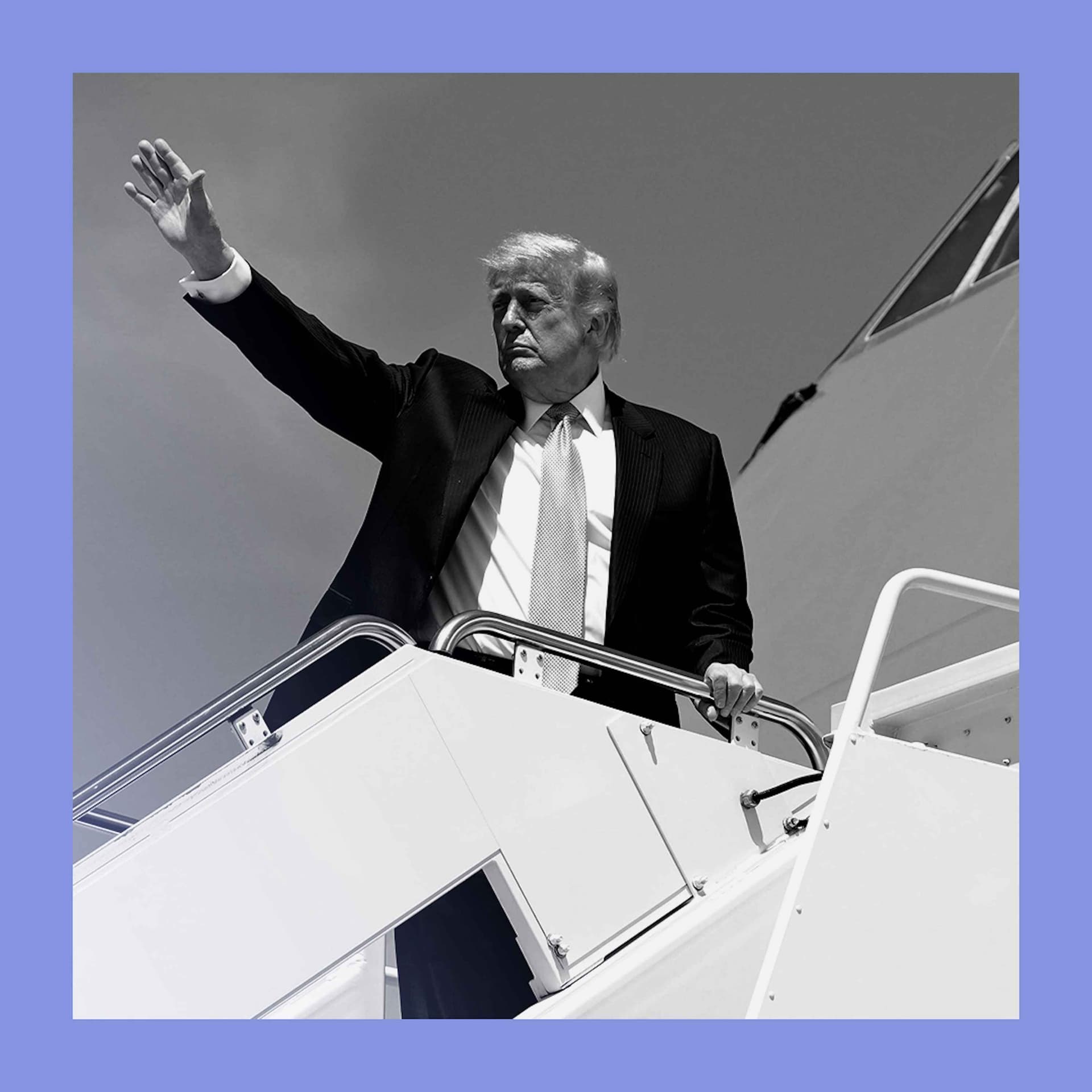
1:35Rosie Blau:Tomorrow, Donald Trump and Xi Jinping will meet in Beijing. The two-day summit, originally scheduled for April, was delayed by the Iran war. Even so, both sides seemed determined to make it happen. The meeting is the first of four between Trump and Xi planned for this year, a sign of the urgency both sides feel about calming this consequential, but often tempestuous, relationship.
2:00Simon Rabinovitch:The Chinese-American relationship was in a really, really bad way last year. They were on the brink of a massive economic conflict that really threatened a global recession.
2:13Rosie Blau:Simon Rabinovich is our Beijing Bureau Chief and Chao Guang columnist.
2:17Simon Rabinovitch:They've walked back from the ledge of that. And the question for this year is, are they going to be able to build something bigger, more constructive and more sustainable out of that?
2:30Rosie Blau:So just fill in a bit more of that context for us for a minute, Simon. Why were US-China relations quite so bad?
2:38Simon Rabinovitch:So China and America have been in a on-again, off-again trade war, going back to Donald Trump's first term. And at the start of 2025, things were looking really quite dangerous. We got to a point where both countries had tariffs of more than 100 % on each other, effectively threatening a stop to all bilateral trade. At the same time, China was fighting back with much more force than it had ever done previously. It put export controls on rare earths, which were threatening to bring not just American industry, but global industry to a total halt. That caught Donald Trump's attention. And that's why by the end of last year, they had agreed to a truce.
3:19Simon Rabinovitch:It's a truce that only runs until November of this year. And so we're now at the point where diplomacy is once again underway. They're trying to come to some kind of a more lasting trade deal, economic arrangement that will avoid the kinds of problems that we saw last year.
3:39Rosie Blau:So if we've got to the point where diplomacy is key, what can we actually expect from this summit?
3:45Simon Rabinovitch:Well, depending on when you would have asked me that question, the answer would have been different. A few months ago, people had quite high expectations. They thought that maybe there was going to be some big bilateral investment agreements, that maybe there was going to be some way to strike a quote-unquote grand bargain between China and America. At this point, Nobody really expects that grand bargain. I think the reality is set in, which is that there is just a lot of mutual suspicion. So that's why I think expectations are quite low. And basically, what they're trying to avoid is having a total breakdown.
4:19Rosie Blau:So what might they actually achieve now then?
4:22Simon Rabinovitch:So the focus of the summit really is going to be on trade, on economic issues. The Chinese are very likely to announce some big purchase agreements. They've talked about buying the three Bs from America, Boeings, beef and beans, soybeans. On the American side, they want trade to be more balanced. Donald Trump's goal, one of his big goals, is to reduce America's trade deficit. So there's talk about creating something called a board of trade, which would basically look at what goods can flow between the countries with relatively low tariffs. Can they somehow bring about managed trade to engineer a more balanced trading relationship to bring down the Chinese trade surplus.
5:02Simon Rabinovitch:By the way, at the start of the trade war in 2018, China ran a roughly$450 billion trade surplus against America. These days, it's about$200 billion. So as far as Donald Trump is concerned, his tactics have been somewhat successful to date.
5:20Rosie Blau:Simon, the focus may be on trade, but all sorts of other topics are likely to loom. What else can we expect?
5:28Simon Rabinovitch:Well, the big one that the Chinese side are pushing is to bring Taiwan into the discussion. So from China's perspective, they've made it clear to the Americans that the more that America gives on Taiwan, the more that China is willing to give on the economy. So what do they mean by giving on Taiwan? What they would like Donald Trump to come out and say is that America actively opposes Taiwanese independence. For the time being, America's had a very ambiguous policy. At the same time as not offering that kind of vocal support to Taiwan, it's been selling a lot of weapons to Taiwan, which is the way that the island is able to defend itself from a potential attack from China.
6:08Simon Rabinovitch:So China would also like to see America either halting or significantly reducing its arms sales to Taiwan. So one of the things that China will be trying to use this summit for is getting Xi Jinping into a room with Donald Trump and basically trying to make the case that Donald Trump, you can be an architect of global peace if you change America's language, if you change America's stance on Taiwan. From the American perspective, American diplomats and many officials are very concerned that Trump might just do something like that. So they've been very clear to say that Taiwan is not up for negotiation.
6:44Simon Rabinovitch:So there's going to be a big dance back and forth between the two leaders, and then potentially on the American side to interpret or to reinterpret whatever Donald Trump actually does or says on Taiwan.
6:58Rosie Blau:And what about other security issues?
7:01Simon Rabinovitch:Well, the two obvious other security issues, which are actually ongoing zones of conflict right now, are Iran and Russia-Ukraine. So in Russia's case, America has consistently been trying to get China to reign in Russia. So far, though, China has not done that. And I think there's little reason to think that they're about to change their tune on that right now. Iran is more interesting because, first of all, that's a war that America started. China is very content to basically be on the sidelines. America knows that China could do more. China was Iran's biggest economic partner prior to the war, buying 90 % of Iranian oil, the biggest foreign investor into Iran.
7:42Simon Rabinovitch:And so America would like China to use some of its heft to get Iran at the negotiating table, make more compromises, move more quickly to reopen the Strait of Hormuz. From the Chinese part, they do not want to get entangled in this conflict. So we'll see after this meeting whether China, in its very quiet, very diplomatic way behind the scenes, does put a bit more pressure on Iran to bring this to an end, to reopen the Strait.
8:09Rosie Blau:Simon, you've outlined a laundry list of thorny topics, it seems like the best case scenario for this week's summit might simply be that it happens, that things are stable.
8:22Simon Rabinovitch:Well, I mean, the best case scenario is that you do get some kind of strong agreement on economic ties. Nobody expects that tariffs will be removed, but at least certainty that they're not going to go up again. Some kind of mutual disarmament on export controls, movement on Iran and Russia. But you're absolutely right, the simple fact that the meeting is taking place, that Xi Jinping and Donald Trump are talking, that is important in and of itself. Remember, this is the first time that an American leader has visited China in nearly one decade. It's a crazy, crazy situation for the world to be in, to have that lack of dialogue.
8:58Simon Rabinovitch:The expectation is that the leaders will meet three more times this year. Xi Jinping will visit America probably in August or September for a bilateral meeting. They then will meet on the sidelines of APEC in China and G20 in America. And so the state of the relationship is going to hinge to a great degree on this meeting starting off on a positive note and hopefully building up momentum for the next few meetings over the course of the year. So this is a really, really important step forward. And let's see what comes out of the next two days.
9:32Rosie Blau:Simon, thank you very much.
9:34Simon Rabinovitch:Thank you, Rosie.
9:38Rosie Blau:And if you want to hear more on what to expect from this summit, you can listen to the current episode of Checks and Balance, our weekly US podcast. And on next week's episode of Drum Tower, our China podcast, we'll be analysing how the Great Meeting went.
10:01I'd like to buy the world a home And furnish it with love In America, there have been few business rivalries as fierce and long-lasting as that of Coca-Cola and Pepsi. Shira Aviona writes about business for The Economist. For more than a century, the pair have fought it out for dominance of the fizzy drinks market. Keep it company. Coca-Cola says it's the real thing. But Pepsi-Cola believes that when it comes to colas, The only real thing is taste. That's why the Pepsi Challenge has been asking thousands of people across the country to let their own taste decide. They've used advertisements, publicity stunts, but today, one of those two soft drinks giants has begun to lose its fizz.
10:52Ooh, do go on. Tell me more about this fizzy rivalry. So a few years ago, the value of the two rival businesses, Coca-Cola and Pepsi, began to diverge. Coca-Cola has been doing pretty well, and Pepsi has been struggling. For a while, it even prompted fears that Dr. Pepper might knock Pepsi off its spot as the U.S.'s second largest producer of soft drinks. So before we get into how the gap is opening, tell me what the market share looks like at the moment. The state of play today is that all of Coca-Cola's brands together account for about 17 % of the American soft drink market, and Pepsi's just 11%.
11:32But if you look at their market value, it tells an even starker story. So since the start of 2023, Coca-Cola's market capitalization has risen about 20%. At the same time, Pepsi's has slumped by 15%. And why is that? One key thing to understand is that Coke and Pepsi have become quite different businesses from one another. So in addition to producing drinks, Pepsi actually makes more than half of its revenues from packaged food because it owns Frito-Lay and sells things like Lay's chips and Quaker oats. And like many other food companies in the kind of post-pandemic period, as they experienced the rising cost of inputs, they raised prices on many packaged foods well above the average of its competitors, but also above food inflation as a whole.
12:21And shoppers in response fled. So that explains the gap that essentially Pepsi becoming a different kind of business and one big part of that business has gone south? Well, there's actually more to it. So another thing that has really hurt Pepsi is that as of late, consumers have become very concerned about ultra-processed food in particular. And more recently, as we've seen a boom in the use of weight loss drugs, that has also been starting to affect both food and soda consumptions. So we know, for example, that Americans who are taking GLP-1s seem to reduce their purchases of soft drinks by about 7%.
13:01But the kind of health-conscious consumer isn't stopping buying soda totally. In fact, they seem to prefer sugar-free soda, and that's yet another area in which Coca-Cola leads Pepsi. So in diet drinks, for example, Americans are guzzling about two and a half times more Diet Coke than Diet Pepsi. But Coke has also been much better than Pepsi at kind of taking advantage of figuring out what drinks health conscious consumers might want to buy. So they were much earlier, for example, to selling protein shakes. And so what is Pepsi doing to catch up? It seems to be losing out on a number of fronts here.
13:43Last September, Pepsi got a letter from Elliott Management, a notable activist investor, demanding that they take all sorts of steps to transform their business. And thus far, Pepsi has been taking the hint. So they are trying to slim down their portfolio of products. They've agreed to lower prices, and they're trying to streamline their manufacturing. And there have been early signs that the turnaround is working. So in the first quarter of 2026, they reported that operating profits were up 24 % over last year, which is actually higher than what Coca-Cola reported for the same period. They've managed to bat away Dr.
14:23Pepper and have retained their number two spot for now. And last year, they acquired a popular healthy soda brand, Poppy, for$2 billion, which is helping to boost sales. So a comeback is mounting. And what that means for Pepsi versus Coke is that the battle is going to continue. Shira, thanks very much for your time. Thank you so much, Jason.
15:01The Russian pavilion at the 61st edition of the Venice Biennale was supposed to be a party.
Read the full transcript
15:08Rosie Blau:Alexandra Suich-Bass is our culture editor. And the trappings were all there. An open bar, resplendent pink flowers, musicians, scheduled DJ sets. And yet something was amiss. Irony was everywhere, yet acknowledged nowhere. Why do flowers no longer smell was the title of a climbing artwork, flowers. And yet when you walked up to them, they did in fact smell rather lovely. there was a lineup of traditional Russian musicians that seemingly had nothing to do with the artwork
15:48and on the ground floor there was a bin filled with a jumble of clothing which was not intended to evoke Ukrainian refugees displaced by Russia's war but of course who could think of anything else
16:09The Venice Biennale has recently opened, and this year the theme is In Minor Keys. In fact, the Biennale has opened to a soundtrack of Discord. The festival's decision to allow Russia to host an exhibition after being absent for the last two installments has set off a furor, resulting in the European Commission pulling two million euros worth of funding and leaders from several countries boycotting the opening. And for the first time in history, the prize-giving jury has resigned after announcing it would not consider countries facing war crime charges, namely Israel and Russia. Because there are no judges, they've now opted to choose the winners of certain prizes by a popular vote, which is more suited to American Idol than high art.
17:04The Biennale was founded in 1895 to celebrate the 25th wedding anniversary of King Umberto and his wife, and to display the strength of Italy, unified only a few decades earlier. Ever since, the Art World Olympics have reflected the wills and woes of their era. One art historian told me this is the most chaotic and contentious Biennale since 1968, when student protesters targeted the event. The Biennale's organizing body is ill-equipped to manage the hard issues of free speech, propaganda, and participation that have been plaguing a lot of arts institutions. A compromise that has pleased no one is that Russia's pavilion was permitted to open for previews, but will remain closed for the main event.
17:51Israel's permanent pavilion is shut, supposedly for construction with police standing guard outside. Instead, Israel's been permitted a space in the Arsenale, former shipyards, where it is harder to stage protests because of narrower aisles. There, an artist has set up a pool of water with pipes dripping into it, which, quote, invites viewers into a contemplative environment.
18:25South Africa's culture minister tried to convince its artist, Gabrielle Goliath, to remove a Palestinian poet from her work. When she refused, she was told she could no longer participate in the Biennale. In the end, after trying to cancel Ms. Goliath, South Africa canceled its pavilion. Instead, a nearby church offered what Ms. Goliath calls a radical refuge for her show, Elegy. It features videos of women singing a single note on loop to honor women who have been killed. The church's acoustics make it all the more haunting. It's a moment in which the Biennale is having to contend with the fact that it's not separate and apart from the world.
19:07I think it's a model that many have found problematic for many years and have been thinking about ways in which it could be dismantled and remade. But yes, we are now going through a particularly fraught moment where these fault lines are surfacing.
19:33Elsewhere, globalization has given way to localization. This year's Biennale is more inward-looking. This year, America's Pavilion changed things up. It required the artists who were applying to be included to focus on American values, and they were forbidden from mentioning diversity, equity, and inclusion. For the first time, the government did not work with the National Endowment for the Arts, the agency that typically vets proposals, and instead went with a new nonprofit run by a woman who used to oversee a pet food firm. I spoke with Jeffrey Uselip, the curator, about the show. We're not telling people what to think.
20:12Each artwork is in a constant state of becoming and the encounter between the beholder and the sculpture is unique.
20:19Simon Rabinovitch:It has to be. You have to have a unique lived experience between the two. Two, I don't believe you can think your way out of a problem. Alma Allen, whose sculptures were chosen for this year's Biennale, has something to say, although it's not exactly clear what.
20:43Fittingly for such supercharged times, the most popular art in Venice involves spectacle and live performance. In the lead-up to the opening, hundreds swarmed Austria's pavilion to see SeaWorld Venice, which features naked women. One rings a bell with her body, another sits in a tank of water with a scuba mask connected to portable toilets, which guests can use. However, the best works do not divert your attention, but focus it. Ukraine's excellent contribution, Security Guarantees, greets guests when they arrive in the Giardini. A hulking sculpture of an origami deer is suspended from a truck.
21:25The title refers to promises from America and others to protect Ukraine when it agreed to give up its nuclear arsenal in 1994. The artist, Jana Padirova, removed her sculpture where it had been on display close to the war's front line and drove it across Europe, documenting the stops along the way. Since then, the city has been flattened by Russia's bombardment. The subject is heavy, the work is creative, and even beautiful. People stop briefly to contemplate it and then head off, presumably in the direction of Austria.
22:11That's all for this episode of The Intelligence. We'll see you back here tomorrow.
From the publisher
The meeting between President Donald Trump and his Chinese counterpart Xi Jinping will set the tone for three more this year. We examine what and what not to expect. Pepsi has been losing ground to Coca Cola recently; to catch up, it may have to become more like its rival. And this year’s Venice Biennale is uncomfortably besieged by geopolitics.
Guests and host:
- Simon Rabinovitch, Beijing bureau chief
- Shera Avi-Yonah, business correspondent
- Alexandra Suich Bass, culture editor
- Rosie Blau, co-host of “The Intelligence”
- Jason Palmer, co-host of “The Intelligence”
Topics covered:
- Trump/Xi summit, geopolitics
- Coca Cola, Pepsi, business
- Venice Biennale, culture
Get a world of insights by subscribing to Economist Podcasts+. For more information about how to access Economist Podcasts+, please visit our FAQs page or watch our video explaining how to link your account.
Hosted on Acast. See acast.com/privacy for more information.