In short
The episode of The Intelligence from The Economist covers two main news threads and a lighter segment. Topic 1: The EU’s Green Deal roadblock—its planned 2035 ban on new diesel and petrol cars has been “quashed.” Instead of a full ban, carmakers must cut tailpipe emissions 90% by 2035 vs 2021, with watered-down interim targets and weaker electrification goals for commercial vehicles.
Key claims
the shift is driven by slower-than-expected EV uptake (about 1 in 5 cars sold in Europe are pure EVs; projected only ~3/4 by 2035), due to higher upfront costs, limited small EV models, charging concerns, and subsidy rollbacks (Germany incentives ended end-2023; US EV sales stalled).
Notable examples
Chinese EV competition—Chinese EV share in Western Europe rose to 10.7% despite tariffs; strong Chinese hybrid growth (hybrids not subject to new tariffs). Topic 2: US Fed chair politics—Trump pressure for faster rate cuts and potential Fed independence strain.
Guest backgrounds
Tom Lee Devlin (Economist business editor) and Henry Kerr (Economist economics editor, reporting from the White House).
Key claims
Kevin Hassett is the likely chair favorite; other candidates include Chris Waller, Michelle Bowman, a BlackRock-linked candidate, and Kevin Walsh.
Notable examples
Trump tried to oust Fed governor Lisa Cook; placed adviser Stephen Mirren temporarily on the Fed board.
Written by AI. May contain mistakes. Listen to the episode to check what was said.
Chapters
Tap a time to open that second in VOEU's Green Deal and Petrol Ban Reversal
1:20 to 2:56
Discussion on the EU's ambitious green deal and the reversal of the petrol ban.
“Every weekday we provide a fresh perspective on the events shaping your world.”
Challenges in Electric Vehicle Adoption
2:56 to 5:00
Exploring the reasons for slow EV adoption in Europe and the US.
“And one of the things that they've been pushing hard for is a watering down of the EU's plan to ban petrol cars.”
Setbacks for EU Carbon Emission Targets
5:00 to 7:58
Analyzing the implications of the EU's decision on carbon emissions targets.
“But why aren't Europeans taking to EVs as fast as expected?”
Setbacks for EU Carbon Emission Targets
8:41 to 9:37
Analyzing the implications of the EU's decision on carbon emissions targets.
“Investing involves risks, including loss of capital.”
Impact of Federal Reserve Chair Decision
9:47 to 14:01
Discussing the upcoming decision on the new Fed chair and its implications.
“Early next year, a decision is in the offing that will have a big impact on the world economy.”
Impact of Fed Chair Selection on US Economy
14:01 to 16:07
Learn about the implications of selecting a new Fed chair on US monetary policy.
“It's, if you like, your technocrats' criticism of the Fed that somewhat dodges the issue of whether you're a hawk or a dove on interest rates.”
Holiday Health Habits: Insights from Babbage
16:07 to 17:17
Explore unhealthy holiday habits and their effects on our bodies.
“Our sister show on science and technology, Babbage, has been putting together an evidence-based guide on surviving all of the delightful but unhealthy habits we tend to adopt over the holiday period.”
Nominees for Word of the Year
17:56 to 20:40
Discover the nominees for Word of the Year and their meanings.
“Thank you, Jason, for that warm introduction.”
Winning Word: Slop
20:40 to 21:49
Uncover why 'slop' was chosen as the Word of the Year.
“You can find slop merchants clogging up the internet with Dribbble.”
Nominees for Word of the Year
23:01 to 23:35
Discover the nominees for Word of the Year and their meanings.
“At Brookfield, we invest in the thing behind the thing behind the next big thing.”
Transcript
Automatic transcript. May contain errors.0:00With no fees or minimums on checking accounts, it's no wonder the Capital One Bank Guy is so passionate about banking with Capital One. If he were here, he wouldn't just tell you about no fees or minimums. He'd also talk about how most Capital One cafes are open seven days a week to assist with your banking needs. Yep, even on weekends, it's pretty much all he talks about. In a good way. What's in your wallet? Terms apply. See CapitalOne.com slash bank. Capital One N.A. member FDIC. A BetterHelp ad. Hold on. One second. I just need to...
1:06The Economist
1:14Hello and welcome to The Intelligence from The Economist. I'm Rosie Bloor. And I'm Jason Palmer. Every weekday we provide a fresh perspective on the events shaping your world.
1:29Next year, Donald Trump will pick a new chair of the Federal Reserve. The names are already swirling, as is anxiety that the choice may be a political one. The wait is over. Get your bow ties and fancy hats ready. The Capstone Awards show of 2025 is here. It's time to anoint The Economist's Word of the Year.
2:05First up, though.
2:14Europe's Green Deal passed in 2023 was bold. Our ambition is crystal clear. The future of our clean tech industry has to be made in Europe. Ursula von der Leyen, head of the European Commission, underlined the pledge for a healthy planet. We stay the course, we stay ambitious, and we stick to our growth strategy. A move towards electric cars was at the centre of that strategy. Yesterday, the ambitious policy hit a roadblock. The EU had promised to ban selling new diesel and petrol vehicles from 2035. Now it's put the brakes on that plan. It's been a difficult few years for the European auto industry, And one of the things that they've been pushing hard for is a watering down of the EU's plan to ban petrol cars.
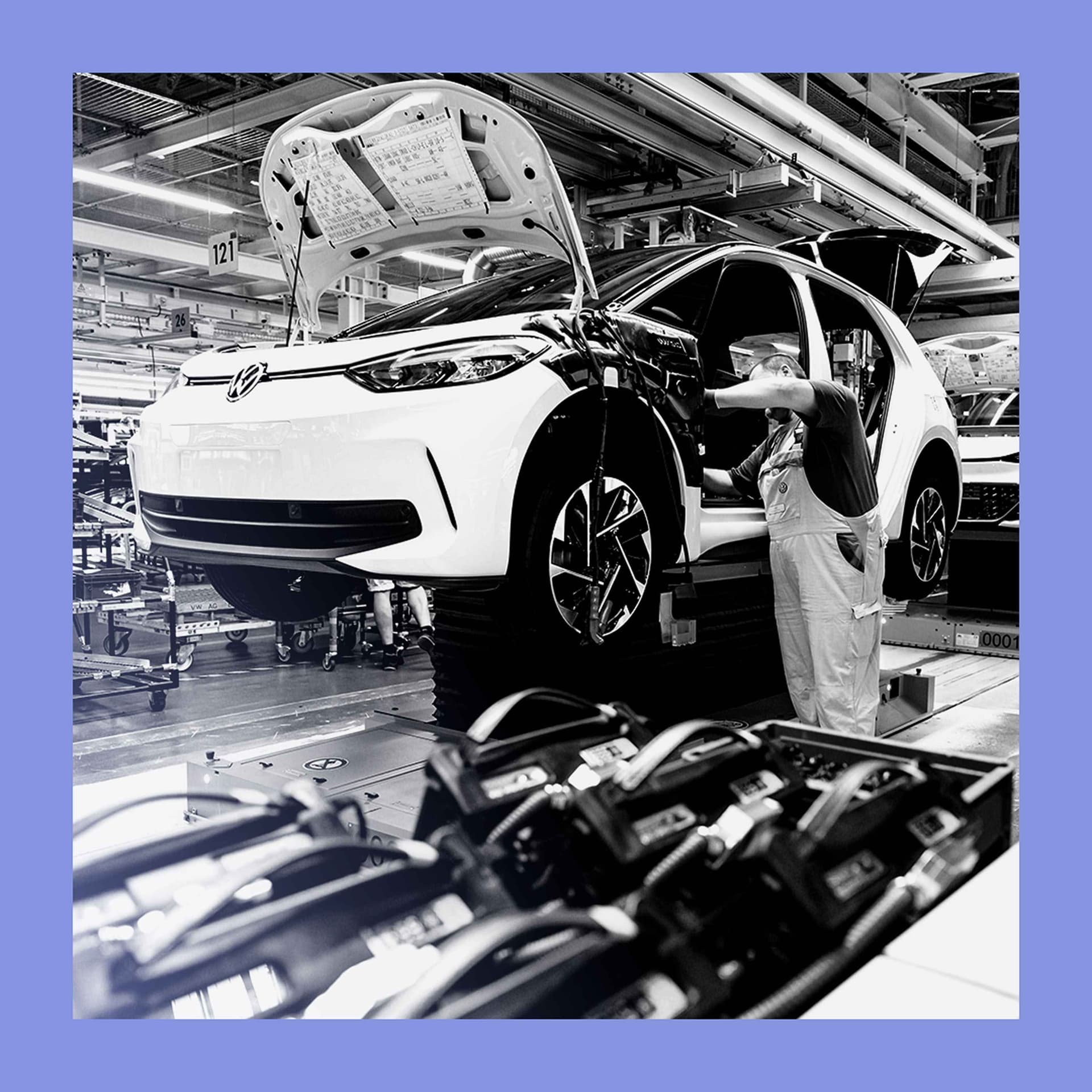
3:07And that's what we've now seen happen. Tom Lee Devlin is The Economist's business editor. But I think the important point here is that favouring petrol power in the long run, it's not really going to be in the interests of European and American car makers. So, Tom, what's really going on here? Is the EU just shifting the goalposts or is it a full U-turn? So instead of an outright ban, carmakers will now have to cut their tailpipe emissions by 90 % by 2035 compared with the 2021 levels. Interim targets along the way and also goals for electrifying commercial vehicles have been watered down as well.
3:50So in one sense, Yes, I think you can say this is a reversal. In 2035, you are still going to be able to buy a petrol car in the EU, but it is still somewhat restrictive for the European auto industry. And why has this happened? Two years ago, when this commitment was first set, growth expectations for EV sales in Europe were very high. Car makers had made big promises to their investors around rapid expansion of EVs. A lot of that was based on enviously looking at Tesla, which had just soared to a$1 trillion market value at the time. But in reality, the road to electrification in Europe has been much slower and much bumpier than people expected back then.
4:35So this year, around one in five cars sold in Europe will be pure EVs. And on the kind of current trajectory, by 2035, when that ban was meant to come in place. We were really on course for only around three quarters at best of cars in the block being pure electric. That still seems like quite a lot to me, given that it was a pipe dream even 10 years ago. But why aren't Europeans taking to EVs as fast as expected? There are a number of challenges here. I mean, EVs do come with significantly higher upfront costs. Smaller car models are very popular in Europe, and there are fewer of those in EVs to choose from.
5:18There are also lingering concerns about the availability of charging infrastructure. Another factor here has been some to-ing and fro-ing by governments around purchase subsidies. So if we take the example of Germany, EV sales there collapsed when incentives for EV purchases were removed at the end of 2023. You do see a similar story playing out in the US to an even greater extent. Fewer than one in 10 cars sold there are pure electrics and the rate has really stalled completely. Donald Trump has made very clear his preference for gas guzzling cars. He's rolled back some of the incentives and other measures to support EVs that were put in place by the Biden administration.
6:00So we're also seeing a similar story play out on the other side of the Atlantic. So where does all of this leave the EU car industry? Well, European car makers have been clamouring for this change. But I think it's important to say that slamming the brakes, if you can excuse the pun, also comes with dangers. One of the big strategic threats that the European auto industry is facing is the rise of Chinese competitors, in particular Chinese EV makers. A year or so ago, the EU introduced some hefty tariffs on Chinese EVs, but they're still expanding on the continent. Their share of the Western European car market as a whole in the first 10 months of the year was 10.7%.
6:41And that was a percentage point up from a year ago, despite these hefty new tariffs. And in particular, we've seen very strong growth of hybrid electric cars from China, which are not subject to the new tariffs. And more importantly, Tom, where does this leave the EU's overall carbon emissions targets? Well, obviously, this is a setback. And it was a high profile commitment that the EU made. Cars are a significant contributor to carbon emissions. I do think in the long run, we are still heading towards a future dominated by electric vehicles. They are becoming rapidly cheaper, not least because of the innovations and the scaling up of the ecosystem in China.
7:22And Western carmakers, a number of them are still pushing ahead with their plans for electrification. The reality is that America and Europe are not the only car markets in the world. China is a huge and still a very important car market for a number of these Western car companies, even though they've lost share in recent years. And they're also competing against Chinese companies that are growing quickly in other markets, particularly in the global south. So yes, this does represent a setback of sorts in the EU's ambitions around carbon emissions. But I do think we're still heading towards a future of significantly lower emissions from cars.
7:57Tom, thank you very much for talking to me. Thanks very much for having me.
8:04Thank you.
8:34Shape tomorrow's economy today. Brookfield. Own what's next. Learn more at brookfield.com. This is not an offer to sell or investment advice. Investing involves risks, including loss of capital. Most of us don't think much about how money actually moves until something slows it down or makes it more expensive than expected. That friction is exactly what Bitcoin was designed to rethink. Bitcoin is often talked about as an investment, but it was built to be used. With Cash App, you can actually do that. Send Bitcoin instantly. pay at local Square businesses that accept it, or move it to your own wallet whenever you want.
9:07It works more like real money and less like something locked in an account. For a limited time, new customers can get$10 added to their balance. Just use code CASHAPP10 when you sign up. And don't forget this part. Send at least$5 to a friend in the first two weeks. Terms apply. CASHAPP is a financial services platform, not a bank. Banking services provided by CASHAPP's bank partners. Bitcoin service is provided by Block, Inc. Brand. For additional information, see the Bitcoin disclosures at cash.app. Legal. Podcast.
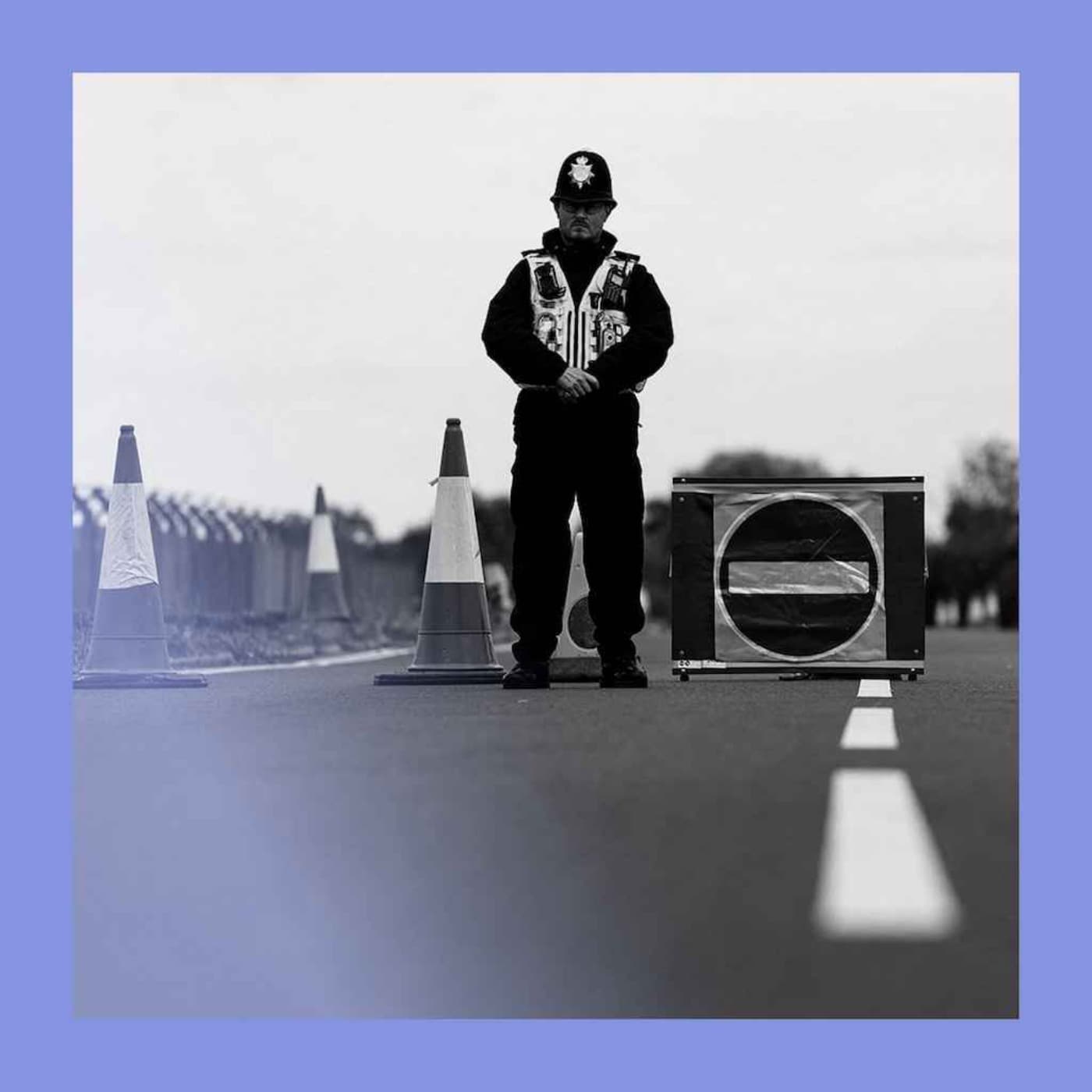
9:47Early next year, a decision is in the offing that will have a big impact on the world economy. Who will be the next chair of America's Federal Reserve? Donald Trump says he's already decided who to nominate. a decision he's expected to reveal in the coming weeks. Even before that appointment, Trump has started to make demands on the Fed. He wants it to speed up its interest rate cuts. He's tried to oust Lisa Cook, a Fed governor, and he's already put one of his own advisers, Stephen Mirren, on the Fed board temporarily, who then voted for bumper rate cuts. With such political pressure in sway, next year could be testing for more than just America's economy.
10:27The most likely candidate to be the new Fed chair taking office in May is Kevin Hassett. That's President Trump's close economic advisor. Henry Kerr is our economics editor. He's in the White House now. He was in the White House during the first Trump administration, but he has declined in the betting markets. He's not a sure thing anymore, but he is still the favourite. So tell me a bit more about his background as a potential Fed chair. Yeah, he's quite an interesting guy. When I was reporting in Washington a decade ago before he joined the Trump administration, he had a reputation as a quite technocratic guy.
11:05I mean, he was clearly partisan, Republican, had campaigned for Republicans and so on. But he had also published in top economic journals, would present at wonkish conferences on tax policy and so on. Now, after a decade, roughly, of working with Trump, he's viewed as someone who's much more partisan, who's left his time as a technocrat behind him to be more of a political operator, who will defend the president on television, who has changed his position on trade, and who has put out models and numbers, which a lot of economists turn their noses up at and say are politically motivated. So the question, if it is Kevin Hassett, is which Kevin Hassett do you get?
11:47Does he become a technocrat again, which is definitely somewhere in his bones, or does he acts like an agent of Trump in the Fed. And that's the big question about him. And is that unusual that you even could have a Fed chair who's that partisan? Well, not in terms of having an explicit party allegiance. Janet Yellen worked in Bill Clinton's White House and became Fed chair. Everyone knew Ben Bernanke was a Republican. Everyone knew the political leanings of Alan Greenspan, who had also worked in a Republican White House. So that's not unusual. What is more unusual is having someone go from one minute being quite a political operator into a role where the convention, at least, is that you have independent technocracy.
12:34So I do think it would be unlike any Fed chair appointment for a long time in that respect, even though historically Fed chairs have hailed from a particular party. And you say that Hassett's been the favourite in the betting markets, but who are the other potential candidates? Yes, so there was a short list of five. There were two existing Fed governors, Chris Waller and Michelle Bowman, who have been calling for interest rate cuts this year, which aligns with what Trump wants. You have Kevin Hassett. You have a reader who is from BlackRock, the investment firm. And then finally, Kevin Walsh.
13:12And following remarks that President Trump made last week to the Wall Street Journal, it looks like it's now between Kevin Hassett and Kevin Walsh, the two Kevins. Kevin Walsh is someone who was on the Fed already. He was a Fed governor during the global financial crisis. But again, slightly interesting figure because he was then and subsequently spent the 2010s being quite hawkish on monetary policy. And of course, what Trump wants is someone who's going to cut interest rates. So he's a Republican and he's always in the mix for these sorts of jobs. He always pops up on the list, but it's not actually clear how much he's having to contort himself into being what Trump really wants, which is a monetary dove.
13:51And the way it seems as if he's trying to square this circle is as Scott Besson, the Treasury Secretary, who's been leading the search, has been doing by really criticising the Federal Reserve's record on QE, on quantitative easing, which is something everyone can get on board with as a criticism of the Fed. It's, if you like, your technocrats' criticism of the Fed that somewhat dodges the issue of whether you're a hawk or a dove on interest rates. Henry, it sounds like the stakes are really high here. Of course, you're choosing a Fed chair, which is important for the future of the US economy.
14:21But this sounds even greater than that about the future of the Fed's independence. Yes. So it's not just about who Kevin Hassett is and what kind of Fed chair he would be. It's about the context in which this is happening. President Trump has lambasted the Fed for not cutting interest rates fast enough. He's explicit that he wants lower interest rates in order to lessen the costs of servicing the US government's debt. And I could tell you if you're an economist and you hear someone saying that, it's like a red alarm bell going off the stability of the monetary fiscal regime. And you also have this court case about whether or not Trump can fire Lisa Cook, who's one of the Fed governors.
14:59He's been trying to get rid of her because of irregularities in mortgage paperwork that she submitted before she was a Fed governor to get a mortgage. And it's not clear whether the Supreme Court's going to let him do that or not. But it's possible he'll get the new Fed chair. It's possible that he'll be able to appoint someone to replace Lisa Cook. And it's possible that when Jerome Powell's term as chair ends in May, he leaves and another seat on the Fed board comes up as well. So you have this potential for Trump to nominate the chair and other people to the Fed to the point where he has much more influence over it.
15:34One check against that, of course, is the Senate, which has to confirm the nominations to the post. And the Senate does know about the importance of the Fed, but there's no question that Kevin Hassett would be confirmed. And then it plays into this bigger picture in which you have these big US deficits. You have potentially the tariffs getting struck down in January as well. So you could have a lot of instability around America's economic policy all at once. So it's not just about who Hassett is, it's about that broader context. Henry, thank you very much. Thank you, Rosie.
16:22Our sister show on science and technology, Babbage, has been putting together an evidence-based guide on surviving all of the delightful but unhealthy habits we tend to adopt over the holiday period. Our science correspondents answer questions like, how bad really is all of the sugary food we're eating? What does alcohol do to our bodies when we drink? And why do hangovers seem to get worse as we get older? As people age, they typically lose muscle mass in favor of fat. muscle mass holds a lot of water. Alcohol is water soluble. So as a body becomes fatter, it becomes less able to absorb and basically agreeably absorb the alcohol.
17:04So you get uncomfortable jumps in buzziness. It also tends to make hangovers worse. I want to promise that it's not all bad news. Check it out. Babbage is out later today. You might just hear some familiar voices pop up.
17:27Okay, tuxedo, check. Envelopes, check. Mic check, checked. All right, cue the band.
17:42Taped from the Economist's offices in London, it's time for the award show we convinced our editors was a legitimate use of our work hours. It's the word of the year! And back for our annual show, it's our guardian of the grammar, Wizard of Words. Welcome to the stage, Lane Green. Thank you, Jason, for that warm introduction. Yes, it's time for Word of the Year.
18:07Okay, Forest Art Lane, do us the honor of running through the nominees, the shortlist. Our first nominee actually won in another category this year. The winner for Foreign Word of the Year, nominated by several of our China correspondents, was Neizuan. It's Mandarin for involution. That means the increasingly cutthroat competition between businesses, such as those that make electric vehicles, despite their diminishing returns as they can pee their prices down. It's also become used by workers to refer to that same sense of running ever faster on the treadmill to get nowhere. But does this word have what it takes to be word of the year?
18:45Well, we're going to have to see. Let's hear the second nominee, Lane. Taco was one of this year's strong favorites. It was coined by Robert Armstrong, a journalist at the Financial Times, and it stands for Trump Always Chickens Out, pointing to the many terror fights that Donald Trump has picked and then subsequently backed down from. Moving swiftly on then to our third nominee, Leigh. Our third nominee is 6-7. No, don't pronounce it, 67. It's a ubiquitous bit of youth speak that, as the lexicographers at dictionary.com admit, has no fixed meaning. Instead, as they say, it has all the hallmarks of being brain rot, which was Oxford Dictionary's word of the year in 2024.
19:25Brain rot, of course, is a state caused by the overconsumption of mindlessly entertaining junk, particularly the online kind. Of course, I remember it well. All right, take us home the final nominee. Our final nominee, Jason, is not a new word, but it has a new meaning in our culture, and that is slop. This year's word was spurred by OpenAI's release of Sora, which is a generative artificial intelligence platform that creates videos based on a text prompt. Suddenly, your social media feeds were filled up with such clips, and a term that started circulating already a couple of years ago in the early days of generative AI is now everywhere.
20:05Your feeds are filled with slop. All right, let's run through this. Then the nominees are Neijuan, Taco 67, not 67, and Slop. Lane, I think you have the envelope there in front of you. Please reveal the word of the year.
20:23And the winner is Slop. Fantastic, Lane. Now tell us what gave it the edge to make it our winner. Slop has a staying power. I think you may not like it, but you are living with it. and it is almost certainly here for the long haul. You can find slop merchants clogging up the internet with Dribbble. You can enter a health question or a travel destination on Google and see how many of the top results are brand new webpages filled with AI written garbage. Or scroll through Instagram and see how long it takes you to come across a video that it's made up of fake clips in an AI voiceover. Or head on over to X and see if you can distinguish the real MAGA accounts from those that were revealed by X's new About This Account feature to be slop shops in places like Pakistan or Thailand or Nigeria.
21:12So that might sound pretty bad, but I think there could at least potentially be an upside to a world awash in slop. If the news ecosystem is suddenly sodden with slop, maybe trust in established news organizations might rebound. If your social media sites become filled up with slop too, either those platforms will have to get serious about their content moderation or else their users are going to have to shut them off and go outside and have real conversation. So is this then perhaps a case for sloptimism? Love what you've done there, Lane. Thanks very much as ever for your time. Thank you, Jason.
22:02That's it for this episode of The Intelligence. Don't forget you can listen to The Intelligence free of ads on The Economist app. If you're a subscriber, you can also access our new video offering, Insider, which has weekly shows featuring our senior editors and specialist correspondents on subjects ranging from defence and geopolitics to economics and tech. Download it wherever you get your apps. And we'll see you back here tomorrow.
23:00Thank you. in a good way. What's in your wallet? Terms apply. See CapitalOne.com slash bank. Capital One N.A. Member FDIC. At Brookfield, we invest in the thing behind the thing behind the next big thing. Our focus across infrastructure, energy, real estate, private equity, and credit is helping to build the backbone of the global economy. We combine deep operational expertise with disciplined long-term investing, uncovering value, and partnering alongside clients to shape tomorrow's economy today. Brookfield, own what's next. Learn more at brookfield.com. This is not an offer to sell or investment advice.
23:39Investing involves risks, including loss of capital.
From the publisher
The European Union had promised to ban the sale of new diesel and petrol vehicles by 2035, as part of its environmental ambitions. Yesterday it watered down that commitment. Our correspondent explains the implications. Will Donald Trump’s choice of Federal Reserve chair politicise the institution? And The Economist announces its word of the year.
Listen to what matters most, from global politics and business to science and technology—Subscribe to Economist Podcasts+
For more information about how to access Economist Podcasts+, please visit our FAQs page or watch our video explaining how to link your account.
Hosted on Acast. See acast.com/privacy for more information.