
In short
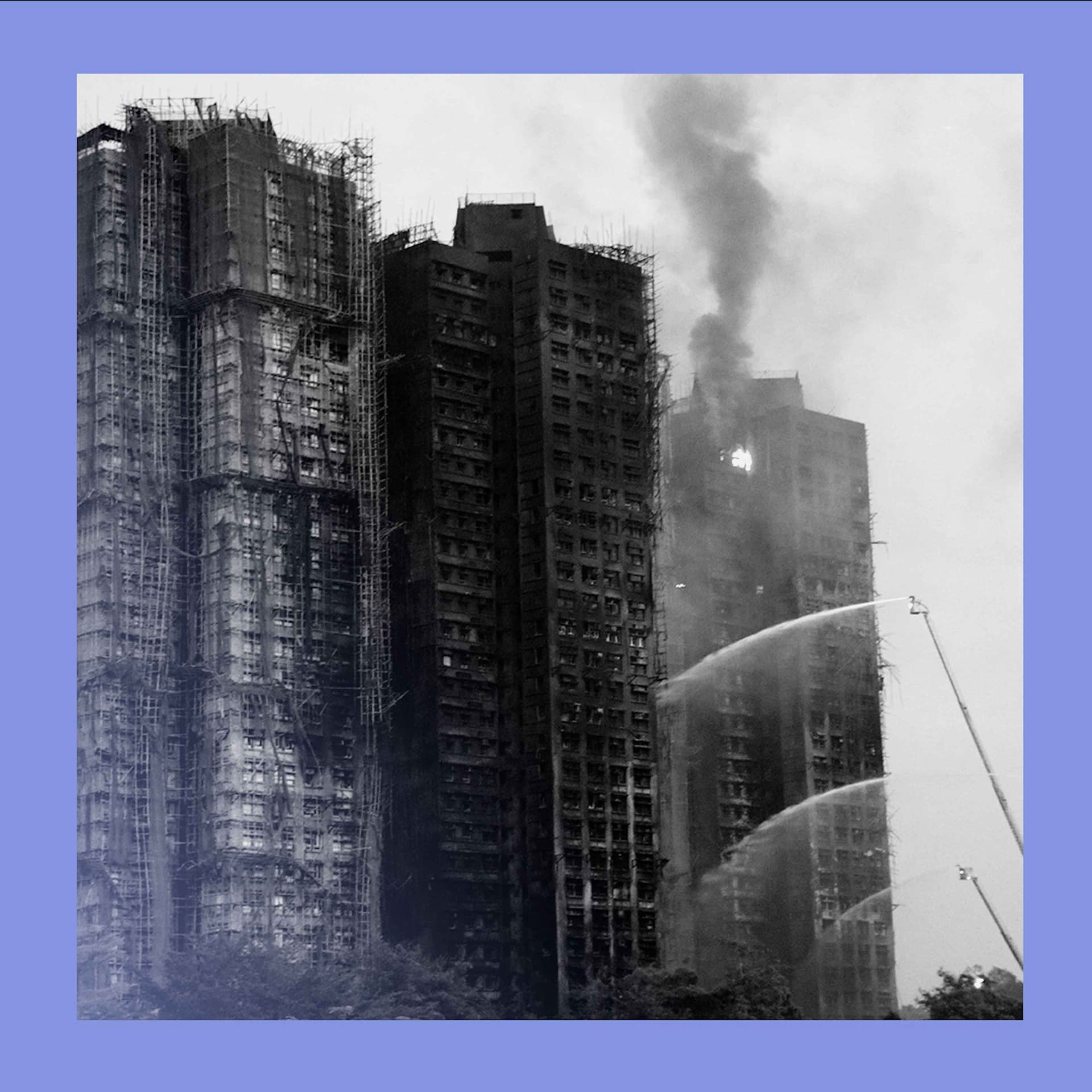
The Intelligence from The Economist episode “Fire, then fury: Hong Kong’s deadly blaze” focuses on Hong Kong’s deadly high-rise fire that consumed seven residential blocks, killing 128 people (as of Friday afternoon) and displacing thousands, many sheltering in a mall.
Guest
Emma Irving, Asian news editor for The Economist.
Key claims
the exact cause isn’t known, but the fire likely spread rapidly due to bamboo scaffolding with non-fire-retardant netting, styrofoam found in windows, and safety failings including construction workers smoking on site and fire alarms allegedly switched off for convenience.
Notable examples
arrests of three senior construction-company figures on suspicion of manslaughter; a HK$300 million relief fund; planned phase-out of bamboo scaffolding; comparisons to London’s Grenfell Tower (2017) and Hong Kong’s 1953 fire that helped spur public housing.
Written by AI. May contain mistakes. Listen to the episode to check what was said.
Chapters
Tap a time to open that second in VOHong Kong Fire Updates
1:33 to 2:42
Get updates on the tragic fire in Hong Kong that has left many dead and displaced.
“Hello and welcome to The Intelligence from The Economist.”
Fire Origin and Safety Failures
2:42 to 4:06
Learn about the potential causes of the fire and the safety failings leading up to it.
“As of Friday afternoon in the city, 128 people are known to have died.”
Community Response and Grief
4:06 to 5:41
Explore how the community is responding to the tragedy and the underlying issues it reveals.
“So we don't know the exact cause of this fire yet, but we do know that it was probably at least quickened by a lot of the renovation work that had been happening on the towers.”
Government and Authorities' Actions
5:41 to 7:12
Discuss the actions taken by the government in response to the fire and public anger.
“And Hong Kong is completely covered in construction materials.”
Potential for Change in Housing Regulations
7:12 to 9:10
Consider whether this tragedy could lead to reforms in housing and safety regulations.
“you can see that a lot of the bamboo scaffolding is still intact.”
Voices of Protest in Georgia
14:00 to 14:58
Explore the ongoing protests in Georgia through personal stories of activists.
“Every single night, starting around 8 o 'clock.”
Historical Context: Georgia and Russia
14:58 to 16:48
Understand the historical ties and current political implications between Georgia and Russia.
“The way she sees it is that she grew up under Soviet rule and she is absolutely not going back to it.”
Political Landscape and Election Concerns
16:48 to 19:25
Examine the current political climate and election integrity issues in Georgia.
“is a foreign agents law that mimics something that came into effect in Moscow previously.”
Hope and Exhaustion Among Activists
19:25 to 23:04
Hear about the feelings of hope and exhaustion faced by activists after a year of protests.
“That's the system I build for myself because I also have to take care for children, for home staff, for other responsibilities I have.”
The Legacy of Nushu: A Hidden Language
23:04 to 28:00
Discover the history and significance of the Nushu language passed down among women.
“The show now has its own feed as well as appearing in the usual intelligence one.”
Show all 13 chapters
The Evolution of Nushu Language
28:00 to 30:16
Discover how the Nushu language has evolved and the concerns surrounding its commercialization.
“But some of them managed to meet, and certainly before they were married, they managed to meet in the upper chambers of houses.”
Podcast Credits and Production Team
30:16 to 30:57
Meet the production team behind The Intelligence podcast and learn about their roles.
“Our podcast on China, Drum Tower, will release a special episode on the Nushu language in the coming weeks.”
Podcast Credits and Production Team
31:23 to 31:33
Meet the production team behind The Intelligence podcast and learn about their roles.
“Taxes aren't something you can only think about once a year.”
Transcript
Automatic transcript. May contain errors.0:00With no fees or minimums on checking accounts, it's no wonder the Capital One Bank Guy is so passionate about banking with Capital One. If he were here, he wouldn't just tell you about no fees or minimums. He'd also talk about how most Capital One cafes are open seven days a week to assist with your banking needs. Yep, even on weekends, it's pretty much all he talks about. In a good way. What's in your wallet? Terms apply. See CapitalOne.com slash bank. Capital One N.A. member FDIC. Hey, Yetis. This is Nick and Jack from the Best One Yet podcast. Now, the last company we worked at, they used Paylocity and everything just worked.
0:37It wasn't until launching our own media business, this show, that we realized how rare that is. Because Paylocity is one delicious burrito of operational needs. They roll up HR, finance, and IT seamlessly into one delicious bite. When everything wraps together like that all at once, your workforce, your tech stack, your business, you don't need more tools, you don't even need cilantro. You need one solution. And that is why Paylocity built a single platform to connect HR, finance, and IT with AI-driven insights and automated workflows that simplify the complex and power of what's next. Or as we call it, a delicious operational burrito.
1:10Yes, we do. Experience a one place for all your HCM needs, besties. So start now at paylocity.com slash one. Paylocity.com slash O-N-E.
1:26The Economist.
1:33Hello and welcome to The Intelligence from The Economist. I'm your host, Jason Palmer. Every weekday, we provide a fresh perspective on the events shaping your world.
1:47In Georgia, protesters have now been at it for a full year, railing against the ruling party's turn away from the EU and towards Russia. Our correspondent returns, speaking to weary, fearful protesters about what it'll take to tip the scales in their favor. And in China, Nushu translates as women's script. It's an ancient language spoken, actually sung only by women. Our obituaries editor reflects on the life of He Yanqin, the last person to learn Nushu naturally.
2:26But first...
2:34This morning, officials in Hong Kong updated the death toll from a fire that's consumed seven high-rise residential blocks. As of Friday afternoon in the city, 128 people are known to have died. Thousands more have been displaced, many sheltering in a local mall.
2:55This 84-year-old man said the wind was so strong. One block by one block goes up in a flash. As soon as one is finished burning, the next catches fire. The blaze has at last been contained. Public fear and outrage, far from it. It's a tragedy that sparks lots of questions about the Hong Kong of today. How much the local government does or doesn't take care in its housing for the poor. How much the mainland government will come to Hong Kongers' aid. Even whether scaffolding practices will take the blame and become another aspect of the territory's traditions quashed from Beijing. It's a very sombre mood in the city at the moment.
3:38Emma Irving is an Asian news editor for The Economist. People are generally checking the news as much as they can. You'll be on the MTR or on the bus and see people scrolling through sites to get as many updates as possible. And it really feels like the community is trying to sort of band together to process this enormous tragedy. There's a real sense of trying to understand what's happened here, what the cause of this fire was, if it could have been prevented. And what do we know so far about the origin of the fire? So we don't know the exact cause of this fire yet, but we do know that it was probably at least quickened by a lot of the renovation work that had been happening on the towers.
4:18So it broke out on a section of bamboo scaffolding and seems to have spread really quickly because of the netting that was used all along the buildings during the construction. And also styrofoam was found inside the building on the windows, and it's thought that that also intensified the blaze. and there were a series of sort of safety failings that seemed to have occurred around a lot of these materials. So some of the netting, for example, wasn't fire retardant and a lot of the construction workers seems to have been smoking on site and it's also thought that the fire alarms were switched off supposedly for kind of convenience for the building workers.
4:58And what's been the reaction of city residents so far? So people are really trying to band together here to do everything they can to help. There have been these donation sites set up all over the city and social media is completely awash with ways that people can volunteer to try and help the residents. But there's also a lot of kind of building anger because more than a third of the residents were elderly. So there's been this real outpouring of grief and anger. They were living in a sort of poorer building within a very rich city. And Hong Kong has for decades suffered from quite extreme housing inequality.
5:33A lot of people, particularly in poorer neighbourhoods, live in these very densely packed, cramped living conditions. And Hong Kong is completely covered in construction materials. It's a city where buildings are going up overnight all of the time. The kind of constant sound of the city is hammers going. I walked out of my apartment block yesterday and realised that there was bamboo scaffolding with netting literally all over my street. So there's a real sense that if this is a big problem in terms of the kind of safety regulations and building regulations that the city has, then it's something that can happen again at almost any time.
6:13And in the wake of all of this, what have the city authorities done so far? So three senior people from the construction company have already been arrested on suspicion of manslaughter. And the officials said that they were accused of gross negligence. The authorities have also launched this$300 million Hong Kong dollar fund to try and help the residents. That's about$38 million US dollars. And they stopped campaigning for an election that's meant to be coming up on December the 7th. And they've also said that they're planning to completely phase out the use of bamboo scaffolding. But from what you're saying, it doesn't sound obvious that bamboo is the only or the central problem here.
6:53Yeah, so it's interesting. It's something that's been talked about a lot in Western media, that the bamboo scaffolding is potentially the reason for this fire. We obviously don't know yet what the exact cause was, but there's been also a slight sense in Hong Kong that perhaps the bamboo scaffolding is being scapegoated in some way because actually when you look at the photos of the wreckage, you can see that a lot of the bamboo scaffolding is still intact. And the government has been trying for quite a long time to phase out the use of bamboo scaffolding. And there's some sense in the city that that's partly because it's a part of the construction industry that the mainland doesn't have control over.
7:34And actually, bamboo scaffolding has its own guild. It's got quite a strong sort of sense of it almost being like a trade union, which is something that is not really allowed in Hong Kong anymore. At the mention of the mainland government, has there been a response from Beijing? Yeah, so China's leader Xi Jinping said that he would launch a kind of all-out effort to try and help those affected by the fire and the mainland dispatch, this rescue task force. And John Lee, who is Hong Kong's leader, really used that as an example of the way in which being more closely entwined with the mainland has obvious benefits from Hong Kong.
8:11He talked about the fact that it showed the spirit of helping each other when one is in trouble. and he actually used a kind of press conference he gave to mostly swerve questions about local governments instead focusing on the benefits that came from the mainland being more closely involved with what was happening. I wonder the degree to which all of this can form a, forgive the word, flashpoint, though, for more public anger. If there is this long-running housing grievance, if there's this question around the motives for shutting down the bamboo guild, etc., Do you think public anger could build, will build?
8:49I think public anger will build and is building. There's really this outpouring of grief. And I think when we know what the cause of this fire was for sure, there will inevitably be questions that need to be answered around who's responsible for that. And a lot of sort of demand in the city that there is accountability for this tragedy. In Hong Kong, you now can't protest because of the national security law. so it's unlikely that we'll see lots of people taking to the streets to march. But I certainly think that the government is very aware that the issues around housing are long-running issues for its inhabitants and things that can cause a lot of anger in this city and indeed have contributed to protests in the past.
9:31But more broadly than the immediate public response and the government's response to it, I suppose the question is whether you think things will change in the housing industry in terms of safety regulations and the like. Yeah, I think it's quite likely that this will prompt some kind of reform in terms of the building regulations and safety inspection regulations that we have here. There are already comparisons that are being drawn to the tragedy at Grenfell Tower in London in 2017, which did prompt eventually a de facto ban on some types of cladding and this big overhaul of fire safety standards.
10:05And actually in Hong Kong in the past, deadly fires have led to big housing policy overhauls. So in 1953, there was this huge fire that left tens of thousands of people homeless in the city. And that actually was what contributed to the city's development of its public housing programme, because the government wanted to provide shelter for the people who'd lost their homes in that fire. So I think it's very likely that given the scale of this tragedy, with sort of 4 ,600 people affected who were living in these towers, who now have nowhere to go, that it's going to prompt some serious reflection around how they can possibly improve building regulations and fire safety across the city.
10:45Emma, thanks very much for joining us. Thank you for having me. Thank you.
11:19needs. Yep. Even on weekends, it's pretty much all he talks about in a good way. What's in your wallet? Terms apply. See CapitalOne.com slash bank. Capital One N.A. Member FDIC. Hey, Pablo Torre here. As a sports journalist, I've covered global sports for many years now. And there is one thing that I can promise you. Nothing compares to the World Cup. And this time it is even better thanks to McDonald's. You have the chance to take home one of nine legendary cups when you order the FIFA World Cup meal. The cups feature some of the biggest legends in football like David Beckham, Terry Henry, and Ronaldinho, Christian Pulisic, Lamine Yamal, and Alphonso Davies.
12:00Right now, get one of nine legendary cups when you order the FIFA World Cup meal only at McDonald's. At participating McDonald's only for a limited time while supplies last. All rights reserved. Copyright 2026. McDonald's at the FIFA World Cup 2026.
12:28It was exactly one year ago that tens of thousands of people took to the streets of Georgian cities, from Tbilisi to Batumi. Sarah Lonyuk is our audio correspondent. The protesters came out against a decision by the ruling government, headed by the Georgian Dream Party, to suspend accession negotiations with the EU. And that sparked fears that the country would move even further into the realm of Russian influence. Protesters fly the Ukrainian flag next to their own, in solidarity with soldiers fighting there now against what they see as the same enemy. Initially, law enforcement tried to repress the movement at the end of police batons, tear gas, and water cannons.
13:12But the protesters answered with fireworks, and gas masks came into vogue, and the scene began to look a lot like a war zone. Violence by the state was inflaming the crowds of demonstrators, threatening to overwhelm the administration. And so they pulled back on that outwardly violent response. Instead, they doubled down on more covert repression. And after 365 days of protests, the numbers in the streets have dwindled. But they are still here.
13:51Now, Sarah, you were in Georgia a year ago. You've just come back from another visit. After a year, what do the protests look like on the ground? So each night, there's still hundreds of people that come out. Every single night, starting around 8 o 'clock. The government is using the legal system now to discourage them instead of riot police. So fireworks are banned, face coverings, new charges are implemented for blocking traffic. Hundreds of people have been arrested over the course of the last year, and they're facing extortionate fines or even prison time. Last year, it was a confrontation with police.
14:29I have some equipment for self-defense. George Abukadze got out of prison in August, and he says he had drugs planted on him by the arresting officers. A judge threw out the charges, but not until he had already spent eight months in prison. And I spoke to a 65-year-old woman named Rusiko Kobakidze, and she has been arrested twice this month already. And she says she's going to stay out there anyway. Because in the Soviet Union, we have no elections, we have no choice, we have no freedom. The way she sees it is that she grew up under Soviet rule and she is absolutely not going back to it. So implicit in the mention of Soviet rule is this notion that what's going on in Georgia has something to do with Russia.
15:21What do you make of that notion? Implicitly, all of domestic politics in Georgia effectively has to do with Russia. And most of this concern links back to one individual, a man named Bidzina Ivanishvili. He is this billionaire shadowy figure in Georgia. He has this enormous mansion that you can see overlooking the whole city. It's very Bond villain style-esque. And this man is the founder of the Georgian Dream Party, the party in power. And he made his money in Russia in the 90s, in addition to the fact that Russia also invaded Georgia in 2008. And Russian President Vladimir Putin has not been shy at any point about alluding to the fact that much like Ukraine, he sees Georgia as a country that he wants to pull into the Russian fold again.
16:08So there are these connections to the ruling party. But if the protesters on the street don't get satisfaction on the streets, what about getting changed to the ballot box? Right. So Georgia does have elections still. And the most recent parliamentary elections were held back in October 2024. But election monitors did flag that election as being suspicious. They flagged instances of vote buying, double voting, physical violence, and intimidation. And since then, the Georgian Dream Party has really throttled the country's democratic backslide here. One piece of legislation they enacted this year is called, in Tbilisi, Russia's law.
16:44So harkening back to their influence as well. But what it really is, is a foreign agents law that mimics something that came into effect in Moscow previously. And this sees that any group that receives any funding from abroad in excess of 20 percent has to seek approval from the government to receive that funding. And what this has done is gutted NGOs that support local democracy efforts, like building a strong opposition or building civil society organizations. In addition to that, nearly every opposition leader in Georgia has also been thrown in prison. And the government's actual stated view on this is that they are protecting the country from foreign influence in a general sense.
17:27Certainly they don't own up to being in Russia's pocket by any means. However, you have seen messaging from the government. It's all been very regimented. And it's put forward things like the idea that the EU accession was being used as blackmail and forcing the country to try and change some of their domestic policies. Much of this has a conspiracist tone to it. And they point to Ukraine. They say, look, they did move towards the West. And look what happened to them. So they are really using a message of we are trying to keep the peace. We don't want to upset Russia. We don't need another invasion like 2008.
18:04When you went to Georgia a year ago, it seemed as if the protest movement, the protesters themselves had a chance. What are the odds that the protesters get what they want in a longer run? I won't pretend to have a crystal ball. certainly there is a lot of apathy setting in. I met with some of the same people a year ago that I met with on this trip. And what I saw was that some people's resolve remains unchallenged, and then others are really feeling the weight of the last year. So one of the women I spoke with's name is Anna Toklakashvili, and she founded a tech startup that focused on delivering unbiased information to voters ahead of elections.
18:45And this is what she said a year ago. I'm very optimistic that it's going to end with meeting the demand of people. But this year, exhaustion has really set in. And she talks about how she just feels the weight of her country slipping away, of the anxiety that comes with all of that. I have only one fine. Sometimes I have a feeling that, oh, I'm doing something wrong. One fine is nothing. Yeah, I do have my own routine of participating in the protests. Like I go there one or twice per week. That's the system I build for myself because I also have to take care for children, for home staff, for other responsibilities I have.
19:35Similarly, I met a woman last year named Miriam Kalushvili-Southwell. And she ran a Facebook page at the time that had become a focal point for protesters to coordinate their activities. And last year, like Anna, Miriam was filled with this hope that this was the moment for change. And a year later, she has somehow found herself in the back rooms with opposition leaders as a civil society member, trying to sort out the plans that the protesters should implement over the months to come. They can see that we're getting more organized. I dare say she actually might be more hopeful now, because if there's one thing that these protests have done, it's that it has united this front of people who want to see Georgia move towards the West.
20:20And as a memory, I was looking at the photos and you see people that you know, all of them. And back then you didn't know them. So, like, everyone was sharing, like, you know, like one year of overnight protests, blah, blah, blah. And it was like, we're all there. We just didn't know each other. But what is it that gets it past enthusiasm and to change? So I've thought a lot about this over the last year. And in order to investigate this story, I looked back at the past several decades of protests. And there are more protests in the period of 2010 to 2020 than any other decade in recorded human history.
20:58And yet more of them are failing because incumbent regimes are learning how to deal with popular protests. However, the ones that succeed tended to have factors in common. So one of those is a really coordinated and organized opposition, which Georgia did not have. Another is a regime that causes greater outrage in the streets. That is also against the protesters in Georgia. International support, which we have seen, but in very middling supply. Joe Biden was, in fact, the last person to implement sanctions against anyone in Georgia. And then the last one is to cause some sort of radical action that shifts the balance and causes the regime a misstep, causes the regime to fracture internally or lose the support of law enforcement.
21:44But the thing in Georgia that makes it different from all of them and actually plays against protesters is this really strange cultural reticence that they have that has a legacy in the fall of the Soviet Union. And when that happened, it was incredibly violent. 21 people died on April 9th, 1989, in the exact spot where they protest today, when Soviet tanks came in and just started killing people. And so now they are scared. They don't want to see their fellow citizens die. This is a small country. People know each other. And so I talked to Miriam about this, and she understood that at some point they might need to take more radical action.
22:26And that doesn't mean violence against other human beings, but it could be, you know, destroying state property. It could be invading a building and protesting there. But it's not something that they're willing to do yet. And it's because they're afraid of inciting that violent response that they saw from the government early on. And they're afraid of the response that they got in 1989. Sarah, thanks very much for your time. Thanks, Jason.
23:03A quick note about tomorrow's weekend intelligence. The show now has its own feed as well as appearing in the usual intelligence one. So you can easily scroll and search through what's become a huge archive of deeply reported Saturday stories. Tomorrow, the show asks what it takes to make 100 ,000 fresh meals a day, day in, day out, on the open seas. How many cows butchered, shrimp peeled, watermelons carved, plates washed to ensure that the culinary experience on the world's biggest cruise ship is unforgettable? And who is doing it all? Our senior producer, Barkley Bram, hitches a ride on the Star of the Seas to discover Mise en masse.
23:57If you had visited China in 1949, the year the Communist Party came to power, you might have seen a grandmother and a 10-year-old girl sitting under a tree. The grandmother was inscribing characters on the palm of the little girl. The little girl was singing it and then getting up to draw the character in the sand.
Read the full transcript
24:27Anne Rowe is The Economist's obituaries editor.
24:33What she was having from her grandmother was a lesson in Nushu, which was a secret and very mysterious language only used by women and passed down from mother or grandmother to daughter over centuries. The little girl was Hei Yangtzen, And she became eventually a steward of the Nushu language. But it took a lot of years, and it also took a certain amount of denial on her part. First of all, by 1960, when she was just about to be married, she really decided she didn't need this secret language anymore.
25:21By that time, everyone was allowed to go to school, including women. So the sort of education she had had learning this strange language was no longer necessary. Also, the language really wasn't being used anymore. Society was changing. She also, after her marriage, got very busy bringing up six children. So, one way and another, she let Nushu go. Now what was this Nushu, and how old was it? Some people thought it had been founded by the goddess of clouds and rain, and other people thought that it was the invention of a beautiful concubine in the medieval Song dynasty. Whatever it was, for some reason it had only grown in one tiny part of China, a very remote place, in Hunan province in the southeast, called Jiangyong It was deep in the mountains, there was only really one town where this language was known and after a while people did come looking for it.
26:37Researchers in the 1980s began to get interested in China's heritage and exactly what had still survived in this tiny little corner. They heard that Hei Xiangjin knew this language but when they arrived on her doorstep She would tell them very firmly, no, she didn't know it.
27:07It was indeed quite a strange language, and part of the reason that she had fallen out of love with it was because it was so full of pain and bitterness. Every time her grandmother had started inscribing the characters, she had started crying, sometimes so badly that she couldn't see. They were the cries of women in feudal China, which really lasted well into the 20th century, who had been made to leave their own houses and their families and go and live in the groom's house with their mother-in-law, who usually hated them, with a husband who ignored them. Often they had their feet bound so they couldn't leave the house.
27:57They had no education and really nothing much to do. But some of them managed to meet, and certainly before they were married, they managed to meet in the upper chambers of houses. And there they would form a sisterhood who sang to each other and did embroidery and used this language, which was a secret way of expressing their sadness to each other and occasionally their joy as well. For two decades, she became extremely helpful to researchers. She tried to ensure that Nushu was not forgotten, that its grammar, insofar as it had it, was preserved. And there was even a Nushu dictionary made in those years.
28:46She always did what she could to keep it going. But she still had some large reservations about Nushu in the 21st century. The main one being that men had now discovered it, and although they didn't understand it and didn't in a way really care about it, they realized that it was unique to this little corner of Hunan. And therefore, tourists would come and look at it, and it could earn money, it could be commercialized. So Nushu nowadays, if you go to the town of Jiangyong and you look around the shops, there are plenty of Nushu signs, often misspelled alongside the Mandarin ones. There's a new and very smart, expensive Nushu museum, which was built in the village of Puwei.
29:38But the trouble is that along the way, they've really changed the character of this mysterious language and this was what Hei Yangjin was so worried about. The songs had become bland and prishy. They were no longer cries from the heart. Young women, in fact, were quite different now. They wouldn't understand them and they also wouldn't understand exactly why her grandmother had cried so much every time she inscribed Nushu.
30:15Anne Roux on He Yan Xin, who's died aged 86. Our podcast on China, Drum Tower, will release a special episode on the Nushu language in the coming weeks.
30:39That's all for this episode of The Intelligence. The show's editors are Chris Impey and Jad Gill. Our deputy editor is John-Joe Devlin, and our sound designer is Will Rowe, with help this week from Mark Burrows. Our audio correspondent is Sarah Larniuk, and our senior creative producer is William Warren. Our producers are Jonathan Day and Henrietta McFarlane, who this week is also our principal violinist. Our assistant producer is Anne Hanna, with extra production help this week from Emily Elias and Alizé Jean-Baptiste. We'll all see you back here tomorrow on the High Seas with The Weekend Intelligence.
31:22This message comes from Jackson. Taxes aren't something you can only think about once a year. With investments, planning for tax days year-round. Fortunately, Jackson offers tax-efficient products. Visit jackson.com for more information on how our products can make your tax bill a little bit less painful. Jackson is short for Jackson Financial Incorporated, Jackson National Life Insurance Company, Lansing, Michigan, and Jackson National Life Insurance Company of New York. Purchase New York. With no fees or minimums on checking accounts, it's no wonder the Capital One bank guy is so passionate about banking with Capital One.
31:55If he were here, he wouldn't just tell you about no fees or minimums. He'd also talk about how most Capital One cafes are open seven days a week to assist with your banking needs. Yep, even on weekends, it's pretty much all he talks about. In a good way. What's in your wallet? Terms apply. See CapitalOne.com slash bank. Capital One N.A. Member FDIC.
From the publisher
The dead are still being found; the displaced huddle in public spaces. Who or what will be blamed, and what policies will change after the tragedy? We visit Georgia, where protests have now lasted a year, probing the differences between popular uprisings that succeed and those that fail. And remembering He Yanxin, last natural inheritor of China’s ancient women-only language.
Additional audio courtesy of Zhao Ke'er from the documentary "Heart of Gold".
Get a world of insights by subscribing to Economist Podcasts+. For more information about how to access Economist Podcasts+, please visit our FAQs page or watch our video explaining how to link your account.
Hosted on Acast. See acast.com/privacy for more information.