
In short
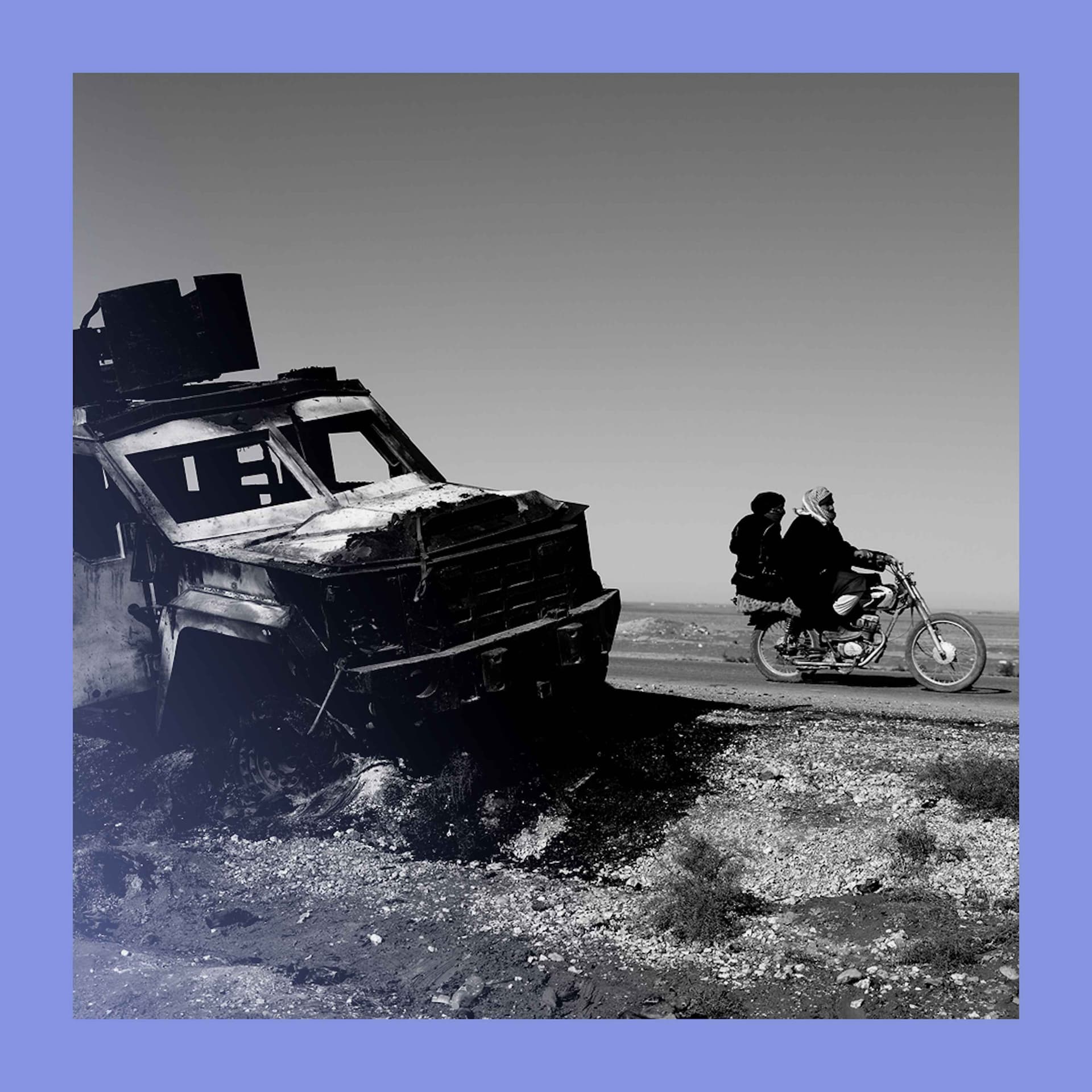
Podcast Episode Summary: House of Kurds: On the Ground in Northern Syria
Podcast Information
- Podcast Title: Economist Podcasts
- Description: A daily podcast providing insights into global stories, trends, and current affairs, including business, finance, science, and technology.
- Episode Title: House of Kurds: On the Ground in Northern Syria
- Episode Description: Recent military advancements by Syrian government troops in Kurdish-held territories and additional discussions on geopolitical dynamics in Vietnam and the changing roles of millennial fathers.
Key Topics Covered
- Conflict in Northern Syria
- Current Situation:
- Fighting has escalated between Syrian government troops and Kurdish forces in northeastern Syria.
- The Kurdish-led Syrian Democratic Forces (SDF) have lost significant control over their territories.
- Correspondent's Insights:
- Gareth Brown reports from a military checkpoint in northeastern Syria.
- Observations of military movement and local reactions highlight the precarious situation in the region.
- Significance of Shadadi:
- Shadadi, once held by Kurdish forces, is now under government control.
- This shift reflects a dramatic decrease in Kurdish territorial hold and raises concerns for the local population.
- Kurdish Identity and Governance:
- The Kurdish population has established an autonomous region with its own governance.
- The PKK (Kurdish Workers' Party) historically influences the SDF, advocating for Kurdish independence.
- Local Sentiments:
- Arabs in the Region: Many express relief at the government’s advance, viewing Kurdish control as foreign occupation.
- Kurdish Reaction: Feelings of betrayal and fear of reprisals from the Assad regime as they face potential marginalization.
- Outlook for Syria:
- Ahmad al-Shara’s government aims for a unified Syria, but this power shift may lead to increased sectarian violence.
- Vietnam's Communist Party Congress
- Background:
- Upcoming Communist Party Congress is crucial for Vietnam's political future.
- It's characterized by the rivalry between factions advocating for different economic models: one favoring privatization and engagement with the West, and another favoring state-centric, traditional alliances.
- Key Figures:
- To Lam: Current General Secretary advocating for reforms and integration of the private sector into the economy.
- Military Influence: The military faction is resistant to privatization, supporting state control and traditional alliances.
- Potential Outcomes:
- Leadership changes could significantly impact economic reforms and international relations.
- The balance of power could shift towards the military, potentially slowing economic liberalization.
- Millennial Fatherhood Trends
- Changing Dynamics:
- Millennial fathers are reportedly spending significantly more time on childcare compared to previous generations.
- The pandemic has accelerated these trends, particularly among fathers in dual-parent households.
- Statistical Insights:
- Between 2019 and 2024, fathers increased their childcare time by 11% and household chores by 30%.
- The gender gap in childcare responsibilities is narrowing, suggesting a shift towards greater equality in domestic roles.
- Generational Comparisons:
- Data shows that each subsequent generation is spending more time with children than the last, indicating evolving societal norms regarding parenting.
Key Takeaways
- The conflict in Syria represents a critical juncture for the Kurdish population, with potential long-term consequences for regional stability and governance.
- Vietnam's political landscape is marked by significant factionalism, with the outcomes of the Communist Party Congress poised to shape the country's economic trajectory.
- The evolving role of fathers in child-rearing signifies a cultural shift towards shared parenting responsibilities, potentially leading to future gender parity in domestic duties.
Conclusion This episode of the Economist Podcasts provides a multifaceted analysis of pressing geopolitical issues in Syria and Vietnam while also exploring societal changes in family dynamics in the context of millennial fatherhood. Each topic illustrates the intersection of politics, culture, and evolving societal norms in a rapidly changing world.
Written by AI. May contain mistakes. Listen to the episode to check what was said.
Chapters
Tap a time to open that second in VOCurrent Events Overview
1:26 to 2:12
Explore the significance of the Communist Party Congress in Vietnam.
“but the current one in Vietnam could be a corker.”
Conflict in Northeastern Syria
2:12 to 2:45
Understand the recent fighting between Syrian government troops and Kurdish forces.
“Syria's Kurds essentially carved out their own autonomous region over the past decade.”
On the Ground Report from Gareth Brown
2:45 to 4:48
Hear Gareth's firsthand account from a military checkpoint in northeastern Syria.
“Gareth Brown, our Middle East correspondent, has been following Syria closely over the past year.”
Understanding the Kurdish Situation
4:48 to 8:30
Learn about the implications of the Kurdish forces' retreat and the regional dynamics.
“It became pretty well known during the war against ISIS.”
Reactions to Power Shift
8:30 to 10:35
Examine the differing reactions from Arabs and Kurds following the power shift.
“And frankly, there's been barely a word uttered by US or international officials as this advance has happened.”
Future of the Conflict
10:35 to 11:05
Discuss the potential consequences of the power shift in Syria and future violence.
Vietnam's Communist Party Congress
11:54 to 14:03
Investigate the dynamics and implications of the upcoming Communist Party Congress in Vietnam.
“In China, thousands of delegates stage a spectacle of unity at scripted meetings, drinking tea, clapping politely and voting yes when told.”
Vietnam's Economic Reforms and Political Dynamics
14:03 to 17:46
Explore the political factions and economic reforms reshaping Vietnam under Tho Lam.
“state in Vietnam, which is really holding back the country's economy.”
The Importance of Party Congress Decisions
17:46 to 18:07
Understand the critical decisions being made at the upcoming party congress in Vietnam.
“You know, I think many people assume that at these party congresses, like in China, that everything's all sewn up ahead of time.”
Changes in Parenting and Gender Roles
18:23 to 22:46
Analyze the evolving roles of parents and the narrowing gender gap in childcare.
“has been falling over the past few decades.”
Transcript
Automatic transcript. May contain errors.0:00Tired of your car insurance rate going up even with a clean driving record? you're not alone. That's why there's Jerry, your proactive insurance assistant. Jerry compares rates side by side from over 50 top insurers and helps you switch with ease. Jerry even tracks market rates and alerts you when it's best to shop. No spam calls, no hidden fees. Drivers who save with Jerry could save over$1 ,300 a year. Switch with confidence. Download the Jerry app or visit jerry.ai slash ACAST today. There's one place for the newest drops in wellness and performance and the biggest sale of the year. It's the drop by GNC curating the best of what's new handpicked by the pros who know what works.
0:41And right now get it all buy one, get one 50 % off during the semi-annual live well sale from crushing workouts to leveling up to nutrition and everything in between get the best deals on the latest innovations. All the newness is all on sale right now during the live well sale on the drop by GNC.
1:04The Economist
1:11Hello and welcome to The Intelligence from The Economist. I'm Rosie Blore. And I'm Jason Palmer. Every weekday we provide a fresh perspective on the events shaping your world.
1:25A Communist Party Congress may sound a bit dull, but the current one in Vietnam could be a corker. The party is split between different visions of the future, turn to face the West or look back to old allies. The stakes are high.
1:44And every successive generation, in recent history anyway, spends more time with their children. But now that data are in for millennials, some interesting patterns crop up. Namely, that the generation's dads are far more involved in dadding than their forebears.
2:05But first...
2:11In recent days, fighting has broken out between Syrian government troops and Kurdish forces in the country's northeast. east. Syria's Kurds essentially carved out their own autonomous region over the past decade. They formed a distinct administration and army. After the Assad regime was toppled, the new president, Ahmad al-Shara, pledged to bring that territory back under central control. That moment appears to have come. With events unfolding so fast, it's hard to gain a clear picture. Gareth Brown, our Middle East correspondent, has been following Syria closely over the past year. He's now back on the road and this week he sent us videos and talked to us via Apache internet on WhatsApp.
2:59Hi Gareth, I understand that internet connectivity in northern Syria isn't brilliant, so let's try speaking over voice memos. Tell me where you are at the moment and what's happening around you, what you can see. Hi, Rosie. Well, normally I do this from the comfort of my apartment, but today I'm sat by a military checkpoint in northeastern Syria. Just this morning I was in Deir Ezzor and I spent the last few hours driving north following this advance by Syrian government troops. These are fighters loyal to Ahmed al-Shara. To send this voice note to you, Rosie, I had to get a hotspot from a Syrian soldier who's sort of waiting over the road.
3:41It's freezing cold here. And we're on a little checkpoint outside the town of Shadadis. It's so isolated here. You feel a long way from Damascus. I've just received one of your videos, Gareth. One of the things that's really striking is the proximity to conflict. I can see people watching by the roadside as cars and trucks are running through the town. And every single one of the trucks is laden with men, Often their fists are raised. Many of them have got guns. Some of them are pointing the guns upwards. Sirens are blazing. It's a pretty weird scene. We're sat at this checkpoint and we're watching columns of government troops go north and go east.
4:21We believe that there's fighting just a few miles to the north of us in Haseke. We're hearing all sorts of rumours and reports about our hold, this massive prison camp, 30 ,000 ISIS-affiliated people held there. Nothing confirmed yet, just rumours. We're right in the nub of it here. And you may hear in the background every so often a group of ambulances rush by me with their sirens blaring. Soldiers are driving past, shooting in the air. It's madness here. So what's in Shadadi? Why are you there in particular? Shadadi is a very interesting place. It became pretty well known during the war against ISIS.
4:56It was a town that ISIS held and was subsequently taken back by the International Coalition and the Kurds, the Syrian Democratic Forces. And more recently, it's also home to a prison where hundreds of suspected ISIS fighters from Europe, from Russia, from around the world have been held and essentially abandoned by their country. Now, about 48 hours ago, this was a town that was in Kurdish hands. It was under the control of the Syrian Democratic Forces, this Kurdish-led militia, which really has been the main partner on the ground for the US during the war against ISIS in recent years. The town is now controlled by Ahmad Shahra, by the Syrian government, the Syrian army, and the SDF, the Kurds, have retreated north.
5:44And it's just one of several cities and towns which has changed hands in the last few days, even hours. We've seen this really dramatic collapse in Kurdish front lines. And this armed group, which controlled huge swathes of Syria, has lost more than half of the territory it held just a week ago. So Gareth, who are the Syrian Kurds? So the Kurds in Syria largely live in the north and northeast of the country. Since 2011, when the Syrian revolution broke out, they essentially created an almost breakaway state in this corner of Syria. They ran their own schools, their security affairs, and they established this militia known as the Syrian Democratic Forces.
6:27Now, the ideological spine of the Syrian Democratic Forces, which everyone knows is the SDF, is the PKK, which is a Kurdish militant group which spent decades waging insurgency against the Turkish state. And this is an organization that has a kind of longstanding rejection of being part of Syria. They want an independent Kurdistan within Syria, and they call that Rojava. And I think the war against ISIS presented the Kurds a huge opportunity, which they grasped to carve out this sort of independent canton. and they had real strong military support from the United States, from the military coalition, because they were this partner on the ground in the war against ISIS.
7:13So I think for many Kurds, the SDF was in some ways a realisation of a dream, of independence, an embryo of statehood. That has just vanished in the last few days, frankly. What does this mean for the people that you're now meeting? It really depends who you're speaking to. If you speak to Arabs in Raqqa, in northern Deir Ezzor, in Shadadi, where I am right now, they're extremely happy. They never identified with the Kurdish cause. Some of these cities which have been ruled by the SDF the last few years have Arab majorities. They're not even Kurdish towns, cities, villages. And a lot of Arabs in Raqqa saw the Kurdish presence as a foreign occupation.
7:57so when I was in Raqqa on Monday evening they were out celebrating in the streets firing their guns in the air and dancing
8:08in the video you sent me Gareth I can see people smiling they're dancing they're jubilant there's music playing but it seems extraordinarily volatile I'm not sure I'd stand as close as you are what about the Kurdish people in the area have you spoken to them Gareth? to Kurds, this is a catastrophe. I think there's a sense of betrayal. And frankly, there's been barely a word uttered by US or international officials as this advance has happened. You know, a lot of the Kurds in Syria, they look at how other minority groups have fared under Ahmad Shahra. They point to the massacres of Druze in the south, the violence that rocked the Alawites in the coastal regions last March.
8:52They point to that and say they don't trust this new Syrian government. They don't trust Ahmad Shahra to protect them as a minority. Tell me what this power shift means for Syria. I think this is a massive victory for Ahmad Shahra. It's a victory for his vision of a unified state. And that's a vision that an awful lot of Syrians will tell you they subscribe to. When you speak to Syrians in Damascus, in Homs, in other parts of the country, often they will talk about these fears of the country being partitioned as a result of this war and these developments certainly move the country in the opposite direction.
9:32I think in the last year everyone has spoken about the need to have a stable and secure Syria and really Shara has been able to carry out this advance with very little international pressure or criticism. It's just happened and much of the region, much of his international partners have been quiet about it. they've turned a blind eye to it. So Gareth, what happens next? I think there is the potential, if neither side backs down, for some very bloody sectarian violence to come. But there are also ways out of that. And I would imagine that the Kurdish leader, Muslim Abdi, and the rest of the SDF leadership are deciding what they're going to do.
10:15Because though they may be strong in Kurdish areas, they're massively outnumbered by the government. And I think they're starting to realize that nobody is coming to help them. They thought they were protected by the US, by the international coalition. And clearly the coalition is not going to get involved in this. Gareth, thank you so much. Thanks from northeast Syria, Rosie.
11:04We'll be right back. and everything in between get the best deals on the latest innovations. All the newness is all on sale right now during the LiveWell sale on The Drop by GNC. You know what's wild? Most people are still overpaying for car insurance just because it's a pain to switch. That's why there's Jerry. Jerry's the only app that compares rates from over 50 insurers in minutes and helps you switch fast with no spam calls or hidden fees. Drivers who save with Jerry could save over$1 ,300 a year. Before you renew your car insurance policy, do yourself a favor. Download the Jerry app or head to jerry.ai slash ACAST.
11:53A Communist Party Congress can be a peculiar piece of theater. In China, thousands of delegates stage a spectacle of unity at scripted meetings, drinking tea, clapping politely and voting yes when told. The real decisions about who's running the show and how to do it happen elsewhere.
12:17Vietnam also has its own share of performance art at its five-yearly party congress, promoting the collective power of the Vietnamese secretariat.
12:33But as it comes together this week to pick Vietnam's new leaders and set the country's direction, a real drama is now unfolding. Vietnam's Communist Party Congress is a little bit like a papal conclave. The delegates, about 1 ,600 of them, go into Hanoi's convention center. They're not allowed to bring their phones. and there's even jamming technology to prevent someone from sending out news as to what's happening on a smuggled cell phone. Aaron Connolly is The Economist's Asia diplomatic editor. The Communist Party Congress is shaping up to be a battle of influence between two factions inside the party.
13:13On the one side, you have a faction that's really centered around the country's police that is looking more towards the West and to the private sector. And then on the other hand, you have the military, which is looking more to old communist allies like Cuba and North Korea and wants a stronger role for the state and the economy. Aaron, fill in some context for us. To Lam is the leader of the Communist Party. What is his vision for the future? Well, To Lam, who became general secretary about 18 months ago, is a policeman by training. He rose up through the ranks of the Ministry of Public Security.
13:47But in the 18 months that he's been general secretary, he's launched this really ambitious reform drive to try and get Vietnam's private sector more integrated in global supply chains and to launch a number of market-based reforms and reforms to the administrative state in Vietnam, which is really holding back the country's economy. And he wants to achieve double-digit growth, which is something that Vietnam hasn't even come close to since the mid-1990s. And how successful has he been so far? Well, he's made a lot of big changes, really the biggest changes to Vietnam's economy and government since the Doi Moi reforms of the 1980s, when Vietnam first opened up to private business and foreign investors.
14:29But in doing so, he's broken a lot of rice bowls. So he's slashed the size of the party and state bureaucracies by reducing the number of provinces from 63 to 34. He closed four government ministries. And he's tried to break up the clubby party committees in each individual province by decreeing that the leader of each party committee has to come from outside of the province. But a lot of people are unhappy with this. And really, they're looking to the army for a response. Dolan led an anti-corruption drive when he was head of the Ministry of Public Security for several years. And that allowed him to purge a lot of potential enemies or critics.
15:07But the army has its own disciplinary system. And so that purge didn't really affect the army. And the army in Vietnam has traditionally been more in favor of a state-centric economic model. It has a lot of state-owned businesses itself, and it's threatened by private sector competition. And in foreign policy, the military tends to look more towards engagement with Vietnam's old communist allies like Cuba and North Korea and tends to be skeptical of engagement with the West, particularly when it comes to economic issues. So you've talked about these two differences in outlook, the big factions within the Communist Party.
15:40Are there other contenders as well, other divisions? But there are two other big cleavages. The first is between the center in Hanoi and the provinces. And, you know, as I mentioned earlier, Do Lam has really annoyed a lot of the provincial parties. And they're going to be seeking to claw back influence at this party congress. And the other big difference is between the North and the South. The Vietnam War ended half a century ago. But there are still really big differences between the two. The South tends to be more of a driver of economic growth. The North tends to be more administrative. And it's possible, just based on the way that things have shaken out over the last several years, that there won't be any serious contenders for top leadership posts at this Congress from the South.
16:23And that would really alienate a number of key Southern leaders. So Tolham, as he's trying to build a consensus around his policies in the next Central Committee, and the next Politburo, he's trying to manage all of these divisions too. So how will we know if Tho Lam has got a mandate for reform out of this Congress? What are the signals? Well, Rosie, last month at a meeting of the plenum of the Communist Party in Hanoi, there was a lot of speculation and rumors flying on social media, which is only partly regulated in Vietnam, that the military was going to put forward its own candidate for general secretary, challenging Tho Lam, and that would be the defense minister, Phan Van Zian.
17:00And so he really seemed to emerge as a kind of rival. It seems unlikely that General Zhang, the defense minister, is going to get that top job, but he might get the country's presidency, which it's not as influential a role as general secretary, but it is influential enough that he could block some of To Lam's reforms. And for his part, To Lam actually wants both the presidency of the state and the general secretary job of the party himself to try and combine those roles as they're combined in China. So if he gets that, it'll be a clear mandate for reform. On the other hand, if General Zhang becomes president, it'll send a signal that the army might be able to block or slow roll some of those reforms.
17:40And the economic reform will proceed more slowly going forward. So all to play for at the party congress then? That's right, Rosie. You know, I think many people assume that at these party congresses, like in China, that everything's all sewn up ahead of time. But in Vietnam, that's not really the case. And what we see is two very distinct visions for the country colliding at this Congress and deciding which direction the country is going to move over the next five years. Aaron, thank you so much. Thanks, Rosie. It's nice to talk to you.
18:23As I'm sure you're aware, the fertility rate across a lot of the rich world has been falling over the past few decades. In America last year, the fertility rate was just 1.6 babies per woman. Ainsley Johnstone is a data journalist at The Economist Part of that is just people waiting to have babies when they're a little bit older but also some people are choosing not to have children at all perhaps because of childcare costs or the cost of housing But interestingly what we see is that while there may be fewer children those parents that do choose to have children are spending a lot more time with them And even more interesting, the gender gap between men and women in terms of how much time they spend on childcare is narrowing.
19:13And why is that? What's going on here? So partly it's a generational thing. Each generation seems to spend more and more time with their kids. So the data suggests that millennial parents are spending far more time on childcare than previous generations did. But what we've also seen is that since the pandemic, there has been a real boost in the amount of time that fathers in particular spend both caring for their children and also just doing household chores. So this is based on American time use data. and what we see is that between 2019 and 2024 men living with their partners spent 11 % more time caring for children and 30 % more time doing housework.
20:01While the changes for women were a lot more modest there wasn't really a great deal of change and because of that you see a real narrowing of the gap between the amount of time that men and women spend doing these things. But you hinted that this isn't a new thing that each successive generation spends more time with its kids anyway. Yeah, that's right. So we've known for a while that this is the case. There was one big study which in 2017 said that between 1965 and 2012, the amount of time that parents in rich countries spent with their children more than doubled. And what we can see if we sort of dig into the data a little bit more is that there's a big gap between baby boomers and Gen X.
20:45So for mothers, Gen X mothers spent around 50 % more time with their children than baby boomer mothers did. And for men, you see a doubling of the amount of time between boomers and Gen X in terms of how much time they spent with their children. The jump then from Gen X to millennials is a little bit smaller. But interestingly, the pandemic has really ramped things up, especially for dads. And this sort of maps on, as you were hinting, to a general trend where, well, men are just being a little less useless around the house. Yeah, exactly. So there has always been this really big gender gap in terms of how much time is spent on household chores and care.
21:29Pre-pandemic, mothers in America spent around twice as much time on domestic chores as fathers did or another way to phrase that is mother spent 100 % more time doing child care and chores. But in 2024 that gap had narrowed to 65 % for child care and 60 % for housework. So it's still a big gap but it is a lot smaller. The gap is smaller again if you look just at parents with degrees or parents with jobs. So there you see women spend around 40 % more time doing housework. And again, still a really big gap, but that's a huge amount of closure. That gap's really, really shrunk in just a few years.
22:13And if that trend continues as it has, gender parity could be just a decade away. Ainsley, thanks very much for joining us. Thank you, Jason.
22:35that's all for this episode of the intelligence see you back here tomorrow
23:22We'll see you next time. between get the best deals on the latest innovations. All the newness is all on sale right now during the LiveWell sale on the drop by GNC. When you manage procurement for multiple facilities, every order matters. But when it's for a hospital system, they matter even more. Grainger gets it and knows there's no time for managing multiple suppliers and no room for shipping delays. That's why Grainger offers millions of products and fast, dependable delivery. so you can keep your facility stocked, safe, and running smoothly. Call 1-800-GRAINGER, click grainger.com, or just stop by.
Read the full transcript
23:57Grainger, for the ones who get it done.
From the publisher
In recent days Syrian government troops have tried to retake territory held by the country’s Kurdish minority. Our correspondent reports from the region. Factions are fighting to control Vietnam’s Communist Party Congress: the winner will change Vietnam’s future. And are millennial fathers more hands-on than their crusty forbears?
Listen to what matters most, from global politics and business to science and technology—Subscribe to Economist Podcasts+
For more information about how to access Economist Podcasts+, please visit our FAQs page or watch our video explaining how to link your account.
Hosted on Acast. See acast.com/privacy for more information.