
In short
One year after Los Angeles wildfires that began Jan 7, the episode examines ongoing rebuilding, health and insurance fallout, and climate-risk policy failures; it also covers three “World Ahead” segments: AI jobs created by training/controlling AI agents, and why global wine consumption is in secular decline.
Guests/backgrounds
Erin Braun (West Coast correspondent) interviews survivors Audra Blunt and Damon Blunt of Altadena; Henry Trix (US technology editor) discusses AI-agent jobs; Alexandra Sewitch-Bass (culture editor) reports on wine-industry trends.
Key claims
Wildfires killed 31 people plus 14 linked to smoke exposure; ER heart-attack visits rose 46% after. Rebuilding is slowed by insurance gaps and litigation; permitting is improving (~15% of destroyed buildings approved by Dec). AI will create roles like data annotators, forward-deployed engineers, AI risk/governance specialists, and chief AI officers. Wine volume fell ~10% from 2014 peak; 2026 value/volume expected to drop.
Notable examples
Altadena dirt lots vs construction; “Altadena is not for sale” signs; SoCal Edison equipment likely caused a fire; a charged Palisades arson suspect pleaded not guilty; California’s 1988 rate suppression and Fair Plan instability; AI “agents” needing humans in the loop (e.g., Waymo-like scenarios); fine wine compared to Swiss watches; Bourdieu as demand litmus test.
Written by AI. May contain mistakes. Listen to the episode to check what was said.
Chapters
Tap a time to open that second in VOAI and Job Concerns
1:44 to 2:06
Exploring the potential job losses due to AI and the creation of new roles.
“People keep talking about the anticipated jobs apocalypse AI may cause, but our correspondent reckons there could be a bounty of new roles, created by the need for us humans to train and control our artificial peers.”
Los Angeles Wildfires
2:06 to 4:59
A year after the fires, survivors discuss their experiences and losses.
“Our correspondent examines the trends driving consumption down and the benefits for the sippers who are sticking around.”
Recovery and Challenges
4:59 to 7:38
Examining the recovery process in affected neighborhoods and insurance issues.
“And how does that after January 7th reality look now?”
Insurance Market Issues
7:38 to 10:01
Discussing the complexities of California's insurance market post-fires.
“the insurance market, the insurance industry.”
Future Prospects
10:01 to 10:44
Looking ahead at the potential for construction and rebuilding in affected areas.
“California to replenish this fund that it has to help utilities pay welfare claims that would otherwise be ruinous.”
Emerging Roles in AI Training
14:00 to 18:01
Learn about new job roles emerging in AI, from data annotators to AI Risk Specialists.
“The first kind of job that is helping AI researchers train models and train agents is what are called data annotators.”
Human Involvement in AI Development
18:01 to 19:41
Understand why human involvement remains crucial in the development of AI technologies.
“customer and potentially disaster situations.”
Decline in Wine Consumption
19:41 to 24:28
Explore the reasons behind the decline in global wine consumption and its implications.
“as long as we can find some more attractive names for them.”
Future of the Wine Industry
24:28 to 25:30
Discover potential changes and challenges facing the wine industry in the coming years.
“So there's a big difference between the mass market lower price point wine and the higher price point wine that people would indulge in, collect and enjoy for special occasions.”
Transcript
Automatic transcript. May contain errors.0:00With almost half a million customers and over a trillion dollars of secure payments, Bill isn't new to intelligent finance. It's the proven way to simplify bill pay and maximize cash flow. Want to learn more? Visit bill.com slash proven for a special offer. Finally, car shopping made for you. Meet CarGurus Discover, a new search feature where you can look for vehicles based on the way you think, using your own words. No more being boxed in by filters. Whether you want great gas mileage for road trips or extra trunk space for the whole crew, simply type it in and CarGurus Discover will give you real, shoppable listings that match.
0:38It's the smarter way to find the car that best fits your life. With CarGurus Discover, you can skip the filters and describe what you're looking for in your own words. Simply type what you want and CarGurus Discover instantly surfaces real listings that match your exact needs. It's no wonder CarGurus is the number one most visited car shopping site, according to SimilarWeb's estimated traffic data. Buy or sell your next car today with CarGurus at CarGurus.com. Go to cargurus.com to make sure your big deal is the best deal. That's C-A-R-G-U-R-U-S dot com. cargurus.com
1:22The Economist
1:29Hello and welcome to The Intelligence from The Economist. I'm Rosie Blore. And I'm Jason Palmer. Every weekday, we provide a fresh perspective on the events shaping your world.
1:44People keep talking about the anticipated jobs apocalypse AI may cause, but our correspondent reckons there could be a bounty of new roles, created by the need for us humans to train and control our artificial peers. And our World Ahead series takes a look at the business of wine. Will 2026 be the industry's peak? Our correspondent examines the trends driving consumption down and the benefits for the sippers who are sticking around.
2:21But first...
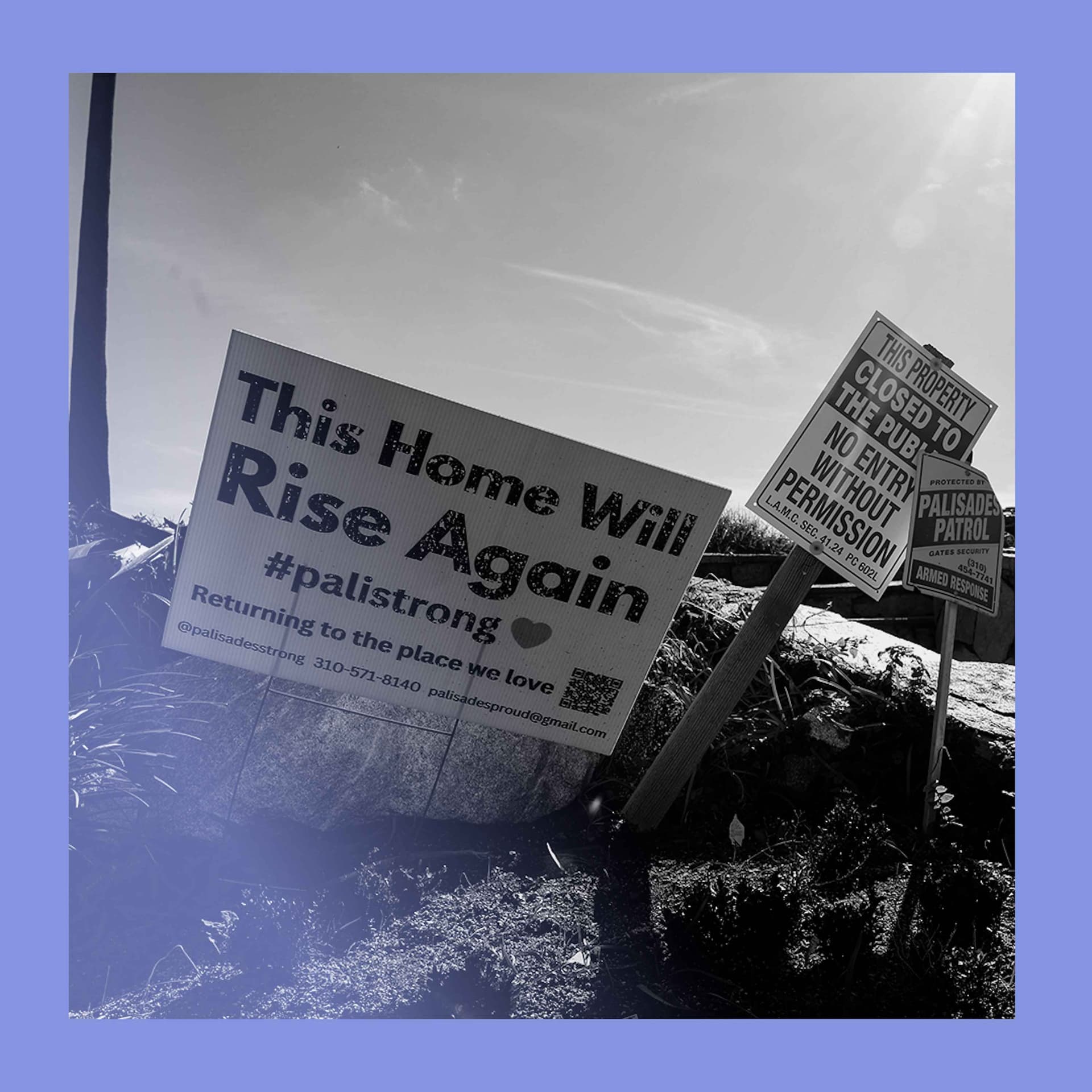
2:29I laid down to take a nap, and the next thing I know, he woke me up and he said, we have to leave and we have to leave now. And that was around that 3 a.m. Exactly one year ago, wildfires devastated parts of Los Angeles. Erin Braun is our West Coast correspondent. Audra Blunt and her husband Damon's home was in Altadena. That's to the east of L.A. Their house and their entire neighborhood were destroyed. Do you remember what the neighborhood looked like as you were driving away? It was complete dark, and it looked like it was complete, I want to say, hysteria. The memories of their home are still extremely vivid.
3:08Before the fire, my wife and I had spent the last five years remodeling in our house. Like, this driveway, as you can see, is brand new. Yeah, it looks like it. We had everything landscaped. We had, like, the lighting done. I mean, it was truly our little piece of heaven, my sanctuary. Now, Audra and Damon's home is an empty dirt lot. But look around the neighborhood more generally, and there are some signs of construction work, of buildings going back up. You're happy for the neighbors that their stuff is going up, but it's still, you're like, I just want to be back home. And you keep asking yourself, you know, how much more red tape do I have to go through?
3:49How many more times do I have to talk to the insurance company? The flames that burned down Altadena 12 months ago were just the beginning of this story.
4:00So Erin, let's wind back to a year ago. Remind us of what happened last January. In the fires that swept across Los Angeles County starting on January 7th, 31 people were killed and the flames destroyed more than 16 ,000 buildings. Some neighborhoods were completely obliterated, but that was just the beginning of the damage. New research has come out finding that 14 other people died from wildfire smoke exposure. And the number of emergency room visits for heart attack symptoms increased something like 46 % in the 90 days after the fire. So we're still finding out the true extent of the damage.
4:44And really, it can take years or even decades for a city to fully recover from fires like this. And when I talked to survivors both in Altadena and Pacific Palisades, the neighborhoods that burn, they now talk about their lives in two parts. There was before January 7th and after. And how does that after January 7th reality look now? What did you see? Well, like the Blunt's house, there's a lot of dirt lots. But there's also a lot of construction just beginning. So permitting, which everyone was really worried about because it's notoriously slow in Los Angeles, is actually going pretty well so far.
5:25If you ask architects, permits have been approved for reconstruction of about 15 % of destroyed buildings as of December. One architect I spoke to in Altadena expects a big building boom in March when the winter rains are over and more permits have been approved. And even these nascent rebuilding efforts help us to forecast how the fires will change Los Angeles and also what they reveal about climate risk for other cities. and two pinch points where California's policies and climate risk combined have created toxic situations, especially around home insurance and investor-owned utilities. I remember at the time of the fires, you mentioned how much the insurance industry was going to be rocked by this.
6:14When you talk to survivors, they will bring up insurance within like the first three minutes of speaking to them. And that's because so many people who live in fire-prone areas like Los Angeles are underinsured, which means that even the money they get back from their insurance company is not enough to rebuild their homes. Wealthier residents in places like Pacific Palisades, they can probably afford to rebuild their home regardless. That's a pretty wealthy community. Some people there are reimagining their dream home and buying up neighboring lots to build bigger houses and backyards. It's a very different situation in Altadena, which is a more eclectic middle-class community.
7:01And lots of people there are struggling to pay their rent while continuing to pay down their mortgage. And because they have this insurance gap. For some people, selling their property is the only option that they think that they have. And that's really controversial in a neighborhood that feels like developers and investors want to capitalize on their loss. And if you drive around Altadena, this is really evident because you have lots of signs in front yards that say Altadena is not for sale right next to a house with a for sale sign in their front yard. And when we spoke before about the the insurance market, the insurance industry.
7:41You spoke about, I mean, essentially how complicated it is. And presumably this tragedy has only made things messier. There were problems with California's home insurance market even before these fires. Californians passed a ballot measure in 1988, which artificially suppressed home insurance rates. And that helped incentivize a migration into these risky fire-prone areas. in 2023 the state struck a deal with firms that would allow them to increase rates while continuing to cover these risky fire prone areas and that deal was also supposed to stabilize the fair plan which is kind of an insurance pool of last resort for people who can't afford home insurance on the private market because they're in these risky areas but in practice policyholders in risky areas have continued to lose coverage, forcing them to buy this last resort insurance.
8:40California's elected insurance commissioner charged the firms in the pool a billion dollars last year to prevent insolvency, but that's also a short-term solution, especially when you consider the fact that the fair plan's exposure has tripled since 2022. But in thinking about these particular fires, this was not to adopt the language of insurance policies, an act of God, right? There is some blame to be apportioned. So the situation in Palisades and Altadena is quite different. There's a young man who was arrested and charged with starting the Palisades fire. He's pleaded not guilty. In Altadena, Southern California Edison, which is one of the state's big investor owned utilities, has admitted that its equipment probably caused a fire that raised that part of Los Angeles County.
9:32And in the aftermath of that, individuals, the county, the federal government, they're all suing the company to try to recoup their losses. And a lot of survivors I spoke with are completely depending on a prospective settlement to finance the rebuild of their homes. So SoCal Addison, very leery of all of this litigation, is voluntarily offering survivors a quicker payout in exchange for giving up their right to sue. The Los Angeles fires prompted California to replenish this fund that it has to help utilities pay welfare claims that would otherwise be ruinous. And for this fund right now, ratepayers and shareholders will foot the bill.
10:15Based on what you've seen a year after these fires, what do you see for the year ahead? I mean, optimistically, I think there will be a lot more construction. I actually asked Audra and Damon Blunt this question. I spoke with them in front of their house. They were having a hard time. It was the first time in 26 years they hadn't been in their home for the holidays. And they're really hoping that by next Christmas, they'll be back in their house in Altadena. Erin, thanks as ever for your time. Thank you, Jason.
10:51Thank you.
11:21and take Vision Insurance too? For everything you need to see, head to your nearest Warby Parker store or visit warbyparker.com today. That's warbyparker.com. With almost half a million customers and over a trillion dollars of secure payments, Bill isn't new to intelligent finance. It's the proven way to simplify bill pay and maximize cash flow. Want to learn more? Visit bill.com slash proven for a special offer.
11:56With any technological development, the question is always what impact it will have on our daily lives. Take artificial intelligence. Some of us have already used it to make small tasks more efficient, to improve our university essays, or help us find a cafe on holiday. But what's it doing to our careers? There has been a lot of debate over what effect artificial intelligence will have on human jobs. And there are clearly widespread fears of job losses. Henry Trix is our US technology editor. But as with most technologies, there will be winners and losers. Tech is already creating demand for new roles.
12:41So what sorts of roles are we talking about? The main role to start off with is the training of agents. to do human-like workflows, but you also need people to embed agents into organizations and to make sure that they behave. These are jobs that sound like they're for engineers, AI developers, and math wizards, but what's really interesting about them is that many of them require uniquely human skills as well, such as a grasp of psychology and ethics. Okay, so before we get to the jobs, Just boil it down for me. What really is an AI agent? So an AI agent is part of a large language model built to be able to do tasks that humans do.
13:30That means that it could fill in forms on your behalf. It could do customer service instead of human. It could work alongside a human resources manager to help deal with payroll and HR aspects. So it's replacing tasks that humans do at the moment, and yet you say it needs humans to be involved in its training. Yeah, that's right. The first kind of job that is helping AI researchers train models and train agents is what are called data annotators. And these were the backbone of the early AI industry. They were often gig workers in low-income economies that were paid to look at data, for example, to look at a picture of a giraffe or look at an image by a roadside and link those to a particular image online so that the AI would know that a giraffe looks like a giraffe or a road sign looks like a road sign.
14:43Now, the need to create agents is leading to the hiring of specialists in particular fields. They may be specialists in medicine or specialists in finance. And their job is really to help train an agent to do a particular workflow. But presumably there are other sorts of jobs involved here too. Yeah. Once you have the model trained, what you really want to do is embed it in the organisation. So the job that is fast becoming pretty popular and very highly paid is the job of forward deployed engineers. They work as kind of a developer, a consultant, and they customize AI tools for the client to get them up and running.
15:33They really need to come up with a better job title there, don't they? They do. Well, if you don't like that job title, what about this one? The AI Risk and Governance Specialist. This actually, bizarrely, is the fastest growing IT job in the rich world, according to a research group led by Cisco. And actually, there's even more demand for these specialists than there are for AI programmers. And the reason why this job is particularly important is because the AI agents tend to go off the rails, and their job is basically to ensure that the bots don't leak data or cause a company's operations to crash.
16:12Are these really new roles or can workers actually be trained from their current roles? What you're seeing so far is workers are being widely retrained in order to develop these kind of skills. There is, however, one job that is widely advertised, the job of chief AI officer, who is responsible for bringing all these agents together and making them effective within the workplace. And it's a complicated job. Typically, a large company uses up to 11 generative AI models, according to tech firm IBM. And each firm is constantly being bombarded by vendors selling agents. And there are dozens of different types of agents that they might be selling.
17:03So the idea of harnessing these agents, you need to basically stop them trampling over the company and over the company's reputation. So why is human involvement so important to developing artificial intelligence agents? AIs, at least for the time being, will work alongside humans. So you need to be able to understand the human context within which the AI operates. If you think of Waymo, the self-driving robo-taxi company, it pretty much operates as an agent driving you from one place to the next. And if everything works smoothly, that's fine. But what if things don't work smoothly? Then you may find yourself in a crash or in a situation where you're locked into the car and you can't get out.
17:56So what you need is an operator who is human, who understands not only the technical problems there, but also how to handle the frazzled customer and potentially disaster situations. You need to have a bedside manner as well as the ability to understand what the technology is doing and where it's going wrong. Now, Henry, as well as hearing about AI endlessly, we're also talking a lot about AI bubbles. And I'm interested if this is a bubble, it bursts, what happens to these jobs? even if the AI bubble burst, there will still be AI just as the internet survived the dot-com crash. You could argue that the biggest risk to these jobs is not so much the bubble, but it's AI itself.
18:47Once the AI has learned from these humans, it could end up replacing them. But for now, we're not close to that stage. It is very complex to embed AI agents into companies. It's difficult to train them on a company's private data. Large language models still do not create flawless responses to questions, and it's vital to keep humans in the loop, checking the agent's homework, if you like. It's those shortcomings which partly explain why there is this talk of a bubble at all. At the moment, AI is not yet widely enough used to generate the sort of revenue to pay for all the money that's invested in it.
19:34So it may be that there is a bubble, but I think AI and AI related jobs will be here for a while, as long as we can find some more attractive names for them. Henry, thank you very much. Great talking to you, Rosie.
20:03Ernest Hemingway, who was of course a famously heavy drinker, is supposed to have said his only regret in life was that he didn't drink more wine. Alexandra Sewitch-Bass is our culture editor. Unfortunately, fewer and fewer people feel that way. This year, the world is going to wake up to the fact that humanity has hit peak wine consumption. The volume of wine sold in major markets in 2024 fell nearly 10 % from its height in 2014. Both global volume and the value of wine sold is going to fall in 2026. Wine sales have always been cyclical. They've declined in difficult economic times. But for the first time in modern history, wine is experiencing a secular decline.
20:50People are just drinking less of it. Alexandra, isn't this move away from the heavy drinking days of Hemingway something that's happening with all alcohol, not just wine? It's true. This is not unique to wine. We're seeing people drink less and less often. But wine is especially vulnerable because it used to be a beverage that people drank frequently. And so the mass market sort, that's been especially hard hit because people are drinking less often and it's vulnerable to substitution. from alternatives like cocktails in a can and ready-to-drink seltzers, and those boast lower alcohol levels. So when people drink, they're becoming more concerned about the health consequences.
21:35So they're opting for lower alcohol alternatives instead of wine. Okay, so health consciousness is one thing, but what else is driving this trend? It's a complex thing that's happening, but you can put the explanations into two different buckets, demographics, and culture. So the big markets, Western Europe, America, that have historically had a lot of wine drinkers, we're seeing populations slow. The high growth countries where we're seeing populations rise are often Muslim countries where, surprise, surprise, there aren't a lot of new wine drinkers. You can also look at baby boomers who are aging out.
22:15They've acquired huge wine collections over the last few decades. They are slowing down not only their consumption, but their acquisitions. A very funny analyst mentioned that they're going to the tasting room in the sky. And so as baby boomers die off, the younger generations are not coming forward to collect in the same way that they were and also drink as frequently. culturally for youngsters. Wine drinking is not as prominent as it was for older consumers. So that brings us to culture. And wine's place has really changed. Among all ages, people are forsaking drinking altogether, sometimes opting for microdosing magic mushrooms.
22:59There's the trend of what people call California sober. So taking drugs instead of drinking. you see wearable watches that have really alerted people to the impact of sleep when they drink wine or other alcohol. And so people have become much more dogmatic about not drinking more days a week. And wine veterans worry a lot as people take Ozempic and other drugs, what's likely to happen to wine consumption because people want to eat less, but they also want to drink less. So that will, of course, affect spirits, but it will also affect how often people drink wine potentially. So where does all that leave the wine industry?
23:40In a place of great depression, you could say that people are drinking away their sorrows as they look at the future. There are few things to look out for in the year 2026. People should watch what's likely to happen in the wine world with businesses. You could see even more consolidation, wine and spirit businesses trading hands. People are looking at Louis Vuitton, Moet Hennessy to try and understand what's likely to happen with their business. And some think that it could be spun out or sold in the coming year. You're seeing vineyards be replaced by other agricultural products. And then watch Bourdieu this year.
24:17It's the largest producer of fine wine in the world and often seen as a litmus test for the wider industry for demand and pricing. It's, of course, not all bad news. So there's a big difference between the mass market lower price point wine and the higher price point wine that people would indulge in, collect and enjoy for special occasions. I spoke with the editor-in-chief of The Wine Advocate who compared fine wine to Swiss watches. So it's true that with technology, people are not buying the digital sort of watch. but Swiss watches are still doing extremely well because people want that status symbol.
24:58He suggests that the same thing will be true for the best wines in the world. And of course, if you are a wine enthusiast, you're likely to have more favorable pricing. As fewer buyers are coming forward, we see a lot of deals on fine wines. And so that is certainly something to toast to. And Alexandra, are you still a wine drinker? I am an unapologetic wine and champagne drinker. So I have a lot to look forward to in the year ahead. Well, if it wasn't 10 a.m., I would toast you with a glass of wine myself. Thank you so much, Alexandra. Thank you so much, Rosie. That piece was reported as part of our World Ahead series, which also includes an optimistic look at America's 250th birthday and how weight loss drugs are set to go global in 2026.
25:45You can find those articles and more on economist.com by searching World Ahead.
26:05That's all for this episode of The Intelligence. We'll see you back here tomorrow.
Read the full transcript
26:15Thank you.
26:45intentional growth. Eliminate the friction and start scaling with the proven choice. Visit bill.com slash proven to talk with an expert about automating your business finances and get a$250 gift card as a thank you. That's bill.com slash proven. Terms and conditions apply. See offer page for details. That new thing? Yeah, we've got it. The Drop by GNC, bringing you all the newness that matters. Handpicked by the pros who actually know what's up and what's proven to work. We keep you on top of the trends and dialed into what's next. Whether you're crushing it at the gym, leveling up your game, or thriving every day, The Drop by GNC is where the latest solutions in health and wellness land first.
27:25Non-stop innovation and fresh finds daily. Explore what's new and what's next on The Drop by GNC.
From the publisher
We return to the Los Angeles suburbs that were consumed by wildfires a year ago. The varying rebuilding efforts reveal divides in wealth, but also strains in California’s insurance industry. Never mind the AI job apocalypse, if it comes: the technology will create plenty of new roles, too. And why “peak wine” may be a good thing for sippers of the fine kind.
Get a world of insights by subscribing to Economist Podcasts+. For more information about how to access Economist Podcasts+, please visit our FAQs page or watch our video explaining how to link your account.
Hosted on Acast. See acast.com/privacy for more information.