In short
The Economist “The Intelligence” episode covers (1) US inflation data and political attacks on Federal Reserve independence, and (2) six-year economic effects of Brexit and prospects for closer UK-EU ties; it also includes a segment on the history and value of self-help books.
Guests
Archie Hall, U.S. economics editor at The Economist. John Peete, associate editor and Brexit editor at The Economist. Catherine Nixey, culture correspondent at The Economist (self-help books segment).
Key claims
Inflation is back near target but the final squeeze to 2% is hard (headline ~2.7%, core ~2.6%); Trump pressures the Fed for rate cuts; DOJ investigation and subpoenas prompted Powell to publicly defend Fed independence. Brexit’s economic hit is estimated around 4% (possibly 6–8%), with business investment down ~10% and goods exports down ~15%, while services held up. Labour’s “reset” with the EU is constrained by red lines and likely yields only ~0.3% boost.
Notable examples
Markets’ “debasement trade” (gold up) after Fed-independence fears; Turkey/Argentina as extreme central-bank-control hypotheticals; London remains Europe’s biggest financial center; self-help bestsellers like “The Boy, the Mole, the Fox, and the Horse” and “Atomic Habits.”
Written by AI. May contain mistakes. Listen to the episode to check what was said.
Chapters
Tap a time to open that second in VOAnalyzing Brexit's Economic Effects
1:40 to 2:12
The podcast discusses the long-term economic impacts of Brexit.
“Hello and welcome to The Intelligence from The Economist.”
Understanding Inflation Data and the Fed
2:12 to 3:16
Exploring recent inflation data and the Federal Reserve's challenges.
“And we take a look at self-help books down the ages.”
Trump vs. Powell: Political Pressures
3:16 to 4:40
Discussion on the conflict between President Trump and Jerome Powell on monetary policy.
“And in what I guess could just maybe be a coincidence, Mr.”
The Federal Reserve's Independence at Stake
4:40 to 6:28
Examining the implications of political pressure on the Fed's independence.
“Reserve should be doing in light of the difficulty in squeezing the last bit out?”
Potential Consequences of Eroding Independence
6:28 to 9:14
Exploring the risks of compromising central bank independence.
“And then what's strange and bizarre about this is that after that escalation by the Fed, we've effectively had radio silence from the president.”
Brexit's Economic Impact: A Six-Year Review
14:04 to 15:00
Explore how Brexit has affected the UK economy six years post-referendum.
“We have our freedom in our hands, and it is up to us to make the most of it.”
The Ongoing Challenges of Post-Brexit Relations
15:00 to 18:00
Discuss the Labour government's cautious approach to improving EU relations.
“The argument is about how big is that effect and most of the recent studies suggest that the effect may be slightly bigger than people even expected in 2016.”
Public Opinion on Brexit: Changing Perspectives
18:00 to 20:40
Analyze shifting public sentiment regarding Brexit and its implications for future relations.
“Are they interested in these closer ties?”
Self-Help Books: Analyzing Their Impact
20:40 to 26:09
Delve into the self-help genre and examine whether these books truly help individuals.
“When it comes to specific issues, would you accept more people coming in unrestricted?”
Transcript
Automatic transcript. May contain errors.0:00This is Indomitian Su from the No Free Lunch Podcast. Ever feel like your workload is out of control? Like you're wearing every hat and expect it to be everywhere at once? Running a business means juggling books, payments, leads, payroll, basically everything. But with Intuit QuickBooks, your workload gets unloaded. QuickBooks gives you access to Intuit's powerful AI agents and trusted human experts who work together to handle the tedious stuff so you can get back to what actually grows your business. And because everything's streamlined on one platform, your customer management, accounting, expenses, and payroll all work seamlessly in one place.
0:42So go ahead, outdo it with Intuit QuickBooks. Get 50 % off QuickBooks online for three months. Terms and conditions apply. Feature availability may vary by product. Visit quickbooks.com for details. When you manage procurement for multiple facilities, every order matters. But when it's for a hospital system, they matter even more. Grainger gets it and knows there's no time for managing multiple suppliers and no room for shipping delays. That's why Grainger offers millions of products and fast, dependable delivery. So you can keep your facility stocked, safe, and running smoothly. Call 1-800-GRAINGER, click grainger.com, or just stop by.
1:22Grainger. For the ones who get it done.
1:32Economist Podcasts Team:The Economist
1:40Economist Podcasts Team:Hello and welcome to The Intelligence from The Economist. I'm your host, Jason Palmer. Every weekday, we provide a fresh perspective on the events shaping your world.
1:55Economist Podcasts Team:It's been six years since the real, final, official divorce between Britain and the EU. Time to take stock, then, of the economic effects of the breakup, and consider the benefits of, again, becoming maybe a bit more than just friends. And we take a look at self-help books down the ages. They are an ever-evolving indicator, not of what people want to become, but of what they are.
2:31Economist Podcasts Team:First up, though.
2:38Economist Podcasts Team:There aren't too many people who excitedly await inflation data from America's number crunchers. And the ones that came out yesterday were pretty short on drama. 2.7 % year-on-year was the headline number. Bang on what was predicted and the same as the month before. One keen watcher will have been President Donald Trump, who routinely uses the numbers as just another cudgel to beat Jerome Powell, chair of the Federal Reserve. Mr. Trump wants interest rate cuts, like, all the time. Mr. Powell wants to do his job, mainly keeping inflation down without crimping the economy, which has not meant cuts all the time.
3:16Economist Podcasts Team:And in what I guess could just maybe be a coincidence, Mr. Powell recently became the subject of a Department of Justice investigation. This is grave stuff, and the normally reticent Mr. Powell took the extraordinary step of saying so on camera. This new threat is not about my testimony last June or about the renovation of the Federal Reserve buildings. The threat of criminal charges is a consequence of the Federal Reserve setting interest rates based on our best assessment of what will serve the public, rather than following the preferences of the president. So what is the Fed doing and how much can it hope to keep a free hand in what it does?
3:57The broader story on inflation is that it's most of the way back down to the Federal Reserve's 2 % target.
4:04Economist Podcasts Team:Archie Hall is our U.S. economics editor. But that very last bit, squeezing it all the way back to 2, has proven a good bit more difficult than it may have initially seen. So we're now looking at annual inflation numbers of around 2.7 on the headline numbers, 2.6 on the core numbers. that very last bit, that sort of 2 % to 3 % range, is pretty much where inflation has lingered for a while. And some of that story of tariffs related, certainly the pass-through of the tariffs to goods inflation in particular has kept that number up. But also in general, across the inflation basket, it does seem like that very, very last squeeze is proving particularly hard to make happen.
4:37Economist Podcasts Team:So quite apart from what Mr. Trump might insist upon, what do you suppose the Federal Reserve should be doing in light of the difficulty in squeezing the last bit out? It's a bit of a balancing act, as the Federal Reserve has acknowledged. On the one hand, you do have inflation that is a little bit too high for comfort. That on its own would point towards wanting to keep monetary policy a bit restrictive, so keeping interest rates a little bit higher, trying to squeeze a little bit of the air out of the economy. On the other hand, what makes this a bit of a difficult time, even aside from the political pressures, is that the labour market, the other side of the Federal Reserve's so-called dual mandate, is looking a little bit wobbly.
5:10People have, I think, overstated the weakness somewhat. There was a lot of noise in the numbers because some of the immigration cracked down over the course of the past year, which really, really pulled down the growth rate of the population, distorted things. But it does seem like, even if you look through that, the unemployment rate has crept up a little bit. We're seeing still even accounting for immigration, a slightly slower rate of job creation than be entirely comfortable. Chair Powell of the Fed has called this curious balance, where both legs of the Fed's mandate are slightly pulling in different directions.
5:40The projections of most Fed members are for a tiny bit more cutting, but really not very much. But obviously, that's very different from the president's preferences.
5:49Economist Podcasts Team:Well, and whatever the job is, it's made harder, in fact, by this now criminal probe into Mr. Powell. What's been pretty striking is that throughout pretty much the past year, where there's been attack after attack by the president on the Fed, both rhetorically and also attempts to fire a Fed governor and much else besides, the strategy the Fed seems to have taken is to basically be silent and effectively hope his attention moves elsewhere. And what's really notable about this moment now is that finally this Department of Justice investigation, this dispute over the renovation costs of the Fed and the subpoenas that were issued late last week have prompted the Fed to actually stand up and really for the first time sharply rebuke the president.
6:28So we got a video statement from Jerome Powell saying in no uncertain terms that this was not a matter of building renovation, that this was about interest rates and this was specifically about the president's desire to push interest rates lower than would make sense, effectively countervailing the independence of the Fed. And so that was a very stark moment. And then what's strange and bizarre about this is that after that escalation by the Fed, we've effectively had radio silence from the president. He was called up by NBC News shortly after the Fed statement, and he effectively disavowed all knowledge of the DOJ probe and said if he wanted to put pressure on the Fed, this is not how he would do it.
7:00And so we're now in this slightly strange limbo.
7:02Economist Podcasts Team:And that much more pointed threat to the Fed's independence will have made markets around the world some kind of nervous. How have markets reacted? It's sort of strange. There's not really been a sharp market reaction. So immediately as the news broke, there was a little bit of a move down in stocks. There was a very sharp move up in precious metals, which is a feature of what people often call the debasement trade. So the notion that if we are going to have no Federal Reserve independence, giant deficits, and effectively the government's going to start inflating its way out of its problems, then you don't want to hold US dollars.
7:35You'd much rather hold something real and solid like gold or silver or whatever it is. So there was a bit of that by the market, but bond yields didn't spike up. And this is a bit cloudy because the president did walk back, as I mentioned, pretty soon after the news came out. So it's not like Liberation Day where President floated a giant tariff regime, there was a vast market backlash, and then there was at least a partial walk back the next week. But so far, certainly it does seem that for whatever reason, partly because that presidential walk back, partly because of what people often call the taco trade, that Trump always chickens out.
8:06But some combination of those factors seems to be preventing markets from really appreciably throwing a hissy fit in the way you might have expected would have happened in any other kind of normal situation where you have such direct and overt interference potential banking independence by a president.
8:20Economist Podcasts Team:Is this, do you think, at least in part, not an attack directly on Mr. Powell, but a signal to whoever's going to take his place, he won't be around forever after all? That's pretty incredible. I mean, certainly, look, if you're Donald Trump, Jerome Powell's out in a matter of months. And so the notion that you pick a giant fight that riles financial markets and annoys a number of lawmakers on your own side merely in order to pressure someone who's not going to be running the Federal Reserve by the middle of the year seems pretty peculiar. And certainly some of this may well be either the president being impulsive or impulsive behaviors given he's disavowed some knowledge of this by people kind of below him in the administration.
8:54But another way to read this and something that definitely accords with the broader thrust of how this administration's approach to the Federal Reserve is as a yet another ratcheting up of the pressure on the institution across the board and reasserting the notion that the White House will step in and will really, really push people if they think that that is misbehaving. The attempt to fire the Federal Reserve Governor Lisa Cook is another example of that. And as you've looked forward, we don't yet know who is likely to succeed Chair Powell, but it's going to be someone chosen by the President.
9:24So therefore, almost certainly someone who is going to be a lot closer to the President than Powell was. And of course, it's not just about the chair, it's also about all the other people on the Open Markets Committee who actually collectively vote on and decide interest rates, all of whom in general have a lot more job security than almost anyone else in the government in terms of their insulation from interference by the president. But of course, all of these moves will be hanging over all of these people. And as that pressure lines up, we could well, and certainly this is not guaranteed, it's probably not even likely, and the markets certainly aren't pricing it in, but it's certainly plausible that we end up in a world where as this pressure ratchets up, we really get quite overt action by the White House to get not just the chair, but even other members of the board to be compliant.
10:05We've not seen that yet, but that's sort of the direction of travel if this amping off of pressure continues.
10:10Economist Podcasts Team:But if that's the direction of travel, then the end of the road is a completely dominated central bank and you end up in a situation like, I don't know, in the extreme case, someplace like Turkey? Yeah, it's definitely a pretty troubling hypothetical. Those sorts of cases, I mean, Turkey being one, Argentina being another, cases where you really do have total control by the central government and debt-ridden fiscal authority of central banking lead you to some pretty scary places. So certainly if Donald Trump decided to in some way assert total control over the Fed, Yank interest rates all the way down, induce inflationary boom that devalues the US dollar, there's some pretty scary hypotheticals you can get to.
10:45And of course, the difference between the US and somewhere like Turkey is just how globally important the US is, how globally important the dollar is, and all the ramifications of that. Even as that's a useful hypothetical to caution against any comfort and calm about the idea that central bank independence could be seriously eroded, it's also worth appreciating how long the road is away from that. Even at this moment, Trump has seemingly stepped back slightly. There are still an awful lot of roadblocks, both literal, legal, institutional, and also in terms of market response, the ability of congressional and Senate Republicans who are not terribly happy about this.
11:20How old news, by the looks of it, to push back. They stand in the way between the US and that scenario. If that's even what the president wants, which is, despite all his shouts and complaints on True Social, not entirely clear either.
11:32Economist Podcasts Team:Archie, thanks very much for your time. Thank you. On our subscriber-only sister show, Money Talks, my colleagues are going big on these attacks on the Fed and how they're kicking dangerously at the foundations of the global monetary order. Find Money Talks tomorrow and every Thursday, wherever fine podcasts are sold and traded.
12:02There's one place for the newest drops in wellness and performance and the biggest sale of the year. It's The Drop by GNC, curating the best of what's new, handpicked by the pros who know what works. And right now, get it all, buy one, get one 50 % off during the semi-annual LiveWell sale. From crushing workouts to leveling up to nutrition and everything in between, get the best deals on the latest innovations. All the newness is all on sale right now during the LiveWell sale on The Drop by GNC. When you manage procurement for multiple facilities, every order matters. but when it's for a hospital system, they matter even more.
12:40Grainger gets it and knows there's no time for managing multiple suppliers and no room for shipping delays. That's why Grainger offers millions of products and fast, dependable delivery so you can keep your facility stocked, safe, and running smoothly. Call 1-800-GRAINGER, click grainger.com, or just stop by. Grainger, for the ones who get it done.
13:33Economist Podcasts Team:The Economist in 2016, I guess. The British people have spoken and the answer is, we're out. As divorces go, this one turned out messy because the marriage was complicated. Brexit means Brexit. This is the second deal and the fourth vote three and a half years after the nation voted for Brexit. But then, finally, it was done in January 2020. This is an amazing moment. for this country. We have our freedom in our hands, and it is up to us to make the most of it. So, let's have a little lookie six years on from that amazing moment. The numbers are a bit complicated because of that whole global pandemic thing, but the shape of the curve is clear, and I promise that what follows will not include the phrase, we told you so.
14:32I think almost all studies that have appeared in recent years match the studies that were made even before the referendum, which is to say if you decide to leave your closest market and your closest allies and to erect new barriers to trade, your economy is going to suffer.
14:51Economist Podcasts Team:John Peete is an associate editor at The Economist and was for all of those years and I guess still is our Brexit editor. and I think all of the evidence is that the British economy has suffered as a result of Brexit. The argument is about how big is that effect and most of the recent studies suggest that the effect may be slightly bigger than people even expected in 2016. The cost of the British economy could be as high as 6-8 % according to some estimates but a general consensus is anyway it could be at least around 4%. Not the end of the world but not very helpful to an already very slow growing economy.
15:29Economist Podcasts Team:Well, the not the end of the world part, I suppose, is worth examining. In what ways has it not turned out to be as bad as the doomiest doomsayers suggested? I think some people claimed that Brexit would be a disaster for the city of London. Brexit would do serious damage to British services exports, that somehow or other the UK would fall behind the rest of Europe. And actually, the city of London is still the biggest financial centre in Europe. Services exports have generally held up well. And actually, Britain is still somewhere in the middle in terms of its position in the European Growth League.
16:06But that is worse than it was before 2016. So the damage is there, but it hasn't destroyed a reasonable economy.
16:13Economist Podcasts Team:So in talking about the damage that has been done, what can we now put a finger on? I think you can say that business investment has fallen significantly in the last few years by about 10 % compared with before the vote. manufacturing exports, particularly generally exports of goods, down perhaps 15 % compared with pre-pandemic levels. And services exports have risen, but most estimates say they would have risen even more had Britain not left the European Union. The Labour government, the one currently in power, has been saying that it wants to patch things up in various ways with the EU in a bid to kind of get back some of the benefits of the EU.
16:54Economist Podcasts Team:Talk me through that. What closer ties are realistic to expect at this stage? The issue of how much closer the relationship with the EU could become is a very, very difficult one. I mean, the Labour government that was elected in May 2024 was pretty cautious to begin with. The manifesto it was elected on said no to the customs union, no to the single market, and no to free movement of people. Those red lines constrain quite heavily what you can do to improve relations with the European Union. but particularly in the last two or three months the Labour government is starting to say look we really need to improve our relationship we're willing to align with single market rules we'd like to improve farm trade we are open to a freer exchange of young people but most of those suggestions it's sort of called a reset of the relationship with the European Union add up to quite small beer I mean we're talking about a boost to the economy of no more than about 0.3%, which is not very much when you think that Brexit may have cost the economy a 4%.
17:57Economist Podcasts Team:And the question that's not addressed there is how much the EU wants to extend a hand. What's in it for them? Are they interested in these closer ties? I think the issue of whether the European Union really has a lot of interest in improving relations with the UK is a tricky one. I mean, some people, particularly in Brussels and Paris, have been saying, look, when the Labour government came in in 2024, we might have been interested in talking to them about improving the relationship, possibly even reversing the decision that you took to leave the European Union in the first place. But nowadays, they tend to say, look, we've got lots of other problems.
18:31We have other priorities. We have to deal with Russia. We have to deal with Donald Trump. The UK is not a high priority. The current relationship works quite well for the EU, even if it doesn't work so well for the UK. They will tend to say, look, if you really want a much closer relationship, you're going to have to accept much more obligations. You're going to have to pay money into the European budget. You may have to accept much freer movement of people. And until you're willing to sign up to those obligations, we're not very interested in a lot of negotiation over details that we don't think will benefit us as much as it might benefit you.
19:06Economist Podcasts Team:And what about the British body politic? The polling has shown pretty clearly over the years, a greater and greater share thinking that Brexit was a mistake. When confronted with these same questions again, the obligations to chip into the EU budget and freedom of movement and what have view there is still going to be tension within British society about a lot of these questions. Yes, the evolution of public opinion in Britain is a fascinating subject. I mean, it is clear from all polls, including a poll that we conducted just before Christmas, that quite a substantial majority of people think Brexit was a mistake, and they don't think Brexit has been good for them.
Read the full transcript
19:39They think actually immigration has gone up, not down, and that the economy has suffered. And it's particularly telling that young people are much keener on the idea of closer links with the European Union than old people. And of course, over time, that means that the public opinion shifts in favour of being more closely involved with the EU. But that's very much not the same as saying we therefore want to reopen the whole subject and have another referendum and another long debate about whether we should be in or out. I think there is a general feeling, which you see from the polls and indeed from some of the companies who complain about the situation they're that a closer relationship with the European Union would be a good thing, that getting rid of some of the barriers to trade that exist now or making it easier to trade would be a good thing, and indeed that the political background of Donald Trump in America, Vladimir Putin's war in Ukraine, makes it much more logical that the UK should have closer ties to the European Union.
20:38So I think all those things do tend in that direction. When it comes to specific issues, would you accept more people coming in unrestricted? Would you accept much bigger payments to the Brussels budget? Would you accept more regulations out of Brussels that you may not have much say in? I think it becomes more difficult. And so that tension between a desire for closer relations with the European Union, but not necessarily being happy about the way to get those relations, is going to play out over the next few years. And I think my conclusion from that is that the process of getting closer to the European Union will take a long time and it may not be quite as big a deal as some people are hoping.
21:21John, thanks once again for joining us. Thank you.
21:40To understand modern self-help books, open Always Remember The Boy, The Mole, The Fox, The Horse, and The Storm. The sequel to The Boy, The Mole, The Fox, and The Horse, and no doubt the prequel to The Boy, The Mole, The Fox, The Horse, and The Massive Royalty Check.
21:58Economist Podcasts Team:Catherine Nixie is a culture correspondent for The Economist. These animal parables topped Britain's bestseller charts this Christmas. They have sold many millions of copies, often a bad sign, and they have been described as heartwarming, usually a worse one. Open this volume and it does not disappoint. Its animal protagonists are fond of life, each other, and of saying things about love in a charming handwritten font. Its insights are supposedly aimed at children, yet adored by adults. The BBC recently did an adaptation, as one of its sentences explained. Sometimes your mind plays tricks on you.
22:44It can tell you you're no good, that it's all hopeless. But I've discovered this. You are loved and important. The overall tone is like that of Winnie the Pooh, but without the grit and the darkness.
23:08These days, the self-help genre is expansive. It includes picture books and poetry, as well as tips for climbing the career ladder. Yet it is rarely as instructive as it claims. Buy the seven habits of highly effective people, and it's far from certain that you too will become a highly effective person. Still, such books are often profitable and always telling. They provide invaluable guides for social historians because they tell us a little about who we want to be, broadly speaking, someone else, and even more about who we actually are.
23:48Read through a century of self-help and you are offered an archaeology of anxiety. In a seminal Victorian volume called Self-Help that's credited with starting the genre, Samuel Smiles told his readers that all they actually needed for success was will and the habit of attention. The book Think and Grow Rich, first published in 1937, taught Depression-era American readers that all they really needed to be wealthy was to visualize themselves already in possession of the money. While Atomic Habits, a recent bestseller, teaches time-poor modern readers that they only need to follow the four laws of behavior change, and life will start to work again.
24:29More recent volumes show other traits. God, increasingly prominent in cultural life, has made his appearance in self-help sections too. Reid Hoffman, the co-founder of LinkedIn, once said that every social network does best when it taps into one of the seven deadly sins, like greed or pride. Run your eye down a list of best-selling self-help guides, past titles like The Five Types of Wealth, and Mini Habits for Weight Loss. And it seems that they do, too. The Seven Deadly Sins may lead to seven-figure sales. Vast numbers commit the sin of tiresome capitalization. Many commit the sin of grass with no scale.
25:08Several commit the sin of using the Garsky word elevate. Others commit the unforgivable sin of poetry.
25:21Perhaps the biggest question raised by self-help books is, do they actually help selves? There is some slim evidence that they can, but the effects are small. There is much better evidence for what actually helps people. And most of these things involve what the philosopher Iris Murdoch called unselfing. In other words, forgetting about yourself. So playing with a pet or with children, going for a walk in nature, going to the theatre, socialising, anything where yourself is not the main aim. So perhaps this January, you shouldn't read a self-help book. You should read an un-self-help book instead.
26:09Economist Podcasts Team:That's all for this episode of The Intelligence. We'll see you back here tomorrow.
26:31We'll see you next time.
26:46Get 150 % off during the semi-annual LiveWell sale. From crushing workouts to leveling up your nutrition and everything in between, get the best deals on the latest innovations. All the newness is all on sale right now during the LiveWell sale. On the drop by GNC. If you work in university maintenance, Granger considers you an MVP because your playbook ensures your arena is always ready for tip-off. And Granger is your trusted partner. offering the products you need all in one place from HVAC and plumbing supplies to lighting and more and all delivered with plenty of time left on the clock so your team always gets the win call 1-800-GRAINGER visit grainger.com or just stop by Grainger for the ones who get it done
From the publisher
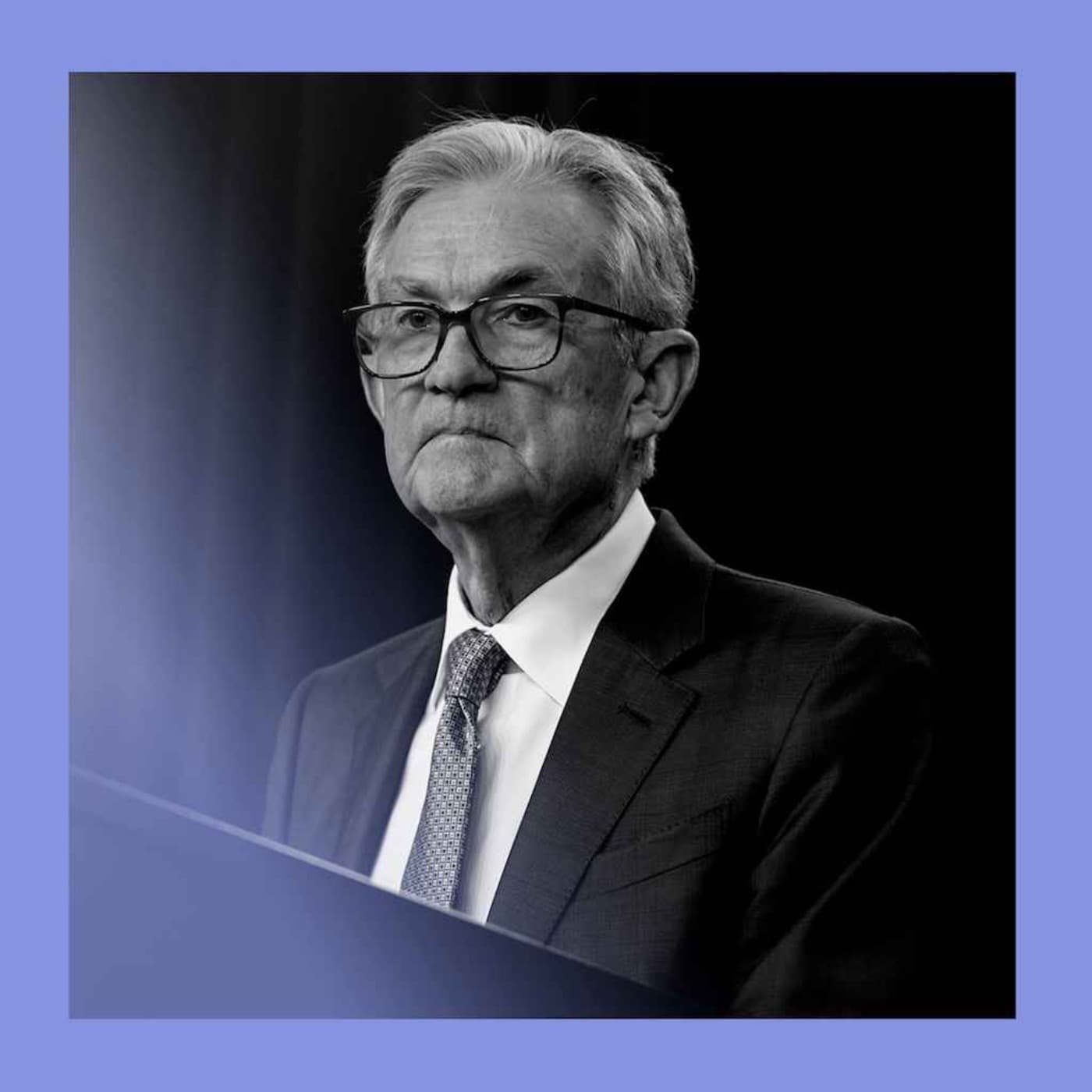
More inflation numbers, more jabs by President Donald Trump at Jay Powell, the Federal Reserve chairman. We ask what the Fed is doing, should be doing and is being pressured to do. Six years after the official Brexit divorce, we count the costs and ask what making-up is now possible. And how self-help books reveal the anxieties of their times.
Get a world of insights by subscribing to Economist Podcasts+. For more information about how to access Economist Podcasts+, please visit our FAQs page or watch our video explaining how to link your account.
Hosted on Acast. See acast.com/privacy for more information.