In short
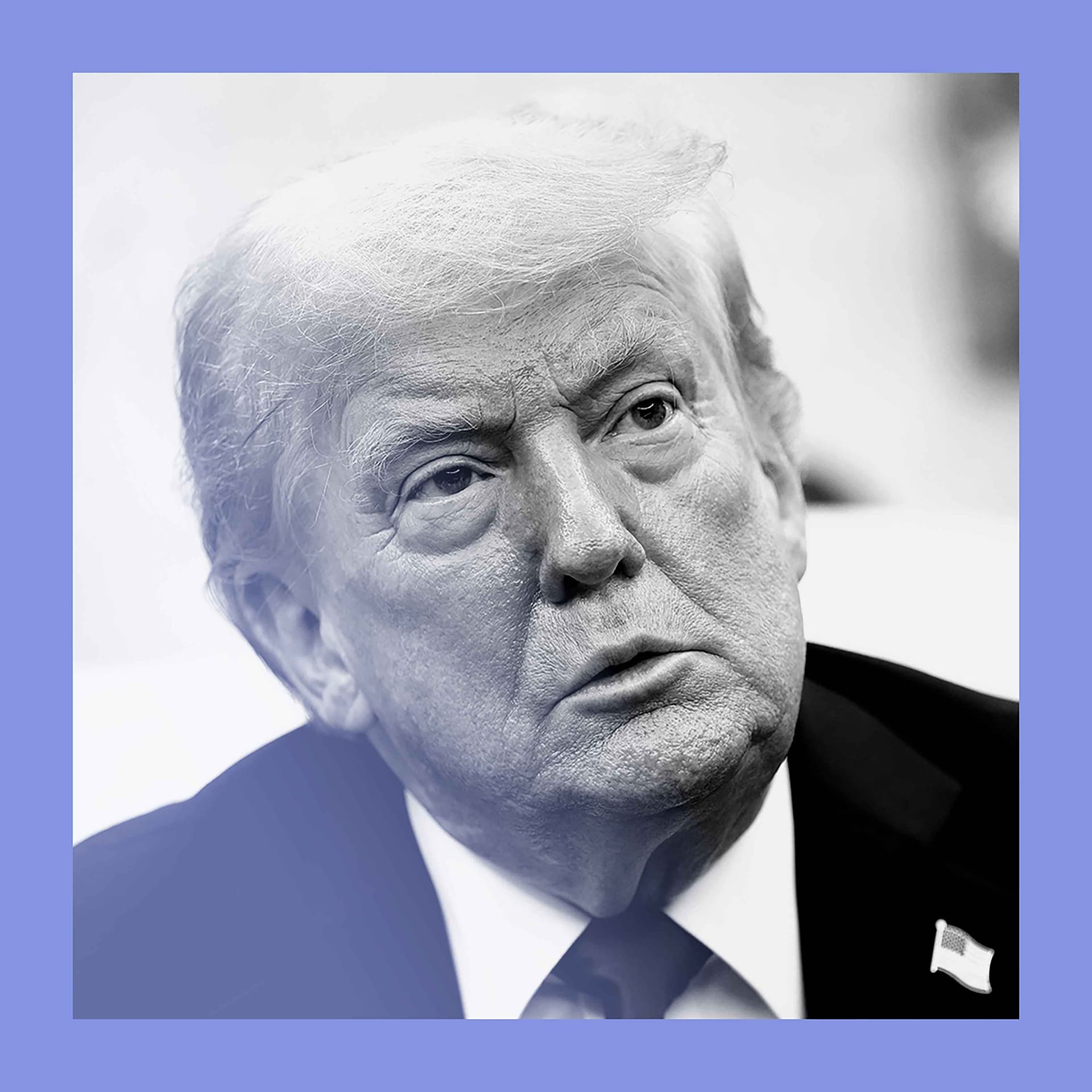
The episode of The Intelligence from The Economist covers three topics: (1) Trump’s changing stance on Russia’s war in Ukraine, arguing he’s moving from “patience” to pressure. Chris Lockwood (Europe editor) says Trump’s shift is driven by disillusion after Putin’s “peace” talks while launching attacks, plus Trump’s sensitivity to being made to look foolish.
Key claims
a new US-backed package to Ukraine likely includes Patriot anti-missile missiles; sanctions could include secondary sanctions with a 100% tariff on countries buying Russian oil/gas/uranium if no peace in 50 days; Europe may have to fund arms since the US aims to avoid paying.
Notable examples
Trump’s Oval Office humiliation of Zelensky; 700-drone night strikes; discussion of possible long-range missile systems (e.g., Pomeroy cruise missiles). (2) Perfume industry: dominance by IFF, Firmenich, Givaudan, and Symrise; EU/US/UK/Swiss antitrust probes for alleged price-fixing/customer allocation; Gen Z demand and “dupes.”
Guest
Annie Crable (Economist news editor). (3) Language and brain: bilingual “executive function” and dementia-delay evidence is mixed; benefits strongest in fluent, frequent-switching bilinguals; not too late to learn.
Guest
Lane Green (Economist senior digital editor).
Written by AI. May contain mistakes. Listen to the episode to check what was said.
Chapters
Tap a time to open that second in VOPerfume Industry Overview
0:00 to 0:24
Explore the complexities and market dynamics of the perfume industry.
“Global payroll is a headache when you're juggling multiple vendors.”
Perfume Industry Overview
1:50 to 2:35
Explore the complexities and market dynamics of the perfume industry.
“The perfume industry is thriving, but poke your nose in and it doesn't all smell quite so sweet.”
Trump's Ukraine Stance
2:35 to 3:58
An overview of Donald Trump's fluctuating attitude towards Putin and Ukraine.
“During his election campaign Donald Trump was clear about his stance on Russia's war in Ukraine If I were president I will end that war in one day It'll take 24 hours I know Zelensky well.”
Military Aid and Sanctions Discussion
3:58 to 11:40
Examine Trump's recent military aid commitments and his stance on sanctions against Russia.
“Sometimes he's saying he has very good conversations with him.”
Implications for Ukraine
11:40 to 12:00
Discuss the potential impact of Trump's actions on the conflict in Ukraine.
“Whether that leads to peace, that's a very different question.”
The Perfume Industry: Dominance and Secrets
14:00 to 20:00
Explore the perfume industry's structure, its major players, and ongoing investigations into alleged collusion.
“That are native to this region and that are still used in perfume production today.”
Multilingualism and Cognitive Benefits
20:00 to 23:12
Learn about the cognitive advantages of bilingualism and the nuances of language learning across different ages.
“Spanish, German, Arabic, French, Italian, Portuguese, Danish, Russian.”
Bilingualism's Impact: Age and Environment
23:12 to 26:38
Discover how age and background influence the benefits of being bilingual and the lifelong advantages of language learning.
“I guess another question for people who might not be bilingual yet is when to get into it.”
Transcript
Automatic transcript. May contain errors.0:00Global payroll is a headache when you're juggling multiple vendors. We get it. Companies like Shopify and Revolut are scaling effortlessly across borders with Deal. Revolut manages over 450 employment contracts across 26 countries without setting up separate local entities. And KLM pays 189 employees across 12 countries, all from one system. Build your global team with Deal. Visit deel.com slash intelligence and start expanding your business today. In a world where AI is changing every role in every industry, knowing who actually has deep expertise matters more than ever. Upwork connects you with the highly skilled freelance professionals with proven track records, so you can hire with confidence.
0:43Upwork gives your business fast access to highly skilled specialists with deep expertise, so you can fill critical skill gaps, launch projects faster, and scale support up or down without committing to full-time headcount. With Business Plus, you can access the top 1 % of talent on Upwork. AI-powered shortlisting delivers a curated shortlist of top freelancers matched to your goals in under six hours. No endless searching required. Thousands of growing businesses already trust Upwork to hire highly skilled freelance professionals for everything from one-off projects to ongoing support. It's free to sign up, and posting a job is easy.
1:18Visit Upwork.com right now and post your job for free. That is Upwork.com to connect with top talent ready to help your business grow. That's U-P-W-O-R-K dot com. Upwork dot com.
1:35The Economist.
1:43Hello and welcome to The Intelligence from The Economist. I'm Rosie Bloor. And I'm Jason Palmer. Every weekday we provide a fresh perspective on the events shaping your world.
1:57The perfume industry is thriving, but poke your nose in and it doesn't all smell quite so sweet. A small number of firms dominate, and trustbusters are asking if there's a whiff of price-fixing.
2:12And it's long been suggested that learning another language is good for the brain. But how good? In what ways? How much learning is enough and when to start it? Our correspondent sifts through the research to find the maximum benefit.
2:34First up though
2:43During his election campaign Donald Trump was clear about his stance on Russia's war in Ukraine If I were president I will end that war in one day It'll take 24 hours I know Zelensky well. I know Putin well. Not well enough, it seems. Frustrated at the lack of resolution, Trump stopped shipments of military aid to Ukraine, then started them again. And who can forget how he humiliated Ukraine's President Volodymyr Zelensky in the Oval Office, while the whole world was watching. God bless. You don't know that. God bless. God bless. You will not have a war. Don't tell us what we're going to feel.
3:21We're trying to solve a problem. Don't tell us what we're going to feel. I'm not telling you. Many concluded that Trump was effectively supporting Russia's President Vladimir Putin, or at least allowing him to continue his war unimpeded. But now Trump's patience with Putin finally seems to be running out. And I'm disappointed in President Putin because I thought we would have had a deal two months ago, but it doesn't seem to get there. Since Donald Trump was inaugurated in January, We've seen his attitude towards Vladimir Putin chop and change like a roller coaster. Chris Lockwood is The Economist's Europe editor.
4:00Sometimes he's saying he has very good conversations with him. Sometimes he's accused him of bullshitting him, of tapping him along. And just now, he seems to be turning up the heat on Mr Putin. But of course, we don't know whether he's going to change his mind back again. It's been a very, very confusing ride. But I think it's been tending in one direction, which is gradual disillusion with the Russian president. So we've had the gradual disillusion with the president, as you say, but we know that Trump changes his mind. So what's happened this week to suggest that this change is more than just rhetoric?
4:35Well, I'm not entirely sure that it is, but the difference between what we've seen up till now and what we've just seen this week is twofold. Firstly, for the first time, he's committed to sending a new set of deliveries of high-tech military equipment to Ukraine. And that crucially includes new supplies of Patriot anti-missile missiles. This is absolutely essential for Ukrainers, perhaps we'll come on to. Up until now, it's just been what was in the pipeline from the Biden administration, twice interrupted, by the way, now apparently back on. But now he's talking about new stuff. And yesterday in the Oval Office, where he was sitting alongside the Secretary General of NATO, Mark Rutter, he talked about a big new package of arms that would go from America to Ukraine.
5:24The difference here from the past is that it would probably actually be NATO countries that pay for them. that America would sell the arms to other NATO countries, European members, for onward shipment to Ukraine. And the key thing for Donald Trump here is that he's able to say to his base, we're not paying for them, America's not paying for them. And the second thing is, for the first time again, he's got a concrete plan, he says, to impose sanctions on Russia if it doesn't conclude a peace within 50 days. Now, he said in the past that Putin needs to agree to a peace, but he has never said what would happen if he didn't, other than he'd be cross.
6:13This time, he has actually concretely talked about secondary sanctions consisting of a tariff rate of 100 % on any country that buys Russian oil, gas, or possibly uranium. And it really is quite a big change in the rhetoric he uses to describe Mr. Putin. He's, I don't want to say he's an assassin, but he's a tough guy. It's been proven over the years. He's fooled a lot of people. He fooled Bush. He fooled a lot of people. He fooled Clinton, Bush, Obama, Biden. He didn't fool me. But what I do say is that at a certain point, you know, ultimately talk doesn't talk. It's got to be action. It's got to be results.
6:55So again, he's cranked it up a bit. I think, genuinely, that he is getting quite impatient. And how much do we know about what weapons will be sent and when? We don't know the answer to either of those questions, other than that he has said that more patriots will be sent. As for Ardekit, long-range missiles, ammunition and so on, there are all these hints that there's going to be a lot more of that stuff being dispersed, probably again via other NATO allies rather than direct to Ukraine. But we don't have any detail on any of that. But there's one intriguing thing that he seems to have suggested that there will be more long-range missiles sent.
7:35At the moment, America has only supplied something called an Atakum system, which has a range of about 300 kilometers, crucially not far enough to hit Moscow. But supposedly, he's been saying to Vladimir Zelensky, the Ukrainian president, that Ukraine ought to be hitting Moscow since obviously Russia is hitting Kiev, which they can't very easily do. They can do it with drones, but it's pretty easy to shoot down drones. What they can't do is hit with accurate high-speed long-range missiles. But if America, for instance, was to give them Pomeroy cruise missiles, then maybe they could. Now, we don't know that they are going to do that, but there are these hints that they might.
8:11Chris, what has motivated Trump's change of mind and turn against Putin and Russia? He does appear to be shifting his attitude towards Putin. And if that's true, then I think the reason is simply that he's been made to look a fool by Putin. He seems to have trusted Putin to be negotiating in good faith over a possible peace in Ukraine. Now, why he thinks that is a complete mystery to me. There's not the slightest evidence that Putin's ever been interested in anything other than the submission of Ukraine. He said it often enough in speeches and in papers that he's written and published. But for some reason, he believes that this actually damages Trump's credibility.
8:56He's promised to end this war. In fact, he said he'd do it on day one of taking office. That was over six months ago now. But still, you know, we'll take what we can get. But for Russia, the peace process only means a vehicle towards Ukraine taking a series of steps that essentially mean that it would no longer function as a sovereign country. They talk about limiting its military, promising never to join NATO, surrendering tracts of territory, all sorts of things that are not going to be acceptable to Ukraine. So finally, the penny seems to be dropped that Putin has no intention of making peace and that he's mocking Trump by talking peace and at the same time sending these enormous 700 drone night strikes against Ukrainian cities and killing lots of civilians.
9:41And one of the nice things you can say about Trump is that he does genuinely seem to be upset by civilians being killed. And I think this is starting to get to him. When Trump took office, he said he wanted to keep the US out of conflicts around the world. Do you think this switch in mood on Russia and Ukraine changes anything about that broader aim? No, I don't think so. I think it's part of it. Trump really does not want to send American troops into action. So none of this should be seen as a prelude to American boots on the ground or anything like that, or America even itself hitting any Russian targets either inside Russia or inside occupied Ukraine.
10:22All it means, I think, is that America may now step up the amount and quality of the equipment that it supplies. Now, of course, what this does do is put a lot more pressure onto Europe. America is signaling that it's not willing to pay for any more military equipment to go to Ukraine. That means Europe has to find the additional money. And indeed, the Europeans have set themselves this target of spending 3.5 % of their GDP on defense. And money that is given to Ukraine or equipment is supplied to Ukraine is being allowed to count towards that. So that might be quite an easy way for them to make progress towards this target.
11:00Now, what you'll have to watch out for is what the response of Russia is. We may now see a lot of terrifying rhetoric about World War III and nuclear strikes coming out from Russia. And if that happens, you know, will Trump back down? Will Trump chicken out, as they say? Trump always chickens out. Or will he not? But I dare to hope that Trump is finally realizing that mollycoddling Putin doesn't really do him any good, makes him look weak and foolish. And of all things, I think Trump really fears and hates being made to look foolish. So it's possible, and I'm only going to say that, it's possible that this is the beginning of cranking up the pressure on Russia.
11:40Whether that leads to peace, that's a very different question. Russia can take an awful lot of pressure. But much more important would just be if we can keep Ukraine alive by giving it the defences that it needs and the weapons it needs. The war may not end, but at least Ukraine's suffering will be limited. Chris, thank you so much for talking to me. Thank you. Thank you.
12:35189 employees across 12 countries, all from one system. Build your global team with Deal. Visit deel.com slash intelligence and start expanding your business today. In a world where AI is changing every role in every industry, knowing who actually has deep expertise matters more than ever. Upwork connects you with the highly skilled freelance professionals with proven track records, so you can hire with confidence. Upwork gives your business fast access to highly skilled specialists with deep expertise, so you can fill critical skill gaps, launch projects faster, and scale support up or down without committing to full-time headcount.
13:12With Business Plus, you can access the top 1 % of talent on Upwork. AI-powered shortlisting delivers a curated shortlist of top freelancers matched to your goals in under six hours. No endless searching required. Thousands of growing businesses already trust Upwork to hire highly skilled freelance professionals for everything from one-off projects to ongoing support. It's free to sign up and posting a job is easy. Visit Upwork.com right now and post your job for free. That is Upwork.com to connect with top talent ready to help your business grow. That's U-P-W-O-R-K.com, Upwork.com.
13:52I am in Grasse in the south of France in a garden that... I recently visited a botanical garden in the south of France where flowers are grown for the world's fragrances. That are native to this region and that are still used in perfume production today. Annie Crable is a news editor at The Economist. Notes. So the floral note, the fruity note, the white flower note. These are, you know, terms that people will use to categorize. Perfume making first flourished in Grasse in the 1700s. Chanel grows its jasmine there. Lancome grows its roses. Grasse is still the world's perfume capital, but a lot of things have changed since the 18th century.
14:43Sounds like a good gig for a reporting trip, Annie. Tell me more about perfume making. A handful of firms dominate this market. They control about two-thirds of it. They're not household names. You have International Flavors and Fragrances, which is headquartered in the United States, Simrise in Germany, DSM Firminich, which is Swiss, and Givaudun, which is also Swiss. These big companies make the perfumes that you would associate with just regular fine fragrances. some still grow their natural ingredients in grasse and they still source natural ingredients from really all over the world. But really what these companies do is in addition to creating the formulas for the perfumes, they make these synthetic molecules.
15:36When you are in a department store and you're looking at all the different perfumes around, you might see Dior, you might see Jo Malone, you might see Diptyque. Most of the time, these are actually being made by perfumers who work for Givaudun, IFF, Simrise. They also create the scent formulas and sell molecules to companies that make household items. So laundry detergent, dish soap. So companies like Procter and Gamble and Unilever, these are also customers of these big companies. When I think of a perfume bottle. It speaks of uniqueness and distinction from anything else. So I'm surprised to hear that four firms actually dominate most of the fragrance production.
16:22How has that come about? So in the 20th century, the synthetic ingredients that these companies make became really important. Of course, in a perfume, you do have your natural ingredients like rose and patchouli, but these synthetic molecules allow perfumers to isolate out certain smells and they make the fragrance last a lot longer on the skin. And so these companies had that chemical infrastructure. They also did a lot of mergers and acquisitions, became bigger over time. And as they got bigger, they allegedly made it harder for smaller companies to break in. There's also this intriguing culture of secrecy.
17:01And that's partly explained by the fact that you can't patent a smell. And can that dominance of these four companies last? One wrinkle is that trust busters have been poking their noses into all of this. So the European Union's antitrust authority raided the offices of these four firms in 2023. The authorities in Switzerland, the UK, and the Department of Justice in the United States announced they were also investigating. So you had a global investigation into this alleged fragrance cartel. The allegations include price fixing and this kind of notion that they were divvying up customers. So the hypothetical scenario would be that Dior comes to them and says, we're interested in making this sort of perfume.
17:54We want it to smell like Provence. And they say, actually, only one of us makes the molecule that you're going to need in order to make that perfume happen. They are cooperating with the government authorities. Shortly after that, there were a bunch of class action lawsuits filed in the United States on behalf of smaller companies. The big firms tried to get those class action lawsuits thrown out. They said the evidence was really thin. And Unilever, which is one of their big customers, is suing Firminich, Jivodun and Simrise in London. and they announced that they are investing 100 million euros to try to take some fragrance capabilities in-house.
18:39But this is a huge industry now, isn't it, Annie? It is a huge industry. And it's hard to segment out what these investigations have meant. But the share prices of these firms are down an average of 9%. But business is actually booming. So sales are up 6 % year and year in the first quarter of 2025. That follows a strong 2024, 2023. Gen Z is really interested in fragrance. 80 % of Gen Zers in the United States wear perfume at least three times a week. TikTok trends are fueling some of this. Some of this enthusiasm is encouraging the rise of dupes. one concern that some of the industry people I spoke to had is how do we, in the face of competition from these knockoffs, make sure that our perfumes are still seen as worthwhile.
19:36So much of what you buy when you're buying luxury products is a story. And it will be interesting to see whether or not the industry moves more in the direction of transparency or follows the route that it's taken up until now. Annie, thank you very much. Thank you so much, Rosie.
20:20and Ukraine.
20:26I've studied a lot of languages. Spanish, German, Arabic, French, Italian, Portuguese, Danish, Russian. And I even speak a fair few of them pretty well. And I hope, just maybe, that that may be good for my brain in ways that go beyond the ability to speak the languages. Lane Green is a senior digital editor at The Economist and frequently writes about language. We're also raising my son bilingual in Danish and English, and I hope that he grows up multilingual with all the associated benefits.
21:02My wife speaks to him in Danish at home, and I speak to him in English. But all three of us can switch as needed, and we live in Spain.
21:16Complicated language environment. We've spoken on the show before, Lane, about the advantages that come with multilingualism. But as far as the academics have it, what are they? Well, most obviously, there are the conversational advantages, the ability to speak to a wider range of people than you otherwise would. But in the last couple of decades, some academics have mooted improvements to what's called executive function. And that is, in effect, the ability to ignore distractions and plan complex tasks, things like that. And numerous studies have shown that bilinguals also have a later onset of dementia.
21:54It's been put at about four years on average that they will get dementia as opposed to monolinguals. But the thing is that some of these studies have failed to replicate. So this has left the experts somewhat confused. I guess the question is how you get those advantages to whatever degree they exist in terms of how deeply you get into the language. If I took Spanish in high school for a couple of years, am I all set? Probably. If you're the average language learner and you take a language in high school for a couple of years, you're not going to see a lot of the benefit that these researchers are talking about.
22:26Mostly, they're really talking about people who are fluent bilinguals. And perhaps intriguingly, especially people who use both languages frequently, who switch frequently between them, might be some of the ones who get the most so-called bilingual advantage. Allora, da questo punto in poi parliamo in italiano. Ok, va bene. Che cosa vuoi sapere? Forse sarebbe meglio daire the audience if this is limited in scope.
22:55Studies show that translators, and particularly interpreters, have better cognitive control. They're better at tasks like alternating quickly between simple addition and subtraction problems. It doesn't seem that hard, but it actually is hard to do so quickly. And people like interpreters can do it a little more quickly. I guess another question for people who might not be bilingual yet is when to get into it. Is there a point at which it's too late or do you have to do this when you're a kid? You can still get to a very good language level, even if you start later than puberty. You can learn a language really brilliantly.
23:27children who are bilingual from birth start to show this bilingual advantage in studies, and particularly the younger they are. In one meta-study, 25 of 45 studies showed the bilingual advantage in children younger than six. By comparison, fewer than half of those who looked at children older than six found those same advantages. But we're taking in that example, these kids as sort of a monolith, but not all language speakers are born the same. Some people are born into multilingual households to start with. That's right. And people are bilingual for very different reasons. For example, in parts of Africa, parts of India, it's really common to be not just bilingual, but trilingual or quadrilingual.
Read the full transcript
24:07And there is some evidence that people who come from poor educational backgrounds actually benefit more from bilingualism. And a hypothesis from one of the researchers I talked to about this is that maybe their schooling doesn't really exercise and challenge their brains. But if they are bilingual, then their bilingualism or multilingualism actually challenges them in a way that their schooling hadn't. So they seem to get a lot of benefit. So what about the news you can use at the other end of life, say? You haven't been granted those advantages. How do you go about getting some language advantages, whatever your age?
24:38At any age, it's good to use your brain. There's a certain use it or lose it element to cognitive exercises as with the rest of the body. And so, no, it's never too late. One of the researchers I talked to about this is Ellen Bialystok of York University in Canada. She's been called the godmother of this bilingual advantage field because she found some of the early results. And since we don't see a perfect application of bilingualism making your brains vastly healthier, she says it's something like stacking different pieces of Swiss cheese where you hope the holes might not line up. And if exercise is also good for your brain, then that's one slice of cheese.
25:16And then bilingualism might be another slice. And you hope that taken together, they will cumulatively protect your brain. Lane, it's been a great pleasure as usual. Thank you. Thank you for me. Thank you, Jason.
25:45That's all for this episode of The Intelligence. We'll see you back here tomorrow.
25:56Thank you.
26:24We'll be right back.
From the publisher
For months, Donald Trump has appeared to back Vladimir Putin. Now, frustrated at the lack of a ceasefire and fed up with Russia, the US president is offering to send weapons to Kyiv. Trust-busters are investigating a whiff of price-fixing in the perfume industry. And why bilingual people may have healthier brains.
Listen to what matters most, from global politics and business to science and technology—Subscribe to Economist Podcasts+
For more information about how to access Economist Podcasts+, please visit our FAQs page or watch our video explaining how to link your account.
Hosted on Acast. See acast.com/privacy for more information.