In short
The Intelligence (Economist) episode covers three economics/news stories: Latin America’s investment boom amid Trump-era geopolitical disruption; Nigeria’s rising cost of jollof ingredients; and the BBC ending longwave radio broadcasts.
Guests
Kerry and Richmond-Jones (international economics correspondent) discusses Latin America’s foreign direct investment surge. Ora Ogambi (Africa correspondent) reports on Nigeria’s jollof price inflation using the “Jollof Index.” Bo Franklin (senior digital editor) explains the BBC’s longwave radio shutdown.
Key claims
Latin America attracted $205bn FDI in 2025, with at least half tied to the US; mining and rare earths are the main targets. Nigeria’s jollof costs about 40% of monthly minimum wage, driven largely by diesel/transport costs linked to the Iran war. BBC longwave masts were switched off June 27 due to outdated tech; FM/TV will shift toward internet.
Notable examples
Argentina $20bn swap lines; US Development Finance Corporation office in São Paulo; rare earth mine funding in Brazil; Ghana’s single-digit inflation vs Nigeria’s higher inflation; Wusei Market in Abuja; BBC longwave masts near Droitwich.
Written by AI. May contain mistakes. Listen to the episode to check what was said.
Chapters
Tap a time to open that second in VOTrump's Impact on Latin America
1:46 to 4:00
Explore how Trump's presidency affects Latin America's economy.
“Kerry and Richmond-Jones is our international economics correspondent.”
Investment Trends in Latin America
4:00 to 6:20
Discussion on increased foreign investment in Latin America's mining sector.
“It's kind of counterintuitive, really, because on the one hand, Trump is not very nice about Latin America on a regular basis.”
Geopolitical Dynamics in Latin America
6:20 to 8:36
Analyze the geopolitical competition between the US and China in Latin America.
“And what we've seen since Trump has come in with that extra wave of investment is that China has really doubled down.”
Rising Food Prices in Nigeria
8:36 to 10:00
Investigate the rising costs of staple foods in Nigeria, particularly jollof rice.
“86 % of the most recent class accepted a role within three months of graduating, and the returns continue beyond today.”
Economic Challenges and Comparisons
10:00 to 14:01
Examine the economic situation in Nigeria compared to Ghana and its impacts on food affordability.
“searching for the ingredients for the perfect joloff.”
The Rising Cost of Jollof in Nigeria
14:01 to 15:07
Explore how inflation impacts the affordability of staple foods in Nigeria.
“Now, this is likely because the jollof basket in Ghana is much more import-dependent, and because they now have a stronger currency, that's cushioned them from the worst of the shocks that we're seeing elsewhere.”
The End of Long-Wave Radio
15:31 to 18:29
Discuss the historical significance and recent discontinuation of long-wave broadcasts by the BBC.
“Bo Franklin is a senior digital editor at The Economist.”
Transcript
Automatic transcript. May contain errors.0:00To grow beyond limits and even beyond your aspirations, you need the London Business School MBA. Ranked fourth in the world by the Financial Times, the programme delivers academic excellence and unlocks access to leading global businesses and a network of over 58 ,000 professionals. 86 % of the most recent class accepted a role within three months of graduating, and the returns continue beyond today. Search Discover London Business School MBA to find out more. With no fees or minimums on checking accounts, it's no wonder the Capital One bank guy is so passionate about banking with Capital One.
0:37If he were here, he wouldn't just tell you about no fees or minimums. He'd also talk about how most Capital One cafes are open seven days a week to assist with your banking needs. Yep, even on weekends, it's pretty much all he talks about. In a good way. What's in your wallet? Terms apply. See CapitalOne.com slash bank. Capital One N.A. Member FDIC.
1:05The Economist
1:11Hello and welcome to The Intelligence from The Economist. I'm Jason Palmer. And I'm Rosie Bloor.
1:21Today on the show, the rocketing cost of a staple dish in Nigeria, and the BBC waves goodbye to longwave radio.
1:36But first...
1:45For America's neighbours, Trump's second term has been unsettling. Kerry and Richmond-Jones is our international economics correspondent. As well as disrupting trade and sending energy prices soaring, Trump has seemed determined to impose his will on the Western Hemisphere. For example, by kidnapping the leader of Venezuela. U.S. President Donald Trump says the American military has captured President Nicolas Maduro and his wife. Sending gunboats to the Caribbean. The USS Gerald R. Ford aircraft carrier has reached Caribbean waters off South America's northern coast. And threatening to invade Cuba.
2:22Trump has said that the U.S. Navy will take over Cuba almost immediately on the way back from Iran. But Latin America, strangely, is also benefiting from Trumpian chaos. No other regional economy in the developing world has done so well in the past year. So you say Latin America is benefiting from Trumpian chaos, Kerian. Just how well is it actually doing? It's doing remarkably well. In 2025, foreign direct investment to the developing world at large shrank. So that means that the developing world got less foreign cash in 2025 than it did in 2024. But in Latin America, the amount of foreign investment actually rose to$205 billion.
3:07That was a sizable increase on the previous year. So how much of that was actually down to Trump? Quite a lot. At least half of that increase came from America. It helps that Latin America is no longer this place of endless economic crises that it was 30 years ago. more or less all 33 countries south of the Rio Grande apart from Argentina and Bolivia now have floating currencies or peg them to the dollar. That means that investors know that they're not going to lose large amounts of cash when the central bank starts printing lots of it. There's also more inflation targeting going on. So basically it's a much more stable region politically and crucially financially than it was 30 years ago and that's helped lure investors back gradually.
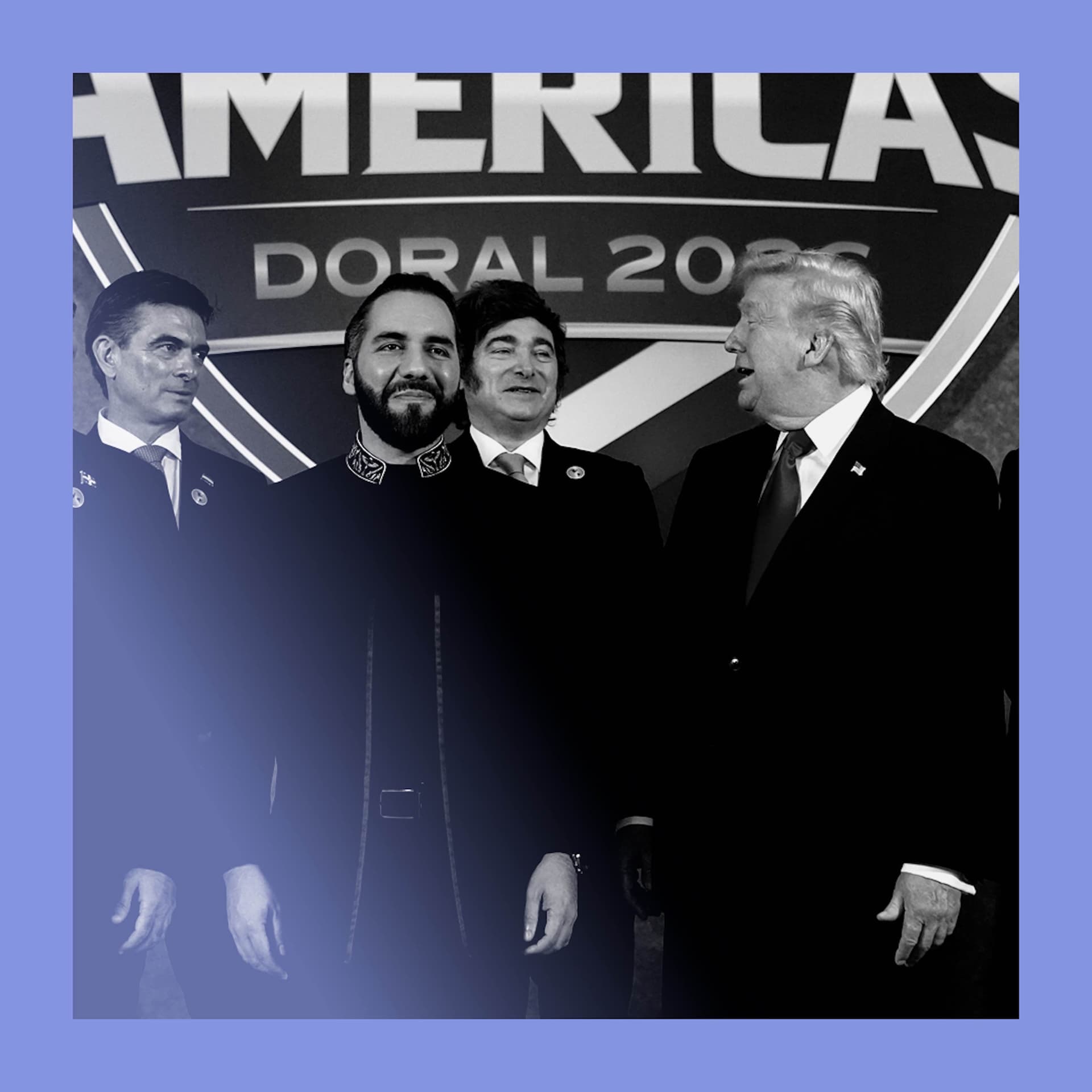
3:52But the fact is, is that we've seen a huge increase in 2025. And why is it exactly that Trump has decided Latin America is where he's going to invest? It's kind of counterintuitive, really, because on the one hand, Trump is not very nice about Latin America on a regular basis. He gathers leaders together to berate them for failing to get hard on drugs, hard on gangs. But the flip side of that is that he's also really interested in the place. And as part of his belief that America should have more power over its southern neighbours, that in theory should create these investment opportunities. So in October, Trump extended$20 billion in swap lines to Argentina to help Javier Malay, the president and a Trump ally.
4:40In 2024, the Development Finance Corporation, which is the foreign lending agency of Trump's government set up its first office in the continent. It was in Sao Paulo. A bit more generally, actually, if you go to Sao Paulo at the moment in these swanky hotels, I was there a few weeks ago, there are just lots and lots of American investors looking for opportunities. So where exactly is the money going to in terms of countries or even industries? By far the single biggest beneficiary has been the mining industry. We've seen several deals from Trump himself with different Latin American governments, ranging from Chile, which has got almost half the world's copper that you maybe expect, but also down to places that even I didn't know had that many minerals, like Paraguay, to try and develop more of these deposits.
5:27As well as that, you've seen the American government quite literally just stump up half a billion dollars in one case for a rare earth mine in Brazil. And then on the heels of the government, there's this separate wave of private investors. Some of them are small-time chances, trying to open gold deposits, small mines, new refineries, that kind of stuff. But then also the mining majors are really standing up, taking notice of Trump and his desire for critical minerals and massively increasing investment. A few years ago, it was China we were talking about in terms of investing in Latin America.
6:00So what's happened to other countries' interest in the region? Latin America is kind of becoming this geopolitical battleground. You're totally right. China's spending increased all the way up to 2018 when it has flattened. And that's one of the reasons that Trump has gone in so hard, because he thinks it's sort of embarrassing and quite counterproductive to have China have such a big presence so close to America. And what we've seen since Trump has come in with that extra wave of investment is that China has really doubled down. There've been extra announcements at the BYD factory in Brazil, new mining experiments and also things that are quite politically edgy.
6:37The Chilean government recently announced that it was exploring the idea of an undersea cable straight to Hong Kong across the Pacific. That has so angered America that the minister who's organising that cable has actually been banned from going into the States. And it's not just America and China either. We've recently seen a huge trade deal that's created the single biggest free market between Mercosur, which is a group of four Latin American economies, including Argentina and Brazil and Europe, that now more than a billion people will trade with basically no friction. And that's the first really big move on the continent that Europe has made in a long time.
7:17Keryn, we know that Trump isn't always known for his steadfast, certain, loyal policies. Will this boom last, do you think? That is such a good question. There is so much going on here. It feels like the Wild West at the moment in Sao Paolo. And you're totally right, Trump has maximum two years left in office, we think. And most of these investments, particularly in mining, they need capital being pumped in for years, if not decades. So leave aside his short attention span, he doesn't have much time anyway. But then also more broadly, a lot of the mining money is going into things like rare earths.
7:57rare earths are quite different to something like copper so copper you need huge huge quantities of copper to fit out data centers stretching decades into the future america has very few rare earth metals which are mostly controlled by china at the moment but the market isn't actually very large so some of these elements that trump is trying to produce in latin america at the moment the global market is worth about 200 million dollars a billion dollars perhaps and so you don't need many of those minds for Trump or whoever comes after him in the White House to be happy. There are going to be a lot of very disappointed people and investors in Latin America in decades to come.
8:37Kerri-Ann, thank you very much. Thank you so much for having me.
9:1086 % of the most recent class accepted a role within three months of graduating, and the returns continue beyond today. Search Discover London Business School MBA to find out more. With no fees or minimums on checking accounts, it's no wonder the Capital One bank guy is so passionate about banking with Capital One. If he were here, he wouldn't just tell you about no fees or minimums. He'd also talk about how most Capital One cafes are open seven days a week to assist with your banking needs. Yep, even on weekends, it's pretty much all he talks about. In a good way. What's in your wallet? Terms apply.
9:47See CapitalOne.com slash bank. Capital One N.A. Member FDIC.
9:59Ọrẹ Ogunbiyi:Last week, I went to Wusei Market in Abuja, Nigeria, searching for the ingredients for the perfect joloff. It's a beloved rice dish that's long been a staple in Nigerian cooking. Ora Ogambi is The Economist's Africa correspondent. Now, I wasn't shopping for my dinner. I was investigating how food prices for Nigeria's basic meals have become unaffordable. The Jollof Index, issued quarterly by a Lagos-based consultancy called SPM Intelligence, tracks the prices of a dozen ingredients used to make Jollof, from the tinned tomato puree that gives the dish its renowned red-orange hue to the oil that's used to saute the onions and spices first.
10:44Ọrẹ Ogunbiyi:Now, this market in Wustay earned the top spot on the list for having the priciest ingredients of anywhere else in the country. All right, before we get to the economics, let's just talk gastronomics for a minute. Tell me a bit more about jollof. Jollof is a spicy tomato and pepper-based rice dish. It's actually something that we inherited from the Senegalese, but it's become so popular in Nigeria and Ghana. I personally love it. In the southwest of Nigeria, we love it super spicy. When I was in uni, not in Nigeria, I actually used to make jollof all the time and kind of get Nigerians and Ghanaian students together.
11:22Ọrẹ Ogunbiyi:And we'd gossip over a bit of jollof. It became my thing. I love it. And it's kind of iconic now to this part of West Africa. And just how expensive is it now? Well, for many families, it's become too expensive. And that's kind of the point. It's transformed how and what they're able to eat because of how expensive these ingredients have become. So I spoke with one of the shoppers at the market who told me about the cost of rice alone. We bought like 4 ,000 naira in April. Then a week in May, it was already 6 ,000. Most of the prices here are outrageous. Now, to put that in context with the other ingredients, so the tomatoes, the peppers, the onions and everything else, a pot of jollof for a family of five can now go for around 30 ,500 naira.
12:07Ọrẹ Ogunbiyi:So that's about 22 US dollars. And for context, that's 40 % of the monthly minimum wage on just one dish. That's astronomical for just one dish. How is that possible? Well, the vendors at the market say that they have to charge that much to cover their costs, which have skyrocketed since the war in Iran began. I spoke to Precious, a vegetable vendor at the market. I don't think that the price is so expensive, you understand, because if you watch the current situation of this country, you know that things are very expensive right now. So we sell according to how we buy. You know, we buy from Lagos.
12:45Ọrẹ Ogunbiyi:So that now makes the thing to be expensive. She said that she buys rice from a supplier in Lagos, and in order to get that transported to Abuja, she has to pay the truck driver per carton of rice. So that adds up. In fact, the 20 % jump in the cost of jollof since the start of the war in Iran comes mostly from diesel costs of the lorries that are moving the tomatoes, the peppers and the rice and everything else from the farmers and the suppliers to the markets. Now, because most of the jollof ingredients in Nigeria are farmed locally, the bad roads and the bad weather also adds to those spikes.
13:22Ọrẹ Ogunbiyi:So the war in Iran makes the diesel costs higher for the trucks and then there are seasonal issues that make those costs even higher. So if this is partly about the war in Iran, presumably it's affecting the price of this dish across the region then? Not everyone has been hit as hard as Nigeria has. So in Ghana, for example, their government is actually steering a pretty impressive economic recovery. They returned to single-digit inflation in spite of all that's going on with pricing. For years, they had had really high inflation, as high as 54 % in December of 2022. But now, an average pot of jollof in Ghana actually works out cheaper in dollar terms than it was in Ghana three years ago.
14:01Ọrẹ Ogunbiyi:Now, this is likely because the jollof basket in Ghana is much more import-dependent, and because they now have a stronger currency, that's cushioned them from the worst of the shocks that we're seeing elsewhere. So while Ghana's year-over-year inflation has reached single digits, Nigeria's is still much higher over the same time period, which helps explain that divergence. Jollof can't be the only dish then that's seen this food price inflation. Is life getting more and more expensive for Nigerians overall? Well, exactly. And I think jollof is interesting because it encompasses so many ingredients.
14:33Ọrẹ Ogunbiyi:So for some families, it's what people are having the jollof with that they're having to cut back on. So things like meat. People are swapping chicken and turkey for instead little bits of tinned or smoked fish instead. But what this kind of tells us is that even those small, brief price rises, so the kind of inflation we've seen over a couple of months, can be the difference between whether or not people can afford to make a pot of jollof or can't afford any at all. But to be honest, for the 140 million Nigerians who are still living below the poverty line, jollof has been a luxury for a very long time.
15:06Ọrẹ Ogunbiyi:All right. Thank you very much for talking to me. Thanks for having me, Rosie.
15:30In 1934, the BBC switched on what was then one of the world's most powerful radio transmitters, near Droitwich. Bo Franklin is a senior digital editor at The Economist. Suddenly, the Midlands town of barely 5 ,000 people stood out on the dials of British wireless sets. Until recently, two 700-foot-high steel masts sent long-wave broadcasts across Britain and deep into Europe. But on June 27th, they stopped. This is London calling in the European news service of the British Broadcasting Corporation. Here is the news. But first, here are some messages for our friends in occupied countries. The Trojan War will not...
16:18During the Second World War, the masts transmitted nonsense messages that were decoded by the resistance. The long sobs of the violins of autumn. Les sanglots long, les violons de l 'automne. But more recently, they've carried similarly baffling phrases that can only be understood by cricket fans.
16:37Ọrẹ Ogunbiyi:It's probably going to go slightly finer now to Sophia Dunkley, who's also got a deep square leg. Almost nobody will notice that they have been switched off, and the BBC says that it doesn't make sense to maintain out-of-date technology. Even so, devotees insist that it's not obsolete. They say that nuclear submarines listen for long-wave broadcasts of the Today programme to confirm Britain hasn't been annihilated. This is true, but the Royal Navy has other ways to monitor the country. Now on BBC Radio 4, it's time for the shipping forecast issued by the Met Office. And for other things too, like the shipping forecast, longwave has been eclipsed by newer technology, such as very high-frequency radio.
17:24Tary automatic, south-west by west 2, 14 miles, 1 ,008, rising more slowly. But some arguments might be difficult for the BBC to ignore. Longwave reaches remote places that FM or digital signals do not. And not everyone can tune in via the internet. In future, they'll probably have to. Britain's masts were sold off in 1997 to help fund the transition to digital TV. And maintaining countrywide radio and TV coverage when most people are moving to streaming makes little sense. The BBC still spends roughly£300 million a year on terrestrial TV transmission. So, is this the end for all radio broadcasts?
18:12The government's last review concluded that FM should survive until 2030. For TV, the BBC is keen to go internet only as early as 2034. The government will soon propose a timeline for a switch-off. They will have to be careful. Turning pensioners' TVs dark will provoke more of a backlash than switching off crackly longwave.
18:46That's all for this episode of The Intelligence. We'll see you back here tomorrow.
18:59Thank you.
19:2896 % of the most recent class accepted a role within three months of graduating, and the returns continue beyond today. Search. Discover London Business School MBA to find out more. With no fees or minimums on checking accounts, it's no wonder the Capital One Bank guy is so passionate about banking with Capital One. If he were here, he wouldn't just tell you about no fees or minimums. He'd also talk about how most Capital One cafes are open seven days a week to assist with your banking needs. Yep, even on weekends, it's pretty much all he talks about. In a good way. What's in your wallet? Terms apply.
20:04See CapitalOne.com slash bank. Capital One N.A. Member FDIC.
From the publisher
For all the Trumpian chaos in Latin America, no other developing-world regional economy has done so well in the past year. We examine the Donroe dividend. The cost to make jollof rice, a staple dish in Nigeria and Ghana, is a window into the countries’ economies. And the BBC waves goodbye to its long-wave radio service.
Guests and host:
- Cerian Richmond-Jones, international economics correspondent
- Ọrẹ Ogunbiyi, Africa correspondent
- Bo Franklin, senior editor
- Rosie Blau, co-host of “The Intelligence”
- Jason Palmer, co-host of “The Intelligence”
Topics covered:
- Latin America, Donroe doctrine, mining
- Nigeria, Ghana, cost of living, jollof rice
- BBC, long-wave radio
Get a world of insights by subscribing to Economist Podcasts+. For more information about how to access Economist Podcasts+, please visit our FAQs page or watch our video explaining how to link your account.
Hosted on Acast. See acast.com/privacy for more information.