In short
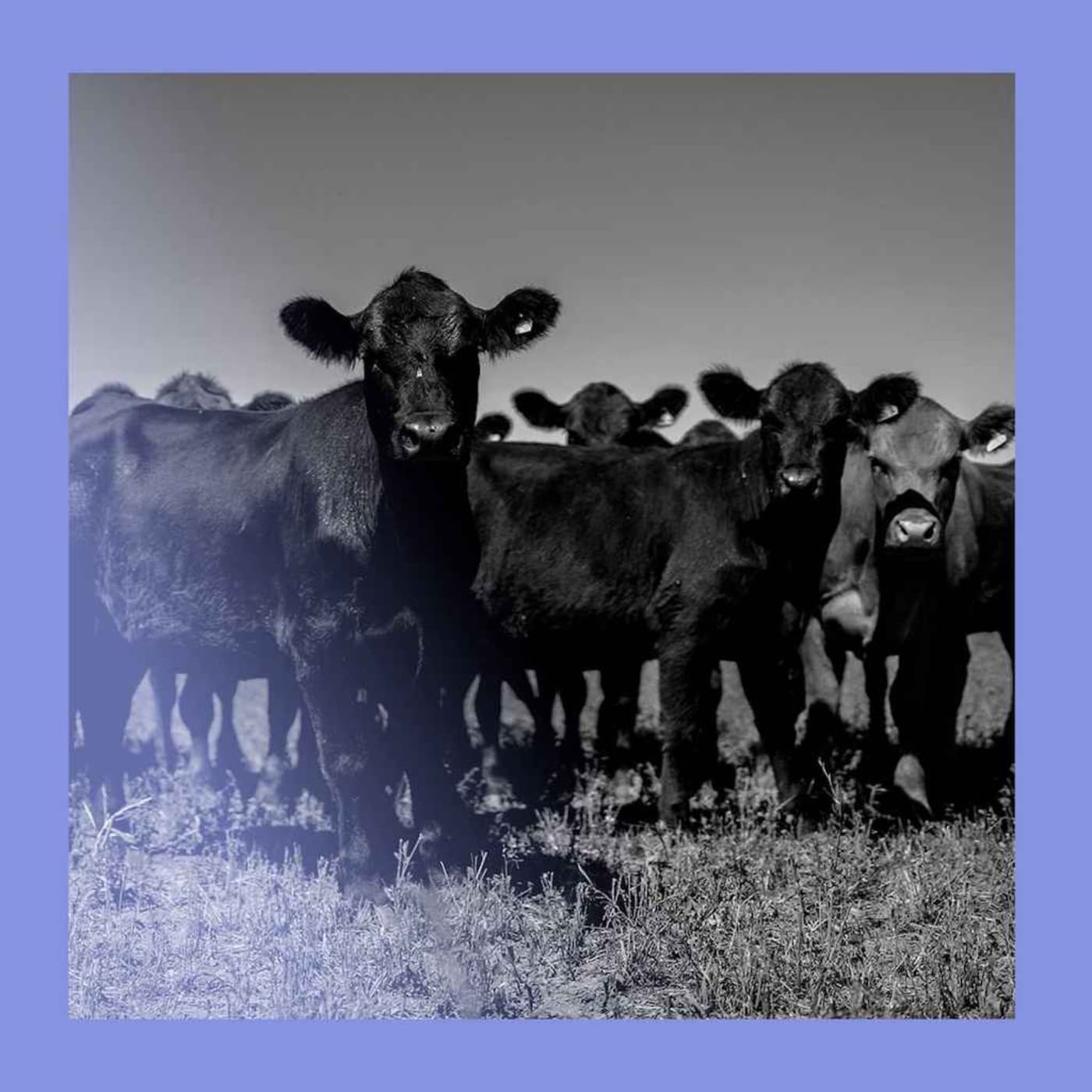
The episode covers three stories: (1) the EU-Mercosur trade deal, “lowering the steaks,” and why it took 25 years; (2) Japan’s “foreigner problem” politics around deer-bashing rhetoric, immigration/tourism/investment; (3) Britain’s Parkrun, a volunteer-run 5km weekly event that became a major public health success.
Guests
Christian Odendahl, Economist economics editor for Europe; Moeka Iida, Economist Japan writer; Hamish Clayton, Economist Britain desk.
Key claims/examples
The deal removes tariffs on ~90% of goods (phased over a decade), cutting car tariffs up to 35% and beef tariffs (e.g., 40–45% down to 7.5% for first 100,000 tons). Farmers and EU voting politics (France/Poland opposed; qualified majority; safeguards/subsidies) delayed approval. Japan: anti-foreigner sentiment fueled by dubious “foreigners attack deer” claims; foreign residents ~4 million; tourism ~40 million; weak yen and property-investment perceptions. Parkrun: 2004 start, ~200,000 weekly participants; study estimates £668m/year benefits; GP social prescribing; course records removed to reduce competitiveness; expansion into deprived areas and prisons.
Written by AI. May contain mistakes. Listen to the episode to check what was said.
Chapters
Tap a time to open that second in VOJapan's Political Landscape
1:27 to 2:13
Explore the rise of foreigner bashing in Japan's politics.
“But perhaps more than most countries, Japan needs its gaijin.”
Mercosur Trade Deal Overview
2:13 to 3:40
Understand the significance of the Mercosur trade agreement.
“At daybreak in Paris this morning, a serious traffic jam started to develop.”
Details of the Trade Agreement
3:40 to 6:18
Examine the specifics of tariffs and agricultural impacts.
“So this pact creates an almost free trade block of more than 700 million people.”
Political Dynamics of the Deal
6:18 to 8:08
Investigate the political challenges surrounding the trade agreement.
“So you can only call Champagne if it comes from that region.”
Geopolitical Implications of Trade
8:08 to 10:02
Analyze the broader geopolitical context of the Mercosur deal.
“What's the overall actual impact of all this do you reckon?”
Japan's Foreign Residents and Demographic Challenges
14:04 to 18:46
Learn about the increasing number of foreign residents in Japan and the government's contradictory immigration stance.
“So although Japan has this reputation of being this closed-off, conservative, homogeneous country, In reality, it's been bringing in a growing number of foreigners or foreign workers.”
Impact of Tourism on Japan's Economy
18:47 to 19:06
Explore the effects of rising tourism in Japan, including economic benefits and concerns about over-tourism.
Parkrun's Success and Inclusivity
20:15 to 24:18
Analyze Parkrun's inclusive approach and its role in improving mental health and community bonds.
“But now it has unwittingly morphed into one of Britain's most successful public health schemes.”
Transcript
Automatic transcript. May contain errors.0:00If you work in university maintenance, Grainger considers you an MVP because your playbook ensures your arena is always ready for tip off. And Grainger is your trusted partner, offering the products you need all in one place, from HVAC and plumbing supplies to lighting and more, and all delivered with plenty of time left on the clock, so your team always gets the win. Call 1-800-GRAINGER, visit grainger.com, or just stop by. Grainger, for the ones who get it done. Ryan Reynolds here from Mint Mobile. I don't know if you knew this, but anyone can get the same premium wireless for$15 a month plan that I've been enjoying.
0:38It's not just for celebrities. So do like I did and have one of your assistant's assistants switch you to Mint Mobile today. I'm told it's super easy to do at mintmobile.com slash switch. Upfront payment of$45 for three month plan equivalent to$15 per month required. Intro rate first three months only. Then full price plan options available. Taxes and fees extra. Default terms at mintmobile.com.
1:05The Economist
1:12Hello and welcome to The Intelligence from The Economist. I'm your host, Jason Palmer. Every weekday, we provide a fresh perspective on the events shaping your world.
1:26In Japan, it's become politically expedient to do a little bit of foreigner bashing. But perhaps more than most countries, Japan needs its gaijin. Our correspondent unpicks the rhetoric from what really matters for the country. And every Saturday morning across Britain, thousands upon thousands of people get up early and head to the park for a run, appropriately called Park Run. We look into how one small get-together turned into a national public health success story.
2:04First up, though...
2:13At daybreak in Paris this morning, a serious traffic jam started to develop. 350 or so tractors rumbling toward the Arc de Triomphe. The traffic jam is intentional, and it isn't the first. On Monday, producers and tractors gummed up Lugo in Spain. On Sunday, it was Tarragona. The roots of this wheeled protest go back, way back, to the last millennium, in fact. In 1999, talks first began on a trade deal between Mercosur, a block of South American countries, and the European Union. Long story short, they didn't get anywhere for a really long time. An agreement in principle was laid out at last in 2019.
2:59An agreement in practice was announced in December and passed an EU vote just last week. And as you've heard, not everyone is happy about it. By the numbers, this deal is the biggest ever for both blocks. But maybe more than that, it's a sign of how the fantastically complicated business of world trade is being reconfigured. America is ramping up protectionism and China is weaponizing trade. The world is obsessed with securing supply chains and critical raw materials. Christian Odendahl is our economics editor for Europe. So the deal couldn't have come soon enough. Well, let's get into the meat of it.
3:41what exactly is in this deal? So this pact creates an almost free trade block of more than 700 million people. That's the EU on one side and the four Mercosur countries on the other, Brazil, Argentina, Paraguay and Uruguay. Venezuela is a suspended member of Mercosur and Bolivia has just joined, but is not yet part of this trade deal, but it can join in the coming years. And so the idea is to remove tariffs on about 90 % of goods on both sides, phased in over the next decade or so. And some of those tariffs are currently quite high. So up to 35 % on cars, for example, up to 18 % on chemicals. There's also the aim to simplify trade and services, remove some of the non-tariff barriers, as we call them.
4:28But we know from previous experience with other trade deals that this is a longer term tedious process. The estimation is that this will boost the EU's exports by 49 billion euros and Mercosur's by about 10 billion euros. At the moment, Europe exports mostly machinery, chemicals and cars to Mercosur and Latin American countries and mostly agricultural goods and minerals the other way. This last bit is important, right? Europe needs access to more raw materials from more diversified sources. And the deal could now help to develop that industry in Latin America. That is important for both the Mercosur countries and Europe.
5:05And given that the incentives are clear, why did it take so long, a quarter of a century, to get nailed down? In one word, farmers. So the exports from Mercosur to the EU is almost half agricultural goods at the moment. And Europeans also want to eat Argentinian steaks too, if given the chance. But the farmers selling them European steaks are a lot less keen on this, to put it mildly. And then there is sugar and ethanol, even honey. So especially in Poland and France, the farming lobbies are very powerful. In reality, of course, the agricultural sector and the agricultural trade is tiny, right?
5:41So for example, the 240 million euros worth of wine that EU produces export to the macrosource states, they just make up 0.0013 % of the EU's GDP, right? And Europeans, even with this deal, will continue to pay higher prices for Argentinian steaks. So this tariff cuts that is in there from 40 to 45 percent down to seven and a half will only apply to the first 100 ,000 tons of beef. And that is just one and a half percent of total beef production in the EU. What did matter too was sort of the geographical indicators, as we call them. So you can only call Champagne if it comes from that region. And there are lots of those in Europe.
6:27These are European collective brands, if you will. And the EU always insists that others recognize them and not sort of flood the European market with cheap feta cheese from Argentina. So the agricultural trade and the protectionist instincts of European farmers were the longer term problem to get this negotiated, but also was the short term problem to get from the conclusion of the negotiations by the European Commission at the end of 2024 to now the political agreement within the EU and the vote to sign this agreement with the Mercosur states. So why was that vote so tricky to do? Why did that take a year?
7:04So France and Poland remained opposed to the very end, but they were eventually outvoted. And it shows that the EU is now settling more controversial measures like such a trade deal with a hard vote and not a consensus. Germany and other northern European export countries were far keener from the beginning, as was Spain with its close ties to Latin America, but there were some countries sitting on the fence. And so in the end, the pact won what we call in Europe the qualified majority, so a weighted majority by a population. After the European Commission negotiated with some of those countries sitting on the fence, notably Italy, that there would be more safeguards, more subsidies for European farmers.
7:47That is, of course, a bit of the problematic part here with this agreement that the farming lobby and its political representatives at the end had to be bought off at some point. But it worked out in the end and that is what counts. But some of the stuff you said along the way there suggests that in some ways not a lot changes and that for things that do change that's still a tiny fraction of what's moving around in both directions. What's the overall actual impact of all this do you reckon? So in terms of the growth effect that's very low. That is not surprising because trade between these two blocks so far is relatively small.
8:19So the EU's current annual exports to MacroSoar is only about 57 billion. If you compare that to what the EU currently exports to the Indo-Pacific region, that's 400 billion. So the overall economic impact is always going to be small. But the significance, I think, stretches beyond sort of the monetary value in terms of growth to the geopolitics of this. The new opportunities matter for Europe's industries, which are currently struggling with American protectionism and Chinese competition is the biggest part of a wider attempt of Europe to diversify its supply chains and strengthen its ties. And with Latin America, that's a big block.
8:57And Brussels is currently prioritizing sort of the high tariff areas and trying to reduce tariffs there to gain more opportunities for European businesses, such as, for example, Mercosur now and the current negotiations with India, where the EU hopes to strike a deal this months. It's interesting that this should finally come at a time when the Trump administration explicitly says it wants to control what's going on in the Western Hemisphere. And this is a deal struck seemingly to kind of write America out of the equation. Exactly. I mean, this deal started in 1999 when globalization was in its prime.
9:32And it is now concluded at a time when globalization is in the retreat. And these kinds of deals are an answer to America and China trying to change the rules of the game. So I think this deal must be understood as a response by both Latin America and Europe to what is going on and an attempt to strengthen both parts for whatever future trade conflicts or economic coercion may come. Christian, thanks very much for your time. Thank you so much.
10:40We'll be right back. Just stop by. Granger, for the ones who get it done. At Brookfield, we invest in the thing behind the thing behind the next big thing. Our focus across infrastructure, energy, real estate, private equity, and credit is helping to build the backbone of the global economy. We combine deep operational expertise with disciplined long-term investing, uncovering value, and partnering alongside clients to shape tomorrow's economy today. Brookfield. Own what's next. Learn more at brookfield.com. This is not an offer to sell or investment advice. Investing involves risks, including loss of capital.
11:29Japan's ancient capital in the West, Nara, is known for its temples and deer. On any given day, tourists can be found petting the deer and feeding them crackers. Moeka Iida writes about Japan for The Economist. But recently, these animals have found themselves embroiled in a culture war. During her campaign to lead Japan's Liberal Democratic Party, Takahichi Sanae, Nara native and now Japan's prime minister, said that foreigners have been kicking the sacred animals. In fact, there's no evidence of foreigners attacking the deer. The idea that they're attacking deer was spread by a right-wing YouTuber who had posted misleading videos.
12:13But stories like these speak to a much wider problem. Anti-foreigner sentiment is shaping Japan's politics like never before. What do you mean by shaping the politics? Japan's political establishment has been grappling with what they call the Gaikokuji Mondai or the foreigner problem. And this is really notable considering that Japan has long been considered immune to populism. Only 3 % of the population is foreign in Japan, which is much lower than the OECD average of 15%. So people said, because we don't have migrants, you don't see this anti-immigration populism. But clearly that wasn't the case.
12:50So a turning point came in summer last year when the upper house election was held in July. this small political party called Sanseito unexpectedly rose in the polls, and they were running on a Japanese-first platform, which is obviously inspired by MAGA, and they also make reference to Nigel Farage and AFD in Germany. And they railed against foreigners, and they were surprisingly successful. They managed to increase their number of seats from just one to 15 in the upper house. And to be clear, in absolute terms, Sanseito is very small and we're not too sure how they're going to do in the future.
13:28I mean, their approval rating is already declining, but they've managed to set the political agenda. This foreigner problem is now at the center of Japanese politics. The ruling LDP is in a weakened position and they're leading a minority government, and they're hoping to win back voters by talking tough on foreigners. But what is the nature of the so-called foreigner problem? So this so-called foreigner problem needs a bit of unpacking, and it's driven by three intertwined forces, which includes immigration, tourism, and foreign investment. I'll start with foreign residents. So although Japan has this reputation of being this closed-off, conservative, homogeneous country, In reality, it's been bringing in a growing number of foreigners or foreign workers.
14:18Since 2010, which is around the time Japan's population started shrinking, the number of foreign residents has doubled to nearly 4 million. Even anecdotally speaking, foreigners are very visible in Japanese life. And obviously, Japan's demographic challenges are behind this. So foreign workers are desperately needed to fill in labor shortages. But the deep irony is that the government has insisted that it has no immigration policy. So a lot of these workers are brought in officially as students or technical trainees. But in reality, they're doing service jobs or blue collar work and filling in labor shortages.
14:57And San Seto was able to latch onto this paradox and say this is a silent invasion. And they've been spreading dubious claims that these foreigners are causing crime. and getting preferential treatment at the expense of ordinary Japanese people. So, as you say, foreign residents very much on the rise and kind of necessarily so, but you also mentioned tourism. Tourists are very visible in Japan now, especially after COVID when they were nearly absent. And there's been an ongoing diplomatic spat between Japan and China, which has led to a stark decline in flights from China. and the Chinese government has been advising citizens to refrain from traveling to Japan.
15:39But even still, the number of tourists are growing and it's likely to have surpassed 40 million last year. And it's become a very important industry. So tourism is now Japan's second largest export after cars. But at the same time, this has given rise to concerns about over-tourism, especially in popular and over-congested areas like Tokyo and Kyoto. And then there's also these stories about badly behaved tourists that go viral online and upset netizens. A big factor behind this surge in tourism is the weak yen. The weak yen is hurting Japanese households in a way. So it's driving up import costs and eroding their purchasing power.
16:20But it's great news for foreign tourists coming because they can buy things cheaply. So it's fueling this sentiment among Japanese people that the country is becoming cheap or a bargain destination for foreigners and that foreigners are exploiting it. And I think that links to another topic that falls under the so-called foreigner problem, which is the rise of foreign investment. So a lot of stories are circulating about wealthy foreigners, especially from China, taking advantage of the weak yen and snapping up property. People claim that that's driving up housing prices and hurting Japanese people.
16:53And the data is very sparse. It's not really clear how much foreign investors are contributing to the problem of rising property prices. But this perception has taken hold. So you say that the foreigner problem has now sort of found its way to the center of politics. How is the government responding to that? The ruling party's position has weakened and they're desperate to win back voters. And the LDP is currently led by Takahichi Sanae, who is a social conservative. Her administration has been talking about cracking down on illegal stayers and introducing TOEFL rules on foreign workers and taxes on tourists and also restrictions on property purchases.
17:35It seems like to a degree they've managed to bring back some of the voters that have left them for Sanseito. So Sanseito's approval rating has been going down and the LDP's has been recovering. But I guess the question is whether those people-pleasing policies at this point are good policies for Japan in the long run. if in many cases, as you say, Japan needs foreigners and foreign workers and foreign investment. Yes, I totally agree. I mean, I think Japan needs more foreigners. It doesn't need less foreigners. There's real voter frustration, but it's mostly led by economic problems. Like after decades of deflation, Japan is seeing inflation for the first time, but real wages are falling.
18:12There's real economic concerns that voters have. And I think it's a very familiar story. But when you have those problems. It's very easy to point to outsiders or foreigners, but the demographic reality is there. Japan does need more foreigners to keep its economy going. And I think that's why, although the foreigner problem has become so salient, a lot of Japanese people actually take a more moderate stance, especially people who understand the demographic reality. So talking tough on foreigners might be good for politicians in the short run, but in the long run, it's only going to hurt Japanese people.
18:46Moeka, thanks very much for joining us. Thank you so much for having me, Jason.
19:07Good morning, park runners. Good morning. Can you hear me over there? I'm worried about you. Every Saturday at 9am, starting guns sound in 880 spots around Britain. And that's for Park Run, which is a five kilometre run or walk, which is free for everyone to attend. They're doing the first park run. Welcome!
19:38Attendance has grown from just 13 runners in the opening run in 2004 to 200 ,000 across the country on a typical Saturday these days. 3.9 million people in Britain have now completed at least one park run. and parkrunners now spread to 23 countries across the world as far as Australia and Eswatini. Hamish Clayton is on the Britain desk at The Economist. It was started off by Paul Sinton Hewitt who was a keen runner and after an injury he wasn't able to join his run club anymore so he started this as a nice way to stay in touch with those friends. But now it has unwittingly morphed into one of Britain's most successful public health schemes.
20:21almost a little bit by accident. I've done about 140 times now. 140? Yeah. Wow. In 10 years. And how many have you done? I think I've probably run about 40. 312. Wow. So yeah. A recent study by Steve Hark at Sheffield Hallam University estimates the benefits are as high as£668 million per year. That includes the financial benefits of improved life satisfaction, as well as decreased costs to the NHS. That same study showed that Parkrun is at least three times as cost-effective as other comparable public health schemes. One of the main reasons behind that is that Parkrun relies on volunteers to run its events, and it also gets the park space for free.
21:06I don't know, it's a nice sort of sense of community, even though you don't know anyone here. It feels like you're running with a group of friends. And they're strangely addictive, aren't they? And the vibe here is so nice.
21:22The secret to Parkrun's success is its inclusivity. So it very much brands itself as a run, not a race. So everyone is able to turn up and whether they walk, whether they run their way around the five kilometres, it's open to all. A lot of people turn up for fun and for the social community elements. So some people end up just chatting their way around the 5k as opposed to necessarily running and aiming for personal bests or personal times. In fact, the charity removed the course records from its websites to deter overly competitive running, which was much the annoyance of overly competitive runners.
22:06Parkrun's also been successful in creating milestones. So when you've done 50 runs, 100 runs, 250 runs, you can buy merchandise to show off that fact to the other runners. It's this slight gamification that's helped people return regularly and I think is one of the secrets to its fantastic success. Yeah, it's good. I want to do the whole alphabet now. The whole alphabet? Yeah, yeah. I aim to win most pilgrims I go to. That's my goal. It's also shown to reduce loneliness. So 70 % of survey respondents reported an improvement in their mental health and a reduction in feelings of social isolation by turning up to Parkrun.
22:51It's seen as such a successful scheme that GPs now prescribe Parkrun to patients. So over 2 ,000 practices around the UK have twinned with a local Parkrun and it is now used as social prescribing by GPs who signpost patients towards Parkrun for both the mental and the physical benefits that it can bring. one issue that parkrun's finding is that participation is lower in deprived areas and that's a great shame because studies have shown that people in those deprived areas actually report the greatest improvements to their fitness and happiness it struggles from its identity as still a quite white middle-class event around the country sport england which is a public sports governing body is now giving parkrun 1 million pounds annually and it aims to remedy exactly that by creating more parkruns in more deprived areas.
23:49In fact a quarter of new parkruns are now in those deprived areas. There are even 20 parkruns in British prisons. Okay I can see the finish line. One reason that parkrun is so successful is because it didn't actually start as a public health initiative, so it's never felt as a chore for people to come. Right on the final corner. For many people, it's a reason to push that extra mile and to ensure running isn't seen as a solo sport, but that they feel part of a community. And he's finished. Better late than never.
24:50We'll see you back here tomorrow.
Read the full transcript
25:35We'll see you next time. is all on sale right now during the LiveWell sale on the drop by GNC. When you manage procurement for multiple facilities, every order matters. But when it's for a hospital system, they matter even more. Grainger gets it and knows there's no time for managing multiple suppliers and no room for shipping delays. That's why Grainger offers millions of products and fast, dependable delivery so you can keep your facility stocked, safe, and running smoothly. Call 1-800-GRANGER, click grainger.com, or just stop by. Grainger, for the ones who get it done.
From the publisher
From Argentinian beef to German cars, a freshly inked deal between the EU and a bloc of South American countries should ease trade barriers—and is a sign of global trade’s topsy-turvy time. Foreigner-bashing is politically fashionable in Japan, but focuses on the wrong problems. And a look at Parkrun, a free weekly event that has unwittingly made many Britons healthier.
Get a world of insights by subscribing to Economist Podcasts+. For more information about how to access Economist Podcasts+, please visit our FAQs page or watch our video explaining how to link your account.
Hosted on Acast. See acast.com/privacy for more information.