In short
The episode of The Intelligence (Economist) covers two main stories. First, Luxe run out? LVMH: Avantika Chilcote explains that LVMH is a conglomerate of about 75 “maisons” (including Louis Vuitton, Moët & Chandon, Hennessy, Rimowa, and Belmond). Despite 2024 sales around €85bn, LVMH’s revenues/profits and stock have fallen as luxury demand weakens in the US and China, tariffs add uncertainty, young consumers drink less, and brands have raised prices rapidly (e.g., Louis Vuitton Speedy 30 bag price more than doubled since 2019). She also cites labor-exploitation investigations at Laura Piana (LVMH denies wrongdoing). Investors compare LVMH to Hermès (less cyclical because it targets the ultra-wealthy) and discuss calls to break up LVMH’s drinks division; succession by Bernard Arnault’s family is another concern. Second, it uses the Big Mac Index to argue tariffs weaken the dollar and raise US prices, but don’t make exports more competitive in purchasing-power terms.
Guests
Avantika Chilcote (global business writer) and Josh Roberts (Capital Markets correspondent).
Written by AI. May contain mistakes. Listen to the episode to check what was said.
Chapters
Tap a time to open that second in VOExploring LVMH's New Store in Shanghai
1:12 to 2:28
Discussion on Louis Vuitton's new flagship store and its symbolism.
“Think of the last series that you really, really liked, Couldn't Stop Binging.”
LVMH's Struggles in the Luxury Market
2:28 to 5:50
An analysis of LVMH's recent financial difficulties and market challenges.
“Avantika Chilcote is our global business writer.”
Factors Affecting LVMH's Performance
5:50 to 8:06
Examination of internal and external factors impacting LVMH's business.
“So the luxury sector in general is in decline.”
Future Prospects for LVMH
8:06 to 10:33
Discussion on LVMH's potential strategies and the leadership transition.
“So the brand that Bernard Arnault really watches and I think really annoys him is Hermes.”
North Korean Media and Its Risks
10:33 to 14:02
Exploration of North Korean citizens' risks in consuming foreign media.
“Thanks very much as ever for joining us, Avantika.”
The Impact of South Korean Dramas in North Korea
14:02 to 17:14
Learn how South Korean dramas provide hope and a sense of reality for North Koreans.
“And while she was working in North Korea, she ran a boat lending business.”
The Economic Effects of Trump's Tariffs
18:36 to 24:26
Explore the paradoxical effects of tariffs on the American economy and consumer prices.
“President Donald Trump is managing to keep the whole world on his tariff roller coaster, with another tranche of them due to come into force tomorrow.”
Transcript
Automatic transcript. May contain errors.0:00Did you know SIBO VIX Index measures market uncertainty? Meaning it could rise from bullish positioning in SIBO SPX options due to fear of missing out rather than fear of downside. More at SIBO.com slash VIX Insight. Review important risk disclosures and disclaimers at SIBO.com slash US underscore disclaimers. with no fees or minimums on checking accounts. It's no wonder the Capital One bank guy is so passionate about banking with Capital One. If he were here, he wouldn't just tell you about no fees or minimums. He'd also talk about how most Capital One cafes are open seven days a week to assist with your banking needs.
0:31Yep, even on weekends, it's pretty much all he talks about, in a good way. What's in your wallet? Terms apply. See CapitalOne.com slash bank. Capital One N.A. member FDIC.
0:50The Economist
0:58Hello and welcome to The Intelligence from The Economist. I'm your host, Jason Palmer. Every weekday, we provide a fresh perspective on the events shaping your world.
1:12Think of the last series that you really, really liked, Couldn't Stop Binging. Any chance you'd have watched it if it carried the risk of prison or death? That's the choice that North Koreans make all the time, and they're choosing to be entertained. And after half a year of tariff tantrums and trade wars in the making, it's time to assess the ill effects on the American dollar. And what better way to do that than with our world-famous Big Mac Index, fresh off the griddle.
1:49First up, though.
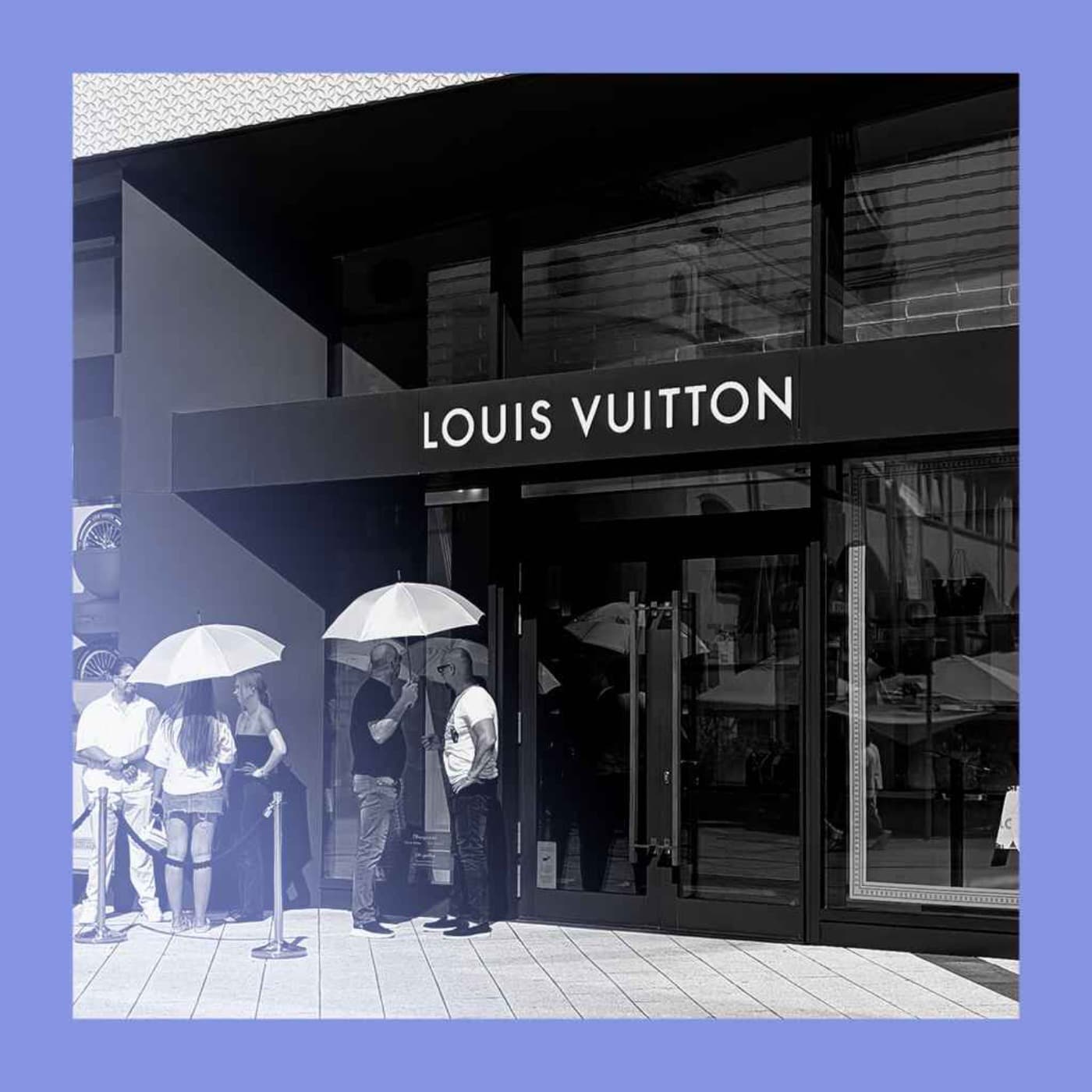
1:58Louis Vuitton recently opened a huge property in Shanghai. You call it the flagship, I suppose. It's a store, it's a restaurant, it seems to be some sort of museum as well, and it is the shape of a massive silver ship. It's covered in Louis Vuitton's trademark print, and it's called the Louis. And so it's basically just a giant billboard for the brand. Avantika Chilcote is our global business writer. Some analysts I speak to are also viewing it as something of a metaphor. Louis Vuitton's parent company, LVMH, has not been having a good year. And in recent results that we've just seen, there's been disappointing revenues, disappointing profits, and the stock's been tumbling.
2:47The question that these investors are asking, is LVMH a big luxury superyacht that's just going to enter some promising new waters? Or is it Titanic 2.0?
3:02so avantaga for a start tell me more about lvmh itself this giant luxury brand i'll be honest before i started looking at this i didn't realize just how big lvmh is it's made up of 75 different houses they call them maisons very sort of french the whole thing and there's some labels that i've heard of, sort of Louis Vuitton.
3:28And then there's the other bits of the name, the other bits of LVMNH. There's the Moet and Shandon and Hennessy drinks businesses.
3:41There's all sorts of other things. They own Remova, the luggage brand. They own Belmond, which is a group of luxury hotels. The brand basically sells anything that's a bit fancy and a bit expensive. The CEO of the company, Bernard Arnault, is incredibly interesting. People talk about him as the wolf in Kashmir. He's credited with basically creating the luxury industry we have today, a luxury industry that is globalized, where you have mass production, where you have lots and lots of different brands that are constantly surrounding us in marketing. But how did he do that? How did he single-handedly invent the luxury industry as we know it?
4:19The interesting thing about Arnaud is that he didn't build any of these brands. Over the past 40 years, he's basically been a takeover king. He's been buying up brands. And the business logic was pretty basic. You know, one, you have diversification through this. There's also economies of scale. So other labels will always complain that because LVMH negotiates on block, They get the best marketing, the best advertising spots, the best real estate in luxury malls. And that makes them really, really difficult to compete with. From the turn of the millennium, you had a massive run up in luxury sales.
4:54There was a big emerging middle class. People were buying fancy handbags and expensive shoes. And LVMH totally rode that wave. Its market valuation peaked in 2023. and that was that post-COVID boom when everyone was revenge shopping, as they called it. And at that time, Arnaud was the richest man in the world. In 2024, just to give you an idea, LVMH did 85 billion euros in sales. That's about 100 billion dollars. That made it four times as big as the other two big competitors in the luxury space. And this was all well and good until the last couple of years when the luxury cycle has sort of started to go into decline.
5:37You've seen disappointing revenues, profits falling, and the company's market value has dropped by more than a quarter in the last year. So after a successful backstory like that, where is it going wrong? Some of the problems are totally out of LVMH's control. So the luxury sector in general is in decline. Sales are falling year on year. And that's because shoppers in both of the biggest markets in the US and China are buying less. And the other thing at the same time is that you've got Donald Trump's tariffs that are on again, off again. The thing with luxury firms is that they're selling their products at such a big margin that these tariffs don't need to push up the selling price very much for the margins to stay the same.
6:17But they do create uncertainty. They do make consumers a bit nervous. And none of that's good for the industry as a whole. As far as the drinks business goes, young consumers seem to be drinking a lot less. You're seeing that the wine and spirits division, which at some point a few decades ago contributed about half of the company's profits, now contributes less than 10%. At the same time, there are some things that LVMH itself has done that haven't been helpful. Go on. In the last few years, luxury firms in general have been, one, targeting aspirational shoppers. I say this because the word is slightly ridiculous, but it means that they're selling not just the absolute ultra rich, but also people who have some money to spend.
7:00These are people who, when times are good, spend a lot of money, but also do feel the pain when you have high inflation, uncertainty around jobs and so forth. Secondly, they've been hiking prices at a ridiculous pace. When you had that revenge shopping, a lot of luxury brands, including LVMHs, just shot up prices to make the most of it. One of the examples that I found from analysts is something called the Louis Vuitton Speedy 30 bag. It's a canvas tote bag. And the price of that has more than doubled since 2019. Given luxury goods in general have gone up about 50 % at that time, that's a pretty rapid pace of price hikes.
7:39At the same time, there's been scandals within the business. Very recently, Laura Piano, which is an LVMH brand that sells£2 ,000 cashmere sweaters, It's been under investigation for labor exploitation. The company is very clear that they deny this. They say it's very difficult for them to keep track of their suppliers and so forth. But it doesn't really make customers think, OK, this is a brand I should be spending on. So clearly some of these things unique to the brand, but a lot of market forces that are not. Why are the other luxury brands not suffering in the same way? So the brand that Bernard Arnault really watches and I think really annoys him is Hermes.
8:14And the reason I think Hermes stock is just going up and up and up through this luxury decline is that the firm has remained completely focused on selling to the exceedingly wealthy. That clientele is basically less cyclical, less vulnerable to economic downturns. And if you only sell ultra expensive stuff during a downturn, you suffer less. But conversely, when the going is good, you're not benefiting from a sudden upswing in consumer spending. So savvy businessman as he is, Mr. Elner, must be aware of all of this. Besides avoiding scandals, what is he doing? So there's a big thing that analysts are starting to call for, which is the LVMH to break itself up.
8:54The entire logic of this company was economies of scale. And now they're saying, well, could you get rid of Moet Hennessy? Could you get rid of the drinks business, which is not so profitable, which has narrower margins? And there's various ways you could do this through perhaps Diageo, It's a British drinks group that owns a big bit of Moet Hennessy. Could they buy up the LVMH state? There's lots of ways of doing it. It seems quite unlikely to me. The things that Arno has been doing are more tweaking around the edges. As far as the fashion houses go, the creative director of these labels is incredibly important.
9:29He's been rejigging them. At the same time, even on the business side, he's been bringing in new bosses in terms of alcohol, watches, retailing units. There's new executives in charge, including some of his own children. Has a whiff of succession about it. This is what investors love to speculate about. Arno is 76 years old now. A few years ago, he upped the age limit for the leadership to 80. And this year has had the limit raised again to 85. But if you think about how much this business is just about this one man, even the idea of change in nine years' time does make investors jittery. It's quite clear that the plan is to keep the business within the family.
10:10All five of his kids work in different parts of the group. They're all under the wing of an experienced manager. His eldest daughter, Delphine, who runs Dior, is the only one who's actually on the executive committee of the group. You might think she's a natural choice, but it's completely up for grabs. It looks like Arno knows that succession makes investors nervous. And as long as he can, as long as it's possible, he's going to have his hand in this business steadying the ship. Thanks very much as ever for joining us, Avantika. Thanks for having me, Jason.
10:56I'm here to North Korea. Are you not there anywhere I've been killed? A South Korean heiress goes paragliding near the border with North Korea. A tornado blows her off course, and she finds herself on the wrong side of it.
11:16A handsome soldier on patrol finds her and pledges to help her get back home.
11:25This TV show Crash Landing on You is kind of standard issue fish-out-of-water romance. In South Korea, where it was made, just another K-drama ratings hit. In North Korea, watching it could cost you your life. The 2020 so-called anti-reactionary thought law explicitly prohibits the possession, consumption, or distribution of any sort of foreign media. Rose Adams writes about the Koreas for The Economist. And so under this law, people can be punished for simply possessing foreign media. But in severe cases, for example, people who sell or distribute copies of K-dramas, for example, the law does prescribe the death penalty.
12:10And the law means what it says there? People have been found guilty of consuming South Korean TV, for example? Yes, absolutely. Multiple human rights groups based out of Seoul have recorded executions that are explicitly attributed to watching K-dramas. For example, the Ministry of Unification's report cites an example of a 22-year-old farmer in 2022 who was publicly executed for listening to 70 South Korean songs and watching three films and then sharing those with his friends. So you can see that the bar is relatively low. And of course, you can't punish everyone for watching media like this.
12:48More minor punishments, if you can't bribe your way out, of course, include everything from public humiliation to months or years at enforced labor or in a political prison camp. So thinking just about the TV shows that North Koreans are willing to watch, willing to risk death for, what kind of stuff are we talking about? Yeah, so I'd say the winning genre is romance. I've spoken to a number of defectors. A lot of them cite the same shows. For any K-drama addicts out there, it's Boys Over Flowers, Stairway to Heaven, My Love from the Star, cheesy, but very sweet romance stories. And I think part of the reason for this appeal is as someone who's watched a lot of North Korean films myself, there is no romance.
13:30Couples come together over their shared passion for the revolution or for the leader, not out of individual chemistry. And so the idea, you have these storylines centered around going against society, going against your parents, going against authority to be together, The Forbidden Romance, I think is a new and exciting concept to see on the screen for most North Koreans. A number of shows I think also people watch for emotional catharsis, the same way that any of us might turn on a K-drama or something lighthearted when we get back from work. One of the people I spoke to, she defected two years ago.
14:05And while she was working in North Korea, she ran a boat lending business. And so at the end of the day, when she'd been disrespected for being a young woman in a male industry, officials looking down on her, she'd come back and watch this drama called May Queen, which was all about a young woman in the shipbuilding village of Ersan, making her way up from poverty to eventually become a ship designer and take over the family business. And she says watching that, it was a role model and it gave her hope and it gave her strength to keep doing what she was doing. From the perspective of North Korean officials, what's the specific big objection here?
14:40Why make it such a serious crime? I think it comes down to a lot of North Korea's legitimacy is not based on reality, but on rhetoric. North Korea tells people that it's a paradise on earth and that they have nothing to envy in other countries. But when you watch these South Korean dramas, for example, you see the glitzy Seoul skyline, you see the electricity being on all night. You see people ordering delivery and eating fried chicken. It's very hard for North Koreans to reconcile this, especially like in the 90s, for example. North Korea used to say that South Korea was this crime-ridden, impoverished hellscape.
15:16And watching dramas from that period tells a very different story. And also the fact that unlike Hollywood, these are the same Koreans, right? They have the same language, the same history, the same culture. And so it's not comparing apples to oranges. It is very much a direct comparison. And it would only be natural for many North Korean viewers to look at their South Korean counterparts and wonder, why don't we live like that? And that's an existential threat to the regime. And so plenty of people, even on potential pain of death, are willing to seek out that kind of, well, to live through that envy.
15:51No, absolutely. And it's not even just pain of death either. It's not easy to watch South Korean shows in North Korea. You know, you can't just turn on Netflix with a VPN. All radio and TV, for example, in North Korea, when you register them, or if they're produced inside the country, come with the dials often fused, fixed, so that you can only tune into North Korean TV and radio channels. So naturally, the more popular method is things like USB drives or SD cards that are easy to conceal and that you can connect to a TV or a laptop. But even that, many North Korean devices now come with software that keep you from being able to actually open files that are not approved by the government in advance.
16:32So it's not easy to get a hold of these, and yet people buy them on the black market from people that they know. They're smuggled into the country. And frequently, in the past at least, we used to see a lot of friends get together to watch things or swap cards as a show of trust in each other. And while that behavior seems to have gone into the shadows or people have become more cautious about it since the inaction of the anti-reactionary thought law, many people still watch together with their families or swap SD cards with their closest friends. And all of this just goes to show that despite the immense risk and the government's best efforts, North Korean fans will keep finding a way to binge their favorite shows.
17:14Rose, thanks very much for your time. No, thank you. Thank you.
17:48There are risks associated with SIBO company products. Review the disclosures and disclaimers at SIBO.com slash US underscore disclaimers. With no fees or minimums on checking accounts, it's no wonder the Capital One bank guy is so passionate about banking with Capital One. If he were here, he wouldn't just tell you about no fees or minimums. He'd also talk about how most Capital One cafes are open seven days a week to assist with your banking needs. Yep, even on weekends, it's pretty much all he talks about. In a good way. What's in your wallet? Terms apply. See CapitalOne.com slash bank. Capital One N.A.
18:26Member FDIC.
18:36President Donald Trump is managing to keep the whole world on his tariff roller coaster, with another tranche of them due to come into force tomorrow. By now, you're used to our argument that ultimately it's all bad for the American consumer. How to gauge how bad? So glad you asked. We've got just the measure, based for decades on one of Mr. Trump's very favorite cuisines. Donald Trump's tariffs have brought pain to the American consumer. Josh Roberts is our Capital Markets correspondent. So far, they've caused the dollar to weaken. That has pushed prices up in America. But the odd thing is that it has not made the dollar more competitive in trade terms.
19:22In other words, Americans are getting squeezed, but they're not getting any boosts to their exports. So, Josh, talk me through how you have come to that conclusion. Well, by updating our Big Mac index. I know that one. We've talked about that before. Give me a little reminder. Yeah, so the Big Back Index, we've been producing it for nearly 40 years. It's a lighthearted guide to currency distortions. And the idea behind it is called purchasing power parity. This is the idea that different currencies exchange rates should adjust so that they can buy the same amount of goods or services. There's a rigorous academic way of comparing them.
20:00We don't do that. Instead, every six months, we look at the price of McDonald's burgers. We've got the different prices in different countries and we work out putative exchange rates between the currencies, then we compare them to actual market rates and decide if the currency is overvalued or undervalued. So shall I give you an example of how that works? Examples always helpful. Go on. Okay, so a Big Mac in Taiwan costs 78 Taiwanese dollars, and a Big Mac in the US costs six American dollars. Now, the ratio between 78 and 6 is 13 to 1. 78 is 13 times 6. So purchasing power parity would suggest that the exchange rate between the Taiwanese dollar and the American one ought to be 13 to 1.
20:43An American dollar ought to buy 13 Taiwanese dollars. In fact, an American dollar buys 29 Taiwanese dollars. So the Big Mat Index concludes that the Taiwanese dollar is heavily undervalued versus the American one. But we're here today to talk about what's happening with the American dollar and onward effects. What's going on there? Yeah, so the American dollar has weakened a lot so far this year by about 10 % against a basket of its peer currencies. And American exporters might have hoped that would make their exports more competitive. If the dollar is weaker compared to other currencies, then when they're selling goods and services abroad, they're cheaper in terms of those other currencies, and that ought to make them more competitive.
21:27In fact, that's not actually what's happened with a large range of countries that America is worried about. The Treasury Department keeps a list of countries that it monitors for supposed currency manipulation, keeping their currencies too cheap in a bid to boost their exports. And some of the currencies on that list in Germany, in Ireland, in Switzerland, have seen their currencies become more expensive since the start of the year. That's what America wants. But most of the currencies on that list, those in Asia, these are in countries such as China, Japan, South Korea, Taiwan, most of these currencies have either barely budged or actively become cheaper against the dollar since the start of the year.
Read the full transcript
22:09And that's a weird result because the dollar has weakened. So what's going on here? Why the weirdnesses? What's happening is even though the dollar has weakened on the foreign exchange markets, American prices have gone up by more than those elsewhere. So again, remember we're talking about burgers, the price for Big Mac in America since January has gone up from$5.79 to$6. But the price of Big Macs in much of Asia, in South Korea, Japan, China, those countries we're talking about, their prices have stayed stable. So what's happened is that even though the dollar has weakened against those other currencies, so other currencies buy more dollars, because American prices have gone up, those dollars buy less stuff.
22:56In purchasing power terms, even though the dollar has weakened, it has become no more competitive in terms of the stuff it can buy. Paradoxically, tariffs cause the dollar to weaken, which has raised American consumer prices. But in purchasing power terms, it's still expensive. It's not given a boost to exports. We move from weirdnesses to paradoxes. What's driving the paradox then, Josh? Before Donald Trump implemented his tariffs, a lot of people in his camp hoped that even though he was imposing levies on imports, the dollar would strengthen in response. And that would mean that Americans wouldn't pay the full price of the levies because the dollar got stronger.
23:38That would lower the price of imports for them. That would offset the increased cost from the tariffs. And the Treasury would get to collect revenue without American consumers being squeezed. In fact, the opposite has happened. Tariffs have come in, they've raised the price of imports. At the same time, the dollar has weakened, which has raised the price of imports even more. So rather than offsetting the effect of the new taxes, they've doubled down on it. Americans have been squeezed on two fronts. And we're already starting to see a bit of evidence that that's coming into consumer prices. In the year to June, inflation ran at a higher rate than most economists had expected.
24:16So even though so far the impact of tariffs on the American consumer has been muted, it is now showing up and they're getting squeezed. Thanks very much for your time, Josh. Thanks for having me, Jason.
24:46That's all for this episode of The Intelligence. We'll see you back here tomorrow.
25:19We'll see you tomorrow. market due to fear of missing out rather than fear of downside. Download our white paper at SIBO.com slash VIX Insight. There are risks associated with SIBO company products. Review the disclosures and disclaimers at SIBO.com slash US underscore disclaimers. With no fees or minimums on checking accounts, it's no wonder the Capital One bank guy is so passionate about banking with Capital One. If he were here, he wouldn't just tell you about no fees or minimums. He'd also talk about how most Capital One cafes are open seven days a week to assist with your banking needs. Yep, even on weekends, it's pretty much all he talks about in a good way.
26:01What's in your wallet? Terms apply. See CapitalOne.com slash bank. Capital One N.A. Member FDIC.
From the publisher
LVMH Moët Hennessy Louis Vuitton SE, to use its proper name, is led by Bernard Arnault, who is credited with creating today’s luxury industry. Can he turn the firm around after its missteps? Why do fluffy K-dramas tempt North Koreans to brave the firing squad? It is not the political messages. And our Big Mac index shows trade-tantrum effects on the dollar.
Get a world of insights by subscribing to Economist Podcasts+. For more information about how to access Economist Podcasts+, please visit our FAQs page or watch our video explaining how to link your account.
Hosted on Acast. See acast.com/privacy for more information.