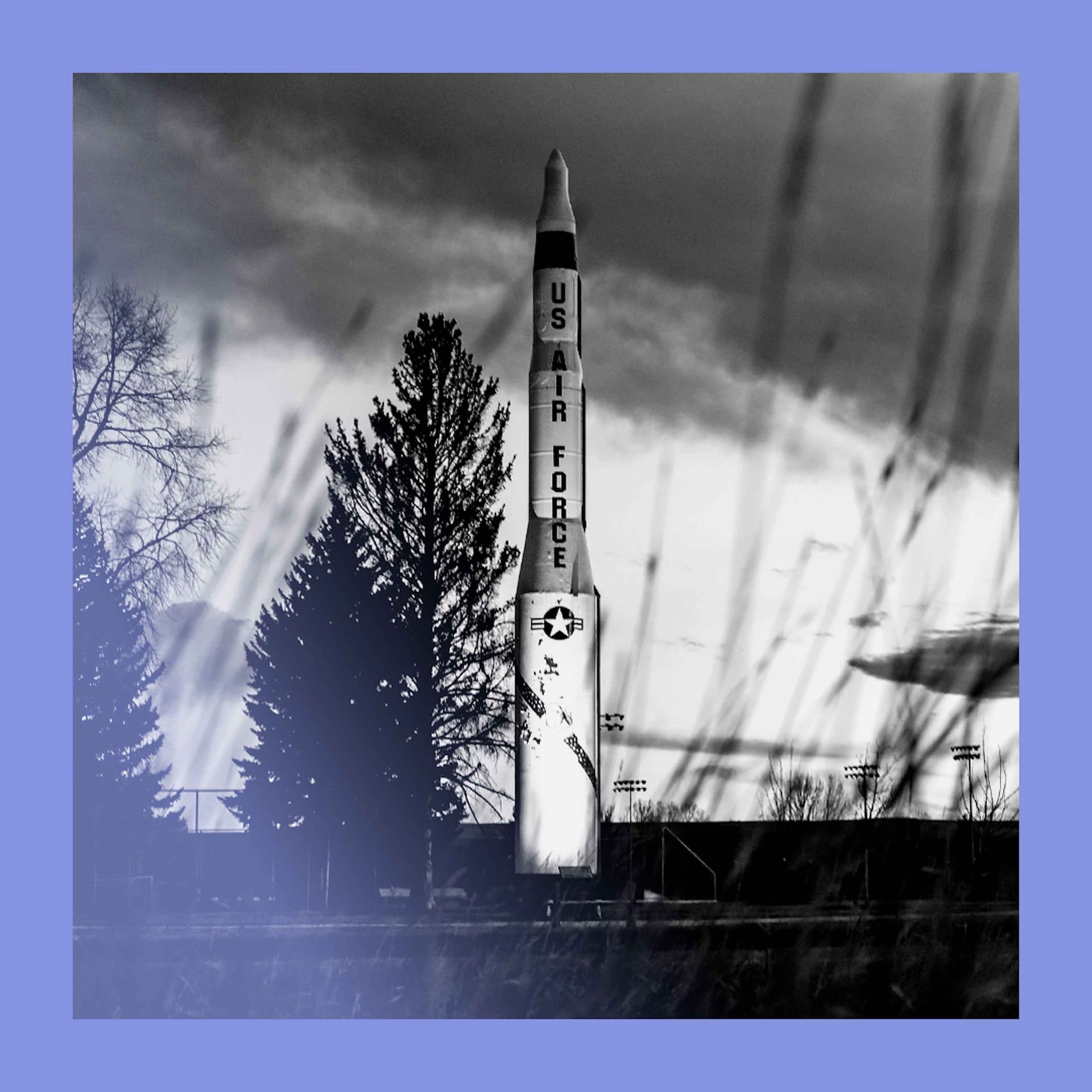

In short
Podcast Episode Notes: Nukes of Hazard - US-Russia Arms Treaty Expires
Overview
- Podcast Title: Economist Podcasts
- Episode Title: Nukes of Hazard: US-Russia Arms Treaty Expires
- Description: An analysis of the New START nuclear treaty between the US and Russia, its expiration, implications for global arms control, and a brief discussion on the rise of cults and young men undergoing hair transplants.
Key Topics Discussed
- New START Treaty
- Signed in 2010 by Barack Obama and Dmitry Medvedev.
- Aimed to limit the number of strategic nuclear warheads and missiles held by the US and Russia.
- Allowed for on-site inspections to ensure compliance.
- The treaty expired after 15 years, marking the end of a significant era of arms control.
Implications of Expiration
- The end of the treaty suggests a looming new arms race, as both nations may ramp up their nuclear arsenals without restrictions.
- The situation is exacerbated by ongoing geopolitical tensions, particularly surrounding the Ukraine conflict.
- Reasons for Treaty Non-Extension
- The treaty allowed for only one extension, which was utilized by President Biden.
- The Russians had previously proposed informal extensions; however, there was no official response from the US.
- Verification measures had already been compromised due to geopolitical tensions.
- The Rise of China in Nuclear Arms
- China's nuclear arsenal is expanding rapidly, from approximately 240 warheads in 2012 to an expected 1,000+ by 2030.
- Motivations for this escalation include:
- Concerns over American nuclear capabilities in a potential first strike.
- Desire for a "nuclear shield" in regional conflicts, such as tensions with Taiwan.
- The ambition to secure its status as a major global power.
- The Nature of the New Arms Race
- The new landscape is characterized by multiple nuclear powers, with America, Russia, and China at the forefront.
- Potential instability could arise from nations like India and Pakistan feeling pressured to enhance their nuclear capabilities in response to regional threats.
- Challenges of Nuclear Arms Control
- A multi-party agreement involving the US, Russia, and China faces significant obstacles.
- The complexity of negotiating a three-nation treaty is compounded by the lack of willingness from China to engage in arms control discussions.
- Future crises may prompt nations to reconsider the need for arms control measures, similar to the Cuban Missile Crisis.
Additional Topics
A. Cults and Recruitment Through the Internet
- Discussion includes how social media has changed the dynamics of cult recruitment, making it easier and faster to attract vulnerable individuals.
B. Men’s Hair Transplants
- The episode also briefly addresses societal perceptions of beauty and the increasing trend of men seeking hair transplants, influenced by online dating and social media.
Conclusion The expiration of the New START treaty highlights significant risks and the potential for a new arms race among global nuclear powers. Concurrently, the episode touches on contemporary social issues, such as the evolution of cults in the digital age and the growing prevalence of cosmetic surgery among men, reflecting changing societal standards.
Key Takeaways
- The nuclear landscape is shifting, with increasing arsenals and complex geopolitical tensions.
- The rise of non-traditional cults through online platforms showcases the evolving methods of influence and manipulation.
- Societal pressures regarding appearance continue to drive trends in personal aesthetics, notably among men concerned with hair loss.
---
This markdown file encapsulates the key discussions and insights from the podcast episode, providing a clear and organized summary of the content for future reference.
Written by AI. May contain mistakes. Listen to the episode to check what was said.
Chapters
Tap a time to open that second in VOThe New START Treaty Overview
1:32 to 3:20
Explore the significance of the New START Treaty and its expiration.
“The internet has merely fueled their growth.”
Challenges of Treaty's Extension
3:20 to 5:01
Understand the factors preventing the extension of the New START Treaty.
“after 15 years in which it's controlled the arsenals of America and Russia.”
China's Growing Nuclear Arsenal
5:01 to 8:12
Discuss China's nuclear capabilities and its implications for global arms race.
“Right, so when this treaty was signed 15 years ago, the world was a very different place.”
Future of Nuclear Arms Control
8:12 to 11:17
Delve into the prospects for future arms control agreements and global stability.
“But if you're a military planner, this is how you think.”
The Rise of Online Cults
12:46 to 14:02
Examine the transformation of cults in the digital age and their impact on youth.
“Paid for by the Coalition to Empower Our Future.”
Understanding Cults in the Digital Age
14:02 to 16:00
Explore the rising number of cults and their online presence.
“And they find people when they're most vulnerable, which is alone online.”
The Mechanics of Cult Recruitment
16:00 to 19:38
Learn how cults recruit individuals through gradual manipulation.
“Carla, last year you reported a Weekend Intelligence about Opus Dei, which is a Spanish Catholic organisation that's got a real grip in Spanish society.”
Government Responses to Cult Activities
19:38 to 20:23
Discover how different countries address the threat of cults.
“Laura Merino said that this was the case with violence against women.”
Closing Thoughts on Cult Influence
20:23 to 20:42
Reflect on societal understanding and prevention of cults.
The Cultural Impact of Hair Loss Anxiety
22:31 to 25:38
Discuss the societal pressures surrounding men's appearance and hair loss.
“We got a really good email actually from Aaron who said, given that app-based platforms generally put a lot of emphasis on images, this results in a more intense selection for looks-based criteria.”
Transcript
Automatic transcript. May contain errors.0:00If your eyes are the windows to your soul, and your glasses are the windows to your eyes, then it's pretty important to find your perfect frames. That's why at Warby Parker, we've made shopping for eyewear as easy and fun as can be. Peruse endless styles in our stores, or use our app to virtually try on frames and get personalized recommendations. To find your next favorite pair of glasses, sunglasses, or contact lenses, or to locate your nearest Warby Parker store, head over to WarbyParker.com. That's WarbyParker.com. There's a saying that in business, how you enter a room really matters. Did you enter like someone who just spent six hours on the plane, wedged into a middle seat in Economy next to the restrooms?
0:42Or did you sleep like a baby in your reclining window seat with extra legroom? That's why Amex Global Business Travel remembers how you like to travel. It'll also automatically rebook your flight if it's canceled, because being there is everything. Amex GBT. Great ideas travel.
1:05The Economist
1:12Hello and welcome to The Intelligence from The Economist. I'm Rosie Bloor. And I'm Jason Palmer. Every weekday we provide a fresh perspective on the events shaping your world.
1:27If you thought the information age was going to see off the threat of cults, think again. The internet has merely fueled their growth. Our correspondent reports from the front line of the recruiting ground. And on the Weekend Intelligence recently, my colleague asked why so many young men are getting hair transplants. It really resonated with our listeners. We sift through the mailbag and discuss the anxiety that the topic creates.
2:03First up, though.
2:17Good afternoon, everyone. I am honored to be back here in the Czech Republic with President Medvedev and our Czech hosts to mark this historic completion of the New START Treaty. In April 2010, Barack Obama and Russian President Dmitry Medvedev met in Prague to sign the New START Treaty. This day demonstrates the determination of the United States and Russia, the two nations that hold over 90 % of the world's nuclear weapons, to pursue responsible global leadership. The arms control program limited the number of large warheads and missiles the two countries could deploy, and allowed on-site inspections of each other's facilities to ensure they were following the rules.
3:07Together we are keeping our commitments under the Nuclear Non-Proliferation Treaty. That deal was an emblem of accord and restraint in the nuclear arms race. The New Star Treaty comes to an end today after 15 years in which it's controlled the arsenals of America and Russia. Anton LaGuardia is our diplomatic editor. That means that the long era of arms control and decades of efforts to reduce the world's nuclear stockpile is ending and the new arms race beckons. Anton, this sounds like a pretty important treaty. Why can't it be extended? The narrow legal reason is that it allowed only for one extension after 10 years, which Joe Biden did.
3:56The Russians have proposed extending it informally, but the Americans have not responded. In any case, this treaty was kind of dying anyway because of the war in Ukraine. The Russians had stopped most of the verification measures, and the Americans did likewise in 2023. So it's been on its last legs as Russia has used the threat of nuclear escalation to try to deter America and the West from going too far in helping Ukraine. And America? President Trump is torn because he both has talked about the idea of denuclearizing. At the same time, he also wants America to be the biggest, most dominant power in the world.
4:44and the Republican Party in particular has worried about the rise of China and worried that America may no longer have enough nuclear weapons to deter both Russia and China, particularly if they collude together. Right, so when this treaty was signed 15 years ago, the world was a very different place. What role does the rise of China play in this nuclear race now? In 2012, China had about 240 warheads, a minimal deterrent in its words. Instead of having weapons on nuclear alert ready to be fired right away, they had warheads and rockets kept separate. Well, that's all changing. Under Xi Jinping, it's grown to about 600 warheads and counting, and will probably reach above 1 ,000 by 2030.
5:35So it is going to become an arsenal of the order of magnitude, although not necessarily exactly as large, as those of Russia and America. And why has China been so keen to join this arms race and make itself a really serious nuclear power? Well, first of all, it worried, particularly as tensions with America grow over Taiwan, that it doesn't have enough nuclear weapons that would survive a first American strike, because accuracy of weapons is improving and the Americans have many more means to track China's mobile launches. A second reason is this idea of a nuclear shield, that if China is winning in a war for Taiwan, let's say, America, to avoid defeat, might threaten nuclear weapons or might use them.
6:25After all, in the case of NATO and elsewhere, America's never said it will not be the first to use nuclear weapons. So the Chinese wanted a response at the theater level, in other words, the regional level, to respond to a possible American use. And the third thing is the unquantifiable desire to be a big power. And big powers have big nuclear arsenals. And the question there is, well, how big does it need to be? So you talked about the number of warheads there. When we're talking about something where we're trying to avoid mutually assured destruction, do numbers really matter? Yes and no. This enters the Dr.
7:04Strangelove world of nuclear targeting. To most people, one nuclear weapon is one too many. If you're a military planner and they exist, you think of one or two different ways. Until now, the Chinese have thought about minimal deterrence. All I need is a deterrent that will survive a first strike and I have enough left to strike the enemy cities and inflict so much devastation and pain that they'll never think about it. The Americans and the Russians have thought in terms of a thing called damage limitation, which is that I will use my nuclear weapons not against the cities, but against the other guys' nuclear weapons to try and reduce their ability to inflict damage on me.
7:42That seems almost a futile pursuit because it drives you to having ever more numbers as the other side increases their arsenal, which is why eventually arms control talks basically said, okay, everyone has an even number of weapons and let's try and reduce these. So there is a kind of logic that once the other side starts to increase, you start to increase yourself. Now, this may seem totally crazy to most human beings who will be wiped out in this kind of nuclear war. But if you're a military planner, this is how you think. If you've got the luxury of a bunker or a plane that can withstand nuclear detonations and so on, you might think in terms of war fighting, but most people will worry about the end of civilization.
8:25So it's the end of the world as we know it, or at least the end of the treaty as we know it. What does the new arms race look like? If you thought the Cold War was scary, this is much more complicated, though it appears to be moving more slowly at the moment than the Cold War. So America is now free to increase its deployed stockpile, but it doesn't have the capacity to produce a lot more very quickly. So basically, what it might do is move things out of reserve and onto currently deployed systems. It's called upload. If the Americans upload, the Russians will upload too, because they also have lots of warheads in reserve.
9:06And the Chinese will continue to grow, because they'll have every reason to continue to do so. At some point, perhaps India will say, hey, we need to increase as well, because we've got this increasingly large nuclear power on our border. And if the Indians go up, then the Pakistanis may well want to go up. So that's one set of instability. And as we said, it's very hard to find an agreement that suits three big powers. The second cycle of instability is the fact that American allies and partners who are currently protected by America's nuclear arsenal under a doctrine called extended deterrence, worry that that may no longer be there.
9:47That's always been a worry, but it's especially bad under Donald Trump, who seems to dislike allies, thinks they're a burden, and thinks they need to do more for themselves. So you're seeing a debate in Europe and in Asia about these smaller countries acquiring their own nuclear weapons. If that begins to happen, it becomes much more of a free-for-all, and it is perfectly possible that Russia or China, seeing a small neighbor develop nuclear weapons, will decide to strike first, to stop them going that way, in the same way as America has bombed Iran to, in Trump's words, obliterate its nuclear program.
10:23So is there a way back from this, some kind of new, new start, maybe with China involved? It is always possible there will be some kind of agreement, although it looks extremely unlikely at the moment. And that is because the Chinese don't want to talk about their nuclear weapons. A three-sided deal is really complicated. It used to take years and years to negotiate the two-sided ones. The three-sided one will be harder. So I think that's unlikely, unless one of two things happens. One is that the Chinese decide they are now a big power and they do big power things like arms control agreements.
10:58And the second thing is that some crisis breaks out and everyone gets a terrible fright of the kind that happened over the Cuban missile crisis. And at that point, everyone sobers up and says, we really must control the huge risks that these civilization-destroying weapons can bring. Anton, thank you very much. Thank you, Rosie.
11:22And if you're not terrified enough already, you can go behind the scenes in America's quest to modernize its nuclear arsenal, listening to The Bomb, a four-part series we published last summer as part of Babbage, our subscriber-only science and tech podcast. The link is in the show notes.
11:50If your eyes are the windows to your soul and your glasses are the windows to your eyes, then it's pretty important to find your perfect frames. That's why at Warby Parker, we've made shopping for eyewear as easy and fun as can be. Peruse endless styles in our stores, or use our app to virtually try on frames and get personalized recommendations. To find your next favorite pair of glasses, sunglasses, or contact lenses, or to locate your nearest Warby Parker store, head over to warbyparker.com. That's warbyparker.com. Youth mental health is a complex challenge that requires comprehensive solutions.
12:25We must strengthen after-school programs. We must make digital literacy tools available in our schools. We must work with mental health professionals to support children. And we must empower mentors, educators, and parents to keep kids happy. Learn more about our commitment to finding lasting solutions at empowerourfuturecoalition.com slash solutions. Paid for by the Coalition to Empower Our Future.
12:58When you play the video game Forsaken on Roblox, you can see players wander through dark forests, chatting and swapping clues. Carla Subarana is a news editor at The Economist. But last year, a group of adults, who turned out to be members of a cult most people had never heard of, used this game to steer a bunch of children into an online messaging service, Discord.
13:24They told them that the game's geometric symbol had real world power and could connect them to a higher state of being, they told the children that they had been chosen. But gaining access to the group's inner circle meant proving your loyalty. And so the children were set tasks and were asked to film themselves completing them. And in some cases, they were encouraged to carve the symbol into their own skin. Stories like this show how much the internet has changed the way cults operate. The door-to-door evangelists and street corner preachers of the past are being replaced with online influencers, life coaches and self-styled healers.
14:03And they find people when they're most vulnerable, which is alone online. Cults always conjures for me quite a niche thing. How many cults actually are there? It's incredibly hard to measure. But what we do know is that the number of cults is rising. So, for example, the International Cultic Studies Association tracks around 4 ,000 of them worldwide, while in the 1980s it tracked around 2 ,000. And France, which is one of the only countries which monitors cult activity, it has a dedicated watchdog, logged more than 4 ,500 reports of suspected cult activity in 2024, which is almost double the level in 2015.
14:46and most of these cases involved communities which had some sort of an online presence and then what's also changing isn't just the volume but the shape of these cults whereas before you had a few well-defined cults now you have thousands of them spread on the internet. So Carla what actually is a cult? Well just as cults are very hard to count they're also really hard to define. Scholars have just spent decades debating where the line is between a fringe community, a religious group, or a generally abusive organization. But experts agree that there are four defining features. So the first is the leadership.
15:29Cults usually revolve around a charismatic figure who claims special access to a certain truth or enlightenment or power. The second is belief. There's typically a system of ideas that promises transformation, access to a higher state. And then the third is a system of control. So cults impose rules or practices that erode individuals' autonomy. And then finally, there's a system of pressure that means that leaving the group often comes with social consequences. You know that you will be marginalized, ostracized if you leave that community. And what really surprised me when I was reporting this piece is that every single one of those characteristics can now be reproduced online and it can spread even faster because digital spaces make those groups really hard to spot and very easy to scale.
16:21Carla, last year you reported a Weekend Intelligence about Opus Dei, which is a Spanish Catholic organisation that's got a real grip in Spanish society. What did you find from reporting that and from reporting this piece about how cults are really recruiting online? So traditional cults tend to be more religious, like Opus Dei, and they don't have a really big online presence. The cults that we find in the Internet are quite different. They very often disguise themselves as wellness organisations. And those groups really exploded during the pandemic when people were isolated and were looking for meaning online.
17:00The recruitment is very similar in both ways, even if it happens online. It tends to be gradual, so it normally starts with something that feels harmless, like a ritual or a daily practice, a private chat with someone. And then over time, the demand starts to grow, so people don't notice what they're getting themselves into. And followers are basically encouraged to rely more and more on the group.
17:28Lara Merino is a psychologist who treats victims of cultic manipulation, and she told me that doubt ends up getting portrayed as a weakness. And that eventually the group becomes your main source of validation. Social media algorithms reinforce that dependence because they basically feed the same worldview so that in the end, you end up being so sucked in that you think that this is what the normal world looks like. So just how dangerous are these cults? Well, there are some pretty striking examples of cases which have descended into violence, like the Roblox case that I mentioned. There are also cases which have descended into sexual abuse, of rape.
18:16So it can get pretty dark. Then there are some organisations which end up preying on their followers financially. So by telling them that handing over your income is a test of devotion or spiritual growth. But yeah, they're often much more dangerous than what they seem like. And what can be done to stop these groups? So governments have taken very different approaches. France has gone the furthest. They have a statute which criminalises psychological manipulation. Belgium has also gone pretty far in criminalising cults. Spain also has a statute which criminalizes it, but the bar for intervention is higher.
18:53And then at the opposite end of the spectrum are countries like America or the UK, which have very strong protections of freedom of belief. So you normally would intervene once cults have committed a crime. The problem with the statutes which target mental manipulation is that you risk criminalizing eccentric communities or unconventional faiths. But basically, in most countries, it's easier to prosecute them for demonstrable offenses like forced labor or rape. Ultimately, the problem is that even when cults behave in criminal ways, it's incredibly hard to prosecute them because it's really hard to prove to jurors that fear and control can make people comply against their will.
19:37Society still struggles to understand how cults manipulate people into doing things that are against their interests.
19:49Laura Merino said that this was the case with violence against women. Once, people used to ask things like, why didn't she leave? Gender violence shows that prevention is the best way forward. Over the past few years, there have been campaigns in schools, in television, that have helped people understand just how powerful mental manipulation is. and although there is still a long way to go we have much better understanding across society of how gender violence works and I think that the same should be done with cults. Carla, thank you very much. Thank you, Rosie.
20:42Jason, take a look at me. What's the first thing that you notice? Stylish clothes. Good answer. What else? A lush on-trend mustache. Okay. Anything else? Chill language demeanor. Oh, right, yes. You have a head. What do I not have? You don't have a whole lot of hair. I don't have a whole lot of hair. That's absolutely right. And Sam Westron, our senior producer on The Weekend Intelligence, this has become something of a mastermind subject for you. This has been a subject of deep study. Jason Palmer, yes, it has. I have spent the last six months working on a story for The Weekend Intelligence all about the growing numbers of young men who are getting hair transplants.
21:33So I follow one gentleman on this journey to Turkey to get a hair transplant, to get into the weird and wonderful world of men's beauty and men's cosmetic surgery. Let me stop you there because I've heard this episode and it is wonderful in its way, don't get me wrong, but also at points deeply weird. Thank you. It is deeply weird. Well, no, I would say that there are parts of it in which I feel deeply weird about having done it. For example, I'm in a room with a top cosmetic surgeon and he's pointing out specifically to me at my head which bits are wrong with it and really laying it on quite thickly that I should get a hair transplant and I have, what does he describe it as?
22:16A forehead without end. A five head. A five head. It was a very strange situation to be in. Well, it seems also to have struck a nerve with lots of listeners. We asked for some feedback and boy, did we get some. We got a really good email actually from Aaron who said, given that app-based platforms generally put a lot of emphasis on images, this results in a more intense selection for looks-based criteria. And he goes on to say, when I see how many of my close friends swipe, it's very clear that someone with a receding hairline, forward slash someone bold, is far less likely to get a match. And I think, so this is in his words, I think the rise of online dating is probably the greatest contributor to hair loss anxiety, which I think is a very good point.
23:02But that must be the greatest source of anxiety for men is how attractive they are perceived by women who the popular perception is women don't like bald guys. What did your reporting suggest on specifically that point? All the conversations that I have had and every time that I've spoken to women specifically about this, I can definitely see a unified theme from all of them, which is it does not matter that much. It really, really doesn't. Things like personality, they value them much higher. why I think it's interesting is that apps make you choose in a visual way first. When the paradigm of dating forces you to choose appearance before anything else, then that's where you start seeing preferences.
23:44One thing that I thought was really interesting that I've never thought about before, but that kept coming up in the letters we got, was thinking that the problem isn't baldness, the problem is balding. One of the notes says, having hair is fine, being bald is fine, but going bald sucks. I think he's absolutely spot on. And there's something that happens, which we don't get to in the episode, which I saw multiple times, which is when people go for hair transplant surgery, they have their new hairline drawn on and blah, blah, blah, blah, blah. Before they have to go into surgery, they have to get their head shaved.
24:17So this is the moment of commitment where the hair disappears and they finally are bald. the physical difference in the way that they carry themselves and the way that they look at themselves it's so palpable because they're like oh phew oh it's not that bad there's something definitely true in that which is the losing of the hair the balding part is the thing that causes people anxiety rather than the the final destination so to speak adam says my only advice is embrace the bald i think he's absolutely right a lot of people have shared similar thoughts with us. Radek says, these days I shave my head every couple of weeks.
Read the full transcript
24:56Accepting reality for what it is has actually made me feel more confident. To be bald is to be bald. What's your sort of take home from all of this that we've kind of talked about the themes that have merged, what people have written in about, based on what you were thinking when you went into this, you were being advertised to for cosmetic procedures about this? Yeah, I think this really was the thing that got me into the story in the first place. And in my case, that was adverts for hair transplants or adverts for the pills that you would need to make you not lose your hair or something like that.
25:30Yeah, and once you look at one for like a couple of seconds, then they flood short. Well, that's it. So the story is as much about boldness and beauty and all of that. And it's also about how the internet constructs little realities around you. Speaking of ads... yes yes fourth wall busted he's a pro right I should point out that your as it's called hairpiece is still available online in the weekend intelligence feed and I would encourage everyone to have a listen for the moment hats off to you sir thanks for your time thank you very much Jason
26:20That's all for this episode of The Intelligence. See you back here tomorrow.
26:54We'll be right back. works. And right now, get it all, buy one, get one 50 % off during the semi-annual LiveWell sale. From crushing workouts to leveling up your nutrition and everything in between, get the best deals on the latest innovations. All the newness is all on sale right now during the LiveWell sale on The Drop by GNC. When you manage procurement for multiple facilities, every order matters. But when it's for a hospital system, they matter even more. Grainger gets it and knows there's no time for managing multiple suppliers and no room for shipping delays. That's why Grainger offers millions of products and fast, dependable delivery.
27:31So you can keep your facility stocked, safe, and running smoothly. Call 1-800-GRAINGER, click grainger.com, or just stop by. Grainger. For the ones who get it done.
From the publisher
The New START nuclear deal was signed in 2010 to restrict the number of strategic warheads and missiles America and Russia could amass. Will there be a new deal – and what will happen if not? How social media has helped fuel recruitment to cults. And our baldness correspondent bristles at some hairy questions.
Listen back to "The Bomb", our Babbage series on America's quest to modernise its nuclear arsenal.
Listen to what matters most, from global politics and business to science and technology—Subscribe to Economist Podcasts+
For more information about how to access Economist Podcasts+, please visit our FAQs page or watch our video explaining how to link your account.
Hosted on Acast. See acast.com/privacy for more information.