In short
The episode focuses on U.S. seizures of Venezuelan-linked oil tankers, the legal and geopolitical arguments around “shadow fleet” sanctions evasion, and how this could affect Cuba’s power supply; it also includes a separate segment on worries about attendance for the 2026 World Cup co-hosted by the U.S., Canada, and Mexico.
Guests/backgrounds
Shoshan Joshi, The Economist defense editor; David Adams, The Economist Cuba correspondent; John Fasman, senior culture correspondent.
Key claims
The U.S. is using maritime seizures to enforce a Venezuela oil embargo and pressure Maduro’s successor, while critics call it “state-level piracy” because there’s no UN Security Council authorization. A key legal point is alleged false/changed flags making ships “stateless” under UNCLOS. Cuba is highly dependent on Venezuelan heavy fuel oil to keep antiquated power plants running; worsening U.S. pressure could deepen scarcity and power cuts.
Notable examples
The Maranera (formerly Bella One) seizure near Iceland after a weeks-long chase; the earlier attempt to board it; spoofing and false location data while loading Iranian oil at Kug Island; Cuba’s “apagones” (multi-hour outages). World Cup segment cites security breaches at Copa America and low attendance at the U.S. Club World Cup, plus Trump-era tourist restrictions.
Written by AI. May contain mistakes. Listen to the episode to check what was said.
Chapters
Tap a time to open that second in VOSeizing the Oil Tanker
2:20 to 3:24
Discussion on the recent seizure of an oil tanker linked to Venezuela by the U.S.
“She pointed out there was no authorization from the UN Security Council.”
The Chase for the Bella One
3:26 to 5:28
Detailed recount of the U.S. Coast Guard's operation to seize the Bella One oil tanker.
“Now, China, Russia, and Iran and others have a vested interest in this story.”
Global Implications of the Seizure
5:40 to 8:06
Analysis of the geopolitical implications and background of the seized ship.
“The second one they have done yesterday because they also grab another one called the M-Sophia in Caribbean waters yesterday as well.”
Legal Justifications for Seizure
8:14 to 10:04
Exploration of the legal grounds for the U.S. seizure of the tanker and international law.
“I mean, these are American sanctions, European sanctions.”
U.S. Policy on Venezuelan Oil
10:04 to 11:08
Insight into the U.S. strategy regarding Venezuelan oil and its implications.
“because there's a lot of other strange stuff going on around Venezuela's oil markets.”
Cuba's Vulnerability to Oil Supply Cuts
11:10 to 11:30
Discussion on how cutting off Venezuelan oil impacts Cuba and its government.
“Bush's speechwriter, I think, describe this as the United States devolving into high tech piracy.”
Historical Context of U.S.-Cuba Relations
11:30 to 14:04
A brief history of U.S.-Cuba relations and the impact of oil dependency.
“Find it in the Economist app or wherever you get your podcasts.”
The Current State of Affairs in Cuba
14:04 to 15:21
Explore the challenges facing Cubans today amid political and economic turmoil.
“They're fearful that what's coming this year is going to be more scarcity, more power cuts, and possibly more repression too, because the Cuban government has no intention of going anywhere.”
Historical Context of US-Cuba Relations
15:22 to 17:54
Understand the evolution of US-Cuba relations leading to the current situation.
“And then on top of that came COVID, which just completely devastated the Cuban tourism industry, which is what they'd been banking on to be the new economic lifeline.”
Impact of Venezuela on Cuba's Power Supply
17:55 to 19:35
Learn about Venezuela's role in Cuba's energy crisis and economic hardships.
“But Donald Trump has various points suggested that he thinks Cuba is failing and that it can now fail more freely in the sort of vacuum left by Mr.”
Show all 12 chapters
The Resilience of the Cuban Government
19:36 to 19:50
Examine the enduring strength and strategies of the Cuban government amidst adversity.
“We have to keep resisting, and we'll just have to see how much more resistance is left.”
Previewing the 2026 World Cup: Challenges and Expectations
20:11 to 24:40
Discuss the upcoming World Cup in the US, Mexico, and Canada and its implications.
“Russia was controversial as a tourist destination, and Qatar had almost no stadiums when it won the bid.”
Transcript
Automatic transcript. May contain errors.0:00With no fees or minimums on checking accounts, it's no wonder the Capital One Bank Guy is so passionate about banking with Capital One. If he were here, he wouldn't just tell you about no fees or minimums. He'd also talk about how most Capital One cafes are open seven days a week to assist with your banking needs. Yep, even on weekends, it's pretty much all he talks about. In a good way. What's in your wallet? Terms apply. See CapitalOne.com slash bank. Capital One N.A. member FDIC. Finally, car shopping made for you. Meet CarGurus Discover, a new search feature where you can look for vehicles based on the way you think, using your own words.
0:39No more being boxed in by filters. Whether you want great gas mileage for road trips or extra trunk space for the whole crew, simply type it in and CarGurus Discover will give you real shoppable listings that match. It's the smarter way to find the car that fits your life. With CarGurus Discover, you can skip the filters and describe what you're looking for in your own words. Simply type what you want and CarGurus discover instantly surfaces real listings that match your exact needs. It's no wonder CarGurus is the number one most visited car shopping site, according to SimilarWeb's estimated traffic data.
1:12Buy or sell your next car today with CarGurus at CarGurus.com. Go to CarGurus.com to make sure your big deal is the best deal. That's C-A-R-G-U-R-U-S dot com. CarGurus.com.
1:33The Economist
1:40Hello and welcome to The Intelligence from The Economist. I'm Jason Palmer. And I'm Rosie Bloor. Every weekday we provide a fresh perspective on the events shaping your world.
1:54The grim standard of living in Cuba has been slipping further recently. due in large part to ever-increasing power cuts. It was Venezuelan oil that was keeping the lights on. So what happens now that America seeks to control that light line? And this year's Football World Cup will be jointly hosted by America, Canada and Mexico. As part of our World Ahead series, we ask why some people are so pessimistic about the 2026 tournament.
2:31But first
2:40American forces did something yesterday that they'd already done back in December Seizing an oil tanker with links to Venezuela This time though, the international reaction was telling
2:56Mao Ning, a spokesperson for China's Ministry of Foreign Affairs, questioned the legal basis of the seizure.
3:06She pointed out there was no authorization from the UN Security Council. Vasily Dandykin, a Russian military expert, put it more pointedly.
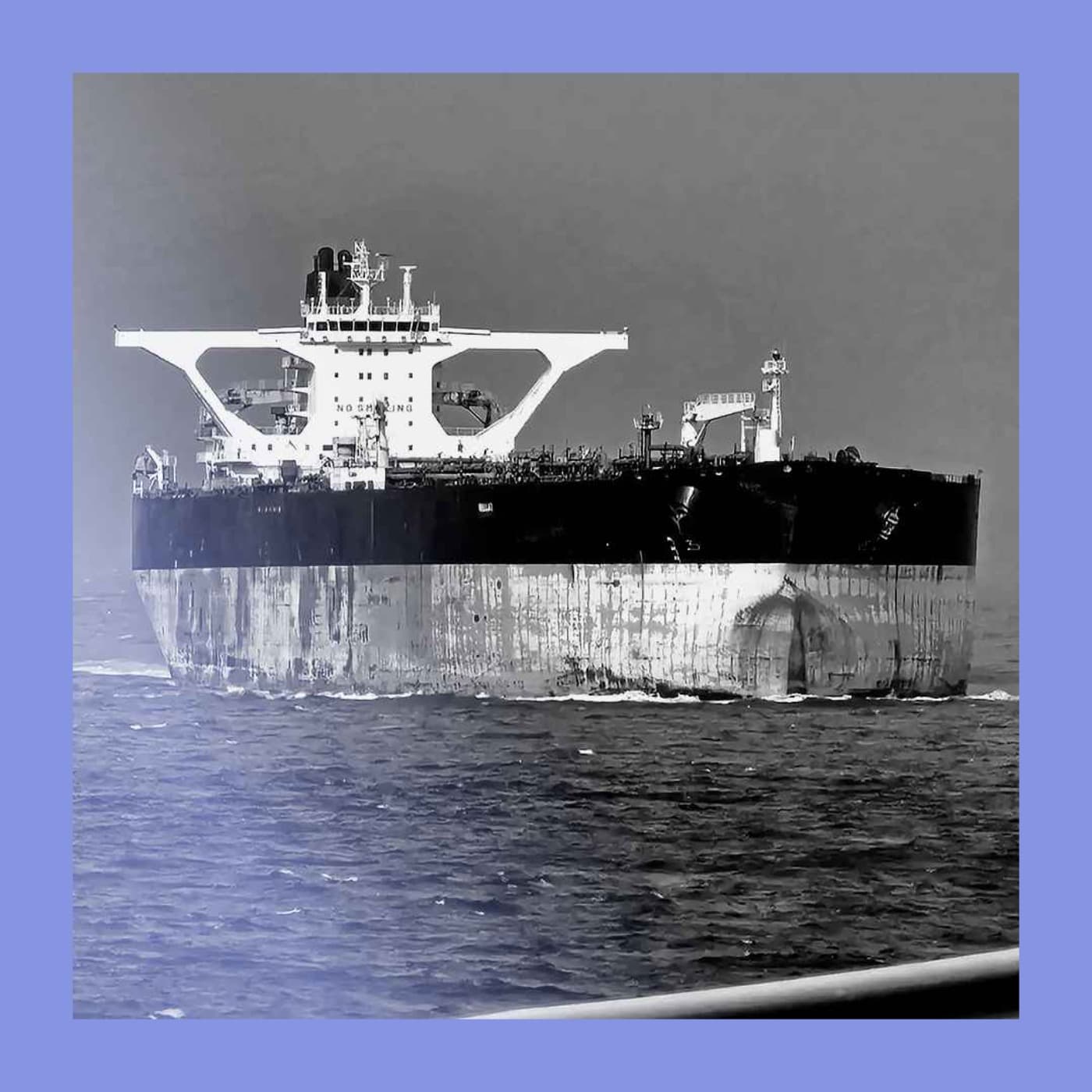
3:19State-level piracy, he called it, putting Somali pirates and the U.S. Coast Guard in the same sentence. Now, China, Russia, and Iran and others have a vested interest in this story. And in truth, it kind of did look like the sort of hostile takeovers depicted in the movies. Yesterday, U.S. forces were seen descending on a helicopter, landing on a ship in the North Atlantic and seizing it. Shoshan Joshi is The Economist's defense editor. It was a U.S. Coast Guard that boarded the Maranera oil tanker that was previously known as the Bella One. This was a remarkable slow-motion naval chase that had lasted for weeks.
4:03and it finally came to an end near the waters of Iceland. Yeah, I heard you describe the chase as the O.J. Simpson of the North Atlantic. Talk me through it. Yeah, well, look, so what happened basically, Jason, is last month, the U.S. Coast Guard, which is tightening this quarantine that has been declared on Venezuela at the time, remember this is prior to that shock operation to seize Nicolas Maduro in Caracas, they attempted to board the Bella One to say to Venezuela, you can't send any sanctioned oil out of your waters. And they tried to do it, but they failed because the Coast Guard didn't have the specialist boarding crews that it needed at the time.
4:47So then the Bella One basically makes a run for it. It shuts off its transponders. You can't see it on ship tracking websites. And it turns up in the Atlantic. And not only does it turn up in the Atlantic, it's got a new name, the marinara, and it has, in almost comic fashion, hastily painted a Russian flag on the side of the hull and has been re-registered in Russia's maritime registry to say, hey, I'm Russian, you can't touch me. Then what happened is you can see separately this massive influx of US military forces heading to the UK and everyone's thinking, what is going on? What are these capabilities?
5:22And it turns out basically that the helicopters, the forces, the troops you would need to conduct this kind of operation. The Russians sent a submarine and other naval assets to protect the Bellow one, but basically the Americans got there first. They were helped by the British and America goes and nabs this ship. The second one they have done yesterday because they also grab another one called the M-Sophia in Caribbean waters yesterday as well. But just to be clear, America has an interest in these ships because they are carrying Venezuelan oil? Well, this one wasn't carrying any oil, Venezuelan or otherwise.
5:58I think it had been carrying Iranian oil originally, but it probably unloaded that at some point. But the ship is very dodgy. So basically, it was placed under sanctions in 2024 by the United States. That was for its involvement in a company that was alleged to be a front for Hezbollah, which is the Lebanese militant group. And it has moved, I think, somewhere in the region of like 25 million barrels of Iranian and Venezuelan oil to China since 2020 or so. And the reason America is going for these ships is basically because having toppled Nicolas Maduro and said it's going to run Venezuela, what it's basically saying is it will run Venezuela by maintaining an oil embargo on the country to force the rump government to submit to its will.
6:43And this, along with other steps that it's taking to control Venezuelan oil is one aspect of that post-raid governance of the country. But there's a lot more going on here than a Venezuelan oil embargo. We've already had mention of Iran, of China, of Russia now, and Russia backing up this ship. Talk me through the network that's going on here. What was interesting when John Healy, the UK Defence Secretary, was justifying British involvement in this raid was the way he described it. He says the ship had a nefarious history, and he said it was part of a Russian-Iranian axis of sanctions evasion, which is fueling terrorism, conflict, and misery.
7:22This is part of what's called a shadow fleet, which Russia has also used extensively to move oil in defiance of many international and US and European sanctions. So for example, this ship was spotted last August in Iran. It loaded Iranian oil at a place called Kug Island. But as it was doing it, Jason, it broadcast false location data, that's called spoofing, to basically imply it was somewhere way further south. So it was basically doing this in a very clandestine way. So you can see how this is an interesting worked example of the nexus between Russia, Iran, Venezuela in a very real, tangible way.
8:04It's not just some kind of geopolitical alliance. It's an actual thing involving ships, oil, energy, sanctions busting, in a very real sense, on the high seas. Sanctions busting and location spoofing and all of it essentially illegal behavior that justifies what the Americans have done? Well, not exactly. I mean, these are American sanctions, European sanctions. They're not UN sanctions. And just having domestic sanctions against a ship doesn't give you the right to go and seize it anywhere on the high seas. There is something that does, though, because the Bello One originally claimed to be flying the flag of Guyana.
8:39Now, all ships have to fly a flag. That's a requirement under the UN Convention on the Law of the Sea. If they don't fly a flag or if they fly a false flag, they are stateless and they can be boarded. Guyana denied that this was a valid flag. And basically what happened in December was the ship said, actually, we are Russian flagged. But if you look at UNCLOS, if you look at this body of law, it says a ship cannot just change its flag halfway through a voyage unless there was a really valid change in ownership. This was probably a stateless ship and that made it, in a legal sense, fair game for seizure.
9:16Does that suggest to you that once this shadow fleet comes out of the shadows, is revealed as Russian-backed that we're heading now towards a more direct conflict between America and Russia as regards these ships? Interestingly, no. And I thought it was striking that the raids had very little impact on global oil markets, which tells you this is a Venezuela-focused policy. Yes, it involves a ship that claims a Russian flag. Yes, Russia sent naval assets to protect it. But this is an indication Trump is going after Venezuela-linked oil. This is not a suggestion he is going to go after what Europeans are really concerned about, which is the Russian shadow fleet more broadly.
9:55So what you expect from here on out is simply more of the Venezuelan oil to be seized rather than for the shadow fleet to be tackled in its entirety. And not just seized, because there's a lot of other strange stuff going on around Venezuela's oil markets. You know, President Trump has said very, very clearly his aim in Venezuela is not human rights. It's not a release of political prisoners. It's not a, you know, early elections to a new regime and a free Venezuela. It's very, very simple. It is American access to oil, in his words, to push global oil prices down, which is pretty ambitious. But what was interesting is yesterday, he kind of outlined this slightly madcap scheme.
10:31And he said Venezuela would be turning over up to 50 million barrels of oil worth around$2.8 billion to the United States. He said that would be sold and the proceeds would be, and I'm quoting, controlled by me to ensure it's used to benefit the people of Venezuela and the United States, exclamation mark. But I don't know what cut Trump plans to take. What's very, very clear to me, though, is that after the toppling of Maduro, after this great Venezuelan gambit, the number one focus for Donald Trump is getting access to Venezuelan oil. And this is all part of that broad effort. It's a shakedown.
11:08It is a shakedown. And I heard yesterday heard David Frum, who was George W. Bush's speechwriter, I think, describe this as the United States devolving into high tech piracy. Thanks very much for joining us, Shizhak. Thanks so much, Jason. There will be much more in-depth analysis on Venezuela's oil on our sister show, Money Talks, out later today. Find it in the Economist app or wherever you get your podcasts. You'll need to be a subscriber to listen.
11:52were here, he wouldn't just tell you about no fees or minimums. He'd also talk about how most Capital One cafes are open seven days a week to assist with your banking needs. Yep, even on weekends, it's pretty much all he talks about in a good way. What's in your wallet? Terms apply. See CapitalOne.com slash bank. Capital One N.A. Member FDIC. When you manage procurement for multiple facilities, every order matters. But when it's for a hospital system, they matter even more. Grainger gets it and knows there's no time for managing multiple suppliers and no room for shipping delays. That's why Grainger offers millions of products and fast, dependable delivery.
12:32So you can keep your facility stocked, safe, and running smoothly. Call 1-800-GRAINGER, click grainger.com, or just stop by. Grainger. For the ones who get it done.
12:54While American forces chase Venezuelan oil all over the map, there's one country in particular that'll soon be feeling the pinch. Well, even more of a pinch. Cuba is more dependent on that oil than perhaps any other country. Cutting it off would make a weakened regime weaker. And the Trump administration knows it. Suffice it to say, you know, Cuba is a disaster. Secretary of State Marco Rubio, himself a second-generation Cuban-American, has taken aim at the country's communist rulers for much of his career. Yeah, look, if I lived in Havana and I was in the government, I'd be concerned, at least a little bit.
13:32The oil part of this Venezuela story has all kinds of tendrils to it, from that plain shakedown to how it might affect great power competition. But for a near-neighbor and old adversary of America, it might be existential. Relations between Cuba and the United States have always been tense, but this is different. David Adams writes about Cuba for The Economist. Cuba is at a point of fragility that I've never seen before. Cubans are utterly depressed about their state of affairs. They're fearful that what's coming this year is going to be more scarcity, more power cuts, and possibly more repression too, because the Cuban government has no intention of going anywhere.
14:23It will not bow its knee to the imperialists, to the north. But let's wind back just a bit. At least in the past few years, it seemed that relations had been improving? What's a sort of a potted history of how we got to where we are right now? Well, yes. After decades of US trade embargo and Cuban resistance and reliance on foreign allies, the Soviet Union, then Venezuela, a little bit China, today still a little bit Russia, that appeared in 2014 when President Obama announced his opening with Cuba. That appeared to be a new chapter. Diplomatic relations were restored. Americans were encouraged to go to Cuba for the first time.
15:11Cruise ships were sailing from Miami. Tourism was booming in Cuba, but it didn't last very long. And then President Trump became president and everything came to a screeching halt. And then on top of that came COVID, which just completely devastated the Cuban tourism industry, which is what they'd been banking on to be the new economic lifeline. They invested heavily in hotels. Those hotels were all now sitting empty. And President Biden, he really didn't give the Cubans much to play with. And now back with President Trump for a second term, we've seen the pressure ratcheting up. And what is the situation on the ground for ordinary Cubans?
15:55well look even before the events of last weekend life in cuba had been getting progressively more and more difficult the belt has just been tightened and tightened shortages of basic food has gotten more acute and then the big thing in the last year and a half in particular has been these power outages what they call apagones in cuba and these aren't like the power goes off for five minutes. The power goes off for five, six, seven, eight hours a day. The big fear is that these power cuts are going to get longer and longer, and it's going to be more and more difficult. And before the events of this weekend, in what way was Venezuela involved in keeping the lights on in Cuba?
16:45Well, very much. After the collapse of the Soviet Union in 1990, Cuba went through this terrible decade, really, which they called the special period of utter scarcity. And then in December 1998, Comandante Hugo Chavez was elected president of Venezuela and a socialist and a close ally of Fidel Castro in Cuba. And so President Chavez taking office through to his death in 2013. Cuba had a very steady ally and a very steady supply of oil. President Nicolás Maduro took over in 2013 and things went from bad to worse in Venezuela and Cuba's thermoelectric power plants are very antiquated and this heavy fuel oil that comes from Venezuela is very corrosive and they've been having incredible problems keeping these thermoelectric power plants running.
17:45Now, the new president, Del C. Rodriguez, one assumes that President Trump is going to demand that President Del C. Rodriguez turns that off. But Donald Trump has various points suggested that he thinks Cuba is failing and that it can now fail more freely in the sort of vacuum left by Mr. Maduro's removal. Do you read anything into that? What I read into that is that President Trump doesn't actually see an awful lot to be gained in Cuba. He famously likes to do things on a quid pro quo basis. So Venezuela has oil and has other minerals. It has a lot of gold. It's got potentially quite a bit to offer.
18:30Cuba doesn't really have anything to offer other than potentially interesting retail market for American manufacturers. So he is quite happy to let it sink by itself, let the scarcity do its work. While Secretary of State Marco Rubio is obviously an enormously influential figure, he's not going to do anything that runs counter to what his president is telling him. They may feel that's enough. They've always felt that in the end, Cubans would rebel. Over the years, there've been occasional outbreaks of protests, but frankly, very few. I started covering Cuba in 1988. And I remember reporting on how it was unsustainable.
19:17The Cuban revolution basically had come to an end and it was just a matter of time. And I obviously learned an important lesson, one that Cuban officials liked to remind me of. Don't underestimate the staying power of the Cuban government. They are still highly disciplined, highly organized. They do have a core of revolutionaries. They talk about, hay que resistir. We have to keep resisting, and we'll just have to see how much more resistance is left. David, thanks very much for joining us. Jason, it was my pleasure.
20:09World Cups can be as tricky off the field as they are on. Russia was controversial as a tourist destination, and Qatar had almost no stadiums when it won the bid. So when Canada, Mexico and America were confirmed as hosts of the 2026 World Cup, they must have seemed simpler places to hold a tournament. But the world has changed since they were chosen. Donald Trump's administration has locked up tourists for minor violations. It's snatched foreign students off the street for things they'd said about politics. And America's president has also threatened the other two World Cup host countries. As part of our World Ahead series, our senior culture correspondent John Fasman asks whether fans will still want to attend this summer's tournament.
20:59I think the bear case has three planks. The first one is in 2024, the United States hosted the Copa America, which is a tournament of South American teams. And the finals saw some very serious security breaches. Number two, the United States hosted the FIFA Club World Cup, and attendance was pretty anemic for most of those games. Both of those things are fairly easy to dismiss. The World Cup is a bigger tournament than either of them. The bigger concern is that since Donald Trump took office, tourist numbers to the United States have plummeted. So there are real questions over whether international tourists will want to come to the United States under current conditions and whether American fans, especially fans of Hispanic or Latino origins, will want to come to the stadiums if there are going to be ice patrols outside them.
21:42So what's your prediction? Are they going to turn up? My own prediction is yes, they will. The World Cup is a tremendous draw, and Donald Trump, as unwelcoming as his administration has been to immigrants generally, has said that he wants people to come. And so I think that those two things together mean that it's not going to be as much of a disaster as it could have been. I suspect people will want to show up. So how are preparations going at the moment? Well, the difficult and unique thing about this World Cup is that there are actually three hosts. The United States is co-hosting with Canada and Mexico.
22:13So that requires a level of international cooperation that we really haven't seen before in a single World Cup. Things seem to be going okay. The venues have been chosen. The draw, as you'll have seen, was at the Kennedy Center in Washington, D.C. This was a favor to President Trump. I suppose the only concerning thing is that Donald Trump has threatened to move games out of cities that he deems not safe. Now, whether he actually follows through on that threat is an open question. I would say it's unlikely. It's just not that easy to move previously scheduled World Cup games from one stadium to another at the drop of a hat.
22:46So, of course, America is a co-host with Mexico and Canada. Is there the possibility that anxiety about matches in the U.S. will mean that Mexico and Canada actually gain from this? Well, the sites have already been chosen. So I think it's doubtful that you'll see games played anywhere other than where they've said they'd be played. Most of them will be played in the United States. But if you look at fandom as a sort of competition, I think it's certainly possible that Mexico and Canada that have a greater number of sold-out games than the United States does. John, America used to have a reputation for being pretty rubbish at football.
23:20Has that changed in terms of its ability, its players, or even its fandom? How good is America is something we're going to have to see. I obviously hope they win the whole thing. I think they have a decent shot at doing it. As far as fandom goes, it is worlds different than it was the last time the United States hosted the World Cup, which was in 1994. There is a thriving professional soccer league in the United States now. Millions of Americans tune in to the English Premier League, which is broadcast on network TV every weekend. Millions more watch games from Germany and from Spain. And you have youth soccer, which was played when I was little, but was not nearly as big a thing as it is now.
Read the full transcript
23:58So in the 30 years since the last time the United States hosted the World Cup, domestic fandom has grown exponentially. I spoke to someone who said that in 1994, when he was managing the games in New York, they really had to rely on immigrants and on visitors to fill the stadium. That's much less the case now. You have a huge domestic fan base, which you didn't have before. So what kind of image do you think America will end up projecting with this World Cup hosting? It's certainly possible that it could be a disaster. I suspect that won't happen. I suspect that with the eyes of the world on the United States, the administration, the fans, and FIFA will rise to the occasion and will have a successful and very well-attended World Cup.
24:38John, thank you very much. Thanks, Rosie.
24:59That's all for this episode of The Intelligence. We'll see you back here tomorrow.
25:10Thank you.
25:40weekends. It's pretty much all he talks about in a good way. What's in your wallet? Terms apply. See CapitalOne.com slash bank. Capital One N.A. Member FDIC. That new thing? Yeah, we've got it. The Drop by GNC, bringing you all the newness that matters, handpicked by the pros who actually know what's up and what's proven to work. We keep you on top of the trends and dialed into what's next. Whether you're crushing it at the gym, leveling up your game or thriving every day. The Drop by GNC is where the latest solutions in health and wellness land first. Non-stop innovation and fresh finds daily.
26:18Explore what's new and what's next on The Drop by GNC.
From the publisher
It had real dramatic elements: a (slow) chase scene, faked locations, a literal false flag, a daring helicopter descent. But what is the broader picture of America’s bid to disrupt the Venezuelan-oil network? And how will the expanding oil saga affect an already weakened regime in Cuba? Also, we ask whether Hispanic football fans might avoid the World Cup in America.
Get a world of insights by subscribing to Economist Podcasts+. For more information about how to access Economist Podcasts+, please visit our FAQs page or watch our video explaining how to link your account.
Hosted on Acast. See acast.com/privacy for more information.