In short
Economist Podcasts - Episode Summary: "Oil rise: Trump gets the jitters"
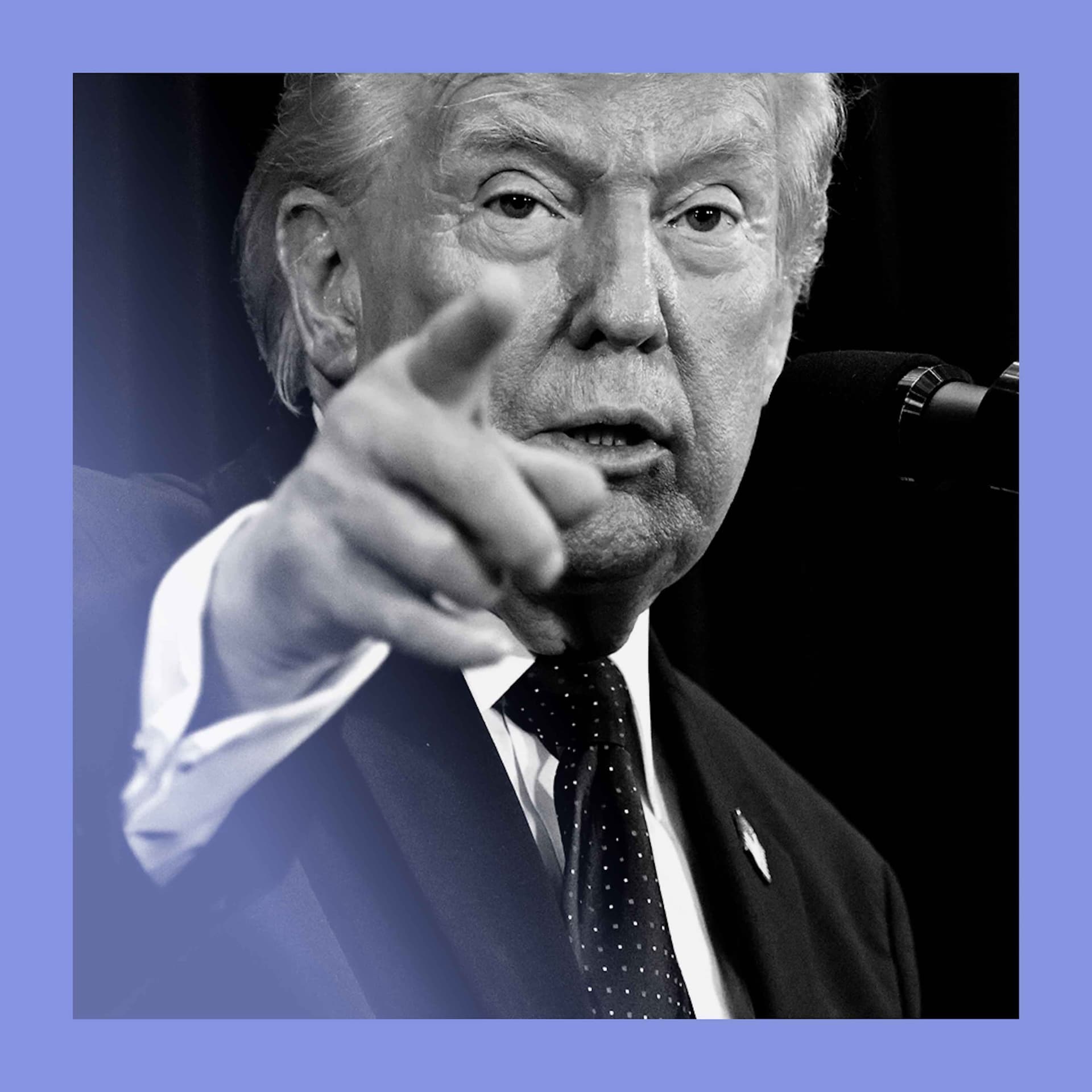
Episode Overview This episode of Economist Podcasts, hosted by Rosie Blau, provides an in-depth analysis of current global affairs, particularly focusing on the recent surge in oil prices resulting from escalating tensions in Iran and Donald Trump's subsequent reactions.
Key Guests
- Edward Carr - Deputy Editor of The Economist
- Simon Rabinovitch - Beijing Bureau Chief
- Avantika Chilkoti - Global Business Correspondent
- Rosie Blau - Host of "The Intelligence"
---
Main Topics Discussed
- Oil Market Fluctuations
- Oil prices soared to nearly $120 a barrel, causing significant concern in financial markets.
- Trump indicated a potential early conclusion to the conflict in Iran, calming markets and contributing to a decline in oil prices back to around $90 per barrel.
Key Insights
- Trump's remarks aimed to reassure investors, signaling that he would not let the war wreck the economy.
- The situation is complex; while Trump claims victory is near, uncertainty remains regarding the conflict's duration and impact on oil supply.
- The Impact of Trump's Foreign Policy
- Trump's dual messaging creates ambiguity about the U.S. commitment to the conflict in Iran.
- Analysts speculate that the resolution of the war may not bring immediate stability to oil prices, given ongoing geopolitical tensions.
Economic Projections
- Goldman Sachs suggests that prolonged supply disruptions could keep prices higher, depending on the conflict's length:
- 30 days of disruption: Prices could stabilize around $76.
- 60 days of disruption: Prices projected at $93.
- China's Stance on the Iran Conflict
- China's Foreign Minister Wang Yi criticized the war, calling for restraint while maintaining an aloof stance.
- Despite cooperation with Iran in the past, China has opted to remain passive and avoid entanglement in the conflict.
Analysis
- China's economic interests in the Middle East are significant, yet the country appears hesitant to intervene directly.
- The relationship between China and Iran is asymmetrical, with Iran more dependent on China for oil than vice versa.
- The Evolution of Erewhon Supermarket
- The episode also explores Erewhon, a high-end supermarket chain that started as a humble grocery store in the 1960s.
- It has transformed into a symbol of luxury and wellness, attracting celebrities and social media influencers.
Features of Erewhon
- Prices are extremely high, with items like $12 for a juice and $21 for a jar of trail mix.
- The store caters to a wellness-focused clientele, emphasizing organic and health-centric products.
---
Key Takeaways
- Oil prices are highly sensitive to geopolitical developments, particularly in the Middle East.
- Trump's foreign policy is characterized by ambiguity, complicating market expectations.
- China's reluctance to intervene signifies a strategic choice to maintain economic interests without direct involvement in military conflicts.
- Erewhon exemplifies a shift in consumer behavior towards luxury and wellness, indicating changing trends in the grocery market.
---
Conclusion The episode provides a nuanced understanding of how economic and geopolitical factors intertwine, affecting global markets and consumer behavior. It highlights the precarious balance that leaders like Trump must navigate between military action and economic stability, while also showcasing emerging trends in consumer culture through the lens of luxury supermarkets like Erewhon.
Written by AI. May contain mistakes. Listen to the episode to check what was said.
Chapters
Tap a time to open that second in VOCurrent Events Overview
0:50 to 1:49
Discussion of the war in Iran and its implications.
“Every weekday, we provide a fresh perspective on the events shaping your world.”
Trump's Remarks on Iran and Oil
1:49 to 3:26
Analysis of Trump's comments on the conflict and their impact on oil prices.
“When America launched its joint operation on Iran, the White House said the conflict could last for four to six weeks.”
Market Reactions and Oil Prices
3:26 to 6:18
Examination of how Trump's statements affected stock markets and oil prices.
“So I don't think he's completely collapsed the ambiguity about how far this war goes.”
Consequences of Continued Conflict
6:18 to 8:03
Exploration of the potential long-term impacts of the Iran war on oil and regional stability.
“It's pretty clear from what you're saying, Ed, that you don't expect the war to end soon then.”
China's Position on the Iran Conflict
8:03 to 10:50
Discussion of China's response to the Iran conflict and its geopolitical stance.
“And then on the nuclear side, remember, there's still something like over 400 kilograms of highly enriched uranium somewhere in Iran underground at nuclear sites where it was buried.”
China's Influence and Strategy
10:50 to 14:01
Analysis of China's strategic interests in Iran and the Middle East.
“Yet its recent coverage of Iran reveals a broader truth.”
China's Economic Ties with Iran
14:01 to 14:57
Explore how China's relationship with Iran impacts global oil markets.
“China was buying more than 80 % of its crude exports.”
US-China Relations and Middle East Conflicts
14:58 to 15:47
Learn how US engagements in the Middle East influence China’s geopolitical strategy.
“So I think this is another important element.”
China's Strategic Isolationism
15:48 to 17:21
Understand China's pragmatic approach to foreign conflicts and reconstruction.
“So I don't think China wants to see this war continue.”
The Unique Experience of Erewhon Supermarkets
18:40 to 21:44
Delve into the luxurious aspects and culture surrounding Erewhon supermarkets.
“There is loads of really nice outdoor seating and just crowds and crowds of people in designer sportswear just sort of hanging out, you know, just having a coffee, having lunch.”
Show all 11 chapters
Pricing and Exclusivity at Erewhon
21:45 to 24:16
Examine the high price points and exclusivity of Erewhon products.
“It gives you discounts and free smoothies for a fee of a whopping$200 a year.”
Transcript
Automatic transcript. May contain errors.0:00Simon Rabinovitch:Most all-in-one HR systems are a patchwork of disconnected and manual tools. Rippling is totally automated. If you promote an employee, Rippling can automatically handle necessary updates, from payroll taxes and provisioning new app permissions to assigning required manager training. That's why Rippling is the number one rated human capital management suite on G2, TrustRadius, and Gartner. If you're ready to run the backbone of your business on one unified platform, head to rippling.com slash ACAST biz and sign up today. That's R-I-P-P-L-I-N-G dot com slash ACAST biz to sign up.
0:42Rosie Blau:The Economist
0:49Rosie Blau:Hello and welcome to The Intelligence from The Economist. I'm your host, Rosie Bloor. Every weekday, we provide a fresh perspective on the events shaping your world.
1:04Rosie Blau:The war in Iran continues to dominate the headlines. Strange thing is, one of the world's most important countries has said little about it. Our correspondent asks why China stays mute on the Middle East. And it started life as a humble hippie grocery store in LA. Now it's America's trendiest and priciest supermarket, frequented by celebrities and Instagrammers. Not a place to go for peace and quiet?
1:41Rosie Blau:But first...
1:49Rosie Blau:When America launched its joint operation on Iran, the White House said the conflict could last for four to six weeks. Yesterday, Donald Trump suggested the end may in fact come very soon.
2:01Simon Rabinovitch:We're achieving major strides toward completing our military objective. And some people could say they're pretty well complete.
2:10Rosie Blau:Shortly after that, though, he insisted America was going to go further, threatening Tehran with death, fire and fury if it continued to block oil supplies. Nevertheless, Trump's comments did calm stock markets. And the price of a barrel of Brent crude, the global oil benchmark, which hit nearly$120 yesterday at its peak, fell to$90. So is there now clarity on the course of events or confusion?
2:41Avantika Chilkoti:Yesterday was a really remarkable day in the oil markets, Rosie, with Brent crude going up to almost double its pre-war price.
2:50Rosie Blau:Edward Carr is The Economist's deputy editor.
2:53Avantika Chilkoti:And that was beginning to infect markets more generally. I saw yesterday's remarks by Trump as a signal to reassure investors that he will not wreck the economy for the sake of this war.
3:08Rosie Blau:So it really is oil prices that are rattling Trump and not anything else.
3:13Avantika Chilkoti:I believe that's right. Yes. Except it was more complicated than that, as it always is with Donald Trump, because in the same breath, he also said that they were winning the war. It was almost complete. We're going to see this thing through. We're going to do a fantastic job here. So I don't think he's completely collapsed the ambiguity about how far this war goes. What he's done is sent investors a signal that he will not wreck everything. And the relief goes beyond the oil markets. It's really noticeable how in Asia, where stock markets had had a terrible day on Monday, have recovered with careers up about, when I last looked, up about 5 % and Japan was up 2.6%.
3:53Avantika Chilkoti:And the S &P reacted in America very well to Trump's remarks. So the sense that this was spreading out of oil into the economy is sort of reflected in those improvements. It's quite interesting to compare how Trump was operated last night over the oil markets with his response to market pressure over tariffs. If you remember, last April after Liberation Day, the markets reacted extraordinarily badly and Trump was quite quick to show that he was going to backtrack here and make deals there and back off, which gave rise to the nickname of Taco, Trump always chickens out. I think this is somewhat different.
4:31Avantika Chilkoti:He's constrained. One is because Iran has a say in this war too. And although I don't think Iran would want to fight on in any sense in a major way after America decided to stop, it could fire sporadic rockets prolonging the damage in the oil markets. And the other is that there are real things going on here. You know, there are real oil fields that are beginning to be shut down. There is a real LNG facility in Qatar, which has shut down and takes time to restart. And there are real shadows hanging over this infrastructure now that Iran has shown it's willing to attack it if it has to. Those things don't just sort of go up in a puff of rhetorical smoke when Trump tries to change direction.
5:13Rosie Blau:So on the narrow goal of oil prices, we have actually seen a fall since Trump's comments. Is that enough?
5:22Avantika Chilkoti:It's a dramatic fall. It's gone down to about$90 a barrel, just as I came in to talk to you early this morning in London. So it's now pretty much exactly halfway between the pre-war price and the peak price. And from that, I take that the price is incredibly sensitive to what happens next to the war. Trump has tried to talk down the price, but there are projections from Goldman Sachs overnight that if 15 million barrels of oil a day are kept out off the market of Gulf oil, that's about three quarters of what the Gulf exports. If that happens for 30 days, they see oil prices at the end of the year about 76.
6:02Avantika Chilkoti:If it's for 60 days, they see oil prices at 93. and if the war stops pretty quickly, they see oil prices in the mid-60s. The numbers don't matter as much as the variation of the numbers and it tells you that the oil price is very, very sensitive to what's happening now and this probably won't be Trump's last attempt to try and talk the price down.
6:23Rosie Blau:It's pretty clear from what you're saying, Ed, that you don't expect the war to end soon then.
6:28Avantika Chilkoti:Well, I think there's a trade-off, a trade-off that Trump tried to evade yesterday by saying he could have it all in standard Trumpian fashion. You could both have a fantastic economy and also get your war reins. But I think what those Goldman numbers tell you, there's a real trade-off between pursuing this war and keeping oil prices low. And the question to me is, what does the Trump administration want? How insistent is it that it gets a compliant Iranian regime in place? And how much does it want to be able to really set back the Iranian nuclear program? On the first of those, if you don't have a compliant Iranian regime, this war has broken and set a number of precedents.
7:13Avantika Chilkoti:And the most important of those is that Iran has attacked oil infrastructure of its neighbors. Well, with a hostile regime and with the threat of a nuclear program, that premium, that sense that that infrastructure which was thought to be safe is now a target. And if there has to be another war to stop a hostile Iranian regime from pursuing a nuclear program yet again in the hope that becoming North Korea makes it safe, all that infrastructure becomes a potential target. So there is a change of state in the Gulf. So if Trump really wants to stop that, he has to have a compliant regime. But how long does the war have to go on in order that Moshtaba Khamenei, who has just been named the supreme leader and is very hostile to the United States and has seen his father assassinated by the United States and Israel.
8:01Avantika Chilkoti:How do you ensure that? And then on the nuclear side, remember, there's still something like over 400 kilograms of highly enriched uranium somewhere in Iran underground at nuclear sites where it was buried. Israel and the United States have eyes on that. But for as long as that material remains, someone sometime can dig it out and it's a head start to 10 or 12 nuclear bombs.
8:25Rosie Blau:Leaving the war goals aside, if the US decided, right, it wants out, could it pull out?
8:33Avantika Chilkoti:Yes, I think it could. I think it could. It's done a lot of damage. It set back the regime. But the thing is, if it does stop very soon, then I think the chances that a very hostile regime remains in place with the possibility of laying its hands on highly enriched uranium in the future, that remains. So I do think that there is a tension between pursuing these war aims to their end as America sets them out and ensuring that oil prices don't get very high. And I think that's the tension that Trump was evading last night.
9:09Rosie Blau:And if the US was to stage a prompt exit, where would that leave Israel?
9:16Avantika Chilkoti:Well, I think Israel would have no choice but to go along with Trump's decision. Benjamin Netanyahu, the Israeli prime minister, has an election fairly soon and he would much rather to go into that having comprehensively defeated Iran. But I don't think he has an enormous choice. I don't think he can really defy Trump on this. So I think he would reluctantly have to go along with it.
9:38Rosie Blau:And where would an exit leave Iran?
9:42Avantika Chilkoti:Well, Iran has suffered quite extraordinary damage. Its economy was already in huge trouble and you shouldn't underestimate the extent of that. But the country is still functioning. Our correspondents have told us the streets are still being cleaned. There are still groceries on the shelves. Before Ali Khamenei was killed at the beginning of the war, he devolved command and control out to the regions so that commanders could continue. But there's still a certain amount of central control, however weakened that is. And for this regime, I think the mere fact of survival is a kind of victory in itself.
10:20Avantika Chilkoti:Ed, thank you very much. Always a pleasure, Rosie.
10:33Rosie Blau:The war in Iran should never have happened and benefits no one. That statement was made by Wang Yi, China's foreign minister, on Sunday. over a week after America and Israel launched their joint operation. Some years ago, China looked like it was wrangling to become a mediator in the Middle East, a new role for an emerging power. Yet its recent coverage of Iran reveals a broader truth. The Chinese Communist Party's called calculus about how to present other autocratic regimes and a reflection of its own role in the region.
11:08Simon Rabinovitch:The big thing is that China has vast economic and especially energy interest in the Middle East. It gets nearly half of its oil, about a third of its gas from the Middle East. Much of that passes through the Strait of Hormuz, which obviously has been closed because of the current conflict.
11:26Rosie Blau:Simon Rabinovich is our Beijing bureau chief and Chaguan columnist.
11:30Simon Rabinovitch:Beyond that, though, there had been a time where people thought that China was beginning to be much more of a diplomatic power in the Middle East. It had helped to bring Iran and Saudi Arabia together three years ago to restore their official ties. I think what we've seen the last couple of years, but especially with the war in Iran, is that actually, although China is an economic power in the Middle East, it really is a political weakling. It's not that involved, and it does not want to get that involved.
12:00Rosie Blau:Simon, the Iran conflict is the biggest story in the world right now. How has China responded?
12:06Simon Rabinovitch:China has denounced America's actions and Israel's actions. They've called for restraint. They've called for a restoration of peace and stability, for countries not interfering in others' sovereign affairs. But most strikingly, beyond rhetoric, it has not done much of anything. It has stayed on the sidelines. For several years, people had been looking at the Chinese-Iranian relationship as potentially some kind of new access in global politics. But I think what we've seen in the last week is that it really is not that. It's similar in a way to what we saw in January when American troops snatched Nicolas Maduro from Venezuela.
12:45Simon Rabinovitch:People thought, well, Venezuela was a close partner of China's. Would China do anything? And it stayed on the sidelines there. Once again, here with Iran, it has stayed on the sidelines. This is despite the fact that both countries were deemed to be close Chinese partners, despite the fact that China relied on both of them for a substantial amount of its oil imports, and despite the fact that in both cases, I think China viewed them not as ideological allies, but as useful thorns in America's side with their proxies targeting America and American allies around the world and especially in the Middle East.
13:18Rosie Blau:Simon, as you say, China had been trying to market itself as something of a power broker in the Middle East. So why has it been so passive now?
13:28Simon Rabinovitch:Well, I think China uses this kind of partnership talk with a lot of countries, not just with Iran and Venezuela. And as a general rule, China does not view itself in the same way as America, as a country with lots of foreign entanglements. So it might describe countries as partners, but they're not American-style allies. And then I think if you get into the specifics of Iran, you actually come away with the conclusion that Iran matters a lot less to China than many people had presumed. There's a big asymmetry between China and Iran. Iran depends on China. China was buying more than 80 % of its crude exports.
14:05Simon Rabinovitch:But for China, Iran was supplying somewhere about a tenth of its crude. I think one of the things that we're going to see now is that as it gets more difficult to get crude out of Iran or from other parts of the Middle East, China will turn more heavily towards Russia. Over the years, China has sold Iran vital technology, including digital surveillance tools. But actually, despite promising a lot of investment into Iran over the years, it's delivered relatively little. And in fact, China has grown quite wary of Iran's violent outbursts, of its unpredictability. Over the years, China, in fact, has built up stronger relationships with countries that are Iranian rivals, with Saudi Arabia, with the UAE.
14:47Simon Rabinovitch:So I think for all those reasons, Iran, never mind not being a Chinese ally, it wasn't as close of a Chinese partner as many people thought that it was.
Read the full transcript
14:56Rosie Blau:And will this take some heat off the US-China relationship, do you think?
15:03Simon Rabinovitch:So I think this is another important element. historically, go back to the Iraq war in the early 2000s, that was seen by many people as an important strategic opportunity for China. America in the early 2000s had begun to pay a bit more attention to China, and then suddenly it was significantly distracted in the Middle East and in Afghanistan for a long period of time, which happened to coincide with a period that China really prospered and became more of a military force. Once again, you look at where things are right now, we've had a period of America becoming more hostile towards China's rise around the world and trying to rally other countries to come into the American camp.
15:44Simon Rabinovitch:And lo and behold, we potentially are on the precipice of America once again, getting bogged down in the Middle East. So I don't think China wants to see this war continue. They do still rely on the Middle East extensively for their energy security. But if America does end up being dragged into the quagmire in Iran and beyond, that is not something that will hurt China's interests. It in fact would benefit to a certain extent from America once again having to look away from China to other problems that are presenting more clear and present dangers.
16:19Rosie Blau:And Simon, do you think there's anything that could drag China into this conflict? Or is it going to be able to continue its sort of more isolationist stance?
16:29Simon Rabinovitch:Well, I think the short answer is no. I think the pattern as well that we've seen is that China is very good at staying out of these conflicts when they're occurring. What they then do is that after peace is restored, they offer something which America doesn't, which is a really, really big interest and expertise in reconstruction. So we've seen that after America pulled out of Iraq It was Chinese contractors that came in more aggressively to help to rebuild the country, to help to secure oil contracts. And I would expect something similar in Iran. And China is basically ruthlessly pragmatic. They will work with whoever ends up being the government in Iran.
17:12Simon Rabinovitch:It's a profoundly unsentimental way to approach foreign affairs, but it's also, relative to the American approach as a much lower cost way of doing things. So I think we can basically expect that kind of playbook from China. The only question is, is this going to be a matter of waiting for a few days, a few weeks, or sometimes significantly longer than that?
17:36Rosie Blau:Simon, thank you very much.
17:38Simon Rabinovitch:Thank you, Rosie.
17:42Rosie Blau:And you can hear more on Iran this evening on The Insider, our new video offering, when Economist editors will be dissecting the recent events. Anatomy of an Oil Shock will be available later today. You'll need to be a subscriber.
18:04Simon Rabinovitch:Most all-in-one HR systems are a patchwork of disconnected and manual tools. Rippling is totally automated. If you promote an employee, Rippling can automatically handle necessary updates. from payroll taxes and provisioning new app permissions to assigning required manager training. That's why Rippling is the number one rated human capital management suite on G2, TrustRadius, and Gartner. If you're ready to run the backbone of your business on one unified platform, head to rippling.com slash AcastBiz and sign up today. That's R-I-P-P-L-I-N-G dot com slash AcastBiz to sign up.
18:51Edward Carr:so i am in what i think is east hollywood there's a road sign that says santa monica and it all feels very la recently while i was in sunny southern california i made a pilgrimage to
19:03Rosie Blau:a supermarket avantica chilcotti is our global business writer even outside it doesn't feel
19:10Edward Carr:like a normal, you know, supermarket. There is loads of really nice outdoor seating and just crowds and crowds of people in designer sportswear just sort of hanging out, you know, just having a coffee, having lunch. It looks more like a restaurant so far than a supermarket as far as I can tell. That's because this wasn't just any supermarket. This is what$650 gets you at Erewhon.
19:38Rosie Blau:Viral foods on the menu at Erewhon. $19 strawberry from Erewhon.
19:42Edward Carr:£40 breakfast from Erewhon.
19:43Rosie Blau:Erewhon Haul. Erewhon Mukbang. Erewhon. Erewhon.
19:47Edward Carr:Erewhon. Erewhon. Erewhon.
19:48Rosie Blau:Erewhon. Erewhon. Erewhon.
19:50Edward Carr:For those who haven't heard of it, Erewhon is basically a microchain of very, very posh supermarkets. It's become the grocer of choice for all of the famous, beautiful people who live in and around Los Angeles. Lots of celebrities have been spotted at Erewhon, including Hailey Bieber and the Kardashians. When I was there, I met a 27-year-old named Paul, who described it as somewhere he wants to be seen because, I quote, it says, I have taste. And inside the store, you could see why that's the case. And this is so incredibly Instagram friendly. There's a deli aisle, but it's not your regular supermarket deli aisle with, you know, some pizza and a couple of burgers.
20:32Edward Carr:There is apple and farro salad. There's a kale salad. I mean, it looks a bit like otolenghi in London, you know, octopus ceviche. Farmer's market roasted vegetable salad.
20:47Edward Carr:Rewind to the beginning, and this is absolutely not how Erewhon began. The store was founded in the 1960s, actually on the East Coast in Boston, by a Japanese couple. They were very into the macrobiotic movement, and they started essentially a humble, hippie supermarket where volunteers worked. Its name is actually an anagram for nowhere, and it comes from a utopian novel by Samuel Butler. Since then, Erewhon has been sold to a Californian couple, and the vibe has changed totally. These days, Erewhon is a supermarket in as much the same way that Scientology is a book club. Sure, there's reading involved, but that's not really why anyone's there.
21:30Edward Carr:It's decorated sort of like a private members club rather than a supermarket. There's this blonde wood shelving and, you know, big coffee table books. It's a status symbol. In fact, the store has a membership program. It gives you discounts and free smoothies for a fee of a whopping$200 a year. I can already see green juices. $12 for a clean greens juice. And lots and lots of these shots. A good gut shot for there is a life force. GoldenEye. Mostly struggling to understand what a lot of this stuff is. But there is another trend amongst young people that Erewhon's jumped on. And that's wellness.
22:17Edward Carr:Youngsters seem to want to, or at least appear to want to, be healthy. At Erewhon, that means that the centre of the supermarket isn't necessarily where you pick up a snack or a coffee. It's actually the wellness aisle. OK, here we go. We've got kind of beauty and vitamins. We've got all kinds of things that I didn't even know about. There's gas and bloat relief, loads and loads of gut support, which I do think is pretty trendy right now. Cod liver oil. There's a whole section of just jars of what looks like jam, but it's bright blue and purple and yellow and green. And it says CMOS gel. I don't know what you use CMOS gel for, but it's full spectrum and mineral rich.
23:01Edward Carr:To me, as retail correspondent, Erewhon might be the world's first luxury grocer. And there's one defining feature of luxury, exclusivity. Though lots of people gawp at Erewhon products on social media, it's only those in and around LA that can visit one of its 10 stores. I spoke to a senior executive and he was pretty clear. There are only a few cities in America where it would make sense to open a narrow one. The price point is likely part of the reasoning. $21 for a not-even-full-to-the-top jar of trail mix. Choco plant protein, that's$44.99. It's$1 per pound for these pumpkins. $20 for a jar of tomato sauce here.
23:46Edward Carr:$56 for some flowers. $25.50 for turkey bolognese. Pizzas,$12.50 for a slice. Bright blue sea moss gel for$32.99. Luxury's for the few, not for the many.
24:16Rosie Blau:That's all for this episode of The Intelligence. See you back here tomorrow.
24:31Thank you.
From the publisher
After oil prices climbed to nearly $120 a barrel yesterday, Donald Trump signalled a possible abrupt end to the conflict in Iran. Markets calmed, but the course of the war remains unclear. Why China’s government has said little about Iran. And how a hippy grocery store became America’s swankiest supermarket.
Guests and host:
- Edward Carr, deputy editor of “The Economist”
- Simon Rabinovitch, Beijing bureau chief
- Avantika Chilkoti, global business correspondent
- Rosie Blau, host of “The Intelligence”
Topics covered:
- Iran, Donald Trump, Brent Crude, financial markets, Asia, oil shock
- Chinese foreign policy, Wang Yi
- Erewhon, food prices, supermarkets
Listen to what matters most, from global politics and business to science and technology—Subscribe to Economist Podcasts+
For more information about how to access Economist Podcasts+, please visit our FAQs page or watch our video explaining how to link your account.
Hosted on Acast. See acast.com/privacy for more information.