In short
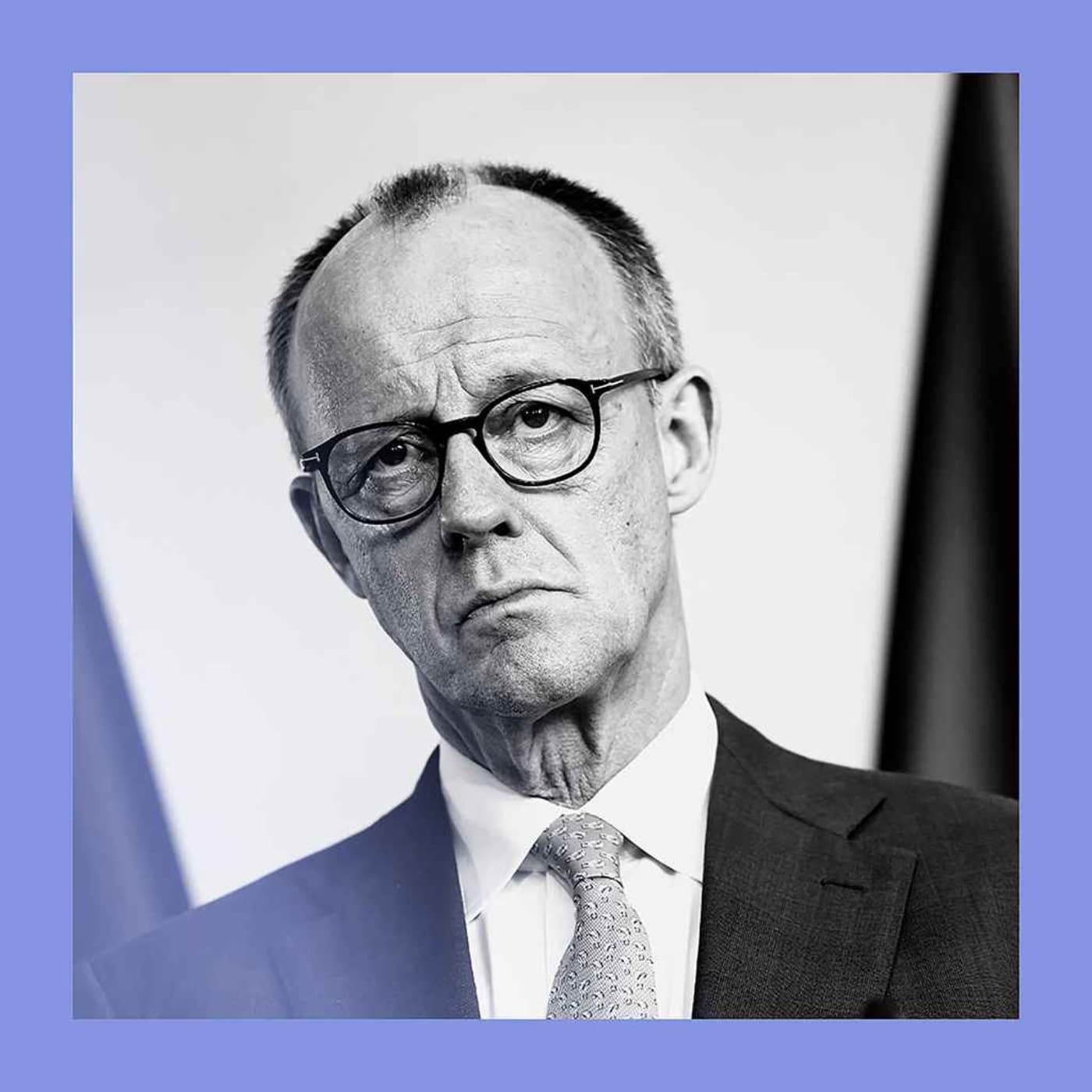
The episode of The Economist Intelligence has three parts. First, it marks Friedrich Merz’s first year as Germany’s chancellor: early ministry reshuffles and stronger ties with France and Poland, but a worsening domestic mood—economic recovery delayed by energy-price shocks from the Iran/Strait of Hormuz crisis, a halved growth forecast, and coalition infighting over pension reform and how to fund tax relief. Key claim: NATO credibility is being weakened by Merz’s spat with Donald Trump, including Trump’s promise to withdraw 5,000 US troops from Germany and the Pentagon halting missile-launcher arrangements.
Notable examples
Merz’s comments to schoolchildren about Iran; Republican congressional concern about troop withdrawals; Kaliningrad missile-deterrence plans. Second, it explains chatbot ads: OpenAI/ChatGPT insert labeled “brand” ads later in conversations (often after 10 turns) to monetize expensive model costs; early evidence suggests users aren’t quitting. Third, a culture segment argues Western war rhetoric has shifted from Churchill-like moral allusion to Transformers-style spectacle, risking a lost “world” rather than just a lost war.
Guests
Tom Nottle (The Economist chief Germany correspondent) and Catherine Nixey (The Economist culture correspondent). Hosts: Jason Palmer and Rosie Bloor.
Written by AI. May contain mistakes. Listen to the episode to check what was said.
Chapters
Tap a time to open that second in VOFriedrich Merz's Unpredictable Leadership
1:50 to 3:00
Explore Friedrich Merz's political journey and the challenges he faces as chancellor.
“Friedrich Merz has something of an unpredictable streak in him.”
Government Challenges and Economic Woes
3:00 to 5:40
Analyze the current government issues and economic challenges faced by Merz.
“The hard right alternative for Germany is now leading in the opinion polls.”
Merz's Tensions with Donald Trump
5:40 to 11:20
Discuss the political fallout from Merz's comments on Trump and U.S.-Germany relations.
“Yeah, when Fridjic Merz took office a year ago, he liked to imagine that he was well placed to deal with Donald Trump.”
AI Advertising Strategies
14:01 to 15:14
Exploration of how AI platforms like ChatGPT handle advertising differently than traditional methods.
“So nearly a third of the ads that it has been showing so far during its experiments have come after the 10th turn in the conversation.”
User Reactions to AI Ads
15:17 to 17:57
Discussion on user experiences and reactions to advertisements on AI platforms and their implications.
“And Anthropic ran an ad earlier this year for its chatbot, Claude, making fun of what ads on other platforms might sound like.”
War Oratory Through the Ages
18:16 to 22:58
Analysis of changes in war rhetoric from WWII to modern times, highlighting cultural references.
“The Second World War is in its fifth year.”
Transcript
Automatic transcript. May contain errors.0:00Why get AAA? Because bad roads, bad tires, and bad luck. Out of gas, locked out, or in a ditch? Stuff happens. With 24-7 roadside assistance, AAA's got your back, no matter whose car you're in. Join today at AAA.com. AAA, expect something more. Roadside assistance is provided by independent facilities contracted by AAA. Coverage in taxis, limousines, and other ride-sharing conveyances is excluded. 2024 AAA U.S. Market Track National Surveys. Offers, terms, conditions, and policies are subject to change without notice. Visit AAA.com for details. Dell PCs, with Intel inside, are built for the moments that matter.
0:37For the moments you plan and the ones you don't. Built for the busy days that turn into all-night study sessions. The moment you're working from a cafe and realize every outlet's taken. The times you're deep in your flow and the absolute last thing you need is an auto-update throwing off your momentum. That's why Dell builds tech that adapts to the way you actually work. Built with long-lasting battery, so you're not scrambling for the closest outlet. And built-in intelligence that makes updates around your schedule, not in the middle of it. They don't build tech for tech's sake. They build it for you.
1:12Find technology built for the way you work at dell.com slash dellpcs. That's dell.com slash dellpcs. Built for you.
1:28The Economist
1:34Hello and welcome to The Intelligence from The Economist. I'm Jason Palmer.
1:38Rosie Blau:And I'm Rosie Bloor.
1:43Today on the show, why your chatbot is suddenly selling to you and how the rhetoric of war has changed for the worse. and little content warning here for the swearier.
2:00But first...
2:07Friedrich Merz has something of an unpredictable streak in him. Off-color remarks, flashes of anger, notably against Angela Merkel, who chucked him out of the upper ranks of their Christian democratic union. But he found his way back, and one year ago today, he took office as the oldest new chancellor in 75 years, leading a centrist coalition with the Social Democrats. As expected, he made bold early moves, shuffling ministries around and creating new ones, shoring up defense ties with France and diplomatic ones with Poland. But you might say it's all been downhill from there, because it's the problems at home that were always going to test him.
2:45Well, and his knack for getting on the nerves of the powerful. This government took office one year ago with a mandate to lift the spirits of a country that had been in the economic daldiums for years. Tom Nottle is our chief Germany correspondent. One year on, the mood is not good. The hard right alternative for Germany is now leading in the opinion polls. The government is embroiled in endless internal squabbles over reforms. And in the last few days, Frederick Marz has got himself involved in a personal spat with Donald Trump, the president of the United States. His approval ratings are in the toilet.
3:23So all in all, I think it's fair to say that this is not a birthday that people are going to be celebrating particularly enthusiastically. What is it that's contributing to that mood, though? What problems does Mr. Marz have or has he caused? It's a good question. We've been promised an economic recovery for quite some time now, and it keeps being postponed. most recently obviously by the war in Iran and the impact of the closure of the Strait of Hormuz on energy prices. This is an industrialized economy that relies heavily on energy for manufacturing and that recently caused the government to halve its projected growth rate which was not high to begin with for this year.
4:03So that's not great but it's not the whole story. The government is a coalition of Mr. Merz's conservative bloc, the Christian Democrats and the centre-left Social Democrats. And they seem to have real difficulties agreeing with each other on anything. And what you might imagine would be relatively small political battles just have a habit of blowing up into the most extraordinary rows. And it's really got worse in the last few weeks. And you now get open speculation from some MPs of the governing parties that the coalition is just going to fall apart, or the Christian Democrats should just try to do a minority government.
4:41I don't think any of these things are going to happen, but the fact that people are talking about it gives you a sense of just how bad the mood is here. And it's quite difficult to see how they're going to turn it around, at least in the short term. Why do you say that? Well, one is that the economic news is getting worse, and two is that there's a whole bunch of stuff on the intray of the government, which is just likely to occasion further rows inside the coalition. They were able to pass a couple of weeks ago an important reform to the healthcare system. But there's a much bigger battle brewing over reforms to the public pension system, which gobbles up about a quarter of the federal budget every year.
5:18They need to do a tax reform to relieve the burden on lower earners that's supposed to take effect at the start of next year, but they don't know how to fund it. And given what we've seen in recent weeks about the difficulties in getting them to agree on anything, I think the prospect for them arriving at some sort of harmonious position on trickier issues than they so far had to handle are pretty dim. And with all that trouble on the home front, you mentioned also that Mr. Merz has trouble with Mr. Trump. Yeah, when Fridjic Merz took office a year ago, he liked to imagine that he was well placed to deal with Donald Trump.
5:52We interviewed him just before the election last year and he told us in words I think he probably would not repeat today that it would be, quote, very easy to deal with Donald Trump. He hasn't found it easy in the last week. Friedrich Merz was speaking to a bunch of schoolchildren in his home region of the Sauerland. He was asked a question about Iran.
6:20And he said that the Americans had no strategy at all. They were being outmaneuvered and outplayed by the Iranians and that they were being humiliated. And as you can imagine, Jason, when Donald Trump heard about this, he was not best pleased. For the last week, Friedrich Merz has been squarely in the president's crosshairs, been all sorts of social media broadsides unleashed against him. For a while, it was just words. But then came a promise to reduce the American troop presence in Germany. There's been speculation for a long time that he might seek to draw down some of these troops. He tried to do it during his first term.
6:57Now we have a promise that 5 ,000 of the 36 ,000 odd troops that are in Germany will be withdrawn. Trump says that there may be more to follow. How much to believe that, though? How much of that is Trumpian caprice that comes to nothing? And how much of it is serious if you say it has roots further than this spat? So in 2020, Donald Trump said that he would withdraw 12 ,000 troops from Germany. That was towards the end of his first term. There were a lot of people in Congress and inside the Pentagon who understood full well that bases like Rammstein in southern Germany are very important hubs for American power projection in the Middle East and in Africa.
7:38In other words, this is not just doing Germany a favor. And so they kind of slow rolled that process and passed various laws to make it more difficult. And then, of course, Donald Trump voted out and Joe Biden cancelled that plan. I think it's probably different this time, not least, obviously, because we're closer to the beginning than to the end of his second term. He's surrounded more by loyalists and yes-men who will want to execute his ideas rather than block them. All of that said, the logic that applied in 2020 still applies now. Rammstein and other bases have been very important for the American operation in Iran, for example.
8:14And last week, we had the heads of the armed services committees in both the House of Representatives and the Senate, and these are both Republicans. They issued a joint declaration saying that they were very concerned about the proposal to withdraw these troops, that they thought it was doing a favor to Vladimir Putin, and that the Pentagon better make sure that it stick to its obligation to consult Congress on this. So I think there is a limit on the extent to which Trump can punish upstarts like frigid mats by pulling troops out because it would actually harm American interests. But I think probably the safe money now would be that some of these troops will indeed get withdrawn.
8:55You said that American military presence there wasn't just a favor to Germany, but it is in part a favor to Germany. Yeah, I mean, it goes back to the Cold War when you had vast numbers of American troops stationed in what was then West Germany to deter the Soviet Union. And of course, now the idea is that having American troops stationed in Germany and other parts of Europe deters Russia. But there's another important element to this, which actually the Germans are much more worried about than the withdrawal of troops itself. Back in 2024, Joe Biden and Olaf Scholz, who was Friedrich Mayer's predecessor as German Chancellor, they struck a deal under which various missile launcher systems would be stationed in Germany.
9:35Basically, the idea was to narrow the missile capabilities gap with the Russians who have got missiles stationed in their exclave of Kaliningrad. And this was a very important piece of European deterrence, not just German deterrence. Now, the Pentagon said when they announced their plan to take these 5 ,000 troops away, they said that they are no longer going to proceed with that arrangement. There are German plans with the British and other countries to develop these capabilities independently of the US, but they're not going to be ready anytime soon. So this is the real news from last week's developments.
10:09What about the suggestion that all of this spat, the threat of withdrawal of troops, this trouble with the missiles and so on, is ultimately shaking people's belief in the dependability of NATO? Germany is a big defence partner and I mean, this is just messy. I think this is, at the end of the day, the biggest problem of all. Germany can cope with a few thousand troops being moved. But as a defence analyst I spoke to the other day put it to me, if your alliance does not have coherence and it does not have dependability and it does not have consistency, then troops are just people and missile capabilities are just lumps of metal.
10:46If there's no credibility behind this deterrent, then it does not have deterrent value. And at the end of the day, I think that is what people who are watching the developments of the last week in Germany and among NATO allies across Europe, that's what they're going to be really concerned about, that the dependability of the United States as a security partner, as a security guarantor and as an ally has simply been weakened further by a spat over essentially a few words spoken out of turn by a German chancellor. and that I think will be one of the biggest challenges for Fridjic Mautz as he begins his second year in office.
11:20He takes Germany's responsibility as an ally and as a defence partner very very seriously but the challenge is bigger than he might have imagined it was ever going to be. Tom thanks very much for joining us. Thanks Jason.
11:46Why get AAA? Because bad roads, bad tires, and bad luck. Out of gas, locked out, or in a ditch? Stuff happens. With 24-7 roadside assistance, AAA's got your back, no matter whose car you're in. Join today at AAA.com. AAA, expect something more. Roadside assistance is provided by independent facilities contracted by AAA. Coverage in taxis, limousines, and other ride-sharing conveyances is excluded. 2024 AAA U.S. Market Track National Surveys. Offers, terms, conditions and policies are subject to change without notice. Visit AAA.com for details.
12:41on coding, doing a role play, whatever it might be. And increasingly, an ad will occasionally pop up in the middle of your conversation.
12:51Rosie Blau:And why is that happening? Well, the main driver of this is the cost of running these models. They're very expensive to operate. OpenAI, for example, expects to burn through about$25 billion this year and twice as much next year. And at the moment, the majority of its users of ChatGPT are on the free tier. And so ads are a way of monetising those users. Google isn't so strapped for cash, but even it will eventually need to find a way to make some money out of this new way of searching, which could increasingly replace the conventional search, which has generated so much money for Google over the years.
13:27Rosie Blau:So I'm trying to envision what it looks like to be getting an ad when I'm using ChatGPT or another chatbot. How does this work? Well, the ads just pop up in the conversation and they look much like ads that you get when you do a Google search. They're clearly labeled as ads and it will say, click here to buy such and such, but they vary a little bit by platform. So Google in its AI mode, where it's just experimenting with ads at the moment, when it does show an ad, it tends to show the ad with its first response to your first question within the conversation. So it's a bit like a search ad really.
14:02ChatGPT is interestingly different. It tends to wait longer. So nearly a third of the ads that it has been showing so far during its experiments have come after the 10th turn in the conversation. So it's a bit like a salesman biding their time until they figure out exactly what the consumer might want before making their pitch. So they've got a different approach in that sense. Another difference is that OpenAI and ChatGPT are so far focusing mainly on what advertising people call brand ads. So So rather than trying to get you to click immediately, click here to buy this product, which is the kind of ad that you typically see on a Google search ad, they're more focusing on the kind of ads which are designed to just burnish the brand of a company in the mind of the user.
14:47So not such an immediate kind of direct response ad as people are used to on the internet. Of course, it's early days and this could change over time, but for the time being, that's what they seem to be focusing on.
14:58Rosie Blau:And do you think this is going to change how people feel about using those AI platforms and their trust in them? Well, that's the big question. And some AI companies have taken the view that's a serious risk and said that for that reason, they're not going to go anywhere near ads. Perplexity stopped experimenting with ads earlier this year. And Anthropic ran an ad earlier this year for its chatbot, Claude, making fun of what ads on other platforms might sound like. You should really listen to this. How do I communicate better with my mom?
15:33Rosie Blau:Great question. Improved communication with your mom can bring you closer. Here are some techniques you can try. Start by listening. Really hear what she's trying to say underneath her words. Build conversation from points of agreement. Find a connection through shared activity. Perhaps a nature walk. Or if the relationship can't be fixed, find emotional connection with other older women on Golden Encounters, the mature dating site that connects sensitive cubs with roaring cougars. Wow. Even before it got to the point of the dating site, I was aghast at that. What do you think of it, Tom? It's not that appealing, is it?
16:15But so far, the evidence seems to be that users who have seen ads on ChatGPT don't actually seem that bothered by them. There was some interesting work done by SimilarWeb, which is a firm of analysts, and they measured how long conversations last among users who have been shown ads versus how long they last among users who have not been shown ads. And in both cases, the average conversation lasted about 20 turns. In other words, people who have been shown ads were no more likely to quit the conversation than those who hadn't. So the early evidence is that people don't seem completely repelled by them, but we'll have to wait and see exactly how things shake out.
16:54Rosie Blau:Not being completely repelled seems like quite a low bar to me. Tom, if this is a new market, essentially, how big could it become? Well, OpenAI hopes that it's going to be huge. I mean, they have reportedly told investors that this year ad revenue is going to be about two and a half billion, which is not a huge amount. But by 2030, they're targeting$100 billion, which would make them one of the world's biggest sellers of ads. That's a pretty ambitious target. And they're new to the advertising game. Some clients so far have complained that its system doesn't give them all that much data on who exactly the ads are reaching.
17:32And it doesn't allow very sophisticated targeting of demographic groups. We've got to remember that Google have been in this game for a long, long time. And so OpenAI are starting at something of a disadvantage in that sense. But they've got big ambitions here. And I think everybody across the industry has an incentive to figure out how to make ads in chatbots work. Because if consumers are going to gradually shift from conventional search to chatbots, then the ad market is eventually going to have to shift with them.
18:01Rosie Blau:Tom, thank you very much. Thank you.
18:15Rosie Blau:It is June the 6th, 1944. The Second World War is in its fifth year.
18:24Rosie Blau:Catherine Nixie is a culture correspondent for The Economist. The fate of the war now hangs on a single stretch of water. The American president addresses his people. But despite the bloodshed, his mood is not bloodthirsty. They fight not for the lust of conquest. they fight to end conquest. They fight to liberate. His ally Winston Churchill will match this tone in his history, which he opens with a moral. It says, In war, resolution. In defeat, defiance. In victory, magnanimity. It is now 2026. America is embroiled in another war. This war, too, hangs on a stretch of water. This time, the Strait of Hormuz.
19:14Rosie Blau:The American president once again addresses his people. He says, Open the fucking strait, you crazy bastards, or you'll be living in hell. Just watch. His secretary of war, Peter Hegseth, says the Iranians are toast and they know it. We are punching them while they're down, which is exactly how it should be. War in the West has changed. Militarily, of course. Stealth bombers have replaced Spitfires. But it's changed oratorically too. A recent White House video titled Justice the American Way is an almost wordless montage of images from Gladiator, Top Gun and Transformers interspersed with footage of actual Iranian targets being hit.
20:02You can't conceive of what I'm capable of. Finishing this fight.
Read the full transcript
20:07Rosie Blau:But yeah, I'm thinking I'm back. I'm here to fight for truth and justice in the American way. I am the danger. An obvious counter-argument to this is to say, so what? Death doesn't distinguish between a leader who can produce a Periclean flourished and one who can't. And besides, winged words, as poets during the First World War pointed out, can be deceptive, luring men to a mechanized slaughter that is neither dulce nor decorous. When Rudyard Kipling's only son was killed in the Battle of Luz, he blamed words. If any question why we died, he wrote, tell them because our fathers lied. Butchery can be ill-served by oratory.
20:50Rosie Blau:Nonetheless, it's hard not to feel that something is lost when a Western leader channels Transformers rather than Churchill.
21:00Rosie Blau:Allusion was once essential to oratory. Sensibly so. All men may be created equal, but all men's words are definitely not. Just ask the poor chap who gave a, now largely forgotten, two-hour, 13 ,607-word address at Gettysburg, just before Lincoln stood up and gave his 271-word zinger. All great orators have thus borrowed, invoked, and alluded. When Colonel Tim Collins sent his men into battle in Iraq, he told them to tread lightly as they trod on the site of the Garden of Eden. The few of Churchill's Battle of Britain speech stood shoulder to shoulder in the imagination with the happy few of Shakespeare's Henry V.
21:42Rosie Blau:The atomic bomb was ushered in by a flash, but also by the Bhagavad Gita. I am become death, J. Robert Oppenheimer would later say, the destroyer of worlds. Cultural illusions offer sinew-stiffening encouragement, and they can also elevate the tone, But leaders must evoke the right cultural illusions, however. Not Gladiator. Partly because in Gladiator, Crow is a reluctant fighter. Maximus was not a violent lunk, but a peaceable man, forced to fight for his wife, his child, and the dream that was Rome. War, as Gladiator made clear, is not fun. As Roosevelt once said, I have seen war on land and sea.
22:26Rosie Blau:I have seen blood running from the wounded. I hate war.
22:35Rosie Blau:But as the White House has apparently forgotten, the best war oratory is not actually about war at all. It's about peace. People hear it and they think not merely of the lives that might be lost, but of a way of life that might be. They fear for culture and for democracy and for decency. You weep at good oratory because you fear not just a lost war, but a lost world. And yet, when you watch the White House video, you weep for a lost world anyway.
23:20That's all for this episode of The Intelligence. We'll see you back here tomorrow.
23:44We'll see you next time.
23:57com triple a expect something more roadside assistance is provided by independent facilities contracted by triple a coverage in taxis limousines and other ride-sharing conveyances is excluded 2024 triple a u.s market track national surveys offers terms conditions and policies are subject to change without notice visit triple a.com for details
From the publisher
Germany’s chancellor came to office making big promises. A year later they are unfulfilled, his government is squabbling and he has drawn President Donald Trump’s ire. The advertising industry is, inevitably, starting to peddle its wares quietly in AI chatbots. And a historical look at the oratory around war and how it has taken a sharp turn for the worse.
Guests and host:
- Tom Nuttall, chief Germany correspondent
- Tom Wainwright, media editor
- Catherine Nixey, culture correspondent
- Rosie Blau, co-host of “The Intelligence”
- Jason Palmer, co-host of “The Intelligence”
Topics covered:
- Germany, Friedrich Merz, Donald Trump
- AI, chatbots, advertising
- rhetoric of war
Get a world of insights by subscribing to Economist Podcasts+. For more information about how to access Economist Podcasts+, please visit our FAQs page or watch our video explaining how to link your account.
Hosted on Acast. See acast.com/privacy for more information.