
In short
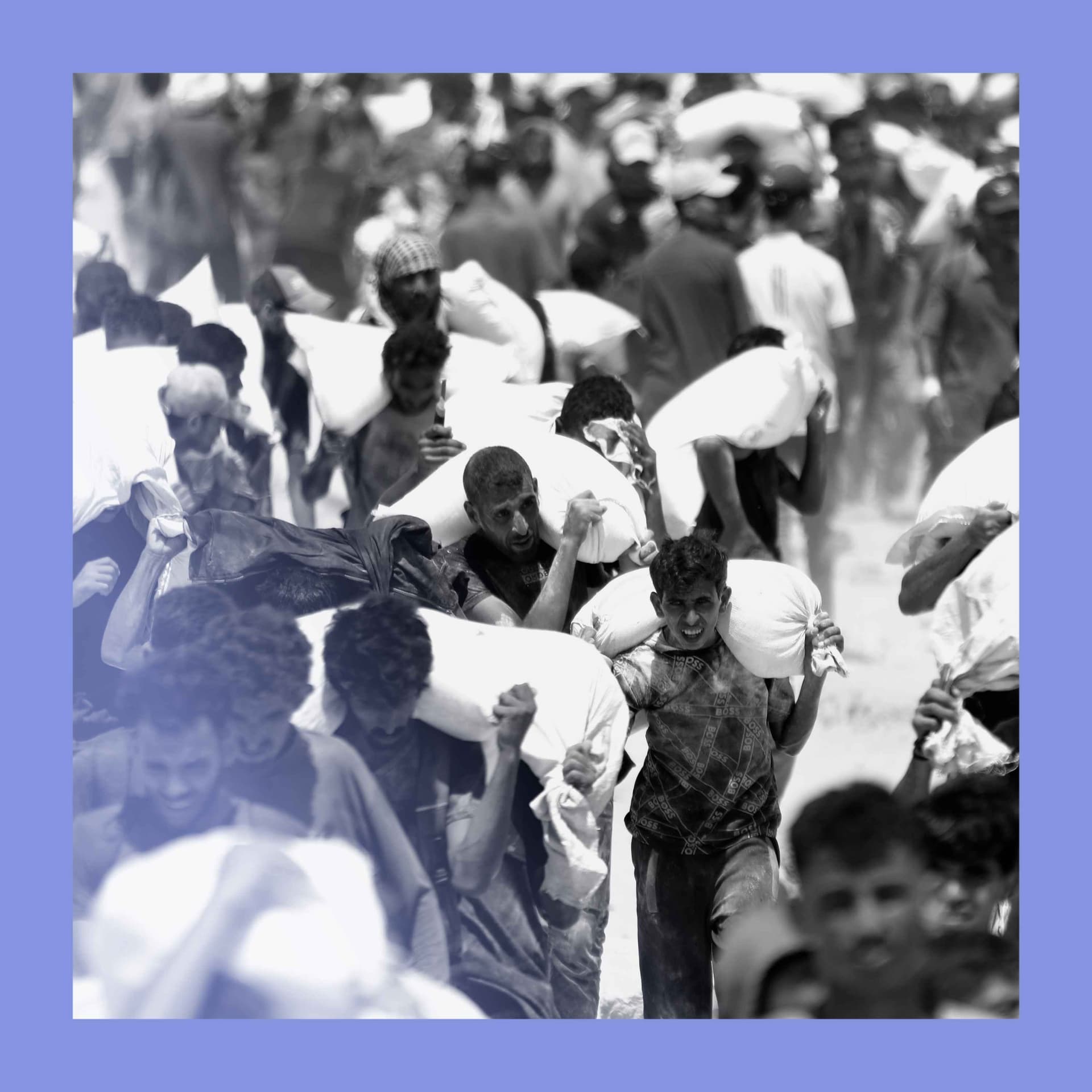
The episode of The Intelligence from The Economist covers three topics. First, Gaza: correspondent Greg Karlstrom explains Israel’s “tactical pauses” (a proposed 10-hour ceasefire in Gaza City, Dir al-Balah, and El Mawasi, plus “secure distribution routes” 6 a.m.–11 p.m.) meant to enable aid entry and distribution. Key claim: these pauses are “a drop in the ocean,” not enough to stop starvation; only a permanent end to the war would.
Notable examples
UN chief warnings of mass starvation; Palestinians shot while trying to reach aid sites (800 killed last month); airdrops of about 25 tons (less than two trucks’ worth); aid blocked from entering via UN routes. Second, Japan’s surname law: Moeka Iida interviews about married couples sharing a surname; guest highlights gender inequality and birth-rate impacts, citing a couple who remarry for births. Third, Bad Bunny: Sarah Burke discusses Puerto Rican artist Benito Antonio Martinez Ocasio, his Spanish-language global success, and tour momentum.
Written by AI. May contain mistakes. Listen to the episode to check what was said.
Chapters
Tap a time to open that second in VOCultural Shifts in Japan
0:30 to 1:18
Explore Japan's law mandating shared surnames for married couples.
“In a world where AI is changing every role in every industry, Knowing who actually has deep expertise matters more than ever.”
Cultural Shifts in Japan
1:58 to 2:19
Explore Japan's law mandating shared surnames for married couples.
“A law mandating married couples to share a surname has become the center of what could be called Japan's culture wars.”
The Humanitarian Crisis in Gaza
2:19 to 3:16
Understand the ongoing humanitarian crisis and aid challenges in Gaza.
“He's achieved global success, is embarking on a sell-out international tour, and he sings in Spanish.”
Israel's Tactical Pauses Explained
3:16 to 4:25
Learn about Israel's tactical pauses and their implications for aid distribution.
“Even Donald Trump has acknowledged the situation and the response.”
International Reactions to Gaza
4:25 to 6:15
Discuss the international response to the situation in Gaza and its impact.
“It's nowhere near sufficient to address this very severe crisis of hunger in Gaza, and only a permanent end to the war really will end the suffering there.”
Future of Aid and Peace in Gaza
6:15 to 11:24
Examine the future of humanitarian aid and prospects for peace in Gaza.
“prevented any aid of any kind from entering the territory for about two and a half months.”
Debate on Surname Laws in Japan
14:03 to 19:22
Explore the cultural and legal implications of Japan's surname laws and their impact on marriage.
“She didn't want to give it up even after marriage.”
Introduction to Bad Bunny
19:22 to 19:43
Learn about Bad Bunny's rise to fame and his cultural significance in music.
Bad Bunny's Career and Influence
19:43 to 24:58
Understand Bad Bunny's impact on global music and the significance of his Spanish-language lyrics.
“It's called I Like It, and in 2018 it topped the music charts, including the Billboard Hot 100.”
Transcript
Automatic transcript. May contain errors.0:00With no fees or minimums on checking accounts, it's no wonder the Capital One Bank Guy is so passionate about banking with Capital One. If he were here, he wouldn't just tell you about no fees or minimums. He'd also talk about how most Capital One cafes are open seven days a week to assist with your banking needs. Yep, even on weekends, it's pretty much all he talks about. In a good way. What's in your wallet? Terms apply. See CapitalOne.com slash bank. Capital One N.A. member FDIC. In a world where AI is changing every role in every industry, Knowing who actually has deep expertise matters more than ever.
0:37Upwork connects you with the highly skilled freelance professionals with proven track records, so you can hire with confidence. Upwork gives your business fast access to highly skilled specialists with deep expertise, so you can fill critical skill gaps, launch projects faster, and scale support up or down without committing to full-time headcount. With Business Plus, you can access the top 1 % of talent on Upwork. AI-powered shortlisting delivers a curated shortlist of top freelancers matched to your goals in under six hours. No endless searching required. Thousands of growing businesses already trust Upwork to hire highly skilled freelance professionals for everything from one-off projects to ongoing support.
1:16It's free to sign up, and posting a job is easy. Visit Upwork.com right now and post your job for free. That is Upwork.com to connect with top talent ready to help your business grow. That's U-P-W-O-R-K dot com. Upwork dot com.
1:36The Economist.
1:43Hello and welcome to The Intelligence from The Economist. I'm Jason Palmer. And I'm Rosie Bloor. Every weekday, we provide a fresh perspective on the events shaping your world.
1:58A law mandating married couples to share a surname has become the center of what could be called Japan's culture wars. And there's a plausible argument that repealing it might help to address the country's rock-bottom birth rate. And Bad Bunny was the most played artist on Spotify between 2020 and 2022. He's achieved global success, is embarking on a sell-out international tour, and he sings in Spanish. Our correspondent explains how this Puerto Rican artist changed the rules of pop stardom.
2:36But first...
2:46The End
3:07is currently playing out in the Gaza Strip. Expect to hear that word again. Last week, more than 108 agencies warned that mass starvation is happening. Even Donald Trump has acknowledged the situation and the response. Those children look very hungry, but we're giving a lot of money and a lot of food, and other nations are now stepping up. On Sunday, Israel relented a bit. It announced what it called a tactical pause in some areas of Gaza for humanitarian purposes. Aid routes were to be open. Outside countries were permitted to airdrop food. Yet even yesterday, outside a hospital in Khan Yunis, people dragged carts loaded with casualties.
3:50They said Israeli forces had fired on crowds waiting for aid south of the city. The tactics, the pauses, the humanitarian purposes, it doesn't add up. What's clear over the past few days is that Israeli policy in Gaza has created starvation. Greg Karlstrom is a Middle East correspondent for The Economist. I think Israel has tacitly acknowledged that now and begun to reverse aspects of its policy under tremendous international pressure. But what it has done so far is what the U.N. aid chief calls a drop in the ocean. It's nowhere near sufficient to address this very severe crisis of hunger in Gaza, and only a permanent end to the war really will end the suffering there.
4:40So let's start with what's going on at the moment as per Israel. What are these tactical pauses? In theory, they're meant to facilitate both the entry of aid into Gaza and then the distribution of that aid within Gaza. So there are two elements to these pauses as they've been announced by Israel. First, you have what is meant to be a 10-hour ceasefire in three parts of Gaza. Gaza City in the north, Dir al-Balah in the center, and then El Mawasi, which is that teeming tent city in the southern part of Gaza where much of the population has been displaced over the past year. So Israel is meant to stop fighting in those areas between 10 a.m.
5:26and 8 p.m. And again, in theory, that allows Palestinians to go and collect aid. Along with that, you also have what the army is calling secure distribution routes that operate under a slightly longer time frame from 6 a.m. to 11 p.m. each day. Those are the routes that the UN and other organizations are supposed to be able to use to bring aid into Gaza from Israel and from Egypt. And so these two things put together are meant to start addressing the problem of starvation in Gaza. And the Israeli army has said it's prepared to expand both the scale and perhaps the duration of these pauses if necessary.
6:07And this is explicitly or implicitly simply a reaction to international outrage? I think so. Back in March, of course, Israel imposed a complete siege on Gaza, prevented any aid of any kind from entering the territory for about two and a half months. At the end of May, you had the so-called Gaza Humanitarian Foundation, which is this Israeli and American-backed entity that started distributing limited amounts of food aid in the southern part of Gaza. That entity has been operating for about two months now, and it's been a disaster. It has brought in, by its own calculations, less than one meal per Palestinian per day.
6:49So it's not coming close to meeting the demand for food in Gaza. And then, of course, you have these near-daily incidents where Palestinians have been shot by Israeli soldiers while trying to get to the distribution sites. More than 800 people were killed last month in Gaza just trying to collect aid. So not enough aid going in, very difficult to access. Obviously, that has created a very real problem in Gaza now. And it's one that has finally, in the past couple of weeks, attracted the world's attention. It's been on the front pages of newspapers around the world. We've heard a number of Western politicians, including Donald Trump, just on Monday, condemning and criticizing what Israel has done in Gaza and the level of starvation in Gaza.
7:36And even some Israeli officials, former Prime Minister Ehrol Merit, saying that the whole world is pissed off with us, he said, because of the desperation in Gaza. So it's something that, again, it's not just international pressure, even some Israelis criticizing this. But I think, as you said, Jason, it's really been this outpouring of international criticism that has forced Israel to change course. And do you think it is changing course, though? Do you think these tactical pauses are a wider releasing of pressure, kind of starting up? Or is this just enough to quiet the critics for now and then back to business as it was?
8:09I think if past is precedent, then it's probably the latter. I think it means there is just a red line, even for this Israeli government, when it comes to how much they are going to immiserate people in Gaza. It's too early to make any real judgment about how these pauses are going thus far. What we've seen first are several countries, including Jordan and the United Arab Emirates, carrying out airdrops in Gaza. They, on Sunday, dropped about 25 tons of food into the territory, which is an impressive-sounding number, but it's actually less than two trucks can carry into Gaza. So airdrops, not a solution at all.
8:53They're a very inefficient way to distribute aid for more than 2 million people. And then you have these routes that the UN is meant to be able to use to bring aid into Gaza. And I said before, in theory, that will help. But in practice, what we've seen over the past almost two years now is that the UN is routinely blocked by Israel from bringing aid in. And so if these routes are actually used, if Israel allows the UN to use them to bring hundreds of trucks a day into Gaza, that will start making a difference. But I think there's reason to be skeptical that Israel is actually going to do that, that this will be something more than just a means to relieve some international pressure.
9:36And you started off by saying, Greg, that the only thing that would definitively end the suffering is an end to the war. Are we any closer to that? What does that side of things look like? I don't think we are, unfortunately. We had a month of stop-start ceasefire talks in Qatar and in Italy and elsewhere. But I don't think we are yet at a point where Israel and Hamas have resolved their differences about what is meant to be right now just an interim 60-day ceasefire that will buy time for negotiations about a permanent end to the war. Every indication is that Benjamin Netanyahu, the Israeli prime minister, still doesn't want to end the war for good.
10:17There's one man who could force him to change his mind. That's Donald Trump. He has been all over the place in his comments over the past few days. He made some slightly cryptic remarks about how, well, the ceasefire talks didn't work, so we might have to try something else to get the hostages out. Not clear what that means. He suggested that he will give Israel an even freer hand to keep fighting against Hamas in Gaza. So at times he sounds quite hawkish, but then meeting on Monday with Keir Starmer, he seemed somewhat moved by starvation in Gaza, by the plight of Gazans, and he sounded a bit more dovish.
10:53What we have seen so far through now six months of his presidency is that he doesn't seem willing to really put pressure on the Israeli prime minister to end the war for good. And I think as long as that doesn't happen as long as the fighting continues. It's impossible to distribute aid properly to all of the people who need it in Gaza. And so even if a lot of food gets into Gaza right now, I think at this point, the very grim reality is that many more people are going to continue to die. Greg, thanks very much for joining us. Thank you, Jason.
11:36Thank you.
12:06way. What's in your wallet? Terms apply. See CapitalOne.com slash bank. Capital One N.A. Member FDIC. In a world where AI is changing every role in every industry, knowing who actually has deep expertise matters more than ever. Upwork connects you with the highly skilled freelance professionals with proven track records so you can hire with confidence. Upwork gives your business fast access to highly skilled specialists with deep expertise so you can fill critical skill gaps, launch projects faster, and scale support up or down without committing to full-time headcount. With Business Plus, you can access the top 1 % of talent on Upwork.
12:45AI-powered shortlisting delivers a curated shortlist of top freelancers matched to your goals in under six hours. No endless searching required. Thousands of growing businesses already trust Upwork to hire highly skilled freelance professionals for everything from one-off projects to ongoing support. It's free to sign up and posting a job is easy. Visit Upwork.com right now and post your job for free. That is Upwork.com to connect with top talent ready to help your business grow. That's U-P-W-O-R-K.com. Upwork.com.
13:27For a couple that has divorced three times, Uchiyama Yukari and Koike Yukio get along surprisingly well. Moeka Iida writes about Japan for The Economist. The two teachers live in the city of Nagano in central Japan, and they've never actually fallen out of love. But they've parted several times on paper to work around an unusual law in Japan, one that requires married couples to have the same surname.
13:56Ms Uchiyama told me she hadn't really given much thought to the idea or to her own surname before getting married. But then she realized she was quite attached to her name and it's part of who she is. She didn't want to give it up even after marriage. So the couple decided to live outside of Wetblock. Well, most of the time. There is an exception. Each time the couple has a child, they remarry because that makes registering the birth easier. And then they divorce again. So what's going on here, Moiga? Why must married people have the same surname in Japan? So I understand in a lot of countries, there's this social pressure for married couples to share the same family name.
14:37But I've come across reports that say Japan is the only country in the world that makes it a legal requirement. And this has been a really hot-button issue in Japan. Activists have been calling for change for a very long time. But this year felt quite different, and there were real hopes for change. In May, for the first time in nearly three decades, politicians debated on this issue. Opposition parties submitted bills that would have allowed more flexibility to the system. But the ruling Liberal Democratic Party, or the LDP, didn't submit a bill of its own. And in the end, no legislation came out of it.
15:13And so what arguments are the campaigners putting forward simply that people should be able to use the name they wish? So that's largely it. But there are several arguments around this issue. There was a study recently that suggested if the current trend continues over hundreds of years, everybody in Japan is going to end up with the surname Sato, which is the most common surname here. The case is that changing the rule will allow preserving these unique and rare Japanese surnames. But on a more serious note, this is seen as a problem of gender inequality. Law doesn't officially say that women have to take the husband's name, but that's what happens in 95 % of cases.
15:55And this has especially become an issue as women continue to rise in the workplace in Japan. So a lot of women build their careers around their name. They build their reputation around it. And changing it after marriage could be quite damaging.
16:12Uchiyama remembers how everyone around her simply assumed that she's going to change her name, and nobody asked if her husband would do this.
16:25And Mr. Koike told me that when Ms. Uchiyama said she doesn't want to change her name and adopt his name, he was quite upset because he was raised under these norms that a woman will adopt the husband's name. But eventually he came to understand. He said the cause for reform is not about forcing all couples to use separate surnames. It's just about giving couples the choice. But the law as it stands, if people feel very strongly about it, do you think it actually has an effect on marriage rates? I do think there is an impact. To be clear, I'm not suggesting this is the main reason why the birth rate is falling in Japan.
17:03But I do think the surname law does have an impact on demographics as well. I don't know anybody personally going to extreme lengths like the couple I mentioned. But I personally do know a lot of women who have hesitated to get married because they didn't want to change their name. To some people, this might sound like a small or strange thing to get stuck on, but it really is an issue about women's identity and about people being able to be themselves even after marriage. And I also came across a survey recently that suggested if the surname rule were to be changed, hundreds of thousands of people in de facto marriages in Japan would shift to a formal marriage.
17:47And this is a very big deal in Japan, in a country where there's a lot of stigma around births outside of wedlock. So if people aren't in formal marriages, they often hesitate to have children. And you mentioned there was an attempt at some legislation here. This has become a full-on political issue in Japan now. Yes, it's become very politicized. I would say this is the Japanese answer to the culture wars. To make it very clear, it's not like most people in the general public are opposed to change. People are actually quite supportive of change and there are surveys that suggest majority of Japanese people are in favor of relaxing the rule.
18:22The same goes for a lot of politicians as well, even in the generally conservative ruling party. but the problem is that there's a very vocal far right of the party that are reluctant to challenge. I attended a gathering by an ultra-conservative group called Nippon Kaigi in Japan which was all about this surname issue and a lot of their talking points were things that I expected so confusing children, creating discord in the family but I was quite surprised at some point one of the speakers were saying this issue of allowing separate surnames is a communist plot by leftists to unravel society and weaken the country.
19:03I think this issue of surnames is very emblematic of a common pattern in Japan, where oftentimes the public is quite progressive, and they're quite in favor of changing rules. But there's a handful of politicians who are staunchly opposed to change and we'll stall progress. Thanks very much for your time, Oika. Thank you so much for having me, Jason.
19:43You might have heard this song before. It's called I Like It, and in 2018 it topped the music charts, including the Billboard Hot 100.
19:56Since then, Bad Bunny, the artist behind it, has reached the top of global pop music and he's done so all while singing in Spanish.
20:08Which is a rarity for artists who want to appeal to mass audiences worldwide. Sarah Burke is our Mexico Bureau Chief Soon Bad Bunny will be embarking on an international tour In just a week, Bad Bunny sold over 2 million tickets for his gigs in Spanish-speaking countries like Chile and Spain But also in Britain and as far afield as Japan Okay Sarah, take us back to the beginning Why is he called Bad Bunny and where did he emerge from? Bad Bunny is a guy from Puerto Rico His real name is Benito Antonio Martinez Ocasio. And rumor is he got his stage name from a childhood nickname based on a time he wore a bunny costume.
20:52Now, he started uploading his songs to SoundCloud, which is a streaming service, back in 2013. And by 2018, his songs were streamed over 2.5 billion times. And by 2024, that figure had jumped to 11.5. So he really sort of took off and took off fast. and he was the most played artist on Spotify every year between 2020 and 2022, which is a milestone for any artist. Okay, I clearly need to add him to my playlist, but tell me what he's up to these days. Why are we talking about him now? All the buzz about him right now is because he just released an album in January called Debi Tirar Mas Fotos, which means I should have taken more photos.
21:40Now, this record is a celebration of Latin music and of his Puerto Rican heritage. And he's starting his tour. So first he's going to be in San Juan, Puerto Rico's capital, where he's going to spend two months doing 30 shows, playing every weekend until mid-September. I mean, all the dates are sold out. And it's also a huge contrast to what global stars usually do, right? Usually they go to Las Vegas, you've got Adele, Celine Dion, U2, you name it. And those performances make them millions of dollars. Now, Bad Bunny will also make profit with the tour. But he also says, I keep a foot in my island while I'm successful worldwide.
22:17And, you know, he really does. So one of the ways he keeps a foot in his island is by singing in Spanish. It used to be the case that Latin artists had to perform in English to make it big. So what's changed? I think he's changed things. He really has this attitude of, I'm going to do whatever I feel like doing. And people kind of love him for it. So his 2022 album, Un Verano Sin Ti, which is A Summer Without You, was the first Spanish language record to be nominated for Album of the Year at the Grammys. And in that album, he celebrates summer and love and passion and lust. And there are songs like Ojitos Lindos, which means Beautiful Eyes, that mixes classic beats of reggaeton, but also has A Touch of Trap, a subgenre of hip hop from the American South.
Read the full transcript
23:11Or there's this song Baile Inolvidable, Unforgettable Dance, which is part of his recent album, which makes a very clear homage to Salsa.
23:27And, you know, he takes these music types from Puerto Rico, and they're incredibly catchy, and he uses them and mixes them as he likes. It's a very distinctive sound. And his lyrics too, they touch on things about politics often. So he criticized Puerto Rico's governor when there was a huge blackout. And he refers often to problems on the island, whether it's gentrification or other things. And it prompts his audience to be proud of who they are. And it also works with Latinos as well in the US, but across Latin America. Now, we should also mention there is a background and context to this, that there is this growing demand for Spanish language culture, there does seem to be a keenness not just from Spanish speakers, but from others.
24:07So just to give you one statistic, Rosie, for the first half of 2024, viewers spent almost 7 billion hours watching shows in Spanish on Netflix. It's a huge number. So does his success then open the way for the success of other Latin artists in the future? He's such a one-off global phenomenon that people say, you know, it's hard to know what make these super, super, superstars. But yes, I think in short, it does. He's made very clear that you can do what you want and be who you want, and that can still bring you success. And he's succeeded in Spanish and he's doing it with pride. And the other thing is he's also deliberately trying to help other people.
24:45He showcases people. So you do see Puerto Rican artists in particular, but other Latinos sort of moving into his wake and trying to come along with him. And I think it also just hints or shows that global success doesn't have to come just when you sing in English. And that's definitely not only opening doors to other Spanish-speaking singers, but potentially also singers in many other different languages too. Sarah, thank you so much for talking to me. It's a pleasure, Rosie.
25:34That's all for this episode of The Intelligence. We'll see you back here tomorrow.
25:57With no fees or minimums on checking accounts, it's no wonder the Capital One bank guy is so passionate about banking with Capital One. If he were here, he wouldn't just tell you about no fees or minimums. He'd also talk about how most Capital One cafes are open seven days a week to assist with your banking needs. Yep, even on weekends, it's pretty much all he talks about. In a good way. What's in your wallet? Terms apply. See CapitalOne.com slash bank. Capital One N.A. Member FDIC. Thank you.
From the publisher
Localised “tactical pauses” in Gaza relieve international pressure on Israel more than they relieve the pressure of starvation on Gazans. We ask how the aid effort looks on the ground. Japan’s law on couples sharing surnames is coming under fire; repealing it might actually help with the birthrate. And how Bad Bunny brought Spanish to the top of the charts.
Get a world of insights by subscribing to Economist Podcasts+. For more information about how to access Economist Podcasts+, please visit our FAQs page or watch our video explaining how to link your account.
Hosted on Acast. See acast.com/privacy for more information.