In short
The episode of The Intelligence from The Economist covers three main topics. First, it explains the Supreme Court case over whether Donald Trump can impose tariffs under the 1977 International Emergency Economic Powers Act (IEEPA). Guest Stephen Mazey (Economist Supreme Court correspondent) says the administration relies on IEEPA’s emergency powers to justify tariffs (10–50%) tied to drug trafficking and trade imbalances, but the major questions doctrine may limit that reading. Notable examples include Justice Gorsuch’s “one-way ratchet” critique and discussion of possible refunds (~$140bn) if challengers win, plus backup tariff authorities. Second, it analyzes why women’s labor force participation is falling again; guest Alice Fullwood (Money Talks co-host) argues the decline is driven by a “mini baby boom” among mothers of young children, possibly linked to delayed pandemic marriages and remote-work effects. Third, it discusses “dark patterns” in retail/UX; guest Andrew Palmer (Runaway Success Boss Class host) cites University of Chicago and Stanford studies showing accept/continue or hard-to-cancel designs increase trial sign-ups and that regulators (e.g., FTC’s Amazon Prime $2.5bn settlement) are targeting manipulative practices.
Written by AI. May contain mistakes. Listen to the episode to check what was said.
Chapters
Tap a time to open that second in VOWelcome to The Intelligence
0:31 to 1:31
Introduction to the episode's focus on job statistics and tariffs.
“The Economist Hello and welcome to The Intelligence from The Economist.”
Trump's Tariff Strategy
1:31 to 2:56
Discussion on Trump’s use of tariffs and legal challenges.
“Hours after he was inaugurated for his second term, Donald Trump said that the word tariffs was the most beautiful in the dictionary.”
The Legal Basis for Tariffs
2:56 to 4:10
Exploration of the International Emergency Economic Powers Act and its implications.
“Win or lose the trade war is unlikely to end.”
Supreme Court Considerations
4:10 to 6:00
Analysis of Supreme Court arguments regarding the tariffs.
“The law says that presidents can, okay, get ready for nine verbs, investigate, regulate, direct, compel, nullify, void, prevent, and prohibit a number of things, including importation and exportation.”
The Potential Outcomes
6:00 to 7:57
Speculation on the Supreme Court's ruling and its implications for Trump’s tariffs.
“Jason, not so well for the administration.”
Backup Plans for Tariff Strategy
7:57 to 10:01
Discussion of alternative tariff strategies available to the administration.
“also note that The Economist has an AI tool called SCOTUSBOT that predicts Supreme Court rulings.”
Closing Thoughts on Tariffs
10:01 to 10:59
Final remarks on the implications of the tariff legal battles.
“Well, the administration could impose levies via other means, via other laws, such as one that allows presidents to put tariffs of up to 15 % in place for 150 days.”
Closing Thoughts on Tariffs
11:03 to 11:38
Final remarks on the implications of the tariff legal battles.
“to create professional quality cookware, knives, and kitchen tools.”
Shifting Trends in Women's Workforce Participation
11:38 to 14:00
Analysis of recent trends in women's participation in the labor force.
“has been tracking women's and men's employment, there's been a clear trend.”
Understanding Women in the Workforce
14:00 to 18:21
Explore the surprising trends in women's labor force participation post-pandemic.
“So, you know, that indicates that maybe those kinds of women were fleeing.”
Show all 13 chapters
Personal Insights from the Host
18:21 to 19:00
The host shares their personal journey of motherhood and work-life balance.
“Welcome back to the Labour Force, Alice.”
Understanding Dark Patterns in UX Design
19:16 to 24:11
Learn about dark patterns and their implications for consumer behavior.
“Dark patterns are digital designs that encourage or manipulate consumers to behave in ways that they otherwise wouldn't.”
The Regulatory Landscape for Digital Design
24:11 to 26:37
Discussion on the evolving regulations surrounding dark patterns in digital services.
“But as you say, from a regulation point of view, it is a really fuzzy line.”
Transcript
Automatic transcript. May contain errors.0:00From globalization to innovation, sustainability to market volatility, there's always more than one side to a story. Explore different perspectives on today's most important business and economic issues with the Flipside podcast from Barclays Investment Bank. Hear two research analysts in a lively debate and get insights from every angle to further inform your view. Listen to the Flipside on your favorite platform.
0:31The Economist
0:38Hello and welcome to The Intelligence from The Economist. I'm your host, Jason Palmer. Every weekday, we provide a fresh perspective on the events shaping your world.
0:52Something funny is going on in America's job statistics. After decades of women catching up with men in terms of labor force participation, the gap is spreading again. We crunch the numbers on why women are pouring out of the job market. And if you've ever hunted for the button that you wanted to click on a retailer's website, but all you could see was the button the retailer wanted you to click, you've experienced what are called dark patterns, and regulators have begun to take notice.
1:30But first...
1:39Hours after he was inaugurated for his second term, Donald Trump said that the word tariffs was the most beautiful in the dictionary. Going to make us rich as hell, he said. Bring our country's businesses back. If there's a grand economic plan of the administration, the central feature of it has been threatening or applying or repealing or increasing tariffs at Mr. Trump's whim. The question from the start has been whether he's actually endowed with that power. We will hear argument this morning in case 24-1287, Learning Resources v. Trump, and the consolidated case. And that question has reached the highest court in the land.
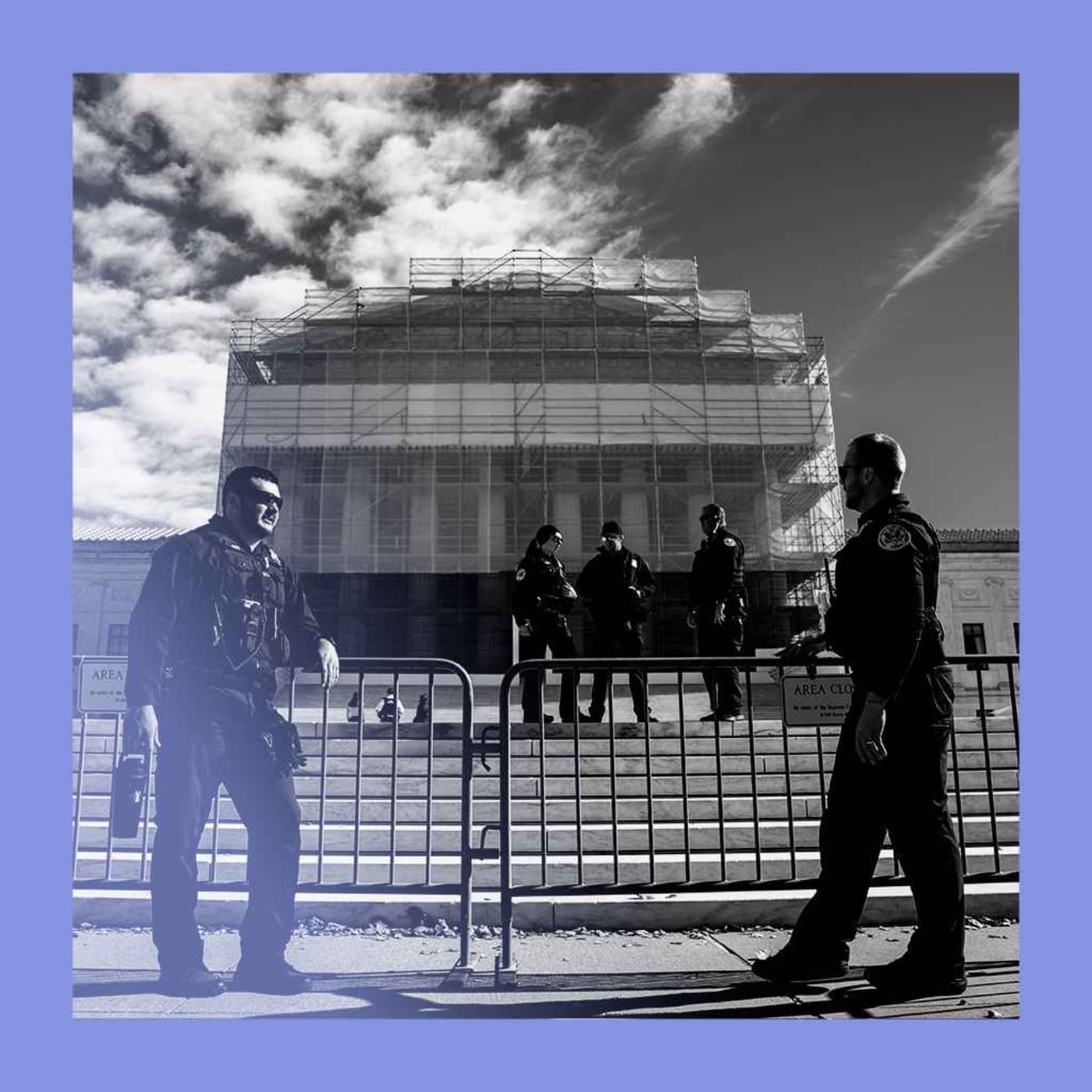
2:16Soon after Trump issued his tariffs in the spring, culminating in the Liberation Day tariffs in April on nearly every country in the world, a sheaf of lawsuits were filed against them, and three courts ruled against Trump, saying that he did not have the authority to issue them. Stephen Mazey is The Economist's Supreme Court correspondent. Now it's the Supreme Court hearing these cases on an unusually expedited basis. And the question in yesterday's nearly three-hour hearing was whether a law from 1977 called the International Emergency Economic Powers Act, or IEPA, authorizes him to impose those levies.
2:58Win or lose the trade war is unlikely to end. there are other ways Trump could wage it. But as for this way, what's the president's actual case? Well, Trump first invoked AIPA in February to tax goods coming in from China, Mexico, and Canada. He said that drug trafficking from those countries constituted an emergency, and under the law, he could impose tariffs to deal with that crisis. Then in April, he said that America's trade imbalances with many countries also posed an extraordinary and unusual threat to the country's economy and national security. So Aiba served as the asserted foundation for those reciprocal tariffs, too, that were ranging from 10 to 50 percent and have been tweaked since then.
3:50But alongside those legal arguments, we've seen a good deal of doomsday rhetoric about these cases. from lawyers in the Justice Department, and from President Trump himself. So this one law is the basis for essentially the whole tariff saga. What exactly, though, does that law say? Well, AIPA gives presidents a number of tools to deal with economic emergencies. After a president declares an emergency, the law lets him freeze assets, block assets, lets him restrict trade, ban certain financial transactions with foreign entities, it's the legal backbone for most of America's sanctions programs today against countries like Iran, Russia, and North Korea.
4:37The law says that presidents can, okay, get ready for nine verbs, investigate, regulate, direct, compel, nullify, void, prevent, and prohibit a number of things, including importation and exportation. And Trump dices up the verbiage to say, well, tariffs are one way to regulate importation. Well, no president has ever used AIPA to issue tariffs, and that was one of the problems Trump's lawyer, the Solicitor General John Sauer, ran into yesterday. Another problem is a theory known as the major questions doctrine. This was used a lot in the last few years by the Supreme Court supermajority to strike down some of Joe Biden's bolder actions from imposing vaccine mandates to regulating power plants and forgiving student loans.
5:33Each time the Supreme Court said, whoa, that is a major policy with profound political or economic consequences. And the statute that you're relying on does not explicitly let you do such a big thing. The language is too hazy, so we're going to stop you. And now the major question's doctrine might limit Trump in much the same way. And you say it was a lively session at the court yesterday. How did the oral arguments go? Jason, not so well for the administration. It wasn't surprising that the liberal justices were skeptical of the tariffs, but there were at least three conservative justices who were chagrined by Trump's creative use of AIPA also.
6:17So Chief Justice Roberts, Justice Amy Coney Barrett, and Trump's first nominee to the court, Neil Gorsuch. I found Justice Gorsuch's colloquy with the Solicitor General especially striking. The president's a one-way ratchet toward the gradual but continual accretion of power in the executive branch and away from the people's elected representatives. I disagree with that. He said, well, if Congress can give away its constitutional duty to handle taxes and tariffs, If it can just cede that to the president, what would stop Congress from handing over other powers that it alone enjoys in Article 1 of the Constitution, from regulating foreign commerce to the power to declare war?
6:58I mean, that part sounds cut and dried, but I guess it's only day one. How do you think the case will ultimately shake out? Well, it's interesting, Jason, because the Supreme Court has been rubber stamping almost every norm-bending thing Trump has done in the first nine months of his second term. From sacking heads of federal agencies to letting ICE racially profile suspects, when lower courts block those things, the Supreme Court has said, we will unblock them and you go right ahead, Mr. President. but all of those two dozen or so cases have been on the emergency or shadow docket where there is not full briefing or oral argument.
7:39This tariffs case is the first time we've had a full merits case with all the briefs and a nice long oral argument to bat around the ideas. And I think I can count to five or six or maybe even seven justices to nullify Trump's tariffs. I should also note that The Economist has an AI tool called SCOTUSBOT that predicts Supreme Court rulings. Six weeks ago, before the main briefs were filed, SCOTUSBOT ran 10 simulations of the case and Trump won nine times. But after the briefs were filed and SCOTUSBOT took them in, SCOTUSBOT had a change of artificial heart and it went 10 for 10 for the challengers to the tariffs.
8:24And yesterday, after adding the oral argument transcript to the pile of documents, SCOTUSBOT became more emphatic still with projected votes of even 7-2 or 8-1. I think that might be slightly exaggerated, but overall, I'm in line with our AI friend. Haha, you've got to be careful, Steve. The bots are coming for my job and yours. Suppose one way or another the legal basis for the tariffs is struck down. Then what? This was explored a bit in the oral argument by Justice Barrett. She wondered what would happen next. If you win, tell me how the reimbursement process would work. Would it be a complete mess?
9:03I mean, you're saying before the government promised reimbursement, and now you're saying, you know, well, that's rich. But how would this work? It seems to me like it could be a mess. So the first thing I'd say... Neil Kotyall, the lawyer for some of the challengers to the tariffs, said that, for starters, his own clients would be refunded the tariffs they paid. Everyone else would probably be repaid somehow on some schedule to the tune of about$140 billion. Note, though, that not all of Trump's tariffs fall under IEPA. Those tariffs that affect cars, copper, furniture, and some other goods are based on another law and would not be affected by the outcome of this case.
9:46On the face of it, Trump's trade strategy would be in tatters if his Aiba tariffs fell. But in private, the administration is more relaxed and does have backup plans. As you darkly hinted earlier, what are they? Well, the administration could impose levies via other means, via other laws, such as one that allows presidents to put tariffs of up to 15 % in place for 150 days. There are other laws that permit tariffs on targeted countries and industries. There's another that allows retaliatory tariffs of up to 50 % on countries with unreasonable trade practices. But losing would deny Trump the freedom of maneuver that he's enjoyed so far.
10:35And it would at least lead to further uncertainty for not just the White House, but for businesses already long in limbo. Stephen, thanks very much for joining us. Thank you, Jason.
10:59This podcast is sponsored by Made In Cookware. Made In partners with multi-generational artisans and some of the world's best chefs to create professional quality cookware, knives, and kitchen tools. Their products are trusted in Michelin-starred restaurants worldwide and designed to perform just as well in your kitchen. From five-ply stainless clad to carbon steel, every piece is built to last and made to actually make you a better cook. Discover award-winning cookware at MadeInCookware.com.
11:37For as long as America's Bureau of Labor Statistics has been tracking women's and men's employment, there's been a clear trend. Back in 1948, about a third of women were in or seeking work, compared with nearly 90 % of men. By the end of the millennium, though, it was 60 % of women and 75 % of men. Those numbers got closer and closer in the 2000s and 2010s as men left the workforce, and again after the pandemic, as women returned to work more quickly. By this year, the gap was a record low, barely 10 points. Then something changed. Over the last six months or so, women have begun to leave the American workforce.
12:20Around 600 ,000 have since last year. Alice Fullwood is a co-host of Money Talks, our weekly subscriber-only show on business, finance, and economics. At the same time, you haven't really seen any change in men's behavior. Men's participation is roughly flat. And so what's going on, Alice? There are lots of things going on that might be affecting the American labor market at the moment. All of Trump's policies, things like tariffs, immigration, curtailing, many of those could be affecting these numbers. An obvious change would be that maybe the economy has shifted how it's working in some way.
12:55Men and women tend to work in different kinds of industries, so maybe industries dominated by women are struggling. And to sort of try and figure this out, I downloaded a huge quantity of data from the Census Bureau surveys. They do these monthly and sort of sliced that up by all kinds of plausible reasons. And what I looked at was industries to try and figure out whether that explained it. And it really didn't. The sort of biggest declines in employment over the last year or so have been in things like retail, manufacturing, transportation, all of which are either roughly balanced by gender or male-dominated.
13:27And actually, education and healthcare, which are the two industries in which women are most overrepresented, actually added workers. So an industrial shift doesn't seem to be the main driver of the story. What about a societal one? I keep hearing about trad wives. Is this a trad wife thing? Yes, I was also suspicious that it might be the trad wives. You know, they're ascended on Instagram. Perhaps they are in real life as well. And so, you know, I sliced that same data up by all kinds of demographic measures as well. So things like the age of women, whether or not they have children, whether or not those children are young, so under five years old.
14:00And at first, this did look like a very compelling explanation, this idea that women might be leaving the workforce to take care of their young children, because the participation rate for prime age women, so that's women between 25 and 55, with children under five, had fallen from a post-pandemic high by sort of a couple of percentage points. So, you know, that indicates that maybe those kinds of women were fleeing. But then something strange happened again when I looked more closely at what was driving that dynamic. So the participation rate is basically the number of women in the workforce divided by the total number of those women.
14:35And actually, the number of mothers of young children in the workforce really hasn't changed over the last two or three years, even. There were about 7.8 million women with young children in work two years ago, and there are about 7.9 million now. So if anything, think it's very slightly increased. And the decline you were seeing in their participation rate was entirely being driven by that denominator, by the total population of women with young children. So that means there's an increase in the number of those women, which is pretty strong evidence that there's a baby boom going on, that more mothers of young children are being created.
15:08That increase was roughly 500 ,000. So commensurate with the overall decline in women in the workforce. And so maybe it's that women are having more children. That's why women's labor force participation might have declined so far this year. So we've found the right cohorts. We've found the people that are disappearing from the pool, but why are they disappearing from the pool? Why is there a larger number of young moms? All of the things you read in the news would indicate that this really shouldn't be happening. The cost of child care is soaring, a lot of worrying about fertility rates. In general, it seems harder to have a baby now than it has been, maybe not ever, but for a long time.
15:46And if you look at the total population of women with young children over time, you can see that there was sort of this slump in 2022 and 23. And it's that things have really picked up in 2025. And that population is booming again. That explains what's going on. And I started thinking about what could be driving that kind of pattern. And my theory is that if you think about what's happened over the last five years, obviously, a lot of young couples had their weddings postponed by COVID. They didn't get married in 2020. They maybe didn't get married in 2021. And instead, they got married in 2022.
16:19And it's pretty common for newlyweds to maybe enjoy a year or two of marriage and then start trying to have children. So my theory is that that's what's going on here. You had the pandemic pull around the times at which people got married, and you're now seeing a miniature baby boom, post-pandemic baby boom, like you saw a miniature post-pandemic marriage boom. So presumably then this disparity that you're seeing is a temporary effect. Those young moms will eventually come back to work. Yeah, I mean, that's definitely the hope here. But I do think there is a big question mark over that because of what's happened with the pandemic and how much easier it made it for mothers of young children to work.
16:58There is actually quite a lot of evidence that the rise of remote work did make it easier for women with young children to balance their work and home lives. So there was a great study that looked at women who were pregnant in March 2020 and delivered their babies after. So they had no idea that the pandemic was going to happen. And if you compare those women to women who delivered them the year before, they did actually have a higher participation rate. So they found it easier to go back into the workforce than women who had had babies before the pandemic. So there definitely is something going on with remote work making this dual role easier.
17:32And now that you have returned to office mandates from the federal government, from lots of companies, maybe you will see this cohort of mothers, the mothers of the post-pandemic mini baby boom, maybe they won't be able to return at the same rates as women did five years ago. I probably should admit, though, at this point that you are one of the data points in the set. Yes, indeed. I got engaged during the pandemic and then I did not get married until 2022. And I had my first baby at the end of 2024. I'm the proud mother of a bouncing baby boy. He's 10 months old now. And I guess you can infer from the fact that I'm giving this interview that I have indeed come back to work.
18:10So hopefully I'm one optimistic data point, but I would say whether or not all of the women who have delivered their children alongside me will be able to return at the same rates they did during the pandemic, I think that's still an open question. Well, welcome back to the show. Welcome back to the Labour Force, Alice. Thanks for your time. Thank you, Jason.
18:59The End joining the subscription service they're offering. Once, because I wasn't paying really close attention, I ended up subscribing by accident. The user journey was just really much easier in that direction. From the seller's perspective, it was no accident. It was by design. Dark patterns are digital designs that encourage or manipulate consumers to behave in ways that they otherwise wouldn't. Andrew Palmer, no relation. writes our column Bartleby and is the host of the Runaway Success Boss Class podcast on the world of work and management. Think, for example, of an accept button on a website, which is three times the size as a decline button, or a cancellation journey on an app, which is so Byzantine and meandering that eventually you give up.
19:54Those are both examples of dark patterns. so this is one button that seems more eminently pushable than the other basically i'm pushing what the company wants me to push this the kind of thing you mean that's the kind of thing that's like a classic one another example might be if you're trying to book a hotel and you see that 300 other people are looking at the same room as you they might not be actually but the site is trying to encourage you as much as possible right better book. Someone is looking. I'm in a race. So all of those kinds of things are designed to nudge you to make a purchase decision or to make it harder to cancel.
20:33My pulse actually got faster as you described that hotel room scenario because I have been in it and I have absolutely booked more quickly when I thought like, oh, these other eight people, they might get this last room. Like this stuff does work. It totally works. It's not entirely clear whether people are looking at the same room for the same date, that is not made explicit. So actually the chances that people are in a race with you for the room at the time you want it are much lower than that implies, but you still get nervous. You might think, okay, this sounds really bad for consumers. Why would anyone want to do it and risk annoying them?
21:11And the reason is that they are effective. One way to catch this was a study that was done by some researchers at the University of Chicago law school, where they basically did an experiment where they exposed samples of Americans to different types of dark patterns when they were promoting a free trial of a dummy service. They made it up. In one, it was just accept, decline, buttons the same size. Another was accept and continue, and it said recommended. And the decline button was just labeled other options. And that doubled the number of people who were clicking through to do the free trial.
21:50And then a much more aggressive version of that, where if you tried to decline, you were going through screen after screen after screen, quadrupled take up. So the reason why this is attractive to bosses is that it does work. So it is quite a sinister name though, dark patterns. I feel like I have to say it, dark patterns. But basically, this is also just what some people call UX. This is just design. It's just certain elements of it just kind of amped up a bit. Yeah, I think that's totally reasonable. The thresholds are very difficult to draw here. When we're marketed to, we kind of know that the truth is, if not being totally bent out of shape, it's certainly being played with a little bit.
22:33So you know that people are trying to sell to you or make it hard to quit. And some of that is acceptable behavior. And sometimes some of the design choices are actually conveying useful information. So in the hotel example, if it was genuinely showing you that inventory was running low and you should rush to book, that's useful information. So there are some circumstances in which this is less dark, less sinister, and more informational. So the threshold can be very hard to draw, but you know it when you feel it. Yeah, exactly. There's definitely cases where that tips into manipulation and falsehood.
23:13That's exactly right, which is why regulators in particular are getting more exercised by this. So we are finding that the environment for these kind of UX designs, these dark patterns, is much less forgiving than it was. And if you look around the developed world, you see legislators starting to call out dark patterns and regulate against it. And then you see agencies trying to enforce rules more aggressively. And the big example of that recently was the Federal Trade Commission in the US settling with Amazon, a$2.5 billion settlement over its Amazon Prime service. The Federal Trade Commission had alleged that Prime inveigled people into subscribing and then made it particularly difficult for people to cancel.
24:04Amazon itself says that the settlement does not imply any admission of guilt, but it was a big signal that this is now front and center for regulators. But as you say, from a regulation point of view, it is a really fuzzy line. Basically, the tactics just need to soften up a bit where we get back into the usual being nudged into buying stuff rather than being shoved into buying stuff. Yeah, the ideal way for this to be resolved would not be people in regulatory agencies making decisions about what's bad or not, but companies acting in their own self-interest and recognising that if you are irritating and annoying consumers, then eventually there's going to be blowback.
24:44There's another study which was done by Stanford University academics, which basically took over a European media business's subscription process and ran a control trial, some customers were offered promotional trials to this business that at the end of the period just automatically renewed into a paid subscription. But for others, the trial just expired, automatically cancelled. And although people who were on the auto renewal option did stick around, actually there was this hidden effect where lots of consumers didn't sign up in the first place. They avoided the product altogether. So if you net all that out, it actually worked out in the interest of the company to have auto cancellation, not to have auto renewal at all.
Read the full transcript
25:34And that's a little signal that actually some of this behavior we're trying to trap people does not work out for the business in the long term. Andrew, thanks very much as ever for your time. Thank you, Jason.
25:59That's all for this episode of The Intelligence. We'll see you back here tomorrow.
26:22If you're looking for something predictable and low friction over the long term, public markets may be a suitable option. But the moment you want different investment characteristics, it may be time to consider the private markets. See how your wealth can work smarter at creativeplanning.com slash access.
From the publisher
Just as soon as President Donald Trump started applying sweeping tariffs on trading partners, legal challenges to them started piling up. We listen in on the Supreme Court proceedings that might end them. America’s gender gap in labour-force participation is growing for the first time; we ask why. And the “dark patterns” that nudge—or trick, or bully—online buyers.
Get a world of insights by subscribing to Economist Podcasts+. For more information about how to access Economist Podcasts+, please visit our FAQs page or watch our video explaining how to link your account.
Hosted on Acast. See acast.com/privacy for more information.