
In short
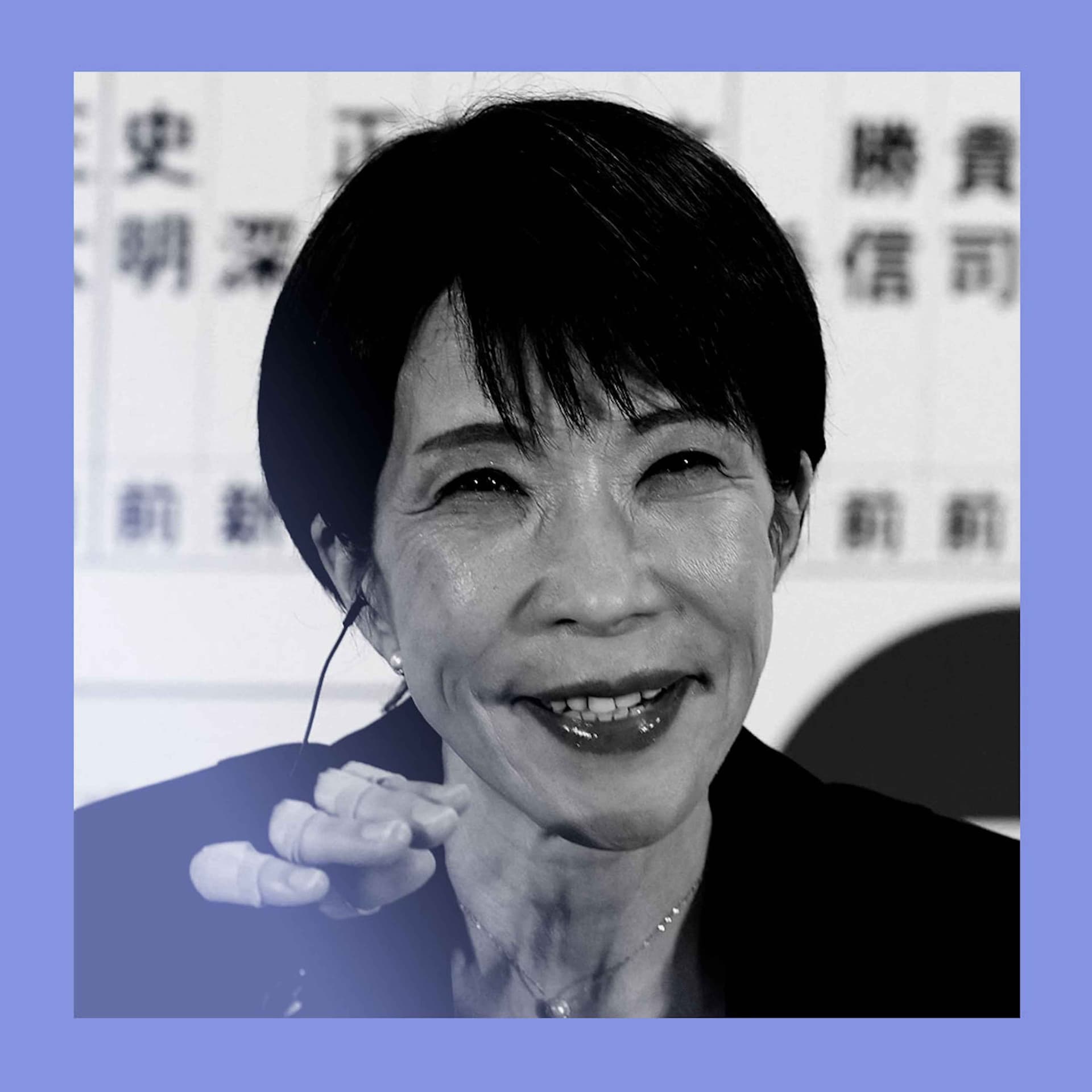
Podcast Summary: Economist Podcasts - Episode Title: Snap judgement: Japan PM’s electoral landslide
Podcast Overview Podcast Title: Economist Podcasts Description: A daily podcast exploring global stories across various fields including current affairs, business, finance, science, and technology. Each episode offers insights from correspondents around the world.
---
Episode Details Episode Title: Snap judgement: Japan PM’s electoral landslide Description: Analyzing Japanese Prime Minister Takaichi Sanae's recent electoral victory, the implications for Japan's political landscape, and discussions on academic freedom in the United States. Additionally, a look at the relevance of the film "Taxi Driver" 50 years after its release.
Host: Rosie Blau Guests:
- Noah Sneider, East Asia bureau chief
- Rebecca Jackson, Southern correspondent
- Andrew Miller, author of The Economist’s Back Story column on culture
---
Key Topics Discussed
- Japan’s Electoral Landslide
- Takaichi Sanae's Victory:
- Unprecedented success for Takaichi and the ruling Liberal Democratic Party (LDP), controlling 316 out of 465 lower house seats.
- This marks the largest margin and supermajority in LDP history, reshaping future Japanese politics.
- Significance of the Election:
- Takaichi's appeal stems from her middle-class background, relatable persona, and engaging campaign style.
- Her slogan, "work, work, work," resonates with voters.
- Challenges for the LDP:
- The party had faced scandals and a loss of reputation leading up to the election.
- The emergence of new political parties and the collapse of the traditional left-wing opposition (Centrist Reform Alliance) indicate shifting political dynamics.
- Future Policy Directions:
- Takaichi is expected to focus on strengthening Japan's security through increased defense spending and economic growth via proactive fiscal policies.
- Balancing expansionary policies amid rising inflation and market skepticism poses a challenge.
- Academic Freedom in the United States
- Censorship Trends in Republican States:
- Discussion of a recent crackdown on academic content at universities, particularly in Texas, where courses are being altered to comply with new laws.
- Professor Martin Peterson's course at Texas A&M faced scrutiny for including Plato's "Symposium," illustrating the broader issue of academic censorship.
- Impact on Faculty and Curriculum:
- Many professors are changing their curricula to avoid punitive measures, reflecting an environment that stifles academic freedom.
- The dialogue highlights concerns over the future of free speech in academia, particularly in states pursuing strict educational regulations.
- Cultural Reflection: "Taxi Driver"
- Film's Continued Relevance:
- "Taxi Driver," released 50 years ago, remains significant, showcasing societal issues and the character of Travis Bickle, a troubled Vietnam vet.
- The film reflects urban decay and personal isolation, resonating with contemporary discussions about violence and societal alienation.
- Cultural Context:
- The film’s portrayal of New York City offers a lens through which to view historical and modern societal issues.
- Discussions about how viewers perceive Bickle’s character and the film's portrayal of violence highlight ongoing cultural and psychological themes.
---
Key Takeaways
- Japan's Political Landscape: Takaichi's victory signifies a shift in Japanese politics with significant implications for future governance, emphasizing her unique appeal and the LDP's historical dominance.
- Academic Freedom Concerns: The trend towards censorship in American universities raises critical questions about free speech and academic integrity, particularly in conservative-led states.
- Cultural Commentary: The analysis of "Taxi Driver" serves as a reminder of the film's complex themes and its reflection on society, remaining pertinent in discussions about modern issues of violence and alienation.
---
Additional Resources
- For in-depth analysis on Japan's economy, refer to the previous episode of Money Talks.
- For more insights from the Economist Podcasts, consider subscribing to Economist Podcasts+.
---
This summary provides a comprehensive overview of the discussions and key themes from the episode, reflecting on both current political dynamics and cultural commentary.
Written by AI. May contain mistakes. Listen to the episode to check what was said.
Chapters
Tap a time to open that second in VOCultural Context: Free Speech and Political Tensions
1:28 to 2:04
Explore the issue of free speech in American universities and its implications.
“Today, free speech and why Republican states seem to have a problem with Plato.”
Japan's Electoral Surprise: An Overview
2:04 to 2:42
Understand the significance of Prime Minister Takeichi's recent electoral victory.
“This weekend, Japanese voters braved record-breaking snowfall to head to the polls.”
The LDP's Historic Victory Explained
2:42 to 3:20
Learn about the Liberal Democratic Party's unprecedented win and its implications.
“Just how significant is this victory for Takeichi and her party?”
Takeichi's Strategies and Appeal
3:20 to 5:00
Discover how Takeichi's personal appeal contributed to her party's success.
“So the result is a massive mandate, a super majority for the LDP on its own.”
The Legacy and Challenges of the LDP
5:00 to 6:10
Examine the LDP's fall from grace and the context of Takeichi's rise.
“And she's been taking to repeating that and to really acting on that on the campaign trail, racking up thousands of kilometers, crisscrossing the country and outrunning her rivals.”
Opposition's Collapse and Emerging Trends
6:10 to 7:40
Analyze the downfall of Japan's mainstream left opposition and new political dynamics.
“So last October, they decided to revive their fortunes by turning to Takaichi.”
Takeichi's Agenda: Ambitions and Policies
7:40 to 10:26
Explore what Prime Minister Takeichi plans to do with her electoral mandate.
“We also saw a new kind of trend emerging or strengthening rather in this election, which is the rise of upstart political parties.”
The Impact of Legislative Changes on Higher Education
14:02 to 16:48
Explore how recent legislative changes are affecting academic freedom in universities.
“classes this term, his ethics of public service class was canceled because he couldn't tell the Dean which days he planned to speak about race and gender.”
Voices from Academia: Perspectives on Censorship
16:49 to 19:07
Hear firsthand accounts from professors on the challenges they face regarding academic content.
“He also explained to me that he sees public universities and is as an extension of the state.”
Reflections on 'Taxi Driver' and Its Cultural Relevance
19:08 to 24:56
Dive into a deep analysis of the film 'Taxi Driver' and its commentary on society.
“But instead, he's planned a two-class series on the value of free speech.”
Transcript
Automatic transcript. May contain errors.0:00Rosie Blau:With no fees or minimums on checking accounts, it's no wonder the Capital One bank guy is so passionate about banking with Capital One. If he were here, he wouldn't just tell you about no fees or minimums. He'd also talk about how most Capital One cafes are open seven days a week to assist with your banking needs. Yep, even on weekends, it's pretty much all he talks about. In a good way. What's in your wallet? Terms apply. See CapitalOne.com slash bank. Capital One N.A. Member FDIC. Youth mental health is a complex challenge that requires comprehensive solutions. We must strengthen after-school programs.
0:38Rosie Blau:We must make digital literacy tools available in our schools. We must work with mental health professionals to support children. And we must empower mentors, educators, and parents to keep kids happy. Learn more about our commitment to finding lasting solutions at empowerourfuturecoalition.com slash solutions. Paid for by the Coalition to empower our future.
1:05Rebecca Jackson:The Economist
1:12Rosie Blau:Hello and welcome to The Intelligence from The Economist. I'm your host, Rosie Bloor. Every weekday, we provide a fresh perspective on the events shaping your world.
1:27Rosie Blau:In the past decade, American universities have become a hunting ground for almost every phase of the culture wars. Today, free speech and why Republican states seem to have a problem with Plato. And 50 years ago, Taxi Driver brought us a mouldering New York and a misfit who raged against the society he couldn't find a way into. No wonder, says our correspondent, that the film still feels so relevant.
2:04Rosie Blau:First up, though.
2:12Andrew Miller:This weekend, Japanese voters braved record-breaking snowfall to head to the polls.
2:25Andrew Miller:There, they delivered a record-breaking victory for Prime Minister Takeichi Sanaya, who called this snap election just weeks ago.
2:34Rosie Blau:Noah Snyder is our East Asia bureau chief.
2:37Andrew Miller:It was a high-stakes political gamble, and it has paid off big time. The result is set to reshape Japanese politics for years to come.
2:47Rosie Blau:Noah, it was a political gamble. It paid off. Just how significant is this victory for Takeichi and her party?
2:55Andrew Miller:It's a really historic victory, Rosie. It's hard to overstate. The ruling Liberal Democratic Party, which Prime Minister Takeichi heads, has basically dominated Japanese politics since 1955, ruling with only two brief interruptions. And this is the biggest victory they've won, the biggest margin they've had in the lower house of parliament in the entirety of the party's history. So the result is a massive mandate, a super majority for the LDP on its own. They picked up more than 100 seats in the course of this election, and they now control 316 on their own. and together with their coalition partners will control over 350 of the 465-seat chamber.
3:42Rosie Blau:As you say, we weren't sure she could do it. So how did Takeichi pull this off?
3:47Andrew Miller:The question was always whether Takeichi's personal popularity, which was quite high, according to opinion polls, would be enough to bring her less popular party along. And clearly, her popularity has proven to be a potent force. She's had really long coattails in this election. Part of it is that she has a personal appeal. She represents change for voters who are eager to see an end to the old way of politics. She's the country's first female prime minister, but perhaps more importantly, she comes from a kind of middle-class background, a family that could be like the average Japanese voters, rather than from the sort of political dynasties that many of her predecessors hailed from.
4:30Andrew Miller:She speaks in a kind of plain spoken style. She has a bit of panache, a bit of flair. She used to be a heavy metal drummer. She likes riding motorcycles. She's comfortable on TV, on stage, on the world stage, and increasingly on social media, where again, her predecessors who are mostly older men have really, really struggled. And finally, she's really put in the work. And I think that's something that resonated with Japanese voters and has resonated since the start of her campaign. The sort of slogan, the catchphrase of her administration has become her pledge to work, work, work, work, work.
5:09Andrew Miller:And she's been taking to repeating that and to really acting on that on the campaign trail, racking up thousands of kilometers, crisscrossing the country and outrunning her rivals.
5:19Rosie Blau:It's easy to see this now as something that was fated to happen almost, but remind us why the LDP's reputation had taken such a hit in recent years.
5:30Andrew Miller:It's a really important piece of context for this election. The LDP has long been the dominant party in Japanese politics, going back to its founding in 1955. But in recent years, especially since the resignation of Ms. Takaiichi's political mentor, Abe Shinzo in 2020, the party has stumbled. It's gone from one scandal to another, from one short-lived prime minister to another forgettable short-lived prime minister. And in the last two national elections, an upper house contest and a lower house contest, the party took a real drubbing and it had struggled even to form a governing coalition. So last October, they decided to revive their fortunes by turning to Takaichi.
6:18Andrew Miller:And she came in, again, leading a very fragile coalition. The old coalition partner ditched the LDP. She had to bring in a new coalition partner. And she really barely got over the line to get confirmed as prime minister. So the party was really struggling, certainly by LDP standards.
6:36Rosie Blau:And where does this leave the opposition?
6:38Andrew Miller:Well, that's the other big part of this story, Rosie. It's not just about Takaichi's triumph, Takaichi's popularity. It's also about the absolute collapse of the mainstream left of center opposition in Japan. The biggest opposition party heading into this election was the Centrist Reform Alliance, which was a kind of a hastily formed merger of two longstanding parties, the Constitutional Democratic Party, which was the traditional opposition force and Kometo, which was the LDP's former coalition partner. And this new alliance between the two of them lost more than half of the seats that they had held heading into the election.
7:21Andrew Miller:So like many a merger gone wrong, it was a muddle rather than a synergy. The two parties lost sight of their identities. There was an unclear leadership structure, and the party's core supporters seem to have abandoned them. We also saw a big drop in support for smaller left-wing parties, suggesting that voters might see their sort of traditional ideological pacifism as out of step with today's turbulent world and that they may trust Takaichi as a stronger and more decisive-seeming figure to lead Japan in this turbulent moment. We also saw a new kind of trend emerging or strengthening rather in this election, which is the rise of upstart political parties.
8:07Andrew Miller:So there were a handful of smaller new parties that picked up seats, but not necessarily as many as they had hoped and certainly not as many as they would need to pose anything like a credible threat to the LDP's new grip on power.
8:22Rosie Blau:So what is Takechi going to do with this big mandate?
8:26Andrew Miller:Well, I think it's clear that she wants to move much faster. As I mentioned before, she's a motorcycle enthusiast. And I think that's maybe a good way to think about where Japan is heading now. She's just been handed a brand new Ducati and being given the keys to take to the open road. She has no opposition inside the party left that will challenge her after a victory like this, and no opposition within the parliament that can really stop or slow her ambitions. So the question is what she chooses to focus on and where she chooses to put her pedal to the metal. She has talked about two big sets of policies, one having to do with security, making Japan stronger.
9:06Andrew Miller:So that involves spending more on defense. It involves beefing up Japan's armed forces and Japan's sort of defense industry, Japan's security state. So doing things to make it easier for Japanese defense industrial companies to export weapons and thus to sort of build a more sustainable domestic defense industry. It involves things like building out a national intelligence apparatus, which Japan has tended to lack in a post-war kind of modern form. And then on the flip side, there's a set of policies related to the economy, to making Japan more prosperous, as she puts it. And here she is pursuing what she calls a responsible and proactive fiscal policy.
9:46Andrew Miller:And that may sound a bit like a contradiction because in fact it is a bit of a contradiction. So she wants to spend big on a host of industries. She wants to sort of really use expansionary fiscal policy to try to drive growth. But she wants to do so in a way that isn't perceived by markets as being irresponsible. And she's doing this, of course, in the context of rising inflation, rising interest rates, and rising questions from investors about the sustainability of these plans. So the question, I think, for Takaichi is whether she can drive faster while staying on course.
10:26Rosie Blau:Noah, thank you very much.
10:28Andrew Miller:Thank you for having me.
10:32Rosie Blau:And you can hear more about Japan's economic woes and Takeichi's plans to reshape the economy on Money Talks, our business and finance podcast, which was out last week. You'll need to be a subscriber.
10:59Rosie Blau:If he were here, he wouldn't just tell you about no fees or minimums. He'd also talk about how most Capital One cafes are open seven days a week to assist with your banking needs. Yep, even on weekends, it's pretty much all he talks about. In a good way. What's in your wallet? Terms apply. See CapitalOne.com slash bank. Capital One N.A. Member FDIC. Youth mental health is a complex challenge that requires comprehensive solutions. We must strengthen after-school programs. We must make digital literacy tools available in our schools. We must work with mental health professionals to support children.
11:37Rosie Blau:And we must empower mentors, educators, and parents to keep kids happy. Learn more about our commitment to finding lasting solutions at empowerourfuturecoalition.com slash solutions. Paid for by the Coalition to Empower Our Future.
11:57Noah Sneider:So for the next couple of weeks, my aim is to give you a crash course in the world of philosophy.
12:07Andrew Miller:We aren't really interested in the theories of the world of the states.
12:12Rebecca Jackson:Recently, I had the chance to sit in on a philosophy lecture at Texas A &M University, America's biggest university.
12:21Rosie Blau:Rebecca Jackson is The Economist's Southern correspondent.
12:25Rebecca Jackson:It was delivered by Professor Martin Peterson, and as an undergraduate philosophy class, it was pretty par for the course. Utilitarianism, the prisoner's dilemma, the usual fare. But compare the course syllabus to the one that he initially submitted to the university's philosophy department, and you may notice a key difference. One text had vanished from the reading list, Plato's Symposium. And it's that omission that's recently landed the university in the midst of a media frenzy.
12:58Andrew Miller:Oh, someone discussed our class in Washington Post today or in the New York Times. And I saw that was in Ogbett in Wall Street Journal today.
13:05Rebecca Jackson:Yeah.
13:05Andrew Miller:Et cetera, et cetera. That's, yeah.
Read the full transcript
13:07Rebecca Jackson:As Professor Peterson explained, this is because Symposium discusses, among other things, Plato's views on gender and sexuality. His was one of 200 courses said to be under review by the university's administration for prohibited content. He was told to either nix Plato from the syllabus or be reassigned to teach another class.
13:32Rosie Blau:So why did the university ban Plato's work?
13:36Rebecca Jackson:This is part of a broader effort by university administrators to try to comply with a slew of harsh new higher education bills that have come out of the Texas state legislature. In the past couple of years, Texas politicians have passed laws that ban universities from teaching DEI, they overhaul the curriculum, and they give less and less power to faculty to decide what they want to teach. Another professor who I spoke to in the School of Government told me that in the first week of classes this term, his ethics of public service class was canceled because he couldn't tell the Dean which days he planned to speak about race and gender.
14:15Rebecca Jackson:Professors across A &M in all different departments are anxious because they've seen the stakes of this kind of crackdown. In the fall, one professor who was teaching about gender fluidity in a children's literature class was fired by the university after a video of her teaching came to light in Austin.
14:32Rosie Blau:And is it just Texas A &M or is this a bigger thing?
14:37Rebecca Jackson:It's much bigger. Texas A &M is perhaps the starkest example of it. But I also visited University of Texas at Austin, which is the state's flagship school. There, 40 % of faculty said that last fall they changed their curriculum to try to comply preemptively with the state's laws. I spoke to the president of the University Democrats, a student club there, and she told me that the club now has to jump through hoops to get their outside speakers approved and has to read this disclaimer at the start of every meeting saying that their opinions don't represent the university. This is part of a trend that actually goes far beyond Texas.
15:13Rosie Blau:So what's
15:14Rebecca Jackson:happening more broadly then? There's a drive across Republican-run states to legislate what is taught and to punish professors and students who speak of prohibited ideas. A new report by a non-profit called Pen America found that lawmakers in 32 states filed 93 bills last year censoring higher education. 21 of those passed, subjecting more than half of America's college students to these policies.
15:39Rosie Blau:We've had a number of years of people trying to monitor other people's speech on campuses. Isn't this just a corrective from the right?
15:49Rebecca Jackson:So that's certainly what a lot of conservatives are saying. There were real problems and universities needed to be reformed. And this is the proper way to go about it. But I dove into a database of free speech cases collected by the Foundation of Individual Rights and Expression, FIRE. What they found is that in 2020, most of the attempts to censor student speech on campus involve left-wing efforts to curb right-wing speech. But in the years since, there's been a striking political reversal. Now, as many as 80 % of these cases are coming from the right. I put some of this to Brandon Creighton.
16:25Rebecca Jackson:He's a former state senator in Texas, who was the author of many of these bills. And this year, he was appointed as the chancellor of Texas Tech University, one of the biggest public university systems in the state. He explained to me that academic freedom is in fact alive and well. He said that campuses across America have been commandeered for decades. And if anything, he sees a shift back towards the center now. He also explained to me that he sees public universities and is as an extension of the state.
16:55Rosie Blau:So what do you make of that assertion that academic freedoms are alive and well?
17:00Rebecca Jackson:Rosie, to be honest, I don't find it so compelling, and neither do lots of the researchers and faculty that I spoke with. And even some conservatives who have been fighting against the left-wing influence on campuses are pretty shocked by what's going on now. One of those people is Frederick Hess of the American Enterprise Institute, a think tank. For years, he has been saying that there need to be real changes on college campuses and that wokeism has infected the way that we teach and the way that students learn. But he says that the establishment Republicans who have been fighting for reforms have now been crowded out by radicals who are overcorrecting.
17:38Rebecca Jackson:In some cases, these laws have been so dramatic and so absurd that the courts have had to step in. One court struck down a Texas law that attempted to ban on-campus expressive activities between 10 p.m. and 8 a.m. The federal judge in that case quipped that the First Amendment does not have a bedtime. So where does that leave academic freedom in American universities? At least in red states, Rosie, I think academic freedom is really at risk right now. If you look at Texas A &M, since we published this article, they have gutted their Women and Gender Studies program entirely. Many academics will now have to decide whether they're going to sit there quietly and adapt in order to comply with these rules or stand up for the cause of free speech?
18:23Rebecca Jackson:I asked Martin Peterson, the philosophy professor who nicks Plato from his syllabus, where he stood on that question. In terms of, you know, poking the bear, do you not feel that?
18:33Andrew Miller:So several people have told me I should stop now, don't, don't poke the bear too much, etc, etc. But I guess that is the problem here, that I can keep poking the bear up to a certain point. And when it's too late, it's too late.
18:48Rebecca Jackson:You're willing to take the vote?
18:50Andrew Miller:I'm the chair of Academic Freedom Council on this campus. If I can't speak, who can? I feel I have a moral obligation to do it. And even if it has catastrophic consequences for me, the Euclidean theory, I do it for greater good.
19:04Rebecca Jackson:Come March, he will skip over the unit on Plato. But instead, he's planned a two-class series on the value of free speech.
19:13Rosie Blau:Becca, thank you so much for talking to me. Thanks for having me on, Rosie.
19:34Yes, we're talking to him, or at least about him.
19:38Rosie Blau:Andrew Miller writes our backstory column on culture.
19:41Noah Sneider:Released 50 years ago this month, Taxi Driver, Martin Scorsese's sleazy, highbrow masterpiece, routinely ranks among the best films of all time, and often tops lists of movies set in New York. It's revered not only for its depiction of the city, but also the character of Travis Bickle, a cabbie-turned-vigilante, coruscatingly played by Robert De Niro. Half a century on, I think one of these characterisations has held up better than the other.
20:12Noah Sneider:Today's New Yorkers often complain about urban blights like high prices and rats, but watching Taxi Driver really puts that in perspective. There was a sanitation strike when the film was shot in the summer of 1975, and it shows. Unemployment and the murder rate were soaring, the population was shrinking, and New York City in this film is overrun by drunks and druggies, strippers, pimps, child prostitutes and stick-up artists. Everything was worse in the 1970s, you might conclude after watching it, except for the movies. Now, on screen, as in reality, New York contains multitudes. It's the home of moonstruck lovers and greedy financiers, hustlers, mafiosi.
20:53Noah Sneider:It's where Harry romances Sally, King Kong swats a biplane, and Superman takes flight. Yet for many movie fans, the cesspit city in Taxi Driver is cinema's supreme version of New York. In a way, I think that's a mistaken way of thinking about the film, because if you watch Taxi Driver closely, it's clear that it's less a portrait of a place than of Travis Bickle's febrile perception of it, refracted through his rain-slicked windscreen and crumbling mind. In this film, the shimmery surface of the metropolis is a mirror. Maybe great cities always are.
21:33Noah Sneider:And as for Travis's character, Well, he's a damaged, alienated Vietnam veteran. He's transfixed by what reviles him. He loathes the decadence of the East Village and Times Square, but hangs out in porno cinemas. Above all, he's a loner. The taxi is kind of a symbol of his isolation. It's as if there's a secret to communicating that no one's told Travis. He wants to make friends and court women, but he doesn't know how. One of the shocks in a film that's full of them is a late mention of his parents. He had seemed so irredeemably alone.
22:15Noah Sneider:Travis is a product of his era, but his neuroses and contradictions feel very familiar today too. As for a lot of misfits, politics offers him a jolt of power for his ego and a sheen of virtue for his rage against filth and scum. The politician he fixes on hardly matters, nor does it really matter whether Travis supports him or plots to assassinate him. Racism and misogyny are outlets for him too. You're just like the rest of them, he tells a woman who bolts after he takes her to a skin flick on a date. Today, Travis Bickle would find consolation on incel forums. He buffs up his body like an acolyte of the manosphere and in the end he seeks redemption in violence.
22:57Noah Sneider:His most loving relationship is with his guns. As for too many mass shooters over the past half century, murder seems the only way for Travis to get the world's attention. And the cosmic joke of the film is that it does.
23:14Noah Sneider:Throughout the film, Travis's anguish has appealed to viewers' sympathies, while he's repelled them with his prejudice and his bloodlust. The climax is a horrific shooting spree at which we, the viewer, finally see Travis for the psychotic he is. But at the same time, within the story, society takes him at his own estimation and the newspapers decide that his is the right kind of violence and that Travis is a hero. I think in a way posterity has made a similar mistake with Taxi Driver, replacing the alarm it's supposed to cause with admiration. These days, the film's most immortal line, you talking to me, tends to get parroted as a slogan of macho bristle, whereas it's actually spoken by a maniac to his own reflection in a slumland bedsit.
24:05Noah Sneider:Outsiders in New York often feel like they're in a movie, gawking at the city's skyscrapers and the yellow cabs like Travis's and watching the steam rising from manhole covers. So does Travis, actually. He thinks he's in a western or a gangster film. But in a way, I think 50 years on, his genre is horror. he embodies something that still today is very real and very close that you prefer not to see
24:56Rosie Blau:That's all for this episode of The Intelligence. See you back here tomorrow.
25:19Rosie Blau:This episode is brought to you by Capital One. Capital One's tech team isn't just talking about multi-agentic AI. They already deployed one. It's called Chat Concierge and it's simplifying car shopping. Using self-reflection and layered reasoning with live API checks, it doesn't just help buyers find a car they love. It helps schedule a test drive, get pre-approved for financing, and estimate trade in value. Advanced, intuitive, and deployed. That's how they stack. That's technology at Capital One. Youth mental health is a complex challenge that requires comprehensive solutions. We must strengthen after-school programs.
25:56Rosie Blau:We must make digital literacy tools available in our schools. We must work with mental health professionals to support children. And we must empower mentors, educators, and parents to keep kids happy. Learn more about our commitment to finding lasting solutions at empowerourfuturecoalition.com slash solutions. Paid for by the Coalition to Empower Our Future.
From the publisher
Takaichi Sanae’s gamble to call a general election has paid off. How will the prime minister’s thumping victory change Japan? New legislation in Republican states could imperil academic freedom. And why “Taxi Driver” resonates 50 years after the film’s release.
Guests and host:
- Rosie Blau, host of “The Intelligence”
- Noah Sneider, East Asia bureau chief
- Rebecca Jackson, Southern correspondent
- Andrew Miller, author of The Economist’s Back Story column on culture
Topics covered:
- Japan’s election
- University censorship in America
- Fifty years of “Taxi Driver”
For more on Japan’s economy, listen to last week’s episode of Money Talks
Listen to what matters most, from global politics and business to science and technology—Subscribe to Economist Podcasts+
For more information about how to access Economist Podcasts+, please visit our FAQs page or watch our video explaining how to link your account.
Hosted on Acast. See acast.com/privacy for more information.