In short
Whether Israel and Lebanon can reach peace amid the Israel–Hezbollah war, and what role the US and Iran play; the episode also covers UK pension policy (“triple lock”) and football culture in Uzbekistan ahead of the World Cup.
Guests
Anshul Pfeffer (Israel correspondent) and Josh Roberts (Capital Markets correspondent). John Fasman (senior culture correspondent) reports on Uzbekistan football; no named guest for the Uzbekistan segment beyond him.
Key claims
Direct Israel–Lebanon leader talks may happen soon; both sides want a ceasefire and Hezbollah removed from deciding attacks, but Lebanon can’t disarm Hezbollah because its army is weaker and Iran backs Hezbollah. Israel’s strategy is disputed: weakening Hezbollah for Lebanese disarmament vs a longer-term Israeli security zone. US diplomacy may be aimed at separating Lebanon from a broader Iran ceasefire, but Washington lacks a clear plan.
Notable examples
Netanyahu’s stated goals (dismantling Hezbollah, “peace through strength”); about a million Lebanese civilians displaced; US-mediated talks via Marco Rubio; Trump’s posted promise of talks; UK state pension rises by 2.5%/inflation/earnings (whichever is biggest), hitting 4.8% this year; Uzbekistan’s first World Cup qualification via a 0-0 draw vs UAE and Uzbek fans streaming Man City vs Real Madrid.
Written by AI. May contain mistakes. Listen to the episode to check what was said.
Chapters
Tap a time to open that second in VOIsrael and Lebanon's Historic Talks
1:35 to 2:48
Discussion on potential peace talks between Israel and Lebanon amid ongoing conflict.
“And ahead of the World Cup, we're looking at some of the teams competing.”
The Role of Hezbollah and Iran
2:48 to 4:19
Exploration of Hezbollah's influence in Lebanon and Iran's role in the conflict.
“The question is what the two can really achieve The war in Lebanon is continuing Israel's been carrying out airstrikes on Hezbollah targets throughout Lebanon.”
Israel's Military Strategy in Lebanon
4:19 to 6:17
Analysis of varying Israeli military strategies and the challenge of disarming Hezbollah.
“But the problem is that Iran has had this influence over Lebanon through Hezbollah for so many decades.”
America's Involvement and Diplomatic Role
6:17 to 8:00
Examination of America's diplomatic efforts and potential military involvement in the region.
“They want to disarm Hezbollah and they want to cease fire, but it's very difficult for them to deliver it at this point.”
Diverging Interests of Israel and Lebanon
8:00 to 9:18
Insight into the differing priorities of Israel and Lebanon regarding ceasefire and Hezbollah.
“I think the main involvement right now is still diplomatic.”
The State Pension Dilemma in the UK
14:01 to 18:46
Explores the complexities of the UK state pension, its sustainability, and fiscal challenges.
“the biggest one, which makes the uncertainty even greater.”
Transcript
Automatic transcript. May contain errors.0:00Anshel Pfeffer:Self-directed investing, trading, full-service wealth management, automated investing, financial planning, thematic investing, retirement planning. And to think, that's just a small taste of what Schwab offers. Because Schwab knows that when it comes to your finances, choice matters. No matter your goals, investing style, life stage, or experience, Schwab has everything you need all in one place. So you can invest your way. Visit schwab.com to learn more. Taking care of your eyes shouldn't be a hassle. That's why Warby Parker is a one-stop shop for all your vision needs. Our prescription glasses and sunglasses are expertly crafted and unexpectedly affordable.
0:38Stop by a nearby store or use our app to virtually try on frames and get personalized recommendations. Did we mention we offer eye exams and take vision insurance too? For everything you need to see, head to your nearest Warby Parker store or visit WarbyParker.com today. That's WarbyParker.com.
1:01Josh Roberts:The Economist
1:08Hello and welcome to The Intelligence from The Economist. I'm your host, Rosie Bloor. Every weekday we provide a fresh perspective on the events shaping your world.
1:23Pensions can be both a political headache and a weight on public finances. So how does Britain sustain its pension pot? And how could it do that better? And ahead of the World Cup, we're looking at some of the teams competing. Today, our correspondent considers the role of football in Uzbekistan.
2:00But first...
2:08The leaders of Israel and Lebanon may finally be about to talk. This morning, an Israeli cabinet minister confirmed that direct discussions could happen today. There'll be a lot to mull over. More than six weeks into Israel's offensive in Lebanon, Israeli forces continue to pound targets.
2:31Last night, Israel's Prime Minister Binyamin Netanyahu once again laid out his goals for that war in Lebanon dismantling his bollah and what he called sustainable peace achieved through strength Direct talks between the leaders of Lebanon and Israel will be a historic moment The question is what the two can really achieve
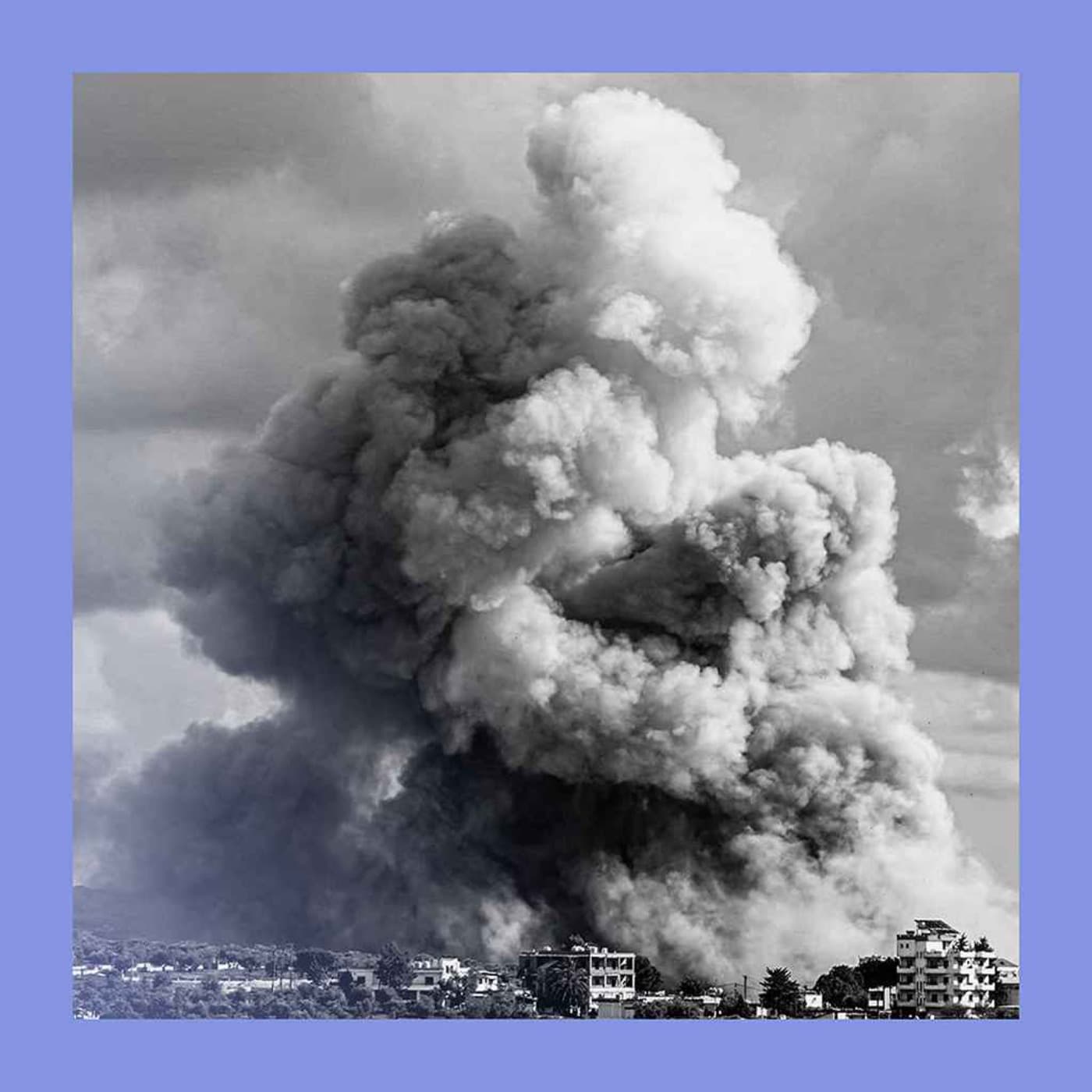
2:52Anshel Pfeffer:The war in Lebanon is continuing Israel's been carrying out airstrikes on Hezbollah targets throughout Lebanon. Around a million Lebanese civilians have been uprooted by the strikes. Anshul Pfeffer is our Israel correspondent. Hezbollah has fired missiles and drones at towns in northern Israel, and there's also fighting on the ground near the border between Israeli and Hezbollah fighters. At the same time, we had this week in Washington rare direct negotiations between Israeli and Lebanese representatives. it is from what we hear. The atmosphere was positive, though there isn't yet an agreement on the ceasefire.
3:31Anshel Pfeffer:And more intriguingly, last night, Donald Trump posted that there's going to be talks between Israel and Lebanon's leaders. And it may be that Donald Trump is trying to bounce them into talking. So that sounds quite promising if Israel and Lebanon are going to talk and particularly directly. Well, Israel and Lebanon have a shared interest in there being a ceasefire. At least the mainstream in both countries want there to be a ceasefire, want there to be better type of relations between the two countries, and perhaps most crucially, want Hezbollah no longer to have its role as an armed militia deciding when it wants to attack both within Lebanon and against Israel.
4:13Anshel Pfeffer:And they also don't want Iran to be able to dictate Hezbollah's moves. So both countries have an interest in decoupling what is happening in Israel and Lebanon from the conflict that's happening with Iran. But the problem is that Iran has had this influence over Lebanon through Hezbollah for so many decades. And Iran certainly wants there to be a connection. They've demanded that as part of the wider ceasefire between them and America, that also there'll be a ceasefire in Lebanon. So while the Lebanese want a ceasefire, they also would prefer it not to be connected to what's happening in Iran.
4:50Israel's offensive in Lebanon has been underway for several weeks now. What is its strategy there?
4:57Anshel Pfeffer:Well, that really depends on who you speak to on the Israeli side. Diplomats and some security officials say that the main thing is to weaken Hezbollah to create some kind of cooperation with Lebanon, where the Lebanese army will undertake the disarming of Hezbollah. Other people that you talk to in Israel, more hard-right politicians, and certainly some military officials, talk of a much more long-term Israeli occupation of a swathe of land in southern Lebanon, a security zone which will remain under Israeli military control and depopulated for the foreseeable future to prevent Hezbollah attacking.
5:36Anshel Pfeffer:So these are two different strategies, and I'm hearing both of them all the time in recent weeks from Israeli officials. And what about Lebanon, which continues to be in this very awkward situation with Hezbollah? Lebanon would like to deliver what Israel is demanding, the disarmament of Hezbollah. But the Lebanese army currently is simply much too weak. Hezbollah is a stronger, better organized, better armed fighting force. and they've also been threatening to carry out a violent coup in Lebanon. And Iran, which is supporting Hezbollah, doesn't want to lose its proxy, doesn't want to lose its control over the country.
6:15Anshel Pfeffer:So Lebanon is in a bind here. They want to disarm Hezbollah and they want to cease fire, but it's very difficult for them to deliver it at this point. As you mentioned, Trump has just talked about direct talks, and this week's discussion between Lebanon and Israel were mediated by the U.S. Secretary of State, Marco Rubio. So what is America's role? America certainly can bring the sides together. America also has the resources to help the Lebanese army to build up its capabilities. It probably won't happen overnight, but to build up a capability to take on Hezbollah eventually. But at the same time, America, certainly Donald Trump, has a much bigger interest in achieving a permanent ceasefire with Iran.
6:59Anshel Pfeffer:And that's why he's more amenable to Iran's demand that Lebanon also be included. So America sort of is playing two roles here. It has its more immediate influence on bringing the sides together, but it also is looking at what's happening in Iran and thinking, is Lebanon part of the package or can we deal with Lebanon separately? And it doesn't seem yet that there's a clear idea in Washington about how to go forward with that. Is there a risk that America could be drawn into the conflict between Israel and Hezbollah? Well, we haven't yet seen major American deployments off the shores of Lebanon.
7:37Anshel Pfeffer:We did see that a number of times over the last two and a half years, certainly after October 7 and 23, when there was a concern that Hezbollah would join Hamas's surprise attack on Israel, then the Americans deployed a carrier group off the coast of Lebanon then, and that didn't happen. But I don't see at this point an American military involvement in Lebanon. I think the main involvement right now is still diplomatic. We've had some talks. We've got the prospects of further talks. What will happen next in the coming weeks, do you think? Well, it very much depends on whether Israel is prepared to accept some kind of a temporary ceasefire at Netanyahu, both for domestic political reasons and I think also for diplomatic leverage isn't yet prepared to accept a full ceasefire with Lebanon.
8:25Anshel Pfeffer:He wants to see some more concrete proposals coming from Lebanon about how they plan to disarm Hezbollah. And he also wants to extract from them some kind of a commitment towards full diplomatic relations with Israel in the future. Now, for the Lebanese, it's much more urgent to get a ceasefire. They have 20 % of their population being forced out of their homes. They've got the prospect of sectarian violence now because these are mainly the Shia community and other communities in Lebanon are blaming them and saying you brought this upon us that the Israelis are attacking us because of your Hezbollah attacking them.
9:01Anshel Pfeffer:So the Lebanese need to defuse this situation as soon as possible and that's where the Israeli and Lebanese interests differ. I think both countries would like to see Hezbollah out of the equation but the sequence of how to make that happen is different from either country. Anshul, thank you very much for talking to me. Thank you for having me, Rosie.
9:35There's still time just to vote for The Economist in this year's Webby Awards. Today is the final day to vote for one of my own podcasts, The Last Boat. in which I went searching for what happened to my father's family. The Economist TikTok channel and an animation have also been nominated. Please do support us, and it has to be today. Go to vote.webyaward.com, and I've put that link in the show notes too. Thank you so much.
10:09Every idea starts with a problem. Morby Parker's was simple. Glasses are too expensive. So they set out to change that by designing glasses in-house and selling directly to customers. They're able to offer prescription eyewear that's expertly crafted and unexpectedly affordable. Warby Parker glasses are made from premium materials like impact resistant polycarbonate and custom acetate. And they start at just ninety five dollars, including prescription lenses. Get glasses made from the good stuff. Stop by a Warby Parker store near you.
10:39Anshel Pfeffer:Investing with Schwab is like spending a Saturday at a great farmer's market. You can fill your reusable tote with a bit of everything. Maybe you go for some free-range, self-directed investing. Or perhaps you pick up a few farm-fresh trades while you peruse. You can even get help from a dedicated advisor. That's full-service wealth management. Mix, match, and change your mind whenever you want. Because at Schwab, you can invest your way. No matter your goals or appetite for investing, Schwab has everything you need, all in one place. Visit schwab.com to learn more.
11:19Josh Roberts:The triple lock on the UK state pension is one of the worst designed government policies I can think of. Josh Roberts is our Capital Markets correspondent. It was created to solve the real problem. The UK state pension used to be very low, but this policy was designed in a way that puts the public finances under needless strain and volatility. and because of that it's probably unsustainable. The triple lock is an expression that we hear a lot in Britain but probably doesn't mean that much to most people. So just explain the nuts and bolts of it. So this is an idea that was developed to raise the level of the state pension in 2010 and the idea is that each year the UK state pension rises by 2.5 % or inflation or earnings growth, whichever is the biggest.
12:14Josh Roberts:And this was put in place because the UK state pension used to be about£7 ,000 or£8 ,000 a year in today's money. That's not enough to live on for people who are living only on that. The problem is that we don't know each year which one of those it's going to raise by, 2.5 % inflation or earnings growth, and two of those three are volatile. They vary a lot and unpredictably each year. and also that this is earmarked for every year in the future, which puts a strain on government finances. And why are we talking about it now? So the change each year, the uplift in the state pension, comes in at the new tax year at the start of April.
12:51Josh Roberts:And we've just had that. This year, the UK state pension has risen by 4.8%, which was last year's earnings growth. OK, so this is a terrible policy, but why? What's wrong with it? Think of it this way. There are two things that can make managing the public finances very difficult. One is if you have a spending commitment that is ongoing indefinitely into the future. That's because the way Treasury officials add up spending commitments, they don't add them up year by year. They look at the overall trajectory of spending. And if you have a spending commitment that goes on indefinitely into the future, it affects that trajectory that Treasury officials use to sum up whether the public finances balance or not.
13:31Josh Roberts:and this is one of those policies. The other thing that makes public spending hard to manage is when it's volatile and unpredictable. This is a policy that has baked in volatility and uncertainty by design. Even if you had just one of those things, if you said the state pension was going to rise by inflation each year, that would be a reasonable thing to say, but you wouldn't be able to predict what would happen each year. What this policy does is it kind of compounds that uncertainty by taking three different levels and saying it's going to be the biggest one, which makes the uncertainty even greater.
14:04Josh Roberts:Just now, everyone knows the public finances are under strain anyway, that there's not really much more room to borrow from the bond market. So this kind of volatility and unpredictability in one of the spending items necessarily impacts on all of the others or on taxes. So a bit of unpredictability spreads right through the government finances. So it's bad for public finances, but it sounds quite good for pensioners? It is good for pensioners. And I don't want to suggest that this was a kind of solution without a problem because there was a real problem. Now the level of the state pension is about£12 ,000 a year, which is still very low.
14:43Josh Roberts:Even with that rise, if you compare the UK to other countries, we still look quite stingy towards pensioners. People often think in lots of spending policies and benefits policies of the UK being somewhere between Europe and America. In fact, if you look how much other European countries spend on pensions. We spend much less than most European countries as a proportion of our GDP. And actually, even if you look at America, usually thought to be stingier than the UK in terms of benefits, we spend much less than America on pensions as well. So what should the UK be doing? Well, I think all of that means it was a good decision to raise the level of the UK state pension.
15:24Josh Roberts:You didn't have to do what the government decided to do in 2010. You could have said, for example, in the future, we want the UK state pension to be at this level. And we're going to do that over the next 20 years. Each year, it will rise by a small set amount until we hit the desired level, and then it will stop. That would have avoided both the problems of volatility that we've got because of the unpredictability of the benchmarks, and it would have avoided this ongoing spending commitment many years into the future. But they decided not to do that, probably because triple lock sounds great and the kind of underlying measures sound great.
15:57Josh Roberts:It was a kind of easy sell to the electorate, particularly to pensioners who are more likely to vote anyway. They went for a policy that sounded great, but was badly designed. So what does all this mean for those who are actually paying for those pensioners? In other words, the working population? So this is where it gets particularly thorny for the government. I, for example, I'm in my mid-30s. I look at the sustainability of the UK state pension. I don't think it looks sustainable. My conclusion is I'm not sure I'm getting that when I'm in my 60s. So I feel like I am paying in to fund these pensions that are rising year after year now for a benefit that I don't necessarily expect to get myself in the future.
16:39Josh Roberts:Now, that really jars with how people think about paying in towards social security benefits like pensions. And you'll often hear people say, you know, I paid in, now it's my turn to take out. I don't think that's quite how the current generation thinks about it. And I think that's quite dangerous if people think they're paying in for a benefit to another generation that they themselves don't expect to get. That really strains the social contract. So you've got a huge problem of you've got both public finances and the volatility there, but also the political demands of the electorate. What is the answer?
17:14Josh Roberts:Yeah, I think the really annoying thing is that the answer isn't all that difficult. I think it's to select a level that you want the state pension to be and then gradually move towards that level. But one of the maddening things about this is it has perverse consequences for pensioners as well. So because the UK state pension is unaffordable from a fiscal perspective, there's pressure to raise the pension age, to make sure that people need to be older before they can collect their state pension. Now, that's a regressive move. People who are poorer don't tend to live as long. So raising the state pension disproportionately affects people who are poorer.
17:54Josh Roberts:It means that they are likely to get less of it. And also, since people who are richer live longer, they're more likely to get the benefits from all of these rises that are baked in. So as well as being badly designed from a fiscal perspective, it's not even great for pensioners themselves. And what about the political power of pensioners? Yeah, well, they do vote. But then another quite maddening thing about this policy is when you think about unwinding it, the government is afraid of upsetting today's pensioners who are more likely to vote. But if you think about unwinding this policy, it's not actually today's pensioners who it's going to hurt.
18:30Josh Roberts:It's going to hurt the pensioners of 20, 30 years' time. Us, basically. So the annoying thing is that a policy is being kept in place to appease people who it's not even going to help that much. Josh, thank you very much. Thank you, Rosie.
19:01It's a brisk sunny afternoon in Fairfax, Virginia, not far from Washington, D.C. John Fasman, our senior culture correspondent, is counting down to this summer's FIFA World Cup by introducing us to 10 of the teams taking part. In the game room of a modern townhouse development, a young man named Azamat and his friends have set up a makeshift studio. They are live streaming their passionate Uzbek language commentary of a Champions League match between Manchester City and Real Madrid. Everybody loves football in Uzbekistan, and that's how our culture is. It's only football. One of Uzbekistan's best players, Abdukhudir Kusanov, plays for Man City.
19:41But Azamat, like many of Uzbekistan's 38 million people, as well as its diaspora of millions, can't wait to see him in the jersey of the White Wolves, as their national team is known. Uzbekistan is making its first men's World Cup appearance ever this year. They qualified with a 0-0 draw against the United Arab Emirates.
20:01Josh Roberts:Uzbekistan will get the chance to prove themselves with a first ever FIFA World Cup appearance.
20:10Uzbekistan is the most populous of the five countries that make up Central Asia. The others are Kazakhstan, Kyrgyzstan, Tajikistan and Turkmenistan, none of whom have ever played in a World Cup. meaning Uzbekistan is playing for a region, not just a country. Like its neighbors, it was part of the Soviet Union and gained its independence just a few decades ago. Its president, Shavkat Mirziyoyev, has been in office for a decade. He came to power pledging liberal reforms, but it remains a crime punishable by up to five years in prison to criticize the president.
20:51Football is a refuge. Uzbekistan has poured sizable resources into youth football. That has produced a pipeline of talent, though its best players ply their trade abroad. Shoma Rudolf and Fazalayev in Turkey, Jalaluddin Masharipov in Iran, and Khusanov in Britain. All four are expected to suit up for the White Wolves this summer, under the coaching of Fabio Cannavaro, who captained Italy to its most recent World Cup win in 2006. They're in a tough group. It includes Colombia, Portugal, and the Democratic Republic of Congo. But Azamat and his friends have already bought tickets to Uzbekistan's match in Atlanta against Congo, and hopes are high.
21:32So we're going to be like underdogs in this group, but we believe in our team, we believe in our coach, and they can make it, definitely. They can go to the next stage. In a little more than two months, we'll see whether those hopes have been justified.
Read the full transcript
22:06that's all for this episode of the intelligence see you back here tomorrow
22:47Anshel Pfeffer:We'll see you next time. and change your mind whenever you want. Because at Schwab, you can invest your way. No matter your goals or appetite for investing, Schwab has everything you need, all in one place. Visit schwab.com to learn more.
From the publisher
After six weeks of Israel’s offensive against Hizbullah, Lebanon’s president and Israel’s prime minister are due to talk today. What can they achieve? Britain’s “triple lock” pensions are unsustainable. And Uzbekistan’s footballers prepare for the World Cup.
Vote for The Economist at the Webby Awards: “The Last Boat” podcast, TikTok channel and language series.
Guests and host:
- Anshel Pfeffer, Israel correspondent
- Josh Roberts, capital markets correspondent
- Jon Fasman, senior culture correspondent
- Rosie Blau, host of “The Intelligence”
Topics covered:
- Israel, Lebanon, Hizbullah, Netanyahu
- State pension, Britain, triple lock, inflation
- World Cup, Uzbekistan
Listen to what matters most, from global politics and business to science and technology—Subscribe to Economist Podcasts+
For more information about how to access Economist Podcasts+, please visit our FAQs page or watch our video explaining how to link your account.
Hosted on Acast. See acast.com/privacy for more information.