In short
The episode has three segments: (1) Aung San Suu Kyi’s uncertain status in Myanmar after her 2021 coup-era imprisonment, including claims of “proof of life” and why the junta won’t grant access; (2) Turkey’s attempt to profit from the Iran war via Istanbul’s logistics and finance; (3) science on the “ideal” sleep duration using expert reviews and a UK Biobank study.
Guests/backgrounds
Aaron Connolly (Asia diplomatic editor, The Economist). Kerry and Richmond Jones (international economics correspondent, The Economist). Sam Weigley (science correspondent, The Economist). Junhao Wen (computational neuroscientist, Columbia University; lead author of a Nature study). Michael Granner (psychiatrist, University of Arizona).
Key claims/examples
Suu Kyi last reliably seen Dec 30, 2022; junta moved her to house arrest in April but photo authenticity is disputed; defectors claim meal/medical logs; lawyer access denied. Junta wants ASEAN/UN normalization; releasing her could reduce opposition, but analysts say it fears her nonviolent “talismanic” influence. Turkey: cargo volumes through Istanbul ports tripled after Strait of Hormuz closure; tax breaks for Gulf investors; IFC hub has mostly small consultancies; investors worry about lira support and Erdogan’s possible return to low-rate rhetoric. Sleep: U-shaped risks; expert panels suggest 7–9 hours (18–64) and ~7–8 (65+); Nature study suggests ~6.4–7.7 hours (men) and 6.5–7.8 (women) using organ “biological clocks” across brain/lungs/liver/skin; advice: don’t obsess over exact numbers—quality and feeling refreshed matter.
Written by AI. May contain mistakes. Listen to the episode to check what was said.
Chapters
Tap a time to open that second in VOAung San Suu Kyi's Current Situation
1:04 to 4:37
Discussion on Aung San Suu Kyi's imprisonment and international concern for her well-being.
“The last time that we can be sure that Aung San Suu Kyi was alive was December 30th, 2022, at the conclusion of her show trial.”
Military Junta's Control and Fear
4:37 to 8:23
Exploration of the military junta's hold on power and their fear of Aung San Suu Kyi's influence.
“means that she's either dead or in really bad shape in a way that the military wouldn't want the world to see.”
Impact of Aung San Suu Kyi's Release
8:23 to 9:00
Analysis of potential outcomes if Aung San Suu Kyi is released from prison.
“You said that she had backed the very army, that it had imprisoned her, that she was complicit in a way with what happened to the Rohingya, and yet still she has this talismanic power over the people.”
Economic Trends in Turkey
14:00 to 16:32
Explore the recent economic changes and investor sentiment in Turkey.
“and kind of interest rates and inflation were not linked at all.”
The Impact of Sleep on Health
16:32 to 17:10
Learn about the effects of sleep duration on cognitive and physical health.
Optimal Sleep Duration Insights
17:10 to 20:56
Discover findings on the ideal amount of sleep for different age groups.
“The End the right amount of sleep anyway.”
Understanding Sleep Quality
20:56 to 22:31
Understand the complexities of sleep needs and the importance of quality.
“Or is another pathology causing the lack of sleep?”
Transcript
Automatic transcript. May contain errors.0:00This intelligence podcast is sponsored by Backmarket, the leading global marketplace for refurbished tech. When the kids need phones, laptops, or tablets for school, buying refurbished tech makes sense for families trying to save money without sacrificing quality. At Backmarket, tech costs up to 50 % less compared to new. All devices have been professionally refurbished and come with a one-year warranty and 30-day return policy. Start saving money. Visit Backmarket.com or the Backmarket app to shop now.
0:33The Economist
0:39Hello and welcome to The Intelligence from The Economist. I'm Jason Palmer.
0:49Today on the show, Turkey's plan to benefit from the Iran war and looking to science to determine the ideal amount of sleep.
1:03First up, though.
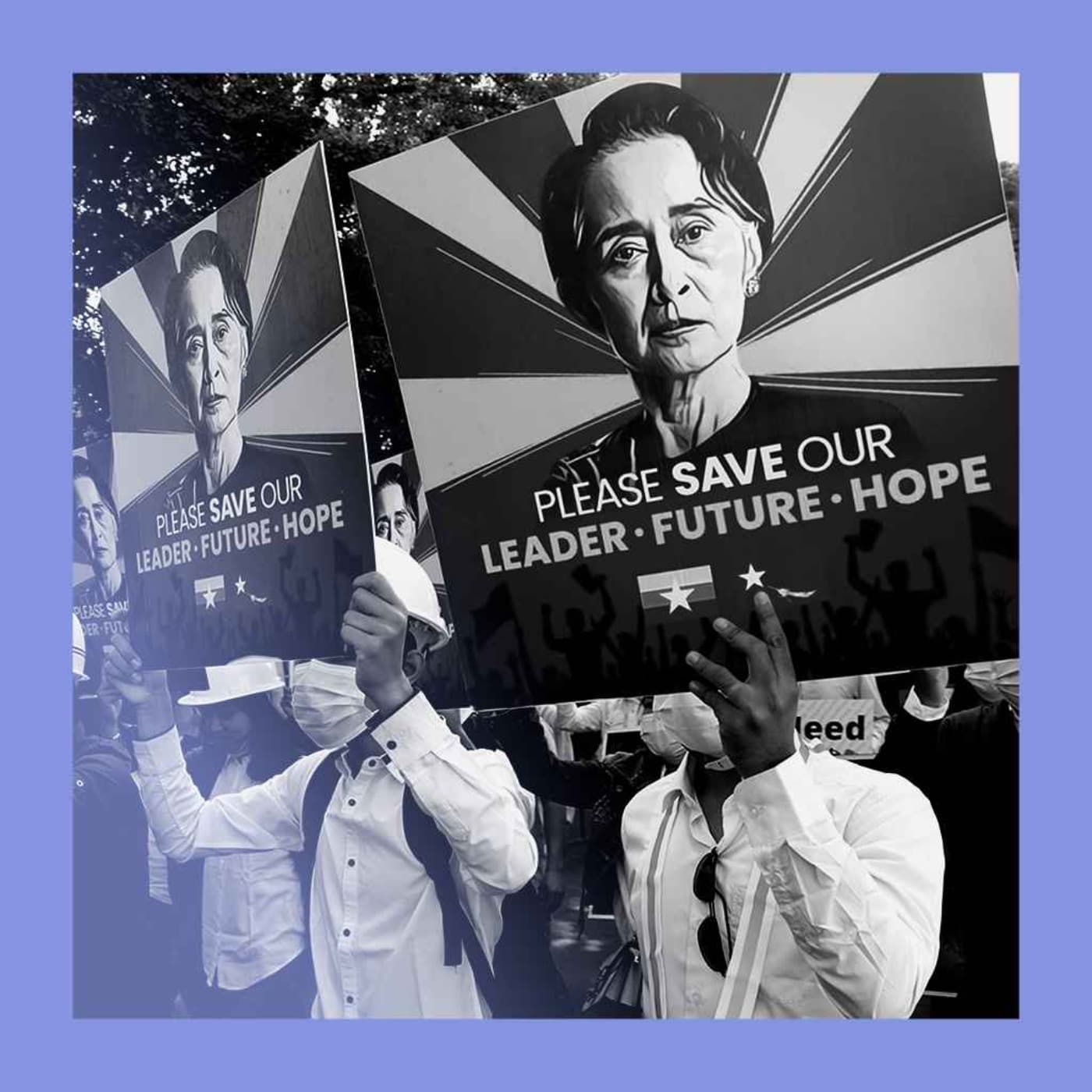
1:13The last time that we can be sure that Aung San Suu Kyi was alive was December 30th, 2022, at the conclusion of her show trial. Aaron Connolly is our Asia diplomatic editor. Myanmar's leader has been jailed since 2021 after a military junta overthrew her government. There have been a trickle of reported sightings from Myanmar's prison system, but they're impossible to verify. One former Thai foreign minister says that he met with her. And a defector group has released what they say are logs of her meals and medical care. But the army has refused her lawyer's request to see her. So her son, Kim Aris, who lives in London, has been traveling the world in the past few months, pushing presidents and ministers to demand proof of life from Myanmar's military government.
2:02And this is far from her first time in detention. That's right. Aung San Suu Kyi was in and out of jail and house arrest for about 15 years total from 1990 to 2010. But from house arrest, she continued to lead her party, the National League for Democracy, to an election win in 1990.
2:27And then in 1991, she won the Nobel Peace Prize and became a real icon of international resistance and support for democracy. After winning another landslide election in 2015, she became state counselor, which is a role akin to prime minister and Myanmar's leader. And she governed in this uneasy coalition or cohabitation with Myanmar's army. But in office, she proved to be no liberal. Most notably, she defended the army that later jailed her against charges of genocide in the case of the atrocities that they had committed against the Rohingya people, a Muslim ethnic minority in the west of the country.
3:06But she also shut down debate and she jailed journalists. And her policies really isolated Myanmar, forcing it further into China's orbit. And after she was deposed in 2021 by the army, the Hunta charged her with a range of offenses, really patent fabrications, and sentenced her to 33 years in prison, which was just recently reduced to 27 years. Assuming she's still alive, she would now be 81 years old. And what about the suggestion that she is in fact dead? I think it would be very difficult to keep something like that under wraps inside Myanmar. Aung San Suu Kyi still has supporters inside the regime.
3:42Just last year, a group of defectors released what they claim are logs of her meals and her medical care. So if she were dead, I think that word would probably have leaked out by now. And at the moment, the junta has no interest in telling anyone how she is where she is. Right. So in April, the junta said that it had moved her to house arrest. And when asked about her circumstances, officials invariably say that she's in good health. And a photo published at the time of her supposed move to house arrest showed her chatting amiably with a policeman and an army officer inside a nondescript building.
4:18But there's no indication that that photo is of recent vintage. And when I spoke to her son, Kim Aris, he said he doubts its authenticity. He says that if she is under house arrest, it's not at her home in Yangon and that her house in Nyebjorda, the capital, has been torn down. So some worry that the lack of evidence of proof of life means that she's either dead or in really bad shape in a way that the military wouldn't want the world to see. And you said it's not just her son who's interested in securing some kind of proof of life that foreign leaders are getting involved too. So Senior General Menonk Lange, the junta leader who ousted her in 2021 and who in March had himself named president, has been asked about her at least twice recently, as far as we know.
5:02India's Prime Minister, Narendra Modi, asked him about Aung San Suu Kyi's welfare on June 1st, and Julie Bishop, the UN Secretary General's Special Envoy on Myanmar, raised the issue in May. And people privy to those conversations have told me that the general responded with an explosion of anger at the mere mention of her name. But what kind of leverage do people like Mr. Modi even have here? What is there to hang over the junta? It seems that the junta wants back into two institutions, the Association of Southeast Asian Nations, the regional bloc that Myanmar is a member of, and the United Nations.
5:38It's been suspended from attending high-level meetings of ASEAN, as the regional bloc is known. And in New York at the UN, Myanmar is represented by an ambassador from the civilian government, not the junta. And diplomats tell me that releasing Aung San Suu Kyi, or maybe even just giving foreign diplomats access to her would melt opposition in both institutions to normalizing relations with the military government. But despite that, they still haven't given access to Aung San Suu Chi. So why do you think it is that they won't release her? Well, after the coup in 2021, there was this nationwide uprising, armed resistance to military rule.
6:17But it's possible that the military is even more afraid of nonviolent resistance of the sort of movement that Aung San Aung San Suu Kyi led since 1990. The thinking there that some analysts advocate is that the military, they're actually relatively comfortable with a high level of violence in the country. But what they're really afraid of is this kind of talismanic power that Aung San Suu Kyi seems to have over Burmese people. And they still take great risks, even under military rule, to show their fealty to her. Just last month on her 81st birthday, one member of her party was jailed for offering alms to Buddhist monks in her name.
6:57And Menon Hlaing, who overthrew her in that coup in 2021, just really, really hates her. They were rivals for power during that period from 2015 to 2020 when he was leader of the army and she was in that prime ministerial role. And he seems to resent the fact that people are still interested in her welfare when, as he sees it, he's now in charge of Myanmar. But in your view, what would happen if the junta bent to this pressure and simply released her? Does it not have all the power it needs even if she's free in the world? One outcome is very clear. It would absolutely melt resistance at the United Nations and within the Association of Southeast Asian Nations to normalizing relations with the junta.
7:41But on the domestic level, it's a little bit less clear what a reappearance of Aung San Suu Kyi would do. There's been this armed uprising in the country since the 2021 coup d 'etat, but Aung San Suu Kyi has always been a supporter of nonviolence. And there's real concern amongst those who are engaged in the armed struggle against the junta that she would come out against violence once again, and that that would fracture this patchwork coalition against military rule between ethnic minority armed groups who've never been that in love with her and the Berman revolutionaries in the country who still look to her for leadership.
8:17It's sort of unclear to me then where she sits in this whole story. You said that she had backed the very army, that it had imprisoned her, that she was complicit in a way with what happened to the Rohingya, and yet still she has this talismanic power over the people. Well, I think there's a real risk here that the focus on Aung Tzu Chi's plight eclipses that of Myanmar's 55 million people who have suffered greatly under military rule. There's still a war raging in the rest of the country. Tens of thousands have been killed. Millions have been displaced. And it seems as though diplomats are ready to wash their hands of this problem just for a glimpse of one single deeply flawed individual.
8:57That would be a mistake. Aaron, thanks very much for your time. Thanks, Jason. It's good to talk to you.
9:23The on-again, off-again war in Iran comes with many costs, and not just the$600 billion or so damage that the IMF reckons has happened in Iran itself. The impact of the war will be uneven, but the damage is most severe for countries in the Gulf. The economies of richer Gulf neighbors have shrunk. The conflict might knock two percentage points off GDP growth in the broader Middle East. Nobody wins. Look just a little further afield, though, and you find one country that hopes to make the best of an uncertain but certainly bad situation. The fighting has been a real mixed blessing for Turkey. So, on the one hand, oil prices have skyrocketed, and that pushed up inflation to more than 4 % in April, even for Turkey.
10:11that's a lot. Kerry and Richmond Jones is our international economics correspondent. But then in May, inflation went down and actually, trouble in the Gulf started yielding some opportunities. And if you go to Istanbul today, you'll see the city is bustling with cargo, with tourists and with capital that's fled the Gulf. And Turkey is the place for it just by dint of geography alone? Geography is definitely a part of it. So for a really long time, Istanbul has been this kind of roundabout for businessmen from Eastern Europe, from North Africa and from Central Asia, as well as the Middle East. But it's always been way more shabby than the Gulf.
10:52Also, there are other reasons. So just like the Gulf, Turkey's government maintains relations with Russia, China and America. And that really helps because it means that lots of different nationalities and lots of different political affiliations can kind of gather in Istanbul, much like the Gulf. And it's also a big enough city and rich enough that shoppers and tourists that would otherwise be kind of filling out the Gulf's shopping centres can come to Istanbul's European side. I guess the question is whether Turkey, Istanbul can handle the influx of people, of commodities, of stuff. So I went to some of Istanbul's ports and they are absolutely bustling at the moment.
11:30Volumes through the biggest one in Istanbul have tripled since the Strait of Hormuz closed. and then overall ports in Turkey have never handled this much cargo at this time of the year and it's not just shipping so Turkey has a lot of overland logistics flowing through it, roads are more busy, there are pipelines that take gas and oil that flow through Turkey that go from the Middle East to Europe, obviously a very attractive alternative to the strait. In April the Turkish and Iraqi governments announced that by August the oil flowing through one pipeline would be three times as big. So it seems to be coping quite well at the moment with an influx of cargo.
12:07Tourists similarly are packing out the very rich areas of Istanbul. The question is, I think, what happens to any capital that's flowing through to Turkey at the moment? Capital that Turkey would dearly like to have. I mean, what's it doing to draw some in? So much. It's almost embarrassing, actually, when you speak to Turkish officials, just how ambitious and desperate they are to pitch themselves as this kind of new divide, by New Riyadh. The parliament in April passed this huge tax bill that basically exempts all foreigners over a certain wealth bracket from tax on their foreign income if they come to Turkey now.
12:41That's a really big move and they passed it specifically to get investors from the Gulf. The Istanbul Financial Centre, which is this kind of hub that was meant to be for international banks and financial services built in 2023, is a perfect encapsulation of what we're talking about, I think. When it was completed, the idea was that it was going to be this like big gleaming glass set of towers that would have every international bank you've ever heard of in it. It'd be this kind of connection zone between Europe and China and America. And then before the war, basically nobody was in there. And now the government's idea is that it's finally going to fill up.
13:16So there've been special tax breaks offered to the IFC. When I was there, the IFC was saying that they'd had interest from 40 Gulf banks and consultancies. they were plastering this number everywhere saying that they were showing firms and bankers around daily but actually when I arrived and tried to speak to people coming out of the investment office I found that they were mostly very very small boutique consultancies so there hasn't really been this huge influx that Turkish officials are so desperate to get. And I suppose it will be a little easier to attract some investments because Turkey is no longer the sort of upside down economic zone it once was.
13:53Right. So two years ago, Turkey was basically a macroeconomic disaster. Erdogan, the president, had this idea that interest rates were evil for some reason, and kind of interest rates and inflation were not linked at all. So there was roaring inflation, incredibly low interest rates, credit, and investment was really rationed. So only Erdogan's friends could really get the big capital injections they needed. And that drove all the foreign investors basically in Turkey away. And things have really improved over the last couple of years. The new finance minister, Mehmet Simsek, is a much more orthodox guy.
14:29Growth in 2025 was 3.6 % and inflation fell by 24 percentage points. It was still 35%. So things in Turkey in 2025 still got a third more expensive. So that gives you the standards that we're working with. But things absolutely have got better. The problem, I think, or one of the problems, leaving aside Istanbul's shabbiness is actually the investors just don't trust that that is going to last. So the central bank still quite regularly sells dollars to prop up the lira. That sends foreign reserves very low, which worries investors. And then also Erdogan is a lot of people think not quite done with the craziness yet.
15:06So there are rumours in Istanbul that he's fallen out with Shimshuk with this kind of orthodox economic advisor. And he's beginning to give more and more speeches again about the evilness of interest rates. And if you're an investor, you've got slight PTSD from that pattern. You've cast some doubt on the notion then that Istanbul becomes the new Dubai, becomes the new Riyadh. Yeah, absolutely. It's just a long way off the kind of sophistication of a lot of the Gulf hubs. When we think about Dubai and Riyadh and Abu Dhabi, we think about new money. But the fact is that actually these cities were built on oil in the 1980s and the 1990s and then got literally trillions of dollars of investment from their governments to become these kind of gleaming desert towers in the Middle East.
15:48And the fact is that Turkey's government just can't support the same kind of transformation for Istanbul. And a lot of the Gulf escapees, they're looking for somewhere immediately to go. And the choices that they have, Milan, London, Miami, Geneva, from factors ranging from kind of schooling, if you're a very wealthy family, to the quality of the nightlife, if you're perhaps a younger financier who would normally be in Dubai means that they're going to pick places other than Turkey. I still think it's a promising development for Turkey. It's shed its reputation as this permanent economic disaster.
16:23It's benefited quite a lot, really, from the past few months of conflict next door, but it's going to take much more to turn it into an economic marvel. Thanks very much for joining us, Kiryan. Thank you so much for having me on.
17:10The End the right amount of sleep anyway. So I think everyone will be familiar with the fact that a bad night's sleep can lead to a drop in cognitive abilities, a feeling of stress, and just general moodiness the following day. Sam Weigley is a science correspondent for The Economist. If this persists, then chronic sleep deprivation can also be linked to persistent cognitive decline, psychiatric disorders, and even an early death. But what maybe less people have heard about is that too much sleep can also be bad for you. So scientists call this the U-shaped relationship between health and sleep duration.
17:54Both too little sleep and too much can lead to increased health risks. So what is too little and is too much? What's the ideal amount? Well, there were two massive studies in 2015 that tried to address this question. In both of these, they assembled big panels of sleep experts to assess the literature on the topic. One, which was published by Sleep Health, found that those aged between 18 and 64 should aim for 7 to 9 hours. And then those over 65 should aim for around 7 to 8 hours. The second study, which was published in the journal Sleep, found that around 7 hours was the best number. but noted that there is uncertainty about the negative effects linked to sleeping for too long, particularly over nine hours.
18:42But just asking the experts and flicking through literature can't be the only way to answer this question. That's true, yeah. And one recent Nature study published in May tried to look at a more fine-grained picture of how sleep duration affects parts of the body. So they use this concept of biological clocks. These are a way of measuring how different parts of the body are aging relative to a person's chronological age. And so they apply this concept to different individual organs and body systems, for example, the brain or the skin. I spoke to the lead author of the study, Junhao Wen. He is a computational neuroscientist at Columbia University.
19:26I think organ-specific aging clocks might be more holistic or more comprehensive because if a person, like if I have some brain pathology already, I would expect my brain age will be higher. If I do sports, my musculoskeletal age might be better. Junhao told me that he is a light sleeper himself. So the study was partially motivated by personal experience. So how did they go about this study, they're finding the age? So to look at this, they used data from the UK Biobank. This is a massive database of around half a million British people tracking health-related data. And they use self-reported sleep duration to track the biological clocks of 23 different parts of the body.
20:12And what they found is that this U-shaped pattern persists across nine different parts of the body. These include the brain, the lungs, liver, and skin. The findings taken together suggest that an optimal amount of sleep is around 6.5 to 7.8 hours for women and 6.4 to 7.7 hours for men. Finally, some precision on this question. But what if you're not in the optimum? What if I'm sleeping way too little or way too much? Yes, the most important thing here is to not freak out too much. So these are population level results and there is no Mr. Average. Applying these results to the individual is tricky.
20:50Also, Zhenhao told me that disentangling cause and effect is tricky. For example, are the biological ages of specific organs higher because of lack of sleep? Or is another pathology causing the lack of sleep? Michael Granner is a psychiatrist at the University of Arizona. Maybe the amount of sleep you need to function optimally is different than the amount of sleep you need for your immune system to function optimally, which might be different than your social functioning, which might be different than optimal heart recuperation. Those might all be slightly different numbers. Which one is correct?
21:28Which one's a matter? Who knows? Dr. Granner told me that sleep duration is just one dimension of sleep. Quality, regularity, continuity of sleep are also things that matter. And his advice was first and foremost, don't freak out about any particular number unless it's a very unusual number. And this point about not worrying is important because this can become a vicious cycle. Ironically, worrying about sleep is one of the major issues causing a lack of sleep. There was a 2025 survey by the American Academy of Sleep Medicine that found that 76 % of participants had lost sleep because they were worrying about sleep.
22:10So the most important thing is to just listen to your body. See whether you feel refreshed when you wake up, and if so, you're probably getting enough. I think the overall takeaway from this study is that aiming for six to eight hours is a good idea, but don't toss and turn over which precise number works for you. Sam, thanks very much for joining us. Thank you.
22:52That's all for this episode of The Intelligence. We'll see you back here tomorrow.
23:15Healthcare can feel complicated. That's why Optum uses technology to connect the people and processes that make healthcare easier, more affordable, and more effective. We're making it clearer for you to know exactly what your benefits cover. And to help you better manage your health, we're coordinating care between your doctors and your technology. We believe better, simpler healthcare is always possible. That's healthy optimism. That's Optum. Visit Optum.com to learn more.
From the publisher
Myanmar’s jailed leader has not been seen since 2022. We ask if she is in fact alive, and what might happen if the military junta acceded to demands for her release. We examine Turkey’s plan to turn the war in Iran to its advantage. And delving into the research on just how much sleep is enough—and too much.
Guests and host:
- Aaron Connelly, Asia diplomatic editor
- Cerian Richmond-Jones, international economics correspondent
- Sam Wikeley, science correspondent
- Jason Palmer, co-host of “The Intelligence”
Topics covered:
- Aung San Suu Kyi, Myanmar
- Turkey, economics, Iran war
- sleep, science
Listen to what matters most, from global politics and business to science and technology—subscribe to The Economist.
Hosted on Acast. See acast.com/privacy for more information.