In short
The episode of The Intelligence (Economist) covers two tracks. First, it explains a Trump-Xi “truce” framework after Trump’s Asia tour, focusing on a meeting at a South Korean airbase to pause their trade war.
Guests
Jeremy Page (chief China correspondent, based in Taipei) and Shashank Joshi (defense editor).
Key claims
both sides agreed to roll back most recent trade restrictions for one year; China delayed rare-earth export controls by one year, avoiding a threatened U.S. 100% tariff from Nov 1; the U.S. postponed reciprocal tariffs and halved a 20% fentanyl-linked tariff; China resumed buying U.S. soybeans. Notable omissions: TikTok ownership transfer, 2020 trade-deal investigation, semiconductors/investment, and Taiwan. Outstanding issues: remaining 47% U.S. tariff and unresolved deeper industrial-policy disputes. Second track: a defense segment on private military contractors’ expansion, citing Wagner, Sudan, Libya, and Iraq-era Blackwater/Prince, plus horror’s “golden age” box-office drivers and examples like Scream and The Blair Witch Project.
Written by AI. May contain mistakes. Listen to the episode to check what was said.
Chapters
Tap a time to open that second in VOTrump's Asian Tour Overview
0:45 to 3:25
Discussion on Trump's recent tour in Asia and his meetings with Xi Jinping.
“Box office receipts for frightful films are up more than four times in the past decade.”
Details of the Trade Truce
3:25 to 7:47
Analysis of the key elements of the trade agreement reached between the US and China.
“Basically both sides agreed to roll back most of the trade restrictions that they recently imposed or threatened as they sought leverage over each other in the last few months.”
Challenges Ahead for the Trade Agreement
7:47 to 10:35
Exploration of the potential risks and challenges that the agreement might face.
“So that was a very significant move to bolster the US-South Korean Defense Alliance.”
The Rise of Private Military Contractors
14:00 to 18:12
Explore the growing role and appeal of private military contractors in modern conflicts.
“and a sense that these could form a pool of military labor that could be deployed elsewhere after the war in years to come that really rivals anything we've seen in a long time.”
Mercenarism: Costs and Incentives
18:12 to 19:51
Understand the economic incentives for nations and individuals to use mercenaries.
“But what I found really interesting talking to one academic who'd studied this for a long time, that's Ulrich Peterson of the University of Liverpool, is that the data actually paints a slightly more complicated picture.”
Eric Prince's Controversial Return
19:51 to 21:00
Learn about Eric Prince's controversial history and his comeback in the military industry.
“look at one of the most noteworthy people in the hired guns industry, Eric Prince.”
The Evolution and Popularity of Horror Films
21:00 to 25:16
Discover the historical evolution and current renaissance of horror films in cinema.
“John Fassman is a senior culture correspondent for The Economist.”
The Psychological Appeal of Horror
25:16 to 26:33
Examine why audiences are drawn to horror movies and their cathartic effects.
“A generation ago, a filmmaker with an idea had to go through the studio and the mainstream distribution system, which meant selling multiple people on their ideas.”
Transcript
Automatic transcript. May contain errors.0:03The Economist.
0:10Hello and welcome to The Intelligence from The Economist. I'm your host, Jason Palmer. Every weekday we provide a fresh perspective on the events shaping your world.
0:24The job title of mercenary seems niche, maybe anachronistic. but you find hired guns in conflicts all over the world. These days, though, many are part of big, slick international businesses, which prefer to be known as private military contractors. And if you're not out trick-or-treating tonight, maybe go see a scary flick. There are plenty to choose from. Box office receipts for frightful films are up more than four times in the past decade. Our correspondent says we are living in a golden age of horror. But first...
1:10President Donald Trump wrapped up his Asian tour yesterday after stops in Malaysia, Japan, and South Korea, each marked by a lavish welcome. In Kuala Lumpur, dancers in gold-threaded garments greeted him. Japan's new Prime Minister, Takeichi Sane, gave him, among other things, 250 cherry trees, which might test his Air Force One baggage allowance. And in South Korea, a 21-gun salute and a military band.
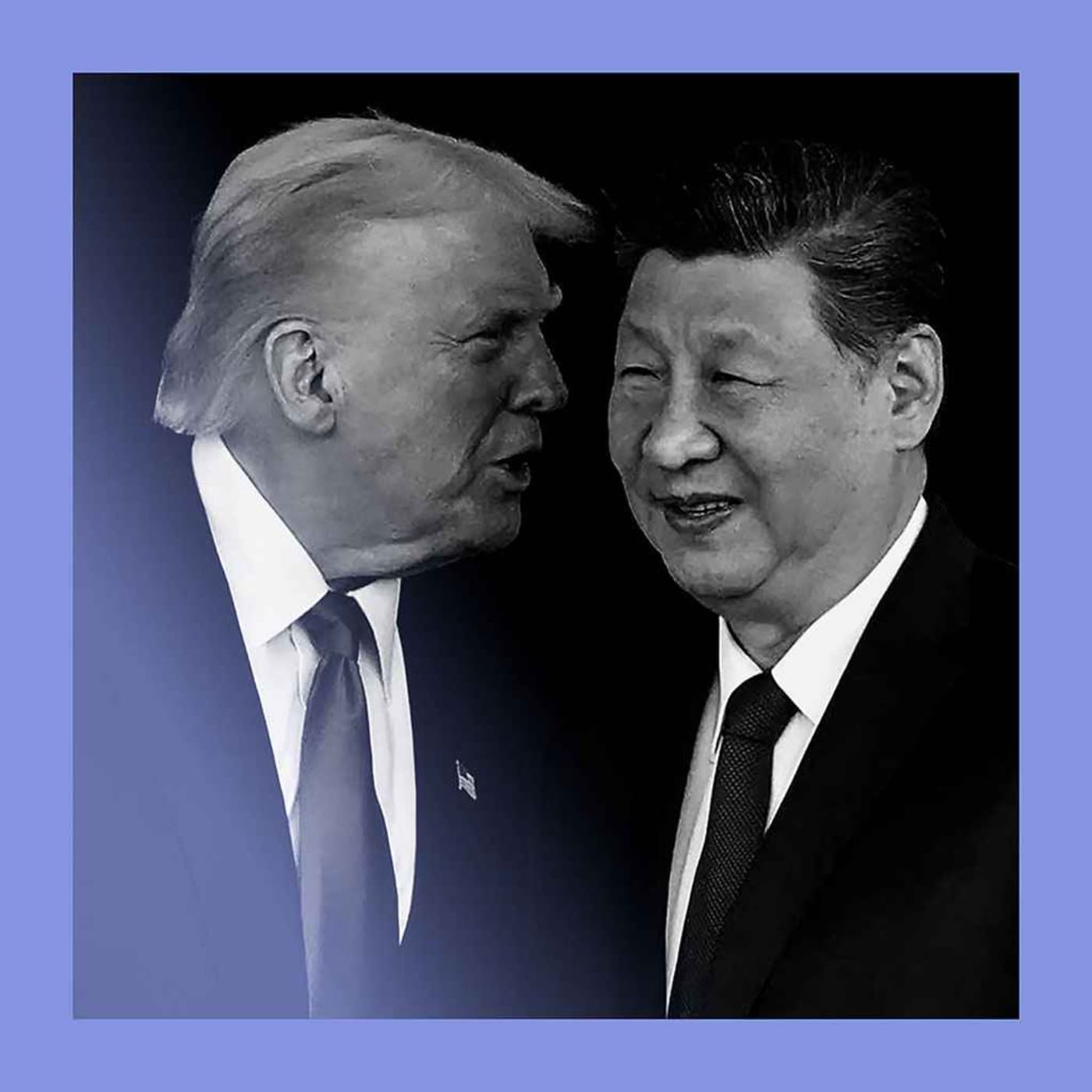
1:44But the most anticipated part of the tour happened in the South Korean city of Busan, where Mr. Trump met with someone he hadn't seen in six years. President Xi is a great leader of a great country, and I think we're going to have a fantastic relationship for a long period of time. And it's an honor to have you with us. Thank you very much. Pretty chummy words given how heated the trade war threats have been from both sides in recent weeks. Now to try to figure out what they actually agreed. Donald Trump and Xi Jinping met yesterday at a South Korean airbase to try and finalize the terms of a truce in their trade war.
2:23Jeremy Page is our chief China correspondent and is based in Taipei. Donald Trump described it afterwards as amazing. It was an outstanding group of decisions, I think, that was made. A lot of decisions were made. There wasn't too much left out there. He even gave it a score of 12 on a scale of 1 to 10. He then thinks it all went pretty well. It's all sewn up. What did China say? The Chinese side took its time to come out with its sort of readout, but a statement from their commerce ministry did ultimately confirm that in months of haggling, the two sides have basically agreed on the essential elements of a trade deal.
3:00So that reduces the risk of another flare-up for the moment. And in another positive sign, the two leaders agreed to reciprocal visits next year. But they haven't finalized all the details of this deal yet. and even if they can, they're a long way from tackling the underlying problems in the relationship. What is the latter of what they did agree on though? What's in the deal? Quite a lot in fact. Basically both sides agreed to roll back most of the trade restrictions that they recently imposed or threatened as they sought leverage over each other in the last few months. Perhaps most significantly, China agreed to delay for one year the new export controls on rare Earths that caused global alarm when they were announced earlier in October.
3:47So that means that America will not impose the extra 100 % tariff on Chinese goods from November 1st that it threatened in response. And America will also postpone for one year reciprocal tariffs that were due to come on November 10th, as well as new export controls on subsidiaries of blacklisted Chinese firms. Then both sides will postpone for a year the measures that they introduced in a confrontation over shippings and ports. That's basically the one-year truce part of the agreement. Then on top of that, America agreed to halve a 20 % tariff linked to China's alleged failure to curb the export of chemicals involved in the production of fentanyl.
4:35And in exchange for that, Trump said China will step up its efforts to stifle that trade. Then China also resumed purchase of American soybeans, which it stopped back in May. So as Trump suggested, it did cover a lot of ground, not everything, but as he put it, almost everything. What's left out of the almost everything? What isn't covered? What remains outstanding? Neither side really made that explicit, but there were some discrepancies and omissions in their statements. For example, Trump didn't mention the transfer of TikTok's American operations to US ownership, whereas China said that the two sides work on that issue.
5:13American officials also said after the meeting that an investigation into whether China violated an earlier trade deal signed in 2020 would continue for the moment. There doesn't seem to have been any clear agreement on Chinese investment in America or on America's sale of semiconductors to China, although Trump said that that did come up in his discussions with Xi Jinping. Another interesting omission was Taiwan, which Trump said didn't come up at all, and the Chinese side didn't mention either in its statements. But the big outstanding issue is that none of this is really enough to end the trade war.
5:57Even if this deal is signed, America will still have a 47 % tariff on Chinese goods. It's also unclear how long this deal would last. Trump said a final deal could be signed pretty soon, but he added that the two sides might renegotiate it annually. So that adds another element of uncertainty. And of course, Mr. Trump has been on a tour through Asia doing lots of deal making and glad handing. How does this deal or the framework of this deal stack up against what has happened with other countries? There's a pretty striking contrast between the talks with China and what he did on the rest of the trip, because with Xi Jinping, essentially, it was all about trying to negotiate a truce, a pause in their trade war.
6:41But if you look at what Trump was doing on other parts of his Asia tour, he was clearly focused on trying to build up leverage in preparation for future confrontation with China. So, for example, he signed agreements with Thailand, Malaysia and Japan to cooperate more closely on diversifying supply chains for critical minerals, which is one of the most intense areas of competition with China. We just saw its export controls on rare earths, causing huge, huge concern in the United States and many other countries. Donald Trump also signed trade deals with Cambodia, Vietnam, Malaysia, the latter of which offered market access concessions to protect its semiconductor exports from American tariffs.
7:28So that's all related to China as well. And then there were a couple of very significant deals with South Korea, with Trump agreeing to cut tariffs from 25 % to 15 % in exchange for$350 billion in investment in America. And America also agreed to share technology to allow South Korea to build nuclear submarines. So that was a very significant move to bolster the US-South Korean Defense Alliance. And all of these deals really can be seen as efforts to shore up America's alliances and partnerships in Asia, diversify its supply chains, encase tensions with China flare again. So it's very clear that even if China and America have reached a truce in their trade war, their broader contest for economic and military superiority is going to continue.
8:25So as you say, then this recent trade deal, really just one of the battles in a far wider war, do you think at this point that it will hold? What reasons do we have to think that what's been laid out here will stick? I'd say it looks reasonably promising at the moment, but you have to remember that we've had a series of full starts. We've had a number of temporary truces and then massive escalations over the last few months. So I think there is still a considerable risk that this agreement unravels because of misinterpretations between the negotiators. And even if it does hold, there is a danger that it doesn't actually solve the deeper problems in the relationship, especially those relating to China's industrial policy.
9:11The deal that was signed back in 2020 between the two sides after Trump first launched his trade war against China, that was announced with huge fanfare and was supposed to solve a lot of their problems. But China didn't really follow through on its commitments to increase its purchases of American agricultural goods and other products and services. And American officials now sort of accuse China of violating that deal. One criticism of the current agreement is that it focuses much too narrowly on short-term transactional issues like soybeans, like TikTok, rather than a longer-term effort at reform that could provide more balance in the relationship.
9:56And then there is the risk that some other crisis, completely unrelated to trade, emerges over the next few months and upends this agreement. You've got military tensions, which are still extremely high, especially in the South China Sea and around Taiwan. In fact, Pete Hegseth, the US Secretary of War, expressed concern about China's activities in those areas earlier today when he met his Chinese counterpart. And Donald Trump just ordered the Pentagon to resume testing nuclear weapons, which China expressed some concern about. So this truce on the trade front is definitely a positive step, but there's a long way to go.
10:34before we have stability in what is the world's most important relationship. Jeremy, thanks very much for joining us. Thank you.
10:55This podcast is brought to you by Thomson Reuters. The best don't just do their work, they change what's possible. Cases won, audits completed, jobs saved. Behind every one of those moments is a professional who needed to get it right, and did. Thomson Reuters builds the technology that sharpens insights, speeds up decision-making, and powers the outcomes that matter. So when professionals act, the impact is felt by everyone. Be a changemaker. Visit tr.com forward slash changemakers.
11:32For as long as there have been soldiers, there have been soldiers of fortune, soldiers for hire, mercenaries. In his political masterwork The Prince, Niccolò Machiavelli said they were useless and dangerous, valiant before friends, cowardly before enemies. He said that when life was on the line, they would be disloyal. They have no other attraction or reason for keeping the field than a trifle of stipend, which is not sufficient to make them willing to die for you. And yet, 500 years later, mercenaries are still around. In fact, the business is thriving, even if it is a bit different from Machiavelli's day.
12:11People don't really like the word mercenary these days and all the connotations it has. We tend to use euphemisms, things like private military company PMCs. Shashank Joshi is our defense editor. But what we've seen over the last few decades is a number of expansions in this industry. And it looks as though we could be on the cusp of another one now. Now, Shashank, we've spoken a lot on the show about PMCs, if I must call them that, Russia's Wagner Group in particular working in Ukraine and Africa. What do you mean by an expansion? What are you seeing? I think there's examples all over the place.
12:51If you look at Gaza, until recently, we had the Gaza Humanitarian Foundation, this really odd US-Israeli hybrid entity that was hired to distribute aid. and they in turn used UG Solutions, an American company, to provide armed security, including I think people drawn from all kinds of unsavory biker gangs. You saw people who identified with the crusader movement, posting anti-Muslim hate speech, and clearly these were not the sort of professional armed forces that a Western country would ideally want. Now, we've also seen their use of mercenaries all around the world. We've seen mercenaries very heavily involved in the civil war in Sudan.
13:32We've seen Turkey hire militias through Turkish mercenary companies to operate in places like Libya. We've seen Colombian ex-special forces hired in conflicts around the world. I mean, I guess part of it is, Jason, as governments have trimmed the size of their armed forces, private demand has grown. And I think there's also a sense of supply being unlocked. So, for example, the sense that Ukraine has seen huge pools of trained soldiers on all sides, and a sense that these could form a pool of military labor that could be deployed elsewhere after the war in years to come that really rivals anything we've seen in a long time.
14:09But if the sort of tailing off of conflict is what creates this pool of labor, what creates the demand? Why do these expansions happen? What have we seen before? Well, if we put the Ukraine war aside, Jason, I think the last real boom came in the US war in Iraq. Iraq was home to tens of thousands of contractors. Now, most of these weren't mercenaries in the sense that you and I might understand it. They were in non-combat roles. They were, you know, guards. They were other kinds of contractors. But I spoke to Tim Spicer, who's a former British Army officer. He is well known for founding a couple of PMCs, Aegis Defense Services and Sandline.
14:49He said that that conflict saw lots of what he called cowboys rushing into the field. And then there was kind of a professionalization. You saw these huge conglomerates. You had Constellus in America, which includes the company known as Blackwater, which was notorious in Iraq. And Constellus has revenues of more than$1.5 billion last year. It employs nearly 13 ,000 people. You've got Garda World in Canada that operates in dozens of countries. And so the market has these really well capitalized firms backed by venture capital, private wealth. They're very established. And then there's kind of more precarious outfits that basically wait until a big contract turns up.
15:30And then they're often bought by one of the big beasts. But the industry is kind of divided between different, I guess, linguistic groups. You've got the Western companies. You've got the Russian-speaking world, which includes countries of the ex-Soviet Union, countries of the former Warsaw Pact. And then, which I find very interesting, you've got the Colombians, who are very well regarded for their combat prowess, are very affordable, and they've also been very active all around the world. You mentioned affordability. I was wondering about the incentives here. Why would a country want PMCs, contractors, mercenaries, instead of regular forces?
16:03And why would people want to be mercenaries, PMCs, contractors? I think there's two fundamental reasons. One of them is if you don't want your own citizens dying, or you don't want to acknowledge your direct official involvement in a conflict. So mercenaries are a kind of deniable way to deploy military force somewhere. And we see that in civil wars in Sudan, places like that. I think the other reason is cost. I mentioned my conversation with Tim Spicer, and he said his companies had tried to do some calculations, and they'd worked out that one American private military contractor was about seven times cheaper than a regular member of the armed forces because, you know, you don't have all the same commitments like pensions, the same types of healthcare funding.
16:49Another person in the industry told me that Colombian contractors were, you know, in their estimation, a quarter of the price of an American contractor. So whichever way that you look at it, there's a cost saving here. You can get a pretty big force without having all the overheads. From the individual's perspective, well, if you're a Colombian soldier, you can make a lot more than you would in government service. You can live in cushier surroundings. And if you're a member of the American armed forces, well, I think the ability to say no to a deployment is very appealing. So if you're in the military and they say you're deploying to Venezuela or you're deploying to Iraq, you don't get to say no.
17:24You follow your instructions. If you're a mercenary, you can say, well, it's a job and no thank you. I'll wait for the next one. But what about the reputational risk, right? Mercenaries have a fairly dodgy reputation in a lot of different conflicts. This is privatization of warfare and a lot less accountability. What about the degree to which it's just an unsavory thing to be involved with? There's no doubt that mercenaries have been involved in lots of very unsavory things over the years. There's also very prominent players in this field, people like Eric Prince. He was the founder of Blackwater, which was, as I said, notorious for some of its activities in Iraq.
17:58In fact, I'm looking forward to the Weekend Intelligence, where we've managed to interview Mr. Prince and talk about some of his work. And, you know, he's been a very controversial figure. So there's no doubt that this is a field where people with guns do some bad things. But what I found really interesting talking to one academic who'd studied this for a long time, that's Ulrich Peterson of the University of Liverpool, is that the data actually paints a slightly more complicated picture. So he has a data set that looks at mercenary activity from 1980 to 2016. And what he found was that the presence of mercenaries was associated with a 39 % lower rate of civilian victimization, which was interesting itself.
18:39But more specifically, PMCs based in democratic countries were associated with a 66 % lower rate of victimization of civilians than firms from non-democracies. And I think that intuitively makes sense, right? The Wagner Group is like an arm of the Kremlin. They have behaved completely atrociously in many African countries, as well as in Ukraine. And you would expect that. The Kremlin doesn't really care how they behave. Whereas if you're a publicly traded company listed on a Western stock market, you've got shareholders, you've got a degree of transparency, a reputation to maintain. It's not really in your interest to go shoot up civilians.
19:17And so without in any way defending this entire industry or defending everyone in it, I think actually we have to recognize this is a very diverse industry with some really unprofessional, dangerous people in it and some fairly corporatized, regularized, quite mundane companies whose behavior tends to be no better or no worse than the many, many other people carrying big guns in war zones. Xuxiang, thanks as ever for your time. Thank you very much, Jason. As Shashank mentioned, the Weekend Intelligence tomorrow is an interview with and an in-depth look at one of the most noteworthy people in the hired guns industry, Eric Prince.
20:01The center of some of the war on terror's biggest controversies, which in turn landed him in front of Congress, put four of his employees at Blackwater behind bars, sparked the rebranding of the company. Now, Mr. Prince is making an astonishing comeback. And so nature hates a vacuum. It's either going to be filled by private capital, endeavoring to bring stability and doing it at a cost structure low enough that you can make money doing it. Or you're going to have, in some places, complete, total anarchy meltdown. Choose one or the other. I choose order. What did Mr. Prince learn in his years in the political wilderness?
20:41And what does his return tell us about the frankly frightening future the world is hurtling towards? Have a listen tomorrow.
20:59Right in front of you is a closed door. John Fassman is a senior culture correspondent for The Economist. The man standing next to you tells you that if you open it, you're liable to faint, vomit, or have a heart attack just from seeing what's behind it. What do you do? Those were all actual reactions that people had upon seeing The Exorcist when it was first released more than 50 years ago. Subsequent filmgoers were undeterred by those sorts of stories. The Exorcist went on to become the second highest grossing film of 1974, and the only horror film among the top 20.
21:44This year, horror films comprise one-fifth of the 20 top grossing movies around the world. They've made more than$1 billion in America so far, and comprised around 17 % of the total box office, up from just 4 % a decade ago. The same trend can be seen around the world. Horror was once a slightly disreputable genre, but today it attracts first-rate talent and critical acclaim. It's a golden age for horror movies. Why, and how did it come about?
22:21Horror films have been around for a long, long time. Bela Lugosi played Dracula in 1931, a few years after Max Schreck played a similar role in one of the most unsettling silent movies ever made, Nosferatu. In the 1950s, as the space race heated up, there were horror films about creatures from outer space, like The Blob and It Came from Outer Space. People also worried about nuclear weapons, and those fears showed up in movies like Godzilla, and Them about giant irradiated ants. In the ensuing decades, horror turned nastier and less camp. You had psychotic killers in Psycho and the Texas Chainsaw Massacre.
23:00And you had fears of the devil in movies like Rosemary's Baby. The 1980s saw the rise and fall of the slasher films. Franchises like Nightmare on Elm Street, Friday the 13th, and Halloween drew huge amounts of audience. But people sort of tired of them by the end of the decade.
23:21In 1996, the movie Scream may have saved the genre It featured a killer chasing winsome teenagers like horror movies of the past have But it was also arch and knowing In the first scene, the killer toys with his victim by asking her about her favorite horror films And later in the movie, one of the characters recites the rules of horror movies Never, ever, ever under any circumstances say, I'll be right back because you won't be back. I'm getting another beer. You want one? Yeah, sure. I'll be right back.
23:56Three years later, a movie was released that looked like a documentary. Three people were lost in the woods, ostensibly making a movie about a local legend called The Blair Witch. The Blair Witch Project, as the film was called, became a hit. It would earn more than$249 million from a shooting budget of just$35 ,000. And it taught studios an important lesson. You don't need big budgets or famous actors to make a hit horror film.
24:24There are a few reasons why horror is doing so well. Yesterday's horror-loving teenagers are today's green-lighting executives. But on the other hand, no genre has a larger share of viewers under the age of 24, meaning that the audience is perpetually self-renewing. Franchises like Star Wars or Indiana Jones retain their aging fans, which means they're hemmed in by continuity. But in horror, filmmakers have the chance to branch out and explore. Think about the character of Frankenstein. You've had movies made by James Whale and Kenneth Branagh and Guillermo del Toro that ostensibly all tell the same stories, but they're very, very different films.
Read the full transcript
25:00Horror rewards novelty and risk-taking and imagination. It also taps into contemporary fears. So just like Godzilla reflected concern about nuclear weapons in the 50s, franchises like Megan today reflect fears about AI. Today's freer distribution system has also benefited horror. A generation ago, a filmmaker with an idea had to go through the studio and the mainstream distribution system, which meant selling multiple people on their ideas. Today, equipment is cheap. Everyone carries a movie camera around in their pockets all the time. In fact, 28 years later, a recent blockbuster was shot entirely on iPhones.
25:36Horror works really well in cinemas, better than genres like drama or romance. There's something elemental about the experience of being terrified in a huge dark room that's hard to leave. But none of that answers the question of why people keep going to horror movies. One reason is that they're cathartic. They let viewers feel the emotions of dread and terror and anxiety and direct them outward instead of having them see the way inside. But people also watch horror films and visit haunted houses and engage in other fright-inducing experiences. to better understand the dangers that surround them, or that they think surrounds them.
26:17Horror fans like to know what to be frightened of. In that sense, you can think of horror fans less as seeking out things to frighten them, or inventing things to frighten them, than in doing their research and knowing what might frighten them. Interest in Contagion, for instance, Steven Soderbergh's 2011 film about a devastating global pandemic spiked in March 2020. the early days of an actual devastating global pandemic. As one writer put it, if zebras could watch movies about lions stalking their prey, they probably would.
27:12That's all for this episode of The Intelligence. The show's editors are Chris Impey and Jad Gill. Our deputy editor is John-Joe Devlin, and our sound designer is Will Rowe. Our audio correspondent is Sarah Larniuk, and our senior creative producer is William Warren. Our producers are Henrietta McFarlane, Benji Guy, and Jonathan Day, and our assistant producer is Anne Hanna, with extra production help this week from Alizé Jean-Baptiste. We'll all see you back here tomorrow for that aforementioned Weekend Intelligence. Thank you.
From the publisher
Presidents Donald Trump and Xi Jinping agreed to holster their trade weapons for now. But even if the deal holds, it does not address the deeper problems in the relationship. We examine why mercenaries—and slick international firms that employ them—are doing a roaring trade these days. And a Halloween look at what our correspondent calls a golden age of horror.
Get a world of insights by subscribing to Economist Podcasts+. For more information about how to access Economist Podcasts+, please visit our FAQs page or watch our video explaining how to link your account.
Hosted on Acast. See acast.com/privacy for more information.